















Massive stars (greater than 8 solar masses) evolve much faster than smaller stars, progressing through successive nuclear fusion stages (hydrogen to helium, then helium to carbon, oxygen, neon, silicon, and finally iron) at increasingly shorter timescales, ultimately collapsing in a supernova explosion that creates heavy elements beyond iron and leaves behind either a neutron star or black hole, depending on the original star's mass.
How Massive Stars Die: Supernovae, Neutron Stars, and Black Holes
Added:The concept of hydrostatic equilibrium, which is the delicate balance between inward gravitational collapse and outward thermal radiation pressure in a star.
The fundamentals of stellar nucleosynthesis, specifically how stars fuse lighter elements like hydrogen and helium in their cores to generate energy.
Basic atomic structure and the periodic table, including why iron is the limit for energy-releasing nuclear fusion in stellar cores.
The life cycle of low-to-medium mass stars, such as our Sun, to understand how massive star evolution differs.
Einstein's Theory of General Relativity, to understand the physics of spacetime curvature around extremely dense objects like black holes.
The physics of degenerate matter, specifically electron and neutron degeneracy pressure, which prevent white dwarfs and neutron stars from further collapse.
Galactic chemical evolution, exploring how supernova remnants enrich the interstellar medium with heavy elements necessary for planet formation and life.
Multi-messenger astronomy, including how gravitational waves and electromagnetic radiation are used to study merging neutron stars (kilonovae).
92K views3.5Klikes18:03Original Release: 2020-01-03
This video is brought to you by Magellan TV. Stars with masses greater than eight times our Sun are rare; they make up less than 1-tenth of 1% of all the stars in the Universe. But these stellar Giants have an enormous effect on the formation of stars around them and create the elements needed to build rocky planets and even life. But in order to do so these stars must die, and when they do, they don't go gently into that good night. Instead they go out with a bang.
Welcome back to Launch Pad, I'm Christian Ready, your friendly neighborhood astronomer and in this video we're going to talk about how the most massive stars in the universe evolve and die. But first I want to take a moment and thank Magellan TV for sponsoring today's video. Magellan is a new kind of streaming service that was created by filmmakers. They offer documentaries in space, science, nature, and history. So far I've enjoyed their documentaries on the infinite universe, black hole starships, and their series on the majestic Earth.
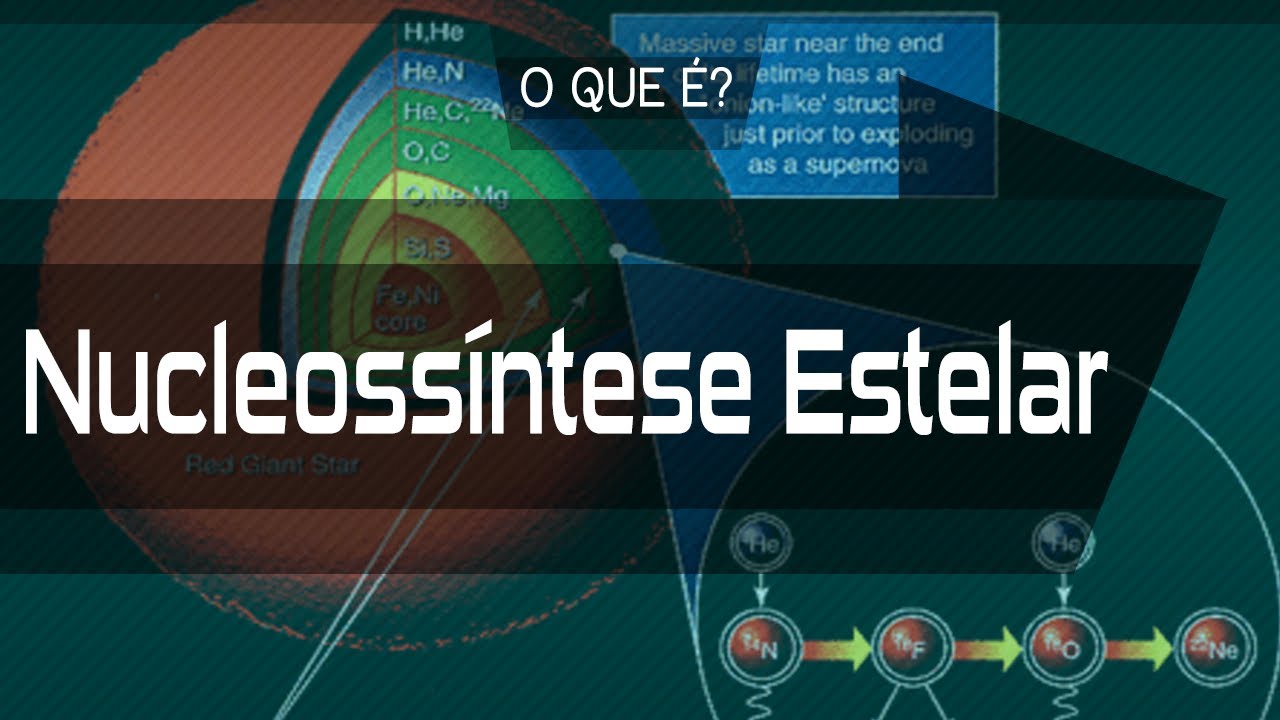
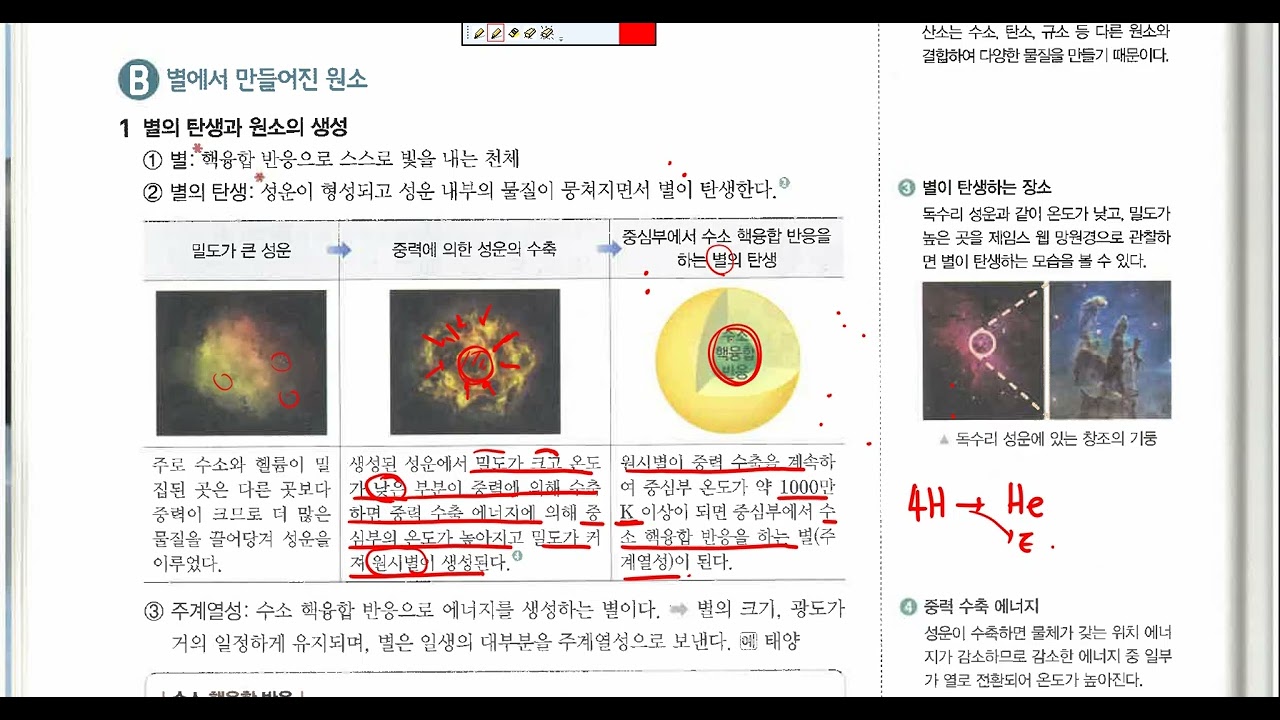
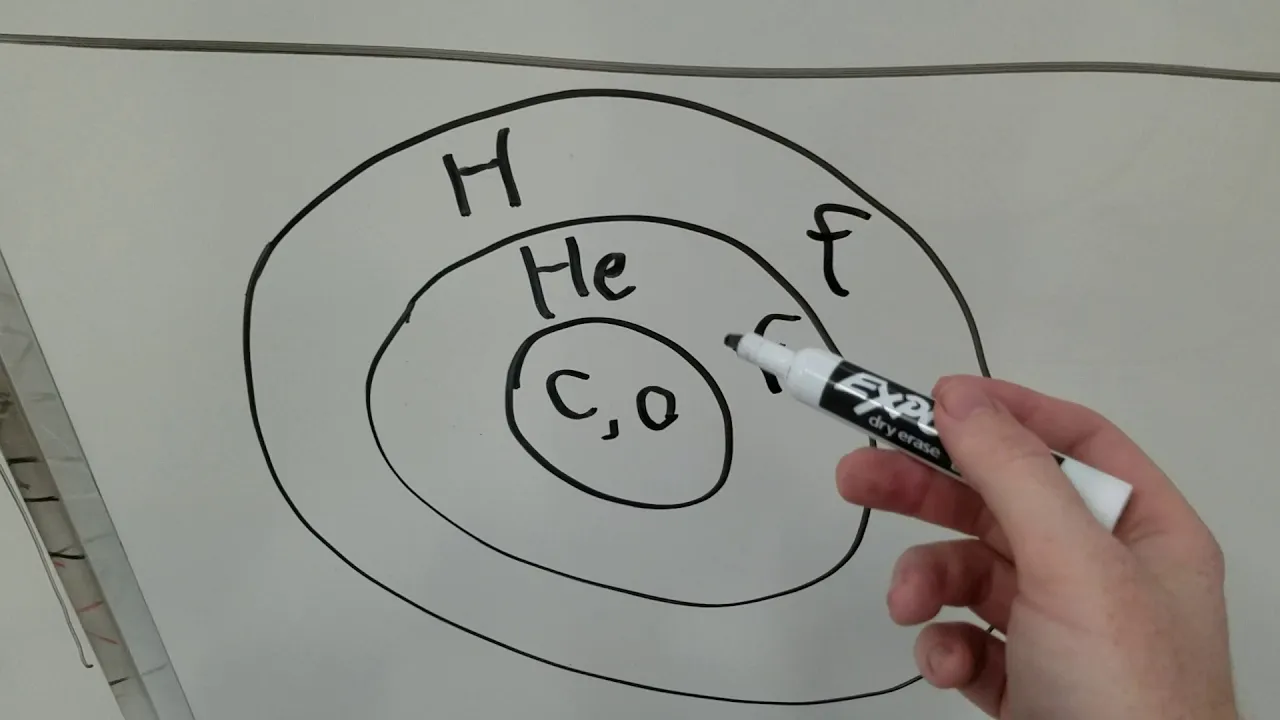
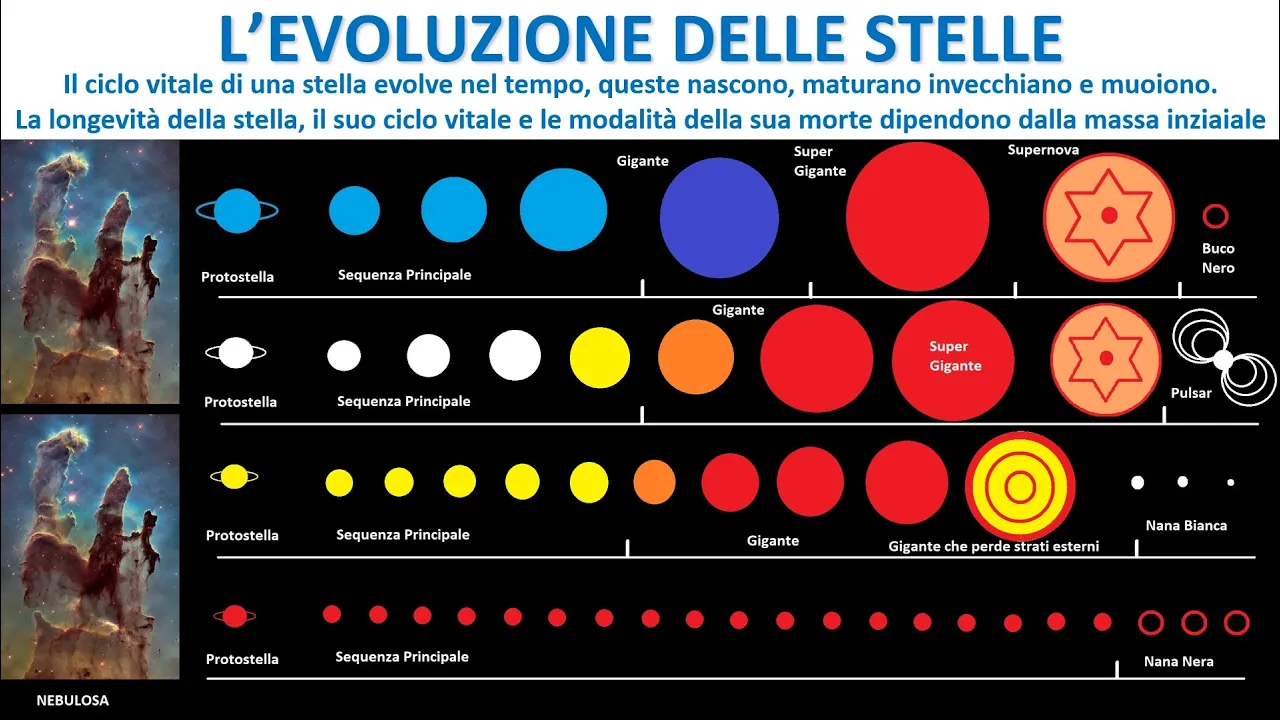
New programs are added weekly and can be watched anytime anywhere on your Roku, Amazon FireTV, AppleTV, Google Play, and iOS devices. Documentaries are streamed in Full HD and even 4k without any interruptions, and there are no ads or limitations on access. The first 100 visitors to Magellantv.com/Launchpadastronomy will receive a one-month trial absolutely free of charge so definitely be sure to check them out. Massive stars live their lives doing what all stars do: they burn hydrogen into helium in their cores and they produce energy along the way. It's this energy that holds the star up against its own collapse. Massive stars start off with a lot more hydrogen fuel than in our Sun but that extra mass means extra gravity so their cores are squeezed far harder. That causes the star to burn its fuel hotter and faster. That means the more massive the star the more luminous it is. For example, Sirius is only twice the mass of our Sun yet it is 23 times more luminous. PI Andromeda is 6.5 times the mass of our Sun but it is 800 times brighter. And mu Columbae is 16 times the mass of the Sun yet it is a whopping 47,500 times brighter! But before long the core runs out of hydrogen fuel and all that's left is inert helium. With no internal fusion to prop the core up, it contracts and gets hotter and the hydrogen surrounding the core is squeezed against it until it begins fusing in a shell. The outer layers of the star expand and cool in response and the star evolves off the main sequence. This is similar to the way the Sun will expand to become a red giant, but because the core of the star is producing so much more energy, the outer layers rapidly expand to nearly the size of Jupiter's orbit. The star has become a red supergiant. Betelgeuse in the constellation Orion is a red supergiant star. It's more than 600 light-years away but it's so large we can resolve its surface in our best telescopes. This isn't Betelgeuse's light spreading out over the image, it's the actual surface of the star. And it's blobby. Its interior is unstable and its outer atmosphere is so distended that changes inside take a long time to ripple around the star's surface.These undulations produce powerful stellar winds that cause Betelgeuse to lose a Sun's worth of mass every 10,000 years. Interestingly, the star's overall luminosity hasn't really changed all that much. And that's because a star's luminosity is governed by the square of its radius as well as its surface temperature to the fourth power. And this is important because by now the star's surface temperature is much much lower than it was while it was on the main sequence, but it's overwhelming size basically makes up for the loss of surface temperature so the luminosity doesn't really change all that much. Meanwhile, back in the contracting core, temperatures quickly reach a 170 million Kelvin, and that's hot enough to get helium to start fusing into carbon and even some oxygen. In our video on how the Sun will eventually die we, found that such low-mass stars won't be able to ignite their helium cores until it is squeezed itself into such a dense state of matter that it's electrons become degenerate. But high mass stars have cores that are already much hotter to begin with so they're able to ignite helium fusion while it is still a normal, albeit extremely hot gas. The core expands and cools. With less energy pumping into the rest of the star it contracts and heats up in response. The star is now a blue supergiant, In facts, Rigel - also in Orion - is a blue supergiant star. Even though it's 860 light years away it's easily one of the brightest stars in the entire night sky, putting out 120,000 times the energy of our Sun. Before long the helium fuel runs out and all that's left is a core of inert carbon. Our Sun will develop a carbon core as well but this is the point where stars like our Sun start to tap out. And that's because they can't get their cores hot enough to fuse carbon into heavier elements. But the situation is very different in a massive star. The sheer weight of the surrounding layers quickly drive up the core temperatures to 600 million Kelvin, allowing it to begin fusing into oxygen, magnesium, and neon. This cycle of contraction, heating, and nuclear fusion repeats several more times, creating heavier nuclei at each stage. But each heavier nucleus requires higher and higher temperatures in order to fuse. Carbon fuses into neon at 600 million Kelvin. Neon fuses into oxygen at one-and-a-half billion Kelvin. At two billion Kelvin, oxygen fuses into silicon and at three-and-a-half billion Kelvin, silicon begins fusing into Iron. The star oscillates between the blue and red supergiant stages as it runs out of one fuel and ignites another. Eventually, the core looks like a giant onion with inert iron at it's very center surrounded by a silicon burning shell which in turn is surrounded by an oxygen burning shell then neon carbon helium and hydrogen fusing shells, Not only does each stage have to burn its nuclear fuel hotter, it must also burn it faster than the one before. That's because as the produced nuclei get heavier, the amount of energy released in each reaction gets lower.
That means that these successive stages have to burn their fuel much faster than the one before it in order to produce enough energy to hold the star up. For example a 25 solar mass star will exhaust its entire supply of hydrogen in about seven million years. Helium is burned through in about 700 thousand years. Carbon burning only lasts about a hundred and sixty years. Neon is burned through in about one year. Oxygen is burnt in about 6 months, and its entire supply of silicon will be fused into iron in - believe it or not - one day!
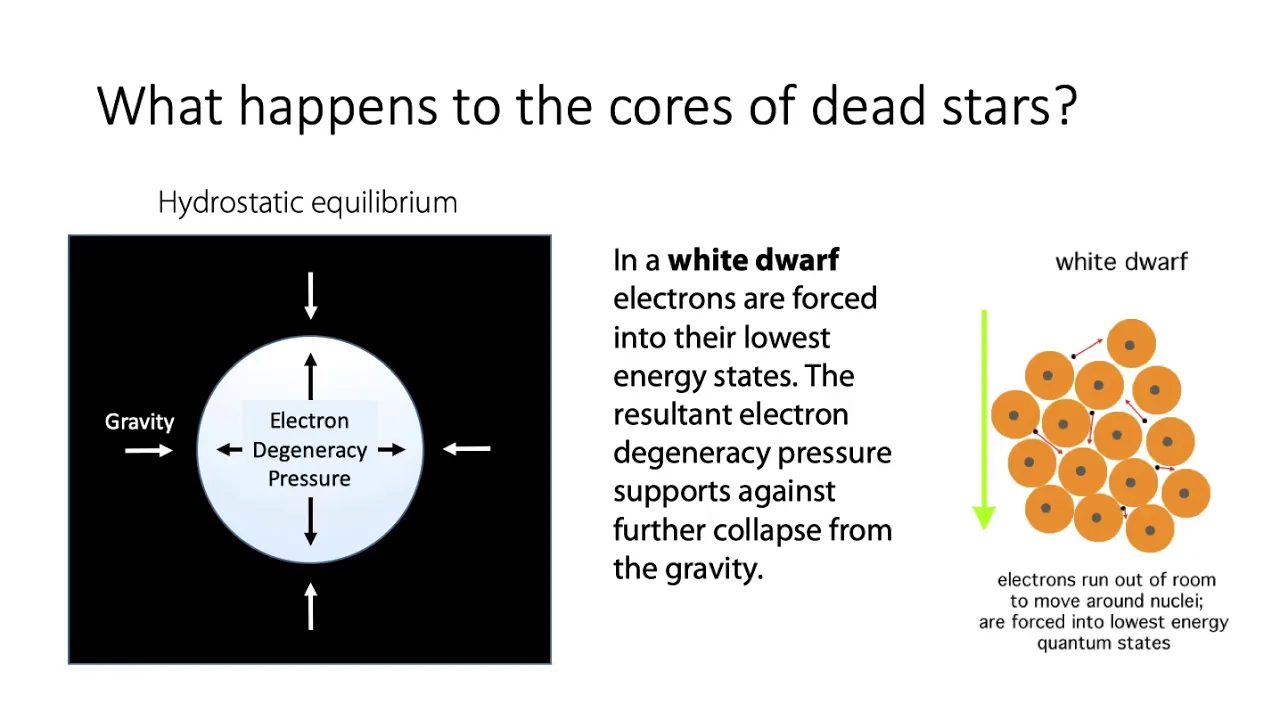
When the core becomes iron the star is doomed. Remember, every element created so far produced less energy than the one before it. By the time it reaches iron it stops producing energy altogether. On this last day of the star's life, the star cannot get hot enough to fuse iron because iron cannot be fused. At first the core contracts by a small amount and the electrons quickly become degenerate.
The core essentially becomes an iron white dwarf, but the surrounding shells keep dumping heavy elements onto the core until it reaches one point four solar masses. And that's bad. The density inside the white dwarf is a mind- crushing 400 billion times greater than water. It is so dense that gamma photons disintegrate the iron nuclei and transforms them into a soup of free protons and electrons. Wth no more energy to hold itself up, the core implodes. In less than 1/10 of one second, the core collapses from the size of Mars to the size of Manhattan. During the collapse the protons and electrons are squeezed together to form neutrons and neutrinos. The neutrinos escape the core, carrying energy away with them and the collapse accelerates. The neutrons are squeezed together so tightly they exert an ultra-powerful neutron degeneracy pressure and the collapsing core comes to a ringing halt at a radius of just a few kilometers. Unfortunately, the rest of the star doesn't know that. The surrounding layers just had their legs kicked out from underneath them and within a few milliseconds 250,000 Earth's worth of star stuff comes crashing down on the core at 15% the speed of light. A powerful shockwave rebounds off the core. The star has released more gravitational energy in just one second than all of the nuclear energy it released in its entire life.
But that energy has to go somewhere. Most of it is carried away in the form of neutrinos: 10 to the 58 neutrinos! Neutrinos are so tiny that 99.7% of them pass right through the star at the speed of light, but the remaining 0.3% of neutrinos collide with the dense matter in the shockwave. That may not seem like a lot but 0.3% of 10 to the 58 neutrinos is still 3 times 10 to the 55 neutrinos! That is a colossal amount of matter all colliding in the shockwave.
The shockwave gets supercharged and rips through the star at 10% the speed of light, exploding the star in a supernova.
The star brightens to 100 billion times the Sun. That's nearly as bright as all of the other stars in the galaxy combined! About one-tenth of a solar mass worth of neutrons is ripped off the core surface. These neutrons collide with heavier nuclei blasting out of the star. These nuclei then decay and form heavier elements including elements greater than iron. In fact, all the elements heavier than iron, including zinc, copper, silver, gold, even uranium are created in the Neutron fusion in the maelstrom of the supernova. Radioactive elements formed in the explosion decay over time, releasing more energy in the process. This keeps the supernova bright for several months at a time.
The exploding gases expand away, leaving behind the exposed core. The core is now a rapidly spinning ball of degenerate neutrons called a neutron star. These objects are at least 1.3 times the mass of the Sun, but are only between 10 and 12 kilometers across. That makes these things mind-bogglingly dense; up to a hundred-billion-trillion grams per cubic centimeter! Not only that, but they rotate at least 10 times per second when they form. This generates ultra powerful magnetic fields that are at least a trillion times stronger than Earth's. These ultra powerful magnetic fields act as particle accelerators, generating powerful beams of radiation along the magnetic poles. As these beams sweep across our line of sight, we detect them as repeating radio pulses so we call these magnetized rotating neutron stars "pulsars". Rotating or not, the neutron star surface is extremely hot at around 1 million Kelvin. That's hot enough to ionize the surrounding gases for about 25 thousand years. The most well-known supernova remnant is the Crab Nebula in the constellation Taurus. It formed in 1054 AD in a supernova explosion that was so bright it could be seen during the day.
At the center is the Crab Pulsar rotating at 30 times a second. It's magnetic field churns up the surrounding gas like a stellar eggbeater. Stars between 8 and 40 solar masses will ultimately produce neutron stars in supernova explosions. But if the star begins life with more than 40 solar masses, it'll produce an explosion that with at least 10 times the kinetic energy of a typical supernova. These explosions are so energetic we sometimes call them a "hypernova". The cores of these ultra-massive stars reach at least three solar masses. That's too massive for even Neutron degeneracy pressure to prevent its complete and total collapse into oblivion. The core collapses until it reaches a mathematical volume of zero, crushing itself out of existence. The core is now a black hole. As the black hole forms inside the collapsing star, matter rapidly funnels into it. This sets up powerful jets along the black hole spin axis and we see these jets bursting through in powerful gamma ray bursts. These explosions are the most luminous and violent in the entire universe; they are literally the biggest bangs since the Big one.
Whether it is a gamma-ray burst, a hypernova, or even a "mere" supernova, there is a tremendous amount of material blasting into the interstellar medium.
This gas is loaded with heavy elements and when it slams into a nearby interstellar cloud, it shocks the cloud into collapse. Suddenly hundreds of stars are able to form in a single blow. Over the next tens of millions of years,that dead star stuff rearranges itself to become new stars and rocky planets that surround them. And on at least one of those rocky planets, some of that dead star stuff rearranged itself again to become life. The iron in our blood, the calcium in our bones... virtually everything that makes up you and me was created in a supernova explosion. We owe our existence to supernovae but that doesn't mean we want to be anywhere near one of these things when they go off.
A supernova 50 light years away would sterilize all life here on Earth. Even 100 light years away would dramatically raise global temperature and radiation levels. In fact, a supernova that went off 150 light years away is probably responsible for a mass extinction that occurred 2.6 million years ago. Luckily, these massive stars are rare. In fact the closest star that could possibly go supernova is Spica in the constellation Virgo.
It's 250 light-years away and it hasn't even begun to evolve yet so we're safe......for now at least. As always, I need to thank my Patreon supporters for helping to make this channel possible, and I really want to give a special shout out to my newest patrons - and I'm just gonna read their names here really quick so I don't mess it up too badly - it's Justin McNutt, Alexander Primyak, Zach Peterson, The ANNO, and I want to welcome my first ever cosmological sponsor, Steven J. Morgan. Thank you all so much from the bottom of my heart and let me just also add a personal note here...I've been a little bit absent lately and that's for a reason.
You see matter rearranges itself to produce life but unfortunately it also rearranges itself to produce other things. My mother has returned to the universe. This past summer she was very ill in her fifth battle with cancer. When I wasn't working I was visiting her and that left very little time for videos. Then the semester began and I had to start teaching classes again among which was a new class I hadn't taught before and so I had to put a lot more work into it than I expected.
Well anyway when I wasn't teaching I was with mom and then mom passed on September 24th. Her name was Cecilia Reddy and she is my first-ever inspirer.
She gave me my first telescope, she always encouraged me to pursue what made me happy and what brought me joy and she was so proud of this channel and I know she was proud of me too. She was a professor of English and I guess she named me after herself because my students call me Professor Ready at school so it's kind of funny. But mom, thank you for everything and just know that you're always gonna be with me and I'm always with you and even though matter rearranges itself doesn't mean they can't rearrange the memories. So anyway, thank you so much for all of your support and your patience as I've been a little bit busy in the last couple of months just getting everything ready and settling matters. But now I'm back and I'm so glad to be back with you. Thank you again and if you would like to learn how neutron stars and black holes work I'll be making some videos on them very soon and I also have a video that talks about how stars work and how our Sun will die if you'd like to go back and just kind of see how we got to this point in our discussion. Until then thank you so much, make sure you subscribe and ring that notification bell so that you don't miss out on any new videos. And until next time, stay curious my friends.
Up Next

19:37
Element Origins: Why Not All Atoms Are Stardust
@ScienceAsylum
528.9K views•2024-03-29

12:53
21cm Hyperfine Transition in Neutral Hydrogen: Radio Astronomy Basics
@AaronRobertParsons
12.4K views•2011-10-13
14:40
James Webb Space Telescope: Orbiting the Sun-Earth L2 Point
@LaunchPadAstronomy
2.3M views•2022-01-28

27:14
Entropy and the Second Law of Thermodynamics Explained
@veritasium
27.5M views•2023-07-01
Related Study Plans & Knowledge Roadmaps
Structured learning paths in Physics
physics
Nuclear Physics (Decay, Fission & Reactors)
01Atomic Structure and the Binding Force
02Radioactive Decay and Half-Life
03Nuclear Fission Mechanics and Chain Reactions
+ 2 more learning modules
12h5 modules
Explore Roadmap
physics
Soft Matter (Polymers, Colloids & Rheology)
01Foundations of Soft Matter & Thermal Forces
02Polymer Physics and Macromolecules
03Colloids, Surfactants, and Self-Assembly
+ 2 more learning modules
38h5 modules
Explore Roadmap
physics
Analytical Mechanics: Lagrangian & Hamiltonian
01Mathematical Foundations: Calculus of Variations
02From Newtonian Mechanics to Constraint Dynamics
03The Principle of Least Action & Lagrangian Mechanics
+ 3 more learning modules
28h6 modules
Explore Roadmap
physics
General Relativity (Spacetime & Cosmology)
01Foundations of Relativity: Special Relativity
02The Geometry of Spacetime: Equivalence Principle & Curvature
03Einstein's Field Equations: The Mathematics of Gravity
+ 2 more learning modules
55h5 modules
Explore Roadmap