

![Structure of the Atom - Proton, Neutron, Electron - Atomic Number & Mass Number - [1-2-6]](https://i.ytimg.com/vi_webp/7CoK5q4p4M4/maxresdefault.webp)











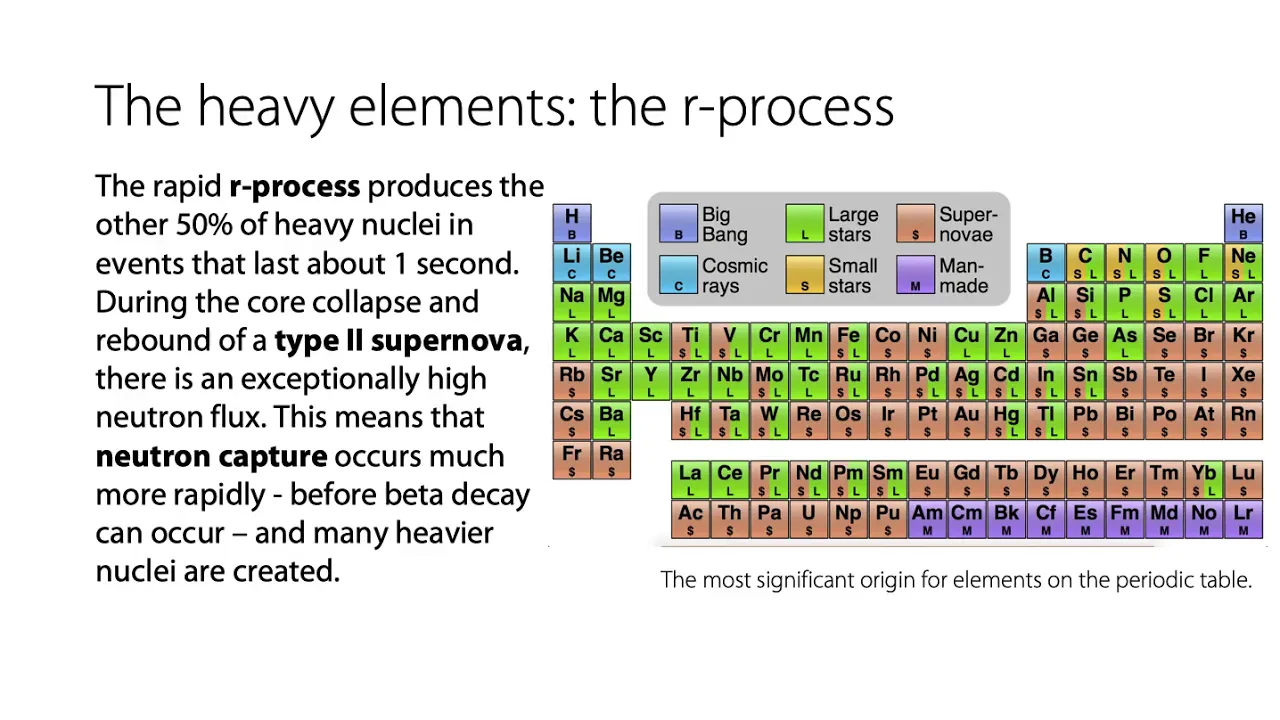


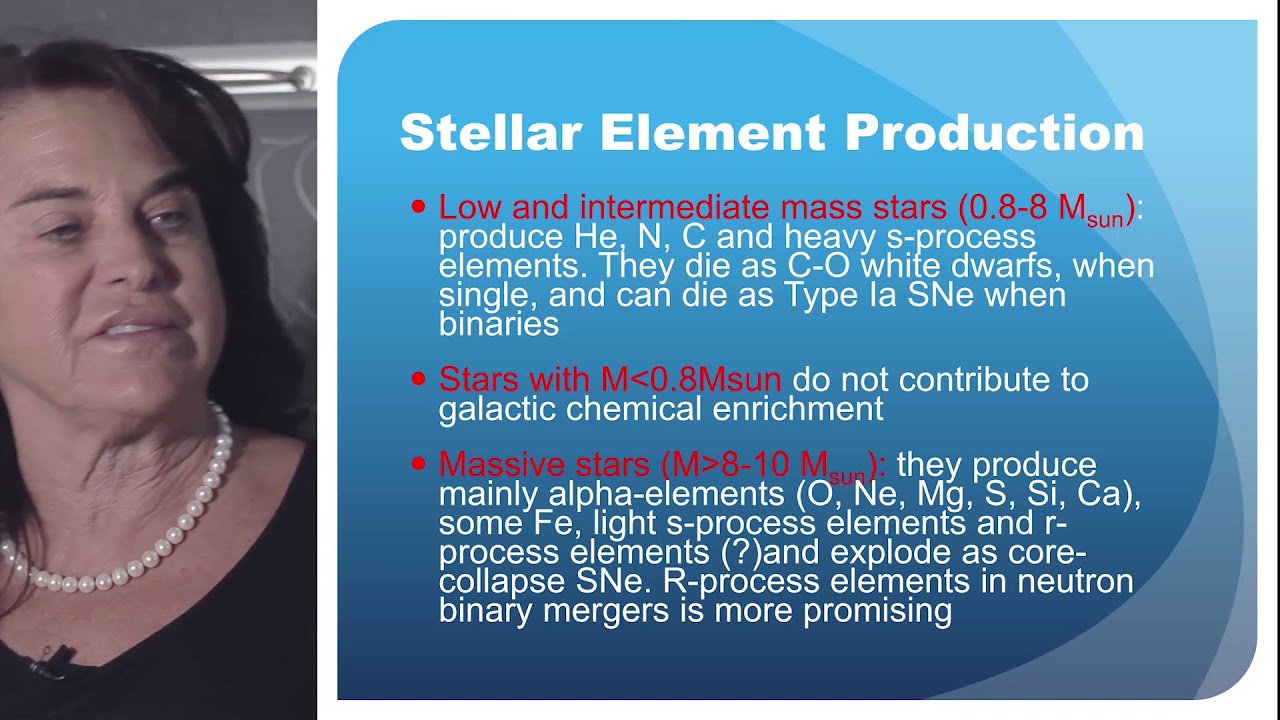




Not all elements are created through stellar fusion; hydrogen and helium originated from the Big Bang nucleosynthesis, while heavier elements are formed through various astrophysical processes including stellar nucleosynthesis in massive stars, supernova explosions, cosmic ray collisions that create lithium, beryllium, and boron through fission, and neutron star mergers that enable rapid neutron capture (r-process) to produce the heaviest naturally occurring elements.
Element Origins: Why Not All Atoms Are Stardust
Added:The basic structure of an atom, including protons, neutrons, electrons, and how the atomic number defines an element.
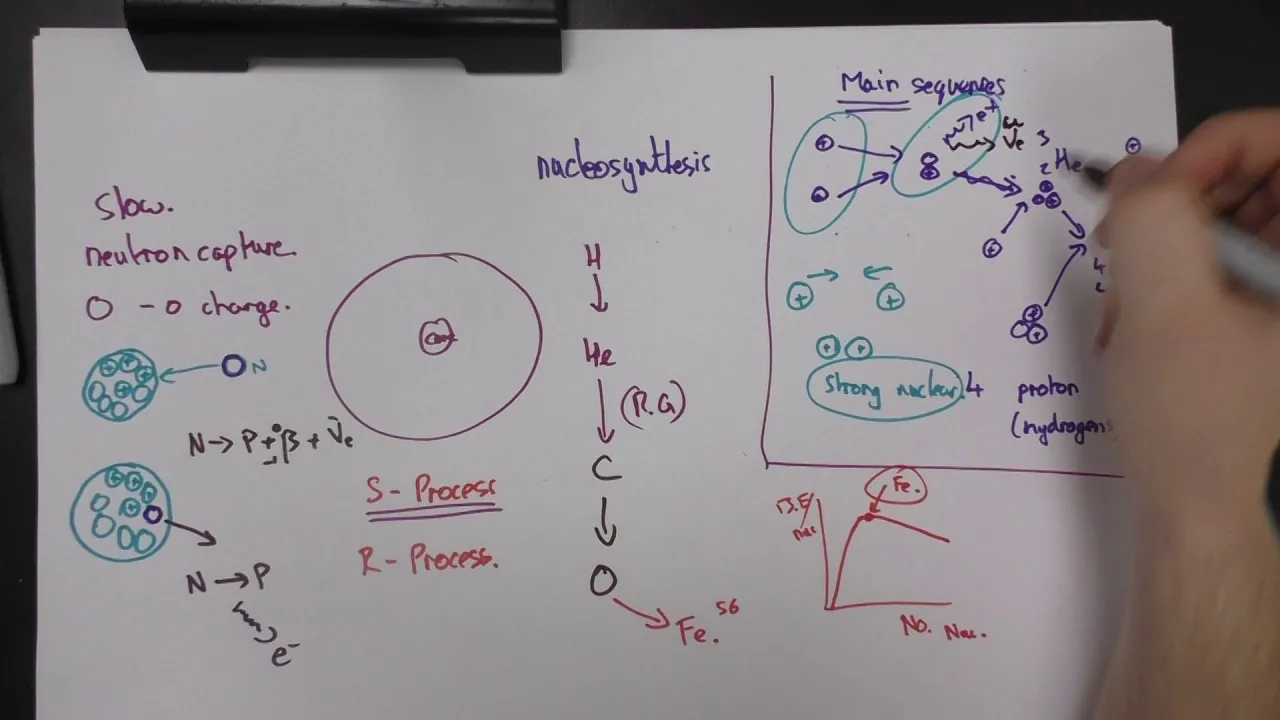
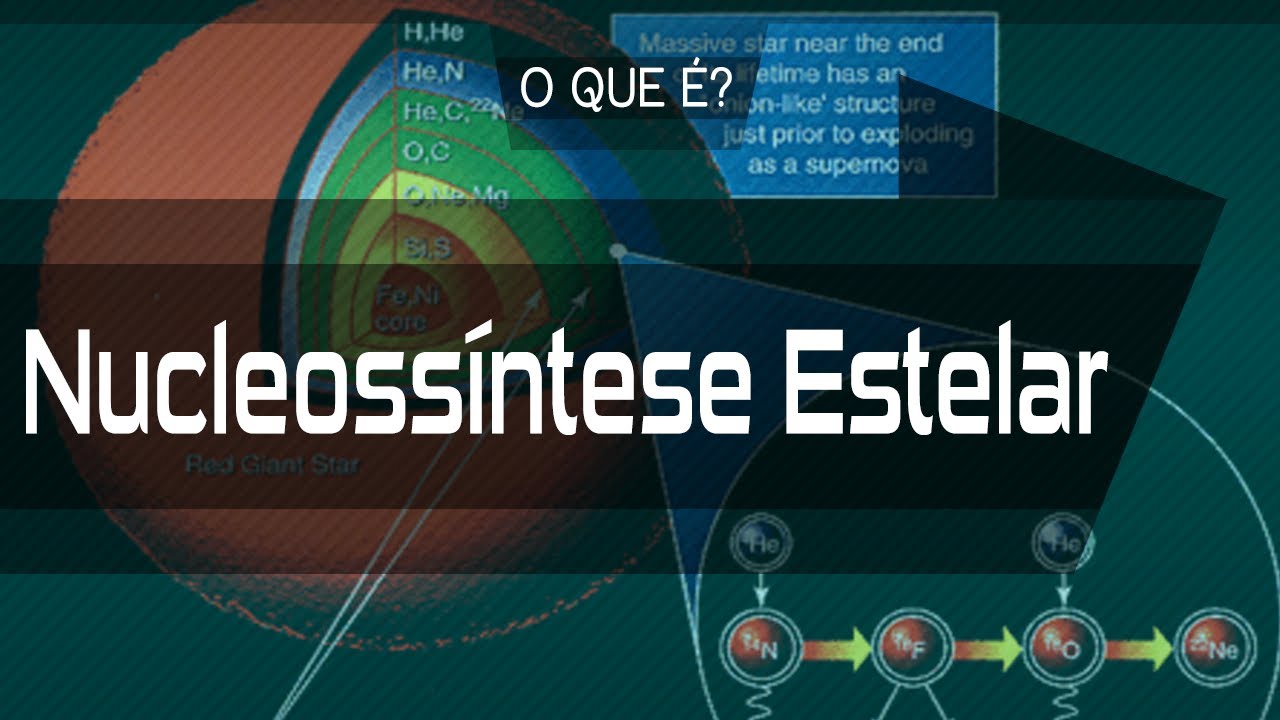
The concept of standard stellar nucleosynthesis, specifically how stars fuse hydrogen into helium and heavier elements up to iron.
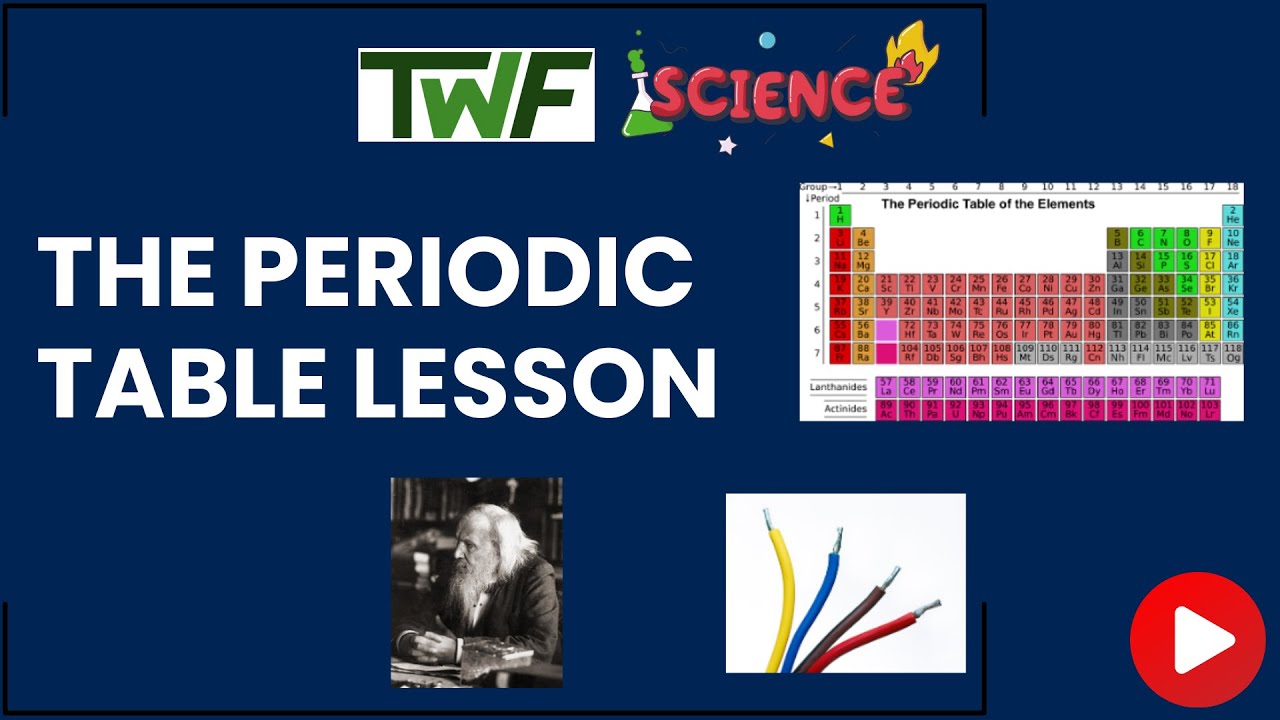
An understanding of the Periodic Table of Elements and how elements are organized by atomic mass.
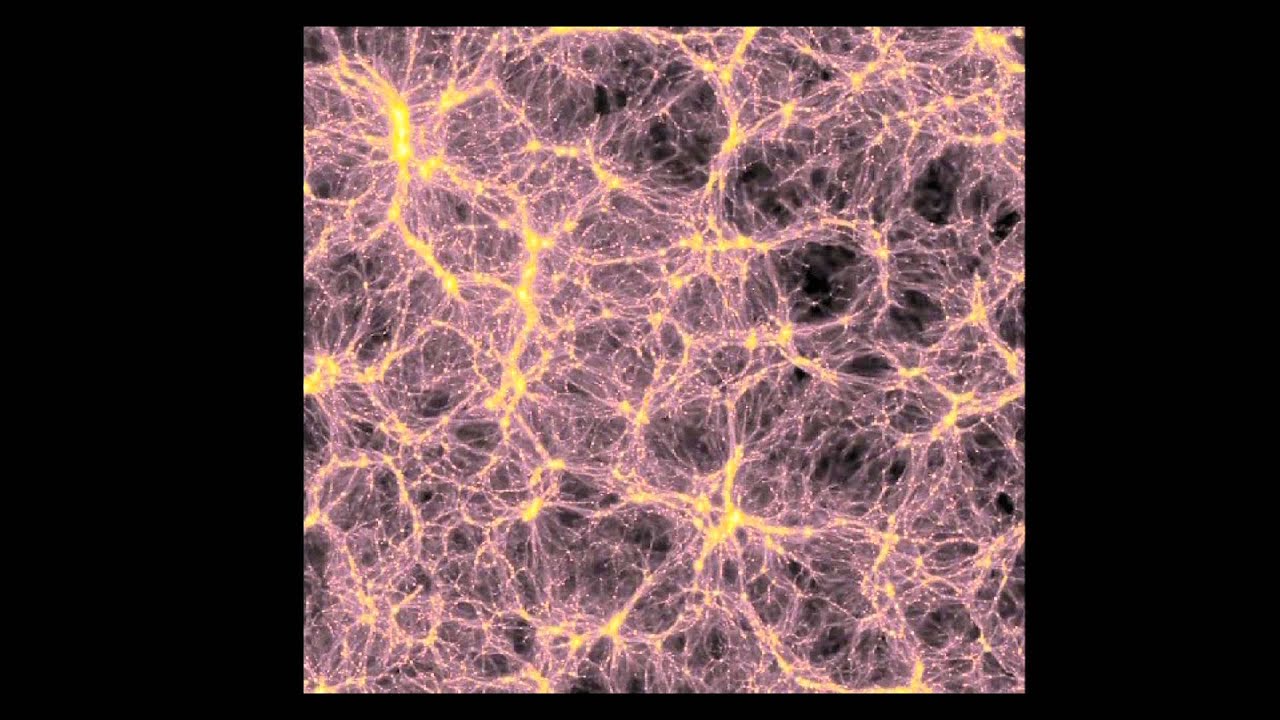
The fundamental concept of the Big Bang theory as the initial expansion and origin of the universe.
The distinction between the r-process (rapid neutron capture) and s-process (slow neutron capture) in creating heavy elements like gold and uranium.
The mechanics of cosmic ray spallation and how it produces light elements such as lithium, beryllium, and boron.
The theory of Galactic Chemical Evolution (GCE), which tracks how the elemental composition of galaxies changes over cosmic time.
Astronomical spectroscopy and how astrophysicists analyze light to identify the elemental composition of distant stars and nebulae.
528.9K views21.9Klikes19:37Original Release: 2024-03-29
All the hydrogens in your body were made at the Big Bang? Sure.
Because all hydrogen was made at the Big Bang.
You don't make hydrogen anymore. Right. It just is.
[Intro Music] Hey Crazies. Welcome to another installment of Wife Reacts.
This is my wife: AwkwardM. Hello!
Okay, so how familiar are you with nuclear fusion?
Nuclear fusion? I mean, I watched your last video.
And I don't even know everything in the video, so... Sure, there were certainly some nuances I had to cut from that, so... Sure. If you haven't seen the last video, go watch it.
Nuclear fusion is where elements on the periodic table are built.
It's how we build the nuclei of those atoms. Okay.
But many of them are actually created in some surprisingly weird ways.
Weird is usually interesting. Yes.
We're going to start at the beginning. It's always a good place to start. Yes.
[Transition Music] So, way back in the early days.
Of the universe. Yes, of everything. Of everything.
Nuclear fusion did occur.
Way back before atoms actually formed. It was too hot for that, right?
The entire universe was filled with plasma.
And it was so hot. It was basically the temperature of the inside of the core of our Sun.
Feeling hot, hot, hot.
So the entire universe is super hot, like stellar core hot, which means fusion is occurring.
Now, it's not hot enough to make super big elements, but these are the elements that got made. Okay.
So obviously hydrogen. Obviously.
At that point, if it's hydrogen plasma, it's just protons. Exactly.
If there are protons, there is hydrogen.
Those are sort of the building blocks of all the elements, right? Obviously.
Then nucleosynthesis starts to happen and those protons start to become helium.
By the end of this big bang nucleosynthesis, the universe was about 75% hydrogen and 25% helium.
If we have helium, does that mean that we also have neutrons?
Yes. Okay.
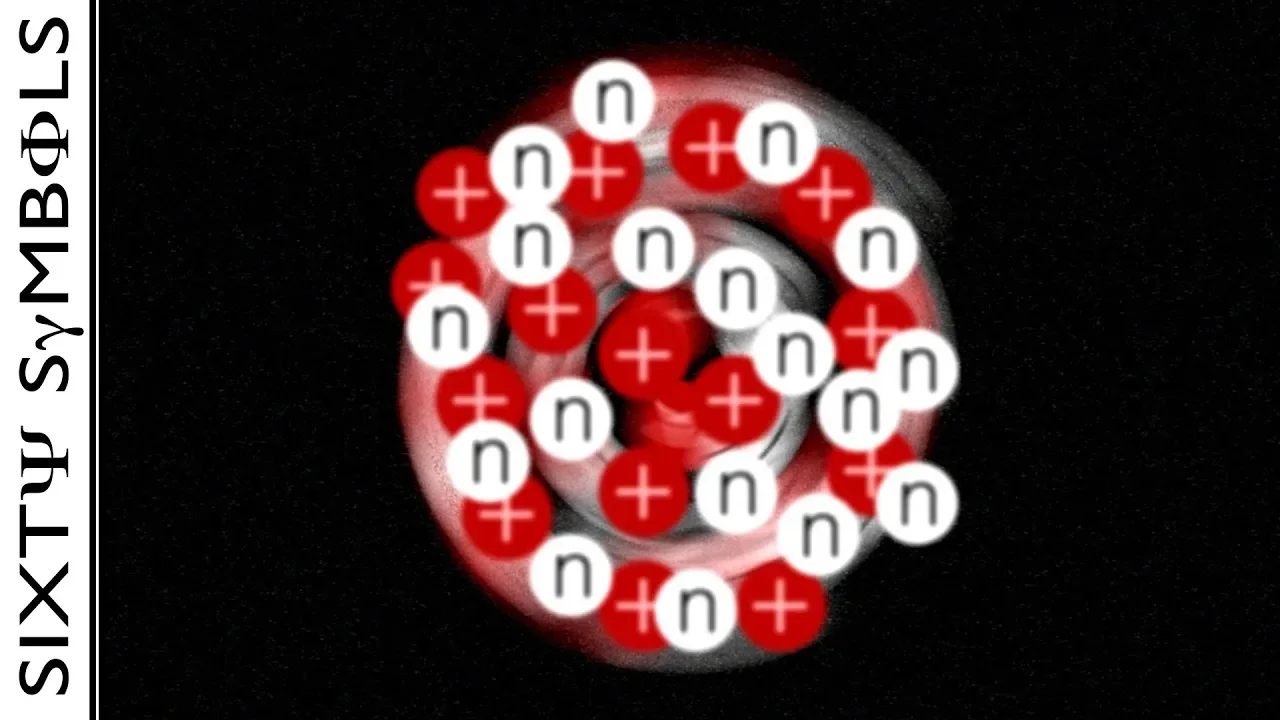
When two protons come together, they make a deuterium, which is basically a heavy hydrogen. Okay.
And, in the process, one of those protons becomes a neutron.
Okay. They're made in the process of making deuterium, which ultimately comes together again to make helium. Okay.
And so, in these nuclear reactions, protons become neutrons.
And there are electrons, it's just a pool of electrons. Correct. Okay.
That process also created some trace amounts of lithium, but not all that much. Okay.
It existed. It existed.
[Transition Music] For any more fusion to take place, we would have to wait for stars.
We've heard that all elements are products of stardust or whatever the saying is.
Right. That's not actually true, which we're going to find out as we go.
What we're going to find out as we go through this video. That's an oversimplification.
What? Yeah, I know, surprise.
Alright, so what we have here is the periodic table filled in for stellar nucleosynthesis.
And you can see that it's still barely any of the periodic table.
Stellar nucleosynthesis is technically what your last video was about?
Correct. Okay.
Particularly the kind that you see in big stars, which is quite a bit more than you'd see in something like the Sun.
It's almost best case scenario when talking about making new elements. Right.
You've got helium can be made in some of these low mass stars, but also carbon eventually will be made in the Sun and some small amounts of oxygen can get made. Okay.
But if you want to go a little larger, say a medium mass star or something, you might be able to get things like neon and sodium and magnesium and stuff like that. That's the green stuff.
Silicon, phosphorus. Right. Okay.
But it takes the really really big stars, the ones that are at least eight times the mass of our Sun, to make any of the other stuff on here. Okay.
At that point, you start just adding heliums, you go two at a time in the periodic table.
So you go to sulfur and then to argon and then to calcium and then to titanium and so on.
And so you work your way up until a process called photodisintegration prevents any further fusion from happening, which I also mentioned in that video. You should go check it out.
But where does any of this other stuff on the periodic table come from?
I mean, look at all this stuff that’s not shaded in. Right!
None of that gets made in stellar nucleosynthesis.
None of it. Alarming. Right?
There is an alarming amount of elements that are not shaded in on that periodic table. Right.
You have to ask yourself the question like, where does this stuff come from? Right?
We have a whole periodic table full of stuff.
Yeah. Where does it come from, Nick? Tell us.
The people want to know! Right.
[Transition Music] Supernovas are what happens when a really massive star ends its life and it blows up.
With the amount of energy that is released during a supernova, you have a lot of excess that you can dump into these things in order to get them to fuse.
Out in the universe?
No, they fuse during the fractions of a second that the supernova is happening.
The supernova’s like, boom! Right. Right. It is an actual explosion?
It is an actual explosion.
It's not just suddenly the star is just growing to be a light year across.
It occurs on the scales that you anticipate for an explosion.
Exactly. Yes.
And it can certainly take some time for that material to get to the size of a nebula, but the explosion itself is fractions of a second. Right.
And, in that fraction of a second, you can create so many other elements. Okay.
But at that point, they're not getting formed by stellar fusion? Correct.
Because the star does not exist anymore? Correct.
So you can't call that “stellar nucleosynthesis.” Right.
But it is fusion. It is fusion.
It's just not stellar fusion. Right. Okay.
On here you can see the yellow ones are the ones that get made during the supernova.
Yep. That fills in a lot of the table up near the top.
Yes. But it fills in some elements that we didn't have in stellar nucleosynthesis. Right? We skipped over a bunch in that process.
Right. We went by twos at the end there. Right.
And so this kind of just fills in a lot of it, but it's not enough. Yeah.
For a really long time, we thought that supernovas made everything else in the periodic table.
As we've gotten better at modeling supernovas, we've realized that that's just not the case.
It certainly explains many of the elements we hadn't made yet, but it's not enough to explain everything. Sure.
[Transition Music] I mentioned earlier that the universe was 75% hydrogen and 25% helium at the big bang.
And just a smidgen of lithium. Right.
Now, as in present day, you know... 13.8 (almost 14) billion years later, the universe is still 70% hydrogen and is now 28% helium.
We have lost 5% of hydrogen and then we've gained about 3% of helium.
And so that leaves about 2% for everything else on the periodic table. Sure.
That's important to note as we move forward, right?
So we don't have to explain huge abundances of these things because they don't have huge abundances. Right.
Obviously, man, some more than others, right?
What you'll see here is a chart with abundances.
Now, this vertical axis is logarithmic, so that hydrogen and helium there over on the upper left is way, way bigger than any of this other stuff. Okay.
In fact, you can see here that carbon and oxygen, which are the next ones down, are orders of magnitude less abundant. Sure.
Any of the stuff that's filled in here for stellar nucleosynthesis, you'd expect to have a lot more of these things than anything else. Okay.
And that's exactly what we see on the abundances chart.
They're all at the top of the peaks in this high section here.
What's interesting though, is that these are the building blocks of life on Earth though.
They’re the ones that are made by nuclear fusion.
Yes. Generally speaking.
Generally speaking.
Another cool thing is all the hydrogens in your body were made at the big bang.
Sure. Because all hydrogen was made at the big bang.
You don't make hydrogen anymore. Right. It just is.
It just is. It just gets recycled.
We don't make new protons.
Those hydrogens have been around since the birth of the universe.
That's wild. Yeah. Since matter was formed.
I feel so old all of a sudden.
Once stellar nucleosynthesis hits its limit though, there's a sudden drop in abundancy.
So beryllium over here... Yeah.
What's going on with him?
Beryllium is actually quite difficult to make, which is where we want to go next here. Oh great.
[Transition Music] It's actually quite difficult to make lithium, beryllium, and boron through fusion. Okay.
Do we know why that is? Are we getting into that today? Yes.
This graph is a graph that I had in my previous video. I recognize it.
This is the binding energy curve. Yes.
And, on here, you can see that it kind of arcs down and then it starts to arc back up eventually. Right?
Is this big dip here in the front... is that beryllium?
The big dip at the bottom? The little bottom spike there at the beginning?
Yeah. It’s helium. Helium?
And then the upward tick... Is beryllium.
...is beryllium and lithium and stuff. They're all up in that upward tick and so it's actually quite difficult to get there.
Generally, fusion just kind of skips over it.
Because it requires too much energy to bind it together? Right.
I wonder if it's similar to activating energy. Are you familiar with activating energy in biology?
No, talk to me about that.
Activating energy is the amount of energy necessary to combine molecules or to break molecules.
So, like, we often say that an enzyme has a specific amount of activating energy that it needs in order to perform a chemical process.
The analogy that we always use in biology when we're talking about activating energy is a pole vaulter.
If you have a really high... What do you call the pole that you need to jump over?
“Bar” is the word I’m looking for.
If you have a really high... Words are hard.
Master's degree. Language is hard. Okay, so “bar.” If you have a really high bar that you need to jump over as a pole vaulter, it's going to take more energy in order to get over the bar.
And so that's like having a really high activating energy.
And I wonder if binding energy is similar to that.
Uh, yeah, it's very similar actually, just on the nuclear level. Sure.
But it's basically the same thing.
So this is really low for lithium, boron, and beryllium, considering how high they are in the periodic table. Right. What's the deal with that?
This is a periodic table filled in for cosmic ray collisions, and this is exactly the three elements that we saw on the abundances chart that are too low.
These supernova explosions that happen, they send out quite a lot of material. In fact, they send out quite a few protons.
And these super high energy fast protons are what we call “cosmic rays.” When they hit our atmosphere, we get something like muons, which we don't expect to see, right?
And that's a whole other video that I have on the channel.
Yeah, go watch that one. That one’s also interesting.
But they don't have to hit an atmosphere of a planet. They can hit all sorts of stuff, right?
And sometimes they hit a large nucleus that's floating around out there.
And, when they do that, they can break off pieces. Oh!
And when they break off small pieces, sometimes those pieces are lithium, and beryllium, and boron. Interesting.
So it's not from a fusion. Right.
It is from... Fission. Fission.
I did not see that coming. That's a surprise. Okay.
So beryllium, and lithium, and boron are actually quite difficult to make.
They end up getting made by fission instead of fusion. That's interesting.
Which is wild. It's actually a lot easier to make them that way. That's crazy.
And so I'm sure the probability of a cosmic ray hitting the specific molecule necessary to form beryllium or boron, I mean... it's just so low. It is. That's exactly right. Okay.
And so that's why you end up with really low abundances of those things. That makes sense.
[Transition Music] We still have quite a bit of the periodic table to fill in.
With something more exotic? Right.
And what this is actually going to take is a completely different process for making larger elements. Okay.
And that's something we call “neutron capture.” Neutron capture?
One of the reasons that fusion is hard to do is because all nuclei are positively charged and like charges repel each other.
But neutrons are not charged.
They are neutral, hence the neutron.
Yeah, they can smash into a nucleus and become part of it.
Sure, but that's not going to change the element that it is.
It isn't, but what happens is that, a lot of the time when that neutron enters the nucleus, it decays and becomes a proton.
Particles just need to commit.
What are you? You know? Surprise! I’m a proton! Surprise! I’m a neutron!
They have big commitment issues, right? They do, yeah.
I don't like it, but I accept it.
There's two ways that neutron capture can occur.
There's something called an r-process.
The ‘r’ stands for “rapid.” Versus the s-process.
Slow? Slow.
And which of those occur and when depend on the circumstances.
For the rapid process, what happens is that a bunch of neutrons end up in the nucleus before they start to decay into protons.
And so then you're going to end up with a much bigger element? Right.
You're going to end up with a much bigger element.
You're going to end up with a much bigger jump on the periodic table. Right.
Whereas with the slow process, you'll get a lot fewer in there before some of them decay into protons.
So those are much smaller steps. That makes sense.
If you get enough neutrons happening, which can happen during specific fusion processes.
There are these lower probability reactions that can occur.
That are non-zero? That are non-zero.
So they do occur? Right.
And if you've got enough particles like you would in the core of a massive star, they happen in appreciable amounts. Exactly. Sure.
And so you can see we're now getting into the lower part of the periodic table.
We're inching our way in. Yeah.
And if you remember from the abundancy chart, a lot of these large nuclei have really low abundances. Sure.
And this process doesn't have to happen very often to reach that, to achieve those levels.
For the element to exist. Right.
[Transition Music] If all we consider is low mass stars that are dying and high mass stars that are on their way out, it's not enough to explain the abundancies of these elements that we actually see in the universe. Okay.
And so then a few years ago. Oh!
Yeah, very recent. New research!
We have a whole list of gravitational wave detections and these gravitational waves come from colliding binary systems, usually black holes. Sure.
Black holes are bigger. They create bigger gravitational waves.
But we have detected neutron star mergers and those also generate detectable gravitational waves.
We were able to detect the gravitational waves and the spectra of the explosion at the same time. Okay.
The gravitational wave data told us that it was a neutron star merger and then the spectral data gave us all sorts of information about the composition of things.
And so what ends up happening is a lot of neutron star material is shed out and exploded in space. Okay.
Particularly individual neutrons.
And so then are we looking at more neutron capture?
Oh yeah. Okay.
And quite a bit more than we would ever see in a star. Interesting.
The sheer number of neutrons in a neutron star is so much larger than you'd ever see in a normal star. Oh, for sure.
I would like to take a moment and say that a neutron star is not actually a star, correct? Correct.
And so that's why when you're saying you see so much more in a neutron star than you would in a star, that might be confusing. Yeah, that can be confusing.
It's a terrible name, right?
The issue is that it's the difference between the scientific definition of a star and the colloquial definition of a star. Sure.
Where, like, it's a point of light in the sky that doesn't wander around.
Well, that's a “star.” Right.
But not to a scientist. But then the names kind of mix and you’ve got to, like, figure it out from the context.
And it's really confusing.
Yeah. So I just wanted to take one second just to point that out for... Thank you....us all.
It would be better to call it a “neutron remnant,” but doesn't sound as cool. Yeah.
Our neutron remnant. Right. It basically blows up.
A lot of that material is blown out into space.
It's just basically a giant ball of neutrons.
And so, so many more neutrons get blown into space than you'd ever see in a neutron capture inside of a regular star, an active star. Sure.
What we’ve found is that neutron capture from the neutron star explosions almost entirely makes up the difference in the abundances that we see. Okay.
And so you can see that merging neutron stars fills in almost the entire rest of the table.
Totally the entire rest of the naturally occurring elements.
The rest of them are radioactive.
They don't occur in nature for any regular length of time, right?
We have to make those in the lab. Yeah.
These neutron star mergers are a huge deal. Yeah.
That is the vast majority of the neutron capture occurring in the universe. Sure.
Now you've got atoms flying everywhere. Right. Right?
They make it in there. They use the rapid neutron capture process.
They make these really large elements and then those elements zip out into space.
Well, I mean, if we have the elements here on Earth. Yeah.
They got here from somewhere. Right.
Those elements were made in a gas cloud that was hit with a bunch of neutrons from neutron mergers.
Interesting. Most of them. Yeah.
Neutrons. Neutrons.
That's a surprise. Yeah.
Neutron saving the day. Yeah.
Making the day, if you will.
[Transition Music] Now, this doesn't account for everything.
There are obviously some still unanswered questions.
The model doesn't predict exactly the abundances that we see, but it's very close.
It is close enough that it is our best working model as of right now, with the information that we have. Right.
We're still missing a piece of the puzzle.
But this last bit of information from these gravitational wave detections in the last five, six years... Right....so huge!
It's all still from stars? Yes.
It's just not always so directly.
When we think about elements being formed in stars as stardust, bringing back that saying, we just assume that it is made inside of the star and then the star explodes and it just goes out into the world, like the supernova that we started with.
And obviously that's not the case. So sometimes it takes extra steps.
The star has to die and turn into a neutron star.
Right, it has to turn into a remnant and then the remnant has to be in a binary pair that spirals in and explodes.
Which really helps describe the abundancy chart.
It helps us understand why that is the way that it is.
Why those large elements are so, you know, why we find them so infrequently. Definitely.
Yeah, that's a good thought. It did require stars to exist.
And while it might not be coming from the stars themselves, if the stars didn't exist then the elements wouldn't exist. Exactly.
They are a crucial part of the process... Yes....but not necessarily the entire process.
Saying that everything is stardust is not inaccurate... Right....but it can be misleading.
There's more nuance, which I think is what you said at the beginning of the video.
Who knew? Who knew?
But on that note, until next time, remember: It's okay to be a little crazy.
@johannaverplank4858 finds it interesting that we talk about stars having a life even though they're not alive.
Yeah, it is interesting.
We do this with phones and cars too, basically anything with fuel or electricity.
Stars certainly fit that description.
But even more interesting, not every language has the metaphor.
Anyway, thanks for watching!
Surprise! Surprise! There it is.
Up Next
81:36
Colliding Neutron Stars & the Origin of Heavy Elements | Astronomy Lecture
@SVAstronomyLectures
93.7K views•2018-02-10

12:53
21cm Hyperfine Transition in Neutral Hydrogen: Radio Astronomy Basics
@AaronRobertParsons
12.4K views•2011-10-13

5:36
Gravity and Falling Objects Explained by General Relativity
@ScienceAsylum
167.6K views•2018-03-06

27:14
Entropy and the Second Law of Thermodynamics Explained
@veritasium
27.5M views•2023-07-01
Related Study Plans & Knowledge Roadmaps
Structured learning paths in Physics
physics
Nuclear Physics (Decay, Fission & Reactors)
01Atomic Structure and the Binding Force
02Radioactive Decay and Half-Life
03Nuclear Fission Mechanics and Chain Reactions
+ 2 more learning modules
12h5 modules
Explore Roadmap
physics
Soft Matter (Polymers, Colloids & Rheology)
01Foundations of Soft Matter & Thermal Forces
02Polymer Physics and Macromolecules
03Colloids, Surfactants, and Self-Assembly
+ 2 more learning modules
38h5 modules
Explore Roadmap
physics
Analytical Mechanics: Lagrangian & Hamiltonian
01Mathematical Foundations: Calculus of Variations
02From Newtonian Mechanics to Constraint Dynamics
03The Principle of Least Action & Lagrangian Mechanics
+ 3 more learning modules
28h6 modules
Explore Roadmap
physics
General Relativity (Spacetime & Cosmology)
01Foundations of Relativity: Special Relativity
02The Geometry of Spacetime: Equivalence Principle & Curvature
03Einstein's Field Equations: The Mathematics of Gravity
+ 2 more learning modules
55h5 modules
Explore Roadmap