







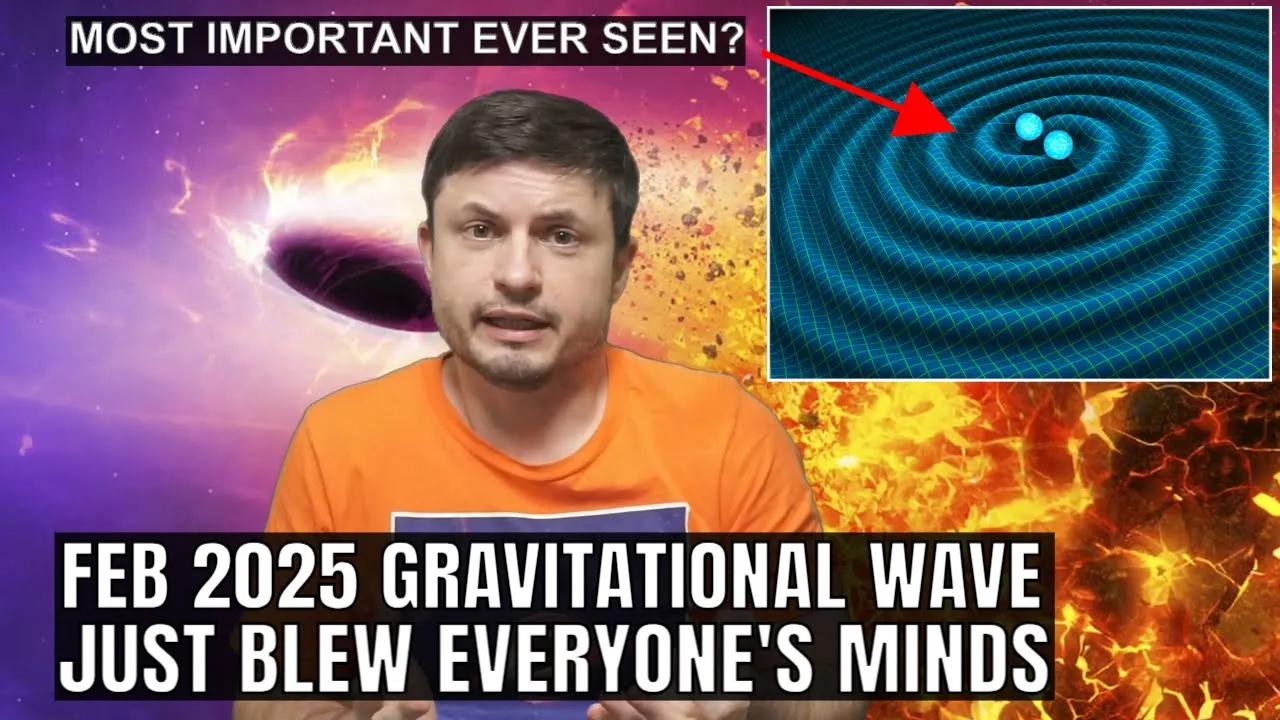





The collision of two neutron stars produces gravitational waves and releases heavy elements like gold, platinum, and uranium through rapid neutron capture (r-process), solving a 70-year mystery about the origin of these elements in the universe; this was confirmed when LIGO detected gravitational waves from a neutron star merger in August 2017, followed by observations across the electromagnetic spectrum showing a bright kilonova that ejected over 100 Earth masses of heavy elements.
Colliding Neutron Stars & the Origin of Heavy Elements | Astronomy Lecture
Added:The fundamentals of stellar evolution, specifically how massive stars end their life cycles in supernova explosions to form dense neutron stars.
Basic atomic structure and the periodic table, including the distinction between light elements (like hydrogen and helium) and heavy elements (like iron and gold).
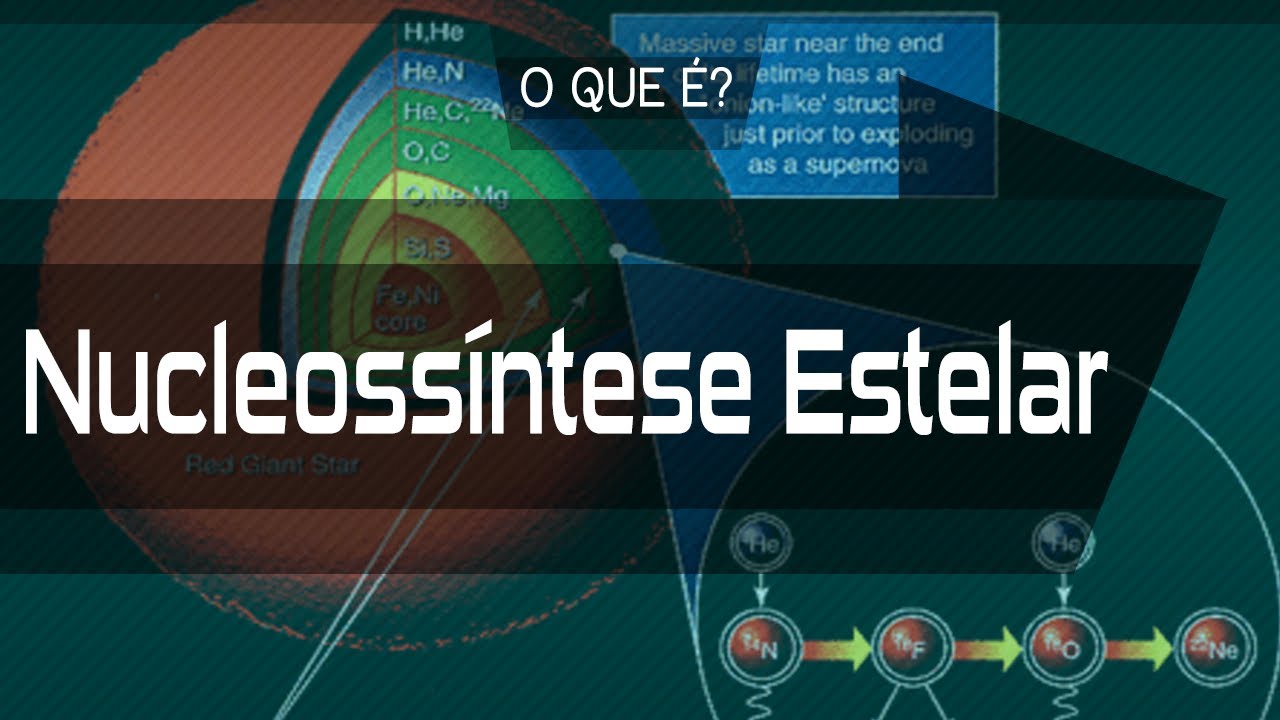
Standard stellar nucleosynthesis, or the process by which normal stars fuse lighter elements into heavier ones up to iron.
An introductory concept of gravity in binary systems, understanding how two orbiting objects can eventually spiral inward and collide.
The nuclear physics of the 'r-process' (rapid neutron capture) versus the 's-process' (slow neutron capture) in creating the heaviest elements.
Multi-messenger astronomy and the significance of events like GW170817, which combined gravitational wave detection with electromagnetic observations of a kilonova.
The Galactic Chemical Evolution (GCE) model, which tracks how the abundance of heavy elements in the universe changes over cosmic time.
The technology and physics behind gravitational wave observatories, such as LIGO, Virgo, and KAGRA, used to detect these massive cosmic collisions.
93.7K views813likes1:21:36Original Release: 2018-02-10
[Music] good evening everyone my name is Andrew frack Noi I'm the emeritus chair of astronomy here at Foothill College and it's a great pleasure for me to welcome everyone here in the Smithwick theater and everyone listening to us on the web to this special program in the 18th year of the silicon valley astronomy lectures these lectures are co-sponsored by NASA's Ames Research Center the Foothill College astronomy program the Astronomical Society of the Pacific and the SETI the search for extraterrestrial intelligence Institute in Mountain View and we welcome everyone to these ongoing programs tonight's talk is a very timely one and we're delighted the return to welcome back dr. Elliott quater who is going to speak to us about one of the most exciting discoveries that has happened in the last year the beginning of what many people are calling multi messenger astronomy dr. quarter is a professor of astronomy and physics at the University of California at Berkeley and the director of its theoretical astrophysics Center he is an astrophysics theorist who works on a wide range of problems looking at stars and black holes all the way to issues of how galaxies form he's received a number of national awards for his research but is also highly regarded as a teacher and a public lecture he tells me that he teaches a course on undergraduate non-science majors course at Berkeley on the origin of everything from the physical to the biological and I know he's a delightful speaker we're delighted to have him back to talk about colliding neutron stars gravity waves and the origin of the heavy elements ladies and gentlemen dr. Khatri [Applause] thanks everyone for coming out tonight it's a great pleasure to be here so what I'd like to do tonight is try to tell you a remarkable story about how the conception and development of a new telescope a new way of seeing the universe this is actually the telescope I'm talking about which doesn't look like telescopes you're probably familiar with but the development of this telescope which sees the sky in a new way through gravitational waves how this not only taught us a lot about some of the most exotic objects in the universe black holes and neutron stars but also solved a long-standing puzzle about where many of the elements we know and love here on earth came from things like gold platinum uranium California and Berkeley um there's no less Altium as far as I know so to start I want to take you back to high school chemistry I'm sorry to do that so I don't really mean breaking bad variety chemistry one of the best TV shows in history but actually the BR and the ba there you may remember are part of a larger construct known as the periodic table so I actually really didn't like chemistry I didn't do particularly well in either high school or college chemistry physics was much more natural for me but the periodic table is quite remarkable in this single table which comprises elements like hydrogen helium oxygen iron Gold contains essentially all of the information about the basic building blocks of everything on earth the lecture hall we're in the core of the earth our bodies are all made out of these fundamental building blocks from a physics point of view we break these down even more protons electrons neutrons things like that but from a chemistry point of view it's these basic elements that describe the world that we live in one of the remarkable results in physics in the last 70 years has been that we actually know in some detail where most of the elements in the periodic table are actually produced so the fact that here on earth and in the Sun there's gold uranium oxygen nitrogen that wasn't kind of put there on high each of those elements was formed in some object out in the universe eventually made its way into the gas cloud that later collapsed to form the Sun and the earth and we can trace back that story of where those elements were actually formed and in broad-brush the story is that the lightest elements in the periodic table hydrogen which is just a proton and an electron helium which is two protons two neutrons two electrons lithium those light elements we think were actually produced in the very early history of the universe soon after the Big Bang in the first few minutes after the Big Bang but almost everything else and hence almost everything that's critical for the functioning of life here on earth for all of our everyday experience almost everything else was produced in stars and in stellar explosions so the Sun right now for instance is fusing hydrogen into helium it's turning hydrogen into helium generating the energy that produces the light of the Sun and ultimately produces the heat and life here on earth other stars as they go through their lives fuse helium and to carbon carbon into magnesium stellar explosions produce things like iron and nickel and so really stellar processes take the light elements produced in the Big Bang and turn them into all of these heavy elements in the periodic table but there's been a kind of nagging problem to this story which is that actually a lot of these heavier elements in the periodic table we haven't really known where they come from and that includes a number of things that were very familiar with platinum albums uranium the gold that's on many of our ring fingers those basic elements we haven't really understood where they come from we think they must fit somehow into this basic story but in detail where they actually come from has been quite uncertain for over 70 years and what's amazing is that something totally seemingly unrelated building a completely new kind of telescope to look at this sky in a new way has solved this problem of the origin of the heavy elements in the periodic table and that's kind of what I want to take you through so before I tell you how we look at the sky and gravitational waves I want to remind you how do we look at the sky in light the light that our eye can see so almost everything we know about the universe in fact comes from just sitting here on earth looking up at the sky with telescopes that look at different types of light so light fundamentally from a physics point of view is the type of wave a wave of changing electric and magnetic fields and light comes in many different varieties and we talk about the type of light by talking about the wavelength of light what is the distance over which this pattern of changing electric and magnetic field repeats itself so very short wavelength light is like gamma rays or x-rays the x-rays that are used to take a picture of your skull or your teeth when you go to the doctor or the dentist waves that are I can see is actually a very small range of wavelength kind of illustrated by the prism here it's this very very narrow range of wavelength out of a much broader range of kinds of light light that's a little bit longer than your eye can see is called infrared light wavelengths slightly longer than your eye can see and so for instance if you've ever looked with night-vision goggles or seen Schor's taken with night vision goggles those are actually seeing infrared light they're seeing the glow that everything here on earth produces because it has a temperature of 30 degrees or so Fahrenheit or Celsius even longer wavelength light is radio waves so for the younger people in the audience we used to get our sound not from iPods and iPhones but from actual radios as illustrated here and those captured radio waves a form of light and transmitted them into sound that we could actually hear so almost everything we know about astronomy is been gleaned by observing the night sky and different types of light and learning about the universe by decoding the information in light of different wavelengths and it's actually pretty remarkable that using just that one observational tool we've been able to figure out an amazing amount about the history of the universe and so just to illustrate kind of how this works this is a picture of exactly the same object in the night sky taken with three different types of light taken with a radio telescope a visible telescope and an x-ray telescope exactly the same object looks completely differently when you look at it with a different telescope because we're getting very different information in the case of the visible telescope you're seeing each of these blobs of light is a galaxy each of which has billions and billions of stars in the x-ray you're seeing that the space between the galaxies is not actually empty it's filled with hot gas radiating in the x-rays much like the corona of the Sun and then in the radio we're seeing something even more dramatic which is that the very thinner of this system is a billion solar mass black hole that's gobbling up gas and spewing it back out into space in the form of these jets or beams of matter that light up in the radio and so this gives you an inclination that when you can look the sky in a different way in this case different types of light you can learn fundamentally different things about the universe and that's kind of the new window that's been opened up in just the last few years is a new way of looking at the night sky not in the form of light waves of electricity and magnetism but in the form of a new type of wave associated with gravity so what are these gravitational waves so this is a picture kind of an animation of two objects going around each other think of it kind of like the earth going around the Sun except these two objects in this animation have roughly the same mass so they kind of equally orbit around each other unlike the earth mostly going around the Sun and imagine now you're over there and the other part of the auditorium how do you find out that gravity is changing in time because these things are orbiting around each other gravity's not the same gravity depends on where things are and how massive they are and how far away things are and that's changing constantly in this situation because these objects are going around each other the answer is that the information that gravity is changing is sent out into space in the form of a wave a wave that you can think of that encodes the information that gravity is changing in time and so that's illustrated again in this animation here this is meant to depict that from the orbits of these two objects going around each other out into space travels a wave that encodes this information that gravity is changing in time due to the motion of these objects relative to each other and the way to kind of picture this is that at some times gravity's a little stronger that sometimes gravity's the little weaker depending on the exact configuration of the two objects going around each other and this is the type of wave a wave just associated with gravity that has now been detected for the first time in just the last few years and that detection has given us insights into a wide range of problems associated with neutron stars black holes and as we'll see the origin of many of the heavy elements so gravitational waves were first predicted actually about a century ago by Einstein as part of his theory of general relativity this is kind of the culmination of Einstein's theories describing how matter behaves when it moves in different ways Einstein's theory of general relativity is complicated it involves a lot of math it really fundamentally changes our view of what gravity is gravity is a property of space it's not plate of force in the way we thought it was according to Newton those details aren't super critical for what we're going to talk about but you'll often see gravitational waves described as ripples in space-time and that name really comes from this Einstein Ian's view that gravity is a fundamental property of space and when things move around the structure of space and time itself fundamentally changes and so this wave here is kind of also can be visualized as a change to the structure of space and time due to objects moving around okay so that's kind of gravitational waves 101 or zero oh one so imagine you wanted to detect these gravitational waves you wanted to build a telescope to see them what kind of objects might you actually be able to see well what you'd like is objects that have a very very strong gravitational pull because you want gravity to change in time and for there to be a strong source of gravitational waves it would help if you're dealing with things moving around each other with very strong gravitational poles and so it turns out that the objects that produce the strongest sources of grab additional weights are the objects that have the strongest sources of gravity and those are very exotic objects very different from things that we're familiar with here on earth so objects that produce strong sources of gravitational waves are not like stars and planets there are more exotic objects in particular black holes and neutron stars these are the strongest sources of gravity that we know of an universe are objects where you have a large amount of mass shrunk into a very small region gravity gets stronger when there's lots of stuff in a very small region and black holes and neutron stars are kind of the ultimate version of lots of stuff in a very small region so black holes as we know from science fiction are scary they can turn you into a zombie if you're not careful what they really are from a physics point of view is an object where gravity is so strong that it is won out over every other force we know of in the universe and gravity has caused the object to actually collapse in on itself in many ways almost down to a point that's this thing called the singularity here kind of the the place where the matter gets crushed to at the center of a black hole gret black holes really are fundamentally we think objects that are really just energy and gravity energy and mass compressed into a tiny region that produces a very strong gravitational pull on its surroundings neutron stars are almost as exotic they're objects that just managed to escape the fate of becoming a black hole they're just a little bit bigger than what a black hole would be given the mass of the object so neutron stars are objects that have masses similar to the mass of the Sun but have sizes about equal to the size of a typical city so tens of miles across and so that corresponds to matter compressed to a density that is more than a trillion times larger than in our Sun so a huge amount of mass compressed into a really tiny region and as the name suggests neutron stars are also weird and that they're not made of the normal matter that the Sun and the earth are made of the Sun is made mostly of hydrogen and helium the earth is made mostly of iron oxygen nitrogen silicon things like that neutron stars are actually made mostly of neutrons not purely neutrons they have a little bit of normal matter protons but mostly of neutrons so these are the objects in the universe that we think produced the strongest gravitational pull on things in their surroundings and so the way to get a strong source of gravitational waves was realized actually it took a while after Einstein came up with the idea of gravitational waves took 40 or 50 years but people realized eventually that the sources in the universe the objects in the universe that would be the most likely to actually produce big booming signals in gravitational waves would have to involve neutron stars or black holes in some way and in particular what they would involve is sort of like in this animation they would involve neutron stars or black holes moving around each other very fast so gravity's changing very fast in time sending out into space a strong source of gravitational winds and that's sort of the theoretical expectation of what might produce gravitational waves that we could actually detect in a telescope on earth so this is a computer simulation of what that might look like the simulation solves actually Einstein's equations of general relativity on a computer it's a simulation of two black holes that are initially orbiting around each other so they orbit around each other happily for while but as time goes on you'll notice that the two black holes which are illustrated by the black spheres towards the center of the movie the two black holes get closer and closer to each other as time goes on and the blue and yellow here are meant to visualize the gravitational waves sent off by these two black holes that orbiting around each other so the way you should kind of think of it is the blue regions and the yellow regions correspond to regions a slightly stronger gravity slightly weaker gravity that represents this wave traveling out communicating the information that gravity's changing in time as the things orbit around each other another way to visualize what's going on here is shown at the bottom of the simulation so the curve at the bottom shows how strong the gravitational wave is as a function of time so as time goes on and the black hole's get closer to each other the gravitational wave gets stronger and stronger because gravity stronger as things get closer together the other thing that happens you'll notice at the bottom of the movie is that the time between regions of strong gravity which is sort of the top of the curve regions of weak gravity which is the bottom of the turqu ERV the time between the top and the bottom gets shorter the thing gets kind of compressed in time and the reason for that is when things are closer together they orbit around each other faster mercury the closest planet in orbits faster around the Sun than the planets further out not Pluto okay remember no matter what Allen Stern tells you Pluto's not a planet so things like Uranus and Neptune in the outer part of the solar system take much longer to go around than mercury because gravity's weaker and that's what's going on here things happen faster when the black holes are closer together okay so there's one thing about this movie that maybe seems a little weird which is that we're taught when we learn about gravity that the earth happily goes around the Sun because of gravity but the earth doesn't fall into the Sun thankfully these two black holes though are initially orbiting around each other but as time goes on they actually do fall into each other and they collide and the reason for that is because of these gravitational waves gravitational waves take energy out of the system which forces the two black holes closer together which eventually forces them to collide with each other so it is the gravitational waves which cause the black holes ultimately to cool off so actually technically speaking when you were taught either by Andy or by somebody else that the earth is happily going around the Sun and it's going to do it forever that's really not quite true actually the earth is slowly spiraling in towards the Sun because it's radiating gravitational waves out into space it turns out that gravity between the earth and the Sun is so weak that it's going to take the earth forever to spiral into the Sun and it's totally unimportant and it'll never happen before lots of other bad things happen in particular before the earth can spiral into the Sun billions of years from now the Sun is going to expand up to become a giant and incinerate the earth so this is why for the earth and the Sun we don't worry about the earth spiraling into the Sun but when you're dealing with unusual objects really strong gravity black holes close to each other neutron stars close to each other then the fact that things spiral in actually becomes important and things like what I showed you in the simulation or would actually help okay all right so this is now we have an idea of what gravitational waves are we have an idea about what types of objects might be produced how might you actually detect them so this is the telescope the LIGO the laser interferometer gravitational-wave Observatory LIGO for short it may not exactly look like a telescope it's not a mirror it's not just a mirror like your or telescopes is not a refractor like a lens on your camera this is quite big each of these tubes which is a vacuum tube is four kilometres long there are two of these telescopes that are basically the same one is in Hanford Washington and the other is in Livingston Louisiana and I'll come back in a second to why there are two of basically the same telescope in different parts of the US and there's actually a third and Italy called Virgo which is similar similar in design and operations so the idea for how to detect gravitational waves the modern idea for how to detect gravitational waves was developed in the 1970s in 1999 the first version of the telescope was built and they took data for 15 years and didn't detect anything so they're very patient in 2015 they developed the advanced version of the telescope meaning they improved many things about the telescope to make it better and almost immediately after that advanced telescope came online for the first time they detected the first colliding black holes so I want to tell you a little bit about how the telescope operates just a little bit so as Andy said in the introduction I'm actually a theorist so what that means is I'm I'm very comfortable with this okay computer simulations Einstein's theories complicated math I'm happy with that but actual telescopes are not my forte okay but nonetheless I want to kind of give you a basic sense of how this telescope works I really think this is the hardest experiment that's ever been done in physics the detection of gravitational waves it's really an amazing achievement that they were able to do this and I'll describe a little bit of why it's so hard as we go so here's the basic idea this is sort of a schematic illustration representing each of these two long arms each of those two long Arms has laser light bouncing back and forth between mirrors so that's illustrated sort of schematically here you have the mirrors on each of the arms and light that bounces back and forth between those mirrors and what's actually measured is the distance between the mirrors you use the properties of the light for those who might have heard this term it's the interference of light don't worry about that if you don't know what that means but you use the properties of the light bouncing back between the mirrors to measure extraordinarily accurately the distance between the mirrors and I can't emphasize enough just how difficult a measurement this is the distance between the mirrors is measured to an accuracy that's much better than the size of a proton which is the fundamental building block of the nucleus of every atom another way to frame it is the closest star to us is a Proxima Centauri system which is about four and a half light-years away and LIGO measures distances which is equivalent to measuring the distance to Proxima Centauri to a distance to an accuracy of about the width of a human hair so it's just unbelievably accurate distance measurements so what do they measure well if one of these gravitational waves comes by the earth as it passes by the mirrors it shakes things around a little bit it causes the distance between the mirrors to move a little bit and you can measure that that distance between the mirrors is changing in time as the wave passes ba okay so that's the basics of the operation of the telescope now why do you have two of them it turns out there's lots of other things that cause the distance between the mirrors to move around the earth as you may know living in the Bay Area the earth shakes occasionally and actually even in Louisiana and Washington Washington actually is earthquake prone area Louisiana's not particularly known as an earthquake prone area but even in Louisiana there's a lot of shaking of the ground which messes with the detector and limits how accurately you can do the measurement in addition there are trucks going by on nearby street the shaking introduced by the truck going by on a nearby street is enough to cause the mirrors to move around waves in the Gulf of Mexico in Louisiana coming up onto the coast are enough to move the mirrors around so you build two telescopes in different parts of the country so you can be very confident if you see something coming from out there in the universe and not a nearby truck a wave somebody chopping a tree down somebody shooting at the Louisiana interferometer which has happened so that's the reason for having these two replicas of basically the same tells good because it's really a reflection of how hard the experiment is to ensure that you're detecting a real astronomical signal you've built in this kind of safety into the design of the telescope okay so I want to tell you now a little bit about the amazing science that's been done so as I already mentioned very soon after the advanced version of LIGO came online in 2015 they detected the first colliding black holes what they detected was the collision of two black holes each of which initially had a mass of about 30 times the mass of the Sun the collision is sort of illustrated schematically in the top the two black holes orbiting around getting closer and closer together and at the end leaving behind a new single black hole at the bottom in the red and the blue you see the strength of gravitational waves as measured by the two detectors in Louisiana and Washington and I want you to note the similarity between that and the theoretical prediction there at the bottom notice as the black holes get closer together the signal gets stronger and it gets smushed together ha and that's exactly what was measured so really amazing exactly in this case I'm kind of proud as a theorist it was exactly what the theorists had predicted the gravitational waves would look like if you have two black holes colliding and we can actually use the shape of this curve here to measure the masses of the black holes the time it takes this pattern to go up and down up and down the blue and the red pattern tells us about the mass of the two black holes so that's how we know that these were 2 30 solar mass black holes colliding with each other we can also measure the mass of the black hole that was left behind so you might think that's really easy ok my six-year-old niece is in the audience she can do 30 plus 30 60 you might think 2 30 solar mass black holes colliding with each other would produce a 60 solar mass black hole you would actually be wrong for an interesting reason remember gravitational waves are leaving the system carrying away energy equals MC squared so the mass of the black hole left behind is less than 60 solar masses because some of the mass energy is taken out in the gravitational winds and it's actually a lot it's like the equivalent of 4 times the mass of the Sun so it's a the final black hole mass is closer to something like 56 not 60 solar mass and that's all of that mass essentially has gone out in these gravitational waves so this is a really amazing result since this initial discovery LIGO has detected multiple other colliding black holes a total of 5 now what's really exciting for those of us who work in this area is the telescope actually is not taking data now we're excited about that because been way too much good stuff happening they're not taking data for like a year now and they're improving the telescope even more when they come back online next year it's going to be even more sensitive so they'll detect even more exciting Newton detection taught us a huge amount in particular this detection was the best confirmation we've had to date that black holes as predicted by Einstein's theory of general relativity actually exist because the shape of this curve of gravitational waves produced by spiraling in black holes is completely consistent with what you get from Einstein's theory of black holes colliding with each other and the importance of this result yep yes yeah the question is how much time is the wave form actually covering it's less than a second is the actual time yeah great I should have said that thank you so these two black holes collide quite quickly at the end they're orbiting each other they're very small like ten kilometers big door orbiting at nearly the speed of light so things are happening on very short timescales great question so LIGO received the Nobel Prize in Physics this year for this discovery of colliding black holes in particular the Nobel Prize has this clause that only three people can get the prize so the prize went to three of the people who really came up with and led the conception and initial development of the project that's Ray Weiss at MIT and Barry barish and Kip Thorne from Caltech but as these three would be the first to emphasize LIGO is actually a collaboration of over a thousand people many of whom were really critical for enabling this science right this is a very big very difficult experiment we often single out a few people at the prize level but actually many many many people contributed to making this telescope actually work okay so I want to move now to this year in August of this year LIGO detected for the first time collisions not of black holes but collisions of two neutron stars and there was a lot of excitement a lot of anticipation a lot of interest in the idea that LIGO would ultimately detect not just colliding black holes but collisions involving neutron stars as well as black holes and the excitement about that was basically the following reason black holes are really exotic they're just gravity and energy there's no normal matter really involved so there's no way for colliding black holes that we know of to produce any light so when these colliding black holes happen people look with normal telescopes that detect light and they didn't see anything and that's what we expected because black holes really are just gravity they should produce waves of gravity not waves of electricity and magnetism liked neutron stars though are made of matter weird matter neutrons okay not the stuff we're really used to but they are made of matter and so it's at least possible that collisions of neutron stars would not only produce a source of gravitational waves but would also produce a source of light and so there was a lot of hope that the same event on the sky could be seen with these different types of telescopes and that would teach us very different types of information and remarkably that's exactly what happened very soon after August 17th is that a huge number of telescopes that detect normal light looked and I'll explain how they did this they looked and saw associated with this collision of two neutron stars they saw a new source of light on the sky here's what it looks like so the left you see a galaxy and in the kind of upper left of the image at the tips of those two lie Oh exciting at the tips of those two lines now where the laser pointer is you see a smudge that's a very exciting smudge okay this is what it looked like on the right is what it looked like the week before and about two weeks later no source of light there so this is a new source of light at the place we think where the collision of the two neutron stars happened it wasn't there it suddenly appeared and then it disappeared a few weeks later so it's actually took some ingenuity to figure out where to look to know that this was the right galaxy to actually look at it so how did people do that so this is a movie that sort of takes you through how we figured out we being the observational community remember I'm a theorist so I didn't do the observations I helped with the interpretation did some of the predictions that we'll come to but what the observers did is as follows so this is the night sky okay that's the night sky on a cloudy night here's the night sky think of it as the North Pole is at the top South Poles at the bottom so look up look down each of these huge swaths of sky is where on the sky a different telescope told us to look associated with the collision of the two neutron stars let me back up just start it again so that's the whole sky all the way up all the way down right after the two neutron stars collided produced this flash of gravitational waves there was a source of gamma rays two seconds later on the sky that lasted about two seconds that's a kind of light that was somewhere in this broad swath illustrated in the shaded blue region the gravitational wave telescope told us it had to be in one of those banana regions and ultimately zoomed us in to that smaller banana region that we're zooming into in that banana region there were 40 or 50 galaxies at the distance that LIGO told us this event was at so what people did is they looked in every one of those 40 or 50 galaxies for a new source of light that suddenly appeared and that's how we made our way from the entire sky to finding the single galaxies with this new source of light that appeared and disappeared on a few week timescale over 70 telescopes on the earth and dozens of telescopes orbiting in space looked at this event over a third of the world's astronomers studied this single event this is the most well studied single astronomical event in history in terms of you know number of people actually looking with telescopes and seeing what it looked like every continent on the earth has telescopes notice Antarctica there's a little blue dot at the bottom South Pole is actually a good place to observe the night sky it's cold it's actually dry you might not think that but it's pretty dry telescopes in Hawaii Africa Australia etc the neutron star merger that was seen in gravitational waves was seen in every type of light every wavelength of the electromagnetic spectrum from the shortest gamma rays x-rays to visible light that our eye can see to infrared light to very long wavelength radio waye so every part of the electromagnetic spectrum this event was detected it act so I want to give you an idea of what it means for a third of the world's astronomers to observe a single event so this is actually when I want to read a paper I go to a website that's called ABS Astrophysical data systems and I type in people's names or I type in the title to the paper and it gives me back to paper and this is one of the papers actually with a title that Andy alluded to multi messenger observations of a binary neutron star merger Multi messenger means light and gravitational waves two different types of signals from the universe multiple messengers this is 109 page paper so you might think 109 page paper would mean it's like a huge amount of science this is actually a letter and a letter is the kind of paper we publish when we don't actually have all that much to say and we want to say it in just a few pages so how do you get to 109 pages in a small amount of science the answer is you have a huge number of authors so the majority of the pages in this paper are taken up with author names and the universities that authors are at the science is like 15 pages okay the names and affiliations and acknowledgments of who gave them money and all of that stuff right is 90 pages so that's in practice what happens when you have a third of the world's astronomers your short papers become book length treatises so I want to tell you a little bit more what did we actually learn observing all of this light and there's actually an amazing amount that we observed and I could tell you different parts of the story I'm gonna focus in on one part of the story it's the part of the story that's demote most directly connected to the work that I've done and it's also the part that's directly connected to our understanding of the origin of the elements and that's the information contained in the light that our eye can see visible light and light that you can see with telescopes that look at infrared wavelengths light that's a little bit longer than our eye can see ultraviolet wavelengths like that's a little bit shorter than our eye can see and so that's again this kind of smudge in the upper left a little bit outside the galaxy here is this source of light that our eye can see wasn't there showed up about 12 hours after the source of gravitational waves were the earliest observations with telescopes that could detect visible light and then people observed it for a few weeks as it faded away and it eventually went behind the Sun something I realized from my observational colleagues the Sun is sort of irritating because you can't look at sources on the sky when the Sun is there as you might guess so what do we think produced this source of light so this is a animation that'll take you through it so let me kind of give you the big picture first during the collision of two neutron stars what we think happens is the two neutron stars collide and they actually have we collapse to form a black hole so we think what's left behind after the collision is probably we're not a hundred percent sure but probably a black hole could be a neutron star but probably a black hole but during the collision some materials actually flung out into space a small amount about a percent or so of the mass of the system is flung out into space that material as its flung out into space is made mostly of neutrons with a little bit of protons and electrons and as it's flung out into space it expands out it cools and it eventually starts to combine to form elements and what elements does it form well it's mostly neutrons going out so it combines to form elements in the periodic table that are mostly neutrons and those are the very heavy elements in the periodic table things like gold and lead in Berkeley um in California and etc so neutron star debris flung out into space should produce we think theoretically these very heavy elements in the periodic table now many of those elements when they're first produced are not stable they're radioactive like uranium plutonium things like that and that means that as this cloud is expanding out into space it literally literally is like a little nuclear reactor it's a nuclear reactor that's kept hot by the radioactive decays of all of these heavy elements produced in this debris flung out into space and so we think it's that radioactive heating that radioactive kind of nuclear reactor in this debris flung out into space that keeps everything hot and allows it to shine producing a bright source of light that we can see over the course of several weeks and so this animation kind of takes you through that it shows brightness as function of time in light that's the red curve is light that's infrared light a little longer than light that you can see with your eyes the blue is visible light light that you can see with your eyes and then the right is sort of an artist's conception of the geometry of this expanding radioactive cloud of ejected heavy elements as it expands out into space this was actually done by my colleague dan Kayson who's also in the physics and astronomy department so he led a paper with myself and a few others interpreting these observations putting together this picture of what had happened in this event now one of the great things about light that we've learned over the centuries of observing light is that we know that depending on the exact wavelength of light the exact brightness in the infrared visible ultraviolet that's sort of a signature of what elements you're looking at each element produces light in different parts of the electromagnetic spectrum and so we can actually use the fact that this event initially produce more blue light and later produce somewhat redder light we can use that to tease apart what elements were actually produced in the event using the observations themselves and that's how we can actually infer that this one event this one colliding neutron star or flinging a little bit of debris out into space it ejected out into space over a hundred times the mass of the earth worth of gold and platinum and probably several times the mass of the moon worth of Berkeley um in California so I'm only emphasizing those because we're well we're not in Berkeley we're near Berkeley we're in California if I were giving this talk and in Massachusetts I probably wouldn't emphasize Berkeley in California actually this is kind of neat Berkeley I'm in California the only other place they're known to exist is actually in Laboratory his honor we've not seen them actually naturally occurring before but we think they were produced in this particular event so this is really remarkable this one colliding neutron star right produces an amount of these exotic heavy elements that's far more than the mass of the earth itself you know rivaling the mass of all of the small planets in the solar system and we're able to infer that directly from the observations between how bright this was how long it took the light to fade away the fact that it was initially bluer and then later redder we can tease apart how much material was ejected out into space and at least roughly what it was actually made okay so I want to before I end I want to give one kind of slightly different take on all of this so I've emphasized this as a historical problem I've taken you through sort of historically how we got to this discovery the development of this new telescope the remarkable new observational results when the telescope came online but actually this is an example where many of the results needed to interpret the observations were already in place and had been predicted theoretically well before the observations were actually taken so this is my former graduate student Brian Metzger who's now a professor of physics at Columbia in New York in 2010 we did some theoretical calculations and we tried to calculate just from the laws of physics what would it look like if two neutron stars collided and you flung out into space some material and it produced a radioactive cloud that stayed hot and produced light we went through the laws of physics that we thought we understood without observational guidance just using the physics as we understood it and predicted what we thought that would actually look like in terms of the kind of light that would be produced and the red curve here is taken from our 2010 paper that was led by Brian and the blue points or actually the points from this detection last year and so what this highlights is this is a case actually where we were able to predict to some decent accuracy what it should look like without actually a ton of observational guidance just using our understanding of what neutron stars are made of understanding radioactive decay of elements how they produce heat how hot balls of gas produced light etc we put that physics together to predict what it was actually what it would actually look like and many other groups did this as well my colleague Dan Kayson played a key role in this and that kind of theoretical work really set the stage for interpreting all of these amazing observational results when they came out and they enabled us to make these strong inferences about what heavy elements were produced how much of those heavy elements were produced etc that rock kind of relied on this theoretical groundwork that had been established over the preceding deck and of course there's a whole other theoretical layer of you know solving Einstein's equations of merging neutron stars and black holes that's needed to interpret these events this way so I'm highlighting this of course partially because I'm a theorist so I want to give the theorists a little bit of credit but really it is fundamentally especially in astronomy it's the interplay between observations and theory that drives our field forward so quickly there's this very healthy back and forth between predictions discoveries refined predictions etc that's really critical to the progress of science and I think we've seen that very nicely in this particular event yep yeah so the question okay yep we'll come back to the question at the end so okay so I want to end just by putting this in a little bit of broader context so Carl Sagan famously said that we are all star stuff colleague of mine Martin we Reece frames it as we are all nuclear waste same idea you can pick which one you like more that idea is the idea I alluded to at the beginning of the talk we are all the products of nuclear fusion in stars and stellar explosions all of the heavy elements the iron in our blood the carbon in our bones the oxygen we breathe were produced by nuclear processes in star stars like the Sun stars heavier than the Sun those heavy elements are then ejected out into space and gathered up into clouds of gas as shown in the bottom image here the famous image from the Hubble Space Telescope so heavy elements produced in stars ejected into space by explosions and winds gathered up into gas clouds eventually these gas clouds collapsed to form new stars and planets those stars and planets contain in them the nuclear material produced by previous generations of stars that's what Sagan and Reiss meant by those coins what we now know is in every one of us here on earth here on the Sun probably in every life form in the universe is a little bit of material produced by colliding neutron stars a little bit of neutron star debris is in every one of us literally in our bodies in addition to being on many of our ring fingers in the form of gold or platinum rings we also have gold in our bodies our cells have a small amount of gold in them in addition though I think there's a even more interesting and surprising moral of this story which is uranium which is one of the heavy elements produced in colliding Tron stars uranium is actually quite important to the functioning of life here on earth so what uranium does there's uranium in the Earth's mantle uranium decays radioactively and it heats things up and it actually causes the interior of the earth to say molten liquid and boil that boiling motion of the mantle of the earth is responsible for plate tectonics which is responsible for earthquakes bad okay but it's also responsible for volcanoes and in particular plate tectonics is responsible for what's called the long term carbon cycle for the fact that on long timescales the Earth's atmosphere isn't static the Earth's atmosphere is actually sucked into the interior of the earth in as plates go down deepen and melt the Earth's atmosphere gets dragged down with it and new atmosphere is ejected out into the earth by volcanoes and you know magma vents and things like that and biologists think that the fact that the earth has plate tectonics and has a Laurent long term carbon cycle is actually critical for the maintenance of life here on earth if we didn't have tectonics we wouldn't have a long term carbon cycle and we probably wouldn't have life at least of the form as we know and so it's not an exaggeration then to say that there's a real sense in which we owe the existence of life at least as we know it to colliding neutron stars which produced uranium which produce heating in the Earth's mantle which drives the long term carbon cycle so I'll end there and happy to take any questions that you have about that graph where you showed a projected red line and blue squares line right along it except off of the extreme right the red line went up a bump and the blue squares yeah that's right so the question is there's pretty good agreement here and then there is not so good agreement at late time so these calculations that we did were done with some simplifying assumptions about how light kind of gets out of this expanding cloud of gas and there have been better calculations since then which show better agreement with the types of observations that were done here so yes so far we've had black hole black hole mergers and neutron star neutron star mergers do we anticipate seeing black hole neutron star mergers and if so would they you know teach us additional science beyond what we already have yes so we we do expect to see black hole neutron star mergers we don't know how often black holes and neutron stars orbit close enough to each other that they collide so it's kind of uncertain when LIGO will see them but we certainly do expect them to exist and produce similar types of events generally speaking I would say the expectation is that the type of light that a black hole neutron star event would produce is similar to the neutron star neutron star mergers so I think it would be surprising if there were something kind of radically qualitatively different it'll be quantitatively different for sure probably not completely qualitatively different thank you I actually have two questions hold both quite quick I was wondering was there a neutrino spectrum of any kind and the second one is do we expect gravitational waves to be gravitation lenz by large structures that we could see even more distant events so there were neutrino telescopes that look for neutrinos coincident with the gravitational waves and the light they didn't detect anything there are actually a lot of neutrinos produced in the collision but it was far enough away that it's not surprising that they didn't detect any the second question is yes gravitational waves do get lens by matter just like light does so there is a gravitational lensing effect on the gravitational waves that's not something that's detectable with kind of this generation of detectors but it is something that in in principle will be detectable in the future yeah this may be a simple answer but why do gravity waves travel at the speed of light so we think that our kind of more our deeper physics understanding of why light travels at the speed of light is that light is a particle the photon that has no mass and particles that have no mass all travel at the speed of light so what the fact that the light and the gravitational waves arrived at a similar time tells us directly observational e that whatever particle is associated with gravity which is called the graviton it also has very little mass and so that gravitational waves hence also travel at basically the speed of light it could be a tiny bit less than the speed of light but it's very very close to the speed of light and fundamentally that's because the graviton is a very low mass particle we think is it possible for you to give a understandable explanation of why it is that you get heavy elements when neutron stars collide in what from your description it sounded like you're talking about individual neutrons going out and colliding together or is it clumps of neutrons you know city size box of neutrons or is it you know little yeah balls or something so it's what it is is you have a few elements like carbon nitrogen iron something like that around and they're in sitting in this sort of bath of neutrons and the neutrons basically get absorbed they run into say the iron nucleus and they get absorbed by the iron nucleus turning it into a heavier element that has more neutrons there are so many neutrons around that the nuclei are constantly being bombarded by neutrons getting heavier and heavier in the number of neutrons in the nucleus and then eventually the nucleus has so many neutrons that it's unhappy and it decays the neutrons decay into protons what's called beta decay forming a nucleus now that has a bit fewer neutrons a bit more protons that basic product of add neutrons and eventually decay is how you build up the heavy elements it's actually similar to how fission reactors on earth work fission reactors on earth work you taint you take some fissile material plutonium and you shoot neutrons at it that basic reaction Neutron capture is the same thing that's going on here so you wouldn't get these if you didn't have normal matter you yeah that part's a little more subtle you get the normal matter initially out of the kind of neutron star debris as it expands out some of it actually has protons in it so there's enough protons around that you build up some normal matter some normal nuclei if you just had just a sea of neutrons nothing else you wouldn't build up these heavy elements I do not think that neutron stars should exist because if it's pretty much solid neutrons they should fly apart so the reason the reason they don't fly apart is because of gravity gravity is so strong that it holds the star together very much like gravity holds the earth together and the Sun together it holds the neutrons in place stopping it from flying apart yeah but if we were the mass of the earth let's say say again if you were the mass of the Earth you just fly apart if it were if it were the mass of the earth and that small size it would yes it would not just sit there happily it would fly apart it's it's because it's very massive and very small that gravity is able to hold it together so neutron stars are not solid there they're actually more like a liquid than a solid so the old theory about the origin of heavy elements was type 2 supernovas I believe is that no longer the case or is it now multiple origins and what percentage is coming from supernova and what percentage is coming from neutron star mergers so we we've always been pretty confident colliding massive stars type 2 supernova produce things like carbon nitrogen oxygen some of the iron nickel some of it is exploding white dwarves you're right that the leading idea for a while of where these heavier elements was produced many of them was in exploding massive stars as those models models of exploding massive stars have gotten more and more sophisticated over the last decades it has become harder and harder for them to actually produce elements past iron and so I would say I mean the the conservative answer would be to say that there's still room for some exploding massive stars to produce some heavy elements but this event and everything we've seen and the theoretical work is consist with colliding neutron stars producing most of the heavy elements of iron are there enough neutron star mergers yeah so that's always been a worry this event was corresponded to a surprisingly high rate a high number of neutron star collisions per year and a surprisingly large amount of mass ejected out into space during the event both of those lots of mergers lots of ejected stuff go in the way of making it easier for neutron star mergers to produce a lot of the heavy we've only seen one so there's definitely room for massive stars to produce some of the neutron rich heavy elements yes my understanding is that gamma-ray bursts and there have been a lot of them are essentially neutron star mergers but my question had to do with the the matter that's flung out from neutron stars you're assuming that it's normal lighter elements produced in stars and eventually becoming a neutron star because just a lot of the protons and Neutra proton well neutrons well protons absorb the electrons in that that density and become neutrons so when they're flung apart why isn't this neutron star which is like a and a giant nucleus with the atomic number of but 10 to the 57 when it comes apart chunks that might have only 10 to the 33 would be a gigantic atom a gigantic nucleus that then decays incredibly fast so you're talking about fusing to build up these heavy L that's right vision couldn't fission do it if it if the material if the neutron star material was flung out into space fast enough it actually would just stay neutrons and protons so it's flung out into space pretty fast which means like a few tenths of the speed of light so that's pretty fast but not but slow enough that there's time for these reactions to happen and to build up heavy elements so that's the the answer you are right that in principle if you rip the material off super fast then it would have a different outcome but at the speeds we actually think happen and in fact measured in this event that things were moving at a few tenths of the speed of light you do build up the heavy elements that I talked about yeah I'm curious to know how long were these neutron stars and black holes gravitationally bound how long was that interaction was it days months thousands of years right great great question so how long were the neutron star two neutron stars are the two black holes how long were they orbiting each other in this dance slowly spiraling into each other we don't know because all we saw was the end so we can't really answer that but it's almost certainly many billions of years so a very long time for the neutron star merger I think there's a very good argument that it was many billions of years and that's because this the galaxy that it was found in is very old so it's not forming stars today all of its stars were formed billions of years ago that means all the neutron stars were formed billions of years ago so they must have been orbiting each other for a while and it just took a few billion years for gravitational waves to cause the orbit to shrink to where they collide thanks Oh so the the black hole merger and the neutron star merger make a different signature and these LIGO instruments is that right yeah so they the difference from the gravitational wave point of view is really the time scale for the wave to oscillate neutron stars are lighter so they produce higher frequency shorter period signals and they also produce slightly weaker signals so using the strength of basically how far how far apart the mirrors moved relative to each other and the time scale over which the mirrors moved relative to each other we can figure out the masses that were involved in the event so you've seen several black hole mergers and one neutron star merger yes has did anyone try to look where the black hole merger was to try and find the negative result of we have to see any flight so the black hole is confirmed there are a lot of Papers written on not detecting light associated with black hole mergers absolutely and you know they're they're interesting in the sense you can say with confidence that the amount of light that we saw from the neutron star merger we did not see from the black hole merger so that kind of directly tells us that these two mergers involved fundamentally different types of objects so that's that non detection is quite useful for that reason okay so this is really hard evidence that there are black holes I'm not just neutron stars around that's that's right I mean I think there's there's still a little wiggle room but it's it's getting harder and harder I would I think personally that there's not really a viable alternative to saying that those were colliding black holes as predicted by general relativity hi my question is has anyone done any research on how many neutron stars it would take or like how many neutron stars we need to merge in order to form a black hole so we don't actually know so as if you consider a neutron star and you make a more and more massive neutron star we know that at some point it can't support itself against gravity anymore and it will collapse to form a black hole but we don't know exactly how massive the neutron star has to be for that collapsed to a black hole to happen it's probably around two and a half times the mass of the Sun so probably two neutron stars colliding with each other most of the time is enough to cause it to collapse to a black hole definitely if there were then a third neutron star that came in it would definitely be enough to cause it to collapse to form a black hole according to sky and telescope there was also a radio wave component that arrived with a great delay do you have an explanation for that yeah so the so I highlighted the the optical the visible and infrared light because that's the part that tells us about the origin of the elements the radio light has a different origin so that light is produced as this cloud of debris that we talked about as that expands into space eventually it runs into surrounding gas as it runs into surrounding gas it heats up the surrounding gas producing light at radio wavelengths and the reason the radio took a long time to come on there was a long delay is because it takes a while for that expanding degree debris cloud to kind of go out into space and run into a significant amount of material it's also curious if you know the brightness of the optical component in terms of stellar magnitudes huh the question I don't know magnitudes very well I'm embarrassed to say so if there's any amateur astronomers in the audience please forgive me I'm a theorist so I can give it to you in Earth's per second it was about 10 to the 42 eggs per second I think it was about an absolute visual magnitude of minus 15 I believe but as I said that's not my forte hi professor Quattro 8 right sorry yeah lost time yeah thank you for the lecture first well really enjoyed it and my question is when the neutron stars collapses how bright it is because you mentioned that it was detected in a in another galaxy and can you please go back to this slide yeah and from the picture we see that it's really really bright and does the collision really I can outride the galaxy thank you right so so at its brightest it was about a hundred million times brighter than the Sun at its brightest in visible light it was about a hundred million times brighter than the Sun that's a good number I should have said that already yes so that's how bright it was in in gravitational waves when the merger happened the brightness how much energy per time was going out in gravitational waves was brighter than everything else in the universe combined for that you know fraction of a second the single event was brighter than everything else in the universe so if this merger would is this noise happens in our galaxy it would be really really bright and yes it would be if it happened in our galaxy as is actually this this was about a hundred million light years away and it was bright enough that it was actually detectable with something like a 12-inch telescope but if it happened in our own galaxy you know this is something that in principle you could see with your naked eye that's right so would denied be like a D no it wouldn't be that it wouldn't be that bright and don't get your hopes up it's something like once every thirty thousand years for one of these to happen in our galaxy so it's going to be a while before this happens in our galaxy three more questions okay okay I read the the electromagnetic radiation in some part of the spectrum is actually getting brighter not dimmer over time is that correct and please say more about it yes that's right so in the in the x-rays and the radio the source is actually still brightening like today still getting brighter and that's this cloud of gas running into stuff so what happens is as time goes on the cloud of gas sweeps up more and more surrounding stuff and as it sweeps up more and more surrounding stuff it gets brighter and brighter and brighter and you said that's both x-rays and radio waves x-rays and radio that's right thank you yep I had two questions question number one is is there any explosions associated with any of this at any kind of light or any kind of explosion that you'd ever think of and which one produces more overall reactions black or larger or neutron star merger so I would say the whole thing is kind of an explosion the collision of the two neutron stars is this incredibly violent event that flings all this debris out into space the collision takes a tiny fraction of a second to happen so you these neutron stars spiral in in the last millisecond they collide boom blow all this stuff out into space I really do think that is very much like an explosion and then the second question was what which one produces more what I would say you know the neutron star neutron star because it involves some normal matter produces more kind of interesting a wider variety of interesting debris and and heavy nuclei and things like that I forgot to ask and when he said iron and gold does that literally mean chunks of iron and gold floating on space not chunks so it's still in it's still an individual atom so it's not it's not in solid form like an actual hunk of iron or gold that won't happen until sort of this phase of the story the last arrow here when the cloud of gas that has this iron and gold floating around collapses to form a planet things will get compressed to high enough densities that it turns solid but right now it's actually still in atomic form okay one last question thank you thank you so my question might be a little naive however I'm wondering is it possible that the explanation of neutron star emergent behavior and the gravitational waves the consequences can be explained by structure of what we call reality itself like basically space-time curvature and we don't have go that far because it's even here and we're just not able to perceive it with what we have but actually all that what created by a huge massive object are here and the explanation of that behavior like around so I think in I think there are many parts of what what happened that can be understood is associated with the structure of space-time that's the kind of einsteinium view of gravity origin of gravitational waves but it is in our understanding not spatially in the same place it really is you know this event happened somewhere else in space and time right it happened this happened a hundred million years ago because it took light and gravitational waves a hundred million years to get to us from this event so it's no at one place in space and time it's actually a very different place and space some time where this happened thanks for the great question
Up Next

12:29
Fluid Mechanics Introduction: Solids vs Fluids, Stress Types
@EngineersDashboard
141 views•2024-11-20

12:53
21cm Hyperfine Transition in Neutral Hydrogen: Radio Astronomy Basics
@AaronRobertParsons
12.4K views•2011-10-13

32:32
NMR Spin Physics I: Zeeman Effect, Resonance Condition & Larmor Frequency
@nptel-indianinstituteofsci8064
2.3K views•2024-01-17

27:14
Entropy and the Second Law of Thermodynamics Explained
@veritasium
27.5M views•2023-07-01
Related Study Plans & Knowledge Roadmaps
Structured learning paths in Physics
physics
Nuclear Physics (Decay, Fission & Reactors)
01Atomic Structure and the Binding Force
02Radioactive Decay and Half-Life
03Nuclear Fission Mechanics and Chain Reactions
+ 2 more learning modules
12h5 modules
Explore Roadmap
physics
Soft Matter (Polymers, Colloids & Rheology)
01Foundations of Soft Matter & Thermal Forces
02Polymer Physics and Macromolecules
03Colloids, Surfactants, and Self-Assembly
+ 2 more learning modules
38h5 modules
Explore Roadmap
physics
Analytical Mechanics: Lagrangian & Hamiltonian
01Mathematical Foundations: Calculus of Variations
02From Newtonian Mechanics to Constraint Dynamics
03The Principle of Least Action & Lagrangian Mechanics
+ 3 more learning modules
28h6 modules
Explore Roadmap
physics
General Relativity (Spacetime & Cosmology)
01Foundations of Relativity: Special Relativity
02The Geometry of Spacetime: Equivalence Principle & Curvature
03Einstein's Field Equations: The Mathematics of Gravity
+ 2 more learning modules
55h5 modules
Explore Roadmap