





























Fluid mechanics is the branch of physics that studies the behavior of fluids (liquids and gases) both at rest and in motion. A fluid is defined as a substance that deforms continuously under the action of a shear stress, however small that shear stress may be. This distinguishes fluids from solids, which resist shear stress through static deflection and can return to their original configuration once the stress is removed.
Fluid Mechanics Introduction: Solids vs Fluids, Stress Types
Added:Basic understanding of Newton's laws of motion, particularly force, mass, and acceleration.
Fundamental definition of stress as force per unit area and its standard units.
Elementary concepts of the states of matter (solids, liquids, and gases) at a macroscopic level.
Basic vector mechanics, specifically how to resolve a force vector into perpendicular (normal) and parallel (tangential) components.
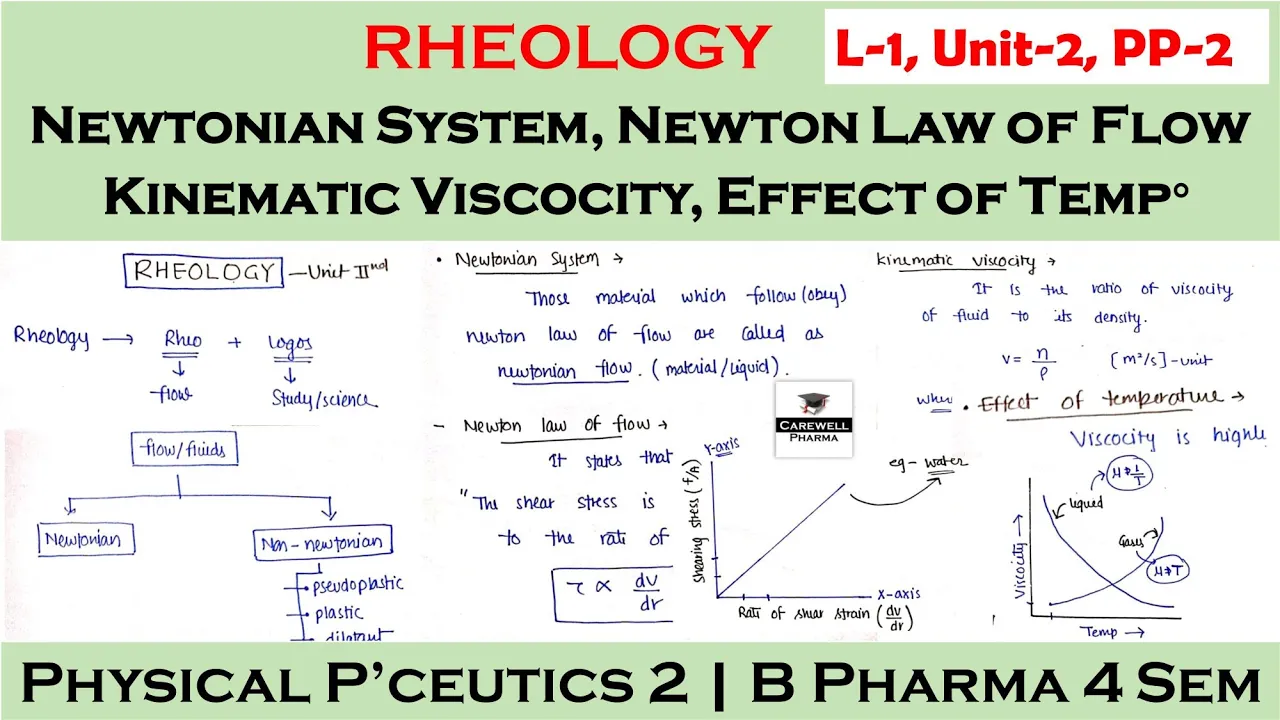
Newton's Law of Viscosity and the quantitative relationship between shear stress and rate of shear strain.
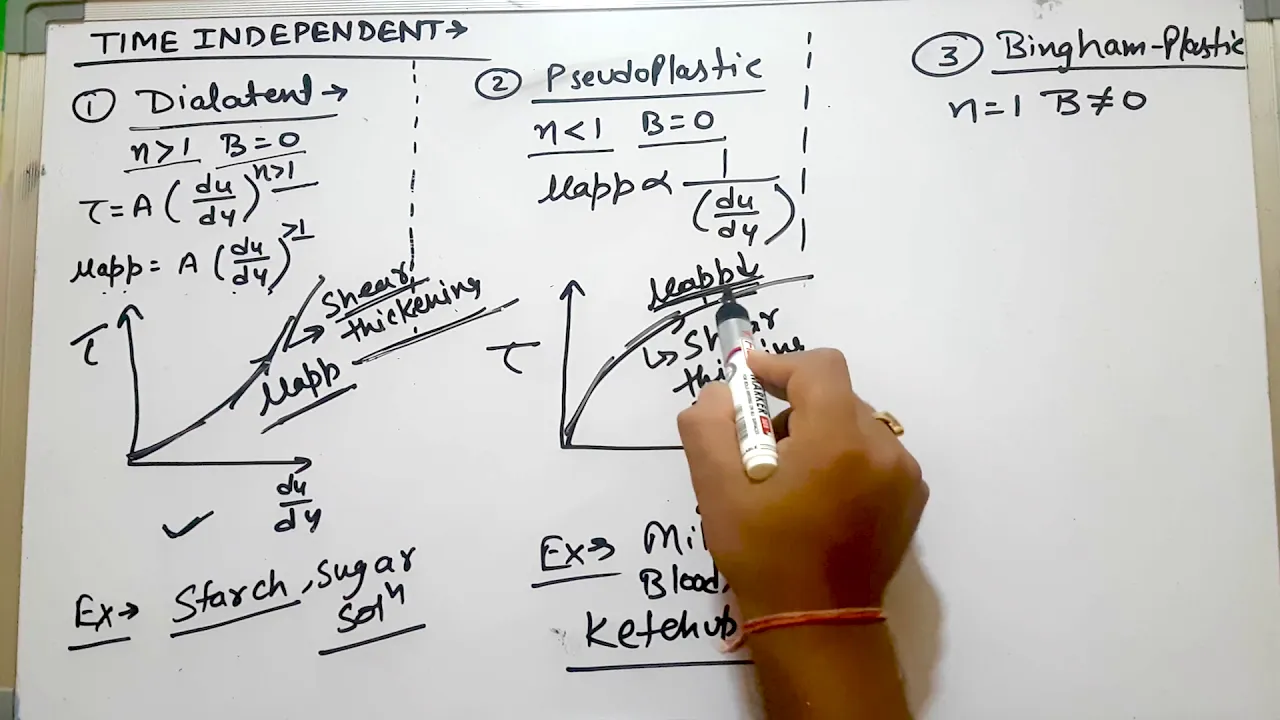
Classification of fluids, specifically distinguishing between Newtonian and Non-Newtonian fluids.
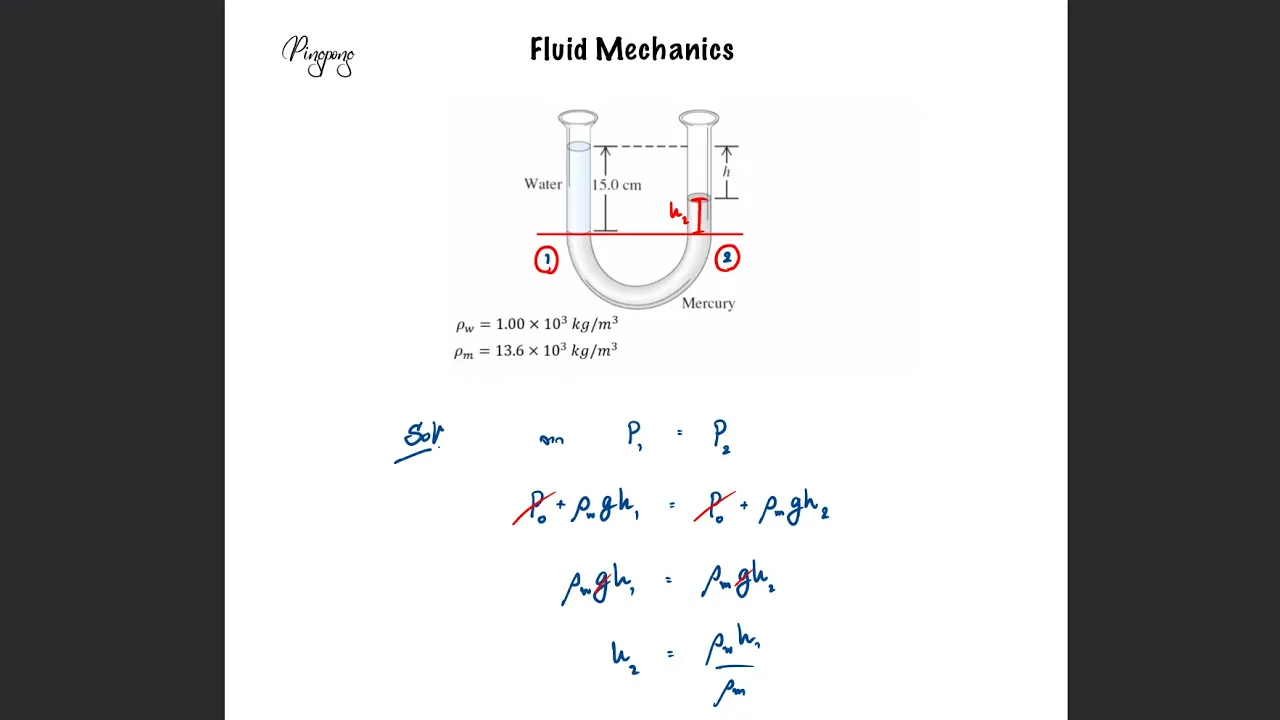
Fluid Statics, including hydrostatic pressure distribution, manometry, and buoyancy forces.
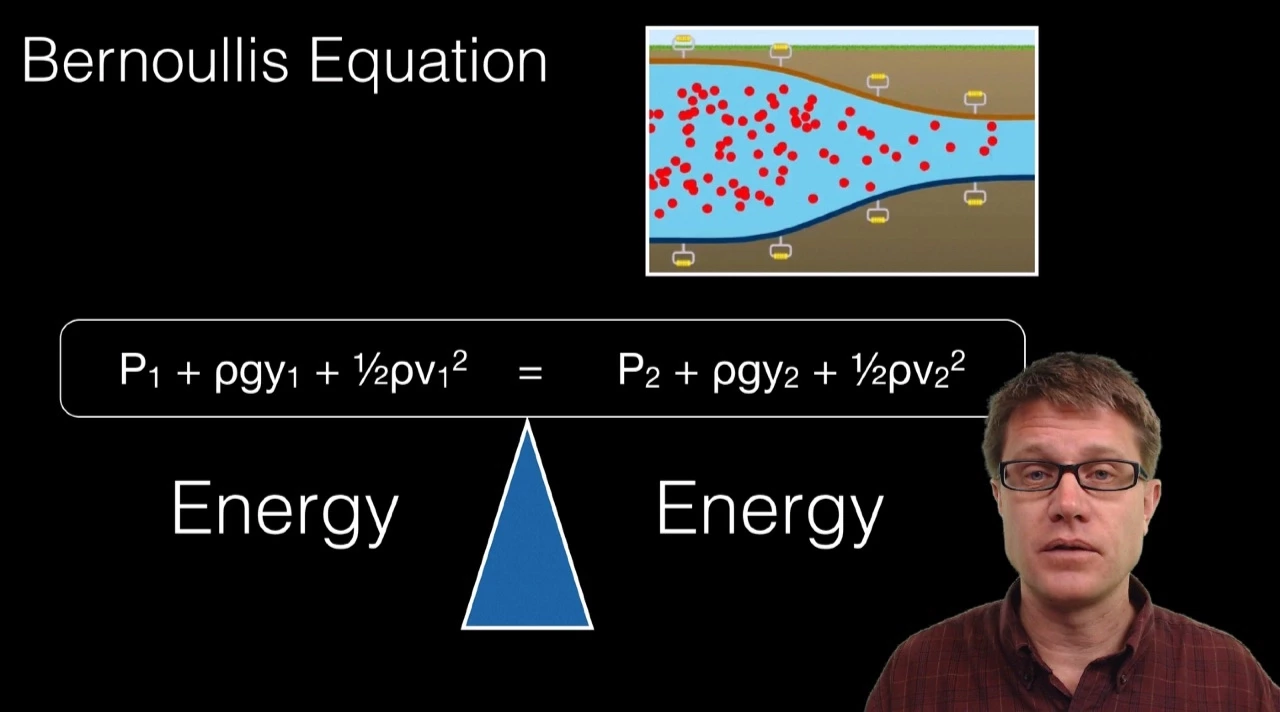
Fluid Kinematics and Dynamics, exploring the conservation laws of mass, momentum, and energy (e.g., Bernoulli's equation).
141 views19likes12:29Original Release: 2024-11-20
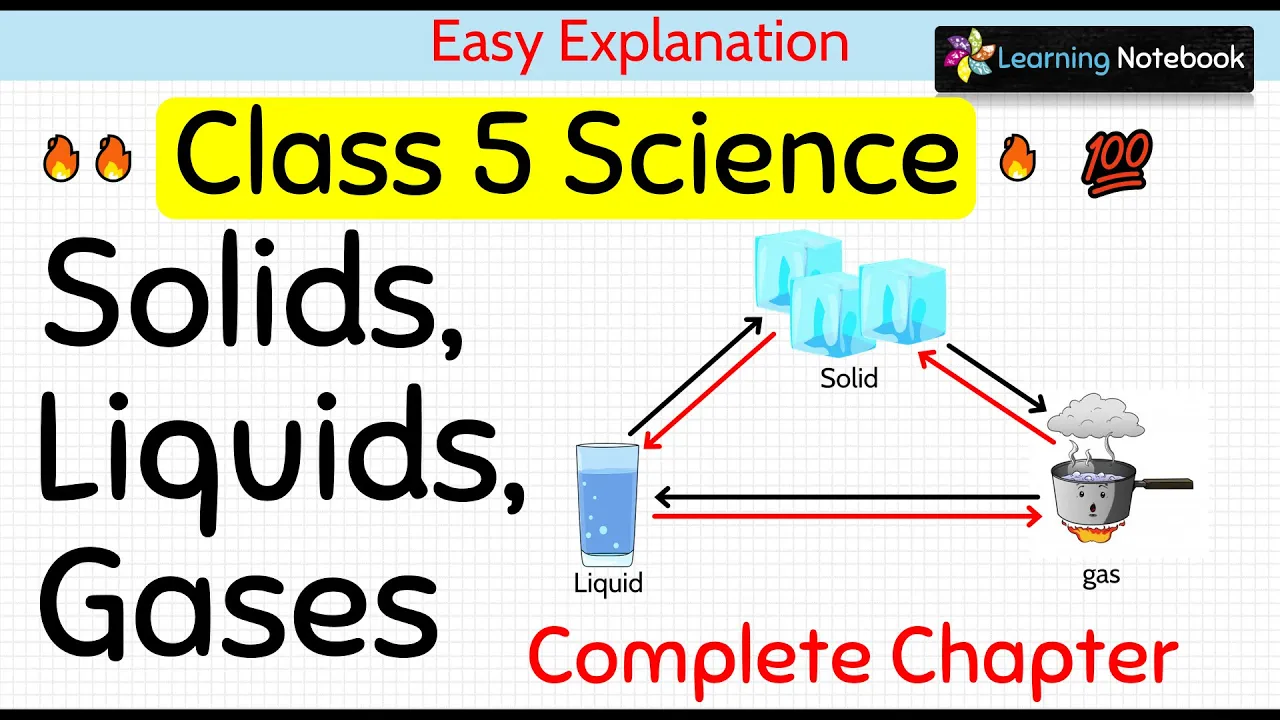
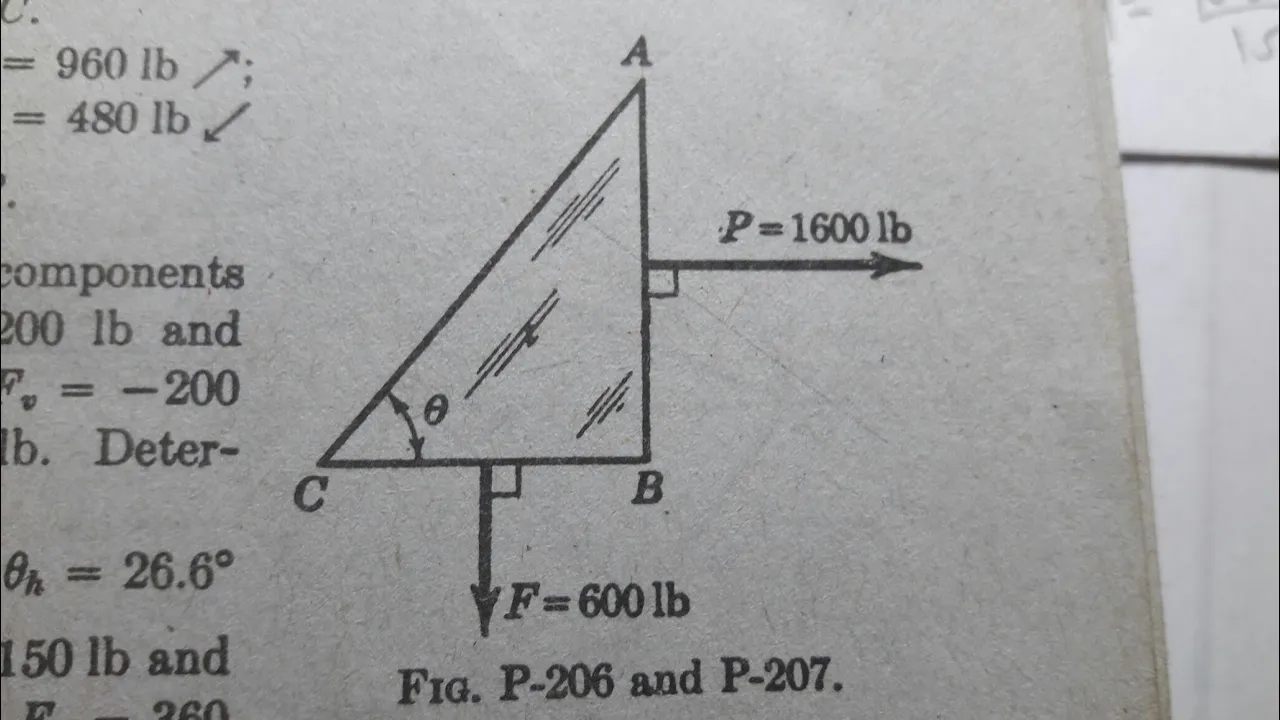
hello my dear students welcome to the lecture series on fluid mechanics today we will start with an introduction to fluid mechanics now it is important to understand uh both the terms fluid as well as mechanics but let us first start with an introduction of the subject as a whole now fluid mechanics is the branch of physics that studies the behavior of fluids both at rest as well as in motion now the fluids which encompasses both liquids and gases we are already aware of the three states of matter which is solid liquid solids liquids and gases now the liquids as well as the gases together they are called as fluids owing to its uh owing to their property to flow the term fluid itself comes from the ability of these substances liquids and States rather the states liquids and gases to flow now the fluid mechanics is the branch of physics which deals with both liquids as well as gases both in in the state of rest as well as in motion now as a subject we will be concerned with what are the main concern of this subject the main concern will be the anal is of fluid properties it is important to know the property of a fluid before we uh uh before we analyze the entire fluid system so the first topic will be the analysis of fluid properties second we will see what are the various forces that are acting all fluids and the third topic of discussion for the entire subject will be the interaction of fluid with another fluid or with the solids so the third is interactions with solids or other fluids now the application of fluid uh mechanics is uh you can say it is very vast it spans various fields which includes engineering meterology and environmental science it is very essential for understanding any natural phenomena and as well as in designing fluid uh systems let us talk about the term mechanics now what what is this mechanics obviously it is a branch of physics and it's a branch of physics that deals with forces acting on bodies and its effects there are various kinds of forces that are acting on bodies the bodies that may exist in any state solid state liquid state or gases state so let us say that uh this is a body of any orbit shape upon which say a force a very small Force say DF force is acting upon a very small area let us say da now in mechanics you might have learned about uh the resolution of forces similarly here also we can resolve the applied force DF force acting on the body into its two components first component will be the one that will be acting normal let us say that it is dfn where n stands for normal the second one which is acting parall to the body let us say that it is it is D ft where T stands for tangential now we have a term stress now stress is defined as force that is acting per unit are area now this body uh which is which is subjected to some Force DF it is under stress so there are there will be two types of stresses that will be acting on the body depending on the forces the direction of forces that are acting on the body so first we have the normal force so the stress due to this normal force will be called normal stress we will denot it by the symbol Sigma and it is defined as D FN which is the normal component of force upon da the force due to this tangential component of force it is called sheer stress it is denoted by the symbol to and it is defined as as the tangential component of force upon the area da sometimes we also use the term tangential so rather than using sheer stress we also say tangential stress and rather than using T we can also write down DFS where s stands for Shear upon da so a body will be subjected to two types of of stresses normal stresses and sheer stresses why it is important because we are going to Define fluid on the basis of the uh effect that will be produced due to these two types of stresses first of all let us see what happens in case of solids now uh solids you are quite aware that solids uh how are the solids they have a compact molecular structure they have rigid molecular structures or rather you can say that the molecules are very close to each other and the spaces in between are negligible so they have a rigid structure so what happens in case of solids the solids can easily resist the applied applied forces and that uh resistance is by Static deflection so when a sheer force is applied the solid experiences a proportional deformation until the yield Point Beyond which it starts uh uh there will be plastic deformation or it will break now this resistance is obviously due to the strong intermolecular forces which maintains the solid structure now it allows it to return to its original configuration once the stress is removed but in case of fluids the fluids do not have a rigid structure we know that fluids uh we roughly draw fluids if you remember that the molecules are quite far apart whereas in case of solids the molecules are very close to each other now due to uh the availability of these spaces the molecules the the liquid it does not have a rigid structure and it does not have a ability to resist the applied forces so what happens in case of fluids fluids solids it resists forces by Static reflection what does that mean it means that when a force is applied it may get deformed but uh it will resist the applied force up to its ELD limit and once the force is removed back it will try to regain its original configuration and it generally regains its original configuration we may draw the scenario like this that this is the solid which when appli to a force it under goes a static deflection like this so this is in case of solids but the fluids does not have this ability fluids do not or cannot resist the sheer stresses by Static deflection mind it it can resist the normal stress the normal stress in case of fluids we call it pressure but the sheer stress fluids does not have a ability to uh resist the sheer stress what happens see uh the fluids are made up of layers and once the uh fluids are subjected to sheer stress the layers try to move upon each other and once it gets deformed it cannot get back to its original configuration excuse me now so we are in a point to Define fluids we will Define fluids as substances that deforms continuously under the action of a sheer stress howsoever small that shear stress may be so that sheer stress may be of any minimum magnitude it will get deformed so we use the term howsoever small that sharing Force yes sh Force maybe and it will continue to deform even after the removal of the applied force diagrammatically you can understand it like this suppose initially the fluid element is like this let us say that it is 1 2 3 4 is a fluid element and it is subjected to a sheer stress what happens it will get deformed there will be some angular deformation after some time say time T1 then it will continue to deform this is at time T2 and then this phenomena goes on so there is a continuous deformation in case of fluids and it is this continuous deformation which constitutes a flow so how to define a flow it is simply The Continuous deformation that a fluid undergoes when it is acted upon by a sheer stress
Up Next

2:13
Bernoulli's Principle Demo: Venturi Tube Physics Experiment
@physicsdemos
172.8K views•2016-08-20

22:39
Fluorescence & Jablonski Diagram | Molecular Photophysics
@yairmeiry
192.2K views•2012-01-12

32:32
NMR Spin Physics I: Zeeman Effect, Resonance Condition & Larmor Frequency
@nptel-indianinstituteofsci8064
2.3K views•2024-01-17

27:14
Entropy and the Second Law of Thermodynamics Explained
@veritasium
27.5M views•2023-07-01
Related Study Plans & Knowledge Roadmaps
Structured learning paths in Physics
physics
Analytical Mechanics: Lagrangian & Hamiltonian
01Mathematical Foundations: Calculus of Variations
02From Newtonian Mechanics to Constraint Dynamics
03The Principle of Least Action & Lagrangian Mechanics
+ 3 more learning modules
28h6 modules
Explore Roadmap
physics
General Relativity (Spacetime & Cosmology)
01Foundations of Relativity: Special Relativity
02The Geometry of Spacetime: Equivalence Principle & Curvature
03Einstein's Field Equations: The Mathematics of Gravity
+ 2 more learning modules
55h5 modules
Explore Roadmap
physics
Chaos Theory: Pendulums, Bifurcation & Limits
01Foundations of Classical Mechanics and Pendulums
02The Transition to Nonlinearity and the Double Pendulum
03Core Principles of Deterministic Chaos
+ 3 more learning modules
18h6 modules
Explore Roadmap
physics
Optics (Lenses, Wavefronts & Instruments)
01Foundations of Light and Geometrical Optics
02Mirrors, Lenses, and Image Formation
03Wave Optics: Wavefronts and Interference
+ 2 more learning modules
28h5 modules
Explore Roadmap