








![ДИВНА МАТЕМАТИКА ЕЙНШТЕЙНА 🤯 [VERITASIUM]](https://i.ytimg.com/vi_webp/QZQptiZOQfs/maxresdefault.webp)






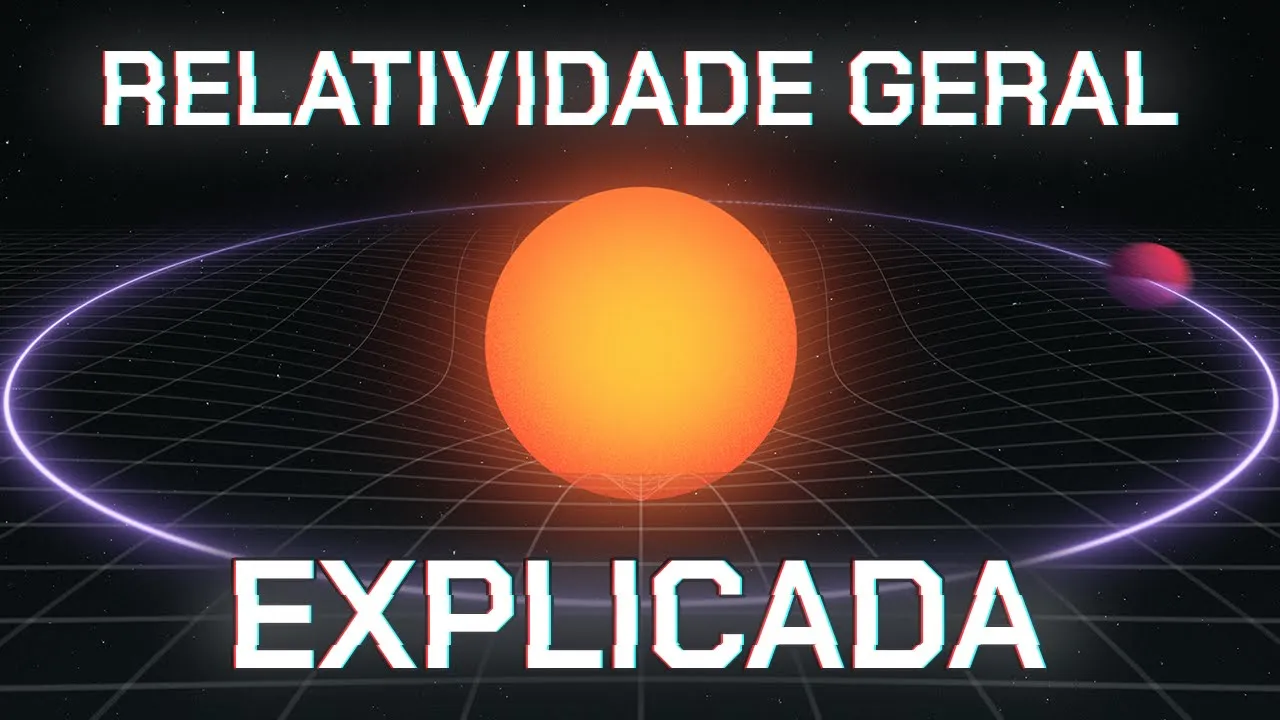
In general relativity, gravity is not a force but rather the result of objects following geodesic paths in curved spacetime; massive objects like Earth create curvature in spacetime, and objects in free fall (such as a falling squirrel) simply move along these geodesic paths, which appear as curved trajectories in space but are actually the straightest possible paths through curved spacetime, with the time component of this curvature being the primary factor that causes objects to accelerate toward massive bodies.
Gravity and Falling Objects Explained by General Relativity
Added:Newtonian gravity and classical mechanics, specifically the concept of gravity as an attractive force acting at a distance between two masses.
The core principles of Special Relativity, particularly the unification of three-dimensional space and one-dimensional time into a four-dimensional spacetime continuum.
The Equivalence Principle, which states that the local effects of gravity are indistinguishable from the effects of uniform acceleration.
Basic geometric concepts of distance, straight lines, and coordinates, which serve as a foundation for understanding non-Euclidean geometry.
Einstein's Field Equations, which mathematically formulate how mass and energy dictate the curvature of spacetime.
The physics of black holes, exploring how extreme mass density can lead to infinite spacetime curvature and the formation of event horizons.
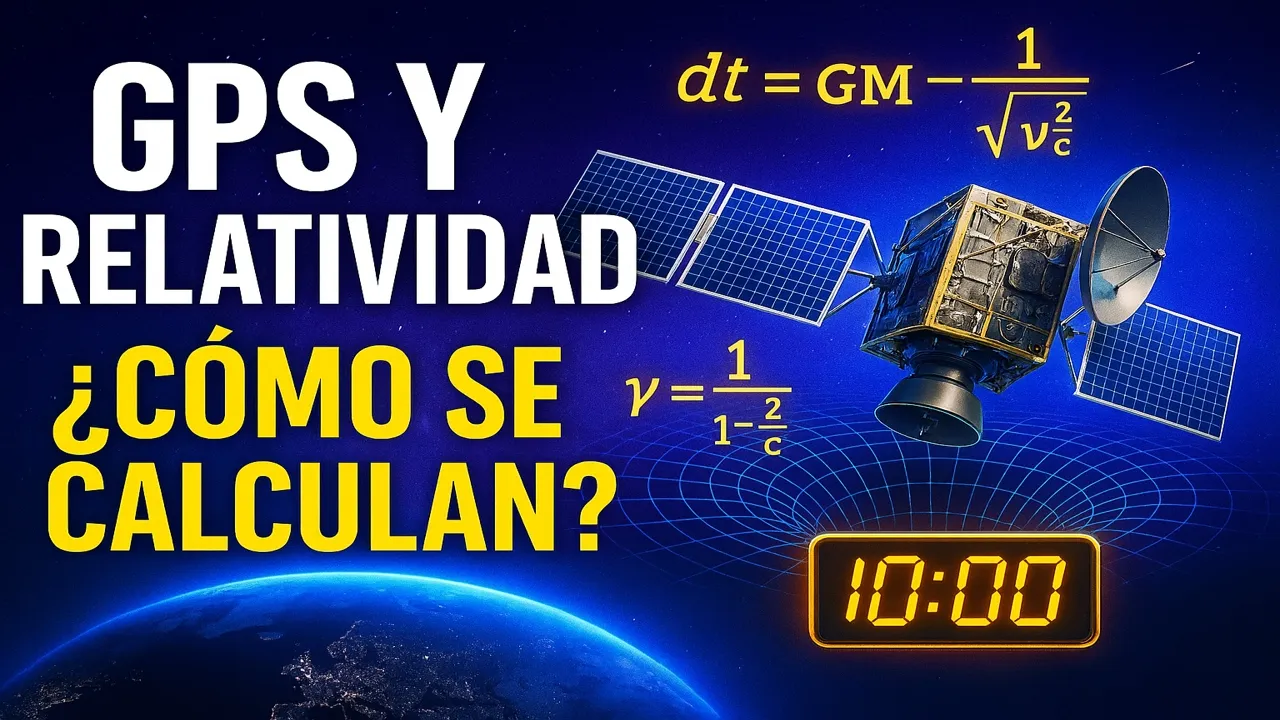
Gravitational time dilation and its real-world consequences, such as the necessity of relativistic corrections for GPS satellite systems.
Gravitational lensing and gravitational waves, examining how massive celestial bodies warp light paths and how cosmic events create ripples in the fabric of spacetime.
167.6K views7.6Klikes5:36Original Release: 2018-03-06
This episode was made possible by generous supporters on Patreon.
Hey Crazies.
About 6 months ago, I got a comment asking about how falling works in general relativity.
Bob, I know, 6 months is a long time, but this whole series of quantum videos happened and, when the crazy train calls, you’ve just got to ride it.
Wooo! Wooo!
Stop making excuses, Nick.
Anyway, I’m ready now.
Let’s kick this pig!
We’re going to start with the classical version of gravity or the “Old-School” version as we say on the hip side of physics.
No one says that.
I say that!
I want to make sure everyone is on the same page.
Example Time!
Say a squirrel falls from a tree.
There’s a force of gravity pulling it down and a bit of air drag resisting the fall, but we’ll be ignoring that air drag for simplicity.
Physicsland! Ah!
As the squirrel falls, the gravity stays very steady.
Eventually, the squirrel impacts the ground, which exerts an upward force on the squirrel, resisting gravity.
The squirrel slows down and stops.
This all makes perfect sense.
It’s just an interplay of forces.
But, in a previous video, we took a look at the history of relativity.
We did a couple thought experiments Gedanken Versuch!
that made Einstein’s relativity completely unavoidable.
The ultimate conclusion was: Gravity isn’t a real force.
And, Prat, that doesn’t mean gravity doesn’t exist.
It’s just not a force.
There’s a difference.
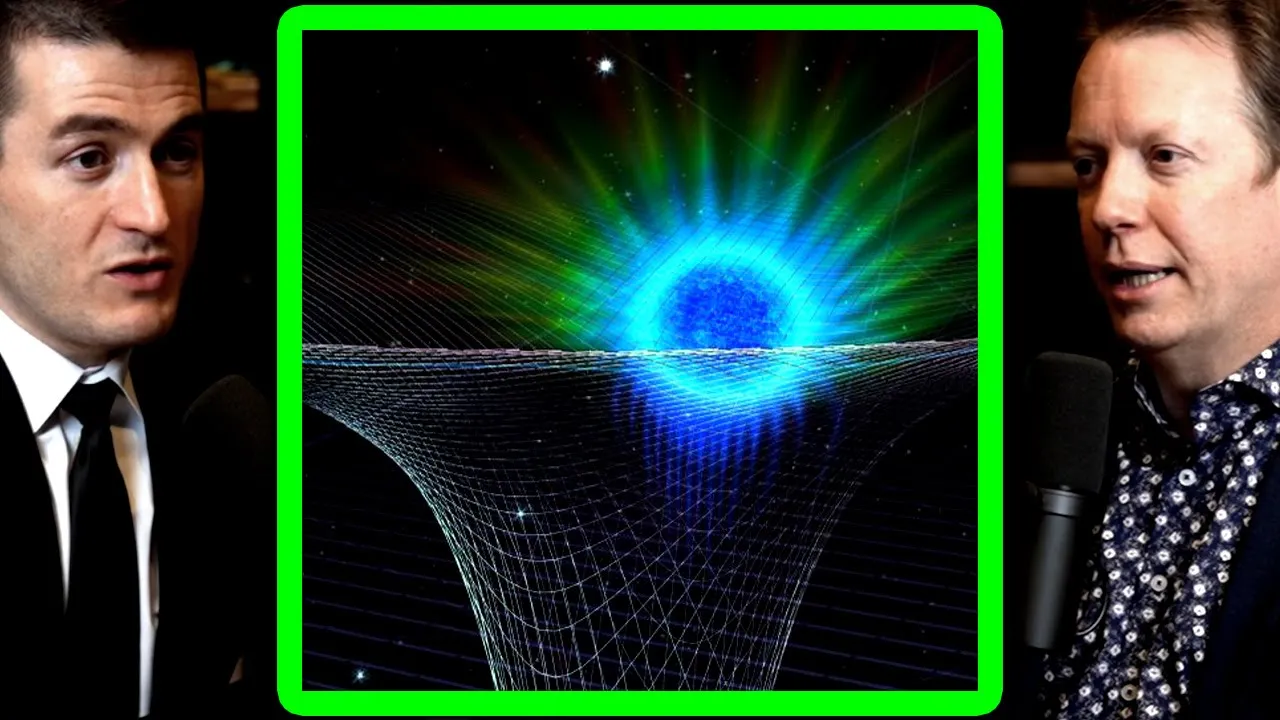
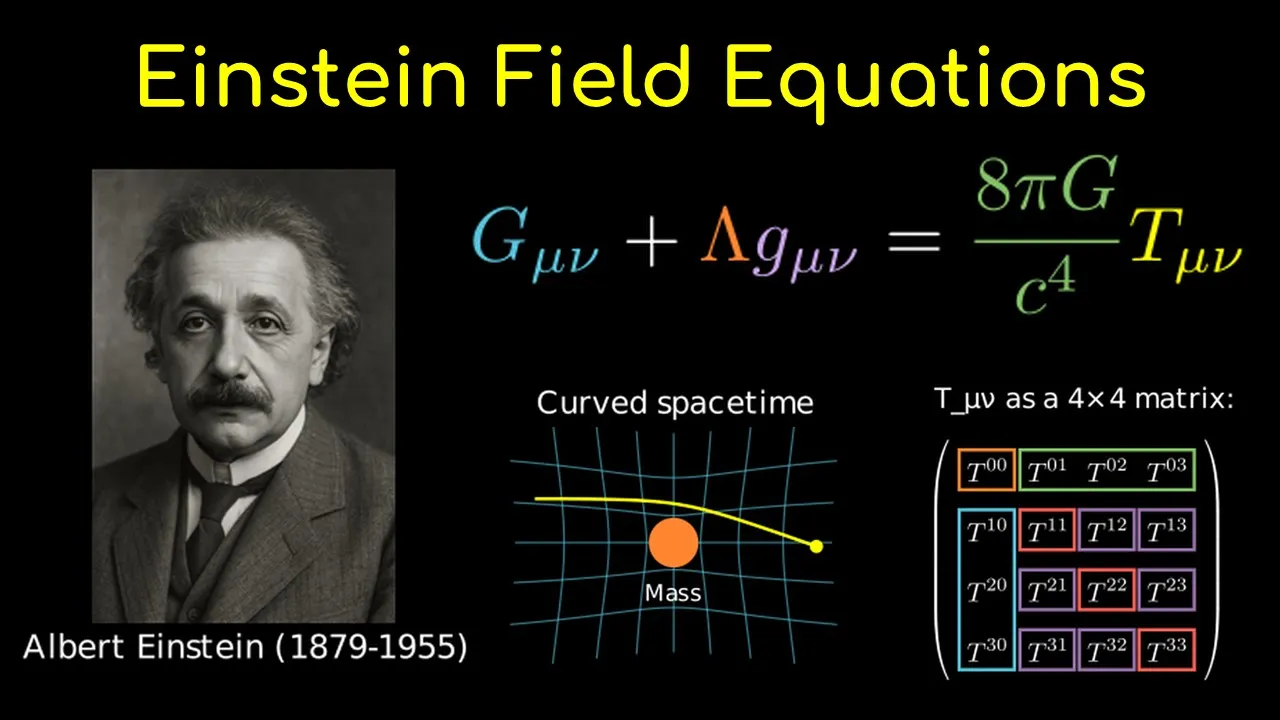
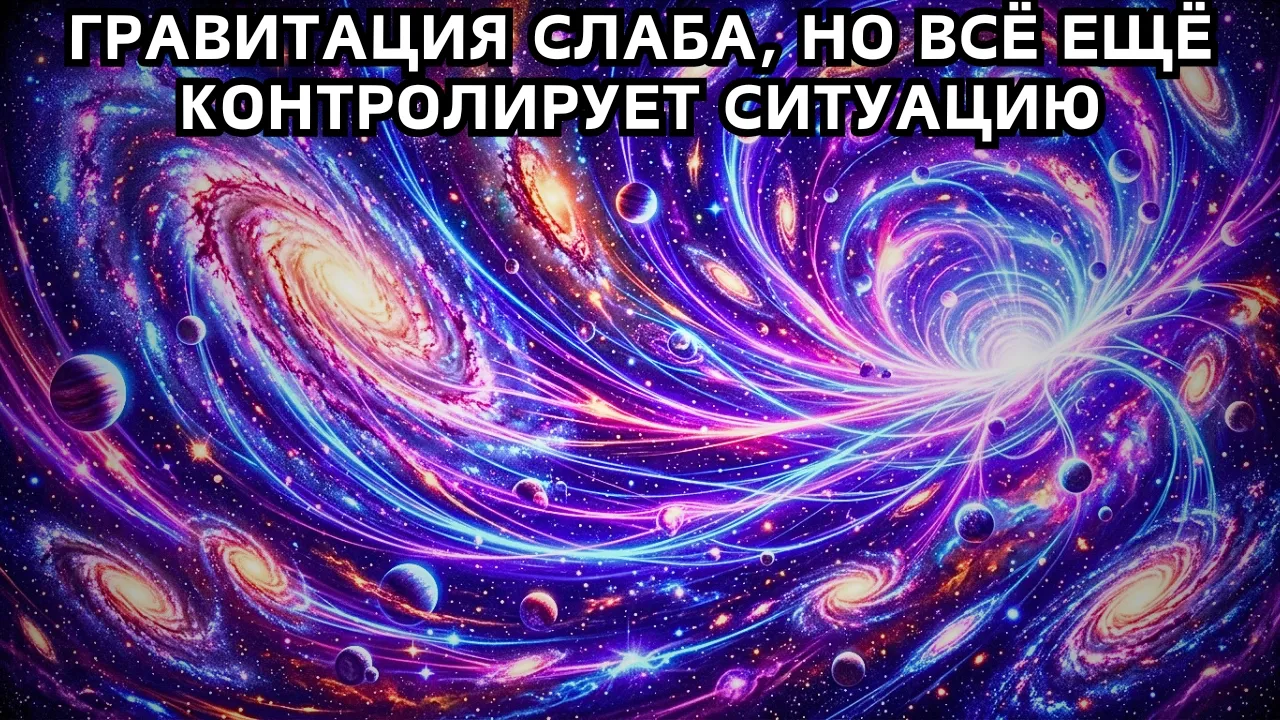
The truth is gravity is just curvature in space-time, a process governed by Einstein’s Equation.
That equation looks like this, but, put more simply, like this.
A physicist once explained this equation by saying: “Energy tells space-time how to curve.
Space-time tells energy how to move.” which I can’t say any better myself.
That equation looks pretty interesting, but it... it might leave you asking: What the [BEEP] does that mean?
Well, that’s what this video is for.
I should start by leveling with you though.
Einstein’s equation outlines the fundamental principle of curved space-time and it’s used in a few math steps when working with general relativity.
But it’s not actually very useful beyond that.
We’re going to get a much better understanding of how things like squirrels move in curved space-time by talking about geodesics.
You mean that guy that’s dating Sofia Richie?
What?
No, that’s Scott Disick.
I said geodesic!
Let’s… let’s just get back to the squirrel.
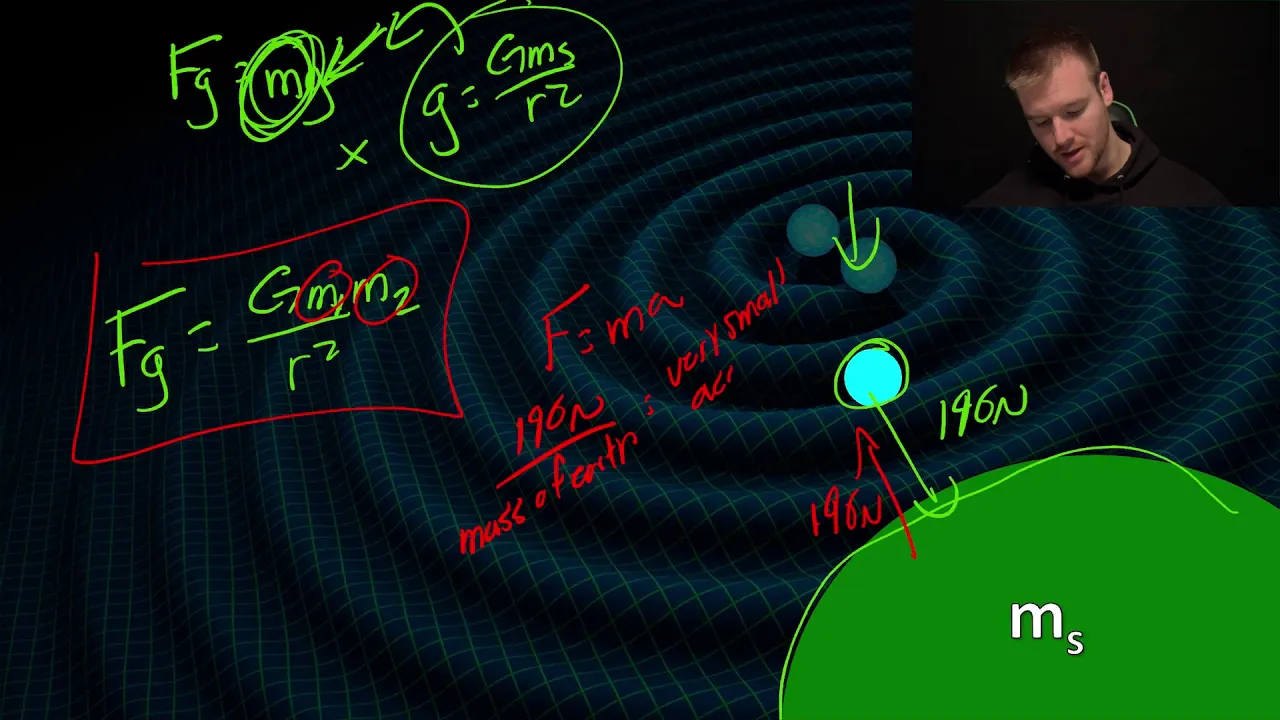
In old-school physics, gravity is a force pulling down objects until another force stops them.
But if we trust general relativity, gravity isn’t a force.
So why on Earth would the squirrel even bother falling?!
The answer: It’s following a geodesic, a straight line in curved space-time.
But there’s a lot of stuff in that statement we need to unpack.
First, anything that’s under the influence of only gravity is following one of these geodesic paths.
That makes sense for the squirrel because its path looks straight.
But a satellite orbiting the Earth is also traveling along a geodesic.
No one is really saying that an orbit is straight.
We’re just saying that now we talk about geodesic paths, where we used to talk about straight ones.
It’s a replacement concept.
A geodesic is the new straight line.
Second, it’s not curved space.
It’s curved space-time!
And that time part is what matters most for the falling squirrel.
This is why it’s important to avoid visuals like ribbons wrapped around shapes and definitions about minimizing or maximizing distance or time.
They’re not necessarily wrong, but they’re probably going to mislead you.
So then what’s a Geodesic?
Let’s start with Newton’s laws and go from there.
Newton’s second law says acceleration is caused by an unbalanced force or net force equals mass times acceleration.
In old-school physics, the squirrel accelerates toward the ground because gravity is an unbalanced force pulling it down.
When the ground finally pushes up, the gravity is balanced and the acceleration drops to zero.
But in general relativity, there is no gravity force, so Newton’s second law no longer makes sense.
That’s where curvature comes in and, by far, the biggest curvature for the squirrel is time curvature.
The squirrel doesn’t fall because there’s a force.
It falls simply because its future is on the ground.
That’s what a Geodesic is.
It’s just a path you take when there aren’t any unbalanced forces on you, which is exactly what a straight line used to be.
In fact, that equation is called the Geodesic Equation.
It’s usually written as a differential equation, but, conceptually, those are the same thing.
At the Earth’s surface, that curvature actually equals 9.8 meters per second squared, the free fall acceleration we’ve observed for centuries.
The squirrel will travel along that geodesic until a force tells it not to like one from the ground.
None of you are on a geodesic path right now because you all have a force underneath holding you up.
Unless, of course, you’re watching from the International Space Station.
In which case, wow!
Thanks for watching the show!
Anyway, things don’t really fall because of a force of gravity.
They fall because time curvature puts their future at different place in space.
From our point of view, that just happens to look like a force.
Because we can’t see space-time as it really is.
So, got any questions about general relativity?
Please ask in the comments.
Thanks for liking and sharing this video.
Don’t forget to subscribe if you’d like to keep up with us.
And until next time, remember, it’s OK to be a little crazy.
Up Next

5:56
Understanding Einstein's Special Relativity: Visual Animated Guide
@vinitbrett
5.1M views•2014-09-01

12:53
21cm Hyperfine Transition in Neutral Hydrogen: Radio Astronomy Basics
@AaronRobertParsons
12.4K views•2011-10-13

6:51
Nuclear Fusion Explained: How Stars Create Elements
@ScienceAsylum
160.1K views•2016-11-28

27:14
Entropy and the Second Law of Thermodynamics Explained
@veritasium
27.5M views•2023-07-01
Related Study Plans & Knowledge Roadmaps
Structured learning paths in Physics
physics
Nuclear Physics (Decay, Fission & Reactors)
01Atomic Structure and the Binding Force
02Radioactive Decay and Half-Life
03Nuclear Fission Mechanics and Chain Reactions
+ 2 more learning modules
12h5 modules
Explore Roadmap
physics
Soft Matter (Polymers, Colloids & Rheology)
01Foundations of Soft Matter & Thermal Forces
02Polymer Physics and Macromolecules
03Colloids, Surfactants, and Self-Assembly
+ 2 more learning modules
38h5 modules
Explore Roadmap
physics
Analytical Mechanics: Lagrangian & Hamiltonian
01Mathematical Foundations: Calculus of Variations
02From Newtonian Mechanics to Constraint Dynamics
03The Principle of Least Action & Lagrangian Mechanics
+ 3 more learning modules
28h6 modules
Explore Roadmap
physics
General Relativity (Spacetime & Cosmology)
01Foundations of Relativity: Special Relativity
02The Geometry of Spacetime: Equivalence Principle & Curvature
03Einstein's Field Equations: The Mathematics of Gravity
+ 2 more learning modules
55h5 modules
Explore Roadmap