


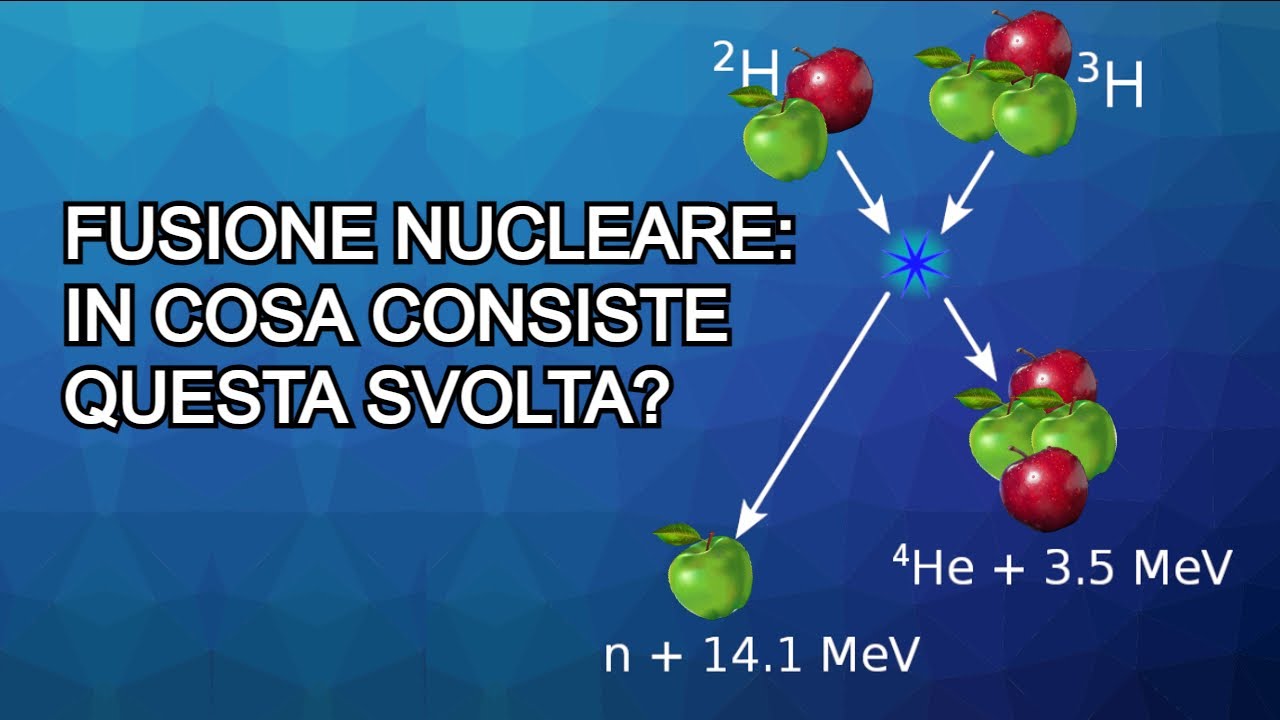















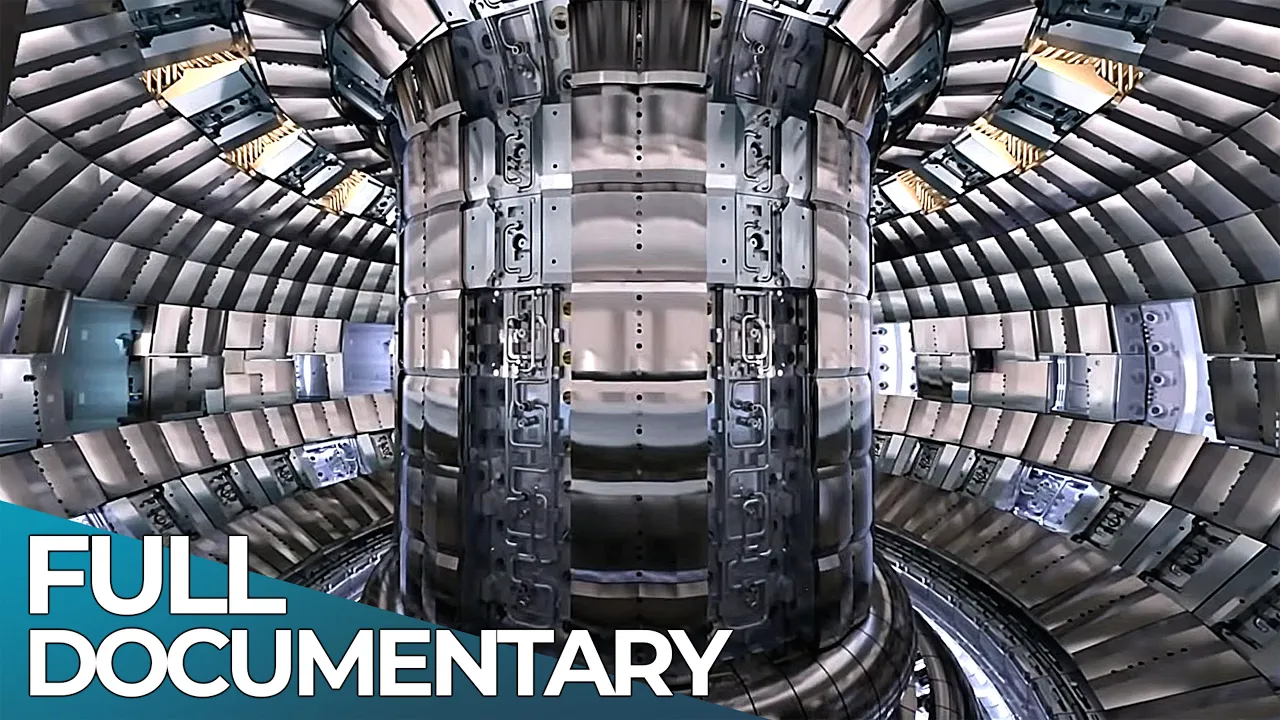
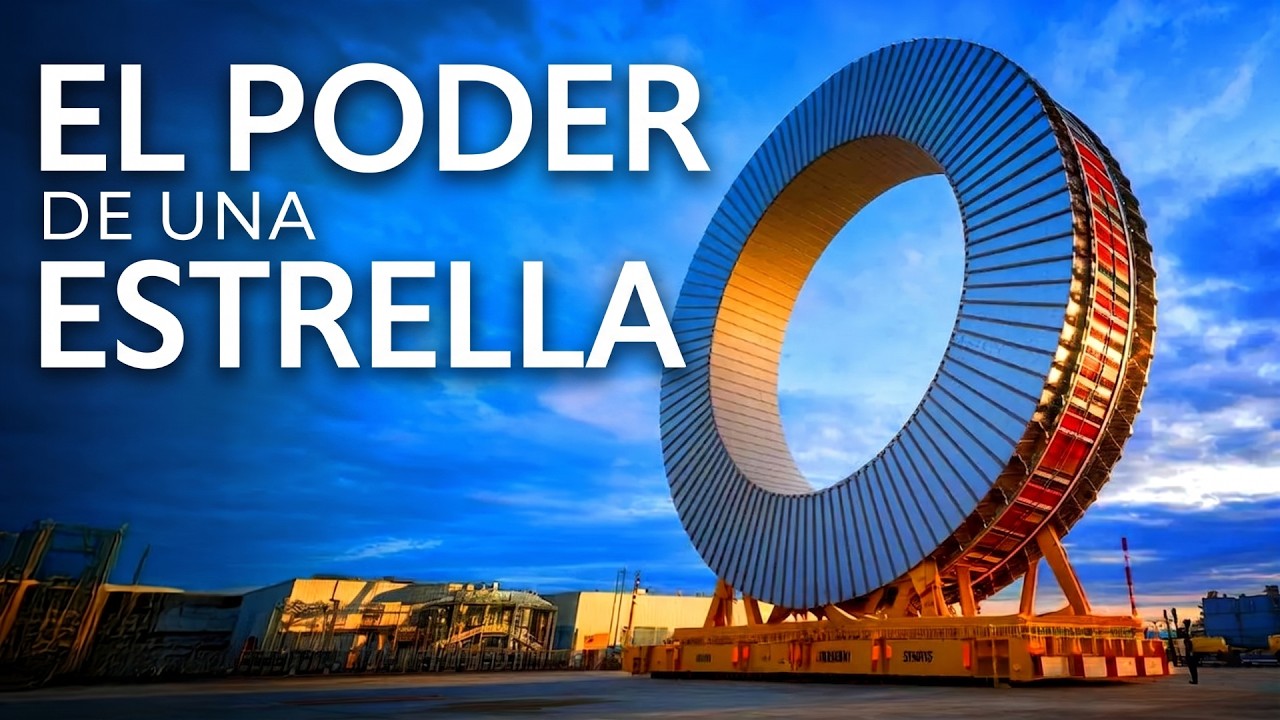



Nuclear fusion is the process where smaller atomic nuclei combine to form larger, more stable nuclei, releasing energy because the resulting nucleus has less mass than the original components; this occurs in stars like the Sun through processes such as the proton-proton chain and CNO cycle, where gravity overcomes the Coulomb barrier that repels positively charged nuclei, allowing hydrogen to fuse into helium and powering the star.
Nuclear Fusion Explained: How Stars Create Elements
Added:Basic atomic structure, including the properties of protons, neutrons, and the identity of elements based on atomic number.
The concept of isotopes, specifically the isotopes of hydrogen (deuterium and tritium) and helium.
The fundamental forces of nature, particularly the competition between electrostatic repulsion (Coulomb barrier) and the strong nuclear force.
Einstein's mass-energy equivalence principle (E=mc^2) and how mass defect translates into energy release.
The CNO (Carbon-Nitrogen-Oxygen) cycle, which is the dominant hydrogen fusion pathway in stars heavier than the Sun.
The triple-alpha process and stellar nucleosynthesis of heavier elements (carbon up to iron) during advanced stages of stellar evolution.
Supernova nucleosynthesis and neutron capture processes (s-process and r-process) that create elements heavier than iron.
The technological applications and engineering challenges of terrestrial nuclear fusion energy, such as tokamaks and inertial confinement fusion.
160.1K views6.3Klikes6:51Original Release: 2016-11-28
Hey Crazies.
In our last video about light, we talked a little bit about fusion and I said this: Every four protons comes together to make one helium nucleus but four protons has more mass than one helium nucleus.
Then people started asking questions in the comments and I was like: Why don’t we just make a video about it?
So let’s do it!
First, when we say Fusion, we specifically mean nuclear fusion.
As in, the nucleus of an atom.
Originally, the word “nucleus” meant the kernel at the center of a nut, but we’ve since made it mean: the center of anything small.
Big things have a core.
Small things have a nucleus.
It’s that simple.
Yeah, but what’s fusion?
Oh right, I guess I kind of skipped that, didn’t I?
Fusion means “to combine multiple things into one thing.” With nuclear fusion, smaller atomic nuclei combine to form larger ones.
Usually it happens in the core of a star, but it did happen a little in the early universe.
It can also happen in hydrogen bombs and fusion reactors.
Basically, anywhere with similar conditions to the core of a star.
So what kind of stuff can we make?
That depends on what you’re combining?
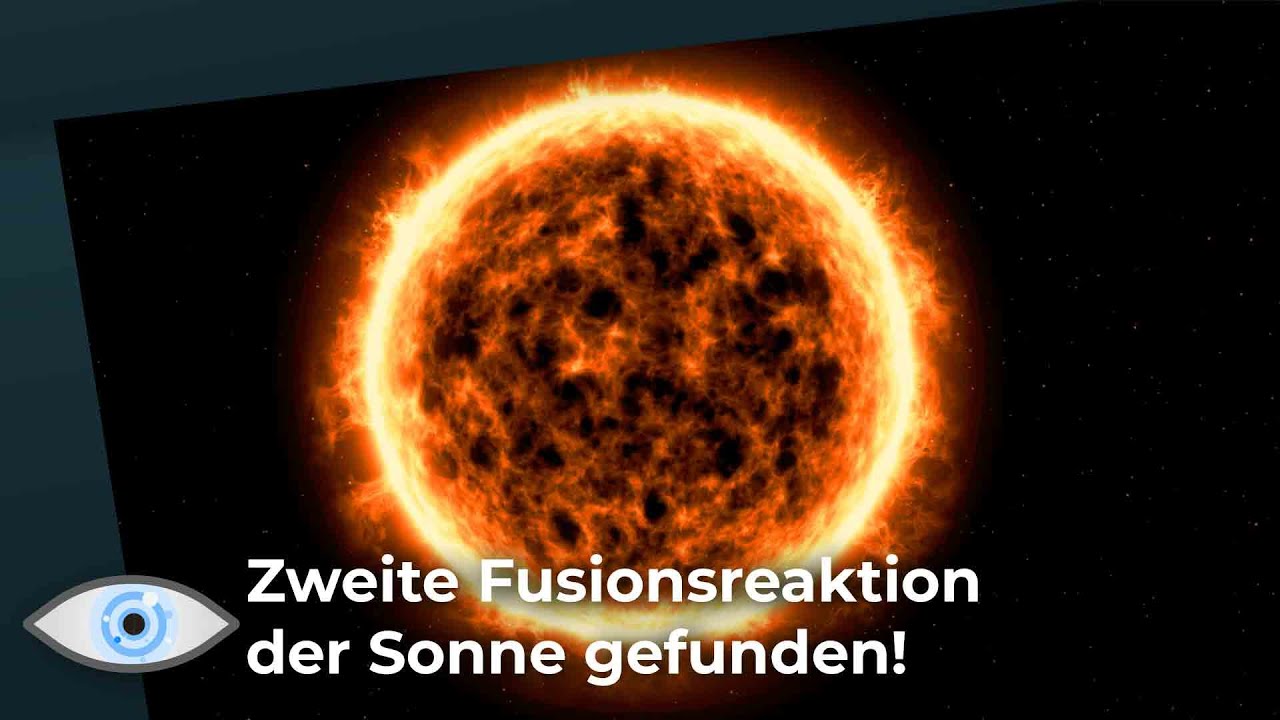
The Sun is fusing hydrogen into helium, which shouldn’t be that surprising since the Sun is mostly Hydrogen.
Then again, so is the regular matter in the universe.
Just to be clear though, when we say “hydrogen,” we don’t mean a hydrogen gas molecule.
or a hydrogen atom.
We mean a hydrogen nucleus.
It’s so hot inside the Sun, the hydrogen can’t hold onto its electrons anymore.
I'm free!!
It’s just a bunch of electrons and protons zipping around freely.
We call this a Plasma.
Oh! Oh! Like the stuff in my blood?
No.
That’s biology.
This is physics.
Totally different things!
Anyway, those protons are still called “Ionized Hydrogen” or H plus, which, as you can imagine, leads to all sorts of confusion.
Just keep in mind for the rest of the video, whenever I refer to something on the periodic table, I only mean its nucleus.
OK, so why doesn’t fusion just happen everywhere?
Oh, good question!
You can slap neutral atoms together all day, but atomic nuclei are charged and similar charges don’t like to be near each other.
Whether you’re talking giant uranium, middlist iron, or little tiny hydrogen All nuclei carry a positive charge, which will repel other positive charges.
It’s called the “Coulomb Barrier” and you need a really strong force to overcome it.
Like, oh I don’t know, maybe gravity!
The Sun has a lot of that to spare.
I mean, it does contain 99.8% of the solar system’s mass.
A lot of mass means a lot of gravity.
So the Sun, a giant cloud of mostly protons, uses its own gravity to force those protons together.
Hulk Smash.
Doesn’t helium have neutrons in it though?
I was wondering how long it was going to take you to ask about that.
So yeah, confession time.
While the idea of nuclear fusion is simple, the actual processes are not, which is pretty typical of real life, now that I think about it.
Anyway, before we get into the details, there are some things you need to know.
First, during all nuclear reactions, energy, momentum, and charge are all conserved.
Rest mass is not conserved, but it is a type of energy, so it’s accounted for that way.
We’ll call it rest-energy for the remainder of the video.
Second, neutrons can decay into protons, whenever they want, because neutrons have more rest-energy than protons.
It doesn’t happen a lot, otherwise there wouldn’t be any neutrons, but it does happen.
Third, protons can decay into neutrons, but only with some help.
The extra rest-energy has to come from somewhere.
Usually, the kinetic energy lost during a collision with another particle.
And finally, fourth, remember that protons don’t like to be together, but neutrons can help keep them together.
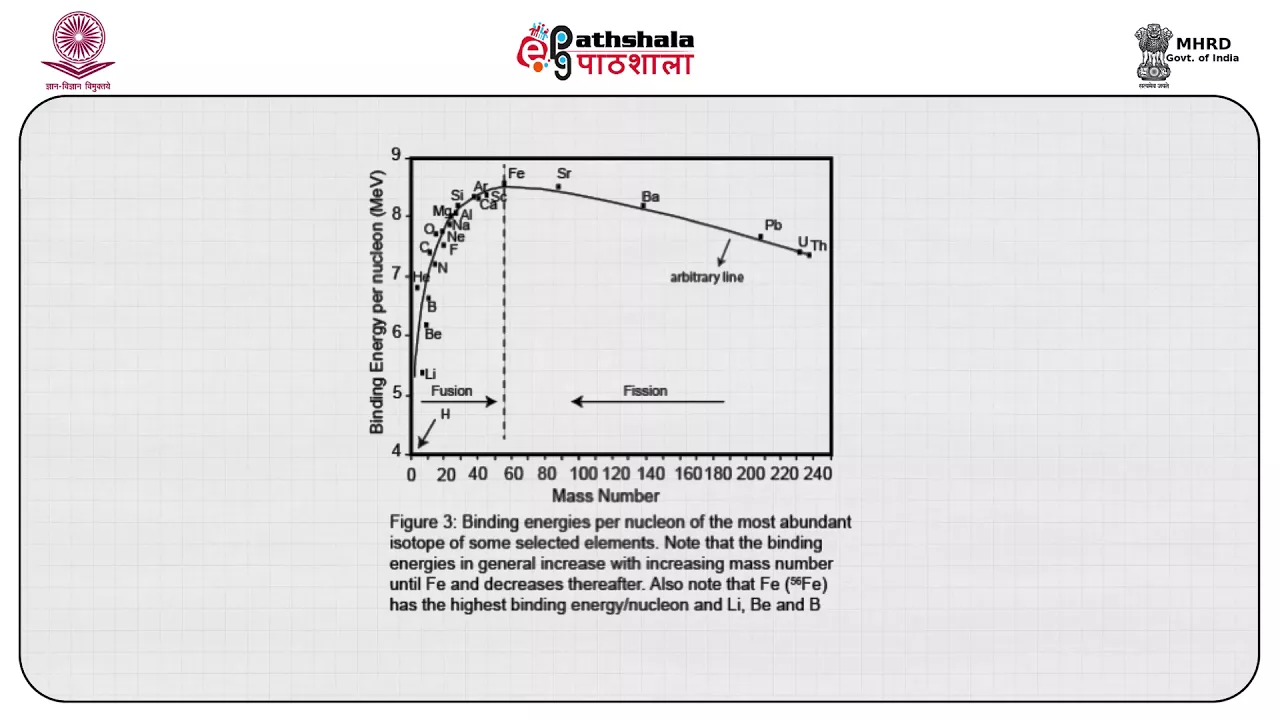
Near the top of the Periodic Table, the number of each is pretty even, but, as you move down the table, you need more neutrons than protons.
Alright, now we’re ready for some nuclear reactions.
We said before Hydrogen fusion turns 4 protons into 1 Helium and some light, but some of that light comes from antimatter annihilation with electrons.
There are also a couple neutrinos that get made Because why not?! and this whole process can happen a couple different ways.
The Proton-Proton Chain adds protons one at a time creating neutrons along the way through decay and releasing light and neutrinos that zip out of the Sun.
The CNO Cycle releases all the same light and neutrinos, but uses Carbon, Nitrogen, and Oxygen along the way to build Helium.
Either way, the Sun will eventually run low on Hydrogen forcing it to fuse Helium into Carbon, which it will do using The Triple-Alpha Process.
In case you’re wondering, Helium nuclei are sometime called alpha particles and it takes 3 of them to make 1 Carbon, hence “Triple-Alpha.” Even after you get the temperature right, a lot of other things still have to go a certain way.
If you smash 2 protons together and neither of them decays into a neutron, then they just fall back apart.
If you smash 2 Heliums together, the third one better get there soon or the first 2 will just fall back apart.
And if you want to make even bigger nuclei, things just get even more difficult.
The bigger a nuclei is, the more it wants to repel other nuclei.
Sometimes you can get the core of the star hot enough for that, but other times you have sneak in a neutron and wait for it to decay into a proton.
It’s called “Neutron Capture” and it can happen either slowly or rapidly.
The point is, making all the elements on the periodic table is harder than it sounds, but, if we can it figure out, we’ve got a great source of clean energy.
So, are you excited about the future of fusion power?
Let us know in the comments.
Thanks for liking and sharing this video.
Don’t forget to subscribe if you’d like to keep up with us.
And until next time, remember, it’s OK to be a little crazy.
In the last video, we learned how to properly calculate orders of magnitude.
Comment response time!
Liam de los sauces asked how exactly Enrico Fermi did his estimate of the blast power of that nuke.
Well, we don’t know exactly.
A Fermi estimate is sometimes called a back-of-the-envelope estimate, because it’s something you would jot down on the back of a used envelope.
Unfortunately, Fermi was so good at this that he never actually wrote it down.
Some people have tried to guess what he did though.
Links in the doobly-doo.
Sml Strength learned more about logs in 4 minutes than he did in 2 semesters at school.
[BEEP] School!
I’m glad I was able to help and that’s awesome!
I also agree that school kind of sucks a lot of the time.
At least in the U.S.
But I think that’s just encouragement to try to make school better, so it’s more like: [BEEP] the current model of school!
Andy Kirkham, nice one with the resistor colors bands.
I totally approve.
For those of you looking for some other Fermi estimates, Elliot Grey suggested one from the XKCD What-If series.
If you haven’t noticed, the book is on my shelf.
Link in the doobly-doo!
Thanks you so much for all the encouragement.
We’ve got an exciting line-up of videos planned for the next few months.
Oh, that reminds me!
Every December I usually do a 3-video series because I have extra time, but I want to switch gears this year.
There are a few topics I haven’t covered because they require more than 5 minutes.
and you can't really divide it up.
So rather than a series, I’d like to make a longer video instead.
Just something to look forward to.
See you next time!
Up Next

103:24
Fly by Night Physics: Dimensional Analysis with Prof. Anthony Zee
@NCTSphys
1.5K views•2023-08-04

12:53
21cm Hyperfine Transition in Neutral Hydrogen: Radio Astronomy Basics
@AaronRobertParsons
12.4K views•2011-10-13

5:36
Gravity and Falling Objects Explained by General Relativity
@ScienceAsylum
167.6K views•2018-03-06

27:14
Entropy and the Second Law of Thermodynamics Explained
@veritasium
27.5M views•2023-07-01
Related Study Plans & Knowledge Roadmaps
Structured learning paths in Physics
physics
Nuclear Physics (Decay, Fission & Reactors)
01Atomic Structure and the Binding Force
02Radioactive Decay and Half-Life
03Nuclear Fission Mechanics and Chain Reactions
+ 2 more learning modules
12h5 modules
Explore Roadmap
physics
Soft Matter (Polymers, Colloids & Rheology)
01Foundations of Soft Matter & Thermal Forces
02Polymer Physics and Macromolecules
03Colloids, Surfactants, and Self-Assembly
+ 2 more learning modules
38h5 modules
Explore Roadmap
physics
Analytical Mechanics: Lagrangian & Hamiltonian
01Mathematical Foundations: Calculus of Variations
02From Newtonian Mechanics to Constraint Dynamics
03The Principle of Least Action & Lagrangian Mechanics
+ 3 more learning modules
28h6 modules
Explore Roadmap
physics
General Relativity (Spacetime & Cosmology)
01Foundations of Relativity: Special Relativity
02The Geometry of Spacetime: Equivalence Principle & Curvature
03Einstein's Field Equations: The Mathematics of Gravity
+ 2 more learning modules
55h5 modules
Explore Roadmap