






















Fly by Night Physics is an educational approach that emphasizes understanding physical concepts through intuitive reasoning and dimensional analysis rather than extensive calculation. The core principle is that if you truly understand something, you should be able to explain it in words without relying on formulas. This approach, inspired by John Wheeler's 'horseback physics' concept, teaches students to think about answers in their heads while riding a horse, meaning they must understand the physics deeply enough to solve problems without detailed computation. The method involves identifying essential variables, using dimensional analysis to derive relationships, and recognizing that the most important skill in theoretical physics is asking good questions rather than solving them. This approach is particularly valuable for cutting-edge research where the challenge is formulating the right question, not performing calculations.
Fly by Night Physics: Dimensional Analysis with Prof. Anthony Zee
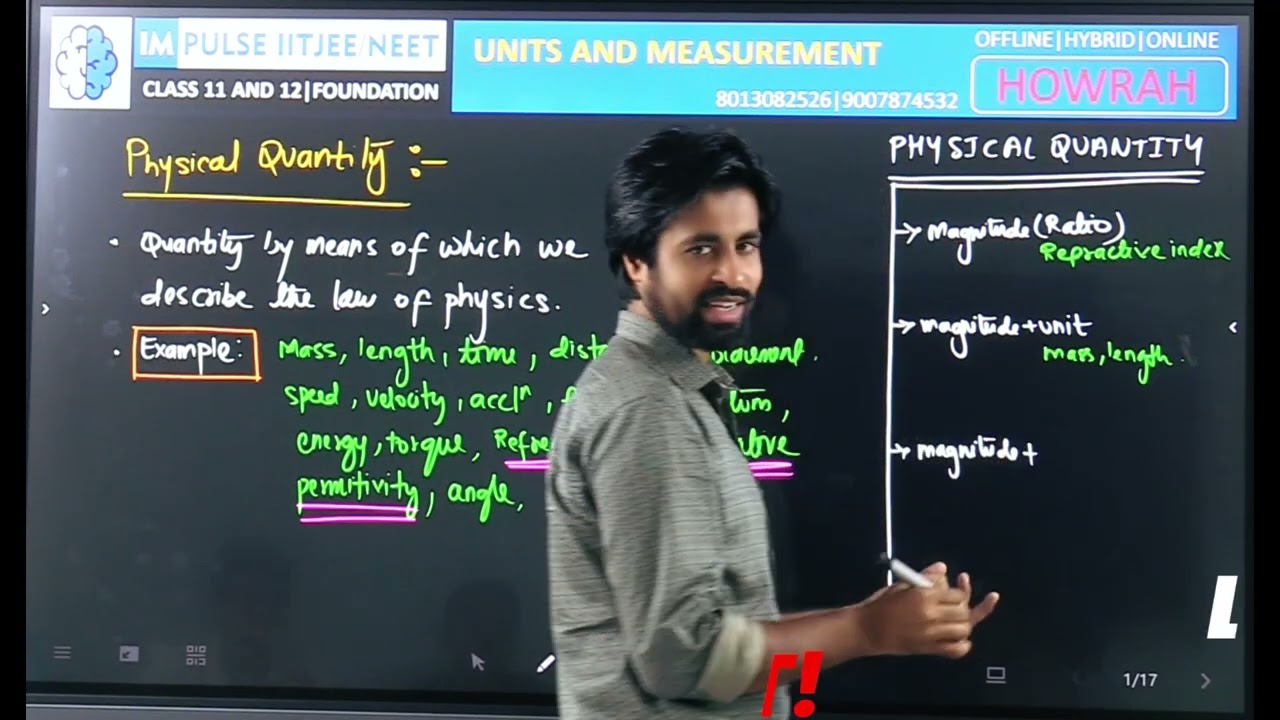
Added:foreign yeah oh okay okay let me uh yeah let me probably introduce you okay okay um uh before Professor they start uh I should say a few words okay a professor you think is still abroad as I understand and I'm uh director of physics division okay and I'm very very happy to see Professor Z again he used to come back well not back to uh to physical Department to give lectures and the summer school for many many times okay so it's at least I'm really happy to see he's coming back again to give three lectures this week is it okay so uh as all of you know him already he's a renowned professor in Santa Barbara's and now today he's going this is the first three lecture he's going to give and the title is Fly by Night physics and this is the first one that's welcome Professor Z let's see this is working I'm very happy and uh honored uh to come back to the National University of Taiwan uh as was mentioned I have spent uh uh I used to come to Taipei uh every year but this time because of the pandemic I haven't been uh back for four years so it's particularly a pleasure and exciting for me and uh is this working yes so taida has uh of all the physics institutes and universities in the world and I have visited I don't know hundreds maybe a closer thousand and I was just in Argentina and Chile uh of all these universities in the world National University of Taiwan taitaan a special meaning for me uh because this that's where I uh met my wife on campus uh in front of the gym has uh okay so um so tune in uh today I want to talk about my book uh Fly by Night physics I'll give three lectures all together uh two this week and one next week and then after that I'll go to Beijing to give the same lecture so this has been published as a book Fly by Night physics by Princeton University press let me see if I can control this so um how do we get rid of all this other stuff uh the orange and uh black so it's based on a course I actually invented uh at the University of California uh in Santa Barbara and just recently just a few months ago um the chair so do we have in the physics department we have these special topics courses so the undergraduate uh Core Curriculum of course consists of classical mechanics electromagnetism quantum mechanics and statistical mechanics so those are the four required courses and then we have all kinds of extra courses that cause special topics course but just recently a few months ago uh the chair of the physics department who is a particle Iron Age experimentalist Claudio carbonari he has proposed to make it a regular part of the curriculum so it'll be a regular course instead of a special topics course uh there's no difference to me whether it's special topics or regular course the only difference is that because it was a special topics course them students and so on have to ask the undergraduate representative for permission to take the course of sensor extension okay so my motivation for writing this book it was set forth in the preface uh when I many years ago I uh decades ago I arrived at Princeton University to study Physics and only having a very vague idea what physics is about so John Wheeler um because this is a long story anyway um I I don't want to mention he was somehow allowed to teach a course The Freshman that Year by the way he was never allowed to teach again because he did such a terrible job so but I was one of the guinea pigs I was one of the students so he rounded about the physics students and asked us uh questions and they were all yes or no questions and all the people that answer incorrectly or kicked out of the room So eventually only a few people were left and I was one of them so one of the first things he said to us was never never calculate unless you already know the answer so I just came out of high school in Brazil where I did not have the opportunity to take a course in physics my school was very small uh my class that I graduated from had seven students so I was one of the seven so but this was tremendous advantage in applying to universities in the United States because if there are seven students uh there are four class positions so almost everybody more than half the class has a position in the on the application this president vice president so uh I never had the opportunity to course in physics and there's a footnote here many physicists now told me that I was very fortunate because many people are not in Taiwan I suppose but in the United States and Europe for physics courses in them were destroyed um by physics in high school so I I never took physics in high school so I but I already knew but I had studied some Physics on my own and I was completely puzzled because I thought physics was all about calculation and how would I know the answer without calculating and this is a very important point that wheeler made and we'll call it horseback physics that was the term he used but these days of course uh very few of us in this room uh ride horses for fun but the whole point was that if you wanted you have to solve a physics problem while you're riding a horse and so obviously you cannot calculate you have to think about the answer in your in your in your in your head so now when I first got to Santa Barbara when I was off a position there I actually ran a seminar together with Frank wilcheck and I try to limit the number of equations postdocs are allowed to write down by giving a talk I I believe that I set the limit of 10 equations nobody the post-ops giving talks and not allowed to write more than 10 equations on a black one because I know especially some some postdocs would come in and start filling the Blackboard with equations but obviously that's not work with most most postdocs cannot do that and if you feel that if you understand something it should be explained able to explain it in words so the other thing I often tell students in Santa Barbara is to delete stuff and clean out their brains because they know too much and Coleman told me the same when I got to graduate school so Coleman was my graduate school mentor and I was extremely fortunate because I was sent to Harvard uh to study with Weinberg and I was so lucky because Weinberg had a fight with Glacier and so Weinberg went off to MIT and uh Steve Ella told me no no you should not work for all these famous people you should work for the youngest guy in the department and a guy without tenure the guy with no reputation because he's the hungry guy he's the only one that's hungry so um so I I work with Coleman and Coleman told me the same he asked me what you learn as an undergraduate so I told him what I learned and who said forget all that you know clean that out of your brain I found something else he tells me that's totally useless for particle theory and so on so what I found with undergraduate these days of course there's a lot of criticism now especially at the University of California because now for political reasons uh we have students who don't know high school algebra but on the whole I would also say there are lots of students who know much too much and their brains are completely cluttered by too much so I'm always telling students to forget things um so I invented this course for partly with these motivations and instead of calling the horseback physics I call it Fly by Night physics as I taught it and I when I was writing this book I of course looked at some of the books on the market that with the title of flyby uh back of the envelope calculations and so on are typical titles and some of these books I find extremely uninteresting and uh boring because they were typically you're given the formula and then you're just plugging numbers into the formula but I'm not interested in in my book I'm not interested in playing numbers in but the derived formula so if my books can be criticized it's one of the things that people criticize is that there are very few numbers in that in a book but when I was teaching this course so I've now taught this course as I said invented this course about seven eight years ago so I have taught this course for seven or eight years and I'm going to teach it again uh this fall and I actually asked the students uh have a survey to show P to show by hands whether they want to plug in numbers and nobody wants to plug in numbers and they all said that I could trust them to know that they would be able to plug in numbers so the other thing uh is that the book there's no Fermi problems when I was writing this book A lot of people asked me whether I would have a lot of Fermi problems so the classic example of a Fermi problem is when Fermi was at the University of Chicago he asked people this question how many piano tuners are there in New York and then of course this is just a matter of multiplying along the numbers together and the trick is that every number is an estimate and some of them is a high estimate some of this low estimate but we multiply them together the high and lower cancel chart out and you get a reasonable number so this is also known as the Drake equation right estimating how many civilizations are there in the universe so my book doesn't have that at all now commonly observed phenomenon the other my other motivation is that in theoretical physics there are many students not all of course who get all A's in courses but they crash and burn later in their research career um so getting AIDS is certainly necessary but not sufficient condition okay it's not sufficient of course it's necessary that the top physicists uh presumably could get Ace without any trouble so but that doesn't mean that if somebody gets C's all over that he'll be a great guy I remember when one of my sons was in uh in junior high school or something to go to these parents Teachers Conference when you meet the teachers and also the parents and one of the parents told when he when this when this guy found out that I was a physics professor um he was very proud to tell me that his uh his son got seized in his math courses and physics courses and then he said he read somewhere that Einstein also did very poorly in school which is of course completely false it's a total myth but then he his logical reasoning was so Advanced that he thought that his son getting seasoned School means that he's going to be a great physicist okay so it's certainly necessary but not sufficient so why is that over the years I've observed this phenomenon because doing well in homework and exams um almost opposite to what is needed in research in the more cutting-edge areas of theoretical physics of course there are a lot of research in which the professors or your whatever your your your boss tells you to plug in and calculate and plug in and calculate or try everything you know a lot of the research on superconductivity for example just try this try that um so but in The Cutting Edge area of the record physics it's almost the opposite of doing homework and exam doing well in homework exam because when you do homeworks in exam uh you already know what the appropriate methods are so you know that if you assign a homework for this week you know that so the methods you should use are the things that were covered in in court in the course last week you know and so you just have to plug in chart so difficult part in research is of course to come up with the good questions not to provide the answer and I think it is probably fair to say and this is something that I want students to appreciate is that for every person in the community the theoretical I'm talking about theoretical physics not experimental physics for every person comes up with a question that moves physics in a New Direction there are probably tens of of perhaps hundreds of people who could arrive at the answer okay so an example of this of a good question that nobody asked before uh is through black holes radiate okay so Hawking asks this question if you like uh what I don't need to go into the history in detail you can say zeldovic Penrose and so on but for every person who can ask this question in 19 whatever it is 1973 they're probably 100 people that are relatively experts 100 200 000. who could work out that black hole radiation okay people always think that students tend to think that the calculation is the difficult part and of course you open Hawking's paper you see that there are like 20 pages of calculation but that's not the hard part the calculation that impressed students a routine so the question is it's um the issue is to ask the good question let's see a few smell so there are many famous stories and quips and quotes so I'll tell you a couple more stories so one is that when Shelley glass show you guys know because when I lecture in China a few years ago before the pandemic every student there know about uh Sheldon because they told me there's some television program in which the main characters named Sheldon and they also know that it's named for Sheldon glacier so um when as you probably all know Shelly Glass show about the Nobel Prize leader for great contribution to physics and he was also one of my professors uh at um a prince at Harvard uh when he applied to Princeton for graduate school as you probably know uh he and Weinberg both went to Cornell and Weinberg got into Princeton but he didn't he was rejected he told me he was interviewed by vigner and vignus said you know and understand all the equations but you don't feel them you don't so this is how I when I interview postdocs and students I also feel that I have to get the impression some people know the equations but they don't feel it you have to feel the equations for God's sake okay so basketball means throwing the ball through the hoop I understand that okay but I cannot play in the NBA but students didn't jump for the ball Okay so Clash of course told the story and felt that Zynga was extremely unfair to him but the list of all the people who did not get into Princeton for graduate school is a very long list and famous less so Glacier is not the only one Gilman also for example and um so Gilman was going to kill himself when he did not get in the print when he was rejected but he decided not to so that's a good thing um not the Iraq as I found this quote it was actually quoted by Feynman uh Feynman said that the Iraq said the following directly I understand what an equation means if I have a way of figuring out the characteristics of its Solutions without actually solving it so this is sort of similar to what wheeler told us uh as freshmen okay so I feel many students do the exact opposite they don't feel the equation but they know how to solve it yes many people can solve equation but somehow they are not Iraq so um here let me start the physics of my lecture so uh yesterday um my family and I uh went to see the movie Oppenheimer and first of all the um just to buy a ticket in is so high tech that uh um I my wife had to figure it out I I would never be able to buy a ticket because he was impressed some screen and so and so long but what's extremely impressive to me was the movie theater was completely packed absolutely full and in fact there were five of us and we got exactly the last five tickets now interestingly I got an email from Professor Chen in Hong Kong some of you may know him uh he uh he also went to see uh because my wife told me to go see this movie and he said in Hong Kong there were almost nobody in the theater okay so I also asked uh Juans from the union because he's in Vietnam right now so I said there must be a lot of people seen the movie for open hand for his son Bobby was bandycon right it's not loud so he said most people have never even heard of the Oppenheimer so the educational level in Taiwan is extremely important uh to have to the movie theater completely packed at the biggest uh movie theater in Taipei so how many people here have seen this movie quite a few yeah good so so you know what I'm talking about so it turns out that um chapter six in chapter 1.6 in my book is about this famous story about the uh atomic bomb tests in Los Alamos and this is a series of pictures from the Los Alamos National Lab and um let me see well anyhow um I don't know okay um you can see so the famous story was that after the war uh the British government asked the Americans uh to tell them how much energy was released and other technical details about the ball and the Americans refused to tell them and the British were extremely upset but on the end there was a famous physicist in England uh Taylor and just at that time some idiot in the American Military released these photographs and um in the picture magazine look magazine and in fact as you can see if I could figure out a pointer uh oops uh so as you can see in the lower left corner uh it was the time there's a timestamp it tells you how many seconds after the explosion oh okay is it appointed me the secretary email me I'll show you a point to them oh I don't have some good good so as you can see tells you how many seconds that could be exploded and even estimate for yourself the size of this uh Fireball and um the famous story is that Taylor was able to figure it out using almost High School level dimensional analysis okay so the fireball family Atomic Expressions pushes the ambient air hour so the outside air HSP usual density of air and here's the radius and then we just use the measure High School dimensional balance uh energy I use square bracket indicated dimension is mass times kinetic energy Square densities Mass over Cube and we want a relation to be out of B between the radius and the ion so therefore you see the only way to get rid of M is to divide one by the other when dividing it out to the second squared so this is a very interesting um formula actually because in physics we almost never have one set of law this set is actually the radius goes like an energy into the one-fifth and with time it's toothpick so it's a two-fifth group and you can just plot the on the long lava part and it verify the two-fifth row so this uh dimensional apps it's not only is it so simple but it's built in uh as a building check you can generally verify that that it goes like a little bit wrong and that gives you a lot of confidence so this is also a quick check for you through the dimensional analysis you always just check that uh the radius our growth of time as time increases it grows and the larger e is the larger out is so on and the other thing that is mysterious in this world that I always find very very mysterious which is to understand the number three so in physics we only need uh three fundamental Dimensions step for Mass length and time and three and only three so this number three seems to pop up uh everywhere okay so it's not a blind dimensional analysis but educated uh dimensional analysis so I'm sorry When I Was preparing these transparencies uh last week um I don't have any technical support at home um uh here in Taipei I can't go down the horn as some some postdoc or some computer guy how to do this so my transparency is a little bit primitive uh it's just um uh copy and paste it for my book Okay so when you first hear about Atomic Bomb Blast uh you might think that but we need to master some nasty Nuclear Physics that's the reaction of a lot of people but in fact the Java Nuclear Physics is just to produce the energy and once the energy is produced this job is done you don't care now the only thing that is requires that the energy is produced almost instantaneously in the region much much smaller amount so there's a length scale and a distance scale a time scale and instant scale in which the Nuclear Physics operate but they're both essentially zero so we can forget about them that's absolutely crucial right because the dumb people would write down all the things that's what the dimensional analysis books I looked at when I was writing this book it said the first step you know it typically gives you 20 Steps step one step two and so on and so forth you know step five is probably going to the rest of something but Step One is write down all the variables you know and typically you write down 20 variables and that's of course wrong uh you only write down the essential ones now next um some people might think that all kinds of complicated food dynamics that shock waves and so on should be involved that may be so but ultimately The Blasters generates above hot gas whose purpose in life is to push the ambient air outward okay so it's just above obvious so by the way a lot of things is just this morning I was getting emails from all over the world about the movie that people have seen and so physicists Eureka physicists are really nitpicking pipes you know so there are a lot of nitpicker types nitpicking you can do one nitpicking is that our one physicist wrote to me that he was very upset it's called atomic bomb uh it's only confuses more people it should be called nuclear bomb because the process is a non-atomic process uh but the other thing that I learned when I was writing this book is that um my uh Russian uh this guy at Boston University in this Russian guy by the way very smart then he told me that I shouldn't call it Fireball but that's what everybody calls it including Los Alamos so he in some sense there is no Fireball all right but there's no fire it's just above gas there's no fire inside soon just to make sure you understand so um let me now go through I have a lot of uh transparency to to give and on the second and third lecture would be on the Blackboard rather than transparency and then I hope to go at a slower pace and then answer questions and go into more details okay so dimensional analysis as you know I was really surprised that Dimension analysis was not explicitly practice until the late 19th century but the most famous example uh goes back to Galileo we all know that that period was more simple Dimension and that shows that a square root of L over G so you should do the following experiment you should try to explain this to a to some famous Professor in the humanities and they'll be amazed okay since I will get an answer from nothing the humanities were amazed that you can get this answer without doing anything and but it's not true a lot of profound physics are actually hidden right so for example you get the fact that it goes like the square root of length you double the length and uh you make the length four times as big and you double the time okay but the profile physics it has of course the national mass is equal to the gravitational mass of two masses cancel out and that's of course the basis of Einstein Syria rather so I think it's not an exaggeration to say that have to Galileo derive this formula for the next 300 years the only person who understood none of the young people understood not um Okay so um so the Goa Fly by Night physics is not to get numerical agreement that's what I uh tell my tell the students and when I give this course um but on the other hand after you get the answer then you should calculate and then of course we instead that you want to get the exact answer okay but that's another course right the wrong question about so with some experience you can even get the factors of two parts so the following I just wrote on the previous transparency numerically it's off quite a bit but with experience you know enough physics everyone in this room know that you should use circular frequencies versus the everyday frequency the everyday frequency that the giant walking around the street uses is um how many cycles per second but in physics we have circular frequency and you can think about it because sine and cosine and so there right away that there's a two pi so this is them with the two pythonia Greece much better so it's not a question of getting numerical agreement but on the other hand uh you can get a lot of the two pies if you think about and interestingly enough even the two pies in Quantum field Theory you think there's a trivial example or a pendulum but if you think about Quantum field Theory and you do find a diagram calculation you see there are a lot of two pies two pi over four we've seen every five and diagram and uh schwinger's famous thing that in which it be fine fine for this of course as a pie the also if you you can say schwinger beating families to see who can find that I first um so uh I'm long time ago this was probably 30 years ago I had dinner with an extremely distinguished condensed man of ferrets he's now retired but he's one of the most famous and that's matter Theory said well and we were talking about physics and he was very puzzled about dimensional gravity we were ah sorry about dimensional analysis applying to gravity I think we were talking about Hawking's radiation and he of course like the standard textbooks counted all the variables and he said that too many variables you cannot do dementia on us but here's the secret about gravity okay uh that I emphasized in my book capital G never occurs alone okay I I don't know how the students what they realize have you ever seen a formula in which there's only capital g no it always appears with a mask because it's meaningless to have capital G so using uh including uh acceleration to the force you see that this combination GM which I thought uh has the dimension of L over Q square right this this formula L comma the teacher okay so Kappa is the thing that appears all the time and important I ask you to remember it's linked to the cube to time to the second power okay now I'm using this fact you can derive capless long in five seconds literally five seconds Okay so that Kappa as I Kappa is the um GM and him being the mass of the Sun and suppose we want to calculate the period of a planet going around the Sun in a circular orbit of radius r so you would uh you know the good student your friend who's the guy gets all the A's and so on I by the way this is exactly my experience in Princeton When I Was An undergraduate I had a friend who always gets a A plus in all his exam one more problems I never get eight settings but I I can admit that without being too arrogant I would say my careers there since later it's much better than this he gets all the A's and a plus okay so your friends that gets all the A's and a plus they'll calculate and maybe that friend is so um so good that even you can solve some differential equations to determine the ocean but you know that after that settles it has to agree with dimensional analysis but since I we pointed out that Kappa is L Cube over t squared how can the relationship between the radius and the period of the planet going around it has to be R Cube times capital c squared so you derive capitalist line in literally five seconds without sweating at all so I always talk about sweating because uh one of the things that Sydney Coleman told me when I was assuming was that I'm not allowed for sweat okay you want to be a theoretical physicist you should not sweat um so he said when they uh they earned my career I was very proud I think I spent a few days doing an activation and I had like 30 pages of calculation and I show it to him and into my research around he looked at the calculation and flipped through it and then he puts it down he said well you spent a lot of time calculating you must have sweated and uh then he said and this is a little bit sexist but I don't see many women in the room um he said that to me and this is almost exactly the tone he said theoretical physics he said gentleman's diversion Tony if you're gonna sweat don't do it okay so I think that that's the right attitude okay so of course you can secretly through thousands of pages of consolation so um okay I'll tell you look this is a separate story I will tell you we once snuck in the Simon's bedroom and discovered that Simon finally wants to give the impression doesn't do any calculation he knows the answer but then we discovered it's like at least 30 pages then it's better so if we apply capitalist law we all know that capitals the artwork extremely well uh and the farther away from the earth the orbits uh through faster and the Mercury National fireworks for mercury because nobody said a lot of Thieves and travel Mercury moves the fastest and Einstein is through this and that's why Einstein um uh use mercury the Precision Mercury now at this point I'd say something about why I've had big Fitness it turns out much for my surprise also that I was studying out of style reading many books the cameras I don't really respondents so that's not obvious at all that snow and I cannot think of a good Slide by Night argument it has to be fight by day you have replies sitting down doing the calculation so now I know how to do the calculation because I spent two weeks doing it and it's non-trivial because when you have a highly electrical orbit of course eccentricity comes in it's not just a circle so it's not just dimensional analysis but it's a highly non-trivial result okay so then from the Precision Mercury note Einstein also has the deflection light so precise calculation of the angle in which light is deflected then may be found in many standard textbooks but let's just use dimensional analysis and again the key is that and this is what the famous condensed manner guy uh you missed is that G and M do not occur separately the only in this combination so then you have GM and C and the radius of Mercury's orbit um so the the oh this is the precession of mercury so the angle by dimensional analysis that should be this now there's one thing dimensional analysis doesn't care it doesn't care if you're Newton or Einstein right so both Newton Einstein has to get this except the numerical factor out front the numerical factor out front is a fact of two it turns out isn't that amazing I I find it's absolutely amazing the one Newton and Einstein they differ by a fact of two okay so this was one of the challenges one side foreign very interesting it's different from other colloquium I've heard the sugar what's into the room and he doesn't tell the audience anything it just tells the audience all kinds of puzzles and you guys saw them receiving things and so on so in that's where I first heard it from schwinger uh there's a can you understand this Factor too okay so that's obviously not fly by night uh but fly by day I can tell you the the answer in words that I now understand because I wrote a huge thick book on Einstein gravity and one reason is to understand why there's a tool and the two is very simple that's because Newton curved when the curves face time neutronic for time and Einstein for space and time so that's infected okay so you can and you can understand that okay uh you won't be most of us are not riding horses anymore like wheelers all script physics uh well uh but and we all ride on buses and airplanes and so on especially airplanes and them uh when you're slice sitting on the airplane not able to go to sleep see if you can calculate this fact from two yeah okay so we all know this Mutual LaPlace Criterion for black hole which is and you can see that it comes out uh immediately in one line from this because it's when you have a glass holder deflection on the light and so it's given by the same formula it has to be all the one and then there's a black hole um so the next thing is the next Topic in my book was the boy Adam now Mr born so I use this course story to tell for the difference between poor and an extremely good student at University of California Santa Barbara okay UCSB the top uh poor was faced with two unknowns right because she was saying that the atom the hydrogen atom let's say is the same as the solar system like the planet earth going around the Sun so the two unknowns there's the velocity of the electron and the radius but yeah only one equation which is centrifugal force balance against attraction so classically it's correct that there's only one equation because uh you can either V and R are not determine either vrl is set by initial condition if the thing starts moving faster the radius adjusted or you know so so this is a great example I think in the history of physics it's not just one wild guess it's one wild guess leads to another wild guess and they're both great they're both Nobel prize-winning wow guesses Okay so we've had to go back to plant try to mimic the Metro bozemann distribution okay so both Maxwell already metropolisman wrote down this distribution so if you try to mimic this uh that was uh planet was desperate of course because he was number two or not a Jarvis he was very very he was not going to find a job uh and the uh you guys don't know who the number one on the list this at the time it's of course Earth's um so birds have discovered electromenic wage and plank has not discover anything find a job but the reason he found a job is because the job is not purely physics the job for that job is to read it was required to repair the organ in the church so there was Sun anyway she tried to um copy uh Marshall Postman and write down for the frequency distribution uh this formula but the dimension is wrong right so the temperature is an energy and it's a circular frequency uh Omega of the of the of the wave okay is inverse time so how can time and inverse energy inverse time and energy be related so plant caught it an active desperation later said this was an act of desperation he was absolutely desperate he had cannot eat the two quantities that he wants to relate at the same dimension so you apply at them have to be bold enough to invent a brand new fundamental constant which uh h-bar of course planning at H bar because of the two Pines so so the H bar Omega is the same dimension of T that of energy okay so the thing that I uh that I hear about don't know that upon scarce was correct okay so uh just making a completely wildcat with no logic no reason nothing that's a guess okay you just need to get it you do say h bar I didn't mentioned energy plant style and so so therefore you can also ask uh what is this function what is this distribution uh plant distribution so students often ask uh well we have some really dumb students sort of Submarine though this is the dumbest of the questions ever which is how did Planck derive the plant distribution derive how can you derive from what I mean he was the one who invented one in physics how did it arrive anything that's the problem the students that come to Santa Barbara they all thought the physics should be derived derived from something everything is derived everything is logic come on what Simon said get out of this room this math Department's over there then you can derive everything so what can he do how can probably ride from what you know from his mother's birthday or what you know so this is what I tell these some students so what he did is he knew the behavior of the distribution of both ends right um at the high frequency and low frequency and any guess ing what this guy called a doe function hypothesis chapter 1.4 in the book so in my book I I from my experience as a physicist I realized all the functions almost all the important functions in physics are very boring and very dull they're just some typically some power maybe a square root or something something so it's an exponential here and there is never some crazy functions that undergraduates think you should learn most functions in physics are very dull and in particular if you know it's limiting Behavior it's two ends in many cases it's almost obvious what it is so one could if I was able to guess uh this formula and unfortunately I I can't even see it under this Orange from the something so so from the plants gas we go back to board so Bo was sitting around he has two unknowns for one equation so for the atom he needed one more equation right so then what he did is see them remember what the dimension of Tom's coincidence and I think this is one of the most important calculations in physics in the history of physics as I told you the dimension of H bar was DT times constant now e is ml Square over T Square okay in freshman physics times time okay so that's ml Square over t but the important thing the clever guy so this and any any average student could get but this is one of the top students the top students separate of self-store one L then that's what uh somebody on them so you put the L to instead of 12 and you see this in Boston and then you see that that kind of Revelation Pilots play so it's Dimension there in a moment so ball is asserted at the angular momentum the electrons so this I think is the District of sun to me one of the most important partitions and Paul was extremely lucky when he plucked this in so he said the angular momentum has to be equal to H1 so he got the right answer including the fact of one half it's amazing so it just uh I I rank all the people in in physics about how lucky they were and boy has to be top of the list Einstein was not far behind uh because the World War One helped Einstein a lot right and so the other thing is the importance of using the appropriate units um which I would skip over but anyhow but we now know boards derivations completely wrong it's total nonsense right every student can tell you the angular momentum the lecture in the ground state of the hydrogen atom is zero not one so he's got the other equation you need two equations so he just the other equation is just guess that the angular momentum is equal to one in the units of planting arguments but now any dodo students in the quantum mechanics because the people getting B's and E's and F's or whatever every bozo can solve the hydrogen atom using Australian Secrets is anybody impressed no nobody's impressive that's what I tell my students in my class on my visits so tell me you know stand up all the people that know how to solve the hydrogen atom using schroding equation wow I'm so impressed by you guys you know so um how immediately you write a letter um well anyhow so in fact board when Paul publishes a paper there was widespread skepticism Otto Stern who was famous for the stone gorilla experiment and Max von Lauer the two of them were young student at the time or young guys at the time by the way both Stern and one hour get The Nobel Prize later in one hour we like a lot because she was one of the Protectors of Einstein under the Nazis so the two of them talking both foreign that they would quit physics common languages and faster is this nonsense of War would turn out to be right okay we'll quit physics okay and this oath was based on this famous story of shooting the arrow his son's head and so I asked the students in my class how many times have you guys taken an oath that you would put physics so people don't have the spirit now nambu told me that when I was talking about unfortunately I'm foolish passed away he told me the story which I have not seen anywhere else so I may be spreading a phone story but if nambu told me it may be true you know the at the end of the war as I already mentioned there was a race between schwinger and Simon or calculate G minus two but don't forget omanaga domanago is also racing to pass a g minus two and tomanaga had a student uh kova and Coba made a calculator made a mistake and he got the wrong answer and cover later became a fairly famous physicist very substantial physicist as well so according to nambu Koba went to uh being Japanese right Koba went to pomonaga and offered to do harid Hari film song to shave his head instead so but you know I would be so impressed by physics in Taiwan if a student would commits hurricane if they did a wrong calculation I'm not recommending it I'm just saying I'd be really impressed in fact I'll be the first one to stop the student you shouldn't so everybody makes mistakes so finally makes mistakes firmly makes Mist everybody makes domestic so if you make a mistake don't commit um but but you should have some Spirit In You uh like Stern and one hour you know you should say if this stuff is correct physically this is total nonsense people don't usually have more opinions than students so um you know using the boy Adam using the so-called ball nonsense Victor weiska I've heard about it for many years it's in fact based on an earlier work of some German chemist um which he famously was Able by this hand waving Fly by Night without doing any calculation he was able to account for the properties of the atoms in the periodic table up to Neon and Beyond this is Chapters 3.4 in my book so the two questions I could ask the students which atom is the smallest in size and which one is the second smallest okay uh see if you can do it if you've never seen it before okay um it's not a question of sitting down and oh I'm I'm an expert in following story of English equation I got an A in some courses let's see if you can answer this question which atom is the smallest and which is the second smallest so um well think about this so uh there's also physics is full of apparent paradox and I want you to try the following experiment next time you run into a physics unit or even better a physics professor and maybe not a uh experimentalist experimentalists know a lot of physics but ask a theoretical physics Professor ask him or heard this question uh the electric field around a charge falls off very rapidly by one over R square right they're out of the distance from the church so how how is the electromagnetic radiation possible you know every day we turn ourself on and get on my cell phone there's electromagnetic waves um transmit information all over the place I get emails from my friends so how can electromagnetic wave propagate over long distance even granted that some implication is usually needed after detection of course the signal will be very small and you need to amplify it but still for sure you know it doesn't fall off like one of Mile Square right you know that in fact it falls off much slower like one of our so can you figure it out so I've done this experiment you asked a lot of theoretical physics professor and see if they could answer this question so so then I had a lot of fun writing this book and also inventing this course so one of the professors who would of course know an answer but he's not a theoretical physicist experimental physicist at Purcell he he I think he was the greatest physicist at Harvard when I was a student he was a great experimentalist and receive a Nobel Prize and all this uh he deduced the existence of radiation for uniformly moving charge suddenly brought to rest and what he used was causality he said that if you have a charge moving along okay and it suddenly stops you bring it it's like a car crash The Observer very far away he does not yet know the church has stopped so he knows about electric lines so he thought the charge is over here so he thought the electric lines are forced to come here but in fact the guy is the charge is over here and the electric line of force was coming out here so it has to match physics is continuous so it's a sharp it's a kink by continuity and it's the king that produced um that produce uh enhancement okay so this is chapter 2.3 my book and of course uh this is explaining for sales but but Purcell said he's not the first to think of his argument he in his book he actually cites a guy by Lane by the way if you want to understand electromagnetism you really should meet yourself's undergraduate textbook you know unfortunately that book has been watered down and destroyed by some idiot um so the thing is nobody is impressed that you could solve method of equation and obtain eventually radiation it's a century and a half already after Maxwell the question is can you think of this kind of or cell type argument okay so a student that could think of that with the impressive so he had a lot of challenges for students um suppose you only know how to start yeah foreign he didn't know that and a chicken product would admit right man I see because when you say it's uh the animal inspections right if that was given by votes without assistance yeah finally but Maxwell somehow explains that or whatever but he did not appreciate it so uh so this is that people thought that maybe not realize that his solution allowed a shaken credential uh was used is that why smart will feel like that he should himself be experiment to validate but he was able to solve this equation in freeze empty space though right to find a wave yeah but neither radiation right right because you 'll say that about himself may not be able to do that no but absolutely because then I I think that's that's a well-known phenomenon politics because even the great people the the real Grace did not do it cannot possibly do everything right so there's room for the dumb people like me to come around and still have a few things left to do and I think that's true in Maxwell like for example uh you can always ask pointing directory you know how could Maxwell not know I mean let's say he doesn't know how to do radiation from charge but he could through the propagate he could certain himself to grab um propagation of a wave in empty space but then we have to ask how's the energy momentum transfer how come he doesn't have to pointing back this is the same how did Einstein not have the short shoe solution and you know how Einstein don't have to doesn't have the shortest militia it's because he was solving the space-time around the mass and Einstein it is a very original guy you know I would say if I if we give this problem in a course on General ability to the students I thought I'm sure 99.99 would you Circle one switch around some spherical instruments and that's how he missed uh foreign uh that social was able to find a solution for structural paper was putting online but I actually looked up this statement and uh he said that they're not not equation tonight so we've been an extreme but if so the actual equation we invented was the experiment of two universities but it so happened by chance that it's pollution quick setup but you should so it's complete we now know einsteinated too many one model it's one of those yeah yeah but to watch your father there were not enough equation so this is also why the people that get eight buses with things very large they should go to the battery panel do us a favor go to the market panel because the people who count how many equations of not enough equations on the the it's the history of physics full of such crazy stuff Okay so I I now go to Quantum panel it's in chapter 3.2 and jumping from the electromagnetism to Quantum Mechanics any other challenges to a student suppose uh you only know how to solve the energy spectrum of the infinite Square well so can you invent a Fly by Night approach to get the energy spectrum of the harmonic oscillator of the coulomb and so and so on so remember uh I don't know maybe I shouldn't say this in Taiwan because students in Taiwan supposed to be so smart but I certainly say this in the United States in Santa Barbara so really any Bozo that gets Ace in Quantum events coach could solve the certain equation right to get the exact fly-by-day answer for harmony of put on potential any student can do that but the question is can you do it by Fly by Night without solving a short division just knowing how to solve this energy just knowing the energy Spectrum the infinite Square well and in my book I claim you can because you can solve this the the infinite Square Weller and and the the harmoniously is sort of a little bit curved so what's the difference you know well one is sort of like this and the other is sort of marched so okay so another thing is Stella burning um star burning works like this well this this interests me a great deal and when I because I I read it when I was uh when I was supposed to start or something and um stop burning involved two protons approaching each other okay so the physics is something like this yes uh between the two um sorry okay so there's a common question uh between the two protons right they cannot approach each other and then when they get very close to each other arms are Panic uh that's why I leave the process next time then the two protons kicks in and then the two products that's what happened uh combining if it's Etc Frenchman so the on the radius of the closest approaches is some energy okay so this is just a sketch uh this is vastly non-scale it puts the uh scale of the nuclear reactions um the Disappeared with me uh on the next floor and um so the energy is very low and hungry and caramel had this great idea online and if by the way here's my autobiography is one of the most interesting ones that I read ever because he was inspired by his escape from the Soviet Union so um so this is a difficult problem at the time and of course but nowadays I think physics has sort of degenerated nowadays if you show this problem to any student no problem I'll give you the answer in two hours I'll just turn on my computer and just plug in and just numerically crank away right so and then that generation's already maybe uh obsolete the even younger Generations just as a chat gbt but the answer is so but what gum off and I did I think it's a great example of fly by night we just just replace that who cares that this thing is curved like this um you know the basic physics is it says that it's just some barrier that the proton cannot get through and then and so I by the way I'll start it you know the people say that he didn't get a Nobel Prize because he was an alcoholic or something but this is absurd uh nowadays moral Behavior doesn't matter at all uh you don't have to be a moral person you can be in any person in Captain over Christ so uh so he he should have gone Nobel Prize for tunneling and for Big Bang cosmology so he replaced the curved potential we had by this Con constant potential now the constant potential of course we can solve and nowadays of course as I already said you can on turn on the computer so so of course uh you expected to do much better so we learn uh should be modified uh when I talk to the postdocs who nearly arrived never never turn on your computer unless you already know the answer so maybe that's it's the new version we learned and in fact this reminded me during the early days in Santa Barbara when the Institute was first founded the director of our Institute Bob Schriever he tried to prohibit computers and he said he came here to think but of course he failed totally because all these people were yelling and screaming while the young people that they know computers they're going to bring their own computers they write back their home institution and asked the secretary to ship the computer over and so and so bob river had to give in but I tell you a story about Hans beta I think he was 90 something when and he would come to visit quite often he would show up in Santa Barbara and his office is Diamond Hall from and one day I even got a note from him that he wanted to talk to me I've completely forgotten what he wanted to talk about so I thought oh this Hans Peter this old guy he didn't complain about not having computers so I went to see his office and he was doing some Stellar calculation you know leading life he did a lot of Stella astrophysics and there he was sitting in his office and he was the sniper he was going back and forth and something he was perfectly and he was able to publish papers so but now of course everybody has computers and uh so on so I was going to have an intermission because this talk has gone on from too long um so that was my plan how I guess it's how much time a little over an hour right now in 10 minutes so I'm gonna have a permission and doing it in commission um you know I could um go to the bathroom and wash my face or something but during the intervention I signed two problems to the students so the first problem is just math but given a triangle with size length the length of the street size a b and c uh determine Syria second problem I think that problem I think it might be invented by Linda Junior one dimension okay showing the equation one dimension uh here's the potential uh the potentials arbitrary and it has a lot of problems and uh there's a private key that I put in front of benshon and of course in general I cannot find it about but then yeah so The Binding energy is that's okay to find the formula from G okay so I'm even willing to give you a hint so to solve the two problems okay use first go to use your brain and two you have to use Dimension analysis I'm guessing okay so here are the problems and I don't need to go to that facility I should just so uh I guess I have another half an hour right okay good tell me that thanks thank you experience thank you nothing um [Music] thank you okay I'm back okay I'm back uh first of all I should apologize to mathematicians when I was in the bathroom I ran into my application so um but anybody who's read my book you know that I'm very very harsh on philosophers and uh even much harsher on the philosophers than mathematicians and last year I was totally surprised because some philosophy Professor wrote the emailed to me he wanted to come to Santa Barbara to talk to me I was absolutely amazed and and I said that don't you when I met him I said Andrew bother by the fact I always making fun of philosophers he said no no no he said you and Simon are the worst uh in both in in both of your books you are fireman and you won always make fun of philosophers but in your own way you're very philosophical so I was very amazed soon by this anyway I hope that students start being able to solve these two problems uh so uh show you the answer so first problem I'm sorry that this orange thing oh maybe I could can you can can we click on this and get rid of the it says changes okay well okay so here's the solution so the ABC area if a plus b is going to see them of course the triangle collapses the area should be zero so therefore the area should be proportional because image the three sides are the same so it could be this times three plus you might say c plus seven and if a plus b is actually less than C then the triangle doesn't exists right and math uh should be intelligent enough to know this so therefore the the simplest way in which things doesn't make sense in physics and Elementary physics and Mathematics is square root so we there must be a square root of this thing so we should be looking for a formula for a square area Square so then dimensional analysis A square has Dimension L to the fourth so this is dimension of length to the three so we must multiply two by a length but the slave's implementation in variant right by synergy therefore it has to be a sweet plus C so a square is important place right then some overall constant that we don't know we have to determine the overall constant but we can just consider one special case in the special case it's a through b and c equals zero so it's extremely narrow isosceles triangle okay uh to which we know that the area it says AC times two and then a squared square and from this you immediately instantly get the coefficients 1 over 16. okay so um this I like this a lot because it sort of embodies the scientific physics the spirit applied to math okay to apply to elementary mathematics in fact this also provides one more proof of Pythagoras Theorem so the the simple way of doing these problems of course uh that most students would do is to drop the vertical and then use Pythagorean theorem to determine the vertical and then figure out the area but when you do that you destroy the symmetry of the problem the ADC should be if you use c as the base then C is privileged okay but after we get this formula for example you can use it of all kinds of things you can assume that the triangles right angle triangle and then you get pythagore serum okay the other problem is what I call a land outcome and there's some very bumpy potential so we start with the sharing equation to determine the binding energy and the typical reaction is how is this possible when I was a student when I first saw this I was not a student I think I was an assistant professor when I saw this I was amazed in London lepschitz spoke how can you solve this quantum mechanics group so the house is possible well the answer is the following you have to think like a wave function okay you have to feel it that's what I said earlier uh you're not solving straight an equation you have to feel as as the rack and Feynman and all these people told us you have to feel the equation so you have to think like the wave function the wave function is exponentially decaying outside but in science cosine KS with someone with number K but as the potential becomes shallow and a shallower right K is going to zero so the cosine the weight function inside flatter and flatter so it does not stand for all the bums okay so wave function doesn't even know that they are pumped so this is the secret why you can get a formula now the other thing that's very important about physics is physics feeling it's classically you think fall in love with music okay classically you would sit at the bottom of one of his prevention right so suppose you're sitting there plus your model then then the final energy reported C but in Quantum world uh you are spread around you have to be bouncing around for a Heisenberg so this means it's much more than sleep bad right it's not all that shape it has to be smaller than normal to you so you're guessing there's solid G square and once you write down on the c-square and you know the fact that you don't sell for the bounds so the only quality that I mean is the integral of DX V of X and then you sit down for about so now one of the lessons from this example uh there's a universal formula now so the question is whether you're a manual type or not so when I first saw this problem in Princeton and I told this to some guy uh some mathematical type of the mathematical type was severely able to do some work and uh publish a paper and so on and so forth so so the question is whether you're a medical type or not I'll tell you what a mathematical type would do so in mathematical type would immediately think of something to do but what I want to know what I want to say is what you would do in research see these examples are of course Elementary using the elementary things Elementary Quantum events but if you're doing research in a cutting area in which you don't know what's going on if you have to solve a problem like this what would be the tactic the tactic would be to work out something you know how to do which is finite Square well using flyby statement so which you can also use by dimensional do by Dimension analysis then you just regard this as an apply math problem and once you work out the infinite finite Square well you can then see how the problem goes okay um so now I'm one who uh my time is almost up I want to talk about one second most important paper uh most people most theoretical physicists have written the number of important papers most theoretical physicists have written in their career um 99.99 is exactly zero uh the great ones have written one okay Einstein has written something like seven uh pong has written two so one second most important paper is perhaps not widely known but this is what plan said uh in a tremendously insightful paper he pointed out that these three constants G C and H bar because he introduced a new constant which in order that we finally have a universal set of units for malach Lane and finally see this physics so we would like to um base our physics on something important not ephemeral and when I talk to some suddenly not somebody's foot um but when I talked to some what is the six months writing before they say things like well how about the mass of the proton you know but even a master program is ephemeral because in the early Universe they gave me no no proton broken up into quartz so you want physics not to involve provincial human-made units such as ham by the way that is a unit of hand but probably not use very much so as I teach a freshman Physics course I will ask students to convert all the meters in a book into hands uh there's BTU or degree and things like this right so so this is a plant's great contribution and this is taken uh from planus paper okay so this is literally what we've said instead the offers the possibility of it stabbing a system unit for lymph math and I which are independent of specific bodies and materials and which necessarily means for all time and for all civilizations uh even those that are extraterrestrial in mind that's what Max plan said so at that time this was a quite a shocking savior to me and he was marked by Billiards uh for example mark so Mark is my top of my list of idiots in the history of physics so Mark also was famous for mocking people and he's the one who drove Postman to hang himself right so he also made fun of boats um so that's his secrets so uh according to Mark uh sorry according to Planck we have three natural units and these are now called plant units so one of them they're just giving gear I won't go through them in detail there's the punk Mass uh and then the plant length and the Palm time and they all form of these three basic constants H bar G and C and uh three units and three great names Newton Einstein Heisenberg another way of saying this is that in these natural units with zebra one one and H particular one uh the system units will be understood no matter where your travels may take them within this galaxy on Far Beyond and this brings me to what I call a Cuba pickles so because it's considerably our sweet parallel persons page parts and it turns out uh instead of C it's uh it's modern meaning of a seating burst and G so we started as following at this corner there is no gravity in the opponent development and there's no seniors and there's no h bar okay so all three of these things are zero when you try to launching I was C inverse is zero but if you turn on a finite C then you get to Einstein and you turn on each bar probably in this direction H by zero at the other maybe you get one and from this point you can find a pool Theory and from Einstein uh special relativity if you turn on a pack of G paper Einstein uh theory of gravity and then here this phone is another demonal but it's also find interesting which is one of those requirement patterns in the presence of gravity and finally in this corner uh we have quantum gravity which is what everybody what people are trying to a lot of people not everybody here definitely not everybody not trying to get to okay so now I want to show you uh that they'll Fly by Night physics uh plants units are extremely useful uh because we are sort of get to the essence of physics we don't have all these crazy units to worry about so imagine a box of photons um and this there's a the volume of the box is V and the temperature uh is hey so temperature in these units uh is an energy organ which is stem of that we've seen what is the past which I mean they're Asylum and the volume is of course yeah and entropies to mentioned us so the entropy has to be proportional to the bottom times TQ so it's one that's the answer and there's some condition in fact which we cannot figure out so similarly the energy given this you can then go on to Black Hole uh entropy and temperature uh which I won't talk about in this lecture because there are not enough time but I in I still have two more lectures in Haida so some of these I would I would go into details on some of this okay so uh when I was a student I always thought to think about what is a great piece of physics that I learned um well one of the greatest piece of physics I in my opinion is Van DeVos law fandivals is a great Pioneer of fly-by-night visitors he replaced Boyle's Law Boyle's Law um was GB equals NT you have a hydrogen gas the pressure and volume number and students in textbooks now to pick better parts of Grant but not the great people recognize the Greek Maxwell recognize then about Australians and in fact I read that it was interesting he even decided to learn much in order to read many miles paper in the original and let me in fact of course the time standard is very useful being my Explorer he ended up making a following contribution so you probably know this map shows uh construction for phase transition so what vandervous did um nowadays you would write down some home stores uh or some people just turn on a computer but then I'll ask himself how do I modify my volumes and what it said was that the market views have volume but they're fine and so suppose each molecule with volume B then we don't really have the full volume of the box from around we should subtract from the volume the number of molecules times speed and then also the molecules have repulsion and attraction and so the attractions built like the bends to be square with some also some unknown conviction and so that was what he wrote down he introduced two fundamental concepts two cons so the thing that I want to emphasize is that when was Van Evans did was not really some dumb Garden variety fit to data you know I go down uh we I met some Institute for theoretical physics the merch means that every day there are three or four talks and I sit at my desk and I ask myself should I go downstairs to listen to one of these songs so now I go down that's a mess so that's a mess and eventually I think I'm now going down to listen to one dog a month and then one talk every six months and so on so and many of the thoughts it's just some thumb guarded variety fit the data so textbooks tend to minimize the NFL's contribution and so they are guilty of the bias of hindsight remember when their house proposed this equation in 1873 most physicists did not accept the reality of molecules they don't even accept molecules so it's really important that to realize two is not just some two parameter fit but the two parameters actually tell us about the size of the molecules and the attraction between them and furthermore it indicates to experimentalist the range of experiment and pressure at which helium for example could be liquefied that's very important so the impact benefaz work has huge impact not just on theoretical physics but on experimental physics and on technology okay and in fact it's not a surprise that the Dutch were the first to be able to explore low temperature physics to liquid find helium and then discover amazing phenomena by superfluidity and the superconductivity okay so uh brand of house is an extremely important figure now after venomous of course many of us talked about interaction between molecules but let's now talk about ideal Quantum guests so ideal means no interaction but it's the quantum statistics are crucial so then the crucial parameter is the ratio of the broader wavelength to the particle separation so this is the crucial parameter you recognize that this is the uh de broiling wavelength for particles moving with energy p and this is the inter-particle separation so the ratio of these two is what controls the quantum contribution so you can see from this is either hype you can think of this it's either a high temperature expansion or low temperature extension okay and from this I'm just doing some Fly by Night guesswork and dimensional analysis uh you can deduce a lot okay but I look at the clock and I see that it's already 12 30. uh past 12 30 but of course I took a bathroom break so maybe I should give you back that time um but fortunately I have two more lectures uh in Thailand so I could go into some of these details and I could also talk about other areas of physics such as gravitational wave emission from black holes and uh perhaps some particle physics and so on and so forth so I will end and skip over these a few slides I have a few more slides and you can see all this now uh what I try I'm going to go over some of this on the Blackboard uh the interesting thing is in two weeks I'm going to Beijing uh to give these the same lectures and my book is being translated into Chinese and China in talu and it was very interesting because my wife uh by the way I I put my wife in charge of all my books in Taiwan and China so he wasn't she was negotiating with the publisher and the translator on how to translate Fly by Night physics so it turns out amazingly enough 300 years ago in China there was a book published uh almost fly by nine physics but of course not physics but it's called the uh in 200 years ago this guy from the theater he wrote the book called it what uh ship moving that okay um so so the oh did this book in fact in China it was uh he published in the division okay so why does this guy I wanted to write this so this is Sale By Night vote okay sale by night is not physics and is some a lot of ships go on the night because already long time ago in some Dynasty and so on um there was such things and so for the longer distance um you need to go at night well I understand this very well every time every time um so uh to get it through your destination in the morning and so this was very committed to Chinese to the ancient Chinese and this guy said um Scottish Irwin so all the knowledge in the world it is the United States ship that instead mostly become and why is that is because uh the pimples have had problems we like to read books so I guess I'm originally from I so maybe that explains why reading books and then um on these night shifts um so he said that because people read so many books that all these young guys so this is how the Sun shouts so I think the whole sound shelter is the other people in the room except for children and a few other people and all the housing shelters they all read and even if they don't have any achievement when they're 20.
and become a Craftsman so every Walk of Life they know a lot of books so on these night shifts everybody asks him questions so on the long life I guess people don't go to sleep but on my flights on to Taiwan mostly something um nobody asked me any questions no no so so he said that with these night shifts uh that's why he needed to write this book because he said that uh uh all these little guys uh they know a lot of stuff and um soon and that's um I conclude my my talk with this um book so this this is being translated in in China okay thank you very much so on Tuesday you uh it's Thursday I will give uh the continuation as such but it will be on the Blackboard and improving more detail and go at a slower uh Pace now uh you also know that it's absolutely impossible to cover this book because this book is saying a course at the University of California so it's uh for whole quarter and now the chair wants to make into regular course I hope that I already bought it like seven or eight times so I hope that I could hand it off to someone else but thank you very much so he's the EA yeah do you have any questions there will be two more courses one on this week and the other on the next week and you're supposed to write notes or not around them it's up to you okay okay so foreign everybody yes thank you thank you
Up Next
Brian Cox Explains the Planck Length and Cosmic Limits
@bigthink
1.3M views•2025-07-03

21cm Hyperfine Transition in Neutral Hydrogen: Radio Astronomy Basics
@AaronRobertParsons
12.4K views•2011-10-13

NMR Spin Physics I: Zeeman Effect, Resonance Condition & Larmor Frequency
@nptel-indianinstituteofsci8064
2.3K views•2024-01-17

Entropy and the Second Law of Thermodynamics Explained
@veritasium
27.5M views•2023-07-01
Related Study Plans & Knowledge Roadmaps
Structured learning paths in Physics