









![[일반기계기사] [열역학] [01. 기본개념]](https://i.ytimg.com/vi/4_w0tyDOrSk/sddefault.jpg)




![[260103】[원자력X파일] 2026 첫방송. 그들이 말하지 않는 불편한 진실 시리즈: 핵융합 - 대통령이 꼭 확인해야 합니다](https://i.ytimg.com/vi/QTdTtGqOPbc/maxresdefault.jpg)



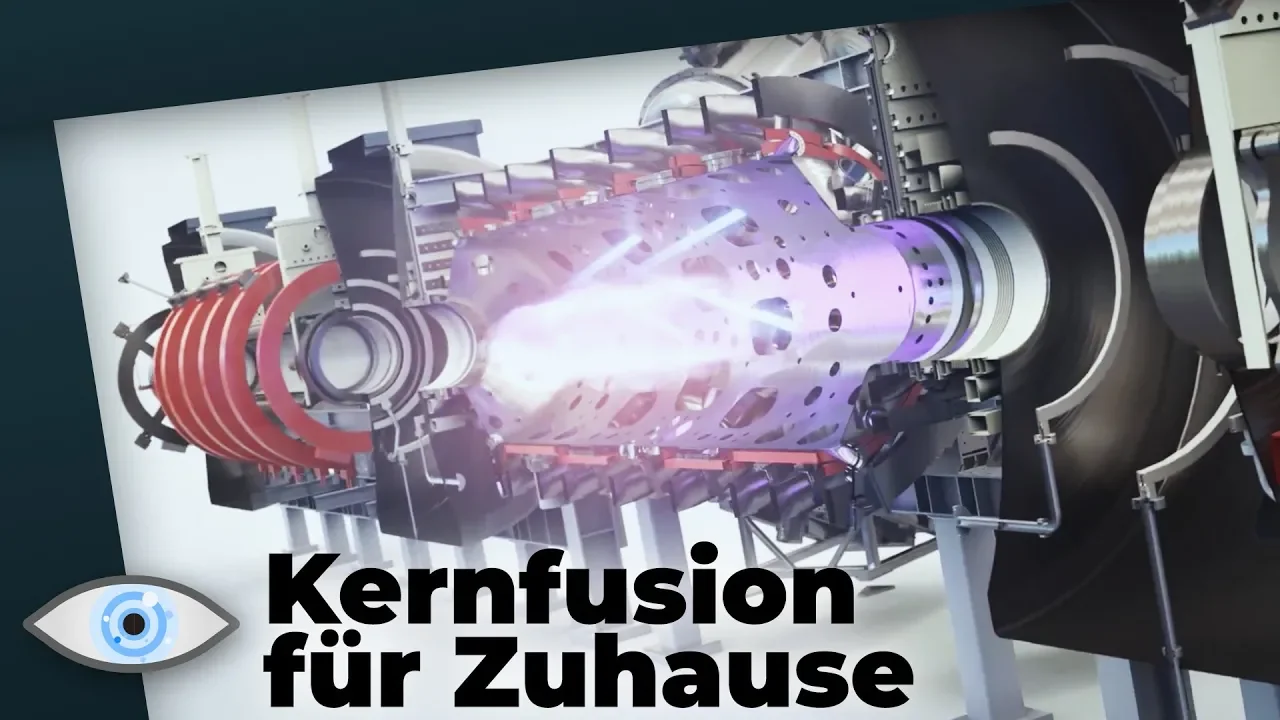

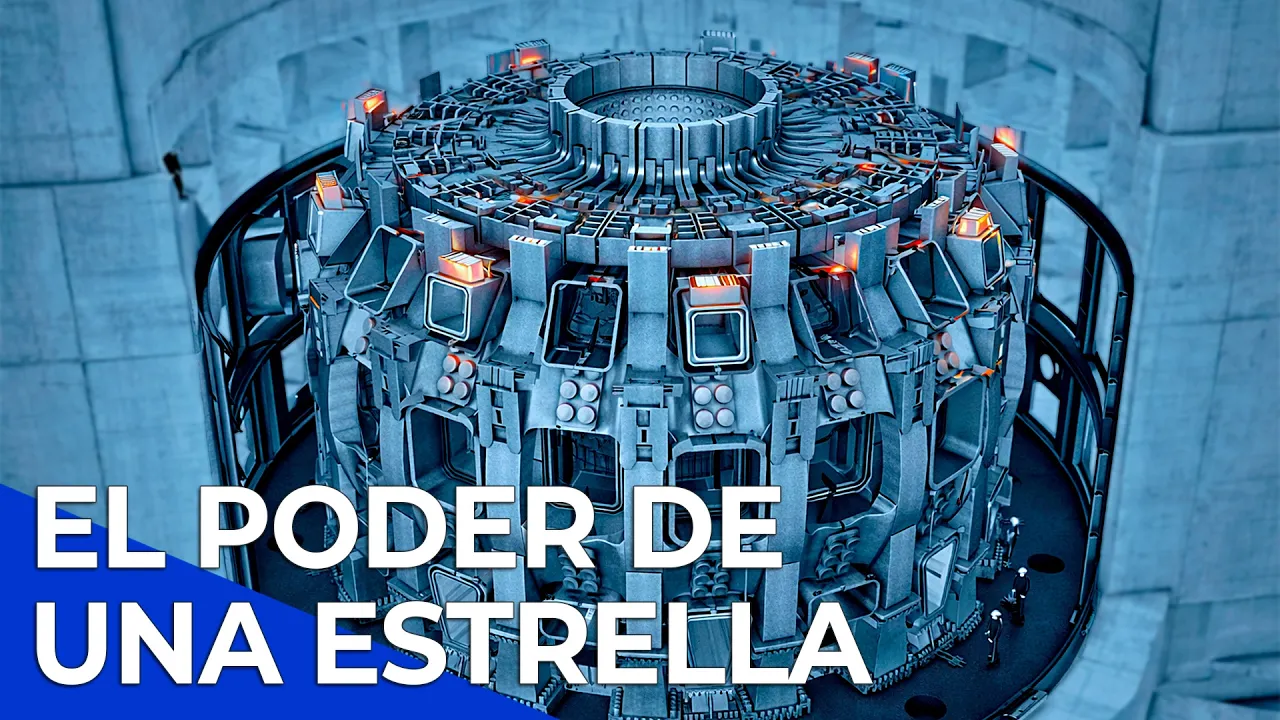
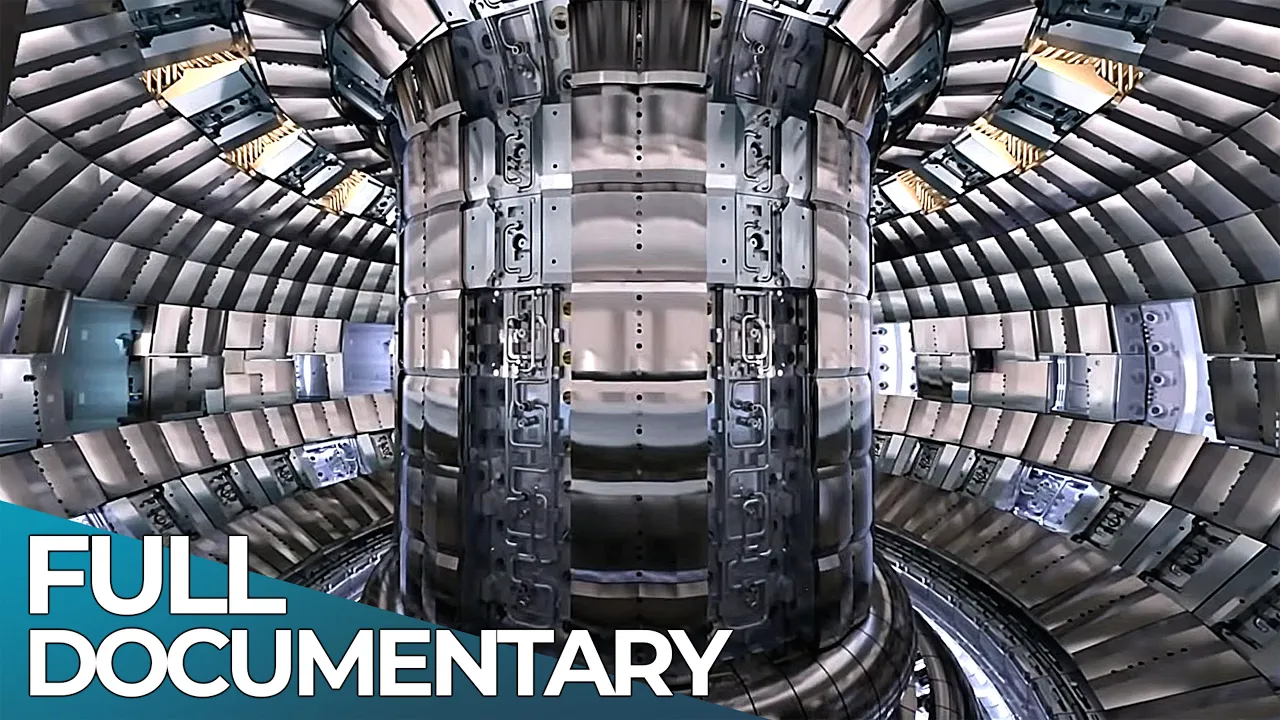
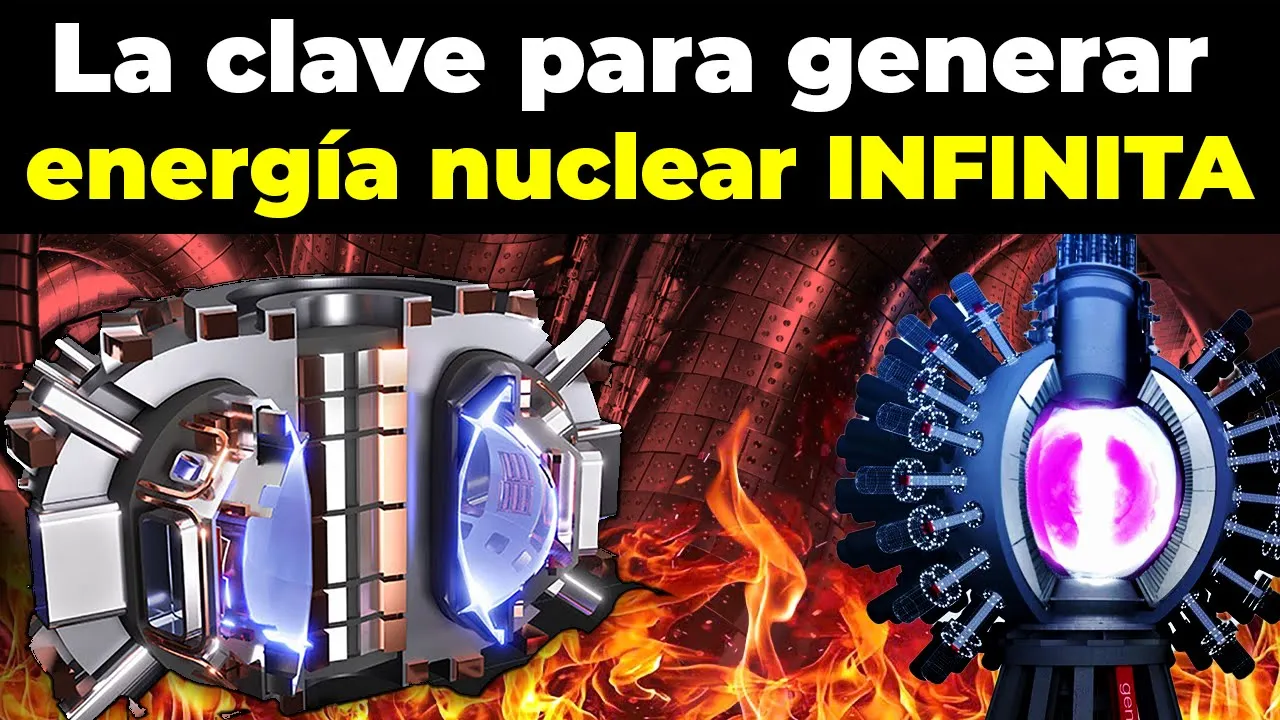

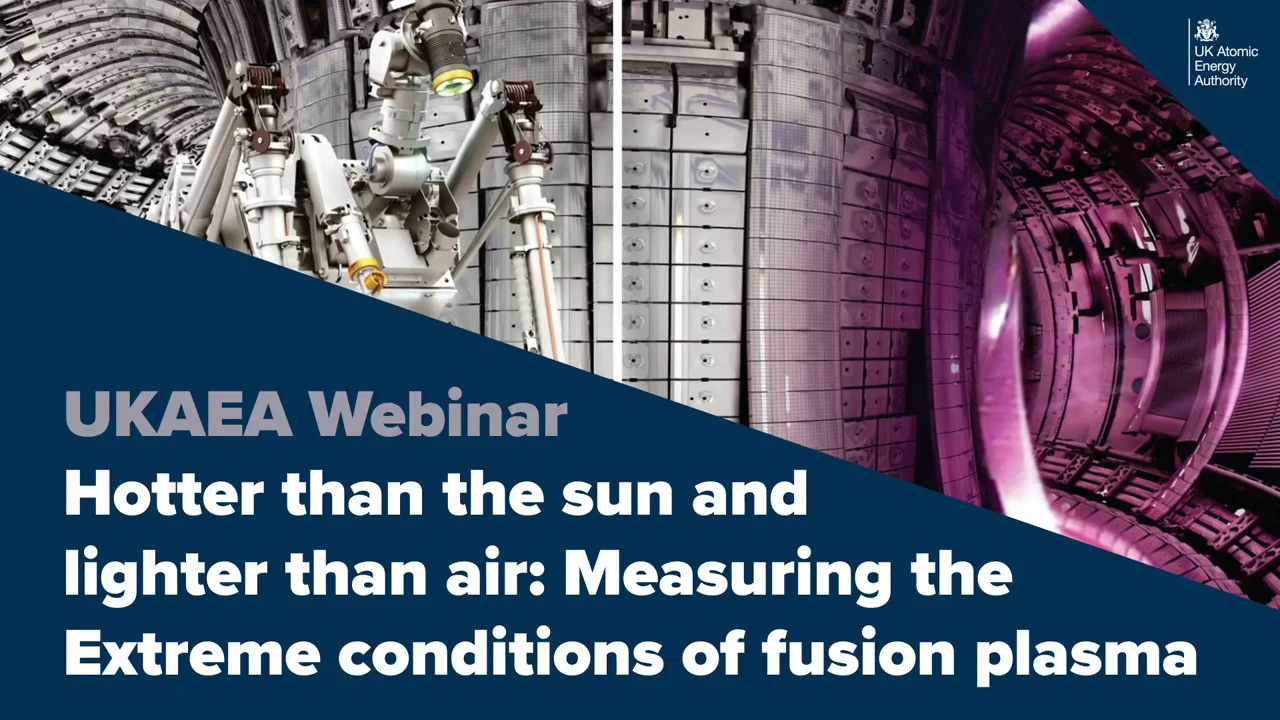
Magnetic confinement fusion uses magnetic fields to contain plasma at thermonuclear temperatures by exploiting the fact that charged particles spiral along magnetic field lines, with particles moving parallel to field lines experiencing no force while those moving perpendicular experience centripetal force causing circular orbits; this principle enables devices like tokamaks (which use plasma current to twist field lines) and stellarators (which use complex coil geometries) to achieve the high temperatures and densities needed for fusion reactions, though challenges including particle drift, turbulence, instabilities, and heat management must be overcome for practical power generation.
Magnetic Confinement Fusion: Tokamaks and Stellarators Explained
Added:Basic understanding of nuclear fusion reactions, specifically the deuterium-tritium (D-T) fuel cycle and the conditions required for fusion (the Lawson criterion).
The physics of plasma as the fourth state of matter, including ionization and the behavior of charged particles.
Fundamental electromagnetism, specifically how charged particles experience the Lorentz force and spiral around magnetic field lines.
Basic concepts of thermodynamics and kinetic theory, particularly thermal pressure and heat transfer.
In-depth study of specific plasma instabilities, such as magnetohydrodynamic (MHD) instabilities and Edge Localized Modes (ELMs), and their mitigation strategies.
The engineering and material science challenges of fusion reactors, including first-wall materials, neutron damage, and tritium breeding blankets.
A comparative analysis of landmark fusion facilities, such as the ITER tokamak and the Wendelstein 7-X stellarator.
Alternative confinement approaches, such as Inertial Confinement Fusion (ICF) and Magnetized Target Fusion (MTF).
The economics of fusion energy, plasma diagnostics, and the pathway to commercial power plants (such as DEMO).
125.8K views4Klikes23:55Original Release: 2022-07-11
at thermonuclear temperatures bonds between molecules break down and electrons are stripped from atoms the resulting plasma has all the properties of a fluid such as flowing and taking the shape of its container as well as responding strongly to electromagnetic fields and electromagnetic waves in a previous video I explained why plasma must be confined to stop it from coming into contact with its containment vessel now let's look in detail at how magnetic fields can do so at school you may have performed an experiment where you looked at iron filings around a permanent magnet which may have looked something like this the filings line up along so-called magnetic field lines these are the lines you would Trace out if you took a magnetic compass and followed the arrow from the North Pole to the South in other words the magnetic field points along the field line you may also remember a version of the right hand rule keeping the fingers at right angles to each other line up the index finger with the direction of the magnetic field the thumb with the direction of motion of an ion and the middle finger will show the direction of magnetic force for a negatively charged electron do the same thing with your left hand these simple memory aids illustrate that the magnetic force is always perpendicular to the direction of motion this means that a Charged particle moving at a right angle to the magnetic field will orbit around it in a circle if the particle is moving parallel to or in other words along the magnetic field line it feels no Force whatsoever and is free to move however it likes in general a particle will have a combination of these two motions which adds up to a spiral around a given magnetic field line so far things look pretty peachy for controlled Fusion just keep hot dyum and tritium nuclei orbiting a field line until they Collide many times and eventually fuse as an added bonus the fusion energy is split 80% is carried by a neutron which is free to escape the magnetic field and be captured while 20% goes to a helium 4 nuclear which will remain confined and give up its energy to heat the fuel even more there are a few potential problems which must be carefully avoided however one thing that magnetic field lines do not tell you at a glance is how strong the field is at any point and therefore how much force the particle will feel suppose that the magnetic field is pointing out of the screen but is stronger on the left side than the right a particle will make a tight semicircle while it's on the left because of the large amount of force it feels there but a very wide sem Circle while it's moving on the right overall then after the particle completes an orbit it has shifted its position ions move downwards electrons move up this type of effect is called a drift and it occurs either due to variations of magnetic field strength or other forces such as gravity if plasma particles drift to the walls of a reactor this would be very bad for confinement every charged particle moving in a circle is itself a small magnetic dipole just like a very tiny bar magnet with with its own field the field of a single electron on its own is insignificant however the additional magnetic field coming from a plasma is important when the density of electrons and ions becomes quite large which is advantageous for Fusion the plasma feels the influence of a magnetic field and in turn affects it back this Collective action is called Magneto hydrodynamics one consequence is that the magnetic field lines are what's called Frozen in to the plasma and must move along with it it is as if a blob of plasma is a be bead and the magnetic field line going through it is a string the bead can move along the string freely but it cannot move sideways unless it drags the field line with it or vice versa this means for example that a high pressure can cause plasma to expand and alter a given magnetic field any design for a fusion reactor must be careful that Magneto hydrodynamic effects or instabilities do not degrade the plasma confinement for example a moving blob of plasma could drag a certain field line out of the reaction region allowing the rest of the pl Plasma on that field line to leak out if the field geometry changes drifts could start to occur hot plasma regardless of whether it's in a magnetic field will experience turbulence just like any other fluid an airplane might get a bumpy ride due to the way different air masses mix chaotically similarly a fusion plasma will experience edies and whirs which Churn it up tangle up the field lines and allow particles and the energy they carry to escape turbulence and similar instabilities occur on the scale between individual particle orbits and the Magneto hydrodynamic behavior of the entire plasma they are not fully understood theoretically so it is not possible to precisely predict how a future experiment will perform so to summarize a magnetic field spins particles right round baby right round like a record right round plasma is trapped mostly attached to magnetic field lines and therefore quite well confined problems arise when individual particles drift out the Collective action of the plasma Alters the applied magnetic field or random turbulence begins to mix it up as a final note the stronger the magnetic field the better the confinement is in general particles orbit more tightly drifts are less pronounced Magneto hydrodynamic and turbulent instabilities are less problematic one of the simplest approaches to Magnetic confinement is to pass a very large current through some material it does not even have to be a plasma initially because if the current is large enough the temperature will quickly rise to plasma temperatures the current creates ring-like magnetic field lines which exert an inward Force which compresses the plasma thus the current raises the temperature and the resultant magnetic field raises the density both the necessary ingredients for fusion power output the whole thing is bound to last only for a short amount of time but that's worth it if the fusion energy released is much greater than the electrical energy input this type of approach is called the Z pinch because the current is Flowing along what is usually the Z coordinate of a cylinder however the Z pinch is never really able to reach its full potential because of a pair of instabilities the narrower the plasma column the more compacted the current becomes the greater the magnetic pressure the more compressed the pinch already is the faster it will continue compressing if by pure chance the plasma cylinder begins slightly narrower at a few points then those points will pinch off much more quickly what should have been a perfect cylinder gets broken up into isolated chunks giving this the name of the sausage inst ility this eventually cuts off the current and ruins the entire plasma column if the Z pinch cylinder has a small Bend or Kink as another instability is called then the resultant magnetic force acts from the inside to the outside of the bend the resulting Force makes the bend even bigger this means that a small and unavoidable initial imperfection grows until the plasma is Twisted out of shape the Kink inst stability remains a danger in some form or another not just for the Z pinch but for most other magnetic confinement techniques here the Kink instability has been photographed inside a pidal Pyrex vacuum chamber instabilities rule out the possibility of getting a fusion gain directly with a z pinch because the energy confinement time is always far too low z pinches are nonetheless used to do fundamental science experiments arrays of wires Each of which an individual Z pinch can also be used to generate X-rays and compress a capsule inertially the magnetic mirror is another early approach to Fusion a a pair of magnetic coils some distance apart create a cylindrical magnetic field which bulges out in the middle particles which are moving perfectly parallel to the field lines will feel no force and Escape particles moving at right angles to the field will orbit in circles the idea of the mirror is that the magnetic field is strongest near the coils and weaker between them so that even some of the particles moving along the magnetic field become trapped in the middle I won't go into the full mathematics but depending on how closely the motion of a particle is aligned with a magnetic field there is a cut off at which it will follow the field line and escape the problem is that collisions between trapped ions and electrons will constantly be knocking more and more of them onto trajectories parallel to the magnetic field lines and consequently out of the mirror the end effects can be mitigated by making the mirror machine very long perhaps with multiple coils so that proportionately only a small fraction of plasma is affected another Improvement is to have a pair of baseball shaped coils at both ends of the mirror regardless of what happens at either end the magnetic mirror is not a successful concept because it is Magneto hydrodynamically unstable in the weak field region midway between two of the coils the plasma will tend to balloon outwards dragging the field lines with it and therefore degrade confinement as a result the confinement time of mirror machines is poor and they are lucky to get up to 10 million de let alone the few 200 million needed for a High fusion output early on in Fusion research it was recognized that curving the mirror machine back in on itself in a Taurus would completely negate the end losses a configuration with a purely pidal magnetic field so that all the field lines go around in circles is still vulnerable to the sausage and kink instabilities historically machines such as Zeta in the United Kingdom showed great promise early on but then failed to reach high temperatures a concept called the bumpy Taurus involved a number of magnetic mirrors chained together in a ring but suffers from all the same issues another problem with the Taurus is that the strength of the magnetic field is no longer constant in simple terms the larger the circumference of a circular line the lower the field strength the fact that the field is therefore weaker on the outside than the inside means that ions and electrons will begin to drift in opposite directions and the whole thing becomes unstable what must happen to counteract this problem is that magnetic field lines must somehow be twisted in such a way that part of the field line is on the outside of the Taurus and another part on the inside this would mean that particles would drift One Way half the time and drift the other way the other half of the time so that the drifts cancel out two approaches to solve this problem are the two most mature and successful types of magnetic confinement machines the toac and the stellarator toac is a Russian acronym which stands for pidal chamber in a magnetic coil in it the plasma retains a pidal shape but a current is passed through the middle of it the effect of the current is like the Z pinch it creates an additional component to the magnetic field in circles around the Taurus in other words the magnetic field making the donut shape is provided by the coils in the machine and a field wrapped around the donut is generated by current through the plasma overall the two components combine so that the magnetic field is twisted up each of the field lines goes from the outside of the Taurus to the inside and back just as required the accelerator which was invented by American lman Spitzer to be an artificial star is more like a mobia strip the plasma takes the form of a ribbon Twisted on itself the magnetic field is shaped by the coils of the machine to wrap back in on itself each of the Twisted field lines comes closer and then further from the axis of the Taurus at the cost of much greater engineering complexity in short the defining feature of each of these machines is their greatest challenge a Tac must always maintain a current running through the plasma and if the current stops so does any hope of thermonuclear reactions the accelerator must be precisely engineered to maintain its characteristic magnetic field and if any of its complicated coils deviates from the design during construction or afterwards the machine too will fail once a plasma is established usually by an electrical discharge resembling a large spark it must be heated to thermonuclear temperatures the current which must be passed through a toac plasma is a good for First Step but generally not enough additional thermal energy is provided by beams of particles and electromagnetic waves charged particles orbit around magnetic field lines at the so-called cyclotron frequency which depends on the magnetic field strength and their Mass electromagnetic waves such as those used in a microwave oven are absorbed if they are of a matching frequency in such a case they resonate with the orbiting particles energy can be deposited in the plasma by targeting a specific type of particle in a location with a particular magnetic field where the resonance occurs ion cyclotron resonance heating is done by radio frequency waves of tens of megaherz electron cyron by microwaves in the hundreds of gigahertz range the so-called lower hybrid resonance between these two is also often used for comparison most Wi-Fi and microwave ovens use 2.4 GHz waves the main challenge with wave heating is successfully delivering the electromagnetic waves to where they are needed just like light microwaves and radio waves can be reflected or refracted by the plasma potentially all the way out of it depending on changing conditions in that case the energy is wasted beams of particles are created by an accelerator and injected into the plasma so that they can deposit energy and heat the plasma up since the particles are usually duum atoms they also add some fresh fuel to be able to pass into the magnetic field undeflected the particles must have a net charge of zero so this method of heating is called neutral beam injection however particle accelerators can only accelerate charged particles so the duum atoms must have an electron stripped off or added then be accelerated and then be neutralized again when moving at high speed both approaches have their trade-offs but the version where an electron is added to make the dyum atom negative is more promising for future tox where each one has to be accelerated to a higher speed generating neutral beams is less energy efficient than mic waves but the advantage is that the beams will surely go where they are pointed if dyum tritium Fusion is taking place sufficiently quickly and the confinement of heat is sufficiently good the fusion energy carried by helium 4 nuclei will begin to be the dominant heating mechanism mathematically this will happen above a fusion gain of five which is a prequisite for any successful power plant how such a large number of very energetic helium 4 nuclei will behave and interact with plasma instabilities is still a major unknown for magnetic Fusion because this regime has never yet been reached a toac must have a large current flowing through the plasma the simplest and earliest approach to do this is by electromagnetic induction outside the vacuum chamber are coils which act as the primary coil of a transformer and the plasma Taurus is just like a giant secondary coil as a consequence of Faraday's law the current induced in the secondary is proportional to the rate of change of current in the primary in an ordinary transform former there is alternating current in the primary and as a result also the secondary coil but inside the toac the current must be constant and therefore in the primary coil it must rise constantly if it is rising steadily amp by amp eventually it will reach a th000 a million or whatever the engineering limit is on the coil the current in the primary will then Plateau or fall and the toac plasma will fail one way or another fortunately the other methods of heating the plasma can also be used to drive a current through it if the neutral beams come in at an angle to the Taurus there will be a resulting flow of charge an electrical current this is the typical setup on high performance toax electromagnetic waves can also Drive currents the lower hybrid resonance is particularly good at making electrons flow around the Taurus so many toomax have microwave systems for lower hybrid current drive there have been some proposals to enable the helium 4 Fusion products to also induce current but they are as yet totally unproven I have been talking about a toac plasma as if it is the same shape as a Homer Simpson donut where the cross-section is circular the size of the plasma is limited by wherever a magnetic field line intersects a solid wall any plasma which makes its way out of the center of the doughnut to such a field line will quickly cool and recombine into a gas on the flip side the solid wall heats up and erods a better idea is to add another current through a coil below the plasma so that the magnetic field lines make something more like a figure of eight the plasma will then flow down the legs until it strikes the walls of the reactor the vacuum vessel can be armored at those strike points to best resist this hot plasma this is called a diverter a particularly tough device at the bottom of most toomax on Advanced toomax the diverter is or will be made of tungsten a dense metal with a high melting point nonetheless this is a very challenging area for magnetic Fusion because in a full power reactor a huge amount of power power will be dumped on the diverter it has been likened to a spacecraft re-entering the Earth's atmosphere many ways to tackle this problem have been considered such as purposefully inducing the plasma to radiate away all its energy by brm straing just before it reaches anything solid this is still a very active area of research particularly on smaller toxs which might never be able to get high power output and therefore irrelevant to Fusion research the diverter region is also a logical place to put vacuum pumps to pump out plasma after recombines back into a gas in a fully fledged power plant this would allow helium 4 waste gas to be removed and separated out other coils are added around toomax to shape the magnetic field because it turns out that the confinement improves if the plasma is extended vertically this is how most modern toxs operate the plasma cross-section is also somewhat triangular usually pointing outwards although the idea of so-called negative triangularity pointing inwards has recently had some successes taken to the extreme this results in the spherical toac concept which as the name suggests has an almost spherical plasma pierc through the middle by a metal column spherical toomax still have a diverter at the bottom and perhaps a second one directly above the plasma this approach is Good from the point of view of scaling down toomax but it makes the central column very vulnerable gyum tritium reactions which any future power plant must have produce high energy neutrons which would make swiss cheese out of that Central column moreon this in a subsequent video overall no matter what the cross-section of the plasma looks like the temperature and density peak in the middle and decrease as you go outwards when the input power is high enough the plasma transitions to a high confinement mode of operation usually referred to Simply as H mode this means that the plasma density begins to rise much faster at the edge of the plasma and as a result reaches a much higher peak in the middle this is very advantageous because a larger density means a larger fusion power out put the benefit to Performance is seen as practically essential for any future reactor the drawback to H mode is that several times every second an instability causes a fairly large expulsion of plasma often not just to the diverter but to the walls in general fittingly this type of instability is called an edge localized mode or Elm Elms are not so bad from a confinement point of view but they are very unfavorable technologically if heat and particles are to leak out of the plasma to the walls of a reactor better that they do so steadily rather than in a single violent eruption H mode therefore becomes a trade-off between getting a large power output and minimizing damage to the reactor vessel there are several promising Solutions at various stages of maturity for how to get the best of both worlds depending on plasma conditions there are different types of Elms with some less destructive than others other modes of operation without Helms such as the quiescent H mode and the improved confinement or I mode have been observed occasionally it is hoped that future reactors will make use of these modes this is why upcoming Fusion machines are experiments and there is still a lot of work to be done before a commercial reactor can be built I have mentioned tiny instabilities which are happening continuously throughout the plasma and intermediate scale ones like Elms which happen more occasionally there is another type of instability which is large and dangerous occasionally tox experience A disruption where the entire plasma whacks itself into to the walls and dumps a huge amount of thermal energy there for years experiments have attempted to predict when A disruption might happen and prevent it by quickly filling the reaction vessel with cold gas or with shards of Frozen material to take up the thermal energy instead in principle most disruptions can be caught and mitigated so that they don't do any damage however in a future reactor running 24/7 disruptions would be very uneconomical because they mean that all the effort of heating up the plasma has been temporarily wasted reports of artificial intelligence being used in magnetic Fusion experiments usually refer to the detection of disruptions it is of course very useful to be able to catch such disruptions early but understand that AI is not a silver bullet to solving every possible problem in magnetic Fusion speaking of the walls of a toac early versions were covered with carbon tiles small numbers of carbon atoms would become eroded away and circulate through the plasma where each one is 36 times better at rate radiating away energy by brm stoling than hydrogen when carbon atoms cool at the edge of the plasma they chemically bond to the hydrogen isotope fuel to form things like hydrocarbons for a fully fledged Fusion reactor this would be a major problem because relatively large amounts of the radioactive tritium fuel would become locked up and eventually Decay away any future magnetic fusion power plant must therefore have walls made of metals which do not absorb hydrogen Isotopes nearly as much two existing toac have made a conversion in in the mid 2000s jet in the UK to burum tiles and azex upgrade in Germany to tungsten paradoxically it turned out that the small amounts of carbon were actually beneficial to confinement after switching to metal walls the plasma temperature actually became lower inside those machines during the decade and a half since then experiments have been working to restore Fusion performance to the level it was with carbon tiles most of what I've mentioned so far Heating diverters and H mode of sorts are applies to accelerators as well as toomax the difference is that a accelerator does not require plasma current to twist its field lines indeed currents are undesirable for stellarators this means that a fusion reaction could sustain itself indefinitely without any external input power in the stellarator the flip side is that the magnetic coils are very complicated geometrically most advanced magnetic Fusion experiments now and in the future have superconducting coils to keep down the required power that's not a problem for the simple coils of a toac but it makes it very challenging to engineer accelerator coils and keep them running overall toxs are the most ubiquitous and so far the most successful magnetic Fusion machines due to their Simplicity and relative resistance to many of the most debilitating instabilities encounted early on toax achieved early success and historically gained momentum there are other magnetic Fusion Concepts such as the field reversed configuration and reversed field pinch among others I have not mentioned here but none have yet approached or past toax in terms of triple product and therefore Fusion performance one thing I hope you take away from this video is the kind of work being done to advance the field progress in magnetic Fusion is not a case of building a bigger machine switching it on and getting it to work on day one a lot of optimization has to be done to finally perfect fusion power
Up Next

51:52
Plasma Instabilities & Magnetic Diffusion | Plasma Physics
@luciusfox9508
4.8K views•2015-12-24

12:53
21cm Hyperfine Transition in Neutral Hydrogen: Radio Astronomy Basics
@AaronRobertParsons
12.4K views•2011-10-13

32:32
NMR Spin Physics I: Zeeman Effect, Resonance Condition & Larmor Frequency
@nptel-indianinstituteofsci8064
2.3K views•2024-01-17

27:14
Entropy and the Second Law of Thermodynamics Explained
@veritasium
27.5M views•2023-07-01
Related Study Plans & Knowledge Roadmaps
Structured learning paths in Physics
physics
Nuclear Physics (Decay, Fission & Reactors)
01Atomic Structure and the Binding Force
02Radioactive Decay and Half-Life
03Nuclear Fission Mechanics and Chain Reactions
+ 2 more learning modules
12h5 modules
Explore Roadmap
physics
Soft Matter (Polymers, Colloids & Rheology)
01Foundations of Soft Matter & Thermal Forces
02Polymer Physics and Macromolecules
03Colloids, Surfactants, and Self-Assembly
+ 2 more learning modules
38h5 modules
Explore Roadmap
physics
Analytical Mechanics: Lagrangian & Hamiltonian
01Mathematical Foundations: Calculus of Variations
02From Newtonian Mechanics to Constraint Dynamics
03The Principle of Least Action & Lagrangian Mechanics
+ 3 more learning modules
28h6 modules
Explore Roadmap
physics
General Relativity (Spacetime & Cosmology)
01Foundations of Relativity: Special Relativity
02The Geometry of Spacetime: Equivalence Principle & Curvature
03Einstein's Field Equations: The Mathematics of Gravity
+ 2 more learning modules
55h5 modules
Explore Roadmap