


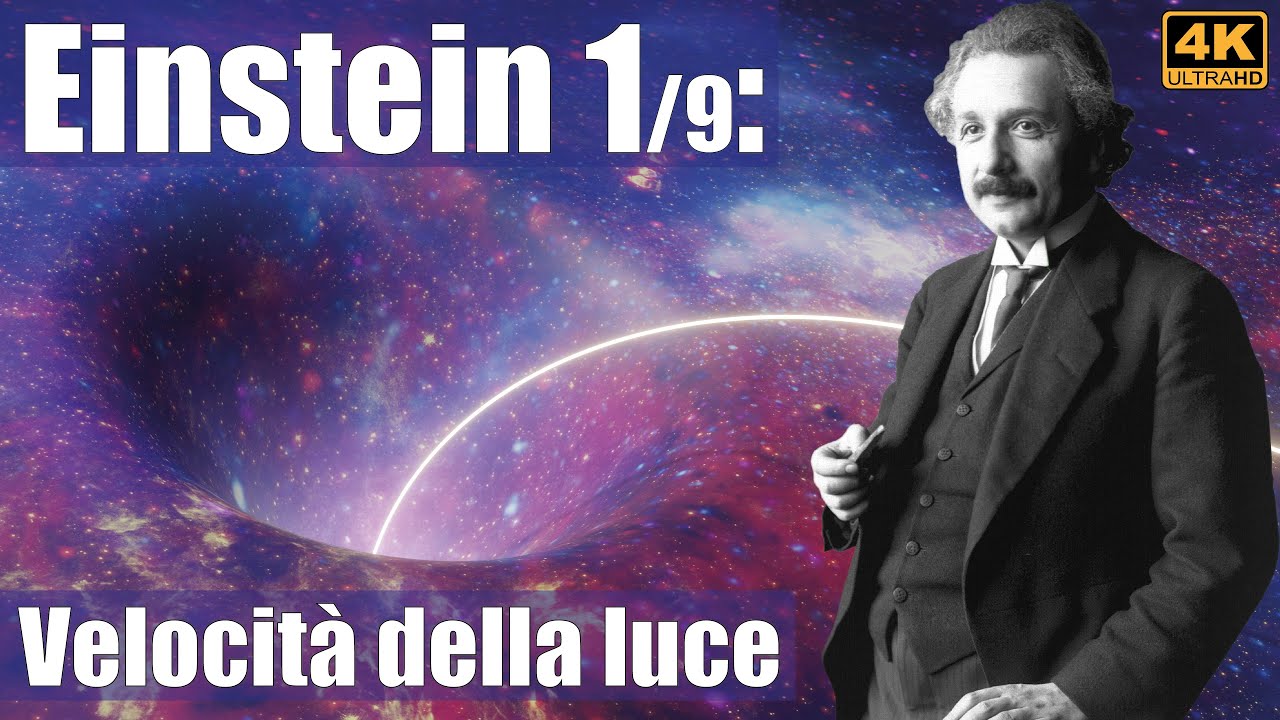





















According to Einstein's Special Theory of Relativity (1905), time is not absolute but relative to the observer's state of motion; when objects travel at significant fractions of the speed of light, time slows down for them relative to stationary observers, meaning what could be a day for a fast-moving traveler could be decades for someone at rest.
Understanding Einstein's Special Relativity: Visual Animated Guide
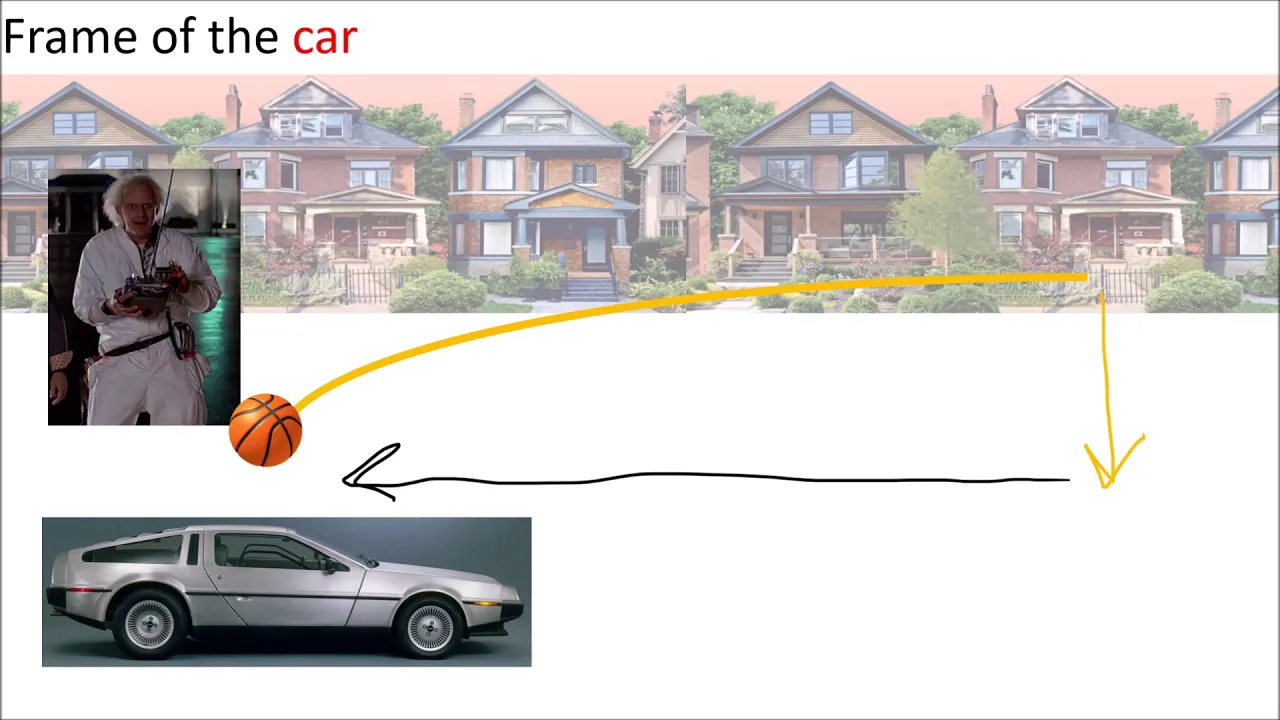
Added:Galilean Relativity and Classical Mechanics: Understanding reference frames and how velocities classically add up (e.g., throwing a ball on a moving train).
The Constant Speed of Light: Familiarity with the concept that light travels at a constant speed 'c' in a vacuum, independent of the motion of the source.
Newtonian Concepts of Space and Time: Comprehending the classical assumption that space and time are absolute, universal, and independent of the observer.
Basic Algebra and Coordinate Geometry: Comfort with coordinate axes (x, y, z) and simple algebraic manipulations used to describe positions and motion.
Length Contraction and Relativistic Momentum: Exploring other physical consequences of relativity, such as how objects contract in the direction of motion and how momentum behaves near light speed.
Mass-Energy Equivalence: Investigating the derivation and implications of the famous equation E=mc², showing that mass and energy are interchangeable.
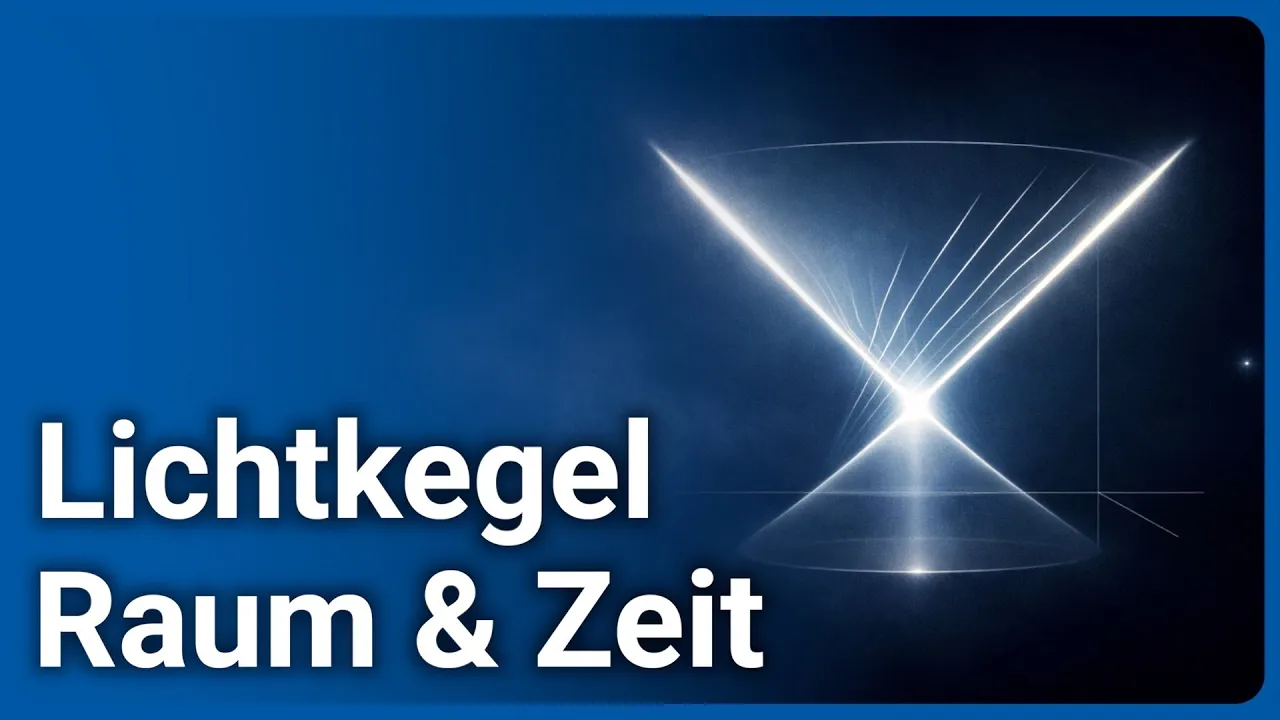
Minkowski Spacetime and Light Cones: Learning to visualize relativistic events and causality using four-dimensional spacetime diagrams.
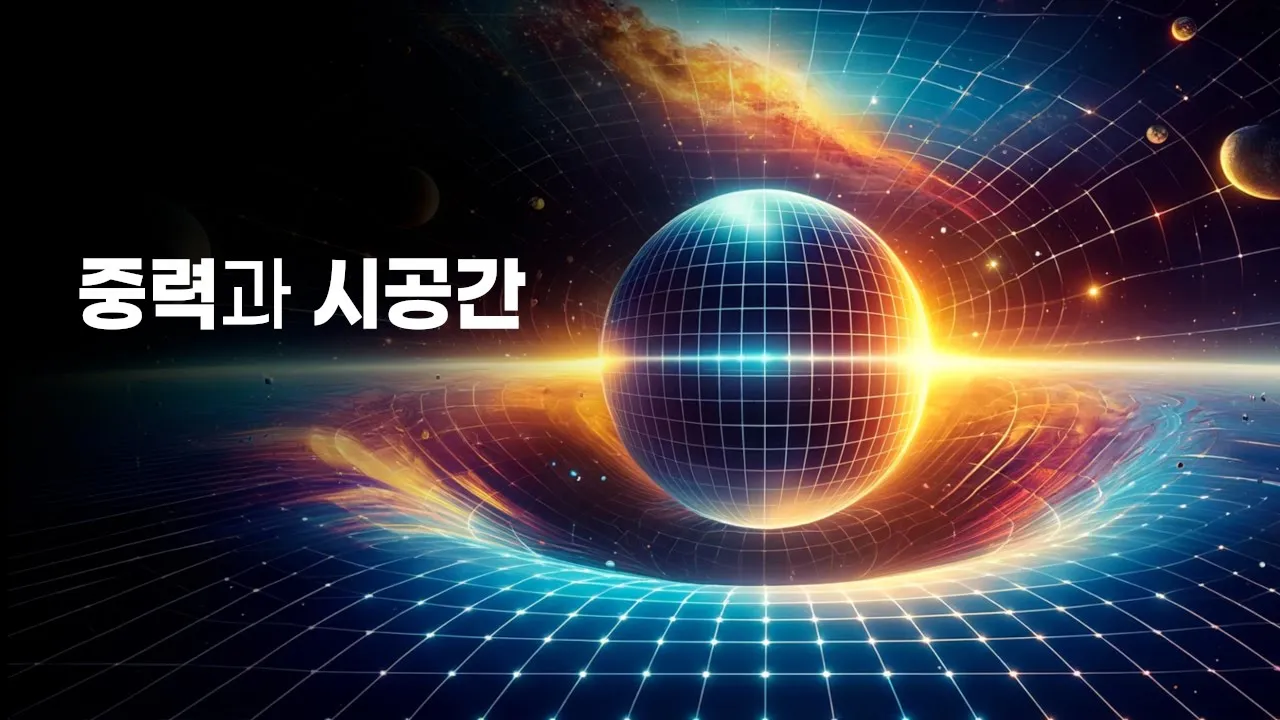
The General Theory of Relativity: Transitioning from flat spacetime (constant velocity) to curved spacetime, which incorporates acceleration and gravity.
Real-World Applications (GPS Technology): Studying how global positioning satellites must correct for relativistic time dilation to provide precise location data.
5.1M views69.8Klikes5:56Original Release: 2014-09-01
time you can't see it you can't hear it you can't wait but we experience it every moment the whole piece of time is a landscape and we move through it slice by slice but do we really understand time is Time same for everyone to understand time let's go back in time and make a small Journey with a certain young patent clerk Albert Einstein imagine you're traveling with Einstein in a train moving at a certain uniform speed the train relative to the outside environment is in motion the two of you sitting inside on the other hand observe each other as stationary objects as both you and the train are moving at the same speed hence relative to the train you are stationary and the laws of physics stay same inside the train as they would on the ground when you are standing still now let's consider you get off the train and observe it moving across in front of you now you are stationary and relative to you Einstein is moving with the same speed as the train this is the phenomenon of relative motion and we observe it every day does everything in the universe observe this relative motion the same way yes everything except light light behaves in a different way imagine you have a light clock with you this light clock has two mirrors in the opposite directions and a light beam bouncing between them now let's say the distance between the two mirrors is D and the time for the light to cover that distance is T for the sake of Simplicity let's say it's 1 second so when this clock is with you at rest position the light bounces between the mirrors covering distance D in 1 second which gives us the speed of light s now remember speed is distance per unit time now consider Einstein also possesses the same light clock with him only this time he's traveling in a spaceship along with the clock when Einstein travels in a certain speed the clock travels with the same speed of the spaceship in the same direction here light has to travel an extra distance in the same 1 second let's consider this distance to be capital D and represent the speed of light here as capital S which has to be greater than small s but something's wrong here because in the late 1800s the Michaelson mol experiment tried to detect the relative motion of the matter through an ether and concluded that the speed of light is constant this Cosmic speed limit is known as C so in our little scenario small s and capital S are equal so for the speed of light for both you and Einstein to remain constant something has to give way that something is time it turns out time slows down when you travel faster and faster nearing the speed of light So the faster Einstein travels slower the time passes for him hence what could be a day for Einstein in space could be as much as 50 years for you on the ground this became the fundamental conclusion of the theory of relativity a theory proposed by Albert Einstein in 1905 this Theory broke the traditional understanding of time as a constant entity and proved that time in fact is different for different observers the theory of relativity led to many other invaluable findings the most famous of which is the equation eal MC squ but more on that later [Music]
Up Next

15:48
Muon Paradox: Proof of Einstein's Special Relativity
@upandatom
486.4K views•2021-12-17

4:32
How Tuned Mass Dampers Stop Structures from Shaking
@MinutePhysics
573K views•2018-08-28

32:32
NMR Spin Physics I: Zeeman Effect, Resonance Condition & Larmor Frequency
@nptel-indianinstituteofsci8064
2.3K views•2024-01-17

33:44
The Blue LED: A Decade-Long Scientific Challenge Explained
@veritasium
46.5M views•2024-02-08
Related Study Plans & Knowledge Roadmaps
Structured learning paths in Physics
physics
Medical Physics: Imaging, MRI & Radiotherapy
01Foundations of Radiation and Matter Interaction
02X-Ray Imaging and Computed Tomography (CT)
03Magnetic Resonance Imaging (MRI) Physics
+ 3 more learning modules
15h6 modules
Explore Roadmap
physics
Nuclear Physics (Decay, Fission & Reactors)
01Atomic Structure and the Binding Force
02Radioactive Decay and Half-Life
03Nuclear Fission Mechanics and Chain Reactions
+ 2 more learning modules
12h5 modules
Explore Roadmap
physics
Soft Matter (Polymers, Colloids & Rheology)
01Foundations of Soft Matter & Thermal Forces
02Polymer Physics and Macromolecules
03Colloids, Surfactants, and Self-Assembly
+ 2 more learning modules
38h5 modules
Explore Roadmap
physics
Analytical Mechanics: Lagrangian & Hamiltonian
01Mathematical Foundations: Calculus of Variations
02From Newtonian Mechanics to Constraint Dynamics
03The Principle of Least Action & Lagrangian Mechanics
+ 3 more learning modules
28h6 modules
Explore Roadmap