
![La vida privada de las estrellas [9/10] Las estrellas de neutrones](https://i.ytimg.com/vi/-aB6_63eOSI/maxresdefault.jpg)
















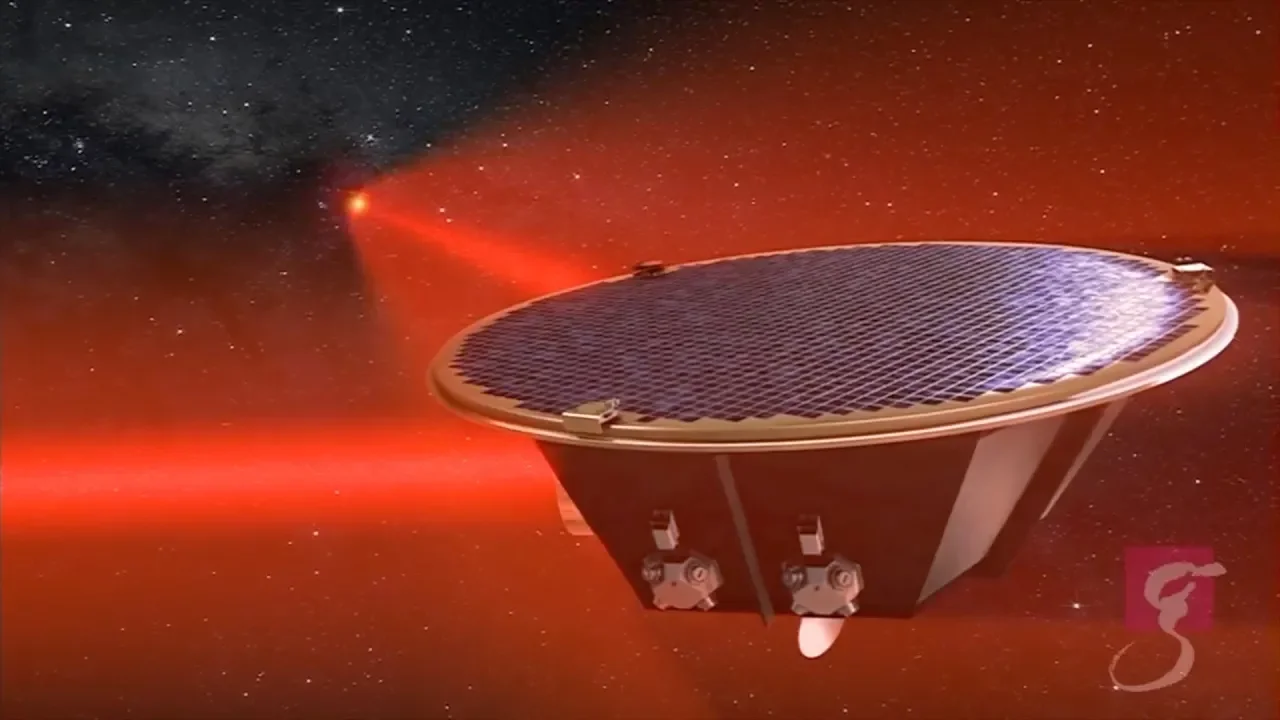



The 2017 detection of a kilonova—a collision between two neutron stars—revealed that these rare cosmic events (occurring about once every 100,000 years per galaxy) are the primary factories for creating heavy elements like gold, silver, and platinum, which supernovae alone cannot produce efficiently. Additionally, the simultaneous detection of gravitational waves and gamma rays from this event, arriving within 1.3 seconds after traveling 140 million years, confirmed that gravitational waves travel at the speed of light to an accuracy of one part in a million billion, effectively ruling out most theoretical extensions to general relativity that predicted otherwise.
Kilonova Insights: How Neutron Star Mergers Shape the Universe
Added:The life cycle of massive stars, specifically the formation, composition, and extreme density of neutron stars.
The fundamental principles of Einstein's General Theory of Relativity, including gravity as the warping of spacetime and the theoretical existence of gravitational waves.
Basics of stellar nucleosynthesis, understanding how stars fuse elements and why standard stellar fusion stops at iron on the periodic table.
An introduction to multi-messenger astronomy, which involves observing the universe using both electromagnetic radiation (light) and gravitational waves.
The physics of the r-process (rapid neutron capture nucleosynthesis) and how it explains the cosmic origin of heavy elements like gold, platinum, and uranium.
Advanced study of the Neutron Star Equation of State (EoS) to understand the behavior of ultra-dense matter under extreme pressure and gravity.
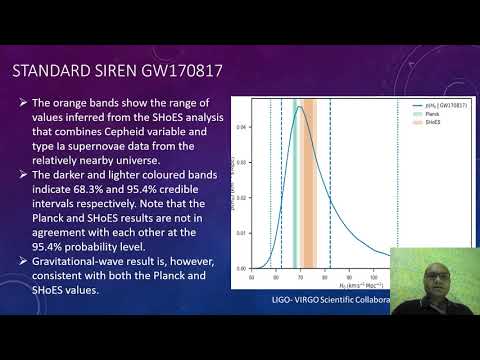
How gravitational wave sirens (standard sirens) are used as a novel method to measure the Hubble Constant and calculate the expansion rate of the universe.
Modified gravity theories and how constraints from the speed of gravitational waves compared to the speed of light rule out certain cosmological models.
159.8K views5.5Klikes18:14Original Release: 2021-08-18
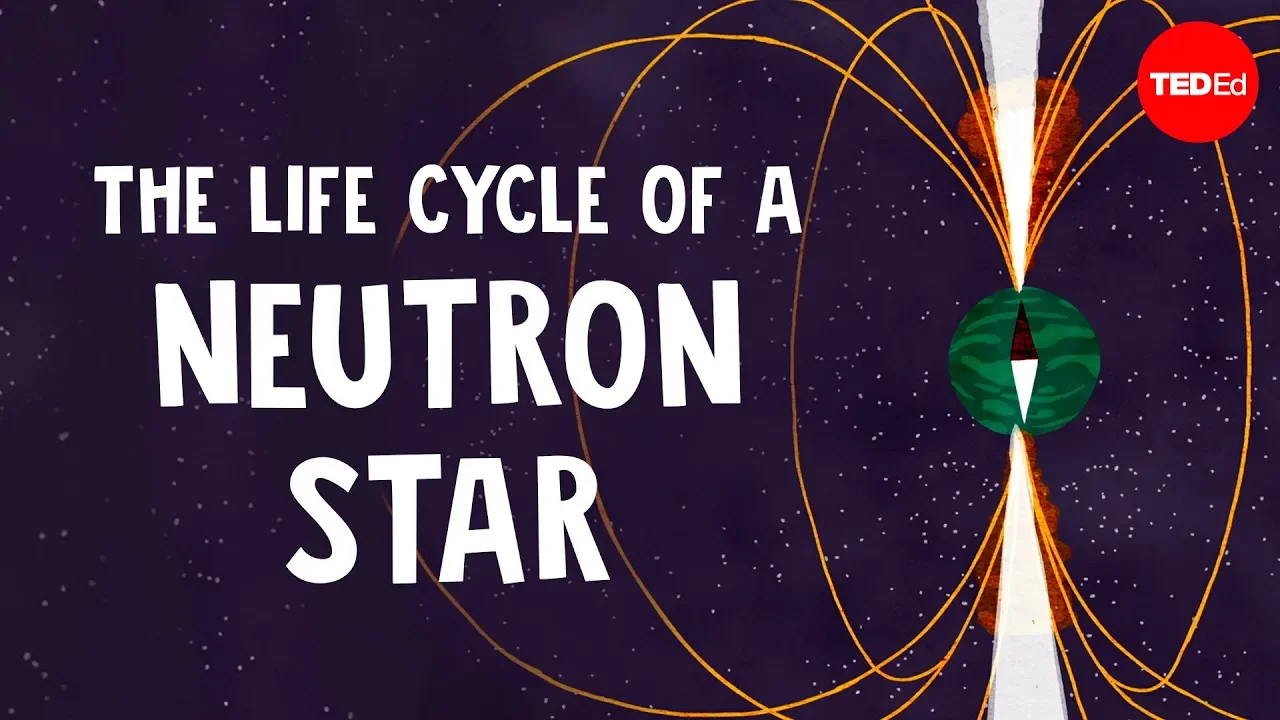
one afternoon in august of 2017 the gravitational wave detectors of ligo and virgo two sites in the united states one in italy realized that they had seen the fingerprint of a gravitational wave now up to this point they had seen a couple dozen gravitational waves from merging black holes this was pretty routine but there was something different about this particular signal usually the gravitational wave signal from merging black holes is very very short lasting less than a second you get this rapid ramp up and then ring down and it's gone in a flash but this gravitational wave signal took over two minutes to ramp up and then fade away there was something distinctly different about this particular signal and the signal was clear it was well above the noise it was distinct it was there it was matching the templates something fishy was going on within a couple hours the ligo and virgo teams confirmed that they did have a detection and sent out an alert to the worldwide astronomical community but before they sent out that alert the fermi gamma-ray space telescope sent out an alert of its own and this alert was from the detection of something called a short gamma ray burst a flash of intense gamma-ray radiation they had sent out their alert much faster because their data was much much easier to process but within a couple hours after both the gamma-ray burst alert and the gravitational wave alert the astronomical community realized what they were witnessing they were witnessing something called a kelonova this kilonova had never been observed before in astronomy but here it was in the form of a gamma-ray burst and a gravitational wave signal now the timing of the event was was pretty opportune for astronomy because the event happened in the early afternoon in european time in early morning uh in the americas and so astronomers had enough time to realize what was happening send out priority alerts to observatories in the atacama desert in chile some of our most powerful observatories in the world are located there that night they were able to observe the source of the gravitational waves and the gamma-ray burst that night within 11 hours of the event of the gravitational wave event we had our first optical picture visible light picture of this kilonova over the following days and weeks observatories around the world would continue to monitor this site observatories orbiting observatories would continue to monitor this site we captured the process of this kilonova happen from the moment it occurred for weeks after in every wavelength of the electromagnetic spectrum plus gravitational waves two months later astronomers started publishing papers about it there were a hundred papers ready to go within two months there was an entire journal dedicated an issue of a journal dedicated to these results the summary paper that described had provided a broad overview of all the observations had a co-author list with over 4 000 names on it that is about one-third of the entire astronomical community writing about this one event in 2017 writing about this kilonova akilanova we get the name from the fact that this is more powerful than a nova about a thousand times more powerful than anova but not as bright as a supernova the kilonova process starts with neutron stars neutron stars are the leftover cores of massive stars stars much much more massive than the sun when these stars go supernova or are about to go supernova they form a core of iron in their centers but the pressures the intense pressures of the entire weight of that star cramming onto that iron nucleus cause electrons to get shoved into protons turning them into neutrons and converting this massive core of iron into a giant ball of neutrons and that giant ball of neutrons can temporarily halt the catastrophic gravitational collapse and that's what triggers a supernovae explosion sometimes the on rushing in the chaos a black hole can be formed out of that neutron ball and sometimes the ball neutron survives as something we call a neutron star neutron stars are some of the most exotic objects in the universe in some ways even more exotic than a black hole neutron stars we're talking about an object a few times more massive than the sun packed into an area no bigger than say manhattan spinning add up to tens of thousands of revolutions per minute the gravity around a neutron star is so strong that it can bend light into the path of a circle like light can orbit a neutron star that's what we're talking about so imagine one of these exotic exotic objects in the universe colliding with another one it's not going to be pretty what you get is a kilonova the actual radiation of a kilonova comes not from the collision itself well the collision releases energy of course but it's not super bright instead most of the light the visible light comes from the radioactive decay of elements after the merger takes place after the merger takes place sometimes if the masses are small enough you can get just a bigger neutron star at the end sometimes you end up with a black hole sometimes the whole thing just obliterates itself we had long thought prior to 2017 that neutron stars did collide that they were responsible for something we called a kilonova we had not observed the kilonova yet we had observed the short gamma-ray bursts and we didn't know what was causing the short gamma-ray bursts which is why we just called them short gamma-ray bursts instead of something more specific we had suspected that it was due to merging neutron stars we had suspected that merging neutron stars when they do collide do have a visible component that is about a thousand times brighter than a typical nova we did suspect that merging neutron stars would release tremendous amounts of gravitational waves ripples in the fabric of spacetime itself but until 2017 we hadn't detected it yet so you can see why a lot of astronomers were interested in this event kilonova are relatively rare there's only about one every hundred thousand years in a typical galaxy contrast that with supernova where you get a handful per century in every galaxy but neutron stars merging neutron stars kilonova play an essential role in the chemistry of of life like literally life we get our elements through fusion so the the process of the big bang in the first few minutes of the big bang we get some hydrogen some helium a little bit lithium who cares about lithium eventually the hydrogen helium combines in in the hearts of stars to form carbon and oxygen those stars die and enrich the interstellar medium if you get a massive star you can fuse heavier elements you can get silicon magnesium you can make it all the way to iron but you can't fuse past iron because fusing past iron if you fuse elements heavier than iron you lose energy instead of gaining energy and so that's not a good power source for stars because it takes energy instead of releasing it so we get a bunch of heavier elements from supernova explosions themselves where there's enough energy enough parts flying around diffuse some of the heavier elements but it's not enough when you calculate how often supernova go off and how widely they can disperse their elements and how efficient that fusion process is and what kind of elements the fusion the energies and densities prefer you aren't able to fill out the periodic table you need something else now something else is merging neutron stars that something else is kelanova kilonova even though they're less powerful than supernova have just the right mixture of energy and density and temperature and time scale to make many of the heavier elements in the periodic table what happens is that when you have these two balls of neutrons and they collide together you get all these fragments of neutrons flying around colliding with each other radioactively decaying and it just like turns itself into elements it's just like a heavy element factory when kilanova go off we're talking gold we're talking silver platinum xenon you know if you have gold jewelry on right now that gold was most likely formed from merging neutron stars the 2017 kelanova event that we observed we got to see what elements were produced because we saw the aftermath of the explosion we could take the spectrum we could figure out the elements we're talking in that one explosion like hundreds of earth's worth of gold and silver platinum heavy metals and i don't mean a hundred times more gold and silver and platinum than the earth has i'm talking about like a hundred earths made of solid gold and silver and platinum this is the real deal like kilonova are much more rare than supernova but much more efficient at producing these heavy elements and we witnessed it we saw it we're still following up with observations years later of that kilonova event the only way to get gold on this on the earth to get the elements necessary for life itself is to merge neutron stars supernova alone just aren't going to cut it but there was another little treasure in that kilonova explosion in 2017.
according to general relativity which is our understanding of gravity gravitational waves travel at the speed of light they just do that's just what they do but we know that general relativity isn't the final word on gravity we know that general relativity is incomplete general relativity cannot explain what's happening at the center of a black hole it cannot explain precisely what's happening at the event horizon of a black hole it cannot explain what's happening in the earliest moments of the big bang we know where general relativity where on modern understanding of gravity fails and breaks down we can't explain dark energy the accelerated expansion of the universe you know general relativity our theory of general relativity is just silent it's just like okay you got dark energy i don't know what that is uh do you like that's the best that general relativity has so we know it's incomplete we know it's wrong at some level it's right in a lot of ways but it's wrong at some level so over you know the past century basically ever since there's been a general relativity we've been looking for extensions and modifications to it these extensions and modifications we use to try to understand and explain say dark energy or to explain what's happening at the center of a black hole in the earliest moments of the big bang we have so many that like their theorists are relatively bored they got a lot of time on their hands so they they cook up all sorts of crazy ways to extend and improve and enhance general relativity and the vast majority of those theories uh predict that gravitational waves end up not traveling at the speed of light because of various complicated factors like every theory is different but in general they say gravitational waves don't travel at the speed of light well now we have this kilonova explosion in 2017 where we got the gravitational waves and we got the gamma rays from the explosion itself they arrived within 1.3 seconds of each other 1.3 seconds actually the the radiation the gamma rays arrived first that's not a big surprise because the light actually got tangled up in the density of the material there in the explosion itself it took a while to break out while the gravitational waves since they don't really interact with matter all that much just sailed right on through so it's not a surprise that the gamma rays came first but that 1.3 seconds is important this event the kilonova event happened 140 million years ago the event happened 140 million years ago so the gravitational waves and the light waves were racing each other for 140 million years and they arrived at the earth within 1.3 seconds of each other that is essentially the same speed to one part in a million billion now we can say with this one observation of this one kilonova in 2017 that gravitational waves travel at the speed of light to an accuracy of one part in a million billion that's a billion times better than any previous measurement and it effectively killed almost every single if not all extensions to general relativity all theories of modified gravity that we have cooked up to explain dark energy centers and black holes early universe gone with one observation because it looks like gravitational waves do travel at the speed of light you can't get around it that one observation killed entire fields of physics which is how it goes there's going to be more of this since 2017 there hasn't been a confirmed kilonova detection again there have been some candidates uh but there haven't been ones where we've been able to match up with the gravitational waves and electromagnetic counterpart but there's more on the way astronomers are super excited by what they call multi-messenger astronomy this is where you can look at the same event with different tools you can look at electromagnetic radiation of different wavelengths you can look at neutrinos you can look at gravitational waves and each one of these tells you different things about the event now no one isn't more important than the other they just tell you different things the gravitational waves tell you in the case of the kilonova what's happening right when the neutron stars merge the gamma rays tell you what happens right after they merge the electromagnetic waves tell you what happened minutes or hours or weeks after the event so by combining all of it you get a complete and total picture of this extreme event in astronomers love extreme events because it exposes a lot of really really cool physics and like hey modified gravity like intense magnetism and electromagnetism uh cosmic rays a neutrino physics like there's so much cool physics happening in extreme events it's like nature's own laboratory and multi-messenger astronomy allows us to look at nature's laboratory with as many instruments as possible so everyone's very excited for multi-messenger astronomy everyone's very excited for more gravitational wave observatories everyone's excited for gravitational wave observatories in space everyone's excited for email like like there are these all these automated notices that go out now like when one observatory sees something interesting they they send tell all the other observatories and they say well yeah we should look at it we should prioritize that target and we should look at it too do a follow-up so this like global synchronized multi-observatory multi-wavelength multi-messenger there's going to be more papers in the future that feature thousands of co-authors because everybody who's got a telescope or an observatory an antenna can now participate in this multi-messenger astronomy game and we can learn more about the universe so yay thank you so much for watching please don't forget to contribute that's patreon.com p.m sutter i really do appreciate it please like share and subscribe hope you like this show and i'll see you next time
Up Next
9:51
How LISA Will Detect Gravitational Waves from Space: ESA's 2035 Mission
@spaceinfoclub
195 views•2025-06-30

12:53
21cm Hyperfine Transition in Neutral Hydrogen: Radio Astronomy Basics
@AaronRobertParsons
12.4K views•2011-10-13

32:32
NMR Spin Physics I: Zeeman Effect, Resonance Condition & Larmor Frequency
@nptel-indianinstituteofsci8064
2.3K views•2024-01-17

27:14
Entropy and the Second Law of Thermodynamics Explained
@veritasium
27.5M views•2023-07-01
Related Study Plans & Knowledge Roadmaps
Structured learning paths in Physics
physics
Nuclear Physics (Decay, Fission & Reactors)
01Atomic Structure and the Binding Force
02Radioactive Decay and Half-Life
03Nuclear Fission Mechanics and Chain Reactions
+ 2 more learning modules
12h5 modules
Explore Roadmap
physics
Soft Matter (Polymers, Colloids & Rheology)
01Foundations of Soft Matter & Thermal Forces
02Polymer Physics and Macromolecules
03Colloids, Surfactants, and Self-Assembly
+ 2 more learning modules
38h5 modules
Explore Roadmap
physics
Analytical Mechanics: Lagrangian & Hamiltonian
01Mathematical Foundations: Calculus of Variations
02From Newtonian Mechanics to Constraint Dynamics
03The Principle of Least Action & Lagrangian Mechanics
+ 3 more learning modules
28h6 modules
Explore Roadmap
physics
General Relativity (Spacetime & Cosmology)
01Foundations of Relativity: Special Relativity
02The Geometry of Spacetime: Equivalence Principle & Curvature
03Einstein's Field Equations: The Mathematics of Gravity
+ 2 more learning modules
55h5 modules
Explore Roadmap