









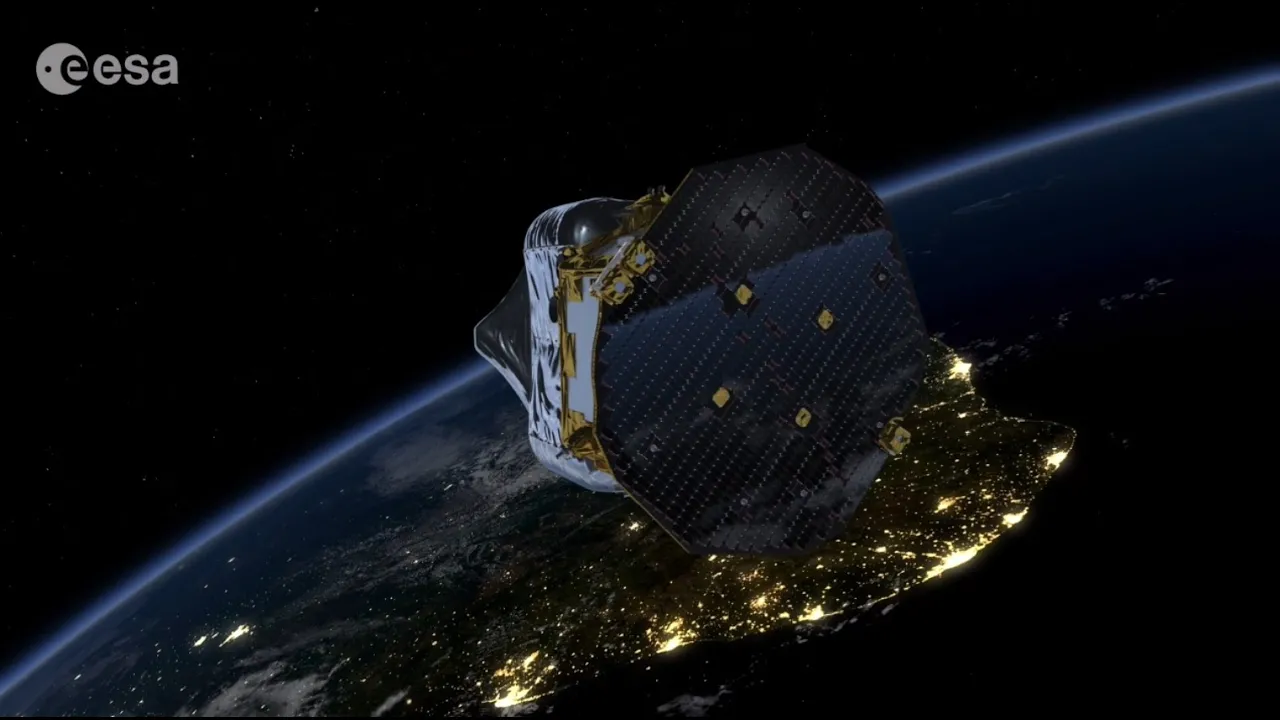


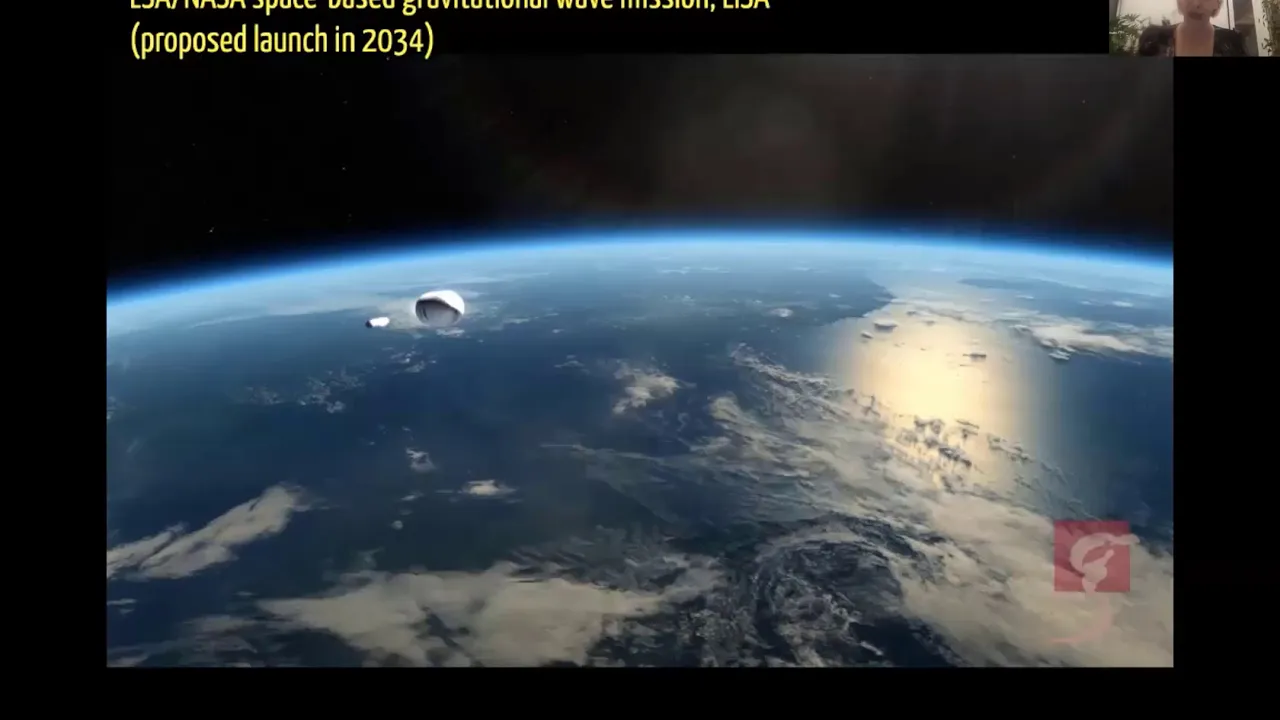








ESA's Laser Interferometer Space Antenna (LISA), launching in 2035, is a revolutionary space-based observatory designed to detect low-frequency gravitational waves from supermassive black hole mergers and binary star systems, complementing ground-based detectors like LIGO and Virgo; the mission uses three spacecraft forming a 2.5-million-kilometer equilateral triangle to measure spacetime distortions with unprecedented precision, enabling scientists to test Einstein's theory of general relativity in extreme environments and explore the dark universe through a new form of cosmic observation.
How LISA Will Detect Gravitational Waves from Space: ESA's 2035 Mission
Added:Einstein's General Theory of Relativity, specifically the concept of spacetime as a dynamic fabric warped by mass and energy.
The fundamental nature of gravitational waves as ripples in spacetime, and how they were first detected on Earth by ground-based observatories like LIGO and Virgo.
The basic mechanics of laser interferometry, including how splitting and recombining laser beams allows scientists to measure miniscule changes in distance.
The concept of the gravitational wave spectrum, noting the physical differences between high-frequency waves (detectable on Earth) and low-frequency waves (detectable only in space).
The technological legacy of the LISA Pathfinder mission, which successfully tested the high-precision drag-free attitude control systems in space.
The astrophysics of Supermassive Black Hole Binaries (SMBHBs) and Extreme Mass-Ratio Inspirals (EMRIs), which represent LISA's primary detection targets.
Multi-messenger astronomy, specifically how coordinating LISA's gravitational wave detections with electromagnetic observatories (like Athena or Webb) enriches cosmological data.
The orbital mechanics and engineering challenges required to maintain a stable, triangular three-spacecraft constellation millions of kilometers apart in a heliocentric orbit.
Advanced tests of General Relativity, including how LISA's precise measurements will probe the strong-field gravity regime and search for deviations from Einstein's predictions.
195 views4likes9:51Original Release: 2025-06-30
Welcome to the deep dive. Today we're uh tuning into something truly cosmic, something different, the universe's most dramatic events, but not through telescopes. Yeah, we're talking about ripples in spaceime itself. Imagine like two massive black holes colliding out there. It doesn't just make light. It sends out these tremors, actual waves through the fabric of space and time.
Exactly. And for the longest time, these gravitational waves were just well theory, something in Einstein's equations, right? Just math on a page.
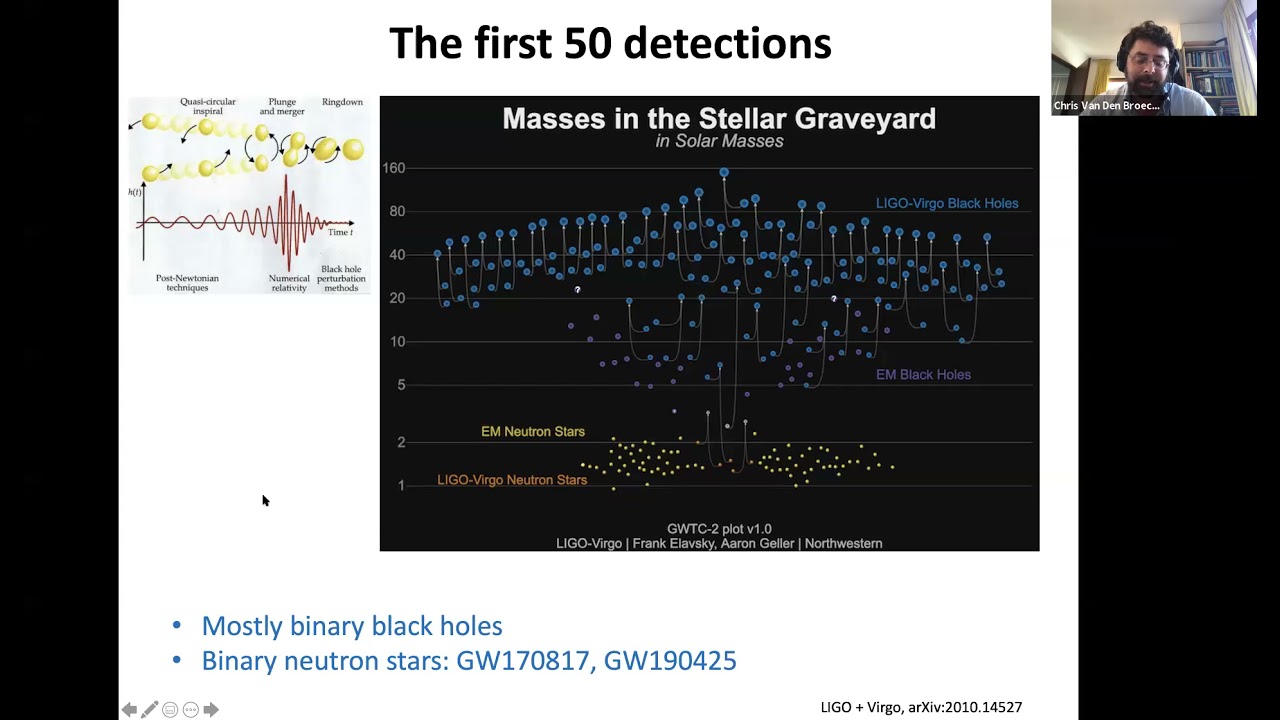
But now we're actually building ways to to sense them directly. And our deep dive today is all about this incredible new mission called LSA. We want to unpack what LISA is, why it's such a huge leap, and you know, how it's going to basically open up a whole new way of seeing or maybe hearing the universe. It really is like getting a new sense. So to back up just a bit, gravitational waves are exactly that, ripples in spaceime. They're caused by the most uh powerful, the most violent events imaginable. think super massive black holes merging or maybe neutron stars spiraling together. The energy involved is immense enough to literally warp space and time. But the catch has always been they're incredibly faint by the time they reach us. They just pass right through everything. Detecting them that takes unbelievable precision. Okay, so let's get into that. If they're so hard to detect and we have actually detected some from Earth now, right, with LIGO and Virgo, we have Yes. Groundbreaking stuff. So why the massive effort and expense to send LISA into space? What does space give us that Earth can't?
What's the difference in what it lets us well hear? That's the crucial point. It comes down to frequency. Think of it like sound age. You've got high pitches and low pitches. Our groundbased detectors, amazing as they are, are basically tuned to the higher frequency waves. The sort of gravitational screeches from smaller, faster events like black holes, the mass of stars merging. Okay. are the high notes.
Exactly. LISA being way out in space in that super quiet stable environment.
It's designed to pick up the low frequencies, the deep bass notes of the universe if you like. Ah, so it's expanding the range we can listen to.
Like adding a subwoofer to our cosmic sound system. That's a great analogy.
And those low frequencies, those deep rumbles, they come from the truly enormous events. We're talking super massive black holes, millions, even billions of times the mass of our sun.
slowly slowly spiraling together over maybe millions of years before the final collision. Events on a totally different scale then and probably much further back in time. Precisely. Capturing these low frequency waves lets us probe events much further back. Events involving these colossal objects that shaped the early universe. It's genuinely a new window. Things we simply cannot detect from the ground. And if we connect this to the bigger scientific picture, well, Lisa's potential is just revolutionary.
It's not just about spotting more waves.
It's about answering fundamental questions. Like what kind of questions?
Well, for starters, it lets us trace how these super massive black holes actually merge and grow. We see galaxies colliding all the time through telescopes. Yeah, we have amazing images of that. But we've never directly observed their central black holes doing the final dance and merger. Lisa could actually hear that happening across cosmic time. It's a huge piece of the puzzle for understanding how galaxies like our own came to be. So, it's like finally seeing the moment the cosmic families uh really merge at their core.
That's incredible. But I heard it goes even deeper. Testing gravity itself. It absolutely does. That's perhaps the most profound part. Lisa will test Einstein's theory of general relativity in extreme environments, places with incredibly strong gravity, like right near merging super massive black holes. I mean, these are conditions we could never replicate on Earth. It's the ultimate stress test.
What if general relativity breaks down there? Oh, wow. If it doesn't quite match up that, well, that blows the doors open for new physics. It could point towards theories beyond Einstein.
So, we're not just observing. We're actively probing the fundamental rules of the universe. Exactly. And there's more. Lisa will help us measure the expansion rate of the universe with incredible precision, which could tell us more about dark energy, that mysterious force pushing everything apart faster and faster. Plus, closer to home in our own Milky Way, it'll detect potentially tens of thousands of compact binary systems, things like white dwarfs or neutron stars orbiting each other closely. It'll help us map out the gravitational landscape of our galaxy and understand stellar mass black holes better, too. Okay, so it's peeling back layers on the dark universe using gravity waves and testing the physics we thought we knew. That's that's huge. And to do all that, the engineering must be just well out of this world, literally.
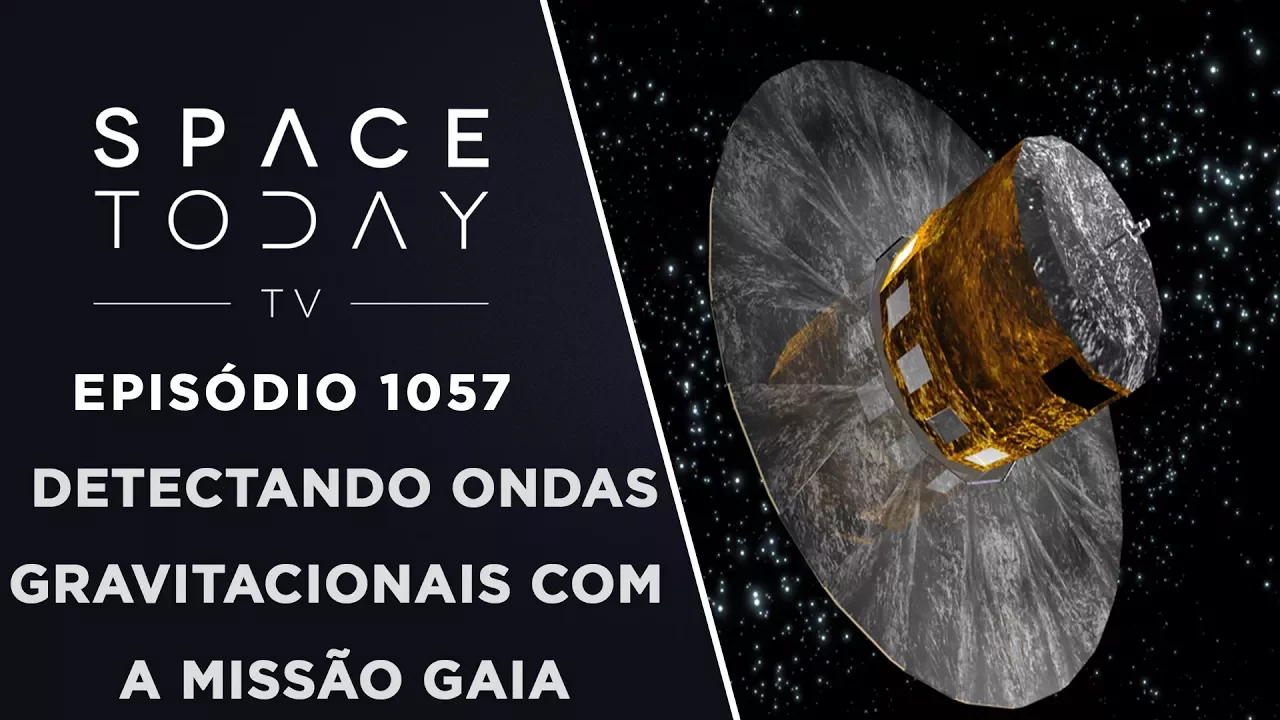
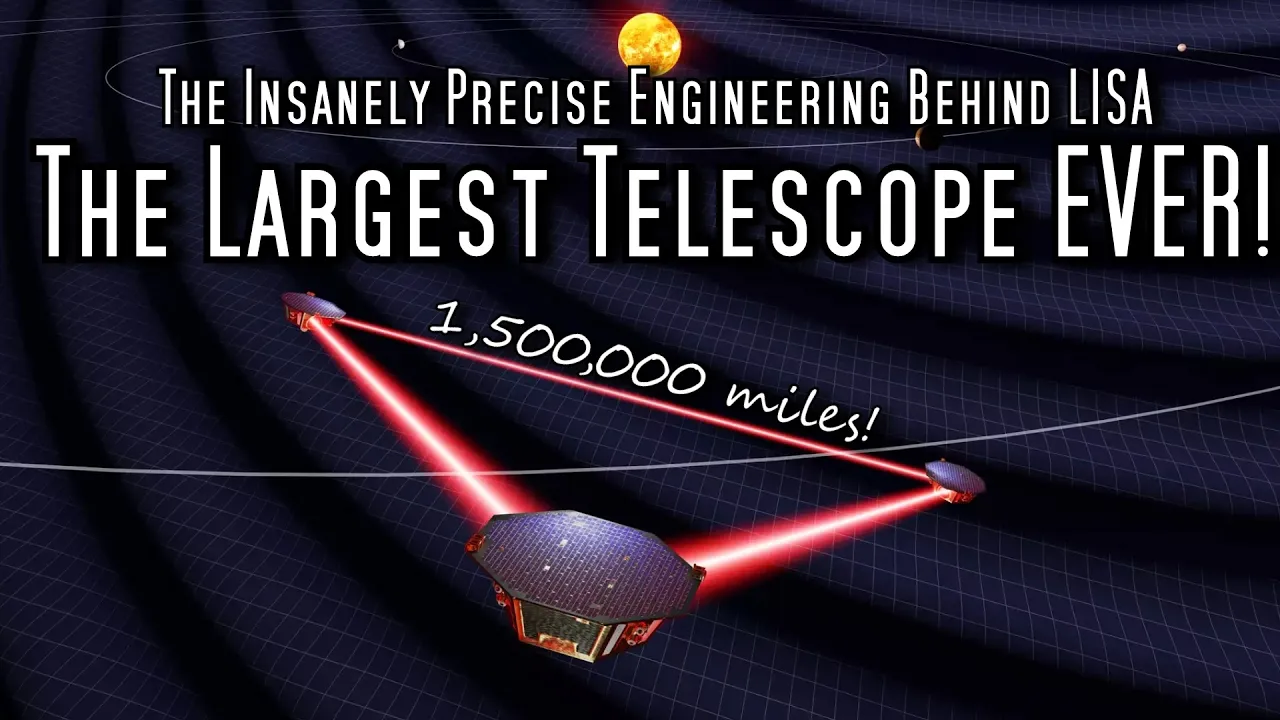
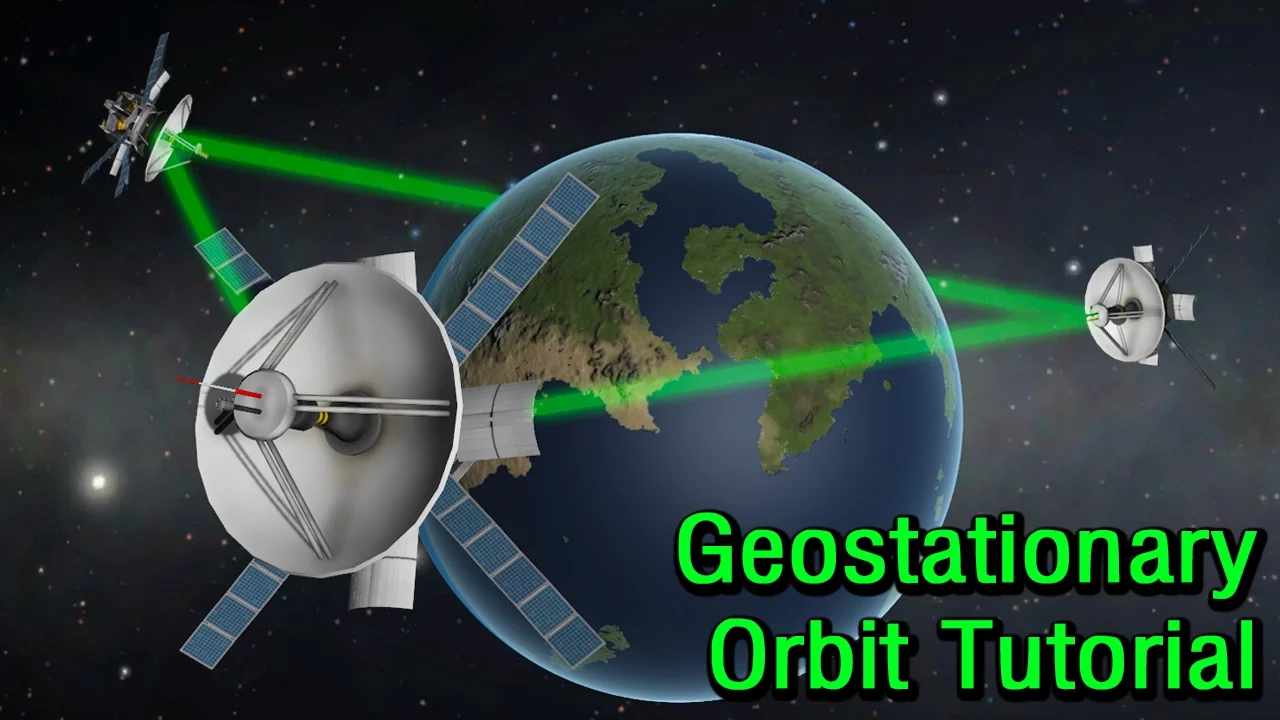
Tell us about this cosmic triangle setup. Huh? Yes. The engineering is a marvel in itself. Lisa isn't one spacecraft. It's a constellation of three. They'll fly in this huge perfect equilateral triangle formation. And they won't orbit Earth. They'll actually trail Earth in its orbit around the sun.
Trailing Earth. Why there? It's an incredibly stable place gravitationally speaking, far from the noise and disturbances of Earth itself and the scale. Each side of this triangle will be 2.5 million kilometers long. 2 and a half million kilometers. Let me just process that. Yeah, that's what more than six times the distance to the moon.
That's right. Maintaining that precise formation over that distance. It's never been done before. It's an immense feat of navigation and control.
Unprecedented. And the launch is planned for 2035 on an Arion 6. It really does sound like science fiction becoming reality. It does. And it gets even more challenging. The spacecraft aren't just sitting there. They have to constantly exchange laser beams with each other across those 2.5 million km arms. Okay, so the lasers are key. How does that work? What's inside these spacecraft?
Right inside each spacecraft at the heart of the system are these special cubes. They're made of a gold platinum alloy. Think of them as test masses.
They're about the size of a Rubik's cube, maybe a bit smaller. And the crucial thing is they float completely freely inside shielded housings. Free floating. So they're protected from everything except gravity. Exactly. They are designed to be influenced only by gravity, by the curvature of spaceime.
They are our perfect undisturbed reference points. So when a gravitational waves comes washing through, it doesn't push the cubes, does it? It sort of stretches and squeezes the space between them. Precisely. The wave causes the distance between the cubes and the different spacecraft to change by an absolutely minuscule amount. It's spaceime itself stretching and compressing and detecting that tiny change is where the lasers come in.
That's the laser interferometer part of laser laser interferometer space antenna. Interpherometry. That's about comparing light waves. Yes. They shoot incredibly stable laser beams back and forth between the spacecraft. When the beams meet back up, they create an interference pattern. If the distance between the spacecraft changes even infinite decimally because a gravitational wave passed through, that interference pattern shifts. And how small a change are we talking about detecting here? This is the truly mind-blowing part. Lissa needs to measure changes in that 2.5 million km distance down to a few pometers. How small is that? A kometer is a trillionth of a meter. We're talking about detecting shifts smaller than the diameter of a single helium atom over a distance six times further than the moon. That I can't even picture that.
Measuring something smaller than an atom over millions of kilome. The sheer audacity of trying to do that is incredible. It really is. It's pushing measurement technology, metrology to its absolute limit. It requires unbelievable stability and precision in every single component. And pulling this off isn't just about the tech. It's also this huge triumph of international cooperation. It really puts Europe through ESA at the forefront, but it's a global effort.
Yeah, that scale of collaboration must be essential for something this ambitious. Who's involved? It's primarily led by ESA, the European Space Agency, but it involves crucial contributions from NASA and also a large international consortium of scientists providing expertise. Then you have the industry side. Companies like OB and Thales Alineia Space are building the actual spacecraft and then individual ESA member states are contributing key hardware. For example, Italy and Switzerland are providing those incredibly important free floating test masses, the gold cubes. Yes. And then Germany, the UK, France, the Netherlands, Belgium, Denmark, the Czech Republic, they're collaborating on the super sensitive optical systems needed to measure those peometer changes. Yeah.
Spain's providing a whole suite of diagnostic sensors to monitor everything on the spacecraft. It's a really complex web of collaboration. It's amazing to think about all these different teams, countries, scientists, engineers, all focused on this one incredibly ambitious goal. It really speaks to what we can do when we pull our resources for, you know, pure discovery. It really does.
The shared scientific goal overcomes a lot of hurdles. So, to wrap this up, the big takeaway for you listening should be this. LISA is more than just another space telescope. It's like we're developing a new sense. We're going from just looking at the universe to actually listening to its deepest vibrations, its gravitational waves. It's about pioneering our ability to well surf these waves as we said opening a completely new window especially onto the dark parts of the universe.
Absolutely. It promises to revolutionize our understanding of black holes, galaxy formation, even the fundamental laws of physics. And maybe the final thought to leave you with is this. If we're just now learning to properly listen to the universe in this new way, hearing these cosmic collisions and murmurss, what else is out there making waves that we haven't even imagined yet? What hidden messages, what entirely new phenomena might we uncover once Lisa starts tuning in to these subtle whispers from across the cosmos? It really does feel like we're on the verge of a whole new era of discovery.
Up Next
3:54
Acoustic Panel Air Gaps: Science & Optimal Spacing
@GIKAcousticsLLC
174.7K views•2021-10-14

12:53
21cm Hyperfine Transition in Neutral Hydrogen: Radio Astronomy Basics
@AaronRobertParsons
12.4K views•2011-10-13

32:32
NMR Spin Physics I: Zeeman Effect, Resonance Condition & Larmor Frequency
@nptel-indianinstituteofsci8064
2.3K views•2024-01-17

27:14
Entropy and the Second Law of Thermodynamics Explained
@veritasium
27.5M views•2023-07-01
Related Study Plans & Knowledge Roadmaps
Structured learning paths in Physics
physics
Nuclear Physics (Decay, Fission & Reactors)
01Atomic Structure and the Binding Force
02Radioactive Decay and Half-Life
03Nuclear Fission Mechanics and Chain Reactions
+ 2 more learning modules
12h5 modules
Explore Roadmap
physics
Soft Matter (Polymers, Colloids & Rheology)
01Foundations of Soft Matter & Thermal Forces
02Polymer Physics and Macromolecules
03Colloids, Surfactants, and Self-Assembly
+ 2 more learning modules
38h5 modules
Explore Roadmap
physics
Analytical Mechanics: Lagrangian & Hamiltonian
01Mathematical Foundations: Calculus of Variations
02From Newtonian Mechanics to Constraint Dynamics
03The Principle of Least Action & Lagrangian Mechanics
+ 3 more learning modules
28h6 modules
Explore Roadmap
physics
General Relativity (Spacetime & Cosmology)
01Foundations of Relativity: Special Relativity
02The Geometry of Spacetime: Equivalence Principle & Curvature
03Einstein's Field Equations: The Mathematics of Gravity
+ 2 more learning modules
55h5 modules
Explore Roadmap