





























An air gap behind acoustic panels improves low-frequency absorption by increasing the distance between the panel's front face and the wall, which enhances the panel's ability to absorb sound waves by moving it away from the zero-velocity reflection point; the optimal spacing is approximately equal to the panel's thickness, though thicker panels derive less benefit since their front face is already farther from the wall when flush-mounted.
Acoustic Panel Air Gaps: Science & Optimal Spacing
Added:The physics of sound waves, specifically the inverse relationship between frequency and wavelength (i.e., why low-frequency waves are physically long).
How porous absorption works, focusing on the conversion of sound energy (particle velocity) into heat energy through friction within material fibers.
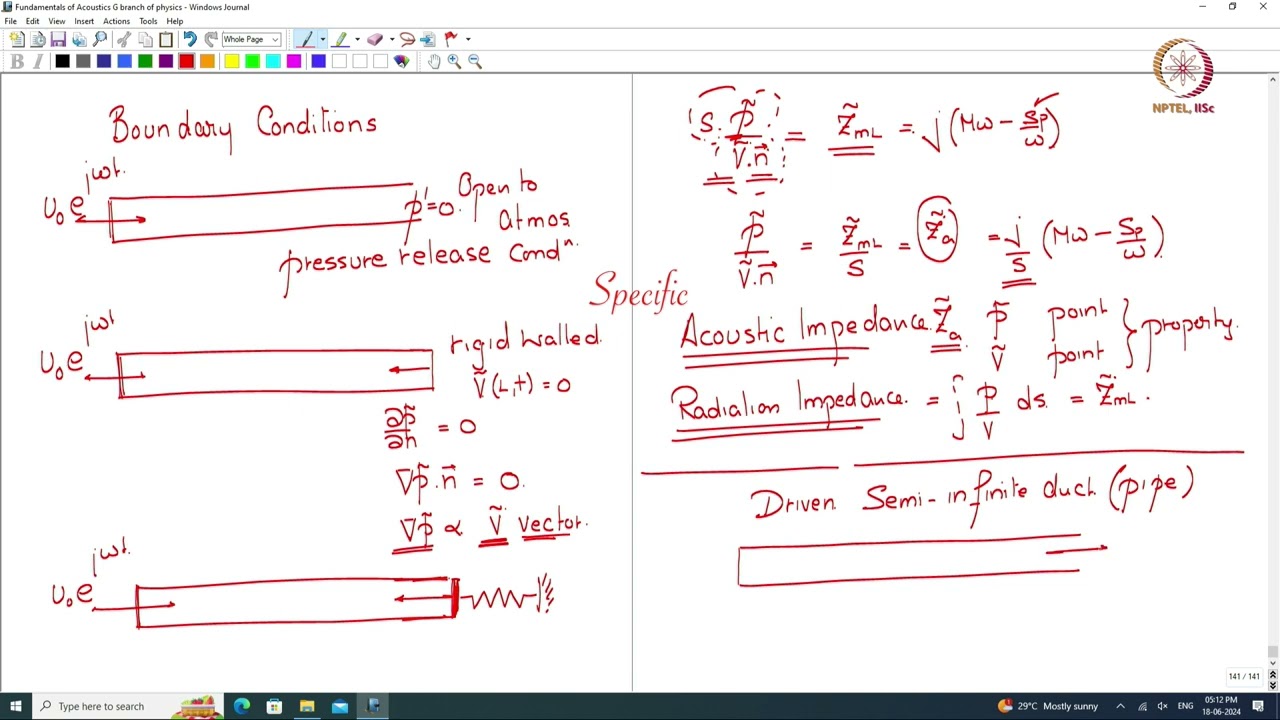
The concept of sound wave boundary behavior, specifically why sound pressure is at its maximum and particle velocity is at zero at a rigid boundary like a wall.
Basic room acoustics terminology, including standing waves, room modes, and the difference between absorption and isolation (soundproofing).
How to calculate mathematically precise air gaps using the quarter-wavelength rule to target specific problematic room frequencies.
The phenomenon of Speaker Boundary Interference Response (SBIR) and how strategically placed air-gapped panels can mitigate phase cancellations.
Advanced low-frequency treatment design, such as diaphragmatic absorbers, limp-mass bass traps, and Helmholtz resonators for frequencies below the range of porous absorbers.
Using acoustic measurement software (such as Room EQ Wizard) and calibrated microphones to empirically analyze the room's frequency response and decay times (RT60).
174.7K views2.7Klikes3:54Original Release: 2021-10-14
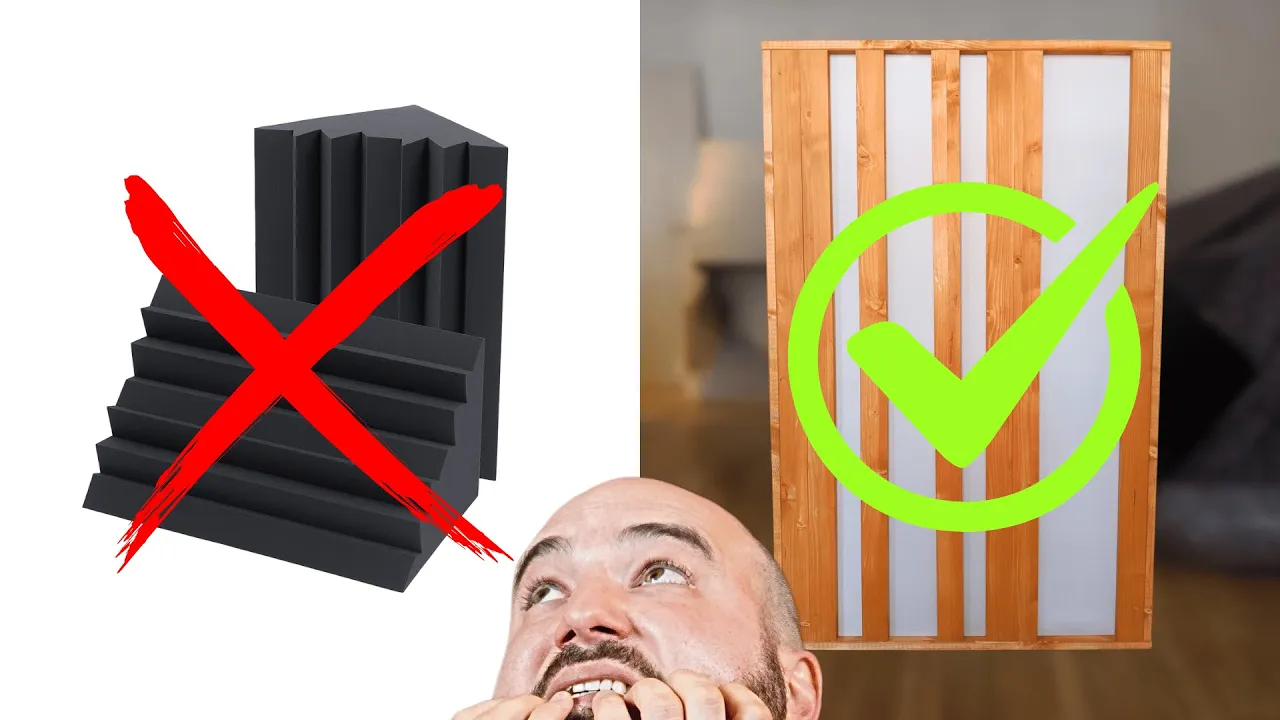
should you leave an air gap behind your acoustic treatment leaving an air gap behind your acoustic treatment can help increase overall absorption and extend its effective range into the low frequencies this effect is extremely helpful when you're trying to get as much bass trapping in a room as possible so it's often recommended to people that they mount their panels floating a few inches from the wall for the best performance in many cases a better question is whether or not the increased performance gain from the spacing is worth the additional space taken up in the room in most cases if there is such space available you're better off using thicker panels in the same space even if the air gap has to be a bit smaller these performance gains are actually more to do with the distance of the front face of the panel to the wall behind it this is why the benefits are so great for a thinner panel for a six inch thick panel the front face is already six inches away from the wall even if it's flush mounted so it's further away than a two inch absorber space two inches out from the wall so it's less critical for that thicker panel why do we space acoustic panels with an air gap porous absorbers work by acting on sound velocity because of this acousticians refer to this type of absorber as a velocity absorber when the sound strikes the panel the vibrations from the air molecules are converted into a miniscule amount of heat but when a sound wave reflects off of a wall or ceiling at the reflection point the velocity of the sound is zero because it has to stop change directions and establish a new velocity in a different trajectory when we moved the front of the panel further from the zero velocity point we improved the performance of the velocity absorber in order to absorb lower frequencies for a cleaner base response the panel either needs to be thicker or spaced off the wall to cover more of the wavelength the base frequencies are going to have longer wavelengths to cover with the high velocity areas of the wave further from the boundaries of the room how far should i mount my panel from the wall a good rule of thumb is that whatever your panel's thickness is that's a good distance to float the panel any further can help even more but we quickly reach a point of diminishing returns that is the small performance gain isn't worth even more and more room being taken up depending on what kind of issues you're trying to solve for how much space is in your room you might find that no air gap is the best solution gi k's 242 244 and monster bass drop already have an air gap built into the panel having a built-in air gap gives you more absorption potential per panel per dollar without the need for additional hardware or complicated mounting techniques for placing treatment on the ceiling gik offers our ceiling cloud mounting brackets that work with any of those gik products that have a built-in air gap and they lower them an extra four inches into the room floating your panels off the ceiling gives you the benefit of extra base absorption without taking up any extra standing room for something like the soffit any additional air gap provides very little improvement because it's already so thick so in most cases it's best to just leave these right up against the wall if you're still struggling to get your bass response under control you can visit the gik acoustics website where you can find tons of useful tools articles and videos as well as our free acoustic advice form that was designed to help you get key details of your room over to our team of designers so that they can get you the very best sound for your space get free acoustic advice visit gik acoustics.com for educational articles and tutorials you
Up Next

14:14
Understanding Comb Filtering: Causes and Audio Examples
@AudioUniversity
182.1K views•2021-04-08

12:53
21cm Hyperfine Transition in Neutral Hydrogen: Radio Astronomy Basics
@AaronRobertParsons
12.4K views•2011-10-13

32:32
NMR Spin Physics I: Zeeman Effect, Resonance Condition & Larmor Frequency
@nptel-indianinstituteofsci8064
2.3K views•2024-01-17

27:14
Entropy and the Second Law of Thermodynamics Explained
@veritasium
27.5M views•2023-07-01
Related Study Plans & Knowledge Roadmaps
Structured learning paths in Physics
physics
Nuclear Physics (Decay, Fission & Reactors)
01Atomic Structure and the Binding Force
02Radioactive Decay and Half-Life
03Nuclear Fission Mechanics and Chain Reactions
+ 2 more learning modules
12h5 modules
Explore Roadmap
physics
Soft Matter (Polymers, Colloids & Rheology)
01Foundations of Soft Matter & Thermal Forces
02Polymer Physics and Macromolecules
03Colloids, Surfactants, and Self-Assembly
+ 2 more learning modules
38h5 modules
Explore Roadmap
physics
Analytical Mechanics: Lagrangian & Hamiltonian
01Mathematical Foundations: Calculus of Variations
02From Newtonian Mechanics to Constraint Dynamics
03The Principle of Least Action & Lagrangian Mechanics
+ 3 more learning modules
28h6 modules
Explore Roadmap
physics
General Relativity (Spacetime & Cosmology)
01Foundations of Relativity: Special Relativity
02The Geometry of Spacetime: Equivalence Principle & Curvature
03Einstein's Field Equations: The Mathematics of Gravity
+ 2 more learning modules
55h5 modules
Explore Roadmap