


















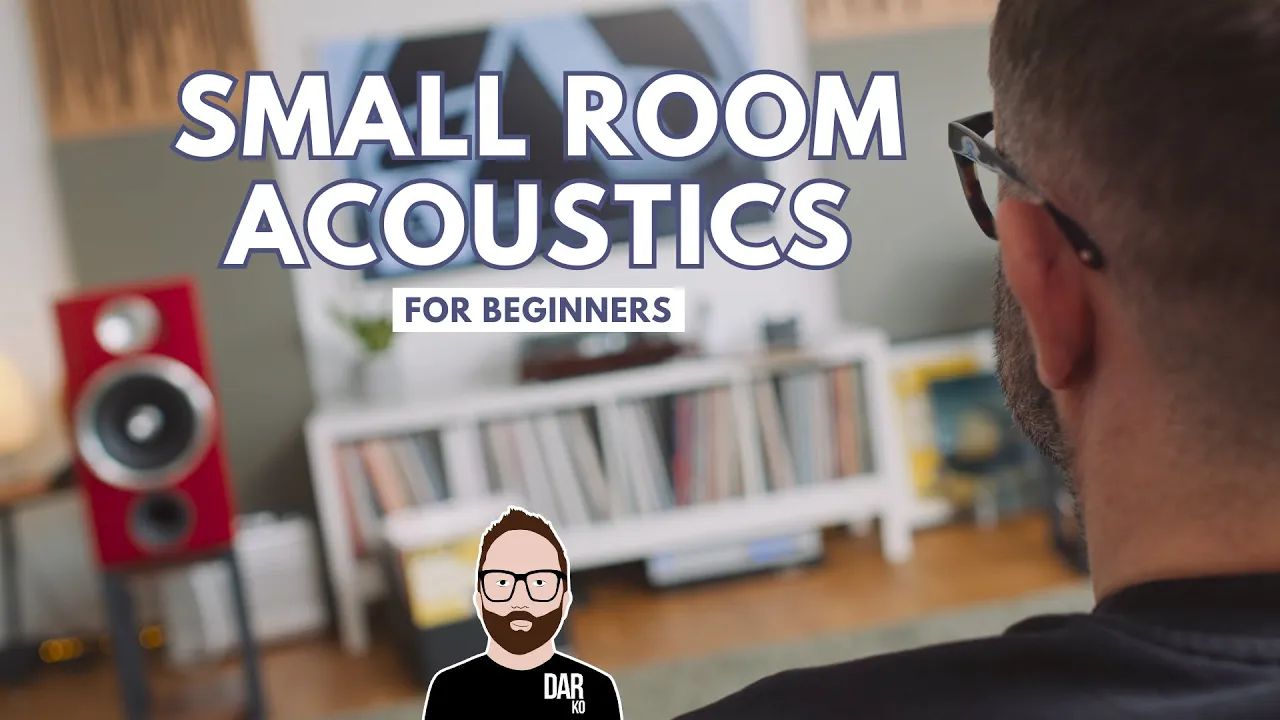




Room modes are resonant frequencies that occur in small rooms due to standing waves between parallel surfaces (walls, floor, ceiling), causing severe imbalances in frequency response at the listening position; these axial, tangential, and oblique modes create nodes and anti-nodes that distort what you hear compared to what's actually playing, with the most significant effects below the Schroeder frequency, and can be mitigated through strategic speaker placement, bass traps in corners, and targeted acoustic treatments like Helmholtz resonators.
Understanding Room Modes: The Biggest Problem in Small Room Mixing
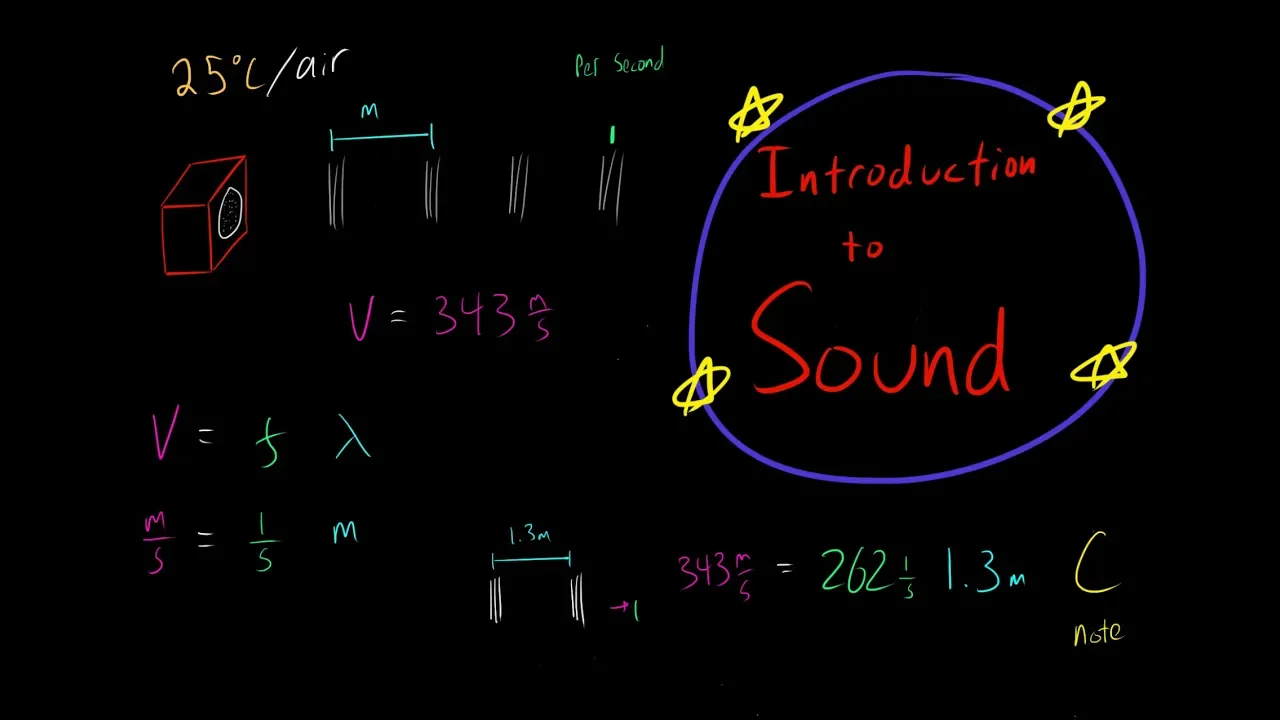
Added:The physics of sound waves, specifically the relationship between frequency, wavelength, and the speed of sound.
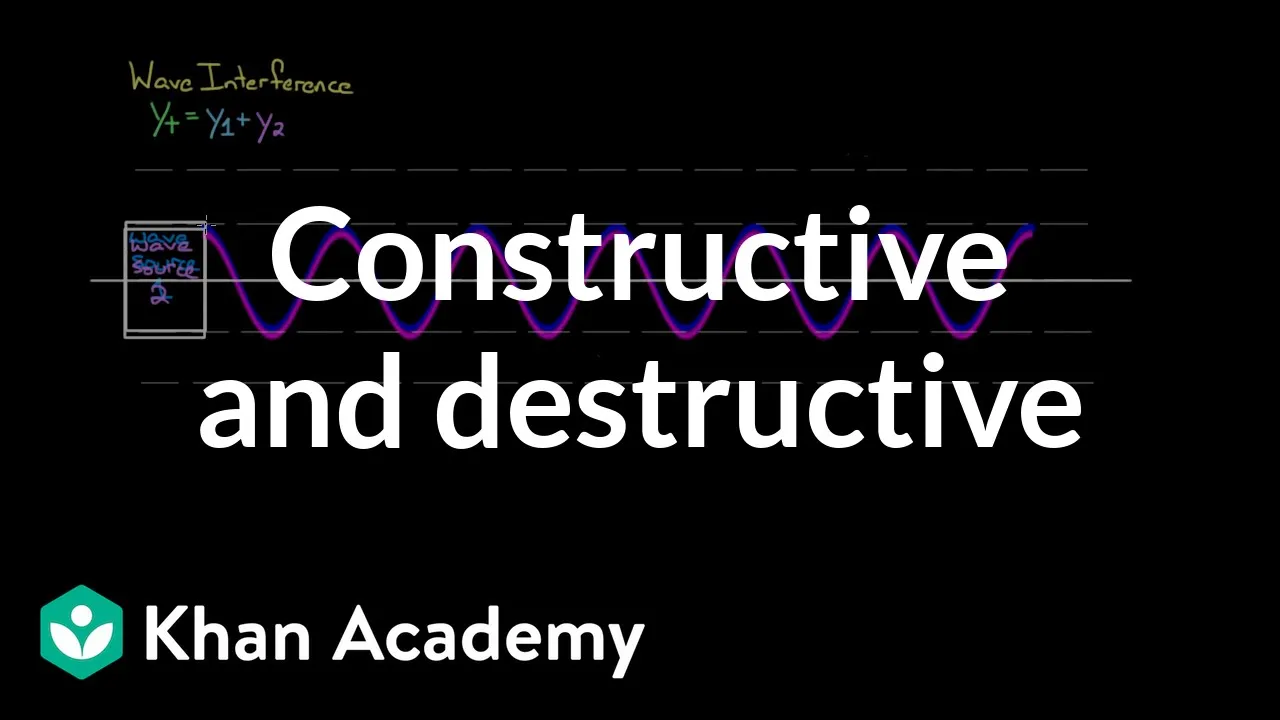
The concept of wave phase interference, including constructive and destructive interference (peaks and nulls).
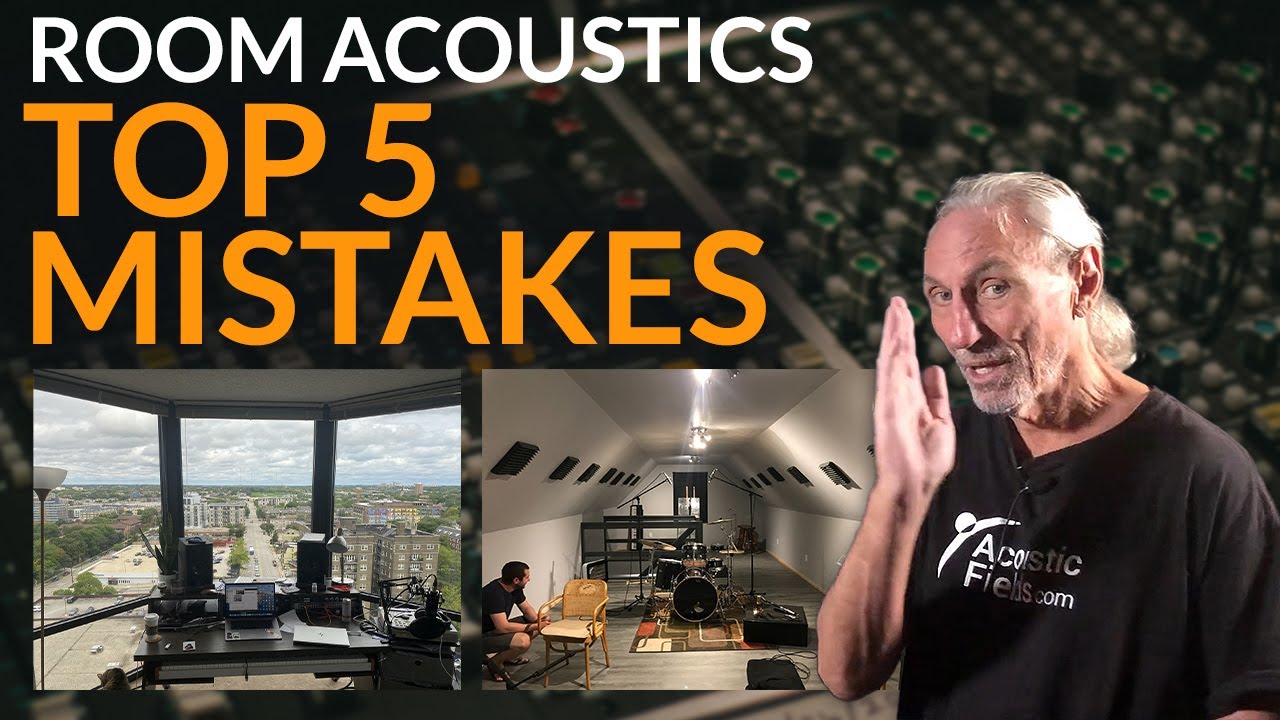
Basic principles of room acoustics, such as how sound reflects off hard boundaries like walls, floors, and ceilings.
An understanding of how frequency response is measured and represented on a decibel (dB) vs. frequency (Hz) graph.
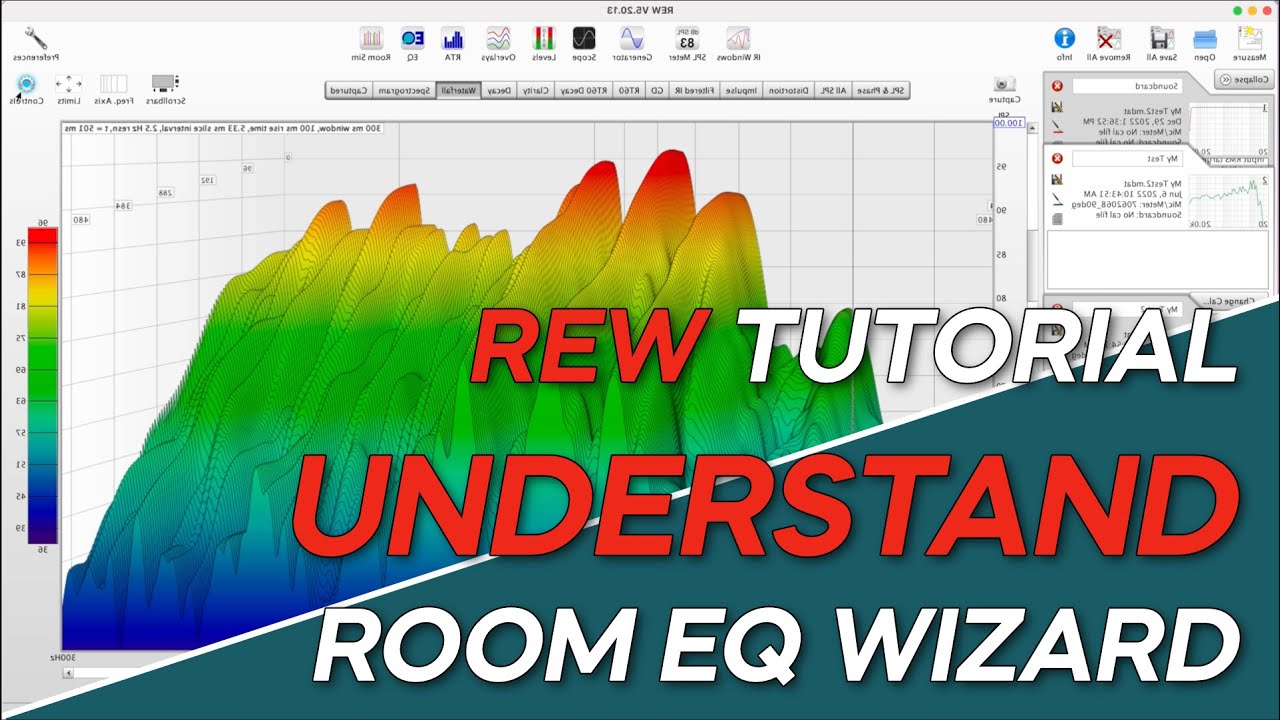
How to use acoustic measurement software (such as Room EQ Wizard/REW) and calibration microphones to analyze a room's actual frequency response.
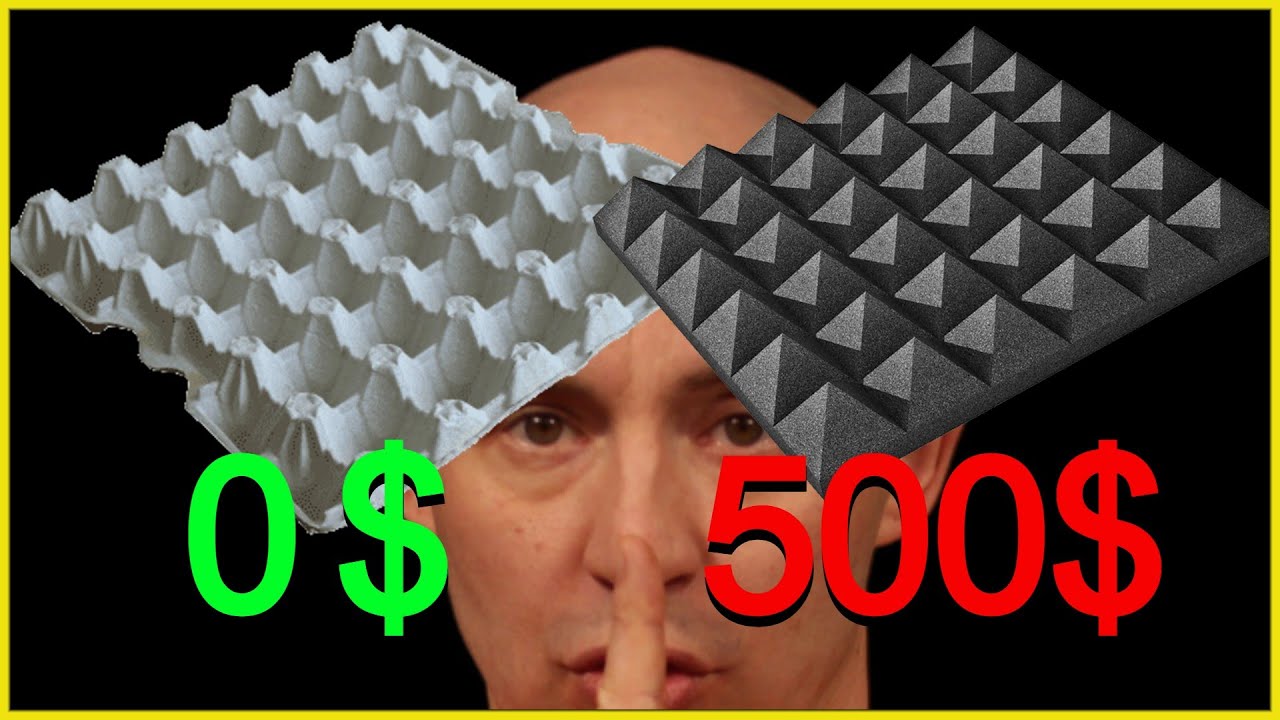
Advanced DIY and commercial acoustic treatment strategies, specifically targeting low frequencies using porous bass traps and Helmholtz resonators.
The implementation and limitations of digital room correction software (DSP) to flatten frequency response in mixing environments.
Studio design geometry, including calculating ideal room dimension ratios (using the Bolt Area) to distribute modal frequencies evenly.
166.6K views7.6Klikes7:13Original Release: 2022-08-25
i'm going to play an 80 hertz tone through my speakers it doesn't sound any different than you'd expect right now but listen to what happens when i move your ears throughout the room once you've reached my listening position it may seem like the tone stopped playing through the speakers but that's just an illusion if you step back again you'll hear that the tone is still playing this illusion is a result of one of the most essential problems in acoustics room modes the room modes in your listening space are directly related to the dimensions of your room you can find a link to this room mode calculator in the description below in this particular room the distance between the front wall and the back wall is about 14 feet which corresponds to the wavelength of an 80 hertz sound wave there are also room modes at frequencies above and below 80 hertz at various divisions of that 14 foot dimension and in addition to the standing waves created between the front and back wall there are also standing waves that occur between the side walls as well as between the floor and the ceiling let's set up a few demonstrations so that we can visualize what's going on here this spring is attached to a fixed point on one end when i move the spring the wave travels to the other end and reflects back to me this animation by dr dan russell might make it easier to see what's happening in slow motion when i oscillate the spring at its resonant frequency the reflections will reinforce the waves that i'm creating which causes a buildup of energy at that corresponding wavelength this can also be demonstrated using a string that's fixed on one end and attached to a transducer on the other end the tone generator screen shows that the frequencies of each standing wave follow a pattern that correlates to the length of the string let's set up one more demonstration up until this point we've been looking at transverse waves where the medium the strings and springs have moved perpendicular to the direction of the wave however sound waves are longitudinal meaning that the medium vibrates parallel to the direction that the wave travels this next demonstration should give us a better visualization of what standing longitudinal waves would look like this spring represents the air in your listening space at the top is a fixed point similar to the walls in your room i'll attach the bottom of the spring to the transducer so that we can observe how the spring reacts to various frequencies as we approach 30 hertz the spring becomes visibly divided into sections or harmonics of the total length of the spring the same thing happens at double that frequency 60 hertz this is similar to what happens in your room though instead of just one dimension there are three dimensions floor to ceiling front to back and side to side while these axial room modes which occur between two surfaces are the most important to address your room also has its own unique tangential modes that occur between four surfaces and oblique modes that occur between all six surfaces of a rectangular room standing waves drastically affect the frequency response of your system making it difficult to mix or listen critically because what you're hearing at the listening position is different from what's actually playing through your speakers nodes and anti-nodes will form changing the frequency response throughout the space in my case i may have the tendency to boost 80 hertz because there's a node at 80 hertz at my listening position but no matter how much i turn up 80 hertz although it will become louder at the anti-nodes it won't seem to do anything at the listening position and it's not only 80 hertz it's also all of the other modes in this dimension plus all of the modes in the other directions in terms of standing waves we need to focus most of our attention on the low frequency range up to the schroeder frequency the shorter frequency of a room describes the point where the room transitions from being a resonator to being a reflector or diffuser i'll leave some resources in the description below to help you determine the schroeder frequency of your room so how do we address this well assuming you don't have the option to tear down the walls and rebuild the room with different geometry here are a few ideas in addition to the listening position the position of the source or speaker can also play a part in the frequency response of the sound system you can adjust the position of your speakers with room modes in mind dr russell also has an animation that illustrates this this red dot represents the location of your speaker within your room this helps visualize the response of the room at each speaker position throughout the length of the room take notice of a few things here first notice that the room response at each resonant frequency is maximized when the source is at the boundaries of the room when your speakers are against a boundary the standing wave resonance will be exacerbated also notice that the room theoretically doesn't respond to the resonant frequency at all when the speaker is located at one of the nodes you can use this knowledge to your advantage by placing the speakers somewhere between the anti-node and the node of the standing frequency to achieve the optimal frequency balance at the listening position you can also address room mode problems with acoustic treatment but the relatively long wavelengths of these low frequencies will require a slightly different approach compared to higher frequencies the effectiveness of velocity-based porous absorbers like these that i have on my walls depends on the thickness of the panel in comparison to the wavelength of the frequency it's trying to absorb that means that the thickness of the panel determines how effectively it absorbs low frequencies with longer wavelengths if i try to treat 80 hertz with a velocity absorber like this it would take up an impractical amount of space in my room to achieve the required thickness not only that but too much broadband absorption might begin to absorb too much high and mid frequency energy which doesn't really help in terms of frequency balance the ultimate goal that said using bass traps in the corners is a good start for combating low frequency build up just keep in mind that the effectiveness will also diminish at lower frequencies as opposed to velocity-based absorbers you can also get more effective absorption at lower frequencies using pressure-based solutions like a helmholtz resonator these are specially designed to target a narrow band of frequencies as opposed to the broadband absorbers on my walls because of this it's important to purchase resonators that are specifically designed to address the frequencies which are particularly problematic in your room if you want some help figuring out a plan to treat the room modes in your space and improve the acoustics of your room i'll leave some links in the description below to the acoustic treatment companies that i recommend contacting they'll be able to give you specific suggestions based on the unique characteristics of your room hit the like button if you enjoyed this video and watch the video that's on your screen to learn more i'll see you over there
Up Next

17:12
DIY Tube Trap Construction: Room Acoustics Guide
@SosstudioCo
146.7K views•2016-01-30

12:54
Triumph of Orthodoxy Icon: Byzantine Art & History Explained
@BenCallan
2.1K views•2024-08-06

9:27
Understanding MIDI in Music Production: A Beginner's Guide
@AudioUniversity
277.1K views•2021-09-02

1:42
Game of Thrones Opening Credits: A Cinematic Analysis
@gameofthrones
46.3M views•2011-04-18
Related Study Plans & Knowledge Roadmaps
Structured learning paths in General & Interdisciplinary Studies
general-studies
Elevator Engineering: History, Physics & Cities
01From Hoists to Safety Brakes: The Dawn of Vertical Lift
02Hydraulic vs. Traction: The Engineering Physics of Elevators
03Modern Speed, Safety, and Algorithms
+ 2 more learning modules
12h5 modules
Explore Roadmap
general-studies
Rubber: Material Science, History & Geopolitics
01Origins of Natural Rubber & Mesoamerican History
02The Chemistry of Natural Rubber & Vulcanization
03The Geopolitics of the Rubber Boom & Colonization
+ 2 more learning modules
12h5 modules
Explore Roadmap
general-studies
Containerization: Evolution, Logistics & Trade
01Ancient Trade & Bulk Cargo: Amphorae to Barrels
02The Industrial Revolution & Cardboard Packaging
03The Containerization Revolution: Malcom McLean
+ 2 more learning modules
12h5 modules
Explore Roadmap
general-studies
Textile Tech: Evolution, Labor & Global Impact
01Pre-Industrial Textiles: Handloom & Cottage Industry
02Mechanization: The Spinning Jenny to the Power Loom
03The Factory System & Global Labor Transformation
+ 2 more learning modules
10h5 modules
Explore Roadmap