


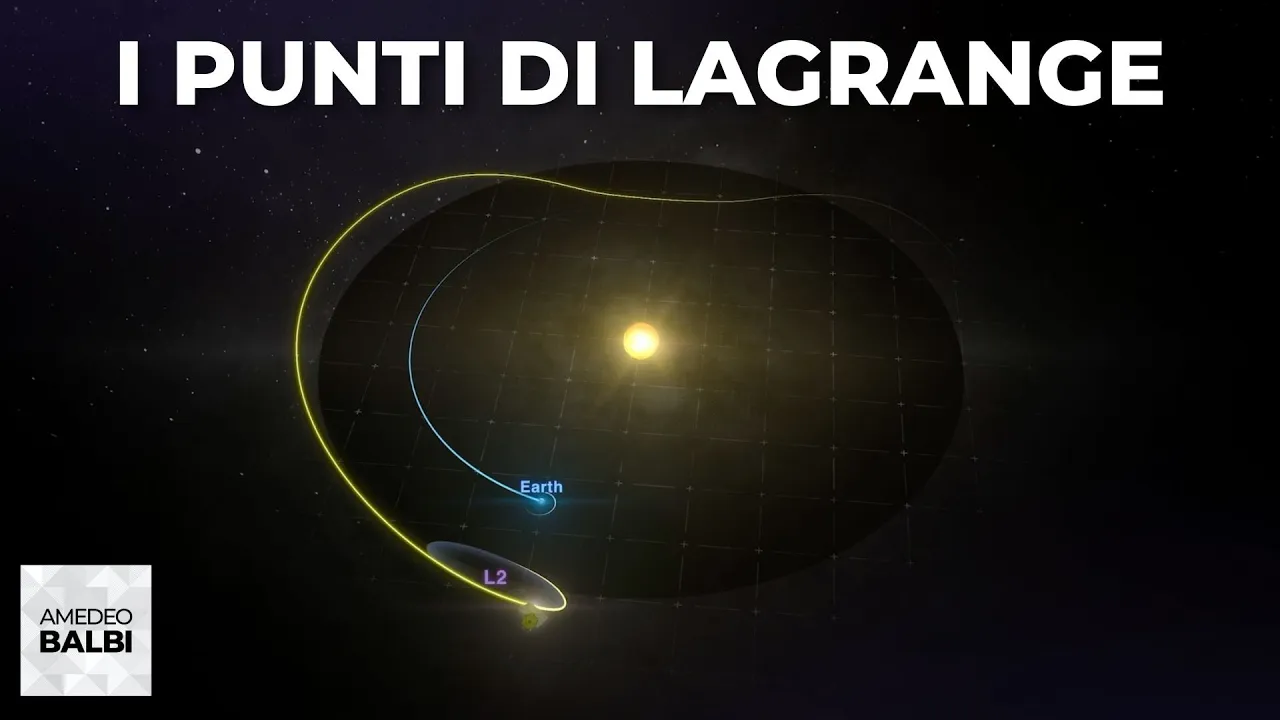
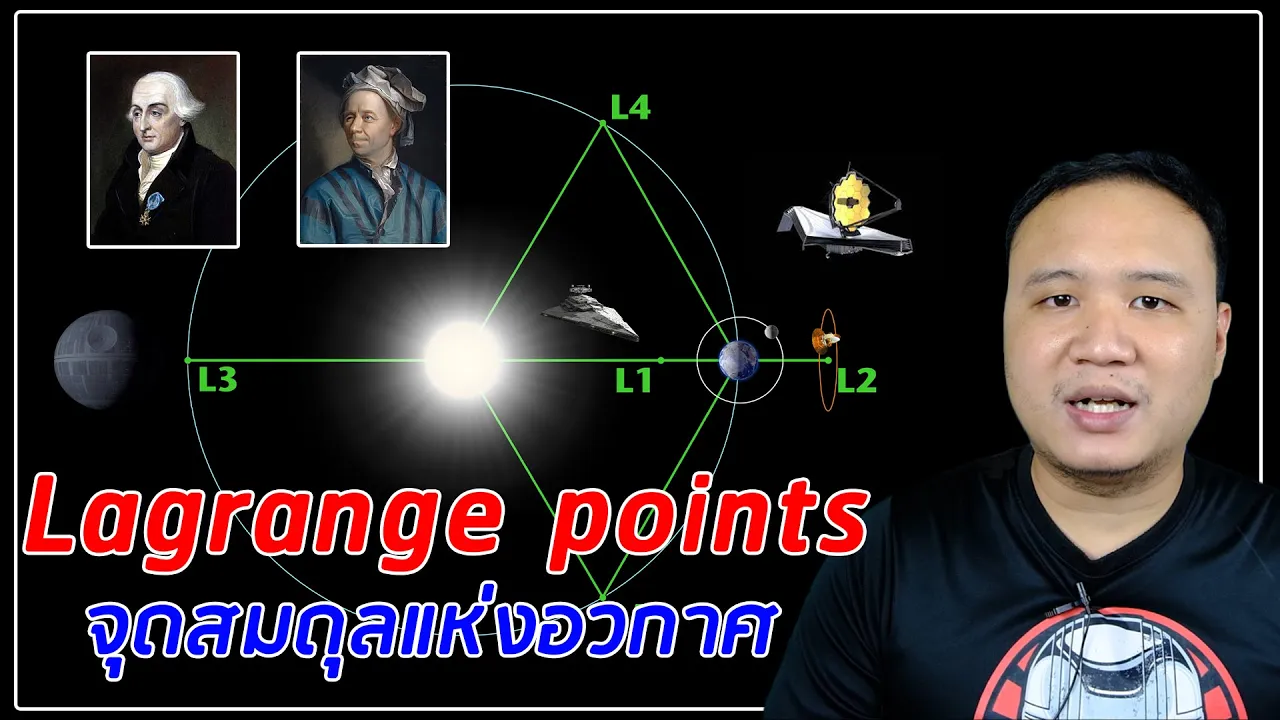




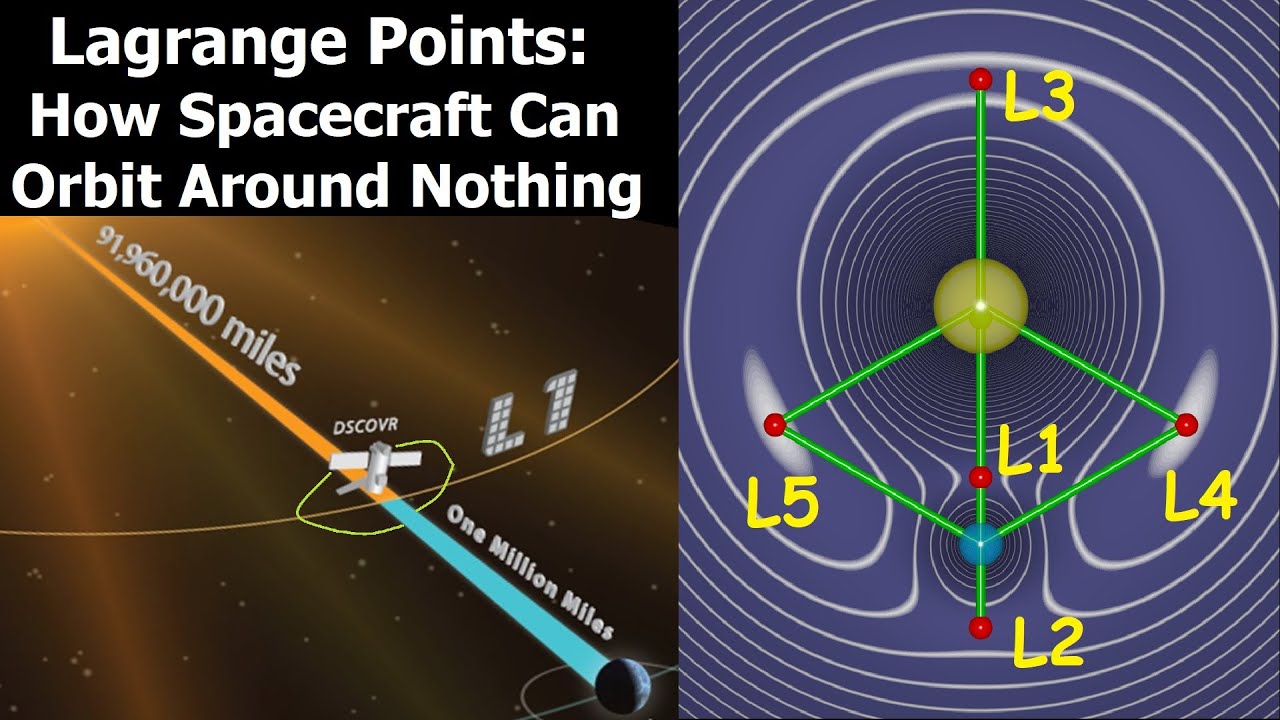


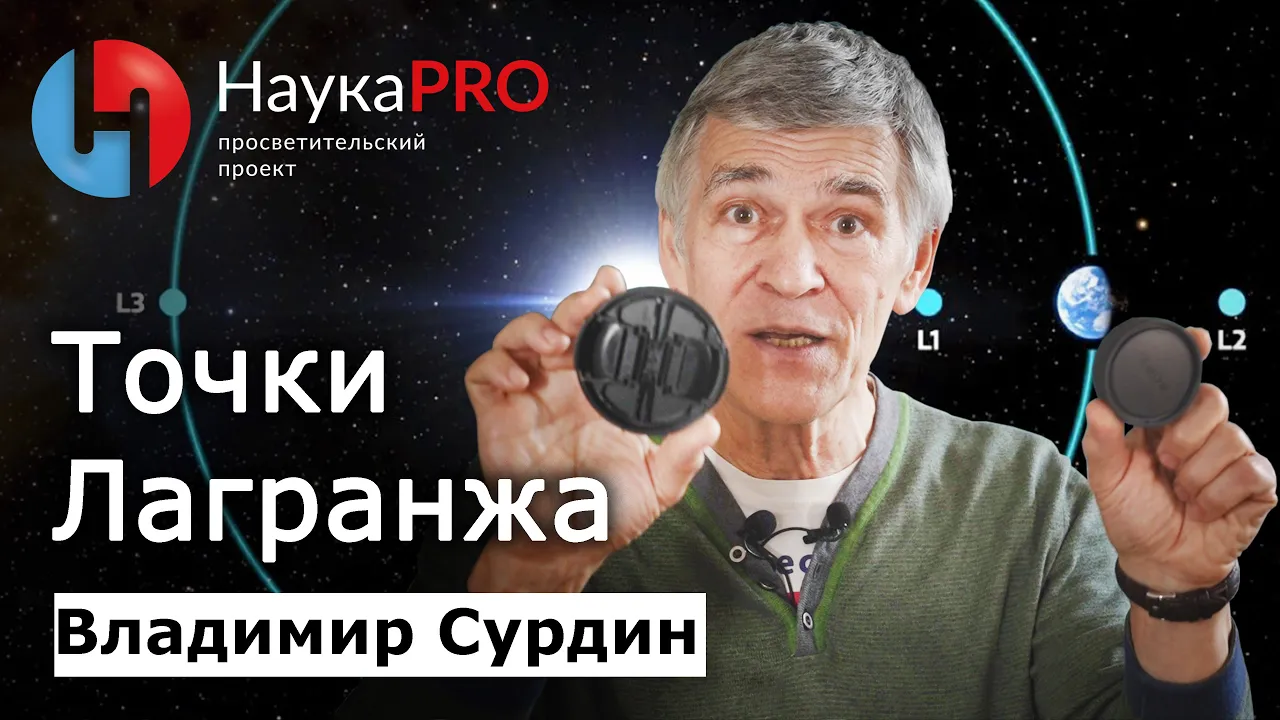




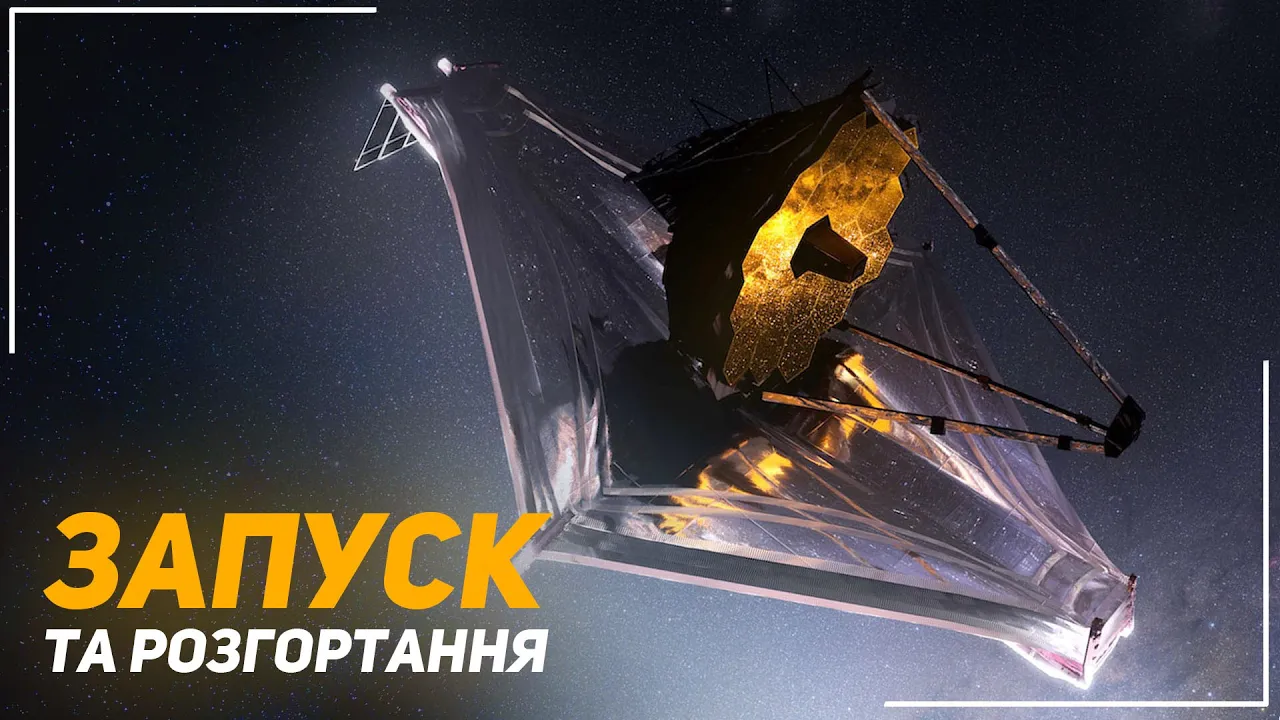
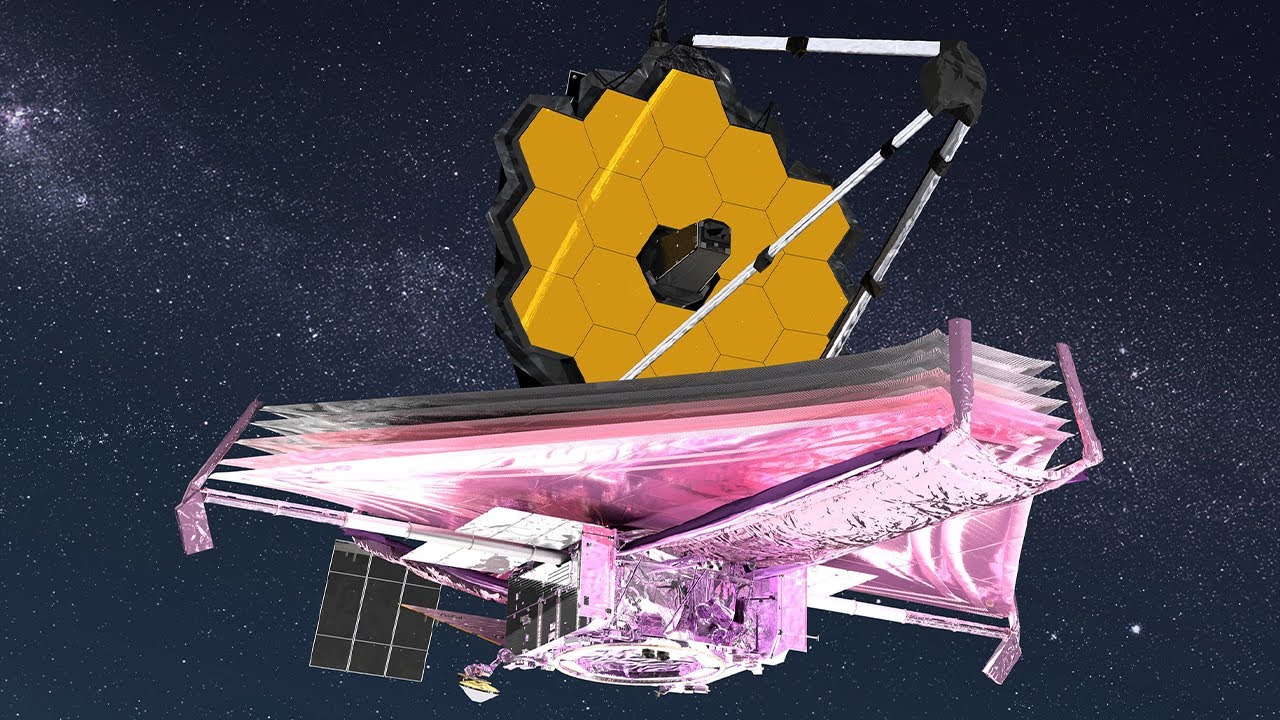


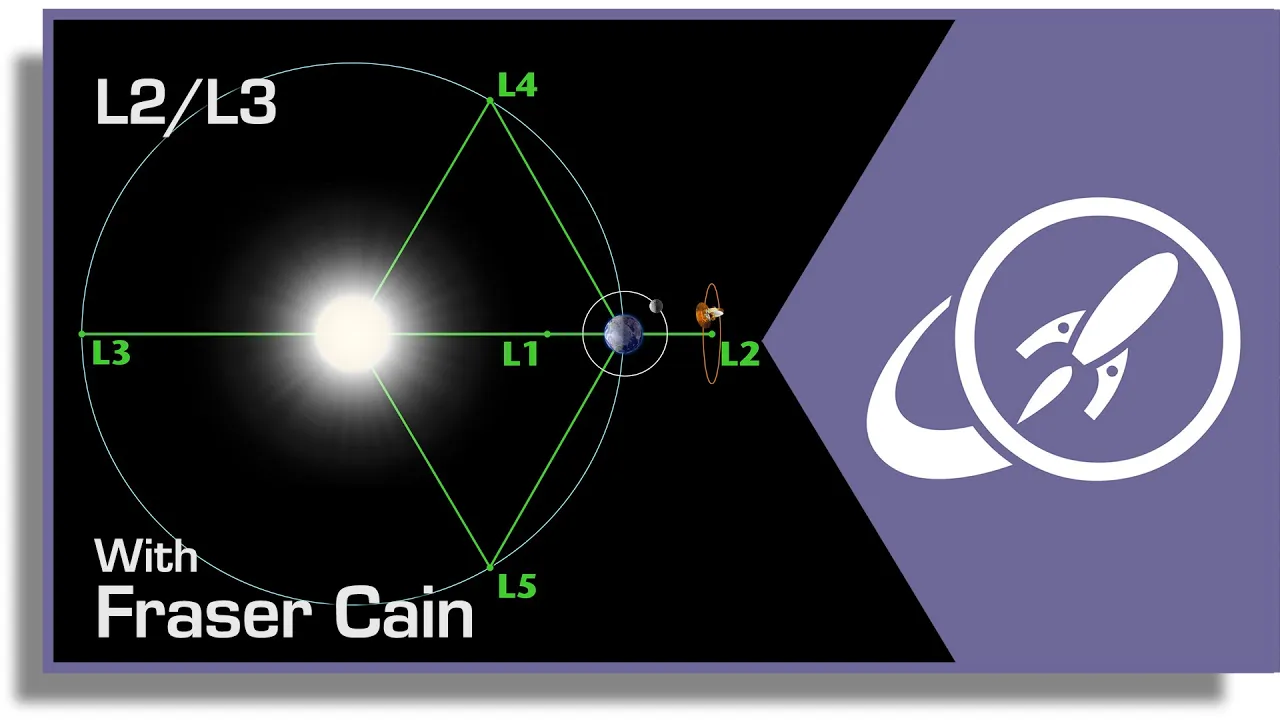


The James Webb Space Telescope orbits the Sun-Earth L2 Lagrangian point, which appears to be an empty point in space, by following a large halo orbit where gravitational forces from the Sun and Earth combine to create a balanced orbital path; the spacecraft doesn't orbit the point itself but instead follows a trajectory where the combined gravitational pull of the two large bodies creates an effective centripetal force that keeps it in orbit, requiring periodic station-keeping burns to maintain its position.
James Webb Space Telescope: Orbiting the Sun-Earth L2 Point
Added:Basic orbital mechanics, including Newton's law of universal gravitation and Kepler's laws of planetary motion.
The concept of Lagrange points, specifically how the gravitational forces of two large bodies create points of equilibrium.
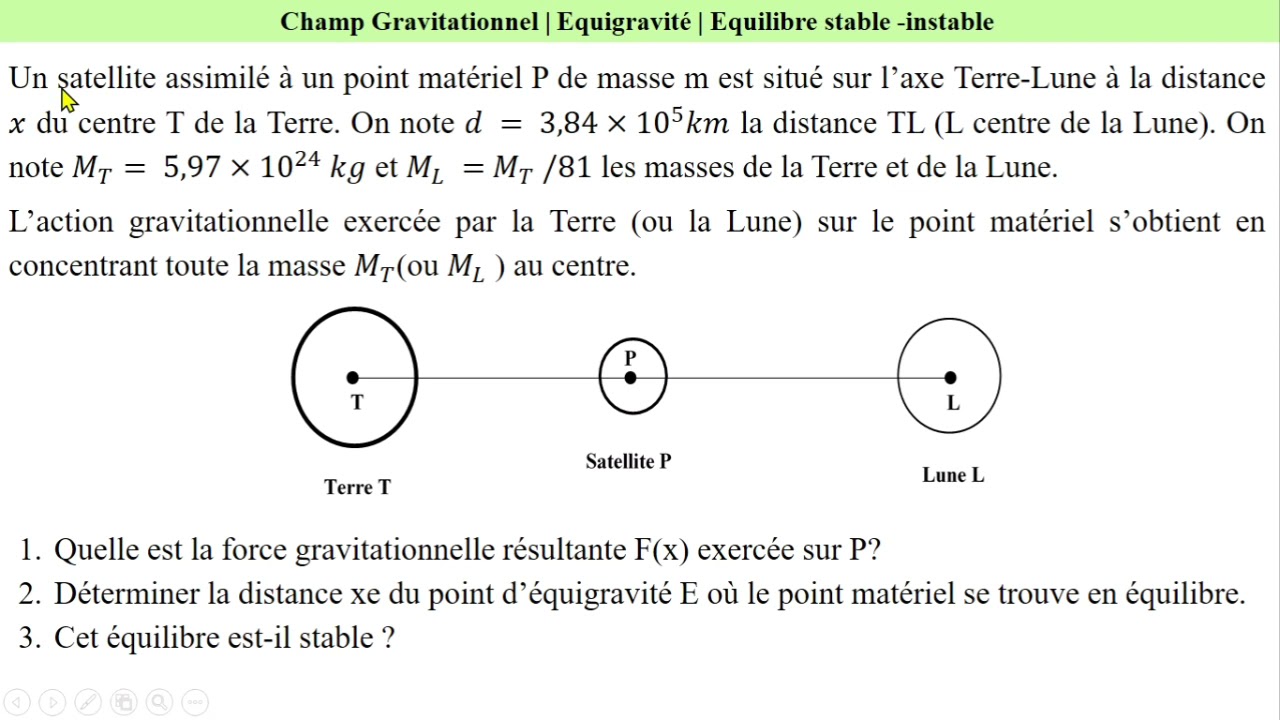
The distinction between stable and unstable equilibrium in gravitational fields.
The primary scientific mission of the James Webb Space Telescope (JWST) and its requirement for an extremely cold operating environment.
The mathematics of Halo and Lissajous orbits used to navigate around unstable Lagrange points.
Active station-keeping techniques, including thruster burns and propellant limitations for long-term mission lifetimes.
The engineering of thermal shielding and cryogenics essential for infrared observations at the L2 point.
Other space missions stationed at Lagrange points, such as WMAP, Herschel, Planck, and the upcoming Nancy Grace Roman Space Telescope.
2.3M views58.4Klikes14:40Original Release: 2022-01-28
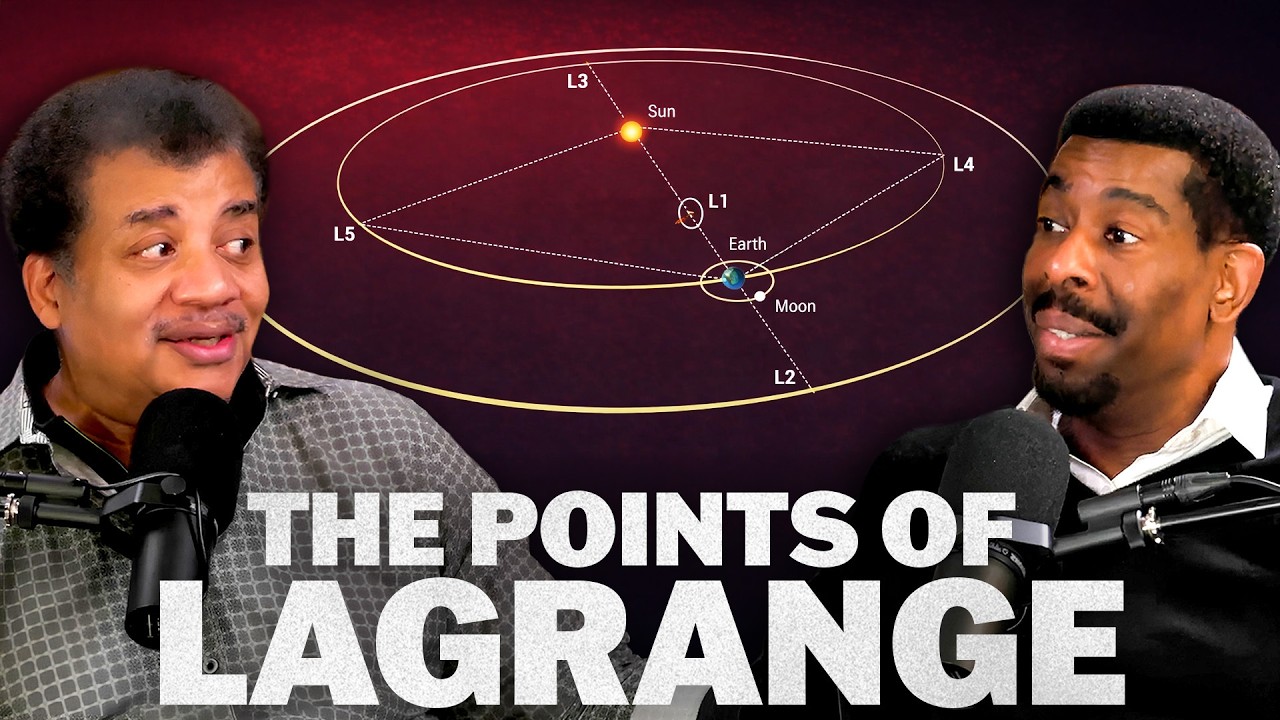
after a 1.5 million kilometer journey the james webb space telescope has arrived at the sun earth l2 point it did this by executing its final mid-course correction burn called mcc-2 it lasted just 297 seconds or a little less than 5 minutes and it only changed web speed by about one and a half meters per second that's a brisk walking pace it may not seem like much but it was enough to place webb into an orbit around l2 in fact it placed it into a very large orbit one that's more than twice as large as the moon's orbit around earth it'll take webb about six months to complete a single orbit around l2 and this first go-around is jam-packed with mirror alignments phasing instrument calibrations moving target tracking tests verifications station keeping maneuvers and finally the first science observations but what exactly is so special about l2 i mean it's just a point in space and it's an empty point in space at that so how can web orbit something that isn't there well it is true that l2 is empty but orbiting empty points in space is actually very common and that's because whenever there are two massive bodies that are orbiting each other they both orbit a common center of mass or barry center if the objects are massive enough the center of mass lies somewhere in between we only say that the moon orbits earth because its center of mass is located inside earth but pluto and sharon have similar masses so their bary center is somewhere in the space between them so the fact that something can orbit an empty point space really isn't all that unusual but at the same time that's a two body system it doesn't explain how webb can orbit a point that's outside of another two body system well the good news is that we can break this problem down and understand just what the l2 point is and how webb can orbit around it in fact there are many spacecraft that have orbited l2 such as nasa's wmap satellite and esa's planck and herschel telescopes and russia's spectre rg and esa's gaia spacecraft are both orbiting there today in fact gaia is featured in an episode of space the new frontier which is a series on magellan tv who i'd like to thank for sponsoring today's video with more than 3 000 documentaries on nature history space science and technology magellan tv always has something amazing to watch new documentaries are added each week and are presented without commercial interruption and now magellan is offering my viewers a full month of their award-winning content absolutely free just use the link in the description of this video l2 is one of the five lagrangian points between the sun and earth actually these five points exist around any two body system so there are lagrangian points for the earth moon system a set of points for the sun jupiter system and so on now if a third object is placed at any of these points the gravitational forces of the two large bodies combine in such a way that holds the third object stable with respect to the others the practical upshot is that as the system orbits the third body tags along and that's why the sun earth l1 point is a great place to position sun-facing missions like the solar heliospheric observatory and earth-facing missions like discover likewise l2 is the place to put astrophysics missions like gaia and web at both locations spacecraft maintain a constant line of sight communication with earth even as earth orbits the sun but l2 is particularly important for webb because it can block the heat of the sun earth and moon with a single sun shield that's a perfect place for infrared astronomy but there are some important caveats for one thing the third object has to have a mass that's really really really small relative to the larger bodies obviously that's not a problem webb's mass is negligible compared to earth let alone the sun but the other caveat is that the lagrangian points are at best described as metastable especially the first three points to understand what i mean imagine a saddle that's perfectly smooth and frictionless now imagine trying to balance a marble in the very center of the saddle it's theoretically possible but as a practical matter it's extremely hard to do the l2 point is a lot like this an object moving perpendicular to the sun earth line falls toward the center but then it either falls toward or away from earth now if webb falls away from earth it's really in trouble because the only way to bring it back would be to turn it around and thrust back but that would cause the telescope to suddenly warm up all of the structures would expand glues and adhesives would melt and the mission would be over and that's bad webb has thrusters only on the warm sun-facing side of the observatory and that's because hot thrusters would contaminate the coal telescope side with heat or with rocket exhaust that would otherwise condense on the optics that would also be bad a safer approach is to place webb almost but not quite at l2 and that way when it falls back toward earth a tiny thruster burn pushes it back almost but not quite back to l2 and this means webb never runs the risk of actually falling beyond l2 where it cannot be recovered and that's why the arion 5 launch was intentionally designed to slightly undershoot and let the spacecraft do a series of mid-course correction burns the first two mcc-1a and mcc-1b were executed on the way out to l2 however arriving even just shy of l2 leaves us with another problem at that distance the sun is in a permanent annular eclipse by earth webb is solar-powered now it could use nuclear power but that's expensive and hard to do another complication is that coriolis forces would cause webb to librate around l2 in other words webb would find itself in a tiny orbit around l2 that would need even more thruster burns to manage oh and the moon's gravity on web is also still a thing and it's constantly varying as it orbits earth it turns out that these real-world complications can be addressed by simply taking up a large orbit around l2 but how is it possible to orbit something that isn't there i mean l2 is still an empty point in space well to help us understand better let's look at the problem by considering some of the forces acting on web if web were actually at l2 it would be feeling gravitational forces from the sun and from earth so let's draw them separately so that we can keep track of them now webb is orbiting the sun at the same time so we can also imagine a centrifugal force pulling webb in the opposite direction now the great thing about l2 is that at this distance the centrifugal force is exactly balanced by the gravity of the earth and sun now you may have heard that there's no such thing as a centrifugal force and that is correct but we are talking about a rotating non-inertial frame here so centrifugal forces are still a useful way of summarizing all of the real effects that are going on oh and we're not going to worry about the gravitational effects of the moon or even the fact that the sun and the earth are not point sources we're just going to keep everything simple for the time being now let's move webb up some distance away from l2 the gravitational force from the sun changes a tiny amount but not very much because it's over 150 million kilometers away but earth is just one percent of that distance so its gravity changes considerably because web is now farther away from earth its gravitational pull gets weaker it's also no longer parallel with the sun's direction either so let's break it up into its x and y components now we can really see the problem the centrifugal force is in the x direction of our diagram but it's actually greater than the gravitational forces from the sun and earth that means webb is going to drift both down and farther away from l2 so we need to fix this drift in both the x and y directions first we bring webb a little closer to earth so that it's now hovering above a new point that we'll just call l2 prime earth's gravity gets stronger and its x component helps to balance the centrifugal force once again but the y component has gotten stronger as well so webb wants to move downward but the closer it gets to the sun earth line the stronger earth's gravity gets and the more it moves toward earth we can't let that happen either because then the heat load would become too strong for the sunshield to handle however we can counteract this downward force by giving webb a sideways push into the screen this sets up a new centrifugal force that balances the downward force of earth's gravity when combined with the sideways motion webb takes up a new circular halo orbit around l2 prime and that means there doesn't have to be a physical mass at l2 prime in order to attract web rather webb is simply being pulled by the y component of earth's gravitational force now this is an oversimplified discussion of web's orbit around l2 we deliberately ignored real world complications in order to understand how web can orbit something that isn't there but getting into webb's actual orbit required taking all of these real world complications into account so to make things easier webb wasn't actually launched to l2 instead it was launched to a point along the side of l2 as it was starting to fall away webb executed its mcc 2 burn to settle into its orbit since part of this initial fall was directed in the x direction toward earth the burn propelled web into an orbit that's now tilted by about 33 degrees the orbit isn't perfectly circular either but rather follows an elliptical shape as a result webb's distance from the l2 point varies between 250 000 kilometers and 832 000 kilometers now for reference the moon's semi-major axis is about 400 000 kilometers so webb's orbit around l2 is enormous this large orbit was chosen because it makes getting to l2 a lot easier the farther something is from its orbital focus the slower it moves and the less energy is required to maneuver and that's why it only took a 5 minute burn and a 1.5 meter per second delta v the large orbit also means that webb will never drift into the shadows of the earth or the moon during its mission however larger orbits can permit stray light from the earth or moon to get past the sun shield and reach the primary or secondary mirrors in addition a larger orbit can reduce the number of communication opportunities with the deep space network that's why webb will have to change its orientation to keep stray light off the mirrors at all times throughout its orbit and schedule the communication downlinks accordingly the web takes about six months to complete one orbit around l2 although it sometimes flies out just a little bit past this point the geometric center of the orbit is still centered on the l2 prime point on the earth side remember we don't want that ball right at the very middle of the saddle that's why webb will execute small station keeping burns every now and then to maintain its orbit missions like gaia only require three to four of these burns every year but webb will require much more frequent burns for a couple of reasons for one its sunshield is always feeling a torque from solar radiation pressure webb can counter this rotational force by spinning up its reaction wheels but the solar radiation pressure is unrelenting so the reaction wheels must increase their spin over time eventually a station keeping burn is required to rotate web back into place and let the wheels throttle back webb also changes its orientation as it points from one position to the other all of these motions perturb webb's orbit ever so slightly requiring more station keeping burns to maintain and that's why webb executes a burn once every 21 days the exact timing and duration of those burns are calculated by the flight dynamics team at nasa's goddard space flight center they'll do this by monitoring webb's telemetry data and using ranging data from the deep space network to pinpoint webb's location and its motion at all times they even take into account gravitational perturbations from the moon and even the gravitational perturbations of the rest of the planets so yeah the flight dynamics team are really awesome and they've got their work cut out for them over the next 20 years and speaking of amazing teams how about these amazing folks who are helping to keep launch pad astronomy going and i'd like to welcome marcel barros steve c joe curley timothy fudge chris gregory eric johnson navinitha krishna barry stott and lucy thursfield as my newest patrons and if you'd like to join me on this journey through this amazing universe of ours well please make sure you subscribe and ring that notification bell so that you don't miss out on any new videos until next time stay curious my friend
Up Next

27:00
How to Calculate the Lagrange Point L1 in the Sun-Earth System
@ShyamkantAnwane
1.7K views•2023-09-03

12:53
21cm Hyperfine Transition in Neutral Hydrogen: Radio Astronomy Basics
@AaronRobertParsons
12.4K views•2011-10-13
18:03
How Massive Stars Die: Supernovae, Neutron Stars, and Black Holes
@LaunchPadAstronomy
92K views•2020-01-03

27:14
Entropy and the Second Law of Thermodynamics Explained
@veritasium
27.5M views•2023-07-01
Related Study Plans & Knowledge Roadmaps
Structured learning paths in Physics
physics
Nuclear Physics (Decay, Fission & Reactors)
01Atomic Structure and the Binding Force
02Radioactive Decay and Half-Life
03Nuclear Fission Mechanics and Chain Reactions
+ 2 more learning modules
12h5 modules
Explore Roadmap
physics
Soft Matter (Polymers, Colloids & Rheology)
01Foundations of Soft Matter & Thermal Forces
02Polymer Physics and Macromolecules
03Colloids, Surfactants, and Self-Assembly
+ 2 more learning modules
38h5 modules
Explore Roadmap
physics
Analytical Mechanics: Lagrangian & Hamiltonian
01Mathematical Foundations: Calculus of Variations
02From Newtonian Mechanics to Constraint Dynamics
03The Principle of Least Action & Lagrangian Mechanics
+ 3 more learning modules
28h6 modules
Explore Roadmap
physics
General Relativity (Spacetime & Cosmology)
01Foundations of Relativity: Special Relativity
02The Geometry of Spacetime: Equivalence Principle & Curvature
03Einstein's Field Equations: The Mathematics of Gravity
+ 2 more learning modules
55h5 modules
Explore Roadmap