

























Stars are not fixed in the sky but move through space, and astronomers measure these motions using parallax (the apparent shift of nearby stars against distant background stars as Earth orbits the Sun, with distance measured in parsecs where one parsec equals one arcsecond of parallax) and proper motion (the continuous angular movement of stars across the sky due to their actual space velocity, typically measured in arcseconds per year, which depends on both the star's true velocity and its distance from Earth).
Stellar Motions: Parallax, Proper Motion & Radial Velocity
Added:Basic Trigonometry and Geometry: Understanding angles, arcseconds, and the concept of triangulation, which form the mathematical basis of stellar parallax.
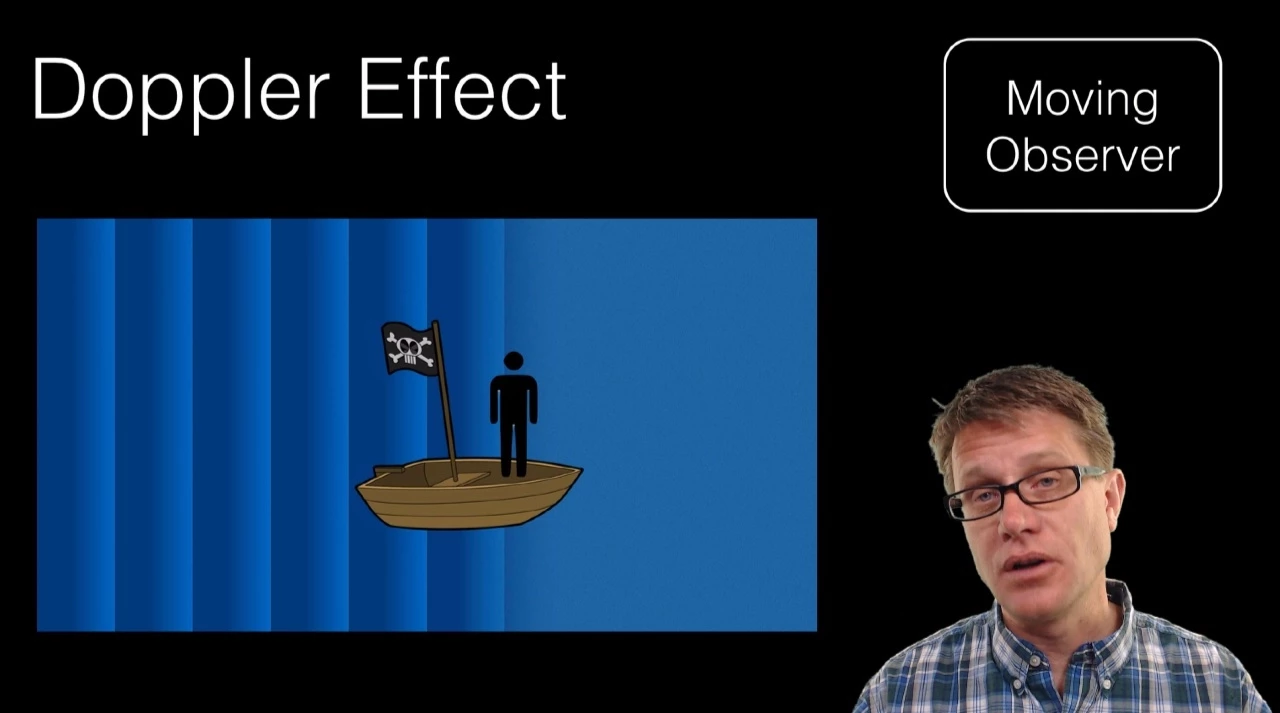
The Doppler Effect: Familiarity with how relative motion affects wave frequency (for both light and sound), which is crucial for understanding radial velocity.
Astronomical Scales and Units: Understanding fundamental units of distance such as the Astronomical Unit (AU) and light-years, as well as the concept of the celestial sphere.
Vector Mathematics: A basic grasp of 2D and 3D vectors, specifically how combining transverse (proper) motion and radial motion yields a star's true space velocity.
Galactic Dynamics and Kinematics: Exploring how the collective space velocities of stars reveal the rotation curve, mass distribution, and evolution of the Milky Way galaxy.
Exoplanet Detection via Radial Velocity: Learning how measuring precise periodic variations in a star's radial velocity is used to detect orbiting exoplanets (the 'wobble' method).
Cosmological Expansion and Hubble's Law: Extending the concept of radial velocity to distant galaxies to understand cosmic redshift and the expansion of the universe.
Modern Astrometry and Space Missions: Studying how high-precision space-based observatories, such as ESA's Gaia mission, are actively mapping the 3D positions and motions of billions of stars.
9.6K views198likes29:29Original Release: 2018-07-16
Hello everyone. This is Jason Kendall with the next of my introductory astronomy lectures. Well, we went through the sun. Then we looked at the different kinds of stars looking at their stellar spectra and determined that stars have spectra. Meaning they they have a particular they can be classified according to the appearance of their spectrum. Now that's very very very important in terms of uh of what makes up a star, what makes up the atmosphere of the star. But really, when we look in the night sky, there's something else we want to link into it, and that is the motions of the stars themselves in the sky. Now, we're not going to really go into deep motion about the about the constellations and the rising sun that we're going to assume that we can see any star that we want at any time. And so, let's pretend we're out in space or something. So, we're going to look at the motions of the stars with respect to each other, which is a very interesting way of looking at things. All right. So, the funny thing is is that to your naked eye, to the sky that you see above you, the stars seem to be fixed. But there's no real reason to think that that's actually the case. The stars themselves are not fixed in the sky. They're objects that float in space. They move in space. They're constantly in motion.
But they're so incredibly far that we actually do not see any kind of motions during your lifetime or mine or anybody else's. you have to wait hundreds of years before most of the stars motions can be seen. Anyway, so let's look at the next thing. So let's go back a bit and say how far we are. And so we're going to go back and take a look at parallax.
Parallax is a way of getting distances to stars. So you have some sort of baseline with two people looking at it, two little emoji smiley faces, and you want to get the distance across, say, this river, and there's a tree on the far side of the river. So you set up a baseline. you look at somebody that's straight across the angle between when there's a right angle. That's what that little square means. And the little theta is an angle is the angle that's being measured given the baseline. And so if you know, you can use simple eighth grade geometry to learn that the tangent of that angle theta times the baseline equals the distance across the river to the tree from the smileyfaced emoji guy. So we can use this to our advantage if we can figure out a convenient baseline. Because if you think about it, the smiling emoji guy sees the tree from one vantage point and the and the not so smiley emoji guy sees the tree at a different vantage point with respect to the things behind the tree. So that's what we're really going to look at. So stellar parallax or the parallax of the stars means that as the stars as the earth goes around the sun year toyear some stars appear to move back and forth in the sky with respect to background stars. And here we can see an example of four of them moving back and forth if you look really carefully.
And so the the nearer the star the the the uh greater the movement. All right.
So stars that are nearby. Let's say we got the Okay, so now explain this diagram. On the left hand side, there are a whole bunch of really, really, really, really distant stars. We have the sun as a yellow dot on the right hand side and the earth going around the sun in its orbit around the sun. And yes, the earth does actually orbit the sun. And yes, it's actually a sphere.
Jeez. Anyway, so let's pretend that the blue star that's kind of halfway in the middle is an intermediate distance star.
So what we're going to do is from our vantage point on Earth look at the star and see where it is with respect to the background golden stars. All right. So a few months later it's over here and a few months later it's over there and then when it's there maybe we can see it if we're very lucky and see the other side of the sun. Maybe we're using radio telescopes. We don't worry about it because maybe it's a radio star or something like that. Okay. So a near star will have a big wag and it'll move a lot with respect to those background stars. Now something a little further the change will be a lot less. We can see that the star is moving less with respect to these background stars. And now a very distant star barely seems to move at all with respect to the background stars. And so the great shift between the the near star has a really big shift, a big total angular shift in the sky with respect to large stars, the distant stars, and a medium star is less of a shift and a really far star has little or no shift. Right? So we can combine them over together. We can overlay them together. And then we c we snip out the distances to make it a little clearer. And then we cut it in half and we define the parallax to be half of the total shift over the course of the year. That's the definition of parallax. Not the full shift, but half of the total shift. So you get a nice triangle out of it, a nice right triangle with the sun at the center. And we can then define the distance to the star in terms of the distance from the earth. So now the baseline is between the sun and the earth. We could have replaced the smiling emoji for the tree thing. And now the previous slide where we showed the tree, that's where the star is. And the angle is now the parallactic angle, which is the apparent shift as the earth goes around the sun.
And so the tangent of the angle of that little parallactic angle is equal to one astronomical unit divided by the distance to the star. That's a t is the definition of the tangent. So what's an astronomical unit? Well, that is the average distance between the earth and the sun. So let's take again a look at that. And so we can redefine the distance to the star, meaning 1 AU / the tangent of the angle P. We're going to play with this definition a little bit just to make it actually really convenient to do. So what is an astronomical unit? If you don't know this, you don't know the distances to the stars. So how do we get that? We can use Venus to our to our assistance because look at this at the Venus right there. It's at quarter phase which means we see one quarter of Venus. That means it's at a 90°. If you were on Venus, the Earth, if you were on Venus looking in the sky, you would see the Sun and the Earth at 90° in the sky. So therefore, the position of Venus in the sky with respect to the Earth and Sun is at a 90 degree angle. So we get this nice little thing. And we can determine the distance from Earth to Venus using radio telescopes such as MIT's Milstone Hill.
And you can bounce radar beams off of off of Venus as it's moving and determine the distance of Venus and then use triangles just again using triangles to determine the astronomical unit. And so all you have to do is measure the angle between the Earth between the sun and Venus when it's at quarter phase.
Get that distance of the yellow line which is the angular distance and they'll give you the red line which is the astronomical unit. So the angle theta is what we're trying to measure in the sky meaning the position of the sun and Venus in the sky. And then we bounce radar off of Venus to get the distance to the yellow. And that gives us the astronomical unit. In so doing, we've learned that the astronomical unit is by definition 150,000 150 million kilometers or 93 million miles. And it takes light 8 and a half minutes to go that far. And this distance definition gets us out to the planets. It allows us to find the distances of planets. It allows us to find the distances to far stars. So we use the AU and find out well how far is a parallax? Well one astronomical unit is about 150 thou 150 million uh kilometers but stars are really small. So that angle is really really small. And if we measure that angle in arcsecs we have we find that the distance to a to a star that has a parallax of one arcsec has a distance of one parsec. So we're defining a unit based on a fundamental measurement. If it has a parallax of one arcsecond and we're on the earth and we're looking for parallax from the earth, then the distance is by definition one parsect which means a parallax of one arcsec.
That's what parseek stands for. That's equivalent to 206,000 roughly 265 AU three and a quarter light years or 13 31 uh 31 thou 31 trillion miles which is a long way 31 trillion kilometers I should say. So it's an incredibly great distance out to uh out to out to the stars. So the typical part distance is enormous and stars are on the order of about a par second apart.
That's how far apart they are relative to each other. So that's the definition of a parsect and what a parsect is and what parallax is. And that motion is seen in stars. And some stars move have large parallaxes if they're really close and very and small parallaxes if they're really far. And we discussed that in an earlier video. So the star Sirius has a pretty large parallax. It's almost an arcsec. It's like a half an arcsecond or so. It's about seven light years away.
All right. Now parallax is due to the motion of the earth around the sun. But then there's an actual motion that's called proper motion and that's the apparent angular motion of the star across the sky with respect to more distant stars because the star is moving through space. So proper proper motions are really small. They're they're on the order of 0.1 arcseconds per year. So they really take a long time to move.
That's a very very very tiny proper motion. The largest one is Barnard star which really cooks across the sky. If it's going 10 arcsecs per year, that's one arcsec per every six years. And uh you can multiply that by again by 60 and it goes a degree in a basically a person's lifetime almost. And that's Barnard star. The Hiadees is a star cluster. And the hiatees is incredibly important because it's a star cluster and its proper motion is very is pretty small. It's much it's less than about 0.1 arcsecs per year but it's very close. And because of that we actually use proper motion studies to actually find the distance to the hiatees. And what we can do is we can trace the sky.
We can trace the celestial sphere.
Remember the old celestial sphere? We think of the sky as a dome over our head and then we put a grid on top of that dome and we look at the sky and that helps us understand what's in the sky.
So let's look first at a very interesting guy's work, a guy named uh a guy named Jack Schmidling who likes photo photographing uh photographing Barnard star in the sky. So he's been doing it for a long time. One of his first photos is in 1950. Then in 1997,998 he took these pictures and put them on his website which is schmidling.com Barard of htm. So you can go take a look at his website to see what's been doing. But taking pictures of Barnard star is kind of interesting.
It's a relatively dim star, but you can pick it out. I mean it's something you can pick out, not necessarily with binoculars, but with a relatively decent telescope. Small an amateur telescope certainly can pick it out. Not a 4 inch, but more like an eight or 10 inch scope can pick it out because it's a really dim star. Actually, no. I think it's like a 12-in Scopian Navy because it's a fairly dim dim star, but it's bright. I mean, it's close and it's moving fast and it is the fastest moving star across the sky. Meaning across the celestial sphere, there might be stars with higher actual velocities, but from our vantage point on the Earth, it has the fastest proper motion across the sky. All right?
So, it's a faint red dwarf and it'll move the width of the moon in about 200 years, which is really quite a large distance. Remember, the moon is about a half a degree across. So, it'll move the the one degree or the width of your thumb in about 400 years. That's a very very very big proper motion. Anyway, go check out Jack uh Jack Schmidling's website. He has a lot of fun pictures there. So the uh another thing we can look at is that proper motion is really significant with respect to say 61 sign.
It also is one of the fastest proper motion stars and it's also a binary star. So 61 signia is interesting that you can actually see a change with respect yeartoyear and now we see this overlaid set of pictures. This comes uh this is by a particular observer who posted his stuff on wikip wikipedia and so go take a look at it. It's really cool. Uh the radial velocity means it's also coming towards us. Oh, wait a second. Now uh it's about it's moving about three arcsecs a year which is about a third that of Barnard's star.
And the radial velocity meaning how fast it's coming towards us or away from us is measured to be pretty fast about 66 kilometers per second towards us and its parallax is about a third of an arcsecond which means it's about three parexs away. Remember a distance of of one parse has an has a parallax of one arcsecond. So if it's a quarter of an arcsec which is this is just a little bit bigger than then it would be four par sex. If it's about a third of an arcsecond then it would be about three parex. So this is roughly just a little bit less than than uh four parexs away.
And it's the first object for which parallax was ever measured but in 1838 by William Bessel. It's really interesting. All right. So that's a double star. But the really most powerful one that we'll ever talk about, and we're going to come back to this when we talk about the nature of stars and star clusters and why they're so incredibly important, is the proper motion of the star cluster Hiades. And you can see it here. It's all this in the center of this image. You see a series of bright stars that in it's kind of brighter than the background area, not in the center. Not the not the little cluster that's very distant off to in the upper left, but the thing that's centered out the Al Deberon, which is the red star that's in Taurus the bull, but you kind of see a V sort of shape. That's the head of Taurus the bull. In fact, the head of Taurus the bull in the sky is the Hiades. So, it's a group of stars and they all seem to be pretty bright. And in this particular image, you can see that the circles of the stars have ex gotten greater exposure on the on the image or the CCD or photographic plate because they're brighter. So that's the hiatees in the center of this image. And as we can then say what is the proper motion of the hiadees, we can say how are they moving when and through space. We can track the individual proper motions through time of of particular stars. And we find that if it's in a cluster, they all tend to move in a similar direction. Now, what's funny is is that you'll notice that this particular cluster seems to be kind of they seem to be aiming towards a point like the like you can almost imagine that there that some of the ones at the bottom of the image are kind of pointed up and some of the ones at the top of the image are kind of pointed down. And that is because of the relative motion of the entire cluster with respect to the sun. And that angle opening, how big that kind of wedge sort of shape is determines the distance. The farther away it is, the wider the wedge. And so the so narrow close by stars have very have very large proper motions. But you can see that pretty much all of the stars in this cluster have roughly the same proper motion magnitude. Meaning the length of the little line going either down to the left, to the left, or up and to the left. And the dots are the stars, but the little lines show where it will be in one year in terms of millie arcsec. So that's what that graph means. It's how many mill arcse seconds it's going in one year. So this is 0.05 arcseconds per year. So it's not a big ch it's not a big proper motion. So that's the length of the little line. So you can see that it still is there. It's enough to be measurable. And so this is a piece of work by in in Icarus in in in by in 1991.
Okay. So proper motions themselves are cumulative meaning if you wait they'll move. And so all you have to do to find something is take images over the course of time. This is different than parallax which kind of wags back and forth because of the earth's motion around the sun. Proper motions they keep moving.
They move in their own way. And as they move with respect to the distant background objects such as extraordinarily distant things like galaxies and quazars they will be uh then they're then you can just compare images and see what's been moving. So if it's got a 0.1 arcsec per year motion which is a pretty nearby star then it'll be move about it'll move almost a full arcsec in a decade. And an arcsecond is a pretty big is is a very is a is a typical angle that you would think of as a parallax or the boundary angle for for a for parallax. No star has a parallax bigger than one arcsec.
All right. So basically because there are 60 arcsecs in one arc minute and 60 ark minutes in one degree and your thumb held at arms length is one degree.
Therefore, all you have to do to know how big an arcsec is is make 60 little marks across your thumbnail, hold it at arms length, and then take two of those marks that you wrote so carefully across the back of your thumbnail, and put 60 marks in between each of those. So, you'd have 3,600 little lines across your thumbnail that are not crisscrossed, but are just like a like just lines across. And the width between those lines held at arms length will be one arcsec. It's not a very very big uh not a very big angle at all. It's an extraordinarily tiny angle. So proper motions are extraordinarily difficult to see and it takes a long time for anything to be noticed over over the course of visual observations. you literally have to wait centuries in order to tens of centuries uh or for people to actually see them by eye. So when we look now let's say let's take an example of say the big dipper. The big dipper is pretty close. So the stars of Ursa major are pretty close. They're part of a moving group as we call them and they change slowly but they take time to effect their change. But what we're going to do now is I'm gonna I went into this this this program called Stellarium and I went over the course of 200,000 years to see how the Big Dipper will change over the course of 200,000 years. Now, here we go. Now, some move in different directions, but they all but the five and the dipper roughly have common motions, but they all move but stars move around. So let's start today or at least back in two jan July of 2017 and we see the big dipper with alcade misar ali fad meak and dubet and so centered on megas and so we'll go now jump ahead 24,000 years and we see that things have moved now there's a bit of rotation and that rotation has occurred because of the precession of the earth's axis as around the sky but you can see that there's I'm just going to wag back and forth a little bit on it. And we can see that the shape of the the the uh the handle of the Big Dipper has steepened and the and the box of the dipper itself has squished a little bit and Dubet has moved away a little bit further. Now, let's jump another 20,000 years in the future and Alcade cut scotches in just a little bit closer. Dubet moves a little bit further. Fad gets caught up to by the others. And now the Big Dipper is starting to look a little different in 50,000 years. And uh as we can go back and forth, we see that it just kind of cycle back and forth across 50,000 years of time. That actually the Big Dipper will change its appearance over time. If you went So therefore, if you went back to the time when the last during the last ice age, which was 15,000 years ago, the stars in the sky would look different. They would have different shapes. you wouldn't recognize immediately the constellations and you might even notice that there's some slight differences to them which is really fascinating. All right, so now we're going to move on and look at the nature of proper motion itself. So proper motion depends on the distance to the star. And so the closer the star, the greater the proper motion. So both of these two stars are on the blue line and then we're going to let them move through sky and they have the same speed lateral to say the sun. So the sun is the yellow dot over there. So we're orbiting the sun. So basically we're just think of ourselves as near the sun.
That's good enough for our purposes. And if they're both scooting by the sun at the same speed, that's what the red and green arrows mean is that they're moving at the same speed. Then the angle that they appear to move is less for the far star, the green line, than it is for the red star, the near line. So you can see there's a bigger angle, but they're moving at the same speed. So ang proper motion is an angular change not a velocity not a speed it is an angular change per year not a kilometers per second here because we can see they're different different distances different same speed but different angular change depending on the distance. Okay, but let's say it's moving the same speed as the green star and the red star moving the same speed. But if the red star is moving directly towards us, we're not going to see any proper motion at all.
So that'll be kind of weird. But there's it's has the same speed as the other one but it's moving towards us. So no proper motion. So basically then the radial velocity tells us what we need to know.
The radial velocity is how fast it's moving towards us or away from us. And we get that from the spectrum. Remember last time we talked about the nature of stellar spectra. And we saw hydrogen lines, calcium lines, all sorts of things, but specifically hydrogen is the most prominent in most stars lines. But if they're cooler stars, you're looking for for uh molecular lines and so on. So if you're looking at Barnard star, you'd be looking at molecular lines in in this cool red dwarf. Anyway, as a star moves towards you, it'll be blue shifted, meaning the absorption lines in the spectrum of the star will all be shifted to a shorter wavelength. The entire spectrum will be shifted to a shorter wavelength and that means it's called a blue shift. If it's moving away from us, then all of the spectral lines and every aspect of the star, all of the light, every photon, every particle of light will have its its wavelength lengthened because of that. And so the the appearance of these spectral lines will be moved to the red. So if it's moving towards us, the spectral lines move to the blue. If it was moving away from us towards the red, if it's moving across our line of sight, we don't see any change at all. So we could have three exactly identical stars, meaning their spectra would look exactly identical, but if you put them side by side, one of them would be redshifted, one would be blue shifted, and one would have no shift. So they'd be in the middle.
That'd be interesting. But they're exactly the same spectra. And the only difference is how fast they're going towards us or away from us. And that's called radial velocity. And that is a speed. So how much of the speed is towards us is important. where we just looked at left or right and across. But what about the angles in between? All right, this is what we mean. There's the spectrum of the star. They get noticeably bumped. And there you can see the absorption lines of say oxygen and hydrogen. Specifically, this is an A type star. And a type stars have incredibly deep uh the most prominent most prominent uh hydrogen lines of all.
So if you're conven if it's convenient a star, then it's great. But uh because it's easy to find hydrogen lines, you know what you're looking for. So like hydrogen beta that is that particular wavelength and there's 6563 angstroms there's a hydrogen hydrogen alpha where we have the Balmer transition lines and so forth. So the spectrum of the star the entire spectrum will be shifted to the right meaning longer wavelength long bigger wavelength bigger numbers but the shape will remain exactly the same. If it's blue shifted on this graph would be shifted to the left. Everything would remain the same except everything would be shoved to the left. And that's what we mean by red shift or blue shift. Will we be pushed to the left or the entire spectrum will be pushed to the right and that is called red shift. And that is dependent on the the speed with which it's approaching us or retreating from us. All right. So now we're going to get to an important element which is called true space motion. How where is the star actually going to find the actual space velocity? How the actual space velocity how far it's going how fast it's going in say kilometers per second not just an angle but in kilometers per per second we need to have measured the proper motion which means we got to watch it for a few decades to see if it actually moves. Then we need to know the distance in parex which we would get by looking at the parallax if it has one. And then we would look at the radial velocity which is the red shift or blue shift of the lines according to the spectrum. And so the transverse velocity is the actual speed across the line of sight. And the radial velocity is measurable from the from the distance and the proper motion.
And the radial velocity is is between is because of the towards us or away from us. You add these two arrows the green and blue arrow together. meaning take the green arrow and put it at put the tail of the green arrow at the head at the tip of the blue arrow and you see that it could fall right on that black dotted line and it would then say if you add the blue arrow and the green arrow together you would get the red arrow that's called vector addition but it's interesting to think and we can formalize that by saying well let's actually take it one step at a time but the the tangential velocity v subtan would be some crazy number 4 4 and 3/4 4.74 times the proper motion in arc seconds per year and the distance in parex and that gives you kilometers per second.
And that 4.74 arises because you're using arcsec years and parex as your units and that 4.74 converts that uh when you multiply those two numbers together into kilometers/s. So that's where the tangential velocity comes from. Then what you do is you square that. take the tangential velocity, square it, and add it to the square of the radial velocity. And then take the square root, and that's the length of that's and take the square root of that.
That's the length of the arrow. So you can use Pythagoras theorem just like you can with the lengths of arrows in the same way that you can do with uh with with just lines. So we add the arrows together. How long is the true space velocity? V subspace. depends on the square of the radial velocity plus the square of the tangential velocity square rooted you get the space true space velocity and how fast it's really going through space and in what direction is really interesting. All right, why would we bother even doing all this? Because that sounds like a heck of a lot of work because that's called astrometry and it is a heck of a lot of work. We got to wait decades to do it. You know, there's other things to do like surf the internet and look at Instagram pictures of cats. So when we do that, we'll find that it's incredibly useful for astronomy because when we can actually find we can find how the sun is moving through space and it seems to be moving towards the constellation of Hercules.
We can then also take largecale um large scale measurements of many stars around us and find out exactly how all on average all the stars are going around us around and we find that in general everybody's kind of moving in a plane around the galaxy. And so the galactic plane can be measured by looking at at proper space at space motions as we go around the galaxy. And that can actually tell us how fast we're moving around the galaxy as well as everything in the sky around us. Finally, we can find really, really, really strange looking stars.
And those strange stars might be moving in some very weird way because they got lost in space or they are they're they're well not lost in space like Robinson Crusoe and and the robot but they would be uh they might be coming from a very strange location maybe the halo of the Milky Way or maybe they're part of some other group some other strange kind of star. The funny the amazing thing is is that measurements of stellar motions is what is is what actually ma helped us to discover the existence of dark matter. So simply taking pictures of the stars over the course of decades and seeing how stars move through the sky and therefore how we move through the sky and then con and then looking at that with respect to Newton's laws of gravity. We then can discover that there's a whole bunch of things that we do not see and that thing we do not see is dark matter because everything is moving a little too fast for what it should be and that gives us a really interesting thing. So we relink the nature of just pictures of stars moving through space and that gives us an insight into the nature of physics and the nature of matter itself which is really a fascinating integration. All right. So that's what we mean by the motions of the stars and all the stars have different kinds of motions from parallax to uh to risings and settings and the daily and the dial motion to annual motions to to the uh to the proper motion across the sky and tangential velocities across and all of those things actually have great great great meaning because none of those stars that you see on a starry sky are actually fixed in space. they're moving too, which is a really fascinating thing to think about. All right, thanks again and we'll see you soon.
Up Next

10:45
Gaia Mission: Revolutionizing Our Understanding of the Milky Way
@pbsspacetime
429K views•2018-05-09
61:17
First Billion Years of the Universe with the Square Kilometre Array
@iaaudc
121 views•2022-05-26
79:27
Cosmic Redshift: Hubble's Expansion Evidence Explained
@JasonKendallAstronomer
4.1K views•2023-10-12

6:10
Gamma-Ray Bursts: Cosmic Snipers Explained | Astronomy
@kurzgesagt
15M views•2016-07-31
Related Study Plans & Knowledge Roadmaps
Structured learning paths in Astronomy
astronomy
Reionization: Pop III Stars, IGM & 21cm Line
01Foundations of Cosmology & the Early Universe
02Population III Stars & Cosmic Dawn
03Physical Mechanisms of Reionization
+ 2 more learning modules
17h5 modules
Explore Roadmap
astronomy
Planetary Rings: Dynamics, Roche & Resonances
01Foundations of Gravity and Orbital Mechanics
02Tidal Forces and the Roche Limit
03Structure, Composition, and Collisions
+ 2 more learning modules
10h5 modules
Explore Roadmap
astronomy
Asteroseismology: Stellar Waves, Ages & Cores
01Foundations of Stellar Astrophysics & Wave Mechanics
02Stellar Oscillation Modes: P-modes and G-modes
03Mathematical Framework of Asteroseismology
+ 2 more learning modules
35h5 modules
Explore Roadmap
astronomy
Adaptive Optics: Physics, Engineering & Control
01Foundations of Wave Optics and Wavefronts
02Atmospheric Turbulence & Optical Distortion
03Wavefront Sensing Technologies
+ 3 more learning modules
35h6 modules
Explore Roadmap