



















Spectral analysis of starlight reveals that stars behave as black bodies with temperatures determined by their peak emission wavelengths (Wien's Law), and that each element produces unique spectral lines. The Doppler effect causes wavelength shifts in starlight based on relative motion, with annual variations observed as Earth orbits the Sun. Proper motion measurements show stars have tangential velocities across the sky, while radial velocity calculations from spectral line shifts reveal stars move toward or away from us. These observations demonstrate that stars are not fixed points but have complex motions through space, including binary systems and galactic orbits around supermassive black holes, all of which are incompatible with a geocentric universe model.
Testing Geocentrism Part 7: Light, Spectra & Stellar Motion P2
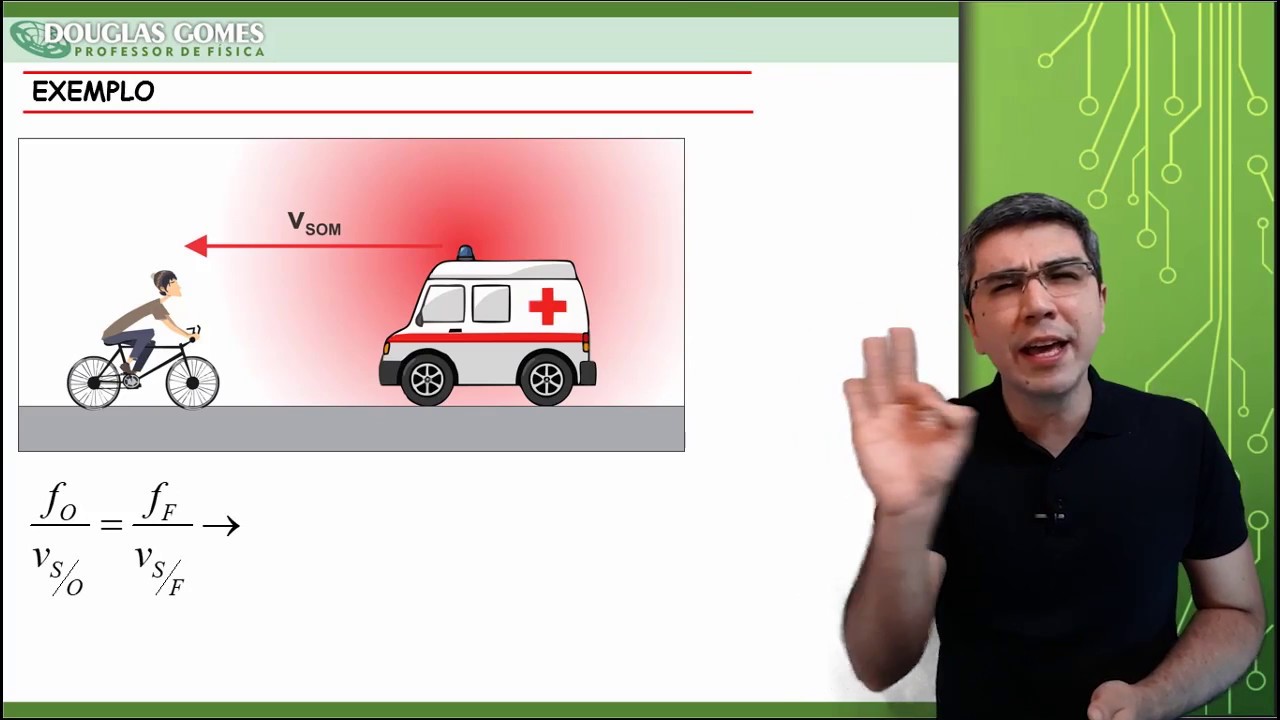
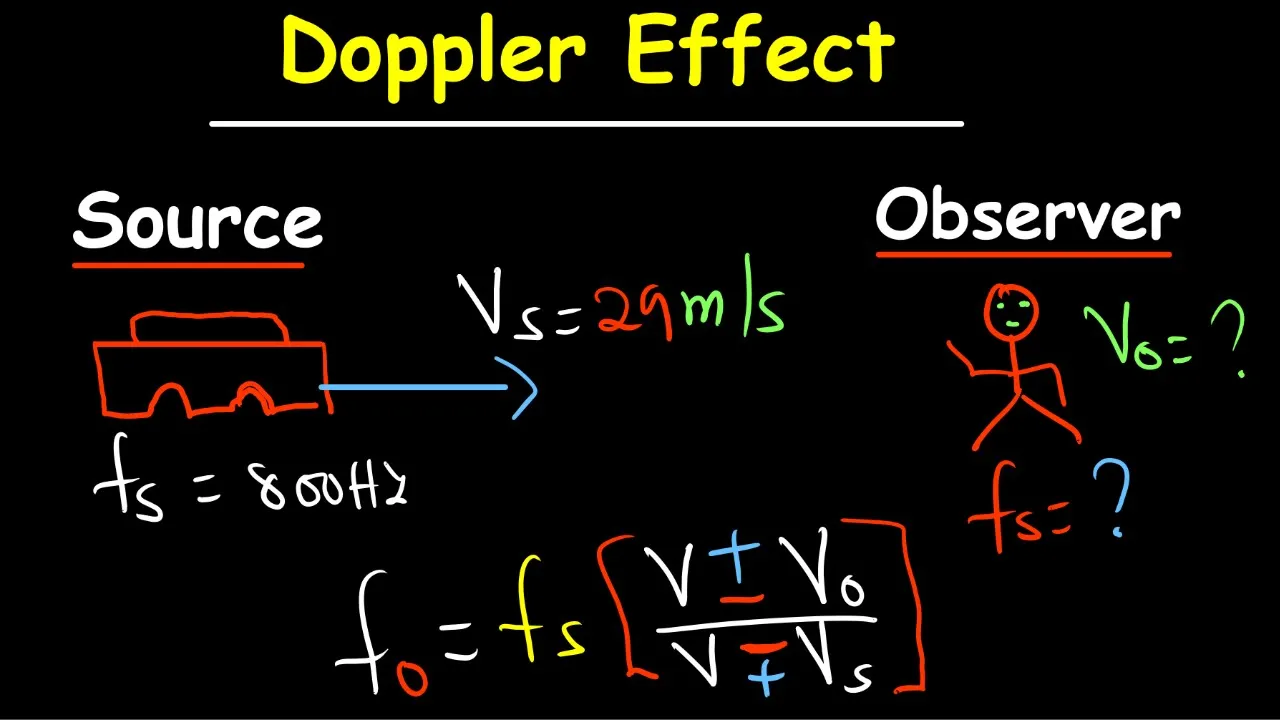
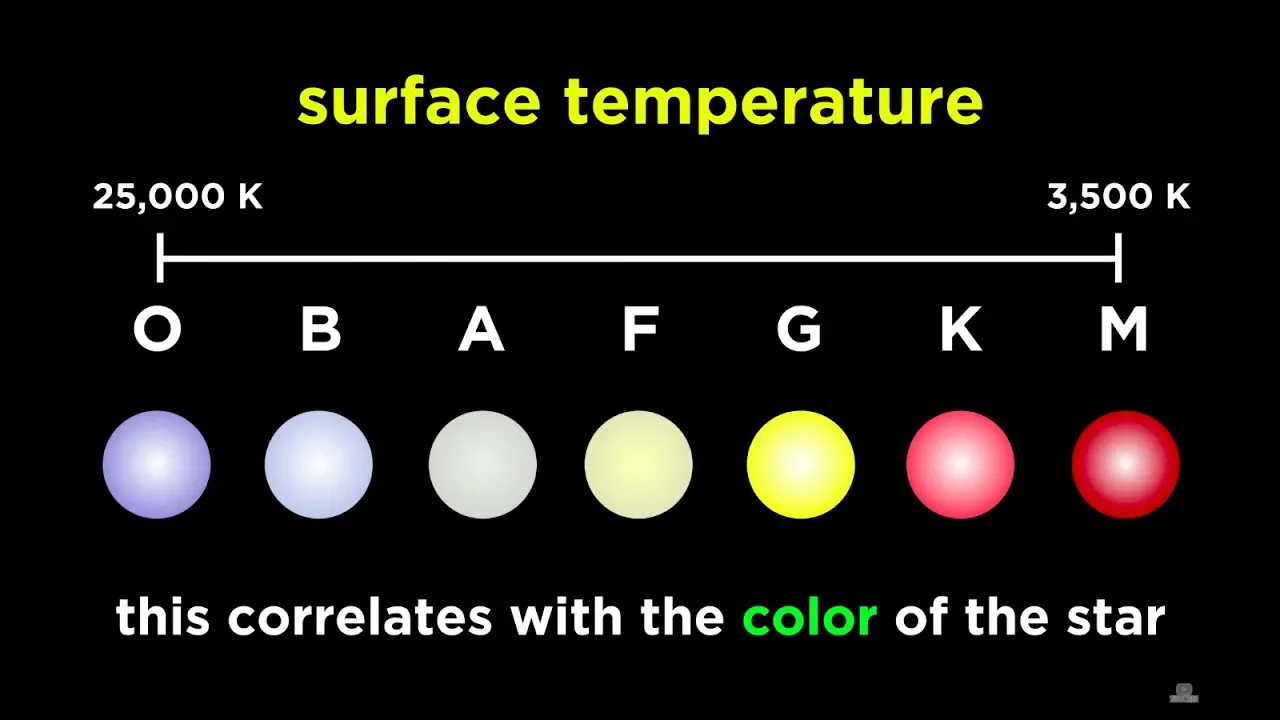
Added:[Music] welcome back in the last part we went way over the head of what geoc centrists can understand with the startling Revelation that trigonometry works at any distance despite the ignorant excuses put forward by geocent tards we also saw how Stellar aberration provides another means of confirming that Earth orbits the sun whilst allowing us to cross check Key properties of that orbit in this part we'll see what else light has to say about the universe an object at a given temperature emits electromagnetic radiation a dense object emits across a broad range of frequencies the hotter the object the more light is emitted at all frequencies so the object appears brighter however there is a wavelength of peak emission and this also varies with temperature according to V's law thus the color of an object also varies with its temper temperature the curves shown represent those of an idealized kind of object called a black body which reflects none of the radiation that falls upon it a black body doesn't necessarily look black because it can emit radiation and the radiation emitted depends entirely on its temperature as it happens Stars behave very nearly like black bodies here's the black body curve for a temperature of 5,777 Kelvin and here's the spectrum of light emitted by the Sun as measured above Earth's atmosphere using V's law we can easily calculate the wavelength of Maximum emission for a black body at a given temperature for 5,777 Kelvin we get a wavelength of 502 nanom we can use the same lore in Reverse to determine the surface temperature of stars Sirius the brightest star in the sky emits most of its radiation at 290 nanm this indicates a surface temperature of around 10,00 Kelvin this high temperature is why stars like Sirius appear a blue white rather than a yellow white like our sun in 1802 William walliston was investigating the refractive powers of various substances during his work he discovered dark lines in the sun Spectrum when Shone through a prism he also found that candle light produced distinct lines of color his findings were published in the philosophical transactions of the Royal Society of London but he couldn't explain them in 1814 Joseph Von frown Hoffer repeated Newton's classic experiment of shining sunlight through a prism but with a big difference using intense magnification he discovered more than 600 dark lines in the sunlight Spectrum today more than 30,000 are known another German Robert bunson invented the bunson burner in 1857 it was already known that different elements gave off colored light when sprinkled into flames his colleague Gustaf kof suggested passing this light through a prism they found distinct bright spectral lines they quickly established that each element and they worked their way through all the elements known at the time has its own distinct pattern of spectral Lines by vaporizing samples of minerals they discovered new elements including cesium named after its gray blue light and rubidium after its red light at this point we should probably remind ourselves of the total contribution to human knowledge made by geoc centrists the new found ability to discover elements wasn't limited to Earth the solar eclipse of 1868 saw the recognition of a spectral line from the sun's chromosphere that did not correspond to any element yet tested on Earth the new element was named helium and wouldn't be found on Earth until 1882 it's not just elements that have unique Spectra molecules do too whereas dense objects and black bodies emit light across a broad range of frequencies elements and molecules emit or absorb light at specific frequencies a relatively cool gas in front of a broad spectrum produces absorption lines in that Spectrum the absorption lines occur at the same wavelengths as the emission lines of the same gas thus the dark absorption lines in the sun Spectrum tell us about the elements in the upper regions of the Photosphere 67 different ele elements are found with the most abundant being hydrogen at 71% by mass and helium at 27.1% by mass above the Photosphere and visible during a total eclipse is the chromosphere a glowing pinkish layer of gas unlike the absorption spectra of the Photosphere the chromosphere produces an emission spectrum that reveals hydrogen singly ionized calcium ionized helium and ionized Metals the hydrogen alfid Mission at 6563 nanom is what gives the chromosphere its pink color above the chromosphere and about 1 millionth as bright is the Corona this can only be seen by blocking the light from the Photosphere using a telescope with a coronagraph or a conveniently placed moon during an eclipse the corona can be seen with a naked eye providing a view of its sheer size and the Magnetic Loops within it spectroscopy of the corona reveals its composition I and temperature in excess of 2 million Kelvin the corona was initially thought to contain elements not present on Earth as unusual spectral lines are observed laboratory experiments on Earth however revealed that these lines are due to known elements in highly ionized States a green line at 53.3 nanom is due to iron atoms that have had half of their 26 electrons Stripped by the intense temperature spectral analysis does present yet another problem for the the feckless geocent [ __ ] it reveals that the sun and stars are all made of essentially the same stuff in very nearly the same proportions the stars and our sun are the same kind of object with the same energy source nuclear fusion of course the reason all the other stars look like points of light is because they're so very far away a simple concept that is also completely incompatible with Earth being the mysterious center of the universe for reasons we've already seen centrists however are unperturbed by such things as reality the most insane subscribers to this outdated twaddle attempt to get around the scale of space by claiming that the sun is smaller and closer to Earth than we are told we established in supplement one that this is nonsense using just a few measurements measurements no geoc Centrist has bothered to do in the last 340 years whilst they sit their whining like little brats about how everyone else's must be wrong for reasons they can't articulate let us alone substantiate if the sun and stars are closer than we're told then geoc centrists need a viable physics model to explain what they are how they shine why some have been observed in human history to die by undergoing catastrophic explosions why many exist as binary star systems that can be observed to orbit a Common Center of mass what the objects are that light up the other galaxies if they're not stars and what all the clouds of dust and gas are for did their Sky fairy forget to clear up after making the universe since the Stars aren't lights placed in a dome rotating round Earth by a magic Sky fairy the simple facts about the nature of the sun and stars lead us inexorably to the simple conclusion that the sun really is a star and like the rest of the universe has no physical means of orbiting the Earth which of course means that geocentrism is bollocks we know that electromagnetic radiation is subject to the Doppler effect it was confirmed experim expent Al for light in 1900 by Aris dark bolski using a setup of rotating mirrors for all electromagnetic radiation the Doppler effect simply results in a change of its wavelength and frequency in the case of visible light this translates to a tiny change in color if the light source is moving away from you or you move away from it the wavelength increases if moving towards you it does the opposite the shift in wavelength of light from Stars caused by the doler effect shouldn't be confused with cosmological red shift which is observed over much larger scales that is caused by the expansion of space itself the Doppler effect allows us to determine whether stars are moving toward or away from our solar system this had been done as early as 1868 by Sir William Huggins measuring Doppler shift allows the speed along the line of sight to be determined this is the radial velocity stars as we've seen behave like black bodies and emit electromagnetic radiation at a broad range of frequencies to identify Doppler shift then markers are needed fortunately such markers in the Spectra exist the absorption lines since Earth is orbiting the Sun we should expect to observe A variation in the wavelength shift for stars throughout the year when Earth is heading towards a star we should see the greatest blue shift or smallest red shift and when heading away from it the greatest red shift or smallest blue shift Within intermediate measurements in between this pattern should then repeat on an annual basis and it does this was observed in 1887 by Herman Vogel and Julius Shiner what explanation could geocentrism possibly offer to explain this observation well the geoc Centrist now needs his entire universe to have another layer of motion on top of those we've already seen what their Universe now requires is the entire Cosmos also vary its distance from Earth once a year by around 300 million km just to create the illusion of Earth orbiting the Barry center of the solar system with a major axis of coincidentally about 300 million km if you're the kind who thinks the most complex solution is probably right then that might sound feasible to you and of course if the entire universe apart from the Sun and inner solar system is cycling around Earth in a 300 million km Wide Circle when is Earth at the center of that Universe the Center is a meaningless concept and geocentrism is nonsense by default Vogel and Shina were able to discover the wavelength shift induced by Earth's motion because Earth isn't the static center of the universe and the raw consequence of that fact is that geocentrism continues to be bollocks naturally Stars don't just move towards or away from us so there is also a component of motion perpendicular to our line of sight this is the tangential velocity and can be derived from the proper motion of a star and its distance proper motion is the angular change in position of a star and was discovered by Edmund hle in 1718 Barnard star has a proper motion across the sky of 10358 arcs per year over the course of a human lifetime it can easily be measured to move against other background stars using this simple formula we can find the tangential velocity of a star mu is the proper Motion in Arc seconds per year and D is the distance to the star in Parx Barnard star is 1.83 Parx away and we know its proper motion so this gives us a tangential velocity of 89.8 km/s what about its radial velocity to calculate the radial velocity of a star we take the change in wavelength of an absorption line over its known wavelength from the laboratory where there is no Doppler shift and multiply by the speed of light a spectral line of iron measured in the light from Barnard star has a wavelength of 51644 nanom the same spectral line on Earth has a wavelength of 56. 629 nanom plug in these numbers and the radial velocity of Barnard star is- 107 km/ second the negative sign is a consequence of blue shift thus the star is moving towards us by combining the tangential and Radial velocities using simple Pythagoras Theorem the space velocity of a star can be calculated ated relative to the sun we find that the space velocity of Barnard star is 140 km/s what can we conclude from this the stars are not fixed and have their own motions through space of course these motions are another layer of motion on top of all the other layers of motion that the geocentric Universe would need to undergo to produce the perfect illusion of a universe that isn't geocentric at all and then there are the binary systems such as Sirus the faint one dwarf star Sirius B orbits the much more massive Sirius a with a period of 50 years this is what we'd expect because after all the idea that larger masses or bit smaller masses is both physics defying and childish H nowhere in our galaxy is the emotion of stars more pronounced than at its core here individual stars are seen to orbit an unseen object in readily observable time spans the fastest orbit is just 11 and 1/2 years years for the star s102 another star has also had a complete orbit observed s02 at 15.56% [Music] [Music] man but sadly this is not his moment either surely there must be some kind of universal force that acts on masses at a distance gravity you [ __ ] [ __ ] gravity and the only object with enough Mass to fling Stars around in such short and fast orbits is a super massive black hole unfortunately geoc centrists have no explanation for why such an object exists why everything in the Galaxy orbits the core and why stars in every other Galaxy in the universe orbit the center of mass of their host Galaxy or why galaxies orbit each other the failure of geocentrism to have any explanatory predictive or practical use remains total this is as we expect because it's total bollocks they have no valid physics to explain why the rest of the universe is driven by gravity or why gravity works on Earth but with the special exemption when it comes to orbiting the Sun any universe that requires such a specific exemption from the laws of physics that apply everywhere else is clearly not grounded in reality in part 8 we'll see what else light can reveal about the universe and what lumps of rock and metal can tell us about Earth's place in it see you then [Music]
Up Next

Nucleosynthesis Fundamentals: Stellar Origins of Elements
@IdeasinScience
412 views•2024-06-20

21cm Hyperfine Transition in Neutral Hydrogen: Radio Astronomy Basics
@AaronRobertParsons
12.4K views•2011-10-13

NMR Spin Physics I: Zeeman Effect, Resonance Condition & Larmor Frequency
@nptel-indianinstituteofsci8064
2.3K views•2024-01-17

Entropy and the Second Law of Thermodynamics Explained
@veritasium
27.5M views•2023-07-01
Related Study Plans & Knowledge Roadmaps
Structured learning paths in Physics