













![Journey to the Edge of the Universe [4K]](https://i.ytimg.com/vi_webp/QhM5zAVvOI4/maxresdefault.webp)



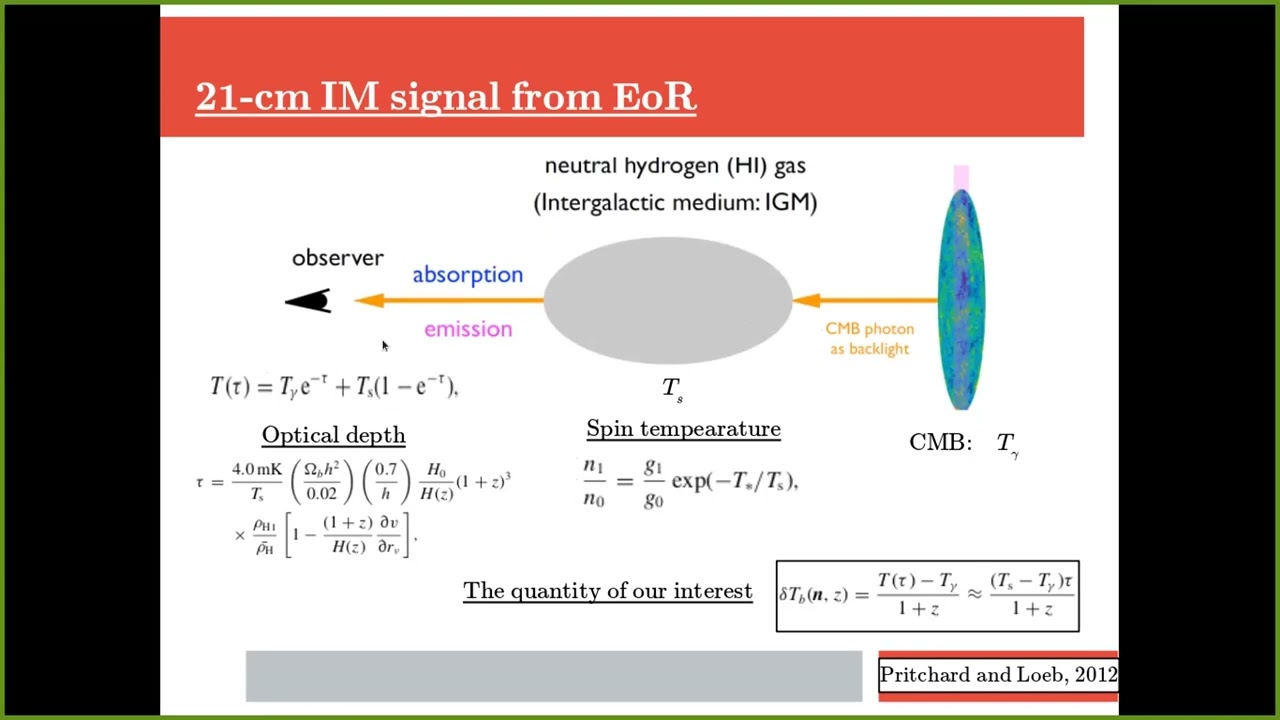





The cosmic dark ages refer to the period between approximately 380,000 years after the Big Bang (when the cosmic microwave background was emitted) and the formation of the first stars, when neutral hydrogen gas blocked most light and made direct observation extremely difficult; scientists study this era using the 21cm line emission from neutral hydrogen, which gets redshifted to much lower frequencies (tens of MHz) due to the universe's expansion, requiring observations from the far side of the Moon to avoid Earth's ionosphere and radio frequency interference.
Cosmic Dark Ages Explained: 21cm Line & Moon Telescope Research
Added:The Big Bang Theory and the Epoch of Recombination: Understanding how the universe cooled down to form the first neutral hydrogen atoms, creating the Cosmic Microwave Background.
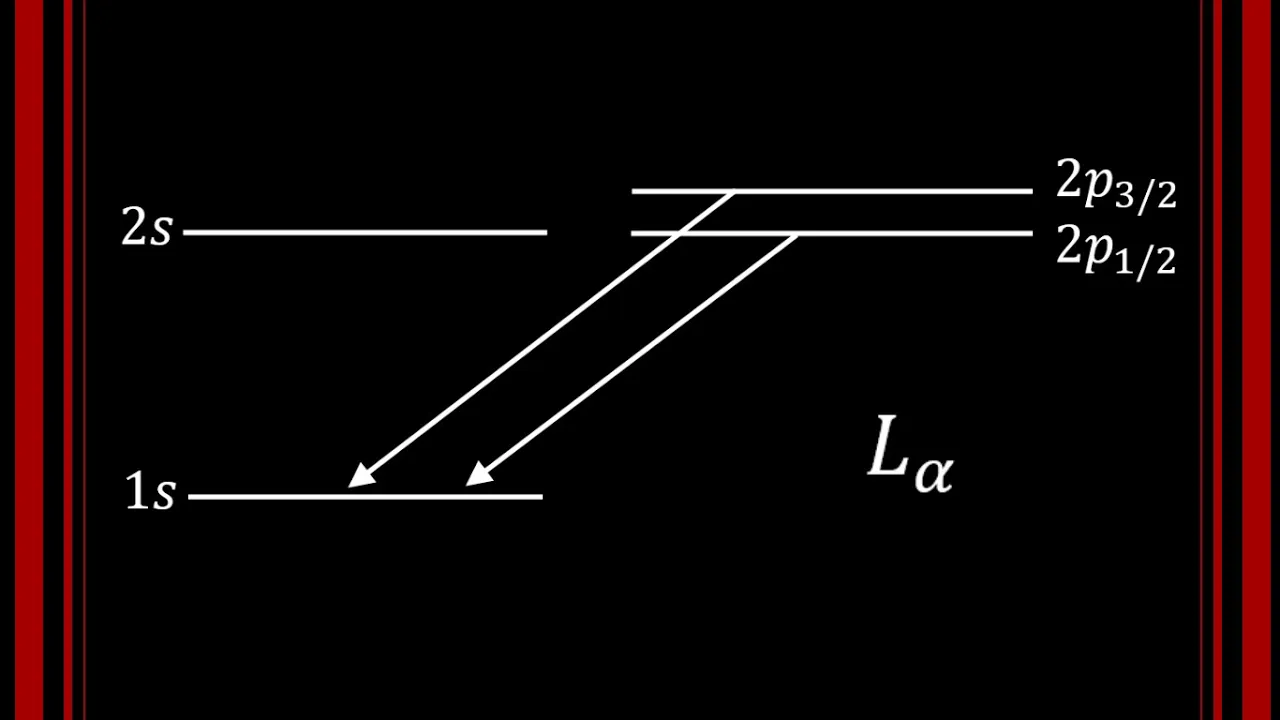
Atomic Hyperfine Transitions: The physics of the 'spin-flip' transition in neutral hydrogen that emits electromagnetic radiation at a wavelength of 21 centimeters.
Cosmological Redshift: How the expansion of space stretches light waves over cosmic time, shifting the 21cm signal into the low-frequency radio spectrum.
Radio Frequency Interference (RFI) and Atmospheric Distortion: How Earth's ionosphere and human-made radio noise block or distort low-frequency astronomical signals.
The Epoch of Reionization (EoR): Studying how the first stars (Population III) and galaxies ignited and ionized the surrounding neutral hydrogen gas.
Lunar Radio Observatories: Exploring planned missions like LuSEE-Night or FARSIDE, designed to deploy radio telescopes on the far side of the Moon.
21cm Power Spectrum Analysis: Learning how astronomers use statistical analysis of 21cm fluctuations to constrain cosmological parameters and test dark matter models.
Space Engineering Challenges: Investigating the technical hurdles of operating delicate scientific equipment during the harsh lunar night and under extreme temperature fluctuations.
26.7K views1.1Klikes58:49Original Release: 2025-07-07
We know quite a bit about the cosic microwave background radiation which is about 380,000 years after the big bang.
And we know quite a bit about the time when the first galaxies were starting to come together within a few hundred million years after the big bang. But there was this time in between, a time when the universe was not giving out a lot of light, that hydrogen was in giant clouds that blocked all of the activity that was going on inside. This is known as the cosmic dark ages. And it's really difficult to observe a place that is dark. And yet there's this trick that there is this specific wavelength of light that neutral hydrogen will give off very rarely and yet it happens enough that you can actually probe and scan this time in the universe. It's called the 21 cm line. It's a very difficult observation to make from the surface of the Earth. We have the ionosphere above us. We have all of humanity's radio emissions that will obscure and make these observations.
Almost impossible. But there's a place you can go where you can make these kinds of observations and that is the far side of the moon where you have thousands of kilometers of rock between you and earth where there is no ionosphere and you can get this pristine look to the beginning of the universe.
My guest today is Dr. Christian Brinkerink. He's an instrumentation systems engineer at Radbow University and he's part of the Radbow radio lab.
They are planning a moonbased mission called the Dark Ages Explorer. This would be a collection of antenna that would be set up on the far side of the moon and would together observe this period of time in the early universe and could give us some really important answers about how we went from the cosmic microwave background radiation to those first galaxies. How did those first structures start to come together?
What was the role of dark matter? What was it like when the first stars were forming? These are the questions that could be answered. In this interview, I talked with Christian about the dark ages of the universe. What it would be like to be out in space looking around during this time in the evolution of the universe. What would the dark ages explorer instrument look like? How would it work? And what could we discover about the universe? So, enjoy this interview with Dr. Christian Brink.
Christian, the dark ages are a region or a time in the universe that is very poorly understood. What can you give us sort of like just a good explanation of of what the dark ages were? Yes, of course. So, if we look into the night sky with any facility, we look back in time, right? The further you look, the the longer that light has had to travel to reach us and so the further back in history you look. Now if you keep pushing that uh you eventually arrive at what we call the cosmic microwave background. This is the the the light that started its journey as the universe was becoming transparent to radiation for the first time. Uh it was very homogeneous back then. Uh so matter and energy were were quite uh neatly distributed with only very minor ripples and from those little ripples eventually structures started to form which include the galaxy clusters and the galaxies that we currently see around us.
um that took time. So before the first stars formed from that stage onwards uh took several hundreds of millions of years as we currently estimated and if you wait a while uh so in front of the CMBB closer to us we can see uh early galaxies for instance the James Web Space Telescope has been has been observing those um and so there's a gap between the CMBB that is very very far away and those galaxies that are still far away but closer to us and that is the time in which structure formation was underway, right? But no stars were formed yet. And so it's very hard to study that period of time in the universe's history. Um because there's no starlight to to to observe. So we have to find other ways to study this period. And there's a very specific way in which we can do so, which is by observing the neutral hydrogen that was already floating around at that time. It turns out that hydrogen has a very specific frequency at which it can absorb or emit radiation which is the 21 cm line. Um and if you observe the 21 cm line of hydrogen from that early universe you can see it but it will be redshifted to much lower frequencies. So normally it's 21 cm or 1420 uh MHz uh but that would be redshifted to uh for us uh to well a few ten of megahertz. So really by many many factors right as you might recall the CMBB the cosmic microwave background sits at a red shift of about 1100 and the galaxies that James Web Space Telescope observes uh observes they sit at a red shift of well just above 10 10 12 maybe pushing 13 uh at the moment this changes monthly of course as new new measurements. Yeah it's like 14.4 or something right now.
Yeah. So even a bit more than I thought already. Exactly. Um, and so you notice that those red shifts have quite a range between them. And that doesn't represent necessarily an incredibly long time, right? We're talking about hundreds of millions of years because this uh the universe expanded quite a bit uh relatively speaking in those early years. Uh but it's it's a very important stage of the evolution of the universe.
Uh and we are blind to it other than studying this neutral hydrogen emission.
Um yeah. So I kind of have, you know, I want to try and imagine what it would be like to be in the universe at at different phases of that early early evolution. And the way I've often described it is that early on, say the cosmic microwave background, like when you had that first transparency, it was kind of like the entire universe was the surface of a red star, right? This kind of dull red color, except it was everywhere and everything. And then light could start to there was gaps opening up where light could f you know photons could travel and then they would hit more material and then the gaps would get bigger and the photons could travel farther and we're seeing those photons that were able to travel unimpeded throughout the entire age of of the cosmos. And so that is that's kind of hard to imagine it's the surface of a star but also it's everywhere. But but if you sort of move forward in time Mhm. where maybe that that cooled down into these kind of larger structures, take us through what it might feel like to be floating in space in the cosmos, say within the first 50 million years.
Oh, that's a nice that's a nice picture to entertain. So I would imagine that it's at first it's a dense fog, right?
It's hot. it's still quite dense and the peak of the radiation is well more or less in the optical regime. Um and as the universe expands and the temperature of this of this field of radiation and of matter cools down uh you will see the surface of last scattering rapidly move away from you uh as as the universe becomes transparent. Of course, it's not transparent to you instantly everywhere.
It takes time for that radiation to have traveled enough to inform you of what it has done, right? how far it has traveled. And so I imagine you would you'd be kind of sitting in a rapidly expanding bubble of transparency, but that doesn't look very regular to begin with. Of course, there are variations in density and temperature in that early universe. And that means that the surface of last scattering has variations in it. It it's a bit of a sponge structure, right? It it might have areas that get transparent a bit quicker than their surroundings do or areas that lag behind in this. And so it's this this wavy kind of misty surface receding from you um as uh as as time goes on. Now obviously there are no foreground structures to speak of yet that are observable, right? Uh and so it's a bit hard to estimate the size of this bubble that you would find yourself in uh as you follow the the millions of years after this this uh this event takes place basically. Um, but yeah, that that that would have that would have to have happened. Something like that, I imagine. And and then though the the temperature of this this material, these this structure that's around you is going to continue to decrease. It's going to shift out of the visible and into infrared, right? And and everything is going to kind of go dark, right?
Yeah. Exactly. Right. Yeah. And so to the human eye of course there would be less and less uh optical energy to to to observe right the the cutff towards higher energy radiation for a thermal spectrum is quite steep. Um and so at some point it will dim to dark red and turn black and if you have instruments with you you would still notice plenty of radiation energy flying around just not observable to the human eye anymore.
And so then we're you know is this the beginning of the dark ages? Are we now Yeah, I would say so. Exactly. Yeah.
Yeah. you you'll you you would see that most of the hydrogen gets neutral, right? So the the the charged particles combine to form neutral atoms basically for the first time since the universe exists or for the first time since the big bang, I should say. That's a bit more accurate. And then and then the next event is that the first stars start to form, right? But they are they are inside this all of this neutral hydrogen that's these dense cocoons of of congealed gas right that that form the first furnaces in which you will see sparks of protostars light up presumably first again in thermal radiation concentrated thermal radiation because of the released energy from gravitational accretion. Uh but eventually fusion uh will kick in and uh and a whole host of new uh uh frequencies will start to come out again. Yeah. But the star is inside this cocoon of this neutral hydrogen. So I guess you're seeing the light is coming off of this new star and it's light, you know, it's sort of lighting up the the clouds that are around it and the radiation is starting to kick in.
It's starting to blow these clouds. And of course that process would would presumably take time as well, right? If you have a dense cocoon of of of partially accreted gas and and somewhere in the core of that structure, stars start to ignite, um that light would need time to interact with the gas. Uh maybe start blowing shells of it away or scatter out of it or process processes like this. So the stars would not be presumably immediately visible to the wide uh environment, right? It that would take time to start to break out of those kinds of structures uh due to the intense interaction of the of the emitted radiation with right and this is one of those big challenges people always ask like oh when why can't we see those first stars? Well, you know because they're covered in this they're surrounded by this this material. Now these stars are are probably large probably running hot short-lived lives detonating supernova. So like what would that be doing? Yeah. So I think the current picture but I'm not an expert on this aspect so I'll have to be a bit careful. Uh but as I currently understand these initial stars would have extremely low metallicity right which means they would consist of hydrogen helium maybe a tiny bit of lithium but that's basically it. Uh and if a star has very low metallicity, it means that it's its layers through which radiation travels as it leaves the the stellar core uh tend to have uh lower opacities, which means it's it's relatively easy for radiation to escape.
Uh and in a modern star with like a solar metalicity fraction of heavy elements dotted around, uh those layers are much better at uh scattering or blocking radiation coming out, which means there's a bigger supporting pressure. uh from from the in from the inside of the star to to support the structure. Uh that basically means that I think the the first stars these population three stars could be much more massive than modern stars can be.
Uh I don't know where the limit is. I'm not sure anyone knows that even for sure. Um but there has been talk of like you know like a thousand solar mass type stars, right? Um, so that you know things that can't can no longer exist basically anymore because we we we no longer have the composition available uh that those initial stars were made of.
And so those first stars, they're you know blasting out all that radiation and they're starting to clear out that that area around them. And then I guess the gaps are starting to form where the light can actually make a longer journey. And all of this radiation from the stars is starting to uh sort of reionize the this what was neutral hydrogen around it. And then is this sort of where we're starting to come out the other side of the dark ages?
Exactly. That's what we call the cosmic dawn. Uh that segment. So there there's a few things happening at the same time at this phase. um you get energetic radiation from those early stars and that can excite the hydrogen the neutral hydrogen again right this is the vaousen field effect it's a it's a very particular way in which hydrogen atoms can get excited their electrons are bumped up to high energy level and then they decay again to lower energy levels but that will allow spin flip transitions as well and the spin flip transition as you might recall is what powers the 21 cm line um so you reshuffle ful the energy distribution for this 21 cm line which means you get a brightening of this emission over a certain period of time. But then it starts to um abate again because the hydrogen actually gets ionized with from the intense stellar radiation that that picks up and keeps increasing in in flux. uh and at some point the neutral fraction of hydrogen will drop so much that you can that you no longer really have an appreciable contribution to the uh the cosmic 21 cm signal from the extended hydrogen in the unit. Right.
You you only get it from the molecular hydrogen not from the atomic hydrogen.
Yeah. So so it has some neutral hydrogen. It's specifically an atomic phenomenon.
Yeah. Exactly. Okay. All right. Well, I think that sets the the sort of the the phase of the universe that we're interested in talking about. And now I, you know, you you brought this up, but I really want to sort of go a little deeply into why the 21 cm line, this spin flip transition is the right tool for the for the job. So So what is going on that's causing these photons to be released by what should just be this giant cloud of boring neutral hydrogen?
Right. Exactly. As you might imagine, if you have hydrogen sitting around doing nothing, there's not a lot going on.
There's there's not not any interesting structure that that becomes apparent necessarily. And this all depends on how this hydrogen and specifically the spin temperature of this hydrogen meaning how many atoms are ready to emit a photon and how many atoms are ready to absorb a photon of the 21 cm line. Um that ratio of energy levels is affected by different processes that happen in the universe. Uh one of them is for instance the cosmic microwave background or what we currently call the cosmic microwave background itself. So the temperature of the ambient radiation field in which the hydrogen sits. If you get hydrogen that is relatively cool but that the effective temperature of this radiation field is high uh you will get the hydrogen absorbing uh this 21 cm uh component of that radiation. Uh conversely if you somehow find a way to invert the population to get extra hydrogen atoms excited uh in terms of the spin flip transition and then let them decay again emitting their 21 cm line uh you will see all that hydrogen in emission. And this is for instance what happens um uh when the hydrogen gets excited in a collisional way. So when molecule or sorry when atoms of hydrogen bump into one another and can excite uh these spin flip transitions in each other. So at different stages in the early universe different mechanisms dominated their interaction with this neutral hydrogen. And this means if you look at the sky integrated spectrum of this neutral hydrogen signal and you look at different red shifts, so you scan at low frequencies in the in the radio basically um you would see different times at which this signal uh is is seen in absorption which means relatively cold compared to the background radiation uh that we get from longer ago and at some point it it starts reaching uh emission again. So you will get a spectrum that shows a certain wavy structure with different features that illustrates different stages of of the strong coupling of the of the neutral hydrogen gas. Ah that's that's really interesting to me. So like like I I had sort of assumed and obviously things were more complicated than I had assumed that that you know as long as you have this atomic hydrogen then you get this spin flip transition.
You know I don't know what the number is. one in some ludicrous number of hydrogen atoms will actually release one of these these photons. A very random sort of quantum effect that that happens, but it's just the result of you having atomic hydrogen. But it sounds like it's more almost like a geology sort of idea about it's not just the phenomena itself, but it's also the environment that's around it. What are the inputs? What are the outputs? that will affect the amount of this radiation that you're getting from these regions that then tells you a lot more about what's going on than just there's a blob of hydrogen over there. Absolutely.
Yeah. Really? Yeah. It's the history of the early universe is imprinted on this signal, right? And so you can read it off and study how strong these couplings were at different times and infer from that uh what kind of densities there were, right? and and and how strong the coupling was with the background radiation field. And so this really helps piece together this story of early struct structure formation in this early universe. You can really uh yeah this is a unique way to reconstruct uh that history. But as you say indeed if you have neutral hydrogen sitting around and you know you excite it a bit and you wait uh this this I think the the halflife of the decay time scale right for neutral hydrogen hydrogen to emit a 21 cm photon is something like what 10 million years or so nice for any any given atom so it's a hopelessly slow process that happens but of course if you have enough hydrogen it will it will happen yeah yeah and I mean this process it's used to find the clouds of hydrogen in the Milky Way. It's used to find examine clouds of, you know, intergalactic gas, find reserves of this. But as you say, you know, once you're looking at the very very early universe, you're seeing this pushed into longer wavelengths because of the expansion of the universe. Uh it's it's really interesting to me. Um all right.
So then what is the sort of state-of-the-art in us being able to scan for the signals coming from you know the 21 cm line in the early universe? What do we how do we do that today? Yes. Right. That's a great question obviously right because this picture has existed for a while. Our knowledge of neutral hydrogen stems from the mid 20th century the 21 cm line.
That is observations of it have been done in the 50s I think already. Right.
Um, and so there are efforts currently underway to observe this signal from what we call the epoch of reionization, which means when the star light was, you know, destroying the neutral hydrogen and and tearing it apart again in its constituent protons and and electrons.
Um, and there are several different approaches to try to measure this from the earth's surface already with existing arrays, right? There's several different interferometric arrays that are trying to capture the signal and the patterns it might uh show on the sky the the scale distribution of variation basically and there are several experiments underway uh that are trying to measure this integrated the sky integrated signal the global signal we call that um so of course in 2018 there was a result published by the edges team uh edges is a dipole um antenna instrument in Western Australia um and they have very carefully calibrated their their their system uh and tried to understand the the the the behavior of their electronics and of all the hardware that they use as well as they possibly can. Uh and what they reported was seeing this this this dip this absorption dip um happening around what 78 meghertz or so um and saying hey we found something interesting uh please other people try uh to do this measurement yourselves and see if you if you can report similar uh features or if it looks completely different for you and the community still hasn't quite been able to verify this result with other instruments um so the edges result still stands, you know, stands there like, you know, this team found this.
Uh, but it doesn't quite have the status of this is what the universe was doing at that time, right? Um, so that's an interesting state to be in because there's still a lot of uncertainty surrounding what this entire spectral evolution of the global signal looks like, let alone the the the power spectrum, the spatial distribution of these variations in the signal for any, you know, slice of red shift that you want to look at. Um it's not for lack of trying, it's just very difficult to do.
Yeah. I know. Is it that it's difficult to do and you also need the right kind of because it's more of a like a custom telescope to make this observation. You you know it can't be an optical telescope. It can't even be necessarily a radio telescope. It has to be this tuned into this exact wavelength in this in the right. So it's sort of like technique meets the right tool. Yeah.
And it's it's a weird instrument that you have to build, right? Because the single antenna idea. Okay. That's you know that's easy to to picture right you have a single dipole antenna which which is sensitive to a range of low frequency radio waves and you try to calibrate that very carefully and have have a good knowledge or control of the of the surroundings. Um to measure the spatial variation you have to build a very weird interferometer, a very strange one because uh normally our interometers that we like to build, they represent a range of spatial scales, right? You have various distances between the antennas so that you're sensitive to very different angular scales on the sky and you can make great images. Um that's what we do in EHD for instance as well, right? You want to have long baselines, long separations between antennas, but also short baselines and then a very variation of lengths. Um, for an array that observes the power spectrum, the spatial distribution of brightness that comes from the the hydrogen, the 21 cm red shifted signal, um, you basically want to pack your antennas very close together. Um, and that has to do with how quickly you reach the desired sensitivity levels. Um, so you want to be able to measure certain scales on the sky a lot with as many times as you can because that builds sensitivity, right?
The more measurements you have that are sensitive to a particular angular scale, uh, the quicker you reach your critical sensitivity that is necessary to detect the signal in the first place. If you have a very extended array that samples all kinds of different scales, large ones, small ones, and anything in between, it takes a long time to reach your desired sensitivity at any of those scales. Uh, and so you you're trying to you're trying to spread yourself too thin. If you try that you would have to keep measuring for a very long time before at any of those angular scales you say ah now we have collected enough measurements to be able to say something sensible. Uh so you need to build a very strangely concentrated interferometer where the antennas are almost touching.
Um basically you want to fill the plane with antennas sitting closely together to optimize your sensitivity and reach it quickly. Of course, the bigger your array, the better, you know, your uh the sooner you should reach uh your critical sensitivity, but an interferometric array has other drawbacks that you need to contend with, right? You have antennas that occupy different positions in such a dense array, they are close together, so they will start to notice each other. an antenna with other antennas around it will behave differently than an yeah an isolated antenna uh simply because of the presence of other electrical structures uh that affect the the behavior of this antenna. So it sensitivity pattern basically uh and some antennas will be on the edge of an array which means that they have a different sight of their neighbors than the ones in the center and so all these little differences in system response build up and give you uncertainty on what your instrument is exactly measuring. Uh so these are very difficult things that you have to contend with uh when you want to do these power spectrum measurements. Yeah.
And so your your proposal is you know we're going to take a very complicated piece of equipment. Let's put it on the moon. Yeah. It sounds only only more difficult, doesn't it? Yeah. Yeah. Yeah.
There is a good reason for us to want to do that though because there's a few extra drawbacks that that uh the current experiments have on Earth uh because of the very fact that they're on Earth. Uh the the one of the big ones is you can't go as far down in frequency as you would like to to properly study the dark ages because the ionosphere is in the way and at some point the earth's ionosphere or atmosphere at large becomes simply uh non-transparent to this low frequency radiation that you're interested in. But even above that cutoff you already notice the presence of the ionosphere.
So even if technically you can see the astrophysical sky at for instance 50 meghz or so um you will very much notice the effect of the ionosphere being like a frosted glass kind of layer that you have to look through which changes all the time as well. Um and so that that can be partially mitigated and you know some very nice efforts to this effect have been done by the loafer folks. Um but in order to detect the cosmological neutral hydrogen signal, the file redshifted neutral hydrogen signal, you have to correct for this presence of the ionosphere to a very very very high degree of accuracy. And that is of course where it gets difficult to get even if you have in principle a way to mitigate most of it. So you can get very nice looking astrophysical images of other sources nearby. Um you really have to correct for this. I don't yeah it's difficult to mention a number but you have to correct you know everything but a millionth of it or something right I'm I'm don't pin me on this so I'm I'm not sure about the exact number there but it's it's if you have to correct for that far enough it becomes arbitrarily difficult to do that effectively again so that's one big reason to actually go to the moon where there is no no ionosphere at least not the same type that we have on earth and so it does not affect these frequencies uh in that way.
Um that that's one big reason. The other reason is uh on Earth, no matter where you go and sit with uh with your instrument, you very quickly run into issues with uh human generated radio frequency interference, right? And that's for partially the same reason as uh as the ionosphere is a problem. If you go to an isolated region, Western Australia, uh you will still notice leaking radiation from human activities uh because they can be trapped, right?
they can be reflected by the atmosphere and reach your array again even when there are far over the horizon. That's the same reason that we can reach stations a continent away on our on our well I think we call them shortwave radios but that's a bit of a misnomer in this context. Um and so yes human generated RFI is is still a problem right even even if you try to avoid it to the best of your ability. Now RFI typically comes in that in forms of specific frequencies or narrow bands that have been polluted by this. Right?
So radio transmitters with bandwidths of several kilohertz uh and that that that show big spikes in your spectrum and that's a problem because even if they only affect specific frequency ranges in the wider spectrum that you're interested in uh all that power has to be handled properly by the electronics in your system. Uh, and if there's a lot of extra power that you throw in there, it becomes harder to have your electronics carefully amplify that signal and make sure everything gets amplified linearly.
So, if there's a lot of power in there, they might saturate in a sense. Uh, and that means you can get extra spectral artifacts that are outside of the bands that you're interested in because you start changing the waveform that you that you amplify. Um, and that's a very bad effect of of course as well. So it helps if no RFI is present to to simply limit the necessary dynamic range that your amplifiers need to have. Uh that that makes things uh yeah more more tractable in an electronic sense of the word. So that's the second big reason.
Yeah. Right. Right. So you're you're no longer having to worry about the ionosphere and you could resolve that with a space in antenna. But Exactly.
Right. So that that would be that would proide a reason to go outside of the atmosphere. avoiding RFI. Again, a thick ionosphere layer that blocks most of the uh of the human generated emission will still let some leak through. So even if you're outside of the atmosphere but close to the earth, you will still hear this RFI stuff and it will still be a problem. Uh so that means you would like to have yourself shielded from that by some body, right? And the moon is of course a perfect uh object that could do that for you. Now, of course, that comes with the added benefit that deploying something on the surface of the moon gives you a stable geometry of your array that you can learn to calibrate very very well um and not have changing geometries or relative positioning of your antennas that that that changes all the time. Um so that's yeah the you you want a platform for a stable interferometer. You want shielding of RFI. You want to avoid the ionosphere.
And the perfect spot that you know that checks all these boxes is the far side of the moon. Ah, it's interesting. I didn't think about the changing landscape. I guess on Earth you're going to have people making buildings, people, trees are going to grow that the actual landscape around your antenna is changing and that's going to have an influence. But on the moon, nothing is changing. AB: Absolutely. Yeah. So the SARS3 experiment for instance in in India has an antenna that is floating on a lake right so that means that the direct environment should be you know quite stable because there's not a lot of different geometry happening around it but uh I think one of the results demonstrated that they're actually already sensitive to the geometry of a tree at the shore of the lake uh whether it being there or not somehow affects the antenna pattern. So you're really sensitive to those kinds of variations in your direct environment. Yeah. So then what would this the Dark Ages Explorer telescope look like on the moon? Again, if you you're an astronaut, you fly to the moon. Your your job is to maintain the the observatory. What does it look like? So uh we envision a dense field of antennas that are very close together uh but deployed in a very controlled way so that their relative geometry is well known. Uh so they might be sitting close together but their orientation would be consistent. Uh their height above the surface would be very consistent. Uh and so so the array has uh predictable properties in that sense at least. So how close? Uh so uh a fraction of their own length. So we're talking about separations of like 10 cm or so. Oh wow. Antennas that are each uh one and a half meters in size or so.
Yeah. Right. So these antenna are are like one and a half meters tall but they're within 10 centimeters of each other. So they're packed in. Yeah.
Really tight. Yes. That's actually quite important. So you densely sample the aperture um as as we call it. Um the other thing is that these antennas are likely to be two-dimensional as in flat antennas uh meaning dipoles. So the edges antenna for instance it looks a bit like a table that's split down the middle. Right? You have two two of these blades that form the two uh poles of the antenna. So together they're a dipole and you measure a voltage difference between these blades, right? Uh and that that that gives you your your your signal. Uh so we are talking about flat antennas but actually flat as in deployed close to the lunar surface but without appreciable 3D structure to them. And they basically need to be this way because otherwise these the the mass um of each of these elements very quickly becomes too high to be deployable by any single system. Uh because the the size of such an array already needs to be appreciable in order to start pushing into this red shift range that we're interested in. Um and when I say that I mean if you have an array of about a thousand antennas uh so with the size I mentioned earlier one and a half meter antenna sizes um you get a size that is like something like 50 by 50 m right so you know not not titanically big but but still sizable and beyond anything that has been deployed on the lunar surface so far. Um um and yeah so that is an array that would allow us to push into red shift space up to a red shift of 2728 something like that which is you know somewhat beyond what current efforts on earth could realistically do I think uh but of course if you want to push further into the red shift uh range so further back towards the CMBB and into the proper dark ages um you will need to build larger arrays still uh the the size of the array that you need to reach red shift 50 or so uh which is you know uh solidly in the middle of the dark ages um that becomes uh easily on the size of a square kilometer or so right so so you're saying let's build the square kilometer array but let's build it on the moon indeed yeah as I love to say about this nothing about this is easy yes everything is hard right building a square kilometer array on earth is a very very big project and so we have to think how simple can we make such a system um and still have it be be able to do the science that we would like to do and yeah we have certain advantages on the moon right so a stable environment there's no changing weather circumstances uh thermal thermally the swings are big but you are stable for a while right so the days and the nights tend to be two weeks long on right on the moon um and so that that might help us a lot as well. So we don't have to deal with with the degree of variations that an earth-based environment gives you. Um but other than that the really the hardware needs to be simple, it needs to be hardy and it needs to be very low mass. Uh and that is of course where we see most of the work in front of us.
Right? This is not an array that we can build with current day technology.
Right? So we did a study together with in uh 2021 I think it was yeah four years ago. um where we said okay we want to build an array like this right uh on the lunar surface.
How far could we get with currently mature technologies?
And the outcome of that was, well, if we really try right now with what we have and the technologies we have experience with, we might be able to build a 4x4 antenna array uh with a little rover that deploys everything and uh and and uh and all the ancillary systems that you need, electrical harnessing, power generation, stuff like that. Uh and a 4x4 array, it's you know, it sounds really interesting, but it doesn't connect yet to the science that we want to do. We really need a larger array for that. Uh and so there are several avenues in which we need to develop technology in order to make something like this uh close to possible right and there's at least like five different ways in which technology needs to mature to make this possible. So antenna technology based on foils for instance that greatly reduces the mass per antenna element. um a predict predictable and reliable deployment system that has a minimum of mass overhead but that allows us to have a great degree of control over uh where we place these antennas specifically on the lunar surface. Um and for instance electronics that need to be located close to the antenna terminals where the initial amplification takes place of the signal. These need to be able to survive a very large range of temperatures, right? Um, and that is of course easily a problem for electronics, right? You get differential expansion and contraction, you get you get contacts that get damaged, uh, and a few other a few other effects. And so you need to think very carefully about your thermal management there. And there are some very interesting ideas floating around in the in the network that we work with uh, to to develop this to a to a much higher degree of maturity. ISA has been doing a lot of research into insitue resource utilization that you know mining various elements and stuff out of the surface of the moon and then using that 3D printing it and so on. Do you see any part of this I mean it already sounds like it would be hard to build on Earth. Do you see any pathways where you know maybe you can you can develop parts of the structure out of lunar regalith and then you know deliver the electronics or other the more fine-tuned components. That's certainly uh an approach that is being thought about uh specifically by our colleagues in the US which is the far view concept right that was published a while back um and this is like a 100,000 antenna element array that would mostly use locally produced um elements specifically the antenna material itself uh extracted from you know lunar uh minerals um this is not a way in which we have thought about it yet. We want to realize a system that can be delivered with a single lander.
Uh so avoid the the need for multiple landers that greatly complicates the logistics uh but also the engineering challenges uh of the of the of the mission. Um so we envision a single lander with a payload capacity of well at at this point we are entertaining the the idea of 1 and a half metric tons so 1500 kg um because that is the the envisioned uh payload capacity of the Argonaut lander more or less um so we're trying to make it connect to capabilities that we envision having having in maybe seven years or so right maybe a bit sooner I I'm not sure how the timeline will work out and that means means that the the concept for the array that we are thinking of is still somewhat modest in size. It's this 32x32 antenna array because we think we have a shot at making this possible with sufficient technology development even though we know that such an array size is not yet able to address the deeper red shifts right the higher red shifts further back in time and deeper into the dark ages. So to realize that you either need a lunar economy uh where you have production facilities on the moon that are able to produce most of the materials you need for a system like this maybe with the addition of a few lower mass components that are that would be extremely hard to produce on the moon like detailed electronics.
Uh but that is a step beyond this concept. This concept really focuses on uh what we might be able to deliver there with a single lander. Um so we are not explicitly yet thinking about insec resource utilization. That is a natural step to think about but we're just not there yet. Yeah. No, I mean the Argonaut this is the the Europe based uh landing system that's being proposed right now but I mean that's just one possibility.
There's of course the work that's being done by Blue Origin and SpaceX of course with Starship and that you might be looking at tens of tons of of material delivered to the lunar surface. So you know you must have done some back of the envelope calculations thinking about the potential you know lunar payload of those kinds of services. Absolutely.
Absolutely. And the well the nice thing is the the the stringent limitations on payload mass for the Argonaut program mean that we have uh we really have to scrape away all the extraneous mass of a concept like this. But once you have it a bigger payload capacity allows us to easily scale up the concept. There's nothing standing in the way of deploying four copies of such an array with of course uh the necessary adjustments to the the the data infrastructure for instance uh and making this a much larger array if you can uh if you can uh fit multiple uh instances of such a payload in a larger lander right because we've already optimized it to be as low mass as possible so give us a total mass budget and we can say how many antennas we will be able to bring and and adjust the concept accordingly. So, let's talk about some of these scientific questions that you're hoping to answer. So, so let's say you you know things have gone well. You've got a a delivery on an argonaut, your array has been set up properly and it's operational. What kinds of signals from which parts of the universe and times and and what what answers I guess what story does this start to tell you about the early history of the universe? Right. So the earliest red shift at which uh the cosmologists expect to find interesting signals uh is a red shift of about 200 uh which is you know sits just above 7 MHz uh in frequency basically. Um that's where you might start to see the first interesting change in coupling of this neutral hydrogen to what is happening around it. uh that's where this this this ratio of coupling strength starts to change for for the first time. Um and so the dark ages take us through that period from from a red shift of about 200 to a red shift of of about 30. Um and there we expect to see this this this big dip this absorption dip this relatively cool hydrogen that is backlit by the presence of the radiation field flying around at that time already. uh and that should show us the first stages of structure formation. Now that stage of the frequency range the and pertaining to the dark ages uh is thought to tell us a lot about the fundamental physics that are going on at that time. Um meaning the process that happens is very simple. You get minor density and pressure variations and that start to be amplified because the over density start to contract the under density start to dilute right. Um and the pace at which this happens already tells you a lot about the role of dark matter in this uh and about you know the the the how soon these can these structures can start to form that yield uh stars that emit light again. Um so the physics of that region are are the physics of that frequency range are very simple at least that is currently thought to be the case. Um and so you can very directly connect it to fundamental physics and maybe you know particle types that we are not quite aware of yet. Um if you move beyond that and go into the cosmic dawn phase where you start to see uh starlight uh starting to play a role um that brings you into basically a second epoch of of of of absorption. Um and there the story starts to become much more complicated because on top of the fundamental physics that initially happens, you now of the astrophysics of starlight and emerging structures and and ever more heterogeneous uh uh yeah areas in the universe that behave very differently from one another existing at the same time. And so there you can you can tell more about the astrophysics about the pace at which stars get formed maybe the masses of those stars certainly the masses of the halos that are forming and the sizes of the structures that are coming out. Um but that that involves suddenly many more parameters that you need to worry about right um so that is basically between red shifts of uh roughly 30 and 16 I believe that's that's the the breadth of this absorption the second absorption dip of the cosmic dawn and so red shift 16 and lower so uh what's what's that that's about uh 80 mehz and up or so maybe maybe a bit higher maybe 90 mehz or so um and up. Uh that is basically the epoch of reionization where you see the starite really uh destroy most of the neutral hydrogen uh in the system and unbind it again basically and that is of course a region that current research is also already focusing on from so if I could like take the answer to a question that you have put it on in an envelope and hand you the answer um and you know you're thinking like you know what you know you've got some question you know are we alone in the universe and then you open up the envelope um as it relates as it relates to your to your research. What would be like a like a really exciting result that you would love to sort of to see come out of this entire you know it's 20 years later we've got the lunar telescope finally they've done the first run they've got their answer you're looking at it what is the what is the question and what is the you know the kind of answer that you're hoping to I mean what is the question I guess yeah right um I think a big question is what's the deal with this dark matter stuff what is What what's going on here?
Right. Is are we fundamentally misunderstanding how to model an aspect of gravitational interaction or is it actually honestly a different type of matter, particle, substance, uh field that we interact with in some way but that we can't detect in any other way. Is that actually the right way to look at it or is there a very different way uh in which we need to think about this phenomenon? That's a that's a big uh that's a big question that I hope we learn about uh when we understand this initial structure formation better. Like we see the ratios of it in the cosmic microwave background radiation and of course we see it through other observations like gravitational lensing and things like that. But you're saying that you would see another signal of its influence in the dark ages. Yeah.
Basically because uh Yeah.
as you as you concentrate matter ever further uh the only way that dark matter can cool is through the emission of radiation by bionic matter right um and so the interplay between these two species according to this model at least still this is still talking about the the context of the the standard lambda CDM model um uh there's a very intric intricate interplay between how quickly these these structures can form and it seems that we are missing some of these of some fundamental insight here because we are getting strange results of galaxies that are formed already quite early in the universe, right? JWST, JWST seems to see clear, bright, massive galaxies at a time where no one really expected them to exist quite yet. uh and so it seems that the the vanilla model with using lambda CDM it it doesn't quite seem to fit uh fit perfectly nicely with with with what we're measuring nowadays. And so if we compare further back in the history of the universe, uh we might be able to finally connect the dots there and and and see uh what the natural evolution from the CNB and its ripples is to those fullyfledged large structures that have formed some somehow sooner than we thought they could. And and is this like partly that that dark matter now is a lot more diffuse and you know doesn't seem to interact with itself or with regular matter, but early on in the universe things are a lot more dense and that that dark matter would be forced to interact with itself and with regular matter in ways that could be detectable maybe through that 21 cm line. Uh I think I mean it's still an indirect measurement. So I think we we would still be talking about gravitational interaction. Uh but the pace of that uh really needs to be kept up in order to fit to to the the modern universe basically, right? Um and so we need to somehow compress that time scale of structure information into a shorter amount of time. How did that happen?
Right? How did this work? Uh what what was the excuse for matter to behave this way? Uh what accelerated this process?
Uh and I think that's a that's a very interesting, you know, close to fundamental physics uh uh question that we can start to address if we if we properly study this epoch. Yeah. Yeah. I mean, I guess where I was going with this is that there's a lot of really interesting research into what happens if you put dark matter into fairly constrained spaces. What if you put it inside a star? What if you put it inside a planet? You know, does it will it self annihilate? Will it create additional heat that that that is detectable? And and so, you know, you talked about this that there's different factors that are influencing the production of the 21 cm line photons. And so, if you did have this dark matter compressed early on in the universe and you know, still lots of it, you know, is there some kind of additional influence that it's that it's contributing to the the flux of of the 21 centimeter line? I would have to speculate a little bit, right? because I'm I'm mostly on the instrument side and so this is talking about details of cosmology that I that I don't know a lot about. But I do think that in the early universe of course the average densities were higher but I'd also think that the the cuspiness of dark matter distributions would be dominated by very small scale structures uh so dense cores of galaxies or maybe even individual stars. And so those are very small scale concentrations of matter that might harbor higher concentrations of dark matter. Although you know if you look at at galactic halos and stuff like that it seems to be very dilute. Right? I don't think we have any evidence of a higher cuspiness of dark matter distributions at the present day at least. We don't see any phenomena that need that as an explanation. That's really cool.
Christian, what are you obsessed with?
Huh? Well, fundamentally I love figuring things out, right? And this has two specific aspects. One of it, one of which is what's going on in the universe. How does anything exist at all? And why does matter behave the way it does? Right? That's that's that's a bit big, but I try to make small contributions to that. Um, but the other thing is how do we convince nature to to give us that information, right? Uh, and it's very nice because in astronomy, you don't have the luxury of setting up your experiment. You can't smash stars into each other or strew some hydrogen around. You have to very carefully look at what is going on. And for that you need to develop very very clever tricks to optimize uh the sensitivity of your instrumentation. The measurement principles, how to cancel sources of error, things like that. And I love absolutely love thinking about clever ways ever more clever ways um to improve our ability to measure things uh of the universe. I think that is a very very exciting endeavor and I'm sorry if it sounds a little bit too abstract but that is actually honestly the side of the work that I I would say I enjoy the most which is why of course I'm working at an instrumentation uh center right.
This is exactly the right place for me to be. Yeah. No, I I totally get it.
like like I'm there's got to be moments where you're looking through some technical paper or and maybe even a different field and people have solved a problem in communicating underwater with sonar and they did it with something or or I think about say LIGO where they used um quantum squeezing to be able to to improve on one axis and I'm sure you walk away go hm you know how could I sort of exploit quantum mechanical effects exactly to discard parts of the uncertainty that I don't care about so that I can grab more of the part that I do care about. Exactly. Yeah. Yeah.
That's a great example of how incredibly clever the the the LIGO Virgo uh team has gotten with the squeezing of the laser light. Right. And uh yeah, it's just amazing that that that kind of uh that kind of measurements have gotten possible, right? Uh and I love I mean that's this is specifically about yeah the nature of the detector they use and the laser light and that they manipulate in very clever way to gain another order of magnitude and sensitivity. Um yeah and and then and and in uh in radio receivers there are all kinds of other tricks that you can use to cleverly tease out the relevant information about all these wavefronts that are impinging upon us. And that is yeah that is to me a very exciting uh notion in a in again in a somewhat of an abstract way right I can't immediately point at a key trick that I say I like that one the best there's a whole there's a whole book of recipes that has been involved and all these receiver systems have built on so many clever little uh tricks and and uh and technologies that they they really are quite impressive feats of of modern engineering I would say. Yeah. But there's like a part of your brain as you're reading, you know, reading the news, watching anything that's going, you know, is there something here that I can that I can try that I can use that I can exploit? Yeah. Yeah. Yeah. Yeah. So there's there's been talk of a fundamentally different type of antenna for instance, right? Where you where you use a what's it called? The hovering cloud of uh of of of atoms instead of a instead of a linear conductor. uh and that that cloud of atoms might be extremely sensitive to particular uh excited vibrations induced by by passing radio waves. That's a very early stage idea that people said, "Hey, look at this thing. It apparently is very sensitive to that effect." And then of course as scientists and engineers, you immediately go, "Wait, is this is there a way we can exploit this? Is there a way we can get our antennas to be a million times more sensitive? How can we how can we, you know, tease this out of that, right? How can we convince nature to help us a little more?" Yeah. Yeah.
Yeah. Yeah. All we have to do is change what a radio telescope looks like at a fundamental level. That is not a a a a wire or a dish that's pointing in the sky. It's some chamber that's levitating hydrogen in it. Right. Like like Exactly. Which we in fact already have. We use the masers for clock stability in the VBI experiments. Yeah.
But no, I appreciate your point. Indeed, it might lead to systems that are completely unrecognizable from the ones we normally use. Yeah. No, I absolutely get that fascination. And I think for me, that's what I find so interesting is that the more of these fields that I that I report on, the more I see these connections and the more uh you know, you can kind of see this process working. I try to connect people together when it you know, when I think maybe there's a connection that they haven't noticed yet. But still, it's it's a really it's a great way to kind of just approach it that you're constantly, you know, you've got this sort of net that you're constantly casting as you're as you're moving through the literature with this sort of open mind and creativity and and that allows you to then solve problems in what you're working on. Well, Christian, it was absolutely fascinating to talk with you and good luck with uh getting the the dark ages uh explorer operational and giving us that that insight into a time that is, you know, perhaps one of the last frontiers in what we can observe in the universe and uh hopefully it too will fall eventually. Thank you so much, Fraser. It was a pleasure talking to you. Thanks a lot. I hope you enjoyed this interview with Christian Brinkrink.
Now, I've got a longer version of this interview. We changed topics and discussed the Event Horizon Telescope.
Christian is part of the team that is looking into setting up a new telescope to join the network in Namibia. And it's actually very complicated to find the perfect spot, a place where you've got a minimum amount of influence from water vapor in the air. And how can you choose the right spot? What is the right instrumentation? So, if you're interested in the Event Horizon Telescope, you'll probably enjoy that additional interview. It's over on Patreon. It's completely free. You can just access it right now. You don't have to sign up. You can just watch the same version of this interview, but with additional content. Now, I'm going to give you some final thoughts. But first, I'd like to thank our patrons. Thanks to Abe Kingson, Barry Lake Roofing, Brian Bod, Carwin, Chuck Hawkins, Commander Block, Sai Nielson, David Gilton, David Matz, Dusty Cable, Evan Pro, Greg Vee, Hudson Ward, James Clark, Jeremy Matter, Jim Burke, Jordan Young, Marcel Smith, Michael Purcell, Modzel, Paul Robuk, Rank Kaidu, Rob, Sean Sergeant, Steven Filer, Melly, Vlad Shiplin, and Wolf Gang Clots who support us at the master of the universe level and all our patrons. All your support means the universe to us. I really enjoyed this interview and I really enjoyed the conversation that we had at the end of the episode about how uh you know how you can sort of get these great ideas and inspiration from lots of of different fields. And I was talking with Christian after we completed the interview and he has a degree in aerospace engineering and then a degree in radio astronomy and then a degree in the actual radio instrumentation that he does. And so you can sort of think about he's he's perfectly adapted to be thinking about what it might take to be able to put a radio telescope on the far side of the moon. There's part of it about aerospace engineering about the actual kind of instruments that would have to be put together and to be able to get them there. The kind of observations that you're going to look to make with radio astronomy and then the actual building the components that would make this all come together. And you can just see how how valuable it is to look outside of your field, not just at at what you're working on specifically, but other fields and get inspirations. There's a lot of overlap and uh you know, he just like hit the nail on the head for me for that. And I I found that so great. So, uh I hope you enjoyed this interview with Chris Brinkrink and I hope you're looking forward to the Dark Ages Explorer instrument. Hopefully, it will fly to the moon. All right, we'll see you next
Up Next
14:09
How Fast Radio Bursts Solved the Missing Baryon Problem
@veritasium
5.2M views•2020-07-31
61:17
First Billion Years of the Universe with the Square Kilometre Array
@iaaudc
121 views•2022-05-26

56:54
Asteroseismology: How Stars Reveal Their Ages
@frasercain
32.7K views•2024-09-11
6:10
Gamma-Ray Bursts: Cosmic Snipers Explained | Astronomy
@kurzgesagt
15M views•2016-07-31
Related Study Plans & Knowledge Roadmaps
Structured learning paths in Astronomy
astronomy
Reionization: Pop III Stars, IGM & 21cm Line
01Foundations of Cosmology & the Early Universe
02Population III Stars & Cosmic Dawn
03Physical Mechanisms of Reionization
+ 2 more learning modules
17h5 modules
Explore Roadmap
astronomy
Planetary Rings: Dynamics, Roche & Resonances
01Foundations of Gravity and Orbital Mechanics
02Tidal Forces and the Roche Limit
03Structure, Composition, and Collisions
+ 2 more learning modules
10h5 modules
Explore Roadmap
astronomy
Asteroseismology: Stellar Waves, Ages & Cores
01Foundations of Stellar Astrophysics & Wave Mechanics
02Stellar Oscillation Modes: P-modes and G-modes
03Mathematical Framework of Asteroseismology
+ 2 more learning modules
35h5 modules
Explore Roadmap
astronomy
Adaptive Optics: Physics, Engineering & Control
01Foundations of Wave Optics and Wavefronts
02Atmospheric Turbulence & Optical Distortion
03Wavefront Sensing Technologies
+ 3 more learning modules
35h6 modules
Explore Roadmap