







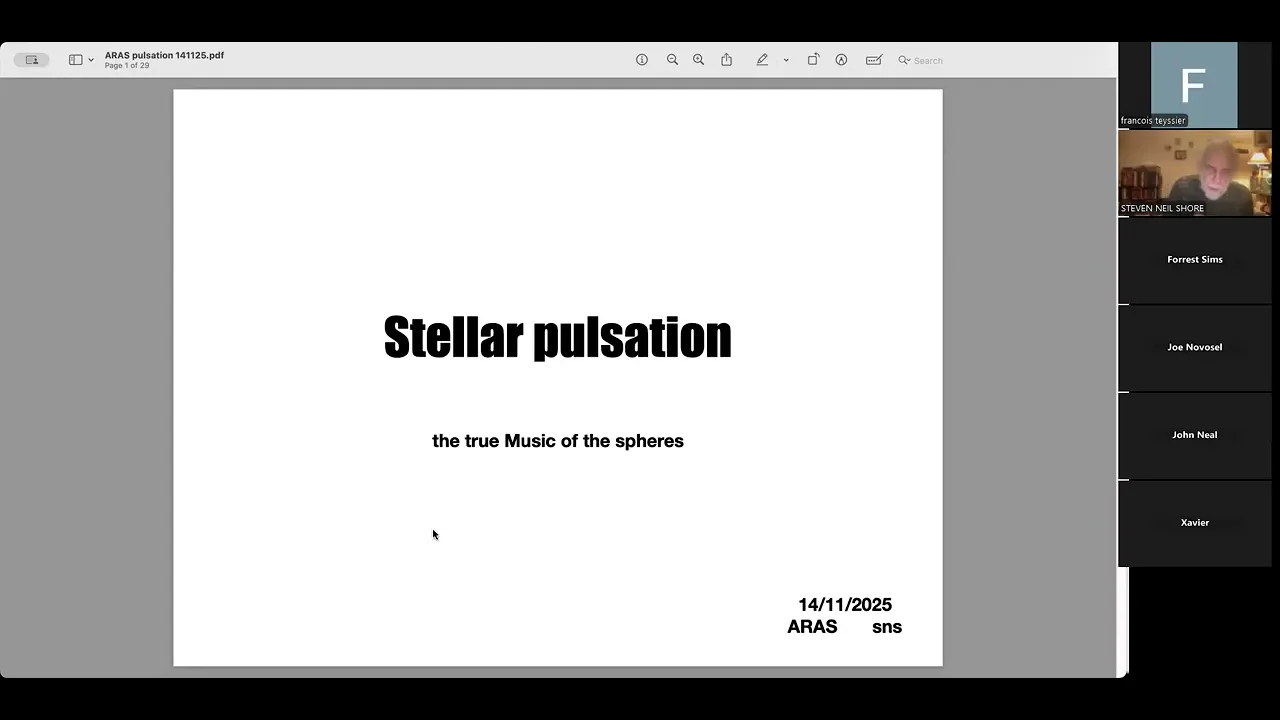
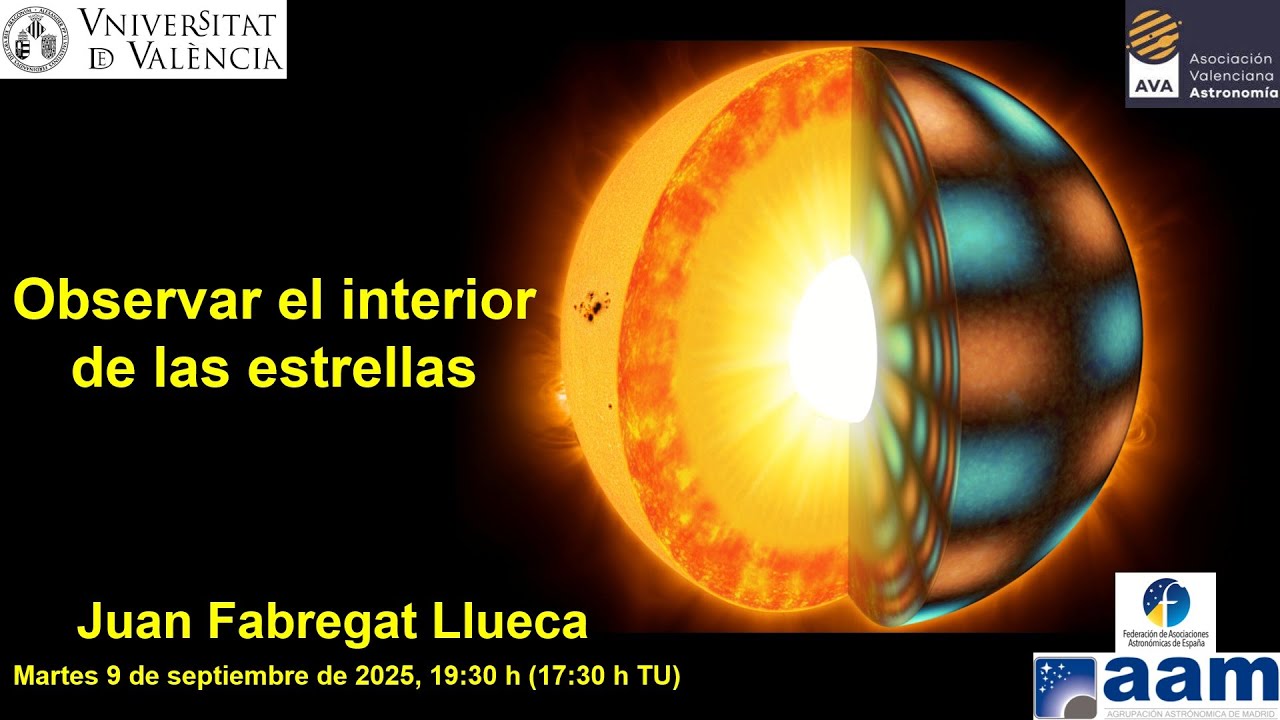

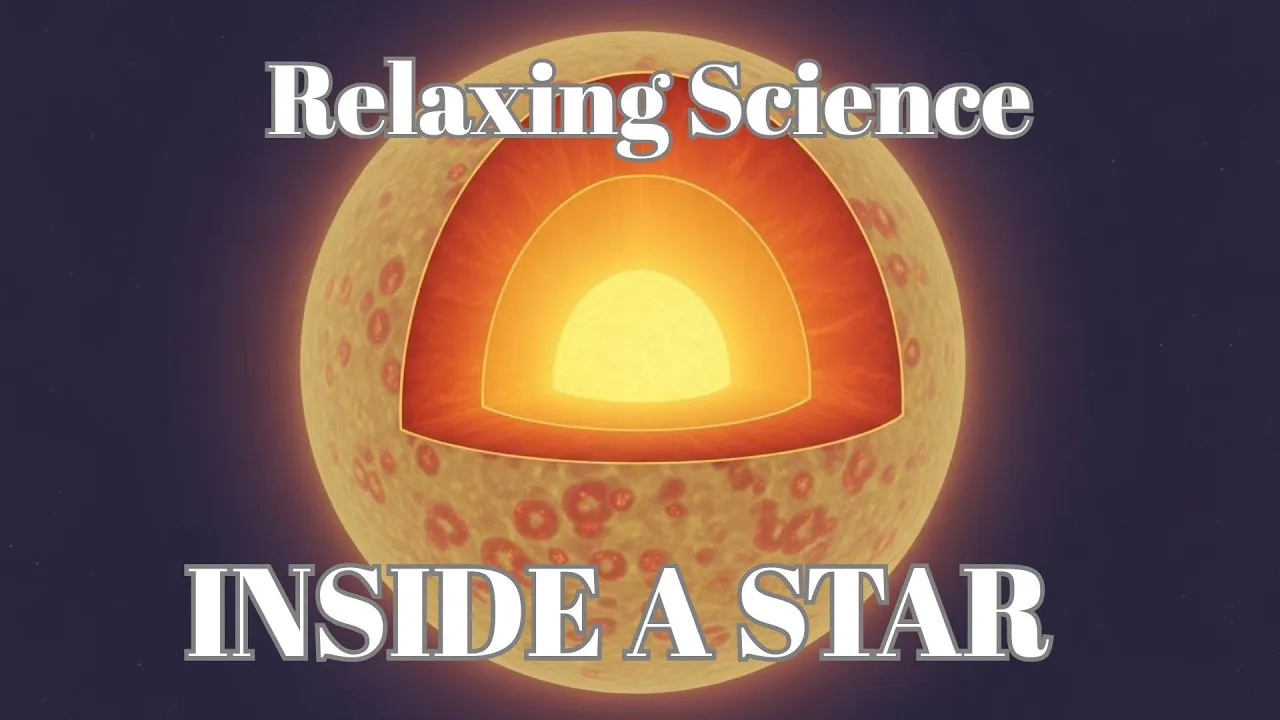








Asteroseismology is the study of stellar pulsations that allows astronomers to determine a star's age by analyzing the oscillation frequencies of its surface. By measuring how stars expand and contract (similar to how earthquakes reveal Earth's interior), scientists can probe the star's interior structure, composition, and remaining hydrogen fuel. This technique, pioneered with the Sun and extended to other stars using space missions like Kepler and TESS, has revolutionized our ability to determine stellar ages from 50% uncertainty to just a few percent precision, particularly for main-sequence stars where the frequency separation between oscillation modes reveals the star's core hydrogen abundance and evolutionary state.
Asteroseismology: How Stars Reveal Their Ages
Added:Basic stellar evolution and the Hertzsprung-Russell (H-R) diagram, specifically understanding the life cycles of stars from the main sequence to the red giant phase.
Fundamentals of wave mechanics, including acoustic waves (sound waves), resonance, standing waves, and frequency domains.
The Doppler effect and astronomical spectroscopy, which are essential for understanding how astronomers measure the tiny velocity shifts caused by stellar oscillations.
Stellar interior structure, including the concepts of convective and radiative zones where acoustic waves are generated and propagate.
Galactic Archaeology: Using precise asteroseismic stellar ages to reconstruct the formation history and chemical evolution of the Milky Way galaxy.
Exoplanetary Science: Applying host star asteroseismic data to accurately constrain the radius, mass, and age of orbiting exoplanets.
Helioseismology: Exploring the specific, highly-detailed study of our Sun's interior, including its internal rotation profile and magnetic cycle dynamics.
Advanced Stellar Modeling: Investigating how seismic data is used to refine theoretical models of internal mixing, angular momentum transport, and core physics.
32.7K views931likes56:54Original Release: 2024-09-11
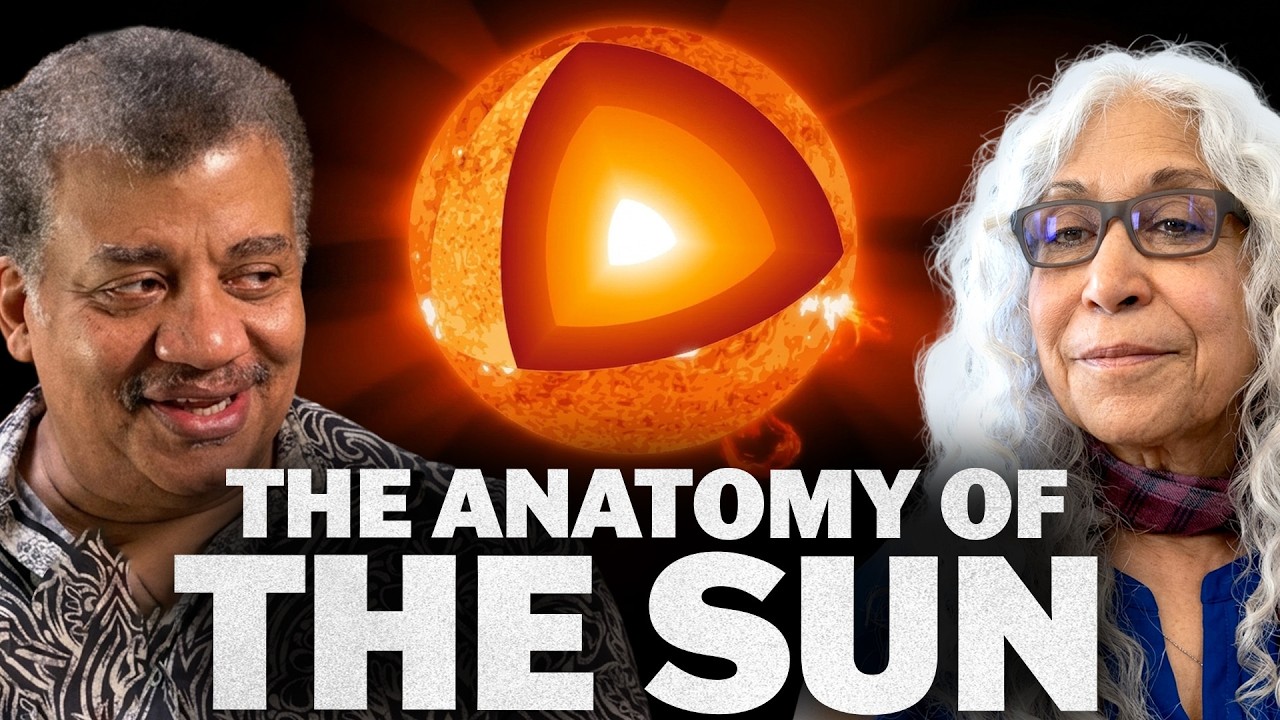
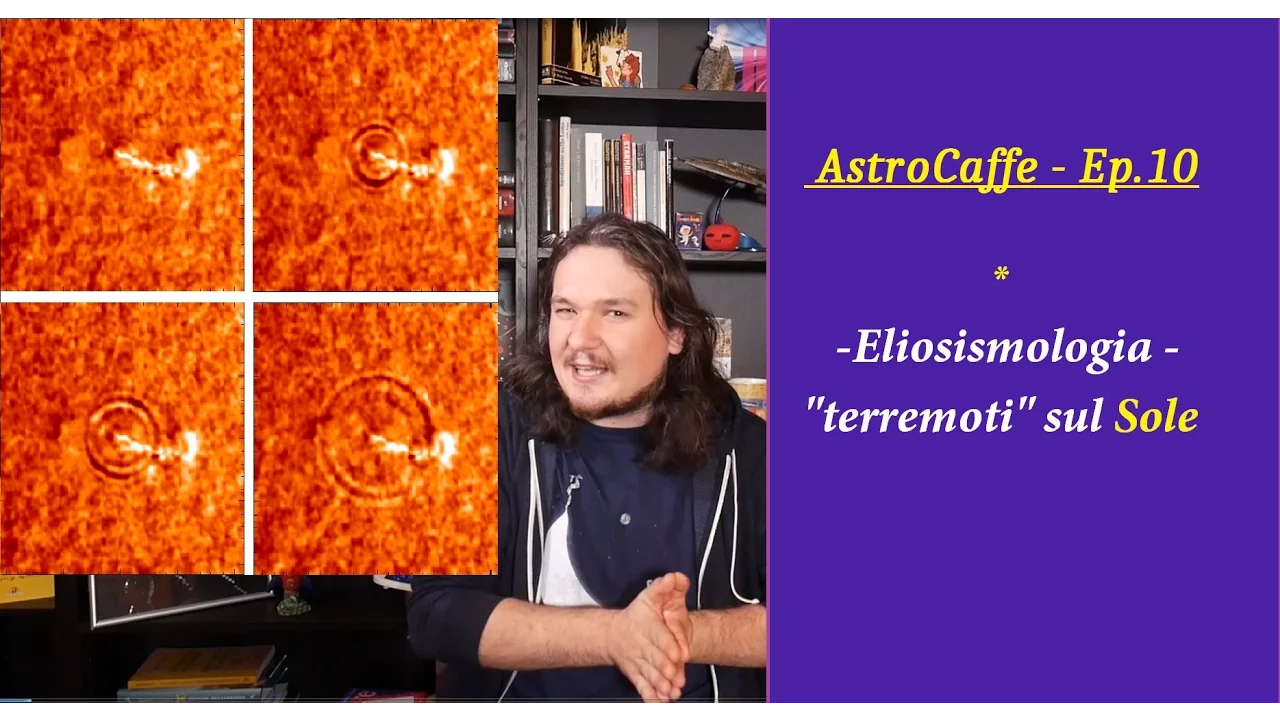
in a recent interview I casually mentioned that there had been a revolution in the ability for astronomers to determine the ages of stars using a technique called Astros seismology and after I we briefly talked about that and moved on uh a bunch of viewers wanted a lot more information and wanted an interview with somebody who specializes in Astros seismology well your wish is my command and so I looked for somebody who specializes in Astros seismology and had been publishing some work in this field and I think I got The Perfect guest so my guest today is Dr Mark hon he is a postdoctoral scholar works with the test group and MIT and he specializes in Astros seismology specifically he used this incredible new instrument on the kek observatory called the planet finder to measure the slight oscillations on a nearby K dwarf this is a star that is smaller less massive than the Sun and presumably going to be a lot longer lived and they're really interesting especially for the search for their habitability for life on planets orbiting around these stars and so he was able to measure the wiggles and jiggles on the surface of the star with Incredible precision and sort of there's a lot of really interesting implications for astronomy being able to determine our place in the universe the age of the Sun the composition compared to the age of of other stars when are some of those big red giants going to explode as Supernova this is the field of Astros seismology enjoy this interview Mark I've got a very Advanced audience uh they know a lot of stuff but we're going to spend our entire episode talking about Astros seismology today so let's sort of make sure everyone's on a sort of you know Common playing field here uh what is Astros seismology Astros seismology is the study of Stellar pulsations to learn about the interior and the Dynamics of stars itself so you can measure pulsations in Stars through a few different ways some of which the most popular right now are the variations in the intensity of light that we see from the Star as well as there's another approach which uses radial velocities you're actually measuring the contraction and the expansion of the star over time right okay um and when was this this pioneered when did we first realize that you can measure these these pulsations in stars and use that to get at useful information about the star well similar to a lot of what we've learned about space you know and other stars you know it all began with the sun you know we first started to measure the velocity at at at the surface of the Sun many decades ago and that's when you realized that the sun was actually showing these rather periodic variations at the five minute time scale is what we know now as the solar oscillation spectrum and from there you know the whole idea of he Helo seismology again and we started to learn a lot about the interior of our sun and it's only over the past decade or so that we've really been extending this knowledge of ours to other stars and we found out that other stars also pulsate well many other stars also pulsate in a similar way to our sun not all of them you know because how Stars pulsate is very dependent on say their mass or their composition for instance but there is a whole host of other stars that we call them solar likee oscillators that pulsate in a very similar fashion to our sun and that's because they share a similar kind of Stellar structure to some degree without Sun so let's imagine you could fly down to the sun with fireproof boots and you could stand on the surface of the sun which you can't it's a plasma but if you could now you mentioned that there are these sort of oscillations and pulsations so what would you see around you in terms of like altitude as the sun was going through just its normal regular pulsations well we like to car characteriz Stellar pulsations in terms of spherical harmonics you know these are the kind of mathematical tools that we use to describe the the uh the geometry or the patterns of these kinds of waves that propagate throughout the entirety of the star and we know for the Sun for instance that it doesn't pulsate in just a single what we call a pulsation mode so it doesn't pulsate in just one single uh geometry you know it's actually a superposition of all these other kinds of waves patn of modes on top of one another so if you were to be at the surface you would actually see if you could disentangle them you'd see you know just a superposition of all of these simultaneously and it's not it's not like you would actually see just are just slowly expanding and Contracting Inward and outward at want and go you'd see a lot of complicated activity complicated motion that's going on at the surface I mean would it be kind of like standing on the ocean in a place that's very chaotic like maybe there's you know it's in a bay and there's a lot of reflecting waves that are coming back and forth and so you've just got a lot of Chop on the on on the water I'm I'm sort of imagining though like would you see the surface of the Sun contract from you by 100 kilometers over the course of an hour and then come back up or would you just see much more minor variations and and ripples you would see much more minor variations well of course what we expect to see well if you could see them from these solar oscillations would be very subtle compared to other kinds of activity that you would see at the surface now because the surface of the star has convection going on you know you see a lot of bubbling and roiling you know these kinds of uh granular cells as we call them you know granulation at the surface as we call it and these would be a much more dominant signal that you would actually see at the surface compared to these more subtle and gentle oscillations I mean I think about say seate variables where you've got this star that is changing in size from something that is you know relatively compact to something that is engulfing the orbit of Mars within a couple of days and then going back down again and it's a very like you would absolutely just watch this star just disappear under your feet if you're standing on the surface so it's so it's nothing like that on on any kind of scale no no variables are much larger in amplitudes when we talk about their pulsations right okay okay and so then you know it is a fairly subtle change that's happening on the surface of the Sun so so how do astronomers measure this and tease away those other things that you talked about these prominences and flares and you know all of these activity that's going on on the surface of the Sun well for the sun in particular the the time time scale for which these variations happen are typically much faster compared to all the other kinds of activities that we talked about you know for instance you might get uh contributions from Star spots for instance and that you know that would come at a time scale that is comparable with the rotation rate of the sun which will be typically close to a month or so right so the pulsations that we talk about in the sun are at a 5 minute time scale so these are much much faster compared to some of the slower much larger contributions so that helps a lot in actually uh for us to actually dis entangle these these variation we just have to look at the part of the time series or the frequency spectrum that actually more or less corresponds to that area that we actually care about when we talk about pulsations but but are you like doing spectroscopy on the sun and then measuring the the red shift back and forth in this 5 minute interval or like what are you doing to actually say this part of the sun is oscillating at this rate at by this amount you're right you nailed that one we were actually doing spectroscopy and we're measuring the essentially the red shifts or the blue shifts of these spectral lines to measure these variations within the sun okay and so then what does this tell us about the interior of the Sun as well as other sort of features about the sun right so in terms of the sun because these oscillations These are what we call P modes right so the p stand for pressure because they're restoring Force within uh the convective envelope Resto sorry the restoring forces for these oscillation modes are pressure so these modes are excited within the convective en of the star and then it propagate globally itself so it tells you a lot about the Stellar interior in terms of the composition of the star and the density of the star and so on and so forth because you can imagine what's happening here these are acoustic waves that propagate within the Stellar envelope so how fast these waves actually travel within the envelope tells you a lot about the interior sound speed of the star and correspondingly the the density of the star itself so to first order these oscillation modes can tell you a lot about the mean Stellar density and on top of that you have not just one type of pulsation modes you know as I've talked about before that the oscillation modes within this within the Sun and other solarik stars these comprise a superposition of different kinds of modes in particular and different modes can penetrate up to different depths so they propagate up to different depths within the convective envelope they they eventually reach a turning point and then they move travel back out to the surface and what this tells you is that if you measure the properties of individual modes you can learn more about the Deep interior of the Star as opposed to just learning about a broad Cellar quantity like the mean density of the star now but I mean like people are probably very familiar with seismology here on Earth and it's a very similar process you get an earthquake the earthquake causes waves to pass through the Earth you measure the refraction the reflection you measure how those waves change as they move through the Earth and that allows you to sort of probe the interior of the Earth the source are the earthquakes what is the source of the Waves these waves on the sun it is convection energy transport so when you have convection that's bubbling or you know roiling around within the the envelope of the star you have these small small pertubations to the Stellar structure you have these small density changes and that will trigger these these waves that eventually propagate all the way out to the surface itself it's the same thing as seate variables it's some instability in the structure you know that typically causes these uh waves to eventually propagate all the way out huh the mechanisms are not the same sorry I just talked about seate but I do have to say that the mechanism between the solar like star and seate are very different but the origin fundamentally it's an instability in or perturbation in Cellar structure but I kind of Imagine like you put water like a little bit of water on on a stove and you let it boil and you get these you get these little convection cells that are down in the bottom of your of your pan and they're popping up and you know spraying water up into the air if if that's the sun these as these convection cells are rising through the sun they're causing waves as they reach to the surface and release energy they're causing waves and so the measurements that you make of the surface of the Sun is sort of the sum of all of this convection that's going on across the entire solar surface that's right yeah wow that's really interesting okay so I guess this is how you you know we know this is me how we measure we know what's causing it but what does this tell you about say the age of the sun yeah and I think at this point it's good to talk about how we measure ages of stars yeah so there is in the past right like like measuring ages of stars was was such a tough such a rough thing to do in the past but yeah absolutely it is still a hard thing to do now you know it's arguably it's the most difficult measurement that you can actually do in Stellar astrophysics right it's something that everyone wants to know about what is the age of this star etc etc but you know ultimately a difficult Endeavor and it's not something you can do currently we can do currently without Stellar models so these would be you know synthetic uh synthetic models you know we we basically simulate what a profile of the star would be like you know you take your Stellar Evolution code something like Mesa models for style astrophysics in particular and then you basically simulate the evolution of a star you Sim you simulate the profile the density profile or the chemical profile of a star that's evolving along the main sequence and You observe its time uh time Evolution typically and you do this for a whole bunch of different initial conditions you know you vary your mass you vary your chemical composition and then you use those as a reference point because for every Stellar model that you generate you have also a ser Ser of observable properties you know you have the temperature of the the model you would have say its metallicity and so on and so forth so you take these output observables that you get from Stellar models and then you compare it to your observations and you ask okay I see I have measurements of this particular star it's maybe like 5,000 Kelvin in temperature it's kind of luminous maybe it's like 10 solar luminosities and then you use that you compare it to your grid of models and then you add ask okay is this uh a model with this age does it have more or less the same observables as what I observe and that is how we do it how we attribute an age to an observe star you know you use models for comparison so it's the same thing that we do effectively with Astros seismology except now that we have much more information about the star itself you know because we have the size information you can effectively for for sunlike stars for stars that pulsate like sun or what we call them solar like oscillators you know we can ALS uh we can learn about the mean density the surface gravity and to some extent for a for stars lower in the main sequence you can also learn about what is the roughly the central hydrogen abundance remaining within the the core itself and you can use that additional bits of information to constrain your models much more effectively as opposed to previously when you did not have that information you just had say temperatur ofos so it is the availability of this additional information that seismology can provide that that's really what people talk about when we say oh you know we getting an Astros seismic age for instance right right well give me a sense of the of the air bars pre- Astros seismology if you did as much as you could to understand a star and you had to guess the age of the star but you couldn't use Astros seismology what is your plus or minus range on a star typically so pre Astros seismology I believe that the best ages that we could have obtained would be if you had say an open cluster you know if you have an open cluster of stars these are all uh right assumed to be born at the same time from the same molecular Cloud so it has the same composition and you take the whole population of stars and you try to fit an isochrone to it and then you you know because they're all you can they're all coeval you can roughly find an isochrone with a very precise turnoff age you know this is when the star exhausts hydrogen and starts to evolve into a red giant so you can roughly fit that feature very well in isochron and you can get I don't remember the exact for that one it was probably up the order of 10% or even smaller you can do that very well but the problem with the previous approach was that it had to be stars that are coeval that you can't do this for any arbitrary field star you know and so now if you try to do this for say random field stars say a red giant in the field it's not tied to any known population you can say that the error bars would be like 40 50% just using chemistry or just using the star's chemical abundances and you know it's Luminosity for instance right right like if if I showed you just some random sunlike star it could be off by 50% you could say well this star might be two billion years old and this star might be I don't know five billion years old like it's huge the range yeah yeah that's right and and yet if I could sort of slice it open like a watermelon and you could look at the internal structure of it you could come with with a much better estimate and is that you know you mentioned sort of the reserves of of hydrogen is that is that sort of what you're looking for is is how much of its interior fuel it's used up in its core ah so that applies mainly to dwarf stars so stars that are still on the main sequence you know like our sun you know it's still it's still burning hydrogen so when the star is still on the main sequence what happens is that if you can measure what we called uh the quadruple oscillation modes so to back things up a bit you know when we talk about uh these pulsation modes for the Sun and other sunlike stars you know we we talked about spherical harmonics you know we we characterize the the geometry according to spherical harmonics and then you have radial modes you know which means that the star just pulsates inwards and outwards you know like seates you typically have radial oscillations and then you would have these dipole modes which would Corr respond to a different kind of geometry of pulsation so if you think of a the star as a sphere you can have it like being elongated up and so on and so forth like that and then you also have a a quad quadruple mode of oscillation which is you know a bit more convoluted but you know it's probably more like a almost like horizontal pertubation at most but this is something that's well characterized by spherical harmonics but to put it more concisely we characterize the oscillation modes in sunlike Stars typically through the radial mode the dipole mode and the quadruple modes itself so these correspond to different waves that propagate up to different levels within the interior of the star and what we normally do in in as seismology is to look at to look at frequency differences between each of these individual oscillation modes that will tell you things about the The Sound Speed within the interior or the gradient of the Sound Speed within the interior of the Star as well so it turns out for dwarf stars stars that are still burning hydrogen along the main sequence these frequency differences that we calculate say between the radial and the quadruple mode for instance it gives you a very powerful tool for investigating the gradient of the sounde within the star and that this in particular is sensitive to how much hydrogen is still burning within the interior of the star and so we like to measure the ages of stars uh on the main sequence as its main sequence lifetime Al so typically how much hydrogen left it has left rather in its core before you know it starts to turn off evolve into a subg and become a red giant itself and so the whole point of this is to say that if you can measure the this particular quantity this frequency separation that tells you that is sensitive rather to how much hydrogen is left on on uh in the star along the main sequence you can determine the ages of dwarf stars fairly accurately right right so if I showed you a star and it was actually the Sun but I didn't tell you and said look at this star look at the harmonic data of this star how closely could you measure the you know how accurate could you predict the age of this star of this yellow dwarf star I would say fairly precisely if we have uh other complimentary data on it as well all the data all the data you want especially the Astros seismology data yeah I say that we can do a very good job at estimating because well it's a bit maybe it's a bit of a 100 million years within a couple of billion years like I'm trying to you know we know it's whatever 4.5 billion years old what number what bars would you give Mees but I would say up to a few percent for sure wow right so so so improved from 50% to a couple of percent yeah but actually you know it's it might be a bit circular now that you think about it now that you mentioned if you want to go back at this and measure the age of the the sun U using Astros seismology because ultimately all our models right now they are they typically are calibrated to the Sun so you know we want to have you know we want to have something with sunlike observables that's actually corresponding to the age of the sun then about four G years or so right so ultimately I guess the question here would be for other dwarf stars that we see you know we have models that are calibrated to the sun given that these These are solar calibrated models what is the Precision if we were to try to estimate the ages of other sunlight Stars yeah yeah I mean I mean obviously there are other models I mean you mentioned the the Clusters I mean the Clusters give you the best comparison and and then there's going to be models from those cluster stars and then you can sort of compare and contrast those versus the Sun and I'm I'm sure it's this ever evolving field as people learn more you know new simulations more models get better and better accuracy as you go obviously I ideally you would collect meteorites from other star systems with stars and then and then that would be amazing if we could do that yeah yeah yeah the next om would have passed through if we know what star system it came from that would be very helpful well we can hope from something from alasen potentially yeah that would be great yeah some some someone finds a meteorite on the surface of the Earth and it turns out it came from alpha centari that would be phenomenal um uh okay so let's talk about now the technique so like what now we've got this technique this estros seismology that's been pioneered um and a telescope we've heard a lot of that's doing a lot of interesting work is the test mission which is searching for exoplanets so how is it helping in seismology work well the test mission is effectively looking across the entire Sky it's performing photometry so it's staring at millions or you know hundreds of millions of stars and it's basically just giving us continuous uninterrupted light curves and what we call light curves here are simply just time resolve measurements of the intensity of light that's coming from Stars itself okay so perhaps at this point it's good to contrast this or to back things up a bit because we first talked about Helio seismology and collecting Spectra and you know measuring red shifts and blue shifts so that's one way I would say perhaps the traditional way or how how we've done uh measurements or we discovered oscillations in the sun you know it's basically through velocity measurements but there's a second way of how we could actually measure these oscillations which is through intensity measurements so while one approach the first approach uses velocity you know the red shift and blue shift this one here we're actually looking at how light intensity of the light changes as a function of time because as the star expands and contracts right you know it's you think of this as this giant ballos spere expanding in and Contracting you know it's you L have a change in the temperature of the Star as it expands right when it expands cools down a bit and when it contracts heats up a bit as well and that will change the the total amount of light that's actually being emitted at any given point so if you have a photometer that's staring at a star just collecting photons from it over time you would see the same sort of variation that you actually would expect to see based off the velocity uh from variations in velocity there is some phase difference between them but you know that's a bit going into the technical side but back to the point this is the second approach that we've been doing to measure to measure oscillations and we've done this in the past with space missions uh from the European Coro Mission as well as the Kepler Mission from NASA which is also another exop planet hunting Mission now why why a space mission why we can't actually do this from the ground well it's because of the atmosphere you know the atmosphere makes it incredibly difficult to collect extremely precise measurements because early on in this interview we we did mention about how subtle these variations are you you need to have extremely precise measurements to actually capture these variations in stars like of sun you know for sep probably it's fine it's okay you can probably just take these groundbased surveys and you can observe these gigantic variations in light that's coming from there for the Sun and other sunlike stars you have to really rely on Precision photometry so with space missions you know it began with cor you know we we first started to observe these pulsations in mainly in more evolved stars because there's a trend that goes uh in such a way that if you have a star that's more evolved like a red giant if it's bigger it tends to have pulsations that are more violent so larger in amplitude so because these space missions gave us continuous uninterrupted photometry we could really resolve these pulsations really nicely but the feel of Astros seismology in general really was revolutionized from the Kepler Mission because it was such an amazing precise photometer and you know it said only one patch of dis SKU it looked at roughly like 200,000 stars but its Precision was Exquisite it observe faint stars but it gave us four years of uninterrupted observations you know and because we deal a lot with frequency information that's coming from these Stars you know we want you know data that's homogeneous and un and as uninterrupted as possible and the Kepler Mission truly delivered on that front it gave us Exquisite data extremely precise in terms of its frequency resolution and it opened up so much for us in our understanding of solar like oscillators itself we've discovered so much information within say the the mechanisms of dwarf stars of uh the evolution of angular momentum in dwarf stars of magnetism in giant stars for instance as well and it is a gift that keeps on giving even to even till today you know the capital Mission has been retired for many years now many of us in the community are still digging into the data still finding new bits of information to tease out in itself is it like the the pre like with Kepler of the loss of reaction we and had to change the nature of the mission so you've got like a Year's worth of the pre- damage and then the post when they did the sort of follow-on methodology of using light pressure from the Sun to balance the telescope is there a difference in that in those data like do you prefer the pre or the post well definitely the pre so in this case I I assume you mean that you know before the reaction wheel got busted right yeah yeah absolutely I think it's it was pre you know during the Prime mission that's when we got the best data right because during the second life mission or K2 as we call it you know you had all these other uh systematics in your data to consider for instance there was this whole thrust of firing that had to occur every was it day or two but you every every very regularly you had to reorient you know the the telescope itself and that introduced a lot of artifacts and systematics into your into the data collection process that was quite tough to handle but people still managed yeah yeah it's so it it makes me so sad that I mean that was the spacecraft that would have found us another Earth it was and then it wasn't able to complete that mission and so here we are as you say you know close to 20 years since that mission launched and yet still we don't have that answer and we're going to have to wait for some future mission to probably Plato to to get us that that answer so somewhere along the horizon so I think yeah perhaps we don't have to wait that long so what is the I guess what is the Forefront what is the sort of Leading Edge of of this technique now of using ASR seismology to understand the the ages of stars and and sort of what's going on on their surface um I sort of think about say exoplanetary search people who are searching using the radial velocity method you know the the state-ofthe-art is 50 cm per second but they're trying to bring it down to the point that they can actually start to detect the influence of say an earth-sized World orbiting around a sunl star and that's going to require 10 so so where are you at now and sort of the kinds of objects that you can observe you can get really useful information on and what's the stuff that's kind of a dream right now with with the current Suite of instruments well in terms of this Precision you know Stellar astrophysics of say cool Stars by cool I mean like dwarf stars and red giant I would say that you know Kepler was and is still the state-ofthe-art in just delivering the best data that we can in terms of large scale studies involving Astros seismology uh would you would have to say that it is tests you know I've talked a lot about Kepler in that past block that I was talking about but you know Tess really shines in being an all Sky Mission and it's enabling a lot of different kinds of science that we haven't really been able to do with the Kepler Mission so one example here is the asra seismology of say more massive stars because the Kepler Mission you know had limited bandwidth it could not look at could not collect and down link data of any type of star they only had to go through a very careful Target selection process and this meant ignoring a lot of very other uh other interesting stars that would been very interesting as well and these include like the the OB type Stars the a type Stars these are hotter more massive they're interesting in their own regard but probably just not planet that not that interesting of a planet host that's why they weren't selected for the Prime mission but test doesn't have that distinction right it's just looking across the entire sky and because of that it's really right now it's the mission that's giving uh these folks who study these more massive stars the the state-of-the-art information in terms of you know what you can actually reveal about the Interiors of these more massive stars itself so that's uh basically trading off one small patch of Sky versus observing everything across the entire Sky itself and so back to that that example that I gave you earlier if I showed you this this star we're going to call it the Sun and I asked you to sort of guess the age of that thing what what is an object like a smaller object a dwarf that I could provide you and you would just go I've got nothing like where are we at now where you just like if I showed you a k dwarf would you be able to tell me the age if I showed you an M dwarf would you be able to to tell me the age of it at what point does the sort of the observations outstrip our our ability to to make them well we have model predictions of what these very low mass stars should produce in terms of SAR pulsations it's really the observations that are currently in that we are currently lacking in terms of not being able to observe something as small as a like a really really cool K dwarf for instance so I'm still ready to be surprised you know there could be an object out there that's just completely baffling that doesn't conform to what we understand about Stellar Evolution and there definitely will be things that pop out every now and then in the data that it just constantly demands our attention that you know we re revisit some aspects of our understanding of Stellar Evolution but I mean there's this I mean there's a real controversy right now about the habitability of planets around M dorfs and you know the the assumption is is that in that first billion years or so they're just getting hammered by solar flares and activity from from the Star and yet if you could sort of reach a little bit after that then maybe things can can settle down but if you could with Precision know the age of a star you could know whether or not like really when that activity is is settling down how long have those planets been there for I mean there's a lot of really useful information and the cave dwars are even more interesting I mean they're less massed in the sun they're probably going to live for whatever 70 billion years um and they're not as awful in the early phase as the as the M dorfs are so there's a lot of really interesting science questions that I'm sure you you might must have so so let's get to the good part now which is what's it going to take so right now I mean you're using archival data from Kepler you're using uh test to do job that it wasn't primarily intended although I'm sure that was built into the requirements at the same time what's it going to take what would be your your dream instrument to be able to actually perform the level of Astros seismology that would get you all your answers yeah it's a great question because there are recent developments that are that's really starting to bridge this gap between what we have done and what we are able to do in the future so there was a paper that I recently published that talked about using this new instrument up on up in Hawaii on Mount AA Observatory it's called the the kek planet finder and as the name implies you know it's a it's a radial velocity tool it's an extreme Precision radial velocity tool that's meant to uh By Design it's meant to detect these really small planets perhaps like an earthlike planet around these nearby Stars itself you know so it has an Exquisite precision and and in principle it's able to reach a Precision level that no other instrument has in the past in terms of radial velocities but as we've talked about as well previously we we also know that the pulsations of dwarf stars they tend to be much more low in amplitude they tend to be much more gentle as you move to smaller low mass stars like K dwars and so because of that we could use this instrument this kek planet finder and try to measure oscillations velocity variations at the surface of K dwarfs and this is exactly what we've done in this paper that I published we did we did this for this nearby star called Sigma draconus or alafi which is star that's six six parex away so it's very close one of the nearest neighbors to the sun itself and it's one of the favorites among the the folks who you observing because you know it's a naked eye star it's really bright it's Fourth magnitude and there's a lot that's tons of archival data in the past just people have been looking staring at it with radio velocity measurements for a long long time but in any case because it's this instrument that we have now is so sensitive to variations in radial velocity you could effectively just point the instrument and collect data from this star sigat tronus over the span of a night and look at the variations in velocity and that is exactly what we did we just collected data across seven hours just one night of observations and lo and behold the oscillations were there just right there in the data itself it it sticks out it's it's so obvious that there's pulsations at roughly a 5 minute time scale and these are these show these very similar characteristics to the to the solar oscillation Spectrum itself it was a beautiful data set that we have collected with just one item so it it turns out that other stars do what the sun does you you're you've now confirmed can confirm well well we've known this for a long time right it's as long as it's relatively low mass it has a convective envelope anything that has a convective envelope will have these stochastically excited pulsations which are similar to that of the sun now this was as said it's a naked ey star it's the it's one of the most sophisticated instruments on Earth and it was able to give you this really pristine data on this one star but how but but how do we survey this how do we Gaia this how do we get accurate you know data on a million stars simultaneously that would be useful right if I could give you a catalog gave you all the extra seismology data on a million stars like you know if you could do queries on it like Gaia yeah would that be helpful so I think you've hit the nail on the head there about why also photometry using space missions is much more catalog if that's even a word as you as you Tred to phrase it uh compared to these radial velocity measurements you know because these radial velocity measurements are done from the ground and they often have to focus on a single Target through throughout the N it's very resource intensive whereas you have if you have a space photometer you just have this camera that's out there in space it's just observing millions of stars simultaneously so you instantly have this whole bulk volume of data you know as opposed to radial velocity measurements like we've done that's much more Boutique you know it's very focused on single single Target at a time but maybe to extend this into the future you know if we could have something that could do these RV measurements simultaneously it would be excellent it would be amazing for the field right because if effectively right now we have quantity versus quality because right now with the extreme Precision radial velocity instrument we are definitely pushing the boundaries of of uh which stars we can actually detect these pulsations and in extension determine their age because I have to say this uh what we show in the paper about met conus is that you can actually see the same pulsations within the photometry from tests however it is at the very limit of detectability it's it's really difficult to see because well it's you know pulsations are really small and of course test has a limit in terms of the sensitivity of the variations that it can pick up these variations that we see in test correspond to corresponding to the oscillations are at at an amplitude of roughly only one part per million so you can imagine that is such a small fractional variation in the star that we are measuring in tests and so that's really hard to spot in the test data but if you just look at the radial velocity data it sticks out like a sore thumb there's no way you can miss it in its entirety but I mean up until this point the best photometry the best Astros seismology observations have been done using Planet hunting surveys if you were to design a mission like will it always be the case will you have to pull your data from existing planetary surveys because essentially the science case is almost identical that a better Planet Hunter is going to turn into a is going to provide a better astroid mology or is there a place where you could diverge you could imagine designing an instrument or a mission that is fantastic at doing Astros seismology but actually isn't that useful for Planet hunting or will they always be the same tool and one is you know the I don't know one is the charismatic megap the the planet Hunter the thing that finds is Earth 2.0 the one that tells us whether or not we're alone in the universe and then there's the the other instrument that is you know trying to measure the the yeah that's a really great great question you know it's it's because we have such a such a huge Synergy with the exoplanet community in terms of you know just wanting precise light Curves in itself you know just wanting something that can really pick out variations that are extremely tiny but I I suppose where we would differ mainly would be in terms of Target selection right because the exoplanet people would certainly want to Target Planet hosts that hosts planets that are interesting to their science case you know which which stars are more likely to know Harbor rocky planets for instance or gas giant and so on and so forth whereas the Stellar Community would of course tend to focus more on just the kind of it will be guided more by the Stellar astrophysics itself Where Are we more likely to find um populations of stars that have very interesting characteristics or weird things going on within the interior that just typical boring sunlike Stars don't have but I wonder is it like is it about the duration that you're pointing is it the wavelengths that you're looking at is it like is there anything that differs between the needs of the of the planet exoplanet community and the Astros seismology Community or is it the exact same telescope is exact same mission that you will always be sort of working together well in terms of duration for instance We Care in the Astros seismic Community we care a lot about just how long you want your observations to be and to some extent you can argue that the exoplanet Community also um cares about the duration of this because you know the more transits you get for instance you get a higher signal to noise and you can potentially also detect longer period planets but for us in the Astros seismic Community it is much more uh about the resolution of the frequenc individual frequencies that you can actually collect as well so yeah yeah that's one particular requirement I like H I wonder if I'm like asking my question properly um like I just sort of imagine if if NASA came to you and said we just want to build an Astros seismology Mission we don't care about a planet Hunter and and this may be rendered unusable for people who have any interest in in using this instrument to look for planets would there be a a mission or is it just is it just it it's exactly the same tool that what the the plan Hunters require this is an interesting question right because some of the some of my European colleagues you know have thought about this and been trying to pitch for a mission in in the distant future that actually does this kind of thing right you just have a mission that's dedicated to astr seismology you just take this precise photometer and you just stare at this Stellar population you know something that's very interesting from a stellar astrophysics perspective this this would be typically something like a an old globular cluster where we really trying to disentangle Stellar Evolution and you can stare at something like something like 47 tuck or or like a dwarf Galaxy for instance and you just want to disentangle and reveal all the different kinds of information that's within different parts of the Stellar population itself so there we don't really care about the planets we care more just about the variation seen across all St of Stellar Evolution now in terms of the specifics for the instrumentation I'm not sure that there would be much of a difference because we ultimately still want very precise light curves but in ter in terms of wavelength coverage as well um not too familiar with what the planet people would like across different wavelengths but I can say in terms of the astris mology that we would love to have the uh different wavelength coverage say if we have something in the red and something in the blue uh separately as opposed to what we've had now which is basically only information that collected in the optical so we only had Broadband photometry for everything so far and we know theoretically that there should be some differences between the say oscillation amplitudes that we measure in the red versus in the blue and this will allow us to do some really really interesting physics with these oscillation W that we can actually see as well and we haven't had the ability to do that yet that would be really cool to have in the future yeah I mean like the targets for sure I could imagine a mission that's just designed to look at one globular cluster one dwarf Galaxy as you say but of course you can imagine you're staring at 47 tuck for three years continuously doing photometry on every Star in the in this cluster and the the exop planetary folks who be say can we look at that data right because I'm sure there' be some interesting Planet data in there as well so I so yeah I it wouldn't be their primary target that they would want to look at you know they're not the best places to look for planets you wouldn't want to necessarily live inside a globular cluster but still there would be really useful you know interesting variations I mean they detected planets in globular clusters that would be a pretty fascinating science Discovery as well so no I think I think you folks are are inextricably tied together forever um Fates are intertwined for sure yeah totally totally yeah I can't I can't imagine anyone going like we're going to make we're going to build this Mission and it's going to have a photometry component it's going to have a planetary component I can't imagine anybody ever coming up with anything apart from that because as I said you know the the Planet Hunters that's the that's the that's the that's the thing that gets the the news the buzz uh I do a lot more stories on on exoplanet hunting than I do on Astros cesm um so Mark what are you obsessed with right now currently what I'm obsessed about is truly diving into the test mission right because it is a treasure Trove of so many interesting phenomena you know we have now access to information seismic information across the entire sky and this is revealing some really really interesting and weird objects for instance um like you have planets that perhaps shouldn't really exist around systems like planets existing around giant Stars you have really old stars that have come wanding into our solar neighborhood and now we're trying to investigate you know how these stars came about what we call this is galactic archaeology trying to understand the formation history of our galaxy in particular and so what's been keeping me hard at work right now is just understanding where all these different Pieces come together you know uh playing I like to liken this to playing a stellar detective you know because what happens now is that you find a weird object you know it's really weird it shows some interesting seismic information and then now you go back and look at all the historical archival data because test looks at mainly near by bright stars and these stars have had perhaps Decades of Investigations been done done by different groups so now you can look back go back and see what people all the different information that people have collected from it in the past is it historically known as a weird object if it is and now you have seismic information that makes it doubly interesting in particular right so it's uh it's it's been a lot of fun I have to say yeah yeah like anomaly hunting in test data exactly and it's giving us the ability to learn about so much more than we've had in the past but when I think about the observations that you made with kek compared like Tess is just giving you the faintest hint that something weird is going on with this star compared to the really precise data that you're getting from something like like kek so so what's the weirdest thing that you've seen what's something that you still are are pretty puzzled and confused over what's an anomaly in the data so in last year I put out a paper that talked about this particular Giant star it's called Eight Ursa Minor and it is a star that through seismic means we have determined that it should have once expanded to a really large size before reaching the tip of the red giant Branch you know where it becomes like maybe 100 solar radius and size gigantic before now it's in the quiescent core helium rning phase so it should be a much smaller Star as it is right now so that would be fine and dandy if it weren't for the fact that we seem to have uh detected the ongoing presence of a close-in planet around this particular Red Giant star this is a this is a planet that by all means should have been engulfed in the past but it still remains today despite despite the fact that Stellar Evolution has dictated that this star has blown up in the past and engulf this this star had blown up and engulf the planet so I remember this story yeah yeah so so this planet spent some time inside the envelope of the star and survived we don't think it had actually been engulfed at some point because all the simulations that we've ran indicated that you know if at some point the planet was engulfed it just should have just spiraled into it there was no way it would have survived engulfment so how did this star actually get from the giant Branch phase to the core helium burning phase without actually swallowing up this planet it's it's kind of an open mystery to at this point we have some theory about how this might have happened based on this simulation but further followup is clearly needed to confirm this yeah that's really cool uh one last question for you when is BJ juice going to explode oh wow that's a really tough question Beetlejuice is such a Hot Topic right now I know I want to say I would love to say you know within our lifetimes but I would have to say in a 100 Mega years oh that might be a hot take 100 meay years 100 million years perhaps even shorter few few few million years maybe so we so we might might need a robot body then with don't quote me on that you know I'm just spitballing number right now but I know people would love to know that you know be is going to explode in like a decade or so light up the sky yeah that would be great it would be a GameChanger if we actually saw it go off well Mark that was super fun thank you so much for your time and thank you for providing this this in-depth explainer on this really interesting topic I hope you enjoyed this interview with Dr markon and this filled in a lot of the missing pieces in your understanding of Astros seismology now I'm going to give you some of my thoughts and feedback but first first I'd like to thank our patrons thanks to Abe Kingston Adam Schaefer Barry Lake Roofing David Gildan David matz Dennis elberty Dustin cable Jeremy murn Jim Burke Jordan young Josh Schultz Paul robot spiders swap. Steven kraki Steven fer Munley and Vlad chiplin who support us at the master of the universe level and all our other supporters on patreon so the interview that I was talking about was with Dr Gerard vanell and it's sort of the previous interview on the channel and we'll put a link in the show notes you can go and listen to that interview if you want and in that interview we sort of talked about how there's been this revolution in Astros seismology and it really is just kind of amazing what astronomers are able to do when they are able to measure these subtle variations on the surface of a star to determine the interior composition and the age of the star and a lot of other really useful information but as you can see this is one of those fields that were just in the infancy really this level of clarity has only come from Kepler which died too soon and then the work with Tess which is a an incredible Mission but not sort of at the same scale and budget and Optics that Kepler had and so really all this incredible Headway has been made without a real Flagship Mission being able to do the kind of work that could produce that enormous survey the Gaia for Astros seismology and yet we've got the upcoming Plato Mission that's going to be doing a lot of this kind of work and other telescopes that are still being dreamed of by astronomers so if there's one field that we've been able to watch is go from its infancy to its young age now and hopefully we'll move on to its maturity and give us a lot of really incredible scientific discoveries it's Astros seismology all right hope you enjoyed this interview thank you everybody who asked for this interview I'm happy to provide we'll see you next time
Up Next

29:10
Ensemble Asteroseismology, Clusters, and Scaling Laws
@ompvideo
258 views•2014-10-21
61:17
First Billion Years of the Universe with the Square Kilometre Array
@iaaudc
121 views•2022-05-26
58:49
Cosmic Dark Ages Explained: 21cm Line & Moon Telescope Research
@frasercain
26.7K views•2025-07-07
6:10
Gamma-Ray Bursts: Cosmic Snipers Explained | Astronomy
@kurzgesagt
15M views•2016-07-31
Related Study Plans & Knowledge Roadmaps
Structured learning paths in Astronomy
astronomy
Reionization: Pop III Stars, IGM & 21cm Line
01Foundations of Cosmology & the Early Universe
02Population III Stars & Cosmic Dawn
03Physical Mechanisms of Reionization
+ 2 more learning modules
17h5 modules
Explore Roadmap
astronomy
Planetary Rings: Dynamics, Roche & Resonances
01Foundations of Gravity and Orbital Mechanics
02Tidal Forces and the Roche Limit
03Structure, Composition, and Collisions
+ 2 more learning modules
10h5 modules
Explore Roadmap
astronomy
Asteroseismology: Stellar Waves, Ages & Cores
01Foundations of Stellar Astrophysics & Wave Mechanics
02Stellar Oscillation Modes: P-modes and G-modes
03Mathematical Framework of Asteroseismology
+ 2 more learning modules
35h5 modules
Explore Roadmap
astronomy
Adaptive Optics: Physics, Engineering & Control
01Foundations of Wave Optics and Wavefronts
02Atmospheric Turbulence & Optical Distortion
03Wavefront Sensing Technologies
+ 3 more learning modules
35h6 modules
Explore Roadmap