











![[Astrophysique] Des vitesses stellaires mesurées en 3D pour la première fois dans une galaxie naine](https://i.ytimg.com/vi/k-lIOdGhe1k/maxresdefault.jpg)



![[20] Alternatives to Dark Matter 1 by Dr. Federico Lelli (Cardiff University)](https://i.ytimg.com/vi/oSeBfO9njyM/maxresdefault.jpg)
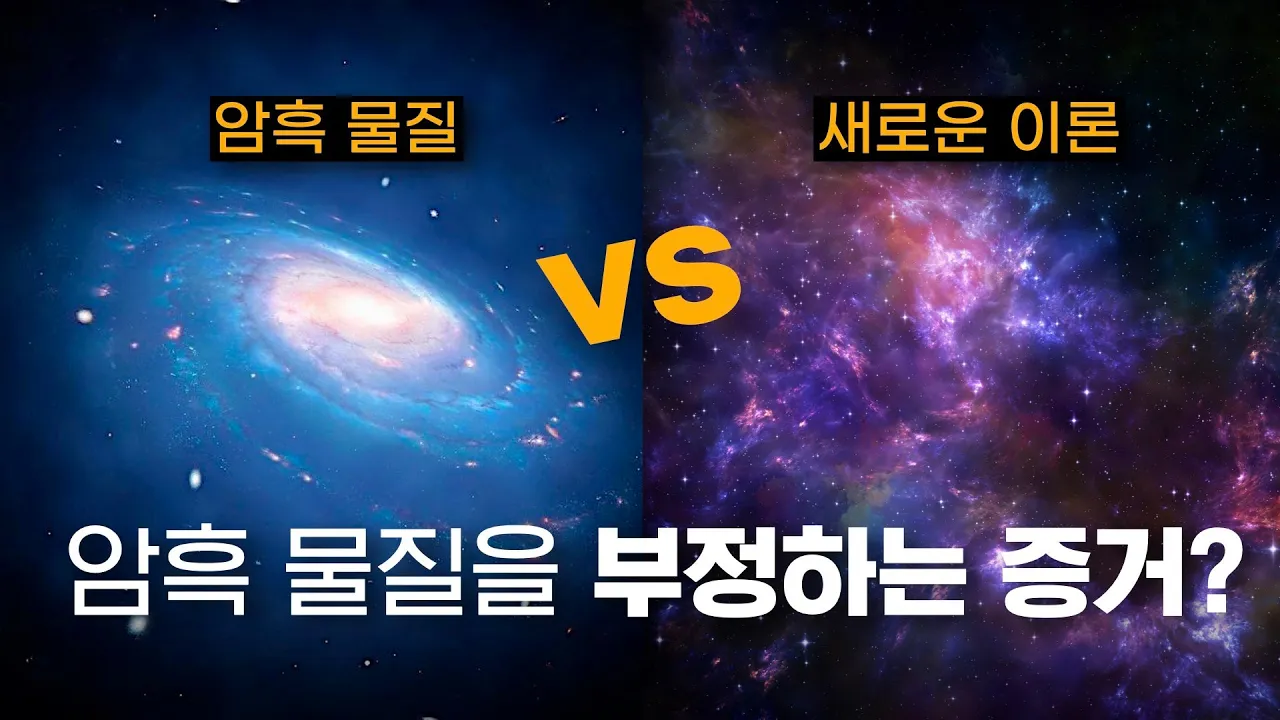


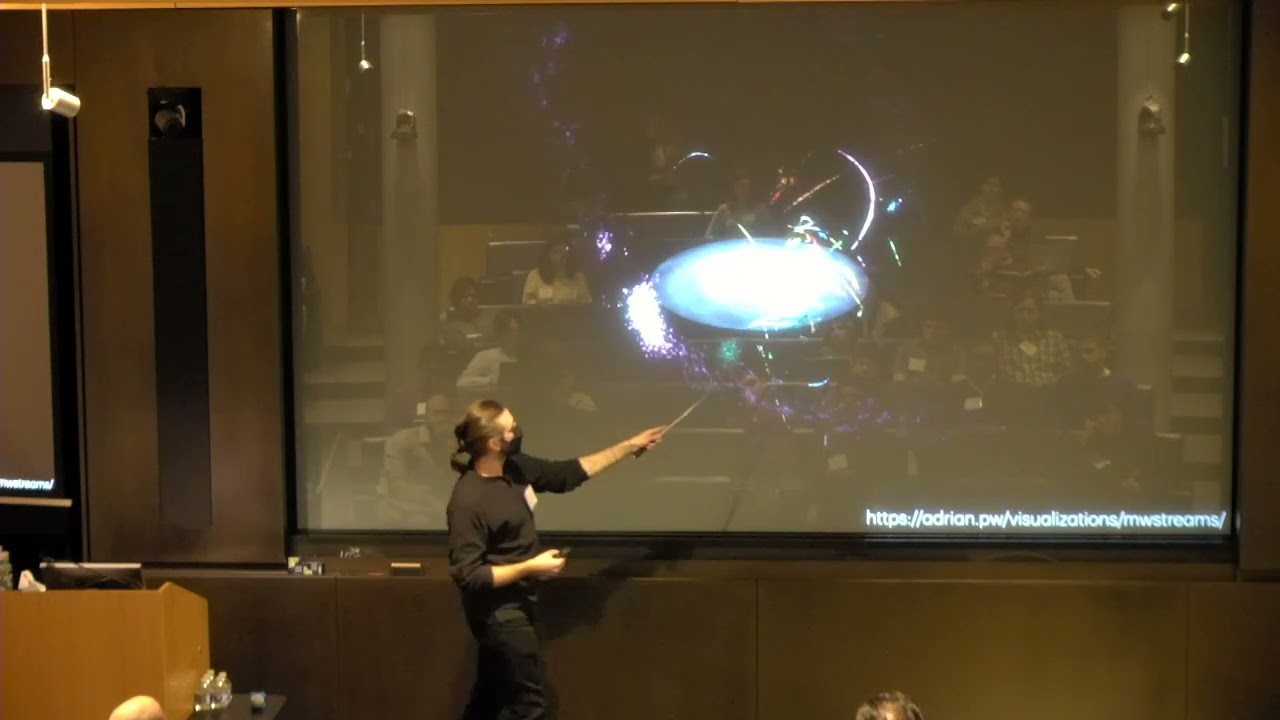
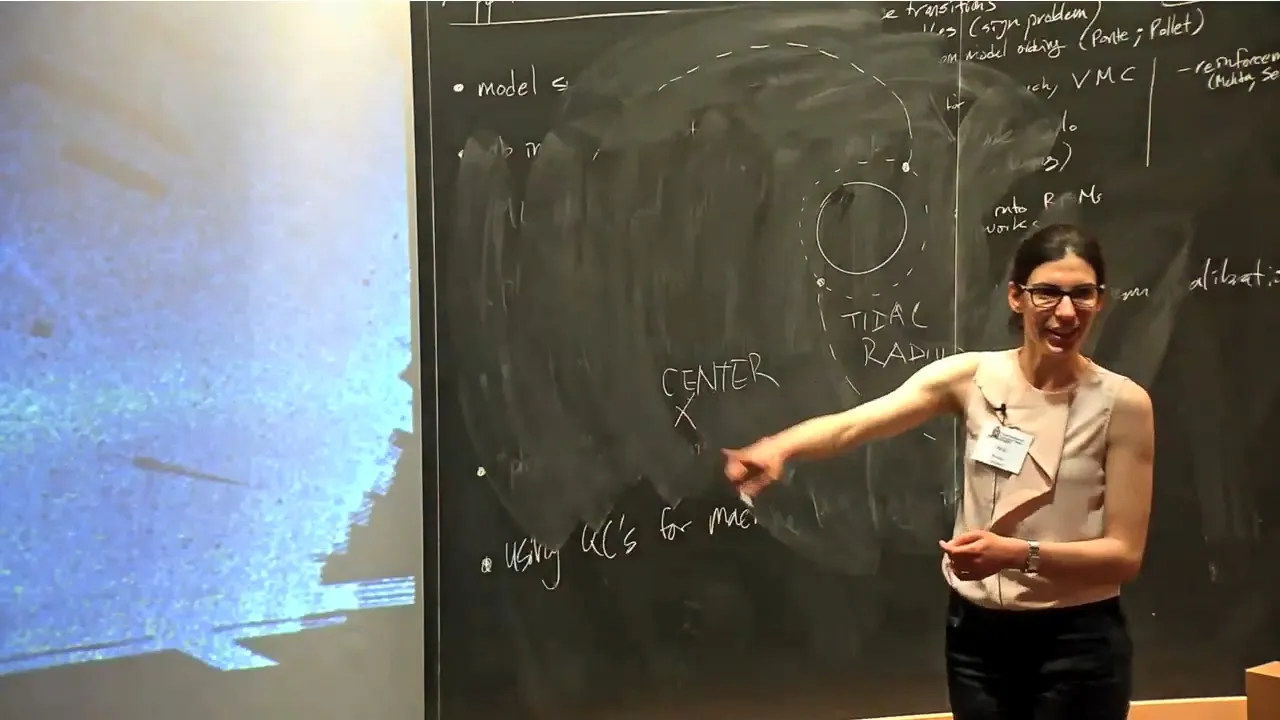


The Milky Way consists of a central bulge, a disk containing spiral arms, and a surrounding dark matter halo; tidal streams from disrupted dwarf galaxies serve as powerful probes to map the dark matter distribution, revealing that dark matter halos are likely triaxial (football-shaped) rather than spherical, and that the Milky Way itself exhibits dynamic features like ripples in its disk caused by past satellite galaxy interactions, demonstrating that our galaxy is not a static equilibrium system but a constantly evolving cosmic environment.
Dark Matter vs MOND: The Milky Way's Invisible Halo
Added:Understanding Newtonian gravity and Kepler's laws of planetary motion, specifically how orbital velocity relates to enclosed mass.
The basic structure of the Milky Way galaxy, including the disk, bulge, stellar halo, and the distribution of visible baryonic matter.
The concept of galactic rotation curves and the historic discrepancy between observed stellar velocities and predicted Newtonian calculations.
A foundational overview of what Dark Matter is (unseen, non-baryonic mass) versus MOND (Modified Newtonian Dynamics, which alters gravitational laws at low accelerations).
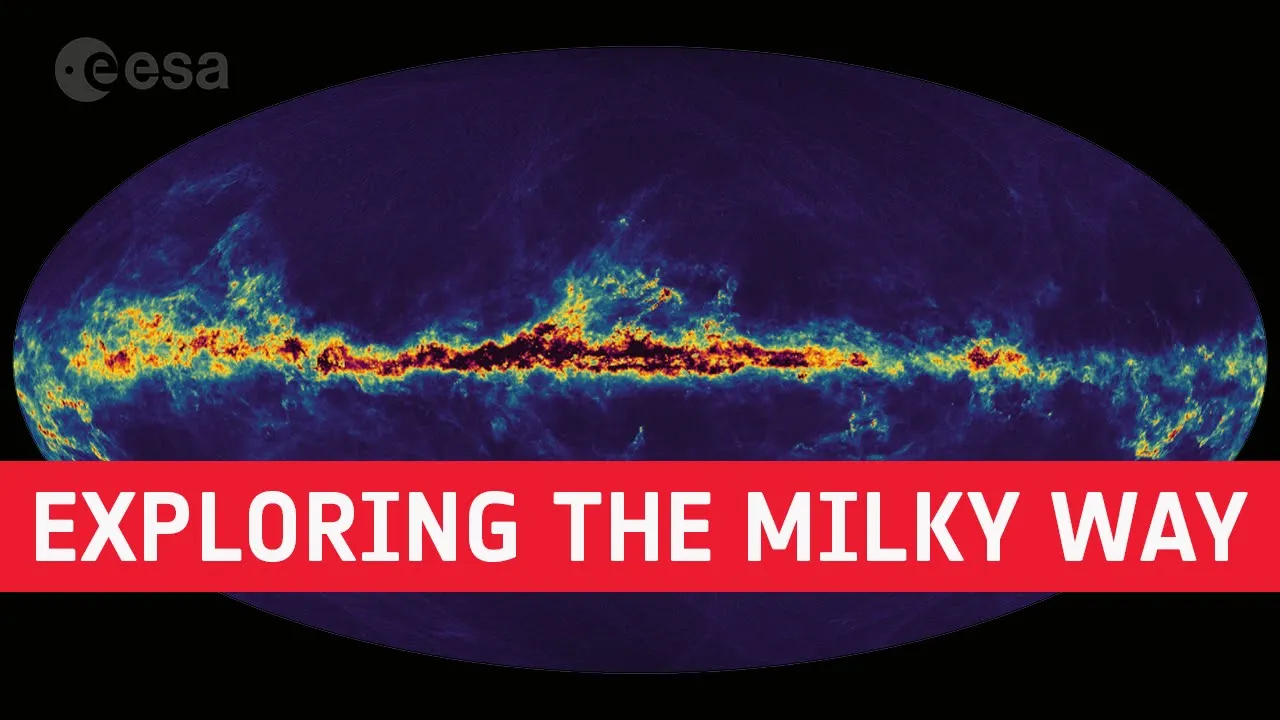
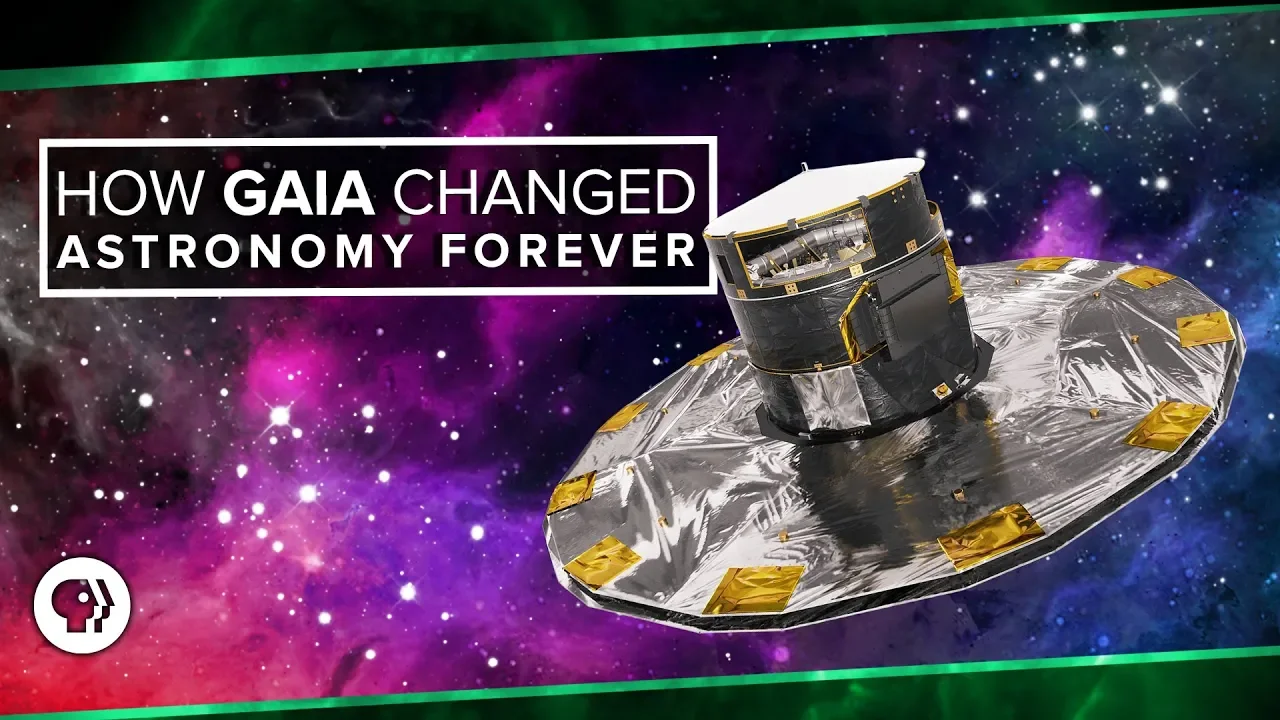
Analyzing the data from the Gaia space telescope to understand how high-precision astrometric measurements reconstruct the 3D velocity fields of stars.
Exploring the External Field Effect (EFE) in MOND and how it differs from predictions made by the standard Lambda-CDM cosmological model.
Investigating stellar tidal streams (the remnants of disrupted dwarf galaxies) as sensitive natural probes to map the shape and distribution of the Milky Way's gravitational potential.
Studying proposed particle physics candidates for Dark Matter (such as WIMPs, axions, and self-interacting dark matter) and the status of direct and indirect detection experiments.
36.6K views1.1Klikes1:13:57Original Release: 2023-08-08
welcome one and all to the cool worlds podcast with me your host David Kipping this week it is my pleasure to be joined by one of my wonderful colleagues in the department of astronomy club University and that is Professor Catherine Johnston so besides from being a colleague in the department Catherine is also the Dynamics group leader at the flat iron Institute which is also in New York City so Catherine and I we first got to know each other must have been like seven or eight years ago when I was first being recruited to become a faculty member at the department and Catherine was actually the chair of the department at the time so obviously I had a large number of interactions with Catherine and I have to say one of the large reasons why I chose to come to Colombia was because those those interactions were so positive it really gave me a sense that the department was a collegial friendly environment but one that strove to be the best it could be it understood and valued the rigors of science open data transparency in our methodologies and approach to science but also it was a place that valued teaching the outcomes of our students and trying to create a fair and Collegiate environment for everyone to work in for everyone to become their best and so yeah that was very attractive to me and I think it really embodies not just the department but especially Catherine's only approach to science and since then you know we've only got to work together more and more we've even co-mentored students together some of you might remember moyamuktir now Dr moyamiktir but she was from my PhD students um we co-mentored Moya together in terms of the science but now Moya has gone on to become a superstar in her own right she's on PBS she's written books there's a book called The Milky Way an autobiography from our Galaxy's perspective you should check that out if you haven't already and I have to say that you know work on Catherine has always been a great pleasure today though I want to sit down with Catherine and talk about her science and Catherine is renowned as a leader in her field of science which in particular focuses on the Milky Way galaxy our own home Galaxy and there's so many things that we really don't understand about our galaxies still today and they're still learning so in this in this podcast today we explore first of all we go through kind of a Basics you know what is the structure of our galaxy what is the Bulls what is the bar what is the thindex the thickness the Halo all of these terms that maybe you've heard of maybe you haven't we break down all of them for you so you can truly understand what our Milky Way is like then we get into kind of really the meat of what Catherine has been trying to work on over the last 10 years uh or one of the things she's been working on which is trying to understand the Dark Matter distribution in her own Galaxy so we think dark matter is the dominant source of matter in our universe and our Milky Way is certainly no exception in that case but trying to test a whether do we genuinely believe it is dark matter versus some modified theory of gravity and B if we believe it is dark matter what does it tell us about the nature of this dark matter is it clumpy where is it located what's the shape of this stuff in terms of its correspondence to the disc of the Milky Way and how we're making these measurements in the first place so we'll get into all of that jazz and then finally towards the end of discussion we'll talk about Gaia guy is a European mission that was launched about a decade ago but it's been sort of revolutionizing our knowledge and understanding of the Milky Way Too by measuring billions of stars literally billions of stars to characterize their positions their astrometry very very precisely which in turn has led to new insights about the groupings and clusterings and behaviors of clusters of stars which in turn tells us about the Dynamics of the Milky Way itself so we get into all of that I think you're gonna like it if you care about where you live in the universe this is a great podcast for you so please do join me for this conversation with Catherine Johnston [Music] foreign [Music] Catherine your work focuses on understanding the Milky Way Home Galaxy yeah yeah and I think one of the most basic questions just to get everyone the same page is what is the nature and the structure of our own Milky Way just a 101 to bring us all into the same page okay so the Milky Way is what's known as a spiral galaxy its shape is somewhat like a flying saucer it has a bulge of stars at the center and it's surrounded by a desk I'm going to refer to it as a desk and the desk has stars moving around it in nearly circular orbits but there's also a huge Halo of dark matter that surrounds this desk oh and I should mention the disc contains spiral arms you will have seen those beautiful pictures of spiral galaxies so they are referred to either as disc galaxies or spiral galaxies okay so the other component I just mentioned the huge Halo of Dark Matter surrounding the Galaxy so basically three components the Bulge the disc of stars and the Halo of Dark Matter surrounding it and the disc is it is it a single desk and we sometimes if you have astronomy talk you will often hear the phrase thick disk thin disc being used and similarly in the center of the Galaxy you hear these terms of bar and bulges so there's these other components can you just break down the anatomy a little bit though yeah yeah so within this disc of stars there are some stars that only bob up and down gently as they go around I said circular orbits and it makes you think of um it makes you think of the solar system and in that case you've got the planets orbiting almost in a single plane you're going to contradict me there but almost in a single plane in the Galaxy these stars are going around and the motion is governed by gravity just the way it's same way it is in the solar system but as they're going around they're actually also going slightly in inwards and outwards towards and away from the galactic center and they're also bobbing up and down so stars that are in the thin disk of the Galaxy these only bob up and down a little bit as they go around and stars in the thick disc rub up and down a lot so we actually think you have to remember with um objects like galaxies they are not solid objects they are made up of billions of stars that are all orbiting each other so you can actually have uh two different geometrical structures contained on top of each other so that's where the thin disc and thickness come from okay should we talk about the bar yeah let's talk I mean all these nuts yeah and also the spirals I think what is the bar what is the Bulge and I think another question people often wonder is what exactly are these spiral components what's going on there yeah this is the point where you need a visual yeah um so I I just very simply said the center of the Galaxy is a bulge more specifically so you think of something kind of spherical when I say bulge you should but more specifically um the center of the Galaxy actually is elongated in One Direction and it's actually a rather straight feature and that's why we call it a bar and the bar is actually rotating steadily it's contained uh again billions of stars that are on various orbits these are not circular orbits but as a whole the density distribution is rotating uh similarly the spiral arms in the disk of the Galaxy um these again are not uh solid features they contain many many stars and the spiral arms are literally that there are two spiral arm pattern and the spiral arm pattern is rotating actually I'm changing the I'm doing the wrong sense of rotation the bar and the spiral arms are rotating in the same way but neither of them are the stars necessarily staying strictly in the same place in each object as it rotates right so the stars in the disc are going around the Galaxy they can actually go in and out of the Spiral arms so the spiral arms are actually you should think of them as a density structure but for the Stars it's a density wave I think we're going several layers deep no no this is good so it is it's a gravitationally induced density wave so it's like a compression where things are just squeezing together because they're in gravity and that wave itself like the waves on the ocean I guess is just yeah they're just circling around the the disc the easiest way I've trying to think about this is actually not so much waves on the ocean but actually more like um waves in a traffic flow right a traffic pattern yeah because if you're going speeding along a highway if it gets very congested very dense you often find that you speed up and apparently for no reason and the cars get further apart and then you get to points where the cars slow down and then the cars are much closer together so this is sort of what's happening to stars as they go around the Galaxy they go into a density wave of the spiral arm slowed down slightly and become closer together and then in between the spiral arms they're moving at a more steady speed a faster speed and they get further upon so we're because we're in one of these spiral arms so we're in a traffic jam basically a cosmet traffic we're on the edge of a spiral arm yeah okay and is there any significance to that that in terms of that we're in one rather not inside one not for the sun the sun is sort of 5 billion years old but actually the spiral arms because these are density regions of the Galaxy and their regions where all matter is compressed that includes stars but also gas and dust becomes compressed these are regions where you expect to see Star formation so sometimes you find young stars are preferentially found in spiral arms so for them it could be significant the spiral arm they're closest to could be their birthplace but the sun is sufficiently old that we don't think it's near its birthplace if that makes sense right now I asked on Twitter I said I'm speaking to Captain Johnson expert in the Milky Way what questions do you have about the Milky Way and on this on this theme of what is the anatomy of the Milky Way yeah one question people asked is I've heard different numbers about the number of stars in the Milky Way for decades anything from 100 billion to a 400 billion what is has that number been refined over time and why why is it that even our own Galaxy we have such uncertainty yeah no so um I think any of those numbers I would be happy with so I think that um you're talking right we're astronomers and the numbers we talk about are typically quite approximate especially in terms of things like numbers of stars in the galaxy so I would say roughly 100 billion stars part of the uncertainty is because we um it's hard to see across our own Galaxy right so other galaxies we can see from the outside and we can get a fair idea of all the stars that are in our galaxy but in our own Galaxy we're right in the middle of it so it's like saying um ah you're in the middle of a crowd of people you can count the number of people that are relatively close to you but if that Crowd Goes On for a few hundred yards or meters in any direction you can't actually tell where the edge is and you can't actually count all the people and so that's what's happening with the Milky Way it's hard for us to tell exactly but it's easier if you could see another crowd and you were in the top of a stadium or something everyone you could maybe have a better chance exactly exactly it's also exacerbated by the fact let's pretend it's a cloud of people and um it's kind of a misty day so not only can't you see to the edge of the cloud but they're actually obscured by Mist in the Galaxy uh the edge of the Galaxy the Stars at the edge of the Galaxy uh along where most of the stars are in the desk this disc component there's also gas and dust and that gets in the way and makes it hard to see to the other side right so we've done the kind of the inside of the Galaxy we have the Bulge we have the thin disc the thick disk we have the spiral arms you mentioned around the Amana Galaxy we have dark matter yeah um what else is around our galaxy I think we tend to think that you just there's nothing until you get to Andromeda right you just fly to the nearest major Galaxy andromedom 31 and it's just you know vast oceans of empty space but it's not empty there's stuff going on and that's particularly of interest to your to your research exactly so I'm glad you asked that question because I forgot to mention this but um about one percent of the stars in our galaxy so this is why I wasn't worrying about them in the 100 billion about one percent of the Stars aren't actually in the disc of the Bulge they're actually in uh a Halo which is the technical term so the Stella Halo of our galaxy contains about one percent of the stars and these are exploring um the regions of the Galaxy that are really dominated by dark matter um the other thing to realize um which is kind of fun when you start to think about it is not only is our galaxy made of orbiting stars and orbiting dark matter but objects in the universe are all orbiting around each other so you work on planets and we know the planets orbit the sun um but the next level thing that we need to think about when you step to galaxies is the sun is orbiting our galaxy it's orbiting all the other stars in the galaxy and all the other stars are orbiting each other beyond that when you start talking about other galaxies the galaxies themselves are interacting gravity works on all scales um so galaxies can orbit each other as well so in this Stellar Halo of the Milky Way we have stars orbiting each other but we also have dwarf galaxies that themselves are orbiting the Milky Way and are bound by the gravitational attraction of the Milky Way and what defines a dwarf Galaxy and how many of them around us are though yeah okay so um strictly the term Galaxy is usually applied to something where we think that there's some motions of the Stars within it that are not um cannot be explained by the presence of stars alone so galaxies are objects where we think there's significant amounts of dark matter in them so in other words if you looked at our Milky Way and you looked close to our Milky Way uh so when I say close I mean within within about uh 10 times the size of the disk of the Milky Way you would actually find Blobs of parent blobs or collections of stars concentrated uh in this Halo and when you look closely at those collections of stars you would notice that the stars are moving much faster than you would expect from the gravitational attraction of the Stars alone and that tells you there's some dark matter and these are present as well and these are satellites of the Milky Way satellite dwarf galaxies so this kind of obviously Harkens back to verirubin the discovery of galaxies that were the were themselves rotating too fast yes and that was one of the first piece of evidence that we found for dark matter and now we seem to have a much better understanding especially if the dark matter in our own Milky Way yeah thanks to is it is it largely formed by the Motions of these clusters then is that what's telling us about the structure well uh so the structure of Dark Matter Halos um let's go back to Vera Ruben for a minute yeah and discuss that um and um remember I told you that stars are moving in nearly circular orbits in the desk and what Vera rubin's um groundbreaking work in the 1970s was to actually study the Motions of uh stars in the discs of galaxies other galaxies other galaxies and realized that they're actually moving too fast so the stars of the Sun in our galaxy is moving at about 200 kilometers per second so if we add up the gravitational attraction of 100 billion other stars in our galaxy we can calculate that actually that should mean that the star of the sun is not moving on a circular orbit it should actually be moving on either an elliptical orbit or sorry I should say eccentric orbit or it's escaping entirely from our galaxy so the fact that it's moving so fast actually tells us not only are there 100 billion stars in our galaxy and some gas and some dust but there must be something we can't see and this was the first evidence for the presence of dark matter so as I said the disc of the Milky Way goes out a certain extent but the Stellar Halo of the Milky Way containing these dwarf galaxies goes out to 10 actually maybe even 20 times that extent and what we can tell from the Motions of the dwarf galaxies alone but um we're about to get to other ideas too we can get some idea that those dwarf galaxies as a collection are also moving too fast for them to be bound just by the stars that we see in the Milky Way I see yeah so that it's indirect evidence but it's still very powerful evidence for the existence of something pulling on these Stars more than they should be of course a lot of people um the layperson might be upset with the idea of dark matter because you can't hold it in your hands you can't you can't see it in the laboratory and in a way it feels like a fiction that astronomers have created to explain the data yeah but of course we think it's much more than just a fiction at this point because we have so many pieces of evidence yeah pointing at this but maybe um you could speak that what is the case for a modified theory of gravity to explain the accelerated motions versus a dark matter distribution yeah yeah so um let's go backwards for a minute and just talk about um probes um and then we can go forwards to your question because I wanted to talk about uh one more probe that's dear to my heart that I'm uh sure you want to hear about David yeah I know you're going to say you know what I was going to say um so um One More Concept I want to introduce at this point is um what is going to happen to these dwarf galaxies as they orbit the Milky Way um and these dwarf galaxies can actually get torn apart by the tidal field of the Milky Way so if you think about how the moon raises tides on the earth you may have heard about this so the Earth is a finite size object and the Moon is sitting about I think it's about 100 Earth radii away um 60. yeah okay there we go I was sadly unsure magnitude from astronomy exactly so 60 is nearly 100 yeah so we're just agreeing so it's sitting 60 Earth radii away um and the Moon is exerting a gravitational pull on the Earth um but one side of the Earth at any one time given time is closer to the Moon than the other side of the earth so what this what happens here is say um if we're thinking about the Pacific and the Atlantic Ocean at two different times then the Atlantic Ocean at some time might be closer to the Moon than the Pacific Ocean and what that means is the Atlantic Ocean is pulled slightly more towards the moon than the Pacific Ocean and what that actually means is the um the oceans are bulging slightly relative to the Center of the Earth and this is what causes the tides the word Tides comes from this effect on the oceans it makes the Earth's oceans bulge slightly relative to the Center of the Earth as they uh as the day goes by and that bulge rotates as the Earth rotates so so the tides are really just a differential gravitational force there's more force on one side than the other side of this object whatever the object is exactly exactly so we experienced this and so this gives you a physical intuition you experience this on the earth so you actually have experienced tidal forces in everyday life now you take that this is a gravitational effect the beauty of physics says or the cosmological principle tells us we take the physics we understand and we try and apply it everywhere in the universe so if we apply this to dwarf galaxies a dwarf Galaxy orbiting the Milky Way the closer part of the dwarf galaxies pulled more directly more strongly towards the Milky Way than the further part and so you might get tidal bulges on dwarf galaxies what's even more exciting is though um it can be more dramatic in this case you can actually pull Stars off from these tidal bulges and have these Stars the satellite Galaxy this dwarf Galaxy orbiting them up away can actually literally be pulled apart by the Milky Way like spaghettified in terms of the black hole analogy of tidal forces extreme case right yes spaghettified yeah actually I think that came from the dwarf Galaxy Community okay years ago and black hole people stole it they stole it yes absolutely because there was a survey called the spaghetti survey back in the 1990s interesting uh for dwarf galaxies and what the spaghetti survey was trying to do was find the remnants of dwarf galaxies in the 1990s that had been pulled apart so not only do we see these dwarf galaxies orbiting we're hoping to see dead dwarf galaxies ones that have been pulled apart and the spaghetti term comes from the fact that these Stars don't just wander randomly off into space they're also Milky Way so they start with a mean orbit of the dwarf Galaxy they're being pulled apart by the tidal field but that also are just slightly off from the main orbit of the dwarf Galaxy so what happens they continue orbiting the same direction isn't this a great Visual and they end up creating long streams of stars I apologize people listening on the audio won't be able to see the visual but you're waving your hands around in a very elegant way to to what looks like a stretching out of this at this distribution I guess an analogy with the black hole case would be if you if you're an astronaut falling into a black hole your feet are close to the black hole than your head presumably if you're falling in your feet first and so your your feet are being pulled harder than your head and it's stretched that's a stretching force that on your whole body and these stars are feeling the same thing yes it's a it's a it's a slower effect then it's not as dramatic maybe as that astronaut case but it's an effect playing out over what millions billions of years on these clusters yes we're talking about spaghetti in two different dimensions though so um uh what David's talking about is stretching in the radial Direction and but actually once that stretching is done once the stars are Unbound in the Milky Way's case with a dwarf Galaxy the Stars spread out along the orbit so you see spaghetti along the orbit okay so this was a long aside because you were asking about let's get demand yeah so how how are these uh these are total streams yeah how are they the total streams that the shape of them the dwarf galaxies their motion how is this helping us to distinguish between these two theories yeah so um the title streams um as they orbit the Milky Way what you see for these streams and we can see these around the Milky Way we can see these around other galaxies the discovery around the Milky Way has really been in 20 or 30 years and actually at this point just talking about numbers we went going back to that we have about um 50 60 70 order of magnitude satellite galaxies that we have now discovered uh 30 years ago we only knew of about 10.
so these have been huge discoveries in the last even uh three or four years and how many stars are typically in these dwarf galaxies um they can range from having a billion stars to only containing a thousand stars so a huge range that's an order a million difference they're still on they still only constitute a small percentage of stars in total in the Milky Way but nevertheless they're very interesting precisely because of what we're talking about dark matter so it's these streams spread around the Galaxy because they're orbiting the orbit is curved now the curvature of that orbit itself is a signature of the gravitational potential the gravitational force if there was no gravitational force centered on the Galaxy the Stars would go off in straight lines and you would see a straight stream but you don't you see curve streams so actually they're a dramatic just from the morphology alone is a dramatic demonstration that there's something pulling on the uh on the streams now whether that's dark mattified dark matter or some modified form of gravity that's a different question right first of all for dark matter the presence that there's something that is unseen or modified gravity you can get from just the fact you see the curvature Alone um perhaps most dramatically there's one Galaxy uh outside the Milky Way it's called ngc5907 so I encourage all the listeners without visuals to do a quick type into Google search and do ngc5907 and look at images okay and it will pull up an image of an edge on Galaxy and you'll see a beautiful example of a tidal stream encircling it now you should notice immediately something about this title stream it has a sort of rosette shape it's not a complete rosette but it has one Loop and then it has another loop going off at about 120 degrees from the first Loop and actually the shape of that uh loop alone betrays the fact tells you that there's more to this galaxy than just the disc that you can see because if it was just the disc that we could see this orbit should not have that shape it should look much more elliptical much more like the orbits in the Galaxy so this is because of the 2D nature of the disc versus the 3D nature of some presumed Halo is that the difference no no no the difference here that I'm trying to appeal to First we're going to get to that in a minute the difference here I'm trying to appeal to First is um the difference between the sorts of objects you study and the orbits those orbits with the sort of orbit size study so in the solar system you probably know I know you know David that orbits our elliptical or or actually nearly circular but then what we would call closed orbits they repeat the same shape over and over now in and around and this is because sorry let me finish that thought this is because all the mass the vast majority of the mass is contained in this tiny point that we call the Sun at the center of the solar system and then there's virtually no Mass beyond that in the rest of our galaxy we have the disk of stars which is extended an extended Mass distribution the vast majority of the mass is spread out over a large distance and then the Halo spread Dark Matter Halo spreads that mass out even further and then the orbits in this case are not closed they're actually what we call rosette and if you think about a spirograph the control of rosette pattern if you don't know what a spirograph is another Google search but look up a rosette pattern it looks like a flower an orbit of a satellite or of stars in the Milky Way they look like petals which are gradually processing around the plane of the Galaxy to form a certain mouth to form a pattern that looks like a petal pattern a petal pattern okay now we go back yeah let's have these motions how do these motions tie into this this distinguishing between these two series if you have if you have a single Mass if all the mass in the Galaxy was concentrated in a giant Sun at the center then the orbits would be closed there would be a single petal and on lips and it wouldn't make a flower pattern so the fact that you see a flower pattern is telling you not only you have an extended it extended disk but when you see that flower pattern far out beyond the edges of galaxies it's telling you that there's something there could be a dark matter Halo that is causing the flower pattern otherwise you would see an ellipse is this related to um Newton's shell theorem so I think there's a theorem in classical mechanics that says that if all of the masses inside of your orbital path you can mostly approximate it as just being like a single point like all the mass of the Sun is it can be treated as being concentrated within a single point because all of the mass of the Sun is interior to the Earth's orbit and so you can get away with that approximation and when you talk about distributed Mass well if there was a binary star even two suns you could still largely explain the Earth's motion still pretty well with just a circular elliptical orbit because you can pretty much concentrate them to a single point now here with the Galaxy you have many many sons within inside your orbit but then with the dark matter you have stuff also outside of your orbit this extended Halos is it the fact it's outside or is it just the fact the mass has been distributed across so many places that's of course on the petal-like patterns right so the other part of of Newton's theorems talks about the mass outside and if that mass is spherically distributed it doesn't have an effect on the force that you're calculating inside so really it's the second point is the important one as you move along an orbit that might not be exactly circular then you're actually changing the mass that you you're seeing within your orbit so that means that you um you actually uh if you express the force as GM over r squared then your m is changing As you move out through the Galaxy as well as your R whereas for the solar system GM over r squared the M doesn't change right but the r does change okay right so it really is the distribution within the orbit that's making the difference the distribution it's exactly the distribution and so that therefore those petals are probing how not only the the matter of the stars are distributed but also how the the invisible stuff the dark matter is distributed but only inside so you don't really know what it's doing beyond the title stream you just know what the distribution is inside the orbit is that true exactly okay exactly and that's precisely actually this is uh I love this point that you're making because that is actually why we want to find title streams the disc of the Galaxy probes the inner region of the Galaxy to probe exactly how extended the Dark Matter Halo is we really need these title streams and they're very powerful too so if you can find title streams further and further out they will tell us more and more about how the dark matter is distributed now do you think we're ready to get back to mind or yeah let's let's talk about that we've we've gotten so many tangents here but it's been fun to explore um you why why are you convinced maybe you're not convinced but why are so many astronomers convinced that dark matter is the explanation for all of this intricate Behavior yeah well so I I think the answer comes from looking at many scales actually I think that the Milky Way ultimately the title streams could help us um with trying to distinguish um but um so let's start with the Milky Way alone and think about the evidence that's there um so with the Milky Way alone for example there is a modified theory of gravity which talks about instead of hypothesizing this extended Dark Matter Halo let's instead say that um gravity as you get to large distances takes a very different form and so basically it falls off faster than we would expect um no did I get that the right way around now I'm thinking no it's more like it falls off less fast than you would expect as you go to launch distance yeah yeah it makes sense that makes sense yeah I said it backwards so to explain the the extra speed you need more gravity out exactly yeah exactly um but the idea is then that um what do you see wysiwig what you see is what you get right so the uh all the gravitational force in this case modified gravitational force comes only from the other stars in the galaxy so uh one uh way we should be able to distinguish in the Milky Way whether that's true or not is essentially on large scales the Galaxy the disk of our galaxy is very symmetric um it's symmetric apart from the bar which is only at the center it's symmetric asymmutally and it's symmetric top to bottom as a mutually you mean kind of uh maybe just explain that you mean a kind of like rotate around like a clock face like that angle yeah exactly exactly so there are spiral arms and there are bars the bar but in a global sense it's it's pretty much symmetric as you go around the clock face exactly so what that means is according to this modified theory of gravity as you go out further and further from the Galaxy you should find more and more that the force you're feeling is as immersely symmetric in angle and it's also symmetric top to bottom so if we find evidence of of distortions of asymmetries whether that's very very large scale it might be that there's a squash which is uh let me see it's I'm gesticulating again it's in the plane perpendicular to the galactic disc if we find a squash in a plane perpendicular to the lactic disc in the dark matter and that we will not dark matter in the Halo if there's a squash in the force field perpendicular to the galactic disc that we need to assume in order to make those streams make sense then that is a powerful uh contradiction to a modified theory of gravity and a powerful point in favor of the idea that actually it's a matter distribution that we can't see that itself is squashed so there's a way to think about that if if you were in the plane of the of the disk of the Galaxy and you're a certain distance away on the outer edges say 200 000 light years or something an outage of this other of the Milky Way that you should feel the same gravitational potential as a point that's to the North Pole almost of the galactic center and if there and you're looking for differences as you scan across from moving out of the plane to orthogonal to the plane yeah I that could be one way of looking at it but actually the disc would cause a difference because the disc is flat so actually the the experiment I was suggesting was rather your um your uh let me see uh you're in the galactic plane in the equator like the equate um the equatorial the equator of the earth and you actually look at 90 90 degrees difference so you'd look in uh I don't know choose two points on Earth so somewhere in South America versus somewhere in Africa right right and you would ask yourself uh is there a difference in the force field in those two positions or almost like a 12 o'clock looking at three o'clock on the clock face good I like that that's better yeah that's better a large distance from the center and looking at 90 degrees that's that's the experiment that I think that we really want to do and I think it's becoming more and more feasible for the Milky Way at this point so it's not if you just took the milk away in isolation you would not be able to distinguish between modern and dark matter given given current observation evidence um I think it's on the edge because we're just getting to the point of being able to we really want to do this experiment by looking at large distances from the desk and we're just getting the title streams there and we're trying to understand distortions that we're seeing in those title streams because we are seeing distortions so I think we're very close to be able to do that with this particular experiment now what I didn't say there are other lines of evidence that make us really happy with dark matter but that's more thinking about the cosmological scales where the match on many many scales works really well in this Theory yeah but I should be clear I'm actually really happy that people can there is a subset of the community that keep on working on this and challenging us it's a um at some point we should put it to rest entirely but I think it's a good thing to always question the right yeah yeah it's it's a sign of a healthy discourse when yeah people are putting four different theories and testing them as long as as long as we have testability which both these theories do then science is healthy in that sense yeah um so we've we went out to the dark matter I guess the final thing I want to ask you about that matter is what do we have a sense of the shape from you know assuming dark matter is the correct explanation um what is the implied shape is it just a I think you say it's like a Halo which I think I normally think of just a big sphere just a big fluffy spherical cloud of dark matter that sits around us and it vastly engulfs us as well it's actually much larger of course than the Milky Way itself the discs of the of the Milky Way but is it really a sphere or is it some other shape have we been able to measure the shape is it clumpy what do we know about it yeah so um a lot of what we know comes from theoretical modeling um and therefore we don't know it it's hypotheses that we're testing so the hypothesis that we're testing is that um there is this dark matter Halo and that every Galaxy is surrounded by extended Dark Matter Halo why are we testing that hypothesis it's because of uh large-scale numerical simulations of how we think galaxies form in the universe and in these simulations with our current understanding of gravity and matter the easiest explanation is that these dark matter Halo forms and zero thought of this spherical in shape but more carefully in the simulations they're actually triaxial which actually means you take a sphere and you squash it in one dimension and then you squash it in another dimension so it might look something like an American football without the pointy bits at the end right and that's what we think Dark Matter Halo is on the larger scales would actually look like um on top of that so the other thing you mentioned um the universe as we said is formed of objects orbiting objects orbiting objects and we've already said that um the Milky Way is orbited by um uh satellite galaxies so each of those is a has its own clump of dark matter so you have to think about these Halos of dark matter that uh traxial but within them are orbiting other galaxies with their own clumps of dark matter right and the point where it gets really interesting is we actually think as you go down in scale for these dark matter Halos there may be some dark matter Halos that contain no galaxies and so that means the hundred galaxies we see we actually think are only the tip of the iceberg of the Dark Matter Halos that are out there they're the ones that contain light that we can see but we actually think that there's 10 or maybe even hundreds times more Dark Matter Halo is around our Milky Way that um are orbiting but we simply can't see there's a clumps of Dark Matter yeah that we would otherwise call a dwarf Galaxy yeah were not for the fact they lack any or very few Stars maybe a few stars but nothing that we would normally call a Galaxy yeah exactly so unseen so actually that's um uh another Direction that's really exciting um for the tidal stream Community is not only mentioned measuring the global uh distribution of dark matter but also asking can we find these missing Rogue uh mini Dark Matter Halos there are very strong prediction of a certain type of dark matter and their presence or absence would tell us for instance if um if there's a modified theory of gravity there should be no um no little lumps in the potential that we can't see we should be able to see everything so if we can find evidence of these little clumps of dark matter it's a great distinguisher between different theories of gravity also actually different theories of what dark matter is so the way you do this shall I shall I just yeah my guess would be that you're basically looking in a simplistic way for a Stars orbiting nothing right there's just there's a star just going around an invisible can't be like well there must be a clump there but I'm sure it's more involved than that simple picture so that's an interesting idea um I think our expectation is actually it's very hard for stars to form in the very small dark matter Halos because the idea is early on in the universe they actually lose all their gas which means they lose their ability to make stars so we really think these are sort of like naked naked Dark Matter Halos they have no clothes as it were so um that's a great hypothesis but it it's not one we expect would work okay so we go back to the streams of course we go back to the streams and the idea is imagine you are a set of there's a set of stars orbiting and they're orbiting in this beautiful stream they're following each other along if the Dark Matter Halo is lovely and smooth then you'll have a lovely smooth stream but if it has all these little lumps in the dark matter Halo is um the stream is actually being bombarded gravitationally as it orbits around the Milky Way and it can actually break up the stream it can cause gaps it can cause bifurcations Etc and the really exciting results uh fairly recently is we're starting to see these gaps and these bifurcations in the Milky Way you need really good data to see this it's very hard to see in other galaxies yet so far um but we're hoping that this is going to eventually give us constraints on this on how lumpy our Milky Way is so far the indication is that it's about as lumpy as you would expect if the dark matter is a certain type of dark matter I'm not sure if it's ruled out modified gravity there is yet but it is pointing towards the existence of these Halos that we don't actually see which is really fun so let me just ask you a bit more about on this because it's so interesting um and I think a concept that many people will be fascinated by the idea of dark galaxies almost you might call them dwarf galaxies um it almost helps with this chicken and egg problem of you know what came first the the the stars the galaxy the the disc of stars that format Milky Way galaxy or was it the Dark Matter Halo that comes first and if you have these naked Dark Matter dwarf galaxies that implies that they are indeed the seeds and it's the stars get drawn into them and that that's the the beginning of Galaxy formation to some degree do you agree with that um um I think it's a cartoon that's getting the elements right so I would just um rephrase it slightly um uh so it you know as humans and I completely agree this this is the right way um to describe it on a cartoon level with some caveats so as humans we always want to put things in a sweet sequence yeah and in the universe you never you want to know the order yeah exactly so I like to think of it more like the dark matter is a stage it's a gravitational and dynamical Stage against which there's the backdrop of how atoms like that compose you and me and make stars um uh how that Evolution plays out but they're constantly interacting through gravity and that's why you can't say it that's why it's a bit of a chicken and egg they're not decoupled they're not decompassed yeah yes exactly so early on in the universe um uh okay let me go backwards uh 80 to 90 percent of the matter in the universe is this dark matter so that means that the gravity is dominated by the don't matter this is why it's setting the stage on the other hand it doesn't build the stage and then the baryons arrive the gas and you and me what's actually happening is um uh the gas and the dark matter is constantly interacting it's around from the start so as the stage is being built as gravity is taking a smooth distribution of making these dark matter Halos the gas is already falling into them right so it is your picture yeah but it's coupled together and happening at the same time and actually even though they're only 10 20 of the matter these baryons can have a role in shaping the details of what happens in making those dark matter halos and just to inject one of the complications of this story black holes yeah in terms of this chicken egg problem that's another part of the story of Galaxy formation we have a supermassive black hole in the center of our galaxy it's thought that most major galaxies cemetery and also have supermassive black holes in the center and there has been some discussion about whether that's formed early and then this you know the rest of the Galaxy forms around it or whether that's a product of the the Stars themselves yeah and if you you know you mentioned this idea of looking for clumps which is we're not really seeing the dark matter as a clump you're just seeing a gravitational potential that implies something something massive is there so why could that that something not be a a black hole maybe not a supermassive black hole but a large intermediate-sized black hole that is a potential seed that failed to form a Galaxy around it yeah so uh great question so um the analogy is really there completely that's how we detect black holes too we can also detect them dynamically um I want to um again do a bit of an aside just for the audience because I think this is very important the supermassive black hole at the center of the Galaxy is 10 to the six solar masses 10 to this a million times the mass of the Sun so that is um super massive but it's tiny compared to the mass of the Galaxy so all of the Dynamics that I'm talking about um the the supermassive black hole at the center of the Galaxy when we're at the distances I'm talking about it just doesn't matter it's not important okay so just to put that aside on the other hand your other question is um it is indeed a lumps of about 10 to the 6 10 to the seven solar masses a million to 10 million times the mass of the Sun that we think of floating around unseen in our uh in our around our own Galaxy the hypothesis you were talking about was actually tested way back in the 80s or 90s there was a very famous paper by tarthana Striker and they actually tried to ask well maybe the dark matter is supermassive black holes 10 to the six solar masses or so and what they found is when they did this calculation um what would actually happen is the disk of our galaxy because the entire Dark Matter Halo was these 10 to the six solar massive black holes would be bombarded constantly by these uh points and the points would actually superheat the galactic disc when I say superheat let's go backwards I talked about the lumps in the dark matter Halo changing this trajectory of the Stars so if Dark Matter was 10 to the sixth solar mass black holes it would change the trajectory of the stars sufficiently that our discs could not be a beautiful thin disc it would actually be heated so that's one point of evidence that dark matter can't be entirely supermassive black holes and then once it's a different sort of dark matter it's much more natural that it forms objects that are extended Mass distributions and not um not sub-halos that are individual black holes to make a black hole you have to pack matter into a very small space and we already know even observationally dark matter doesn't like being packed small it's much more extended than the light matter in our galaxy so you're touching on something I wanted to ask you about here um that is a big a big topic to get into but the idea of and this you mentioning a black hole but let's just take a dwarf Galaxy since we know they they exist around us of them colliding plunging through the disc of our Milky Way which must happen if there's 70 of them and they're orbiting around sort of chaotically that must sometimes happen they plunge through and you would think that would leave some imprint on the gravitational potential Like A Relic into the the way stars are distributed and we've of course just had this recent mission called Gaia which has been revolutionizing our understanding of the motion of stars so there's a this is a multi-part question so maybe we'll start with um Gaia maybe you can tell us a little bit about what guy has been doing over the last few years this space mission from the European space agency and how that's helping us to understand the history as an example of like these plunging events the history of our own Milky Way yeah so big questions how many hours do we have we can keep going for you yeah it's fine we just want to hear we're just curious and we want to hear about the history of Milky Way here okay so has been a trim um let's talk a little bit science works and I just want to be clear here Gaia is a mission from the European space agency that they've been putting together throughout my career and I'm not young so I'm not that old but um decades they've been putting this together they launched uh Gaia in 2013 and we got the first uh data release from Gaia in 2018 five years later so this is um billions and billions of dollars and thousands of astronomers in Europe have been working on this and the data release immediately came to the entire scientific community on Earth actually an entire Community anybody on this Democratic science yes exactly and this is uh the ideal of Science and indeed how a lot of science works so it's a fantastic gift to the human race um but I haven't told you what the gift is yet so yeah what's it doing the gift it sounds really boring it's an Ancient Ancient branch of astronomy called astrometry and that's measuring positions metri sort of measuring scales measuring positions on the sky the most ancient branch of astronomy you look up and are forming the constellations and saying I see a pattern that's astrometry what the Gaia Mission did is measure the positions of uh two billion stars in the Milky Way with extreme accuracy and monitor them over time and that actually gives you two bits of information that have been elusive one is the distance to these Stars and that sounds trivial right um until you think about it you look up at a star on the sky how do you know what distance it is this is actually one of the hardest problems in astronomy and the most fundamental problems in astronomy before Gaya we knew distances very well to about hundred thousand stars and after Gaia we know them to 2 billion stars so what this means is we have a map for the very first time we have a three-dimensional map of a significant portion of the Milky Way so that's one thing the second thing is if you measure the position of something on the sky over time you can actually see it move or many of them you can see them move if they are actually moving this is as simple as saying you watch a train on the horizon go by you know it's moving because you see it move relative to the bushes in front of it for example that's exactly what guy has done so it measures the Motions of things perfectly two billion stars for two billion stars so for the first time we've got this gorgeous map of um the disc of our galaxy at an unprecedented level but it also extends to the Stella Halo that we've been talking about so these aren't just the nearest two billion this because we said earlier there's a hundred billion stars in the Milky Way how extended is the Gaia survey looking right so actually let's step back we you mentioned one number during this podcast 200 000 light years so that's uh about the extent that's about the 10 times the radius of our Galactic disc is 200 000 light years the entire uh Dark Matter Halo actually extends to more like 600 000 light years or even more and the um uh the uh width of the disc is uh 20 30 000 light years or so okay so um uh in terms of those scales we think that uh Gaia should be able to see to about 30 000 light years so what that means in effect is it can see just over halfway across our Galactic desk and make a beautiful map of the Galaxy in 3D okay um but not all of that because that would be more than two people exactly yeah exactly exactly the very brightest stars it can see further and it can measure their motions but it has a hard time seeing distances right so the little red dwarfs it misses those once you get far out yeah so there are two key things I mean there are many many many things that this has taught us um let's say three key things I I'd like to mention that this was taught us one is that Gaia has definitively shown the evidence of a bifurcation a very strong bifurcation and very visible bifurcation in one of those title streams that we were talking about and the best explanation for that bifurcation is a collision with an unseen Dark Matter Halo so that's very exciting so what do you mean by bifurcation here just explain a bit more it means a stream paralleling another stream so basically you see one stream and it looks as if it splits apart into two streams I see so it's almost as if this is like a river splitting into two exactly it's almost as if this dark matter Halo plunged through the stream and split it apart so it's not it's it's the backwards of the river splitting into two because it's splitting Downstream I see if you see what I'm saying yeah um so that's one that's been a remarkable result and that was actually made by a Columbia ex-columbia graduate student Adrian Price Whelan wonderful sorry I had to do that plug second thing we'll get them on here at some point I'm sure exactly second thing um I'm really excited about but actually I was not involved with this research there were three groups um worldwide more but three key groups um who have been pursuing looking at the history of the Milky Way and the way they've been doing this is looking at dead dwarfs around the Galaxy meaning these are not just streams over time these streams can get pulled apart enough that you can't see them as individual streams they get mixed together and what these groups have done have looked towards the central parts of our star of our Stella Halo the ones that are almost overlapping with the disc of our galaxy and they've teased apart from that disc of that girl or not the disc the Stellar Halo of the Galaxy that it seems to be composed of a finite number of clumps on each of those clumps they're associated with dwarf galaxies that we can't even see now so what this is saying is we're performing Galactic archeology is the catchphrase yeah we're digging into the past of our galaxy and understanding events that we haven't even seen for It's amazing And this is really exciting because actually this is something that I've spent three decades working on and many people in those groups have spent three decades working on and we hypothesize that we'd be able to do this and they're actually doing this now and saying how was our galaxy built and how far back are these events in time so far the events are going about um eight billion years ago or so so it's about it's more than halfway back to the beginning of the universe I can't say we're seeing the very beginning history but we're seeing more than halfway back to the beginning of the universe and it's it's been a dream to do that it's partly what the Gaia satellite was built for it was motivated by the early studies so this is a very exciting time in the field that was two yeah and you had a third the third one is actually what I've changed my own Focus to the third one is you look at the disk of the Milky Way gravity is mutual right we spend our time I give the example of a satellite Galaxy being torn apart by the Milky Way but if you think about the Earth the example of Tides I gave for the Earth was the opposite the satellite was causing tides on the earth so actually the satellite Galaxy can has a tidal influence on the Milky Way itself so these satellites that we see now and indeed the satellites that fell in the past and no longer exist they will have all Disturbed the disk of the Milky Way and now that we look very carefully at the desk not only do we see a disc composed of circular orbits near circular orbits that are gently bombing up and down the entire disc is waving up and down there are ripples we see in the desk we saw hints of this before Gaia but Gaia has provided a map where we can actually see the mid plane of the disk going up and down across the half of the desk that we actually look at so it's like dropping a stone in a pond and the ripples slowly propagating through the disc of the Milky Way I think that's a Perfect Analogy nearly Perfect Analogy because of course it's all gravitational yeah but that's nearly Perfect Analogy and the reason this is exciting but also challenging is um all the all the classical models of the Milky Way that have been built of the disc the Dark Matter Halo and the barge in order to understand the global Dark Matter distribution Etc these have been equilibrium models models where the Milky Way is unchanging has been around forever it will be around forever these ripples are telling us the Milky Way is not in equilibrium it's Rippling it's like saying we want to model our understanding of the ocean with the idea that on average it's flat and that's what we've done for the Milky Way and we understand this uh or a pond a perfectly flat Pond and we've assumed it's a perfectly flat Pond but actually though these ripples in it which means we can't quite model the full nature of the pond without understanding the Ripples and that's the direction my research is going now is is actually I'm for my entire career almost up to this point has been understanding small galaxies satellite galaxies how they're torn apart from the Milky Way and what the Milky Way does to those galaxies and now I'm concentrating on what how does the Milky Way react to those galaxies and what can that tell us so I'm going from trying to understand how the streams and dead dwarfs can tell us about history and dark matter distribution to how the ripples in the pond can tell us about the things that are causing in the ripples so the I guess we've also have gained here a appreciation of just what a dynamic environment the Milky Way is it's not a static homogeneous disc as we might portray in a in a picture or something and within this Maelstrom and Chaos of all of this motion um it makes me wonder about the motion of our own sun in that context um we said the sun is kind of on the Fairly near the outskirts of the Galaxy yeah it's about uh eight kiloparsecs away from the center yeah and it must have been born presumably in a cluster of many siblings of many other stars that would have been born from the same Cloud the same joint molecular cloud would call it as us and I wonder with all of this motion and how Dynamic we appreciate the Milky Way is would those siblings have been scattered now across over the 5 billion years since or would we expect them to still be near us yeah no that's a great that's a great question and are your spot on the sun is is um we don't think is anywhere near its siblings um another fun part of Galactic archeology is to try and dig into those disc stars and try and understand that question understand the process I can't I can't resist mentioning two colleagues so there's a graduate student here Lucy Liu his precisely precisely she's working with Melissa Ness and they are trying to understand if we can tell where stars have come from from their present positions and one way to do that is via looking at the chemical abundances so that's um that's a really fun chemistry problem so the chemical thing if the chemical fingerprints identical or very similar to our own you can tag that as being a sibling yeah exactly that's that's a whole I want to answer I want to go a slightly different direction um because that's opening a whole other direction um and I just wanted to stay on Dynamics for a minute longer so one of the things in terms of understanding these ripples is to understand what stars tend to stay together in the Milky Way and so actually um what my group has been doing in the last few years is um to try and understand how to take the dynamical information that um uh Gaia has given us so to to to give you a sense here Gaia gives us a sense of distances of motion once you have distances of motion you can start thinking about orbits it doesn't tell you orbits directly but you can start thinking about orbits and how to group stars in orbits um and one of the beauty of Stellar streams is that they tell you something about orbits they tell you they're on similar orbits in the disc you have to find other ways of doing it so you get the information from Gaia and it allows you to group stars in orbits if you put stars in groups of similar orbits meaning similar amounts of time they take to go around the Galaxy then you can actually put stars into groups that have a similar history and this allows you to look in more detail at the structures that we see in position and velocity in these group spaces and it does tie into what Lucy and Melissa are doing because it ties into Dynamic groups and whether those Dynamic groups coincide with chemical groups and together that can make a very powerful way of digging into a history that has been really mixed up in the galactic disc in a way that it's not mixed up in the Stella Halo it's a much more challenging problem it's it's a the type of problem in astronomy I love where and why I love the field of astronomy so much yeah that it's like being a detective at the crime scene yeah that you can't yeah you can't change anything really you can't reproduce the experiment and like a physicist here or a biologist and just go in the lab and do more experiments we have what we have and we have to think so deeply and carefully about the patterns and every clue that is left in that room and yeah this problem really epitomizes that yeah no I absolutely agree I love the way you put that that's exactly how I think about it as well so when this human on the human aspect of this I have to ask you you know because Gaia releases its data in these big dumps right and everyone across the world gets it at the same time which is great but probably also someone active in in this area a little bit stressful because yeah you'll have competition with other groups as a scientists um maybe just tell us what was that like you've I think we've gone through three of these now yes talk about one of them what were you doing when the data release happened and what was that whole experience like well first of all every day feels like every one of those days feels like a massive celebration and you get a wonderful sense of community across the world so the very first data release there were six of us sitting in a room together and let's see it was David spurgle Keith Hawkins Adrian Price wheeler myself and um Sarah Pearson and I'm forgetting it was at least those five and um we waited for the release to come down it was six a.m in the morning we'd all got up this European time I guess yeah yes and the release came down and then people started frantically making plots for fun and Keith um was the first one to get there and sharing a plot of what the data looks like and it was just a tremendous feeling and not because of the competition actually there was an immense sense of unity people were posting the plots they were making from all over the world so we were getting posts from Joe bovey in Canada we were looking at the post from the Europeans as well on Twitter or something where were these exactly yeah exactly and you know how bad I am with Twitter so I was getting everybody else to show them to me so that it was wonderful sense community and we also got a message later from the pi of Gaia Andrew Brown and he wrote and he said which felt really good he could see when the U.S woke up because he could see us downloading the data and that he felt um it gave him a really great sense of pride in community because he knew that the data was being downloaded by scientists around the world and he felt that sense of connection to us even though he wasn't there and he felt what a gift he'd given us that we were up at 6am and downloading the data so that was a wonderful story um on the set of for myself it's interesting um for myself I found that I haven't been on the Discovery papers and I think that speaks to the nature of the sort of science that I do so the groups um who do this uh are typically magnificent data minus they're great at making discoveries finding clues in the data itself I work somewhat differently I think about the physics and think about what you could find and that's what I've been doing for two or three decades and I find that that's what I'm doing again I find it I wish I was more on the Discovery side but I'm not pulled that way I'm excited to see the discoveries come out I'm thrilled when my colleagues Amina helmi Vasily below of Charlie Conway there is a Joe bovey Adrian Price Whelan again Sarah Pearson these are Big figures in the field when they publish papers with discoveries in them I can't help mention Teresa antoja one of Amina helmish students she published a groundbreaking paper on the second data release Wilma trick another second data release paper that I love but what I find myself pulled to is not to enter that craziness because I hate feeling that sense of competition actually um and I'd much rather celebrate um so it's a Young Person's game that that racing around chasing yes and no yes and no I I hate the sense of competition and I much prefer the sense of excitement the sense of contribution so I find myself moving into not uh what people are doing with Gaia now but what can we do with this data that's unexploited like I don't want to do the things that we said we could do I want to think about the things we didn't know we could do and actually Teresa and toha's paper inspired exactly that that's another whole hour to explain but that inspired the thinking I'm doing now thinking about the disequilibrium Milky Way and what we can do the tools aren't there to understand that data set and that's what my group is working on and it's been uh five years since the First Data release uh three years since the second data release now I'm getting this the wrong way around but I'm not getting the dates right we have now I think three data releases 2022. so maybe this is a good question to sort of close us out on is the future um what's what's more to come from Gaia and even Beyond Gaia yeah what what uh new observations are you looking forward to to changing the field yeah so I think that the um uh answer your first question the um which relates to what's more to come from Gaia so the second data release was a key one from guy I think that was 2018 the third one first one was 2016. third one was 2022. I am on a discovery paper in 2020 U two inspired by Teresa and toha's work and exactly we took um the Gaia data at that point was more accurate and more accurate for a larger sample of stars so we were able to do what Teresa Hanto did which was look very carefully at the Motions of stars near the Sun and what we did was exactly this trick I was telling you about where we split those Stars into groups to understand the dynamical signatures in different groups Theresa hand Toka had found a beautiful spiral pattern in a subset of seven million stars we took the new subset of of 35 million stars and find different spirals in each of those subsets so we'll do another conversation where we discuss what that means but the point is by thinking about the data really carefully and thinking about the Dynamics carefully we were able to extrapolate from that much more detailed information than we would have been without thinking about the Dynamics looking ahead the richness of the data set every year that goes by a guy becomes more accurate because it can measure the positions more carefully and for a larger sample of stars and so that means that the jump from 2018 to 2022 is only going to get better and better for Gaia yeah and just a teaser looking forward the thing I think I'm most excited about in 10 years time I think I'm going to spend those 10 years working on the Gaia but in about 10 years time there is the US is building a data set that it's going to give to the world too from the Legacy survey of space and time which is being performed by Ruben Observatory I encourage everybody to go and look at this this will be the US government and the U.S people's gift to the world similar to the European Space Agency a gift back making a cake yeah exactly um which is um uh uh a movie of the sky every three days we're going to take a complete picture of the sky to much deeper depth than Gaia was able to go we won't be able to do exactly the same things of Gaia but for the Milky Way science we'll be able to reach to the far outer regions of our galaxy and Beyond and look for stars in those regions and beyond that we haven't seen before and I'm tremendously excited to discover exactly what's out there and it will start answering the full extent of our Dark Matter Halo what does it look like in the very Outreach how does our Dark Matter Halo connect to Andromeda and are there stars out there between us and Andromeda going off into interglass space it seems that the more we discover the more it changes that naive picture that we all grew up with and the more complicated yeah our entire environment seems to be has that just as a final thought has that does your study of the Milky Way in its environment affect your own outlook on this this thing called life this this journey that you're on as a human and our place and all I think I'm glad you said that because I think um it's important to take time to think about that and when I do take time uh it is um humbling in a way but it's also wonderful to it's a great career to have to be contributing to that inspiration yeah especially when you talk to people who don't get to think about this every day yeah it's it's a pleasure that we get paid to think about astronomy and space in our place in the universe and hopefully enrich other people's experiences of the universe as well so Catherine thank you so much this is a great pleasure I know we only got through a fraction of the things that you work on so I'm sure we'll have to talk again in the future so thank you so much for coming on thanks David this has been terrific so that was my conversation with Catherine Johnson I hope you enjoyed it for me one of the things I really took away whenever I really talked to Catherine but especially from the interaction was just how much we still don't know about our home Galaxy and especially its Origins and how it came to be but also how it kind of shatters our view of the Galaxy as a static unchanging place and in fact it is a very Dynamic constantly evolving place that will surely look very different to the Future as much as it has done in the past and how our knowledge of the behavior of stars is shaping and informing this changing view of our own home Galaxy so I hope you enjoy that as much as I did if you are enjoying these podcasts then of course please do make sure that you are subscribing on whatever platform you're listening to this on and also if you really want to help us out you can become a donor to my research team the cool Wars lab by heading to www.coolworldslab.com support that's www.coolworldslab.com support so thank you so much for listening everybody and until next time stay thoughtful and stay curious
Up Next
65:52
Galactic Archaeology with Gaia and Spectroscopic Surveys
@videosfromIAS
1K views•2020-11-03
61:17
First Billion Years of the Universe with the Square Kilometre Array
@iaaudc
121 views•2022-05-26

6:25
Kepler's Laws of Planetary Motion Explained (Educational Astronomy Video)
@Peekaboo_Kidz
404.9K views•2023-02-17

6:10
Gamma-Ray Bursts: Cosmic Snipers Explained | Astronomy
@kurzgesagt
15M views•2016-07-31
Related Study Plans & Knowledge Roadmaps
Structured learning paths in Astronomy
astronomy
Reionization: Pop III Stars, IGM & 21cm Line
01Foundations of Cosmology & the Early Universe
02Population III Stars & Cosmic Dawn
03Physical Mechanisms of Reionization
+ 2 more learning modules
17h5 modules
Explore Roadmap
astronomy
Planetary Rings: Dynamics, Roche & Resonances
01Foundations of Gravity and Orbital Mechanics
02Tidal Forces and the Roche Limit
03Structure, Composition, and Collisions
+ 2 more learning modules
10h5 modules
Explore Roadmap
astronomy
Asteroseismology: Stellar Waves, Ages & Cores
01Foundations of Stellar Astrophysics & Wave Mechanics
02Stellar Oscillation Modes: P-modes and G-modes
03Mathematical Framework of Asteroseismology
+ 2 more learning modules
35h5 modules
Explore Roadmap
astronomy
Adaptive Optics: Physics, Engineering & Control
01Foundations of Wave Optics and Wavefronts
02Atmospheric Turbulence & Optical Distortion
03Wavefront Sensing Technologies
+ 3 more learning modules
35h6 modules
Explore Roadmap