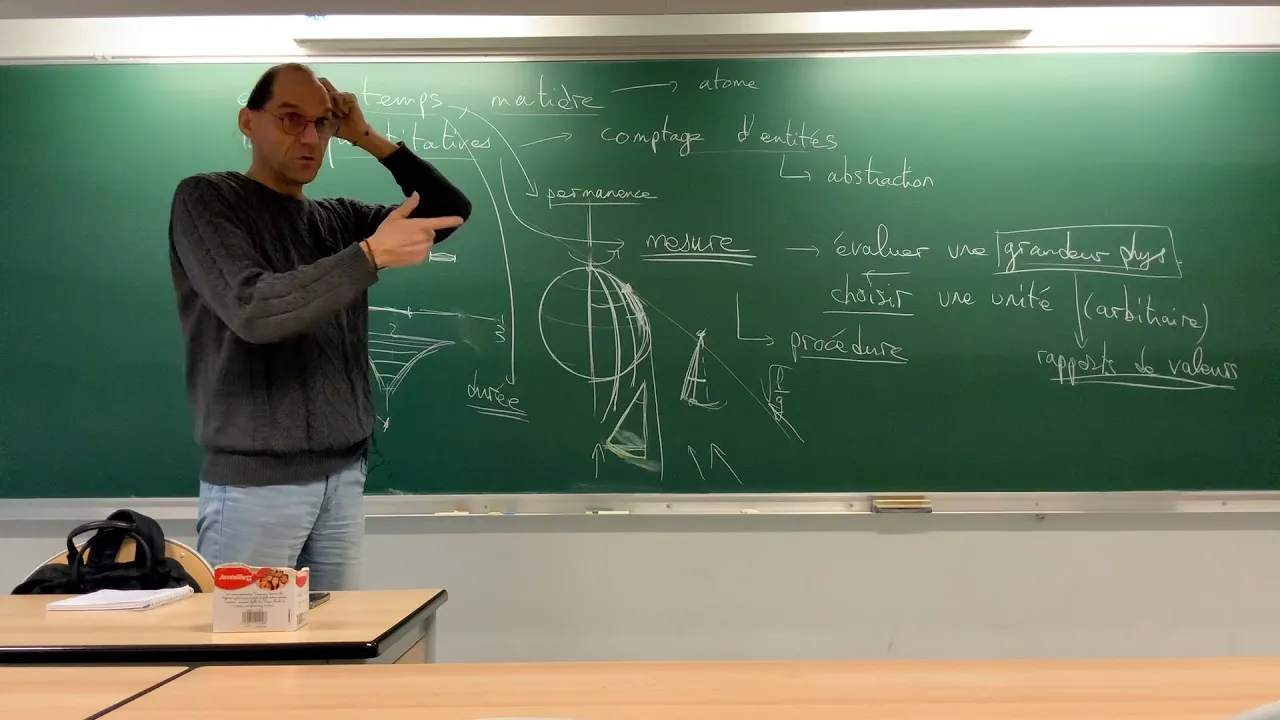







![[Cosmology 17/10/2023] 0: introduction](https://i.ytimg.com/vi/G9TVk7h-i5U/maxresdefault.jpg)
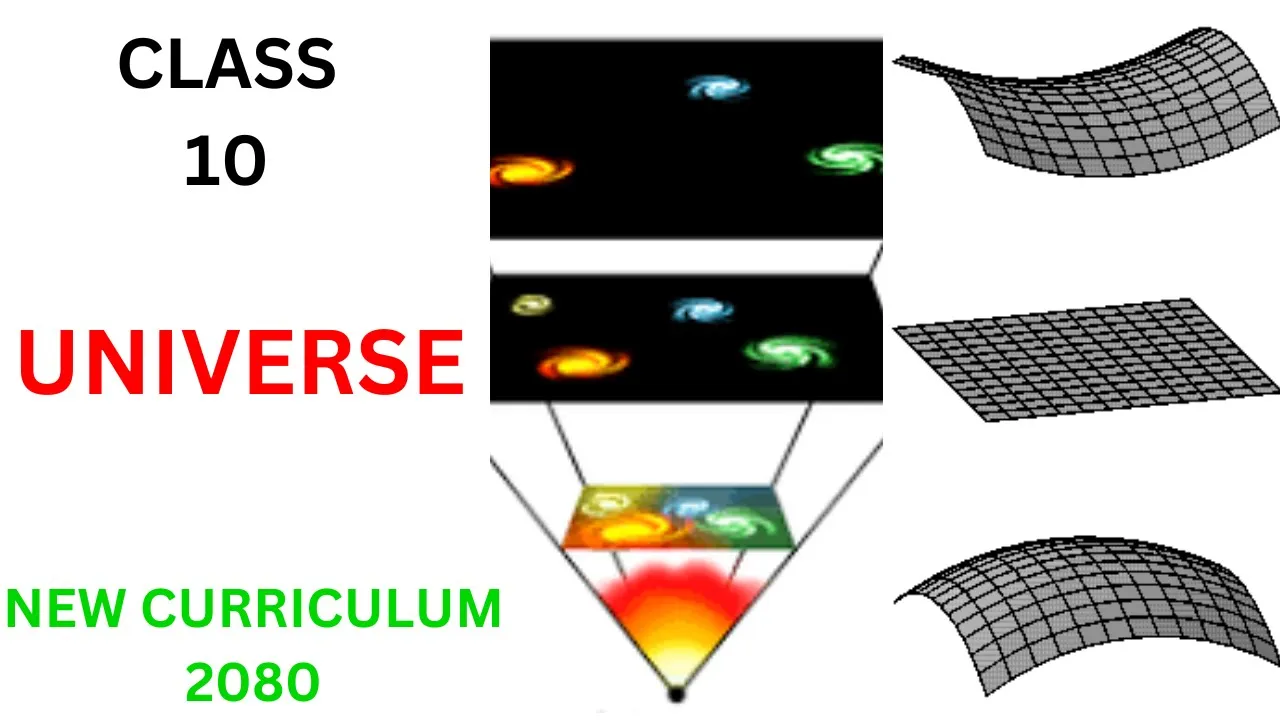













![The Dark Energy Mystery [4K]](https://i.ytimg.com/vi_webp/cQyoYzHxdvo/maxresdefault.webp)





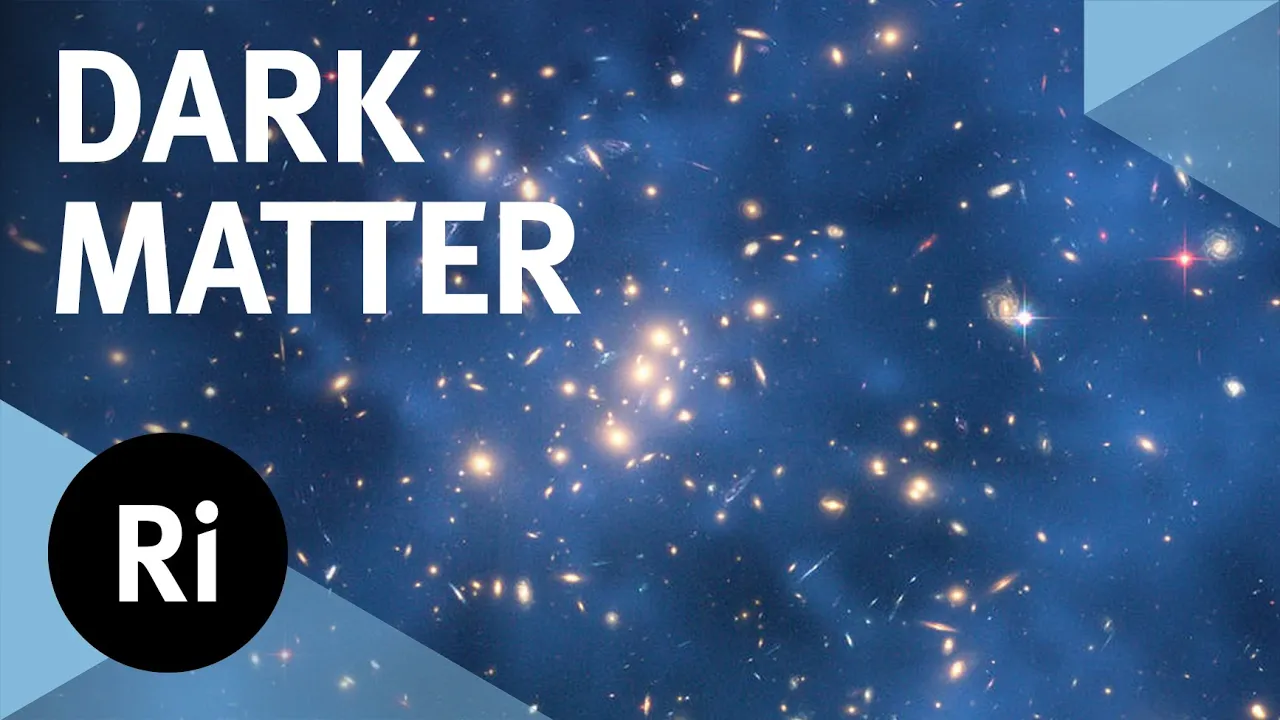
The universe consists of approximately 5% ordinary matter (atoms), 25% dark matter (an invisible substance that holds galaxies together through gravitational effects), and 70% dark energy (a mysterious force causing the universe's expansion to accelerate). Dark matter was first inferred by Fritz Zwicky in the 1930s when he observed galaxies moving too fast to be held by visible mass alone, and later confirmed by Vera Rubin's 1970s studies of galaxy rotation curves. The accelerating expansion of the universe, discovered in the late 1990s through observations of distant supernovae, remains one of the greatest mysteries in physics, as it contradicts our everyday understanding of gravity as always attractive. The Dark Energy Survey, using a 570-megapixel camera, is mapping 300 million galaxies to study dark energy's properties and understand the universe's future evolution.
The Dark Universe: Dark Matter & Dark Energy Explained
Added:[Applause] welcome to fery lab I'm Josh Freeman no I'm not at all Josh Freeman I'm actually the guy standing between you and Josh Freeman just for a couple of minutes my name is Andre Sals I work with the Arts and lecture series committee here at fmy lab we're the group that uh picks the Arts the the Arts series and lecture series performers and and speakers uh and it's a privilege to do so um just wanted to uh tell you a few things that we have coming up uh if you interested in coming back as I hope you are so on Sunday this weekend if you want to make a weekend of it we have the final concert in our Gallery chamber series for this year the gallery chamber series is a bunch of intimate concerts they take place in the art gallery upstairs and uh Sunday's concert features Jennifer Gunn and Tim Monroe a pair of flutists they'll be playing separately and together should be a very good show that's at 2:30 p.m.
on Sunday on Friday April 8th Dr Phil MO I think it's Mo I'm going to go with Mo Dr Phil Mo of Oregon State University will be here to talk about climate change his talk is called five things I wish were true about climate change so that's on April 8th at 8:00 p.m. on Saturday April 23rd we have the Stars of Dance Chicago coming to perform on our stage that's a number of different local dance troops that perform a variety of different types of dance it's always a good show that is also at 8800 p.m. on Saturday April 23rd and I've been asked to mention we have a brand new lecture that's just been added to our calendar that's on Wednesday June 15th special day um it's Barry beish of Caltech who will be here to talk about the recent discovery of gravitational Waves by an experiment called ligo hear that yeah that's exciting so his talk is entitled Einstein black holes and a cosmic chirp which is a great title so those tickets are actually on sale on our website now the Arts and lecture series website is fnal.gov culture a couple other things I wanted to mention uh if you have not been upstairs to our art gallery today to see the uh the exhibit called Art of Darkness that is all images from the Dark Energy survey and of the observatory where that takes place you really should uh after the after the lecture you are welcome to come upstairs and look at it and the Art Gallery is open Monday through Friday 8:00 a.m. to 4:30 p.m. if you want to come back um some of you may know um we uh in addition to all of the lectures and art series events that we put on here sometimes we Moonlight as a particle physics laboratory we do some science it's pretty cool um we're always willing to answer questions about that we have a new brochure that I'm would love to see you all take home uh it's full of pictures and information and we have a free public tour every Wednesday at 10:30 a.m. so on to tonight uh I should mention tonight's lecture is completely sold out we have a totally full flight so thank you thank you all for being here very much appreciate it the speaker tonight he's a professor of astronomy and astrophysics at the University of Chicago he's a senior scientist at the theoretical astrophysics group here at fmy lab he got his PhD in physics from the University of Chicago he's been at fmy lab since 1988 he was the head of the theoretical astrophysics group from 1994 to 1999 he led the Sloan digital Sky survey Supernova survey which discovered more than 500 Supernova for Cosmic study and he is a founder and current director of The Dark Energy survey ladies and gentlemen Dr Josh Freeman thank you Andre can you hear me yeah good uh so I want to add my welcome to fmy lab and uh where we'll be spending the next few hours talking about the Dark Universe um it it's a big universe lots to talk about so to set the context though I want to start by reminding you of a few basic facts about the universe that I think everyone should know uh so the first fact is that the universe is very old does anyone know how old the universe is 13.7 13.7 billion good all right this is a good audience yes um you've been reading ahead uh or it's older than Bernie Sanders either way um that's it for the political jokes for the night uh so it's actually 13.8 billion years we it's gotten older um so how do we know it's old well there are number of things it contains old things in it besides Bernie Sanders uh the Earth we know is about 4 and a half billion years old the sun about 5 billion years the oldest stars in our galaxy about 13 billion years and most recently OB obervations of the cosmic micro background that we'll talk a little bit about later uh have pinned it down to this 13.8 billion years uh so this is just an example of some of the oldest stars in our galaxy this is a globular star cluster Omega Centaurus uh an image taken by the dark energy camera that I'll be talking about later of stars that are about 13 billion years old second basic fact about the universe it's very big I'm not going to ask how big it is uh uh because it's really big um so the most distant objects we can see are about this many miles away U that's a lot of zeros I think this is 100 Zeta miles if you look it up uh and of course when we get to such large distances miles are not a very good unit of distance because it's just too many zeros to keep track of so instead we use the fact that light travels very quickly 186,000 miles a second uh so in one year light travels 6 trillion miles so that defines a unit of distance a light year uh and so this many miles that many zeros up there corresponds to about 30 billion light year so that's the most distant things we see are about 30 billion light years away and just to set the scale the sun our nearest star is is about eight light minutes away the nearest other stars near the sun are are a few light years away so the universe is very big third basic fact is the universe uh contains billions of galaxies in it so if you travel to the southern hemisphere um you have the advantage if any of you ever been down to the southern hemisphere you go out on a dark night uh when it's clear uh you can see galaxies with the naked eye uh so just a little quiz so this is a a Galaxy that we can actually see from the Northern Hemisphere too anybody know what this galaxy is Milky Way very good all right this is a this is a very Advanced audience great uh does anybody know what that Galaxy is oh wow great small magelan Cloud that's right and this is the large magelan Cloud these are two dwarf Galaxy satellites of the Milky Way they can only see them from the southern hemisphere not from the north so if you ever do go down south I urge you to go out in a dark night and see if you can see them they're quite quite spectacular so these are examples of nearby galaxies uh and the universe is filled with billions of these galaxies this is a more typical Galaxy um and it's they're typically about 60,000 light years across contain tens of billions of stars uh and they rotate like this this galaxy like our own Milky Way rotates around its Center uh with a uh on an average takes about 200 million years to complete one rotation this is also an image taken with our our camera so um if we can bring the maybe lights down just a little bit I want to show you uh a few examples of some uh pretty galaxies that we've taken pictures of uh with the dark energy camera this is NGC 253 I'm sure you all knew that um in the constellation sculpture and this is of course the familiar NGC 1566 um also these galaxies are a few tens of millions of light years away uh so galaxies uh with there are billions of them they're all around the universe but they don't exist in isolation they live in an unshaped by a variety of environments uh and in proximity to other galaxies with which they occasionally interact so sort of like my teenage daughters occasionally interact with me galaxies occasionally interact with others uh sometimes you find them in pairs or in groups or in clusters of tens to hundreds of thousands of galaxies and those those in themselves form part of a larger Cosmic web of structure we used to call these superclusters uh so so this is just one example here I pulled out uh NGC 1672 is a nice uh large uh spiral galaxy in the foreground but if you look down below here you see a number of more distant therefore they look smaller galaxies in a group of galaxies and this is sort of a the first hint that these galaxies are not just randomly distributed throughout space they cluster together here's NGC 1703 in the foreground but if we look a little closer and if you look on the right to of of that Galaxy again you see a lot of these smaller yellowish galaxies that's a more distant cluster of galaxies that happens to be behind this foreground cluster so galaxies Clump together into pairs groups uh and clusters of galaxies this is a cluster of galaxies um another image taken from the uh from the Dark Energy survey again all those yellowish galaxies are all in a relatively small volume of space that being a few million light years across um and they cluster together this is a very famous cluster of galaxies this this isn't an image from our our survey uh the coma cluster of galaxies uh and Gala again clusters are sort of the largest gravitationally bound systems we know of in the universe uh again a few million light years across uh and they contain about one quadrillion times the mass of the Sun so a thousand trillion times the mass of our sun typically uh and again that's composed of tens to thousands of galaxies now coma is an extremely important cluster of galaxies historically because it was studied by this character Fritz zwicki uh was a was an astronomer uh Caltech in the first part of the 20th century um and um as you can probably tell from the image uh zi was quite an sort of erasable character uh he was quite an eccentric personality but he was also a pioneer of much of of modern astronomy he's one of the first to carry out a really major uh surveys of of galaxies uh he also is the discoverer of dark matter as we'll talk about in a minute Poss neutron stars did the first real quantitative studies of supernova and in the 1930s um zwicki studied the Motions of galaxies within that coma cluster he measured how fast the galaxies were moving uh with respect to us within the coma cluster and he found that those galaxies were moving remarkably fast of order a th kilometers per second relative to each other and that was just simply too fast for them to remain confined by the gravitational field of the other galaxies in that cluster uh so this was a puzzle why is the coma cluster still there why haven't those galaxies all just streamed away from each other if they're moving so fast relative to each other and so what uh what zi postulated was that the coma cluster in addition to the Luminous galaxies we could see that coma was filled with dark matter uh and that the uh this would the gravity of that dark matter the material that we can't see must be the thing that's keeping the galaxies within the coma cluster from flying off into ex extra cluster space uh so he really was the first one to study this concept in detail and concluded that clusters of galaxies are mostly made of dark matter so an image like this where we think we're looking at the cluster we're really looking just at these galaxies that are kind of like sprinkles on this vast ice cream cone of Dark Matter uh and we know the dark matter is there because it exerts this gravitational pull on the galaxies that we can see all right now we skip forward and uh using Einstein's theory of relativity so I'll remind you that Ein Stein reinvented our notion of of how gravity Works through the concept that gravity is not just a force between two massive bodies instead massive bodies or or any kind of energy curves SpaceTime in its vicinity and other bodies move in that curved SpaceTime and that's how gravity gets communicated and using that concept then uh LED Einstein to predict and then the first real verification of his theory was that uh like light rays should get bent in gravitational fields due to this curvature of SpaceTime and so what this means is is if I look at a distant Galaxy behind a foreground concentration of mass say a cluster of galaxies then the the shape of that distant Galaxy will get distorted because the light rays coming to us get bent by the gravitational field of that cluster so something that's intrinsically elliptical looking at the lower right hand portion uh that's behind the cluster and near the line of sight to it will get distorted into something that appears more like a banana or an arc and this has now been observed uh many times in uh observations from the Hubble Space Telescope and from groundbase observatories so what you're seeing here is an image from the Hubble Space Telescope of a cluster of galaxies those are the big bright galaxies but then you also see these faint wispy very elongated structures these arcs uh and those are images of distant galaxies behind the cluster and the light has been bent passing through the cluster and that leads to these very elongated apparent shapes and you can use those images to actually reconstruct what the mass distribution of that cluster of galaxies is and so these sharp Peaks are uh where the galaxies in the cluster are but then in addition to those sharp Peaks you see this overall sort of mountain of matter uh and that's all dark matter that's a smoothly distributed dark matter in which these galaxies in that cluster are embedded and so this is sort of direct confirmation of what uh of what zi had found back in the 1930s so skip forward now to the 1970s and astronomers were studying the Motions not only of galaxies within clusters but of stars within individual galaxies so this is the Galaxy m33 it's a spiral gy similar to our Milky Way it's rotating around its Center uh and you can measure the rotation speed of those Stars around the center of the the Galaxy this was done by Vera Rubin and collaborators in the 1970s uh and what's shown here is a plot of the rotation speed in kilometers per second as a function of distance from the center of that Galaxy m33 now what we expected is that as we move out from the center of the Galaxy the Stars should be orbiting more and more slowly because once you get far enough out there's no more mass it's just you've enclosed all the stars uh and so you would expect the rotation versus distance to look something like that lower dash line and that's very much what the the rotation curve of our solar system looks like of planets moving around the Sun the farther the planets are away from the Sun the slower they're orbiting because gravity is weaker instead what Ruben and her collaborators found was that the rotation speed of stars around a Galaxy keeps increasing and then sort of flattens out at a much higher value than would be expected just from the gravity of the Stars contained within that Galaxy and this was again evidence that the bulk of the matter of the G of the mass in in this galaxy was not contained in the stars that we see but was in fact contain in some broader distribution of dark matter and so like zwicki Reuben found that the stars in a galaxy are moving faster than we can explain the gravity of something that we can't see must be holding those stars in their orbits uh and that's evidence for dark matter and in fact galaxies are mostly dark matter the stars that we see in these galaxies are like again sprinkles on this much larger mass of Dark Matter ice cream and again we know it's there because of its gravitational effects again skipping forward just as we confirmed that fact in clusters of galaxies using gravitational lensing we've also now confirmed the existence of dark matter in individual galaxies using the same gravitational lensing effect so what you're seeing here are images of different galaxies again from the Hubble Space Telescope the yellowish blobs in the center is a foreground Galaxy and those bluish rings are actually the highly distorted images of another galaxy behind that foreground Galaxy and it's been distorted because the light from that distance Galaxy was bent around by the mass of the foreground Galaxy uh and that's that very high uh um lensing is again telling us about how much mass there is within the foreground galaxies and it's much more than the mass contained in the Stars here's another uh example of this this is actually a system we found with the SLO digital Sky survey and Then followed up using the Hubble Space Telescope so again the yellowish blob in the center is a foreground Galaxy the blue ring around it is the highly distorted image of another galaxy that's behind it okay and finally we can we now do this on a kind of industrial scale where we can apply that same technique of lensing to study the shapes of galaxies behind thousands of foreground galaxies and do this in a kind of average statistical sense this is called galaxy galaxy lensing and instead of probing the masses of individual galaxies this lets us probe the the sort of typical mass of average galaxies and so we started this using this technique back in the 1990s and what we found again was that on average luminous galaxies are embedded in these extended what we call Halos of Dark Matter uh and so this was written up in the New York Times in late 1999 uh and apparently we were very surprised by this finding uh because that you know to make it interesting for uh you have to there has to be some element of drama um I was actually much more interested in the article on prehistoric fashion that was uh that was the other article in the uh newspaper that day okay so we've now established that dark matter exists it's the dominant form of mass in galaxies and in clusters of galaxies so the natural question is what is dark matter made of um is it made so what what what could it be made of well what there's the stuff we know about in the universe it's atoms uh which is made of electrons orbiting around a nucleus the nucleus more fundamentally is made of protons and neutrons the protons and neutrons more fundamentally are made of quirks uh and so you might think okay maybe dark matter is made of some kind of atom that just for whatever reason is not shining light or emitting or interacting with light in some way so could could dark matter be made of atoms something that's very dark and so in the in early times people thought okay maybe there could be very faint stars that we just too faint to see maybe planets that aren't illuminated by a nearby star uh maybe some kind of dirty rocks uh and so astronomers searched for these uh but we gradually concluded that there simply Aren't Enough atoms in the universe uh to account for all the dark matter that we infer in galaxies and clusters of galaxies there's too much dark matter out there compared to the amount of atoms that we have added up in the universe that we've now measured very precisely so dark matter must be made of something other than atoms or more fundamentally corks the things we study here at fmy lab and perhaps uh it's made of some new kind of elementary particle that we've never seen before that isn't you know doesn't uh the atoms aren't composed of and so our name for this uh is a weakly interacting massive particle or wimp uh and so a wimp is basically some new kind of elementary particle it might be say 10 to 100 times the mass of a proton which is so weakly interacting that we don't see it it doesn't shine it doesn't uh interact with light but it could interact via the weak interaction with ordinary kinds of ordinary atoms and so there are experiments around the world uh cited deep underground uh filled with atoms as you seen here um and they're looking for these wimp particles coming from the dark Halo of our galaxy uh and the notion is that occasionally one of these wimps would come in knock into the nucleus uh in an atom in this detector uh and impart some energy into that nucleus a very tiny amount uh but if you have a sensitive enough detector you can detect that that energy that's deposited uh and so there are a number of experiments now going around the world fmy lab is has an active program uh in searching for these dark matter these wimps using these techniques there are a variety of different techniques they all involve people uh wearing funny hats uh and uh this is uh an interesting field there have been some of these experiments have claimed to have seen Dark Matter particles uh others that we think are more sensitive have not yet seen them so it's an interesting time uh and these experiments are getting more and more sensitive uh and there's a hope that in the next decade perhaps uh we may actually detect uh in in a in a verifiable way these these dark matter particles another possibility is that we may actually produce these dark matter particles you've all heard of the large haon collider at CERN our sister laboratory in Switzerland where the higs Bon was discovered in 2012 they're bashing protons together at very unprecedentedly high energies uh and the hope is that perhaps uh in one of these collisions of protons they may produce uh Dark Matter particles wimps uh that we could infer through their signatures in these in these colliders a third possibility for detec dark matter is that we may see uh wimps annihilating with each other so our current theor suggest that if there are dark matter wimps particles there would also be antiparticles floating around in the Halo of our galaxy uh and whenever a wimp particle and anti particle come close together and Collide they would annihilate giving off a burst of energy which would lead to radiation high energy radiation say gamma rays uh that would could see if we have a Gamay Observatory um and uh so NASA has such a Gamay Observatory orbiting the Earth the fmy Gamay satellite and fmy has been looking for signs of these wimp anti- wimp annihilations looking both at the center of our Milky Way galaxy which is very dense so there may be a lot of Dark Matter there and also looking at some of these other dwarf neighboring galaxies to the Milky Way which are also very dense and would be places to look for this kind of annihilation signal so fmy is is in the process of looking for Gamay coming from wimp Annihilation okay continuing on with the context setting the basic facts of our universe the fourth fact is that the universe is expanding and this is traced to the work of Edwin Hubble Hubble was an astronomer in the first half of the the last century uh and we have to talk about him because he was a graduate of the University of Chicago both his undergraduate and graduate degrees were there he also studied law he was a boxer he did track and field uh he played basketball in his spare time he did astronomy and uh Hubble did some uh really amazing feats in observational astronomy in the first part of the 20th century he's the one who really proved that spiral nebula these wispy things which we now call galaxies he's the one who proved that they are actually galaxies outside of our own Milky Way before then there had been great uncertainty whether these these things these nebula were actually clouds of stars uh within our own Galaxy and he discovered the expanding Universe in the late 1920s and went on to make important cataloges of galaxies and Sky surveys um so here's a picture of Hubble using the Palomar 48 in telescope um so do any anybody notice anything odd about this photograph of Hubble using the telescope well he's looking yeah he's not looking through the telescope he's looking through the viewfinder but um yes exactly the lights are on so to do astronomy the lights have to be off it has to be dark uh so you know I'm I sort of have my doubts about you know how authentic all this stuff really is because you know he should have known to turn the lights off anyway uh before that Hubble uh had a uh a quite Stellar uh athletic career so here's Hubble with the 1909 National Championship NC well before the NCA I think uh national championship basketball team 1909 um and here is actually Hubble's basketball championship basketball on the on the space shovel with the Hubble Space Telescope in the background the final score of that championship game was University of Chicago 18 Indiana 12 I think it took them a while before they you know Steph Curry hadn't been invented yet uh they didn't have three-pointers back then so nevertheless uh Hubble uh really had uh went on to a brilliant career in astronomy uh and uh to celebrate his career um astronomer John grunsfeld also a Chicago graduate uh brought his basketball up to uh on one of the missions where they refurbished the Hubble Space Telescope okay so here's the expanding universe as as time goes on everything in the universe is moving away from everything else if you were to run this movie backward in time eventually everything would be on top of everything else 13.8 billion years ago that's what we call the big bang and I want to just stress a few a few key points about the expanding Universe one is we're really talking about about exp uh the distance between galaxies increasing uh we don't think our galaxy is expanding uh we don't think this room is expanding I'm expanding but that's because I eat too much uh generally uh you know within our galaxy gravity is keeping things sort of stable uh so it's really the distance between galaxies which is increasing with time and again to give you a sense of scale a Galaxy 100 million light years away is moving away from us at 2,000 m per second so the universe is kind of humming along um and um uh again this was really established uh by Hubble in the in the late 1920s now there are a lot of misconceptions about the expanding Universe uh and often many of these misconceptions are traced to the fact that this picture while useful we have to be cautious in interpreting it uh because we're looking at a lower dimensional Universe from our three dimens perspective so we don't think the universe has a center or an edge at least not that we can see it looks the same everywhere it's homogeneous and isotropic and the expansion is happening everywhere there's no it's not exploding into empty space and so really that picture of an expanding balloon is somewhat misleading it's probably better to think of say an infinite raisin bread think of the raisins as galaxies you put enough yeast into it and put it into the oven and it will start to expand each rais will move away from all of the other raisins that's probably a better analogy for the expanding Universe um another point to make is that as as the universe expands like any gas uh it gets less dense and it cools off therefore if we run the movie backward in time toward the Big Bang uh it becomes hotter and denser so today the universe is very cold it's only 3° above absolute zero and very diffuse the the density of the universe is very low low um but in the early Universe it was much hotter and much denser and so this is now our best picture of the early Universe the cosmic microwave background radiation this is as seen from the plank satellite so this is an all Sky image of the temperature of the universe uh as it appears today um 3° above absolute zero so the red and blue splotches are regions where the temperature is slightly hotter and slightly colder than the average and that slight is only one part in 100,000 so the universe to First approximation has the same temperature everywhere but it has these slight differences in temperature from one place to the other now this is really giving us a snapshot of what the universe looked like when it was only 380,000 years old it's now 13.8 billion so this is really a picture of the of the Adolescent universe and at that time it had a temperature of a few thousand de but since then with the expansion of the universe it has cooled to a temperature of just below 3° above zero so this is a picture of what the universe looks like today this is a map of galaxies uh from an inred survey done a number of years ago each of the little white uh squares there is the location of of a galaxy there's uh a few million galaxies in this picture uh the blue is just uh this is in funny coordinates so the blue is actually infrared from our own Galaxy um and again what you show what you see here is that the Universe today is actually quite lumpy uh it's not obvious that what the contrast is here but the lumpiness of the universe today is is orders of magnitude larger than it was uh 380,000 years after the big bang and so our picture is that as the universe has evolved it started from nearly homogeneous conditions the density of the universe was almost the same everywhere in space whoops uh but then over time gravity acted on slight differences in the density between different locations in space regions that were denser than average uh ACR matter onto them regions that were less dense than average uh became more and more vacuous and eventually uh large scale structures formed this kind of web this thing we call the cosmic web so this is a computer simulation of the evolution of structure from nearly homogeneous initial conditions to a very uh inhomogeneous universe that we see today and in this simulation the only ingredients are gravity acting on particles and dark matter particles for example wimps uh they didn't even bother to put in atoms in this uh in this simulation because they're a small minority compared to the dark matter and this simulated Universe looks remarkably like that Lumpy Universe of galaxies that we actually see today so our picture of the history of the universe is that it started in a big bang 13.8 billion years ago started expanding very rapidly that's a period we call Cosmic inflation uh once it had had reached about 380,000 years after the big bang uh that's when the the photons the radiation in the microwave background uh uh started streaming away from the atoms and that gives us this picture the the microwave background that we saw from plunk and then over the succeeding billions of years the small those small fluctuations in the temperature and density of the universe evolved by a gravity into the large scale structures we see today galaxies stars planets and larger scale structures so that's the picture we have now of how the universe has evolved so we have we know the universe is expanding and it's natural to ask is the expansion changing over time what so what do we expect well again gravity is the dominant force on large scales uh and so we can do a simple thought experiment we're sitting here on the Milky Way we look at all these other galaxies these billions of galaxies they're all receding away from us due to the expansion of the universe but our galaxy is tugging on each of those galaxies because of gravity uh we're exerting a gravitational force on all those billions of gxy moving away from us and therefore we would expect that if we observed any one of those galaxies next year 10 years from now 100 years from now the speed with which it's moving away from us should reduce over time it should get should be slowing down because we're pulling on that Galaxy and so that was the expectation through much of the 20th century was that the expansion should be gradually slowing down over time uh and Hubble and his uh many of the people he uh taught and worked with and who followed him tried to measure that slowing down of the cosmic expansion uh and never could could do it because it was uh the measurements are are very challenging to make and then in the late 1990 two teams of astronomers studying distant Supernova in fact found that the expansion was not slowing down they both found evidence that it was in fact speeding up over time uh and this was uh led to the no Nobel Prize in physics in 20111 uh for the leaders of those two teams so I want to talk a little bit about this discovery and some of its implications so this is a supernova this is the kind of uh event those astronomers were looking at so this is a nearby galaxy in the lower left you see what looks like a bright star that's in fact a star in that Galaxy which exploded and about 3 weeks after it exploded it became nearly as bright as all the other billions of starss in that Galaxy so Supernova are remarkable events they uh they go from being uh fainter than the sun to being brighter than a billion Suns over the course of just a few weeks and then they fade over the course of a few months uh and this is a uh a gallery of about 500 Supernova that we discovered uh in the mid 2000s using the slow digital Sky survey uh and again what you do is you look at all you make a big survey of the sky you come back sometime later you look at the same pches of the sky and you see if there's anything new there and each of these blue splotches is a new star it's it's Supernova that wasn't there when we took the images of those galaxies a few weeks before these we think so the the these these Supernova that we're looking at are a particular kind of supernova called a type 1A Supernova and we have good evidence evidence that type 1 a supernova are explosions of what we call white dwarf stars these are very compact Stars our sun will eventually we think become a white dwarf star once it's finished burning all of its nuclear Fuel and it will become very Compact and dense uh and if you have a white dwarf star near another star and either accreting material from it because of gravity or else orbiting another white dwarf star and eventually colliding with it in both of those cases is the white dwarf the mass of the white dwarf will increase until it reaches the maximum Mass called the Chandra secar Mass uh about 1.4 times the mass of a sun and then it will explode it will undergo a thermonuclear explosion uh and it's those explosions and the radiation from those explosions that lead to these Supernova events that we see and so these two teams of astronomers in the late 1990s what they could do what they realize was that these Supernova these typee 1A Supernova explosions all had about the same brightness when they about three weeks after they exploded they reached their Peak brightness and then faded and they they had they had determined that all of these these Supernova had the same intrinsic Luminosity so they were all like 100 watt light bulbs obviously much brighter but all 100 Watts not 80 or 120 and so this means that these these particular kinds of supernova are what we call Standard candles and if you know how bright something is uh then you can determine how far away it is relative to other Supernova and so what they were able to plot was essentially um they they we could tell uh how big the universe was when they were uh exploded that's the red shift we can tell that from the spectrum of light and then they used the brightness of the supern noi to essentially tell how far away they were or alternatively how far in the past they had exploded uh and what we had expected was something like this black line that a supernova that went off when the universe was 2/3 its present size would have a particular brightness but the points there are showing you that instead a supernova that went off when the universe had a certain fraction of its current size was actually about 25% fainter than we expected and that was the indication that the expansion of the universe is not spe is not slowing down due to gravity but is in fact speeding up uh and that's what led to the Nobel Prize Discovery so why is this a strange phenomena why is this a mystery uh well you know whenever you have any kind of object uh every time you've taken any object and you've thrown it up and dropped it um as soon as when you whenever you throw up a ball as soon as it leaves your hand it's moving upward but what's happening it's slowing down due to gravity it's it's attracted to the Center of the Earth as soon as it leaves my hand it starts to slow down and because I can't throw very hard eventually it reaches some maximum height and then falls back down to earth and every time you've thrown a ball up that's what's happened uh and that's because gravity is attractive um so but what the universe is doing it's sort of like imagine I throw this ball up and initially it starts slowing down due to gravity but then at some point instead of continuing to slow down and eventually hitting a maximum point and falling back to Earth instead it starts to speed up and Rockets out of the atmosphere of the earth into uh you know outer space that's what the universe is doing safe to say we've never seen that in our everyday experience uh but that's why the acceleration of the expansion the speed up of cosmic expansion uh is a mystery it's because it it confounds our understanding of gravity so what could be causing this speed up of the expansion of the universe and we basically think there are two possibilities the first possibility is that the universe is filled with some kind of stuff that gives rise to a kind of repulsive gravity gravity is usually attractive in our everyday experience uh in the solar system in our galaxy but perhaps when we're talking about things on Cosmic scales there is some additional stuff in the universe it's not dark matter it's not atoms it must be something else which has the property that it makes things repel from each other and therefore speed away from each other we now call this dark energy uh and we think that the universe is 70% dark energy that's one possibility the other is that maybe something strange is going on with gravity when we get to Cosmic scales again in the Earth the solar system our galaxy uh gravity Abyss Einstein's theory of general relativity it's attractive Force but again perhaps when we get to very large scales uh gravity uh behaves in a different way in such a way that things can accelerate away from each other so that's the second logical possibility is that there's something going wrong with understanding of gravity so we now have this picture that's been put together just over the last 10 15 years that 95% of the universe is dark doesn't emit with a light or interact with light so the stuff we see in our everyday world uh stuff made of atoms or more fundamentally quirks that's only 5% of the universe so the stuff we're trying to figure out the nature of primarily here at fmy lab and elsewhere that's only 5% % of the universe uh the stuff that we know about that that the the the laws of physics that we know of we think 25% is this dark matter it's not made of atoms it's made perhaps of some new elementary particle and that's the stuff that's holding galaxies and clusters of galaxies together and is the engine by which galaxies with Gravity by which structure forms in the universe and then we think the dominant component of the universe 70% is this dark energy this gravitationally repulsive stuff that's actually speeding up the expansion of the universe uh dark energy is not it's not something we observe in our everyday life it has no tangible effect again on terrestrial uh terrestrial scales it's much too dilute to weak a force so it would only come into play on Cosmic scales let me skip over that so one interesting thing is um I said that the Universe today we think is about 70% dark energy that's the if you look on the right hand column uh about 20% Dark Matter about four or 5% Atomic uh ordinary matter but if we go back in time uh then those relative amounts of those different components uh will change we think that as the universe expands um Dark Matter becomes more dilute ordinary matter becomes more dilute because as things get you know as the distance between them gets bigger the density the mass per unit volume goes down but that doesn't happen with dark energy uh so since dark energy is dominating today uh as the universe uh we think that the density of dark energy hasn't changed very much from today to earlier times and that means if I go back in time when the when the universe was denser higher density of dark matter and ordinary matter that means dark energy was relatively less important so if I go back to a Time 95 billion years after the big bang the middle column there then we think the universe was about 50% Dark Energy 43% or so dark matter 7% ordinary matter and if I go even further back in time to just a billion years after the big bang then we think Dark Energy was only 1% Dark Matter was the dominant component 84% ordinary matter about 15% and this is important because remember I showed you that movie of structure forming by gravity that only works in a universe where the bulk of the stuff is dark matter once Dark Energy takes over from becomes more dominant than dark matter structure can no longer form because dark energy is this repulsive Force pushing things away from each other where gravity was the thing pulling them together uh so we think that before uh you know a few billion years the universe actually was slowing down due to the gravity of Dark Matter uh and then maybe S 8 n billion years after the big bang uh Dark Matter became sufficiently dilute that dark energy took over and caused the universe to speed up so what is dark energy well we don't know uh we think it's a component with negative pressure uh and that's what we need in general relativity to make something which would be gravitationally repulsive but we really don't have a good fundamental understanding of what dark energy is our most conservative hypothesis is that it's the energy of empty space itself the vacuum so if I take some this if I took this bottle of water poured all the water out of it put a vacuum hose on it evacuated all the air from it shielded it from cosmic rays um there would be no particles left in it no ordinary matter I could Shield it from Dark Matter uh and it would be empty space in classical physics empty space would have no energy but in quantum physics empty space has energy due to Heisenberg's uncertainty principle and so and it turns out that in quantum mechanics the vacuum the energy of the vacuum would have the right properties to be dark energy it would have this gravitationally repulsive Ive effect uh so that's the most uh conservative hypothesis uh now the only slight problem with that uh hypothesis is that if I calculate how much energy uh there is in the vacuum in this little bottle of water it's Infinity uh and I'm pretty sure there's not an infinite amount of energy inside this bottle so that means that our calculations are wrong and this has in fact been a major embarrassment for theoretical physics for the last Century uh we just don't have an understanding of why the vacuum the energy of the of empty space is not infin infinity or much larger than we observe it to be so it's still a fundamental mystery there are other suggestions for what the dark energy could be uh one popular idea is that perhaps the energy of the dark energy is associated with a much much lighter cousin of the higs boson a different kind of field permeating the universe uh but those ideas are even uh much more speculative uh and so I thought what I would do would be uh you know when you don't have the answer to something you ask Siri um so Siri what do you think the nature of dark energy is I'm sorry I'm afraid I can't answer that yeah okay well it was worth a shot okay I think Apple should be should be working on this better but okay all right so we don't know what dark energy is Siri doesn't even know what dark energy is nevertheless dark energy is important why is it important well the nature of dark energy is going to determine the future evolution of the universe it's already 70% of the Universe I said it was less a smaller fraction in the past that means in the future dark energy is going to be an increasing fraction of the universe so it's dominating now it's going to dominate we think into the future and so we need to understand its properties if we were to have any hope of determining what the future evolution of the universe is going to be uh and one way to do that to understand the nature of dark energy is to make maps of the universe they can give us Clues to what dark energy is uh and so that leads me into the project I've been working on with colleagues here and around the world for a number of years called The Dark Energy survey and our basic goal is to make a map of the universe to try to understand the history of the expansion of the universe and the history of this growth of the clumpiness of the universe in order to get at the properties of dark energy or whatever is causing the universe to speed up and so what we've done is we've built a camera for a telescope in Chile and we're now conducting two surveys of the universe taking pictures snapshots shots of eventually 300 million galaxies over about 1/8 of the sky and we're also taking snapshots of certain smaller regions of the sky which we go back to and point in the same direction roughly every week to to discover these more of these Supernova the Nobel Prize work was based on um uh observations of just a few tens of supern no in this project we're going to have observations of thousands of supern no and hundreds of millions of galaxies so we started uh the survey started in late August of 2013 it's been we just finished our third observing season uh it's supported in the United States by the department of energy and the National Science Foundation so this is your tax dollars at work uh and we are trying to spend them wisely we also have foreign and institutional Partners who have contributed to the project and uh we're using this this map to try to understand the history of cosmic expansion and the growth of structure using four primary techniques I don't have time to go into them in detail but I'll just list them one is to study these clusters of galaxies and to actually take a census of clusters count how many of them there are in a given volume of space a second is this technique of gravitational lensing that I mentioned before look at the distortions of the shapes of distant galaxies as their light passes through the foreground ground distribution of Dark Matter a third technique is just to measure the distribution of galaxies in space what we call large scale structure and the fourth is a technique that led to the discovery of cosmic acceleration these Supernova but just to measure many more of them measure them more precisely and measure them to Greater distances um so I think I'll skip well yeah so I'll just I'll just mention one of these four techniques this is weak gravitational lensing so again the idea here is we're measuring the shapes of very distant galaxies the light from those galaxies is traveling towards us through this foreground distribution of Dark Matter Halos of Dark Matter associated with galaxies and clusters of galaxies uh and as it travels through them the light paths get bent that's what Einstein's general relativity tells us and that slight bending leads to slight distortions of the shapes of those galaxies before I showed you very pronounced distortions of the shapes of galaxies that's what we call strong lensing uh but that only happens to a minority of distant galaxies if they happen to be just near the line of sight to some foreground Galaxy all galaxies all distant galaxies get weakly distorted weakly lensed uh and so we can measure this uh by using the shapes of these 200 million distinct galaxies and that will give us uh information on Dark Energy um so in order to do this project we've built an international collaboration uh we have 400 scientists from around the world uh the project is Led uh by team here at fmy lab in the us but we have collaborators in England and in Europe Brazil uh and Australia and we use uh this telescope this is the blanco telescope on serot too interamerican Observatory this is operated by the national Optical astronomy Observatory it's in the northern uh Andes mountains of Northern Chile so inside these are three different telescopes the biggest one is that one with the silver dome in the middle uh if you go inside that Dome this is what you see uh so on the left that big structure is the telescope itself uh and what you see here is the mirror of the telescope it has a diameter about four yards across four meters and so light comes in from the sky bounces off of that mirror and then goes up into our camera which is this thing in the upper right it actually goes through five different lenses which Focus the light onto a big digital camera that's about this big around uh so this is what the actual focal plane of the camera looked like it's 570 million pixels that doesn't sound like so much today you know your iPhone has 10 million pixels but 10 12 years ago uh sounded like more and these are very special pix pixels uh they're very sensitive to light so when I take a picture um of all of you with my uh with my camera um uh well it has a flat we don't have a flash uh it cost $40 million and they couldn't put a flash on it but um uh but the point is your you know your iPhone takes great photos but it needs light even you know even this amount of light it doesn't do so well in uh but the universe is dark right 95% of it's dark we're looking at these very distant faint galaxies we get very few photons in uh in the minute and a half that we that we open our shutter very few photons per distant Galaxy and so these pixels have to be extremely sensitive uh so we operate them at very low temperature uh and they have very low noise compared to your uh your digital cameras uh and so this uh is a very finely tuned instrument it was built here at FY lab and installed on the telescope in 2012 and in fact so on the right is a picture of the camera installed at the top end of the telescope and you see at the top end of the telescope has those white Rings uh and before we took the the camera down to Chile you know it's it's a remote Mountaintop we knew this would be a complex operation to install it they hadn't actually removed the top end of the telescope in many decades and so here at fairy lab uh we decided to build a replica of the top end of the telescope we call a telescope simulator so these white Rings here uh have the same diameter as the Rings at the top end of the telescope uh but this big telescope simulator was out uh in one of the Laboratories here on site just a couple of miles away and so we were able to put the camera together here mounted on this telescope simulator uh understand how to mount it and uh uh how it would work under various orientations and that proved enormously beneficial uh when we went down to to Chile to install it uh it has as I mentioned five lenses on the upper right is the biggest of the five lenses it's nearly a meter across uh so quite large Optics very precisely shaped uh and then once the light goes through those those five lenses before it hits the digital camera focal plane itself it goes through a filter uh and we operate with five different filters at different times uh that l in either blue light or sort of mid-range Optical light or near infrared light uh and these are very large Optical filters some of the largest ever built for astronomy uh and the remarkable story here was that these filters uh they they are very difficult to manufacture uh and they were made by this company in Japan uh just just a few months after the uh tsunami of 2011 devastated the country so a remarkable a remarkable feat uh so this is what an actual raw image from the camera looks like so you know when you take if you have a nice digital SLR those those different formats jpeg whatever raw uh so we we only use the raw mode here we don't uh we don't make use other modes in the camera uh and so this is what a raw image looks like it's got and so each of these is uh is a charge couple device detector 2,000 by 4,000 pixels uh and uh we Mosaic them together to make the focal plane uh and so you can see uh you know galaxies stars in our own Galaxy various sorts of artifacts so a lot of work goes into uh cleaning those images of artifacts so that we can use them for astronomy so this is one of the first images we took uh on the night of September 12th 2012 of a nearby cluster of galaxies the forx cluster uh and you can see these little uh black uh blackened areas those are the uh divisions between those different charge couple device detectors in the focal plane if I just zoom in on one of those ccds and blow it up this shows you one of the most prominent galaxies in the forx cluster NGC 1365 beautiful spiral galaxy uh so this camera has uh one of the features uh that enables us to make this very large survey is that it covers a very wide field of view on the sky it's three Square degrees on the sky uh so to give you a sense of scale if we were to point it at the full moon we could completely encapsulate the full moon whereas the Hubble Space Telescope its cameras you know just cover a very small portion of the sky in any one uh in any one picture so it's a very wide field camera which is what we want to be able to make a map over a very large swath of the universe so each year for about five months of the year we just take snapshots around the sky about 20,000 of them each year uh so this is another example of one of the images we taken NGC 1512 so it's about 38 million light years away so this is a relatively nearby Galaxy most of the things we're interested in studying for dark energy are these very faint much more distant galaxies that are billions of light years away uh here's another example I don't remember the phone number of this this galaxy here's a cluster of galaxies so you see a number of sort of galaxies of a similar color in a relatively small volume of space uh here's uh a number of what look like interacting galaxies uh and to give you a sense of scale this image which is just from a portion of one of the images contains about 50,000 galaxies in it uh and so that's what we need in order to be able to make a map of hundreds of millions of galaxies over time if I just blow that one up and then you zoom in you see there is a distant cluster of galaxies so these are the kinds of things we're counting uh in order to probe uh Cosmic acceleration in Dark Energy we've also discovered a number of uh strong lensing systems so these are again distant galaxies that are highly distorted because the light from them has passed by a near a foreground Galaxy or cluster of galaxies uh and led to this strong Distortion of the images uh this is a actual map of dark matter in a cluster of galaxies similar to the one I showed you before again using this weak lensing technique so the image is an image of the cluster of galaxies uh so you see these galaxies here are all in this foreground cluster the colored Contours are actually showing you the mass distribution of that cluster inferred from this gravitational lensing technique so the red Contours indicate a high density of mass the Bluer is a lower density so we're using this technique to again map out the dark matter in these systems uh the other thing I mentioned we're also using this survey to find supernova and so here's one example if I take so again this is that picture of the forax cluster I'll zoom in on one particular CCD and blow it up and then focus on the lower portion of that CCD and blow it up on focus it on this one particular Galaxy uh and then if I flip back and forth between two pictures of that Galaxy taken a few weeks apart then you see something has appeared uh and that's a new Supernova that we discovered in October of 2013 and we've now discovered well over a thousand of these Supernova uh Supernova can be hard to to see uh if you're sitting up front you can probably see it if you're sitting far away it's harder to see but uh fortunately they come with these green arrows um that makes it much easier to find them okay so uh so this is actually the geometry of our survey the footprint of the survey on the sky so this is a picture of the sky in Celestial coordinates the coordinate system defined by the rotating Earth uh the plane of our galaxy of the Stars rotating our galaxy is this dotted line we want to stay away from that because if we have to look through the plane of our galaxy a lot of the light's going to be absorbed and Scattered by gas and dust in our galaxy so we want to look outside of the plane away from the plane of our galaxy so that tells us we want to focus in this region of the sky uh and then we also want to see what we can see overhead from Chile at night uh and that's uh that's this uh so we focused in on this kind of uh purplish reddish pinkish region here so this is a region that covers about 1/8 of the total Sky uh and what we're doing over the course of these five years is just taking many snapshots through each of those five filters over this whole area of Sky uh and making deeper and deeper Maps the yellow the little yellow regions those are where the Supernova Fields those are the ones that we come back and we point in those directions roughly once a week to discover Supernova and measure their brightnesses uh and then the data that we've mostly analyzed so far is in this green patch this is data we took before we actually started the survey when we were kind of testing things out we called that science verification so this is now a map of the galaxies of a couple of million galaxies from that greenish uh area over in the lower right uh and again you see this kind of filamentary structure of galaxy of the Galaxy distribution uh showing you the large scale Cosmic web uh again this this region of the sky is only 3% of the area that we will eventually cover uh this is actually a map of the dark matter in that same region of the sky you using this weak gravitational lensing technique uh and there's a nice correlation between where the dark matter is and where the galaxies are that's not surprising we think galaxies in the cosmic web mostly Trace out where the dark matter is but we can now actually make maps of it using this lensing technique this is now a more recent map that we've made this covers about a th000 square degrees this is from the first of our five seasons and this is the data that we're now analyzing so this is again showing you the distribution of of a few tens of millions of galaxies over the sky you see this frent this frothy filamentary structure of the cosmic web uh and compare that to the region we've already analyzed it's it's a much larger data set uh that we now have to play with one of the things we've done uh is in addition to using this data to probe Dark Energy we can also use it to probe dark matter and so here is a map showing you are again that that pinkish footprint on the sky now superimposed on a picture of the Southern sky from the telescope uh and the little red dots are are nearby galaxies that we discovered just last year these are galaxies that are in our own Cosmic backyard these are dwarf galaxies they're Ultra faint some of them may contain only a thousand stars or so compared to the billions of stars in a typical Galaxy and these are satellites of our own Milky Way galaxy much like the large and small melanic clouds are satellites of our Milky Way but these are much much smaller much fainter and so we simply haven't been able to discover them until we've made this map so we discovered 17 of these nearby dwarf gattle galaxies uh just last year and as I said these these little faint Galaxies have the advantage that they're relatively nearby to us to the Milky Way and they're very rich in dark matter they contain very few Stars mostly dark matter um and so we're searching in these dwarf galaxies to try to see the signal that annihilation of weakly interacting massive particles so this is now a gamma ray image from the fairy Gamay satellite of one of those uh dwarf galaxies that we discovered last year we don't see any significant excess uh uh of gamma rays coming from that Galaxy so that allows us to put constraints on the nature of dark matter and finally a couple of other sort of fun things that have come out of this nothing to do with dark energy or dark matter uh but when you take make a large map of the sky it turns out to be useful for a variety of other things that we hadn't even thought of when we designed uh and started the survey namely we can use this we think to understand more about the nature of our own solar system the very nearby universe so on the upper left is showing you the inner solar system system the sun surrounded by the inner planets then the asteroids and then Jupiter in the upper right we're zooming out to see the outer solar system including Uranus Neptune and Pluto the former Planet uh which we now realize is just one of a very large number of objects uh that we call Kyper belt objects uh and in the lower right uh we have a zoom out even further uh so the the solar system is now all contained in here and in red is the uh orbit of an interesting planet called sedna that was discovered a number of years ago uh and sedna we think is sort of uh has to do with uh and then if we go out even further we get to where we think there's this vast cloud of uh of stuff called the the the orc Cloud uh and so it turns out that there's actually many hundreds of thousands uh not only of inner solar system system asteroids but these uh Kyper belt objects and more generally what we call Trans neptunian objects things outside the orbit of Neptune uh and so here is a plot on the sky of the known trans neptunian objects super on the sky superimposed on the footprint of our survey and then this is the orbits that they would Trace out over a period of five years uh and so basically this curve is just tracing out the plane of orbits of planets in the solar system around the Sun uh but you can see that a number of these things uh should be within the footprint of our survey and we should be able to to detect them because they move around over time within our survey so if we take pictures over the course of five years over our footprint we'll see some of these objects move around and we'll be able to trace out these trans neptunian objects and learn more about the solar system and in particular these Supernova fields are very good for that because we observe them roughly once a week and so over the last few years we've detected a number of these new transneptunian objects by looking for things that move over the course of weeks or months uh through these fields over time and so this is a listing of all the new Trans neptunian objects we had discovered CED as of last year there was a lot of excitement in the astronomy Community a month or two ago uh because two uh two astronomers postulated the existence of a new planet you've probably heard about it called planet nine this is a planet that would um have about 10 times the mass of the Earth and it's postulated because of the regularity of of of the orbits of a number of these uh trans neptunian objects including a couple that were found with our camera and uh we've been quite excited about this because if Planet 9 truly exists uh we think there's a good chance this is the likely orbit uh that the orbit of this object uh is constrained by uh actually studies of the Cassini satellite orbiting around Saturn if there was any additional Mass out there it would show up as a perturbation of that orbit and so the most likely uh range of orbit for this planet 9 directly crosses our survey footprint so we have people in our team now trying to use our data to see if we can see any trace of this possible hypothetical new planet and finally uh you as was as Andre mentioned uh there was a lot of excitement last month with the announcement of the discovery of gravitational waves this is a uh sort of warping of SpaceTime um that was Prett icted by Einstein's theory of relativity 100 years ago uh and basically uh what they discovered was the signal the chirp due to two black holes each 30 times the mass of the Sun orbiting each other and eventually spiraling in and merging and that's a very uh uh violent event from the point of view of SpaceTime it sends out these ripples of SpaceTime which were observed by the ligo experiment using these two two uh huge detectors one in Washington state the other in Louisiana um and uh this is uh quite exciting and ligo is now is going to turn on again later this year uh and we realized that ligo was going to be turning on last year and so we formed a project using this our camera and our survey such that when ligo said they gee we think we maybe have seen something we would go and point our camera in the direction of the sky where they thought it was coming from and see if we could see an optical light counterpart to these gravity waves now the problem is that with only two detectors one in Washington and one in Louisiana um you they couldn't determine very precisely where on the sky these gravity waves were coming from to triangulate to Really determine uh the the uh Direction precisely you need three points of a triangle they only had two and so they had a rather large uncertainty in where on the sky this was and So within a couple of days we pointed our camera at the most likely region of Sky uh where ligo said they thought they saw this event uh and we were searching for an optical counterpart we didn't see anything that's not too surprising because um uh if you if there black holes merging together it's unlikely that you would form something that would give off Optical light however however in the future ligo will will be sensitive not only to black holes merging but also to neutron stars merging and we think there's a good chance that when neutron stars collide together they would give off Optical light so we will hopefully continue this program in the future it kind of piggybacks on the survey that we're carrying out uh and synergizes with it in a nice way and so our hope is that in the next year perhaps we may be able to discover Optical counterparts for Gra gravitational wave events for the first time this is a picture of the Orion Nebula uh we didn't this was taken with the dark energy camera it has nothing to do with cosmology but I thought it was a pretty picture U and this also has nothing to do with cosmology this is a comet uh so you know when we're pointing the we basically a computer tells us where to point the camera on any given time and any given night our computer doesn't know about comets uh and so there just happened to be this uh quite bright Comet Comet love joy that was passing through while we took the picture and so makes a nice pretty picture all right to summarize the universe is about 13.8 billion years old it's about 95% dark 25% dark matter which holds galaxies and clusters together there's going to be a quiz at the end about 70% Dark Energy it's filled with billions of galaxies and clusters of galaxies that are mostly dark matter it's expanding from a big bang uh that we've known for quite a while for the last 18 years or so we've known that that expansion is actually speeding up we don't know why but it's likely due to this dark energy which makes up 70% of the universe and with the dark energy survey and other surveys that will follow onto it uh we're embarked on this journey to address this mystery to try to understand uh learn more about the history of the expansion of the universe and there for hopefully learn more about the future evolution of the cosmos thank you take take questions fora about 20 minutes sure so I think there are uh people interested in questions there's two folks with microphones so just raise your hand and they will find you you uh thank you the question I have in the pictures that you've been showing us from the Dark Energy camera how long is the exposure when you're making those images okay good question so how long is the exposure so uh in four of the five filters our exposures are 90 seconds long so a minute and a half in the very reddest of those filters uh we exposed for 45 seconds so each time we expose we open the shutter for 90 seconds close it move the telescope point in a different direction open it for 90 second close it and so their individual exposures are 90 seconds but as I said uh over time we come back and revisit each part of the survey field 10 times in each of the filters so by the end of the survey uh each part of the sky will be covered 900 seconds of equivalent exposure time yeah then we layer them on top of each other called coet coedition over thanks for great talk um uh it seems like the total energy of the universe is increasing if that's correct what happened to the law of conservation of energy good question so that's true if dark energy is the dominant stuff in the universe as I said when the universe expands the density of dark energy isn't going down um so therefore U so the energy per unit volume isn't decreasing uh if the volume is increasing then the energy would be increasing so what happened to the law of conservation of energy is not true um sorry uh and actually we've known that for uh go going back way so so uh in Einstein's theory of relativity energy as a global quantity is not conserved left hand side here yes at the beginning of your talk you said the father objects are 30 billion years 30 billion light years away how can that be if if the universe is only 13.8 billion years yeah yeah I know I was going to get that question uh good question uh so it really comes down to um uh how do we measure distances and the point is so you know we measure distances with rulers or tape measures or something right that clearly doesn't work when I'm talking about things very far away and so there are different ways to to to measure distances uh and uh diff so depending on those different ways of measuring distance I can use the brightness of an object I can use the apparent sizes of objects and those can give me slightly different answers so the 30 billion years was one using one particular measure of distance uh that you know that doesn't mean that uh you know that anything moves faster than the speed of light it's just due to the fact that uh when I get to very large Cosmic distance scales you know it takes a long time to measure that distance and so depending on how you define distance you can get different answers inacurate no it's not inaccurate it just means that when I get to Cosmic distances when I tell you the distance to something I also need to tell you which distance I'm using and as long as I tell you which distance I'm using it's fine trust me second row over here over here here we go yeah uh so the ratio between dark energy and just regular matter I mean did you actually get that by looking at the amount of matter that there is figuring out how much energy you'd need to accelerate uh to match your observations and then just do the energy equivalent of that and then just take the ratio yes exactly you're kidding we need to talk later that's it exactly over here what's the difference between dark matter and uh gravity what's the difference between dark matter and gravity okay so gravity is a is a force uh it's an interaction uh so gravity is anytime you have mass or energy it creates a gravitational field uh which exerts a force on any other sorts any other body moving in that gravitational field um so so gravity is the thing that dark matter causes if you like um dark matter is just stuff it's it's Mass it's something that has mass that is dark uh beyond that we don't really know what it is but it's not in itself a force it is so in in elementary particle physics we have you know the basic particles of nature the quirks those are the stuff that that all of matter that we see is made of and then we have the interactions the forces between them uh and gravity so we usually talk about you know the strong force the weak Force the electromagnetic force and then there's the gravitational force and so basically our picture of how physics works is that it's it's Elementary particles interacting via forces so dark matter we think is is likely to be a new elementary particle gravity is one of the forces through which they directa sorry uh microphone it's back here I can repeat so the question is does that mean that dark matter does not produce gravity no we think Dark Matter does produce gravity any form of mass or energy produ es gravity but it says it's not the same as gravity which is what the what the previous question was middle back up here close how close is our closest galaxy neighbor how close is our our nearest galaxy um well some of these very faint dwarf galaxies um are only uh you know tens of thousands of light years away the largest big Galaxy to ours uh the closest one comparable in size to the Milky Way is Andromeda and that's about two million light years away give or take um galaxies the typical separation in space between large galaxies is a few million light years so if we were trying to send a deep space mission to the Andromeda gal Galaxy and the universe expanding at 3,000 m per second uhhuh okay good question wouldn't that put like like you keep like cutting the distance in half every time and you never get there yeah well first of all it would take a really long time uh I know there's some people who are happy to go to Mars and not come back but that would anyway um so yeah although actually so within dram I can give you I can I can sort of give you an answer without actually answering um because so I said all these galaxies are expanding moving away from our galaxy and that's true of almost all galaxies uh it's true of all distant galaxies Andromeda actually happens to be gravitationally bound into a pair of galaxies with the Milky Way so actually Andromeda is approaching us and we think that eventually Andromeda and the Milky Way will collide and merge together in some number of billions of years so actually if you wanted to just go to Andromeda then you could you could just wait a few billion years uh but it's true if you want to go to other galaxies um then yes you have to go fast because they're moving away from us but you can move faster they're not moving faster than the speed of light so you can you can you we think you can get to them left hand side over here what's your favorite part of studying Dark Energy my favorite part yeah like why do you study Dark Energy like what what got you started in it oh good question um well actually what got me started dark studying Dark Energy was um uh so by training I'm actually in most of my career has been as a theoretical astrophysicist um and there was sort of indications going back to the early to mid 1990s before the Supernova discovery that things were not quite right uh that um we we already had sort of tentative evidence that this picture of a slowing down Universe um wasn't uh wasn't quite holding up so a sort of pre- evidence if you like for what we now know is is acceleration of of the expansion and uh I had in my earlier career focused on uh so I mentioned in one of the slides that we think there was actually a much earlier epic of very rapid expansion called Prim to inflation so we think that a tiny fraction of a second after the big bang the universe was also actually speeding up and then eventually inflation ended and it and it went into a decelerating a slowing down expansion Until Dark Energy took over so we think that this is actually at least the second time in Cosmic history that the universe is speeding up and I had worked earlier in my career on some hypothetical ideas for what could be causing that earlier epic of cosmic speed up inflation uh and so with some colleagues here uh we started thinking about well gee what could be could that same kind of phenomenon I mentioned this very light super light cousin of the higs boson could that be causing the current epic of cosmic acceleration um so that's really how I got into this study and then in the late 1990s the discovery of the direct evidence for Cosmic acceleration from the Supernova uh got me into thinking about okay how can we test this idea how can we learn more about it uh theorizing is great I love theorists um but there are certain times when you just need more data to really make progress in understanding something uh and my judgment has been that in Dark Energy we really need to to do these kinds of surveys uh to to point us in a particular direction of theory okay thank you for Sharon third row here um my question is related to your slide which shows um percentages of dark energy dark matter and normal matter over the course of 13.7 billion years now the slide shows that originally there was 177% of regular matter now we have only about five how how do you explain this um reduction or you know in in in the amount of regular matter where disappears okay so basically to the faint so the universe is expanding and as any kind of you know if you have a gas that that expands right it becomes less dense the the the distance between particles of the gas is increasing in time so the mass per unit volume of that gas is decreasing the universe is expanding and so the density of ordinary matter and of dark matter we think is going down so that's not surprising but but what's surprising is that we don't think that's happening for dark energy as we expand the universe dark energy has seems to have this strange property um at least according to Einstein's theory that as you expand it it doesn't become more dilute and therefore as I look at different epics of cosmic history the relative density of both ordinary matter Atomic matter and dark matter relative to dark energy is decreasing it's decreasing they're both decreasing at the same rate but wait but wait for a moment it looks like we are losing the atoms you know from our you know yeah we're not losing them they're just they're just moving away from each other they're still there they're just farther away well so it's a density that's different not the amount so what are we measuring density or the yeah so so think of it as density it's the amount per unit what's the difference the mass versus the density y okay all right thank you left hand side of the csection over here you're uh when you look at the the fact that the universe is expanding and accelerating that to me would imply that observers in our local group a 100 billion or trillions of light years from now will not be able to see the universe as we observe it should we not record something for them to see the beauty the beauty of it today cuz they're going to see a lot less of it that's true so uh yeah that's a good point in 100 billion years we think the only galaxies we'll see uh will be uh the galaxies that are in our local group so these Ultra faint dwarf galaxies the magelan clouds uh and well Andromeda by then will have merged with the Milky Way but it'll only be a handful of very local galaxies that are bound to our Milky Way Andromeda Super Galaxy all the other galaxies the billions of galaxies that we see today will have expanded beyond our Horizon and so not only will we not know that the universe is accelerating we won't even know that it's expanding uh so I agree we need to not only record this for future Generations but this also adds a great urgency to these kinds of studies we need to fund them now because we only have a 100 billion years to answer the question and it's a really hard question so you know it could take that long so yes thank you for for bringing that up fifth row Center here so uh I wanted to go sorry go back to the uh relative density uh did you arrange the uh the amount of dark energy to be approximately proportional to the size of the known universe at the various epics uh no so what was assumed there was just that the density the energy per unit volume of Dark Energy wasn't changing now we don't know that that's strictly speaking true it could be changing a little bit uh could be decreasing a little bit could actually in some bizarre theories could actually be increasing a little bit uh but in that particular case we were just assuming that it was constant so that that's the result of those numbers but we don't we don't have measurements to conf that's right yeah we don't we don't I can't yeah so yeah I should be clear when the universe was a billion years old I can't tell you that it was only that it was precisely 1% dark energy and not two or a half front fourth row right over here this is to piggy back on uh a couple earlier questions about dark matter and and whether it exerts gravitational forces okay um I think you had in one of the earlier slides you had said that the the the model for a Galaxy would indicate that the the stars on the Outer Edge are are moving slower than they or should be moving slower than they actually are if there was no dark matter right and then the the the planetary bodies within our solar system do they conform to the expected model so is that an indication that the the region of space that the solar so solar system exists in is relatively devoid of Dark Matter good question very good question so um the answer is um no that um in in the following sense so it's true when I calculate the orbits of planets around the Sun I never take into account dark matter why is that it's not because we think that the local region the or the solar system is somehow deficient in dark matter it's just that the density of dark matter in our galaxy uh in our solar system is much lower than uh uh the gravity of the dark matter if you like is much weaker than the gravitational force of the Sun and so this the sun is by far the largest component of Mass uh in the solar system the amount of mass of in dark matter in the solar system is Tiny by comparison so we just don't need to include it we think it's there but it's just a negligible increase in in what's already there in in the sun and the planets so good question over on the right here can you uh comment on uh the theory of dark energy changing into dark matter and vice versa and is there any evidence that you have found um yeah so there are some there are some models some theoretical models where they try to relate Dark Matter to Dark Energy uh perhaps have them maybe transmute into each other in some way uh we certainly you know haven't been able to do any observations yet that provide evidence for or against that um I should have mentioned that you know we have no good theory accepted consensus theory of what dark energy is so that means we actually have thousands of theories of what it could be uh and that's one of them but we haven't you know we haven't been able to to Really test that take a couple more on the back over here uh whatever happened to modified Newtonian Dynamics has an explanation for all these phenomena yeah good question so um so back in the 1970s and 80s when Vera Rubin was doing her work finding that galaxies were spinning faster than they should be uh most astronomers said okay there must be this additional stuff we call it dark matter they remembered zk's work from the 30s that had shown the same thing in clusters of galaxies um but on the other hand some people say well gee I can't see this stuff you know aren't you just making stuff up it's like you know epicycles to explain the orbits of planets you know could instead be something going on with our understanding uh of gravity and so there was a theory called modified Newtonian Dynamics an Israeli physicist morai milram showed that if you modified uh so so in high school physics uh if you've taken High School physics you learn this famous Newton's Second Law right f equals ma the force you apply in a body of mass m causes it to accelerate with an acceleration a what mgram showed is that perhaps at very low accelerations FAL ma is wrong it gets replaced by f = m * some other function of the acceleration a and he showed that if you make that that function the correct form at very low accelerations you would get those same rotation curves for Galaxies that ver Rubin and her colleagues had found so this was called modified Newtonian Dynamics and I would say when when the only evidence we had was you know rotation curves of a small number of galaxies and zwiki work on coma then you would have said okay yeah maybe it's dark matter maybe it's modified nutonian Dynamics what's happened in the decades since then is that we have a huge abundance of evidence uh all pointing to the same picture of 25% of the universe being dark matter we have the gravitational lensing Maps I showed you we have clusters emerging clusters of galaxies where we clearly see that the mass is not is not where the gas in the Clusters is um and we have the cosmic microwave background pointing to a universe that again is has a spatial geometry that's spatially ukian and so we need to have enough matter to make that up and so that we now have a whole host we have the whole picture of how Galaxy form that that that simulation I showed was relied crucially on their being dark matter interacting by a gravity so we now have this whole ream of evidence from the microwave background large scale structure gravitational lensing plus many more studies of rotation curves of galaxies clusters all pointing to this picture of a universe that's 25% dark matter and so I think just the the modified Newtonian Dynamics it's sort of an interesting observational sort of almost phenomenological law if you like that g galaxies appear to obey but it doesn't hold up as a sort of theory in itself any longer I think the preponderance of evidence for dark matter is now overwhelming so we'll do two more one over here yep you mentioned that there was a epics of uh expansion of the universe does that mean do you have evidence that there was a period when it of contraction everything went back to uh the single point of origin leading to the the big bang um so so our our current pictures at the universe since the Big Bang has been expanding it's been expanding at different rates we think shortly after the big bang it went through this accelerator expansion then the expansion slowed down for a while and then a few billion later started speeding up again that's where we are now we don't have any the the picture of of a Contracting Universe would be you know perhaps before the Big Bang there were some earlier period of contraction and then expansion there's been a lot of theoretical speculation about that but we don't have as yet uh any direct observational tests of that and the back left over here and can you touch on what you found at triangulum 2 oh oh oh the uh the dwarf galaxies the sorry the whipping around the whipping around whipping whipping around and it said it had the highest proportion of Dark Matter oh oh that was in a marsh astronomy uh what Quantum something quantum gravity I think uh I'm not sure exactly what you're referring to but there are I think you're you're talking about one of the dwarf galaxies right yeah so these dwarf galaxies as I mentioned uh have relatively few Stars they're mostly made of dark matter um and um we're still trying to so we can discover those galaxies we then need to follow them up with other sorts of observations to really study them in detail we're starting to do that now with a number of these um and then the other thing we can do is to search for gamma rays from them to see if there's dark matter annihilating in their cores there I would say so one thing I I said sort of in passing was that so far we've seen no concrete evidence of dark matter annihilating in the cores of these galaxies um other people analyzing the same data well so there are there are sort of fluctuations in a few of these galaxies where you see some gamma rays coming from them uh we don't think that's strong evidence for Dark Matter Annihilation uh other people get more excited about that kind of thing though I'm not sure if that's what you're referring to or not but I think we had one more in the far back if that's okay Josh yeah all right thank you uh maybe it's good I'm asking the last question perhaps because the last question or the question I'm going to ask is uh to speculate on the end of the universe as a result of dark energy this this was not rehearsed the professor will tell you that it we're not working in uh cancer so uh what I understand is or at least my my understanding of it is that eventually as gravity um uh Dark Energy assuming it it continues to to do what it's been doing uh pulls the universe further and further apart gravity will have less and less of an impact on on every body including I'm on shaky grounds here including uh Atomic nuclei and so uh is that what the Big Rip is if I've gotten that correct yeah okay so yeah so it depends on the the nature of dark energy if dark energy is just the energy of the vacuum of empty space then we think the future scenario is going to be what uh we were talking about earlier that eventually all the other galaxies will just recede away from us we'll end up with this universe of our galaxy a few neighboring galaxies uh otherwise the laws of physics will look pretty much pretty much the same there is a possibility we I me just briefly mentioned it before uh sort of an alternative theory of dark energy which is not that so in in in if the dark energy is the energy of the vacuum then as the universe expands the density the energy per unit volume of dark energy isn't changing the Big Rip is a hypothetical alternative model where actually as the universe expands the energy per unit volume the density of dark energy actually increases with time now if that happens uh then not only is the universe speeding up but the speeding up is speeding up and eventually in that case this repulsive force will not just push all the other galaxies away but it'll eventually become the dominant Force even on human and subatomic scales and it will basically overwhelm all other forces and basically rip you know all particles all atoms in the universe to shreds so that's why they call it the Big Rip uh so that would be quite a spectacular end to the universe it would basically just everything would blow apart uh again we don't think that'll happen for tens of billions of years so uh so I see Orlando gave the mic to someone over here do you mind doing just one more sure okay doing uh you've been doing this survey for several years now is there any preliminary results that you could mention yeah so uh so I showed you some of sort of pictorially some of results we don't yet have uh any preliminary results on dark energy on the nature of dark energy we're hoping in the next year or so uh now that we've got a large amount of data we're busy analyzing that now and so my hope is that by next summer next fall we'll be able to say something interesting uh about the nature of dark energy so stay tuned Dr Josh Freeman ladies and [Applause] gentlemen
Up Next

Supersymmetry Explained Visually: Fermions, Bosons, and Spacetime
@ScienceClicEN
480.3K views•2022-05-15

21cm Hyperfine Transition in Neutral Hydrogen: Radio Astronomy Basics
@AaronRobertParsons
12.4K views•2011-10-13

Higgs Boson Explained: What Is It and Why It Matters
@fermilab
3.5M views•2011-07-07

Entropy and the Second Law of Thermodynamics Explained
@veritasium
27.5M views•2023-07-01
Related Study Plans & Knowledge Roadmaps
Structured learning paths in Physics