







![30 - Mecánica Teórica [Estructura del ESPACIO TIEMPO 1/2]](https://i.ytimg.com/vi_webp/gMuDf6Csu2Q/maxresdefault.webp)





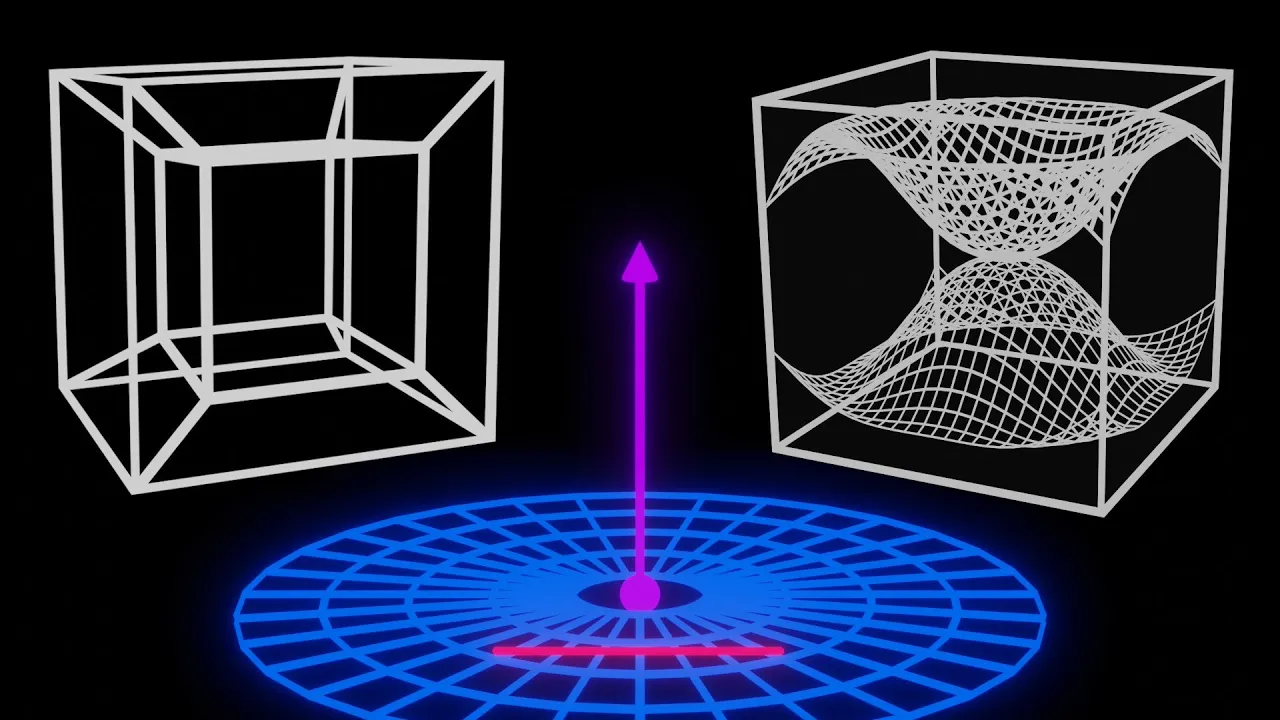




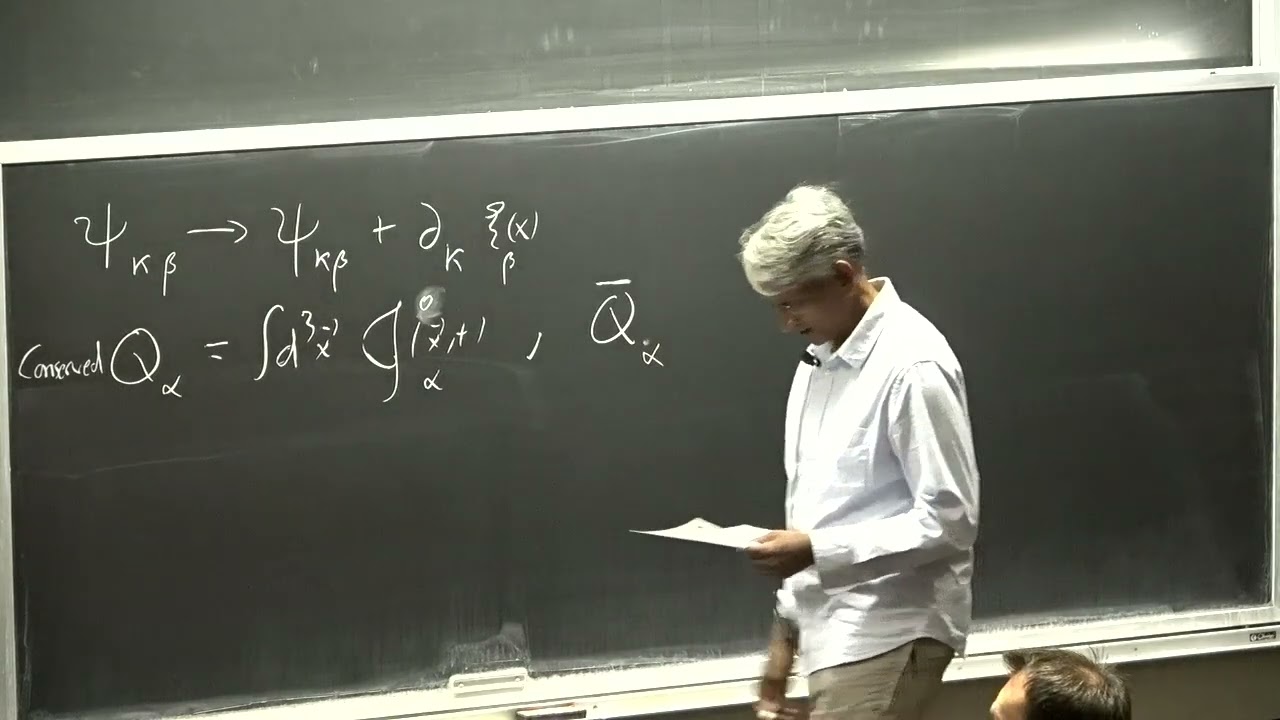






Supersymmetry is a hypothetical symmetry that proposes a fundamental connection between fermions (matter particles) and bosons (force-carrying particles), suggesting each known particle has a 'superpartner' in the opposite category; this symmetry, which uses Grassmann numbers (anti-commutative mathematical objects) rather than ordinary numbers, was developed as a loophole to the Coleman-Mandula theorem and offers potential solutions to problems like the Higgs mass hierarchy and dark matter, though no superpartners have yet been detected experimentally.
Supersymmetry Explained Visually: Fermions, Bosons, and Spacetime
Added:The Standard Model of particle physics, specifically the fundamental distinction between fermions (matter particles like quarks and electrons) and bosons (force-carrying particles like photons and gluons).
Basic quantum mechanics concepts, including the definition of quantum spin and the Pauli exclusion principle.
The concept of spacetime in Special Relativity and the idea of spacetime symmetries (such as rotations and boosts).
Elementary algebra concepts, specifically the distinction between commuting variables and anticommuting (Grassmann) variables.
The Hierarchy Problem in physics, and how supersymmetry proposes to solve the fine-tuning problem of the Higgs boson mass.
Superstring Theory (and M-theory), where supersymmetry is a mathematically necessary component to incorporate fermions and unify gravity with quantum mechanics.
Supergravity (SUGRA), which is the field theory that emerges when supersymmetry is treated as a local (rather than global) gauge symmetry.
Experimental particle physics and search results from the Large Hadron Collider (LHC), focusing on why superpartners have not yet been observed and the implications for the Minimal Supersymmetric Standard Model (MSSM).
480.3K views19Klikes15:11Original Release: 2022-05-15
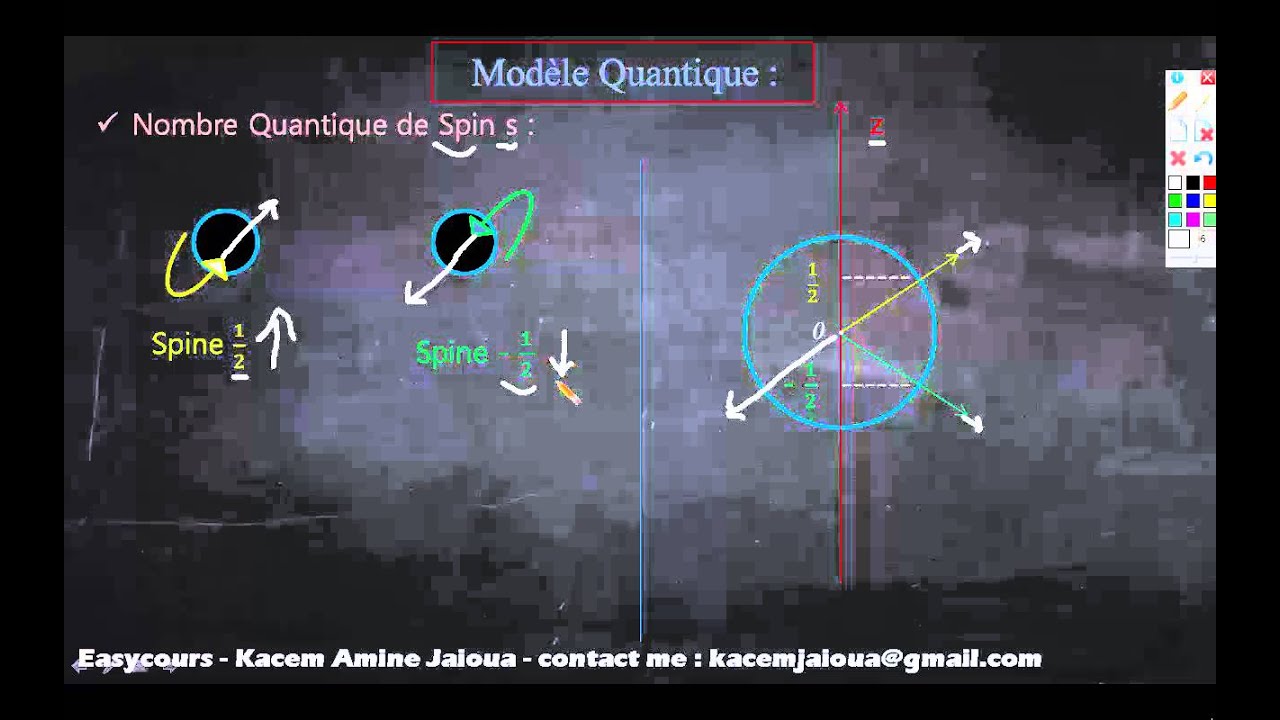
[Music] welcome back to science clique today supersymmetry what is asymmetry a symmetry is a transformation that does not affect an object a sphere is symmetric under rotations a butterfly under reflections a grid under translations identifying the symmetries of an object helps understand its geometric structure our universe has symmetries too the laws of nature do not change after certain transformations for instance physics does not change from one point to another the universe is symmetric under translations another example if we carry out an experiment in one direction the result is the same as in another direction the universe is symmetric under rotations by identifying more and more complex symmetries physicists have refined our understanding of the world [Music] but have we identified every symmetry of the universe are there any new ones to discover perhaps supersymmetry is precisely a new kind of symmetry which we have never observed so far [Music] let's quickly review our current models nowadays the universe is described as a block space-time in which particles evolve there are two families of particles which we classify in the standard model fermions which constitute matter and bosons which mediate interactions supersymmetry postulates that the standard model is incomplete there are other particles we've never seen before each standard particle would have a super partner in the other category such that there would be a new boson for each fermion and a new fermion for each boson the fermions electron quarks neutrinos would each have a boson partner selectron squawks neutrinos while bosons photon gluon zw higgs would each have a fermion partner photino gluino xeno hexino supersymmetry is the hypothetical symmetry between particles of matter and interaction researchers are interested in this hypothesis because it could solve many mysteries by adding new particles supersymmetry offers promising candidates to explain the nature of dark matter this invisible mass whose composition remains a puzzle another example it is believed that at the big bang 13 billion years ago electromagnetism the strong and the weak interactions three fundamental interactions of the universe were merged together nowadays these interactions have different intensities but winding back the clock to the big bang the three forces should converge this is grand unification an idea that could lead to a theory of everything unfortunately the standard model calculations seem to indicate that the curves miss each other by adding supersymmetry the calculations now predict that the curves meet in accordance with ground unification [Music] but why do physicists focus mainly on supersymmetry one might think that other symmetries are just as interesting to study in reality only supersymmetry seems to be a reasonable hypothesis to understand we will have to go back to our current models on the one hand the fabric of the universe is described as an immense grid space-time space-time has symmetries its laws are invariant from point to point orientation to orientation moment to moment and from an inertial frame to another space-time obeys these four symmetries which are called poincare symmetries they are the symmetries of special relativity on the other hand the universe is filled with particles described as disturbances within quantum fields there is one quantum field for each type of particle a field for electrons a field for photons and so on these quantum fields are mathematical fluids that fill all space the higgs field is made up of numbers the fields of the other bosons are made up of vectors and the fields of fermions are made up of spinners weird mathematical objects which describe this type of particle very well these three types of fields are distinguished by a property called spin spin 0 and 1 for bosons and a half for fermions spin is directly related to which mathematical objects make up these quantum fields to understand the core of supersymmetry we first need a technical aside the quantum fields of bosons are described by numbers or vectors of numbers [Music] in the world of numbers multiplication is commutative if we take two numbers like 3 and five three times five equals fifteen and so does five times three more generally x times y equals y times x however spinners which describe fermions are not made up of ordinary numbers but of weirder objects called grassmann numbers despite their name these grassman numbers are not really numbers they are abstract mathematical tools in the world of grasman numbers a times b is equal to minus b times a grassman numbers are anti-commutative in consequence the square of a grassman number is always zero this is a very strange property which obviously does not hold with ordinary numbers but we can construct such abstract objects within the world of mathematics and they turn out to be very useful to describe particles of matter this difference between ordinary numbers and grassman numbers fundamentally distinguishes fermions from bosons we can multiply an ordinary number by itself which implies that two identical bosons can be put in the same place at the same time but we can't do the same thing with two fermions because it's impossible to multiply a grassman number by itself this always gives zero this is the pauli exclusion principle two fermions cannot be simultaneously in the same state this explains why we do not fall through our chairs electrons cannot pass through each other [Music] let's close the parenthesis and come back to symmetries we have seen that space-time obeys four symmetries the poincare symmetries however some quantum fields also have symmetries quarks for instance come in three versions red green and blue which are interchangeable this is an internal symmetry within the quark fields another example the fields of charged particles such as electrons are invariant when we alter the phase of complex numbers [Music] this is another example of asymmetry internal to these quantum fields in 1967 the physicist coleman and mandula proved mathematically that the universe cannot obey any other type of symmetry the only types of symmetries allowed are those of poincare from space-time and the internal symmetries specific to each quantum field the theorem forbids any other type of symmetry however in 1971 golfing and lichtman discovered a loophole the coleman mandula theorem is based on an assumption it assumes that all symmetries are quantified by numbers to bypass this assumption golfan and lichtman imagined a new kind of symmetry which would be described not by numbers but by grassmann numbers in this case the coleman mandula theorem does not apply it does not forbid such asymmetry this is supersymmetry in our current models it is thought to be the only possible extension to the types of symmetries we already know an intuitive way to visualize supersymmetry is to imagine that space-time is split into two copies one made of numbers the other made of grassman numbers one is the world of bosons the other are fermions supersymmetry is the idea of a translational symmetry from one space-time to the other a translation which interchanges numbers and grassman numbers bosons and fermions this is not just a pretty picture we call this super space we can describe the universe as two complementary spaces one for numbers the other for grassman numbers and each quantum field would fill up this whole superspace such that each particle has a partner in the other category it is an abstract construction but a powerful tool to describe supersymmetry when it was theorized it was hoped that supersymmetry could solve a crucial problem the mass of the higgs boson the higgs boson interacts with virtual particles of the quantum vacuum and according to calculations all these interactions should make it very heavy however in reality it seems much lighter supersymmetry was supposed to provide a solution to this problem by adding super particles the quantum vacuum would be filled with as many fermions as bosons and their contributions being opposite they would cancel each other out unfortunately for this explanation to work partner particles must have a similar mass as their contributions should balance out but at the moment no super partner has yet been detected which indicates that if they do exist the super partners are necessarily more massive than we thought otherwise we would have detected them in other words our universe does not seem to obey supersymmetry at least not in its most exact form supersymmetric particles might exist but they would necessarily have a higher mass than their partners researchers wonder whether the universe obeyed supersymmetry in its first moments just after the big bang and then broke it as it cooled down to sum up after decades of research supersymmetry remains a hypothesis of which we know that it is not valid in its most ideal form but it's still a crucial research topic as it is probably the only new symmetry that our current models do not forbid supersymmetry introduces a duality between bosons and fermions which could solve many mysteries and whose mathematical formalism has helped several other fields along supersymmetry is not a theory it is just a kind of symmetry that the universe may or may not have several models use supersymmetry and by putting it to the test experimentally we can restrict these models and refine our research it is notably used in superstring theory one of the most promising approaches to unifying general relativity and quantum physics particles are described as tiny vibrating strings which would have a super symmetry along their surface it is also the basis for super gravity a model that combines supersymmetry and general relativity and predicts a super partner for the graviton the particle of gravity the gravitino finally we can build models of universes with multiple supersymmetries but there is a limit to the number of symmetries we can add we talk of maximal supergravity in such a model if space-time had 11 dimensions all constants of the universe turn out to be determined solely by its symmetries [Music] this is a model that was discovered in france during the 1970s the quantum version of this model proposed by witten in 1995 could unify all versions of string theory this is m theory [Music] [Music] you
Up Next

16:01
String Theory Explained: Quantum Gravity & Extra Dimensions
@ScienceClicEN
4.8M views•2021-07-02

12:53
21cm Hyperfine Transition in Neutral Hydrogen: Radio Astronomy Basics
@AaronRobertParsons
12.4K views•2011-10-13
14:16
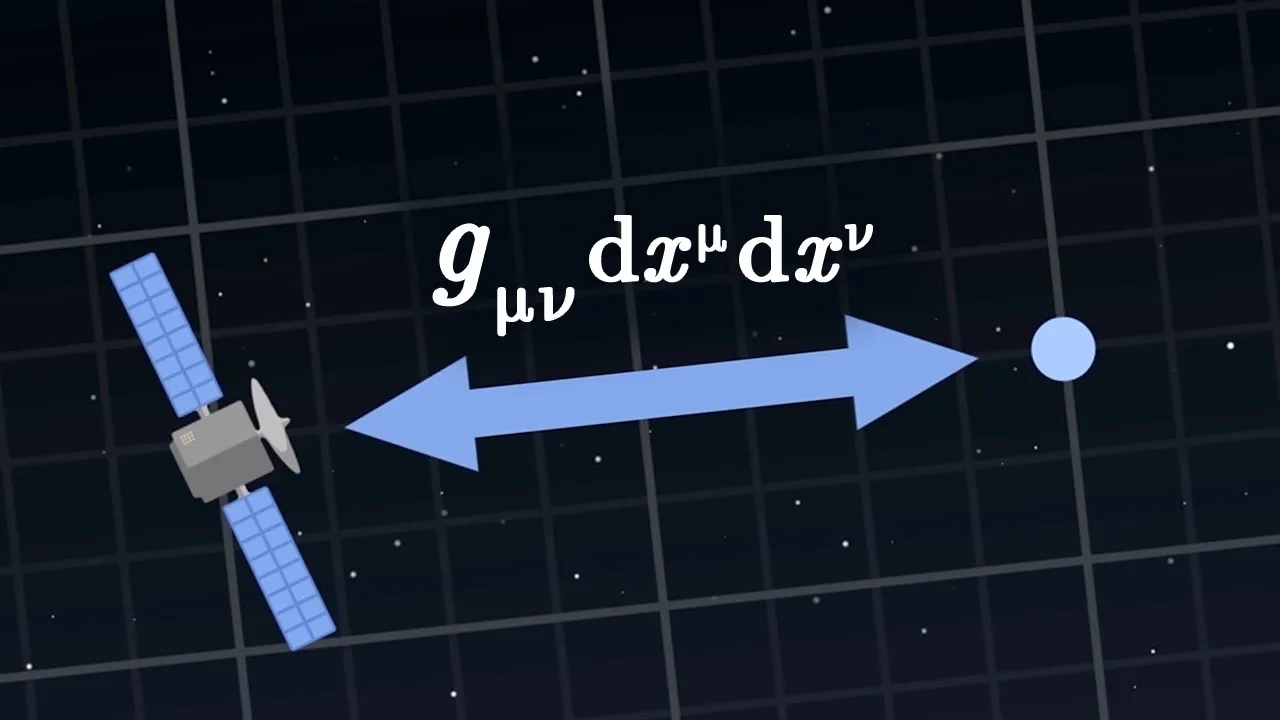
Metric Tensor in General Relativity Explained | Geodesics & Spacetime
@ScienceClicEN
231.3K views•2020-12-15

27:14
Entropy and the Second Law of Thermodynamics Explained
@veritasium
27.5M views•2023-07-01
Related Study Plans & Knowledge Roadmaps
Structured learning paths in Physics
physics
Nuclear Physics (Decay, Fission & Reactors)
01Atomic Structure and the Binding Force
02Radioactive Decay and Half-Life
03Nuclear Fission Mechanics and Chain Reactions
+ 2 more learning modules
12h5 modules
Explore Roadmap
physics
Soft Matter (Polymers, Colloids & Rheology)
01Foundations of Soft Matter & Thermal Forces
02Polymer Physics and Macromolecules
03Colloids, Surfactants, and Self-Assembly
+ 2 more learning modules
38h5 modules
Explore Roadmap
physics
Analytical Mechanics: Lagrangian & Hamiltonian
01Mathematical Foundations: Calculus of Variations
02From Newtonian Mechanics to Constraint Dynamics
03The Principle of Least Action & Lagrangian Mechanics
+ 3 more learning modules
28h6 modules
Explore Roadmap
physics
General Relativity (Spacetime & Cosmology)
01Foundations of Relativity: Special Relativity
02The Geometry of Spacetime: Equivalence Principle & Curvature
03Einstein's Field Equations: The Mathematics of Gravity
+ 2 more learning modules
55h5 modules
Explore Roadmap