



























Galactic archaeology uses the chemical compositions of stars as 'fossil records' to study how galaxies form and evolve over time; by analyzing the alpha-metallicity diagram (which plots iron-to-hydrogen ratio against alpha-to-iron ratio), astronomers can identify different galactic components (bulge, thin disc, thick disc, stellar halo) based on their distinct chemical signatures, and apply a technique called chemical tagging to determine whether stars formed together from the same molecular cloud by comparing their detailed elemental abundances.
Galactic Archaeology with Gaia and Spectroscopic Surveys
Added:Fundamentals of stellar spectroscopy and nucleosynthesis, including how stellar absorption lines indicate chemical abundance and metallicity (e.g., [Fe/H]).
Basic astrometry concepts, specifically parallax, proper motion, and radial velocity, which are used to determine 3D stellar positions and velocities.
The structural components of the Milky Way galaxy, including the thin disk, thick disk, stellar halo, and galactic bulge.
The basic principles of stellar evolution and how successive generations of stars chemically enrich the interstellar medium.
Reconstructing specific major merger events in the Milky Way's history, such as the Gaia-Enceladus/Sausage collision and other accreted dwarf galaxies.
Applying stellar kinematics and dynamics to map the gravitational potential of the Milky Way and constrain the distribution of dark matter.
Utilizing database query languages (like ADQL) and python libraries (e.g., Astroquery, Astropy) to analyze public datasets from Gaia and spectroscopic surveys like APOGEE or GALAH.
Comparing observational 'galactic archaeology' data with cosmological hydrodynamic simulations of galaxy formation to test models of galaxy evolution.
1K views28likes1:05:52Original Release: 2020-11-03
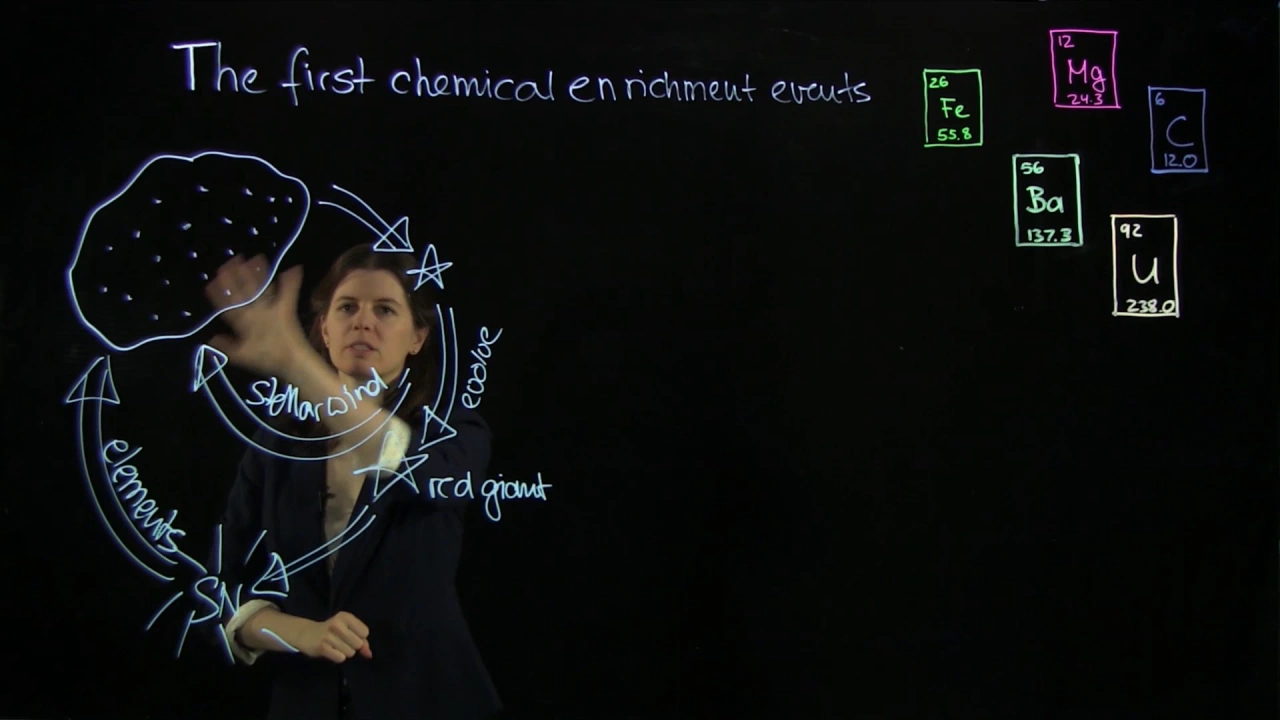
today our guest will be uh keith hawkins from the university of uh texas at austin uh he's a faculty member uh at the university uh keith uh got his phd degree from the university of cambridge cambridge uk where he worked with jerry gilmore on dissecting the milky way using uh spectroscopic surveys then uh keith was a simon's junior research fellow at columbia until 2018 when he joined the faculty ranks at the university of texas so keith uh works in a variety of topics related to the galactic evolution chemical evolution milky way information data mining surveys uh studying uh galactic and stellar archaeology uh during the talk please let me remind you that to stay muted and if you have a question please raise your hand or type it in the chat and i will ask it at the appropriate moment of time so keith uh please take it away all right i hope everyone can hear me and thank you all for uh coming to my talk as well as for inviting me to give this colloquium at princeton and the ias um and i also especially want to thank people for coming on such a special day which is election day um i will be trying my best to uh you know make sure that i am somewhat succinct and coherent in my talk as of yesterday yesterday i was out at big bend national observatory and hiked the 14 and a half mile southern rim trail this is a wonderful image so i know that this is a stressful day for everyone so i thought i would start with a beautiful image of south texas looking over to mexico and a beautiful agave plant off to the left and um if you have to leave for any moment in this talk to go and vote i do encourage you to do that um voting is an extremely important part of our democracy of course so you know please feel free to get off vote if you need to um but today's talk will be on you know what i work on which is like archaeology um and especially in the gaia and large spectroscopic survey era and what you're seeing in the background here is the mcdonald observatory actually out in west texas and um an image of the milky way also in the background and galactic archaeology if you haven't heard that buzz term is is really asking some fundamental questions of you know of you know astronomy things like how do galaxies form how do they evolve how do they assemble themselves over time and how are they structured right and so these are all somewhat open questions how do galaxies form is a pretty broad question and there are some people that are interested in studying that question by looking at high risk of galaxies whereas if you're looking at our milky way to answer that question and using the milky way as a laboratory then you're doing what's called galactic archaeology which is essentially using fossil stars across the galaxy to understand um and study galaxy formation and galaxy formation physics um i recently learned in a public lecture i was giving a talk about galactic archaeology and you know saying we use stellar fossils to study galaxy formation and someone came up to me after the talk and said well you know technically that's paleontology since paleontologists go out and look for fossils and archaeologists come out and look for human fossils or human human artifacts and so is it galactic archaeology is it galactic paleontology you know i don't know where i fall on that issue but what i can say is the advantage of being a galactic archaeologist is that you can say that i'm the indiana jones of the galaxy so i kind of like having that in my back pocket to use um but essentially the reason why we use stars as fossils is because the chemical makeup of stars is largely agent variant and so that means that if you look at a star that's 10 gig years old then whatever the chemical abundance is by and large this is not true for every element things like carbon nitrogen and oxygen change over the course of the lifetime of the star due to dredge up processes and other types of internal processes in the star but by and large most of the chemical elements on the periodic table generally don't change over the course of the star's life there are some effects gravitational stubbling or radiated levitation that can change these elemental abundances but by enlarge these are relatively small effects so the chemical makeup of a star generally doesn't change over the course of its life and so you can use it to study how the milky way has evolved chemically for example over its long you know tens of 10 or so giga years of history and so this is very similar to using for example um ice cores if you go out and you know when geologists go out and dig ice cores up in antarctica and they look for bubbles of early earth's atmosphere that are trapped you could do the same type of thing with stars using the chemical fingerprints essentially and of course these stars make up the milky way and this is an artist's impression of the milky way you know a beautiful barred spiral galaxy and this is kind of my laboratory for studying the you know galaxy formation questions and so of course this is the this is one of the highest quality um reconstructed images if you will of the milky way from the guinness spacecraft which we'll talk about quite a lot quite a lot in this in this particular talk um you can see the milky way um here um with its beautiful um you know structured beautiful dark bands being the dust bands and then you've got the large small magellanic clouds in the outskirts as well and then the galaxy of course has some structure to it and that structure um is not only part of what i study but how about how that structure came about is also what i study um so it's got a structure such that it has a bulge in the center parts of the galaxy that's metal rich and alpha enriched and i'll talk about what i mean by alpha enriched in a few moments um it's got a thin disc of that is um extremely thin it's metal rich and alpha poor the sun is a part of the thin disc um and the thin disc is kinematically quite cold so a lot of stars in relatively circular orbits low velocity dispersion everything's kind of nice for nicely rotating and then you've got a galactic thick disc where you know it's much hotter than the thin disc much much larger velocity dispersion um and uh it's significantly more metal poor so it's moderate metallicity metal sees near minus half or so and alpha enriched compared to the alpha poor thin disc which is more rich and then on the outskirts you've got the stellar halo and the stellar halo is primarily metal poor very alpha rich although there is an alpha poor component to it as well um you know and uh there is also a debate about these components so um you know my phd advisor jerry gilmore gilmore and reed discover it was one of the discoverers of the galactic thick disk of the galaxy that was only in the 80s and since then there's been a lot of debate about okay does the milky way actually have a thin disc in thick disc or is it just one disc um even as recent as like 2012 2014 there was there were articles going around in the literature saying there is no thick disk actually um and then the stellar halo for example you know there's this constant debate about whether the stellar halo is an inner halo or an outer halo where there's a dual halo with an inner component and outer component and whether it has in situ and accreted and of course there's tons and tons and tons of literature out there i've just put you know some of the few sources here but there's tons and tons of literature about these various components in the milky way and i point out that there's a debate in these components because when i was an undergraduate at ohio university i was told at that time back in 2000 and you know 2011 and 2012 that um you know effectively galactic astronomy was a solved problem you know we knew what the galactic components were we knew how star we know how stars work it's classical theory it's all done and there's only two problems left there's um you know cosmology and there's exoplanets and that's like the two big fields in astronomy left and then i went to europe for my phd and realized okay there's actually a lot more being done in stars and there's a lot of really interesting work being done on galaxy and galactic structure and i really got interested this is where i kind of really got interested in the milky way as a whole um so this is essentially how we think the milky way is structured and i'll talk a little bit more about why we think it's structured and the different chemical reasons for why we think it's structured this way and i'll kind of delve into some of the debates about this structure and and use chemical arguments to walk my way through some of that stuff um but uh so the best way to start this of course is to remind everyone um how the universe evolves chemically over time um so this is kind of a nice image from anna frable which effectively um kind of nicely succinctly in one side kind of puts together chemical chemical evolution um and so essentially you have the big bang of course at the beginning of the universe and you get hydrogen helium and trace amounts of lithium from that um that forms your first generation of stars your your so-called population three stars your metal free stars um and these stars are you know no one has ever seen one so we don't really know what they look like we know that they have had to exit had to have had to existed because there is a first generation of stars for sure but we just don't really know what their properties are there's a lot of theoretical work that's being done on that but we've never really observed the population three star so observation we have no constraint and these stars are thought to be fairly massive and metal free and they explode or they you know go supernova or hypernova or whatever and explode and disperse all of their nucleosynthetic guts that they formed all the elements that they formed they disperse that into the interstellar medium and in addition to that you also have um you know from the second generation of stars you have fairly massive stars that die very quickly they go type 2 supernovae they disperse into the interstellar medium things the first set of elements which are the primarily the alpha elements these are uh things that are formed by helium capture that's why they're called alpha elements and they're things like magnesium and silicon and calcium and oxygen and sulfur so these are some of the first elements that kind of come out of your stars because these are these come out at very short time scales uh and then of course that polluted material creates a new generation of stars that new generation of stars form population two stars they live they die they explode this whole process continues in a cycle um in addition to that you also have as low mass stars are evolving more and more you have white dwarfs that are appearing that can form your first set of type 1a supernovae the type 1a is produced primarily iron and iron peak element or disperse at least type higher than higher peak elements so iron nickel cobalt magnesium this kind of stuff and so then you get your iron and nickels and cobalts and then in addition to that at later times you also get neutron starting to start mergers or other very very explosive very energetic explosions which can then form your even heavier r and s process primarily your r process elements things like europium and gold and so forth um and then of course you have the agb stars in between somewhere in between all of this it's also producing your heavier ass process elements as well so this is kind of a time in terms of time scale the first things that come out are the alpha elements then you've got then pre you know a gig a year or so after the in terms of delay you get your your iron and iron p elements i think someone has a question keith yeah there is a question from the audience indeed hi just a naive question jeremy goodman um surely if there were any sub-solar mass stars formed in population three they would still be around uh so what's the argument that like ultrametal poor stars can't be population three do they still have traces of europium or something that rule that out so most of the most of the stars that we know of are uh that are that that low metallicity also are carbon extremely carbon enriched um as well as some of them are enriched in the in the r process elements these are called r process stars um and you know uh these are probably these would be the things like you know metal d's of minus three minus four that are processed enriched that are probably not population three stars there's one detection i think of a star that was metal c minus seven or so and that would be one of your prime candidates for a low mass population three star but there hasn't been very many detections of those i think there's only one known case of that that's near minus minus seven or so um in metal city and that was there was a nature paper about that i think two or three years ago um but yeah i hope that helps answer your question good um okay so um so this is this cartoon picture is a kind of a nice way of thinking about galactic chemical evolution and the the tool that that galactic archaeologists really really love to use um although i think this tool is overused is the alpha metallicity diagram and so this is if you read any galactic archaeology papers you're probably going to see this diagram in it somewhere and this this diagram shows the iron the metallicity on the y-ax on the x-axis and this is the iron to hydrogen ratio and normalized to the sun so the sun is at zero it's a logarithmic um and so that means that minus one is one-tenth the iron content of the sun minus two is one over one hundred thousand ten of the sun and so forth on the y-axis you have the alpha iron ratio of the star where again it's it's relative to the sun so zero is the same amount as the sun um now remember that the oldest stars in the galaxy are going to be metal poor because they haven't really been enriched by many supernovae and so they have they're going to be primarily enriched by type 2 supernovae only because you know these are the ones that these are the supernovae that happen at the you know the fastest the shortest time skills and so you're going to be enriched in alpha because you already you've been polluted by type the gas have been polluted by type 2s it's going to be relatively poor in iron because it's been polluted by type 2 not type 1a which produces more iron type 2s do produce some higher but type 1as produce a lot more essentially and so you have you start out with your oldest stars having relatively high alpha iron ratios and relatively low metallicities over time you get more and more type 2s going off you build up your iron stock and your gas you move rightward in this diagram and then about a gig year or so after that's still debated a gig year so after the type 2 start going off you finally start to get type 1a supernovae and those type 1as begin to produce lots and lots of iron you then dilute your alpha iron ratio and that's how you get a knee in the alpha metals and the the different components of the galaxy have different age distributions and therefore different distributions in this alpha over iron metallicity space as well so the halo is up here alpha enriched and metal poor the thick disc is here it's fairly metal poor but alpha rich because it's fairly old then you've got the thin disc it's much younger it's alpha poor and metal rich and then you also have the secreted halo component which is alpha pore and metal pore and what's important there is that um the dwarf galaxy environment or slower chemical evolution environments um generally at a constant metallicity will have lower alpha to iron that's kind of important for this talk because that's how people have discovered treated material material that is accreted onto the milky way by low mass systems so if you look at low mass systems in this alpha to metallicity alpha metalistic plane these at a constant metallicity low mass systems will have lower alpha and the reason for that is because they have um lower they have lower star formation rates therefore they have less type 2 supernovae therefore they have less alpha enrichment comparative to a high mass system like the milky way that has far more type 2 supernovae and far more production of alpha elements and therefore has significantly higher alpha iron ratio okay so this plane is very very useful for uncovering where dwarf galaxy material or material coming from low mass systems may come from um okay so then we have these different components in the milky way you know the thinnest the thickness the halo the bulge and so my group at ut the galactic archaeology group or the calculus energy lab primarily works at the intersection of these various components of the galaxy um and it's you know i have something like four phd students and a postdoc and you know six undergrad students so kind of a go splice starting to build somewhat of a larger group here at ut and so some of the questions that my group tries to address are things like how did the milky way come to be how does its various components form how did the bulge form for example how did the disc form is the halo forming from primarily accretion from one massive system or is it forming from in situ material from a pre-existing disk that got heated up for example one of the key physical processes that govern galaxy formation what are the time scales involved in galaxy formation how can we start some better tracers and how can we improve upon the tools of galactic archaeology like things like chemical tagging to answer these up questions above okay so these are large number of questions that i you know keep me up at night or um you know observing at the very least and keeping me kind of going in astronomy and the reason why i enjoy astronomy so much is because these questions are really exciting and there are some answers to them but there also are lots and lots of open questions um within the sub questions within these kind of much broader questions of course i only have time to talk about one or two of these today um you know since i only have a certain amount of time um but these are the kinds of questions that i like to ask and i like to kind of try to figure answers out for um and part of the reason why i got interested in answering those particular questions is because um we're kind of entering we you know just as i was coming up as a phd student we were entering this this big data era in galactic archaeology so um as i was going through my phd and now as i'm a faculty member there were these um wonderful surveys large spectroscopic surveys that were either coming online or ongoing that were collecting spectra for hundreds of thousands if not millions of stars at a time and with those spectra you can not only measure radial velocities but you can also measure detailed chemical abundances and this is great because you can measure something like up to 25 different elemental abundances for 100 000 stars which gives you an enormous amount of data um to really try to understand how the galaxy is structured and how it's been chemically evolving over time um in addition to that there was the the gaia spacecraft which was pictured here and gaia was coming online uh at around the same time and so gaia's was a european space agency mission it was called the billion star surveyor it was goals was to produce the most precise 3d map of the galaxy ever attempted by humans by getting parallaxes and proper motions astrometric information for something like a billion stars and then in addition to that they were also going to do radio velocities for the kind of the brightest or so um something like uh 10 million stars or something like that um and this was uh this is this incredibly revolutionized revolutionary mission and in fact i think when i started my phd in 2013 everybody said gaia is going to revolutionize galactic astronomy it's going to completely change the game and the reason for that was because you know if you imagine right this is the milky way and you imagine that this is where the sun is of course the sun isn't really there but let's say that it's two-thirds of the way out before gaia you know before 2013 all of the kind of the detailed information that we knew about the structure of the galaxy came from very precise parallaxes from the parkour's mission which was the nearest roughly hundred thousand stars and um you know we were in a very small local volume where we had detailed very precise parallaxes where we can actually do structure in kinematics and combine that with the chemistry gaia of course gets us from this small little bubble to a much much much larger volume uh to the you know to billion stars not just a hundred thousand so we you know got parallaxes for something like an order of couple orders of magnitude more in terms of the number of stars so you combine gaia with these large spectroscopic surveys together you suddenly had a regime where you had 3d positions 3d velocity so you had entire 60 phase space and 25 elemental abundances for a large sample of stars and that um that was such an exciting that that data set is incredibly exciting because now you have an enormous amount of data with which you can piece together the structure of the galaxy um for those who aren't following gaia um segaya's first data release that was launched in 2013 first data releases in 2016. second data release was april 2018 and the third data released the early data release for the third data release will actually be december 3rd of this year december 3rd 2020 um and the dr3 will be sometime in 2022 i think there's some delays due to coronavirus but um you know they're kind of trucking along with the data gaia actually instead of getting parallaxes for one billion stars they got you know 600 million more by accidents they have 1.6 billion stars and the newest data release will have 1.8 billion stars in it in edr3 and gaia was also this this you know for me it was a it was a very big part of my career because i started my phd when gaia was launched in 2013 i finished my phd in 2016 when the first data release happened and i became a postdoc at columbia as a simon's fellow and then i became a faculty member uh in um sorry i became a postdoc in 2016 for the first date of release when i finished my phd and then in 2018 i became a faculty member so i kind of every stage of my career has kind of followed at some level the date of releases of gaia um quick warning about gaia for those of you who don't use dye on a regular basis we're often taught in our astronomy classes to invert the parallax which is what guy actually measures you can invert the parallax stick of the distance to a star the gaia team largely has said don't do that and the reason is because of error analysis if your parallax is if you have gaussian errors in parallax space when you invert the parallax to get the distance it becomes non-gaussian the pdf becomes non-gaussian and so you wind up um getting like for example if you have 50 parallax if you have 50 uncertainty in the parallax error this is the distance this is the pdf of the distance one divided by the parallax and you wind up with a very skewed distribution so that if you take if you try to get an estimator of that you end up getting a biased result so you want to be very careful about just naively inverting parallaxes especially when errors for parallaxes get large okay so that covers all the background and the remaining bit of the talk will be um on the various projects that my group is doing in the various components of the galaxy so basically what i'll be doing for the rest of the talk is going component by component i'm saying what my group is doing in each of these components because i have what my group is doing is essentially we're working in all the various components to galaxy we have little projects here and there in each one of these components to really try to understand one aspect of that particular component i won't go into extreme amounts of detail about any one project that i'll leave for if you have any questions you can ask me during the q a period or um you can set up a one-on-one with me or you know or you know shoot me an email offline but i wanted to do it this way because i want to try and give you a flavor for what i'm for what my group is working on in case there are any kind of collaboration links that can be made so i see this colloquium as a chance for me to not only talk about what i do but also a chance to see um if there are any collaborations that can be built between texas and princeton and ias at least my group um so i'll start my the rest of this talk with the galactic thin disk since that's where we kind of live so we'll start near home in the galactic vendors and i'll talk about this idea what what we call chemical tagging in a strong and in galactic astronomy galactic archaeology and how we can use chemical tagging to solve questions about for example the assembly history of the galactic disk as well as the nature of some of the fastest stars in the galaxy so um chemical tagging is this very simple idea that came about in the early 2000s by freeman and bland hawthorne and the idea basically says that let's imagine that you have two gas clouds that are separate and separated in different parts of the galaxy and those gas clouds one is metal rich and magnesium poor and the other one's iron rich iron poor and magnesium rich so they have different chemistry um those star-forming regions of course create stars and then over time those those gas clouds dissipate um due to stellar winds and all kinds of other diffusive processes and then um the stars in those uh that are kind of forming these in these groups or associations or clusters loosely bound structures basically get dispersed and phase mixed throughout the galaxy as they orbit around the galaxy so they get kind of completely jumbled up and the question that chemical tagging asks is can we unjumble this can we can we basically figure out where that all the orange stars were born together and all the blue stars were born together using their chemical fingerprints and so that means if you take a spectrum of star one and you know the one blue star and one orange star in this in this kind of cartoon you can study their detailed chemistry and realize ah they weren't chemically alike and so they probably weren't born together but if i take a spectrum of two blue stars they have exactly the same chemistry and therefore they were born together and so by doing this we can actually identify where where exactly in the galaxy things were born okay so this is an extremely powerful technique because if it works then it means that we can reconstruct the entire assembly history of the galaxy we can tell you where every star in the galaxy where it was born and in which cluster it was born in and then we from that we can backtrack and use say orbit integration we can backtrack and figure out then you know how long it took to phase mix or how you know we can identify where things are coming from so it's an extremely extremely powerful technique if it works um the question is does it actually work does chemical tagging work um and so there are really two assumptions underlying assumptions to chemical tagging the first is that stars that are born together from the same cloud of gas need to be chemically homogeneous right because you're using the the chemical fingerprint of the star as essentially it's dna okay and the second assumption is that stars that are born in separate spaces born apart have to be chemically distinct from each other so that you can distinguish one star group born in one location and another star group born somewhere else so these are the two underlying critical and key assumptions of chemical tagging so it's like asking this question if asking the question does chemical tagging work is really asking the question are stars born together chemically homogeneous or not if the answer that question is yes then chemical tagging can work and if the answer is no then chemical tagging can but in addition to that this question is a really important one because it's how we actually do exotic star characterization so when i say exotic star i just mean non-ftk stars because i spent most of my time thinking about fgk stars but for example m dwarfs are extraordinarily difficult or notoriously difficult to model they're notoriously difficult to get derived stellar properties from in chemical abundances because we don't have a very good handle on molecular opacities this is one area where i think that astronomy needs a lot of work is in laboratory astrophysics there's not a lot of laboratory astrophysics going on there's there's very few groups that do it but it's extremely critical because it underpins all of our our chemical stellar chemical abundances and our stellar properties work um but mdorfs are a good example of where this is a problem because we don't really have good handle on molecular opacities so we don't have a good handle on the chemical abundances or the stellar parameters of m dwarfs so what people normally do is they find an m dwarf in a wide binary pair with a binary pair with a um an fgk star that's a little bit easier to analyze and they make the assumption that the mdorf has the same chemistry as whatever it's in a pair with i.e things born together are chemically homogeneous um and so that of course is very important for things like the exoplanet community that's prime that is largely looking at m dwarfs this is also true for white dwarfs white dwarfs are obviously very hard because they're very they're extremely hot they ionize most their lines away um and you just have extremely broad features sometimes you can find heavy elemental lines and white dwarfs but again they're characterized often by being in a pair with a another star um so if the answer to this question is yes then everything is good we can keep doing what we're doing chemical tagging can work great if the answer to this is no then we're actually in quite a lot of trouble because not only will chemical tagging not work and it will be harder to reconstruct the assembly history of the galaxy but in addition to that the way that we're doing exotic star characterization also won't work either and so this is a very important question now there's a wonderful test case done by samyang oh back when um i was actually so sami was a princeton grad student at the time in 2017 and i was at columbia but i you know we were constantly i was constantly going to the flatiron institute as it was starting up and samyang was there and presented this really awesome work where she showed this wide binary pair she went out looking for co-moving pairs in gaia dr1 john brewer happened to have very high resolution observations of several of these pairs and they the chemistry of the pairs are shown the chemistry of one of these pairs of stars is shown um here in this plot on the y-axis you have the x over h ratio again normalized to the sun so zero's the same amount as the sun and on the x-axis you have the different various elements the red star is one of the stars in the pair and the blue star is its companion now if these stars were indeed chemically homogeneous at birth then they should the blue line and the red line should overlap this is saying uh-oh we have a real serious problem because this is showing us that in fact in this chronos krios pair the iron abundances for example for these stars the iron the hydrogen ratio the metal contents are different by 0.2 decks which is quite large and in fact in a large number of the heavier uh kind of refractory elements i think they you actually do see enhancements in one of the star compared to the other so this is a problem because this already says well maybe chemical tagging can't work because stars born together are not chemically homogeneous and that's one of the underlying assumptions of chemical tagging um and so there's a lot of work that's been done on this um will chemical tagging work will it not um you know i've worked on this and written a couple papers on this but there's been a lot of work done on this so that's why i put the dot dot dots on either side um of kind of some of the the citations here um but the the general consensus i think at the moment is that there's two flavors of chemical tagging there's weak chemical tagging where you can tag an individual star to which component of the galaxy comes from that does work and can work but the strictest form of chemical tagging the strong form of chemical tagging which is you can identify the exact birth cluster that is not yet clear if it can work but answering this question are things born together um identical chemically identical or not will help us figure that that whether or not that strict chemical tagging kit actually can actually work so my group when i arrived at austin what we did was we wrote a proposal to get um mcdonald observatory time which is pictured here on the on the left we have our 2.7 meter telescope at mcdonald and i got high resolution spectra for something like 25 wide binary pairs just to see if this chronos creos result that cinnamon o found is this common is this is this something that's that's common and or not so well we observed you know 25 wide binary pairs um and we you know we're looking to see whether they are identical or not um you know this is just showing the cmd of those wide binary pairs and for the spectroscopists in the room this is showing the actual spectra of those wide binary pairs you can already so one of the this is four different pairs um in black one pair in red one parent orange and one pair in kind of magenta and the solid line is one of the pairs and the dotted line is its companion you can see from most of these you see absolutely no differences it's very hard spectroscopically to see any differences between some of these pairs in a few of the pairs you can see lined up differences but in mostly pairs you don't see anything um i think i see another question sorry same culprit um you mentioned uh settling is normally not an issue but i i one with the f stars where the where the surface convection zone goes away um you know theory would predict that they should be settling in the absence of rotational mixing and things so i wonder in the cases where there were chemical differences was one of them at f star or was it what are the spectral types generally of these white pairs um they're normally fgk pairs and one thing that we did explicitly in this particular study and i think uh simeon oh also did this but this this varies from study to study one thing that we did was we tried to make sure that the pairs had very similar temperatures they were very similar spectral types and so you'd expect that both of them would actually if there was any gravitational studying both of them would have the same roughly the same amount of subtle that you would find in it so they were roughly equal mass roughly effect same effective temperature roughly the same gravities um to kind of account for things like that it's also good for them to have similar temperatures and gravity surface gravities because it minimizes any level of systematics that are induced by your code as well um so what we find is that uh we found a couple of pairs like something like 10 of our pairs were not chemically homogeneous even though they were of basically the same spectral type but in 90 of the cases we found spectral spectra that look like this where there's no differences at all and this this is that this is that summary plot that i wanted to show which shows you the um the dispersion of the difference in the x over h ratio that dispersion should be zero of course it's not zero because we have measurement uncertainty um so the measurement uncertainty is being shown here in circles black circles the red triangles are showing you um the typical dispersions the the the dispersion and the difference that we're seeing across the wide binaries um so what we find is that we don't in most elements we don't find any um measurable uh dispersion or measurable difference if you will in the chemical abundances of the various for white binaries we do find that however when we take random pairs of field stars we find significant differences in their abundance ratios and this is expected right the field is very if you just take random field stars they look very different chemically but if you take white binaries they look extraordinarily homogeneous um ten percent of the cases we find that they're not homogeneous why they're not homogeneous is still relatively unknown to us and that's something that we need to do a little bit more work on i think um the primary culprits that seem to be the case uh would be things that have come out in the literature of things like gravitational settling which can have differences at the 0.05 dex level or so um but the differences we're seeing are closer to like 0.1.15.2 decks these differences are thought to be potentially planet engulfment um scenarios and so this is work done by someone oh ivan yes what's the definition of why binary so what's the separation typically uh generally for these wide binaries that we were studying there's their three separations are less than two thousand to ten thousand au at some point we go away from wide binaries and i'm going to say that in a moment we're going to actually go away from white binaries and move into extremely wide co-moving pairs so there's a slight terminology difference of white binary versus co-moving pair okay thank you yep um so we wrote this paper um about the wide binaries or sorry co co-moving pairs essentially are wide binaries um in this case these were up to 10 000 au not beyond um 1000 to you in 3d separations um and uh we basically find that in ninety percent of the cases they're identical and i liked you know that the press got a kick out of this because this is work done i should say with with my graduate student drea corleo and maddie lucy as well as undergraduates megan and dustin um but uh the the press really liked this because i'm actually a twin uh i'm a fraternal twin but i got to study whether stars are chemically fraternal or identical so that that's a picture of me and my with the press release um my student tyler nelson is actually going a step further and expanding this into beyond just co-moving wide binaries to expand it into co-moving pairs and so um this is just showing a collection of samples that we have um tyler's actually extending this work from you know 1004 to the 5a you all the way out to 10 to the 710 to the aau which is something like a few parsecs right these are no longer really wide binaries because they're not really bound anymore they're co-moving pairs or pairs of stars that are moving together and what we're finding is that by and large we don't really see a significant difference so this is showing you the difference in the fe over h the difference in the metallicity as a function of separation that difference is zero of course if you have a homogeneous if everything is homogeneous you get some dispersion around zero of course because of measurement uncertainty and so what we're finding is a very slight increase in the dispersion of the difference in metallicity of the two wide binary or the two co-moving pairs the two stars in the pair um as you go to very large parsec level separations but in fact not not by much we're finding that things are fairly homogeneous even co-moving pairs are fairly homogeneous even up to separations of 20 or 30 or 40 parsecs which is which was at first quite surprising but um there was simulation work done by harshal khamdar and charlie conroy's group that kind of predicts that this may be the case that things may be homogeneous out to about a hundred out to about a hundred percent or so so we're we currently um this is this is work that's uh in preparation just getting rid of written up now and then we're planning on extending this out to the hundred parsec or three hundred percent level just to see where we start to see a significant rise in the dispersion and the difference in the metal cities so chemical tagging the the key behind this is that chemical tagging probably can work it's it's encouraging that this we're seeing um very high levels of homogeneity even out to wide separations um so at least what we think is that chemical tagging probably can work um it's still kind of an open question keith there was a question about one member of the audience about if the sigma on the y-axis at the bottom is just the measurement error or something else yeah the sigma is just the measurement error it's just the internal measurement error right now this is why this is still labeled as preliminary we need to replace this with the total measurement error right now it's just the internal just accounting for the line by line uncertainties but in fact there are uncertainties that are related to the um uh related to the fact that the the stellar parameters themselves the temperature gravity and so forth microturbulent velocities also have uncertainties so that needs to be accounted for so this is kind of a plot that's going to be remade in in a couple hopefully in a week or two for the paper uh but i'm just waiting on that but i did want to say something about this primarily because i want to mention that we're going to much larger much much much larger separations okay okay so now what can we do with chemical tagging um now that we know that it possibly can work one of the things that i did back a couple years ago with rosie wise now that i'm still working on now is applying chemical this idea of chemical tagging to some of the fastest stars in the galaxy and i have an nsf grant that kind of focuses on this and these stars are called hypervelocity stars they're thought to be produced by a triple body encounter between a binary pair of stars near the galactic center and the supermassive black hole is red dot at the galactic center one star gets captured by the black hole and the other star gets ejected at an enormously high velocity a thousand or so thousand or more kilometers per second and get ejected that they're moving so fast or unbounced in the milky way um and so this is called the hills mechanism and was talked about theoretically by jake hills i think in 1988 then they were theoretic they were observationally found by warren brown in like 2005 or so and um since that time there's been a lot more discoveries of potentially a potential hyper-velocity star candidates and in addition to that um there was there's been several arguments in literature um from though and others who are stating that maybe some of these um hyper-velocity stars can come from the large magellanic cloud not the not the center of the galaxy just based on where they're located on the sky and what their emotions appear to be um and so to settle this debate are go you know are these hypervelocity stars coming from the center of the galaxy are they coming from the large magellanic cloud one can actually take a chemical tagging approach to this and the reason for that is if we go back to that alpha metalicity plane that i talked about earlier the um the halo of our galaxy looks like this the thick disk looks like this the thin disk looks like this now the galactic center is is got an extraordinarily high star formation rate early on and so it's it has an enormously high velocity as well as relatively enriched in the alpha elements whereas the lmc is a door is effectively a dwarf galaxy it's a low mass galaxy lower mass than the milky way at least and so its chemical abundance pattern in this alpha metals in plane is much lower it's got at any given metal city it's got a much lower alpha iron ratio and so if these hypervelocity stars are coming from the lmc they should be drawn from this gray line and if they're coming from the galactic center they should be drawn from this black line so we went out rosie and i went out and we looked for you know we found some hyper-velocity stars that were discovered in candidates that were discovered in gaia dr2 this is the marchetti at all 2018 work we got high-resolution spectra from apache point we chemically tagged them and the most important diagram here is the calcium if you look at the um the so the this is the the galactic disk in gray the lmc in orange and the galactic halo in kind of pink and blue from various different literature sources you look at calcium the black symbols are our five um hypervelocity star candidate stars these are stars that are moving at five to 600 kilometers per second so quite fast um almost unbound if not unbound these are fgk stars and what we're finding is that some of these hypervelocity star candidates are not coming from the galactic center because they should be somewhere over here enriched in the alpha and enriched in metal and iron they're also not coming from the lmc because they should be relatively metal poor and relatively alpha we're finding that they're actually metal poor look like run-of-the-mills halo stars and so this what this indicates is that some of the hyperviolets are candidates that are being discovered in gaia dr2 are not actually coming from the galactic center they're not actually coming from a large magellanic cloud they're just typical halo stars and so we think is happening is that some of these stars these hypervelocis are candidates some of them are in fact just the highest velocity tail end of the stellar halo distribution the house halo velocity distribution and so we're going to have to do a little bit more work um and so we're pushing back on on the discoverers of these hyper-velocity stars to do a little bit more work to try and um you know figure out if they're actually unbound are they actually truly hypervelocity are they not truly hyper velocity or not um and so this is this is work we have an ongoing survey of these hypervelocity star candidates there's something like a hundred we've now observed something like 25 or 30 of them so we're slowly creeping up and getting our numbers up and uh we're planning on hopefully writing up a publication on this uh in the near future um focusing on the detailed chemistry of hypervelocity stars in gaideer ii um just want to talk about some other work that we're doing in the galactic disk this is the primarily thin disk although also the thick disk is looking at these relatively young stellar streams in the galactic disk that are being discovered in guide dr2 so what people are finding are these um these so if you look at the velocity distribution in the nearby galaxy in the nearby you know galaxy you find that there are some over density so this is v5 as a function of vr for the galactic disk and then just the nearby disk um things i think within a few hundred parsecs maybe a killer parsec or so um there are some over densities and these over densities are generally structures or substructures that are being found in the galactic disk and one sub one such substructure found by mine gas 2019 was this a pisces aerodynamic when they looked at this stream it was it was a stream of stars neglected this not to be confused with stellar streams in the halo that's part of what grabbed my attention to this is i'm used to thinking about stellar streams of stars as being elongated strings of star strings of stars in the galactic halo from stuff that's getting stretched out to the tides this is actually very um you know long streams this is a 400 parsec long stream in the galactic disc that's very young it's something like a hundred million years it's a it's extraordinarily long and it's even got these over densities in the stream and i got interested in this partly because i'm interested in potentially how do these things form whether stars are forming in clusters or forming along filaments and the primary reason why i'm interested in this is goes back to this chemical tagging question which is um if stars are formed in these long filaments then the likelihood of having chemical in homogeneities rises compared to if they're forming these really dense uh relatively small kind of spherical like structures right and so that's part of why we got interested in this um the you know the original mind gas paper did an isochrone fit and found that this stream was only about this it was about a gig year old but then there was a debate that started because jason curtis came back and measured the rotation ages so this is rotation periods of stars in the pisci aerodynamic stream this stream of stars in red as a function of stellar temperature and um what you're seeing here is the rotation ages for uh the pleiades 120 million years in blue 670 million precipitate in cyan and the gig year old ngc 6811 in orange and so if the thing was actually giggier then the rotation ages should be all the red star should actually be drawn from essentially this distribution up here but in fact they looked a lot younger they only were about 100 million years and this really increases the the interest in this particular stream of stars because if this is correct then these this is this as a very very close it's like 100 parsecs close stream it's only 100 million years old so it's like a pleiades analog um that you know people were finding and so i actually went out and chemically characterized the stream not only to identify if it's homogeneous again going back to this our stars born together homogeneous question but also we can actually look at lithium as an abundance tracer to see if the thing is actually a hundred million years old or a gig year old and so that's what we did we went out and looked at the stream chemically to see if it's homogeneous and we went out to look to see if we can find lithium enhancements to see if it was actually young the results of that was published earlier this year showing that the stream is actually fairly homogeneous it's got we have a dispersion in the abundance of iron of about 0.04 decks so fairly homogeneous um in addition to that we also showed that it's extremely enriched in lithium as well and this confirmed it's really young age of 120 million years where if it was a gig year old as mine gas initially indicated then the black which is this is the abundance and lithium that we're finding as a function of temperature of the star lithium of course gets mixed down over time and burned that's the reason it gets dredged on and convected down and burned that's the reason why the the depletion of lithium is an age indicator um over time and so uh the black is showing you the pisceridone stream the red is the pleiades the magentas the hyades 600 million year old heidi's and the gray is the galactic dissent if you piggy you and so if it really was a giga year old stream you would expect the black to be somewhere down here we find them significantly more enhanced therefore it's lithium enriched interestingly there's been a lot of discoveries coming out so this is kunkel and kovi's work showing that they found something like you know hundreds of these new newly discovered extremely long extremely young stellar streams where these ages are something like 10 million years to um you know a few million years to something like uh 100 million years and i have a graduate student catherine menez who's actually doing this exact same thing that we did with pisceradonis but with many many many more streams and we're finding an enormous number of very young extraordinarily young like 100 million year old streams that are four five hundred six hundred parsecs long um indicating that maybe these things maybe these these these stars are actually forming along filaments not in these kind of open cluster-like environments um okay so uh with that i'll move on to the galactic bulge and wrap up there and then the rest of the talk uh will be kind of siphoned to what i don't get to we'll be siphoning to the call lunch which will be you know i think at 12 30 eastern and 11 30 here in here in texas um so i'll wrap up with just a couple of slides on what we're doing the galactic bulge and then i'll tell you what we're doing the stellar halo at the call lunch with the head deck survey um so my group is also working in the galactic bulge it's an incredibly alpha rich component incredibly metal rich component it's very old but it's got an enormously high star formation rate that's why it's both alpha rich and metal rich at the same time and so i have a student that's been working on finding the most metal pore stars in the bulge and the reason why we're interested in these metal pores gold stars you know it's they're hard to find because the ball just so metal rich that it's a needle in the haystack kind of problem but the reason why we're so interested in it is based on simulation work from thomson at all 2010 which shows you know if you look at this the galaxy here in the background i'm showing you uh the fraction of stars the fraction of extremely metal poor stars that were formed before so these are the oldest oldest oldest metal poor stars and so um this is basically the the highest chance of finding a population three star is going to be looking for stars born before zia15 that are also extremely metal poor and the fraction of those stars of extreme metaphor stars that were born before zf15 the highest fraction seems to be found in the galactic center rather than in the stellar halo so if you want to find population through remnants or things that have been polluted by only a population three star then you want to look towards the center of the galaxy so i have a student that's completing a a large survey of of um maddie lucy who's completing a large survey of the galactic center primarily looking at metal pore stars in the galactic bulge she's published two papers on this looking at the origins of those stars the first paper was primarily interested in looking at the high resolution of detailed abundances of extremely metal poor stars so stars between -1 and -3 in the galactic center she finds she found extremely enhanced calcium enrichment in those stars which is indicative of potentially a parent stability supernovae though that's still tentative she also found evidence of potential globular cluster stars accreted material dissolved globular cluster material in the galactic center using magnesium aluminum anti-correlation abundances and in addition to that she's also looking now at the kinematics of those stars and just published some work on that um looking at the detailed um motions of those stars just to see how many of those metal poor stars are truly confined to the stellar bulge versus how many of those stars are actually interlopers from the from the stellar halo i don't have time to talk about those in terms of plots but i just wanted to mention them in case anyone's interested in that i have plots that i can show which kind of talks a little bit about some of the science highlights that i just mentioned with that i kind of want to tell you where i think galactic archaeology is going i think you know my my group is also working in a stellar halo i don't have time to talk about that so i'll just remove that and talk about that at the call lunch but we're primarily interested in the stellar halo we're primarily interested in the nature of this uh one large massive system that have created this gaian solana sausage system so my group has been doing a lot of work on that i've been interested in that for for many years now my group is doing a lot of work on that and we're actually trying to now do a completely unbiased view of the stellar halo using the headdex low resolution spectroscopic survey which i'll talk about at the call lunch but the final thing that i want to end with is where i think galactic archaeology is going in terms of trying to piece together the structure of the galaxy and that is i think that the next real step in galactic archaeology is doing really detailed chemical cartography work um and cartography is basically map making and so this idea the final idea that i had was you know this what i really envision is walking into say a planetarium for example color coding every star by its chemical fingerprint say magnesium over iron and then trying to use that map of the galaxy to figure out how it is structured and what structures pop out so this is an example of that map that i've been able to do this is you can now actually see this map in the hidden planetarium i worked with the hayden planetarium staff and jackie clarity at amnh we we combine apogee data and glad data and we have a simulated galaxy in the background here every star in this image is color coded every image every color point this image is a star colored by a medium over iron from the surface positioned in space by gaia and you can actually already see from this image alone the thin disk of the galaxy and the thick disk of the galaxy separating beautifully the thinnest being this blue patch here and the thickness being this kind of greenish patch here and so you can already start to see structures in the galaxy and doing cartography like this i think is really going to be the way forward for trying to map out how the galaxy structured at least in a chemical way and we're kind of now on the precipice of being able to do that with gaia dr3 and other large microscopic surveys so my final point really is just that i think that the future is brightening galactic archaeology with all of these large spectroscopic surveys in addition to gaia so i'll open up for questions well thank you very much keith for such an interesting and energetic presentation so now we have quite a number of questions here uh we'll start with bruce drain so beautiful talk thank you very much um i must have missed something because you you showed us the kronos creos pair with a significant difference and then you went on to tell us that you found no evidence of difference in many in a large sample so what is the chronos creos explanation so that so the chronos krios explanation if you the oh paper basically says that um their their argument was that the two stars are chemically inhomogeneous because one of the stars ate a rocky planet basically and we find that something like 10 percent of our sample in addition 10 of our sample we also find in homogeneities at the same level 0.15 0.2 decks the explanation for the planets comes from the fact that there are certain set of elements that go into making planet cores that are enhanced whereas other elements that don't go into planet course the cno for example are not enhanced between the two stars um so one star this red star for example may have eaten a rocky planet that was formed of this the silicates and the calciums and the titaniums and so forth that actually make the planet the planet's core um so that's that's the explanation at least that they gave in their in their study for why one star is enhancing the other is not um we did not give an exam we did not give for the for the ten percent or stars in our sample that we found we did not give the same explanation because we don't see the same set of elements the so-called refractories i think it's refractories that are enhanced relative to the volatiles um and so we didn't say planet decretion we just said here are the mechanisms that could cause this and it warrants future study because it's really hard to do unless we get a significantly higher resolution and we really study the detailed kind of in the detailed natures of these stars essentially thank you next i wonder if there's any prospect for using young star clusters that are still in the process of forming or just form to test chemical homogeneity or is it hopeless because of rapid rotation and activity and all these things that make interpreting the spectra harder a little bit of both actually i think that there is some room still to be done there i think that that's part of where we're going to need better models better spectral models um and this is part of the part of the point i was making about elaborate you know having more laboratory data to help us constrain the the nature of those stars is going to be extraordinarily important for being able to interpret um the challenge of course as you already mentioned with the the youngest cases is that things are rotating so rapidly that it's very hard to get a good picture of what's going on in the star we're trying to do this um for stars that are at the 60 million to 100 million year time scale and we we find that we can do it but only with a specific set of stars um that are not rotating super rapidly and that's real and that's also really challenging to do on the 2.7 meter class telescope so we're trying the best that we can but i think you're the answer is we're going to need better better models in the future better spectral models in order to actually solve rotation and activity so that we can actually interpret the spectra better thanks luke bowman hey thanks for this talk um you mentioned for the pisces eridani work the possibility that the star formation environment affects the the chemical homogeneity of the cluster um i'm wondering whether for pisces aerodynamic specifically whether the abundance dispersion that you saw was consistent with what you would have seen if it were just a normal open cluster or if it were maybe you know if it had a larger dispersion at all so um yeah so these if you have a very very long stream depending on what your mixing length scale is you can get into a situation where one part of the stream is slightly different chemically than the other part of the stream and so even though it's one structure it looks chemically different or there's a chemical dispersion across the structure for the pisces or downstream particularly we did not see significant dispersion in most of the elements um above say above the the total uncertainties um for most elements across the stream there was one element where we found something very very tentative and that was in silicon where we had very what we thought would be we thought we had pretty high precision on the um on the silicon values but there is a very very very slight silicon trend um across the stream and i don't know if i put that plot in i did not so this is just showing iron we see a very very slight silicon trend across the stream where this area is very slightly silicon enriched and this area is slightly very very slightly silicon poor but it was so with only four we only had 40 stars here um we argued in the paper at the time that um this is you know we see this tentative thing but really what we really want to do is get many more stars and fill this area in a lot more to really get a better idea but for now what we what we're claiming is that we don't see any very significant dispersion so it looks fairly similar to what we'd expect an open cluster an open cluster to look like thanks next one is rainey chen let's talk um i have a sort of three many questions on kind of a chemical thing so you mentioned briefly that there are stars at the center they look like from former clusters with magnesium into aluminum and alkylation do you have there to look at the sodium to oxygen correlation and was the typical fe over h and the nitrogen english okay um all very good questions so this is again stuff that i didn't have time to talk about but here are the plots showing you um the 26 or so metal before stars that were in the galactic bulge that we got um you're seeing those 26 stars here um and in addition you're seeing for example that they are running between metal cities of minus one and minus three they have fairly high calcium enrichments and if you look at the magnesium aluminum these are the two stars or so that have extremely high aluminum and fairly low magnesium which would be indicative of globular cluster we wanted to look at the sodium oxygen to the sodium oxygen any correlation as well the problem is in metal pore stars we had real trouble actually getting the oxygen abundance we could not get the oxygen abundances um because we did not have a sufficient quality of line so we wanted to use the o1 trip the o1 forbidden line unfortunately that o1 forbidden line was too noisy for us to get a good estimator of the oxygen so that killed the ability to use the sodium oxygen any correlation in addition to that nitrogen we could not get nitrogen from these spectra because they were fairly they were like signal noise of like 30 40 um in the optical and it's very hard to do nitrogen abundances at that similar noise in the optical really what you would want to do is go back and get those in the infrared and look at cn to get the carbon and nitrogen primarily to get the nitrogen abundances so we weren't able we were not able to get nitrogen as well sufficiently okay yeah high case beautiful talk you mentioned the possibility of this hyper velocity halo stars can you say something more about it what type of velocities would they have and what does it tell us about if that if those were the cases uh about the mass of the galaxy yeah so um this is work that we did with with rosie wise or work that i did with rosie wise at hopkins and what we were finding was that the velocity um you know so these are stars that are moving at like it's somewhere between 530 to 580 kilometers per second so near this near the local volume that's very similar to the escape speed of the milky way or what we think the escape speed of the milky way is um the argument that we made in this paper is that chemically these stars look no different than the stellar halo and so the option that you have here is you you have the option that these are truly unbound but they're stellar halo star so they're they're at the highest velocity tail of the stellar halo and therefore they're unbound they're they're kind of the unbound tail of the halo but the other argument that you have that you can make is that these things are actually just typical halo stars they're just they're bound to the milky way which means you have to slightly rise the um the local escape speed and in order to do that you need to make the mass the milky way just slightly heavier um in order to do that as well and so we presented those two options in the paper saying you these either are unbound and they're they're they're halo stars they're extremely you know they're the very tail or you have to slightly rise the mass of the milky way so they're no longer unbound in the milky way and if they're bound what would be that higher mass of the milky way so we didn't do that calculation which we probably should have um we just at the time i think um we just cited some work that some kind of early work that was being done in gaia dr2 which was showing that the milky way might be heavier uh based on the kinematics of globular clusters but that is actually not a calculation that we did with which probably should have done are these stars also somewhat young for halo stars um we don't think that they're super young if you do isochrone matching they're in the they're probably about 10 or so or more years the problem is of course age dating individual stars is an extremely challenging task what we're primarily interested in now is looking at the hottest types of stars that we can get chemistry for so type maybe like f once you start getting above f in the a it starts getting really hard to actually get chemistry out um but also very fast moving um these are fgk but we're trying to get to the hotter so therefore potentially younger um types of stars that we can actually do chemical chemical abundances for to see what we can do okay great thanks uh thank you very much for the beautiful talk once again uh thanks for answering all this barrage of questions triggered by it uh and so we'll see you soon in less than an hour so thank you very much
Up Next

44:28
Stellar Populations I, II, & III: A 2022 Astronomy Update
@AstronomyCast
2.7K views•2018-06-15
61:17
First Billion Years of the Universe with the Square Kilometre Array
@iaaudc
121 views•2022-05-26

57:13
Decade of Asteroseismology: Probing Stellar Interiors
@videosfromIAS
697 views•2016-08-01

6:10
Gamma-Ray Bursts: Cosmic Snipers Explained | Astronomy
@kurzgesagt
15M views•2016-07-31
Related Study Plans & Knowledge Roadmaps
Structured learning paths in Astronomy
astronomy
Reionization: Pop III Stars, IGM & 21cm Line
01Foundations of Cosmology & the Early Universe
02Population III Stars & Cosmic Dawn
03Physical Mechanisms of Reionization
+ 2 more learning modules
17h5 modules
Explore Roadmap
astronomy
Planetary Rings: Dynamics, Roche & Resonances
01Foundations of Gravity and Orbital Mechanics
02Tidal Forces and the Roche Limit
03Structure, Composition, and Collisions
+ 2 more learning modules
10h5 modules
Explore Roadmap
astronomy
Asteroseismology: Stellar Waves, Ages & Cores
01Foundations of Stellar Astrophysics & Wave Mechanics
02Stellar Oscillation Modes: P-modes and G-modes
03Mathematical Framework of Asteroseismology
+ 2 more learning modules
35h5 modules
Explore Roadmap
astronomy
Adaptive Optics: Physics, Engineering & Control
01Foundations of Wave Optics and Wavefronts
02Atmospheric Turbulence & Optical Distortion
03Wavefront Sensing Technologies
+ 3 more learning modules
35h6 modules
Explore Roadmap