



























The universe is incomprehensibly vast, with Earth being a tiny speck in a cosmic ocean; the observable universe spans 93 billion light years and contains approximately 2 trillion galaxies, yet visible matter constitutes less than 5% of the total, with dark matter (27%) and dark energy (68%) dominating the cosmic composition, and the universe's true extent may be infinite beyond what we can observe.
The True Scale of the Universe: A Cosmic Journey Explained
Added:Scientific Notation and Orders of Magnitude: Understanding how to read and conceptualize extremely large numbers (e.g., 10^10 to 10^26 meters).
The Concept of a Light-Year: Understanding that a light-year is a unit of distance, representing how far light travels in one vacuum year.
Basic Astronomical Hierarchy: Familiarity with the structural organization of space, from planets and stellar systems to galaxies and superclusters.
The Speed of Light as a Cosmic Limit: Knowing that light has a finite speed, meaning that looking farther into space is equivalent to looking back in time.
The Expanding Universe and Hubble's Law: Exploring how space itself is expanding and how this expansion affects the distances between galaxies over time.
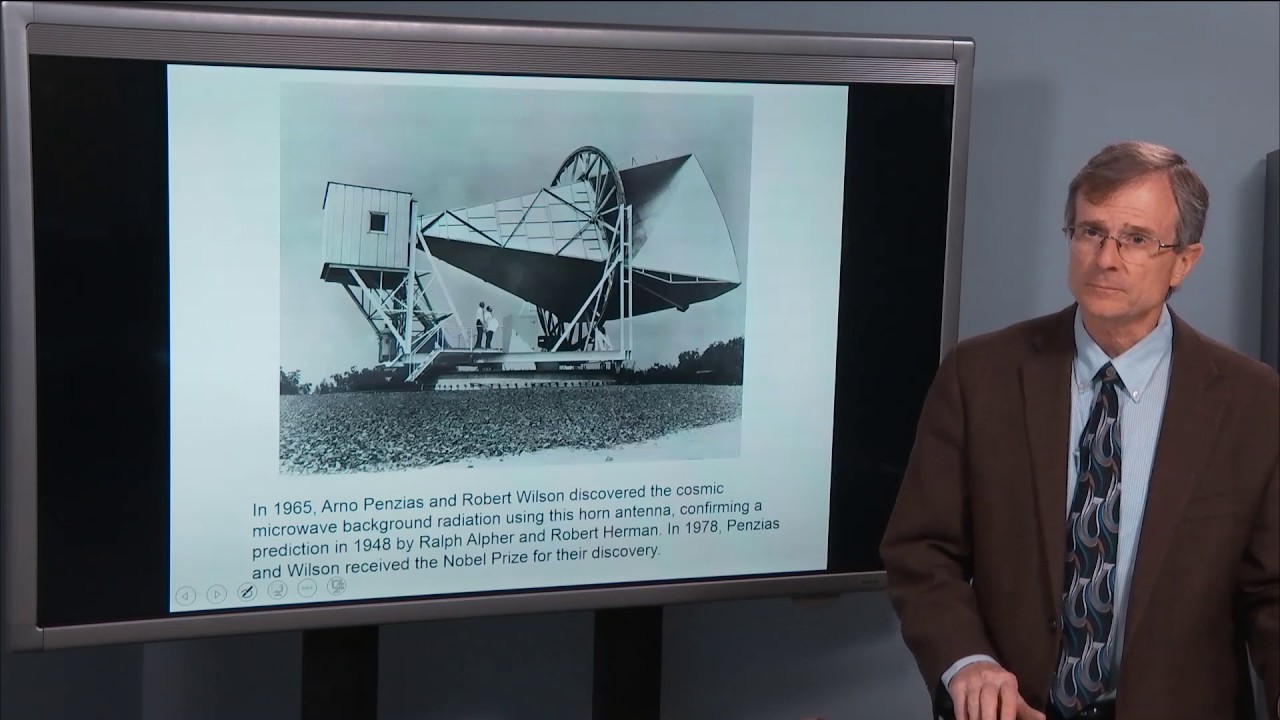
The Cosmic Microwave Background (CMB) Radiation: Investigating the relic radiation from the Big Bang that marks the boundary of the observable universe.
Dark Matter and Dark Energy: Studying the unseen forces and matter that govern the large-scale structure and accelerated expansion of the cosmos.
Cosmological Multiverse Hypotheses: Delving into theoretical physics concepts about what might exist beyond the horizon of our observable universe.
91.2K views2.2Klikes1:55:59Original Release: 2025-12-27
Tonight, we're going to explore something that should be simple, the size of the universe. But here's what most people don't realize. When you start actually measuring things, when you begin comparing one scale to another, you discover something unsettling.
Almost everything we can see, every star, every galaxy, every cluster of galaxies, all of it together makes up less than 5% of what exists. And the part we can see, it's just a tiny bubble floating in something that might extend forever. By the end of tonight, you're going to understand not just how incomprehensibly massive the universe is, but why everything we've ever observed might be just a fraction of what's actually out there. Before we get started, if you love exploring the depths of space as much as we do, take a second to like the video or subscribe. It's a simple action, but it helps this channel reach more curious minds like yours. Now, let's begin. Let's start with something familiar, something you can picture.
Earth. Our planet measures about 12,742 km across at the equator. That's big enough that if you wanted to walk around it taking 8 hours a day at a steady pace, you'd need more than a year. If you could somehow drive non-stop at highway speed, it would still take about 2 weeks. From where you're sitting right now, Earth feels massive. There are mountains you've never climbed, oceans you've never crossed, entire continents you might never visit.
The sheer size of our world is something most people never truly comprehend because we experience only tiny pieces of it at a time. But Earth isn't alone.
It sits in a solar system with seven other planets, all orbiting a star that's so large you could fit about 1.3 million Earths inside it. Our star measures about 1,392,000 km across. That's 109 times wider than Earth. If you could line up Earth's side by side across the stars diameter, you'd need 109 of them. And remember, these are planets that already feel huge from our perspective on the surface. The distances between planets in our solar system are even more staggering than their sizes. Earth sits about 150 million km from the sun. That's the definition of what astronomers call one astronomical unit or AU. Light traveling at about 300,000 km/s takes about 8 minutes and 20 seconds to cover that distance. When you look up at the sun, you're seeing it as it was 8 minutes ago, not as it is right now in this present moment. Jupiter, the largest planet in our solar system, orbits at about 5.2 2 AU from the sun.
That's about 778 million km.
Light from the sun takes about 43 minutes to reach Jupiter. Neptune, the most distant planet, sits about 30 AU from the sun, roughly 4.5 billion km away. Light takes about 4 hours to travel from the sun to Neptune. But here's where things get interesting. The solar system doesn't end at Neptune. Far beyond the planets lies a region called the Orort cloud. A vast spherical shell of icy objects that surrounds the entire solar system. The ought cloud extends from about 2,000 AU out to perhaps 100,000 AU from the sun. That outer edge is about 1.6 light years away.
A lightyear is the distance light travels in one year, about 9.46 trillion km. The ought cloud marks the true boundary of our sun's gravitational influence, the region where objects are still loosely bound to our star. And here's the key point. The ought cloud extends almost halfway to the nearest star. The nearest star to our sun is Proxima Centuri, part of a triple star system called Alpha Centuri. Proxima Centuri sits about 4.24 light years away. That's roughly 40 trillion km.
If you could somehow travel at the speed of a commercial jet liner, about 900 km hour, the journey would take about 5 million years. Let's put that distance in perspective with a scale model.
Imagine shrinking the sun down to the size of a basketball about 24 cm across.
In this model, Earth would be a tiny bead just 2 mm wide. And where would that bead be? Not next to the basketball. It would be 26 m away.
That's the length of two school buses lined up end to end. Already the emptiness of space becomes clear. Now, where would you place the nearest star in this model? Not across the room. Not across the city. You'd have to travel nearly 7,000 km. If your basketball sun is sitting in London, the nearest star would be somewhere in New York. Two basketballs separated by the width of the Atlantic Ocean. And remember, these are the closest stars to each other. Most stars are much, much farther apart.
This is the first scale we need to understand.
Stars are separated by distances so vast that even light traveling faster than anything else in the universe takes years to cross from one star to another.
And our sun is just one of hundreds of billions of stars in our galaxy. The Milky Way galaxy, our cosmic home, is a barred spiral galaxy containing somewhere between 100 and 400 billion stars.
That range is huge because it's actually very difficult to count stars when you're sitting inside the galaxy. It's like trying to count all the trees in a forest while standing in the middle of it. Everything nearby blocks your view of what's farther away. But the number doesn't matter as much as the scale.
Hundreds of billions of stars, each one separated from its neighbors by light years of mostly empty space. The Milky Way measures about 100,000 lighty years across and about 1,000 lighty years thick in most places, though the central bulge is thicker. If you could view the galaxy edge on, it would look like a flat disc with a bulge in the middle.
Our sun sits about 26,000 lighty years from the galactic center, roughly halfway out to the edge in a relatively calm region between spiral arms. The Milky Way is rotating.
Our sun orbits the galactic center at about 828,000 km per hour. Even at that tremendous speed, it takes about 225 million years to complete one orbit. The last time our sun was at this position in its orbit, dinosaurs hadn't evolved yet. Earth was in the Triacic period and the continents were still joined together in one superc continent called Panga. Now let's zoom out again. The Milky Way isn't alone.
It's part of a small cluster of galaxies [music] called the local group. The local group contains about 50 galaxies, though most of them are small dwarf galaxies.
The three largest members are the Milky Way, the Andromeda Galaxy, and the Triangulum Galaxy. Andromeda is the largest, containing about a trillion stars and measuring about 220,000 lighty years across. The Milky Way is second largest.
Triangulum is smaller with about 40 billion stars. The distance between the Milky Way and Andromeda is about 2.5 million light years. Think about that.
Light traveling at 300,000 km/s takes 2.5 million years to travel from one galaxy to the other. If you could somehow travel at the speed of light, which is impossible according to physics as we understand it, the journey would take 2.5 million years. At the speed of a spacecraft like Voyager 1, which is traveling at about 61,000 km hour relative to the sun, the journey would take about 44 billion years. That's more than three times the current age of the universe. The entire local group spans about 10 million lightyear.
It's a relatively small cluster as galaxy clusters go. Some clusters contain thousands of galaxies packed into a similar volume of space, but 10 million light years is still an almost incomprehensible distance.
If the Milky Way were the size of a dinner plate about 25 cm across, then the local group would be about 2.5 m across and the Andromeda galaxy would be another dinner plate sitting about 63 cm away. But we're not done. The local group is itself part of a much larger structure called the Virgo supercluster, also known as Lania.
Lania contains about 100,000 galaxies spread across about 520 million lighty years. The name Laniaakia comes from Hawaiian and means immeasurable heaven, which is fitting because the structure is so large that mapping it out required decades of work by hundreds of astronomers. Lania isn't just a random collection of galaxies. It's a coherent structure held together by gravity.
All the galaxies within Lania are moving, flowing through space along filaments and sheets, eventually being pulled toward a central region called the Great Attractor. The Great Attractor is a gravitational anomaly in the direction of the constellations Centurus and Hydra. It's pulling the Milky Way and millions of other galaxies toward it at about 2 million km hour. Nobody knows exactly what the great attractor is.
It's hidden behind the plane of the Milky Way, obscured by all the stars and dust in our own galaxy. We can't see it directly. We only know it exists because we can measure how galaxies are moving and calculate where they're being pulled toward. Whatever it is, it contains the mass of tens of thousands of galaxies.
Possibly a massive concentration of dark matter. possibly an enormous cluster of galaxies we simply can't see because our own galaxy is in the way. Think about how far we've traveled. We started with Earth, moved out through the solar system to the Milky Way, then to the local group, and now to Lania with its 100,000 galaxies all flowing toward the great attractor. But even Lania is just one supercluster among millions in the observable universe. And the observable universe itself is far larger than you might expect.
It's defined by the cosmic horizon. The maximum distance light could have traveled since the beginning of the universe. The universe is about 13.8 billion years old. So you might think the observable universe would be 13.8 billion light years in radius, but it's not. The universe has been expanding since the big bang. And that expansion has been accelerating. Space itself is stretching, carrying distant galaxies away from us faster and faster. When we account for this expansion, the observable universe has a radius of about 46.5 billion light years. That means the observable universe is about 93 billion lightyear across.
That's about 880 billion trillion km.
That number is so large it becomes meaningless. Our brains didn't evolve to comprehend scales like this. We can write down the number.
We can do the math. But we can't truly visualize what it means. And here's the thing that makes this even more mind-bending.
The observable universe contains about two trillion galaxies.
That's the current best estimate based on deep field observations from the Hubble Space Telescope and other instruments. Each one containing hundreds of billions of stars.
Let's try another scale comparison to make this comprehensible [music] or at least slightly less incomprehensible.
If the entire observable universe were the size of Earth, about 12,742 km across, then the Milky Way galaxy would be about 14 microme across. That's smaller than a human red blood cell, which measures about 7 to 8 microme. You couldn't see it with your naked eye.
You'd need a microscope to see it at all. And remember, the Milky Way contains hundreds of billions of stars.
Each one of those stars, including our sun, would be far too small to see, even with the most powerful microscope ever built. Or try this comparison. If the Milky Way were the size of a coin about 2 cm across, then the observable universe would be about 2,000 km across.
That's roughly the distance from Los Angeles to Denver or from London to Rome. Imagine standing in Los Angeles holding a coin that represents the entire Milky Way galaxy with its hundreds of billions of stars. Then realizing that the observable universe extends all the way to Denver in every direction filled with trillions of other coins, each one another galaxy. But we're still not done because the observable universe isn't the entire universe. It's just the part we can see.
The actual universe is almost certainly much larger, possibly infinitely larger.
The cosmic horizon limits how far we can see, but it doesn't limit how far space extends. Beyond the observable universe, there's more space, more galaxies, more stars. We just can't see them because their light hasn't had time to reach us yet. How much larger is the actual universe compared to the observable universe? We don't know. It might be twice as large. It might be a million times larger. It might be infinite.
Current observations suggest the universe is either flat or very close to flat. And a flat universe extending infinitely in all directions is consistent with all our measurements. If the universe is indeed infinite, then the observable universe, as vast as it is, is literally infinite decimal compared to the whole. It's a tiny bubble floating in an endless ocean of space.
Think about what that means. Everything we've ever seen, every star visible in the night sky, every galaxy photographed by the most powerful telescopes, every structure we've mapped from the local group to Lania to the largest cosmic filaments. All of it is contained within that tiny bubble. And beyond that bubble, there's more, endless more.
galaxies and stars and planets that we will never see, that we can never see because the light from them will never reach us. But let's get back to what we can observe because even that is staggering. Astronomers have spent decades mapping the large scale structure of the universe, figuring out where galaxies are and how they're distributed.
What they've found is that the universe isn't uniform. Galaxies aren't randomly scattered through space. They're organized into structures that are almost unbelievably large. Galaxies cluster together into groups and clusters. The Milky Way is in the local group, which is a relatively small cluster, but some clusters are enormous.
The Koma cluster, for example, contains over 1,000 large galaxies and probably 10,000 smaller ones, all packed into a region about 20 million lighty years across.
The Virgo cluster, which is relatively close to us at about 54 million lighty years away, contains at least 1,300 galaxies and possibly more than 2,000.
These clusters are themselves organized into even larger structures called superclusters.
We've already talked about Lania, our home supercluster, but there are millions of other superclusters scattered [music] throughout the observable universe.
Each one contains tens of thousands or hundreds of thousands of galaxies. The Shapely supercluster, for example, is one of the largest structures we've found.
It's about 650 million lighty years away and contains more than 8,000 galaxies and superclusters are organized into even larger structures called filaments and walls. These are sheets and strands of galaxies stretching across hundreds of millions or even billions of light years. The Sloan Great Wall, discovered in 2003, is a filament of galaxies that stretches about 1.37 billion light years across.
It's located about 1 billion lighty years from Earth and contains tens of thousands of galaxies.
If the Milky Way were the size of a grain of rice, about 2 mm across the Sloan Great Wall, would be longer than 10 football fields placed end to end.
That's about 1,100 m. And that's just one structure. There are many others like it scattered throughout the universe. The largest structure ever discovered is called the Hercules Corona Borealis Great Wall. This is a filament of gammaray bursts which likely indicates a concentration of galaxies stretching across about 10 billion lightyear. That's more than 10% of the diameter of the observable universe.
The structure is so large that it challenges our understanding of how the universe formed and evolved. According to cosmological models, structures this large shouldn't exist. There hasn't been enough time since the Big Bang for gravity to pull together something so massive, [music] but it exists. We've observed it, which means either our models are incomplete or there's something about the universe we don't understand yet. Between these filaments and walls are voids.
Enormous regions of space with very few galaxies.
The Bites void discovered in 1981 is a roughly spherical region about 330 million lighty years across containing very few galaxies.
It's not completely empty, but it's far less dense than the average region of space. Where you'd normally expect to find about 2,000 galaxies in a volume that size, the boat is void contains only about 60.
These voids are even harder to comprehend than the filaments and walls.
They're regions of space where almost nothing exists.
Just empty space extending for hundreds of millions of light years. If you were somehow placed in the middle of a void, you'd see almost no galaxies in any direction. The nearest galaxies would be so far away they'd be barely visible.
Even with a powerful telescope, you'd be surrounded by darkness. With only the faint glow of distant structures at the edges of the void, the large scale structure of the universe looks like a cosmic web. Filaments and walls of galaxies surrounding enormous voids.
It's sometimes called the cosmic foam with galaxies concentrated in the thin membranes between bubbles of empty space. This structure formed over billions of years as gravity pulled matter together. In the early universe, matter was distributed almost uniformly with only tiny variations in density.
But those tiny variations were enough.
Regions that were slightly denser had slightly stronger gravity, which pulled in more matter, making them even denser.
Over billions of years, this process created the structures we see today.
Now, let's talk about what we can't see.
Because as vast as the observable universe is, as staggering as these structures are, they represent only a tiny fraction of what exists. So what makes up the rest of the universe? The rest is something else. Something we can't see directly, but we know must exist because we can observe its gravitational effects. About 27% of the universe is dark matter. Dark matter is matter that doesn't emit, absorb, or reflect light. It doesn't interact with electromagnetic radiation at all, which means we can't see it with telescopes, no matter how powerful they are. We only know dark matter exists because we can measure how it affects things we can see. Galaxies rotate faster than they should based on the visible matter alone. Galaxy clusters are held together by more gravity than their visible mass can account for. Gravitational lensing.
The bending of light around massive objects shows that there's more mass present than we can see. Dark matter forms halos around galaxies, providing the gravitational scaffolding that holds them together. The Milky Way is surrounded by a dark matter halo that extends far beyond the visible disc of stars. This halo contains more mass than all the stars in the galaxy combined, possibly 5 to 10 times more. We're swimming through dark matter right now.
The Earth, the solar system, our entire galaxy, all of it is embedded in a sea of dark matter, but we can't detect it directly. It passes through ordinary matter almost without interacting at all. We don't know what dark matter is made of. The leading theory is that it consists of particles that don't interact via the electromagnetic force.
They're affected by gravity and possibly the weak nuclear force, but that's it.
These particles would be all around us, passing through our bodies, through the Earth, through everything, billions of them, every second without us ever [music] noticing.
Scientists have built detectors deep underground, shielded from cosmic rays and other interference, trying to catch a dark matter particle interacting [music] with ordinary matter. So far, despite decades of searching, we haven't found anything definitive. But at least dark matter is matter. [music] It has mass. It exerts gravity. It affects things in ways we can measure and predict. The remaining 68% of the universe is something even stranger.
It's called dark [music] energy. And we have even less idea what it is. Dark energy is responsible for the accelerating expansion of the universe.
In the 1,920 seconds astronomer Edwin Hubble discovered that the universe is expanding. Distant galaxies are moving away from us. And the farther away they are, the faster they're moving. This was revolutionary.
It meant the universe had a beginning, a moment when everything was compressed into an infinite decimally small point that then expanded outward.
We call that moment the big bang. For decades, astronomers assumed the expansion of the universe must be slowing down. Gravity, after all, pulls things together.
The gravitational attraction between all the matter in the universe should be acting like a break [music] gradually slowing the expansion.
The big question was whether the universe contained enough matter to eventually stop the expansion and pull everything back together in a big crunch or whether it would expand forever just more and more slowly. In 1998, two independent teams of astronomers studying distant supernovi made a shocking discovery. The expansion isn't slowing down, it's speeding up.
The universe is expanding faster today than it was in the past, and that acceleration is increasing.
This was so unexpected, so contrary to what everyone believed that at first people thought there must be an error in the measurements. But the results held up. The expansion of the universe is accelerating, driven by something that acts like a repulsive force pushing space apart. That something is dark energy. We don't know what it is. We can't detect it directly.
We can only see its effects on the expansion of the universe.
The simplest explanation is that dark energy is a property of space itself, a kind of energy density that's inherent to empty space.
The more space there is, the more dark energy there is and the stronger the repulsive force becomes.
As the universe expands, space increases, dark energy increases, and the expansion accelerates in a runaway process that will continue forever. This means the universe is dominated by something we don't understand. Dark energy makes up about 68% of the total energy density of the universe. Dark matter makes up about 27%.
And ordinary matter, the stuff we're made of, the stuff stars and planets and galaxies are made of, makes up less than 5%. Everything we can see, everything we've ever observed is a tiny fraction of what exists. So when we talk about the scale of the universe, we're not just talking about distance. We're also talking about how little we can actually see and measure. We're like ants on a beach trying to comprehend the ocean. We can measure the sand around us. We can see the waves. We can understand our immediate environment. But the vast majority of what exists is beyond our ability to observe or comprehend. Let's bring this back to something we can relate to. You're sitting somewhere on Earth right now reading or watching or listening to this. Earth is 12,742 km across. It orbits a star that's 1.3 million times larger by volume at a distance of 150 million km. That star is one of hundreds of billions in the Milky Way galaxy. The Milky Way is one of about 50 galaxies in the local group.
The local group is part of Lania. And Lania is just one of millions of superclusters in the observable universe. And all of that, everything we can see is less than 5% of the matter and energy that exists. At this scale, Earth is so small that it's essentially nothing. The solar system is nothing.
The Milky Way is nothing. Even Lania with its 100,000 galaxies is just a tiny speck. The largest structures we've ever found, filaments stretching across billions of light years, are just small features in something vastly larger. But here's the paradox. as small as Earth is as insignificant as it seems in the cosmic scale. It's also incredibly significant because as far as we know, Earth is the only place in the universe where life exists. That might not be true. With so many galaxies and stars, it seems unlikely that Earth is unique.
The chemical elements that make up life, carbon, hydrogen, oxygen, nitrogen, phosphorus, and so on, are common throughout the universe.
The physical and chemical processes that led to life on Earth should be able to occur elsewhere. The question is, how common is it? Are there millions of lifebearing worlds in every galaxy? Or is life so rare that only one planet in each galaxy develops it? or is it even rarer than that? We don't know. We've only explored our own solar system in any detail, and we haven't found definitive evidence of life anywhere except Earth. Mars might have had microbial life in the past when it had liquid water on its surface, but if it did, we haven't found the evidence yet.
Some of the moons of Jupiter and Saturn, like Europa and Enceladus, have subsurface oceans that might harbor life, but we haven't been able to explore them yet. And beyond our solar system, we've identified thousands of exoplanets, planets orbiting other stars, including many that are roughly Earth-sized and orbit in the habitable zone where liquid water could exist on the surface. But we can't yet determine if any of them actually have life. So for now, Earth is unique. It's the only place we know where the universe has become aware of itself. The only place where matter has organized itself into structures complex enough to look back at the cosmos and understand what they're seeing. That's extraordinary.
That's what makes Earth precious despite its tiny size. Carl Sean famously called Earth a moat of dust suspended in a sunbeam in his book pale blue dot. He was referring to a photograph taken by the Voyager 1 spacecraft in 1990 when it was about 6 billion km from Earth. At that distance, Earth appears as a tiny pale blue dot barely visible less than a single pixel in the image. Sean wrote about how every human who ever lived, every civilization, every war, every moment of triumph and tragedy, all happened on that tiny dot. It's a humbling perspective, but it's also an empowering perspective because if we can understand the scale of the universe, if we can comprehend just how vast it is and how small we are in comparison, then maybe we can also understand how precious our small world is.
Maybe we can see past our petty differences and recognize that we're all on this tiny planet together, floating through an immense and largely empty universe. The scale of the universe also tells us something about the nature of existence.
Space is mostly empty. The distances between objects are enormous compared to the sizes of the objects themselves.
Even atoms, the building blocks of matter are mostly empty space.
An atom is about 100,000 times larger than its nucleus. If you could remove all the empty space from atoms and compress Earth down to nuclear density, the planet would be about 180 m across.
All the matter in your body, compressed the same way, would fit on the head of a pin, and you'd weigh the same. All that mass compressed into an almost infinite decimally small volume. The universe is structured at many different scales.
Quarks combine to form protons and neutrons. Protons and neutrons combine to form atomic nuclei. Nuclei and electrons form atoms. Atoms combine to form molecules. Molecules combine to form cells. Cells combine to form organisms. Organisms live on planets.
Planets orbit stars. Stars cluster into galaxies. Galaxies cluster into groups and clusters. Clusters organize into superclusters.
Superclusters form filaments and walls.
And beyond that, there's the observable universe, and beyond that, possibly an infinite universe. At each scale, there's mostly empty space. The gaps between things dominate. Matter is rare.
Structure is rare. And yet within those rare pockets of structure, incredible complexity can arise. Life, consciousness, civilization, the ability to ask questions about the universe and actually find answers. Let's talk about the future of the universe because understanding the scale also means understanding where it's all heading.
The universe is 13.8 billion years old.
That sounds like a long time. and it is by human standards. But the universe has a lot of time ahead of it. Stars like our sun will continue burning for billions of years. The sun itself has about 5 billion years left before it exhausts its hydrogen fuel and begins expanding into a red giant.
Eventually, much smaller stars, [music] the red dwarfs that make up the majority of stars in the universe, will continue burning for trillions of years.
The smallest red dwarfs might last 10 trillion years or longer, but eventually all stars will burn out. Star formation requires gas, mostly hydrogen and helium, and that gas is being used up.
Every time a star forms, it converts some of that gas into heavier elements.
When massive stars explode as supernova, they scatter those heavier elements into space where they mix with the remaining gas and eventually form new stars.
But each cycle uses up some gas. Some gets locked up in stellar remnants like white dwarfs, neutron stars, and black holes. Some gets ejected from galaxies entirely. Over time, the universe will run out of gas to form new stars.
Estimates suggest that star formation will peak in the universe within the next trillion years or so, then gradually decline. By 100 trillion years from now, star formation will have essentially ceased. The universe will enter what's called the degenerate era.
A time when the only remaining objects are stellar remnants, white dwarfs slowly cooling and fading. Neutron stars, dense cores left behind by supernova explosions. Brown dwarfs, failed stars that never had enough mass to begin fusion. And black holes, regions of spaceime, where gravity is so strong that nothing can escape. Over even longer time scales, even these remnants will decay. Protons, the particles that make up atomic nuclei, are thought to be unstable over extremely long time scales. Current theories suggest protons might decay with a half-life of about 10 to the 34th power years. That's a one followed by 34 zeros. If true, then after 10 to the 40th power years, almost all matter will have decayed into radiation. The universe will consist mostly of black holes and extremely diffuse radiation.
And then over even longer time scales, the black holes will evaporate through a process called Hawking radiation.
Steven Hawking showed that black holes aren't completely black. They emit a tiny amount of radiation due to quantum effects near the event horizon. This radiation is incredibly faint. A black hole with the mass of the sun would take about 10 to the 67th power years to evaporate completely. A super massive black hole with a billion solar masses would take about 10 to the 100th power years. After 10 to the 100th power years or so, the universe will enter the dark era. All the stars will have burned out.
All the matter will have decayed. All the black holes will have evaporated.
The universe will consist of nothing but an incredibly thin cold soup of photons and a few elementary particles spreading out and cooling. As the expansion continues, the temperature will approach absolute zero. There will be no structure, no complexity, no change, just empty space expanding forever, getting colder and emptier and darker.
This is called the heat death of the universe. It's the ultimate fate predicted by our current understanding of cosmology and thermodynamics.
The universe had a beginning at the Big Bang. It's been changing and evolving for 13.8 billion years. It will continue changing for trillions of years more.
But eventually, all change will cease.
the universe will reach a state of maximum entropy where energy is spread out as evenly as possible and nothing can happen anymore. That's a depressing thought. But remember, these time scales are so long that they're almost incomprehensible.
10^ the 100th power years is an unimaginably long time. For comparison, the current age of the universe is about 1.4 * 10th power years. The heat death is about 10 to the 90th power times longer than the universe has already existed. That's a one followed by 90 zeros. There's no way to truly comprehend that kind of time span. And there's another important point. These predictions are based on our current understanding of physics and cosmology.
History has shown that our understanding can change dramatically with new discoveries. A hundred years ago, we didn't know about dark energy. We didn't know the universe was expanding. We didn't know about quantum mechanics or general relativity.
Who knows what we might discover in the next 100 years or [music] the next thousand years that could change our predictions about the ultimate fate of the universe. But for now, based on what we know, the scale of the universe includes not just space, but also time.
The vastness of space that we can observe, probably much more beyond that, possibly infinite, and trillions upon trillions of years into the future with different errors as the universe evolves and changes. Let's come back to the present right now, tonight, as you're experiencing this. You exist in a universe that's 13.8 billion years old on one planet orbiting one star in one galaxy. That galaxy is part of a cluster which is part of a supercluster which is part of a cosmic web stretching across the observable universe. And beyond what we can observe, there's almost certainly much more. The scale of the universe is not just big, it's beyond big. It's so large that our attempts to comprehend it always fall short. We can do the [music] math. We can write down the numbers. We can create visualizations and scale models, but we can't truly grasp it. Our brains evolve to understand things at human scales, meters and kilome and maybe a few thousand kilome, not light years and billions of light years, not structures spanning 10 billion light years, not trillions of galaxies. And yet we can understand it intellectually.
We can study it. We can measure it. We can build theories that explain how it all works. We can send spacecraft to explore our solar system. We can build telescopes that look billions of light years into space and billions of years back in time. We can map the large scale structure of the universe. We can calculate the age of the universe from the cosmic microwave background radiation. We can detect gravitational waves from colliding black holes billions of light years away. That ability to understand the universe, to comprehend our place in it, even when that place seems impossibly small, is what makes us special. It's what makes Earth special. Because as far as we know, Earth is the only place where the universe has developed the ability to understand itself. Think about that for a moment. The universe through us is looking back at itself.
The atoms that make up your body were forged in stars that lived and died billions of years ago. You are literally made of stardust. Those atoms have been cycling through space for billions of years, occasionally combining into planets, rocks, water, air, and now they've combined into you, a conscious being capable of asking questions about the universe and finding answers.
That's extraordinary.
That's what makes all of this meaningful. Despite the overwhelming scale, the universe might be vast beyond comprehension. Earth might be a tiny [music] speck, insignificant in size, but Earth is home. It's where we are.
It's where life developed. It's where consciousness emerged. It's where we built telescopes and spacecraft and computers.
It's where we figured out the laws of physics and the nature of stars and the expansion of the universe. The scale of the universe should humble us. It should make us realize how small we are, how brief our time is, how little of the cosmos we can access or even observe.
But it should also inspire us. Because despite being so small, despite living on a tiny world in a vast and mostly empty universe, we've managed to understand so much. We've measured the size of the universe. We've traced its history back to the Big Bang. We've predicted its future. We've discovered planets around other stars.
We've detected ripples in spaceime from events billions of light years away.
We've done all of this in just a few hundred years of modern science. Imagine what we might discover in the next few hundred years or the next few thousand years. We might find life on other worlds. We might develop technologies that let us explore beyond our solar system. We might solve the mysteries of dark matter and dark energy. We might figure out how to unify quantum mechanics and general relativity. We might even find a way to survive the eventual death of our son and preserve our civilization for billions of years or longer. Or we might not. We might destroy ourselves before we get the chance. We might fail to solve the challenges we face from climate change to nuclear weapons to asteroid impacts.
We might remain confined to this one small planet, this tiny speck in a vast universe, never venturing beyond our cosmic neighborhood. That's why understanding the scale of the universe matters. It gives us perspective.
It shows us that we're part of something larger, something that's been evolving for 13.8 billion years and will continue for trillions of years more.
It shows us that Earth is precious, not because it's large or important in the cosmic sense, but because it's home.
It's the only place we have. And as far as we know, it might be the only place in the universe where life exists, where consciousness exists, where anyone is looking up at the stars and wondering about their place in the stars. Cosmos.
The scale of the universe is overwhelming. It should be. It's meant to overwhelm our intuitions and force us to think differently about our place in existence. But that feeling of being overwhelmed shouldn't lead to despair or nihilism. It should lead to wonder.
Wonder at how much exists.
Wonder at how much we've managed to understand. Wonder at how much more there is to discover. And the result is this story we've told tonight. A story that started with Earth and expanded outward through the solar system, the Milky Way, the local group, Lania, and beyond. A story that traced the scales from familiar to incomprehensible. A story that revealed that almost everything that exists is invisible to us. Dark matter and dark energy that we can measure but not see. It's a story that spans not just space, but time.
From the big bang 13.8 billion years ago to the heat death trillions upon trillions of years in the future. A story that shows us how rare structure is in the universe. How most of space is empty. How matter is the exception rather than the rule. But it's also a story about us. about how we living on this tiny world have managed to comprehend something so vast that it should be beyond comprehension. About how we've measured the unmeasurable, mapped the infinite, understood the incomprehensible.
about how consciousness and curiosity and the scientific method have allowed us to look out at the cosmos and see it for what it is to understand our place in it to grasp the true scale of the universe even when that scale makes us feel impossibly small. But before we finish, let's explore some specific structures in more detail because understanding particular examples helps make the incomprehensible slightly more comprehensible.
Let's start closer to home and work our way outward, adding layers of detail that help us truly grasp what we're talking about. Consider Alpha Centauri, the nearest star system to our sun. It actually consists of three stars orbiting each other. Alpha Centauri A and B form a binary pair, orbiting their common center of mass every 80 years.
Proxima Centauri, the closest of the three to us at 4.24 two four light years away orbits the other two at a much greater distance. Proxima is a red dwarf much smaller and cooler than our sun. It has at least two planets, including one called Proxima B, that orbits in the habitable zone where liquid water could exist.
The journey to Proxima Centuri at current spacecraft speeds would take tens of thousands of years.
Voyager 1, our fastest spacecraft leaving the solar system, travels at about 61,000 km per hour relative to the sun. At that speed, it would take about 73,000 years to reach Proxima Centuri.
That's longer than recorded human history. That's longer than agriculture has existed. That's longer than modern humans have existed as a distinct species. and Proxima Centuri is close.
It's literally the nearest star. Most stars in our galactic neighborhood are much farther away. Sirius, the brightest star in our night sky, is 8.6 light years distant.
Betal goose, the red super giant that marks Orion's shoulder, is about 550 light years away. When you look at Beetlejuice tonight, you're seeing light that left that star in the 1,472 seconds during the Renaissance.
Before Columbus sailed to the Americas, [music] the distances between stars in our local region are typical for the Milky Way. Stars in the galactic disc are separated by an average of about five light years. That's the typical distance between neighboring stars. Some are closer, some farther, but five light years is a reasonable average. In the central bulge of the galaxy, where stars are packed more tightly, the average separation is less, maybe one or two light years. In the halo, the diffuse regions surrounding the galaxy, stars are much more spread out, separated by tens or hundreds of light years. Our sun orbits the galactic center at about 828,000 [music] km hour, completing one orbit every 225 to 250 million years. We're currently about 26,000 light years from the center. The galactic center is a fascinating and violent place. At its heart sits Sagittarius A star, a super massive black hole weighing about 4 million times what the sun weighs.
We can't see the black hole directly of course because no light can escape from it. But we can see stars orbiting around it and by tracking their orbits we can calculate the mass of the black hole.
Some of these stars orbit incredibly close to Sagittarius [music] A star. A star designated S2 has an orbital period of just 16 years. Its closest approach to the black hole brings it within 17 light hours, about the distance from the sun to Uranus in our solar system. At that distance, the star is traveling at about 3% of the speed of light, fast enough that relativistic effects become measurable.
Astronomers have actually detected these effects, observing the stars orbit and confirming predictions from Einstein's general relativity. The region around Sagittarius A star is crowded [music] with stars packed much more densely than in our neighborhood. There are millions of stars within just a few light years of the black hole and they're orbiting at high speeds, occasionally passing close to each other. This environment is nothing like the calm, orderly region where our solar system resides. It's chaotic, violent, and lethal. If Earth were somehow transported to that region, the increased radiation from all those nearby stars would probably sterilize the surface and the gravitational perturbations from passing stars would disrupt planetary orbits, possibly ejecting planets from the system entirely. Let's zoom out from the galactic center and consider the Milky Way as a whole. The galaxy has several distinct components.
There's the thin disc about 1,000 lighty years thick where most of the stars and all of the spiral arms are located. This is where our sun resides.
Then there's the thick disc extending about 3,000 light years above and below the thin disc. The thick disc contains older stars with different chemical compositions, suggesting they formed at a different time in the galaxy's history. Surrounding the disc is the bulge, a roughly spherical concentration of stars at the galactic center. The bulge extends about 10,000 light years from the center and contains mostly older stars. And beyond the bulge is the halo, a diffuse spherical region extending perhaps 100,000 to 200,000 light years from the center.
The halo contains old stars, globular clusters, which are tight spherical collections of hundreds of thousands of stars and probably large amounts of dark matter. The spiral arms are not solid structures. Their density waves, regions where stars and gas are temporarily compressed as they orbit the galactic center. Think of it like a traffic jam on a highway. Cars enter the jam, slow down, then leave the jam, and speed up again. The traffic jam persists even though individual cars are constantly moving through it. Same with spiral arms. Stars and gas clouds enter the arm, spend some time there, then leave and continue their orbit. The arm persists as a density enhancement even though the material within it is constantly changing. The Milky Way has four major spiral arms and several minor ones.
The sun is currently between two major arms in a region sometimes called the Orion spur or the local arm. We've been here for millions of years and will remain here for millions more.
Eventually, our orbit will carry us into one of the major spiral arms, then back out into another interarm region. This cycle continues as the sun completes each 225 millionyear orbit around the galaxy.
Now let's consider our neighbors in the local group. Andromeda, the largest member, is about 2.5 million light years away and approaching us at about 110 km/s.
In about 4 billion years, Andromeda and the Milky Way will collide and merge, creating a new elliptical galaxy that astronomers have playfully nicknamed Milomeda or Milkdromeda.
During the merger, the night sky will be transformed.
Instead of a faint fuzzy patch, Andromeda will grow larger and larger, eventually dominating the sky with its spiral structure clearly visible. The collision will trigger waves of star formation as gas clouds collide and compress. New stars will light up the sky, bright blue white points scattered across the merging galaxies.
But individual stars probably won't collide.
The distances between stars are too large. It's like throwing two handfuls of sand at each other. Most grains will pass right by without hitting anything.
Same with stars.
The galaxies will pass through each other with most stars never coming close to collision. The main effect will be gravitational disruption of orbits, sending stars into new paths around the merged galaxy's center. The Triangulum Galaxy, the third largest member of the local group, is about 2.7 million lighty years away.
It's smaller than the Milky Way, containing about 40 billion stars, and it's probably gravitationally bound to Andromeda. During the Andromeda Milky Way merger, Triangulum might get pulled in as well, creating an even more complex interaction. The local group also contains dozens of dwarf galaxies.
These are small galaxies containing millions to billions of stars much smaller than the big three. The large melanic cloud and small melanic cloud visible in the southern hemisphere as fuzzy patches in the night sky are irregular dwarf galaxies orbiting the Milky Way. The large melanic cloud is about 160,000 lighty years away and contains about 20 billion stars. The small melanic cloud is about 200,000 lighty years away with about 3 billion stars.
These dwarf galaxies are being slowly torn apart by the Milky Ways gravity.
Long streams of stars and gas stretch between the Melanic clouds and the Milky Way, evidence of ongoing tidal disruption. Eventually, over hundreds of millions of years, the melanic clouds will be absorbed by the Milky Way, their stars mixing with ours.
This is a common process. Large galaxies grow by consuming smaller ones. The Milky Way has probably absorbed dozens of dwarf galaxies over its history, and it will absorb more in the future. Let's expand our view to the Virgo supercluster, now more accurately called Lania.
Lania means immeasurable heaven in Hawaiian, and it's an apt name. This supercluster contains about 100,000 galaxies spread across 520 million light years. That's more than 5,000 times the diameter of the Milky Way. If the Milky Way were a dime, about 18 mm across Lania would be about 94 m across. That's about the length of a football field.
Lania isn't a spherical structure. It's more like a flat sheet with filaments extending from it. The galaxies within it are arranged in a complex web, clustering along filaments and leaving vast voids between them. The entire structure is flowing with galaxies moving through space pulled by gravity toward regions of higher density.
At the heart of this flow is the great attractor, a region of space about 250 million light years away, where the local gravitational field is especially strong, the great attractor is pulling thousands of galaxies toward it, including the Milky Way. We're moving toward it at about 600 km/s.
But there's something even larger than the greater attractor.
Beyond it lies an even more massive concentration of matter called the Shappley concentration or Shappley supercluster about 650 million lighty years away. This massive structure contains more than 8,000 galaxies and is one of the largest concentrations of matter in the nearby universe.
These massive structures, superclusters, and great attractors and walls tell us something important about the universe.
Matter isn't distributed randomly. It's organized into structures at multiple scales. from planets to stars to galaxies to clusters to superclusters to walls. And these structures exist because of gravity. Gravity pulled matter together from an initially almost uniform distribution into the complex web we see today. In the early universe, about 380,000 years after the Big Bang, matter was distributed almost uniformly.
There were tiny variations in density, about one part in 100,000, but those tiny variations were enough. Regions that were slightly denser had slightly stronger gravity, which pulled in more matter, making them even denser. This runaway process called gravitational instability created the large scale structure of the universe. The cosmic microwave background radiation, which is the afterlow of the Big Bang, shows us what the universe looked like at that early time. When we map the CMBB across the sky, we see tiny temperature variations corresponding to those density variations. Hot spots correspond to slightly overdense regions. Cool spots correspond to slightly under dense regions.
Those hot and cool spots are the seeds of all the structure we see today. The galaxies, clusters, superclusters, and walls all grew from those tiny initial variations.
Let's talk about some of the largest structures in the observable universe.
The Sloan Great Wall, which we mentioned earlier, stretches about 1.37 billion lightyear across. It's a filament of galaxies, a cosmic thread stretching across more than 1% of the observable universe's diameter. The galaxies in the Sloan Great Wall, aren't all at the same distance from us. The wall has depth.
It's more like a sheet or membrane of galaxies stretched across space, several hundred million light years thick, but over a billion light years long. The CFA2 Great Wall discovered in 1989 is another massive structure. It's about 500 million light years long and 200 million lighty years wide containing tens of thousands of galaxies. The Virgo supercluster, which includes the Milky Way, is actually part of this structure.
We're living within one of the largest structures visible in the nearby universe. The Hercules Corona Borealis Great Wall is even larger. This structure, if it is indeed a single coherent structure, stretches about 10 billion light years across. That's more than 10% of the diameter of the observable universe. It was discovered by studying the distribution of gammaray bursts, which are extremely powerful explosions thought to occur when massive stars collapse.
Gammaray bursts are so bright they can be seen across the entire observable universe making them useful probes of large scale structure. The existence of the Hercules corona borealis great wall is controversial. Some astronomers question whether it's really a single structure or just a chance alignment of smaller structures. But if it is real, it poses a serious problem for cosmology.
According to the cosmological principle [music] which states that the universe should look roughly the same in all directions on large scales, there shouldn't be structures larger than about 1.2 billion light years. The Hercules corona borealis great wall is about eight times larger than this theoretical limit. Its existence suggests either that the cosmological principle is wrong or that our understanding of how structures form is incomplete. Between these massive walls and filaments are the voids. The boat is void discovered in 1981 is a roughly spherical region about 330 million lighty years across containing very few galaxies.
Where you'd normally expect to find about 2,000 galaxies, the Bose void contains only about 60. That's 97% fewer galaxies than average. The void isn't completely empty, but it's far more empty than most of space. If you were somehow placed in the center of the Bures void, the nearest significant concentration of galaxies would be more than 150 million light years away in any direction. The night sky would be almost completely dark. A few faint smudges of light from distant galaxies at the edges of the void, and that's it. No Milky Way band stretching across the sky. No neighboring galaxies visible to the naked eye, just darkness and the cosmic microwave background radiation. The faint glow left over from the big bang.
There are many other large voids scattered throughout the universe. The giant void in Kane's venatici is about 1.3 billion light years across. The CMBB cold spot, a particularly large and cold region in the cosmic microwave background, might be caused by a supervoid. An extraordinarily large void about 1.8 billion light years across.
These structures challenge our understanding of how the universe evolved and how large structures can grow in the time since the Big Bang.
Let's consider what the universe looks like at the largest scales. When we map out all the galaxies we can see, plotting their positions in three-dimensional space, a pattern emerges. Galaxies are arranged in a cosmic web. Long filaments of galaxies stretch across hundreds of millions or billions of light years. These filaments connect nodes, regions where multiple filaments meet, and where galaxy clusters are located.
Between the filaments are the voids, enormous bubbles of nearly empty space.
The pattern looks like foam or a sponge.
The galaxies form thin surfaces surrounding bubbles of empty space. This isn't a random pattern. It's the natural result of gravitational instability acting on an initially nearly uniform distribution of matter.
Computer simulations of the universe's evolution, starting from the tiny density variations in the early universe and letting gravity do its work for 13.8 billion years produce structures that look remarkably similar to what we observe. The simulations create filaments, nodes, and voids that match the distribution of real galaxies. These simulations also show us something fascinating.
Most of the matter in the universe isn't in galaxies at all. It's in the filaments in the form of diffuse gas and dark matter. The galaxies are just bright markers showing where the filaments are. They're like cities along a highway. The highway, the filament of dark matter and gas, is what matters structurally. The cities are just where things get dense enough and bright enough for us to see.
This means when we look at the cosmic web, [music] when we see these beautiful maps of galaxy distributions showing the filaments and voids, we're only seeing a tiny fraction of what's there. The galaxies we see contain only about 10% of the ordinary matter. The other 90% is in the filaments as diffused gas, too hot and too spread out to [music] form stars. And then there's the dark matter which makes up about five times more mass than ordinary matter. The dark matter forms its own web and the ordinary matter follows along flowing through the gravitational landscape created by dark matter. Now let's talk about numbers that truly defy comprehension. The Hubble Deep Field and Hubble Ultra Deep Field images showed us that even in apparently empty regions of sky, there are thousands of galaxies visible when you look long and deep enough. And when we add up all the stars in all those galaxies, we get something like 200 [music] billion trillion stars. That's a two followed by 23 zeros.
How many is that? If you tried to count them one star per second, never sleeping, never stopping, it would take you about six quadrillion years. For reference, the current age of the universe is only 13 billion 800 million years. You'd need to count for about 435,000 times longer than the universe has existed to count all the stars in the observable universe. And each of those stars, or at least many of them, probably has planets.
Current estimates based on exoplanet surveys suggest there are on average more planets than stars. Maybe 1.5 or two planets per star on average, possibly more. That means there are at least 300 billion trillion planets in the observable universe. And some of those planets are in the habitable zone of their star, the region where liquid water could exist on the surface. Some are rocky worlds like Earth. Some are gas giants like Jupiter. Some are ice worlds like Neptune. But among all those planets, there must be billions or trillions that are similar to Earth.
How many of those Earthlike planets harbor life? We don't know. We have only one example, Earth. We don't know if life is common or rare. We don't know if the conditions that led to life on Earth are easy to replicate or incredibly unlikely.
But given the sheer number of planets out there, it seems improbable that Earth is unique. Even if only one in a billion Earthlike planets develops life, that would still mean there are hundreds of billions of life-bearing worlds in the observable universe. And how many of those develop intelligent life? Again, we don't know. On Earth, simple life appeared relatively quickly after the planet became habitable within the first billion years or so. But complex multisellular life took much longer, about 3 billion years after simple life appeared. And intelligent technological civilization only appeared in the last few hundred,000 years, a tiny fraction of Earth's history. So maybe intelligence is rare, requiring a long series of unlikely events. Or maybe it's common, inevitable once life gets started. We simply don't know. This uncertainty is captured in something called the Drake equation, formulated by astronomer Frank Drake in 1961.
The equation estimates the number of detectable civilizations in our galaxy based on factors like the rate of star formation, the fraction of stars with planets, the number of habitable planets per star, the fraction that develop life, the fraction that develop intelligence, and so on. Depending on what values you assign to these factors, the Drake equation gives you wildly different answers. Optimistic estimates suggest thousands or millions of civilizations in the Milky Way alone.
Pessimistic estimates suggest we might be the only one. The fact that we haven't detected any signals from alien civilizations despite decades of searching with radio telescopes is called the Fermy paradox.
Named after physicist Enrico Fermy, who supposedly asked, "Where is everybody?"
during a lunch conversation in 1950. If the galaxy is full of intelligent civilizations, why haven't we heard from any of them?
There are many possible answers. Maybe civilizations are rare. Maybe they're common but short-lived, destroying themselves before they can spread across the galaxy. Maybe they exist but don't use radio waves to communicate.
Maybe they're out there but too far away for us to detect. Maybe they're deliberately hiding. We don't know. But whether we're alone or not, the scale of the universe remains staggering. If there are other civilizations out there, they face the same challenges we do. The distances between stars are enormous.
Interstellar travel, if it's possible at all, would take centuries or millennia, even at a significant fraction of the speed of light. Communication across interstellar distances is limited by the speed of light. A message sent to Proxima Centauri would take 4.24 years to arrive and the reply would take another 4.24 years to get back to us.
For more distant stars, the delays are even longer. This means that even if the galaxy is teameing with civilizations, they're isolated from each other by the sheer scale of space. They can't travel easily between stars. They can communicate, but with long delays that make realtime conversation impossible.
Each civilization is essentially alone, looking out at a universe full of other worlds, but unable to reach them.
Let's go deeper into dark matter. We've established it exists. The gravitational evidence is overwhelming, but what exactly is it? The leading candidate for dark matter is a class of particles called WIMPs, which stands for weakly interacting massive particles. These hypothetical particles would have mass, [music] but would interact only through gravity and possibly the weak nuclear force. They wouldn't emit, absorb, or reflect light, making them invisible to telescopes. They'd pass through ordinary matter almost without interacting, which is why we haven't detected them yet.
Despite decades of searching, there are other candidates for dark matter. Axiens are another class of hypothetical particles, much lighter than WIMPs, but present in enormous numbers.
Primordial black holes formed in the early universe rather than from collapsing stars are another possibility.
Or dark matter might be something completely unexpected, some new kind of particle or phenomenon that we haven't imagined yet.
Whatever dark matter is, it's essential to the structure of the universe.
Without dark matter, galaxies wouldn't have formed the way they did. The gravity from ordinary matter alone wasn't enough to pull together the first galaxies in the time available since the Big Bang.
Dark matter provided the extra gravity needed to jumpstart galaxy formation.
Dark matter collapsed first, creating deep gravitational wells that ordinary matter then fell into. The galaxies we see today are built on a foundation of dark matter.
Dark matter forms halos around galaxies, extending far beyond the visible disc of stars. The Milky Way's dark matter halo probably extends 200,000 lighty years or more from the galactic center, twice as far as the visible stars. This halo contains several times more mass than all the stars and gas in the galaxy combined.
We're swimming through dark matter right now as Earth orbits the sun and the sun orbits the galactic center. All of it moving through a sea of dark matter particles. Dark energy is even more mysterious than dark matter. Dark energy makes up about 68% of the universe's total energy density, more than dark matter. and ordinary matter combined.
It's responsible for the accelerating expansion of the universe. Unlike gravity, which pulls things together, dark energy pushes space apart. The more space there is, the more dark energy there is, and the stronger the repulsive effect becomes. The simplest explanation for dark energy is that it's a property of space itself, sometimes called the cosmological constant or vacuum energy.
According to quantum field theory, even empty space isn't truly empty. It's filled with virtual particles that constantly pop into and out of existence. These virtual particles carry energy, and that energy could be what we observe as dark energy. The problem is that when physicists try to calculate the energy of the quantum vacuum, they get an answer that's about 10 to the 120th power times larger than the observed value of dark energy. That's a one followed by 120 zeros.
It's one of the largest discrepancies between theory and observation in all of physics. Either the calculation is wrong in a profound way, or there's some mechanism that cancels out most of the vacuum energy, leaving only a tiny residual amount.
Nobody knows the answer.
What we do know is that dark energy is causing the expansion of the universe to accelerate.
Distant galaxies are moving away from us faster and faster. Eventually, billions of years from now, galaxies beyond our local group will be moving away so fast that their light will be redshifted into invisibility.
They'll disappear from view one by one, leaving only the galaxies in our gravitationally bound local group visible.
The universe will appear to empty out with only a few dozen galaxies visible and the rest fading into darkness. This has profound implications for the future. Any civilizations that arise in the far future, trillions of years from now, will see a very different universe than we do. They'll see only their local group of galaxies with no evidence of anything beyond. They won't see the cosmic microwave background radiation, which will have been redshifted and diluted to the point of undetectability.
They won't see distant galaxies. They won't see the large scale structure of the universe.
They might conclude that their local group is the entire universe with nothing beyond it. We're living in a special time cosmologically speaking. We can see the cosmic microwave background.
We can see distant galaxies and measure their recession velocities. We can map the large scale structure of the universe. We have evidence of the Big Bang and the expansion of space. Future civilizations might not have this evidence. They might be unable to reconstruct the full history and structure of the cosmos.
This raises an interesting question. Is there evidence of cosmic phenomena that existed in the past but has already faded away? Are there things about the early universe that we can't observe because the evidence no longer exists?
We know about the big bang because we can see the cosmic microwave background and because we can observe the universe expanding. But what if there were events before the big bang that left no observable trace?
What if our universe is just one cycle in an eternal series of expansions and contractions, but we can't see evidence of previous cycles because it's been erased. These are deep questions that touch on the limits of what we can know about the universe.
Science is based on observation and evidence. If something leaves no observable trace, we can't study it scientifically. We can speculate. We can build theoretical models, but without evidence, we can't confirm or rule out those models. So, there might be aspects of the universe that are fundamentally beyond our ability to observe. Let's think about the multiverse hypothesis.
The idea that our universe might be just one of many. According to some versions of inflation theory, which explains certain features of the Big Bang, our universe is just one bubble in an eternally inflating multiverse.
New universes are constantly being created, each with potentially different physical laws and constants. We live in one of these universes, but there are countless others forever beyond our ability to observe or interact with.
In some versions of quantum mechanics, every quantum measurement creates a branching of reality with all possible outcomes occurring in parallel universes.
You exist in one branch making one set of observations, but other versions of you exist in other branches making different observations.
These parallel universes are real but fundamentally inaccessible to each other. Are these ideas science or philosophy? It's hard to say. They make testable predictions in some cases.
Inflation theory, for example, makes predictions about the patterns we should see in the cosmic microwave background.
And those predictions have been confirmed. But the multiverse itself, the other universes beyond our own are by definition unobservable.
So while the theory that predicts them might be scientific, the other universes themselves might be forever beyond the reach of science. This brings us back to the scale of the universe. If the multiverse hypothesis is correct, then even an infinite universe is just a tiny part of reality. There could be countless other universes, each potentially infinite in its own right, each with its own physical laws and its own structure. At this point, the scale becomes literally incomprehensible.
An infinite universe is already beyond our ability to fully grasp. An infinite collection of infinite universes is even more so. We're not just talking about something big. We're talking about levels of infinity beyond infinity.
Mathematicians have words for these concepts, transfinite numbers and different sizes of infinity. But those are mathematical abstractions as physical realities. They're beyond anything we can truly comprehend. And yet we exist.
We're here on Earth, a planet that measures 12,742 km across, orbiting a star in a galaxy, in a universe that might be infinite, in a multiverse that might be even more infinite. The scale is overwhelming, but we're here. We're conscious. We're asking these questions. That's remarkable. Think about what had to happen for you to exist. The universe had to begin with the big bang. It had to expand and cool.
The first stars had to form and create heavy elements through nuclear fusion.
Those stars had to die in supernova explosions, scattering those heavy elements into space. New stars, including our sun, had to form from clouds containing those heavy elements.
Planets had to form around our sun.
Earth had to be at the right distance from the sun in the habitable zone.
Earth had to have the right mass to hold an atmosphere, but not so much mass that it became a gas giant. It had to have water, carbon, and all the other elements needed for life. Life had to begin, which required the right chemical conditions and a source of energy.
Life had to survive for billions of years through asteroid impacts, volcanic eruptions, ice ages, and other catastrophes.
Complex life had to evolve, which required the right environmental conditions. Intelligence had to evolve, which required specific evolutionary pressures. Civilization had to develop, which required cooperation, language, and technology. And then you had to be born the product of an unbroken chain of ancestors stretching back billions of years, every single one of whom survived long enough to reproduce.
The odds of any particular individual existing are astronomically small. If any one of millions of events in the past 13.8 billion years had gone differently, you wouldn't exist. But here you are. And the fact that you exist means you can understand the universe at least partially. You can look up at the night sky and comprehend that those points of light are stars like the sun separated by light years of space.
You can understand that the universe is vast, far larger than intuition suggests. You can grasp, at least intellectually, that you're part of something immense. That ability, the ability to understand the universe despite being an infinite decimally small part of it is what makes us special. Consciousness is rare in the universe, possibly incredibly rare. Most of the universe is empty space, void of matter and energy. Most matter is in stars or gas clouds, not in living organisms. Most planets are probably lifeless. Even on Earth, most of the planet's history was dominated by simple singleselled life. Complex life, multisellular organisms with specialized cells and tissues, only appeared in the last billion years or so. And intelligent life capable of building telescopes and spacecraft and understanding cosmology has only existed for a tiny fraction of that time. We don't know if we're alone in the universe, but we do know that consciousness is exceptional, rare, precious. And the fact that consciousness exists at all, that the universe has produced beings capable of understanding it is one of the most remarkable facts about reality. So yes, the universe is vast. The true scale of the universe is beyond what we can fully comprehend. But that vastness makes our existence more remarkable, not less.
We're small, but we're not insignificant.
We're part of the universe becoming aware of itself. We're the universe looking back and asking questions about its own nature. And in a cosmos where most of space is empty and most matter is lifeless, that's something extraordinary.
But let's go deeper into some specific aspects of cosmic scale [music] that help us understand just how strange and magnificent the universe really is.
Let's talk about cosmic time and how the scale of time is just as staggering as the scale of space. The universe began 13.8 billion years ago with the big bang. In the first fraction of a second after the big bang, the universe went through a period of exponential expansion called inflation. In less than a trillionth of a trillionth of a trillionth of a second, the universe expanded from something smaller than an atom to something roughly the size of a grapefruit. That's an expansion factor of about 100 million trillion trillion.
Nothing in our everyday experience comes close to this kind of growth rate. After inflation ended, the universe continued expanding, but at a more modest rate.
For the first 380,000 years, the universe was a hot, dense plasma of particles and radiation. It was opaque, like being inside a cloud. Photons, particles of light, couldn't travel far before being scattered by electrons.
Then about 380,000 years after the big bang, the universe cooled enough for electrons and protons to combine into hydrogen atoms. This is called recombination.
Once recombination happened, photons could travel freely through space. The universe became transparent. Those photons are still traveling through space today. We detect them as the cosmic microwave background radiation. a faint glow coming from all directions in the sky. The CMBB has a temperature of about 2.7 Kelvin, just a few degrees above absolute zero. It's been cooled by the expansion of the universe. When the photons were emitted, the universe was about 3,000 Kelvin, hot enough to glow red like a heating element. But 13.8 8 billion years of expansion has stretched the wavelengths of those photons, redshifting them from visible light to microwaves. The CMBB is the oldest light we can see. When we observe the CMBB, we're looking back to when the universe was only 380,000 years old. That's like looking at a photograph of a person taken when they were a newborn. And that person is now 80 years old. We're seeing the universe in its infancy. After recombination, the universe entered what's called the dark ages. There were no stars yet, no galaxies, just hydrogen and helium gas slowly collapsing under gravity. The dark ages lasted for several hundred million years. Then about 200 million years after the Big Bang, the first stars began to form.
These were massive stars, hundreds of times more massive than the sun, burning hot and bright. They lived short lives, only a few million years, and then exploded as supernova.
Those explosions created the first heavy elements, elements heavier than hydrogen and helium. The first galaxies formed a few hundred million years after the first stars as gravity pulled together clouds of gas and dark matter into larger structures. These early galaxies were small and irregular, nothing like the large spiral galaxies we see today.
Over billions of years, these early galaxies merged and grew, creating the large galaxies we observe in the present-day universe.
Our sun formed about 4.6 billion years ago, roughly 9 billion years after the Big Bang. That means the universe was already about 2/3 of its current age when our solar system formed.
Many generations of stars had already lived and died, creating the heavy elements that make up Earth and everything on it, the iron in your blood, the calcium in your bones, the oxygen you breathe. All of it was forged in stars that exploded before our solar system existed. Earth formed shortly after the sun and life appeared on Earth relatively quickly within the first billion years.
That means life has existed on Earth for about 3.8 billion years, roughly a quarter of the age of the universe. For most of that time, life consisted of simple single-sellled organisms.
complex multisellular life only appeared about 600 million years ago, just 4% of Earth's history, or about 1.3% of the universe's history. Humans appeared about 300,000 years ago. That's 0.008% of Earth's history or 0.002% of the universe's history. written civilization has existed for about 5,000 years which is 0.0011% of Earth's history or 0.00003 6% of the universe's history. Modern science the systematic study of nature using observation and experimentation has existed for about 500 years which is 0.00001 0000 1 1% of Earth's history or 0.0000 36% of the universe's history. Think about that. We've understood the scientific method, the systematic way of studying nature for only 0.000036% of the universe's lifetime. And in that tiny sliver of time, we figured out the age of the universe, the size of the observable universe, the nature of stars and galaxies, the structure of atoms, the evolution of life, and countless other facts about reality. That's remarkable. It suggests that intelligence once it arises can make extraordinarily rapid progress in understanding the cosmos. But it also suggests how fragile this knowledge is.
If humanity disappeared tomorrow, all of our knowledge would be lost. The books would decay. The computers would fail.
The buildings would crumble. In a few million years, there would be almost no trace that we ever existed. And any future intelligent species that might evolve on Earth would have to rediscover everything from scratch. They'd have to reinvent the wheel, rediscover fire, redevelop agriculture, reinvent writing, redevelop mathematics and science. It would take them thousands of years to reach our current level of knowledge, if they reached it at all. This is one reason why some people advocate for making humanity a multilanet species. If we spread to other worlds, then the loss of Earth wouldn't mean the loss of everything we've learned. Our knowledge would be distributed across multiple planets, making it much more difficult to completely erase. But for now, all of human knowledge, all of our art and literature and science exists only on this one small planet.
Let's talk about the future of astronomical observation and how our understanding of the universe's scale continues to evolve. For most of human history, we could only observe the universe with our naked eyes.
We could see about 6,000 stars under perfect conditions, plus the Milky Way band stretching across the sky, a few planets, the moon, and occasionally a comet or meteor. That was it. That was the entire observable universe for thousands of years. Then in6008, the telescope was invented. Suddenly, we could see things our eyes couldn't see.
Galileo used a telescope to observe the moons of Jupiter, the phases of Venus, craters on the moon, and countless stars invisible to the naked eye. The telescope expanded the observable universe enormously.
Instead of thousands of visible stars, there were millions. Instead of faint smudges that might be clouds in our atmosphere, there were distant galaxies containing billions of stars. Over the next few centuries, telescopes got larger and more powerful. In the 1,920 seconds, Edwin Hubble used the 100in telescope at Mount Wilson Observatory to show that some of those faint smudges were actually separate galaxies far beyond the Milky Way.
He also discovered that distant galaxies are moving away from us with more distant galaxies moving faster. This was the first evidence that the universe is expanding.
In the 1,960 seconds, astronomers discovered the cosmic microwave background radiation, the afterglow of the Big Bang. This discovery provided strong evidence that the universe had a beginning and has been expanding and cooling for billions of years. It also allowed astronomers to measure the age of the universe and the density of matter and energy within it.
The Hubble Space Telescope, launched in 1990, revolutionized astronomy. By placing a telescope above Earth's atmosphere, which distorts and absorbs light, Hubble could see fainter, more distant objects than any groundbased telescope. The Hubble Deep Field images taken in 1995 and subsequent years showed thousands of galaxies in tiny patches of apparently empty sky. These observations suggested that the observable universe contains far more galaxies than previously thought, leading to the current estimate of about 2 trillion galaxies.
More recently, the James Web Space Telescope launched in 2021 has pushed the boundaries even further. Web observes in infrared light which can penetrate dust clouds and see the light from very distant galaxies that has been redshifted into the infrared.
Webb has observed galaxies that formed less than 400 million years after the big bang giving us a view of the early universe that was impossible before.
Future telescopes will continue this trend. The extremely large telescope currently under construction in Chile will have a mirror 39 m in diameter about four times larger than the largest current groundbased telescopes. It will be able to directly image exoplanets and potentially detect signs of life in their atmospheres. The Nancy Grace Roman Space Telescope planned for launch in the mid 2020 seconds will have a field of view 100 times larger than Hubble, allowing it to survey huge areas of sky and detect billions of galaxies.
These future observations will help us understand the scale of the universe in more detail. We'll be able to map the distribution of galaxies more accurately, trace the evolution of cosmic structure over time, and potentially detect the first stars and galaxies that formed in the universe. We might even be able to detect evidence of physics beyond the standard model, such as dark matter particles or primordial gravitational waves from inflation. But there are fundamental limits to what we can observe. We can never see beyond the cosmic horizon. The boundary defined by the maximum distance light could have traveled since the big bang. Objects beyond that distance are forever invisible to us. And as the universe continues to expand and accelerate, that horizon will effectively shrink. Distant galaxies will be carried away by the expansion of space faster than light can travel toward us, causing them to disappear from view one by one. In the far future, billions of years from now, observers in our local group of galaxies will see a very different universe than we do. They'll see only the Milky Way, Andromeda, and a few dozen smaller galaxies, all gravitationally bound together. Everything else will have been carried away by the expansion of space, redshifted into invisibility.
The cosmic microwave background will have been redshifted and diluted to the point where it's undetectable. Future astronomers won't be able to see evidence of the Big Bang or the expansion of the universe. They might conclude that their local group is the entire universe with nothing beyond it.
This means we're living in a special time cosmologically speaking. We can see the cosmic microwave background. We can see billions of galaxies and map the large scale structure of the universe.
We have evidence of the big bang and can study the early universe. This window of opportunity won't last forever.
Eventually, the evidence will fade away, leaving future civilizations unable to reconstruct the full history and structure of the cosmos. Let's consider one more aspect of cosmic scale, the nature of infinity. But what does infinite really mean? An infinite universe would have no edge, no center, no boundary. It would extend forever in all directions.
No matter how far you traveled, you'd never reach an edge because there is no edge. And in an infinite universe, everything that can happen does happen.
Somewhere this leads to some strange conclusions.
In an infinite universe with finite probability for any given configuration of matter, every possible arrangement of matter exists somewhere. There are infinitely many copies of Earth, infinitely many copies of you. Some of those copies are identical to you.
Others differ in small ways like having a different color shirt today.
Others differ in large ways like making different life choices.
This isn't science fiction. It's a logical consequence of infinity. If the universe is truly infinite and matter is distributed with some degree of randomness, then every possible configuration must exist somewhere, including perfect copies of you [music] and everything you've ever experienced. Of course, these copies would be extraordinarily far away. The distance between identical copies of Earth would be vast, far beyond the observable universe. You could never travel to one or communicate with one because they're beyond the cosmic horizon. But they would exist in principle somewhere in the infinite expanse of space. This is one reason why some physicists are uncomfortable with the idea of an infinite universe. It leads to these strange implications that seem more like philosophy than science.
But our observations suggest the universe is either infinite or very close to it. The universe appears to be flat, meaning its geometry is uklidian, like a flat sheet extending infinitely in all directions.
A closed universe, which would curve back on itself like the surface of a sphere, seems to be ruled out by observations.
Another aspect of infinity is that you can have different sizes of infinity.
The counting numbers 1 2 3 4 and so on forever form an infinite set. But it's a smaller infinity than all the numbers between 0 and 1 which includes every possible decimal. Mathematician Gayog Cantor proved this in the late 1800s showing that some infinities are genuinely larger than others. Could the multiverse, if it exists, be a larger infinity than our universe? If our universe is infinite and there are infinitely many other universes, is that a bigger infinity? These questions touch on deep issues in mathematics and philosophy. They're not just abstract puzzles.
They're genuine questions about the nature of reality that we might someday be able to answer. Let's bring all of this back to something tangible. You're sitting somewhere on Earth right now, perhaps in a room, perhaps outside.
Around you are familiar objects, walls, furniture, trees, buildings. You can see a few dozen or a few hundred meters in any direction. That's your immediate environment. The world at human scale, but zoom out and at each level, what seemed large becomes tiny. Your room is vast compared to an atom, but tiny compared to Earth. Earth is vast compared to you, but tiny compared to the sun. The sun is vast compared to Earth, but tiny compared to the distance to the nearest star. And so the scales continue, each one dwarfing the last, until we reach structures so large that describing them meaningfully becomes impossible. At each step, the scale increases by factors of thousands or millions or billions. At each step, what seemed large before becomes tiny. The room you're in is enormous compared to an atom, but tiny compared to Earth.
Earth is enormous compared to a human, but tiny compared to the sun. The sun is enormous compared to Earth, but tiny compared to the distance to the nearest star. And so on scale after scale until we reach the observable universe which is so large that describing it meaningfully becomes impossible. And yet at every scale the same physical laws apply. Gravity works the same way whether you're talking about an apple falling from a tree or galaxies clustering into superclusters.
Electromagnetism works the same way whether you're talking about a magnet sticking to a refrigerator or the light from a distant quazar.
The laws of thermodynamics, quantum mechanics, nuclear physics, all of them apply universally at every scale everywhere in the universe as far as we can tell. This universality is one of the most profound discoveries of science. The universe is comprehensible because it follows rules and those rules are the same everywhere. An atom of hydrogen on Earth is identical to an atom of hydrogen in a distant galaxy.
The speed of light is the same here as it is billions of light years away. This allows us to understand distant objects by studying nearby ones. We can learn about stars by studying our sun. We can learn about galaxies by studying the Milky Way.
We can learn about the universe by studying the small piece of it we can directly access. But there are mysteries remaining phenomena we don't understand.
Dark matter and dark energy are the most obvious examples, but there are others.
We don't know how to reconcile quantum mechanics and general relativity, the two pillars of modern physics. They both work extraordinarily well in their respective domains, but they make contradictory predictions about what happens at very small scales and very high energies, such as near the singularity of a black hole or during the first moments of the Big Bang. We need a theory of quantum gravity, a unified framework that includes both quantum mechanics and general relativity. But despite decades of effort, we don't have one yet. We don't understand consciousness, how physical matter can give rise to subjective experience. We don't know if consciousness is unique to Earth or common in the universe. We don't know if artificial intelligence could become conscious or if consciousness requires biological processes. We don't know if the laws of physics are the same everywhere in the multiverse. If the multiverse exists, we don't know why the physical constants have the values they do. Why is the speed of light 300,000 km/s and not something else? Why does the electron have the mass it does and not some other value? Some versions of the multiverse hypothesis suggest that these constants vary from universe to universe. And we observe the values we do because we exist in a universe where these particular values allow for the formation of atoms, stars, planets, and life. These are deep questions and we don't have answers yet.
But the fact that we can ask them, that we can frame them in ways that might someday be answerable is itself remarkable. A few hundred years ago, we didn't even know that other galaxies existed. We thought the Milky Way was the entire universe.
Now we're contemplating multiverses and different sizes of infinity. Our understanding has grown enormously and it will continue to grow. The true scale of the universe then isn't just a matter of size. It's also about complexity, about structure at many different levels, about laws that apply universally, about mysteries still unsolved. It's about the remarkable fact that we tiny beings on a tiny planet can comprehend any of this at all. When you look up at the night sky, you're looking out across space and back in time. The light from the stars has been traveling for years or decades or centuries to reach your eyes. The light from distant galaxies has been traveling for millions or billions of years. You're seeing those objects not as they are now, but as they were when the light left them.
The night sky is a window into the past.
And every photon that enters your eye, every particle of light that strikes your retina and triggers a signal in your optic nerve traveled across the cosmos just to reach you at this moment.
That photon was emitted by a star perhaps millions of years ago. It traveled through the vast emptiness of space, avoiding every obstacle until it happened to intersect with Earth at the exact moment and location where you were standing looking up. The odds of any particular photon reaching your eye are infiniteesimally small. And yet it happened. That's part of the wonder of the universe. We're all [music] connected to the cosmos in this way. The atoms in our bodies came from stars. The light we see comes from stars. The energy that powers our civilization comes ultimately from the sun. Whether directly through solar panels or indirectly through fossil fuels, which are ancient sunlight stored in chemical form, we're part of the universe, not separate from it. We're made of the same stuff as stars and galaxies governed by the same physical laws. Part of the same grand story that began 13.8 8 billion years ago with the Big Bang.
Understanding the scale of the universe changes how we see ourselves. It humbles us, showing how small we are in the cosmic scheme, but it also elevates us, showing that we're capable of understanding something vastly larger than ourselves.
We're the universe's way of knowing itself, of contemplating its own existence. That's extraordinary.
And perhaps most importantly, understanding the scale of the universe gives us perspective on our own lives and our own problems, the things we worry about, the conflicts we engage in, the status we seek. All of it matters to us and to the people around us. But from a cosmic perspective, it's ephemeral.
The universe doesn't care about our political disagreements or our social anxieties or our career ambitions. It will continue regardless of what we do or don't do. But that's not depressing.
It's liberating.
It means we're free to focus on what actually matters, our relationships, our experiences, our growth as individuals and as a species. We're free to create meaning in our own lives, to build and explore and discover and wonder. The universe provides the stage and we're the actors making up the play as we go along. So when you think about the scale of the universe, don't let it overwhelm you. Don't let it make you feel insignificant.
Instead, let it inspire you. Let it remind you that you're part of something vast and ancient and beautiful. Let it motivate you to learn more, to explore more, to understand more. Because every fact we learn about the universe is a victory for consciousness over ignorance, for understanding over mystery. And in a universe that's mostly empty and mostly dark, every light of understanding matters. The universe is vast, but it's not incomprehensible.
It's large, but it's knowable. It's ancient, but we're figuring out its history. It's complex, but we're unraveling its structure. And that's what makes the scale of the universe not just a fact to be memorized, but a truth to be celebrated.
We live in an amazing cosmos. And we have the extraordinary privilege of being able to understand it. Thanks for staying with me through this long journey across space and time and scale.
The true scale of the universe is beyond what any of us [music] can truly grasp.
But the attempt to grasp it, the effort to understand it, that's what makes us human. That's what makes this tiny planet in this vast universe worth protecting. And when you look up at the night sky tonight and see those points of light and those stars that are really suns light years away in a galaxy that's part of a universe larger than imagination, remember that you are part of that universe.
You are the universe looking back at itself.
Up Next
78:03
Active Galactic Nuclei Explained: Supermassive Black Holes & Quasars
@NRCIUCAA
235 views•2022-07-26
61:17
First Billion Years of the Universe with the Square Kilometre Array
@iaaudc
121 views•2022-05-26

127:36
Uranus: The Extreme Physics of a Tilted Ice Giant
@CalmSpaceToSleep
4.3K views•2026-08-19
6:10
Gamma-Ray Bursts: Cosmic Snipers Explained | Astronomy
@kurzgesagt
15M views•2016-07-31
Related Study Plans & Knowledge Roadmaps
Structured learning paths in Astronomy
astronomy
Reionization: Pop III Stars, IGM & 21cm Line
01Foundations of Cosmology & the Early Universe
02Population III Stars & Cosmic Dawn
03Physical Mechanisms of Reionization
+ 2 more learning modules
17h5 modules
Explore Roadmap
astronomy
Planetary Rings: Dynamics, Roche & Resonances
01Foundations of Gravity and Orbital Mechanics
02Tidal Forces and the Roche Limit
03Structure, Composition, and Collisions
+ 2 more learning modules
10h5 modules
Explore Roadmap
astronomy
Asteroseismology: Stellar Waves, Ages & Cores
01Foundations of Stellar Astrophysics & Wave Mechanics
02Stellar Oscillation Modes: P-modes and G-modes
03Mathematical Framework of Asteroseismology
+ 2 more learning modules
35h5 modules
Explore Roadmap
astronomy
Adaptive Optics: Physics, Engineering & Control
01Foundations of Wave Optics and Wavefronts
02Atmospheric Turbulence & Optical Distortion
03Wavefront Sensing Technologies
+ 3 more learning modules
35h6 modules
Explore Roadmap