













![Journey to the Edge of the Universe [4K]](https://i.ytimg.com/vi_webp/QhM5zAVvOI4/maxresdefault.webp)




Stars are classified into three populations based on their metallicity and formation era: Population 3 stars were the first generation, composed only of hydrogen, helium, and lithium, and were extremely massive (up to 460 solar masses) because they lacked metals needed for efficient energy radiation; Population 2 stars are metal-poor stars found in globular clusters and the galactic halo, including carbon-enhanced metal-poor stars formed from early supernovae; Population 1 stars are metal-rich stars found in the galactic disk and open clusters, including our Sun. Modern discoveries reveal that Population 3 stars were likely more massive than previously thought, neutron star collisions may be the primary source of heavy elements like gold, and the Gaia mission is mapping over a billion stars to understand galactic evolution and star formation timelines.
Stellar Populations I, II, & III: A 2022 Astronomy Update
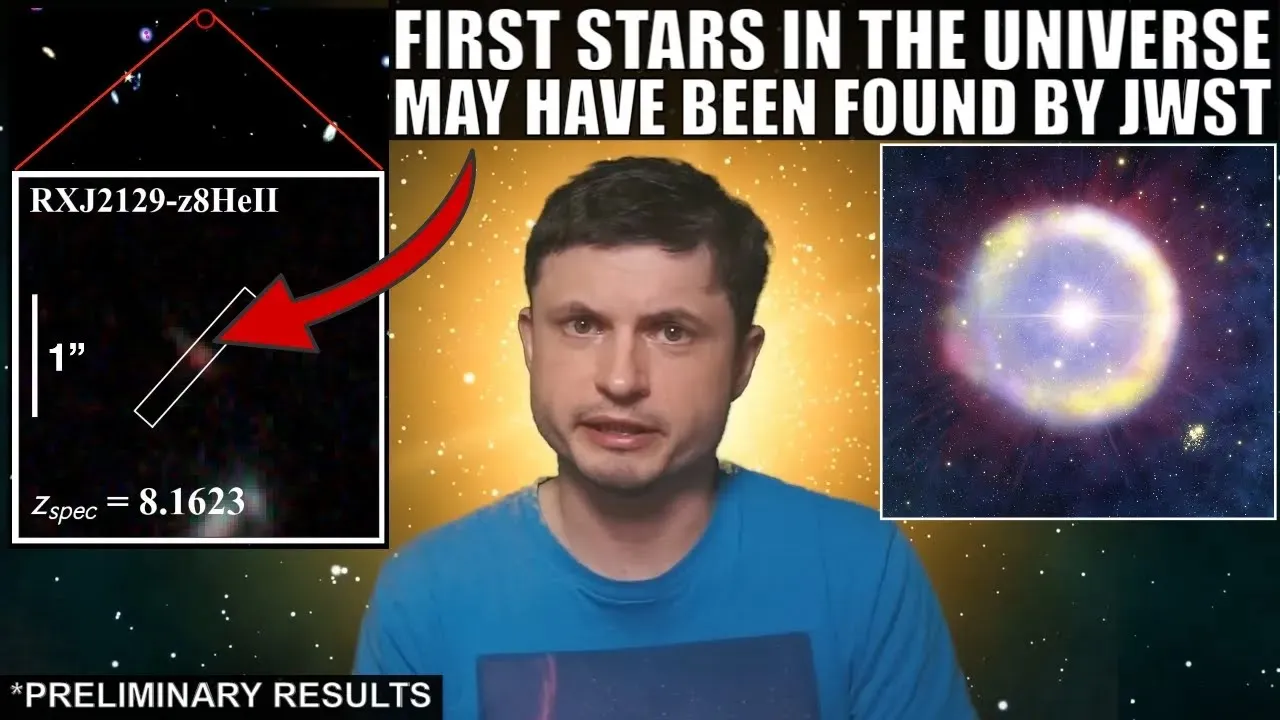
Added:I'm the poster accordion okay i I've pressed hi Chad hi Chad here we go astronomy cast episode 496 stellar Update welcome to astronomy cast our weekly facts based journey through the cosmos where we help you understand only what we know but how we know what we know I'm Fraser Cain publisher of Universe Today and with me is dr. Pamela gay the director of technology and citizen science at the Astronomical Society of the Pacific and the director of cosmic West hey Pamela he doing I'm doing well how are you doing Fraser I am doing great although I mentioned this just the worst June ever it's just we can't we call it June you Airy because it's just like it's so cold and miserable you know like nothing the temperatures have been pretty look pretty low and you know it's been a it's been a rough June and this is one of those few months that we get we're supposed to be super nice and so no no what I'll trade III we're at 38 see Wow yeah that's too hot no way that's that's too no one should live like that yeah I mean I've been wearing shorts a woman my age should not be wearing out in public because it's hot will you take our our 10 degrees C as a gladly really yes I probably Matthew actually all right so just another reminder 500th show in st. Louis sometime in September where do people go to find out about the show cosmic West calm where else would they go cosmic what a dork oh no no astronomy cast comm dang it dang it I screwed it up completely folks go to God trying again sorry Chad folks go to astronomy cast dot-com I don't know where else you would go and we have all the details under the trips tab go sign up it is either pay in full for $200 or put in a non-refundable I hold your place for $50 this allows us to rent buildings that we can sit in and make a science yeah awesome alright so another update show this time on the various generations of stars let's get into it that's it quick intro I was running at a time but we're gonna be talking about the sort of early generations of stars the later generations of stars what we've learned about how stars exist both at the beginning of time and now and their various metallicity there I just wrote an intro on the fly alright Pamela where do you want to start what have we learned that's new about the populations of stars well we have confirmed that the first generation of stars did indeed exist and were big and bright now we theoretically knew they existed we kind of knew they needed to exist or the universe wouldn't be here I but the the issue that we are having is people used to think well the first generation of stars the the small ones should still be around because small stars live for like forever and it hasn't been forever yet where the small first generation stars so when I started astronomy we talked about the search for the population three stars and and we couldn't find them and people got sad and upset and since then we we have indeed made observations that indicate that in the most distant brightest gallery most distant brightest galaxies observed we have these giant massive population three stars that probably couldn't have ever formed small and couldn't have lived very long and and so this has led to much confusion and how we discussed the populations of stars well let's just sort of set the stage here just to give people an idea of what that early universe must have looked like and what those first stars would have been like back at the beginning of the universe this is the first generation of stars of course they call it population 3 but they are only made of the primordial elements left over after the Big Bang hydrogen helium lithium yeah yeah and so what kind of a star do you get when you've got sort of that much material relatively close together and none of those pesky metals well it turns out those pesky metals are really needed to help radiate energy in an effective manner in the outer envelope of the star and without them stars like I shall grow bigger and I shall grow bigger and I will be really big by which I mean like the small ones 460 solar masses and so you end up with stars that are alike and I shall die as a type 2 supernova fairly young and I so where we used to talk about pop three stars being the first generation stars that we were desperately trying to seek we now have a state of confusion because well there was a first generation of smaller stars they just weren't the first generation of stars and we can look at them and we can see the signatures of sometimes just one supernovas materials getting mixed into the stellar stuff and things and so in talking to people about what population three stars are you have the camp of people who are like population three stars are stars that are extraordinarily metalcore okay that's a nice happily vague definition you have the people who are like it is the first generation of stars that were formed but aren't specific on first generation by size first generation total because this first smallest stars were forming at the same time that the biggest hours that formed we're dying so it's kind of a mixed up generation because tiny things take time to form then you also have the theorists out there who are like well maybe we do have population three stars floating around out there but their chemical enrichment from their own internal nuclear burning has gotten circulated up to the surface or maybe as these stars orbit around the galaxy they're scooping up heavier metals and so they're in disguise so population three stars are whatever the author of a paper decides they are great and I mean the size I mean the biggest star that we can get right now are about like 60 70 times the mass of the Sun may be bigger than that they have pesky metals in them right so what was like the most massive stars that were possible or do we just still kind of not know yet I so it's theorized that they could have been maybe even hundreds of times bigger I it's not like we can go out and just casually look at them today today yeah there's actually a couple of telescopes in the works right there's the Origin Space Telescope which obviously I just did a video on all these different telescopes so it's all sort of amazing and it's not yet built and we don't know if it will be completed course not but its job is going to be to directly observe population three stars and James Webb will be able to do a fair amount of work in this category as well I it will be doing it in the infrared where there's plenty of things to look at because the ultraviolet light from these extraordinarily distant stars gets shifted not just into the visible but out the other side into the infrared so we may even have like our friendly lyman-alpha hydrogen lines this is the one to to transition in hydrogen I it may just be that those lines are right within the realm of what we can see with JWST and even if they can't see them directly it should be able to do sort of what Hubble is doing and do these bank shots using gravitational lensing to see stuff that's a little farther behind and and then when the origin Space Telescope shows up it should be able to see them directly and what gets me is the Very Large Telescope which also works someone in the infrared was able to see these stars from the surface of our planet or at least infer them it wasn't able to resolve them or anything but by looking at the brightest galaxies ever found in the early universe they they were able to just about two years three years ago I'd say these stars that we're looking at in this distant galaxy these are population three stars so we're seeing them we're just not resolving them well and we're pretty much seeing them in one system but it's a start and it's a start that doesn't require a space telescope right so those are the I mean those are the mysterious population three stars the ones that are really just theorized but you know other kinds of stars are seen here in the Milky Way population too and population one so did their and there have been some interesting discoveries about all of these the oldest stars and in the Milky Way have been found stars that are similar to our own Sun and maybe formed with it have been found so where do I want to start with some of these other discoveries well I I wanted to finish population three star discussions with one more intermediate case I in a great press release last week by my undergraduate advisor Tim beers who is now at the University of Notre Dame I they introduced us to stars that they are not putting into population three our population two and our instead calling carbon enhanced metal core stars so these are the stars that formed out that first set of massive supernova and they're still out there waiting to be found and what's interesting is by studying these stars we can insights into how our own galaxy forms that changes the picture we have to work with it used to be that we said population to stars exists solely in the outer halo and an globular clusters and in these old places but these carbon enhanced metal poor stars that they're finding which are the first generation of small stars they're finding them in places like the disk of our galaxy which implies that the systems that they formed in later merged and built up our Milky Way galaxy so it's fascinating to think that the gas and dust that went on to form our Sun came from systems that as we had predicted and observations are now starting to give us evidence for those systems built up and had some metal-poor stars in them and now have the richest metallicity stars out there and it's pretty hilarious the there's this joke that astronomers have right there's only three kinds of elements in the universe x y&z hydrogen helium and everything a metal yes yeah yeah awesome carbons a metal as far as I'm concerned deal oh you're what you're one of them as well okay all right oh yes yes I managed to convince folks to let me not take chemistry and instead take nucleosynthesis graduate level as an undergraduate so yeah yeah I have metal to me yes that's awesome all right so let's talk about some of the other the other kinds of stars then and some of the interesting new discoveries that have been made in them so when it comes to population one versus population two stars we don't have a hard-and-fast this is what one is this is what the other is the the wave we generally talk about it is population I to stars are going to be less luminous they're they're less likely to have planets and and this difference in what kind of systems they form and how bright they are is is essentially the defining factor the other way we define them is where they are globular clusters are pretty much predetermined these are going to be population two stars the metalcore stars whereas instead we're going to have the disk of the Milky Way where stars are continuing to form these are population 1 star stars in open clusters population 1 stars and there are young population two stars which is deeply confusing because in general population two stars the metal-poor stars are thought to be old globular clusters they're old but we also still have fairly pristine gas and dust out there or mostly just gas because it's pristine and this fairly pristine gas is still capable of forming stars and so we can still get population to stars forming it's just forming out of the the stuff that is is untouched by supernovae yeah although I mean just in the last couple of weeks there was a really interesting paper where they've got a new way to date globular clusters andaman they're younger be that they're billions of years younger than originally thought and so not 13 billion years old but maybe 9 billion years old which is still super old but not old enough where you wonder if they're older than the universe itself so at least that settles that well we did used to think they were 15 to 18 million years old but the problem you can't walk up to a globular cluster and say hey when did you form stars so the way we get at the age of globular clusters is by running simulations and by using the chemicals in the outer atmosphere to essentially radiocarbon date them in this case it's cosmic chronology dating of them and some clever new models that look at binary stars in particular have rican strained the age of these systems now we all need to wait and see if these constraints stand up or if globular clusters rebound to be the twelve billion that we thought because if they don't then our galaxy forms different than how we thought right so what are some new discoveries made about some of these other populations stars I'll give I'll sort of throw one in just to go which is last year's kill a nova event this idea that these two neutron stars collided together one of the things that they generated was an enormous amount of gold and strontium and lead and all of these heavy elements blasted out into space and this you know where did the heavier elements come from it was always thought that they came from either stars at the end of their lives kind of you know blowing out material into space to supernovae and and supernovae when they go off making the stuff that's higher than iron and now it looks like you've got this potentially some and maybe even all of these heavier elements are actually coming from colliding neutron stars and then they are going into these various solar nebula and seeding them with the heavier elements making stars more like our own Sun and what's really cool about that particular result is it didn't just rely on the results from looking at the gravitational waves what actually happened is they looked to see how did these heavy elements build up over time in various systems and you would have expected if it was type 2 supernovae that you would have ended up with an early buildup of heavy elements because these are such short-lived stars and what they found is it was over eons that these heavy metals built up in star systems and the only way that you get that is if you have to wait for the neutron stars to get around to merging which can be a variable duration process yeah yeah still kind of amazing I've got a couple more but I have you got some more new information about these different stars well the the one that continues to get me is we always had various predictions on well we expect the most metal-rich stars to be the ones that have planets and we expect most metal-poor stars do not have planets and this is actually a piece of science that continues to be holding up it turns out that I it doesn't have to be the most metal-rich stars we do find stars that aren't as metal riches our Sun that have planets but we still aren't finding planets in globular clusters we still aren't finding planets in the halo of our galaxy and so this is becoming further and further evidence that the one thing that stops a planet from forming is lack of stuff to form out of which seems obvious but still has to be confirmed right so if you don't have the heavier elements to form planets you can't form planets this yes yes I think that is you know it should be obvious but because the universe likes to do unexpected things we do have to confirm right so I would say one of the really interesting things that I've been tracking is and they sort of came out in the last couple of years and this was something that I think we if you had asked us 10 years ago I guess when we started astronomy cast we would have said oh this is impossible which is that astronomers think they've found at least one of the blings stars that formed in the same solar nebula that the Sun formed out of four-and-a-half billion years ago and and this is one of those things of science that you look at and the frustrating thing is we can't confirm it yes so so what what has been found are stars that have essentially the same composition as the Sun the same ratios of this atom to that atom to this other atom over here and we know that in the clusters where stars form all the stars in the cluster essentially have the exact same composition cuz just like all the cookies that came out of one bowl of cookie dough are going to have the same stuff from the recipe assuming you mixed thoroughly all the stars in the open cluster are going to have the same stuff assuming universe mixed thoroughly which it seems to do now as far as we've seen so far every open cluster is just a little bit different every globular cluster which also formed out of one blob of material every globular cluster appears to be a little bit different and so when we find these stars that have basically twin spectra to our Sun it is a hint that this star has a history similar to our own and when you run backwards on the kinematics and there is nothing inconsistent with them have been having been in the solar neighborhood when the Sun was forming well it comes down to these stars could be our siblings there's nothing inconsistent with them being our siblings it is extraordinarily low probability that they would happen to have the exact same common composition and kinematics but not so lower probability that it isn't possible that they're completely different origins so it's tantalizing it's fascinating no neither of us I actually one of my favorite essays I've written talks about how we can never know our siblings and I read it before this discovery right and dang it right but I mean as you said we can never know for sure right we can only know that that these stars are formed out of almost the the exact same ratios of elements to within the error bars and as you know we've had this conversation many times before it's all in the error bars right is where the you know is where the truth stands so and and there's two kinds of error bars we don't always discuss both of them the one set of error bars is just what is your observational error how much error was there in your telescopic measurements and then there's the error that is what is the probability of this occurring kinds of errors that build up in our understanding and those quite often don't get discussed yeah what else have you got well this this whole idea now that pretty much any kind of population one star that feels like having a planet probably does have a planet we originally thought that the smallest couldn't have planets no they totally have planets we originally thought the largest couldn't have planets because they'd push away all of the materials no they have planets and one of my favorite results is there's actually a planet that is being heated up on the outside by its hot star so much that the surface temperature of this planet is that of a k dwarf star it's inside temperatures will be different and a k dwarf will be significantly hotter on the inside but the fact that a star can heat up the outside of a planet to be the temperature of a star is just a sentence I never thought I would have reason to other so population when stars are like we're here and we have planets all of us all of all of us yeah which of course makes the Fermi paradox all the more puzzling the Drake Equation you know numbers are starting to slot into the Drake Equation that yes indeed the number of stars that have planets is way beyond what anyone ever thought universe is weird the universe is very weird and at the same time some of Lynette Kooks most amazing paintings of what it would be like to stand on a planet in a globular cluster we're not gonna be doing that and that makes me sad anything else I think the fact that this is still such a rich field is something that's amazing we are getting to the point that we're starting to identify well VLT sees the very first stars off at great red chefs work done by folks like Tim beers and his team at Notre Dame are saying here are these stars that formed out of those massive stars and we're not going to use at least in our press release pop one two or three we are simply going to call them carbon enhanced metal-poor stars but hey look these are the stars formed out of those first massive stars we have identified things that we can say how many supernovae went into it so we're soon going to be able to identify the path to get to the metal-rich universe we have in terms of earlier in the universe we saw these massive stars next we saw these carbon-carbon enhanced metal-poor stars and some of them are still out there but the bigger ones that formed they went into this next generation of stars that we're looking at and we're seeing the signatures of one normal supernova we are figuring out the chemical evolution of our galaxy what boils not just our galaxy our universe which basically boils down to at what point were different elements added to the mix once we know that it will start to give us limits on when could of the first planets begun to form at what point did those first population 1 star is capable of supporting planets begin to come into existence which allows us to answer questions like could the Fermi paradox be solved by simply saying hey weird the oldest planet out there which I don't think we are but by knowing that the majority of the planets out there either formed when we did or earlier or formed after we did and continue to form this starts to give us a function of time solution to the Drake Equation of at this point in history there was this many planets at this point in history there were this many planets adding that time dependence to the Drake Equation will add a time dependence to how many civilizations we can expect and how many might have come to visit that we never saw or just stay at home it's the case may be so one of the most amazing news releases that came out in the last couple of months was from the Gaia mission this is of course yeah European Space Agency's mission that's designed to track the positions and directions and chemical constituents of the various kinds of stars within the Milky Way and it and it's the latest release I forget the number or well over a billion stars eventually it's gonna find 1% of the stars in the in the Milky Way and one of the things that they created out of it was they made a was at the Russell hertzsprung diagram color-magnitude diagram their color and their their brightness and it's always this sort of simulation you know with these artistic versions but they just took a bunch of the stars and just put pleasure that just put them on this diagram and made a version of this with far more nuance then what had ever been done before it's just like a big sort of line and people have made more fine-tuned versions of it but with by actually charting all of these stars into this diagram you get these little jetties and little branches that come off which is of too much more detail than anyone had ever seen before and that was it's quite beautiful just to see what all stars look like in one glimpse and so I highly recommend and I know this is a podcast but if you can remember check out the the Hertzberg diagram color magnitude color magnitude diagram from the Gaia mission and you'll find all of these stars in one quick view and what's awesome about Gaia is because it has some of the most accurate astronomy measurements ever made as it continues to take measurements over and over time refining movement of these objects through the sky and parallax distances where those are possible to measure will be able to build region of the galaxy specific Hertz Ben Russell color magnitude diagram that allow us to say this region has been around this long this region has and this ability to plot out the evolution of stars in different places well I mean imagine creating a movie of the evolution of the stars in our galaxy by running all of these different regional color magnitude diagram backwards over time that would be really fun and and here is to Gaia having a long life and getting all the possible kinematic information it can out of as many stars as they can so we can get these detailed models of how our galaxy is changing as stars orbit evolve there's been some just I mean now we're gonna rabbit holes we should probably wrap this up but there's been some amazing animations that have come out of Gaia one of the ones that I love is someone took the Kepler field of view so all the stars that were in the Kepler view and then put them forward in time hundreds of thousands of years and did an animation and so you see all these stars that are all sort of lined up in this grid that Kepler is looking at and then they all just spray out in all directions because all those stars are actually moving and they're all just these pinpoints in time so not only are these the stars that we see in the sky they're not you know they're not gonna be there forever the constellations change thousands tens of thousands of years from now everything's gonna look totally totally different so we've already had a few stars that went from one constellation to another and didn't change names and now continue to have great confusions young astronomers so that's why our universe is evolving and we're in it and the most amazing part of all is we can understand it all right well thanks Pamela Thank You Fraser all right stop say yep 496 46 just grab some questions Frankie Tirzah asks what about neutron stars could you consider the neutron soup inside them metal can the substance be found anywhere besides neutron stars I neutron-degenerate gas is kind of its own thing that it's it's a degenerate material it it's sort of one of those phases of matter that you're like this this is its own thing let's just move on it's kind of like a bose-einstein condensate it's it's own thing move on Larry Beckham asks Jupiter is thought to have metallic hydrogen deep within it does a form of metallic helium exist anywhere donno googling talaq helium it's a good question metallic helium and massive planets yeah I hit the exact why is that on the nih because it's important for health someone on Quora yes under extremely high densities been found in massive gas planets yeah so it looks like you've all here on earth yeah massive helium exists a massive not massive metal metallic helium I can't talk today metallic helium exists in massive planets according to a page that is anomalously located on an NIH server 11's have we looked for planets around those sibling stars no idea no I'm just apparently going to say this a lot today yeah what I mean let me find I'd I would I would like seriously doubt it because I think let's see how far away they are Oh grant I got a bunch of Hollywood sibling stars we just add something here let's see oh that's not a great article I'm gonna run some pop-up ad isn't it okay identifying the son sibling Centauri dreams okay does it is a distance no it's talking about using tests okay you are really a test article here we go hundred and ten light-years away so that's planet to bowl so we could detect planets that are that far but but it's not in the kepler field and yeah it's much harder to do this kind of stuff so I haven't heard of anyone detecting planets around any of these sibling stars yet there you go and Colin Jones wanted to know what was the distance of the similar star so there you go that one was a hundred and ten light-years away grant lambing asks after the Big Bang when the universe was too hot and only particles existed could there have been neutron stars no things were too hot to collapse down to that density but one of the theories is that there could be primordial black holes so could there be primordial neutron stars so it's it's a difference in formation mechanism black holes in these they're they're a different mass regime they're a different formation regime with neutron stars to get them to stick together like that you have to worry about the gas pressure as well and at those temperatures I don't think you could get neutron stars forming because of the gas pressures okay Lillian Brennan asks if I understand correctly we find out the material of a star using spectroscopy correct are there any other methods used no because we can't go out and grab a sample to put in our mass spectrometry did we would still be doing spectroscopy wouldn't we well yeah and this this is how we measure the the mass of the mass composition if just about everything is is you take the stuff and you either shine light through it reflect light off of it or take the stuff itself grind it up and run it through a machine that separates it by mass so right well yes burn it to find out what's inside of it um so it's all spectroscopy it's just a matter of do we do the spectroscopy with light or with mass Larry Beckham asks what about blue stragglers in globular clusters could they have planets or a cluster that sucks up a rogue planet or two so blue stragglers are these stars that are you know these blue stars that are in globular clusters which shouldn't they're there and they're generally thought to be binaries that had a bad day and ate one another right and have collided and they've got a fresh lease on life went through some kind of midlife crisis so could they have planets not not really because the way planets form is they come into existence as the stars themselves form there's this debris disc of dust and gas Alma has taken some amazing images of these and because the planets CO form with the Stars the original time and then all of that material gets blown away all over the material that would have been around to form planets has now been blown away as these two binary stars merged together to create a new less metal-poor entity capital H asks once they know what it is will Dark Matter be a metal or will be its own thing to I so metals are identified as things that are able to flow electrons between the various atoms and specific kinds of ways that allow conductors to conduct Dark Matter doesn't interact via the electromagnetic force and since it's basically like now to the electromagnetic force you can't really envision a way that electrons would flow between dark matter particles you also have the issue that dark matters like I'm not gonna work and play well with anything not even other dark matter particles and without being able to form some sort of a conduit with them there's no way to get electrons to form so essentially you can't get there from here right right like if it if dark matter was metal then it would have characteristics that we would see and so we wouldn't it was dark matter we'd say it was space metal but because we can't see the it doing what space metal would do it's a mystery it's it's its own stuff yeah it's a we refer to it it's nonbaryonic material ester Gagne asks are there stars which contain an unusual amount of heavier elements and if there is how is their formation explained uh there are our own Sun has an unusually high amount of metals I and it's generally they are well it depends on how those metals show up there are stars that have been blasted by companion stars there are stars that have eaten other stars there are stars that simply formed out of a molecular cloud that was extraordinarily metal rich so there are multiple mechanisms to get to these very metal-rich stars and I think you I mean this sort of covers what you talked about earlier which was astronomers have known that the that the Sun is metal rich and we have this really fantastic planetary system around the Sun and astronomers for the longest time thought oh you can't get planets unless you have a star as metal rich as the Sun so let's only look for star systems that are as metal rich as the Sun and now it turns out as you mentioned in in the show that in fact these planets are being found around much less metal-rich stars so you can't set that as a constraint as places to go looking for life and for resources yeah it it it's a continuum issue and we're in the continuum you can find find planets is still being defined so we it looks that as metal-poor is a globular cluster is a firm no but we're between globular clusters and us you start getting to the maybe and the the fifty-fifty odds we don't know where that is yet Jim Becker asks analyst be the last question when gold is deposited on earth can we look at the gold until when in time it was created no because an atom is an atom is an atom right so we can tell how old the solar system is by looking at the ratios of atoms to other atoms and so if a an asteroid landed which had gold in it but also had two other kinds of elements and those other two kinds of elements could decay one into the other then we could try to guess how old that a whole blob of that whole asteroid was formed and and sometimes it's even a little simpler than that where if we know that in general isotope a forms with this frequency isotope B forms with this frequency but then decays we can look to see how does the ratio of this one kind of atom that has two different numbers of neutrons how does that vary without having to count child particles right but if you just have like one atom of gold yeah it's just gonna sit there going yeah you can never know when that atom formed it could have formed in a supernova explosion right after the Big Bang or it could have formed yesterday sure right on okay let's wrap things up ooh Aaron C app says any need for an update on the various distance ladders so I don't know if you have the top but that's a good topic that that's one I want to hold off on a little while because Adam riess is working on some new studies and I want to see those published before we do that update so one last plug for the astronomy cast 500 save your seat with a $50 deposit by going to astronomy cast comm and click Bing clicking on the trips tag I hope to see you here in Edwardsville perfect me too all right we'll see you all later thanks everyone
Up Next
The Galactic Collision That Shaped the Milky Way: A Gaia Analysis
@whatdamath
110.7K views•2019-07-25
First Billion Years of the Universe with the Square Kilometre Array
@iaaudc
121 views•2022-05-26

Kepler's Laws of Planetary Motion Explained (Educational Astronomy Video)
@Peekaboo_Kidz
404.9K views•2023-02-17
Gamma-Ray Bursts: Cosmic Snipers Explained | Astronomy
@kurzgesagt
15M views•2016-07-31
Related Study Plans & Knowledge Roadmaps
Structured learning paths in Astronomy