





![ВСЕ ЛИ ПЛАНЕТЫ ЛЕЖАТ В ОДНОЙ ПЛОСКОСТИ СВОИХ ЗВЕЗД? [Формирование звездных систем]](https://i.ytimg.com/vi/AT26KtcI7P0/sddefault.jpg)









![Sự hình thành phát triển và kích thước rộng lớn của Hệ Mặt trời [Replay] | Top thú vị |](https://i.ytimg.com/vi/OSjtxlIqmtM/maxresdefault.jpg)



Interstellar space contains a surprisingly rich chemistry despite extreme conditions (10,000 particles per cubic centimeter, 10 Kelvin), with complex organic molecules forming on icy dust grain surfaces through surface reactions; these same molecular cocktails are found in comets and protoplanetary disks, providing the ingredients for star and planet formation, and suggesting that the building blocks for life may be widespread throughout the universe.
How Stars, Planets & Life's Ingredients Form in Space
Added:Basic principles of chemistry, including atomic structure, chemical bonding, and how molecules are formed.
The fundamental stages of stellar evolution, specifically how stars form from the gravitational collapse of giant molecular clouds.
An introduction to the electromagnetic spectrum and spectroscopy, which are used to identify the chemical composition of distant cosmic objects.
Basic physics concepts of gravity and the conservation of angular momentum, explaining why collapsing clouds flatten into rotating disks.
The field of Astrobiology, specifically exploring how prebiotic organic molecules transition into the earliest forms of life.
Exoplanet atmospheric characterization, focusing on how telescopes like JWST detect biosignatures and water vapor on distant worlds.
The physics of planetesimal formation and planetary migration within protoplanetary disks.
Deep-space observational chemistry using submillimeter and infrared interferometry (such as ALMA) to map molecular distributions in stellar nurseries.
1.4K views20likes38:13Original Release: 2022-10-15
foreign good evening everybody so great to see so many of you are you having a good time [Laughter] having many cocktails I think so any case uh in the coming 40 minutes I'm going to tell you a little bit about Interstellar cocktails and how dare mates and how they may also be the cocktails to make ultimately life from so I'm going to take you on this journey and our journey that starts in interstellar space that you see so beautifully uh over there and we're gonna follow sort of the journey from those clouds to ultimately make stars planets and those ingredients for life but first let me say a few words we get there yes the night sky I know that you've all had a hard time with kovitz and that you've been a lot at home but there was one thing that we were always able to do even during covert times and of us viewing the night sky it's simply available to all of us and everywhere in the world and if you look here at this person standing there you can even do it with social distancing and when you look at about the sky you say you know where do we come from what is our place in the universe so important to have those questions and it's not just astronomers who have those questions it's also artists you know we have music today tonight we have science tonight but also paintings Arts um all goes together and of course coming from the Netherlands Vincent he just had to pay those starry nights and you see they're the Big Dipper already over the river Sun but you go to a completely different part of the world to Australia and there in the southern hemisphere you have the beautiful beautiful night sky how many of you have been to the southern hemisphere yeah okay look up when you're in the southern hemisphere if it's a clear night and you're away from the city lights you see this beautiful beautiful uh Milky Way and uh here the aboriginals actually um see sort of this uh structure that you have in the Milky Way it's part of their cosmology it's the way they live what you see here is actually the Seven Sisters that are hidden in the heart of the Milky Way because an old man that's called Orion is actually changing them that you see up in this picture but also here you know close by in Denmark you have beautiful paintings here of tihobra and Cutler And discussing Nova Supernova comets um so lots of connections here between science and art now what I'm going to tell you today tonight is give you a glimpse as to how our own solar system how we actually were formed out of one of those dark clouds that you see there on the Milky Way here so beautifully from scene from Chile and if we now take this image and we would actually step out of our Milky Way and be able to look down on it and then it would look something like this so what you see here is basically the center of the Milky Way where we now know that there is a supermassive black hole that was the Nobel Prize of 2020. and our galaxy is basically a collection of some 250 Billion Stars our star the sun is just one of those 250 Billion Stars it's a quite ordinary star and it's somewhere in the outskirts of this Galaxy and then we actually live on this uh small and rocky planet around a quite ordinary star in the outskirts of this Galaxy and our galaxy is only just one of of several hundred billions of galaxies in the universe so this already makes this whole question of Are We unique uh puts it already in a quite different perspective so our galaxy our Milky Way has already some 250 billion stars now how many of those have planets well thanks to satellite observations thanks to telescopes on the ground we now know that on average each of those Stars has at least one planet but they are the majority of them of a type that we don't have in our own solar system you know we have Earth we have Jupiters we have Saturns um but the majority of those planets around other stars than our sun are actually of a type that is called super Earth or mini Neptunes so meaning a few times the mass of the Earth but not as much as Neptune which is about 10 times the mass of the Earth so how does this come you know why why why do we get those kinds of planets off and why don't we have them in our own solar system what is their composition could they be habitable now those are some of the questions that we are studying now and that of course is then ultimately linked to the big question as how were we formed some four and a half billion years ago and he got some answers to that from looking at objects that stem from that very early time like comets comets are basically conglomerations of ice rock and ice in sort of a one-to-one mixture and for a long time those four and a half billion years they survive in the cold outer parts of our solar system basically preserved but when they come close to the Sun they start to supplement their ices and that's when you get these beautiful common tails and you can study them with telescopes from Earth but in 2014 actually a mission Rosetta visited a comet that landed on the surface of a comet for the first time it was able to sniff the ingredients of those comets and at the very end of this lecture we will actually compare what we found in those comets with what we see in our Interstellar space Closer by in the inner solar system we have asteroids are mostly Rock and again we have had some very interesting missions both the Japanese and NASA have landed on such an asteroid or at least touched on such asteroid and grabbed a little bit of a material and sending it back to Earth in order to analyze in a laboratory so those are all Messengers from the early solar system and they tell us something about half that happened four and a half billion years ago but what we are going to do is actually look at it from the other perspective new forming solar system their first one million year maybe and see how better we can connect those two so let's start our journey but first a big thank you to all the people that have helped me on this journey my Mary PhD student postdocs and colleagues and you see a few of them here in fact a few of them are also even here in the audience so welcome to all of you there the other thing that we need before we can start our journey is know how we actually can observe stars and planets and how we can observe the molecules that are in them and I'll go into that story a little bit more as we go along in this lecture but just to say that this has been the past decades have been fantastic facilities available exactly for this field of star and Planet formation and astrochemistry there have been space missions like rehearsal space Observatory there are telescopes on the ground like a very large telescope and especially the Atacama large millimeter array all telescope submissions in which Denmark is also involved and then of course a web the James Webb Space Telescope launched on Christmas Day and uh sending its first results now back and we are very much working on this at this moment and not so long in the future there's going to be the extremely large telescope 39 meters diameter from the European Southern Observatory and again we're looking forward to those fantastic instruments for our research so let's start our journey you probably all recognize this consolation all right yes good and so in the sort there is uh for Ryan there is a nebula uh that's called the Orion Nebula this is a modern uh image of it um but what is in between those Stars well that is not empty it's actually filled with a very very dilute gas and it's the denser concentrations of that gas that we actually call clouds and like the the clouds that you see there in the Orion Nebula and it's actually um that inside those that we see there yeah there we go uh that's actually inside those clouds uh that is actually where new stars and planets are being born now what you see here is actually an uh image of the the Hubble Space Telescope of a nebula in the southern Sky the Karina nebula and you see them here these dark clouds against a bright background and why do they look so dark well they contain gas mostly hydrogen but they also contain very small dust particles um think a little bit of them as scent of the beach silicates but then some 10 000 times smaller than a piece of scent on the the beach and these sun particles think of them also as smoke particles they actually absorb and Scatter the light so you know when you have a smoggy day here in Copenhagen hopefully not too often then you know that you cannot look very far it's basically those particles absorb and Scatter the light um but uh here they actually also protect the molecules from the dissociating radiation that you actually have from the the bright stars that are nearby now these clouds are still very very empty only on average some 10 000 particles per cubic centimeter one cubic centimeter here in this room contains from 10 to the 19 particles per cubic centimeter and even a very good vacuum in a laboratory on earth like my colleague Lou hodakar is going to talk about still contains some some some 10 million particles per cubic centimeters so when an astronomer talks about the dense Cloud it's actually much more empty than the best ultra high vacuum that we have here on Earth it's also very cold only just above absolute zero um 10 degrees on the Kelvin scale so here again it's um some 20 degrees in this room uh on the Celsius scale this would be minus 260 degrees so very cold a very ten years would we have any molecules then well these are our ingredients uh astronomers periodic table looks a little bit different from what you are used to from your high school um we have hydrogen that's by far the dominant elements then we have helium about 10 percent with respect to hydrogen but the ingredients that really matter the ingredients out of which we are made carbon nitrogen and oxygen are at the level of a few times 10 to the minus four so a fraction of a per mil actually with uh with respect to hydrogen so we have this very cold and empty region mostly hydrogen you know these particles Collide maybe every uh you know say a few a few years or a few ten thousand years and even then nothing may happen because it's so cold and so 10 years and so that was basically the surprise that these clouds actually do contain a very rich chemistry in spite of being so-called and tenuous so let's look a little bit about Chemistry Between the Stars this is an image of a nearby region in which new stars are being born it's an image taken in infrared light so that we get away a little bit from the extinction of the Dust particles and everything that you see there as a red dot is basically a young new star this perhaps also a planetary system forming at this moment and there's one that we will look at in particular that tiny little dot over there and in fact my colleague yes Jorgensen here at the University of Copenhagen has used a revolutionary instruments the Atacama large mini meteor array in order to survey the chemical compounds in these in this forming system in fact it's not just one star forming it's two stars forming uh in a binary system and what you see here is the fingerprint of all of the different molecules that are being found here in this in this system more than 10 000 lines and of each of these lines we also have an image so each molecule thanks to the rules of quantum mechanics can radiate only at very specific frequencies and that means that every molecule has a unique fingerprint you can also think of it as a unique barcode by which we can identify it both in space and in the laboratory for example here is the signature of water and there you see water what the water molecule looks like and here you see other molecules that we have here you see an ether you see an alcohol methanol you see a cyanide all kinds of molecules that we have found and yes this molecule uh that's ethanol that you have so nicely consumed already tonight is present also in space um in fact I think that Orion Nebula that I showed you that may have some 10 to the 27 bottles of whiskey in it so there's no shortage of alcohol in space and in fact if we run out of cocktails and I I gather we're already running out of black holes um cocktails um then maybe you can go and tap one out of an Interstellar Cloud it's not going to be 40 it's going to be about one percent uh there in terms of the strength but there are even more complex molecules they're so-called policyclic aromatic hydrocarbons that you know from the exhaust of cars um and other very complex molecules but also some molecules that we're looking for but have not yet found and one of them is the simplest amino acid glycine not that more difficult not that more complex than the other molecules but we haven't found it yet and neither do you have you found this molecule which you may not recognize but which is actually caffeine and that molecule is maybe not so important for the origin of life but it's definitely at least if I look around Copenhagen and the number of coffee shops it's pretty important for the for the maintenance of Life the survival of life so we see molecules in the gas we see them as Vapor as water vapor but we can also see them as ice because these clouds are cold the dust particles in these clouds these tiny little dust particles only a micron in size are are very cold and they act as a deep freeze so if a molecule or an atom collides with this grain it will actually stick on it it will basically freeze out again the analogy is is your your car on a winter night that when the the water molecules from the atmosphere collide with it you make an icy mental that's what happens here as well except that there can also occur reactions on those surfaces that you normally don't have in the gas and so oxygen can be turned into water carbon can be turned into methane um nitrogen into ammonia carbon monoxide actually if you add four hydrogens you get the simplest alcohol already methanol so we can say that literally the alcohol is on the rocks in interstellar space Also that is a good analogy what's you have been experiencing here tonight um and we even have the CO2 you know the CO2 that provides us with the bubbles in in our cocktail so we truly have an Interstellar ice cocktail and it consists of simple molecules it contains alcohol methanol and one of the big questions that we are investigating at this very moment is to what degree these ice mantles also contain more complex molecules and it is the web telescope that is going to help us with that now how do we study that in Leiden we are fortunate to have the laboratory for astrophysics and we can which we can simulate the conditions in space and of course we have to speed it up a little we cannot wait for 10 000 years um but we can sort of extrapolate from say experiments in a day to what that would be in their Interstellar conditions but we certainly can get as cold as we are in space and Professor Harold Leonards who is in charge of the lab may actually also be here in the audience so you can ask him some questions maybe during cocktails but um if we uh yeah there we go um to make a long story short um one of the experiments that we've done in the laboratory is investigate how do we actually make water in space where does the water that we have on the Earth come from well through both laboratory experiments through model calculations but especially also through observations we have now seen that most of the water is actually made on those surfaces of the interstellar grains once per day a hydrogen lands on the grain makes maybe molecular hydrogen but it can also react with oxygen the red ones and it can make hydrogen peroxide that you saw just now and yeah you can also make water molecules and now we fast forward from one day in space a few days in space we now go to 10 000 years in space and that is basically how we make our icy mental on this Interstellar grain so um we think actually that most of the water is formed in these dense clouds and that means also that the water as one of my colleagues put it the water on Earth is actually older than the sun itself because it was informed in the cloud out of which the sun formed so think about that the next time that you take a little sip of water because these water molecules are already some four and a half billion years olds that you have there good and how do we know that actually that we have water well we have these signatures but we can also look of them not just in the clouds but also in the discs around young stars in which planets are being formed and from the strengths of those kind of signals we can actually determine how many molecules there are in in space in such a cloud and in this particular system there's about six thousand oceans of ice available for building planets but we have on our Earth just a few oceans of water so this tells us already that in general there's plenty of water available for making new planets now this result has not gone unnoticed and in fact there's some time ago on The Big Bang Theory they actually put water and H2O plus their iodized water on the uh on the on the Whiteboard there during one of the episodes so all right so far what have we learned about Chemistry Between the Stars well these interstellar clouds have actually a very rich chemistry in spite of the tenuous conditions complex are my organic molecules and what are found around most formic stars and throughout the entire Milky Way and as we will see a little bit later there's also a huge similarity with comets so the building box for Prebiotic material are certainly widespread now we go from chemistry to physics how do we actually make out of these clouds that are so rich in chemistry how do we make a start well clout is for a long time very stable But ultimately gravity wins and it will simply start to collapse under its own weight and because the cloud has a tiny little bit of rotation means that if you want to conserve angular momentum that the material cannot continue to fall radially in but at some stage part of the material will enter a a disk a rotating disk around a young star and it is in this disc actually that you've then start making the planets so this is a nice uh illustration of that here we have a rotating disk of gas and dust of that of that collapsing cloud and here we are making already a planet um and that is basically creating a gap here in this disk and even though we may not be able to see the planet what we can certainly see is this Gap that is actually uh formed in this in this disk and that is one of the big revolutions that is happening at this moment in astronomy that thanks to the Atacama large millimeter array we are actually now starting to see all of these structures in protoplanet theory disks in these Planet forming discs they are not smooth no they contain a lot of structure and some of that structure may be due to forming planets we see it that it's actually structure on the scale of the orbit of Neptune and here's a whole gallery of some of these structures that we see with Alma and you see an enormous amount of variety somewhere small some are big and that may be exactly what is causing also the diversity in the planetary systems so to summarize this part actually nearly all York stars are surrounded by discs the sizes of those discs are are comparable actually to our own solar system the masses of these discs are enough to form planetary systems or at least the the terrestrial planets and the structures that we see in these disks may be indicative of Planet formation in action so also the ingredients for Plymouth formation are common the organic and the water is common but also the ingredients for Planet formation are common now let's talk a little bit more about technology because as an astronomer I wouldn't be able to do anything if we didn't have these very powerful telescopes and just to show you the improvements that we've had over the last 40 plus years here is a picture that you would take in the in the 1970s or 80s of a molecular cloud and then came Herschel and then you know these are the kind of beautiful pictures that we get now of where we see the structure and where we see the forming Stars actually in these systems why did we need Alma well let's look again at this cloud and we want to study those disks here in this artist's impression now on this scale that disk is actually tiny tiny tiny tiny almost like a you can can hardly see it and that was where but where we needed Alma really the sharpness of Alma in order to zoom in on these discs so this is actually a collaboration Alma between a world collaboration between Europe North America and East Asia to together have these 66 antennas on a beautiful high side in Northern Chile why choose that site well you see it here already it's truly high and dry um to go there we need to get away from as much of the Earth's atmosphere as possible without going into space because we cannot launch 66 telescopes in in space now we have a little bit more modern transporter than the the aux car that you see over there so we have a another transported anti-drive up the the telescopes up to the the high side and here you see actually the the mid-level facilities where the telescopes are assembled and then driven up on one of those trucks and put in the array and this is how it looks today the uh Atacama large millimeter array Alma and it's truly a breathtaking experience to be there up at 5000 meters both literally and figured relatively so here is what how Alma works it actually the 66 telescopes work as an interferometer so they all point at the same position on the sky and they all follow that and then the signals from those telescopes are correlated actually in a gigantic computer to make a synthesized image so that's Alma but then there's whip you know the new kit on the Block launched on Christmas Day and there we see it Go by web that was the large loss that we saw of web on the final stage of the Iran rocket ah do you see even the solar array coming out fantastic now web actually contains two instruments that are very important for our science for looking at these Isis for looking at these molecules and that's the Miri instrument also a joint project with Denmark and here is the nearest spec instrument and that's me just very quickly click you through a few of the uh how how weapons actually made because this is of course one of the new flagship instruments the flagship instruments from NASA the type of mission that you can do only once in a generation and it took almost 30 years to build here you see the the telescope being built that's put together at Goddard here just the instruments are being put on it and then it was tested in the Apollo Chambers in in Houston that's where the end-to-end test was done then the sun shield was actually pasted on it that put on it that was necessary to cool the telescope in space and then everything was put on a boat in order to go from Los Angeles to Kuru to the launch site of Isa then it was 4 folded together as a little origami package so that it could fit in the nose of an Ariane rocket what is what do you need to do to do launch well you need to fit it in the nose of a rocket and what is the largest nose that we have it's only four meter diameters so if you want to have a six and a half meter telescope you need to fold it in order to get it there on a on a rocket so that was our Christmas present at the web launch and wire is web now well web is about four times the distance from the earth to the moon and there you there you see it actually in a place where it's actually has a very stable orbit and where also the always the same face to the Sun the Earth and the Moon that are the elements that actually heat that provide heat and that are basically a noise for the for the telescope so we now know that after alignment of all of these elements on the telescope Mary now actually sees sharp our instrument and you see that here the enormous Improvement in image quality that you have compared to his previous mission so web is Big it's really much bigger than for example the Hubble Space Telescope you see that also there was a one in what the image the uh the the the sun shield is about as big as a what is it the tennis tennis court and what looks with eyes that are different from what our own eyes can see that's the visible radiation there you see the radio waves all the way to the right and then Herschel and Alma are actually at the microwave part the fire infrared and this is actually where uh web is is in the infrared in a part of the spectrum that is very much perturbed by our own atmosphere there's lots of water in our own atmosphere CO2 in our atmosphere so we can hardly look through it and that's why we need a space telescope in order to study it and you probably have seen these beautiful images that have come back of star-forming regions where at this moment new stars and planets are being born that you see here and in fact if you if you zoom in there is where you see yorkster that's trying to push away its surrounding another one over there a bow shock that is running into one of these clouds and a feature just below that that we don't understand yet what it is and again Denmark can be proud that's one of its own Dr Klaus potopidon was actually leading this whole effort of these first very spectacular images that came down from the herbal space telescope and you see him here on many television channels all right good so in my last few minutes I want to now start going back now that we know that we have these very big telescope to go back to building planets and also again the link with art what you see here is actually an artist's impression from several centuries ago before we knew that there were planets around the other stars um that's you know sort of speculated on what these other worlds could look like in the center you see what our own solar system was at that time seven planets were known at that time and some comets that this artist already imagined that those other worlds would not look at all like our own world you know some of them have more planets some of them are fewer planets some close by some further away some of them may have different compositions all of that is now turning out to be true there's really a diversity of planetary systems and a lot of that must have been due to their formation in the discs out of which they formed so let us actually look now how out of this tiny little dust particles how we could actually grow to go to planetary systems in fact this is a part that we don't understand very well here is our rotating disc and here we have these dust particles yeah there we have them and here they have grown already a little bit from Sand uh pieces of Sandia to uh to maybe Pebbles and rocks and they will collide and they will form larger and larger and larger bodies sometimes they also fall apart again the conditions are too hard then they fall apart again but little by little we think actually that you build up from these very small grains that you have over there you build up a larger rocks um eventually you get to planetesimal size as we call it kilometer size kilometer size Ah that's just our comments that's actually the size of comets comets are building blocks actually of new planets um at least if they are in the icy part but planetesimals kilometersized bodies those are very important because then gravity starts to take over again that they can interact again through gravity and then you can start to form say planetary embryos about moon size and then finally you may or may not form a an Earth-like planet like you saw on the previous slide there so comets are important and these building blocks and what has Rosetta shown us well Rosetta has actually sniffed in detail you see it actually Rosetta had a very good nose through a mass spectrometer and it's found all of these molecules it has found water it has found CH4 it has found alcohol it has found methadol it has found CO2 and also found quite a lot of molecular oxygen quite a bit of a surprise that overall the composition is actually very very similar to that what we find in our Interstellar Cloud suggesting that indeed they conserve contains sort of the preserved material from the building stage of our planetary system you can build comets but we can also build planets we can grow further as we have seen and this is where web comes in and also Alma comes in because Alma tells us something about the outer parts of these disks in which planets are forming whereas web actually tells us something about the inner part of the solar system where the more terrestrial planets are forming and so together there is a really a very nice Synergy between these new facilities in order to probe the material out of which new solar systems are are built so can these new worlds be habitable well let's look at Vedas look at Earth look at Mars if you look at our atmospheres they all contain CO2 only Earth contains also ozone and water is that enough to determine to say whether there's life there probably not a lot of it depends also on the type of the star where it is located where is the water liquid we think we need liquid water in order to make life but we also need to search for the rights kind of biosignatures probably a mix of uh oxidizing and reducing molecules like water like ozone but also maybe CH4 that we need to see there and we can now start with web to actually start already searching for these molecules and here are some of the the exciting Earth-like planets like Proxima B the our nearest neighbor star that has a planet or Trappist a unique system is some seven earth-like planets discovered of course by a Belgian astronomer who got to give the name to it um but three of them in the habitable zone and Webb will soon already be looking at this system what will it find we don't know but we can measure it now and we see already that in some of these exoplanet atmospheres these are brand new data it was just a few weeks old where we see already water and CO2 in some of these planetary systems so I'll leave you here it's just thought and that we you know some four and a half billion years ago were born in one of these dark clouds in our Milky Way and I would like to encourage you to to please not just look down but also look up at the sky on a beautiful night and remember that especially in these turbulent times we are ultimately all World citizens under the same beautiful sky thank you very much [Applause] foreign
Up Next
35:58
Rotational Microwave Spectroscopy Theory and Applications
@AKTUDigitalEducationUP
27K views•2019-09-04
83:56
Biocatalysis and Catalysis in Islatravir Synthesis | Merck Webinar
@SCIwheresciencemeetsbusiness
675 views•2020-10-08
10:06
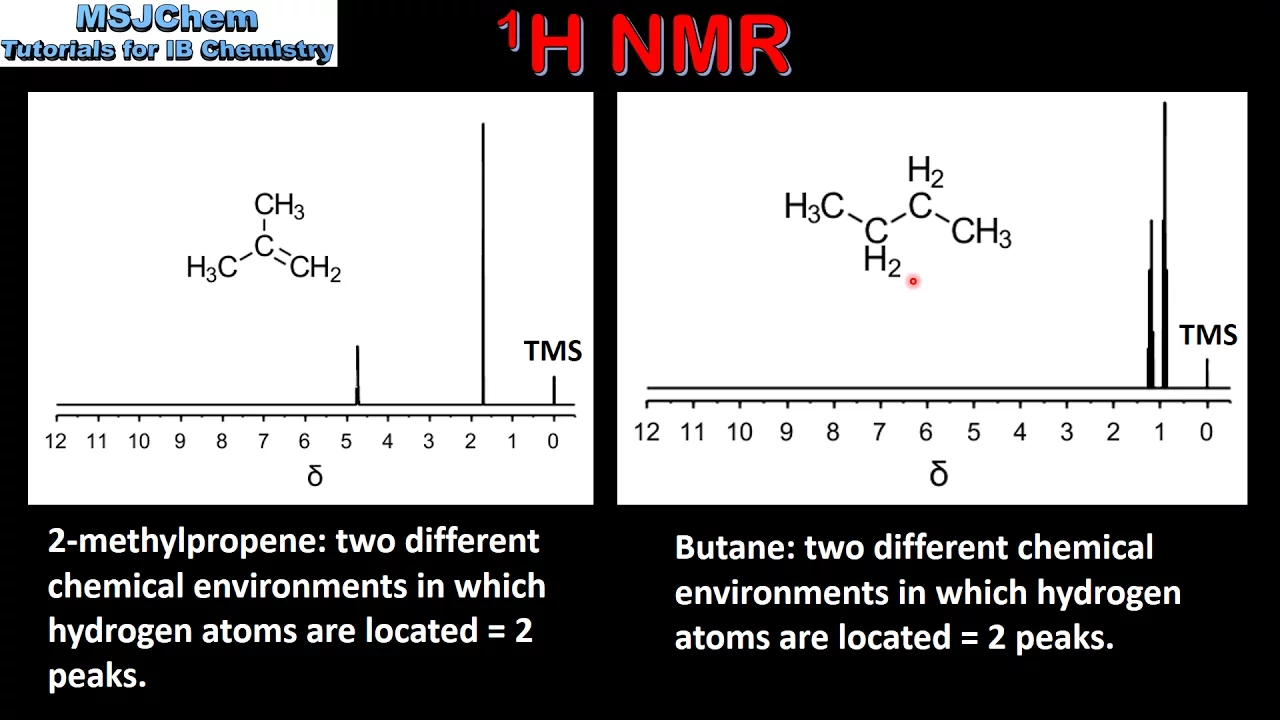
1H NMR: Determining Number of Peaks from Structure
@MSJChem
59.2K views•2017-04-06

17:31
Edible Water Bottles: A DIY Guide to Sodium Alginate Spherification
@ryan
10.5M views•2019-06-21
Related Study Plans & Knowledge Roadmaps
Structured learning paths in Chemistry
chemistry
Nuclear Chemistry: Decay, Meds & Fuel Cycle
01Introduction to Nuclear Structure and Radioactivity
02Decay Dynamics and Kinetics
03Radiation Interaction and Detection
+ 2 more learning modules
24h5 modules
Explore Roadmap
chemistry
Supramolecular Chemistry: Forces & Machines
01Foundations of Chemical Bonding and Intermolecular Forces
02Introduction to Host-Guest Chemistry
03Thermodynamics and Dynamics of Self-Assembly
+ 2 more learning modules
16h5 modules
Explore Roadmap
chemistry
Photochemistry: Excited States & Reactions
01Foundations of Light-Matter Interactions
02Molecular Orbitals and Electronic States
03Photophysical Processes and Jablonski Diagrams
+ 2 more learning modules
18h5 modules
Explore Roadmap
chemistry
Coordination Chemistry: Bonding & Properties
01Introduction to Transition Metals and Ligands
02Crystal Field Theory (CFT) and Geometry
03Magnetic Behavior and Spin States
+ 2 more learning modules
14h5 modules
Explore Roadmap