Separation Science: GC, HPLC & Mass Spec
Learning Goal: Mastering Analytical Separation Science: Gas Chromatography, HPLC, and Mass Spectrometry Principles. By the end of this curriculum, you will understand the physical chemistry of molecular interactions, master the mechanical and operational parameters of gas and liquid chromatographs, grasp the physics of mass-to-charge filtration/detection, and synthesize this knowledge to interpret hyphenated analytical data (GC-MS, LC-MS/MS).
- Prerequisites: Undergraduate-level General Chemistry (concepts of molecular structure, polarity, and physical states of matter).
- Estimated Total Study Time: 24 hours
Module 1: Foundations of Separation Science
This module covers the core physicochemical principles that govern analytical separations. You will explore intermolecular forces (IMFs), polarity, and phase partitioning—the physical phenomena that dictate how compounds distribute between a stationary phase and a mobile phase.
Recommended Videos
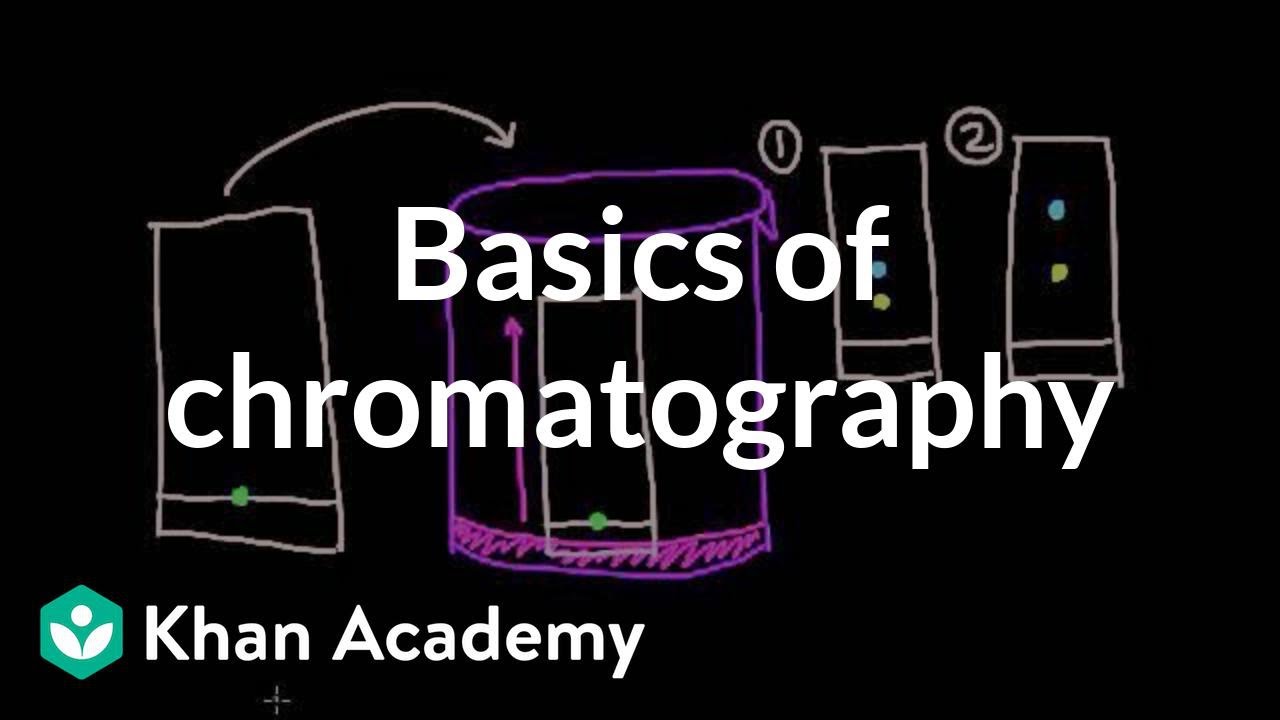
- Why this video: This video provides an intuitive masterclass on how relative affinities for stationary versus mobile phases cause components of a mixture to travel at different velocities. It sets the baseline vocabulary (retention time, stationary phase, mobile phase, adsorption, and partitioning) essential for all subsequent modules.

- Why this video: Separation is dictated entirely by how strongly an analyte interacts with the stationary phase versus the mobile phase. This video reviews the foundational physical forces—such as dipole-dipole interactions, London dispersion forces, and hydrogen bonding—that control these chemical affinities.

- Why this video: This video bridges basic chemical principles and instrumentation. It breaks down the mechanical components of a separation run and explains how the differences in migration rates are mathematically reflected as distinct peaks on a chromatogram.
Module 1 Knowledge Checkpoint
- Explain how molecular structure and electronegativity determine a molecule’s polarity and its dominant intermolecular forces.
- Define the terms stationary phase, mobile phase, and eluent.
- Describe how a difference in adsorption or partition coefficients leads to physical separation on a column.
- Interpret a basic chromatogram, identifying the injection point, solvent front, and retention time () of separated peaks.
Module 2: Gas Chromatography (GC) Principles & Systems
This module details the instrumentation and mechanics of Gas Chromatography (GC). You will learn how volatile organic compounds are vaporized, introduced onto capillary columns, separated based on boiling points and stationary phase interactions, and detected using flame ionization or thermal conductivity.
Recommended Videos
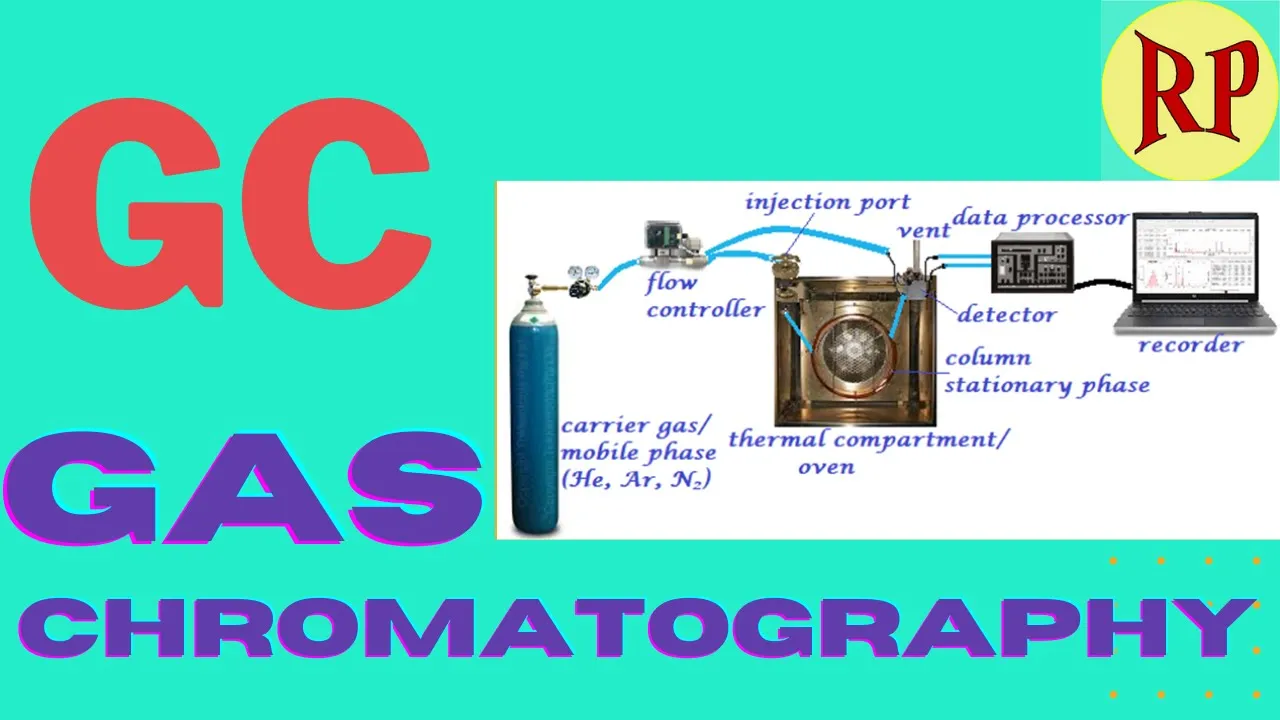
- Why this video: A clear, high-level introduction to the structural layout of a Gas Chromatograph. It tracks the physical path of a sample from injector through the column oven and into the detector, clearly explaining how temperature programming controls the elution of compounds.

- Why this video: This video focuses on column technology, highlighting the transition from traditional packed columns to modern wall-coated open tubular (WCOT) capillary columns. It details how narrow internal diameters (~0.25 mm) and thin stationary phase films dramatically improve separation efficiency (theoretical plate count).

- Why this video: A comprehensive guide to GC detectors. It compares the Flame Ionization Detector (FID)—highly sensitive to hydrocarbons—with the Thermal Conductivity Detector (TCD), explaining their physical working mechanisms, advantages, and limitations.
⚠️ Curriculum Note & Gap Resolution: While the videos cover columns and detectors comprehensively, they lack a deep-dive on injection techniques. Ensure you study the following concept independently:
- Split vs. Splitless Injection: Split injection is used for high-concentration samples; a fraction of the vaporized sample is introduced onto the column while the rest is vented, preventing column overload. Splitless injection vents none of the sample during injection, maximizing sample transfer onto the column—making it ideal for trace-level analysis (e.g., environmental or forensic assays).
Module 2 Knowledge Checkpoint
- Draw a block diagram of a standard GC system, labeling the carrier gas source, injector port, column oven, and detector.
- Compare the separation performance of packed columns vs. capillary (WCOT) columns.
- Differentiate between the mechanical operations and ideal applications of split and splitless injection modes.
- Explain how a Flame Ionization Detector (FID) produces an electrical signal and why it is selective for organic molecules.
Module 3: High-Performance Liquid Chromatography (HPLC)
In this module, you will study High-Performance Liquid Chromatography (HPLC). The module focuses on the mechanical components required to drive liquid mobile phases through densely packed stationary phases at extreme pressures, and contrasts Normal Phase (NP) vs. Reverse Phase (RP) column chemistries.
Recommended Videos
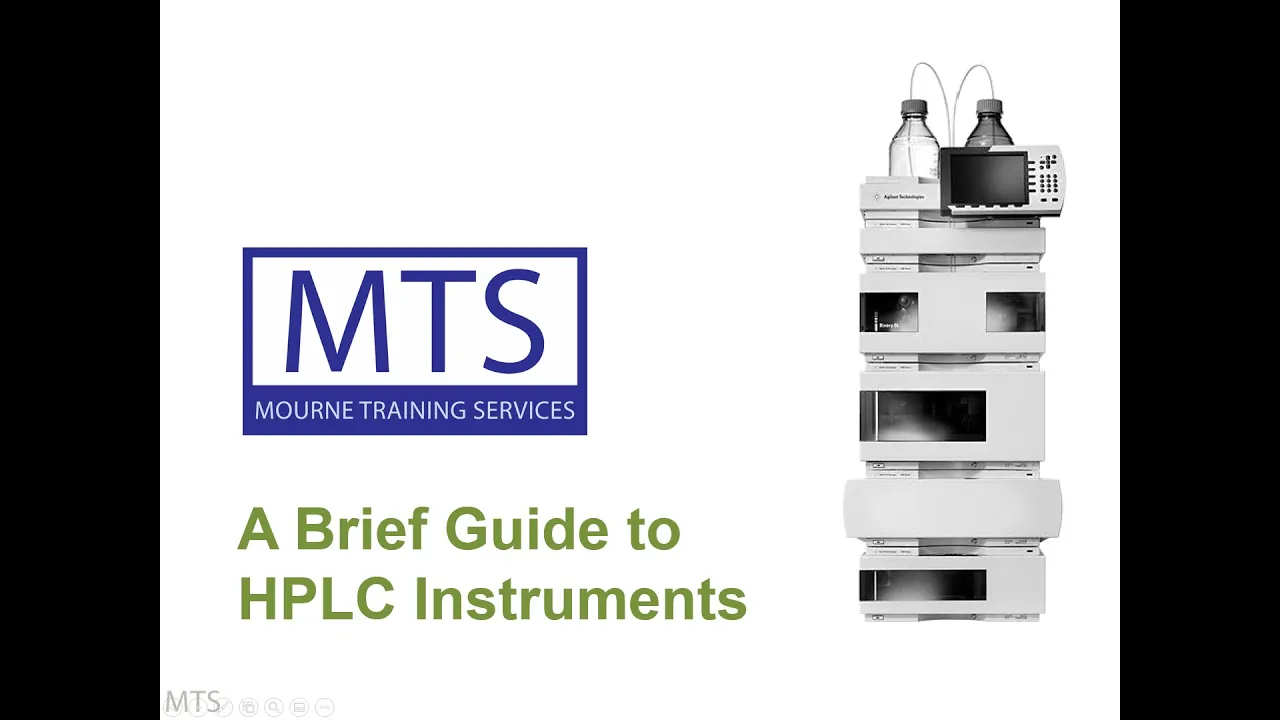
- Why this video: This video covers HPLC hardware: the high-pressure solvent delivery pumps, autosamplers, column ovens, and UV-Vis detectors. It explains why stable, pulse-free solvent flows under pressures exceeding 4,000 psi are necessary to move mobile phases through columns packed with micro-meter sized particles.

- Why this video: A comprehensive, in-depth lecture explaining the physical chemistry of Reverse Phase HPLC. It discusses how silica gel particles are chemically modified with long hydrocarbon chains (such as C18 / octadecylsilane) and how solvent strength (water mixed with organic modifiers like acetonitrile or methanol) dictates sample elution.

- Why this video: This short, highly technical video directly addresses the fundamental differences between Normal Phase and Reverse Phase chromatography, serving as an excellent quick-reference comparison.
Key Separation Mechanisms: Normal Phase vs. Reverse Phase HPLC
To consolidate the comparison of these two analytical modes, study the following matrix:
| Feature | Normal Phase HPLC (NP-HPLC) | Reverse Phase HPLC (RP-HPLC) |
|---|---|---|
| Stationary Phase Polarity | Polar (e.g., unmodified Silica, Cyano, Amino) | Nonpolar (e.g., C18, C8, Phenyl) |
| Mobile Phase Polarity | Nonpolar (e.g., Hexane, Heptane, Dichloromethane) | Polar (e.g., Water, Acetonitrile, Methanol) |
| Elution Order | Nonpolar analytes elute first; polar analytes are retained longer. | Polar analytes elute first; nonpolar analytes are retained longer. |
| Increasing Eluent Strength | Increase the polarity of the mobile phase (add polar solvent). | Decrease the polarity of the mobile phase (add organic/nonpolar solvent). |
Module 3 Knowledge Checkpoint
- Describe the function of a degasser, high-pressure pump, sample injector, column, and detector in an HPLC.
- Contrast Normal Phase and Reverse Phase HPLC in terms of stationary phase chemistry, mobile phase composition, and elution order.
- Explain how C18 columns are synthesized and how "end-capping" minimizes peak tailing caused by unreacted silanol groups.
- Predict the retention order of a mixture containing uracil (highly polar), toluene (nonpolar), and phenol (moderately polar) on a C18 reverse-phase column.
Module 4: Principles of Mass Spectrometry (MS)
This module shifts focus to mass-spectrometric detection. You will explore how analytes are converted into gas-phase ions, sorted by their mass-to-charge () ratio within mass analyzers (quadrupoles and time-of-flight systems), and recorded as a mass spectrum.
Recommended Videos
- Why this video: A clear and visually engaging introduction to the fundamental steps of mass spectrometry: vaporization, ionization, acceleration, deflection, and detection. It demonstrates how high-energy electron ionization (EI) causes fragmentation, creating a unique chemical fingerprint.

- Why this video: This video focuses on the physics of ion formation. It distinguishes hard ionization (Electron Ionization - EI), which causes extensive molecular fragmentation, from soft ionization (Electrospray Ionization - ESI, and Matrix-Assisted Laser Desorption/Ionization - MALDI), which preserves intact protonated or deprotonated molecular ions ( or ).

- Why this video: A detailed exploration of the Quadrupole mass analyzer. It explains how applying specific combinations of radiofrequency (RF) and direct current (DC) voltages to four parallel rods creates a dynamic electrostatic field, allowing only ions of a specific ratio to reach the detector.

- Why this video: This video covers the physics of Time-of-Flight (TOF) mass analyzers. It demonstrates how ions are accelerated with uniform kinetic energy into a field-free drift region, where their velocities vary strictly with their mass (lighter ions reach the detector faster than heavier ones: ).
Module 4 Knowledge Checkpoint
- Explain why mass spectrometers must operate under high vacuum ( Torr).
- Compare hard ionization (EI) and soft ionization (ESI, MALDI) in terms of fragmentation patterns and analytical goals.
- Describe how a quadrupole mass filter acts as a mass-to-charge bandpass filter using RF and DC fields.
- Explain the relationship between kinetic energy, mass, and velocity that governs separation in a Time-of-Flight (TOF) tube.
- Locate the molecular ion peak (), base peak, and isotope peaks (e.g., , ) on an organic mass spectrum.
Module 5: Hyphenated Tech & Applications: GC-MS and LC-MS
This final module integrates chromatography and mass spectrometry. You will study how gas and liquid chromatographs are coupled to mass spectrometers (GC-MS and LC-MS), the interface designs that bridge these systems, and how hyphenated data is used to analyze complex chemical mixtures.
Recommended Videos
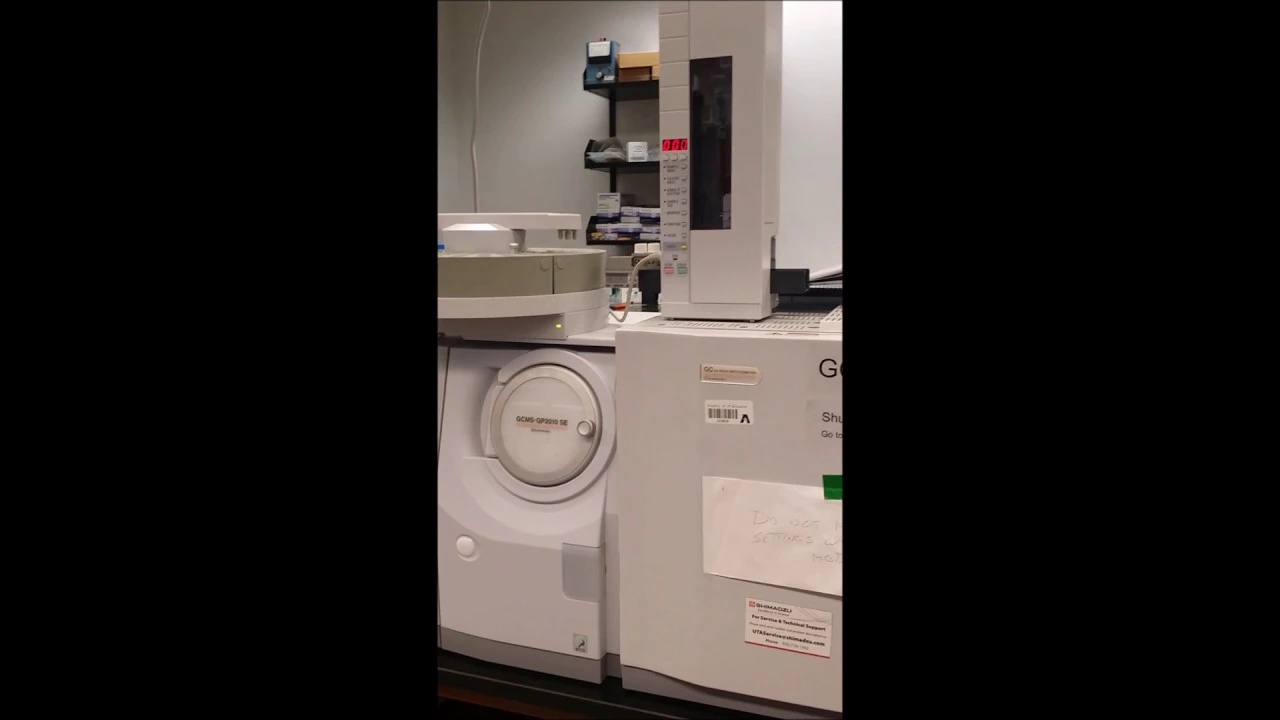
- Why this video: This laboratory demonstration shows a GC-MS system in operation. It details the transition of volatile compounds from the high-pressure gas phase of the capillary column into the high-vacuum environment of the mass spectrometer interface, alongside practical software parameters.
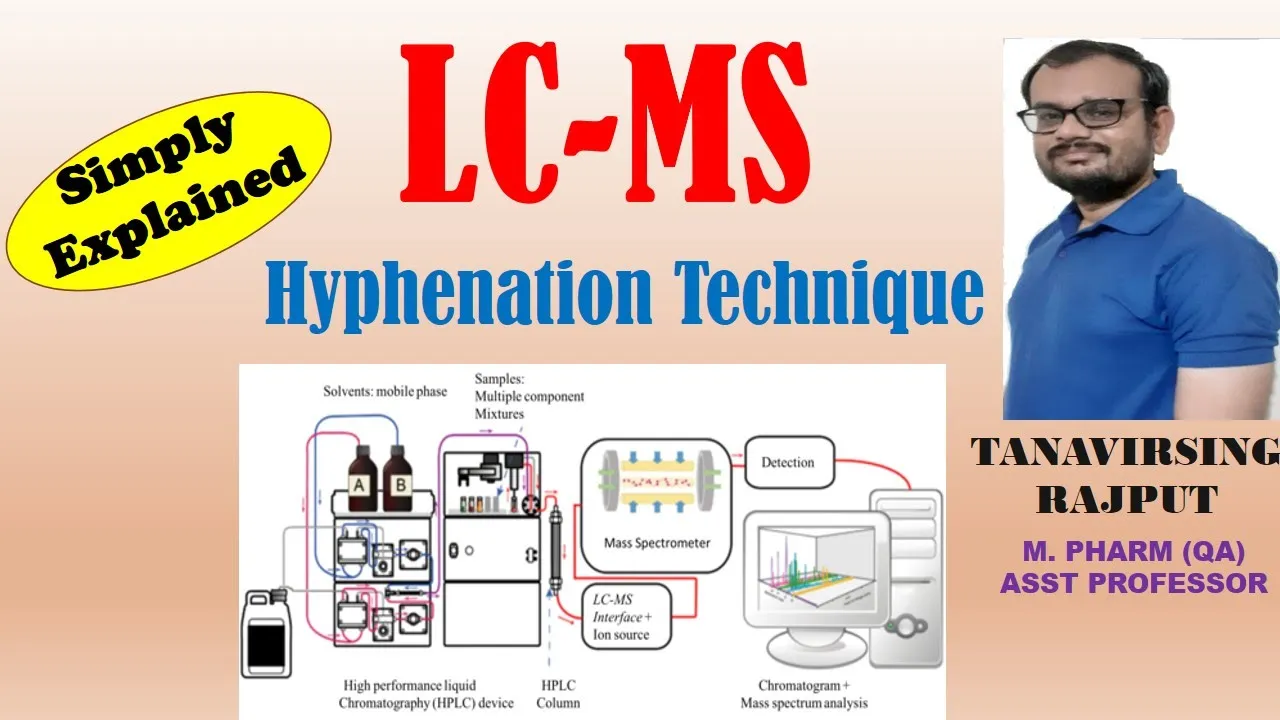
- Why this video: This video addresses a major technical challenge: linking liquid chromatography (which uses liquid mobile phases) with mass spectrometry (which requires gas-phase ions in a high vacuum). It explains interface designs, focusing on how Electrospray Ionization (ESI) and Atmospheric Pressure Chemical Ionization (APCI) desolvate and ionize liquid effluent.

- Why this video: This video explores tandem mass spectrometry (MS/MS or triple quadrupole systems). It outlines the sequential process of selecting a precursor ion in the first quadrupole (), fragmenting it in a collision cell (), and monitoring specific product ions in the third quadrupole ()—a technique known as Multiple Reaction Monitoring (MRM) that offers exceptional selectivity for target analyses.
Understanding Hyphenated Data: Total Ion Chromatograms vs. Mass Spectra
When analyzing GC-MS or LC-MS data, you must navigate two distinct data dimensions:
           [ 3D Data Cube: Time vs. m/z vs. Intensity ]
                                │
     ┌──────────────────────────┴──────────────────────────┐
     ▼                                                     ▼
[ Total Ion Chromatogram (TIC) ] [ Mass Spectrum ]
- Y-axis: Total Intensity of all ions - Y-axis: Relative Abundance (%)
- X-axis: Retention Time (minutes) - X-axis: Mass-to-charge ratio (m/z)
- Purpose: Shows when compounds elute - Purpose: Shows structural fingerprint from the chromatography column. for a single chromatographic peak.
By clicking on any specific retention time peak in the TIC, you extract the unique mass spectrum of the chemical species eluting at that exact moment.
Module 5 Knowledge Checkpoint
- Explain the primary thermodynamic challenge of interfacing HPLC with Mass Spectrometry, and how electrospray ionization (ESI) solves this.
- Sketch the pathway of an analyte through a triple-quadrupole (QqQ) mass spectrometer operating in Multiple Reaction Monitoring (MRM) mode.
- Distinguish between a Total Ion Chromatogram (TIC), an Extracted Ion Chromatogram (XIC), and a Mass Spectrum.
- Describe how library-matching algorithms use electron ionization (EI) mass spectra to identify unknown peaks in GC-MS.
Course Map
This flowchart maps the logical structure and dependencies of this analytical separation curriculum:
Key People Index
The following researchers, educators, and institutions featured in this curriculum have made notable contributions to the field:
- Mikhail Tsvet (1872–1919): Russian botanist widely recognized as the inventor of chromatography. He first separated plant pigments (chlorophylls and carotenoids) on polar calcium carbonate columns, coining the term chromatography (literally "color writing").
- Sir John Fenn (1917–2010): Awarded the Nobel Prize in Chemistry in 2002 for his development of Electrospray Ionization (ESI), which enabled the mass-spectrometric analysis of large biomolecules (proteins and polymers) directly from liquid phases.
- Professor Dave (featured in @ProfessorDaveExplains): Acclaimed digital chemistry educator whose visualization of molecular fragments and physical systems provides intuitive foundations for mass spectrometry.
- Shomu (featured in @shomusbiologyofficial): Creator of Shomu’s Biology, recognized for detailed lectures on analytical instrumentation, biomolecular characterization, and the thermodynamics of hard versus soft ionization.
Final Self-Assessment
Test your mastery of the complete curriculum by verifying your ability to explain, design, or solve the following analytical problems:
- Draw a complete diagram tracing a complex polar/nonpolar compound mixture through an autosampler, a RP-HPLC column, an ESI interface, and a triple quadrupole detector (operating in MRM mode).
- Explain why helium or hydrogen is preferred over nitrogen as a carrier gas in high-efficiency capillary Gas Chromatography based on Van Deemter kinetics.
- Calculate the mass-to-charge ratio () of a peptide with a neutral molecular weight of that has been triply protonated () in an ESI source.
- Detail the physical and chemical changes that occur in an HPLC column when running a gradient elution (e.g., increasing acetonitrile concentration over time in RP-HPLC).
- Identify which ionization technique (EI, ESI, or MALDI) is best suited for analyzing: (a) small volatile environmental pollutants, (b) intact monoclonal antibodies, and (c) thin tissue section imaging.
- Explain how a time-of-flight reflectron (ion mirror) corrects for kinetic energy distributions among ions of the same mass, improving mass resolution.
- Contrast the selectivities and limits of detection of a UV-Vis detector, a Single Quadrupole Mass Spectrometer, and a Tandem Triple Quadrupole Mass Spectrometer coupled to an HPLC.
- Interpret a raw GC-MS data file to identify a pesticide contaminant by extracting its chromatographic retention time and matching its 70 eV electron ionization fragmentation spectrum to a NIST reference library database.