















![Q-TOF를 이용한 바이오의약품 분석 관련 최신 기술 동향[Agilent Technologies Korea]](https://i.ytimg.com/vi/jjekOHOXK7M/maxresdefault.jpg)





![Mass Spectrometry Imaging (MALDI MSI) [ENGLISH]](https://i.ytimg.com/vi/DqnvAeZS_uo/maxresdefault.jpg)



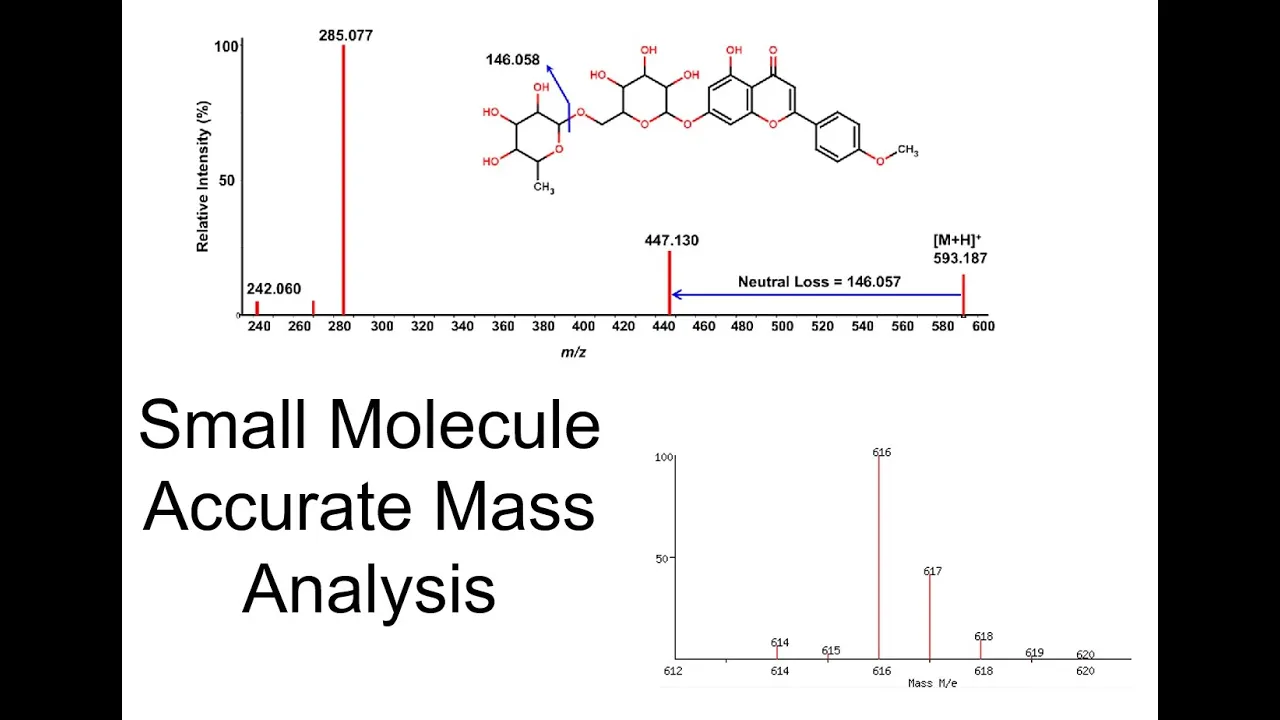

Time of Flight (TOF) mass spectrometry separates ions by measuring their flight time through a drift region, where lighter ions travel faster due to constant kinetic energy (KE = ½mv²), establishing a direct relationship between mass-to-charge ratio and flight time squared; however, linear TOF instruments suffer from poor resolution because ions possess an initial energy distribution (Boltzmann distribution) causing ions of the same m/z to reach the detector at different times, which is resolved by using a reflectron design that applies an opposing voltage to reflect ions back through a curved path, ensuring all ions of identical m/z arrive at the detector simultaneously regardless of their initial energy.
Time of Flight Mass Spectrometry Explained | TOF-MS Principles
Added:Basic principles of general mass spectrometry, including the definition of the mass-to-charge ratio (m/z) and ionization methods.
Fundamental physics concepts of kinetic energy, velocity, and how electric fields accelerate charged particles.
The concept of resolution and mass accuracy in analytical chemistry.
Basic understanding of vacuum systems and why they are necessary for unobstructed particle flight paths.
The mechanism and advantages of hybrid mass spectrometers, such as Quadrupole-Time-of-Flight (Q-TOF) instruments.
Real-world applications of high-resolution TOF-MS in proteomics, metabolomics, and polymer characterization.
MALDI-TOF mass spectrometry imaging (MSI) for spatial mapping of biomolecules in tissue samples.
Advanced data processing techniques for isotope pattern analysis and exact mass determination to identify unknown compounds.
23.3K views414likes13:46Original Release: 2020-10-04
[Music] foreign so the time of flight mass spectrometer is just a race i mean nothing complicated here all you got to do is supply some energy so give a kick to these ions and they're going to start racing from one side to the other the rule will be that the smallest ions will move faster because they have a constant kinetic energy so one-half mv squared if the masses are different the velocity has to compensate so the smaller the ions the faster they move simple right so actually there are a few more things we need to talk about so let's take a look at the equations to start with we've got one half mv squared the kinetic energy of our ions let's rearrange these equations so we can basically figure out a relationship between m over z and the flight time so in the first one we have the velocity which is where i just said depends on the mass of charge by a square root term and it also depends on the voltage that we use to accelerate so when we look at the time here we see that it just depends on distance over velocity distance is going to be constant unless of course the fact that yeah the flight tubes are made of metal so they're going to expand and contract as a function of temperature so yeah we have to control for that but anyway let's let's say the distance is constant so the time is just distance over velocity which we've also calculated so finally we arrive at the mass of charge which is proportional to the time that it takes to fly from one side to the other square term on that of course and if we can't say that the distance is a constant and the accelerating voltage is a constant then there is this direct relationship or in other words a time of flight instrument is a true mass analyzer it depends on mass to charge so i'm just curious now how fast are we talking about what is the flight time inside of a time of flight instrument well we have to throw in some numbers here now it's going to depend on mass obviously so let's just pick a mass 1000 uh some you know pretty big molecule here but by the way we should be using the mass in kilograms and for charge we need to use this coulombic charge as well so we've got that conversion over there so we can just plug those numbers into the equation and i do need to pick an accelerating voltage so 15 kilovolts is a that's a high value but that's kind of typical when it comes to time-of-flight instruments so the question is how fast is it well i put some comparison out there is it as fast as a jet uh yeah it actually is um how about how about a yeah rocket ship flying out in outer space um yeah it's it's faster than that all right the earth orbiting around the sun actually it's faster than that too this is the best way to compare how fast are we talking about [Music] he's running around the world yeah kind of that fast um when we compare it to the speed of light it's like point two percent of the speed of light so these ions are moving extremely quickly through the flight tube that does beg the question though if these eyes are moving that quickly it means that the difference in time between a big ion and one that's just slightly smaller than that must be extremely small so you can do these types of calculations here as well and just compare the flight time and the difference in flight time the time it takes for these ions the mass 721 is on the order of like 30 microseconds but the gap between one atomic mass unit apart is in the nanosecond time range so can we even detect those differences well actually today with the computers that we've got to work with these analog to digital converters they can do calculations on the order of 10 gigahertz so well within these nanosecond time frames and this is not even the fastest of the computers that we use i won't get into that but it doesn't really matter because when it comes to a time of flight instrument no matter how good we set things up no matter how good our computers are to calculate these times the resolution is actually still going to be terrible so the yellow trace would kind of represent typical resolution in a time of flight instrument at least as i've just described right there this picture over here is to the first time a flight uh mass spectrum that was recorded you know 70 years ago now um i mean we've gotten better but it's still not very good of an instrument so we're missing something here there has to be a way to improve on the limitation let's ask the question what's causing that limitation in the first place and actually we've already answered the question so remember the fact that ions are not just stationary they all have this initial energy distribution the boltzmann distribution some of them are flying that way some of them are flying that way so if we just kind of let that happen these ions are inside of the ion source region and they've spread out now let me just clean this up just a little bit now we see that we have a cluster of ions on the close side of the of the voltage plate and then some on the back end when we're talking about turning on the voltage what we're doing is we're supplying that kinetic energy the ions will accelerate through the entire source region from one side to the other for the ions that are at the back end they will feel the entire electric field they will be accelerated the most so the ions on the back end as soon as you turn things on they're going to accelerate and fly out with the full speed that they can now what about the ions way on the back end over there well they don't have much of an electric field to work with most of the voltage is already kind of cancelled out let's say so these ions are not going to be accelerated with nearly the level that the other ions have so they kind of kick out there a little bit slower so the problem comes down to this even though the ions have the same mass to charge they're going to be moving with different velocities and for a time of flight instrument that just doesn't work out at all so the solution that is proposed is to build a different kind of time-of-flight instrument and the best analogy is right here so you know when you have those race tracks the the athletes that are running on the outside of the track it looks like they have a head start but that's because they have to go around a bigger loop so they have to travel more distance right now you see that well it looks like somebody's in the front um and they're traveling down the straight track so everything's kind of even right now but as they cur go around that curve the people that are in the middle of the track are actually having that advantage they don't need to go as far anymore so in fact they were actually ahead all along so the instrument that i'm describing right now is called a reflector on time flight let me show you how it works what we have is an ion mirror so the eye mirror will be placed at the back end the spot that it seemed like that's where the detector was we don't even put it there technically so our ions are going to start at the source region they're going to move down towards the eye mirror and then they're going to bounce back now how do we do that well we have to apply a voltage that's kind of equal and opposite so that the eyes are going to kind of push back and the ion mirror describes that as we go further down into the mirror the voltage is going to be a little bit higher just to kind of account for the fact that these ions might have a little bit more accelerating voltage to deal with all right let's just take a look for an ion that has low initial energy it's going to reflect back into the eye mirror and bounce back on itself but if we compare that to an ion that has a little bit more energy so let's say that it's a hotter ion well it's going to move down into the eye mirror but if you notice it actually moved a little bit deeper so let's just put the two kind of side by side and compare that we have the two ions and one of them had to move a little bit faster but what you notice is that they actually hit the detector on the back end at the same time so the configuration isn't exactly as you just saw in fact there's kind of a a bend in the geometry here so that the ions don't come back and hit the same source region you'd have to put the detector a little bit offset so the path of these ions will be kind of on this this trajectory of an angle like that but you can see that the ions that have higher energy go further down into the mirror they travel further which kind of cancels out the fact that they were going faster so this brings every ion of the same massive charge back to the detector at the exact same time and what you're looking at over here these giant stainless steel tubes they're about a meter two meters in length and uh maybe like yay wide so the ions are going to be going down that tube and out the other end so it gives enough room to place the source region and the detector at one end of the of this tube and then the eye mirror will be placed like let's say at the top end so really when we're talking about a time of flight instrument we're talking about a reflector on time flight but let me go back to the simpler example so this is what we would call a linear time-of-flight instrument which does have some use but now i'm asking a different question how do we start the race all the ions do need to move from the beginning at the same starting point and the problem we have is that if they're kind of spread out inside of that source region well the accelerating voltage will be entirely different so one way to do that is just to basically paint or or paste the ions down onto the surface plate itself so in this case here the ions are solids and in fact they're not even ions so you see i don't have a charge on those compounds yet imagine that they're solid compounds that are stuck to the surface of the metal plate the voltage of that plate can be on because there's no ions so they're not going to move anywhere so now the question is different how do i charge those compounds how do i ionize them very quickly so that we can start the race and the answer to that usually is to just is to add a laser so we'll talk about this in a later section but if we have that laser then we shine that down onto our compounds as soon as that laser hits we ionize the molecules and since the voltage is always there the race can begin now that is quite a convenient solution but when it comes to analyzing compounds that are in a liquid phase so in other words lcms it doesn't really work out for us so we do have to have a different configuration the answer to that is to use what we call an orthogonal type of flight instrument and this actually builds up a couple more instruments that we're going to have to talk about in the next section so what you're looking at over here is actually a quadrupole time of flight instrument the time of flight is now on the up down geometry so the ions begin at the bottom they're going to travel up go through the eye mirror and then work their way down to the other side but to make sure that all of the ions are focused in the same plane we use quadrupoles so the quadrupoles are making sure that the ions only have this velocity along this axis they're not spreading out up and down so they all have the same starting point with respect to the flight tube and i should say more specifically that this is a q q top in other words there's at least two quadrupoles in that front end so this closest analogy is to say that the front end of that is like the first two quadrupoles of a triple quadrupole system but the back quadrupole is replaced with a time of flight instrument so how does this thing compare to a triple quad well it does all the work of a triple quad it's got that tandem ms feature to it but because we're dealing with a time of flight instrument it has much higher resolution when we're dealing with the orthogonal uh reflectron time of flight we get the met the very high resolution uh with the benefit of tandem ms so this instrument we call it a hybrid instrument uh combining the best of both worlds here but of course the quadrupole instrument is still a little bit of a mystery we understand that it's designed to filter ions but we'll have to talk about that a little bit more that's in the next video [Music] [Applause] [Music] you
Up Next
18:45
LC-MS Interface Explained: Principles, Types, and Applications
@SteelFrameAcademy
64.3K views•2020-12-04

83:56
Biocatalysis and Catalysis in Islatravir Synthesis | Merck Webinar
@SCIwheresciencemeetsbusiness
675 views•2020-10-08
10:06
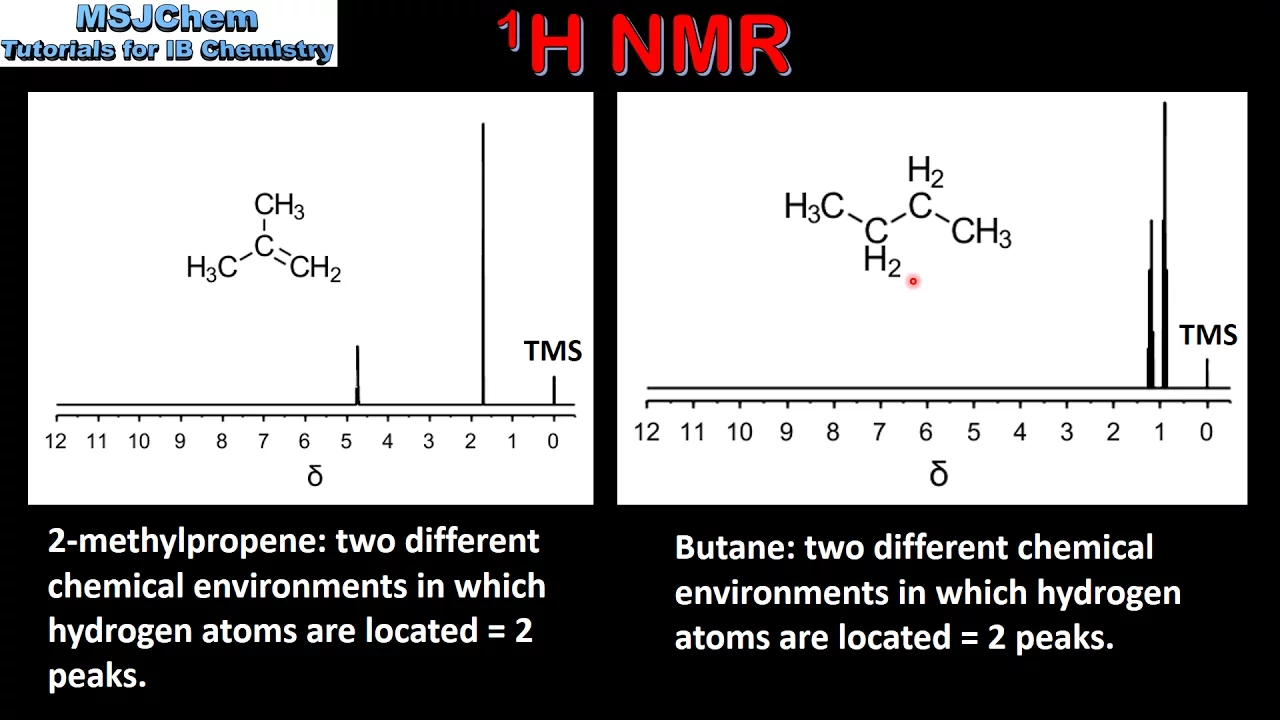
1H NMR: Determining Number of Peaks from Structure
@MSJChem
59.2K views•2017-04-06

17:31
Edible Water Bottles: A DIY Guide to Sodium Alginate Spherification
@ryan
10.5M views•2019-06-21
Related Study Plans & Knowledge Roadmaps
Structured learning paths in Chemistry
chemistry
Nuclear Chemistry: Decay, Meds & Fuel Cycle
01Introduction to Nuclear Structure and Radioactivity
02Decay Dynamics and Kinetics
03Radiation Interaction and Detection
+ 2 more learning modules
24h5 modules
Explore Roadmap
chemistry
Supramolecular Chemistry: Forces & Machines
01Foundations of Chemical Bonding and Intermolecular Forces
02Introduction to Host-Guest Chemistry
03Thermodynamics and Dynamics of Self-Assembly
+ 2 more learning modules
16h5 modules
Explore Roadmap
chemistry
Photochemistry: Excited States & Reactions
01Foundations of Light-Matter Interactions
02Molecular Orbitals and Electronic States
03Photophysical Processes and Jablonski Diagrams
+ 2 more learning modules
18h5 modules
Explore Roadmap
chemistry
Coordination Chemistry: Bonding & Properties
01Introduction to Transition Metals and Ligands
02Crystal Field Theory (CFT) and Geometry
03Magnetic Behavior and Spin States
+ 2 more learning modules
14h5 modules
Explore Roadmap