



![Proteínas [Parte 6] - Comportamiento ácido-base | Biomoléculas](https://i.ytimg.com/vi/c2wgtboIDwg/hqdefault.jpg)













Chromatography is a separation technique that divides mixtures into their individual components by exploiting differences in how substances interact with a stationary phase (solid or liquid) and a mobile phase (liquid or gas); the separation occurs because different compounds have varying affinities for these phases, with some traveling faster through the mobile phase while others remain bound to the stationary phase, enabling identification and purification of mixture components.
Chromatography Basics Explained: Types & Principles | MCAT Prep
Added:Concept of molecular polarity, dipoles, and intermolecular forces (hydrophobic vs. hydrophilic interactions).
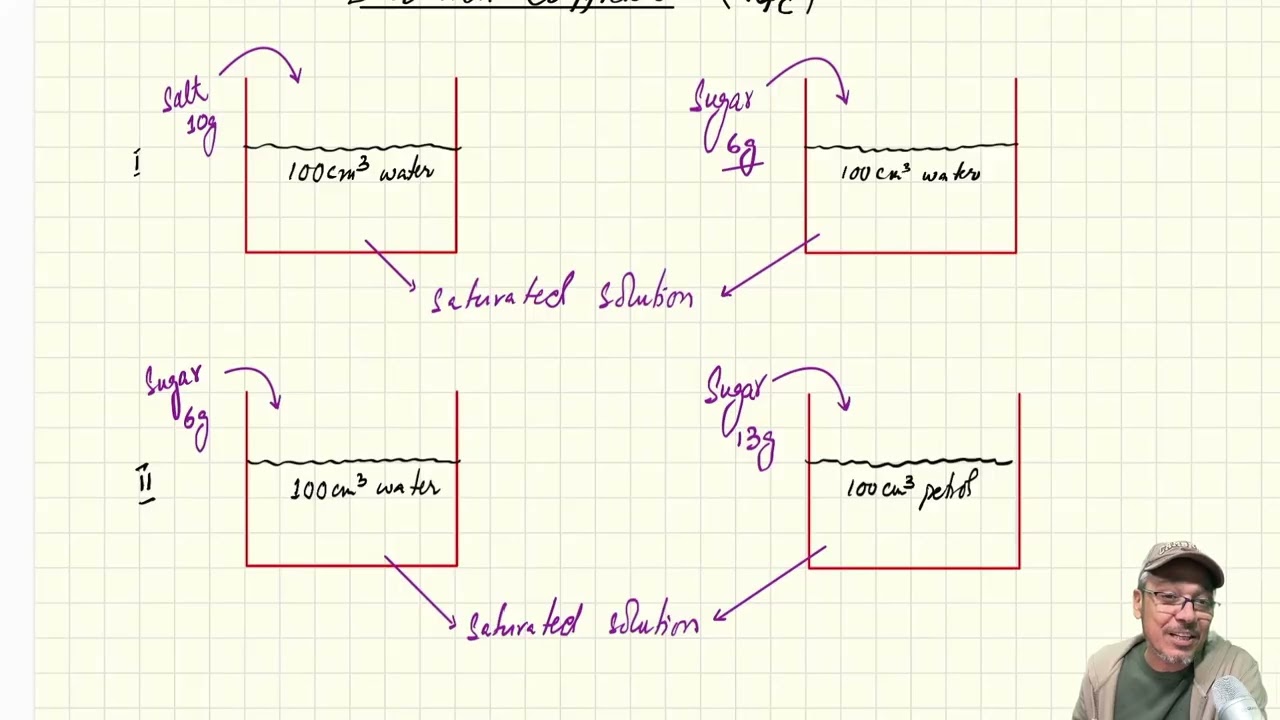
The principle of solubility and partition coefficients (how solutes distribute between two immiscible phases).
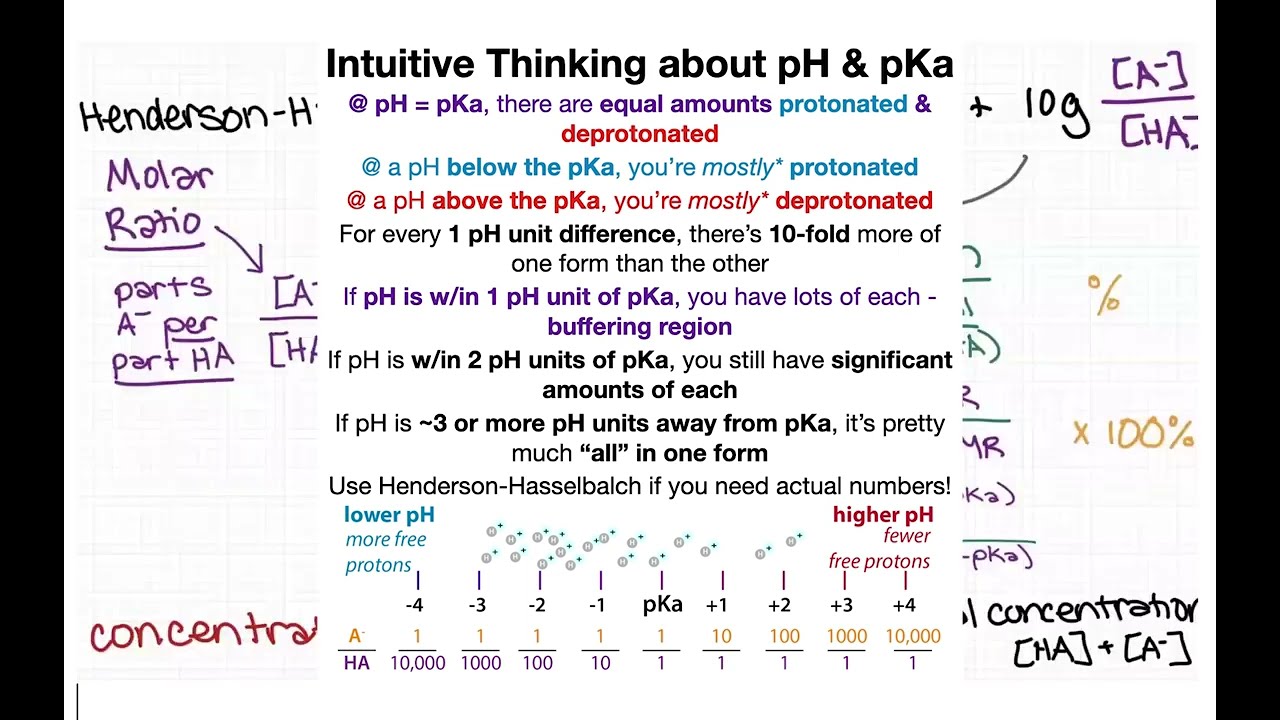
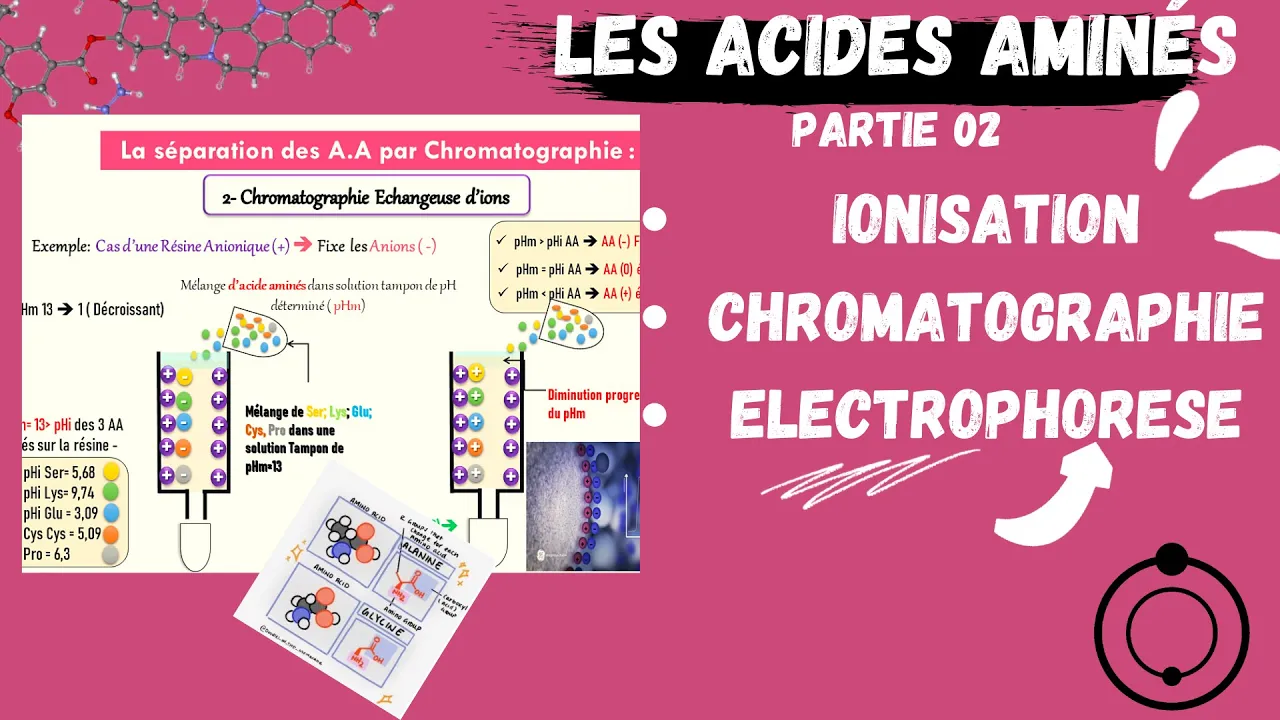
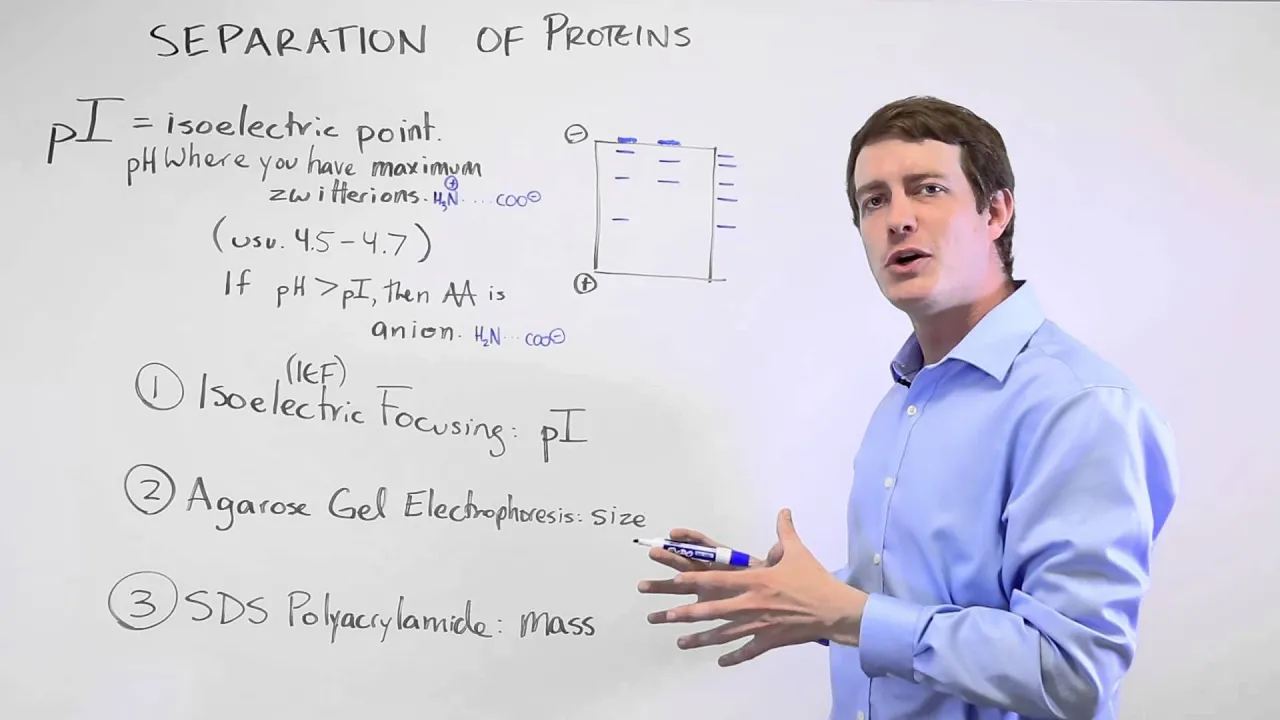
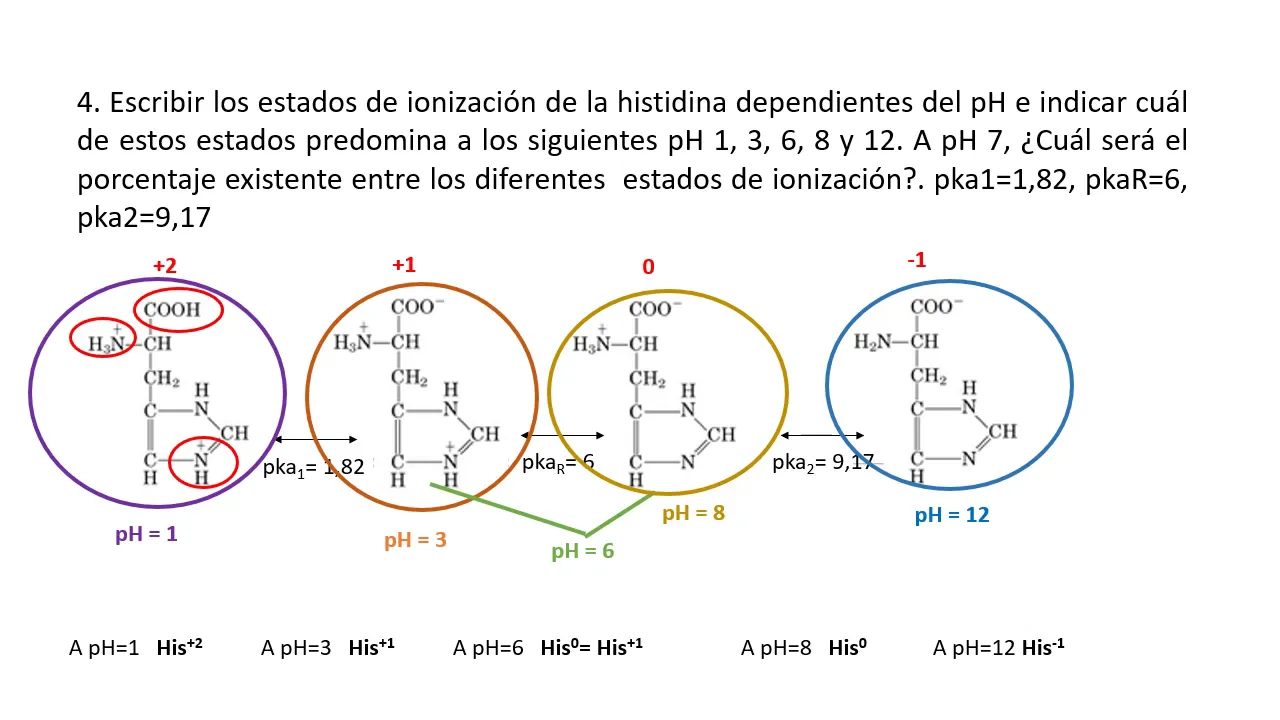
Acid-base chemistry, specifically pH, pKa, and the net charge of biomolecules (such as amino acids and proteins) at different pH levels.
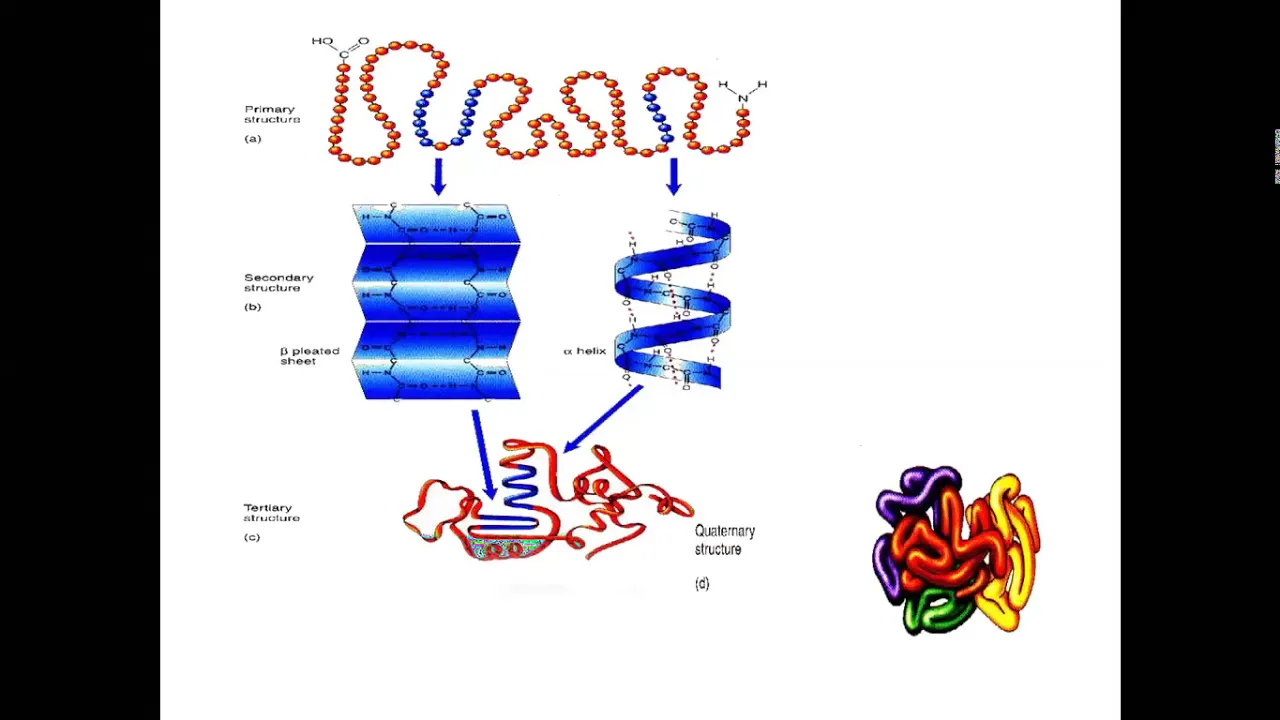
Basic structure and properties of biomolecules, including protein size, shape, and specific ligand-receptor binding affinity.
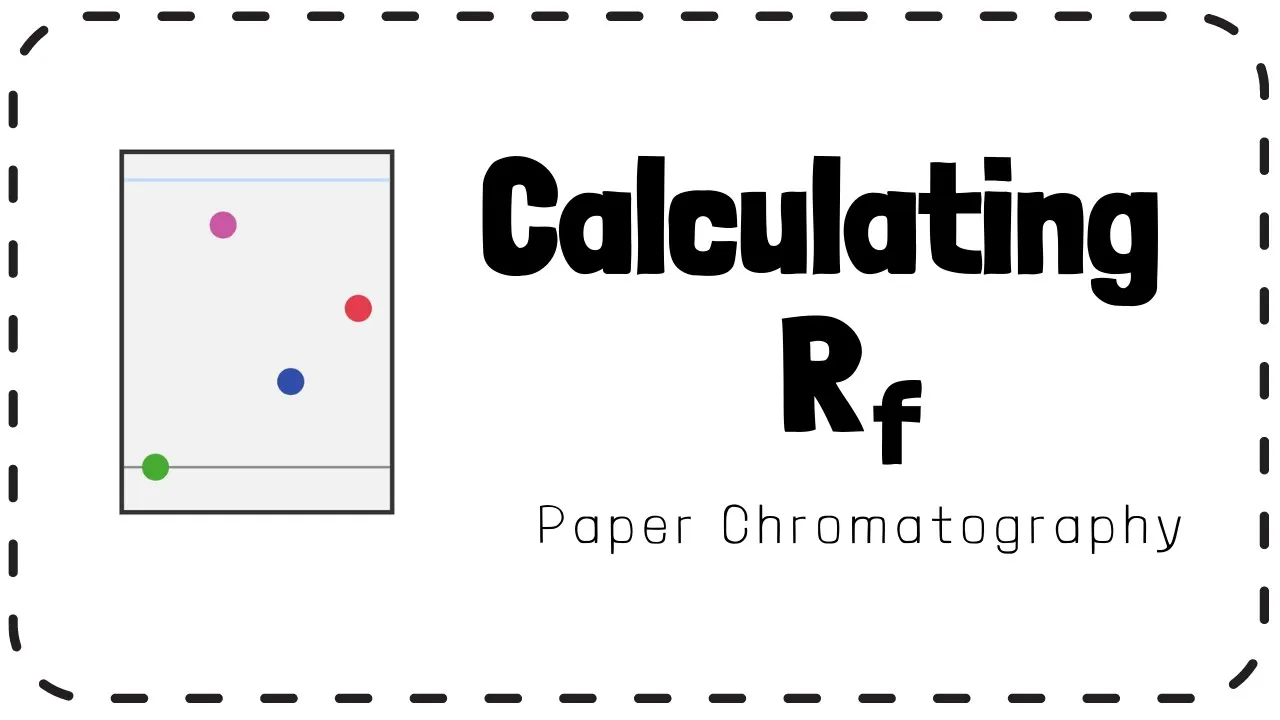
In-depth calculation and interpretation of Retention Factor (Rf) values and retention times from experimental chromatograms.
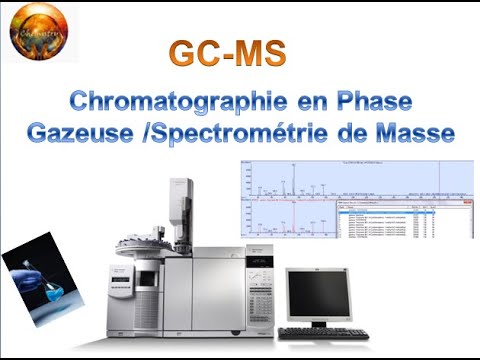
Coupling chromatography with downstream analytical methods, specifically Mass Spectrometry (LC-MS and GC-MS) for compound identification.
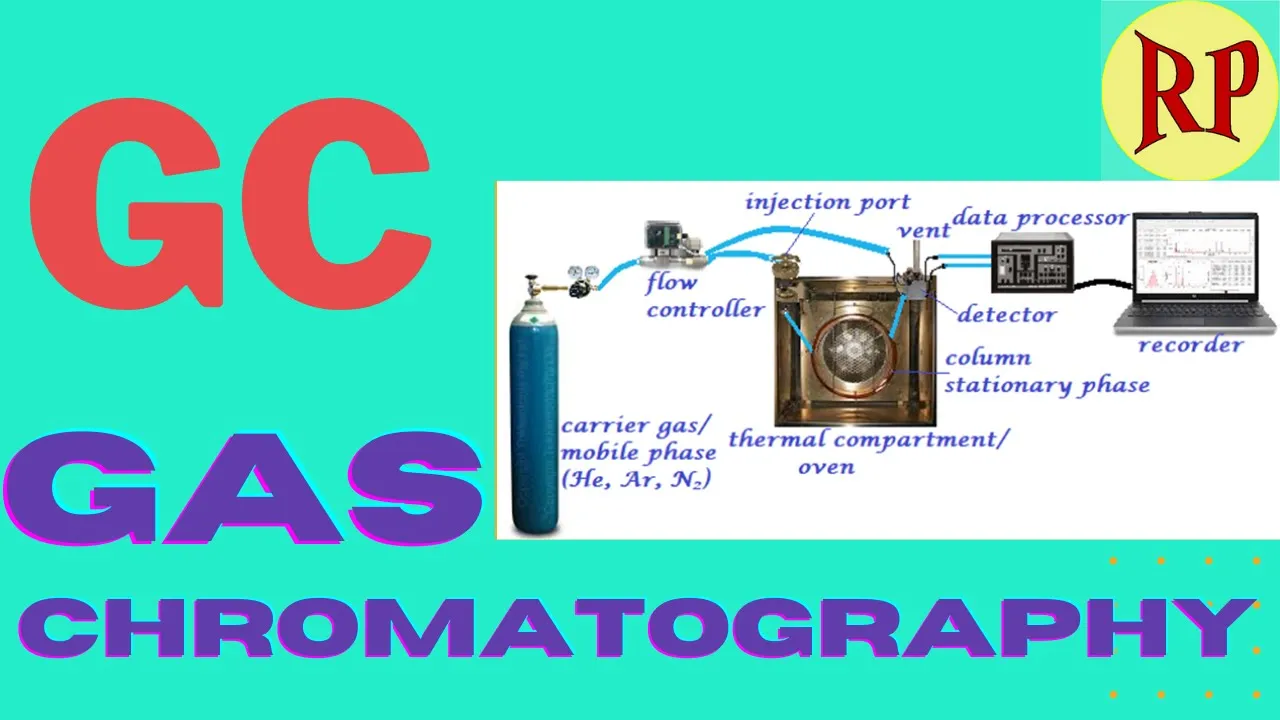
Gas Chromatography (GC) principles, including mobile phase carrier gases, column temperature ramping, and volatile compound separation.
Practical application in industrial protein purification workflows (downstream processing in biotechnology and biomanufacturing).
Solving MCAT-style passage-based questions that require predicting separation order based on amino acid sequences and physical properties.
1.3M views9.2Klikes9:15Original Release: 2013-09-17
Have you ever scribbled something down with a black pen on a piece of paper, then accidentally smudged the paper with water?
What do you remember seeing?
Well, what happens is that you might see the black ink start to smudge and start to see some colors that aren't black at all, maybe some dark blues and some darker purples.
But why is this?
This is because black dye is actually made out of a bunch of different other dyes and different components.
And what you've just witnessed is a basic example of paper chromatography.
Chromatography involves taking some kind of mixture and using either solid or liquid to separate it out into its different parts.
There are many different kinds of chromatography, but they all rely on having a mobile phase and a stationary phase.
Let's go over how paper chromatography works, since this is the simplest kind.
In paper chromatography, the stationary phase is the paper.
So here's your piece of paper.
You can draw a little line at the bottom and draw a spot for where you're putting on your dot of your sample.
Next, you'll want to prep a beaker, or actually, any kind of container will do.
But in this, you'll be putting in your mobile phase.
And your mobile phase can be some kind of solvent.
It could be water, or it could be any organic solvent you want.
Now that you have this, you pour a small amount of solvent.
Again, not too much, because you don't want this to already be above the level of your spot, or else it will just all bleed.
And now when you put in your paper into this container, what you'll get is something that looks like this, with the spot being around here.
And what you'll observe over time is that through capillary action, this pink solvent will travel up the piece of paper.
And as it does that, it'll actually take some of the dyes from that green spot with it.
And let's see what happens at a few different time points.
At the first time point, you might see that it separated into two spots.
This implies that it's composed of two different components.
However, if this were a very complex mixture, you could even see five, six, or a lot of other spots.
If you wait even longer, this is what you'll see next.
You'll see that the spots will continue traveling even farther up the plate, and the separation between them, that distance will increase even more.
So ultimately what you've shown here is that whatever was in the green spot originally wasn't just one compound.
It was two compounds.
And why do they separate in this manner?
Well, the blue spot traveled farther.
That means that it was pretty attracted to that pink solvent that was traveling along.
Whereas the yellow spot didn't move quite as much, which means it was more attracted to the paper for the stationary phase.
This competition between the stationary phase and the mobile phase pulling at the components is what drives the separation that occurs in all different kinds of chromatography.
So let's try to lay this information out in a table.
We've talked about how for paper chromatography, the stationary phase is a solid; the mobile phase is some kind of solvent, so a liquid; and they're separating it based on polarity, meaning how attracted it is to the paper versus the solvent, depending on its chemical properties.
The next kind of chromatography that's almost identical to paper chromatography is known as thin-layer chromatography, or TLC for short.
We'll see that all the spots on this table are pretty much the same.
The main difference is that instead of having a piece of paper, you have a glass slide that is coated with a layer of silica gel.
This is a great preparative tool that is commonly used in the organic chemistry lab.
To remind you that these two are related, what I've drawn here is a little beaker with a small either plate or piece of paper inside.
And the arrow shows that the solvent is traveling up the plate through capillary action.
The next kinds of chromatography we'll be going over are column chromatography.
And in this case, you have a column that I've drawn right here on the left.
And you fill it with some kind of packing material and dump in some solvent as well.
You can lower your sample that you want to separate out, and what you'll find is that as you keep dumping in more solvent, this can separate into bands that represent different compounds, and they will travel down the column.
So in basic column chromatography, you're usually using something like silica gel as your stationary phase.
Your mobile phase is typically an organic solvent, and again, you're separating based on polarity.
In size-exchange chromatography, your stationary phase is composed of beads.
However, these little beads actually have some holes in the middle.
And because of that, with size-exchange chromatography these beads completely fill the column, and tiny compounds can get through that center of the hole, like so.
But really big compounds kind of have to go around and go between the beads.
So what happens here is that really small compounds travel pretty far, pretty fast, whereas large compounds take a longer time to come out the bottom.
In ion-exchange chromatography, the beads that are filling this column have some kind of group on them that is charged.
Compounds that have the same charge will be repelled by the column, meaning they'll travel pretty quickly.
But compounds that have an opposite charge will bind tightly to the column and will be more reluctant to come out since they are so attracted to the stationary phase.
Affinity chromatography is also pretty similar, but this usually relies upon very specific interactions, such as between an enzyme and a substrate, and really relies on this binding affinity.
Things that will bind tightly to the enzyme will probably just be primarily the substrate, and everything else will just get washed right off the column.
Later on, what you can do is wash out the compound of interest that was previously bound to the column, using something that that molecule is even more attracted to.
With HPLC, HPLC stands for high-performance liquid chromatography, formerly known as high-pressure liquid chromatography.
This is essentially the same as the basic column chromatography that you see there in yellow.
However, with HPLC, it's a more advanced technique in that you're working with very, very small quantities, and the detector in the machine is much more sensitive.
The last kind of chromatography is gas chromatography.
Now, this looks pretty different compared to the others.
And in this case, your stationary phase is a liquid, while your mobile phase is some kind of carrier gas that's passing over the liquid.
So what happens is, you inject your sample, and it travels in a coil tube into that box known as the gas chromatograph.
That's a fancy name for the equipment used to run gas chromatography.
Inside the chromatograph is a heated chamber through which an inert gas flows.
Here, the sample vaporizes and enters the gas flow onto the column.
The things that are the most volatile, meaning have a lower boiling point, are able to travel faster, whereas things with a higher boiling point take longer to come out.
And so this is a separation method that's great when you have differences in boiling point.
So we've gone over all these different kinds of chromatography, but you could certainly go into each of these in much more detail.
Up Next
19:24
Gas Chromatography Principle, Instrumentation, and Working | GC GLC Guide
@RevathiPurushothaman
15.1K views•2019-11-23
24:04
The Jablonski Diagram: Radiative and Non-Radiative Transitions | Photochemistry
@benedictugi8420
262 views•2025-07-15

7:41
ATP Hydrolysis: Gibbs Free Energy Explained | MCAT Biology
@khanacademymedicine
135.4K views•2013-09-17
17:31
Edible Water Bottles: A DIY Guide to Sodium Alginate Spherification
@ryan
10.5M views•2019-06-21
Related Study Plans & Knowledge Roadmaps
Structured learning paths in Chemistry
chemistry
Photochemistry: Excited States & Reactions
01Foundations of Light-Matter Interactions
02Molecular Orbitals and Electronic States
03Photophysical Processes and Jablonski Diagrams
+ 2 more learning modules
18h5 modules
Explore Roadmap
chemistry
Coordination Chemistry: Bonding & Properties
01Introduction to Transition Metals and Ligands
02Crystal Field Theory (CFT) and Geometry
03Magnetic Behavior and Spin States
+ 2 more learning modules
14h5 modules
Explore Roadmap
chemistry
Polymer Chemistry: Synthesis & Properties
01Introduction to Macromolecules & Monomers
02Polymerization Synthesis Mechanisms
03Polymer Characterization Techniques
+ 2 more learning modules
12h5 modules
Explore Roadmap
chemistry
Separation Science: GC, HPLC & Mass Spec
01Foundations of Separation Science
02Gas Chromatography (GC) Principles & Systems
03High-Performance Liquid Chromatography (HPLC)
+ 2 more learning modules
24h5 modules
Explore Roadmap