






![Química - Intensivo #YoNoPAROdeEstudiar (Día 2) [Leonard Sanchez]](https://i.ytimg.com/vi/fkGX0FAOVg4/maxresdefault.jpg)






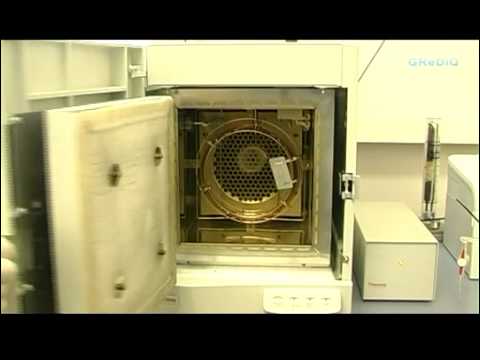
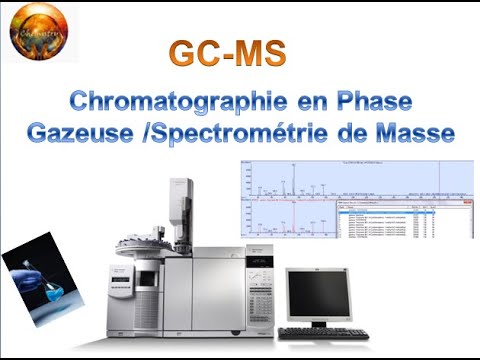













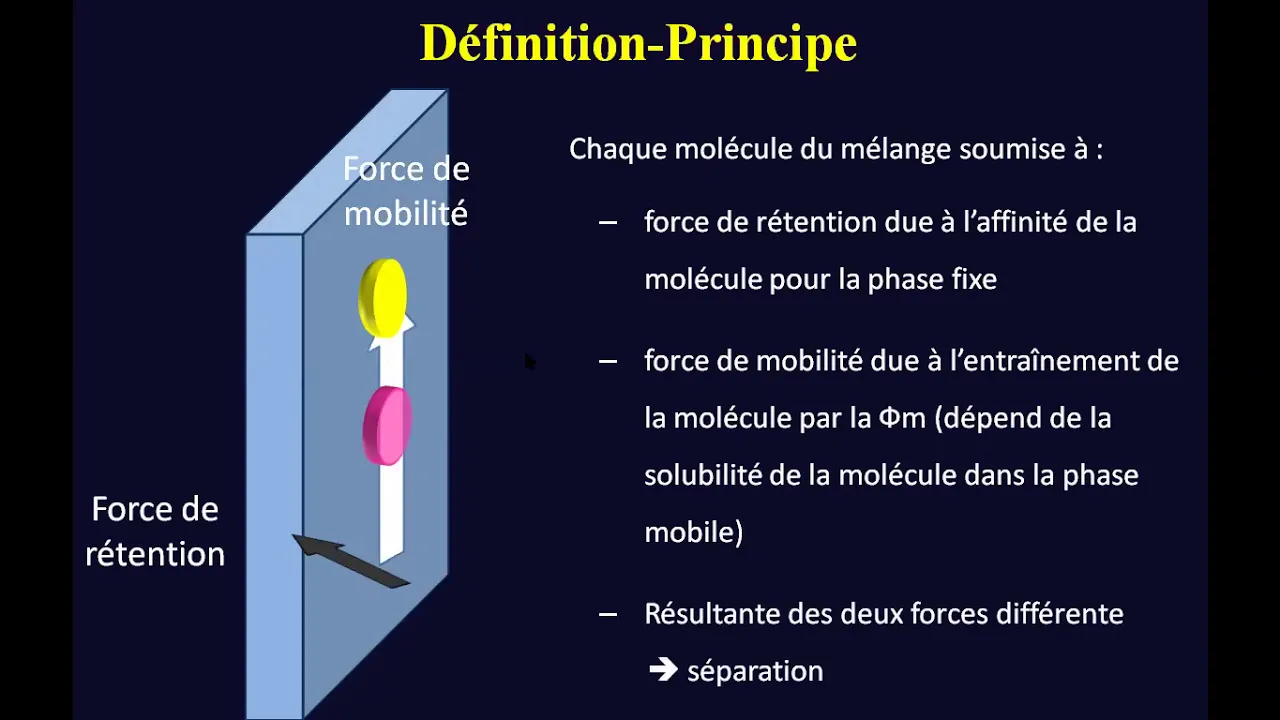
Gas chromatography (GC) is a separation technique that separates volatile compounds in a mixture by distributing them between a mobile phase (carrier gas like helium, nitrogen, or hydrogen) and a stationary phase (non-volatile liquid or solid adsorbent) based on differences in boiling point, vapor pressure, polarity, and affinity. The process involves injecting the sample into an oven-heated column containing the stationary phase, where components separate as they travel with the carrier gas at different rates depending on their interactions with the stationary phase. Common detectors include Thermal Conductivity Detector (TCD), Flame Ionization Detector (FID), Electron Capture Detector (ECD), and Flame Photometric Detector (FPD), each responding to specific types of compounds. GC offers high speed, high resolution, and high sensitivity for qualitative and quantitative analysis of volatile organic compounds, making it essential for applications in forensic science, environmental monitoring, pharmaceutical analysis, and industrial quality control.
Gas Chromatography Principle, Instrumentation, and Working | GC GLC Guide
Added:welcome to another session of analytical techniques today we look into gas chromatography or gas liquid chromatography which is also called as GC or GLC in short before we move on don't forget to subscribe for more infinity videos please drop in your comments and tap the like button at the end of the session we'll be able to insulate the principle of gas chromatography explain the working of gas chromatography and the mechanism to separate the components of a mixture using it and discuss the instrumentation of gas chromatography and you will also be able to disturb the advantages and applications of this technique first we will understand what is the principle behind gas chromatography gas chromatography is a technique used to separate the components or compounds present in a mixture in vapour or gaseous phase by the difference in their boiling point vapor pressure polarity and affinity towards the stationary phase it is mainly used to separate the thermally stable volatile liquid switches having the boiling point less than 350 degrees centigrade and gaseous compounds also but it is not suitable for solid and high boiling point liquids we have two types of gas chromatography first is gas liquid chromatography which is called as GLC which we'll be discussing in detail in this session and the mechanism behind it is partition chromatography that is the stationary phase is a non-volatile liquid which is coated over the capillary wall or inert solid particles and the mobile phase is the carrier gas in gas solid chromatography again the mobile phases is the carrier gas but the mechanism here is the adsorption chromatography because the stationary phase is a solid silica or alumina which acts as the adsorbent and we look into the outline of the working and the instrumentation of gas chromatography and then go into detail of each component here we the carrier gas acts as the mobile phase which is normally an inert gas such as helium organ on nitrogen and the flow of this gas is controlled using pressure gauge and flow controller and it is supplied at a particular or specified flow rate and this is a important component that is the thermal compartment I'm actually showing you the open view so that it will be easy for you to understand here this houses the column column is nothing but the stationary phase what we have seen already stationary phase can be a solid or a liquid coated over a solid and we have an injection port this is the place where we are going to inject this sample using a micro syringe and this sample enters into the column and when it entering enters into the column this carrier gas is going to push or carry the sample throughout the column and the separation takes place inside the column how does the separation takes place we all know if we have many components in a mixture depending on its affinity that is the CAF inity of each component towards this stationary phase the resolution takes place because it's a very long column by the time it moves the component which has more affinity towards the stationary phase most lower compared to the component which is having higher affinity a lower affinity so the component which has lower affinity towards the stationary phase comes out first and the component which has the affinity or more affinity towards the stationary phase comes out later this is how due to the difference in each components affinity towards the stationary phase the resolution and the separation of the components takes place and the sample separated components enter the detector here we have different types of detectors but in any in every detector the principle behind the detector remains the constant remains the concept behind the detector remains the same although each detector will be analyzing a particular parameter here what is the common concept is you are each any detector will have two compartments one is the reference compartment and the other is the sample compartment for the reference compartment the gas flows directly that is the mobile phase directly comes from the cylinder to the detector that is the separate it line that does not enter into the column but the other compartment that is a sample compartment here the sample along with the mobile phase and turns into the column and the separation takes place and after the separation that enters into the sample compartment here the detector compares the particular parameter depending on that type of detector the reference compartment and the sample compartment and produces current or some parameter that is the signal is produced and it is sent into the data processor the data processor processes all the signals and amplifies if the signal is very poor and then sends to the recorder and the recorder records the chromatogram this is how the process takes place in a gas chromatography now we'll move on to each component in detail first is the mobile phase here the mobile phase which is also called as a carrier gas it's chemically inert gas which we have already seen organ helium hydrogen or nitrogen it mainly moves into the column at a constant flow rate and it also carries the injected sample into the column at a constant flow rate which we are going to fix using the flow controller and the choice of the carrier gas depends on the detector we have three types of detectors as detectors which we'll be seeing in the upcoming slides hydrogen or helium is suitable for TCD and nitrogen helium our organ for fi d and nitrogen for ECT and next comes the most important phase that is the stationary phase stationary phase here if it has a non-volatile liquid supported on a capillary wall or inert solid particles such as diatomaceous earth or it can be even silica alumina any support fused silica so any type of solid particle and here my non-volatile liquid can be polar or nonpolar if it is going to be polar high molecular weight polyester spoliation glycol or means ether can be used and if it is polar the components which that is the components in the mixture which are polar in nature will have more affinity towards the stationary phase and the components which has less which are less polar has less affinity towards the stationary phase and the less polar components come out first compared to the more polar components and this we call it as normal phase chromatography when the stationary phase is a non polar liquid like hydrocarbons or dimethyl paulista dogs means the nonpolar liquids components or less polar components has more affinity towards a stationary phase and the components which have which are more polar comes out first because it has less affinity towards the stationary phase and the non polar or less polar components come out later and this we call it as reverse phase chromatography so the mechanism depends on the type of stationary phase and here the stationary phase is in the form form of column which is placed in an oven maintained at a temperature higher than the boiling point of all components present in the liquid sample that is the sample should not condense inside the column and spoil your column so it should definitely be maintained at a higher temperature compared to all the liquor components present in the liquid sample and we have two types of columns one is packed column which is normally stainless steel or glass it is 2 to 10 meter long and 1 by 8 or 1 by 4th of an inch of outer diameter this is the cross sectional view it is actually the outer coating is the poly imide coating which withstand very high temperature without melting and it acts as a protection layer and next is the fused silica this saddle color or the light pale yellow color is a fused silica support here it is a solid support and if it is a partition chromatography we have the liquid non-volatile liquid coated that ash color or gray color one is the non volatile liquid which is coated over the solid support in case it is adsorption chromatography then will not have this leak the solid itself acts as the stationary phase so this is the overview of pad condom and capillary column which is also called as open tubular column it's a very long column which is five to fifty metre long long and is majorly used if we have plenty of components in a mixture if you have many components we need a lengthy a column for good resolution and very little trace amounts and small quantities can be easily analyzed using capillary column and it is majorly used to five your pure fused silica or quartz which is coated with just a thin layer of liquid stationary phase next is the oven or the thermal compartment this houses the column as I have already said it maintains the desired temperature that is we can fix the temperature maximum up to 400 degree centigrade we can have the isothermal operation that is we are going to maintain the process continuously at a constant temperature or we can also program the temperature that is we can go for a linear program that is we are going to increase the temperature from an initial specify temperature to the final specified temperature at a constant rate of heating or it can be a nonlinear program where we'll have a ramp and stage wise we increase the temperature and we can hold the temperature at a particular temperature for a particular period of time and we can program as it as we like and this gives us a better resolution if you have more components and if you have many components with closer boiling points we can go for nonlinear program and next comes the injection port this is the injection port where we have a rubber silicon septum inside and the support which you are just seeing is opening through which you inject the sample in one pulse using a micro syringe and the quantity of the sample depends on the back to column or whether it's a capillary column in capillary column very little quantity is injected one by hundredth of the sample which is injected in a packed column because the capillary them is very thin and it cannot withstand high concentrations of the sample that is the major reason and in case of capillary column we normally use a split injection port that is it injects very little of the sample and remaining sample is vented out and here are another important point is the injection port should be maintained at a high temperature that is at least 15 to 20 degrees greater than the boiling point of all the components present in the sample this is mainly because instantaneously the sample has to volatilize it should not condense back and read be retained as a liquid it should immediately be get converted to the Katia's form and next comes the detector as I've said there are different types of detectors and we have seen the common principle behind all the detectors the first is the PCD detector of T or T C D which is nothing but thermal conductivity detector this we call it as a universal detector because commonly we can use for many applications and to separate many different types of samples here actually it monitors the difference in the thermal conductivity between the reference compartment and the sample compartment here when the sample enters the sample compartment we see that the thermal conductivity slightly goes down compared to the reference cell and this is what is sensed by the detector and it sends the signal to the data processor for further processing next is the flame ionization detector which is also called as fi D in case of flame ionization detector we required to support gases in addition to the mobile phase that is hydrogen and air in order to produce the flame that is hydrogen acts as a fuel and we need add to produce a flame here when only the pure gas enters both the compartments we have only the residual ion current but when the sample component is eluted out we said if we see that ion current is proportional some amount of Merkabah ion current is produced which is proportional to the amount of the component present in the sample more the quantity more is the parent and this is mainly suitable for hydrocarbons annex comes the electron capture detector which is also called as EC D which contains tritium isotope adsorbed on titanium or scandium or sometimes 63 isotope nickel foil which emits steady stream of electrons and ionisers the carrier gas forming slow electrons that is when the mobile this produces some amount of current okay when there is no sample only the mobile phase it produces some amount of current but when the sample enters the sample compartment it captures some electrons and these slow electrons and reduces the current so when the sample enters the current produced is less and this is since and compared between both the compartments and the signal is produced proportional to the amount of the sample so the extent of decrease depends on the amount of sample more the sample more it decreases the current decreases more it is more suitable for halogenated hydrocarbons and lastly we are going to see flame photometric detector which was also called as atomic absorption detector this is when the sample Falls and the flame it gets atomized and thermally gets excited and it emits the light of its own characteristic wavelength when it returns back to the ground state that is it is element selective because each element emits its own characteristic wavelength so I need to fix the wavelength depending on the element to be studied and LA and we have plenty of more detectors which we are not discussing here these are the common detectors used lastly data processor it processes the signal coming out of the detector and sends it to the recorder and the recorder records a chromatogram by plotting the time against the detector signal response which are sent okay now we assume that we have only two components and two components let it be a and B now if we sure the area under the curve or height of the curve will tell me the amount or the concentration of a be here the concentration of a is more and concentration of B is more and quantitatively we can analyze it and if you look at the qualitative analysis this retention time is the qualitative analysis that is here somewhere it is around 4.5 or 4.25 sample B and sample a is around to 0.75 actually by looking at this retention time I cannot tell the sample here is this particular component and sample B is this particular component but we need to maintain all the parameters same and the predicted samples that is a and B in case I assume that a a cyclohexane B is benzene then I need to inject these samples separately before the sample being analyzed and take the retention time of those standards that is known standards and we'll have a refer a retention time for those known samples then we inject the sample and looking at that retention time of our sample and the standard we decide that a is this component and B is this component this is how qualitatively we analyzed aimed in case B is more polar than a that is if the stationary phases polar the B is more polar than a and B has more affinity towards the stationary phase and it comes out later and a comes out first and this is normal phase chromatography and in case a stationary phase is a non-polar in nature B is less polar than Y a and it has more affinity towards the non-polar and then a and it stays for more time in the stationary phase and a comes out first and B comes out next and this is reverse phase chromatography we have lots of advantages of gas chromatography it has very high speeds we can analyze even 70 samples with a 70 components present in a mixture within seconds to minutes and high-resolution compounds with very little difference in boiling point can also be separated qualitative analysis as I I explained you in the previous slide using the retention time and comparing with that of the standards we can qualitatively analyze the samples and quantitative analysis that is the area under the peak which is proportional to the concentration of the sample and it has very high sensitivity in case of tcd 0.1 percent and F ID ppm level and he CD ppb level so these are the some of the advantages of GC and let us look into the applications of gas chromatography these are there's not the exhaustive list but we look into few of the important list gas is coming out of the industrial processes carbon monoxide carbon dioxide hydrocarbons h2s so2 etc forensic Department is a very important instrumental tool especially ethanol in alcoholic beverages liquor breath of drunken drivers illegal substances blood in a crime scene residues from explosives all this can be analyzed agricultural Department we can analyze the pastry pesticide residue in agricultural products organic components and the compounds and biochemical compounds detection of volatile organic solvents we use lot of solvents in organic synthesis medicinal biochemistry human bread saliva bled and other secretions poisons etc can be analyzed so on in water contamination especially in areas where we have acid rain industrial waste sea waste landfills etcetera we can analyze that's all for the session please subscribe if you haven't done it and if you liked the video peace tap the like button and share it with your friends bye bye we meet in another session bye thank you
Up Next

Intermolecular Forces in Biology: Khan Academy Chemistry of Life
@readysetorgo
718K views•2013-10-30
Biocatalysis and Catalysis in Islatravir Synthesis | Merck Webinar
@SCIwheresciencemeetsbusiness
675 views•2020-10-08
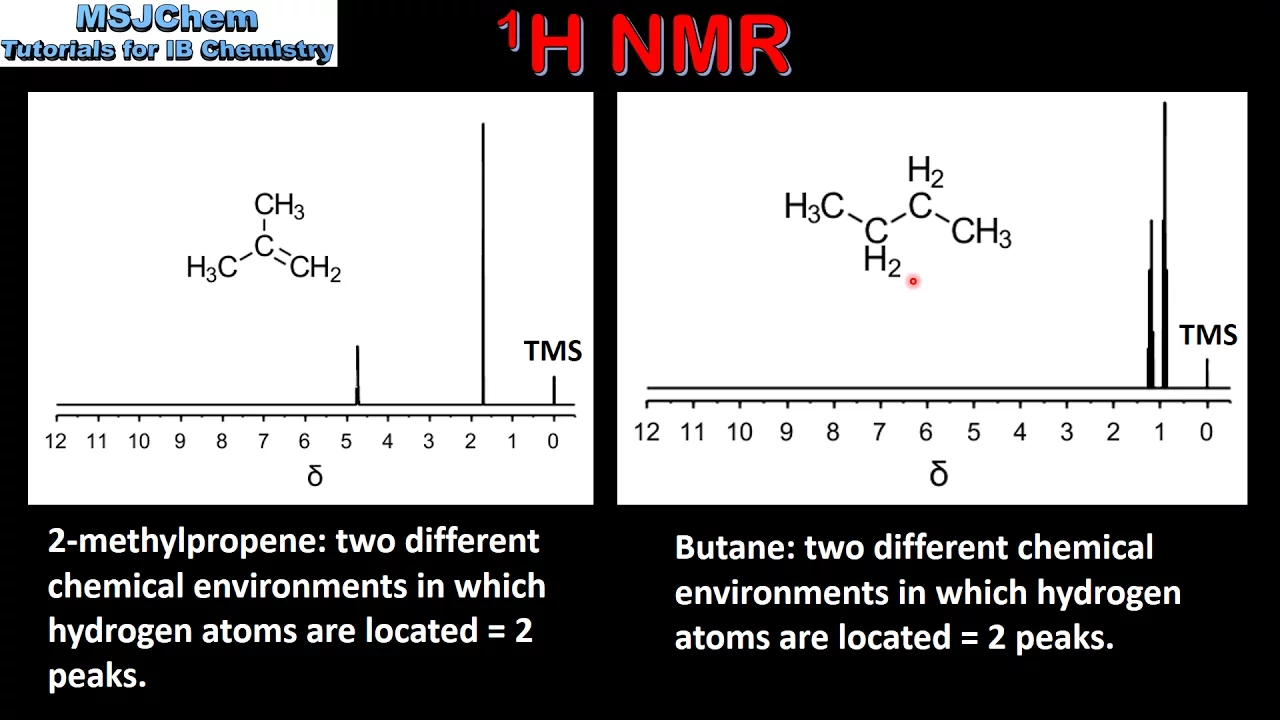
1H NMR: Determining Number of Peaks from Structure
@MSJChem
59.2K views•2017-04-06

Edible Water Bottles: A DIY Guide to Sodium Alginate Spherification
@ryan
10.5M views•2019-06-21
Related Study Plans & Knowledge Roadmaps
Structured learning paths in Chemistry