

















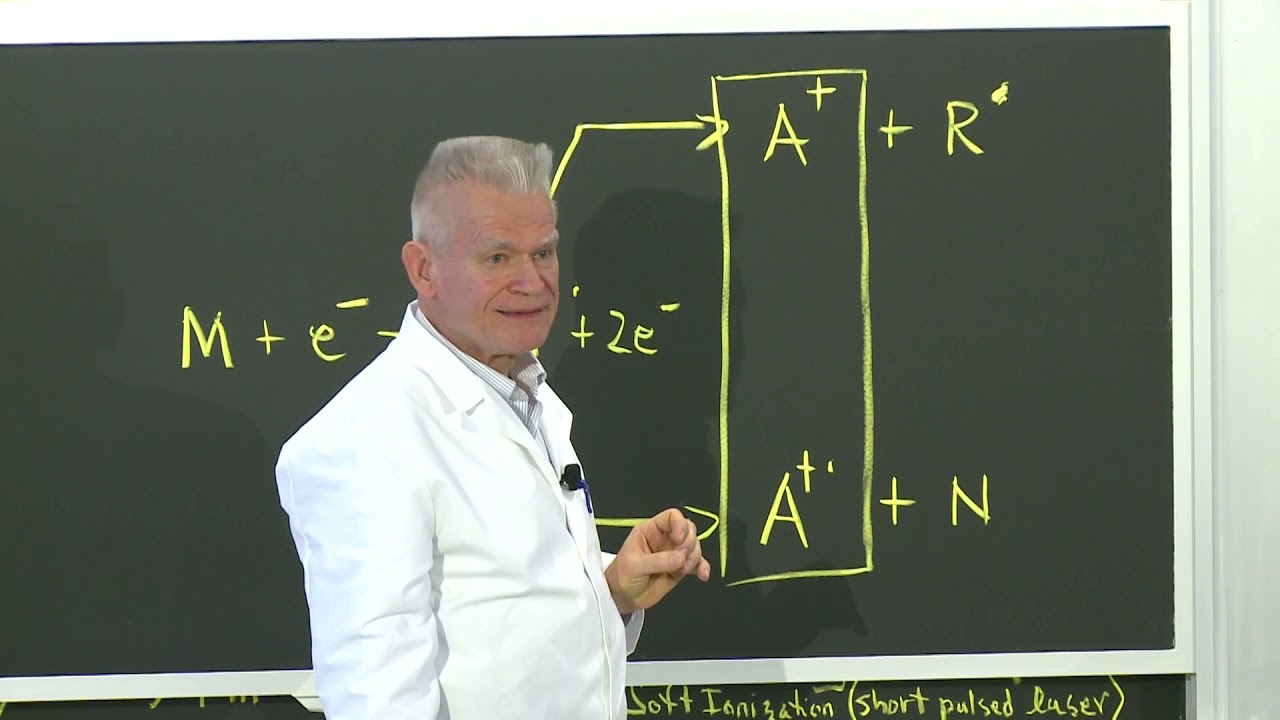

Mass spectrometry is an analytical technique that identifies molecular structure by ionizing a sample, fragmenting it, and measuring the mass-to-charge ratio (m/z) of resulting ions; the technique reveals the molecular mass of the parent ion and characteristic fragment ions (such as butyl cation at m/z 57, propyl cation at m/z 43, ethyl cation at m/z 29, and methyl cation at m/z 15 for pentane), which helps corroborate proposed molecular structures or distinguish between structural isomers.
Mass Spectrometry Explained: Fragmentation Patterns and Molecular Ions
Added:Basic atomic and molecular structure, including isotopes and how they affect molecular weight.
The concept of ionization, specifically how neutral molecules lose electrons to become cations or radical cations.
Fundamental organic chemistry principles, particularly covalent chemical bonding, bond energy, and factors influencing carbocation stability.
The definition and physical meaning of the mass-to-charge ratio (m/z) in analytical instruments.
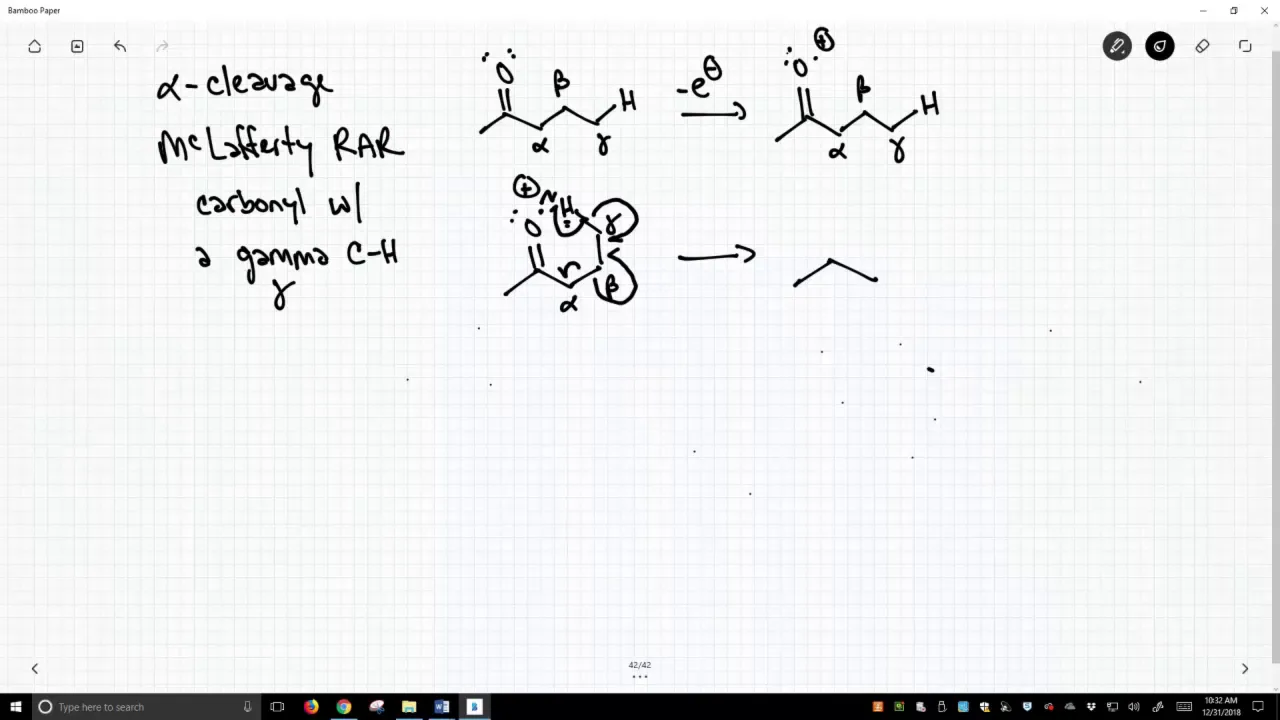
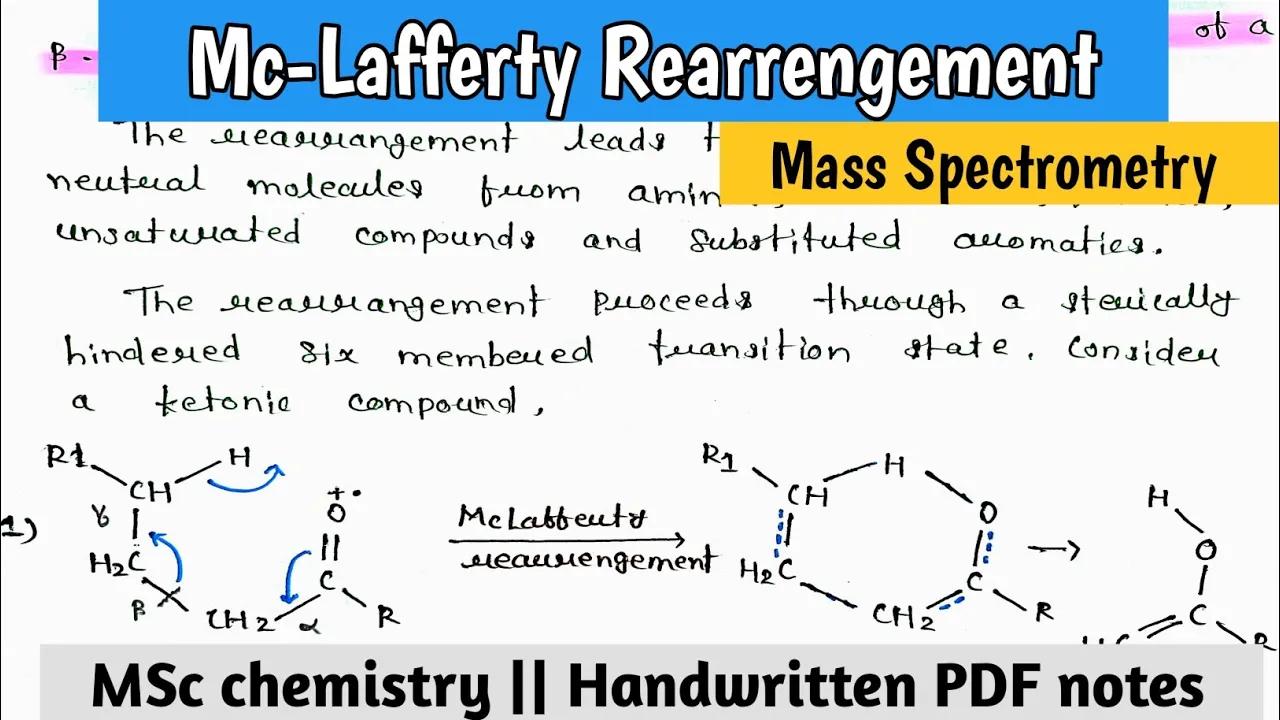
In-depth analysis of specific fragmentation pathways, such as alpha-cleavage and the McLafferty rearrangement, across different organic functional groups.
Coupled analytical techniques, such as Gas Chromatography-Mass Spectrometry (GC-MS) and Liquid Chromatography-Mass Spectrometry (LC-MS), for analyzing complex mixtures.
High-Resolution Mass Spectrometry (HRMS) and its use in determining exact molecular formulas and isotopic composition.
Soft ionization techniques (e.g., Electrospray Ionization [ESI] and MALDI) applied to mass spectrometry of large biomolecules like proteins and polymers.
688.7K views11.5Klikes4:50Original Release: 2016-04-26
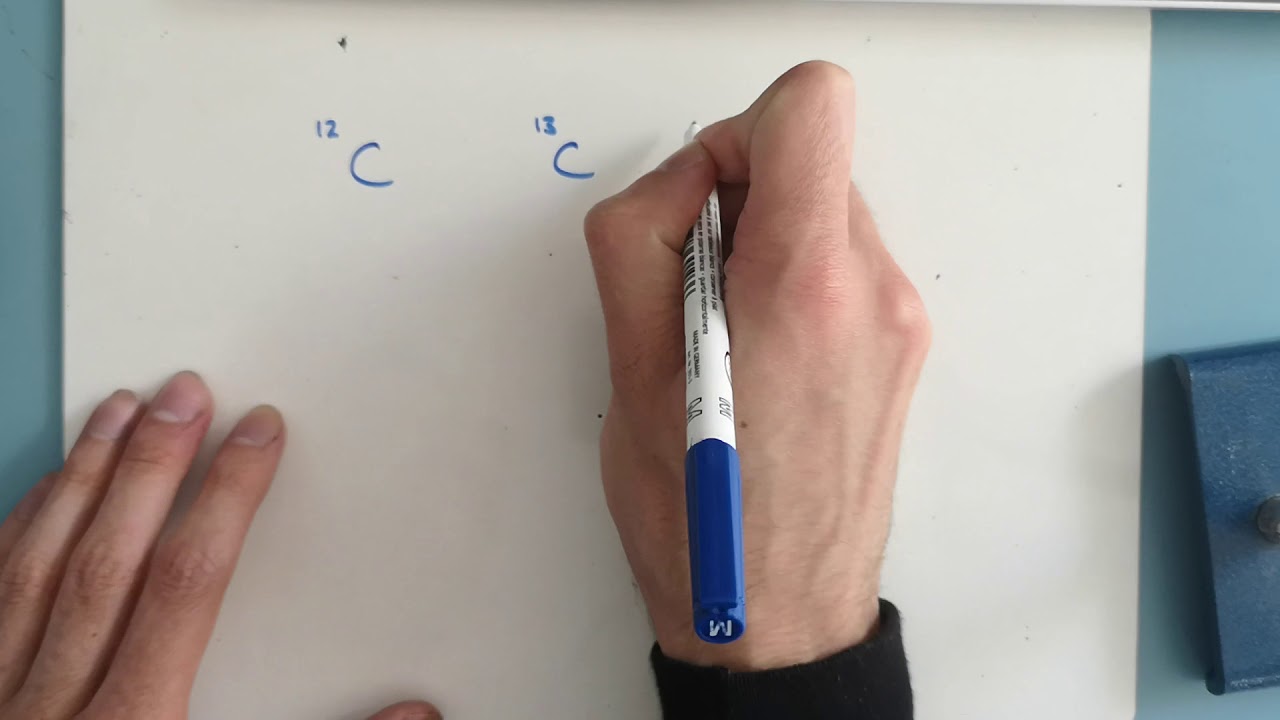
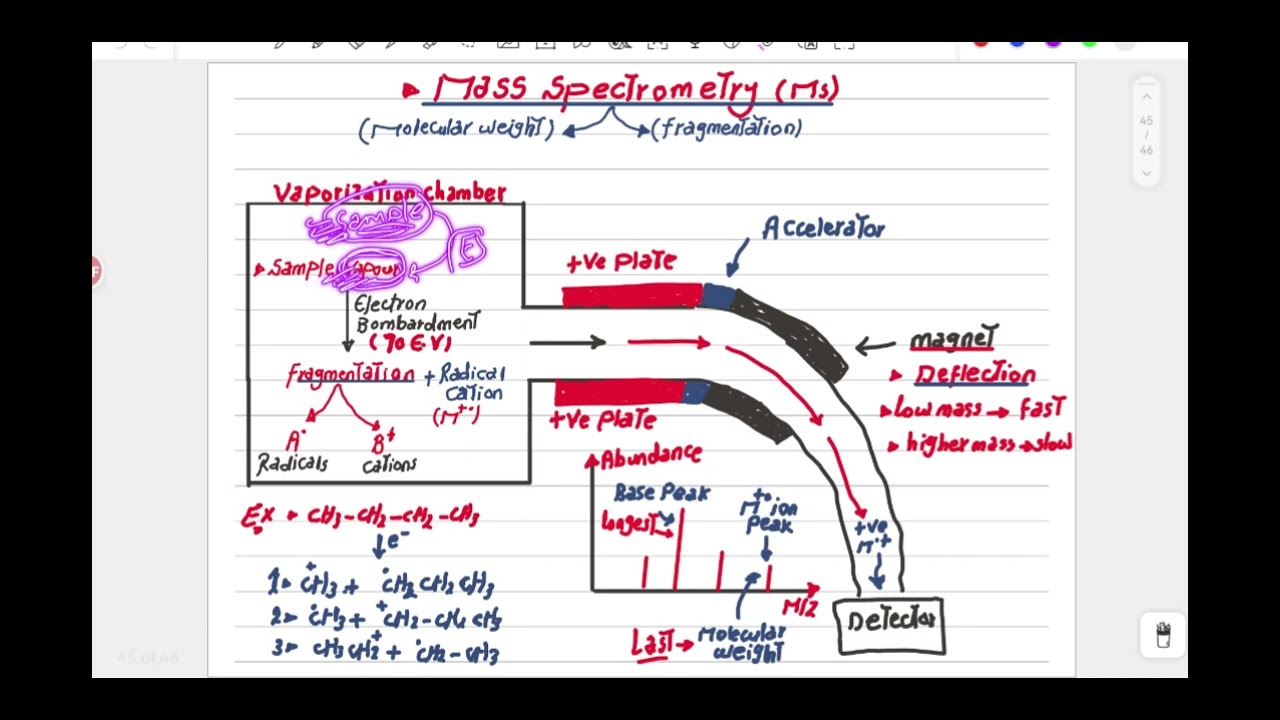
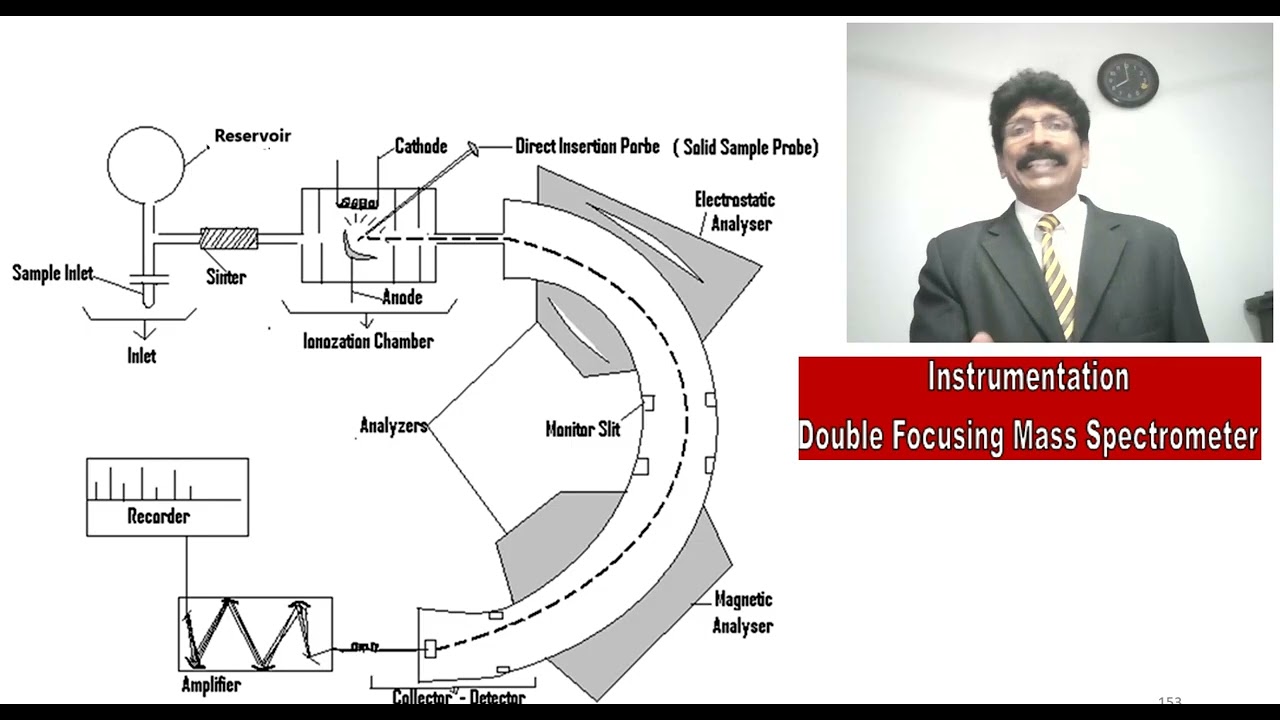
Professor Dave here, I want to tell you about mass spectrometry ok so when we do mass spectrometry what we're doing is we're taking a sample and we are vaporizing it and then ionizing it and then smashing it up into bits, and then we take those bits and we send them through this tube and then they go through a curved section, where because they have a formal charge of some kind they have a curved path with which we can get data that will tell us something about the mass-to-charge ratio of each of these bits. so m / z is the mass-to-charge ratio and if these have a single charge, or you know, plus one charge then we can essentially think of this as the molecular mass of each little bit, each little chunk of the molecule so what ends up happening, what I've drawn here is a sample spectrum. this is pentane so let's say we have pentane, now if we're gonna ionize that and smash it up into a bit into bits what kind of bits are we going to get? well let's say we you know smashed off one of those carbons we're going to get this four carbon chunk or we could smash it up right here, we could get a three-carbon chunk and a two-carbon chunk or right here, three and two so there's all kinds of different chunks that we can get of the molecule and those will have their molecular masses represented right here and so for example right here, we've got, this is 72 and so what this means is that some of the parent molecules will be ionized and turn into our something called a radical cation so this is a radical cation this is essentially the mass of the parent molecule of the whole thing and so we don't see any data beyond that because there can't be anything heavier in there than the whole molecule so this represents the entire molecule, that's the molecular mass of pentane and then what we can get is what this data is telling us something about the chunks or the fragments that we can find in a molecule, so over here at at around 57 this would probably correspond to if the butyl, it would correspond to the butyl cation and so that's if one carbon got smashed off the molecule we've got this butyl cation, it's flying through, we collect the data we get a mass to charge ratio of 57 there's going to be a good amount of that, over here we've got 43 so 43 probably corresponds to the propyl cation, so if we add up all the atomic masses we're gonna get 43 for that so that works there, we've got 29 right there and that could be the ethyl cation and then we might get a good bit of the methyl cation which is going to be around 15 now first of all the one thing we want to talk about, what's all this little extraneous other data well the thing is we're going to have some amount of compounds that have atoms of different isotopes so we might have some carbon 13 we might have some carbon 14 we might have some hydrogen two or three and so there might be some data that corresponds to fragments that have atoms in them of different isotopes and so that might give us a mass to charge ratio that's slightly different, those will usually be smaller peaks because by far the most abundant carbon is carbon 12, by far the most abundant hydrogen is hydrogen 1 and so we're not gonna see too much of that other data but it is there and that's why we see it, and then just to give you an idea of why this is useful, once again maybe we are using this in conjunction with IR spectroscopy or some other some other spectroscopic method to try to identify what this molecule is and all we're going to use this for is to, say we're going to, if we have a proposed structure for a compound we might compare it to a mass spectrum because we'll say, let's say okay this is this is my molecule and I've got all these parts here, and what we might say is, well if that's the structure we better expect to see that fragment right there and so all we do is we compare a proposed structure to a mass spectrum and see if that mass spectrom corroborates it another thing we could do is if we know we have pentane but we don't know which kind of pentane or are we are looking at different structural isomers of the same empirical formula, just looking at the way that it might feasibly break down into fragments, the mass spectrum will help us corroborate a particular structure so that's the very basics about mass spectrometry thanks for watching guys subscribe to my channel for more tutorials and as always feel free to email me
Up Next

16:28
Mass Spectrometry Part 6: Ionization in Mass Spec (Hard & Soft)
@shomusbiologyofficial
42.5K views•2013-12-10
83:56
Biocatalysis and Catalysis in Islatravir Synthesis | Merck Webinar
@SCIwheresciencemeetsbusiness
675 views•2020-10-08
10:54
Intermolecular Forces and Boiling Points Explained | Chemistry
@ProfessorDaveExplains
2.7M views•2015-11-05

17:31
Edible Water Bottles: A DIY Guide to Sodium Alginate Spherification
@ryan
10.5M views•2019-06-21
Related Study Plans & Knowledge Roadmaps
Structured learning paths in Chemistry
chemistry
Nuclear Chemistry: Decay, Meds & Fuel Cycle
01Introduction to Nuclear Structure and Radioactivity
02Decay Dynamics and Kinetics
03Radiation Interaction and Detection
+ 2 more learning modules
24h5 modules
Explore Roadmap
chemistry
Supramolecular Chemistry: Forces & Machines
01Foundations of Chemical Bonding and Intermolecular Forces
02Introduction to Host-Guest Chemistry
03Thermodynamics and Dynamics of Self-Assembly
+ 2 more learning modules
16h5 modules
Explore Roadmap
chemistry
Photochemistry: Excited States & Reactions
01Foundations of Light-Matter Interactions
02Molecular Orbitals and Electronic States
03Photophysical Processes and Jablonski Diagrams
+ 2 more learning modules
18h5 modules
Explore Roadmap
chemistry
Coordination Chemistry: Bonding & Properties
01Introduction to Transition Metals and Ligands
02Crystal Field Theory (CFT) and Geometry
03Magnetic Behavior and Spin States
+ 2 more learning modules
14h5 modules
Explore Roadmap