













![[MDCAT/ECAT] Chemical Bond - Lec#01](https://i.ytimg.com/vi_webp/R-GGdo9Mduk/maxresdefault.webp)

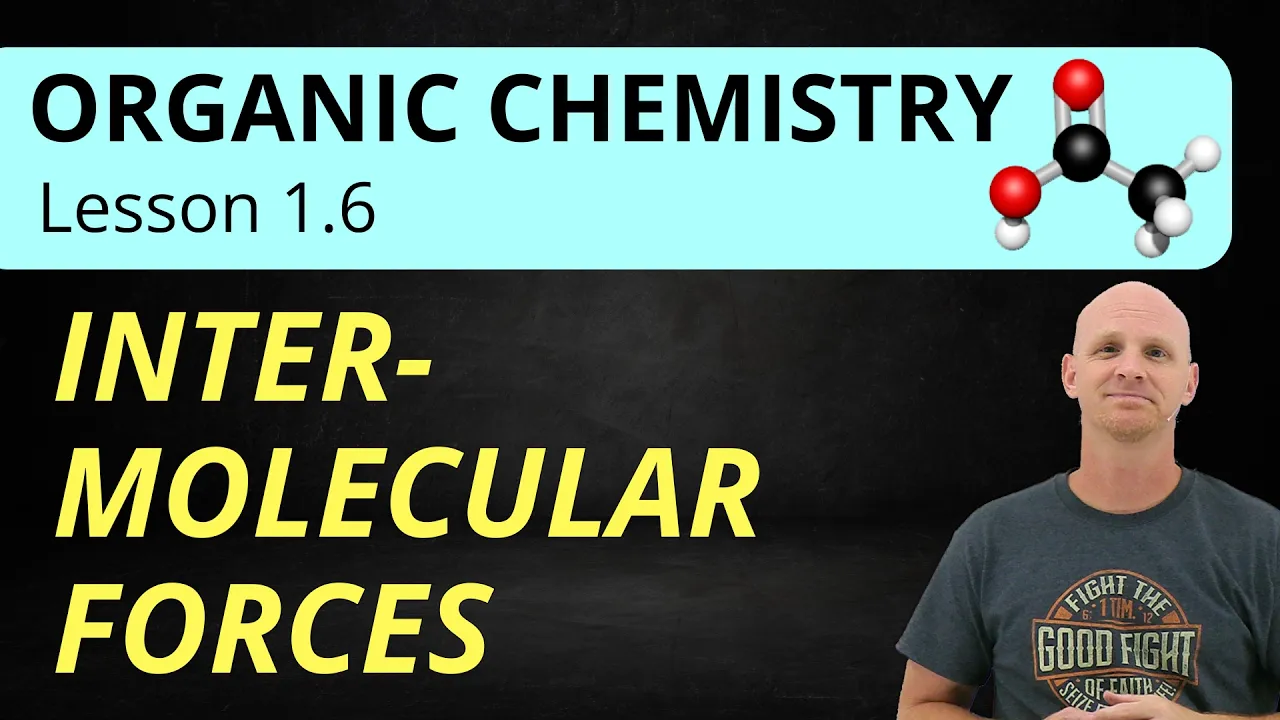







Different liquids boil at different temperatures because of the varying strengths of intermolecular forces between their molecules; stronger intermolecular forces require more heat energy to overcome, resulting in higher boiling points. The four main types of intermolecular forces, ranked from strongest to weakest, are: ion-ion interactions (between formally charged particles), ion-dipole interactions (between ions and dipoles), dipole-dipole interactions (between polar molecules), and van der Waals/London dispersion forces (weak induced dipole interactions present in all substances). For example, helium boils at barely above absolute zero due to weak van der Waals forces, while water boils at 373 K due to strong hydrogen bonding, and sodium chloride melts at 1074 K due to strong ion-ion interactions.
Intermolecular Forces and Boiling Points Explained | Chemistry
Added:professor Dave here, let's talk about intermolecular forces what is happening when a liquid boils? why do different liquids boil at different temperatures?
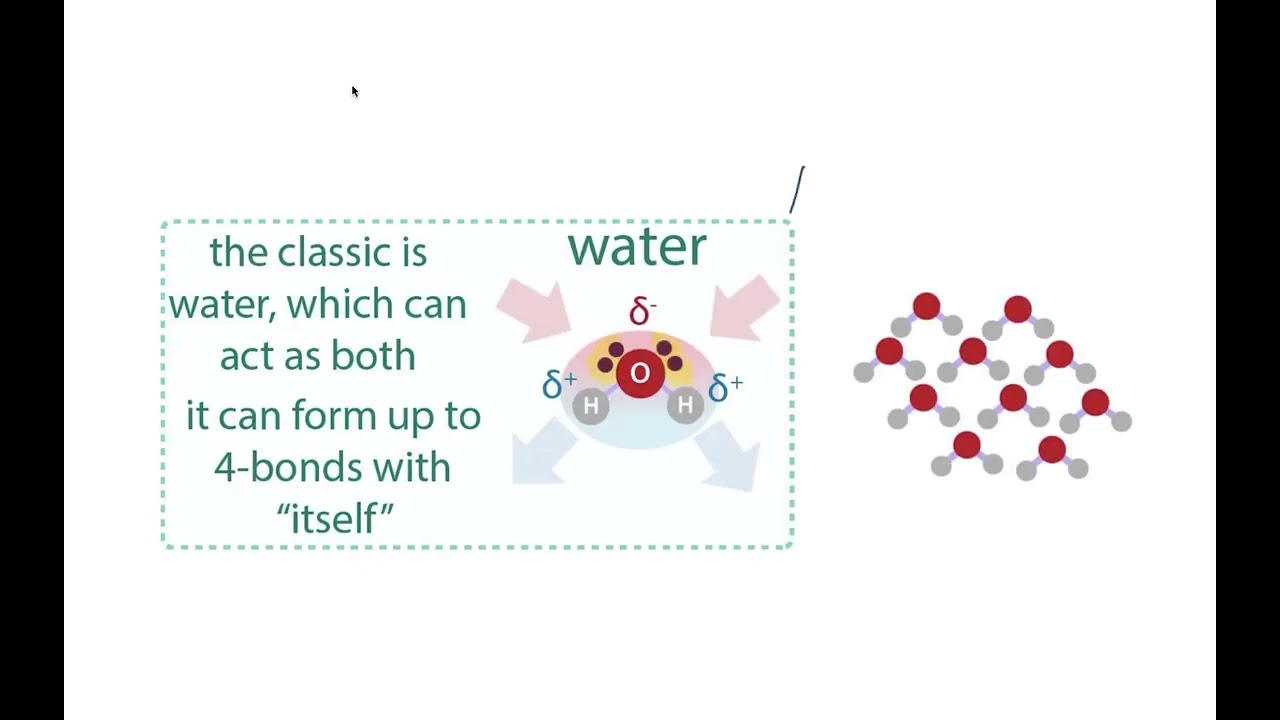
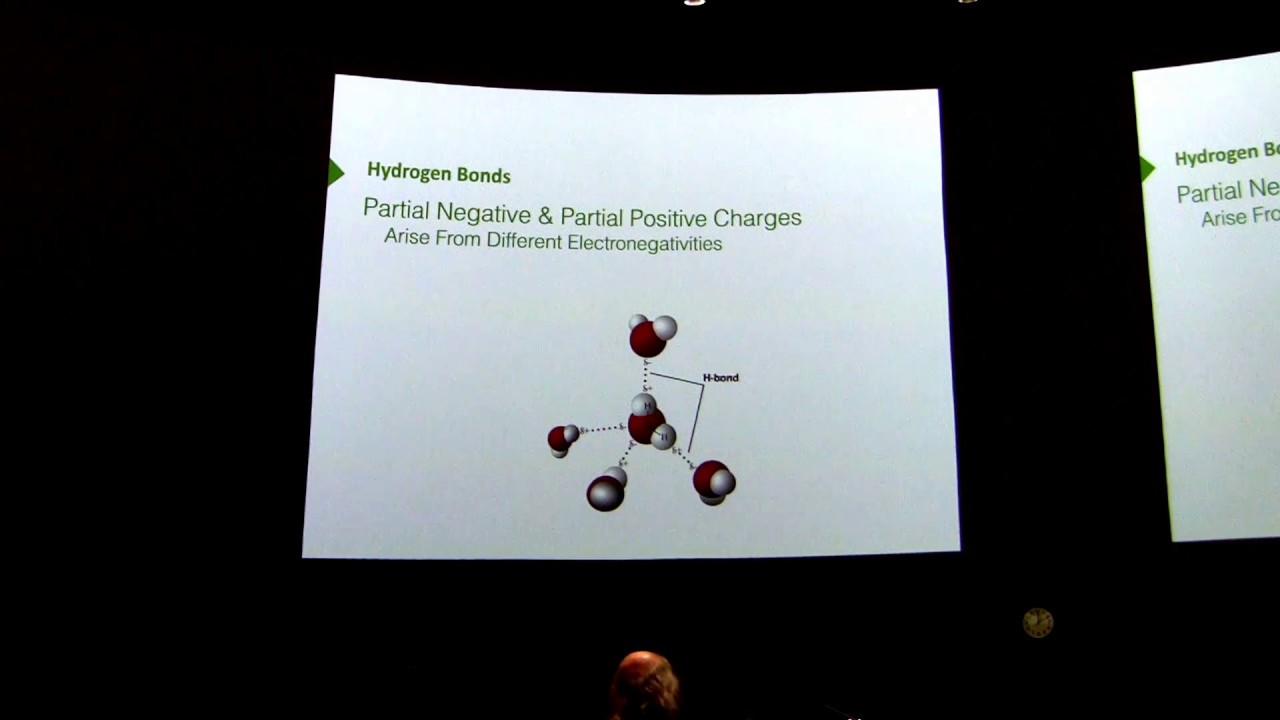
to answer these questions we have to learn about intermolecular forces. these are the electrostatic interactions between molecules. so atoms within a molecule make covalent and ionic bonds with each other, but molecules also participate in interactions with other molecules. let's look at the different types. first we have ion-ion interactions. larger ionic solids are held together by these networks of ionic bonds which are the strongest intermolecular force because they involve formal charges. after that we have ion-dipole interactions, so first we must understand what a dipole is. the covalent bonds in a water molecule are polar because oxygen is more electronegative than hydrogen and will pull the electrons in the bond towards itself. because of the bent shape of the molecule when we combine these vectors we see water has an overall dipole, or a side of the molecule with some electronic access and a side with electron deficiency. dipoles can make electrostatic interactions because the partially negative side is attracted to positive charges and the partially positive side is attracted to negative charges. so when sodium chloride dissolves in water, the sodium ions make ion-dipole interactions with the negative side of water's dipole and the chloride ions make ion-dipole interactions with the positive side of water's dipole. each ion can make several of these interactions which store a lot of energy, which is why sodium chloride will dissociate in water in the first place. next we have dipole-dipole interactions. as you can guess, this is when dipoles interact with each other, as with pure water. when in liquid form water molecules will move in such a way so as to always be making electrostatic interactions between the negative end of one dipole and the positive end of another dipole. in this case these dipole-dipole interactions qualify for a special title: hydrogen bonds. this is when dipoles generated by N-H, O-H, or F-H bonds interact with each other.
these are just especially strong dipole-dipole interactions. they are especially strong because these are the most electronegative elements, so they will create the most strongly polarized bonds resulting in a very strong dipole and therefore very strong dipole-dipole interactions. we can almost think of partial charges as some fraction of a formal charge, so the greater the partial charge the stronger the interaction, though never quite as strong as interactions between formally charged particles. lastly we have the van der Waals, or the London dispersion force. these names refer to the same force and are completely interchangeable so I will arbitrarily refer to them as van der Waals forces. this is the consolation prize of the intermolecular forces because any substance can do it. only ions make ion-ion interactions and only covalent molecules with a dipole can make dipole-dipole interactions but absolutely anything can do van der Waals. for example take a look at helium. helium is a noble gas and due to a full valence shell it does not make bonds with other atoms, so a sample of helium is just a bunch of helium atoms. well the electron cloud around a helium atom will at any time be slightly lopsided or skewed towards one direction. this will result in something called a momentary dipole this means one side of the atom is ever so slightly partially negative and the other side is slightly partially positive. this is much weaker than a formal dipole but it still exists and can be measured. if a momentary dipole approaches another atom, it can generate an induced dipole, meaning the slight partial negativity repels this electron density over to the other side of the atom so it will also have a slight dipole, and then there can be a momentary dipole-induced dipole interaction that is the van der Waals force. this is a weak and fleeting attraction but this is all that monoatomic species and nonpolar covalent compounds can do, and for very large molecules like some hydrocarbons the force can become significant. so the ion-ion force is strongest because it involves interactions between formally charged particles. ion-dipole is next because it involves a formal charge and a partial charge, then dipole-dipole which is between partial charges, and van der Waals which is between tiny induced dipoles. to see how intermolecular forces dictate phase change let's do a thought experiment. first recall that a solid's particles are rigidly packed and not moving. a liquid's particles are moving but they are still close together and interacting. gaseous particles are moving and they are far away from each other so compared to liquids they basically don't interact. so let's pretend we have three substances: helium, water, and sodium chloride. we will place them at zero kelvin or absolute zero which is the lowest temperature possible, a complete absence of heat energy, where there is no energy available for motion. here everything, even helium, is a solid. in order to go from the solid to liquid to the gas phase heat energy has to go into the sample and overwhelm the intermolecular forces that are occurring.
in a liquid there is some energy stored in electrostatic interactions and whatever amount that is, that is precisely the amount of heat energy that has to be provided to liberate the molecules into the gas phase where they are not interacting and not storing energy, because nature will not tend to go to a higher energy spontaneously so the energy stored in these interactions has to be provided in some other way. this means that the stronger the forces between molecules, the more heat energy we will have to provide to melt and boil the sample. so let's take our three substances slowly raise the temperature and see what happens helium, as it is only participating in incredibly weak van der Waals forces needs only a minuscule amount of heat energy to disrupt these weak interactions. that's why helium will melt and boil at barely one degree above absolute zero. water on the other hand is participating in strong dipole-dipole interactions called hydrogen bonds, there is a significant amount of energy stored in these interactions, so we will need considerable heat energy to overcome them. water melts and boils at 273 and 373 Kelvin respectively.
lastly, sodium chloride is making extremely strong ion-ion interactions so it will take a huge amount of energy to melt and boil this solid. it melts at 1074 Kelvin, which means there's a lot of energy stored in the ion-ion forces. we can use this information to decide which of a given set of compounds might have the highest boiling point. when we ask this question we are really asking: which compound is generating the strongest intermolecular forces? the stronger they are, the more heat energy we will need to pull the molecules apart and put them in the gas phase, so they will boil at higher temperatures. we need to be able to look at a molecule and decide what kind of interactions it will make. if it is a covalent compound with non polar bonds, it can only do van der Waals. if it is a covalent compound with polar bonds, then we must look at the geometry to see if there is an overall dipole. for example, water has a dipole.
carbon dioxide does not, because even though carbon-oxygen bonds are polar, the direction of these polar bonds causes them to cancel each other out and the molecule is nonpolar overall. similarly compare BF3 with NH3. again, the molecular geometry determines that this is nonpolar because the vectors precisely cancel each other out, but with ammonia, all the bonds point somewhat towards one direction so ammonia has a dipole. CS4 is nonpolar again because of geometry but CH3F has just one polar bond so that has a dipole. if a molecule has a dipole it can do dipole-dipole interactions. and lastly, formally charged ions participate in ion ion interactions. see which compounds can do what and you will be in business let's check comprehension thanks for watching guys subscribe to my channel for more tutorials and as always feel free to email me
Up Next
Isoprenoids, Rubber, and Polymer Properties | Chemistry
@YaleCourses
5.5K views•2012-04-05
Biocatalysis and Catalysis in Islatravir Synthesis | Merck Webinar
@SCIwheresciencemeetsbusiness
675 views•2020-10-08
Liquid Properties: Viscosity, Surface Tension & Capillary Action
@ProfessorDaveExplains
678.2K views•2019-05-10
Edible Water Bottles: A DIY Guide to Sodium Alginate Spherification
@ryan
10.5M views•2019-06-21
Related Study Plans & Knowledge Roadmaps
Structured learning paths in Chemistry