

















Isoprenoids, including natural products like rubber, are synthesized through the oligomerization of electrophilic isopentenyl pyrophosphate (IPP), where allylic rearrangements create better leaving groups for nucleophilic substitution; statistical mechanics explains rubber's contraction upon heating when stretched due to entropy favoring the more disordered, contracted state, while vulcanization with sulfur creates cross-links that prevent molecular flow and crystallization, giving rubber its useful temperature-resistant properties.
Isoprenoids, Rubber, and Polymer Properties | Chemistry
Added:Basic organic chemistry nomenclature and reactions, particularly conjugated dienes and addition polymerization.
Fundamental concepts of biochemistry, including biosynthetic pathways and precursor molecules like acetyl-CoA.
Introductory thermodynamics and statistical mechanics, specifically the concepts of entropy, microstates, and thermal fluctuations.
General polymer chemistry definitions, including monomers, macromolecules, and covalent cross-linking.
Advanced terpene and steroid biosynthesis pathways, exploring how isoprenoid units build complex natural products.
Polymer physics and rheology, focusing on viscoelasticity, the glass transition temperature (Tg), and mechanical deformation models.
The statistical mechanics of chain conformations, specifically the freely-jointed chain (FJC) model and worm-like chain (WLC) model.
Industrial elastomer chemistry, including the synthetic production of neoprene, nitrile rubber, and green vulcanization technologies.
5.5K views0likes46:26Original Release: 2012-04-05
J. MICHAEL MCBRIDE: We're talking about alkenes, and in particular today, we're going to be continuing to talk about polymerization in the context of things that nature makes, which are called isoprenoids.
And then we'll, talk about the properties of polymers, and then go onto acetylenes.
We're talking about electrophiles being the things that attack double bonds, in particular, ones where the electrophile is carbon, like the sigma-star of something with a leaving group on it, or with an electronegative group on it, or a cation.
We're talking about the synthesis of terpenes and steroids.
There's a key molecule called isopentenyl pyrophosphate: pyrophosphate is this thing with two phospohorouses linked by an oxygen.
It turns out you can do an allylic rearrangement I mean, when I say you, I mean you I mean the enzymes in you do it.
So you can get from isopentenyl pyrophosphate to dimethylallyl pyrophosphate, which you know involves a shift of hydrogen allylically.
Now, the reason you do that is to make it better for SN2 reactions.
If you look at the relative rate for displacement of chloride by iodide in acetone, if you call it 1 for propyl chloride, if you make allyl chloride, so you put a double bond to make the carbon-chlorine bond allylic, it goes up by almost a 100 fold, a factor of 90.
And, if it's a benzene ring instead of just a regular old double bond, it goes up another factor of 2.5.
So, apparently this adjacent unsaturation, that new double bond, is especially good in stabilizing at the transition state.
So at the time when chloride is leaving, and iodide is coming in, the double bond is able to interact with that orbital that's bonding simultaneously, that pentavalent carbon transition state.
So both SN2 as well as SN1, where you draw a resonance structure for that kind of interaction, for the cation.
It's good to have it allylic.
Notice that this shift, this allylic shift from isopentenyl pyrophosphate to dimethylallyl pyrophosphate, resulted in getting the leaving group to be allylic, so it'll be easier to displace.
Why do you do that?
So you can take as a nucleophile then, if you have this really good leaving group, you can take as a nucleophile the isopentenyl pyrophosphate, so it's a carbon that's serving as the nucleophile.
So you make a new bond, get a cation, but the cation can be lost by losing a proton next door to make a new double bond, which you'll notice is a new allylic functionality with a leaving group.
So you put two of these things together, and you have the same kind of functionality you had at the beginning.
That thing is called geranyl pyrophosphate, because it's related to geraniums, as well see.
Notice that the starting material has five carbons, now having put two together, you have ten.
So if you take geranyl pyrophosphate, and isomerize the double bond, then it's in a position for the other double bond in the same molecule to be the nucleophile.
So you can do that, and get that cation.
What could that cation do?
Well, of course it could do the same thing it did before, and lose a proton, and that gives limonene, and I made it sort of yellow-green, you know why?
To make it a little bit like lemons or limes.
Lemon grass oil has limonene in it, Asian cooking has that.
If you bend it up, then you can see another possibility.
What other possibility do you see if I draw the conformation more like that?
Anurag you got an idea?
STUDENT: Bridging?
PROFESSOR: Right, that double bond could add to the vacant orbital on the carbon, like that, a Markovnikov addition.
Why is it not so good, Anurag?
STUDENT: Steric. For steric reasons.
PROFESSOR: It forms a four-membered ring, so there's going to be some ring strain there.
But it does happen.
If you lose the proton now, you get a compound called beta-pinene.
Guess what kind of trees that comes from?
Now you could also do an anti-Markovnikov addition, which doesn't form quite as strained a ring.
If you do that, and then add water, and lose a proton to the carbon cation, you get after oxidation, camphor.
Now all these things have in common that they have very characteristic odors, the lemon, the pinene, turpentine, camphor.
So these things are called terpenes, essential oils.
Terpene is from turpentine, that's where pinene is the major constituent of turpentine.
Essential oils doesn't mean you need them, what it means is they have an essence, they have an odor, so these C10's are volatile, and your nose responds to them.
These are essential oils, and notice they're C10's, terpenes are C10's.
Now you can do more of the same, if you start with your geranyl pyrophosphate that you had before, you could add another isopentenyl pyrophosphate, and get a thing that's called farnesyl pyrophosphate.
And things that come from that, like the compounds that came from the C10, were called terpenes, these are called sesquiterpenes.
Do you know what sesqui- means?
Do you know what a sesquicentennial is?
Sesqui-, anybody?
It means one and a half, so it's one and a half terpenes, 15.
It's actually three of the isopentenyl pyrophosphates, but the name terpene came first. So, for example, caryophyllene, which is in clove, and hemp, and rosemary, is a sesquiterpene.
Now, two of those things can come together, and now this reaction is different, because it's not the double bond attacking, it's two of these allylic positions coupling with one another.
It's a different kind of reaction, we're not going to talk about it.
But, it couples to give this, which is squalene, or shark liver oil.
You see the new bond in the middle, it's symmetric about the middle.
You can do interesting things with squalene.
What kind of terpene would you call it incidentally, squalene?
If you take two 15's, you get 30.
So, what are you going to call it?
Is it a monoterpene, sesquiterpene, diterpene?
It's a triterpene, two one and a half's is three, so this is a triterpene.
They're a lot more important triterpenes, well more important, they come from this, so this one is a starting point.
There's squalene, and I'm going to twist it around into a special conformation like that.
What allows me to do that?
Enzymes that hold these things in particular shapes.
Now, I'm going to react it with oxygen and do an epoxidation, of course it's not just O, it's something like the reagents we talked about, except it's done biologically.
But, we're not interested in the particulars of the biological reagent, but it makes an expoxide.
Notice that it's able to do it selectively, it gets only that double bond among all those.
Now you protonate that, and what will it do?
Can you see a way this can become more stable?
What makes it unstable?
Chris?
STUDENT: Ring strain.
PROFESSOR: The ring strain.
How do you get rid of the ring strain?
Which way are you going to break it?
STUDENT: Which side?
PROFESSOR: Yeah, you're either going to break this bond, or this bond, or this bond.
One, two, three.
STUDENT: Two.
PROFESSOR: Two, why two?
STUDENT: Better stability.
PROFESSOR: Pardon me?
STUDENT: Better stability.
PROFESSOR: Why better stability?
Notice that what's happened, these electrons that are shared between O and carbon are going to come onto the oxygen.
STUDENT: It's a better carbocation.
PROFESSOR: Right, it's a tertiary carbon cation if you break it your way.
OK, so we'll do it that way.
Now, what's that going to do?
Anybody got an idea?
Natalie, what have we been looking at attacking double bonds?
We're looking at carbon cations attacking double bonds, any possibilities you see?
STUDENT: It could attack the double bonds.
PROFESSOR: OK.
Now, you're going to form a bond between this cation and either the bottom one or the top one.
Which one do you want to go to, bottom or top, if you have a cation adding to an alkene?
STUDENT: Bottom.
PROFESSOR: Why bottom?
Who would say that's a good idea?
STUDENT: Markovnikov.
PROFESSOR: Markovnikov would say it's a good idea.
You're right, so we do a Markovnikov addition.
What happens next?
Noelle, you got an idea?
STUDENT: The same.
PROFESSOR: Do the same thing again, do another Markovnikov addition.
What's next?
Wrong, this time it's an anti-Markovnikov addition, because of the way the molecule is held there.
But, now you're set up to do another one, a Markovnikov one.
Now you might think you'd use that last double bond and make another ring, since you're on a roll here.
But you don't, and the reason is the way the molecule is held, so that that one's not in position to do the trick.
But, something else happens.
Notice that's nice and stable, it's a tertiary cation, but there's another tertiary cation available.
Do you see how to get to it?
Sebastian, you got an idea?
How can I get from this cation to a different tertiary cation, one that would be just as stable.
STUDENT: Hydride shift.
PROFESSOR: Hydride shift, good.
So that's tertiary, but we can do a hydride shift, and get another tertiary one.
Any ideas for the next one?
Lauren, you got an idea?
We've got a nice stable tertiary cation.
We can go back there, probably.
Any other possibilities of getting it a tertiary one?
STUDENT: The one to the left.
PROFESSOR: The one on the left, you could do another hydride shift. So that's tertiary, too.
What's next?
Arvind, you got an idea?
STUDENT: You might as well just do the methide.
PROFESSOR: Yeah, the methide shift.
OK, good.
Next, Antonia?
STUDENT: Another methide shift.
PROFESSOR: Another methide shift, we're really going to town.
Now what?
STUDENT: Hydride shift.
PROFESSOR: Hydride shift, obviously, right?
Wrong.
This time the proton just gets lost, so it goes that way, the arrow, makes a double bond and the proton goes away.
Now that stuff is lanosterol and that's the source of cholesterol and all the steroid hormones.
Remember these few things we showed last time that Barton was looking at, all these steroids?
They have a 6-membered, 6-membered, 6-membered ring and then a 5-membered ring, and something substituted at the top.
They all come from here.
These are triterpenes.
Now that's a cute story, but one wonders whether it's true?
We'll show how you know it's true, once we get to NMR spectroscopy, the week after next, probably.
But, you'll have to hold your breath until then.
So, these isoprenes then, you can think about rearranging those double bonds.
Notice that isopentenyl pyrophosphate has this C5 unit in, but if you do that you can make two new bonds.
I'm not talking about cation/anion mechanisms, just schematic here.
If you have two isoprenes you could link it together like that, and that's geraniol, rose oil, or you can have two isoprenes and put them together like that, and that's menthol.
Or, you could have of four of them, and put them together like that, and that's retinal, the aldehyde over on the right, so that's the thing that's involved in vision, or that absorbs light in your eyes. So it's a tetramer.
Or, you can take 30,000 isoprenes, and link them together like that, and that's latex.
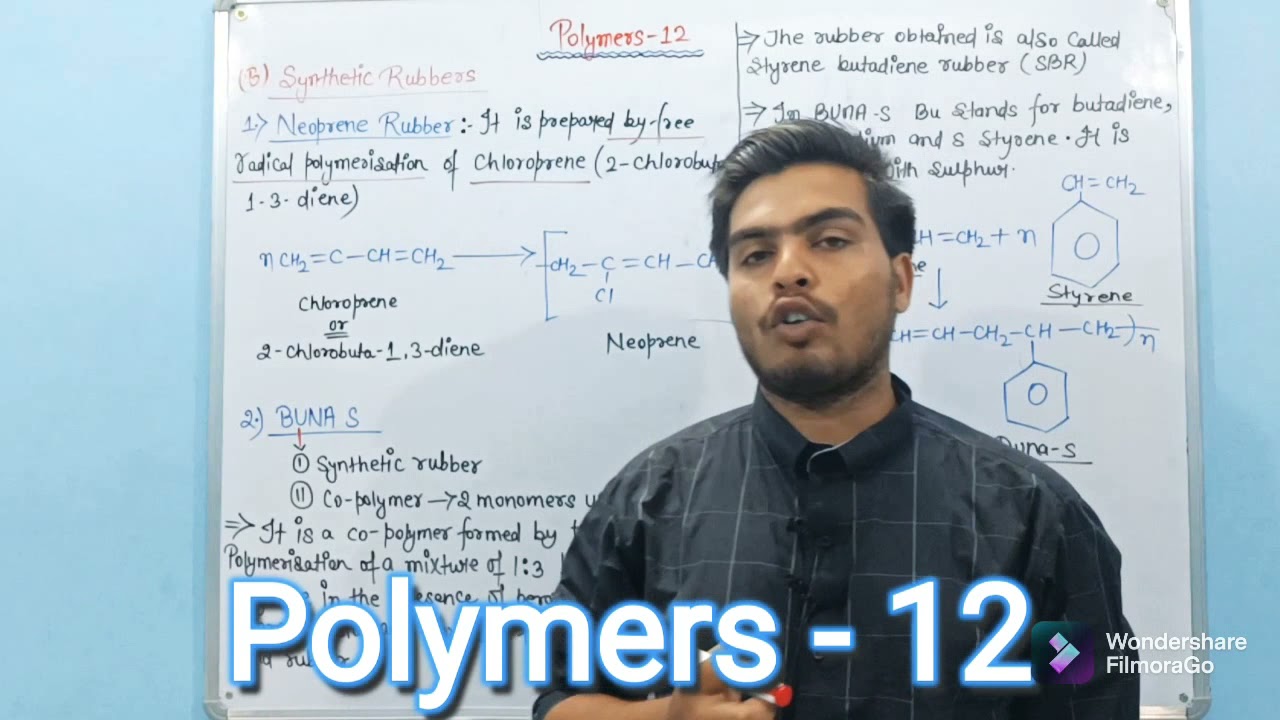
The Latin word latex just meant a liquid, but now it's always applied to this particular liquid, the sap that runs out of these trees, the Hevea brasiliensis.
There's a real romantic story about this, and how explorers stole seeds from Brazil, which was trying to keep them, and took them to England and grew them in Kew, and then sent them to southeast Asia to make rubber plantations like this.
The rubber plantations in Brazil failed because once you put the trees all close together, so that you can harvest them efficiently, rather than sending slaves out into the Amazon to find a tree here and a tree there, then it turned out they got a disease that killed all the ones down in South America.
Henry Ford had a real disaster with that.
Anyhow, you get that sap, and we showed you the sap last time, and we made a rubber ball with it like this.
Now, that stuff was called by the Indians, caoutchouc, and in fact that's the name for rubber in French.
So people tried to find a use for it in the west, you know the natives made balls, they made galoshes, you know you put your foot down in latex and let it dry, and then you've got a rubber boot.
There were lots of things, but it was difficult to work with.
Thomas Hancock in England developed a thing called a "masticator" to try to chew it up to make it so you could make different things with it.
Charles Macintosh in Scotland in 1823 sandwiched the rubber between cloth layers to make waterproofs, you know that's what you call a waterproof jacket in Britain is a Macintosh.
The reason you had to sandwich it, was because the stuff is really sticky.
I had a piece I was going to bring that I made last time, and I forgot to, but it's really sticky stuff.
So, that's not so good.
It gets really gooey in the heat, and it's brittle in the cold, so there's a fairly narrow temperature range where it's useful.
Until Charles Goodyear in 1839 figured out the process of vulcanization, which made this stuff useful.
This is his own description from his autobiography in 1855 of the discovery of vulcanization.
He actually, he was really nuts about rubber.
Incidentally, the word rubber was coined by Priestley, the guy who discovered oxygen.
You know why?
Because you use it for an eraser to rub out pencil marks, so "rubber."
Anyhow, Goodyear really loved rubber.
In this book, he printed several copies on paper, but other copies he printed on rubber, which is now all stuck together and you can't open any of the pages.
Anyhow, in describing his discovery, he said "he," that is himself, speaking in the third person here. "He was surprised to find that the specimen, being carelessly brought into contact with a hot stove, charred like leather." He was trying to figure some way to make it not be sticky, so he thought you could put a powder on it to keep it from being sticky.
The powder he was trying was sulfur, but he was in Woburn, Mass, when he was doing this, and he dropped it on a hot stove, and it charred, whereas usually it melted.
This surprised him, so he got his friends and relations.
It says, "He endeavoured to call the attention of his brother, as well as some other individuals who were present, and who were acquainted with the manufacturer of gum elastic, to this effect, as remarkable, and unlike any before known, since gum elastic always melted when exposed to a high degree of heat.
The occurrence did not at the time seem to them to be worthy of notice; it was considered as one of the frequent appeals that he was in the habit of making, in behalf of some new experiment." So, they're tired of all his inventions.
But, he showed it to Benjamin Silliman at Yale.
And Silliman wrote, "Having seen experiments made, and also performed them myself, with the India rubber prepared by Mr. Charles Goodyear, I can state that it does not melt, but rather chars, by heat, and that it does not stiffen by cold, but retains its flexibility with cold, even when laid between cakes of ice." So this is what Goodyear, who didn't have much money, needed in terms of a serious endorsement, to go out and try to get some capital to commercialize this.
So, he got a patent, and this is the beginnings of the patent.
He says, he claims "combining said gum with sulphur and with white lead, so as to form a triple compound," the lead's not used anymore, "in combination with the forgoing, the process of exposing the india-rubber fabric, to the action of a high degree of heat." He had made a whole bunch of raincoats, sort of Macintosh style, and had put them in the closet during the summer to bring out when it got rainy again, and when he went to get them, they were just all one big gooey mass.
So this was really appealing to him, to patent this, so he could make fabric from it.
This is 1844.
Seven years later was the Crystal Palace exhibition in London, the triumph of industry in the West, in the Victorian Period.
There were these industrial displays of the best products from all over the world, and here only seven years after the patent, we find Goodyear's Vulcanite Court, where he's pushing the beauties of rubber.
You see, there's a desk, and that desk is made of rubber, and it still exists, it's in a museum up in Waterbury.
He made everything out of rubber, you can't believe all the things he made out of rubber.
He proposed making bills for currency out of rubber, so that you could wash them without destroying them.
A lot of these things didn't catch on.
Anyhow, latex is this polymer.
What do you do when you heat it with sulfur?
Well, you have several chains next to one another, and no one knows exactly how it works.
But, somehow it joins adjacent chains with sulfur to make cross-links between these polymer chains.
Probably there are radical addition reactions to double bonds, radical allylic substitutions, so you get maybe this allylic radical, which attacks the sulfur, and then that adds to the other double bond, something like this.
But, anyhow, it makes cross-links in the chains.
How does that affect the physical properties of the polymers?
Remember the problem is that it gets gooey when it's hot, and brittle when it's cold, which is not what you want in a coat.
We're going to study this a little bit, and we're going to follow a really important scientist who published this in 1803.
"A Description of a Property of Caoutchouc, or Indian Rubber; with some Reflections on the Cause of Elasticity of this Substance." So this was done by John Gough, who lived 1757-1825.
He was a very interesting person.
He tutored John Dalton for example, he lived up in the Lake District in England.
And Wordsworth wrote of him in this poem, "Excursion, "No floweret blooms throughout the lofty range of these rough hills, nor in the woods, that could from him conceal its birth-place; none whose figure did not live upon his touch. " "Touch" because when Gough was three years old, he had rheumatic fever and went blind.
He was a great scientist, though blind. So everything he had to do by touch, or description of someone else.
So all these studies of rubber, he did blind.
Here's the beginning of this.
He lived in Middleshaw House, near Kendal in 1802.
He said, "The substance called caoutchouc, or Indian Rubber, possesses a singular property; which, I believe has never been taken notice of in print, at least by any English Writer." So, here it goes on, and he says, "I made a piece of caoutchouc a little heavier than an equal bulk of water, the temperature of which was 45 degrees: the vessel containing the resin and water was then placed on the fire, and when the contents of it were heated to 130 degrees, the caoutchouc floated on the surface."
What does that say about the density of Caoutchouc, and the influence of heat on it?
Mary?
STUDENT: It got less dense.
PROFESSOR: Pardon me?
STUDENT: It got less dense.
PROFESSOR: It got less dense, right?
Because you know water gets less dense when you heat it up.
So, when it was cold it sank, when it was hot it floated.
So it must expand, when you heat it, more than water does.
Heating rubber makes it expand more than water.
That's the first. That's not a great surprise, that's not the important thing.
Experiment one is the important thing.
Here he says, "Hold one end of the slip, of the rubber, thus prepared, between the thumb and forefinger of each hand; bring the middle of the piece into slight contact with the edges of the lips"; because he has to do it by touch, "taking care to keep it straight all the time, but not to stretch it much beyond its natural length: after taking these preparatory steps, extend the slip suddenly; and you will immediately perceive"-- something.
We're going to repeat his thing, but I need a balloon.
Everybody take their balloon, and we'll do what Gough says to do here.
Hold it between your thumb and finger, and put it against your upper lip, and stretch it a little bit.
Now, having stretched it a little bit, stretch it as hard as you can while it's against your lip.
Do you notice anything?
Who's as sensitive as John Gough here?
What happened?
What's really interesting is, you stretch it pretty far and not much happens, but the last inch makes a difference.
You notice that?
What happened, Lauren?
STUDENT: It just got really warm.
PROFESSOR: It got really warm, not in the first part of the stretching, but at the very end of the stretching.
Is everybody on to that?
Good, so that's what he noticed, and you can read all that he said here if you want to.
Then, he tries another experiment here.
He says, "If one end of a slip of Caoutchouc be fastened to a rod of metal or wood, and a weight be fixed to the other extremity, in order to keep it in a vertical position," then what will the thong do?
So, let's try that one.
Here's a piece of caoutchouc.
We'll get it so you can see it here.
There, you can see it a little bit, but we'll need some light.
We'll put this on here.
We're going to stretch it, that's what he says to do.
I had more, when I tried this, I had more light before.
Let's see if I can do better.
I'll turn on this light, there we go, except that the thing is blocking it.
I'm getting it into focus.
So, I have lines on paper there, and you can see how much it's stretched.
Now, what he's going to do is heat it.
What does caoutchouc do when you heat it?
What's going to happen to the weight?
We see the weight just halfway down below one of those lines.
What's going to happen when I heat it?
I'll heat it with this thing.
Which way will it move?
STUDENT: It will move down.
PROFESSOR: It'll expand, right.
So, let's give it a try.
Is it going down?
Did it do anything?
It may be that it's, let me slide it out a little bit here, so that it's not rubbing against the rod, there.
What do you think?
Derek?
STUDENT: It shrivels.
PROFESSOR: What's going to happen if I cool it off?
STUDENT: It should go back.
PROFESSOR: Let's watch.
It's expanding when it cools, and it's contracting slowly when it heats.
This is weird, right?
It expands when it cools, and contracts when it heats.
We're going to have to deal with that.
Heating a tightly stretched piece of rubber makes it contract.
If stretching rubber generates heat, that's what we did here.
Let's think a second.
What's going to happen when it contracts, if we let it go back?
Well, we have several possibilities.
It could be that the heat comes from friction of the molecules rubbing by one another.
If that's so, what would happen when we let it contract?
Karl?
STUDENT: It heats either way.
PROFESSOR: It will heat either way.
On the other hand, if heat comes from some other cause, contraction may do the opposite and absorb heat.
So, what we're going to do is stretch our rubber as far as we can and go like this to get it back to room temperature, while holding it tightly, tightly stretched because remember this phenomenon happens only at the very end.
Then we're going to put it against our lip, and do that.
What do you find?
Which of these is it, one or two?
Did it get hot when it contracted, or did it get cold?
Both, did someone say?
Cold, OK.
That's pretty dramatic, isn't it?
Gough claims to having discovered this, but in fact, I discovered it.
My nephew was having a birthday, and I was blowing up balloons, and I happened to do that.
I thought, wow, that's really something.
[LAUGHTER] Then I found out I had been scooped by two centuries.
How does this work?
What the heck is going on with these polymers?
Have you been to Yale Health Center?
What do you see, if you go up in the Yale Health Center and look out toward the campus?
This is what you see, a rather questionable view from the Yale Health Center.
But, right here is something that's very interesting, and if you get up and look at it, that's the tomb of Charles Goodyear, because he was a native of New Haven, even though he discovered vulcanization in Woburn, Mass, and died in New York, a pauper incidentally.
A pauper because he got involved with lawyers. People tried, everybody and his brother tried to break his patent. So he hired Daniel Webster, who was Secretary of State, and put on the most expensive defense that ever happened of a patent, and still he lost his shirt.
He didn't know how it worked, but maybe he can find out now, because there he is, and if you go to that obelisk there, and then down just a little bit farther, you get to this guy. And that guy could tell him, probably, and conceivably, did talk to him, because this is J. Willard Gibbs who got his a Bachelor's degree at Yale in 1858, so two years before Goodyear died.
So they could have met, but I don't think they did.
Gibbs could have given him some idea about what was going on with rubber.
But, the persons who really could have done it, are over here.
Here are two gravestones that have different designs, they're both people from this Chemistry Department.
One is John Gamble Kirkwood, who was a physical chemist and a theorist about polymers.
His gravestone tells everything he did, not everything, but quite a few things, the awards he got and so on.
Next to his, is the tomb of Lars Onsager, his friend and colleague, and his tomb says, Nobel Laureate.
His wife died 15 years later, and the stone was recarved to put her name on it as well, and also to put on a footnote.
[LAUGHTER] Perhaps they're communing down there with Goodyear now, and telling him what's going on with this.
It has to do with statistical mechanics, you remember, that's what Gibbs did, because statistics is what makes rubber contract after you've stretched it.
If you have a chain all stretched out like this, there's only one way to arrange it between the two ends.
But, if you contract it, like that, you can have it that way, or that way, or that way, or that way, or that way.
There's a zillion ways to have it if it's contracted, so statistics, entropy says, it wants to have a shorter distance between the ends.
Even though it might be most stable, in terms of heat, that is, the best conformation when it's stretched out, entropy will contract it again.
If you have a whole bunch of these polymer chains, then you start to stretch them out, they're all tangled around, and as you stretch, they get more and more parallel to one another, and finally, they'll get so near, some of them will get near one another enough, to crystallize, just locally.
I mean, these aren't like diamonds, right.
But, little local units of the thing are together, and when they come together like that, they're lower in energy, so they give off heat.
So, when you stretch it, at first it doesn't make any difference, but the very last bit of the stretching causes this crystallization, and heat comes out.
There's local crystallization which contributes rigidity and releases heat.
On the other hand, if you put heat in, it will melt these crystals, and entropy will cause it to contract.
So, then it will allow statistics to make the material contract like this, and you'll go backwards.
So it's actually entropy that brings rubber back to its original shape.
Fixed, irregular cross-links between adjacent chains prevents crystallization, so it doesn't become brittle when it's cold, because it doesn't crystallize.
It also prevents it from being gooey when it's hot.
How does that happen?
The gooeyness has to do with the flowing of the molecules, but if you have something that's all tangled up like this, how can you move a molecule, if it's got a really complicated shape?
The way it happens is very interesting.
It's a process called reptation, like a reptile.
This was an idea of a French physicist who got the Nobel Prize for this kind of thing.
So, suppose you try to move the chain lengthwise, what will happen is, like a carpet, when you try to move a carpet, you make a little wiggle in it, a little hump.
Then you could move the hump along, without moving anything else, and it would go on and on all along the chain, and finally get to the other end, where it would be like that, and finally the other end could move.
So, it sort of crawls, or goes like a snake, through all this tangle of other polymers.
What does vulcanization have to do with that?
If you have cross-links between the chains, then they can't slide by one another, so you can't do reptation, so the stuff doesn't flow and become gooey when it's hot.
That's what vulcanization does, so there's no flow when hot, and it inhibits crystallization, so it's not brittle when it's cold.
There's also vulcanization that happens in the home.
As I look around, I'm not sure that any of you have practiced this, but you've heard of it, I'm sure.
Here's Robin Kelly.
I got permission to use this by talking to Robin Kelly's mother, and she tells me that Robin Kelly is now a student at Harvard Law School, this was from some years ago.
But, Robin Kelly did Irish dancing, and she wanted her hair to look like this, for Irish dancing.
So, she vulcanized it.
Hair has sulfide groups coming out, and they link to other chains, so it's cross-linked, it's vulcanized to begin with, that holds the chains next to one another in shape.
So what she did first, was reduce the disulfide cross-links by excess basic thiol.
These are the two thiols that are commonly used for that, and notice that the SH is much more acidic than hydroxide.
So if you have basic RSH, you have RS-.
So, that could do an SN2 reaction on sulfur and break that bond, and that one can attack another thiol, take its hydrogen, and then that thiolate anion can do another displacement.
So what's happened, is that we've reduced the disulfide links to make it two RSH groups.
You can do the same thing again, and again, and again, and now the chains are pliable, and can be moved past one another.
So now she puts the soft spikes in, and curls her hair up tight, and changes it shape.
Now she's got to make new cross-links again, to vulcanize it, so she's got it like this.
Now she oxidizes the thiols back to disulfide with hydrogen peroxide.
Now look at the bond dissociation energies.
The OH-OH, remember, the O-O is a very weak bond, but the S-S bond is not so weak, and S-H bond is weak, compared to O-H.
So, it's much favorable, to start on the left and go to the right.
It's favorable by 30 kilocalories per mole.
So, if she puts in peroxide, with thiol, she'll get out the new cross-links and alcohol.
So you get the new cross-links holding the chains together in the shape you want them to be. So now her hair is vulcanized, and everything's fine, and she can go Irish dancing.
Another way to hold the chains together with cross-links is to have ionic groups on them.
These ions tend to get together with counterions in clusters, so that serves as a cross-link, but it's not a permanent cross-link the way covalent bonds are.
It's possible, if you warm it, to break those, and make things flow.
This is thermoplastic. You heat the polymer, and you can reshape it, then you cool it, and then it's got the new shape.
So there's after warming, and they got malleable cross-links.
This is Father Nieuwland at Notre Dame University, who figured out how to polymerize not the thing that had methyl up here, which was the biological isoprene unit, but the one that has chloro, so that gave a new compound called neoprene, which had different properties.
They're all these different polymers that have been made, and this list of according to how much they cost, they get very expensive for fluorosilicone, how heat resistant they are, at low temperature, and the maximum temperature you can use them.
Also, how they last, oxidation, whether they're subject to weathering by ozone, how strong they are.
So, natural rubber is nice and strong, it resists abrasion and tear, it's very resilient, this is after cross-linking it, after vulcanization, but it's only fair on oxidation or ozone.
You've probably seen rubber that's been around awhile, or old telephone lines, the rubber is falling off because ozone has gotten to it.
They're others that have a variety of properties, and also an important one that's not listed here, is how they interact with oil or something like that.
Natural rubber is very bad with oil, but some of these others, like neoprene is much better.
Designing a tire for your car is a very complex thing, to mix different polymers to get exactly the properties in different parts of the tire that are necessary.
There are other ways of doing polymerization as well, for example, styrene, you could imagine these double bonds going together with a radical doing addition to that double bond.
Notice that as I drew it there, it's random which end of the styrene got attacked. But it would also be possible to imagine that it always goes head to tail, always the same way.
Why would that be advantageous, always to go this way?
Because in fact, that's what it does.
It goes just head to tail.
Why?
Why don't you do additions like this, where you add to the center and leave that radical?
Why do you want to leave this radical instead?
Amy?
STUDENT: It's secondary.
PROFESSOR: It's secondary, but much more important, it's benzylic, it's like allylic. It has the double bonds to interact with the SOMO.
For both reasons it does that, even if it were a methyl group, it would tend to do this, because it would be secondary the way Amy said.
But with phenyl, it's ever so much more so, so that's 13 kilocalories more stable, than adding the other way.
There's also the question of tacticity, which we talked on before.
You can have isotactic-- these are all head to tail, notice, the methyl group is on every other carbon.
But you can have isotactic, syndiotactic, where isotactic they're all the same, syndiotactic they alternate, and atactic is random.
That's what you get, the regiochemistry is always head to tail with the free radical, but the stereochemistry is random, so it's atactic.
But, you can get isotactic polypropylene from Ziegler-Natta catalyst, that we talked about last lecture or the lecture before and syndiotactic, remember, if use this fancy Kaminsky catalyst, that comes from one side, then the other, then one side, and then the other, and it has a mirror plane, so you change the configuration each time.
There's another question of selectivity when you have two different monomers in there, for example methyl methacrylate and styrene. So you could have block copolymers, where you have a bunch of one coming together, and then a bunch of the other one in a single chain.
Another possibility is to have them strictly alternate, A B A B A B, and you can do that. And the reason you can do it, is because of the rates of adding different radicals to the alkenes.
So, if you have that particular radical at the end of the chain, it adds to styrene faster than it adds to methyl methacrylate.
This unit here was methyl methacrylate that added to a radical there, so now it's at the end of the chain, and it would prefer by a factor of two to one to react with its own kind, pardon me, to react with styrene rather than with it's own kind.
What would you expect if you have styrene as the last radical?
Notice what's interesting, here.
I was wondering what this one was here, it's this.
Now notice it's a factor of two in the other direction.
One radical-- each radical, prefers to react with the other monomer, isn't that interesting.
That's why it goes A B A B A B. Why should that be?
This isn't surprising, because this radical is resonance- stabilized as Amy was telling us.
That's the fastest of all these reactions, and it's a good radical, so that's reasonable.
But why does this one prefer not to form the good radical, but to form what appears to be the less good radical?
Here's our radical starting, and it can add to this, to give that, and that turns out it would be something like that, and it's 20 kilocalories per mole exothermic.
If we react with the other alkene, then it gives this, which is less stable.
This one doesn't have as much allylic or benzylic stabilization that you have down here.
But, it's faster.
So it's faster to go to the higher-energy product. That's not the Hammond postulate, right?
Why?
Why is it twice as fast to go to the less stable product?
The transition state for one looks like that, the transition state for the other looks like that.
What's good about the bottom one?
There's the top one, there's the bottom one, and notice in this one the carbonyl is good at stabilizing high HOMOs.
So, you could have a resonance structure with a minus charge here, and a plus charge here.
You can't do that up here as well, this isn't specifically good at stabilizing anions.
So you could have these resonance structures here, that you can't have there.
So, the ionic resonance structure, you could say, stabilizes the transition state, or if you wanted to talk about it in terms of orbitals, you'd say that the C double bond O gives an unusually low LUMO, so that's good when the SOMO is not so low.
This special stability applies only at the transition state.
Once you've formed this bond, then you can't have a resonance structure like that.
The product is not stabilized by that kind of thing, but the transition state is, which is what makes these things turn around and go A B A B A B. OK, now I was going to go on to acetylenes, but we'll do that next time.
Up Next

10:46
Surfactants Explained: Hydrophilic & Hydrophobic Structure
@hagencalpoly6773
41.1K views•2016-02-17
83:56
Biocatalysis and Catalysis in Islatravir Synthesis | Merck Webinar
@SCIwheresciencemeetsbusiness
675 views•2020-10-08
46:07
Periodate Cleavage, Retrosynthesis & Green Chemistry
@YaleCourses
4.3K views•2012-04-05
17:31
Edible Water Bottles: A DIY Guide to Sodium Alginate Spherification
@ryan
10.5M views•2019-06-21
Related Study Plans & Knowledge Roadmaps
Structured learning paths in Chemistry
chemistry
Nuclear Chemistry: Decay, Meds & Fuel Cycle
01Introduction to Nuclear Structure and Radioactivity
02Decay Dynamics and Kinetics
03Radiation Interaction and Detection
+ 2 more learning modules
24h5 modules
Explore Roadmap
chemistry
Supramolecular Chemistry: Forces & Machines
01Foundations of Chemical Bonding and Intermolecular Forces
02Introduction to Host-Guest Chemistry
03Thermodynamics and Dynamics of Self-Assembly
+ 2 more learning modules
16h5 modules
Explore Roadmap
chemistry
Photochemistry: Excited States & Reactions
01Foundations of Light-Matter Interactions
02Molecular Orbitals and Electronic States
03Photophysical Processes and Jablonski Diagrams
+ 2 more learning modules
18h5 modules
Explore Roadmap
chemistry
Coordination Chemistry: Bonding & Properties
01Introduction to Transition Metals and Ligands
02Crystal Field Theory (CFT) and Geometry
03Magnetic Behavior and Spin States
+ 2 more learning modules
14h5 modules
Explore Roadmap