



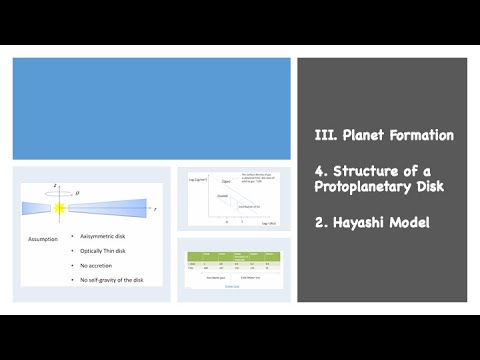
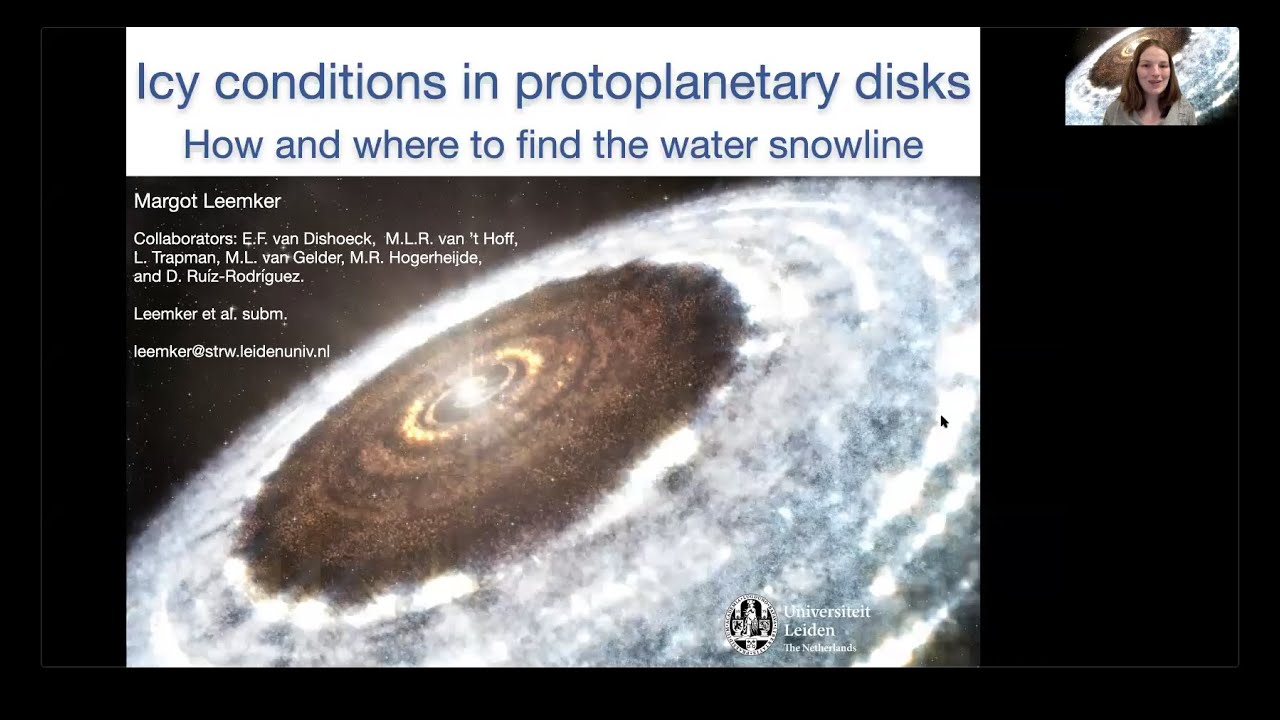













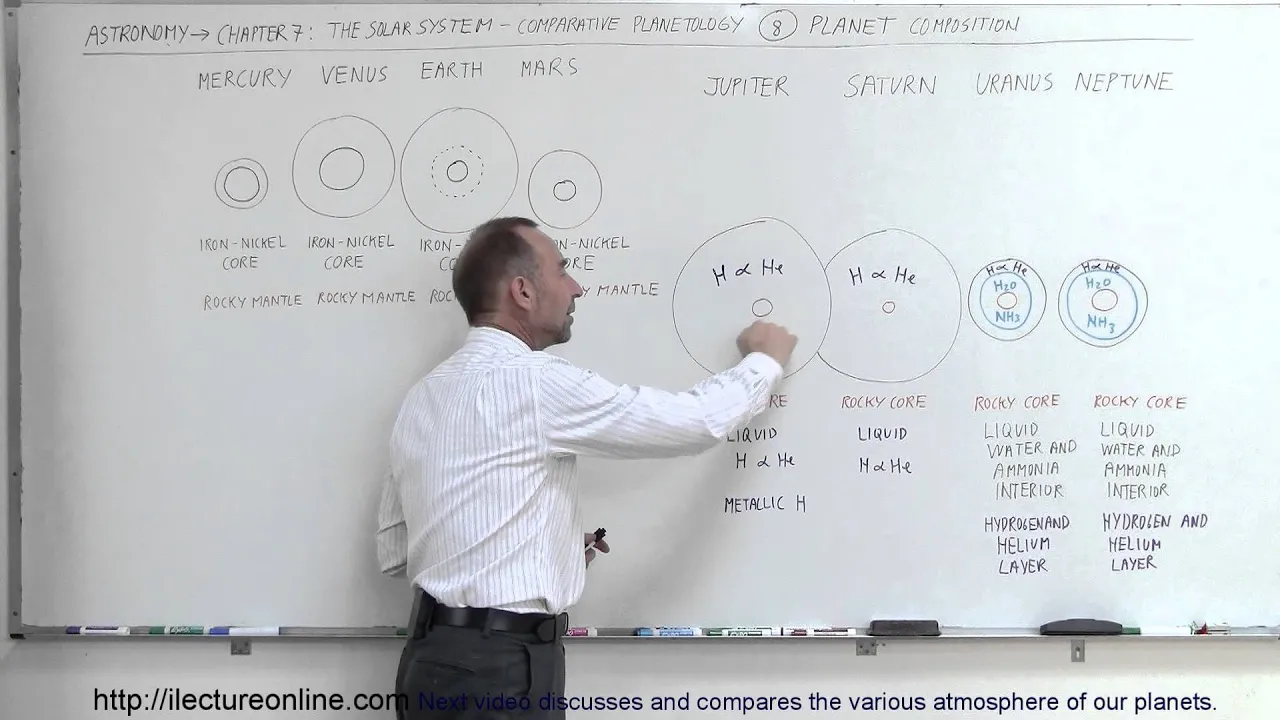


In protoplanetary disks, grain growth and evolution cause volatile sequestration, where carbon monoxide and water ice are locked into growing dust particles in the midplane, reducing their gas-phase abundances by up to an order of magnitude compared to interstellar medium values. This process explains why ALMA observations show lower-than-expected CO/H and O/H ratios in planet-forming regions, with the missing volatiles potentially being delivered to forming planets or trapped in planetesimals, which has important implications for understanding the chemical composition of giant planet atmospheres and the origins of volatile elements in planetary systems.
Exoplanet Atmospheres: Protoplanetary Disk Chemistry
Added:Understanding of protoplanetary disk formation and structure, including how gas and dust aggregate to form planets around young stars.
Basic chemical concepts of volatile elements, specifically the significance of the Carbon-to-Oxygen (C/O) ratio in planetary building blocks.
The concept of 'snowlines' (or condensation lines) in a disk, defining where different chemical species transition from gas to solid phase.
Fundamentals of astronomical spectroscopy and how scientists analyze light to detect chemical compositions of distant objects.
Exploration of atmospheric evolution processes, such as atmospheric escape, photochemistry, and planetary outgassing over geological timescales.
Retrieval analysis techniques using James Webb Space Telescope (JWST) data to model and interpret actual exoplanet transmission spectra.
The study of astrobiology and biosignatures, specifically how to distinguish abiotic chemical baselines from potential signs of biological activity.
Comparative planetology, analyzing how the chemical compositions of our own Solar System's giant planets relate to their formation and migration history.
2.3K views46likes1:06:26Original Release: 2017-12-14
[Applause] [Music] [Applause] [Music] [Applause] [Music] welcome to this week's CF a colloquium it is my pleasure to introduce my one-time mentor and present-day friend and collaborator ted bergen to the CFA so Ted did his PhD fairly locally at UMass and then spent the next eight years here as an SEO astronomer and astrophysicist since 2003 he has been at the University of Michigan and since three years ago the chair of the astronomy department there so you will hear from the talk Ted is very interested in the chemistry that governs different aspects of planet formation he has been a leader in developing our understanding of the chemistry of star formation and plant formation for a couple of decades now so I'm very curious to see his latest results here in addition to being very interested of the scientific topic Ted spends quite a lot of time thinking about questions of diversity and inclusivity and is happy to also take questions on those topics aftertouch but for now Ted please get started thank you very much Karen it's a true pleasure to be here and such a wonderful place so before I get started I want to thank my sponsors NASA and NSF and Europe the United States and Japan for building this awesomely wonderful instrument that is going to help us make some strides to understanding how planets are born and of course I have to thank the people who actually did the work so I want to highlight you'll see the work of Koko Jiang my current postdoc is a Cleves who's here Cambra Schwartz my graduate student she was here on Monday for a job talk rich Teague current postdoc Sebastian criked he's a postdoc at the University of Chicago that I'm working with and my former postdoc fusion Duke and then list of collaborators including these wonderful Souls here now we want to think about you know planets and plant information of course we we start here it's some dense cloud or a filament that collapses and we make a protostar such as this famous object here that's HL tau it's about a hundred thousand three hundred thousand year old protostar that we now know thanks to Alma has a disk embedded in all of this insanity that's up here and then the the gaseous disk dissipates or I'm sorry the envelope dissipates and you're left with a just a plain disk system and this is c2h emission in TW Hydra that's the the nearest planet forming disk at a sixty as parsecs or so and you can see it's looks really you actually Terry that's diem tau that's 140 parsecs this beautiful ring system and then you make a neat little planetary system and when I came across this I don't know maybe everybody's seen this but I was like this is so awesome right you can see a planetary system in motion with your own eyes and so what we want to do is to understand how the the composition at birth might in any way relate to the the composition of an exoplanet and its atmosphere particularly giant planet atmospheres but uh but I will talk about treasure wolves at the end and if we can make such a link we could perhaps learn something about how planets are born that was and we might also understand something about the the planet formation process itself right and how chemistry might be a play a role and you know getting putting the nod to Tresor Worlds we're very familiar with the term habitable zone right which sort of posits whether water well the zone where water if it's present would on the surface would be induce 'iv to life perhaps what we really would like to know is is water there right and are other chemicals that are needed for life present as well and and you know we could think of that as expanded term is sort of our planets born chemically habitable and that's a really complicated question that's going to take a long time to answer but Alma will have some role to play in that ultimately so there there is indications in our own solar system about how the chemical composition bares information on history and so here's my planetary Zoo with some you know beautiful pictures from NASA and NOAA and here's mercury mercury has a higher iron content than the rest of the trustor walls and that has to be due to some something that was happening closer to the star that iron rich silicates were able to survive and less iron rich silicates were present further out at least that's an idea venus is enriched in neon and argon why we don't know and the best guess is it's followed a comet and you know we can always say that that might be the case maybe it did maybe it didn't but that's information that we have to figure out and of course the earth and its water is enriched in deuterium which we have used to trace the trail of where water came from in our planet since we think we think that the planet was born without water and it came from further out in the solar system Mars has differences in the argon isotopes which the maven satellite used to explore the actual loss processes of the Martian atmosphere and Jupiter and Saturn are super solar in Carvin why is that well we'll have to think about that and Uranus and Neptune are well known to you know be ice giants right so they have higher metallicity and we've always posited that they form further out in the solar system where there was a higher content of carbon and nitrogen and the ices and they had a smaller envelope of hydrogen so so there's information in the chemistry so can we in some way draw links between planetary compositions today that we might retrieve from exoplanets to chemistry at birth and this is just a sample of images from the Michigan and CFA grew actually and you can see these are all AMA images of various planet-forming disks there's c2h in two systems this is charlie cheese and 2h + work this is Karen's Karen Robards D Co plus and my students cambers forces CA t know and this is jane hong a student here's H 13 C n so we're seeing beautiful beautiful images of discs and if you look you know there's all this structure and that structure is information what that information is we're still trying to figure out but it actually is telling you that chemistry is active and ongoing during these phases these are million-year-old discs GW Hydra maybe about a 10 million year old disk but chemistry is ongoing and this is the stage where planet formation is happening where these things are being implanted into Isis that may then make it into Kuiper belt objects the cores of terrestrial planets the cores of Jupiter's and in the gas four gas giants so how how can we search for links so if you look at an exoplanet atmosphere the the the chemistry is in chemical equilibrium and what that means is it doesn't matter what formed something was supplied in if I supplied all the carbon to Jupiter in organics if you are at a certain pressure and temperature it would just go to either CO or methane so I'll just highlight so this is a pressure and temperature plot this is the transition for co2 methane so if I have a giant planet that has an atmosphere so this is a planet that is warm you might be here and all the carbon would be in CO and it doesn't matter what it came in it would all be in CO so the history is lost so that's one important point okay here's stupider down here it's cold so all the carbon is in methane and you can make a same plot here's you know the amount and - and ammonia and all the oxygen is in water alright so what this means if is if we want to search for signatures of origins I can't go and look for exotic molecules and play games I have to try and get it bulk composition the bulk content of carbon or oxygen or nitrogen now nitrogen is a little bit harder because it's actually difficult to retrieve an extra planetary atmosphere and indeed anywhere in interstellar space because it's not very active spectroscopically so we focus a lot on carbon and oxygen and of course for the solar system one can play games with these trace species now what we're gonna assume here for the rest of the talk is at base level and there are complications that I'll talk about briefly a little bit later is that we think for a giant planet it forms from the core accretion and the core forms from the solids the ices and the envelope forms from whatever is left over in the gas and at birth at least reflects the composition of the gas at the location of its birth or wherever it accreted its most of its hydrogen envelope all right so if we want to think about bulk composition carriers all right so there's refractories things that we know are in the solid so the silicates are an example the refractories for oxygen and i would have the PAHs or aliphatic hydrocarbons carry some fraction of interstellar carbon in refractories maybe it's 20% or so and then there's the volatile the things that are more likely to be in the gas so these will form the cores of terrestrial planets or terrestrial planets themselves and the cores of Jovian worlds and the volatiles will be in the atmospheres alright and if we want to think about carbon this is a picture of actually pluto showing the the location of CO and water which I thought was a neat little way to show it so for carbon the main carriers would be co and co2 and perhaps methane but usually oxygens around so C over co2 and for oxygen it's the carbon carrier co and co2 and and water so this is what we can observe spectroscopically in the gas phase with observatories such as Alma not co2 that's going to be the James Webb Space Telescope now we have had some attempts at trying trying to draw connective tissues between giant planet atmospheres and the initial composition and it was a very nice paper led by Karen Oberg along with roots Murray clay and myself that talked about the seto ratio across snow lines so what you see a plot here this is the sublimation temperature versus pressure alright and so these are binding energies that you would measure for various ices of different forms so here's nitrogen co so water is more tightly bound than a CO is alright and ammonia is in between and ce o--'s in between so what does this mean this tells you the sublimation temperature has a pressure dependence and what this is this is a pressure temperature line for one model of a disc for a sort of a realization of what it might be alright so that means you know here the n2 and Co would condense somewhere out at 30 K would be their vapor to ice transition or 30 au and water here as a sublimation temperature of 200 as opposed to Co of 20 and it would condense and have its sublimation front somewhere closer to the star and so this is a nice plot made by Elsa this is radius and so you'd have the water snow line closer to the star then co2 methane CO and so on so what does this mean and how these chemical gradients then might get reflected in a giant planet it's a simple idea which is really neat because it is just that it's simple so here is the Sedo ratio versus radius and this is the co snow line right here okay so here I have the co in the gas but water and co2 are in the solids so that means if I form a planet there all of the carbon and the oxygen is carried by this co ergo it's Sedo ratio would be unity and then if I just walk in a little bit of here's the co2 snow line things would change and if I get here here's the water snow line things almost approach what your expectation is for elemental abundances that are seen in the star now they don't completely because there's some oxygen and refractories and some carbon and refractories alright so the CDO ratio of the star would be right here now this theory also you know has not only see duration has expectations just generic expectations for what the absolute elemental abundances would be relative to the elemental abundances that are available in the system as traced by the star so this is the the cjh ratio that we're assuming in this very simple model divided by the carbon content of the star so if you're inside the co2 snow along here all of the carbon has been returned to the gas and you come close to unity again you don't fully approach unity because some carbon is assumed to be refract in some refractory form in this model but if you go beyond the co2 snow line some of the carbon the co2 is frozen out and the C to H ratio would be less than stellar so that's a prediction all right and here's over H which is over here again relative to stellar and if you're beyond the water snow line you have an expectation that there's going to be very little oxygen in the gas and it's mostly carried by co2 and co the carbon carriers so if I was going to think about this the site the suggestion is is that inside a snow line of a given volatile the maltose should return to their normal abundances and we'll have to think a little bit about what normal means in this expectation that is you have things as ice and then interior to that you know ice is coding these solids and interior to the snow line everything evaporates and comes back all right and then there are specific predictions for what you might expect for carbon and oxygen all right so what is normal and I want to focus on Co because that's the one that we can very readily access with Alma and where I'll spend the first part of this talk and then I'll talk a little bit about water so this is the plot of co abundance relative to h2 and these are the different way it has been determined so this actually right here this is all the work that Charlie Ladda has been doing for about the past 15 years and this was the work that Charlie and I did on Barnard 68 when I was here and this is just from interstellar medium estimates of the carbon content and this is a direct measurement now a lot of information here a lot of things going on but actually not really if you look at that that plot that's not a log axis that's absolutely the seal abundance that we're estimating by all these different techniques is varying by about a factor of two you know an astronomy we're done right we we have achieved success right so we know the co abundance right our expectation is that it would be about 2 by 10 to the minus 4 and there might be some of this in co2 ice and that's about 30 to 50 percent of the CO and we can figure out that number okay so that that sets our expectation for what normal is so I'm going to talk about this talk in this talk is how can we trace the bulk abundance and is the gas substellar super stellar when and where and that sets a prediction for what you know would be implanted in the gas giant atmospheres when they're born and then concurrently if I'm measuring C over H and over H then I could get easily the co veracious I'll talk about that and I don't want to leave terrestrial Worlds alone because they're near and dear to my heart and so we have to lend a little bit of talking about how we might try to think about terrestrial worlds so there are challenges and I want to acknowledge them you know an exoplanet atmospheres I'm not an expert in this but when I go to conferences and listen to them argue against the argue with each other there they're different people might have different retrievals and different estimated abundances and eventually you know as we get hopefully James Webb and better data things will converge and that's that's that's good but it's a challenge and and for the actual giant planet itself there might be mixing between the core material and the envelope which will ruin our assumption right that the the envelope reflects the composition at birth and it could swallow a lot of comets for example and of course the planet could move and a big one and this is what I'll talk about first is four disks is how can we trace molecular hydrogen that's always been a problem now this is our generic expectation right I talked about the radial structure here right so I have freeze-out or counting and everything's as ice and that's vapor interior to that there also is at some point a vertical snow line as well so there's a point where the vertical temperature gradient in this direction hot here cold here has a vertical snow line if you want to think about it that way so this is our expectation and this is was beautifully real are confirmed by some nice work by Catherine Rosenfeld right here okay so how can we get at both compositions so we need to infer the h2 mass if I can observe my co in a disk alright and there's three ways we can get at this one is using thermal emission from dust grains we think it's optically thin you measure a dust mask and then you get a guess you assume a gas the dust ratio and voila you get a gas mask another way is you observe Co and you estimate the mass of CO and you assume a co abundance and I just posited to you that we actually know what abundance to assume and the third is I'll talk a little bit a little bit more about is using hydrogen deuteride to tell about the mass now all of these methods as I'll outline to you have big warts and we're trying to work through them and trying to understand things so there's new methods there's people are using radial drift which depends the dust actually when it grows to certain sizes likes to drift to pressure Maxima so it drifts inward the pressure Maxima is essentially very close to the star right so the dust will drift inwards and that depends upon the gas pressure so you can actually use the drift and what we are measure about drift to understand something about the mass and also the flaring of the disk may tell you something about the mass as well so we're trying to come at it through creative ways because this is a tough problem so let's talk about dust first so what you could do here is you take an observed intensity versus radius in a disk of dust thermal continued emission and and that is equal to the blackbody at some and whatever the dust temperature and one minus e to the minus tau where of course tau is the dust surface density times some dust opacity which encapsulates all of our assumptions about the dust optical properties and if the dust is optically thin which it is at submillimetre libyans wavelengths are so we think sometimes this just comes down to this number or this equation this form and so this is dust masses estimated for discs and tarus from the williamson Cieza review and what you'll observe here is these are the you know times 100 so this is the estimated gas mass that is determined by the system now what is the problem the problem is that the dust is a moving target dust are growing you're eventually making planets and planetesimals and most of the mass is carried by the the larger particles and so this is partially encapsulated by this very informative plot from peru strain this is that magical dust opacity factor versus wavelength and I'm going to make it a little bit easier to understand so this is assuming a dust grain size distribution and it has a maximum size of centimeter or 100 centimeters so you can observe that these two things are not the same when you grow to larger sizes you're essentially missing mass and we don't know that a hundred centimeter sized particles are there in fact in the solar system we know we know that many kilometer size bodies were present a hundred thousand years after what we judges the birth of the solar system a hundred thousand about three hundred thousand years so big things were present early and if that's happening in all of our disks already then we don't know the dust mass ergo we don't know the gas mass and this is not a surprise to practice in the in the field everybody knows this this is this I'm not saying anything on so what about Co so there have been a bunch of really great surveys of Co done by AMA so this is the Lupus survey of 13 conc 18 0.3 arcsecond resolution and 50 AO this era this is actually the thermal dust continued emission from all the discs that they surveyed and there was a similar survey in chameleon and what they do is they observe this dust and they make assumptions about the dust opacity determine a dust mass and then you observe the co and you estimate you get the co mass and you use the co abundance and voila I have a gas mask from Co and I have a gas mask from dust and I can compare the two and what you find is this is the disc gas mass all right this is all the gas masses that have been estimated from Co from this survey in the same result is seen from all the other surveys and this is the what's the so-called minimum mass solar nebula that's the gas mass that's needed to make the planets that are observed in our solar system but most interestingly that doesn't matter this is the mass of Jupiter and you see that most discs appear to essentially have no gas mass at all they can't even make a Jupiter alright and some of these are down at like an earth mass actually so most discs appear to have less than one Jupiter of gas mass and yet they're present now where could this break down well one thing is what we're doing here is they're assuming an intensity right you're observing your Co intensity that's proportional to its surface density times some function of the temperature this function of the temperature actually is pretty well understood and easy so then you take the co surface density that you're measuring and you divide it by its c abundance so what might be happening here there's two possibilities either nearly every disk has lost most of its h2 massed within a million years or the co abundance calibration is and the CEO is going somewhere else and it's abundance is less so it's whatever is happening is incredibly fundamental all right there's the disks are telling you something that either there's no h2 there or something's happening to Co and it's not behaving in the way that we expect it to and I think it's the latter all right and the way I think that is that I was very lucky to go on a fishing expedition with the Herschel Space Observatory to try detect hydrogen deuteride even my collaborators in the proposal didn't think it could be done and I had to argue quite a lot which made it a better proposal and so gratefully we were able to get it through and we luckily detected the hydrogen Doutor line very nicely towards TW Hydra and also weekly towards two other systems now HD is a ch2 with a dipole so that's great because a ch2 doesn't have a dipole which makes it hard to why it's hard to observe we know the DTH ratio of hydrogen that was set in Big Bang and we can measure this things like fuse and HST has done that so what do we have we have an intensity that I measure that's equal to the mass and HD divided by some function of temperature I know the DTH ratio that actually is pretty certain the problem comes in in the temperature this function of the temperature is an e to the minus 128 over T so if I were to assume the temperature were 40 K or 20 K I get a vastly different result all right so like I said everything has a wart this nothing is easy but this is astronomy right so I have to come at temperature from other means and we can do that with Alma so C over H so we did that with Alma this is work led by Canberra Schwartz my student this is 13 co 3 - 2 C 1803 - - so these are lesser abundant Co isotopologues and this is the one that we think is op quickly thin and actually traces the the mass of the gas all right and then we also observe two different transitions this is the 3:2 to lower energy and the 6 to 5 higher energy and this one actually has the same upper state energy as HD was sort of giving us an idea of where the HD emission might be coming from and it pretty clearly must be coming from inside you know 20-ish au or so so this resolution the observations here one arcsecond is 25 au this is about point for our second resolution observations what do we see we see a bull's eye so strong emission interior to about 30 au and that's a radius and weak distributed emission all right and if we take this and use our HD to give us how much h2 is present so we have we can get temperature from this these observations speak why because 13 Co was optically thick and it's telling us temperature so we measure temperature directly from the data and can use that and plug that in and get the HD mass and we find the Co abundance is reduced by nearly two orders of magnitude we think it should be 10 to the minus 4 it's not so we then we're very lucky that we were able to get a nama observation of even lesser abundant isotope a log of C 18 of CO that is 13 C 18 oh this one right here so what this is this is if I'm over here observing from this direction this is height in the disk and each of these Gaussian represents the essential the radius where we think a various molecule will be emitting from so CO is optically thick it is emitting from the very high layers of the disc 13 Co is lesser abundant by about one over seventy years I so it's down here C 80 now is down by you know 1 over 500 compared to 12 Co so submitting right here and if something were optically thin it would be a Gaussian centered around 0 and we were surprised that actually CA Tino is optically thick at our detection of 13 is very nicely probing the midplane and why is the midplane important of course the midplane is where planets are being born if you're going to measure the carbon content this is where you want to be right so you want to measure the carbon content in the gas where planets are being born if you were going to measure it from something like thirteen co well one is optically thick you can't get column that's one but two it's not tracing where the planets are being born so this is our wonderful detection it's just a little wimpy bullseye but I was pretty excited this little bullseye is really good this is the TW Hydra again this is the closest star system this is the what the dust looks like just a you know strong emission in the center really do a falling off this is the CA T no this is the beautiful Keplerian rotation that we see in this system and this is published by Coco Jang my postdoc so this is 13 C 80 now and there's the the Keplerian motion so what do we do well we have our intensity of 13 C 8 you know which is equal to some blackbody at a temperature 1 minus e to the Tao so that's Talent a 13 C 18 o somehow that got moved and then the dust has to be included in this here so I can get my temperature because CNO is optically thick so I know this term here all right 13 C 80 now is optically thin all right so I can estimate this quantity R which is the 13 C 18 opacity that's bearing information of column and this is constrained from about 20 au to about 5 and you are resolution is about 15 au but the hive because of capillary and rotation the high velocity wing emission is coming from radii that are interior to 20 au and we can use the rotation of the disk actually to probe at super higher spatial resolution than we're actually able to observe and so we're able to constrain properties into about 5 au which is incredibly exciting because we're in the mid plane we're entering the zone where giant giant planets are born and so that's also pretty exciting the dust has to be accounted for and there's a beautiful resolved map of dust emission from Shawn Andrews which I hope everybody's seen because it's gorgeous and of course we have hydrogen deuteride so this is our data this is our model this is the residual data model residual and what do we find what we find is this so I am measuring a co abundance because I have HD here and this is versus time let me just talk about this first this is TW Hydra I am measuring a co abundance that is interior to the co snowline in our model we are actually able to constrain the co small line in the system it's a 21 au and all the 13 co2 emission is coming from interior to that so I am measuring the co abundance inside the co snow line where I expect it to be 10 to the minus 4 everything should come back but it doesn't all right so this is versus time so TW hiders older this is DM tau this is another system where we have an upper limit on 13 C 18 oh and you can use C 18 Oh wings which are optically thin to set a range here so it's down in abundance we expect it to be about 2 by 10 the minus 4 it's somewhere you know maybe 10 to minus 5 down by an order of magnitude again to systems where we have hints that we're getting incomplete return and now if I take these surveys this is the Lupus and chameleon surveys where instead of looking at it in terms of gas mass is if I assumed that is to see you abundance that's varying in the system and it's not the gas mass you would see that the range of co abundances sort of encapsulates what we're seeing where we're trying to actually measure the Co up on it so I've only observed two systems but because we have these surveys it's suggestive that we're seeing a systemic effect okay so the CEO abundance in the snow line is reduced where's the carbon well it could be in C 2 or C 1 but these are observed not in either of those we also detected hydrocarbons it's not in those so there's only two possibilities that the co has been chemically processed and placed in a less volatile form so if I for example took all my co and converted it to CO 2 it would be interior to the co snowline and it would just stay on the ice of co2 and I'd have to get interior to the co2 snow line to see if it came back and they could be in methanol it could be in a bunch of different things another possibility is that it's locked inside large planetesimals that don't care what temperature it is it's just going to sit there corporate bout objects so they're too big dissembling so there's two possibilities well let's go to oxygen and see if we can understand anything about what's going on in the system from oxygen so here it's harder I don't have an alma that can get me a resolved image of water vapor in a disk we have to go to space and we have to go to space and and be a little bit more clever than that so this is the TWU Hydra disk again yet again this is shown CW Hydra space on this is the scattered light disk all right all right fine now water has been observed in this disk with Spitzer so what you're observing here all these little bumps and Wiggles that's water vapor in this system all right so waters there these are our water vapor that have transitions that are tracing energies of a thousand K maybe 500 K so this is hot water and it has to be originating from somewhere closer to the star remember the water sublimation temperature is about 200 250 K so this is coming from somewhere interior to any putative water snow line well we can go to Herschel and with Herschel you can detect transitions that are coming from you know 200k 300k warm water and this was worked on by Koko Jiang for for her thesis and in addition Herschel was able to detect the ground state transitions of water vapor tracing very cold gas 30 K 40 K and this is both spin forms ortho and para water so what I can do is since I can't resolve the emission with a nama instead I can take the hot water the warm water and the cold water and a model and ask well what distribution does these observations imply for the water vapor so the way we address that is we use a thermal chemical model written by fusion do my postdoc and so we take a model of the dust distribution that gives us the dust density versus radial distance and height assume a gas the dust ratio so that gives us the gas density I then take an observed radiation field of the ultraviolet from the ultraviolet radiation which we actually it was work that ice we have the best constraints from work that I started here with Maria Calvin when she was here and before we stole her and brought her to Michigan and so we know the UV radiation field and we can then propagate our UV within the system using both observe having both continuum and the lyman-alpha photons also a very important another story we also do the x-ray radiation transfer and then we do the chemistry the thermal physics we have HD hydrostatic equilibrium we predict our emission lines okay so it's it has you know all the physics that we can think of to that is necessary to match these observations so this is what the water vapor abundance looks like so this is radial height versus distance and we run two models I'll talk about that one is under pleated and another is where something's happening to oxygen as well so what's going on here so this is obviously green as sort of moderate abundance and red which is yellow was sort of intermedia abundance you see closer to the stars so very close to star you get evaporation ices are evaporating and the abundance can raise up to be higher nominally the water abundance could be up here at 10 to the minus 4 but in this model the photons are strong enough that they actually dissociate water vapor and don't allow it to get such high values that's if you had full return of water right so that's close the star you have hot water further from the star this is the zone where water ice is present so there's no water in the gas but then there's this huge green zone all right which is interesting so what is that well Karen Oberg and others have done laboratory work that have shown that if you shine UV light on water ice coated substrates that about one in every thousand UV photons will pop a water or an O H molecule into the gas called photo desorption and if we take the rates that are measured in the lab and stick that in our models we have the prediction that this layer should be present I'm sorry okay so what we do is we take that model that model fits a whole host of other observational data in the system and this is the model divided by the observed flux for this is an oxygen 163 micron line this is the water ground state transition another water ground state transition and yet another water ground state transition so our predictions are that well this is water coming actually now from beyond the snow line this is the cold water we predict that the line should be much more intense than observed so what's going on is this layer here this photo desorption layer is apparently according the observations not present okay so if we remove that layer and how can we do that okay we have to remove the water ice from layers that are sensitive to UV okay oh that's an interesting statement so this is what it looks like in the model all right and then what happens is I can match the data much better I still have a problem with this line so we're still not getting the full picture all right now I'll explain what I think is going on in a minute but what I want to get at is we've looked at two different volatile now carbon as from CO and water which is tracing oxygen and both of them we have a problem all right things do not match our expectations so for water TW Hyder is not alone we surveyed 13 systems in these cold water lines and we have the exact same result water vapor is not present in the gas the photos or person is not happening and so that means water is not water ice is not seeing UV photons okay fine so what's going on well I think the simplest solution is that the ice mass follows the dust mass all right in discs the dust grains grow and as they grow to larger sizes they sink to the midplane and as they grow to even larger sizes they drift inwards so the ice mass is actually in the big particles millimeter centimeter maybe even bigger things and that's concentrated in the mid plane and in the inner disk and how do we know this well because we observe it so this is once I think it's called Gomez's hamburgers something like that this is the VLT this is a disk you're seeing this surface the scattered light surface of the disk this dark line is the actual disc itself and this is the other part of the top this is AMA observations of the millimeter dust okay in the contours and these are all my observations of 12c oh so twelve CEO is tracing the small dust particles which are all the way out here and the dust mass is concentrated radially and vertically so let's follow that through let's if grains are growing right and they're ice coated as they're growing then the ISIS should naively right follow the dust okay so this actually has been modeled somewhat because it's not just grain growth you actually also have to have diffusive transport at some level that is the surface has to communicate it slightly with deeper layers and it's called the coldfinger effect this is uh I was coined by Rowan Meyer Inc in 2009 models by Ross and Johansson where you have these are water vapor molecules in red these are box models so this is height in the disk at some radius these are water molecules in red and these are the grains and as time goes on these are in units of rotation times the grains grow and as you see as they grow the water molecules start to disappear okay I can do better than that Sebastian Krait this postdoc at University of Chicago has done the full calculation that is we've taken coagulation and what we know about coagulation we've put in dust dynamics including things moving around we include condensation and sublimation and we solve for vapor diffusion so we have a box here and you know you let everything happen and see what happens to the dust and gas as the dust is growing so here our model so just concentrate on here and here so these are this is a model with no grain evolution so I have grains these are one radius in the disk a temperature of 140 K with a little bit of what we call it's the Alpha parameter which is such occurrence and I have encapsulation of all we don't know about turbulence so this is sort of weak weekly turbulent discs that means there's some diffusive transport okay things below this height are ice coated and things below above this height are not ice coated and if I don't like grains grow this is grain size nothing happens here right and if I observe this is my water vapor alright and this just stays constant so now we're gonna throw in Grain evolution so grains grow okay so let's concentrate over here it'll loop back in a minute you'll observe we started out with grains that were small and all the way up here and as they grow they sink to the mid plane and you can see that they're ice coated all right fine that makes sense ice coated grains ice is more stickier things will grow let's look at the gas however this is the gas and the surface layers we started up here all right but because of diffusive transport more gas than expected actually partakes in this evolution and we start stealing volatile from the surface and putting more volatile than we expect in the ices as they're growing alright so this model itself would essentially remove any water that's on small co2 ice coated grains from the upper layers it'll suck it all in the mid plane and millimeter sized particles where they don't see much UV so that takes care of water I think I understand what's going on with water I don't know if anybody agrees with me but that's what I think Co is a lot harder alright so water has the sublimation temperature of 200k you don't expect water to be present over much of the dis mass CO has a sublimation temperature of maybe 30 K all right it's going to be present in the gas over much a wider volume and so it's harder for it to partake in that evolution and be stolen alright so we call it volatile sequestration but it can actually work because a bunch of things happen well this is a disk model where I assume that there's no settling and drift of the dust grains so it's all small grains uniformly distributed you get this nice uniform distribution all right and here's my UV radiation field so UV this is in so this is height and radius that's gas density this is height radius and this is you the UV radiation parametrize and units of the UV the inner solar radiation field don't worry about what that number is it just makes sense there's more UV photons on the surface then there isn't a mid plane right well now I'm gonna let the grains grow and I'm gonna settle them to the mid plane put most of the space in the mid plane and drifted inwards and what happens well here's my UV all of a sudden before I had very little UV 10 to the minus 3 and all of a sudden even in the mid plane out here I have you know 10 ish maybe one so let's think about it I have Co in this gas alright the oxygens gone it says water ice so if Co is sitting in the gas its h2 a sea of h2 and I have photons so if you're gonna be a recipe Baker I have ionization I have Co I have h2 this should be a hydrocarbon factory all right you should be producing hydrocarbons in this gas with strong event and indeed we do all right this is TW Hydra this is DM tau and we see this beautiful hydrocarbon ring is a c2 H this is C 3 H 2 and here's DM towel there's an outer ring and then there's even an inner ring alright and we think this is coming this carbon that's making this C 2 H is coming from Co via this process that I described to you all right this can lower the co abundance by about a factor of 10 give or take and that's work that camber just did but that's not necessarily the complete story because other things can happen too now this is again a model by Sebastian Krait where he's looking at CEO in the same way we looked at water from before all right can the CEO participate in the grain evolution in any way and perhaps be stolen from emissive layers and deplete things so what we have here I'm gonna let this go I'm growing grains and they sink to the midplane that's what's shown here but the neat thing let me start it over let's just look up here this is the co abundance all right so here our CEO is frozen his ice here's my midplane CEO snowline CEO frozen is ice here cos in the gas it's sort of normal abundance everywhere as I let things go first thing that happens is CEO starts getting depleted from beyond the water snow line all right and okay I can get about an order of magnitude of the CEO is stolen and placed in the ices and what happens to that those grains that are shown here they start out here and they grow and they drift inwards and actually if you look real closely it's hard to see here there is a burst of CEO being taken from the outer disk and as it gets into the serious snow line often boom you get a huge burst of CEO for some period of time where you have a super abundance of CEO and eventually it'll deplete again okay so this is a way of elevating carbon maybe not oxygen or hydrogen or nitrogen in the inner disk in the planet form region and something that Karen and I and others have discussed but the interesting part right is now I have a mechanism right there's a way grain growth and evolution is stealing my volatiles from layers where you didn't think they should but they are and it's sticking everything in the solids so what does this mean for giant planets let's come back to where we were so this is my plot here's C over H all right well our observations actually are pretty comfortable in the systems where we have measurements inside the co snow we have a carbon-hydrogen that's less than 0.1 and an oxygen over hydrogen that's less than 0.1 why is that because the oxygen the carrier of oxygen is is co here all right what that means is any giant planet that is born at the age of these disks will start with depleted abundances in its atmosphere all right when does this happen how soon does this happen does this is this commiserate with the time scale of giant planet formation I don't know yet all right but that's that's where we are all right so so just coming back again this is the state-of-the-art right now is we think that volatiles are stealing things and the co could maybe be a co2 ice in which case when jwc launches we can ask do we see the carbon coming back from CO and co2 and we'll know that answer soon and if it doesn't then we'll look for it is it in methanol you can do that with James Webb too if it's not then we know that planetesimals are born in these systems even better if we can measure the abundance of water vapor in those upper layers our models show that those upper layers will be depleted by making things making bodies if the upper layers if we don't see water at normal abundance in the inner parts of the disc it means that small grains are not present and big things have to be taking all of the volitans let me work that through if you think that all the water follows the ice mass and that's the observed distribution of millimetre grains those millimetre grains when they go inside the water snow line they'll give you a normal water abundance they'll just completely evaporate all right but if we measure substellar abundances of water with web interior to the water snow line we will know that planetesimals are present in those system that's neat now what about terrestrial worlds they're made of the solids and I've been sticking all of the carbon in the system in to all of the solids and how does that relate to our planet well I looked into this with a bunch of geophysicist and now I'm not going to normalize the hydrogen I'm gonna normalize the silicon because silicon is what trust or worlds are made of so this is the interstellar medium half of the carbon is in some refractory form here's comet halle that appears to have yeah a lot of carbon but not actually almost it's close to the interstellar dust value less than the Sun there's some comments that are sungrazing that appear to have less carbon these are meteorites these are the carbonaceous chondrites these are the most primitive ones right but most importantly let's focus on this number here is the earth the earth received one out of 10,000 carbon atoms that was available at the location of its birth one in 10,000 and yet we're here so that's suggestive right now what does this mean from the picture that I've been talking to you about well I've been sticking carbon into things like Hallie all the way out here that stuff does not make it into our planet all right so interesting things must be happening in the terrestrial planet forming zone that is for the earth to get this little carbon all of the carbon had to be in the gas all of it or locked out here and it just never communicates never comes in and one way to do that is if you have all the carbon in the outer solar system you form Jupiter that stuff can't migrate in they can't reach one AU and so this is so just to summarize so beyond the water snow line from what we have right now and it's a limited number of systems the gas phase Co / H and / H is substellar our c / o is at least two thirds it's likely one and that's consistent with theory it's also consistent with the hydrocarbon emission giant planets that are born late we'll start with sub seller abundances of these species now sub seller abundances of oxygen have been measured in giant planets but I told you that Jupiter and Saturn have super stellar abundances so according to this theory they would have to form in that part of the disk where carbon is being supplied by drift where is the missing carbon oxygen we suggest it resides and ice is trapped in the mid plane somehow we don't see this carbon interest our worlds and the grain evolution and motions are you know a strong and I think potentially controlling effect on the chemistry now jwc as I mentioned will determine the water abundance and we can trace back and see whether it gets planetesimals we can do co and co2 in the inner disk and look for return we're gonna get better data with Alma and we'll be able to observe HD again when the Hermes instrument on Sofia is built be able to get maybe 10 more systems and play this game and then of course exoplanets are just going to continue to explode so we will get somewhere within the next five to ten years it will be very exciting time thank you [Applause] questions persons great talk Ted I have one thing I didn't play follow you had this beautiful diagram where you looked at the show the results like a syllabus we measured the masses of this based on Co and they were all fairly low like could you put a massive that's right system scaling up to seal different and so that you you will that led to the idea that perhaps you know the CEO is not in the gas phase of synthetic title and then therefore that if you correct it for that that this masses would be getting closer to what you need so my question is well maybe you suggest enough talking I missed it but don't have a control for that in the dust measurements so so solution the dust measurement giving you much higher all right I didn't show that plot because I didn't want to hit too many slides mr. tough the dust did gas ratio masked me with dusty gas administratio is that they measure from the data itself are typically close to unity maybe one to ten so the dust masks if you use the dust mask to determine a gas mass it would be consistent with the co abundances that were inferring [Music] you understand but how did they get to guess with this mission how do they get to they measure the CL abundance where they measure the co mass and they correct for the abundance they get a gas mass they measure the dust minutes and they derive the gas and dust ratio directly from the data itself and in some systems they have a gas dust ratio community and so that's either then all the mass is gone by a million years and giant planets like Jupiter have to form really really quickly and could be or there's a problem with the CL abundance and that calibration and the dust is telling you more of the true story if you remember the dust is telling you at least a minute is Right nominally unless the gas disc is going away so there's two possibilities either the volitans are going away or the gas is going away and babies both but because of HD we have hints that it's the carbon certainly that is playing part of the role in this story the volatile is going away is at least part of the role the CEO the gaseous CEO is not a good measure of the abundance of see also correcting that so not to get the doses and that kind of yes it is Ted you mention two ways to reduce the co gas abundance one is by lucky at an ice and the other is through the gas based chemical reaction right h2 and the UV but I do I infer correctly from your later slides that you feel that the sequestration and dust is far and away the more dominant way of say to the CEO you know when I get a phone ya know that's absolutely a good question you know when we run the models of the dust evolution this just naturally falls in our lap so that's sort of just suggestive I'm sorry which falls and so if you run the models of dust evolution the the dust evolution just steals volatile from all over the disk and that just is a natural effect as long as there's moderate levels of turbulence in the system and that's that's the assumption really that's the unknown the chemical method the the argument against the chemical method is partially in my mind is that water doesn't need a chemical method you know water's in water and it's clearly probably following the dust and so that makes me think that CEO is probably doing the same thing but but it could be the chemistry and I don't know the answer the second part of my question is can you learn something fundamental by observing the relative strengths of the co and co2 ice absorption features I mean oh so all of the models that try and do this and they you know it's my business right it's what I do they're very uncertain very uncertain put all the carbon you know if you're gonna do chemically the carbon readily goes to either co2 or methanol and so that's a direct prediction and so if you could observe it that would be a mission that looked at hundreds yeah I know well no it was a shameless plug I don't think anybody in this room is gonna be on that panel showdown trends with age from time to time yeah how those ages determinant power not right now sir so for young stars it's tree main sequence tracks and they're highly uncertain so the relative TW Hydra is clearly older than the other systems that it's the one thing that we all agree everything yeah everything else is younger than that so there you go that's right that's right that's right and so DM towel has an estimated age of three to five million years but when we showed this plot and Lee Hartman was in the room he's like what no way can you test any part of your model of looking at the rings of Saturn interviews I know it's a good question so the you know the in principle so alright it's actually it's a hard question this is going to say the cop what sets the composition of the satellites so clearly they formed out of a cold disc all the models of proto separate turns Saturnian discs or jovian discs that i've seen are really really hot and so they have to cool down first and so i think we have to crack that nut first and understand how the moon's form concerted what's supplying a lot of the fuel for the Rings right and then we could try and answer that question yeah so in principle something in the you know I think the biggest test is you know how carbon-rich our Kuiper belt bodies and boy that's amazing you want to figure out right you know you only take us 200 years and we have to dig down you know so forget it that's the problem but comets do come and we do send missions to comment and Rosetta it is insanely hard lurch so there's suggestion that comets have an awful lot of carpet and that would be consistent with [Applause] [Music] [Music]
Up Next
52:07
Gas and Chemistry in Protoplanetary Disks: A Lecture by Karin Öberg
@SaganSummerWorkshop
795 views•2021-07-01
61:17
First Billion Years of the Universe with the Square Kilometre Array
@iaaudc
121 views•2022-05-26

61:05
How Supermassive Black Holes Heat the Intergalactic Medium
@cfacolloquium3139
1K views•2023-04-05

6:10
Gamma-Ray Bursts: Cosmic Snipers Explained | Astronomy
@kurzgesagt
15M views•2016-07-31
Related Study Plans & Knowledge Roadmaps
Structured learning paths in Astronomy
astronomy
Reionization: Pop III Stars, IGM & 21cm Line
01Foundations of Cosmology & the Early Universe
02Population III Stars & Cosmic Dawn
03Physical Mechanisms of Reionization
+ 2 more learning modules
17h5 modules
Explore Roadmap
astronomy
Planetary Rings: Dynamics, Roche & Resonances
01Foundations of Gravity and Orbital Mechanics
02Tidal Forces and the Roche Limit
03Structure, Composition, and Collisions
+ 2 more learning modules
10h5 modules
Explore Roadmap
astronomy
Asteroseismology: Stellar Waves, Ages & Cores
01Foundations of Stellar Astrophysics & Wave Mechanics
02Stellar Oscillation Modes: P-modes and G-modes
03Mathematical Framework of Asteroseismology
+ 2 more learning modules
35h5 modules
Explore Roadmap
astronomy
Adaptive Optics: Physics, Engineering & Control
01Foundations of Wave Optics and Wavefronts
02Atmospheric Turbulence & Optical Distortion
03Wavefront Sensing Technologies
+ 3 more learning modules
35h6 modules
Explore Roadmap