

























At low redshift (z~0.1-0.6), active galactic nucleus (AGN) feedback becomes the dominant mechanism shaping the intergalactic medium, fundamentally altering the Lyman-alpha forest properties that were previously well-explained by the uniform ultraviolet background alone at high redshift. Cosmological simulations show that different AGN feedback models (such as thermal bubble modes versus bipolar jet modes) produce dramatically different predictions for the neutral hydrogen column density distribution in the IGM, with jet-driven feedback creating significantly hotter and less neutral gas. This paradigm shift implies that UV background measurements at low redshift require careful calibration against AGN feedback models, as the same UV background can produce vastly different IGM properties depending on the feedback prescription. The findings suggest that future cosmological simulations targeting the low-redshift IGM must incorporate sophisticated AGN feedback models alongside the UV background to accurately predict the distribution of neutral gas.
How Supermassive Black Holes Heat the Intergalactic Medium
Added:foreign foreign go to her Wikipedia page where of course there's a better explanation so many of you of course know Blake's Lee She's was a postdoc here for I think five years doing a mass Einstein Fellowship I have a fellowship and also ITC Fellowship yeah um so before that of course she did her undergrad in Kentucky and then she did her PhD with Alex lazarian at Madison Wisconsin and then she came here and then she went off now she's an assistant professor at Rutgers and also an associate research scientist at the CCA Flatiron Institute so many of the things that that she's worked on will hear about but she's earned awards for for her PhD International recognition from the astronomy Society of the Pacific I believe and then also from the double as from the anti-jump cannon award and also the prestigious Packard fellowships and the um and the Alfred P Sloan fellowships so this is I think a very very good CV to have and we're welcome to to hear about what you're doing now thank you it's on now yeah yeah I mean it's really like a home in this room where I spent so much time as a postdoc listening to awesome talks and like it's just amazing to see so many familiar faces also new faces um just like very nice to be back and also exciting for me personally to talk about um the low red shift lineman Alpha forest and some of the exciting things we've been discovering at that low red shift regime in The Intergalactic medium and in fact it's it's really a pleasure for me to talk about this particular Topic in this room because I was inspired by another CFA colloquium that I actually saw in 2014 by Juna colemeyer on this very Topic in this very room so it's just kind of like all the story all comes together and this work has been done in collaboration with a really wonderful and amazing graduate student at Rutgers University Megan Tillman a former Harvard Sao reu student Alex gurvich and then many other collaborators um and uh and and really friends so it's been a really fun uh project and this is a story about maybe a paradigm shift in a way for the Lyman Alpha Forest as we move to low red shift and I want to start this story telling you a little bit about the history of The Intergalactic medium right and this is a you know the cartoon picture of the evolution of the universe not just the intergalactic medium but also structure formation and Galaxy Evolution from The Big Bang to the present day and from the point of view of The Intergalactic medium right there's some classical epics of the universe where we could tell this story right so early on right with with the recombination epic right this is where the universe has expanded and cools very rapidly and we have recombination of of hydrogen to become fully neutral in The Intergalactic medium of course we can see this very clearly in CMB observations right then our story continues onward uh to you know what we call the Dark Ages where we hopefully will soon be observing this with 21 centimeters mapping experience experiments or maybe we already are uh starting to observe this this regime of the Universe um where the gas is fully neutral right and this is where a lot of structure formation is occurring and galaxies are forming this first stars are starting to turn on and and really uh pump up these reionization bubbles to where we fought we finally enter this epic of of The Intergalactic medium where we're in this post-reganization period right and this is where we can start to observe the intergalactic medium with the so-called Lyman Alpha forest and I'll remind everyone what we mean by the Lyman Alpha Forest right but this is a round redshift seven run shift six where all these reionization bubbles have expanded fully uh the the background UV is more or less uniform everywhere in the intergalactic medium pumped up mostly by galaxies and also starting to be more excited in the UV by quasars right and so this is where we can start to observe the intergalactic medium and the optical and then finally fast forwarding all the way towards present day right we know that the intergalactic gas is is still fully ionized the expansion of the universe has made the gas densities even lower and lower as as we move towards the present day and The Intergalactic medium is hot right so this is not just hot from the UV but also from shocks from Galaxy formation this is more challenging to observe right we need to observe this hot gas in UV or x-rays why is that challenging well we have to go to space right so this is the picture right we have of The Intergalactic medium and I will argue that while we kind of understand this green regime here this post-reonization part the low redshift medium has a lot of interesting questions still open all right so I'll back up and talk about like what is the Lyman Alpha Forest how do we use it to diagnose The Intergalactic medium then chapter two of this story right I'll tell you some Tales of success from this kind of higher regime uh higher redshift regime in the Lyman Alpha forests around redshift of two-ish up to maybe six or seven right so we've gotten a lot of insights in that regime in terms of Cosmo cosmology cosmological parameters what's the ultraviolet background doing in The Intergalactic medium and also just the physics of the IGM and then chapter three of my story talk about the low red shift regime right so redshifts around you know less than one or so and you know the spoiler of the story is in the title already right how do black holes change that high redshift Paradigm that I'll tell you about so the first part of the story will be kind of this green regime around you know a billion years or so into the evolution of the universe and then the present day around eight eight billion years or so okay what is the Lyman Alpha Forest just as a little reminder for everyone right so if you're looking out into Intergalactic space you'll see background bright quasars that are Shining Light towards us and that light is moving through and intervening medium of neutral gas which is the intergalactic medium and as that light is is moving towards us it's getting red shifted along the line of sight and that redshifted absorption line produces what we call a forest of absorption line features um uh at different wavelengths that are red words towards the lineman Alpha line right so there's this redshifted Forest of lime and Alpha lines and also as you can imagine here you have some Lyman beta Lyman gamma and so forth you have this whole Forest of the Lyman series of of lines um of neutral which are produced by this neutral gas and you know we have a census now of hundreds of thousands of quasars um from you know studies from the 90s uh and and onwards to today at various redshifts right so you can imagine you have many uh you know background quasars they're all um we can all shine their light through the intergalactic medium look at their absorption line spectrum and if we know the redshift of those quasars then we can also do redshift studies with the intergalactic medium in terms of the properties of of the neutral hydrogen gas so these are two example spectral line observations from redshift 3.6 towards a background Quasar this is can be done in the ground on ground-based optical telescopes can can do this because of the redshifted Lyman Alpha limes if you want to look at a quasar that's more nearby so let's say redshift 0.158 here you have to go to UV and one of our main instruments to do that sort of science is the Hubble Space Telescope with the cost instrument so there's a couple obvious features that you can just tell pop out from these different Spectra at different redshifts so for one the very high redshift lime and Alpha lines they're much thicker right so the forest is thicker this is because the optical depths are much higher and you have a lot more absorption uh going uh towards higher redshift the the cosmic density is much higher for one uh wherever is the lower redshift case uh the optical depths are are less the cosmic baryon density is lower and so the forest is less thick what can we glean from these observations right from high to low red shift well one the IGM must be highly ionized right so these Optical depths while they're larger at the at the redshift let's say three four regime they're not fully optically thick right so we see an increase in Optical depth of the neutral gas but it's still very very transparent so the ionization fractions are like 10 to the minus 4 10 to the minus five so the IGM is very much highly ionized in The Intergalactic medium up to these redshifts right so we can also if we go up to even higher and higher and higher redshift right this picture I showed you at the start at some point the gas all becomes fully neutral right so this is roughly where this epic of the Dark Ages and and reionization starts at some point we should be able to see that Optical depth of neutral hydrogen saturate right so there would be no more trees in the forest at all and it would just be like a trough there'd be so much absorption here we wouldn't be able to see anything right and so we actually can see that and this is the famous gun Peterson trough feature and around redshift of six we start to see those kinds of um you know ending of what we can see in the Lyman Alpha forest from from that uh highly optically thick medium and another interesting signature of that reionization uh ending that epic ending is where we can see spatial variations in the uh the gun Peterson troughs and the optical thickness of the forest so this is really one of our main signposts of the end of reionization can also do a lot of cool IGM physics not just um understanding like the cosmological picture but what's the gas doing what's its temperature what's its density um and for that like if you take this redshift of six regime and onward to be the end of reionization they're an assumption about what's happening to the UV photons in The Intergalactic medium you can say that there's roughly a uniform background at that point and if you do that then you can say well the IGM is probably in photo ionization equilibrium and you can write down a simple equation for photo ionization equilibrium that relates the neutral hydrogen and a photo ionization rate with the ionized components the protons and electrons time some hydrogen recombination coefficient which depends on the temperature of the gas and just based on this photo ionization equilibrium you can define an equation for the optical depth that then can tell you based on a measured Optical depth in comparison to this theoretical one right what's the temperature of the gas what's maybe the photo ionization rate which is something that's of of definite interest for cosmology and for Galaxy formation and also the baryonic over density of the absorbent gas right so all of this can be pulled out from information from the um the absorption lines I will talk in this in this talk a lot about how we measure this photo ionization rate and how that comes into play um in the low red shift regime but based on this ionization equilibrium assumptions right we can start to say something about the density and temperature of The Intergalactic medium in this regime here right this temperature regime of around 10 000 Kelvin and densities um less than 100 or so this is where the Lyman Alpha Forest is probing right this more diffuse H1 gas and we now know that in the local universe so redshift of 0.1 or so and onward we have a lot more hot gas so that's this warm hot ionized medium and then out to very high densities here this is more in the Halos of galaxies around this the circumgalactic medium and into the galaxies but this regime here in terms of temperature and density is where we are able to probe this with the Lyman Alpha Forest okay so let me tell you about how we use the Lyman Alpha forest for studies of cosmology and how this is really a solid theoretical picture um you know because this photo ionization equilibrium works so well we can really do a lot of interesting science and one thing we can do is measure the so-called ionizing background right the UVB um and one way we do this is we count up directly star forming galaxies and quasars we get their Photon budget and then we can also compare that budget to uh the absorption lines in the neutral gas from the optical depth measurements from the absorption lines and then we can compute here the photo ionization rate of H1 that's what these different models so there's various papers that have computed models based on the neutral hydrogen gas and observations of the emissivity of of quasars and star forming galaxies at different redshifts the models more or less agree within a factor of a few or so at high redshift and then they diverge pretty strongly at low red shift but basically measuring that Optical depth or that column density distribution from the absorption lines will give you some kind of consensus on gamma which is this photo ionization rate um there's another interesting success of this High redshift Lyman Alpha forest and that comes from the comparisons with cosmological simulations so hydrodynamic simulations that include dark matter that include baryons and various different forms of physics especially for the baryons that could be very important for the formation of galaxies and for stars in the Lyman Alpha Forest as I'll show you shortly you actually don't even need all this complicated physics to to explain the high redshift absorption lines right so all this messy baryonic physics like magnetic fields and Stellar feedback and radiation and cosmic rays right this actually is not needed at the highest redshifts that we observed the lime in Alpha Forest we really just need to consider collisionless gravitational Dynamics which would be the dark matter and then we can almost paint the hydrogen the neutral hydrogen gas onto that dark matter assume something about the background UV and voila these cosmological simulations actually can predict the properties of the forest this is amazing right so let me show you some example simulations from the illustrious team where we're evolving here the the universe forward in time from uh redshift of four so onward uh this is just adiabatic cooling there's no star formation physics there's there's nothing fancy here it's just dark matter and you can see this the overall structure formation of these two simulations um one with just just expansion and the UV background and then the other with with more complicated cooling star formation physics and feedback and also black holes the overall structure of the gas and it's a little hard to see with the light here but it's basically the same at high redshift let's look at some kind of classical papers right so this is from hearnquist at all uh 1995 and this was really um kind of a seminal paper on this Lyman Alpha Forest uh matching to the observations from the simulations this is a column density distribution I'm going to show this plot many many times throughout the talk so you have the distribution of neutral absorbers as a function here of column density so it's really like a histogram of the column densities in in the simulations or the observations the observations you can get this directly from measuring the equivalent widths of the absorption lines and then in the simulations you can also measure it directly assuming something about the cosmic UV background field so what's amazing about this paper is they didn't have again any of this complicated star formation feedback physics and baryonic physics it's really just dark matter and you have the UV background and you basically paint the H1 on and like put skewers through the simulations and construct your lime and Alpha forest and the data and the simulations Matched beautifully and from this beautiful match you can actually go back to your photo ionization equilibrium equation and estimate directly Omega barion so this was one of these first measurements of Omega barion from the Lyman Alpha forest from simulations and it matched very well so this is really a big like check mark for uh Lambda CDM cosmology that this picture of the Lyman Alpha force with simulations and observations uh matched very well even in the in the mid 90s and more modern simulations uh more more updated uh you know bigger boxes more particles uh better numerical schemes they also just confirm again and again that this High redshift Lymon Alpha Forest picture matches very well um the Lambda CDM paradigm and here's another column density distribution plot so the same plot I was just showing from the hearnquist at all paper the red here is the simulations this is from the so-called Owl simulations and the black here are the data right so these are different Optical uh surveys of the lime and Alpha Forest column density distribution and every time I see this I'm just like wow that is not a fit right they didn't fit that it's just that's you know that's how the simulation and the data how well they overlap so this is an amazing correspondence at redshift three right and again what goes into these simulations right they only need this photo ionization assumption so they need some photo ionization rate they have a density field basically that sets that follows dark matter and then the temperature of the gas is set by the equilibrium between photo heating from the UV field and then the cosmic expansion that said the cooling rate so this is a great news for Lambda CDM what else has been done with the high redshift lime in Alpha Forest so many things for cosmology right so it's really pushed into this world now of precision cosmology we think we understand it so well and it matches so well our simulations so just a couple little examples of really cool studies that have been done with the Forest right is for example set setting up Lambda cedium versus warm Dark Matter models these predictions for warm Dark Matter models make the Lyman Alpha Forest a little fuzzier and that shows up in the power spectrum of the absorption line so where that thermal cut off happens at the very high case is sensitive to either warm or cold Dark Matter models this couple different Studies have been done trying to distinguish cold and warm dark matter and rule out different models there's also a lot of exciting Bao science that's being done with the Lyman Alpha forest and measuring acoustic peaks in the forest imprinted on the lineman Alpha Forest so this is also an exciting line of research that's done with the high red shift forest and also there's been a lot of studies that measure cosmological parameters not just Omega barion but also Sigma 8. again looking at the power spectrum of those absorption lines the flux power spectrum and relating that directly back to the Dark Matter power Spectrum so you can measure cosmological parameters so here's a study from Croft at all 1998 where they vary Sigma 8 and they see how that changes the the power Spectrum so you can rule out different cosmological parameters so if you're doing Precision cosmology with data I would say that that means you have a pretty solid physical understanding of all the systematic effects on that data right and again I think the correspondence with the forest and just a simple UV background and the Dark Matter Paradigm that we have kind of uh put that on solid footing all right that's the high red shift Lyman Alpha Forest right so shortly after reionization onward what about the low red shift lineman Alpha Forest this is you know less Z less than Point Z less than one um really more like 0.1 to 0.6 or so is where the the UV instruments that we have currently are are giving us data and you know it's challenging because first of all you have to go to space right in order to get above the Earth's atmosphere so there's been a couple instruments like Galax and fuse and now costs that have given us a number of different absorption line studies that finally around 2014 or so was enough statistical samples of low red shift quasars to really start to do these kind of um statistical studies of the forest why should we care about the low redshift Universe like isn't it everything solved someone actually told me that all the new physics will be discovered at high redshift I was at a kitp meeting we had a debate where will we see new physics and they say oh it's all going to be the high redshift Universe right with jwst and everything I was like well actually there's Mysteries at the low redshift and why should we even care well actually this is still where all the baryons are they're in the intergalactic medium at low red shift there's more and more baryons still in the intergalactic medium about 80 percent right so most baryons haven't collapsed into luminous objects like galaxies or or clusters yet so this is where at least all the baryonic matter and physics should be looked for and done why is the low red shift Forest difficult right so you know just you know the sheer fact that we have to go to space and have UV instrumentation has made it to where we couldn't really do these statistical studies like we have done in the higher redshift regime until about um you know 10 10 10 years ago or or eight years ago or so um and then of course from the point of view of cosmological simulations right all of those baryonic messy baryonic feedback effects seem to become more and more important as you go to the low red shift regime so like for example non-standard heating sources in The Intergalactic medium that like shocks things that are more complicated than just assuming a background UV field become more and more relevant so what do we see in the low red shift lineman Alpha Forest right so there was um Dan this really nice study by Dan Firth at all 2016 which compiled um absorption lines both from uh costs um Hubble costs and also Galax Infuse and others to create a catalog of low redshift absorbers and shortly after around that time that it was published there was a really nice paper from Kohlmeyer at all 2014 and Juna colemeyer actually came here and gave a talk exactly on this and got me really interested in it so the Danforth data here is in magenta and the coalmeyer paper looked at Gadget simulation so these are SPH hydrodynamic simulations that at the time had you know star formation feedback and and so forth um and the Heart medow 12 UVB so at the time that was one of the more updated ultraviolet background models and showed that there was this extreme mismatch between the gadget simulation here in Black in terms of its column density distribution and the Danforth at all absorption lines and in order to rectify that difference you would actually need to take the gadget simulations and increase the UV Background by a factor of five and if you did that you would get that blue line right so they would match so you need a factor of five more ionizing photons in order to match the cosmological simulations with the observations which is a little bit shocking right so where are you going to get those photons where are they going to come from and just to give a a sense of how you know a factor of 5 over that Heart Medal 12 would look here's here's how it would look so you have your Gadget simulation with the heart medow 12 UV background and that's just generally what the structure looks like and if you increase that by a factor of five it looks like this right so it's almost if you go back to your photo ionization equilibrium equation right so if you're changing gamma here by a factor of five that's changing the density which in turn changes the column density distribution and so on it's like you're burning that lineman off a forest down um and and you're getting less and less a gas that's able to absorb in neutral hydrogen so where are you going to get a factor of five more photons well right you could say well since you know heart medow 12 right we must have had more you know Advanced or updated UV background models right that gamma surely wasn't right so let's take a look what's been done since then right can these updated UVB models Save the Day so here I'm showing the factor of gamma relative to Heart middle 12.
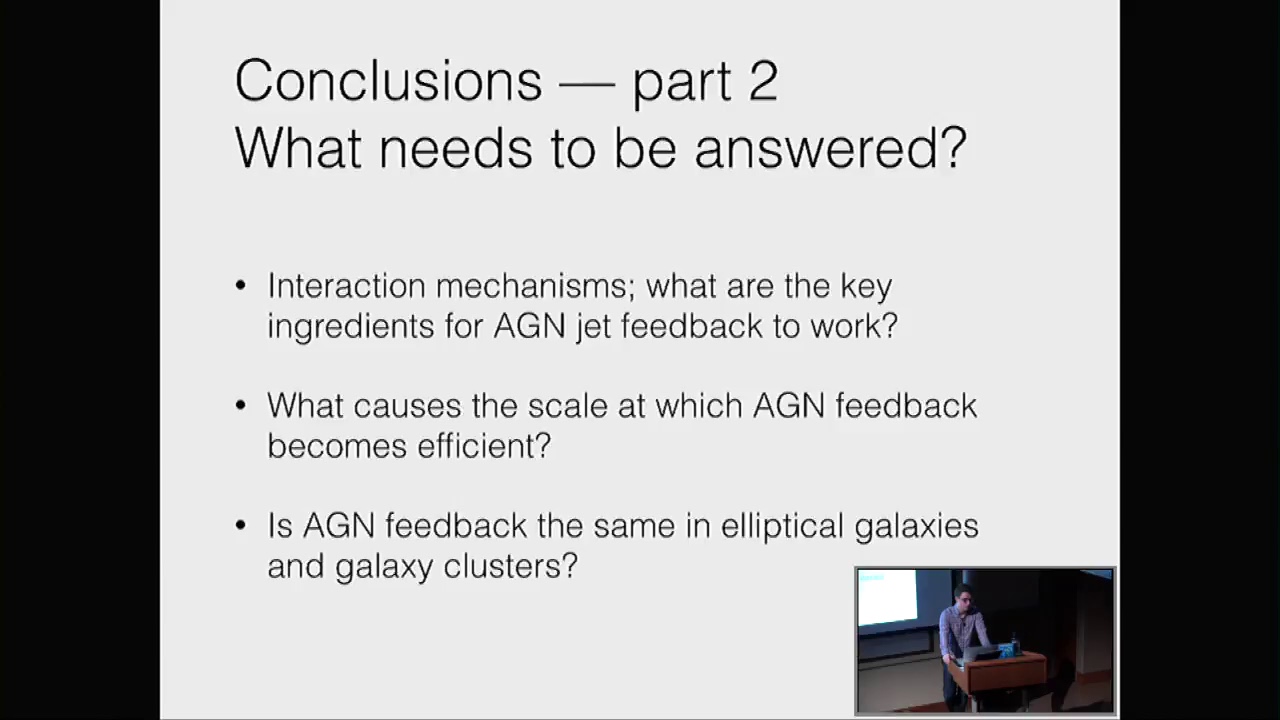
um so here's heart Model 12 right so it's one there have been many other models that have been proposed since then and so far about you can get about a factor of 2.5 or so more ionizing photons and that's just from changing maybe the Escape fractions of the galaxies right so quasars are putting out photons but of course galaxies are as well and the models are very sensitive to the Escape fraction like how many UV photons can actually get out of the star forming galaxies that's definitely uh uncertain parameter but a lot of observations suggests that that's for for many galaxies about is less than one percent and so you really have to dial up the Escape fractions a lot if you wanted to get you know up to five uh times more ionizing photons it seems unlikely that you is have escaped fractions of like 10 or something like that so it seems that you know the problem can't be resolved just from the UVB but what we did here at CFA with a very smart reu student Alex gurvich was just say well all right let's let's see if it was something maybe with the gadget simulations that other simulations maybe would show something different and it turns out when we looked at a lustrous um we didn't see this problem in fact it didn't match perfectly far from it but it was definitely different from the gadget simulation so the black line here is the Kohlmeyer 14 study and the green line here is is the original fiducial illustrious cosmological simulation the magenta lines here are the Danforth 16 data so you can see that the luster simulation is has significantly less a neutral hydrogen absorption it's either hotter or there's more ionizing photons something's going on there right so what we ended up looking at is you know what is causing this difference between these two different simulations right the UV background is something that's known that's different between those two simulations and we can account for that but what is affecting the the rest of the differences is it resolution Stellar physics AGN physics etc etc right so the UV background was kind of an obvious thing to check first and we know that illustrious has a different UV background than the gadget simulations that use the Heart Medal UV background and so the UVB alone couldn't explain it right and the simplest test we did there was we just said okay let's run illustrious now with the heart medow 12 background and of course that um you know it's less ionizing so there's more in absorption that we'll see there but it's not enough to explain fully uh the difference with the gadget simulations right so some additional heating is maybe needed maybe Stellar feedback is doing something well it's not um so the different Stellar feedback models that we checked with the numerical simulations you know they're basically lying right on top of each other here so if we you know have no Stellar feedback or a lot of Stellar feedback or the fiducial model it just wasn't able to explain it and it makes sense right seller feedback is going to affect really close into the Halos and the galaxies and maybe the CGM of course around the Galaxy but into the intergalactic medium you have to have some kind of feedback mechanism that will affect Mega parsecs away from the Halos and so Stellar feedback has um seems to not be able to do that well the talk title probably gives away the story right so AGN feedback seems to be able to do the trick and Visually you can see that here so this is a cosmological simulation with AGN feedback so actually the fiducial illustrious numerical simulation and then when we turn off that AGN feedback right the galaxies of course look very different and people have known that for a long time in order to explain Galaxy colors gas fractions star formation you need that AGN feedback it also affects very strongly the Lyman Alpha forest and the IGM in general right and so without AGN feedback you can see there's a lot more neutral gas this is the color here is is actually the column and column density of neutral hydrogen which would show up in the Lyman Alpha Force absorption lines you see it looks dramatically different with and without AGN feedback and again one thing that could be going on here is is the heating so your photo ionization equilibrium equation you also have this dependency on temperature so in addition to changes in the UV background right once you go to lower and lower redshift this AGN feedback becomes more and more important it acts as a source of heat and it also can redistribute the gas around the intergalactic medium and so that's where the the third chapter of the story comes in how black holes change that high redshift Paradigm when you go towards lower and lower redshifts how black holes actually add a lot of heat to The Intergalactic medium to the point where you could no longer estimate that uh UV background gamma based on just the forest statistics as people had previously done well it's really amazing to think about black holes affecting The Intergalactic medium right so this is a cool movie from ESO showing a zoom in to our Milky Way Center zooming into the supermassive black hole and I love this movie because it gives you a sense of the size scale right like the Galaxy zooming in eight kill 8.5 kiloparsecs all the way into the galactic center right you know in The Intergalactic medium we're talking about megaparsec scales right so the discrepancy between the size of the black hole and the energetic feedback that's able to heat the the medium is just simply enormous and I think it's it's incredible to think about how these black holes are able to you know launch jets and and heat and ionizing uh the this Intergalactic medium right so it's a huge discrepancy in scales right and so I want to show you a couple examples of how this AGN feedback can actually affect the IGM and also in terms of looking at different Ag and feedback models right because what's under the hood of these cosmological simulations is a subgrid model right and it's a model that's been calibrated to match properties of galaxies but not properties of The Intergalactic medium right so you know a simulation like illustrious which I was you know showing some results from before or the updated now illustrious Next Generation model one of the main updates between these models was changing the black hole feedback prescription right how you seed the black hole how the black hole grows is an important difference between these all these different cosmological simulations and also how these black holes eject their feedback right so illustrious one of the big changes here was this difference in um how it blew out these thermal bubbles in the low accretion mode so one mode here has this hot thermal bubbles that inflate and expand out into the intergalactic medium and kind of naturally act as a heat Source there um and this is really the reason why the gadget simulations and the illustrious simulations from our earlier study looked very different it's because of these hot Bubbles from the black holes expanding out in TNG they changed this uh bubble mode dramatically to a kinetic feedback mode at for low accretion rates and so now there's kicks to the gas that are moving out isotropically into the intergalactic medium and it doesn't blow out as much gas and it also Heats of the gas less violently so let's look at the difference in the intergalactic medium right so first of all the model the particulars of the model have a huge effect right so this is a column density distribution again showing this the Danforth data is in blue so this is the observational data from from costs illustrious in red and then the black here is TNG so right away you can see that the changes in the AGN feedback model dramatically alter the distribution of column density uh in in the low redshift Intergalactic medium these models have the same UV background right right so they both use the foshige gear 2009 background so this is not due to the UV background this is entirely due to the feedback and this if you you know showed a cosmologist this in the 90s when they're doing all this Precision cosmology with the forest you know they'd probably be kind of freaked out right because everything about this amplitude of the column density distribution should be set by the UV background or maybe your dark matter model right so the fact that feedback is affecting this so strongly is is really important at the low red shift regime you could also visualize the changes here so here I'm showing a lustrous the column density and temperature map of illustrious and TNG here at redshift.1 which corresponds to these lines here and you know that you can just see dramatically the TNG column density distribution and illustrious they look entirely different and of course also the temperature Maps right this hot gas is being blown out by those radio Bubbles and illustrious and in TNG it's much more gentle in terms of its Heating and redistributing matter than um than illustrous what does that look like at high redshift right because at high ride shift things should behave nicely and indeed they look very similar so this is the same kind of um uh picture here but at redshift of two right so these are the column densities between illustrous and T and G they look like very similar in terms of their distribution um and the same with the temperature map so it seems that this shift from the alignment Alpha Forest redshift of of two and onward uh tracing just the UVB and the dark matter is still solid in these simulations which is a good thing but as you transition down to low redshift something dramatic is happening with the feedback neither of these feedback models include bipolar Jets right so we know AGN feedback right can affect up to Mega parsec scales because we observe this directly in radio observations with with for example synchrotron we see that you know Mega parsecs out from from the centers of clusters and and massive galaxies we see these beautiful radio lobes that can move out into the intergalactic space and so we know that there's Heating and there's matter being redistributed from bipolar Jets there is a simulation that includes bipolar Jets and that's the Simba cosmological simulations and I'll show you some results from this particular simulation it has a different AGN feedback model than illustrous and illustrious TNG and these bipolar Jets you can see they start to turn on once the Halos get massive enough to host supermassive black holes and by redshift less than one those bipolar Jets have filled the intergalactic medium with very hot gas and so just visually you can imagine what the column density distribution might look like right it's a lot less neutral gas right the the medium is just simply too hot to host a lot of neutral gas and again showing you the column density distribution from the dance first study in blue and now the black line here is this the fiducial Simba cosmological simulations looks much better right than the original um you know illustrious or even the gadget simulations from coal coalmeyer in fact it fits very well from column densities around 10 to the 13.5 onward here and it it it's pretty it's even pretty good at the very low column density regime as well so this model is significantly heating the IGM reducing the neutral fraction greatly so turning off that jet mode right we can directly see the effect of the Jets right so the red line here is Simba and it still has the radiate of AGN feedback mode but it turns off those those Jets and then what happens is as you get this red line here so the jet mode in particular has the most impact on the intergalactic medium in terms of its Heating you might be thinking well what about you know the degeneracy with the ultraviolet background model like what if we were to mess around with the Galaxy fractions or somehow we just don't have a good handle on that well we can actually see which is the best fit model if we just let the UV background run wild right so we can tune the Escape fractions however we want we can get whatever UV background we want and we can see which model is the best fit and it turns out the the case with AGN Jets is still the best fit model and if you were to look without Jets you'd have to pretty dramatically change the UV background to get a fit I think more dramatically at least than any of the current models are predicting so it seems that the best fit model would be a bipolar jet model probably also a more ionizing background than the heart medow 12 and so you know tuning those two things together I think would be really important for future work just some more fun visualizations to visualize the AG and Jet feedback right so this top row here is with jet feedback and you can see here the column density projection the temperature projections at redshift of 0.1 and if we turn off the jet feedback you know the column density is a lot more higher column density material not so much in the low column density you don't get these big holes in the intergalactic medium and also the temperature distribution is dramatic so these these Jets again are are pumping up a lot of heat in the intergalactic medium this will change of course that temperature density diagram that I showed at the beginning of the talk right so here we have this Lyman Alpha regime um and then with AGN Jets without AGN Jets so this again this creation of the whim is also a very dramatic example of what the Jets are really doing here they're actually pushing gas heating gas but also redistributing the gas that's what these red lines here are showing redistributing the gas into this hot diffuse phase versus this warmer or cooler diffuse phase that is traced by Lyman Alpha um and this effect this movement of gas these red points uh uh from this like diffuse component up into the the whim is really starting around redshift of two in Simba um or redshift five to two it starts to transition and then it's it dramatically volume filling by redshift 0.1 okay um Let me show now since I'm getting close to time um a couple of studies we've been doing on the redshift evolution of this effect um also looking in comparison of these different cosmological simulations um uh with the camels collaboration which is running many thousands of realizations of simulations uh with these different models the illustrious TNG model Simba model Astrid model and other cosmological models as well for that change the AGN feedback that change the Stellar feedback and also look at the different hydrodynamics so you know run this little movie again uh to show just the dramatic difference right visually in The Intergalactic medium between these cosmological simulations right Simba with the bipolar jet model dramatically heating the IGM illustrious with this kinetic mode uh uh and and Astrid with kind of a similar also kinetic mode for their feedback being much more gentle on The Intergalactic medium there's not a lot of there's not as much Heating and there's also not as much gas being thrown out what's the redshift Evolution look like for example between Simba and illustrous TNG and these now have the same UV background so we've rescaled illustrious TNG to match the Simba UV background so these are the same so this effect you're seeing as a function of redshift is really due to the black holes entirely and so around redshift of two or so things look good they look like reasonably similar which is what we expect from this kind of earlier cosmological Paradigm but as the black holes really turn on and grow and become more massive as they go down to lower redshift the column density distributions diverge dramatically even for the same UV background right so this is really I think troubling for studies that use the Lyman Alpha Forest at low redshift to estimate the UV background right because the AGN physics which is highly unknown might might be making uh trouble for us right if we just look now this is a still shot of TNG versus Simba okay so the Simba lines here are in black and we also have the the no jet mode uh in the dashed black here and then the red lines here are illustrous and you know if we turn off a lustrous kinetic mode nothing really happens so the jet again the jet mode seems to be the most important uh uh AGN feedback mode for affecting the Lyman Alpha forest and getting out of the Halos into the intergalactic medium what about changing the AGM parameters right so what if we change the jet speed or we change um you know the jet momentum right so these AGN models they're kind they're calibrated on the galaxies but maybe there's not one best model or maybe we need to rethink our models how does this affect the lineman Alpha for us in addition to the galaxies and for this study this is work in progress we're using uh the camels cosmological simulation Suite so this is a many many realizations of simulations like illustrious TNG and Simba um and Enzo uh and Astrid all of these different cosmological simulations um a team of people have gotten together and said let's let's create thousands of universes with different cosmological parameters and different feedback parameters and then you know we can do cool things like machine learning for example because we have a huge training set but we can also you know study how those different subgrid prescription models are changing the universe and in particular I'm interested in how these different models are changing the intergalactic medium and the Lyman Alpha Forest and so just as a little teaser of this right we can change the Simba AGN feedback jet speed and momentum flux so these are things that the the camel's team has has tuned and played around with so they're calling them AGN 2 and agn1 that's just code for jet speed and momentum flux here and you can see that the the jet speed in particular can really profoundly affect the column density distribution right so if you turn up the jet speed you get these redder lines here so there's less neutral gas it's kind of blowing the neutral grass up and heating the neutral gas dramatically the momentum flux may be not affecting it so much um and actually the jet speed alone is kind of creating a change that you would be able to see if you turned up the Galaxy Escape fractions and had a higher UVB so there's some maybe degeneracy with the UVB and the overall jet speed and like obviously the largest changes here in the column density distribution are happening at these lowest column densities and there's less of a distinction here as you go to higher column densities there's another interesting effect we found and that's with the Stellar feedback right and so originally I showed you from our earlier study with the lustrous Stellar feedback didn't do anything to The Intergalactic medium right okay the Stellar feedback is confined to the CGM the Halos it's not really getting out Mega parsecs in scale and so we were surprised to see when we changed the Stellar feedback subgrid parameters like for example the wit the Stellar wind speeds or the mass loading from the Stellar feedback there were dramatic changes especially with the wind speed um in in Simba and at first we wondered why how could that be because we had found something different earlier and after after some investigation what what Megan Tillman had found is that she she sees that the stronger wind speed is significantly suppressing the growth of black holes in the simulation and so there's a feedback loop here a really interesting one where changing the Stellar feedback physics is changing things in the galaxies which may be no surprise it's suppressing the black hole growth and in that in turn is changing the lineman Alpha for us so all of these things are interconnected and related um and here's a fun movie uh that Megan's made with the wind speed parameter so this is like low wind speed the fiducial Simba uh uh run with their fiducial uh wind speed model and then very high wind speed right and so you can see when you have very strong Stellar feedback winds in the simulation it dramatically changes the temperature of the IGM and the column density distributions which is a direct effect of the black hole growth so all of these feedback processes and these simulations are connected and dramatically affect not only the Galaxy properties like the colors the the gas fractions the star formation but also the intergalactic medium and I want to end on talking about at least one implication for this study I think there's many implications but for upcoming observatories that are interested in looking at neutral hydrogen in The Intergalactic medium at kind of low to moderate redshifts these effects might become important and an example of an observatory that's targeting 21 centimeter observations at redshift like point eight to two ish is this hyrax project this is a hydrogen intensity mapping experiment that will be probing dark energy and the Bao effect um and uh all of the models so far of course are this standard cosmological Paradigm for the forest and for for neutral hydrogen um which is to look at just the UV background effects and just the Dark Matter model effects um and doesn't really take into account these AGN feedback effects as of yet this is something I think we'll be working on uh in the next couple of years is seeing how the AGN models will affect um the the 21 centimeter mapping experiments which are going to be targeting denser molecular or denser neutral hydrogen gas in The Intergalactic medium so to conclude um you know the takeaways here uh the one thing I'd like you to take away is the high red shift line and Alpha Force the story there is very I think complete in a way it's a happy place for cosmologists right where you can do Precision cosmology because the intergalactic medium is a you know is very well behaved in terms of the physics that it follows but the low red shift Forest is messy right and that's because all of this baryonic feedback effects start to take over and create this big forest fire in the Lyman Alpha Forest right and this this uh change in the neutral gas is very sensitive to the particulars of your your feedback model um it can have a dramatic effect right TNG versus illustrious versus Simba like however you do your subgrid model for AGN feedback it really matters um and uh the UVB measurements therefore at low red shift are kind of in danger because we don't really know which model is right we don't know which model is the correct model right how much heating should we really expect from AGN you know we don't we don't actually know all we can say is you know which models are best fitting the data and that data includes the Galaxy properties as well as the forest um but I think again the good news here is we will be able to now use the lime and Alpha Force as a way to calibrate these AGN feedback models and this is something we're doing right now we're kind of working to see you know if we updated the UVB and the AGN models together like which model would be the best fit um so stay tuned thank you all right let's uh quickly take some questions yeah um we can repeat the question that make these distributions go up and down a lot so how optimistic are you that like are we ever going to get constrained those well enough to measure these things I think I think we will I mean those knobs are pretty dramatic in the camel simulations so I think if you took you know like the very dramatic Stellar Wind Speed or the very dramatic jet speed case and you then looked at the galaxies that that simulation produces they will have you know incorrect looking gas fractions or not enough star formation the Galaxy colors will not match observations so I think with constructing these models it's it's a fun theoretical exercise to just see how changing these things affects the observables but at the end of the day you would want your model to try to reproduce as many observables as possible has someone looked into the different distributions of metals in the IGM of these different models they must be very different yeah so with the metal lines mostly they're tracing around the CGM like around the Halos it's difficult to see you know metal lines that are really out in the in the intergalactic medium proper um so people are are looking not only at lime and Alpha but also lime and beta um and helium-2 but the metal lines tend to be more concentrated in the Halos uh floor how to come together to create that and like are there any like challenging like database storage challenges that yeah no it's a big collaboration um it's grown massively actually over the years so now in addition to like lustrous TNG Simba um there's this Astrid simulation there's also uh Enzo magneticum there's like five or six simulations now that are represented and they all change you know there's there's tens of thousands of simulations actually and so it is a it's a data storage challenge um and at the center for computational astrophysics there's actually a whole scientific Computing team that is there to assist scientists with projects like that and so they actually have um you know dedicated storage at the Flatiron Institute CCA for that challenge yeah Charles yep the the challenge I think with that is the beam of hyrax is very large so it will have it will definitely have overlap with individual absorption features but the beam will probably Encompass several of those features yeah yeah if there's like a clustering of absorption lines you know in one place versus another then maybe hyrax would be able to separate those out that's it that's an interesting question oh one up here yes uh question for you you parametry specifically the AGN Jets and the Stellar winds but what about the AGN winds how does that hold into these simulations and what kind of an impact do they have relevant to the other two yeah well we looked we looked at the momentum flux um but the Simba model that I showed here so so TNG also has changes in the way that they parametrize the kinetic mode which is more of a wind in the sense that it's isotropic rather than a jet which is bipolar it doesn't seem to change things at all so if you were to look at this isotropic TNG wind like mode it has no dramatic effect on the forest as opposed to the bipolar Jets which really you know they decouple from the interstellar medium and they really move very far out into the intergalactic medium there we see a big effect when we change that parameter exploring because there is increasing evidence that these AGN winds can be very powerful in the case lows and in fact not isotropic okay as bipolar as or as a Jets but definitely conical yeah yeah I think I think the collimated aspect of the Jets you know or wind like the collimation actually really allows it to move out into the introduction of black versus the other you know more isotropic feedback modes which stay closer into the Halos um yeah with that let's thank the speaker again [Applause] [Music] [Music] [Applause] [Music]
Up Next
Mapping the Cosmic Dawn with the 21cm Line | Cosmology
@RasOrgUk
371 views•2019-05-31
First Billion Years of the Universe with the Square Kilometre Array
@iaaudc
121 views•2022-05-26

Exoplanet Atmospheres: Protoplanetary Disk Chemistry
@cfacolloquium3139
2.3K views•2017-12-14

Gamma-Ray Bursts: Cosmic Snipers Explained | Astronomy
@kurzgesagt
15M views•2016-07-31
Related Study Plans & Knowledge Roadmaps
Structured learning paths in Astronomy