![NASA | New Horizons [HD]](https://i.ytimg.com/vi/CVJtrQK9Vg8/maxresdefault.jpg)


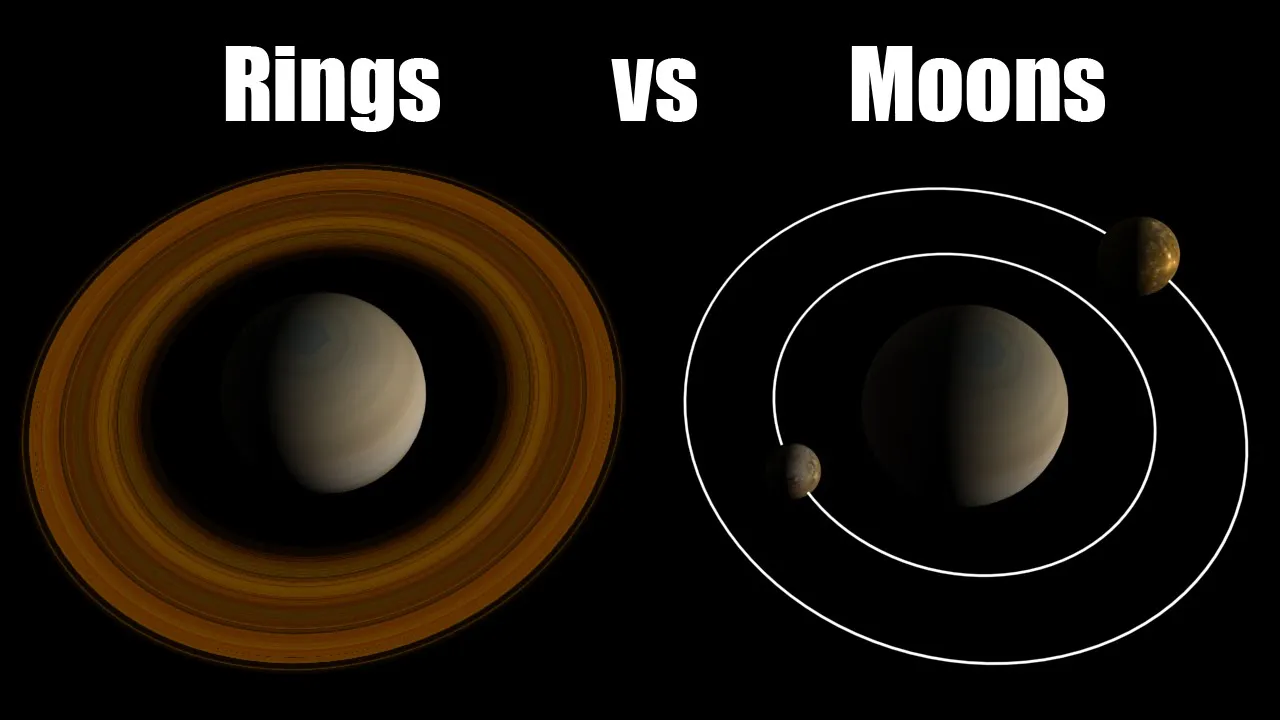

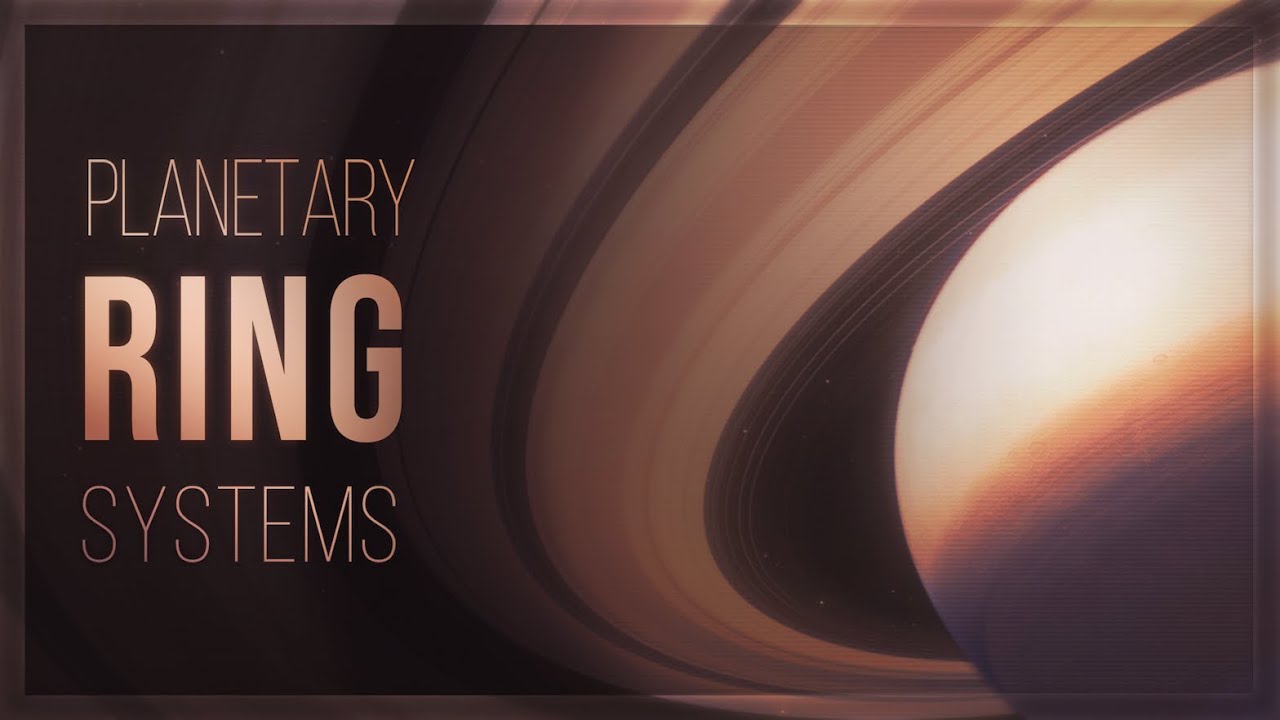






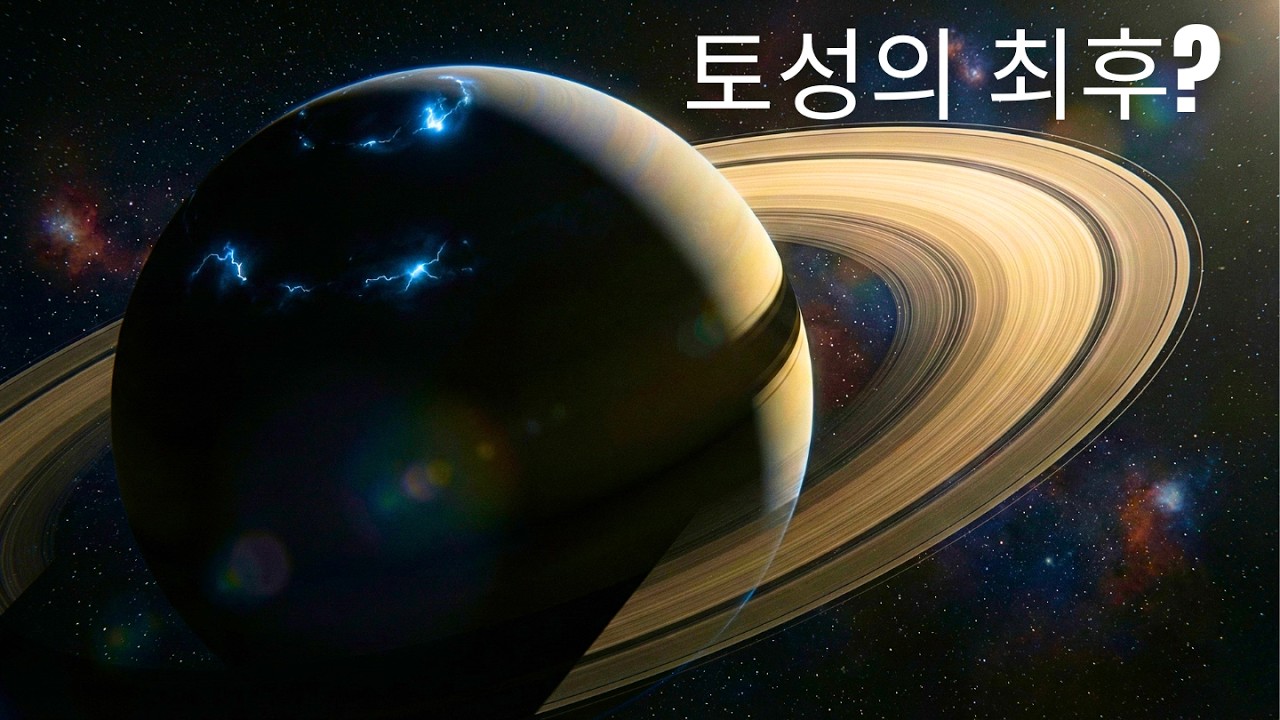
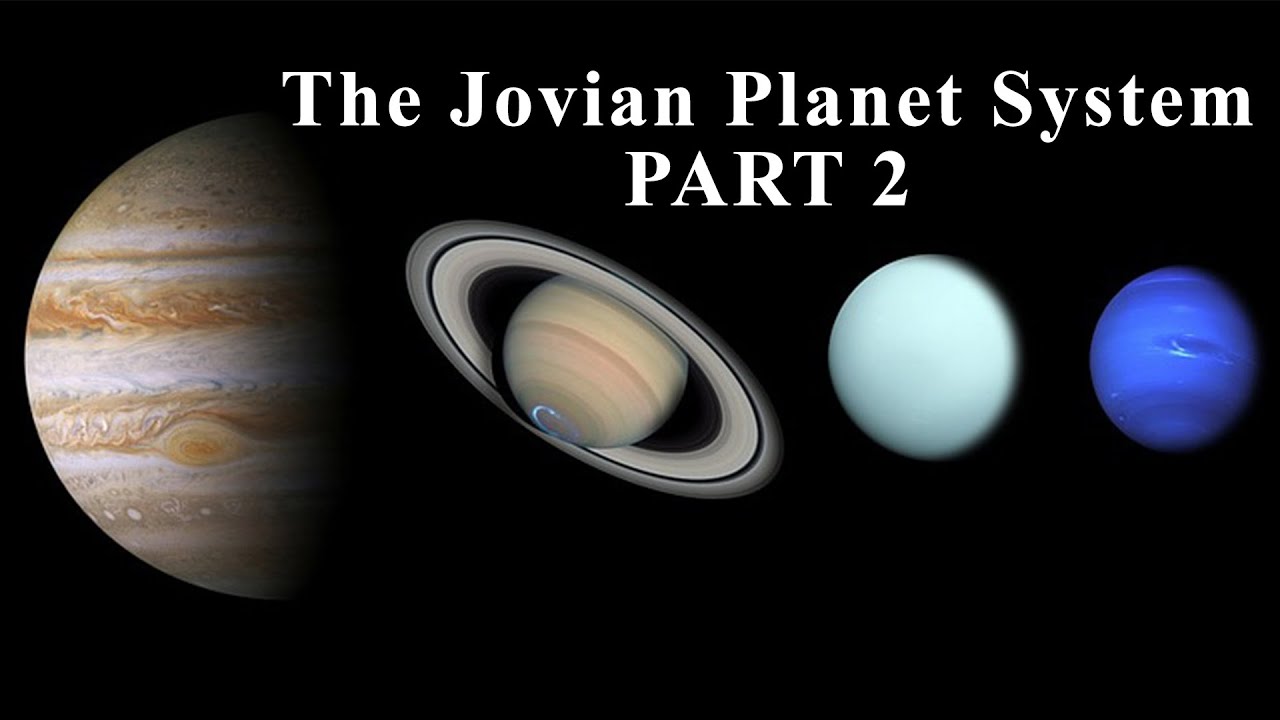





Saturn's rings are not solid structures but consist of countless independent particles of water ice orbiting the planet at different speeds, a discovery that evolved from Galileo's initial observation of Saturn's 'handles' in 1610 through centuries of astronomical investigation, including Huygens' identification of the ring structure in 1655, Cassini's discovery of the ring division in 1675, Maxwell's theoretical explanation in 1856, and finally confirmed by the Voyager missions in the 1970s and Cassini mission in the 2000s, which revealed the rings as a dynamic 'river' of frozen water particles subject to gravitational forces and orbital resonances.
Saturn's Rings: A Celestial River of Water Ice
Added:Basic understanding of the Solar System's structure, specifically the distinction between terrestrial planets and gas giants.
Fundamental concepts of gravity and orbital mechanics, including how gravity keeps objects in orbit.
The concept of the Roche limit, which explains the gravitational forces that prevent ring material from coalescing into a moon.
The states of matter and the behavior of water ice in the cold, vacuum environment of space.
The role of shepherd moons (like Prometheus and Pandora) in maintaining the structure and gaps within Saturn's rings.
The phenomenon of 'ring rain' and the scientific theories regarding the lifespan and eventual disappearance of Saturn's rings.
Comparative planetology, specifically studying the darker, dustier ring systems of Uranus, Neptune, and Jupiter.
The connection between Saturn's rings and its icy moons, particularly Enceladus and its cryovolcanic activity feeding the E-ring.
56.2K views1.1Klikes29:01Original Release: 2018-02-01
[Music] on the 25th of July 1610 Galileo Galilei rushed off a series of letters to a number of his friends and colleagues announcing well that to have a fuddled circle of eyes if you're puzzled don't worry you're supposed to be it was common practice at the time for scientists to announce major discoveries in nonsense latin anagrams allowing them to maintain secrecy until the results were published and yet also assert their credit should they be inadvertently scooped people being what they are Galileo's acquaintances immediately set about trying to crack the anagram to learn what he found out one such colleague was a wild minded mystical revolutionary named Johannes Kepler Hitler was one of those fascinating Berkeley brilliant minds that found unique home in the Renaissance like Galileo he was a fervent believer in heliocentrism though he maintained his assertion largely for astrological and numerological reasons despite this his belief would eventually lead him to construct the most accurate model of planetary orbits ever devised in which he showed beyond any reasonable doubt that the orbits of the planets are elliptical not circular and that their orbital speeds increased in proportion to their distance from the Sun paving the way for Isaac Newton it also led him to compose the first ever work of space travel fiction a distorted retelling of which nearly got his mother burned for witchcraft such was the time in keeping with his numerological obsessions Kepler read Galileo's cryptogram as quote salawah Loomis tinium Yamina tomb Mattia proneness unquote which translates rather hilariously as quote be greeted double knob children of Mars unquote that is assuming you accept the word in bostonia m-- which is really just dog latin but whatever you see Kepler believe that the solar system's numbers should make sense and since the earth had one moon and Jupiter for it stood to reason that Mars should have two obviously that was what his friend Galileo must have discovered it wasn't not even remotely but because maddening coincidences are a theme in solar system discovery Mars would eventually be found two moons in 1877 what Galileo's anagram actually decoded to was quote artisan moon planet am tell ya mannan observe re unhooked which means quote I have observed the highest planet triple unquote presumably with it implied to be in front of crippled by the highest planet Galileo meant Saturn the farthest known planet from the Sun in his day Galilei elaborated on what he had seen in letters to his various patrons to the Grand Duke of Tuscany he wrote quote the planet Saturn is not one alone but is composed of three which almost touch one another and never moved nor change with respect to one another they are arranged on a line parallel to the zodiac and the middle one is about three times the size of the level one - Giuliano de Medici he wrote quote so he have found the court of Jupiter and the two servants for this old man who helped him walk and never leave his side echoing Saturn's mythic role as the ruler of old age what mystified Galileo was that these things he was seeing around Saturn through his crudely made telescope made no attempt to move around it but instead remained locked in place as if they were attached to their planet by cosmic glue and then two years later they disappeared Galileo's reaction was a combination of shocked and admirable self criticism quote what is to be said concerning so strange a metamorphosis are the two lesser stars consumed after the manner of the solar spots as Saturn perhaps devoured his own children or where the appearance is indeed illusion or fraud with which the glasses have so long deceived me as well as many others to whom I have shown them I do not know what to say in a case so surprising so unlooked-for and so novel put by bowring his children galilea was referring again to mythology as the Greek god Chronos called Saturn by the Romans ate his own children to prevent them from usurping him Saturn's slow orbit meant that observations stretched over decades as resolution improved Saturn's two attendants revealed themselves in more detail and despite Galileo memorably once referring to them as ears began to be seen as an sigh or handles attached to its side and sigh would become a standard name for these objects until well into the 19th century in 1655 after discovering Saturn's moon Titan coos tianhao hands turned his eye to the problem of the handles believing that Titan had opened the way to solving them thanks to his high-resolution telescope he realized that Savan was as he wrote in his own anagram or a new tool kinga 210 muy plan o new Squam coherent a ecliptic um in Clamato unquote which means surrounded by a thin flat ring nowhere touching and inclined to the ecliptic about a succinct description of reality as you could get the ring sudden disappearances were merely due to its tilt relative to the earth usually the ring lay above or below the earth revealed at all its splendor occasionally however it was seen at John rendering it effectively invisible from any telescope of the time to support his thesis Hawkins made the prediction that the handles would reappear in April of 1656 he was wrong though they did rip here in October initial reaction to Helens idea was largely negative his friends and colleagues were skeptical and Leopoldo de Medici to whom his book was dedicated failed to respond those who'd proposed alternative explanations for the handles attacked heavens with polemical pamphlets accusing him of lying and fraud Leopold conversely congratulated the anonymous author of one pamphlet saying he would suspend judgment until evidence for the alternate hypothesis could be found that Cohen's caustically opined might take a long time thankfully how Holmes's persecution was short-lived by 1661 even his most ardent critics began to grudgingly accept the reality of his ring but the question remained what was it in an agent for gravity no one could formulate an adequate explanation some suspected it was some kind of emanation from Saturn's surface whilst the Vatican librarian Leo alicia's memorably speculated that they may have been the wholly circumcised foreskin of Jesus Christ which had ascended separately the same day he did the next phase in the discovery of Saturn was led by giovanni domenico cassini whilst a professor of astronomy at bologna Cassini discovered the rotations of Mars and Jupiter identified their surface features and mapped the motions of the Galilean moons in 1669 he was invited by nuit xiv to head the new paris observatory where over the next decade he would discover four new moons of saturn but perhaps his most celebrated discovery occurred in 1675 when he identified what looked like a broad gap just off the center of Saturn's ring today this gap is known as the Cassini division in 1714 rock morality noticed that the ring now rings appeared to be a varying thickness as one side appeared larger than the other more than that he noticed the larger end reappeared on the other side of Saturn showing that the Rings orbited the planet he therefore concluded that the Rings had to be solid however Cassini and his son Jacques who succeeded him at the observatory both concluded that this was unlikely if the Rings were solid then the outermost region would orbit more quickly than the innermost region as happens with a vinyl record but observations suggested that the inner part of the ring orbited more quickly than the outer part or at the very least the same speed meaning it had to be made of independently orbiting particles however belief in the solidity of the ring would last until well to the 19th century in 1789 William Herschel discoverer of the planet Uranus and arguably the greatest astronomer of the 18th century turned his attention to the rings of Saturn he confirmed that the Cassini division was a gap rather than simply a dark band and that comparing the thickness of the Rings to the thickness of the satellites that they could not have been thicker than 300 miles predicting that rather unusually for him was far too conservative the Rings were proving a hard horse to break many attempts were made to discern finer divisions within them and some particularly those observed by Johan France Anka the head of the Berlin Observatory who's back Urbana Lavar EA would brazenly zip behind in his haste to find Neptune or even observed by others but none were considered permanent other future Neptune hunters swept up in the search for divisions in the Rings included James chalice of Cambridge University who would be unfairly tarred for centuries as the man who lost Neptune for Britain and William Lasell a brewer and amateur astronomer who would go on to discover Neptune's moon Triton but the honour of furthering the mystery of Saturn's rings would ultimately fall to neither of them but rather to two fellows named bond one British one American who in 1850 both independently observed a dark diaphanous extension to the innermost ring that Lasell described as quote like a crypt veil covering part of the sky thus earning its nickname the crimp ring the name CREP ring would eventually fall out of fashion and the more systematic convention of listing the Rings alphabetically in order of discovery as a B and C eventually went out in 1863 Saturn's sphere was seen behind the C ring confirming its ephemeral nature while Lasell also observed it through the Cassini division interestingly the astronomer who proposed the ABC naming convention was named Otto's truth and his grandson also named Otto's truth would become one of the primary inspirations behind the search for extraterrestrial intelligence in 1850 French astronomer Edwin Roche ran several calculations that suggested that the Rings could have formed from tidal disruption of a small moon that came too close to Saturn Saturn like its moons is very near the density of water somewhat less in fact helmet float given an ocean big enough and when Roche ran his calculations he found that if a planet and a satellite were of similar densities then the satellite could not be closer to the planet then 2.44 planetary radii otherwise tidal force the same force that the moon exerts over our oceans would tear the satellite to pieces the outer limit of the Rings lay to point three Saturn radii from the planets cloud tops brochures idea remains one of the leading hypotheses for the formation of the Rings and the gravitational boundary beyond which a satellite or planet faces destruction is now known as the rush limit in his book the demon haunted world Carl Sagan responded to a question frequently posed to the scientifically minded by the knot why spend so much of our money on science with no applications why not just focus on the science that leads to technology his counter was a thought experiment could Queen Victoria his coronation coincided with the rise of the Telegraph half at the start of her reign successfully funded a program to invent the television the answer flatly is no because the underlying equations that would eventually allow television to be developed the in applicable science as it were hadn't been devised science must be pure before it can be applied the man who would ultimately crack the necessary equations and in the process unify electromagnetism and light was James Clark Maxwell widely regarded as the most important physicist between Newton and Einstein and it was he who a few years before developing the physics allowing me to talk to you right now finally nailed down the true nature of the rings of Saturn in his 1856 paper on the stability of the motions of Saturn's rings Maxwell thoroughly and systematically demolished every previous argument regarding their structure and form if they were solid either a single sheet or a multitude of concentric rings then they would be subject to creeping waves of instability that would tear them apart if they were liquid then they would eventually be broken up into liquid satellites by those same waves he finally concluded that quote the only system of rings which can exist is one composed of an indefinite number of unconnected particles revolving around the planet with different velocities according to their respective distances unquote history and the space program would ultimately prove him right in 1895 American astronomer James Edward Keeler who most likely was the first person to observe what we now call the Anki division in Saturn's rings in 1888 employed the newly invented spectrograph and the Doppler effect to show that the innermost rings were indeed orbiting more quickly than the outermost rings finally confirming Maxwell's model Saturn effectively was a world with a million moons in 1866 an American astronomer named Daniel Kirkwood noticed something rather odd about the asteroids being discovered in increasing numbers between Mars and Jupiter even though less than a hundred were known at the time he was able to see that they appeared to fall into specific regions separated by narrow bands containing nothing at all the gaps coincided with precise ratios of the orbit of Jupiter for instance there were no asteroids at the precise distance from the Sun equivalent to three orbits for every one Jupiter orbit the same was true for the five to two ratio seven to three and two to one Herc would realize that these precise orbital ratios would give an additional kick to Jupiter's gravity akin to being pushed on a swing at just the right moment to go higher any asteroid caught in such an unfortunate situation would soon be yanked by Jupiter into a higher orbit or knocked out of the asteroid belt entirely as the number of known asteroids increased so these gaps became ever more pronounced and today are known as the Kirkwood gaps the following year in 1867 Kirkwood pondered whether the same logic held for the rings of Saturn they were after all essentially an asteroid belt in miniature and the many moons in orbit around Saturn could act as little Jupiter's in their own right specifically he noted that the Cassini division the only gap in the ring is known at the time coincided with the precise two-to-one ratio with the tiny moon Mimas at this point you might well be saying all this is well and good but what does this have to do with water for a video in the universe of water series this has been fairly dry so far but discoveries about the rings of Saturn do not come easily from the ground and it would be decades before anyone would venture to guess what they were made of one of the first to do so was a man widely regarded as the greatest planetary astronomer of the 20th century Gerard Kuiper the singular irony of Gerard kuipers life is that one of the few accomplishments of note for which he cannot be credited was predicting the region of the solar system now named after him his was just one of a number of wildly inaccurate stabs in the dark regarding the then completely unknown outermost part of the solar system mentioned in the paper that did predict it but Kuiper belt sounds cooler than Fernandez built so that's what one out what did Kuiper discover two moons one of Neptune one of Uranus the atmosphere of Saturn's moon Titan the landing sites for the Apollo program the composition of the atmosphere of Mars and the fact that Mars has polar caps were largely made of water it was this fact that led Kuiper in 1948 to speculate that Saturn's rings might also be primarily composed of water since their spectra were very much the same Isaac Asimov certainly took this idea to heart since four years later he wrote an expanse style short story about independent minded Martian colonists mining the rings of Saturn for water seriously check it out it's great the main problem with checking for water elsewhere in the universe is that there's a lot of water in Earth's atmosphere which to be fair is a good thing for us if not for astronomy by the 1970s telescopes had improved the extent that the fact that the Rings were made of ice was no longer much in dispute but by then we had already moved on to phase 2 in our relationship with Saturn let's be honest telescopes are pretty boring I mean sure they'll do in a pinch but most of the time all the tell you is that something's there maybe you'll get an idea of how big it is and if you can catch a decent spectrograph what it's made of but all that troublesome distance to say nothing of the seething damp atmosphere in the way means telescopes are never going to give you the full picture for that you're gonna have to go there and by the 1970s we were finally ready to go to Saturn thanks to hard graft know-how and a once in 150 years planetary alignment the Voyager program is the single most successful space mission humanity has ever undertaken first approved in 1969 it is still ongoing today with its star probes Voyager 1 and Voyager 2 returning priceless information from the edge of interstellar space the Voyager fleet comprises not only the voyagers themselves but also their more primitive Trailblazers Pioneer 10 and pioneer 11 what together revolutionized our understanding of the outer planets and Saturn's rings along with them the first thing that the probes revealed was just how many rings Saturn possessed alongside the bright a and B rings and dim inner sea ring the pioneers and the voyagers found the nearly invisible Dee ring inside the C ring the strangely twisted and braided F ring and the ghostly outermost G and earrings but even within the Rings themselves multiple ringlets could be seen giving them the appearance of a vinyl record and while numerous gaps were found the largest the Cassini division was shown to be less a gap that home to its own set of dark ringlets making it essentially another C ring radio measurements suggested that the particles range from about the size of sand to about the size of houses and that the Rings were even thinner than the most outrageous claims made from the ground averaging just 10 years to put that in perspective if the Rings were as wide as the world's tallest building is tall then they would be as thick as a sheet of paper it is now believed that the reason for the excessive thinness is that thicker rings would have particles with more inclined orbits which would have more energy than particles moving in a flat plane but as particles collide with one another they lose energy and so their orbits 10 spread out and flatten the Voyager fleet on earth the plethora of new moons many of which played roles in sculpting the Rings a number of new divisions named the Enki and Kela divisions were found to be kept clear by tiny moons orbiting within them one of which pand went unnoticed in the images for a decade and several more of which were not observed but until the Cassini mission 20 years later similarly to me miss and the Cassini division two small moons in the co-orbiting one another janice and Epimetheus act in resonance with the outer rim of the airing and maintained the rings sharply-defined inch perhaps the most elegant discovery of the Voyager era was just how the improbable thread-like Efrain could maintain itself over millions of years the F ring is extremely dynamic changing over the course of hours what could keep it from flying apart the answer appeared to solve itself when the Voyager team noticed two moons in an orbital dance around the Rings the gravity of these moons later named Prometheus and Pandora seemed to act in tandem to keep the particles of the ring in line the outer one pushing them inward the inner pushing them outward this led the Voyager team to grant them the rather poetic moniker Shepard Moos unfortunately later observations by Cassini would reveal that the truth is a lot Messier and less elegant in fact Pandora plays no role in shepherding the effort at all and prometheus is a worse Shepard than that angry dog in babe yanking material out of the ring and rendering it the jagged twisted mess that we see but such as the orbit of prometheus that every shove it gives the F ring exactly cancels out the previous shove meaning the ring always stays in place one of the questions raised by the Voyager mission was why the main rings of Saturn in particular of the B ring so resemble a vinyl record the grooves are not individual rings but built into the structure of the ring itself a possible answer to the question emerge from the study of galaxies for many years have been assumed the spiral arms seen in most galaxies were individual physical structures but in the 1960s a new model was proposed that suggested that the rings were a phenomenon known as a standing wave a standing wave is analogous to a traffic jam as cars bunch up a jam forms and persists even if over time it may contain none of the same cars in galaxies a strong gravitational force say by a large concentration of mass or a nearby galaxy can create such a disruption because star is near the outer rims of galaxies travel more slowly than the stars near the center any such disruption will eventually form into a spiral in the 1970s a number of dynamic physicists calculated that a similar process could be creating the waves in the rings of Saturn triggered by orbital resonances with nearby satellites like Janus studies of years of Cassini deja have pretty much confirmed that this is indeed what is happening one of the strangest discoveries of the Voyager mission were ghostly shadow structures nicknamed spokes whose rotation around the planet appeared to have no relation to the Rings the mystery piqued the curiosity of a graduate student named Carolyn Porco who decided to make solving it the subject of her graduate thesis Porco noted that each of the Voyager images was time-stamped and when arranged in the sequence the spokes showed that they did not come and go at random but were in fact tied to the rotation of Saturn's magnetic field the precise cause of the spokes is unknown to this day the leading hypothesis is that the magnetic field captures and carries a mi is dust particles from the Rings Porco doubtless didn't realize it at the time but her graduate thesis would marked the beginning of a lifelong relationship with Saturn 10 years later she was appointed head of the Cassini emissions imaging team perhaps the single greatest discovery of the Cassini probe regarding the rings of Saturn is that rather than a state procession of marching particles they were a wild river of frozen water they're particles subject to the same waves eddies vortices and ripples as any terrestrial cataract the particles in Saturn's rings exist in a constant roiling cascade there's the forces of self gravity and tidal shear compete to pull them together and then tear them apart the Rings are carved out by tiny movements whose gravity forms the many gaps in their structure as they stampede through them leaving ripples in their wake on the occasions when the tiny eight kilometer moon daftness which maintains the Keeler gap in the a ring rises slightly above the plane of the ring it raises waves in the 10 metre thick ring one kilometer high that is the equivalent of a 200-foot wave rising out of a paddling pool the Rings were found to be dotted with whirlpool like features dubbed propellers attempts by invisible moonlets to form their own gaps in the Rings only to be thwarted by the ring surrounding mass because particles closer to Saturn orbit more quickly than those farther away much like a mini spiral galaxy these disturbances form propeller like arms speculation had bubbled for decades over whether Saturn's rings were warped like a record left too long in the Sun Cassini show that they were not but that they were far more uneven than they first appeared containing clumps the size of mountains Cassini and also found that the Rings rained water particles onto the surface of Saturn in quantities sufficient enough to dent its ionosphere one mystery that Cassini very quickly resolved was the origin of the ghostly earring which appropriately is created by cryo volcanic eruptions on the moon and Enceladus the G ring is maintained by a tiny movement only half a kilometer wide called IG on Cassini found several other faint rings associated with moons in particular a tenuous outer ring set on the captured comet phoebe Cassini also found that the maintenance of Saturn's a ring requires a lot more than one moon dynamic physicists have calculated that in order to prevent the a ring from flattening out and disappearing as many as seven of Saturn's moons have to work in concert creating density way that slow the ring particles momentum a momentary glimpse into the astounding complexity of this attorney in the system one phenomenon Cassini did not initially see were the spokes which failed to reappear until three years after its arrival this suggested that they may be a seasonal phenomenon tied to the arrival of Saturn's equinox since the Rings were discovered one question has perplexed more than any other how did they form and perhaps more importantly how long will they last it's clear that forces are at work that if left unchecked will ultimately destroy Saturn's rings the strange process that creates the spokes is also clearly removing material and sending it into Saturn's ionosphere as is the recently discovered ring rain and yet the Rings by all appearances are baby fresh the particles that make up Saturn's rings are 99.9% pure water pure enough to put in a glass they are so bright that they bathe the planet in ring shine illuminating even it's night side some have argued that this means the Rings cannot be more than a few hundred million years old and that we shouldn't expect them to be around for longer than that however others have argued that the Rings could be constantly renewed and replenished by cometary impacts and so that pristine appearance is not an indication of their age but the most recent study suggests that Saturn's rings may indeed be a temporary adornment results from the Cassini mission have finally managed to pin down the Rings mass and at less than half the mass of Mimas suggests that they could not afford with Saturn or they would have been far more massive instead they appear to have been the result of a freak occurrence such as a comet or small moon passing through seconds rush limits this does not rule out an ancient origin for the Rings but studies by Cassini have shown that the number of micro meteorites falling into the Rings is far too low to account for their current pristine condition unless they are only a few hundred million years old despite the close attentions of Cassini much about Saturn's rings in particular many of the gaps remains unexplained however but the human races I turned toward it's more inviting moons it looks like Saturn's rings will keep their mysteries of themselves for the foreseeable future and thus ends my second attempt to cover the Saturnian system can you believe I originally thought I could do it in one video apologies for the lack of alien stuff but I don't know if anyone's even considered whether the rings of Saturn could be habitable in my next video on the series I definitely will be looking at the smaller moons of Saturn and there definitely will be aliens stuff [Music]
Up Next
42:31
Maxwell's Saturn Rings & Planet Formation | Astrophysics Lecture
@CambridgePhilosophicalSociety
308 views•2025-05-22
61:17
First Billion Years of the Universe with the Square Kilometre Array
@iaaudc
121 views•2022-05-26

6:25
Kepler's Laws of Planetary Motion Explained (Educational Astronomy Video)
@Peekaboo_Kidz
404.9K views•2023-02-17
6:10
Gamma-Ray Bursts: Cosmic Snipers Explained | Astronomy
@kurzgesagt
15M views•2016-07-31
Related Study Plans & Knowledge Roadmaps
Structured learning paths in Astronomy
astronomy
Reionization: Pop III Stars, IGM & 21cm Line
01Foundations of Cosmology & the Early Universe
02Population III Stars & Cosmic Dawn
03Physical Mechanisms of Reionization
+ 2 more learning modules
17h5 modules
Explore Roadmap
astronomy
Planetary Rings: Dynamics, Roche & Resonances
01Foundations of Gravity and Orbital Mechanics
02Tidal Forces and the Roche Limit
03Structure, Composition, and Collisions
+ 2 more learning modules
10h5 modules
Explore Roadmap
astronomy
Asteroseismology: Stellar Waves, Ages & Cores
01Foundations of Stellar Astrophysics & Wave Mechanics
02Stellar Oscillation Modes: P-modes and G-modes
03Mathematical Framework of Asteroseismology
+ 2 more learning modules
35h5 modules
Explore Roadmap
astronomy
Adaptive Optics: Physics, Engineering & Control
01Foundations of Wave Optics and Wavefronts
02Atmospheric Turbulence & Optical Distortion
03Wavefront Sensing Technologies
+ 3 more learning modules
35h6 modules
Explore Roadmap