

![The Black Hole – [Hindi] – Quick Support](https://i.ytimg.com/vi/_35L481y4u4/hqdefault.jpg)





![[1] DraftScience vs Math and Science ...Newton's Gravity](https://i.ytimg.com/vi/M2CRaN4RI7I/maxresdefault.jpg)







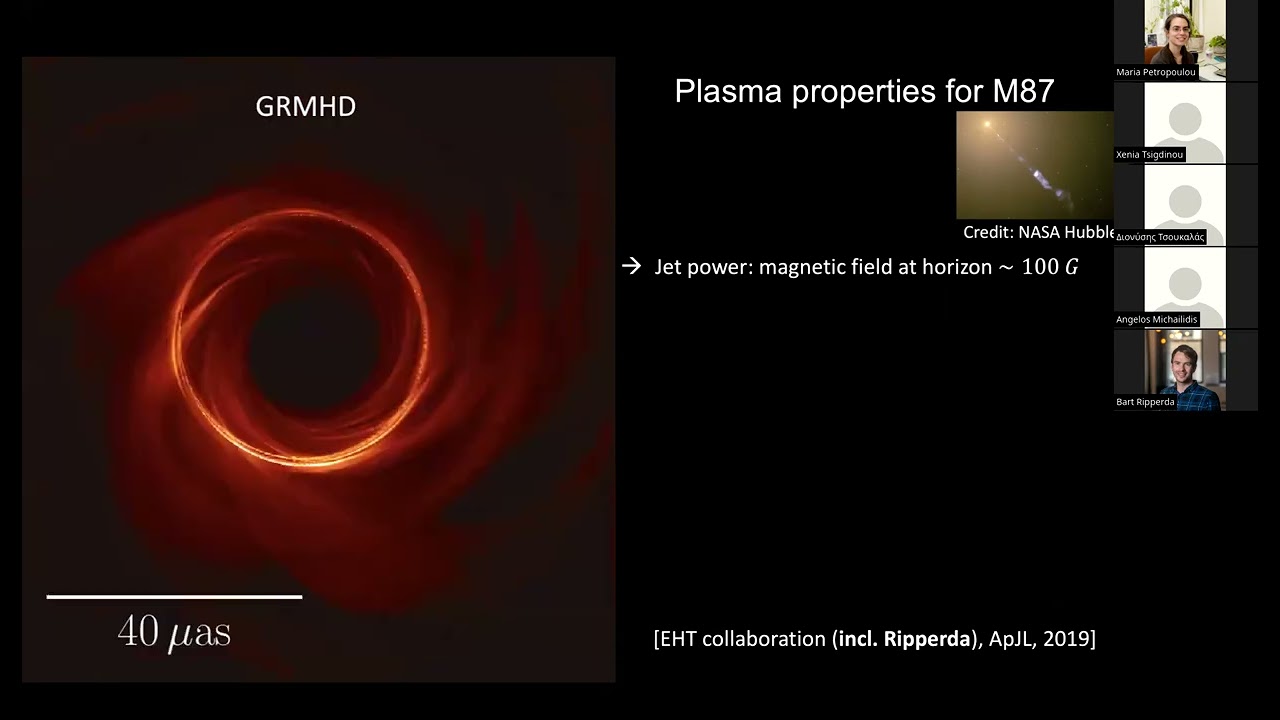



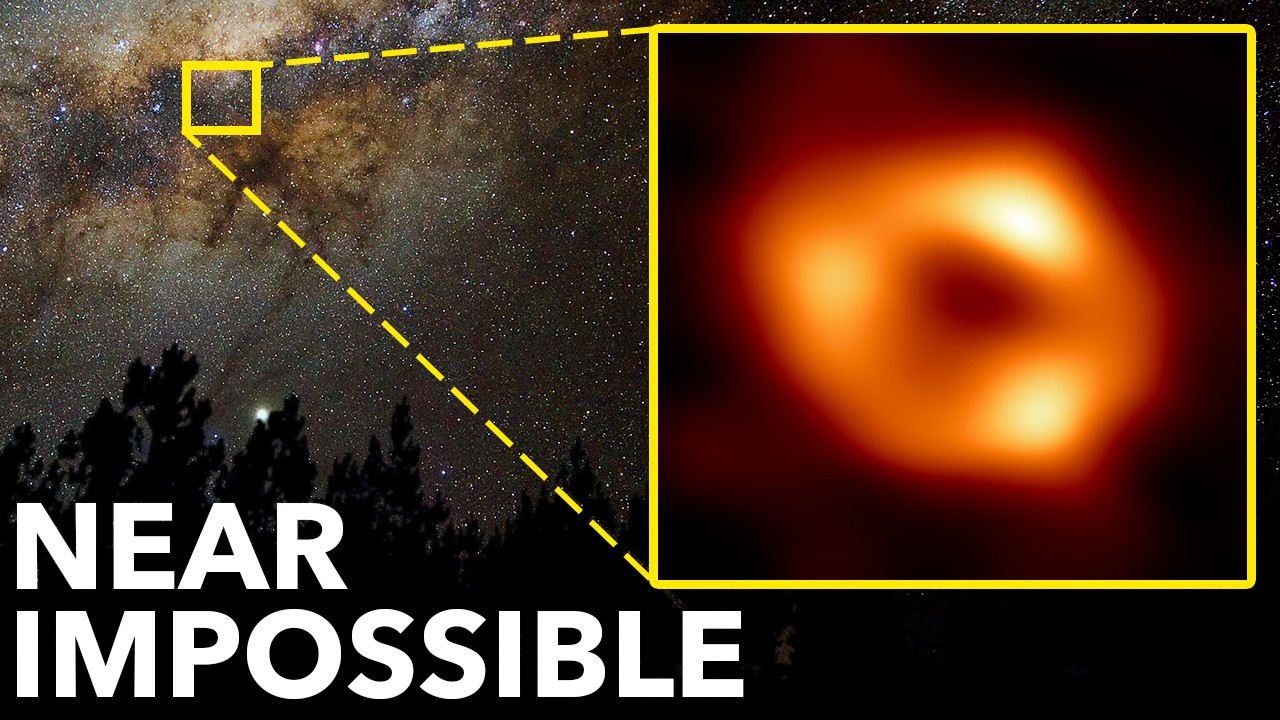




Active galactic nuclei, including quasars, are powered by supermassive black holes at galactic centers, where accretion disks convert gravitational potential energy into radiation through friction and viscosity, producing jets and emission lines that reveal the black hole's properties through time-delayed reverberation mapping.
Black Hole Accretion Disks: How Quasars Are Powered
Added:Basic physics of black holes, including the concepts of gravity, singularity, the event horizon, and the distinction between stellar-mass and supermassive black holes.
The principle of conservation of angular momentum, which explains why infalling matter forms a rotating accretion disk rather than falling directly inward.
Fundamental thermodynamics and electromagnetic radiation, specifically how friction and gravitational energy in a medium heat it up to emit high-energy light (X-rays and UV).
An introductory understanding of galaxies and Active Galactic Nuclei (AGN), establishing quasars as the extremely luminous cores of distant galaxies.
The physics of relativistic jets, specifically magnetohydrodynamics (MHD) and mechanisms like the Blandford-Znajek process that extract rotational energy from black holes.
The role of AGN feedback in galaxy evolution, studying how quasar energy and jets regulate star formation and gas distribution in host galaxies.
Advanced observational techniques in radio interferometry, such as those used by the Event Horizon Telescope (EHT) to image accretion disks and shadow regions of supermassive black holes.
Cosmological applications of quasars, including their use as cosmic beacons to study the intergalactic medium, gravitational lensing, and the expansion rate of the early universe.
215 views1likes44:24Original Release: 2025-02-27
kind of doing a forensic job here looking at a bunch of stuff that happens in the centers of some of these galaxies and trying to piece together what's the cause of it and it's a little bit like a crime scene actually and so each of these different pieces of observational information i' got to go with the observational evidence first tells you something about the monster that produced all of these observational phenomen this is a off this an actual data picture here see this huge fuzz it it takes up most of the picture here and the it gets brighter at the center here Space Telescope picture so we could get good resolution what's all this Buzz The Starlight from the brightest elliptical galaxy in our nearby Virgo cluster of galaxies we're sort of on the edge of the Virgo cluster we're mildly being accelerated towards it I guess if you wait long enough we'll eventually fall in there many many many tens of billions of years in the future the famous m87 with the spectacular Event Horizon telescope R synchron ring okay but of course this was not known obviously in the 1950s a 1960s all it was known is there's kind of a remarkable Point like looks Stellar quasi Stellar source of light in the center of this galaxy otherwise it's in this case it's an elliptical galaxy I showed you a bunch of pictures in a in the lecture from last Thursday of spiral galaxies which has a similar sort of deal there looks like there's a star uh maybe even much brighter than this in the center of a spiral galaxy and that's no star that doesn't have a spectrum like a star at all but that's about all people knew for quite some time actually this one is so nearby it was actually known from very good groundbased images um and it's very obvious if you have a radio telescope that can make high resolution images what's the method radio telescope of course has a terrible um resolution right because it's just Lambda over D and Lambda is huge it's awful unless D is not the size of your antenna it's the length of your Baseline of your interferometer so a radio interferometer could get you resolution as high as Hubble and what the radio astronomers noticed in many many cases first of all they unexpectedly saw all of these radio sources in the sky and you notice a number of distinctive characteristics always associated with this radio emission and one of them is that it often typically has these Jets sticking out of it it looks like this jet goes right back into the center it looks like it originated in the center there and it extends way out there in fact this thing is going it's like leaving the Galaxy apparently this is bluish light it's synchrotron light now in this image it actually can be it it produces mostly radi but it also does produce some Optical a little bit of optical light that you can see if it's nearby yes so you see that this radio jet extends very very far out in fact if you look further It Go keeps on going out it leaves the Galaxy and then it sort of dribbles off here just in Intergalactic space this is enormous so this is hundreds of thousands of Lighty years on the picture up here as you zoom in you see okay there's a jet coming it's pretty obviously coming from the center as you look really closely at the center you can see that it really seems to be coming from even just a few light years uh this is the highest magnification until EHT uh worldwide in aerometer came along operating at millimeter wavelengths to get maximum resolution you look closely you see that this looks like a ring it's like a circle that I I showed you there but anyway there's a jet coming out of it it kind of looks like it's it's it's distinctively one-sided doesn't it but if you look on a larger scale and this is very common in in these so-called radio galaxies remember these were discovered basically as soon as people started cataloging radio sources there's a second lobe on the opposite side two beams blasting out of the center of the Galaxy one going left here one going right here now remember what this is this is synchrotron emission synchrotron emission does require highly relativistic electrons have to be uh going at almost the speed of light with a very high gamma factor and then they will give off these radio photons well of course normal Stars don't produce that they don't accelerate to the speed of light you know electrons it's impossible really for anybody to imagine how any combination of stars could make jets coming out of two sides of the center of a galaxy I mean supernovas don't do this even if this was an an entire galaxy full of a million supernovas or something it wouldn't really do this whatever became apparent that there's something that has been blasting out energy at least in One Direction or two directions how how fast well it turns out you can actually measure proper motions in this jet you see there little lumps and blobs concentrations here these actually move out over a few years now for them to go a few light years in a few years sideways it means that they must be these Jets of energy of Highly uh energetic electrons must be going at almost the speed of light so that's a fascinating mystery but it's been happening for hundreds of thousands or millions of years because it keeps going out in more or less the the same direction here there's some object just one object basically in the center of this galaxy which is acting like a gyroscope because it has a longterm axis that it remembers it remembers it for hundreds of Thousand Years looks like it's got a North Pole and a South Pole but it's it's bipolar that's a very characteristic observation of of active Galactic nuclei so there's not too many explanations that you can come up with that except you know it's one very large object that remembers a north and a South polar axis basically the modern interpretation is that this is a giant black hole which had probably has a disc of material spiraling around it black hole may be spinning or it may not be it maintains a long-term bipolar structure or memory the radio astronomers kept finding more of the and nobody predicted this it was a complete shock this doesn't happen in most galaxies but it happens in some remarkable radio galaxies just another one this is the brightest radio Source in the constellation of signis observed at high resolution I think this by a former UCLA student who worked on this here's the actual center of the Galaxy or there's a optical picture the center of Galaxy it happens to be a big elliptical galaxy but if you look in the radio the radio waves are shown in red here or orange here it this these this beam of high energy electrons has left the Galaxy it's gone out in Intergalactic space and then it sort of runs into some obstacles um and eventually loses its thrust and sort of uh just makes a makes a puff of energy here this is a very typical double lobe radio Galaxy but you just look at this and you can sort of see where energy originated it should be pretty obvious to you the energy started here and moved out in two almost exactly identical opposite directions at nearly the speed of light and it's been doing it for hundreds of thousands or million years but that still doesn't tell you well what kind of object would be able to blast high energy electrons accelerate them out of a North and a South Pole how could that be done as I said no group of objects Stars neutrons stars super noas or whatever um could do that because you couldn't get them all lined up how would they all be pointing the energy to just come out in two different directions you basically need one object with a spin axis we already learned that it was a very small object producing the energy because it has rapid time variations and its brightness it must correspond to an extremely high mass because otherwise all of the radiation pressure of the photons would just explode the object now we've learned something else this Mass has a gyroscopic memory of the spin axis okay can you tell where the quazar is in this picture he burning out the Hubble Space Telescope camera it's up here in the upper left corner you see a lot of these famous objects that are radio galaxies or qu quazars quasi Stellar radio sources you'll see 3C in front of them radio astronomers in the world the leading group was in Cambridge they had the first antennas actually they some of them were involved in ra military radar with the UK but during the war and then they took this technology and started mapping the sky after the war and they made a catalog the first two Cambridge cataloges were called the 1C and 2C catalog well first Cambridge and second Cambridge catalog they're basically all garbage because they couldn't recogn they couldn't pin down where the actual radio waves were coming from it's totally unreliable a lot of fake sources which are called side loes of their antennas and so on where it's actually not even looking at the right Source it's picking up radio waves from source that another source that's a few degrees away there were disaster finally after a few years they got their first catalog that was believable where they actually knew where the radio waves were coming from and they weren't fake sources and artifacts third Cambridge catalog very influential only has about 500 quazars in it but they're the brightest ones in the sky in the radio wavelengths and so they've been studied a lot this is this is bright enough to actually see with binoculars okay it's like 12th magnitude so it's it's too dim to see by by the naked eye but it's insanely bright and yet it has you know fairly substantial red shift it's going away from us at about one six the speed of light so interpreting by Hubble's Law this is crazy luminous this is like hundreds of times more luminous the entire light produced by the Milky Way galaxy and yet I've studied this object to death we've seen this object vary in the course of one night so all of this power and Luminosity at all wavelengths ult Violet x-ray wavelengths gamma ray wavelengths radio wavelengths Optical wavelengths infrared wavelengths all this energy is coming from a region that can't be more than one light day across this one also has a jet here UCL graduate student Fred baganov uh finished his PhD thesis working on distant quazars um with me studying their x-ray emission and he was looking around at post-doctoral jobs he wanted to stay in astronomy and do research because why would you want to do anything else and he had this job offer to work on the Chandra data at MIT and he says yeah but I really wanted to work on Quasar I didn't just want to work on on the Milky Way galaxy that's the data that they're analyzing I said well you never know nobody's looked at the Milky Way this closely ever before it's probably going to be fascinating data you're certainly going to learn something about it why don't you give it a try anyway the rest turns out to be history because without prediction or expectation whatever Fred is looking at this data it has enough magnification to just see the x-rays coming from the exact center of the Milky Way galaxy and every once in a while it just like explodes or just gets really bright so usually our giant black hole is starving and doesn't have any fuel without fuel it can't produce any of these energetic phenomena it can't produce photons in any wavelengths but every once in a while a new blob maybe it's a new star a new planet or something spirals in and gets torn apart we actually have seen this in some detail and then for a little while accretion happens so you have the possibility of gravity power what's Gravity Power well in a black hole of course it has enough gravity to accelerate Mass if there is some Mass nearby it can accelerate the mass up to the speed of light the mass is going to acquire a huge amount of kinetic energy if there's some way that that huge kinetic energy of this Mass you need fuel you need Mass you need a huge gravity to accelerate it that's first two things if there was some way that that huge kinetic energy could get transferred I don't know into heat then you might see something any hot object radiates furiously photons you might see a really bright object if it had enough fuel rapidly moving stuff gas that's moving in almost the speed of light how could you transform that kinetic energy into heat any any ideas of people's where do we get heat from usually around here friction watching the X-ray emission from the center of our galaxy for years he's made a very successful career out of it and you can't predict it you know it's worse in the stock market you don't know when it's going to go up so there's an example I think this may have been his first discovery he here yeah it was like doing almost nothing for 2 hours 4 hours 6 hours but then during this one little 2 hour interval here it gets to be beautifully bright and and since then sometimes it gets to be 50 times uh 100 times brighter than that what does that immediately tell you this whole thing was over in about two hours so we immediately know that the X-ray power source in the center of our galaxy is less than two light hours across that's like the inner solar system x-ray emitting region I guess you might call it a a very low power quazar um is Tiny all right isn't that crazy so it looks like yes if you look carefully at it and you really understand the different manifestations of phom looks like we've got a giant black hole in the center of our galaxy occasionally lighting up when it gets an occasional meal this is is a computer simulation of a disc of gas around a black hole it's orbiting around in this axis it's gotten very very hot why has it gotten very hot I'm I I stress although this is a computer simulation it's extremely realistic it's done on a supercomputer you see the disc of gas that if gas Falls in you know from a very large radius to a small radius by the time it's gotten close to the center of gravity close to the black hole center of mass it seems to be spinning really fast that should not surprise you what's the rule the law of physics that might you might expect that gas if it falls down to a very small radius is going to find itself spinning very rapidly conservation of angular momentum so this gas could have fallen from nearby stars or gas cloths in the Galaxy but eventually as it and it probably wasn't it had a little bit of angular momentum a little rotation let's say in this axis the spin axis would be vertical in this picture Okay as it gets closer and closer conservation of angum means it's going to spin faster and faster so it can only collapse down easily perpendicular to the spin axis and that's why you'd expect to see a disc didn't I go through that argu argument when I was talking about why galaxies make discs didn't I mention that argument why protoplanets when they protoplanet planetary systems when they collapse around a star similar deal they all they usually make discs don't they there's discs all over the place because of conservation of amum and it's very likely there's pretty strong evidence there's also discs of gas around giant black hols so far you've got a bunch of gas the and it's just going growing around an orbit and that doesn't by itself release any energy it has to change its orbit it has to move to a smaller radius a tighter orbit and go faster what would do that the gas in the inner parts of this disc are going fastest like the inner part is just going almost the speed of light as you move very fast as you move further out gas immediately a little further away is not moving as fast and then you go a little further away out here and gas is moving even a little bit slower right reminds you of the klarian rotation curve so what you've got is an interesting situation because you have gas in a disc moving at huge velocities but there are huge relative velocities as the inner gas is trying to move past the outer gas and the outer G gas is trying trying to move past Gas outside of it so you have all of these different velocities what if they touch each other what if there's any kind of it's called viscosity um if there's any connection actually could be done with magnetic fields if there's any connection where this inner gas has any influence on that gas that's further out and that has any influence on the gases further out and so on there's going to be an immense amount of friction and this does two things gas that's moving around at the really highest speeds because of friction it's going to better write this down lose angular momentum funny thing about gravity if you lose angular momentum what happens to that gas just just think of you know decaying orbits you know spacecraft around the Earth it's going to spiral in on a Tighter and Tighter orbit to smaller and smaller Radia so this is irony of gravity friction is trying to make this gas slow down but what is the result the result is it spirals in closer and it goes even faster is that funny how gravity does that so now we have a way for angular momentum to be transferred out gas can be transferred in it can acree it can fall all the way in to the aventor Riz so what I've described now is not just a disc of oring orbiting rotating gas it's an accretion disc because friction inside it is continually making the gas feed the black hole this is a great way by the way to feed a black hole the worst way would be to just drop rocks or planets or gas straight in like with zero angum like that why is that a crummy way speed up to the speed of light go inside the black hole inside the Event Horizon and we're not going to hear anything from it we're not going to see anything all the energy goes into the black hole the black hole what would happen not much except that its mass increases right because the black hole's mass is the summed history of all the total amount of mass that ever fell into it in its entire life history but aside from that we don't see anything it's boring the clever trick that's so nice about an accretion disc it lets the gas gradually spiral in and get faster and faster and faster what was the second consequence of the friction in an accretion disc well friction means some of this extreme kinetic energy of orbit some of this orbital energy you got it is converted into heat which is then immediately converted into radiation so this gas disc the gravitational potential energy gets converted into radiative energy and close to a black hole oh my God is there a lot of gravitational potential energy the most ever suppose that I have a kilogram of hydrogen and I ran it through nuclear fusion reaction so then it's going to make point 993 kilograms of helium at the other end um I've converted basically Mass into energy so I have mc^ 2 times what what's the efficiency of nuclear fusion 0.7% right you could just work it out I said you start with a with a thousand grams of hydrogen you end up when the fusion reactions take place with 993 grams of helium that seven grams it's seven out of a thousand the seven Parts out of a thousand it's less than 1% they didn't disappear it's been transformed from Mass into energy by multiplying it times c^ s and that was an incredible Discovery right amazing you know change of 20th century there whoa this is so much better than the trifling amount of energy released when you just restructure the electrons like in a hydrocar that's nothing like jet fuel which I'm quite reliant on these days by the way burning jet fuel with oxygen that's there's almost no Mass converted energy at all it's like nothing nuclear energy that's like thousands of times more powerful right instead of instead of a kilo of jet fuel take a take a kilo of hydrogen for example in a in a hydrogen bomb that you would think is is an amazing energy source how could you beat that that's got to be like the most efficient way of taking Fuel and generating energy that the Universe has ever discovered wrong as of the 1970s where were people realize that's not that impressive at all nuclear fusion only gives you about less than 1% of the fuel that's consumed gets converted into mass in an accretion disc under the right circumstances like I'm describing here actually can be 10 to 100 times more the Gravity Power around the outside of a black hole is by far in a way the most efficient way if you give it fuel to convert that fuel into energy of photons photons at many different wavelengths um basically photons corresponding to the high temperatures that you find in the inner parts of the secretion disc so we now have pretty uh pieces of a good story we have arguments why there is a giant Mass in a small space Sounds like an event horiz was formed and now we have a a pluse it would have a spin axis probably defined by whatever the random angular minum was of the fuel that's been eating for the last millions of years got that this could be the North Pole that could be the South Pole um there are some theories basically about how magnetic fields in this that are sweeping around it's like a gigantic Dynamo when you have a a sweeping magnetic field stuff is probably very magnetized there are some theories about how very high energy electrons would get accelerated in two directions the North and South Pole and we have a good theory about how so much light ultraviolet light and so on could get produced very close to a black hole and that would explain why it changes its brightness rapidly over short time because it's all in a crazy compact region that we're seeing most of the light here is really coming from about you know 10 or 20 gravitational radi GM over c^2 now we usually say that the event horizon for a hole that's not spinning is the Schwarz out radius which is 2 GM over C I took a quazar spectrum here Spectrum this is how bright it is and here are different wavelengths from the infrared to the optical to the ultraviolet to the far ultraviolet the energy you get out is at all these different wavs why is the energy you get out at all these different wave onks because you're looking at all of these different regions of the accretion disc around a giant black hole from the innermost regions which are the hottest small surface area but very hot which produce ultraviolet extreme ultrav viation to the middle regions here is is out to about 100 GM over c^ s which produce blue light violet light to the outermost regions of the disc which produce op visible light and infrared light there's a formula for this that predicts all of this stuff so my great achievement here was to show that I could actually match up the observations basically of all quazar with a simple model of an accretion just around the black hole I could even tell you what the rate of fuel is going on to the black hole and in some cases it's like more than one solar mass per year some cases it's like it's like a few Earth masses per second in the most luminous quaz the other thing I could tell you is how big the black hole is how massive it is that that basically tells you the temperature of this material quite a lot of these quazars we studied when you compare them to neist model you get the black hole Mass you see how fast they're generating Luminosity which is controlled by their fuel supply they're not too far from the Edington limit remember the Edington limit well it looks like these objects know about the Edington limit they really are some of them are on the verge of losing their stability and just blowing themselves apart in fact some of their outer layers May occasionally be blown off Blown Away by so much radiation pressure because all this gas is ionized so you've got electrons you got electric plus and minus charges separated soon as they're separated um yeah there is and they're moving around at pretty high speeds um it's hard to avoid magnetic fields forming in fact that's a big argument how strongly the magnetic fields get and so on they might be there might be as much energy in the magnetic field almost as there is in gas pressure um and so part of I'd say one of the biggest incompleteness in in this theory of accretion disc is well you know where are the magnetic fields and so on um and that is difficult to measure but probably playing a pretty important role and they're it's it's virtually certain that they cause those radio Jets it it's certain that the really strong magnetic fields that are whipping around spinning around um accelerates electrons to very high energies but that's about all I can say that people would really agree on the NC creting black hole is fundamentally the central engine that's what's driving all this emission but there are then the the radiation goes out in all directions and then it may produce other observable consequ we've already seen some observable cons it may make a jet of synchron emission maybe it may make two loes of of high energy particles you know radiating in the radio wave BMS so we could see that with radio telescopes also does some other stuff a lot of these photons are ultraviolet photons a lot of them have a high enough energy to ionize gas so if there's any gas around the quazar which I suppose there would be it's a center of a Galaxy many cases a spiral galaxy of course there's gas in the center of a galaxy there that gas is going to what happens to it when it encounters these iony photons photoionized so it's hard to imagine a quazar producing all of this UV and x-ray radiation without also producing a large amount of ionized gas what's so special about ionized gas ionized gas is wonderful because a I can detect it real easily if I've got a spectrum it's totally different from what stars do stars have photospheres they have absorption lines it doesn't look like spectroscopic like stars at all um and I know the wavelengths if I measured them in a laboratory so I can use the Doppler shift to measure accurate velocities of gas close to a black average of 700 quazar Spectra now you can do this with thousands of quazar Spectra and we're going all the way down in the ultraviolet here the Violet here's the blue here's the green here's the yellow uh this is Optical wavelengths so you see all of this quazar light and there's no absorption lines in this but all of these Wiggles up here they go up are emission lines from ionized gas and a lot of them have been identified here and the first thing you notice is my gosh there are some really highly ionized atoms there look at this there's carbon in its fourth ionization that means carbon has lost three electrons here's nitrogen five nitrogen has lost four of its outer electrons the outermost electron is weakest held why first of all because there's not that much net charge net charge attracting it you've got almost as many pluses as minuses inside there's only an extra plus charge of one so it's only being held by a fairly weak electric attraction and it's fairly far out you the electric force is one over r s so it's it's going around out there it wouldn't be too hard for that outer electron to be completely knocked away if it just had Escape energy where could an electron in the outer orbit acquire escape velocity two ways one is if the atom was going really fast I mean very fast at a very high temperature and hit something else hit an electron or hit collided with another atom that's going to require really high temperatures like hundreds of thousands of degrees there some other Way say say it's only you know 10,000 degree where could that electron pick up enough energy to escape energy to ionize if enough energy was delivered just to that one little electron in a bundle of energy called a photon in fact it needs to be an ionizing Photon it needs to be a UV Photon well quazars are producing u v phons by the truckload above 13.6 electron volts that's one ridberg remember what that is that's the ionization potential to knock away one electron from a hydrogen atom from its ground state so UV photons are produced by some stars and they barely have enough energy to knock away one electron hydrogen you're done it only has one electron but what about some of the other heavy elements such as we see here carbon for example magnesium silicon nitrogen and so on they have more electrons well the second electron is going to be a lot harder to knock away it's a little closer there's more electric attraction to it so it's going to need more energy to escape where are you going to get more energy don't tell me oh it'll take two photons ah wrong answer the photons only come in one at a time it needs one photon with maybe twice as much energy what does that mean twice the frequency E equals H new so now we need extreme ultraviolet photons to to to ionize to to knock off the second electron to knock off the Third electon here we need almost x-rays to do it or the fourth electron here the fifth electron we're we need x-rays I'm sorry there's no stars in the universe that produce that that just they just don't get hot enough sorry but the inner parts of aazar accretion just definitely get that hot they produce extreme ultraviolet very highly ionizing pH they produce x-rays also so you might expect to find around aazar because of the nature of its super high energy photons ions that we have never seen anywhere else highly ion as gas and that's what you're looking at in this spectrum here but there's something else it's so no surprise there and this is not what you would see when you look at the Orion Nebula because the Orion Nebula is only being ionized by oars 30,000 Dees 20,000 degrees or something and they don't have a lot lot of these emission lines at all so let's look at this emission line here hydrogen beta that's a 4 to2 Nal 4 to Nal 2 electronic transition of hydrogen after it got ionized and then it recombines there it drops down the ladder drops the fourth level then drops down the second level gives up a photon well all these photons should be at what you would measure in a laboratory at rest wavelength your laboratory is not moving it would be at 486 NM here 4861 angstroms but your eye is not conf fooling you here there's a lot of photons here these are H beta photons they started at 4861 but they're significantly either over to the blue or they're over to the red what I'm asking you to believe your eyes is some of these emission lines in fact most of these emission lines are wide they're too wide a range of wavelengths what is the one reason that I can think of why a photon might originate with a very well-known defined wavelength of 4861 but we observe it at a subn naturally longer shorter wavelength what's the one effect that is likely to be the culprit here that's doing this Doppler ship highly ionized gas hydrogen carbon nitrogen oxygen moving at very high speeds this Doppler shift here is like a few percent the speed of light because it's a few percent shift in the wavelength so we've got gas moving around at thousands of kilometers a second which normally would just Escape any normal Galaxy why do you think it has such a high velocity this gas seems like it must be being accelerated by something very powerful maybe it's being accelerated by a very strong gravity that it's close to the center of looks like GM over R here must be let's see the square root of that you know must be several percent the speed of light here meaning that these this highly ionized gas is actually showing us what the conditions are relatively close to a giant black hole maybe they're orbiting around a giant black hole I told you that the fuel supply and this accretion process of gas fueling the black hole to produce the ionizing energy to produce all the UV and x-rays is quite unstable it's changing all the time so the quazar is constantly changing its brightness what's the effect of this variable amount of ionizing photons coming from the source going to be on that gas that's close to it the gas is alternately getting a lot of power to make strong emission lines and then the power is going down I would expect that the emission lines of this gas the ionization of this gas is also going to go up and go down when the power source goes up and goes down that that's just physics you energy in equals energy out we have less energy it goes down if we have more energy uh you get more uh bright emission L here's the fun part though remember the gas is not at the center of the AG it's not at the center of the quazer it's not in the central inner solar system it's not in the central few light hours or even light day or whatever it's further out it's called the Broadline region that's a stupid name because it makes lines so it's the gas that makes lines and the lines are broad all these terms were named by people didn't know what they were talking about right they they were just describing unexplained observations here's the experiment I want to watch with a lot of patience and I'm I'm sorry but I'm going to have to request quite a lot of telescope time for maybe months in a row just to look at my favorite quazar I'm going to watch and see as the ionizing uh energy coming out of that quazar goes up Peaks goes down bottoms out those photons only travel at the speed of light to reach the gas that produces the broad emission lines there may be is an accretion disc around a black hole it's even black at the center that's super hot it's producing ultraviolet and x-ray photons and let's suppose that it wasn't producing very much at the beginning of the movie all of a sudden it prod it it gets an extra Spurt of accretion it produces like 10 times more power ultraviolet photons zoom out in all directions some of them are going to come straight towards the earth the earth is in this direction straight up some of them will go out sideways though also at the speed of light that's one thing I know about photons they travel at Sea so they'll go out at the speed of light they'll hit some of these gas clouds out here which are moving in high velocities they'll make them be brighter they'll get more ionized more emission and then later we'll see those emission lines get brighter here goes the movie it's only 5 Seconds watch carefully boom a flash some come straight to the Earth aha One More Time Boom some go straight the the Continuum goes straight to the Earth but the emission lines come later there's the final frame of the movie all right so what are we predicting here we will see the energy output of the quazar from the acreage disc go up first later because of this lag here this this light travel time it has to travel across to reach the ionized gas later we'll see the increase in the emission lines getting stronger and we could measure how many days it was between this and this which corresponds to the light travel time from here to here so if I can capture this lag or delay in actual data between emission lines and the and the the UV Continuum with Central Source I can tell you how big this is even though until very recently there is no telescope on Earth which can give you that much magnification there's actual data um this is a nearby secret Galaxy it's like a quazar it has broad emission lines it's called a seet Galaxy just for historical reasons because it's relatively low power and nearby so you can actually see there's a spiral galaxy in Carl Seaford working at the Mount Wilson Observatory actually discovered these things later some more powerful examples like 3c273 I showed you there that thing looks almost like a star unless you look really hard you can barely see a faint distant little Galaxy around it quasy Stellar object SE Galaxy they're just different amounts of power of matter that creating at different rates onto a black hole it's pretty un um predictable got brighter got fainer got brighter fer and so on each of these tick marks here is 10 days we've got I don't know 180 days here of data the emission lines from the ionized gas it's photo ionized also responded to the right changes of the quazar quazar goes up quazar goes down emission line goes up emission line goes down up down and then up again if I draw a line through the center of the peak output that we see from the quazar that's not at the time of the peak output of the emission line the emission line is delayed I'm going to say by about 10 or 15 days right this is where the peak output energy was but you have to wait 10 or 15 days for those photons to to travel 10 or 15 light days to hit the emitting gas that gives us an actual size of this emission line gas through this indirect reverberation mapping time variability campaign we concluded that these various different emission lines have lags of 10 days 20 days some of the emission lines like a nitrogen 5 that's a highly ionized nitr are coming from very close to the black hole only a few light days out some of them are coming from further out 20 days out these are all different emission lines here that we measur what do you want to compare that with what is the velocities of the Doppler effect sees in these broad lines how broad are they how fast is the gas moving all have the same value of v^2 R implying that they all have just one Mass causing their acceleration the location of this line then if you assume that all of those motions are just gravitational orbits it tells you what the mass is doing the orbit this a little bit like the Andrea gz galactic center group measurements also UCLA here except she was studying individual Stars either way we think that this is a way to measure Black Hole Mass
Up Next

121:54
Accreting Black Holes and the Enigmatic X-ray Corona
@CaltechAstro
2.6K views•2021-11-20
61:17
First Billion Years of the Universe with the Square Kilometre Array
@iaaudc
121 views•2022-05-26

39:47
How Galaxy Rotation Curves Reveal Dark Matter
@matthewmalkan137
328 views•2025-03-16

6:10
Gamma-Ray Bursts: Cosmic Snipers Explained | Astronomy
@kurzgesagt
15M views•2016-07-31
Related Study Plans & Knowledge Roadmaps
Structured learning paths in Astronomy
astronomy
Reionization: Pop III Stars, IGM & 21cm Line
01Foundations of Cosmology & the Early Universe
02Population III Stars & Cosmic Dawn
03Physical Mechanisms of Reionization
+ 2 more learning modules
17h5 modules
Explore Roadmap
astronomy
Planetary Rings: Dynamics, Roche & Resonances
01Foundations of Gravity and Orbital Mechanics
02Tidal Forces and the Roche Limit
03Structure, Composition, and Collisions
+ 2 more learning modules
10h5 modules
Explore Roadmap
astronomy
Asteroseismology: Stellar Waves, Ages & Cores
01Foundations of Stellar Astrophysics & Wave Mechanics
02Stellar Oscillation Modes: P-modes and G-modes
03Mathematical Framework of Asteroseismology
+ 2 more learning modules
35h5 modules
Explore Roadmap
astronomy
Adaptive Optics: Physics, Engineering & Control
01Foundations of Wave Optics and Wavefronts
02Atmospheric Turbulence & Optical Distortion
03Wavefront Sensing Technologies
+ 3 more learning modules
35h6 modules
Explore Roadmap