




















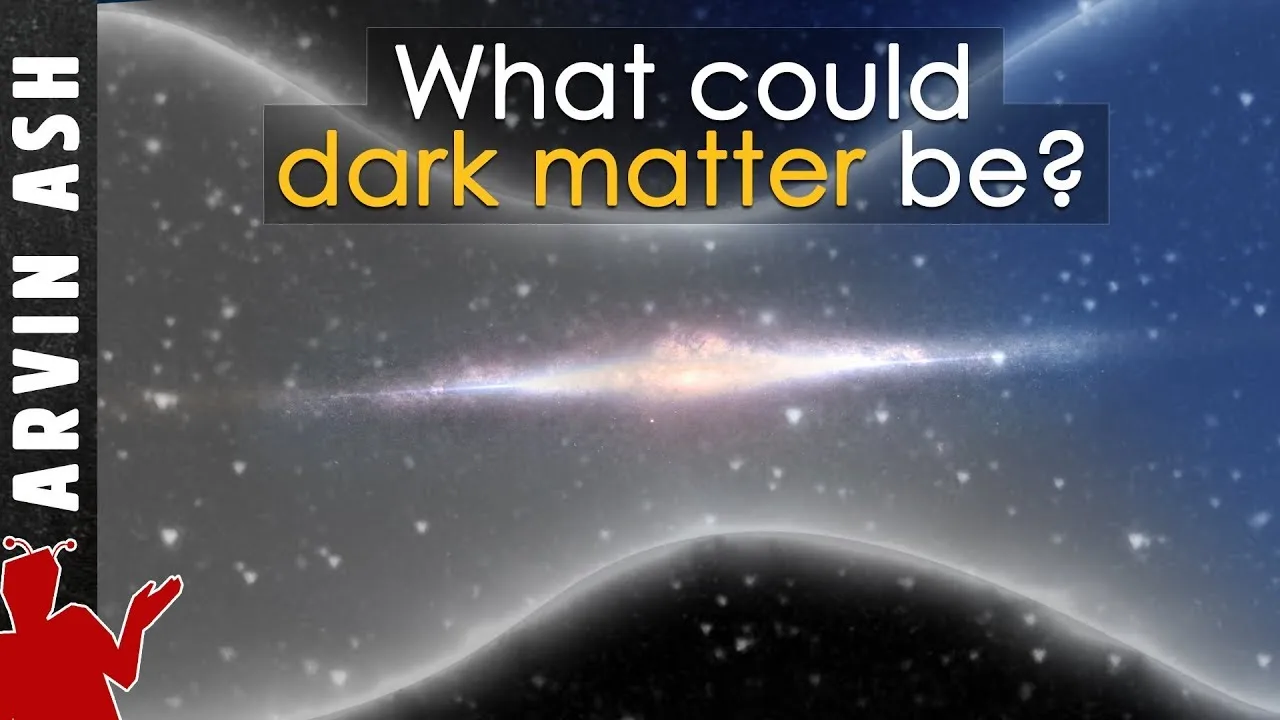


By measuring the orbital velocities of stars and gas clouds at different distances from the Milky Way's center using Doppler shift observations, astronomers discovered that the rotation curves are flat rather than declining with distance as expected from visible matter alone. This flat rotation curve indicates that the gravitational mass increases proportionally with distance, revealing that most of the galaxy's mass exists in an invisible, extended dark matter halo that cannot be detected through electromagnetic radiation.
How Galaxy Rotation Curves Reveal Dark Matter
Added:Kepler's Laws of Planetary Motion, specifically how orbital velocity is expected to decrease as distance from the central mass increases (Keplerian decline).
Newton's Law of Universal Gravitation and the physics of centripetal force governing circular orbits.
The basic structure of spiral galaxies, including the concentration of visible mass (stars and gas) in the galactic bulge versus the disk.
The Doppler Effect and how astronomers use spectral line shifts (like the 21cm hydrogen line) to measure the radial velocity of rotating gas clouds.
Modified Newtonian Dynamics (MOND) as an alternative gravitational theory proposed to explain flat rotation curves without invoking dark matter.
Gravitational Lensing (both strong and weak) as independent observational evidence for mapping the distribution of dark matter in galaxy clusters.
Dark matter candidates in particle physics, such as WIMPs (Weakly Interacting Massive Particles), axions, and the ongoing experiments to detect them.
The Lambda-CDM model of cosmology and the role of dark matter in cosmic structure formation and the cosmic microwave background.
328 views5likes39:47Original Release: 2025-03-16
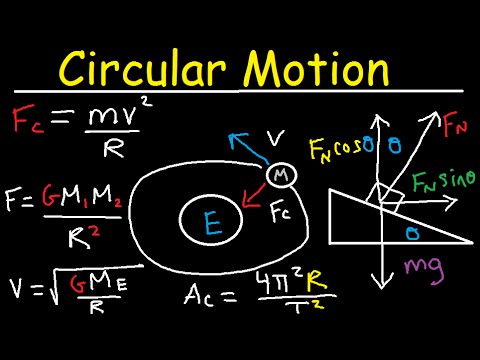
on the left a closeup view actually I think that was done with the Hubble Space Telescope so you can see of course that this Milky stuff is really just the light of millions actually billions of stars but you can see that particularly the shorter wavelengths the blue light has been heavily absorbed by Interstellar dust and it's kind of patchy it's like looking through clouds somewhere in there is the center of the Milky Way galaxy but it's very difficult to see it um unless you had a long wavelength of observations now here's a better shot on the right you can see there clearly is a center and we're not at it but the Milky Way does seem to wrap all the way around the sky this is an all Sky projection and that's because we're not at the edge of it we're we're inside it so but you can see very clearly how flattened it is there then those are the two magelan clouds orbiting around us even in this picture you can see that there still is dust absorption even at at a longer infrared wavelength but this shows you much better what the true distribution of our galaxy is now the interesting question for today though is okay let's suppose that we can make detailed observations of this flat dis what's it doing well it should be controlled by what's the only one major force in the universe that mostly makes objects on large scales um go that should be graph the visible picture that I showed you on Wednesday here's a more uh revealing picture at longer wavelengths so how is everything moving around how large is the Milky Way or in particular how far away are we from the center of it a great deal of effort went into figuring this out and it's really difficult it's a classic problem in astronomy which I'm going to get into a lot more detail on uh in the last two weeks of the course we have great information with our telescopes of Earth we can't really move from Earth just receiving light we have great two-dimensional information about things all around the sky even at very high magnification but how do you know the third dimension you look at a bulge of light like this this is a cartoon of it here's the actual data you look at this lot of stars there this is Starlight uh of billions of stars how far away are those stars or putting in another way yes the Milky Way is a very flattened disc yes we are inside it that's how come we can see it in all directions but how large is it how far does it extend well you would need to know the distances of objects and getting the third dimension of objects astronomical objects is a classic problem in astronomy which uh it's it's probably as big as almost any one of the other jobs that astronomers do and we've been getting better and better at it and but you can see how difficult it's going to be so I mentioned for example does anybody remember what the the one method I told you that is the gold standard method if you want to know the Third Dimension the distance for example of a star how do we figure out the distance of the Stars you OBS you use the fact that the Earth moves around from one side of the Sun to the other every six months to basically you have two eyes you get a binocular vision you see The Parallax angle of the star moving back and forth and the smaller the angle is that must mean the further way the star is that is brilliant unfortunately that really does not hardly really works for stars that are across our galaxy the the The Parallax angle is currently just too small for us to measure you can sort of figure out what the angle is um you know if the stars are thousands of parex away then we're talking about Parallax angles that are just thousands of one second of Arc it's just it's just beyond our technology currently to measure that so we use indirect methods and the most popular indirect method would be to look at a bunch of stars in a star cluster see how bright they are and then find the main sequence of the star cluster I'm not going to go on about this in detail and then you'd say well if this main sequence is what I understand it you know that's kind of a universal it's the same everywhere in particular for example um let's look at stars on the main sequence that are the same temperature as the sun they must have the same intrinsic Luminosity as the sun right so if I see how how bright they appear to be then I use my brightness Luminosity formula and I could work out assuming that those stars are the same as the sun I could work out how far away that star cluster is and that basically is how this scale was put onto this picture it took a long time where's the center of the Milky Way well it's where this largest concentration of light is and even though the visible light is very well blocked the uh longer wavelength light comes through pretty clearly anyway this direction of the center of our galaxy happens to be fairly far in the southern hemisphere it's in the constellation of Sagittarius which we'll get back to and currently uh actually this is a little bit out of date I think the best estimate now is that the Sun that means our whole solar system is uh about 25,000 25 is probably a little more accurate than 28 but who cares I'll give you full credit on the exam um from the center of the Milky Way galaxy so this is the center of mass of the system so that's where the center of gravity is so H shouldn't we just fall in you know this is where most of the masses shouldn't the sun and the Sol you know the planets everything going along with it just fall right in actually this reminds me a little bit of a question we had earlier in the class how come the Earth and the planets don't just fall right into the sun the sun is where the center of mass the center of gravity of our solar system is but we do not fall in at all the answer is the same in both cases here it's also the reason that the solar system is never going to fall into the center of the Milky Way whatever the gravity is in the center of the Galaxy it's it's it's mostly stars there is a black Co there also which adds a bit um it doesn't matter because we have a a great deal of sideways velocity and our uh our angular momentum of our orbit has to be conserved there's no friction on the Sun so it's going to keep on orbiting around here um in approximately a circle at approximately a radius of approximately 25,000 Lighty years it is not exactly a circle in fact it's not even exactly an ellipse because the gravitational Mass you know is distributed in a more complicated way um so sometimes we get a little bit closer to the the uh Center sometimes we a little further away it might vary from you know 15,000 to 30,000 I I don't remember the exact numbers all right so but that's right we are orbiting around Milky Way electricity now that immediately raises an interesting idea so it sounds like a similar idea to when we discovered you know that the planets are orbiting around the Sun what was the interesting idea let's measure the speed of the orbit because what would that tell us now I'm just going to use Kepler's well they're basically Newton's laws of gravity here if I could measure the speed or the period of the sun's orbit around our galaxy what would that tell give me information about it's pretty much the same formula that would tell me that would see that would show how much we're being accelerated by the gravity of the Milky Way out at this distance we need to know how big our orbit is so we need to know this distance from us to the galactic center and then if we knew that we knew how fast we were going we could figure out what is the gravitational mass of the Milky Way galaxy you see that's man I've done this several times in the course we also use this method to figure out the masses of unseen stars in uh in binaries remember neutron stars and black holes I mean I've got a limited Playbook here but we keep playing astronomy's Greatest Hits here measure find something you can measure measure its Doppler shift measure its acceleration infer how much gravitational acceleration is moving it figure out what the mass is that's causing it to orbit around right we we we've done this over and over over again and we're not finished yet we're going to do it I think like two or three times in this class what would it look like by the way if you could get outside of the Milky Way I'm sorry this is probably a somewhat realistic picture not of the Milky Way of course we've never been able to send any spacecraft to look back uh down on we're in the plane of the Milky Way but it would probably look something like this uh there's evidence that it's a spiral galaxy has these beautiful spiral arms we're not at the center here we're not at the edge here we're sort of maybe about halfway out here at 25,000 Lightyear the Milky Way does extend you'll notice that the this is for all galaxies the concentration Stars the concentration of light the concentration of mass is hot way highest in the middle and like any sort of sensible object as you get further and further away from the center the density goes down it thins out there's less of it but there's still stars out here twice as far away from the center of the Galaxy as we are out at 50,000 Lighty years out so people ask me sometimes if they're uh in the mood to ask you know well how big is the Milky Way there that's not simple question to answer right because it just keeps on extending probably even further than okay this is not a picture Milky Way but how big is this galaxy it's probably it's probably bigger than this picture actually it just keeps extending to lower and lower density until it becomes hard to measure in in some sense some galaxies practically almost extend very with very thin low density matter practically until you get to the next galaxy and and it's Halo anyway but okay so I can't tell you everything about that but at least if I could measure one object or just a few objects that are orbiting around the center the Galaxy then at least I can tell you how much mass is included inside their orbit suppose that suppose that they're going approximately around in a circle now the reason this galaxy doesn't look circular is because it's tilted it is a circular disc but it's viewed at a random tilt so that's why it looks kind of more elliptical looking here is a face on spiral galaxy so again this would be a view if you could look down on the Milky Way and look back at it there would be the center of it see these beautiful spiral arms um we're probably on the edge of something of a spiral arm you know maybe about halfway out maybe about out here somewhere uh if we could look at the Milky Way we'd see something like that so how would we figure out though how long it takes for us actually the orbits go in this direction turns out so how long would it take or how long does it take our sun our solar system to go once around the Milky Way well we know how big this we know how big that the trip is what it's 25,000 light years so let's see if that's the radius if we're going roughly in a circle we go with that approximation then if the radius is 25,000 then what's the circumference of our orbit be about 2 pi times that which is about six it would be about 150,000 light years uh man that's that's that's quite a big trip that we're making just to go once around our galaxy let me just read the chat questions here because these look interesting I always like the questions here yes you could go in different directions around the Galaxy the fact is though that most everything here in in a in the spiral galaxy like the Milky Way is going roughly approximately in circles and they're going mostly in the same direction probably for the same reason that most of the stuff in the solar system is mostly going roughly on circles and mostly roughly on the same direction why do you think that is it's allowed the laws of gravity would allow it to go in an opposite direction or in a highly elliptical orbit I think the answer is right here things would Collide things would smash into each other the same way has happened in the early solar system so the after a few spins around the stuff that's not going on approximately circles in the same direction would have collided into something else and maybe been destroyed or altered that's that's probably what happens when a Galaxy settles down into a disc also very nice question galaxies probably do not start out in flat diss the same way that like when a star is formed out of interstellar gas it's probably not in a flat disc either for the same reason that star a star forms a planetary system due to gravitational collapse for that same reason when a much larger mass of gas collapses to make a Galaxy it's likely to settle down into a rapidly spinning disc where things are mostly going around in circles in the same direction in a flat plane the same way as happens in our solar system for the same reason what's the re first of all of course anything that's not going in a circle um would collide with other objects wouldn't really be very stable but why is it spinning so much conservation of spin it's up here conservation of angular momentum remember I showed the ice skater example um first galaxies May start out as rather spherical blobs but as long as that blob has a little bit of rotation a little sense of rotation along one particular axis as it gets smaller and smaller it's closer and closer to the axis it's going to spin faster and faster and faster until it's spinning at an orbital speed um so it can collapse vertically it's it's it's okay for Gravity to collapse things down into a very flat disc but once they're spinning fast it is not okay to collapse this way you can't go to a smaller radius because that would violate conservation of angula this way gravity just so gravity squishes everything down that might be initially fairly spherical and slow rotating gravity is naturally going to squish everything down into a rapidly rotating flat dis and that's what's happened to a large number of galaxies there is an individual star um in the in the constellation of Taurus forming the Stars forming in the middle there it actually has also collapsed into a spinning disc of gas and this is going to make new planets same basic idea there I guess I just threw that in because I thought it was really cool this of course is not about planets we're we're about much more exotic things in planets but it is interesting that there are some similarities good point well as another point if there was no rotation at all suppose that the initial gas cloud was just sitting there with no motion at all then you're right it wouldn't spin unless something else passed by it and Twisted it or something like that and there are some galaxies like that that aren't really rotating very much the things in the middle are on inside tracks so the Stars here will go around in less time the stars out here are it's a little bit like a racetrack they're going around a larger path and so they will take longer so we're basically always kind of moving past the star the stars in the outer parts but the stars in the inner parts are moving past us and that can be measured with the Doppler shift and and a great deal of effort has going into that it's a little complicated because you have to remove our own motion to to to solve this I'm just going to give you the answer here I'm just going to tell you the result uh the result is that the solar system the sun and the planets going along with it they just carried along with it goes once around in a circle approximately a circle around the entire galaxy about once every 200 million years so you could see it's going at only about 1,000th the speed of light because what it was about 200,000 light years around but it's taking about 200 million years to go once so that's not a you know 1,000 the speed of light is not super fast on the other hand you know compared to stuff moving around here what would that be that would be about 300 km per second it's close to that okay anyway so I'm not going to go into all of the trouble it took to figure this out but I'm just going to use the answer now now we know in years what the period of our orbit is around the solar system we know how big the orbit is and I can also I can put everything in solar units here if I just want to use Kepler's Law so in so in the units of the Earth's orbit let's measure the size of the the sun's orbit in terms of Earth years and astronomical units so I just I just wanted to get the exact answer here so if I put P Squared in terms of years and R squar in terms of astronomical units I get these numbers you just have to really keep track of your powers of 10 I've got nine * three i' got 27 powers of 10 up here got about 16 power of 10 down here so most of that divides and we get the answer 10 to the 11 in the units of the solar system in the units of the mass of the Sun so now you know the answer within our orbit and this is what's making us accelerate this is why we go around there's this much gravity from this much mass 100 billion times the mass of the Sun that's a lot it's not a complete shock because we've added up you know if if you try to count the number of stars that are in this region there are billions of them so maybe even tens of billions of them so this is not a completely insane number here do seem to be a little bit on the large side though it's a little bit worrisome anyway let's go a little further with this now this is even a harder measurement to make let's this is where things get really weird and and strange let's see if we could measure what the orbital periods of gas clouds are or Stars uh further out at larger distances going around in larger orbits than we do then if we then we could apply the same formula we'd see we'd know how big their orbit is we could figure out what their orbital period is and then we could figure out how much mass is enclosed in a larger Circle this 10 the 11 this 100 billion solar masses is just what's inside the yellow circle but with with enough work and enough effort using Kepler's laws we could draw bigger circles and bigger circles and figure out how much more mass is spread out in the Milky Way uh at larger inside larger and larger circles all right what do you what do you expect by the way let's you might say well let's suppose this is very simple I mean in this drawing it kind of looks like this is artist conception but it looks a little bit like the picture I showed you of another spiral galaxy it looks like most of the mass is concentrated in the center doesn't it that's where the Starlight is brightest that's where the density of stars is highest how does that compare with the one other case that we've studied very much in detail which is the mass causing the Motions of the planets in our solar system what's that situation how is the mass distributed in our solar system which causes the gravity that causes the motion of planets it's almost entirely in the center isn't it almost all of the mass you can draw any Circle you want you can look at the orbit of any Planet you want Mercury Mars Venus Earth whatever they're all going around pretty much the same mass the mass inside the circle this MN means the mass inside a circle of radius R well in the solar system MN is always just the mass of the Sun that's it there's really almost no other Mass hardly counts for anything there's almost no other source of gravity in the solar system let you get really close to Jupiter something like that so what does this formula say just look at the formula here the orbit the speed at which a planet would go if all of the mass was just concentrated in the center like we were going around the Sun so that'd be a constant that's the Newton constant of nature of gravity that's a constant it should just drop as the circle gets bigger and bigger by one over the root of R and that's exactly what you see so there's the earth going around it I don't know what that is about 28 kilometers per second that's what it takes for us to go around approximately in a circle in 365 and a quarter days Mars is going around in a bigger Circle and it's going slower I think I I don't know if I went through this with you before Saturn is going in approximately a 10 time times bigger Circle but it's also going three times slower right it's going the square root of 10 times slower so that's how come Saturn takes 30 years to go around once around the Sun compared to the earth and of course Mercury goes around really fast so if the Milky Way had all of its mass concentrated just at the center if this was really just like a a little scaled up Sol system and all the mass was right here in the middle then you'd expect to see the same thing the orbital velocities should fall off the further and further you get away as you find objects that are orbiting further and further out from the center of the Milky Way this is very important everybody see why that would be anyway it's a bit of a straw man because I guess you all know that is totally not observed in fact that is never seen it's not seen in the Milky Way in fact there is no Galaxy really that's been measured carefully in universe and we're talking about thousands and thousands of galaxies and measured where you ever see anything that looks like this this is okay for the solar system but clearly the Assumption of what's in the solar system does not apply to galaxies whatsoever so I I still believe in Newton's Laws I believe in gravity I believe that this formula is correct but it just can't be that the mass is all concentrated in the center that is so not wrong in fact it's kind of shocking what comes out here is the best reconstruction and again it was fundamentally using the Doppler shift but you have to do a lot of geometric Corrections it's a pain in the butt we actually spent a week or two in Astro 140 with when the astrom majors work this out but anyway you see the orbital velocity in our galaxy here's here's what the sun is doing at that that speed does not change with the size of the circle it doesn't really matter how far you are away from the center here's the center of the Milky Way there like I said we're 25,000 light years out but you could go 50,000 light years out now these are extraordinary measurements these are hard to do you could even go 75,000 there's not much out there but if you could find some gas that's moving around in a much much larger Circle 75,000 light your out or whatever it's still going around at about the same speed the same velocity as we are in other words if if you plot the orbital speed as a function of the of the size of the circle as a function of the distance from the center of the Milky Way that that's often called a rotation curve it shows the speed of rotation it's flat V is a constant V does not depend on R see so v^2 doesn't depend on R either it's independent of R you can see that it's pretty independent of R well v^ 2 which is doesn't depend on R is just g m inside divided by R so what's the conclusion you got to look at this formula I might actually give you a threo question on this if this is constant it's independent of R this can only be satisfied if there's a very simple but shocking very surprising relationship between the enclosed Mass that's the mass inside I put bigger and bigger circles circles that you draw around the center of the Milky Way the enclosed mass increases in direct proportion so if you double the circle go from 25,000 remember from 25,000 we said that we we were enclosing 10 to the 11 100 billion solar masses if you draw twice as large a circle go out here to 50,000 light years there's that goes up by two the mass also doubles whoa it doubles so that would be two 100 billion solar masses if I went out to three times as large as circle out to the amount of mass enclosed within 75,000 light years of the Milky Way it's 300 billion the mass Mass just keeps going up the bigger and bigger the circle is that you draw around it that should really disturb you that should be shocking and the reason it should be shocking this the amount of visible matter that you can see the stars is not going up that much it's largely concentrated in the center in fact as you get to these outer portions there's almost no visible stars at all so I'm talking about really on the scale I'm talking about drawing a circle out to here and we're saying that there's twice as much mass in it as inside this circle if I go out to here it's a huge circle doesn't seem to be hardly any stars out there at all but I'm telling you gravity is telling you Newton's laws are telling you by measuring uh or orbital periods orbital velocities there's three times as much mass enclosed out here so by the time you get to the outer parts of the Galaxy there's an outrageous discrepancy a complete disagreement between the amount of gravitational Mass which we know must be there because it's causing the acceleration it's causing these flat rotation curves it's completely discrepant and not agreeing at all with the visible mass of stars that you can see so that leads to my conclusion at the bottom of the slide here in the out if you add up all the mass of a of a SP spiral galaxy this actually applies to other galaxies too that are rotating even if they're not spiral so you add up all the mass in the outer parts the outer parts are mostly invisible the outer parts are not Stars the outer parts are not producing light all they're doing is producing gravity which causes these large velocities the outer parts of galaxies are spinning or rotating way much too faster than they should have been if you just had visible matter of stars to account for it so most of the matter is in an invisible form it's there we don't we used to call it missing Mass but that's a complete misn sorry there it the mass is definitely present there but it's dark you can't see it and nobody has really managed to see it with any measurement of any radiation at all so it's a dark matter and the shocking thing is that if you take if you include a a large circle around most galaxies there's much more mass in the dark matter than there is in the visible stars the visible stars are sort of like the tip of an iceberg Galaxy is kind of like an iceberg the visible part is really only the little part that's above the surface of the water line most of the mass the Milky Way and all these other galaxies is invisible and is extended in an enormous invisible Halo isn't that shocking so here here's this is not the Milky Way but it's another example here you measure the orbital speeds of gas further and further out in this this beautiful spiral galaxy here and they never go down it's pretty flat this is actual data this is this is real data you can see the velocities don't go down so that means the total amount of you know on one side it's blue shifted yes and the other side it's red shifted that's one part is coming towards us one part is going away from us but the fact that the velocities the orbital velocities continue to be very high this far out proves that there's a TR tremendous amount of unseen or dark matter in most galaxies 90% of all the matter in them all right just to show you just to hammer this home here are the rotation curves of a bunch of nearby galaxies that we measured we measured these things out hundreds of thousands of light years from the center and they still keep on going flat nobody's ever found the edge of these galaxies yes there's an edge to the Stars the Starlight has practically gone away but if you're able to measure some some some Thin little amount of gas or something orbiting the mass just keeps on going up the enclosed Mass keeps on going up and up and up so G all galaxies live in enormous gigantic Dark Matter Halos which really dominates their Mass except in the center all right so I think I said all this stuff this is one of the biggest discoveries of the second half of the 20th century so I kind of wanted it to be in this course it because now we're telling you what most of the universe is made of and so it's useful to know that fact for example if you want to figure out how the universe is going to move if you want to figure out stuff about cosmology what is the dark matter made of well of course will has an excellent question there I'll give you the simple answer we really have no idea at all it's crazy isn't it so you'd have to say that that would make that automatically one of the biggest questions of modern physics what's most of the universe made of I don't even know what kind of particle it is I can tell you one thing though it's not made up of neutrons protons and electrons it's not made up of what we're made up of which I thought was normal matter how can I say that I'll give you multiple pieces of evidence that it's it's not normal matter um weird you know we're always biased you know that we're the most important thing and so we're not only are we not at the center of the universe we're not at the center of the solar system we're not at the center of anything we're not even made up of the stuff that most of the universe 90% of the universe is made up of it probably the best money bet but it's not been proven at all is some kind of particle that really doesn't make light um that has only weak interactions something like maybe a neutrino although that that is a dark matter particle but but it's been ruled out uh it's it's not the explanation some other particle that it has to have mass because you need a particle to have mass to produce gravity it probably has no no normal interactions only weak interactions and it has not yet been discovered by modern science it remains to be discovered man there's an instant nobell prize the person who descri who discovers the particle that of which most of the universe is made up but we do not know what it is right now amazing it's it's it's incredible all right so there's my little you know Galaxy here's all the stars there and everything that is just the tip of the iceberg that's the normal matter but there's this unseen Halo and this is somewhat to scale actually that is so huge it probably extends almost until you get to the the Dark Matter Halo of Andromeda Andromeda then you're by Galaxy it has a dark matter Halo also all right so the galaxies are spinning too fast all right so that is such an outrageous claim that obviously you would want to confirm it with some other supporting measurements so I'll just mention the idea could we play the same game astronomers Love play the same game could we watch galaxies orbiting around other galaxies right we watched planets orbit around the sun then we watch the sun orbit around the Milky Way now could we find a whole bunch of galaxies together in a cluster orbiting around their Common Center of mass then we measure how fast they're going we measure what their acceleration is and then we work out what the total mass of the Galaxy cluster is sounds like a good idea yeah it's the fact that the same way that stars are generally not isolated they form around other stars they come in these large concentrations star clusters and galaxies which are huge concentr Stars the same is to to some extent true of galaxies also galaxies like to be together they're kind of social if you find one Galaxy you're much more likely to find other galaxies nearby and then there are some regions of the universe that are like empty of galaxies anyway in fact we ourselves are in a group of galaxies uh Within Andromeda and a few other dinky galaxies such as the large and small mulena clouds a few other galaxies that you haven't really heard of and so on and it's a group of galaxies just a few dozen of them it's called the local group that's a very imaginative name isn't it but actually the local group of our galaxies is really on the edge of a big cluster of galaxies which is uh centered in the constellation of Virgo it's in the direction of Virgo and that has thousands of galaxies in it and we're on on the edge of it and that's quite typical again nothing special about where we are I love these these are some I'm going to show you some even better slides of galaxies almost everything in this picture is fuzzy and it's a Galaxy these are honking huge clusters same for this one there's a few um foreground stars in the Milky Way but almost everything here is a Galaxy in a cluster there are thousands of them so all we have to do is see how fast fast they're moving around they're on sort of random orbits around the center so we can just measure the average Doppler shift the average velocity and figure out what's the what's the average mass of these galaxies What's the total mass of the cluster of galaxies all right so should work I mean remember I always I've never questioned Newton's laws or Kepler's laws I've never questioned that that is also the cause of these galaxies orbiting around at high speeds because I really can't question that well if I don't question that then there's even well there's just loads of dark matter in these Galaxy clusters they're just filled with it all right there's another beautiful example anyway it's even worse there's so much missing Mass that's not accounted for I yes I know there's a lot of Starlight you can see all the star light here that's a heck of a galaxy cluster isn't it this is much bigger than our Virgo cluster this is five or 10,000 galaxies clustered around here most of the mass though is not visible in this picture at all about 95% of the mass is not in stars in this picture my goodness and that is typical this was pointed out actually uh in the 1940s I mean a guy named wikii who had a terrible personality and no one would listen to him and he hated everybody and the feeling was Mutual actually made this discovery and I think it was ignored for like 30 years because of his personality but he said these galaxies are moving at crazy high speeds if it was only the mass of the Stars if that was all the gravity that was here it wouldn't be enough to hold things together at such high speeds at these high speeds all the galaxies would have escaped uh millions of years ago they would have escaped immediately but they're not escaping they're held together these galaxies clusters have held together for billions of years because there's so much more dark matter present in these clusters so just the crazy high speeds it's a little bit similar to the crazy high speeds of orbits that we've noticed in the outer parts of the Milky Way galaxy now we're seeing the same thing in ensembles of thousands of galaxies crazy unexpectedly high speeds um again telling us that most of the gravity is missing matter okay Dart matter made of how big or small can galaxies be what an interesting question galaxies do come in all sizes right those dinky little clouds of mellin are just like a few percent of the Milky Way and those are very common right it's always true right in the universe the little small things are the most numerous the spectac but there are some spectacular galaxies like these here these are much bigger and much brighter and much more massive by a factor of 10 than the Milky Way so the Milky Way is kind of in between why the galaxies are all the different sizes they come in is an interesting question which has not been entirely explained but it must have something to do with dark matter because the form I'll just put this out then Qui the formation of galaxies can only happen from the gravitational attraction of dark matter if it were not for Dark Matter there is no way that we would be here right now it's absolutely essential for creating galaxies couldn't do it without it
Up Next

73:57
Dark Matter vs MOND: The Milky Way's Invisible Halo
@CoolWorldsPodcast
36.6K views•2023-08-08
61:17
First Billion Years of the Universe with the Square Kilometre Array
@iaaudc
121 views•2022-05-26

44:24
Black Hole Accretion Disks: How Quasars Are Powered
@matthewmalkan137
215 views•2025-02-27

6:10
Gamma-Ray Bursts: Cosmic Snipers Explained | Astronomy
@kurzgesagt
15M views•2016-07-31
Related Study Plans & Knowledge Roadmaps
Structured learning paths in Astronomy
astronomy
Reionization: Pop III Stars, IGM & 21cm Line
01Foundations of Cosmology & the Early Universe
02Population III Stars & Cosmic Dawn
03Physical Mechanisms of Reionization
+ 2 more learning modules
17h5 modules
Explore Roadmap
astronomy
Planetary Rings: Dynamics, Roche & Resonances
01Foundations of Gravity and Orbital Mechanics
02Tidal Forces and the Roche Limit
03Structure, Composition, and Collisions
+ 2 more learning modules
10h5 modules
Explore Roadmap
astronomy
Asteroseismology: Stellar Waves, Ages & Cores
01Foundations of Stellar Astrophysics & Wave Mechanics
02Stellar Oscillation Modes: P-modes and G-modes
03Mathematical Framework of Asteroseismology
+ 2 more learning modules
35h5 modules
Explore Roadmap
astronomy
Adaptive Optics: Physics, Engineering & Control
01Foundations of Wave Optics and Wavefronts
02Atmospheric Turbulence & Optical Distortion
03Wavefront Sensing Technologies
+ 3 more learning modules
35h6 modules
Explore Roadmap