











![과학하고 앉아있네 [천문학자들 S08E06] JWST 이미지, 이렇게 만들어진다!](https://i.ytimg.com/vi/0no4jndK9m0/maxresdefault.jpg)












The James Webb Space Telescope has created the most detailed high-resolution map of dark matter in the universe by using weak gravitational lensing to detect how dark matter bends light from distant galaxies, revealing that dark matter and regular matter evolve together in a cosmic web structure with filamentary connections between galaxy clusters, and that dark matter acts as the gravitational backbone that enables galaxy formation and potentially accelerated the conditions for life to emerge.
JWST Maps Dark Matter Distribution in COSMOS Field
Added:The fundamental concept of Dark Matter: Understanding that it is non-baryonic, invisible matter that does not interact with light, but is detected through its gravitational influence.
The physics of Gravitational Lensing: How massive foreground structures bend light from background galaxies, serving as the primary tool to map invisible mass distributions.
The Large-Scale Structure of the Universe: Conceptualizing the 'Cosmic Web' comprising dense filaments of matter separated by vast, empty cosmic voids.
JWST's technical capabilities: Understanding how the James Webb Space Telescope's high-resolution infrared instrumentation allows it to peer deeper and with greater clarity than its predecessors.
Testing Cosmological Models: Comparing JWST's empirical dark matter maps with computer simulations (like the IllustrisTNG or Millennium simulations) to validate the Lambda-CDM model.
Dark Matter Candidates in Particle Physics: Exploring theoretical particles such as WIMPs (Weakly Interacting Massive Particles), axions, and sterile neutrinos that could make up this dark matter.
The interplay of Dark Matter and Dark Energy: Investigating how the gravitational scaffolding of dark matter interacts with the accelerating expansion of the universe driven by dark energy.
Cosmological Shear and 3D Mass Reconstruction: Delving into the mathematical and statistical algorithms used by astrophysicists to translate 2D lensing data into 3D cosmic maps.
162.5K views10.7Klikes12:22Original Release: 2026-02-08
Hello wonderful person. This is Anton and today we're going to discuss some of the major breakthroughs when it comes to observing one of the biggest mysteries in the universe, the now famous dark matter. But specifically because of some of the more recent observations using the James Websp space telescope. And so here based on the 2026 study, we now have a new understanding of this invisible scaffolding that seems to hold our universe together. But just so that we're clear, it's still kind of mysterious. We actually still have no idea exactly what it's made out of. The only thing we know for sure is that there seems to be something there because otherwise it's impossible to explain these very specific observations we're going to be discussing today. And in some sense, the observations in the study can actually be kind of compared to, I guess, observing and measuring the wind by looking at how the trees move and sway in the forest. And so even though we don't really see the wind, we know it's there. And so here, thanks to some of the more recent observations, researchers have produced the most detailed and highresolution map of the mysterious dark matter. And right now, this is one of the best maps we seem to have. But to understand why this is important and what this tells us about the universe, let's I guess briefly take a look at what we already know. And so I guess let's briefly discuss the important facts about dark matter that you need to know to understand this discovery. And well, fact number one is that the ordinary matter, the stuff we're made out of, seems to be only about 16 of everything or 16 of all matter in the universe. And the rest seems to be more or less invisible and does not seem to produce electromagnetic emissions. And so this elusive substance that doesn't emit, absorb, or reflect light is what scientists refer to as dark matter. But it's not completely invisible because it does produce gravitational effects. And because of this, its presence can be determined by observing gravitational lensing effects like the one you see right here. The fact that these galaxies are so warped and the fact that this produces such a powerful lens cannot be explained if it wasn't for dark matter. And so here it seems to produce an enormous gradational pool. And this bizarre invisible glue is also important to explain the existence of many different galaxies and galactic clusters. And that's because without it, galaxies like the Milky Way or some of the clusters known to us would simply spin themselves apart just because things in them moves really fast. And so overall, it seems to act as a kind of a gravitational backbone that shapes the formation of everything we see around us. And in some sense, it might resemble something like this with each of those lights you see, those being galaxies and galactic clusters. But in this new study from January of 2026, an international team led by researchers from Dorham University and the NASA's Jet Propulsion Lab revealed a new highresolution map of dark matter in the region of the sky known as the cosmos field, also known as the cosmic evolution survey deep field representing individual stitched photographs initially taken by the Hubble Space Telescope between 2003 and 2005. In a nutshell, it kind of looks like this. This is a mosaic of 575 individual images. And this field located in the constellation of sextance represents an area in a nice skies approximately two and a half times larger than the full moon and has been studied for decades. It's probably one of the most studied regions in a nice skies at least in the last two decades.
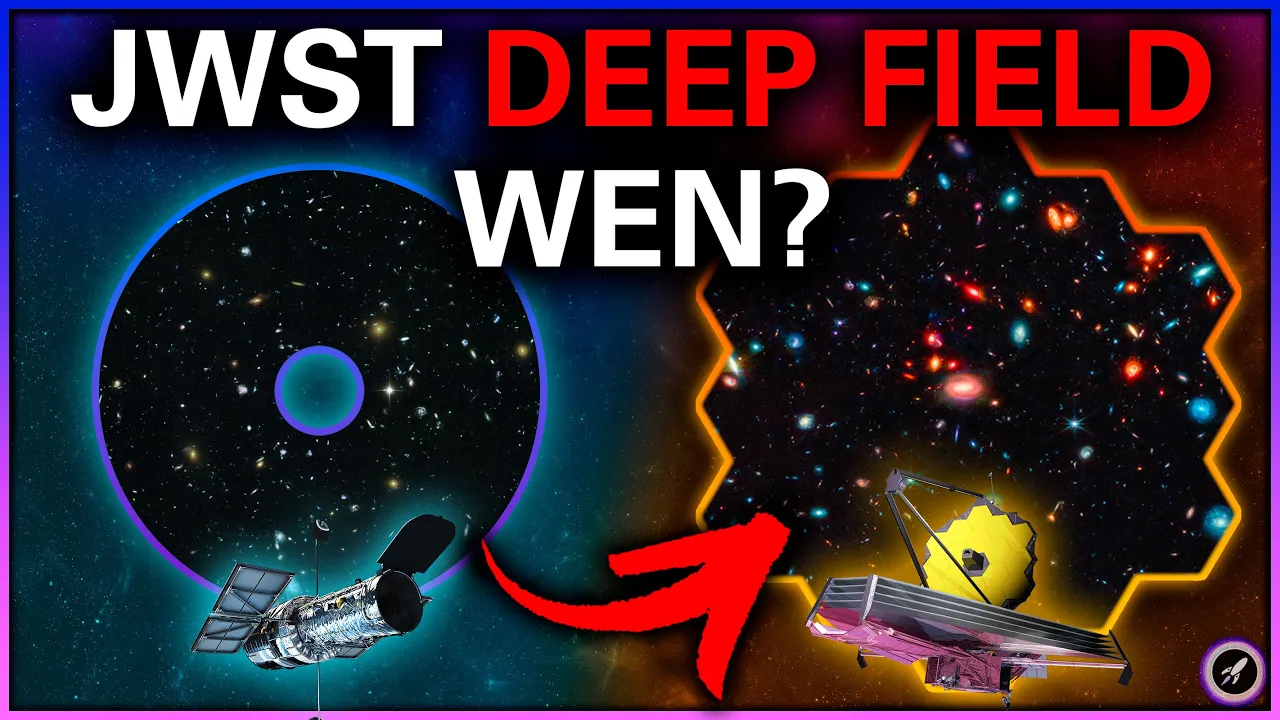
But this time instead of using Hubble the team used the James web space telescope and so by conducting 250 hours of observations they were able to discover a lot of new things. And first of all, in this tiny patch of night skies, they saw approximately 800,000 different galaxies. And many of them have never been seen before and were only visible to the James Web. But importantly, by analyzing these galaxies, they then created a map that is twice as sharp as previous maps created by the Hubble Space Telescope.
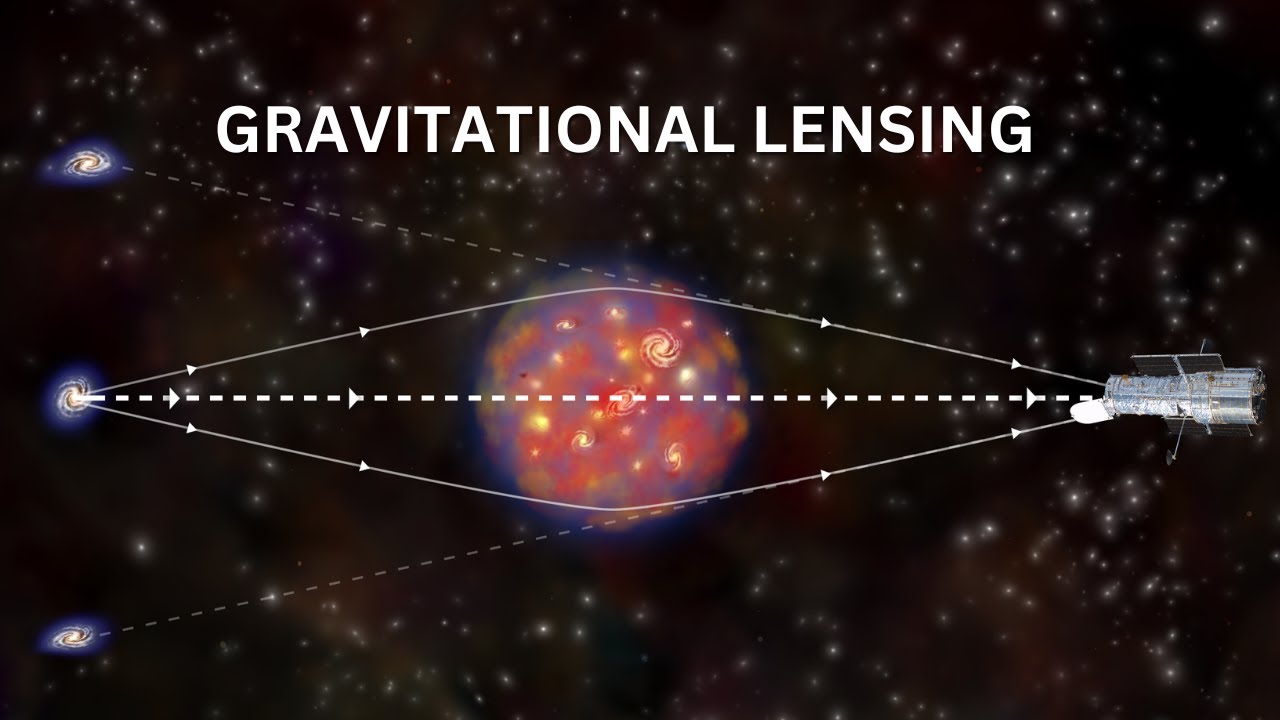
And more importantly for cosmology, this allowed them to create a distribution map of dark matter. But I guess one important question is how? it's supposed to be invisible. Well, for this researchers used a very famous technique referred to as weak gravitational lensing. And in this case, this is done by looking at extremely distant galaxies and then observing very minor changes in their shape and the overall warping and then basically comparing this to what we expect. Or to be more exact, the light from these distant galaxies doesn't travel in a straight line and instead it gets bent and distorted by gravity of dark matter located between us and a lot of these distant galaxies. And so by measuring these very tiny distortions, sometimes as small as 1%, generally scientists learn how to calculate the amount of dark matter present in a certain region. And this is mostly done by comparing the assumed shape of the galaxy with what's being observed. And so because many of these background galaxies usually appear slightly smudged or slightly stretched, scientists break down these effects into two components.
The shear or the stretching effect and the convergence or the magnification effect. And though this will be difficult to achieve for a single galaxy because maybe this galaxy just looks weird by looking at hundreds and even thousands of galaxies and using statistical methods, it then becomes possible to work out what most of them are supposed to look like and what they seem to look like because of gradational effects. And while James Web seems to be well suited for this because it can easily resolve the shapes of 130 galaxies per square arc minute and that's nearly double the capacity of the Hubble telescope which then allows for an extremely high spatial resolution revealing fine grain structures that were previously blurry or even invisible. And that's essentially how they were then able to create this. And this is the comparison of the same image from the Humble and the Web. The one on the left is from 2007. And as you can see in this description, one of the more exciting discoveries here is the visible confirmation for the thin filament of the cosmic web. The spiderweb like structure that the entire universe seems to contain. But one of the more significant discoveries in this case is the confirmation that dark matter and regular matter seem to have evolved and grew up together. or basically the map seems to show an almost perfect overlap between ordinary matter and dark matter.
Wherever there is a massive cluster of thousands of galaxies, there is an equally massive clump of dark matter.
And that's of course a major confirmation for some of the modern predictions from the lambda CDM model.
Likewise, as I mentioned, there's a major confirmation for the filamentary structures, the bridges of dark matter that seem to connect a lot of clusters together. This is, of course, the famous cosmic web. You can learn about some of the recent discoveries in some of the videos in the description. But this is probably one of the best confirmations we have for its existence. But interestingly, this study also discovered some of these unusual mass peaks that seem to have no clear counterparts in the luminous galaxies or hot gas. And that is a really exciting discovery because it essentially suggests structures that are almost entirely dominated by dark matter. And this supports one of the recent discoveries of these dark galaxies that we've discussed in one of the videos in the description. Basically, galaxies that never became galaxies, but only contain dark matter and a little bit of gas. Interestingly, as you can see in this image, this was only visible to the James Web, but not to Hubble. And on top of this, compared to the Hubble telescope, this new project was also able to see much farther back in time.
Here it captures this mass imprint going back to about red shift of two corresponding to an era known as the cosmic noon. This was the peak epo of star formation when the universe was extremely bright which was approximately 10 to 11 billion years ago. So this doesn't go all the way to the edge of the universe but it goes to some of the more important parts. As a matter of fact here it can even see very unusual significant structures at red shift of 1.1 which have never been seen before.
But obviously at this point it's not entirely clear what produces some of these structures. But I guess one question here is okay so why is this important? Well this isn't just about distant galaxies. It is also about our own existence. And that's because a lot of current theories do suggest that in the early universe everything was essentially clumping around these dark matter chunks that started to form this early cosmic web. And it was this cosmic web and all of these initial clumps that then started to pull ordinary matter eventually creating dense regions where stars and galaxies finally started to form or basically everything seems to have started with this dark matter web.
And without it stars and galaxies may not even exist or would have existed much much later and looked and behaved very differently. And so dark matter potentially accelerated the entire process in the universe eventually allowing galaxies to evolve pretty quickly and basically produce heavier and heavier elements with some of them like carbon and oxygen at some point creating terrestrial planets and ultimately life itself. And so in a very real sense dark matter is the architect that allowed the conditions for life to emerge or at least that's I guess one way of seeing why this is important. But as impressive as this map is, right now it only covers a very small corner of the universe. And looking ahead, researchers plan to expand these maps using some of the upcoming missions like the issa's Uklid telescope you can learn about in the video in the description or NASA's Nancy Grace Roman telescope that we discussed during one of the live streams on the channel. And well, the goal is to basically create bigger maps and to eventually try to cover the area that's at least 4,000 times larger than this cosmos region right here. And by doing so, we can then start answering the questions of how some of this changed through cosmic history and if dark matter and by extension the universe seems to be the same everywhere. And while the current data and most of the discoveries from this study seem to match the current model referred to as lambda CDM, one of the main points for many of these studies and one of the main goals is to actually try to find small discrepancies or I guess small anomalies that might help us understand the universe a little bit better. Possibly reveal new physics or possibly explain some of the anomalies that are still not explained. Which means that we'll definitely come back and discuss this more in some of the future videos once some additional discoveries. But on that note, check out some of the previous videos, including videos on dark matter in some of the links in the description. Thank you for watching. Subscribe, come back tomorrow to learn something else. Support the channel where you can find additional videos, videos without any ads and can DM me directly or by joining the channel membership that grants you early access and a few more things. You can also support this channel by buying the wonderful person t-shirt in the description below. Stay wonderful. I'll see you tomorrow and as always, bye-bye.
Up Next

75:03
Planetary Defense: How NASA Tracks and Deflects Asteroids
@NASA
308K views•2025-04-16
61:17
First Billion Years of the Universe with the Square Kilometre Array
@iaaudc
121 views•2022-05-26
14:59
JWST & ALMA Reveal New Planet Formation Secrets
@whatdamath
82.3K views•2024-03-13

6:10
Gamma-Ray Bursts: Cosmic Snipers Explained | Astronomy
@kurzgesagt
15M views•2016-07-31
Related Study Plans & Knowledge Roadmaps
Structured learning paths in Astronomy
astronomy
Reionization: Pop III Stars, IGM & 21cm Line
01Foundations of Cosmology & the Early Universe
02Population III Stars & Cosmic Dawn
03Physical Mechanisms of Reionization
+ 2 more learning modules
17h5 modules
Explore Roadmap
astronomy
Planetary Rings: Dynamics, Roche & Resonances
01Foundations of Gravity and Orbital Mechanics
02Tidal Forces and the Roche Limit
03Structure, Composition, and Collisions
+ 2 more learning modules
10h5 modules
Explore Roadmap
astronomy
Asteroseismology: Stellar Waves, Ages & Cores
01Foundations of Stellar Astrophysics & Wave Mechanics
02Stellar Oscillation Modes: P-modes and G-modes
03Mathematical Framework of Asteroseismology
+ 2 more learning modules
35h5 modules
Explore Roadmap
astronomy
Adaptive Optics: Physics, Engineering & Control
01Foundations of Wave Optics and Wavefronts
02Atmospheric Turbulence & Optical Distortion
03Wavefront Sensing Technologies
+ 3 more learning modules
35h6 modules
Explore Roadmap