












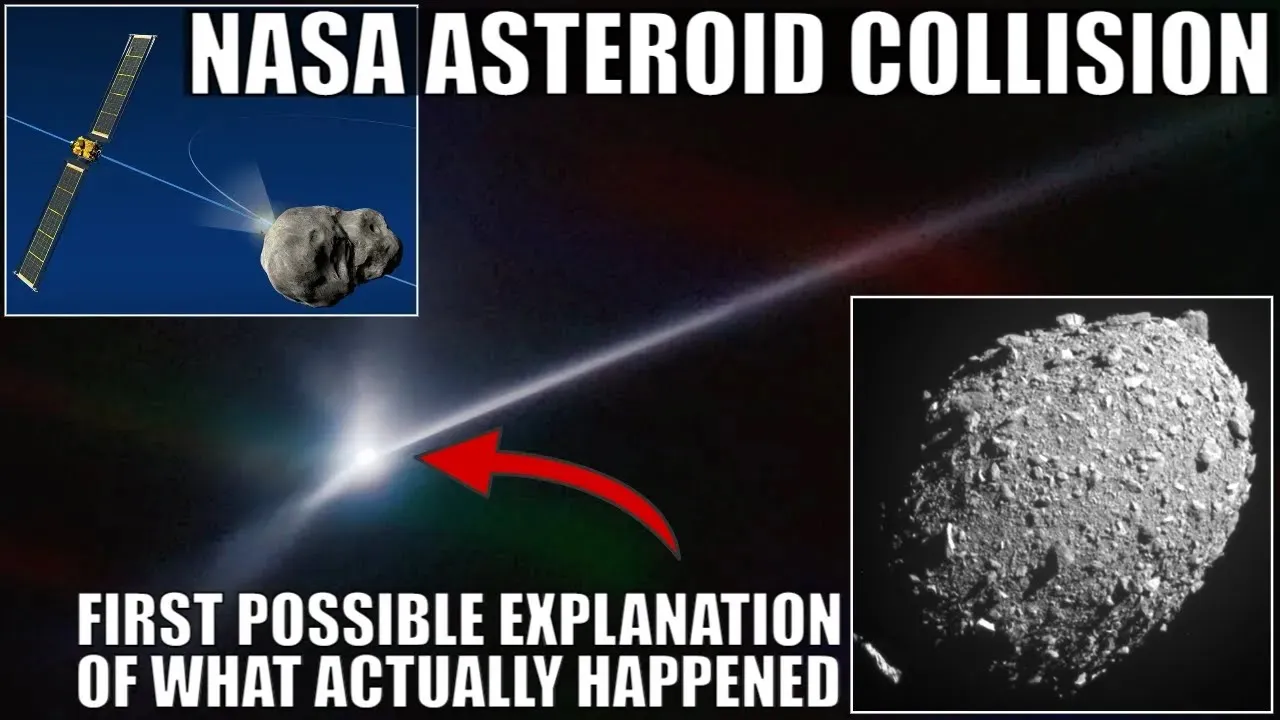





Planetary defense involves a coordinated global effort to detect, track, and characterize near-Earth objects (NEOs) to identify potential impact threats and develop mitigation strategies. NASA's Planetary Defense Coordination Office leads this effort, working with the Minor Planet Center (which catalogs all asteroid observations) and the Center for Near-Earth Object Studies (which calculates orbital trajectories and impact probabilities). Detection relies on ground-based telescopes that image the night sky and identify moving objects, while infrared telescopes and radar systems provide additional characterization data. The 2021 DART mission successfully demonstrated kinetic impactor technology by intentionally crashing a spacecraft into asteroid Dimorphos, proving that humanity can deflect asteroids if sufficient warning time exists. Other proposed mitigation techniques include gravity tractors, ion beam deflectors, and nuclear explosives. Early detection is critical, as mitigation strategies require years of lead time to be effective. The ultimate goal is to catalog all potentially hazardous asteroids and develop international protocols for responding to potential impact threats.
Planetary Defense: How NASA Tracks and Deflects Asteroids
Added:[music] This next set is finishing up.
We'll have some new data here pretty quick.
Potentially hazardous asteroids can show up anywhere in the night sky at any time.
We're up here for 12 to 13 hours sometimes making decisions about the objects we're seeing if they're real or if they're just noise in the background.
[background noise] The odds of finding an asteroid are going to increase as we move toward the east.
[background noise] Sixth, 3025.
[music] Oh, this might be something.
Oh, you guys, look at that.
Based off these four images, this is a brand-new near-Earth asteroid.
We got one.
No, I didn't think that was going to happen.
No, it's brand new.
I just got the notice back from the Minor Planet Center that they published it.
There it is, bam, live.
This is actually a big rock, too.
Right now, it is absolutely a potentially hazardous object.
If you guys were going to be here for a discovery, a PHA is definitely what you want.
[laughs] This is a big rock, yes.
It is nominally about 230 meters in diameter, which is quite large.
And its minimum orbit intersection distance with Earth, which means how close it comes to the Earth's path and the Earth's orbit, is between us and the Moon.
It's only about 150,000 kilometers away, which is a significant PHA.
A PHA like this only comes up a couple of times per year.
These are the ones we want.
Yes, that's a nice one.
[music] When a 2 mile-wide fragment of the comet traveling 40 miles a second.
Pieces of the comet that will hit Jupiter.
Three fragments are scheduled to hit the planet.
Will slam into the same area, the same spot on the planet Jupiter.
About 1993, we learned that there was a comet heading for Jupiter.
Comet Shoemaker-Levy 9 was a comet that was discovered by Eugene and Carolyn Shoemaker and David Levy.
It was shown to be broken up into a bunch of pieces.
They traced back the orbit.
This thing had gone by Jupiter and got disrupted.
And then they tracked the orbit forward and found out these are getting to hit Jupiter.
And that got everyone excited.
It's really the first time that these impacts have been observed.
Impacts were very important in the formation of everything.
We could observe an impact on another planet.
Scientists still don't know what they're going to see tonight, but they do know that they've come to the best place in the world to see it.
The whole world community, scientific community, was preparing to observe these events.
Any telescopes that could observe the impacts did.
Many, many ground-based telescopes.
The Hubble Space Telescope.
All of the images from Hubble that went on the web suddenly got everyone's attention.
Which was a real key to many of the scientific results.
Also, Galileo.
Which was on the way to Jupiter at the time.
The NASA Infrared Telescope Facility had a campaign dedicated to observing Shoemaker-Levy.
This observing run for the Shoemaker-Levy 9 impacts, that was my first observing run ever.
We're starting tonight with the near-infrared spectrometer.
God, that's gorgeous.
I remember seeing something pop up on the screen.
We were shouting.
[laughter] We're literally dancing around.
And we saw this bright thing just light up.
It was like, "Yes, we did it."
We were all like kids in a candy store, I guess. [laughs] A lot of the energy we saw wasn't just the impact itself, but it was the splashback.
When those pieces plowed into the atmosphere, they brought up big plumes of material that rained back down on the upper part of the atmosphere.
We're able to measure changes in the upper atmosphere of Jupiter.
It taught us a great deal about how impacts take place.
Scientists say if a fragment the same size hit Earth, it would leave a crater the size of Rhode Island.
It was one of those wake-up calls that not only impacts something that happened in the past, but they're happening now in our solar system.
Here it is this awakening.
It kind of precipitated this NASA Planetary Defense Coordination Office.
To make sure to find the asteroids that come close to Earth and the comets that come close to Earth, get them cataloged, figure out where they've been and where they're going to be in the future just so we understand, are we at risk of being impacted on the Earth?
That's a big component of what NASA does.
Now, it has planetary defense to find potential impacts for the Earth and protecting it.
[music] [background conversation] Let's go back to Senator Cruz's question.
What would an asteroid that is a kilometer in diameter, what would it do if it hit the Earth?
That is likely to end human civilization.
[music] The impacts of Comet Shoemaker-Levy 9 with Jupiter in 1994, that showed us that, you know what, impacts are still happening in the solar system today.
That really spurred some interest on the part of Congress.
NASA was tasked by Congress in 1998 to catalog 90% of all the large near-Earth objects, so those that are 1 kilometer or more in size.
[music] Those objects are big enough to cause what we would call truly global devastation, meaning that they could cause global extinction events.
The good news is that we've found more than about 95% of them.
The catalog includes almost 900 asteroids, 1 kilometer or larger in size.
That said, none of these known large NEOs pose any threat of impact to the Earth within the next 100 years.
[music] Then eventually in 2005, that direction from Congress to NASA was set to find the population of asteroids that are 140 meters and larger in size that could do regional damage should it impact Earth.
A city killer.
Now, the picture's not so rosy.
We know of about 40% of those objects today.
Today, we do not have a complete inventory of all the possible impactors.
That is something that NASA and the worldwide planetary defense community has been endeavoring to do.
Well, here at NASA, what I lead is the Planetary Defense Coordination Office.
We are helping to coordinate efforts not only in the United States and across U.S. agencies, but also around the world.
Finding asteroids, tracking them, calculating their orbits, figuring out where they're going to be in the future, studying their physical properties, and then you get that information you might need in the event an impact threat is discovered.
We have discovered more than 30,000 near-Earth objects so far.
And we are discovering hundreds every year.
But we haven't found them all, so that's really the big question.
There's almost certainly a decent-sized asteroid out there that is going to pose an impact threat to the planet.
We're just trying to find it right now.
[music] The way we approach finding near-Earth objects is basically just to make a short movie of the night sky that consists of four frames, and then our software will pick out objects that are moving inside of the four frames.
We have to identify if they are real or if they're false detections.
I first started hunting asteroids in my backyard and I just had the hope of maybe discovering one.
When that happened, it was a very special moment in my life.
My interest in astronomy started at a fairly young age.
I remember as a kid seeing Comet Hale-Bopp in the sky from southern Utah.
It was really a spectacular sight as a child.
Just trying to wrap my mind around what I was looking at was difficult.
[music] This is one area of science where discoveries are still happening on a nightly basis.
It's really a neat feeling to step into that where you can be sitting in a telescope at night and discover a new minor planet that's in orbit around the Sun that nobody has ever seen before.
It's a special thing and I think that's what draws a lot of people into this business.
[music] The first order of planetary defense is finding the asteroids.
One aspect of the program is funding institutions with telescopes that can image wide swaths of the sky to be able to look at that starry background and look for objects moving with respect to the stars to see, is there something there that we haven't seen before?
This is the whole sky.
That's a whole sky camera.
You can see, this is a live video feed from the end of the telescope.
You can make out the Milky Way right here.
This is the size of the images we're taking right now.
Then we subtract the known objects and the stars from those images and then we look for moving targets.
The object is moving because it's closer to the Earth than the background stars.
I can tell this first one is a star.
You can see that that object stays there.
If I load up a catalog image, which is a very old image, you can see that first.
It is actually a star.
That one's actually a star.
Those moving targets are going to be asteroids that are in orbit around the Sun.
That's a known asteroid.
It comes up green and it has the designation above it.
Oftentimes, they're new.
We've never seen them before.
What we have here is a near-Earth asteroid that is likely brand new.
I can already tell that it's not coming up in any of the known databases.
Then what you have to do is go and identify whether it's a known asteroid or a new asteroid, so that's the next step.
When the asteroid is first discovered, we submit the information almost immediately to the Minor Planet Center at Harvard.
We are going to send this data off in real time here.
The temporary designation we're going to assign to it, the date and the time and the location on the sky that it was located, and then its approximate visual magnitude.
I'm going to report it as a brand-new near-Earth object candidate.
It's important to turn that information around quickly.
The different survey telescopes quickly feed those position measurements to the Minor Planet Center, which is the internationally recognized repository for position measurements of small bodies throughout the solar system.
The Minor Planet Center is, I like to think is the link between the astronomy community and everything that comes after that in planetary defense.
My name is Federica Spoto and I'm the project scientist of the Minor Planet Center.
Part of the role of the Minor Planet Center is to actually distinguish what is known and what is not known.
We keep all the observations and all the orbits of the objects.
We don't see the image.
We just see these points.
Those represent the different position of the object moving since it tells you very accurately the time of the observations and then the position.
Once we have the position and the time, we can get the orbit.
All the data comes in from everyone gets consolidated there.
We have a common catalog that we are working from.
An archive of everything that is known and everything that is not known.
The cool thing about the Minor Planet Center is that everything we do is public.
As soon as we receive the observations, the observations goes out.
That information can all be rolled up there and available for other observatories to see them and then go get additional observations so that there is enough information to get an orbit.
Anyone can then access that data to track these objects down and help us determine if they are going to be an impact risk in the future.
Once we find an asteroid and we've got an orbit for it, the next logical question is, is it going to hit the Earth?
Fortunately, there's a group here at the Jet Propulsion Laboratory called the Center for Near-Earth Object Studies, or CNEOS for short, that is tasked with doing exactly this.
[music] They assess the hazard potential of this newly discovered near-Earth object.
They do orbit determination to see both short-term and way out into the future, 100 years into the future.
Could any of those pose an impact threat?
My name is Ryan Park.
I'm the supervisor of the Solar System Dynamics Group at the Jet Propulsion Laboratory.
I'm also serving as the project manager for Center for Near-Earth Object Studies.
To date, we maintain about a little over 1.3 million objects, most of them being asteroids.
We predict the motion of all known asteroids.
And we process the entire data set from the Minor Planet Center to predict and reconstruct the orbit of the asteroids so that we can perform statistical assessment of the potential Earth's impact.
What we do is we process the astrometry collected by ground-based observers.
We feed those through what we call the orbit determination process to get the orbit of the asteroid as a function of time so we can propagate backwards, forwards, and figure out where the asteroid is in real time.
This basically catalogs all the potentially hazardous asteroids that might come close to the Earth.
And we document the probability of potential Earth's impact.
And if it were to hit the Earth with certain probability, when is it going to be and where is it going to be?
And we do this for next 100 years and assess whether it's going to be hitting the Earth and, if so, with what probability.
That information gets shared with the CNEOS website as well as with the entire world.
This data gets disseminated immediately to many different organizations.
NASA's Center for Near-Earth Object Studies runs watchdogs that are constantly ingesting this data and calculating the odds of an impact in the near future.
If they find that this object has any probability of hitting the Earth in the near future, we will get an alert on our systems within about 10 or 15 minutes.
And then when people start receiving this type of warning, then there's a huge community of astronomers that start observing it from all around the globe.
As the Earth rotates and nighttime falls across Asia or Europe.
And so we start getting observations from all over the world at every time and we start processing them really quickly.
It's a very smooth-running machine.
[music] It transcends boundaries of countries.
Asteroids don't care about international boundaries.
It doesn't matter where the asteroid impacts.
It affects the entire humanity.
In fact, anything alive on the Earth.
It transcends basically anything, except what makes us human and what it means to help discover and protect the planet from a hazardous asteroid that might be incoming.
Yes, I'm really proud of it, I would say.
I'm proud.
I'm proud that I'm working on something that is actually very useful for the community.
For planetary defense but also like we do everything so that we can help the community.
It was a great honor to have an asteroid named after me.
There's Ryan Park asteroid.
I mean, this was a huge deal for me.
This basically led me to believe that I'm making some contribution to the field.
We didn't even know asteroids existed 200 years ago.
And it's only been in the last few decades that we even had the technology to be able to detect these things.
So yeah, I might be referred to as the Father of Planetary Defense.
I created the term perhaps, but it is only because I stand on the shoulders of those asteroid hunters before me that we are now able to protect the world from a asteroid impact.
So this object has already been ingested by the Center for Near-Earth Object Studies Scout watchdog.
Right off the bat, it tells us that the probability this is a near-Earth object is already 100%.
And the probability it is a potentially hazardous asteroid is 67%.
There is no real impact rating or probability.
So it's not currently a threat, but long-term after the arc is extended and we have a better idea of the orbit of this object, this might be a brand-new unknown, potentially hazardous asteroid.
[music] So finding asteroids, that's probably the most important part of planetary defense or the fundamental part of planetary defense.
But it doesn't help to see an asteroid if you don't have enough information to know where it's going to be in the future.
You can't do anything about them unless you find them and know where they're going.
That means the race is on to try to figure out, how can we get more data?
Can we get more exposures of it so that we can figure out which way it's actually going and then eventually get a really good orbit for it so that we can predict far into the future where it's going to go, especially with respect to the Earth?
So then there are telescopes that go zero in on those initial observations by the surveys and they get even more measurements of those positions.
My name is Cassandra Lejoly.
SPACEWATCH® is, we're a follow up survey essentially.
So the telescope behind me is a 0.9 meter telescope that we use to follow up near-Earth objects.
When they're first discovered, they have very short orbital arcs.
So they have very imprecise orbits.
And so if we follow them up, we get a better orbit to determine if there's a higher chance of them hitting the Earth or not.
So these are the type of images that we get back from the telescope.
And so you can see that our asteroid is essentially a dot that's moving.
And then the stars look like long lines because of how we track on the asteroid and not on the stars.
When an asteroid is first discovered, the Minor Planet Center is able to calculate a location on the sky where it should be.
So we already have an idea of how the asteroid's going to be moving.
So we take that assumed motion and move with it.
So my typical day or night, I guess, we typically observe for four to six nights straight.
And we come up to the mountain and we have dorms up here.
So we stay up here the whole time we're observing.
And what happens is that we'll open the two telescopes.
We then have on our computers, a list of all the objects we can see that needs follow-up right away.
There's a few objects we can choose here.
I like to go for virtual impactors because they're top of our list.
They have a probability of hitting us.
We'll pick the best targets for the night.
Some of them come in as we're observing overnight if they're newly discovered and they need follow-up then.
So let's say I want to go for this object.
What I would do is I would accept it in my queue and then I would accept the value and send it for recovery.
What that would do is that would move the telescope.
So we get three images of it to see it move and to see at what speeds and move and then we measure its location on the sky.
That is the measurement we report back to the Minor Planet Center.
Well, that's an asteroid right here.
It's really cool when you're looking at an image from the sky and you see a moving dot.
Every time I find that moving asteroid, I'm excited by it because it means you found it.
You found a thing in space that is moving.
It's right there on my image, I can see it.
So right there is our object and it's moving right there.
The first image is in the star, so we can't measure that, but then the second and third image are right there.
We can actually measure those.
That new measurement then helps better predict the orbit fit and thus better predict where it would be in the sky next time someone needs to observe it to follow it up.
The most important thing is always get more data because the more data you get, the better you are at refining the orbit and know where the object is.
And if you take another image a little bit further, you can then put another data point, and then you can keep tracing that orbit around.
As you collect more observations, the orbit of the asteroid in question will get better and better.
I really like that I'm protecting the planet and, yes, I'm not the one that's with a cape pushing the asteroid away.
That's not what I do.
In some ways, my little contribution might help not just myself but someone in the future.
And I think it's very important to do that.
[music] Last night while surveying in an area of the sky where we don't typically find a lot of objects, I discovered an object that had to be fairly large to be visible for where it was in the sky.
So here is the asteroid that Catalina Sky Survey discovered a few days ago and we can also tell that it's a pretty big object.
The asteroid has to be observed for many weeks and months into the future so we can extend that data arc.
So the orbit of that potentially hazardous asteroid is known into the future.
The discovery arc of the asteroid consists of just four points of data over 20 minutes.
And that is a really small snapshot of the entire orbit of the asteroid.
And it was able to be followed up all around the globe so that we didn't lose that asteroid.
And you can see that it's been followed up by several different telescopes right here.
So the arc length means it's been observed for more than a day.
So that is where it comes the closest to intersecting the Earth's orbit.
And telescope around the world will continue taking observations of this object to keep seeing if it has a potential of hitting the Earth or not.
[music] Well, at the current rate of detection of near-Earth asteroids, it's going to take us about another 30 years before we'll have this catalog that we've been tasked by Congress to do.
We've only discovered less than 40% of the 90% of the object we need to discover.
Finding the asteroids isn't something that can just happen overnight because telescopes can only see so far away or they can only see so faint into what they might be looking for out there.
Ground-based telescopes are kind of limited to looking at night away from the Sun.
And we have to wait for the solar system to bring asteroids around.
The Earth is traveling around the Sun.
The asteroids are traveling around the Sun.
And so it isn't possible to see the entire solar system at the same time.
It's hard to find asteroids because relative to the size of the Earth and the distances within the inner solar system, they don't get bright enough to spot until they get closer to the planet.
One of the tricky things with searching for near-Earth objects is that some of them are extremely dark.
They're darker than lumps of coal.
And that means that when we look for them using the sunlight that reflects off their surfaces, they're actually hard to spot because they're dim and faint.
There are asteroids out there that are very darkly colored and don't reflect a lot of light from the Sun.
They're difficult for the telescopes on the ground to discover that are looking at the light that we can see with our eyes.
So how do you overcome this?
We have to go into space.
We have to use different wavelength than reflected light.
All the telescopes on the Earth that are currently finding near-Earth asteroids are discovering in the visible wavelength.
They're primarily looking at light reflected by the asteroid from the Sun.
The sunlight hits, the asteroid deflects just like everything in the solar system.
One way we can get around this is instead of looking at the sunlight reflecting off their surfaces, we can use the heat that they emit to search for them.
If we have a heat-seeking telescope working at infrared wavelengths, even the dark objects just pop right out.
They stick out very brightly because they've got a lot of heat that they re-radiate and we can see that energy.
Once you go into space, you're away from the heat of the Earth.
You can start looking in the infrared wavelengths.
Because in the infrared wavelengths, asteroids have more energy being given out because a lot of them are darker.
They absorb that radiation in the daytime.
And in the nighttime, they re-radiate, so they're very bright.
You don't need that big a telescope in space to detect the asteroids that you would from the Earth using visible light.
And Near-Earth Object Surveyor is one such telescope.
The Near-Earth Object Surveyor mission or NEO Surveyor for short, NEO Surveyor, is a space telescope that we're building that's designed to detect, track, and characterize asteroids and comets that have the potential to get close to the Earth.
It'll also be positioned in such a way that it can survey closer to the Sun than the telescopes on the ground.
Because of this nice, tall sunshade, we can actually point relatively close to the Sun.
And that lets us look far across the solar system so that we can spot the asteroids when they're far away from us.
So that, working in concert with the telescopes on the ground, is going to really accelerate those objects getting into the catalog.
With NEO Surveyor, we should be able to see something like a few hundred thousand new near-Earth objects over the course of its survey.
We expect the numbers will increase by somewhere between factor 5 to 10 in the next decade.
They're going to give us lots of data.
And they're going to require from us to have different tools ready to handle the data in the best way we can.
This increased rate of detection in the number of observations that will be coming into the Minor Planet Center does require the Minor Planet Center to be able to process things at a more rapid rate.
And we're ready for it.
And hopefully, that's going to tell us a lot about the largest objects in the populations.
The ones that are really truly large that have the potential for a large amount of ground damage if they were to impact the Earth.
[music] This is still kind of a golden age of discovery for asteroids.
One day in the future, we will have found all of these objects.
And this period of asteroid discovery will come to a close for the most part, at least the rocks that can pose a significant threat to the Earth Will eventually all be cataloged, characterized, and either dealt with or removed from the risk lists.
Any piece that you can do to help, you should do it.
And I think that's really important.
You don't have to be a planetary scientist to go into planetary defense.
It's just an amazing thing to take science and apply it in such a way that it affects people's everyday lives.
Well, for me, it's very personally satisfying to be involved in an effort like this.
I found my role in life, so to speak.
So for me, it is very personal because I have a chance, I'm fortunate enough to contribute using science to protect the humanity, to protect the planet for that matter, and everything that is on it because we only have one Earth.
[music] The explosion of a meteor over Russia last month injured 1,500 people.
The recent meteorite that hit the Russian Urals with the force of an atomic bomb was a stark wake-up call regarding threats from space.
When the asteroid passed through the Earth's atmosphere, it did so at a really high speed, something like 40,000 miles an hour.
It had an explosive energy about 25 times the bomb used in Hiroshima or about 470 kilotons of TNT.
It did cause a massive shockwave that shattered windows all over the city.
[music] This much smaller meteorite was not observed prior to its entry into the atmosphere.
The Chelyabinsk impact came from the direction of the Sun.
It was on a very difficult trajectory for us to be able to see from ground-based telescopes.
Scientists testified about how these objects are tracked and how those risks can be minimized.
As we were reminded a couple of weeks ago, the Earth is sometimes hit by asteroids.
Impacts have happened and they will happen in the future.
That asteroid was only about 18 meters across.
That would fit inside this room roughly.
This asteroid never made a big impact crater on the ground.
That's because it wasn't big enough originally to make it to the ground fully intact.
So the impacts of air bursts are different from an impact that is physically going to touch the ground.
As the asteroid slammed through the Earth's atmosphere, it was like hitting a brick wall.
It just pulverized it into a million little pieces like this one here.
Even just from that 20 meter asteroid disintegrating in Earth's atmosphere, the shockwave from that, that did damage.
The inside of the asteroid is stony.
It looks like an ordinary rock.
We need to know more about these objects that could impact us.
How big is it?
What's it made out of?
How does it spin?
How much potential for damage it might pose on the ground?
The Earth has been bombarded by asteroids in its history and it will be hit by asteroids again.
The questions that we're trying to answer in planetary defense are when, where, and which rock is going to do it.
[music] So what we have here is a diversity of meteorites where they range from stony meteorites like the ones you see here.
A great example of that is Chelyabinsk, which fell in Russia in 2013.
We want to understand the threat that is coming towards us.
Part of understanding the threat is understanding the capabilities.
Oftentimes, the physical makeup of an object tells us about its capability, its impact potential.
What can it do on the Earth?
So studying the composition tells us whether it's an iron, whether it's stones or stony iron or carbonaceous.
A weak object which has low density is not going to make it into the atmosphere and intact onto the Earth.
So you would have an air burst, for example.
Whereas if you have a really dense object like this iron meteorite, it'll punch right through the atmosphere even if it's a small object.
And then it will create a crater like the Meteor Crater we see in Arizona.
[music] So what do these meteorite tell us?
Why do we need to characterize these objects?
So by understanding the composition, we can figure out, what is the mitigation mechanism we're going to use?
Because the tools we would use vary vastly, depending upon what they're made of.
[music] To understand what asteroids are, you have to go back to kind of the beginning of our solar system.
Asteroids are rocky bodies that are kind of leftover fragments from when our solar system first formed a long time ago, more than four billion years ago.
The major planets formed And the first solids condensed out of the solar nebula.
These solids slowly coalesced, came together eventually to form what you call as planetesimals.
These are objects that are a few tens to a few hundred kilometers across.
And you had internal heat.
That led to what you call as differentiation.
They'll have a core, a mantle, and a crust.
So these iron meteorites we see here represents the cores of those planetesimals.
We believe that there were more than 100 planetesimals that differentiated between the orbits of Mars and Jupiter, but most of these planetesimals were destroyed catastrophically due to impacts over the next few hundred million years.
And what we see now in the asteroid belt are remnants of those catastrophic destructions.
Most of the material that made up our solar system got swept up into the Sun and to the individual planets, but not all of it.
It's like shattering a plate on the floor.
You have a few big pieces, but lots and lots of small pieces.
So asteroids are those leftovers of the formation of the solar system.
A lot of them keep their distance very nicely in the asteroid belt between the orbits of Mars and Jupiter, but some of them over time, because of being tweaked by the gravitational pull of Jupiter and whatnot, have made their way into the inner solar system.
And so, some of these leftovers from the formation of the solar system can get a little too close for comfort to Earth.
That's how we end up with near-Earth asteroids.
We'd really like to understand the distribution of these objects, their compositions, and where they come from.
So that's what we're trying to find out.
How do they leak into the inner part of the solar system and get into this region near the Earth's orbit?
[music] You don't want to just know that the asteroid is there.
You want to know, how large is it?
What is it made of?
So there are telescopes that then go out and study particular characteristics of asteroids to the extent they can from the ground.
So we want to find out what is the composition of the object, how fast it's spinning, whether it's one object or two objects.
Of course, we want to know the mass of the object.
For that, we need to have an accurate idea on its size.
That's where radar comes into play.
[background noise] Yeah, that's cool to finally see it.
This is the biggest one in this complex.
It's 70 meters in diameter.
All the other ones are 34.
This is the most powerful planetary radar on Earth.
So here we are at the Goldstone Solar System Radar in the middle of the Mojave Desert, about a few hours' drive from Pasadena at the Jet Propulsion Lab.
This is where I connect remotely to observe near-Earth asteroids.
I'm Shantanu Naidu.
I'm an asteroid radar researcher here at NASA's Jet Propulsion Laboratory.
That's amazing.
Whenever an asteroid comes close to Earth, we use this radar to observe it, which can tell us about the shape of the asteroid.
It can show details on the surface of the asteroid such as ridges, concavities, craters.
We can also measure the precise distance to the asteroid.
And then from all of that, you get really fantastic science, and then you get that information you might need in the event an impact threat is discovered.
So radar is an active form of observing an asteroid in the sense that we generate our own electromagnetic waves.
We use really high-power transmitters to transmit electromagnetic waves in the direction of the asteroid.
The asteroid reflects these waves.
They get distorted during this process and they come back towards Earth.
So you have signals from space coming in, reflecting off the primary dish, reflecting onto the secondary dish, and then they reflect onto the instruments.
We can compare the distorted received waveform with what we sent.
And using this comparison, we are able to generate highly detailed images or maps of the asteroid.
One example I can show you is 2024 MK, which was a recent target that we observed.
We were able to obtain these very high-resolution images where each pixel is under 2 meters in resolution.
If I zoom in here, you can see all these intricate details on the surface of the asteroid.
You can see these radar dark regions.
You can see, it's a very irregular shape.
There's a lot of things that look like ridges.
So we can track these features and we can measure the spin rate of this asteroid.
[music] So there's a control room in the pedestal.
So this is where the telescope operators sit.
We send them the orbits of the asteroid.
We send them the observing plan.
We send them the configurations we want to observe the asteroids with.
So this is where the telescope operators sit and this is where they control all the equipment from.
And that's where the data gets collected in the computer behind.
And that's what we connect to, to download the processed images at JPL.
This seems like a nice setup, so I'll send it to the telescope operators.
When we start observing an asteroid, we need a very accurate orbit so we can point accurately at the target.
We get a spectra, update the orbit.
We get a course-resolution image.
We update the orbit again.
And so we transmit for a fixed amount of time, which is the round-trip light time to the asteroid.
And as soon as that time elapses, that is when we start receiving the echo.
We switch from the transmitter to the receiver.
It takes a few seconds to travel a few million miles back into space and reflect off the asteroid.
So we transmit for an entire round-trip time.
And then as soon as the echoes start reaching back to the telescope, that's when we switch to the receiver.
And then we record the whole transmitted wave, so for one round-trip time.
And that constitutes one image.
And once we get a good orbit, we can start getting these higher-resolution images.
[music] It's always exciting because it's the first time anyone is looking at the features on the surface of this asteroid.
Most of the asteroids that we observe, we've not seen them before.
And so whatever you see with the radar is a surprise.
And a lot of the times it's discovering something new.
It is very cool to know that at least for a few minutes or maybe even a few days, you are the only person in the world who knows this thing.
It's very exciting.
It's a very exciting feeling.
There's a sense of responsibility knowing that I'm part of such an important team.
And we are all tackling such an important problem of asteroid threat assessment and mitigation.
Let's say we discovered something, and we only had a small window to observe it and quickly turn around information about its properties.
What if we find an asteroid that's going to impact the Earth next week?
Then all of a sudden, an opportunity came up that nature gave us, an asteroid designated 2023 DZ2 was discovered.
So this object was discovered by a team in the Canary Islands in Europe.
When it was discovered, the observations were directly sent to the Minor Planet Center, and then we publish everything.
The role of the Minor Planet Center is to distinguish what is known and what is not known.
We define them as a complete new object.
And so in the following couple of hours, a lot of observers from all over the world, they start observing it.
Then it was a really large impact probabilities, which means it could impact the earth.
Over a period of a few days it had a high impact potential three years from the discovery date.
And originally it had a decently high probability of hitting Earth at its first discovery, and then it was followed up and the probability went up.
And then this impact probability stayed high even if people were sending more and more observations, which means that the path on which the asteroid was, was really towards the Earth.
2023 DZ2 was a significant asteroid.
That kind of close approach to the Earth of a rock that size might only happen a handful of times per century.
And then eventually it turned out that it was coming really close, but it wasn't hitting the earth.
Other observations had been made to take 2023 DZ2 off the risk list, so that was a good thing.
Suddenly the probability of hitting Earth goes down, and that's because the more points you gather, the better refined your orbit can become.
At NASA, we thought this would be a good opportunity to launch an observing campaign in coordination with the International Asteroid Warning Network, to try to get the worldwide community together to gather observations about physical properties of an asteroid and turn that around quickly.
So we essentially had a very short five-day campaign where we had to reduce the impact risk by observing the object and collecting more positions along its orbit, understand its rotation period, understand its composition, try and observe it with radar to get some physical information like the size and volume, and try and input all this information in an impact hazard model to see what would be the impact on the ground.
So we were able to pull all of this stuff off within a matter of five days.
We took this real-world opportunity to exercise the whole system and campaign that would be done if a potential impactor was found.
In case we were ever faced with a situation where we needed to do that, to measure the properties of an asteroid during a short window in a coordinated fashion with the worldwide community.
So we used the Goldstone Radar to observe it.
And we managed to obtain images with the resolutions of under four meters on this asteroid, which showed that it was an irregular body.
It was spinning extremely rapidly.
Based on the visible extents in the radar images, we could tell that the asteroid was somewhere about 30 to 40 meters, so a bit smaller than what we could estimate using just the visible.
It was an important target to practice working together to exercise the systems in order to refine the orbit and improve the characterization of the asteroid.
So my students and I, we observed this object using telescopes, one on campus.
We also used the NASA Infrared Telescope Facility, which is on Mauna Kea, Hawaii.
It is one of the few telescopes in the world that is capable of telling what asteroids are made of.
So we try and do geology with a telescope.
We're trying to do prospecting.
Trying to understand what minerals are there on these asteroids and using those mineral signatures, the spectral fingerprints to identify what fingerprint matches with those of meteorites that we have in the lab.
So that's what we were trying to do with DZ2.
This is the 2023 DZ2.
This is the motion, the object that's moving there is DZ2, correct?
Yeah, so you can see it moving through the star field.
Star field and that's the spectrum, the visible spectrum right next to it.
The first order visible spectrum?
Yeah.
So in the end, what we assessed about DZ2 was that it was much brighter than we expected because when an asteroid is discovered, we don't know how bright or dark it is.
So that says a range in size.
You can slowly narrow down the size depending on more characterization information.
So if you have radar, that gives you a very accurate diameter, pretty close to the final thing.
If you have thermal infrared measurements, you can constrain the observation.
So you can constrain the diameter for that, but you also have composition.
Composition tells you something about how bright the object is.
So that gives you an additional piece of information.
So no one technique gives you the ultimate answer, but complimentary sets of information from different telescopes, different techniques, kind of let us converge to one answer.
In the case of DZ2, what we've done is with the IRTF, we spectrally characterized.
We looked at the light reflected off DZ2 in different wavelengths.
And in the infrared, in the wavelengths we cannot see, but rattlesnakes can see, kind of like heat seeking stuff.
What we see is a unique spectral signature for a specific mineral that is only found in this particular type of meteorite called aubrites.
We have a few of those in our collection, both that fell on the Earth, fell in Antarctica.
So here's an example of it.
This is an aubrite, it's essentially white.
It's reflecting 60% to 70% of the light.
What we do is that take this meteorite, crush them into a powder and put them in a lab spectrometer to get the spectrum of this meteorite.
In other words, how is light interacting with it at different wavelengths?
So what we do here is that we take a sample and then we crush it and we have it being observed by the spectrometer that we have it here.
Instead of the Sun, we have a light source that is reflecting off the sample and we're collecting visible near-infrared spectra off that sample that we have.
Spectrum is nothing but light split into many wavelengths.
And using that spectrum, we compare the same thing we get from the NASA infrared telescope.
And we can try and match the spectrum of the meteorite in the lab versus the telescopic spectrum off the near-Earth object itself.
And by taking this spectrum and comparing to the one that's coming off the telescope off the near-Earth asteroid, we should be able to compare and tell what the near-Earth asteroid is made of.
Because it was so bright, you don't need the object to be that big.
So it ended up being smaller than what we expected of the size range, and because if it's smaller, hopefully we pray that the atmosphere takes care of it and we won't have much impact on the ground.
So that's what ended up happening, is that we managed to nail the composition of the object very well using the NASA Infrared Telescope Facility.
So 2023 DZ2 was a really interesting example of planetary defense working on an international scale.
So it's really a resounding success in multiple organizations across the planet coming together.
And the fact that we were able to discover it, characterize it, determine it was a risk, and then remove that risk all before it passed close to the planet, was a pretty amazing feat.
Let's say we do find something that poses an impact threat to Earth.
What next?
The day is coming when Earth will get impacted.
The dinosaurs went extinct because they didn't have a space program.
We do have one.
We can, so why stop there?
10, 9, 8, 7, 6, 5, 4, 3, 2, 1, and liftoff of the Falcon 9 and DART on NASA's first planetary defense test to intentionally crash into an asteroid.
We're embarking on a new era of humankind.
We're doing this mission to prove that we can deflect an asteroid.
Even if we do everything right, our sensors work well, our spacecraft is doing well.
Even then, we might still miss.
4, 3, 2, 1.
[applause] For the first time ever, humanity has changed the orbit of a planetary body.
NASA confirms that DART successfully changed the targeted asteroid's trajectory.
Now, this is a watershed moment for planetary defense and a watershed moment for humanity.
[music] As was demonstrated with the DART mission, if an asteroid were ever discovered that could pose an impact threat to Earth, we do have the capability to deflect an asteroid in space and to change its orbit.
Once we've found an object and determined that it could be an impact threat to the Earth, what do we do to mitigate it?
Eventually, we have to be ready to nudge an asteroid off its course.
NASA has recently demonstrated a particular type of mitigation technique that we call kinetic impact.
In case there was an asteroid coming towards Earth and you are there, you can actually stop it.
That's kind of fantastic.
Our Double Asteroid Redirection Test, DART, was a demonstration of using a kinetic impactor technique.
And the idea is pretty simple.
You basically just take a spacecraft and you run it into an asteroid and bump it out of the way.
What? You think science fiction but this is real.
Never in my life would I have thought I would take a couple hundred million dollar spacecraft and crash it into an asteroid.
Its main goal was to go to an asteroid with its moon, to hit the moon and see how much it changed the orbit of the moon.
The moonlet, Dimorphos, which orbits the asteroid, Didymos, in order to change Dimorphos' orbit and show that we can deflect incoming asteroids if we need to.
DART will only be changing the period of the orbit of Dimorphos by a tiny amount.
And really that's all that's needed in the event that an asteroid is discovered well ahead of time before it might impact Earth.
In space just a little bit is just enough to make an asteroid actually miss us.
So behind me, you see the spacecraft.
It's really cool to see it coming together in real life.
It is fantastic to see it in real life.
To see it turn from ideas into real pieces that are going to go into space.
The solar arrays will actually roll out to 28 feet in length.
Once the solar arrays are deployed, it's going to be the size of a school bus.
As the solar array opens out, it's going to swing out in this direction.
To me, the most important thing and the most exciting things is all the technical challenges.
My job is primarily to make sure all the systems on the spacecraft work together.
On top, you see the NEXT-C thruster.
Over here is our star tracker, and then over here is our high gain antenna.
My job is to make sure we launch.
My job is to make sure we're able to receive data back.
My job is to make sure we hit.
There's DRACO on the bottom of the spacecraft as well, of course, as integration and test.
The asteroid is only two football fields in size.
We're flying at over six kilometers a second.
30 days out, we see one pixel on our field of view.
You can see Didymos and Dimorphos is one point of light.
About four hours out, our spacecraft becomes autonomous.
And then that's where everything gets really exciting.
And you actually are seeing impact.
The algorithm has to identify and hit the target in the field of view of the camera.
And so you could just imagine if it was a human being joysticking this.
Because we don't know for sure what the asteroids look like, our simulation gives us the capability to use different asteroid shapes and asteroid objects to see that our SMART Nav algorithm performs against all these unknowns.
Astronomers are going to measure how much DART changed Dimorphos' orbit using ground-based telescopes all over the world.
These curves show the brightness change due to Dimorphos moving in front of and behind Didymos.
We can tell how quickly Dimorphos is moving around Didymos.
We make these measurements before DART arrives, and then this is the same technique that we'll use after the impact to determine how much we've changed the orbit by.
This is Lowell Observatory.
Lowell is one of many observatories around the world that will be observing the DART impact, NASA's first ever planetary defense test mission, to see how much a spacecraft impact can deflect an asteroid in its orbit.
So this is where Pluto was discovered and we are still doing research in all areas of astronomy today.
So let's go check it out.
This is the Pluto telescope, the telescope that was used to discover Pluto almost 100 years ago.
So here we are at the Clark Telescope.
This is where, Percival Lowell sat to observe Mars.
Let's head on over to the Lowell Discovery Telescope about an hour south of Flagstaff, which is where we are going to be collecting data for the DART mission.
The reason we're all the way out here in the middle of this forest is that we have really dark skies here.
And this is the Lowell Discovery Telescope.
This is what a 4.3 meter telescope looks like.
This is what we'll be using to study Didymos and Dimorphos in the days and weeks after DART impact.
The DART spacecraft will be hitting an asteroid called Dimorphos.
It's special because it's a binary asteroid, which means a satellite around a larger asteroid called Didymos.
DART will actually be hitting Dimorphos.
What we will be measuring is how much DART changes the orbit of Dimorphos around Didymos.
This is an important test for planetary defense mitigation strategies in case we ever have to do this for real.
The Lowell Discovery Telescope is one of many telescopes around the world which will be used to study Didymos and Dimorphos.
It's really a global coordinated effort.
And what we're looking at here is a large 4.3 meter primary mirror that's in the middle of the telescope tube here.
Up at the top is a secondary mirror.
The secondary mirror up top there is what is focusing the light down onto the instruments and allows us to take images with the camera that's located down at the bottom.
This is maybe one of my favorite hidden rooms at the telescope.
We're standing inside the telescope and underneath the telescopes, 100 tons above your head, held up by this and this, which is cool.
It's sort of, as you can see, the highest peak around here just over 8,000 feet.
I come up here for sunset.
You see how Sun's setting right there? It's perfect.
For DART, we're going to be collecting images of the night sky.
And typically an observer would be here in front of one of these consoles controlling the instrument and taking images like these as they're coming in off the telescope.
DART is really a sort of before and after experiment.
We need to understand the system before the spacecraft intentionally impacts.
And then we have to understand what the outcome of that impact event is.
As we watch from the Earth, Dimorphos will pass in front of Didymos and behind Didymos.
What we will be doing with those images is measuring the brightness of Didymos in those images and looking at how that brightness changes.
And those dips and brightness allow us to measure when these eclipse happen and measure the orbit period of Dimorphos.
And so you have essentially a fixed star field here.
All the white dots are stars of different brightness.
And moving through this field is Didymos and Dimorphos, which again, we can't distinguish them as discrete points of light, but we have that small object moving through the field of view.
So after impact, we will then be able to go back and start observing intensely, looking for those mutual events, those eclipse events of Dimorphos passing in front of and behind Didymos.
And on each one of these frames, we're measuring the brightness to assess whether or not it's undergoing one of these events where Dimorphos is passing in front of or behind.
This is such a cool experiment and it's such a singular experiment. Using the ground-based telescopes like this one and others around the world to watch the system and see how it's affected by this impact event because that's really what's going to give us the answer to what did DART do at the time of impact.
And that will be exciting to see how that evolves over the days and weeks following that impact.
Good afternoon, everybody.
Two weeks ago, we conducted humanity's first planetary defense test.
The team has measured that the orbital period of Dimorphos has changed.
Astronomers have been using telescopes on Earth to measure how much that time has changed.
These telescopes have been observing this system nightly.
And that's what you see going across here on this graph on the top.
Just this nightly telescopic data night after night after night.
And it resulted in moving an asteroid and actually changing its orbit by a few millimeters per second.
Now, that doesn't sound like a lot, but acting over a long period of time, it could be enough to help move something out of the way of the Earth should we ever need to do so.
It was expected to be a huge success if it only slowed the orbit by about 10 minutes, but it actually slowed it by 32 minutes.
The whole world has been watching this.
[applause] Wow.
What an exciting day for the DART team.
In case you're keeping score, humanity one, asteroids zero.
The dinosaurs are made completely extinct by an asteroid impact so many years ago.
Here we are, we can actually do something about it.
I think this is just wonderful.
There are times in a year or in a decade when you are in awe of humanity, you know what I mean?
Despite everything that happens in the world on a day-to-day basis in a new cycle, there are times when human beings come together to do great things.
I think for me personally, DART was one of those moments, where you are just in absolute awe of humanity.
Here we are, taking a spacecraft and flying it hundreds of millions of kilometers away, and hitting an object with that precision.
And it all happens in a blink of an eye.
You know what I mean?
It was not a long mission.
I think I'm very, very proud of my colleagues who managed to pull that off.
It demonstrates how far we've come as a species in the last few centuries even.
From the first rockets launched into outer space, the first asteroids being discovered, to the ability to realize what threat asteroids pose to the planet, and now the capability demonstrated to send a spacecraft to an asteroid that's in orbit around the Sun, and show that we have the capability if we have enough lead time to alter its orbit.
That to me was just a fascinating moment in human history.
Oh yeah, I did watch it.
It was super cool.
I did watch the DART Mission.
Yes, I have watched The DART Impact.
That was pretty amazing.
The last video that they were showing live and then you saw everything up until to the last moment.
I thought that there was such a big achievement, something like people work on it for so long, and it proves that we can do it.
The DART impact day was one of the most exciting days in my career.
We watched the impact here at JPL.
The impact was bigger than I had expected, but I was also excited because we had an observing run for observing Didymos just about 11 hours after impact.
It would be the first opportunity to see how much of an effect the impact had.
Didymos was all I was thinking about the whole day.
I couldn't sleep.
The observing run started at about 3:00 AM that night, and we had our first echo of Didymos after impact.
We weren't expecting to measure the deflection that night, but the echo was off from where it should have been if there was no DART Impact.
I couldn't believe my eyes.
I was like, either there's some problems in the measurement, or this is a real detection just 12 hours after impact.
This was the first Goldstone radar detection of the effect of the DART impact on the orbit of Dimorphos.
The yellow circle, it circles the location where the echo from Dimorphos should have been had there been no DART impact.
Then the red circles the echo of Dimorphos, which you can see is this white dot here.
You can see it's quite far away from where it should have been without the impact.
It just gave it a small nudge.
If you wanted to do this in the future potentially, it could potentially work but you'd want to do it years in advance.
Warning time is really key here in order to enable this asteroid deflection to potentially be used in the future and is part of a much larger planetary defense strategy.
The DART mission was the first kinetic impactor demonstration.
It was a successful demonstration of that technique.
There are also other possible techniques.
If you do find one that is coming, definitely there are several options.
There are different type of mitigation and they actually depend on when you discover that the object is going to impact.
One of the most important things we can do to ensure that mitigation actually works, is we need to provide time.
Time is your best friend.
I have time to build a spacecraft, go to space, analyze the object, try to understand what type of physical properties this object has.
Then what we call the reconnaissance mission to fly by a rendezvous so that we have a better understanding of what the asteroid is, such as the size, the mass, chemical composition for example.
It is a solid rock as it has boulders, something like that.
Then you want to know its orbit in a very accurate way, because you want to track it down and go straight on it.
The next step is to figure out the mission that could potentially deflect the asteroid.
There are other techniques though that still remain to be tested for asteroid deflection.
A gravity tractor for instance, where you just have a spacecraft of some significant mass, stationkeep with the asteroid in the right position and the mutual attraction between the two objects will allow the spacecraft to slowly tug the asteroid off of the impacting trajectory.
Another technique might be an ion beam deflector, where you've got a spacecraft that turns its ion engines onto the surface of the asteroid, continuously bombarding the surface of the asteroid, does create pressure on its surface and therefore a force of that changes the velocity of the asteroid.
Of course, all the Hollywood movies like to use nuclear explosives, it's very dramatic and exciting, but we wouldn't blow the asteroid up like they do in the movies.
You'd detonate, the device bombards the surface of the asteroid with heavy radiation. That causes the surface material to vaporize, and jet off, and creates an instantaneous rocket engine so to speak, and shoves the asteroid.
Really the goal at NASA is to find the asteroids years or decades in advance that could pose an impact threat to Earth.
Then you have the gift of time to address possibly not having that impact happen at all.
NASA is just one piece in the puzzle.
NASA has its role as the information gatherer from space and conveying that information to other agencies.
Every piece of the puzzle must rise up to the occasion and perform seamlessly.
To do that we have to practice.
NASA also participates in interagency exercises with many others across the U.S. government, to step through a situation where an asteroid is discovered so many years ahead of time.
Here is the type of information that is known about it, here are the possibilities of what could happen next.
[applause] Good morning everybody, thank you for coming.
It's been a pleasure.
This is our fifth exercise.
Welcome to the fifth Interagency Planetary Defense Table Top Exercise.
This exercise is incredibly important to bring together the world experts and decision-makers.
ESA Planetary Defense.
National Space Council.
FEMA.
NASA Headquarters.
U.S. Space Command.
The Department of State.
To better prepare us for what is an inevitable future asteroid impact.
We know it will happen.
We just don't know when it will happen.
Really this exercise focuses on is how we plan and coordinate our activities in response to a potential impact for it to all to come together into a plan on how we save the world.
And with that, I invite you all to open the blue envelope in your folder.
And what you have in front of you is a notification from the International Asteroid Warning Network, about this hypothetical scenario of a potential asteroid impact for the near-Earth asteroid 2023 TTX.
At this point in the scenario, the impact probability of the asteroid is 72% as calculated by NASA JPL CNEOS and by the ESA NEO Coordination Center.
The impact date would be the 12th of July, 2038.
The potential impact locations would span a corridor from the South Pacific across North America, the Atlantic, the Iberian Peninsula, the Mediterranean coast of Africa, Egypt to the coast of Saudi Arabia.
Now, the size of the object based on observations from the ground it's highly uncertain based on the brightness and the unknown surface reflectivity, the coloring of the asteroid.
It's most likely estimated to be in the range of 100 to 320 meters based on what is known about asteroids but potentially at the extreme range of 60 to 800 meters in diameter.
All right.
The next critical factor to consider is of course how many people could be affected by these different damage sizes along the different impact locations.
It's certainly regional to country scale based on that size range.
For asteroids in this general size range the primary hazard is going to be local blast and thermal ground damage.
And the larger sizes could also cause tsunami.
So overall, the average population risk is around 270,000 people among all the potential Earth-impacting cases.
Then of course there's still that 28% chance that the asteroid could swing by Earth and miss us entirely.
We have filled out the uncertainty in 2038 with a bunch of white dots.
And we really don't know which of those white dots is the real asteroid.
And so we simulate virtual asteroids, and we just run them all towards the Earth.
The current situation is that we don't know where it will hit.
We just know that it'll hit along this line.
For this exercise over the next two days, we're going to stay frozen in time, right here, right now, 14 years ahead of the asteroid impact, and figure out what do we do with the information that we have now.
Disaster preparedness planning, international space response, information sharing and public messaging.
So the challenge now is to figure out how do we respond and prepare for an uncertain event like this where we're not sure what could happen, but the potential consequences could be quite catastrophic.
This gets at sort of what we were hinting at there starting to talk about not just what the threat is, but what we could potentially do about it.
The good news is this asteroid impact may be preventable.
We have at least three technologies that we can consider for this.
And they have different physical effects.
The first is kinetic impact, which is like the DART mission, where a spacecraft impacts the asteroid to change its speed very slightly.
The second is an ion beam where you use a controlled electric thruster to slowly push or pull on the asteroid and change its speed.
And then finally, the nuclear explosive device where you literally boil off part of the asteroid in order to change its speed.
We also need to know the physical properties of the asteroid, because all of these methods, whether or not they work and the specifics of how you would design them are tailored to the specific asteroid properties.
Through forums like this one today and tomorrow, and bringing together all of you the world experts, we can tackle the detection and characterization of asteroids, ways to improve coordination among allied nations.
That's why we want to exercise all of these capabilities now and not wait until then.
We took this opportunity to exercise the whole system and campaign that would be done if a potential impactor was found.
[music] Planetary defense is a team sport.
Asteroid impacts are a shared risk.
And so we really need to work as a team.
It's really important that we have a global effort to try to understand the problem.
No one nation can independently save the world in case of an impending impact.
It's a fantastic community.
I'm part of a global team of planetary defenders.
Very proud to be part of the planetary defense family.
It not only protects Earth today, but provides protection for the future.
[music]
Up Next

Near-Earth Asteroids Threat & ESA Planetary Defence
@stefaniasoldini8951
117 views•2021-01-06
First Billion Years of the Universe with the Square Kilometre Array
@iaaudc
121 views•2022-05-26
How to Use the Lightkurve Web Interface for Exoplanet Data Analysis
@NASA_EMAC
1.1K views•2021-01-13
Gamma-Ray Bursts: Cosmic Snipers Explained | Astronomy
@kurzgesagt
15M views•2016-07-31
Related Study Plans & Knowledge Roadmaps
Structured learning paths in Astronomy