












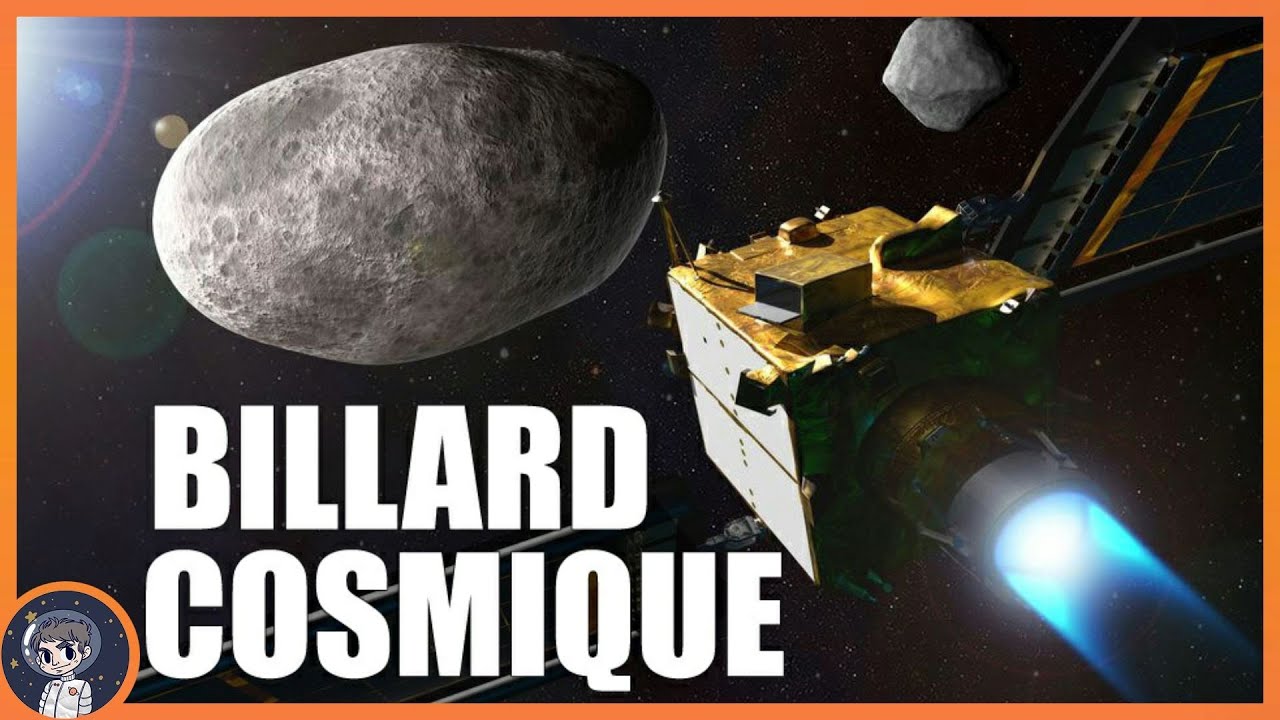










Near-Earth asteroids pose a real but manageable threat to Earth, with objects larger than 50 meters capable of causing regional destruction; ESA's Planetary Defence Office coordinates global efforts through three pillars—observations using ground-based telescopes and the Hera mission, orbit determination accounting for gravitational perturbations and the Yarkovsky effect, and mitigation strategies including early warning systems and potential deflection missions like NASA's DART—to ensure humanity can detect, track, and respond to potential impact threats effectively.
Near-Earth Asteroids Threat & ESA Planetary Defence
Added:Basic Celestial Mechanics: Understanding orbital parameters, particularly how elliptic orbits can bring minor solar system bodies close to Earth's orbit.
Classification of Solar System Bodies: Distinguishing between asteroids, comets, meteoroids, and meteorites based on their composition, origin, and behavior.
Historical Impact Significance: Familiarity with historical Earth-impact events, such as the Chicxulub impact (dinosaur extinction) and the Tunguska event, to contextualize impact hazards.
Astronomical Scales of Measurement: A basic grasp of distances (Astronomical Units) and size dimensions used to characterize near-Earth objects.
Asteroid Deflection Methodologies: Investigating active mitigation strategies, including kinetic impactors, gravity tractors, and nuclear deflection concepts.
Observational Technologies and Astrometry: Studying the engineering behind ground-based and space-based telescope arrays (like NEO Surveyor) dedicated to tracking asteroid trajectories.
Planetary Defense Missions: Analyzing the real-world execution and scientific data from key missions such as NASA's DART (Double Asteroid Redirection Test) and ESA's Hera.
Global Policy and Disaster Response: Exploring the roles of international cooperative bodies, such as the International Asteroid Warning Network (IAWN) and the Space Mission Planning Advisory Group (SMPAG).
117 views5likes1:21:58Original Release: 2021-01-06
i'm not coordinating the complete rover mission i'm just coordinating what's called the close-up imager which is a a camera like a geologist's hand lens which is uh provided by the space exploration institute in nurse chatel and the principal investigator is a good friend of mine and we are working together on getting this instrument on board the rover but okay still it's true i mean i'm i'm basically doing two different things the one task we want to focus on about today is the work i do in the planetary defense office it's about near-earth objects or near-earth asteroids in particular and you should be seeing a screen which says the threat from neos and what isa is doing about it can you maybe raise your finger raise your something yeah and i do see two two participants in addition to stefania also by video if there were one or two more who would dare to switch on your video i wouldn't mind because i like to have some visual feedback like bob is smiling and that helps me in giving you a better presentation it's motivating for the speaker to see some real faces so don't be shy uh also if you first need to dress or something then do that and come back in 10 minutes and then switch on your video and thanks we died that you started immediately with your camera i'm really appreciate it all right let's get started uh what i'm going to talk about today is not too technical or mathematical because i just want to give you an overview of what we at esa are doing with this topic of what we call planetary defense at the end of the course you should or of this lecture you should get a feeling for the level of the impact threat is there really an impact right from asteroids the answer yes otherwise we wouldn't be spending money on it but you should have a bit of better feeling of how serious is this issue you should be aware of who is doing what and what are their main activities what are the the players in this field of course it's not just isa there are many other parties okay great one more video thanks natalie appreciate it and uh the then i wanted to pick one point where i do get a bit more technical and because you are looking into say mission analysis and and orbit design and things like that i decided to give you again a top level overview of why it is actually difficult to predict the orbits of asteroids it's not just kepler ellipses and we'll talk a bit about that i split the chorus in five blocks not all the same lengths i think the first two a bit more uh in terms of time i when i test ran this yesterday it took me about an hour so let's see how we get through the course today i'll start with this introduction which we are right in the middle at the second part will be about observations we need to find these objects before we can do anything about them we will then talk about orbit determination and impact monitoring i will define what that terminology actually means we will talk about mitigation what can we do to reduce the risk from a potential impact and in the end i'll cap it all up and summarize and present to you the main players in the community so let's get started the first thing is what is a near-earth object who who does not well let me ask the other way who knows what it is don't look at the screen yet who knew before you read what i wrote on the screen i hope at least some of you okay so a near-earth object is defined as an asteroid or a comet which has a perihelion of less than 1.3 astronomical units so if you if you look at my screen here in the background this is the sun in the middle i have the blue orbit around it which is the earth that's why it's blue and actually normally i look from the top so everything is going around the sun counterclockwise and here i have the orbit of an neo which is on an elliptical orbit and it goes to the left where my whiteboard is over this would qualify as a new earth object i don't really care about this one because it doesn't well it does come close to the earth but if i think about the scale here it will still be millions of kilometers away from the earth and it may never become dangerous and we'll talk a bit about the difference between a near-earth object and what i call a threatening object which is an object which has a computed impact probability later um asteroids are cool stefania mentioned this in the introduction they are very very interesting from a scientific scientific point of view because they are leftovers from the formation of the solar system and comets are in principle the same thing only they formed much further away from the sun and they contain lots of ices and that's the definition of a comet is basically when it gets close to the sun it becomes fuzzy and it gets a tail and in order to do that it needs isis volatile material but in principle it's it's a very same thing it's small objects say the largest are a few tens of kilometers in size at least those that come close to the earth and we even know many near-earth objects now which are less than 10 meters in size which may not really pose any threat to our planet even if they do hit most are rocky objects these asteroids i mean the comets are icy most of the asteroids are rocky objects some can be iron objects and they are of course a bit more dangerous if you have two similar sized objects and one is made of rock the other one on iron guess which one will penetrate the earth more easily of course the iron object it's heavier it has a higher density but also it's not as brittle it doesn't break apart as easily now within isa we started about 12 years ago i think my first presentation to this topic was in december 20s sorry 2007 where we were doing an assessment of what could essa contribute to this topic of planetary defense defending our planet from threats uh outside the earth and already in that time it was agreed that planetary defense would be part of something which we nowadays call space safety program it used to be space situational awareness program or ssa in case you hear this terminology but we are now part of the space safety program the space safety program has the goal to protect our planet our humanity and assets in space and on earth from dangers originating in space so that's what i wrote here let me get my laser pointed that's that's this green part here and this is what we call our mission statement that's basically the one sentence that we're trying to fulfill if you want to summarize my work in one sentence that's the one sentence i sometimes say well we try to save this planet and i mean there are other methods to do that or other important things maybe even more important things right now to save our planet but this is one of them this is for the space safety program in general space safety has three elements we're looking at space weather so if there is a flare on the sun how does it affect our ionosphere you know it can affect power grids we're looking at space debris if you have fragments of satellites can they hit other satellites yes they can so we need to be aware of that and the third segment as we call it is this planetary defense segment and for that in particular our mission statement broken down is the the that's these three bullets that you read here we need to be aware of the situation of natural objects in space natural to distinguish it from space debris or satellites we need to be able to predict possible impacts and their consequences and inform the relevant parties and we need to prepare for risk mitigation so that's the three main tasks that we need to do before i talk about how we are actually doing it let me go back and ask again the question well is it really relevant who cares i mean you know i'll give you the first example here this is a big impact crater who has been there this is the meteor crater in arizona has anybody visited it nope i go there it's really cool they have a visitor center there's a road here and there's a nice visitor center you can visit you can look into the crater it used to be that you can get tours into the crater i'm not sure whether they still do that but it's really interesting this is a 1.5 kilometer crater which was formed by a 50 meter 5-0 meter diameter iron object now this was iron so like i said that's a lot of energy there and it came in it's we don't know precisely but probably 15 to 20 kilometers per second and then you get this big crater that does not happen very often i think this thing is i i don't remember the number you'd have to look it up but it's probably 15 000 years ago that this happened so you could say well look it hasn't happened since then so who cares well there are more recent examples and one example i put here on the right is an image of a crater that was formed just in the year 2007 so a bit over 10 12 years ago in carrancas in peru it's about 15 meters in size 1 5 now so a factor of 100 smaller than the crater on the left and you see the people in the back there for scale and this was formed by a 1.5 meter rocky object that went all the way through the atmosphere and we still are not really sure how such a small object can make it through the atmosphere and that's not what the scientists were expecting so that's an interesting case but it's confirmed that this is material from outer space that came and generated this crater because this is a rather low density low population density area luckily there wasn't a lot of damage there so no problem but just visualize that this hits somewhere in the middle of london why you would want to know before this comes and at least evacuate the people or do something else about it right and that's exactly what we're trying to do in our planetary defense office and the lower image here uh we this is the so-called chelyabinsk event that happened in the year 2013 in february a 20-meter object two zero meters in diameter roughly entered the atmosphere over chelyabinsk and it generated a shockwave that actually did some damage and i have uh let's see i put a little youtube video here again you can look at this yourself then but let's just start this i hope you can see it now i can't see it now there we go let me see saw he's going down yeah you get that so they showed the the smoke trail where the clouds that that were generated and then of course the shockwave only comes a few minutes after the entry so people would go outside and those were the lucky ones those that were standing behind their windows in a building like this were unlucky because the shop wave comes and then basically blows the glass of the windows in your face so visualize yourself saying oh god what the hell is happening out there and then suddenly plum you get all the glass in your face there were 1500 people which were injured with this event and again if we knew this before we could do something about it and that's why we are here and that's why i get some salary paid how does it happen uh just a table here i'll just give you a few examples so i have for some reason 20 meters is not on here but 10 meter objects happen on average i mean this is a statistical long-term average say every five years and a 10 meter object would probably not reach the ground it will generate some small meteorites and it will be quite bright it will be brighter than the sun and we would expect that people will start asking the question what the hell is happening there a 40 meter object is something that happened in the tunguska region about 100 years ago that typically happens every few hundred years now 20 meters would be somewhere in the middle so say something like chelyabinsk could happen on average every 50 to 100 years now keep in mind this is statistics and statistics is nasty uh out of these 20 meter objects we basically know none of them out there in the solar system we know less than 0.1 of the complete population so this could still happen again tomorrow we just don't know just like the chelyabinsk object which came from the direction of the sun we didn't realize it was there until it entered the earth's atmosphere larger objects 140 meters would do regional destruction these don't happen very often again it's statistics so it still can happen within our lifetime and these are then the objects where we would probably want to deflect the asteroid like with the dart or hera mission that stefania mentioned in the beginning now how do we do this well we have something called a planetary defense office at esa and before you ask questions of course at least nasa has something very similar and they were there a bit before us actually nasa was the one who started working on this whole topic long before everybody else i think isa then joined quite quickly and uh now we have just as nasa that have a planetary defense office only spelled with an s we have a planetary defense office where defense is spelled with the z and with the exception of the funding which is much smaller on our side the nasa side the setup is very similar we focus on three different pillars as i call them that's observations it's information provision which includes computing orbits predicting impacts and its addressing mitigation and these three pillars stand on a common platform which we call ground and data systems so we would have like it support of course or people that know about optical telescopes there we call in experts from isa were provided to us from outside our own office in total we have currently 13 1-3 people working in the office and typically we are hiring one or two additional people every year uh but it's it's not a big office it's really just a small project within esa we have a web page so if you want to do some research on your own it's at neo.ssa.esa int so near earth object ssa still from space situational awareness and go there and you find all the information everything we do is public and that's on purpose because it's very hard to keep things secret when it comes to asteroids a lot of amateur astronomers out there that look at the sky just like the professionals do okay they have smaller telescopes but still if an object is close then it gets bright and it's visible even by an amateur there are people out there that do uh work like orbit predictions which is really at the same level as professionals i mean there's a amateur who is a mass professor and of course he is good in computing orbits better than me because i'm not good in math so that's why it's clear that there is nothing secret or no we are not working with the military or anything it's actually quite uh satisfying if you work on an international level that we work together with the chinese with the japanese with koreans and americans and we just all talk together and we know that there is something coming from the outside and only if we work together we can defend ourselves properly all right that was a bit the top level overview so do you have any questions to this top level part i saw a shaking head so let me just jump into the second block called observations the first thing you have to know is we talk about two different kind of observations in these field of asteroids well the first thing is i'm currently only talking about optical observations so with optical telescopes that just use a regular ccd or cmos camera to look at the night sky and what we have is we have something called survey observation and we have something called follow-up observations and in the space debris fields what we call follow-up they call tracking so it's the same thing when they talk about tracking i call it follow-up that's really the same thing and surveys are currently performed by three main programs all of them are funded by our american colleagues by nasa the biggest survey is called pun stars they have two 1.8 meter telescopes on hawaii and there's the catalina sky survey in arizona and there's something called atlas also in hawaii all of these telescopes are not super big in aperture i mean astronomers start thinking large is everything larger than eight meters and they smile at people that use smaller telescopes well the catalina telescope the largest one is one meter and the other one has 80 centimeters aperture the important thing is we have a very very large field of view so pawn stars i forgot the details but it covers like a field of view of 2.5 by 2.5 degrees in the sky if not more i know the numbers for our own telescope i'll address that later because we want to cover as much as we can of the night sky per night so that we don't miss an object you know we look there and an object comes close on the other side we want to avoid that we on east side are currently building a telescope it's almost done i mean i've seen all the hardware with the exception of some of the cameras already it's built in italy by the company ohb in italy it's a one meter telescope with the field of view of almost seven by seven degrees so if you think of the full moon in the sky you could put the the full moon 150 times into the field of view so we take one image and we cover 150 times the area of the full moon that sounds like a lot but still if you want to cover the complete night sky you would need to spend three or four nights with this one telescope to do it our goal is to just spend one night so the conclusion is we need three to four telescopes to do that and we have funding to start the second one and third and fourth will hopefully come in the future the next thing is follow-up observations so once you have an object discovered you you observe the object maybe for one hour now again think think of the orbits so even if you have an orbit very similar to the earth's orbit it takes one year to to go around the sun so if you only observe the object for one hour and you want to compute the orbit your uncertainties are huge normally it's just enough to find out where the object is in the sky for say the next few hours and if you then don't observe it again it can be anywhere in the sky and you'll never find it again that's why uh what happens is after an object is discovered people out there point their own telescopes or you know robotic telescopes whatever and dedicate the observations to following up this one particular object which was newly discovered on easter side we use our what we call the optical ground station again it's a one meter telescope in the canary islands and then we have contracts with a number of european telescopes but also telescopes on the southern hemisphere and we have access to quite large telescopes for example the very large telescope in chile of the european southern observatory that now is an 8.2 meter telescope and we have an agreement that we can use that for observing that the really faint objects which are still or could be dangerous and where we can argue that if we don't observe it with this large telescope they may come out of nowhere at some point and threaten us so that's what we currently focus on these follow-up observations survey observations are funded by nasa but also on easter side we will come to that just a little animation here to explain this why do we need these follow-up observations i hope it's already clear to you i'll give you an example in a minute uh the survey telescopes typically look at the same part in the sky three to four times or even five times spaced 10 minutes apart so i get a number of observations here it looks like one observation is missing maybe the object was very close to a bright star so now i have three observations space 10 minutes apart of the object in the sky and with that i can compute an orbit and predict where the object should be say in a few hours from now and i do this prediction and ta-da i have a nice prediction now already i know that when measuring the position of the objects i make errors it's uncertain and i can take these uncertainties into account and compute an uncertainty ellipse so what i should be doing with my follow-up telescope i should just observe this uncertainty ellipse and then i may find out ah this is where the object really is it's not at the predicted position it's still somewhere in the uncertainty ellipse so that means our mass was right and now if i do an updated orbit you see the fit here and the first three points is looks like the same quality as it was before but now i end up at the completely different location if i say now extrapolate that to a tomorrow or to a week from now that's just to illustrate why these follow-up observations are so important now other than asteroids part of our program we also observe fireballs and the moon let me try to click on this and see whether i get this running uh just a second it's loading yes so there we are look at the upper right here and there you see this this bright thing entering the atmosphere and it was really bright this one is a cool one i'll come back to this this was an event that we actually predicted we observed the object in space and then we could say okay this will enter somewhere over africa and then afterwards stop the video here and then some time later we after we observed the object in space we found this recording of a webcam somewhere in africa so this this is one thing we're looking at the other thing we're looking at is the impact flashes on the moon also there i have a little movie here on the upper left you see that if you look at the dark side of the moon so the bright side the illuminated side is on the bottom part here this is the dark side which you normally well it faces the earth of course this is say at half moon so half of the moon is bright the other half is dark that's where you want to look and then you occasionally see these light flashes there these come from i think this flush maybe just from an object a few centimeters in size like this one maybe it's 20 centimeters we're still discussing the size conversion here but this also tells you a lot about the frequency these objects hit our planet because from the moon of course you can extrapolate what happens on our planet so that's another part of the observational activities that we're involved in and that's all i have to say for observations do you have any questions to the observations yes bob go ahead if i uh understand correctly from b6 plus 12 um you know the the organization uh b6112 they were talking about putting uh a spacecraft around the orbit of venus i think it was to look and because they claimed that they could possibly see uh incoming objects which we couldn't see from the earth is that correct yeah no that that's a good point worth mentioning uh currently we do not have any approved projects to put a telescope in space to observe asteroids nasa is very close uh they they have plans for that which are very concrete it's called neossum neosm which stands for neo survey mission and this is the closest to what i guess the idea of the b612 foundation was you take a telescope the awesome would be in earth's orbit actually or i think in one of the lagrange points and uh scan the sky from there now why would you want to go to space remember what i mentioned about the chelyabinsk object which came basically from the direction of the sun when it entered the earth's atmosphere and so directly before it entered the atmosphere from from ground you would not be able to observe it because it's in daylight now we we backward propagated the orbit to check whether maybe we could have seen it at the previous flyby yeah i mean these objects don't just fly by once i mean this thing goes around and then a few years later it comes back again so could we have seen it at the previous closed flyby and the answer is no the object that hit uh the atmosphere in 2013 atelier bins was never bright enough to be visible with our telescopes i mean we computed 40 years backwards in time and then you know there's a limit to the telescope size 40 years ago so it would have been impossible to detect it if you go in space then of course you can see these objects and the reason why b612 is proposing to go to a venus type orbit is then you have the sun in the dark and you can look out with your sun in the back and you see even these objects which are closer to the sun as seen from the earth and they're nicely illuminated well illuminated yeah like like this one here if if i'm the sun all you would see is black but if the object is behind me then you would see it illuminated so this is why venus a venus-like orbit would be fantastic like i said the best we are doing right now is this nyosan project which i think is a 40 centimeter telescope which is very close to getting funded for a launch it's not yet confirmed but they're very far advanced already the other project to mention maybe is is called neo-wise the americans had a white infrared sky survey telescope which was looking at this guy in the thermal infrared and when the official science mission was over the nasa planetary defense office took over the mission and they didn't have cooling capacities anymore but you could still observe in two or three thermal spectral bands in the thermal infrared and they use that to identify asteroids and in the infrared you can directly measure the size of the object which in the optical we cannot so that was really useful but that's currently not as far as i remember it's it's stopped also so it's really important to have another space-based telescope in europe spain is currently very interested they said they want to look into this we are starting some studies with spain and then hopefully when we go to the next ministerial conference in 22 we can ask for some more funding to do a better study on that but it's only studies for now all right yeah all right then let's continue with uh the next part which is called orbit determination and impact monitoring so let's first say what what is orbit determination well that's what uh i illustrated already a bit here when you see an object in the sky then all you see is something moving between the stars this is a typical image on the left here from a survey or in this case was a follow-up telescope you see the stars are slightly trailed so somebody already knew the object is moving in this direction and then tracked the object to increase the signal to noise this i don't know the details is from towton book okay they typically take images every 10 to 15 minutes and you see the stars are always at the same location this thing moves now of course if you if you measure the position now of the asteroid you get it in celestial coordinates in right ascension and declination simply relative to the stars and then if you do a lot of math you can convert that to a coordinate system in our solar system yeah this right ascension and declination is essentially a direction somewhere in the sky from your telescope and with that you can compute the orbit in the simplest case you assume it's a kepler ellipse and then already gauss came up many years ago with a way to solve this problem and come up with an orbit which you see on the right side let me switch on my laser pointer again so we go from these measurements to an orbit of an object here this is the asteroid orbit this one has a close flyby at the earth so you actually see two different orbits one is before the close flyby the other one is after the close flyby so you already see just assuming a kepler ellipse may not be good enough because in particular for those objects that come close to the earth you need to take earth's gravity into account but okay just to get started all you do is you look at the object here and you compute an orbit and again just to visualize how that's done i spare you the mask today but in principle i hope it's all clear to you what we're doing let me show you my screen my whiteboard a bit so i have now i have the sun in the middle and i just assume some kind of coordinate system normally solar system barry scented then i have the earth orbiting around like this so here i have my planet [Music] if i have a telescope and it looks say in this direction that's the direction of where i see the asteroid right ascension and declination simply is this direction i do not know the lengths that's of course difficult to obtain if all i have is a dot in the sky i have no clue how far away it is but if i now have three of these observations and i know that the orbit should be a kepler ellipse then if i'm lucky i can fit an orbit around this in reality unfortunately it doesn't work because the the observational arc as we call it the time that we observe is always like i said maybe an hour or so so that's why we again need these follow-up observations then if i have a few days of observations then we can say okay now the orbit is good enough that it will last at least say a year or so and i can still find the object back and there are a number of techniques now like systematic ranging i mentioned gauss laplace also worked on this the systematic ranging is quite recent where you do a statistical analysis taking the uncertainties of the observations into account and with that hopefully get a reasonable assumption for a starting orbit so if you're interested in math that's a fantastic field to play with in europe the key institution there for us for esa was the university of pisa they developed a lot of orbit determination software which we have taken over and modified and are now running in our own system that's not a trivial thing now even when we have a lot of observations uh orbit determination is challenging um you know we have planetary perturbations remember the object i showed before where we had these two orbits when it passes by the earth then the orbit completely changes the semi-major axis changed a lot there's something else which is relevant well there's relativistic effects if you have an object coming closer to the sun then say halfway between mercury and venus you have to take relativistic effects into account the other effect is the yarkovsky effect visualize this is my asteroid see yourself as the sun and the sun sends a lot of energy and you heat up the asteroid now assume the thermal inertia of this object is infinite so it it doesn't really heat up it will re-radiate all this energy towards you and that's enough to to act to force the object away from the sun now in real life the object is rotating so if i heat it up here it's rotating like this it will send its uh its light or its energy a bit under an angle and that's illustrated here so i have the sun at the bottom i have the asteroid here it rotates counterclockwise in this drawing the infrared re radiation will go in the direction indicated by the wiggly lines and that will increase the semi-major axis of the object and if it rotates the other way around it would decrease the semi-major axis and this whole effect is a function of the thermal inertia if i have infinite thermal inertia it will just re-radiate in all directions and then you know then it's no problem so that's uh one of the surprisingly in my view one of the most important things that we need to consider in addition to relativistic effects and planetary perturbations when we do orbital analysis just to give you some numbers a hopefully well-known asteroid is asteroid apophis it was discovered in the year 2004 and was predicted to hit the earth with something like five percent probability or so which then in the end it turned out that that was just an uncertainty in the time measurements so very quickly that impact threat went away still it will have a very close flyby to our planet in the year 2029 so eight years from now hopefully we'll all see that it will become visible with the naked eye it's brighter than what you can see with the naked eye so that's good will be visible from southern europe or even from central europe i think in the evening on the friday so it's really cool best television time let's hope starlink satellites will not block the view but okay i'll be there now we can predict the flyby distance it will be below the geostationary belts about 30 000 kilometers from the earth and we can predict this to a few kilometers accuracy if we just assume gravitation [Music] but because of the yarkovsky effect we suddenly have an uncertainty of three to four hundred kilometers we know it the object shows the yarkovsky effect we know which way it's rotating so we know that the distance that we compute from uh from just gravity is the the maximum distance but it could be closer than that by up to 400 kilometers and we don't precisely know simply because we don't know the details of the yarkovsky effect and that's a bit annoying because of course when it flies by the earth again the orbit is completely changed and where precisely it will fly by will determine whether we will have an impact solution in 2068 and we will just not know until after the flyby so that's why it's difficult to determine these orbits and to the right again i show a plot where one of these orbits now don't ask me which one is which but one of these lines is the orbit before the flyby and the other one is after the flyby and you see before it's it's not getting much further than the earth whereas after i think it's after uh it goes almost all the way out to mars maybe it was the other way around i don't remember okay now any questions to this orbit determination are we doing with time yeah i think it's still some time right yes excuse me good morning roberto commander speaking hi good morning uh i have a question you you briefly touch while you were talking the matter related to starlink and other internet broadband constellation that sooner will be within the sky will be in orbit uh do you believe that this could be a real problem in the observation of near-earth objects in the future thank you i am not yet sure to be honest there uh there was a paper recently published by a colleague from the european southern observatory who among other things looked at the survey capabilities of the large synoptic survey telescope part of the vera rubin observatory that will it's currently being well being not yet commissioned they're just finishing building the telescope and building the hardware they do a scientific survey of the night sky uh for science reasons now not so much for asteroids they will of course also see asteroids and there if i remember the number correctly uh they will lose about 10 percent of the observations or five to ten percent of the observations if starlink continues without doing any mitigating activities like you know painting things black or something uh they will lose five to ten percent of their observations that means instead of ten years they have to observe eleven years to fulfill their survey goal and one year of operations costs a few tens of millions of euros so that's the impact there now for us it's it's not yet clear to me we we asked the same guy who wrote this paper to also take the data from our survey telescope that we are currently developing and he came up with numbers where we had like two or three percent of observations which we lose but it always depends on your detection algorithm which is not yet tested so the the honest answer is i don't know yet i am worried but i cannot yet really prove how much observations we will lose we will lose some that's for sure it will be annoying because you will have false detections from these satellites going through but maybe you know if i know the direction they fly through i can change my software so everything that goes above a certain speed i mean they will be rather fast faster than most of our asteroids maybe i can exclude them by soccer so it's something we're following closely but i don't have a clear answer for you thank you thank you very much i have a question please it's victor barr um i i wondered if it's possible uh to compare the observed orbit of an asteroid uh to compare it to the calculated orbit and from the difference a is it possible to calculate the thermal inertia and constrain the asteroid type that's one of the things that was done for apophis and there are a number of other objects and now we get even more with gaia measurements where we have very precise measurements of some asteroids and we can detect the yarkovsky effect that way um now i'm not the super duper expert there but if i remember correctly or what my colleagues told me it's it's possible to detect the effect and say okay you know you change the semi-major axis by blah blah blah over this period of time but it's now very difficult to disentangle or find a unique solution of the influence of say the size of the object the rotational speed and direction of the object and the properties of the object so this is why we still for example for apophis have this uncertainty of a few hundred kilometers we know it shows the yarkovsky effect there were some solutions we know the size of the object we have a reasonable idea of the rotational speed still i have this uncertainty my suspicion i was asking myself the same question if you know all these things why do we still have this uncertainty and my suspicion there is this is because we do not know the thermal inertia well enough so most likely you know even if you observe these objects we cannot uniquely measure or derive all the quantities that we would need to do a prediction very far in the future but the more we work on that the the easier it will become but we're just beginning with these yokosuki measurements they have been done well for a few tens of years this was known but that we get really precise measurements i think this is starting now with gaia observations where we get super precise position measurements so hopefully in 10 or 20 years i can answer to your question yes of course we can measure everything we're not yet there thank you okay then let me go to the next block which is called mitigation the first thing i want to clarify is the definition of the term mitigation i keep seeing colleagues that say oh we built a mitigation mission and what they really mean is a deflection mission i looked up what mitigation means and in the webster online dictionary it says mitigation is the action of reducing the severity seriousness or painfulness of something so it doesn't mean if i want to mitigate the threat of an asteroid impact that i have to blow up the asteroid that's not necessarily it warning the public can be good enough think back to the case of chelyabinsk no i think i i have that here if i had seen this coming the way to do it is we would have told the local emergency response agency hey guys there is an object coming that will light up the sky tomorrow morning we predict that all that will happen is that there's a shockwave which could shatter windows so please make sure people open their windows and just leave them open until the shockwave is gone and then close them again and go outside and enjoy the show and then nothing would have happened well okay some people of course don't listen and and still do it and look behind the window but in principle you know you distribute this information via the radio or television the evening before you say hey look something fantastic is happening tomorrow but please don't stand behind your closed window because otherwise you may get glass in your face and then nobody would have heard have gotten hurt and that's a bit one of the things we're looking at for objects in particular objects smaller than 50 meters in size five zero meters that's where we would not even think about a deflection mission we would think about maybe a surveillance mission you know if i have a 40 meter object which is made of iron it's very close in size to this arizona meteor crater which i want to avoid so i mean there i would think maybe we should deflect this thing because it's a 1.5 kilometer crater somewhere in the desert luckily but if this happens in europe that would be bad and it's difficult to evacuate all of europe where would we go so maybe we send a surveillance mission there just to see what it's made of but be clear that mitigation doesn't immediately mean deflection and the two screenshots i have here i just want to point out maybe some of you recognize them the left one is a scene from the movie deep impact and the right one is a movie from armageddon where bruce willis flew with two space shuttles to this gigantic asteroid blew it up just before it came close to the earth and there were two fragments and one flew to the left and the other one flew to the right i don't think it would work that way but it's still a fun movie to watch so that's why i thought it's a good example here deep impact is a bit more down to earth more realistic i think and in the end they focus their activities on evacuation as you can see that has its challenges here the roads were fully blocked and people didn't get away in time we were told by emergency response agencies that if they needed to evacuate a city they would want to have about 10 days in advance and in principle they would like to have three weeks in advance because a factor of two is always a good safety factor and this is how we designed our survey telescope our survey telescope is capable of observing objects down to 21.5 stellar magnitudes and if i convert that to a size of an object at a typical distance it would correspond to a distance sorry to a size of about 40 meters so just like the tunguska object uh when it's three weeks away from our planet taking average relative velocities and things like that so that's uh how things fall together with our survey once it's up and running we can warn people three weeks in advance about something that's tunguska sized or larger of course in detail it depends uh it's it could be a 20 meter object that we discovered 10 days in an in advance we could still do something about it so that's mitigation two things it can be just warning the public and then it's up to the emergency response agencies we don't tell the people what to do we just inform the emergency response agencies the space agency cannot say you should evacuate that's not up to us we leave that to the emergency response agencies for objects larger than 50 meters we will all become active and think about possible asteroid deflection how do we tell people uh if you go to our web page again in your ssa issa int you will find a menu bar on the left which is called cuffs cafs well we just love acronyms cuffs stands for close approaches fact sheet we generate one of these close approaches fact sheet for every close flyby which would result in an object which in which has an apparent magnitude brighter than 11.
so that's cool because that means if i have a large object i would get this fact sheet or a warning effectively already at larger distances whereas if it's just a five meter object it has to become really close it has to be really close before we become active so that's what we do and i give you an example here you see the top half of this close approaches fact sheet with a nice visual design following the esa rules from five years ago i think we have to change the logo actually we now have a solid logo and there is some information it says okay a small asteroid impacted the earth so here you see this is already an update that was after an object actually hit our planet that was on the 2nd of june 2018 sometime in the afternoon our time with a this should read impact speed we have updated this now it's not flying by anymore if it impacted of 17 kilometers per second and the size was two to five meters so that's so small that uh only small pieces reached the ground yeah again i think they actually found a meteorite which was roughly this size maybe only after size and probably a few other pieces were there but they didn't find them we provide the orbital information and some other information like what are the expected impact effects and in the case like this one when it's actually predicted to impact we also provide an impact corridor so this line here which is red in the middle and green on the outside that's the i think the red is the one seek mind the green is the three sigma uncertainty ellipse of the impact corridor we you know what you have to see is you have your asteroid it comes close to the earth and one one of the things we know very well is the plane of the orbit so that's known very very precisely and that defines the long axis of this ellipse this is essentially a projection of the orbital plane of the asteroid onto the earth's surface and it's a bit curved because the earth is a sphere what we don't know very precisely is where the object is in its plane or take it the other way around we don't know precisely the timing and if this object is just one minute earlier or one minute later remember i said the relative velocity is 17 kilometers per second so let's call it 20 kilometers times 60 is then already a thousand kilometers within one minute that this thing would move around and that was about the uncertainty here for this object we had say tens of seconds or a couple of minutes and then you get this uncertainty here and in the end i already showed you this video at the beginning uh the entry of this object was recorded i think it was uh still in botswana or close to the border to botswana somewhere here so in this part so not in the middle of the empire corridor but somewhere in this park so that showed quite nicely that our computations work and the uncertainties are as they are this object was discovered just a few hours before it hit of course if i have more observations then i would probably be able to reduce the length of this impact corridor a bit but i wouldn't be too optimistic there so that's what we now can tell emergency response agencies and we are currently setting up interfaces to our european emergency response agencies we have a test run with the german they call it valtram laget centrum which is the german space situational awareness center and they in turn talk to the ministry of interior where they they set up these defense things and emergency response things and we plan to do an end-to-end simulation run with them in march this year where we basically set up a fake impact scenario and then you know they inform the people and then hopefully the people know what to do and if they don't know what to do that means we need to train them so we had workshops with emergency response agencies where we were teaching them okay look this is what we can do these are the accuracies and inaccuracies these are our limitations this is what we expect and then we ask them what do you want to hear from us what kind of information do you need and when do you need it we're setting up this interface right now we're not yet there if something if a real thing happened next week we would not yet be really ready but we are working on it and similar activity is going on on a truly international context we were participating in discussions i think since 2008 i was involved in discussions on the level of the united nations they have something called copuos this acronym here that's the committee of peaceful uses of outer space and they are dealing with this topic of near-earth objects and they endorsed two international groups these are not united nation groups they're just groups that formed by themselves but they're endorsed by the united nations and we report to the united nations group number one is called international asteroid warning network the acronym we pronounce that i1 and there's something called space mission planning advisory group we pronounce that same page i1 is basically a loose network of all individuals groups and institutions who observe asteroids compute their impact probabilities compute the effects what happens if this thing actually happened and the space mission planning advisory group consists of delegations of all spacefaring nations or the space agencies they become active if an object has an impact probability larger than one percent and the size of larger than 50 meters and think about how could we deflect this and of course something like the dart mission that stefania mentioned and hera where we want to test a deflection of an asteroid they are very very important for the work that we do here if we find an impact threat we will inform usa that's this acronym here usa stands for office of outer space affairs that's in essence the secretariat of copos and they are in they have political contacts by what they call a note verbal to all the member countries so if you predicted an impact say over sri lanka we inform this group here they would inform the office of outer space affairs and they will contact the ministry for external relations of sri lanka and that's how we ensure that the information flows all right so let me wrap up the whole thing and then i hope you still have some time for questions so the overall context i showed you all the bits and pieces but let me now put it together so this is my block diagram that i've been showing to people for well 10 years this is an update from 2017 uh but it's actually quite old you have an asteroid here your near-earth object the first thing you do is you have to observe it and we have our own telescopes like the optical ground station or our survey telescope which we are currently developing but we can also work with existing telescope facilities via service level agreements and things like that the one thing i hadn't mentioned yet all positional observations i'm only talking positions now so the astrometry is collected by one place on this planet called the minor planet center it's physically located in the u.s funded by nasa it's the one single place on this planet where all these observations are collected they will decide whether an object's orbit has been determined well enough that we can actually call it near-earth object or not so what they're doing is whenever they get observations the first thing is they check do these observations fit to an object that's already there if not they compute an orbit with all the culprits that i mentioned that it will be very uncertain and make a prediction on where you have to look to do your follow-up observations they post that on the web page which is called ineo confirmation page and then anybody can go there you know deadlift the amateur astronomer who has a telescope in his backyard can go to that page and say oh yeah this object is bright enough that i could see it with my telescope then i can do follow-up observations but again i will submit by email it's a simple email interface to the minor planets under my observations and then they update the orbit computations until they decide that the orbit is good enough that we can actually see the object say for the next year or so now once that has happened we have a group which i go back one slide here this is happening in our planetary defense office we have something called the ssa neo coordination center physically located at esrin in italy and that's one of the two places on this planet where we now recompute these orbits we again go back to the original measurements and we now do a very very high fidelity computation very sophisticated for certain objects it can run five six hours and with that we now very precisely know where the object will be and we predict the position we propagated 100 years in the future and then the second part is what we call impact monitoring with this propagation into the future we now compare it to the distance to our own planet and come up with impact probabilities we have this uncertainty ellipse of where the object could be and then if it intersects with the earth then from the ratio of this intersection area and the complete ellipse i compute an impact probability that's what we call impact monitoring and once that's done uh what i just mentioned a few slides ago this political process becomes active that if you have an impact solution which is above a certain threshold then we would inform the emergency response agencies or go to the united nations i summarize that in a slightly different form on this view graph just to make sure it's really clear so just to repeat i have a survey telescope like pawn stars it measures the position of the object in the sky all the information is collected by the minor planet center they compute a preliminary orbit if this is a possible near-earth object they post the information on this neo confirmation page everybody on this planet who is in the field will try to get follow-up observations they do a recomputation of the orbit so this goes in a loop typically for three or four days then we have a good enough orbit and then other systems come into play like our neo coordination center and there are two more again there's still the system at the university of pisa which i mentioned which we inherited more or less in an upgraded version and there is an independent system at jpl at the jet propulsion laboratory of nasa and if there is an object which has a certain impact probability or larger then we don't just publish this information actually the software then decides not to publish anything but it will send an email to the operators and say look there is a high probability impact object here now we have to intervene manually and we double check with our nasa colleagues whether they have similar results it will never have exactly the same because it's different software they use but if they also have something on a high level only then we publish this information and vice versa if nasa discovers an object with a certain impact probability which exceeds a certain threshold they will ask us typically we are the first simply because of the way they and night work on this planet but that's a self-built in control mechanism that we don't just publish something because we made a mistake in some computations so that's a bit the whole process and then as i said before just to recap if we find an object which impacts either for certain or has a certain threshold i think we use the one percent over the next 50 years is the threshold where we inform emergency response agencies and then if in addition the object is larger than 50 meters in size then we also have to think about possible deflection missions hera was mentioned by stefania is part of a mission called aida which stands for asteroid impact deflection assessment that's nasa will be basically shooting a satellite into the smaller one of a binary asteroid and then you can just visualize this this is my asteroid here my satellite here my asteroid if i hit the asteroid the asteroid will be pushed a bit just by conversation of momentum we will change the velocity now the the trick with this double asteroid is that if you have two objects they orbit each other and you can measure the orbital period very precisely so even a small change in velocity can super easily be measured and that's what we're doing here so the satellite is very small in just a few hundred kilograms it wouldn't be able to deflect a really threatening object but since this is just a demonstration we also want to avoid that we accidentally push something towards our planet this is a perfect demonstration for this and that's it from my side i'll be ready for answering more questions if you're still willing to ask some or have some time stephania has a copy of my view graphs and i just want to let you know that for each of these five blocks that i have i have a number of questions and if you want to go through the effort did you really understand it as go through these questions and if you want i'd be happy to check your replies and make sure that you answer them correctly but that should all go through stefania then she will coordinate that if you're interested thank you very much for your attention thank you so much for your talk so on the back of this i'm gonna leave my email in the chat so you can uh email me and ask me the presentation if you want do you have is there any question something you're curious about natalie is raising her hand sure yes i actually have two questions uh one is regarding observations is there any way you can observe them in infrared or any other spectra than optical probably not well the answer is yes it is possible i mean there are infrared capabilities on ground we have the irtf on hawaii which is occasionally used for observing asteroids and i mentioned the the neowise mission which is space-based and that was a very important asset because one of the things i didn't discuss at all is the all we normally see with our optical telescope is a point we cannot resolve these objects unless i use super special techniques on the very large telescope so in order to estimate the size i need to know how much light does it reflect which i don't know i mean we have estimates it can be anywhere between four and forty percent which means the size uncertainty is is a factor of two whereas if i observe in the thermal infrared and that was done with neo-wise i immediately see the size of the object because basically all i measure is the temperature and then with the intensity i can compute the size of the object directly that's why these infrared observations would be very very important but this thermal infrared you can only do space based i think there were observations done by spitzer which is another space-based infrared telescope and neo-wise and we would need more so the answer is yes it is possible it's no problem but you need a telescope somewhere that does it and preferably in space since we're at that one more point before you ask is there you can also see asteroids using radar systems and before the receiver radar crashed down it was one of the major assets that was used on this planet to look at asteroids that only works if you have asteroids coming really close say well really close okay two to three million kilometers otherwise the signal strength was not enough but that would give you the size quite directly and you can also determine the dielectric constant of the surface of the asteroid which will tell you whether it's an iron or a rocky object now that's more difficult now with arecibo gone goldstone is still there but it's smaller so we'll see how that goes okay number two um question number two is i might have missed it uh how much time do you have to inform once you know that there's a potential threat and you want to inform our first responses and everything how much time do you have for that uh well this depends of course on the object itself for chelyabinsk the time was zero we saw it entering the atmosphere and that's when we could have informed the people for other objects maybe a good example is to just go to our web page and look at something we call the risk list so i'm putting that on my screen now our web page has a button called risk page and that shows you the objects this is now sorted by what we call the the palermo scale which is a measure of how serious the impact threat is here's an object 2010 rf12 which will impact in 2095.
so there i still have a few years and i just was queried by the press for this object here 29 jf1 which will has a predicted impact for 2022.
so that's only one and a half years from now but it turns out that this actually is quite uncertain because it hasn't been observed for many years so the warning times very a lot it could be just a few hours like in the one example where i showed you the empire corridor over africa up to many many years now typically the larger objects i see many many years in advance because when they are large they are bright even when they are far away for the small objects if i'm lucky like this one here 2010 rf12 it's only 8 meters but i have seen it at the previous close flyby at the earth when it was bright enough and then you know it does a lot of orbits around the earth until i predict that it will hit but for the large objects like i say we do expect that we should have 10 to 20 years so if really i have something which i need to deflect we should still have the time to build a deflection mission then it's just a question of money okay thank you yes all right there is a question from one of my students ian i think he has the hand up the virtual ends up okay oh yeah now i see it yes good afternoon um you mentioned the uh the near-wise mission um i found that quite interesting like being able to reuse a satellite sorry a space telescope beyond its primary objective once it can't carry it out uh for something like this um my question was um is this concept something that is also looking at um with one of its current or retired infrared space telescopes uh what happened so far is that most of our space assets went into what we call an extended mission phase i think like uh cluster i remember was an example which i remember very well because cluster these were magnetospheric spacecraft so you wouldn't see asteroids with them but they were launched before i actually joined the agency and i was working at the max planck institute then working on the rosetta mission and the people that were working on cluster were supposed to join my team working on rosetta and because this was delayed and extended and extended they never stopped working and i never got the people so i was utterly upset that they extended the mission because i wouldn't have the manpower that i would need so i remember that very well so that happened that launched more than 24 years ago it was supposed to work for a couple of years and it's still there and it's still operational so i think the answer is we we normally extend all our missions what we normally do is we just continue the originally planned program for example for xmm it's an x-ray mission it's it's an observatory so an observatory you as a scientist you can ask for observing time and then there's a selection committee just like on big astronomical telescopes ground-based and if you get the observing time granted you get your observations and uh of course you can basically request observations of asteroids and we're doing that with all these space-based telescopes but we'll always be competing with other communities something like new advice hasn't happened in europe yet neowise was a special case because the science was to do an a very wide spectral range infrared survey and when they ran out of coolant they had to stop that rock they just couldn't do it anymore and only the two closest infrared channels where you don't really need the cooling that much where it's still operational so for the normal scientists that wanted to use the telescope the telescope was basically useless but it was good enough for us so that's why neowise is this special case but like i say also in europe now we do extend our missions and typically they just continue their observations as they do before thank you very much all right i saw a real raised hand by bob morris also if there's no virtual hands is there any other question if if not i might just ask a quick question myself um other questions ask your question oh yeah okay given me sending out spacecraft to distant asteroids and given that we've got one coming very close in of just a few years time uh are there any planned missions to to get very close to a professor ah you asked my same question bob okay uh let's see there is there is nothing fixed yet so the answer is no nothing confirmed what we do is we are currently pushing a cube's admission to apophis which could be done on relatively short notice and i remember there is one spacecraft which was considered to go and i think it was actually osiris-rex the american sample return mission they did a study and they think they could after they separate the the sample return capsule to to enter the earth's atmosphere they can change the course of the mother spacecraft so that it would end up i think doing a flyby at aprofes and uh but there i don't know any details i have it on my list to find out more i just heard that just before christmas and then during the christmas break i didn't follow that up so of course people are thinking about that they're even dedicated conferences there was one in nice well it was virtual in the end in november last year where people discussed this topic but unfortunately i'm not aware of anything that has really been approved right now and i keep saying that this is fantastic i think elon musk should get up and say i do uh you know what we can do is we can do a picture similar to what you see on the screen that i just go to a geostationary transfer orbit which goes to 36 000 kilometers above the earth's surface and apophis will be at 30 000. so if i time it right i can actually be behind apophis as seen from the earth and i can take a photograph with a purpose in the foreground and the earth in the background i mean if some private space company could do that i'm sure they would have a lot of uh contracts coming up after that yeah so it was exactly my same question would be really nice if we can have even a small miniaturized mission to visit a profess it would be nice demonstration yeah tell the politicians tell them that they need to come up with some money i mean let's see what we can do or our student after they graduate if they can influence in any case thank you so much for uh your talk i think it has been very informative and uh in my opinion has kind of show what isa is doing and there is much more about uh asteroid that we probably some of the audience didn't know about and what is it doing to protect us so thank you for your work um if there are no other questions we can consider this this session over and if you have um any further question you can always email me and i will redirect your question later so in the chat you will be able to find my email as well so i hope you enjoy it and i think it was a nice start of 2021 with dr doc so shall we clap maybe clap our hands too thank you very much one two and three anyway thank you okay thanks it was a pleasure talking to you thank you and yeah so have a safe 2021 we are in lockdown in in england so yeah well stay safe okay bye bye bye bye everybody thank you bye thank you bye-bye bye now thank you thank you bye-bye so in the end i discovered that some of my students couldn't access the link my bad so yeah there was a password for how i sat in our website i don't know why but yeah so they join later but this was great because i recorded it so at least i can see the beginning
Up Next
49:58
Comets, Asteroids, and Meteoroids: Solar System's Dangerous Drifters
@WELTDocumentary
138.7K views•2023-01-15
61:17
First Billion Years of the Universe with the Square Kilometre Array
@iaaudc
121 views•2022-05-26

6:25
Kepler's Laws of Planetary Motion Explained (Educational Astronomy Video)
@Peekaboo_Kidz
404.9K views•2023-02-17
6:10
Gamma-Ray Bursts: Cosmic Snipers Explained | Astronomy
@kurzgesagt
15M views•2016-07-31
Related Study Plans & Knowledge Roadmaps
Structured learning paths in Astronomy
astronomy
Reionization: Pop III Stars, IGM & 21cm Line
01Foundations of Cosmology & the Early Universe
02Population III Stars & Cosmic Dawn
03Physical Mechanisms of Reionization
+ 2 more learning modules
17h5 modules
Explore Roadmap
astronomy
Planetary Rings: Dynamics, Roche & Resonances
01Foundations of Gravity and Orbital Mechanics
02Tidal Forces and the Roche Limit
03Structure, Composition, and Collisions
+ 2 more learning modules
10h5 modules
Explore Roadmap
astronomy
Asteroseismology: Stellar Waves, Ages & Cores
01Foundations of Stellar Astrophysics & Wave Mechanics
02Stellar Oscillation Modes: P-modes and G-modes
03Mathematical Framework of Asteroseismology
+ 2 more learning modules
35h5 modules
Explore Roadmap
astronomy
Adaptive Optics: Physics, Engineering & Control
01Foundations of Wave Optics and Wavefronts
02Atmospheric Turbulence & Optical Distortion
03Wavefront Sensing Technologies
+ 3 more learning modules
35h6 modules
Explore Roadmap