





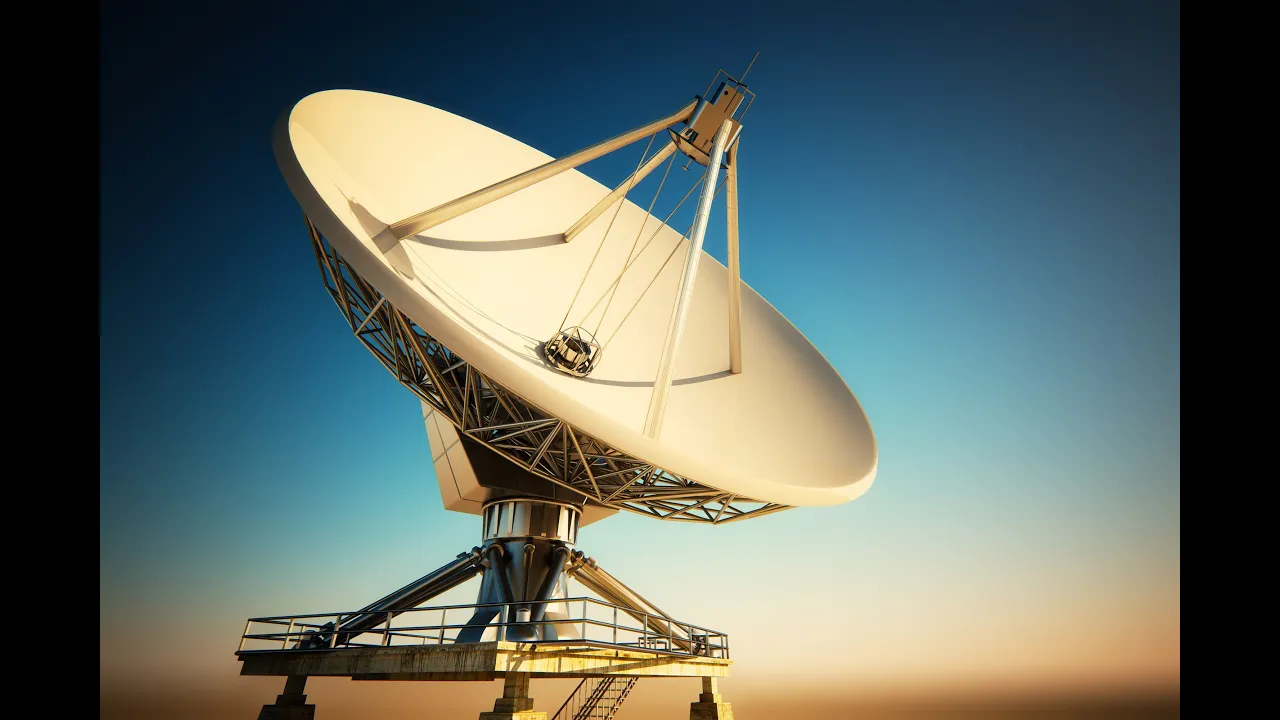




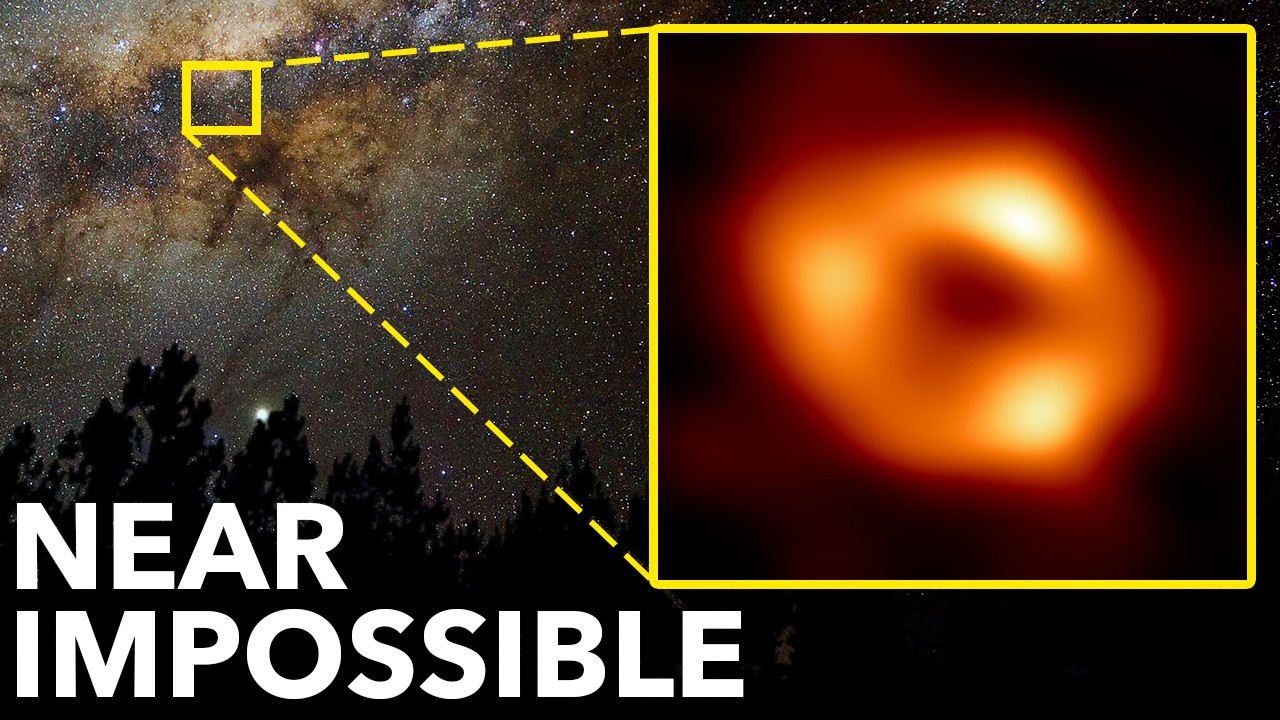


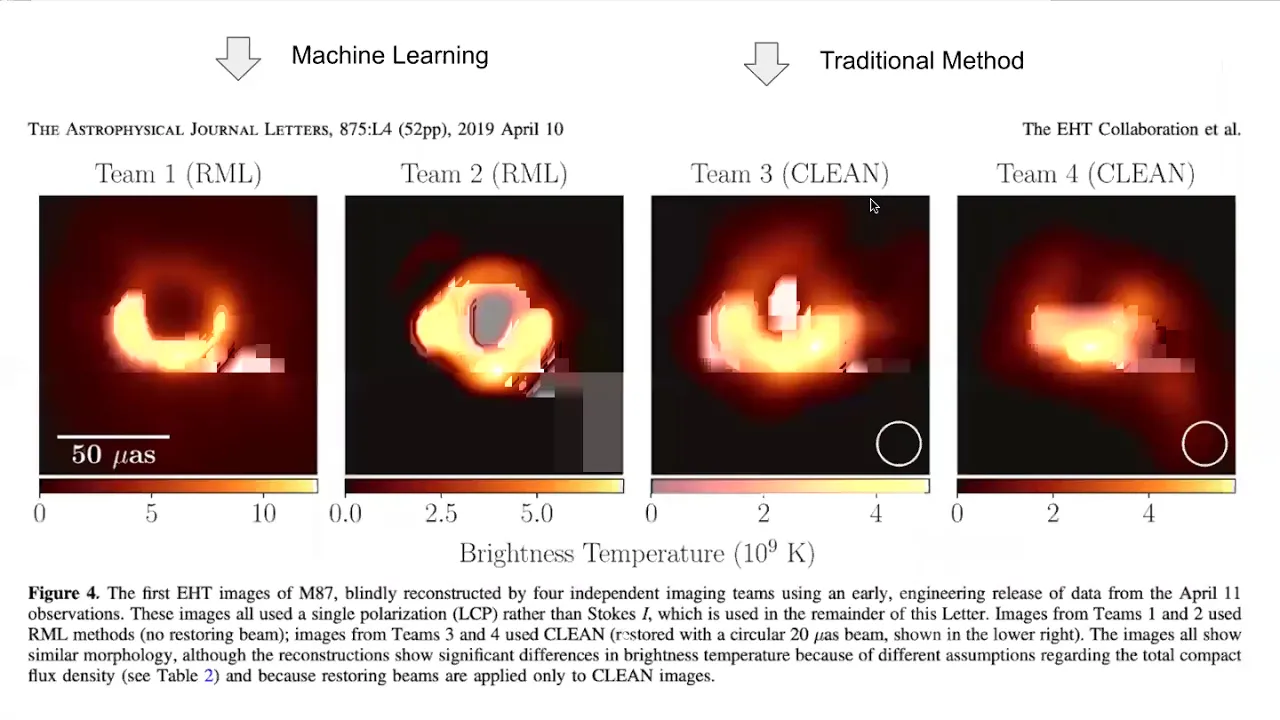




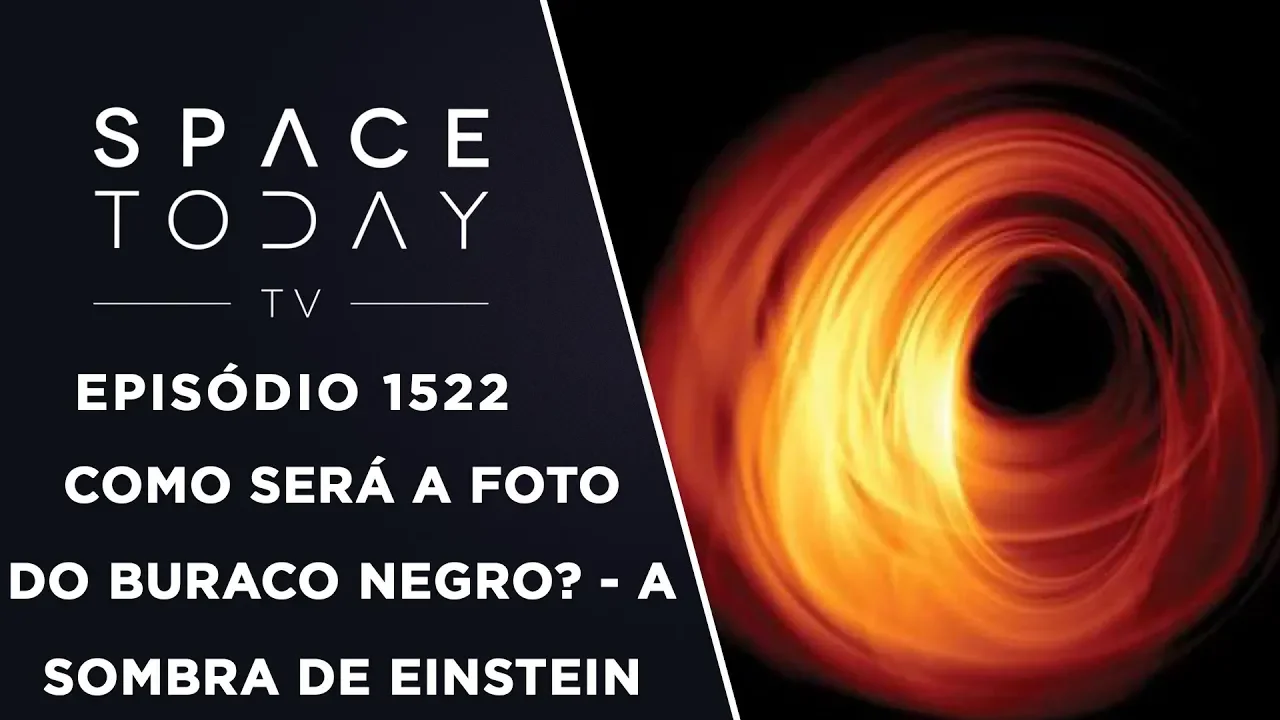


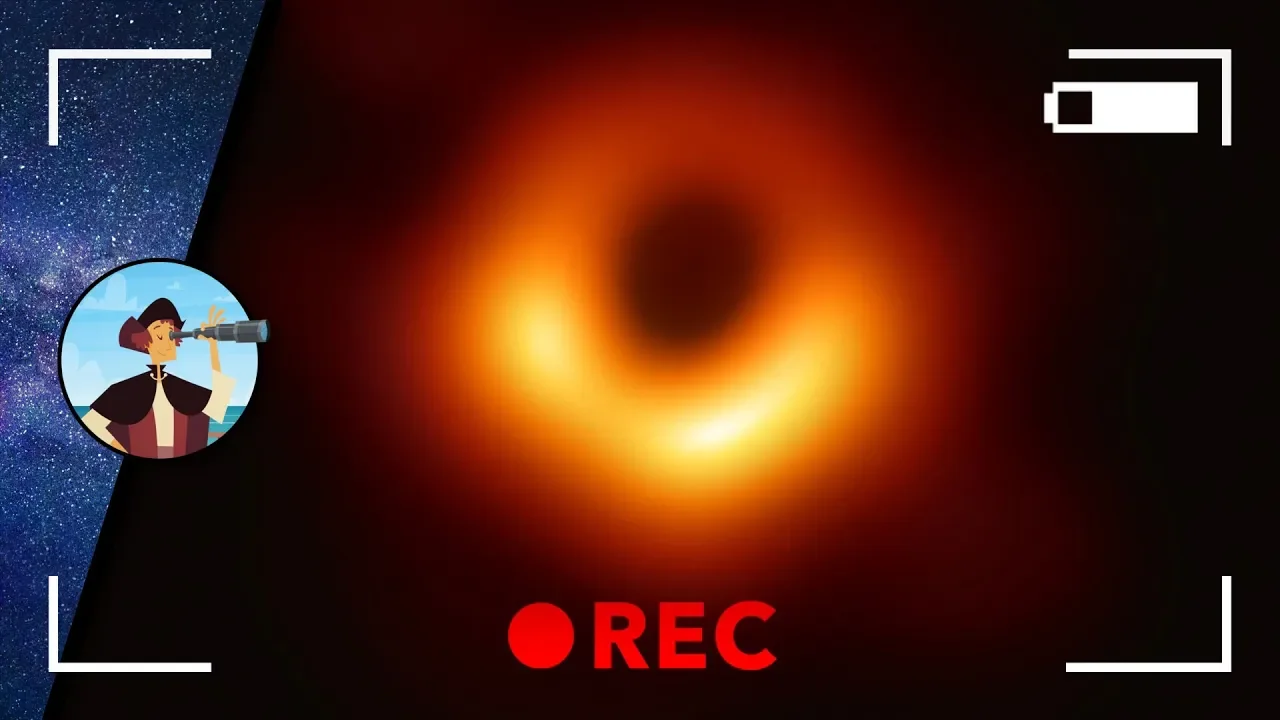
The Event Horizon Telescope (EHT) is a global collaborative project that uses Very Long Baseline Interferometry (VLBI) to combine radio signals from multiple telescopes around Earth, creating an effective telescope with a diameter equal to the maximum distance between stations. This technique achieves angular resolution of a few micro-arcseconds—over 1,000 times stronger than the Hubble Telescope—enabling astronomers to image supermassive black holes. On April 10, 2019, the EHT team released the first image of a black hole, capturing the supermassive black hole at the center of galaxy Messier 87 (M87*), which has a mass of approximately 6.5 billion solar masses and an event horizon diameter of about 40 billion kilometers. The image revealed a rotating disk of ionized gas surrounding the black hole, perpendicular to a relativistic jet of matter ejected from the black hole.
Event Horizon Telescope: Capturing Black Hole Images
Added:there are few things quite as mysterious and frankly absolutely terrifying as black holes the point in space where gravity is so strong it creates a deep gravity sink where even light cannot escape if there was an end to the world it might look something like a black hole although it is virtually impossible to see a black hole so that might not actually make sense but you probably get my drift it's virtually impossible but it's not entirely impossible which brings us to the vast collaborative venture underway to photograph them the event horizon telescopes project or eht by combining data from various very long baseline interferometry vlbi stations around earth astronomers are now able to produce an angular resolution which is enough to see and photograph a supermassive black hole i'm well aware that for most people including myself what i've just said makes very little sense right now but do keep watching because it will all become clear well as clear as general relativity and quantum field theory can be that is hopefully you'll stick with me let's go [Music] it makes sense to start with black holes now there are some for whom the thought of a steadily expanding universe with distances the human brain can't even begin to understand along with the notion that we might one day be wiped out by a giant meteor can all be a bit overwhelming but trust me that's not the scariest part the general thinking behind the existence of black holes dates all the way back to the 18th century with a clergyman and philosopher by the name of john mitchell but it wasn't until 1916 that german physicist carl schwarzschild found the modern solution of general relativity that would characterize a black hole in the 1960s the erectile work began to show a generic prediction of general relativity and interest in black holes steadily grew especially after the discovery of the first neutron star the collapsed core of a supergiant star in 1968 but our understanding of black holes has still crept forward at a slow pace we now believe that black holes form when a supergiant star dies leaving behind a small dense remnant core theoretically if the mass of said perished star was more than three times that of our own sun the force of gravity overwhelms just about everything else and hey presto you've got yourself a black hole i know i've skipped over several pages of complex science here but that's a general idea now here's where things get a little bit uncomfortable as if they weren't already uncomfortable enough black holes suck in everything around them including planets and stars and can even combine with other black holes to create a menacing supermassive black hole that one day might take over the universe we might be slightly embellishing this last part but probably not by much the really unnerving part about black holes is that we don't really know to what extent they can grow and whether once the process has begun it's simply an eternal expansion but what we do know is that there are two vastly differing sizes of black holes these small black holes are known as stellar masses and are thought to be around 10 to 24 times the mass of our sun it really puts the word small into perspective doesn't it well you can't see them with traditional telescopes astronomers have on occasions become aware of them by witnessing the mass of passing planets or stars as it becomes ensnared by the black hole to give you a very simplistic comparison imagine the head of an invisible vacuum cleaner if you were to turn it on and look very closely you would see tiny particles of dust moving towards it and eventually disappearing the large black holes should be enough to keep anybody awake at night in fact large probably isn't even enough of a word to describe them these black holes can be millions perhaps even billions the size of our own sun and considering that we could fit 1.3 million earths inside our sun it would mean black holes could be over 1.3 quadrillion times the size of the rock that we call home i'll just leave that thought with you for a moment the final point before we move on to the telescope project that shares its name is the event horizon now yes this was the title of a mediocre at best sci-fi horror film from the 1990s but it also refers to an object's escape velocity remember how i said that black holes could pull other objects into them well the closer an object comes to a black hole the faster it will speed up and the event horizon is the point of no return essentially it is when the escape velocity needed exceeds the speed of light but here's the really mind-blowing part when an object moves towards an event horizon it begins to redden and dim there isn't any change happening to the object but rather the intense gravity is distorting the light coming from it as it reaches the event horizon the object simply disappears it's as if it never existed okay so let's move swiftly away from the hypothetical apocalypse of the universe to something a little more down to earth the event horizon telescope project is a collective undertaking which includes 300 members and 60 institutions spread across 20 countries it began back in 2009 with the expressed intention of finally capturing an image of a black hole easier said than done but after years and years of theoretical and technical developments even before the project officially got underway and 10 years after eht began we finally saw our first ever image of a black hole but we're getting a little ahead of ourselves what makes the ehd so unique is the complex array of telescopes that it uses right at the start of the video i mentioned very long baseline interferometry vlbi stations and this is probably as good a time as any to really dive into it vlbi is essentially a collection of telescopes that collect signals from an astronomical radio source such as a quasar which typically has a supermassive black hole at its center all of the telescopes are carefully synced up using a local atomic clock and the distance between them is calculated using the time difference between the arrival of the radio signal at different telescopes this allows the telescopes to essentially combine their power into one giant telescope with a size equal to the maximum separation between the telescopes not only is this how the eht has managed to photograph black holes but the system can even be used in reverse to perform earth rotation studies incredibly precise map movements of tectonic plates as well as accurately measuring and understanding earth's geometric shape but when it comes to photographing distant objects it's all about angular resolution this is the smallest angle between close objects that can be seen clearly as being separate if you imagine staring up at the sky two stars might appear to be right next to each other but in reality they're thousands of light years apart roughly speaking the larger the telescope the better the angular resolution is but even the largest telescopes don't have the angular resolution to observe a black hole this is all done in arc minutes arc seconds or micro arc seconds essentially these are ways of breaking the normal degrees into smaller sections a circle can be divided into 360 degrees but those degrees can then be divided down into arc minutes which are 1 60th of a degree arc seconds and microarch seconds do exactly the same thing but get smaller and smaller the resolution of the human eye is around 60 arcseconds of a degree in visible light the hubble telescope on the other hand with its 2.4 meter diameter is about 0.05 art seconds of a degree which sounds great but it would be absolutely hopeless in the hunt for black holes the emt array on the other hand has a resolution of a few micro arc seconds well over a thousand times stronger than hubble the mtra uses eight main telescopes although there are 66 individual telescopes used scattered around the planet these include arizona radio observatory atacama pathfinder experiment apex located in northern chile iran 30 meter telescope and the spanish sierra nevada mountains james clark maxwell telescope jcmt in hawaii large millimeter telescope alfonso serrano lmt in mexico sub-millimeter array sma in hawaii atacama large millimeter sub-millimeter array armor in northern chile south pole telescope the spt that's a lot of telescopes three further telescopes are scheduled or have already joined the array the greenland telescope ira noma observatory and the french alps and kit peak 12 meter telescope part of the arizona radio observatory but despite much of this work being done at the cutting edge of scientific understanding there's still some old-fashioned leg work to be done the data is considered so valuable that eht doesn't transfer it digitally instead hard drives containing the information gathered by the telescopes are transported via commercial freight airplanes to the mit haystack observatory in massachusetts and the max planck institute for radio astronomy in germany there all of the data can be cross-correlated and then analyzed with the use of a grid computer a large group of computers essentially working towards a common goal [Music] on april 10 2019 six simultaneous press conferences were held by the ehd project around the world it hadn't exactly been a secret what the large team had been working towards but the announcement was seismic nonetheless there were some on the team who had been working for that moment for nearly 20 years and for the first time in history humans had a glimpse of a black hole the slightly fuzzy orange ring hovering in complete blackness might not be the most visually groundbreaking photo but what it revealed was extraordinary the image was of the supermassive black hole that lies at the center of a super giant elliptical galaxy messier 87 which contains roughly a trillion stars in the constellation of virgo what we can see in the image is a rotating disk of ionized gas surrounding the black hole which is perpendicular to the relativistic jet emerging from it this jet is the matter that is essentially ejected from the black hole composed mostly of hot plasma containing electrons and positrons physicists estimate that the jet itself continues for around 5 000 light years and travels at close to the speed of light the rotating disc of gas is thought to be moving around a thousand kilometers a second and spans a diameter of 3.7 trillion kilometers to put that unimaginable number in perspective pluto is around 5.2 billion kilometers from the sun so with some rudimentary maths the diameter of the rotating disk of gas is over 700 times the distance between pluto and the sun and there are plenty more mind-destroying numbers the calculated mass of the black hole was put at 6.5 billion solar masses 6.5 billion times the mass of our sun which is itself 333 000 times the mass of the earth and have you ever wondered how much the earth weighs well we've got that too it's 5.973 sextillion tons trying to figure all of this out on the calculator but it just ended up with one of those e things at the end these are figures so far from the realm of the everyday that it's difficult to even comprehend it all they also calculated that the event horizon remember the nightmarish point of no return where everything fades to black is around 40 billion kilometers in diameter [Music] in april 2020 eht released another extraordinary image this time of the optically violent variable quasar 3c279 and i'm sure i don't need to tell you how cool the phrase optically violet variable quasar is we don't know a whole lot about 3c279 apart from the fact that it lies 5.5 billion liars from earth and we believe it went through a particularly turbulent period between 1987 and 1991 but even today continues to be one of the brightest and most variable sources in the gamma-ray sky the image released by ehd was observed over a series of nights back in 2017 and was the first 20 micro arc second resolution image the pictures are again a little hazy but they show what physicists say is a jet potentially moving at super luminal motion which is a complex way of saying that it's moving faster than the speed of light though they believe this could be down to emissions originating closer to the observer catching up with emissions originating further away from the observer giving a somewhat distorted image of speed [Music] the eht team has already begun observing the next target sagittarius a star a compact astronomical radio source at the galactic center of the milky way where you guessed it there's a supermassive black hole that's right just in case you didn't know we have a giant black hole at the center of our galaxy in fact physicists now believe that there's probably a giant old black hole at the center of most galaxies which is a very scary thought now do you note even more scarily this is definitely not our closest black hole but it is the nearest supermassive one to us sagittarius a star has a mass of approximately 4.3 million times that of our sun which sounds absolutely gigantic but is fairly small compared to other black holes and it can be found about 25 000 light years away from earth as more telescopes are added to the ehd project and as technology improves our understanding of these chilling abysses of space will undoubtedly grow in an age of increased nationalism it's always nice to see a truly global project there's something slightly comforting knowing that there are teams out there working together to further the collective knowledge of humankind the subject of black holes is one that isn't often discussed openly and at length whether humans have really reached the point of accepting the fact that there are floating holes in space that can suck in everything from around them is open for debates and when we have so much to occupy our minds on our own floating rock in space well who can blame us but there is something both thrilling and utterly horrifying about the existence of black holes the event horizon telescope project is only beginning to unravel the mysteries of black holes the existence of supermassive black holes in their unfathomable size certainly puts a single human being and even a single species in perspective over the coming years the eht project aims to add further telescopes to the array while also increasing aperture and sharpening the image through improved resolution for those who dare to watch this could get very interesting so i really hope you found that video interesting if you did please do hit that thumbs up button below don't forget to subscribe if you've got a suggestion for a future mega projects video please do leave it below and thank you for watching [Music] [Music]
Up Next
Understanding the Doppler Effect: Sound & Light Explained
@AltShiftX
3.6M views•2013-06-06
First Billion Years of the Universe with the Square Kilometre Array
@iaaudc
121 views•2022-05-26

Kepler's Laws of Planetary Motion Explained (Educational Astronomy Video)
@Peekaboo_Kidz
404.9K views•2023-02-17
Gamma-Ray Bursts: Cosmic Snipers Explained | Astronomy
@kurzgesagt
15M views•2016-07-31
Related Study Plans & Knowledge Roadmaps
Structured learning paths in Astronomy