


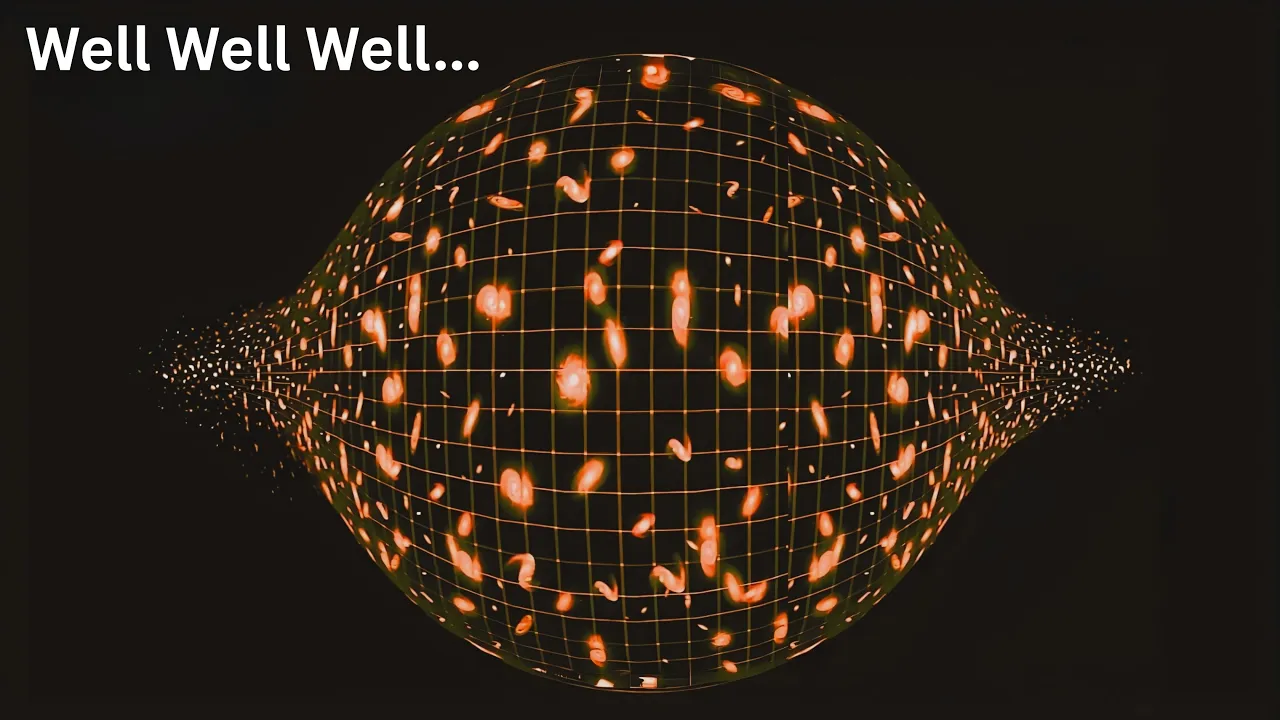


![X Işınları-1 [Temel Kavramlar]](https://i.ytimg.com/vi_webp/bzY61PlJqvo/maxresdefault.webp)
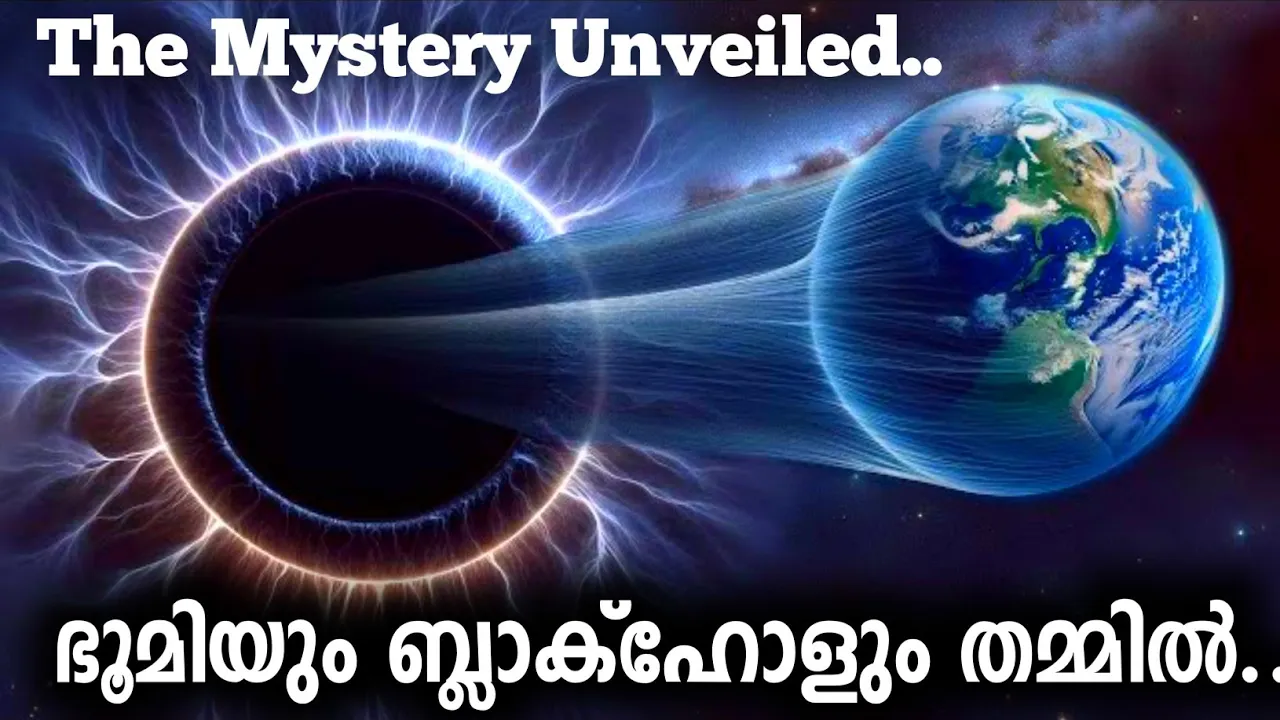















![[日本人ならX線天文学] 打ち上げ成功! 世界の天文学をリードする日本の新型衛星XRISM](https://i.ytimg.com/vi/h-wk2byghk8/hqdefault.jpg)



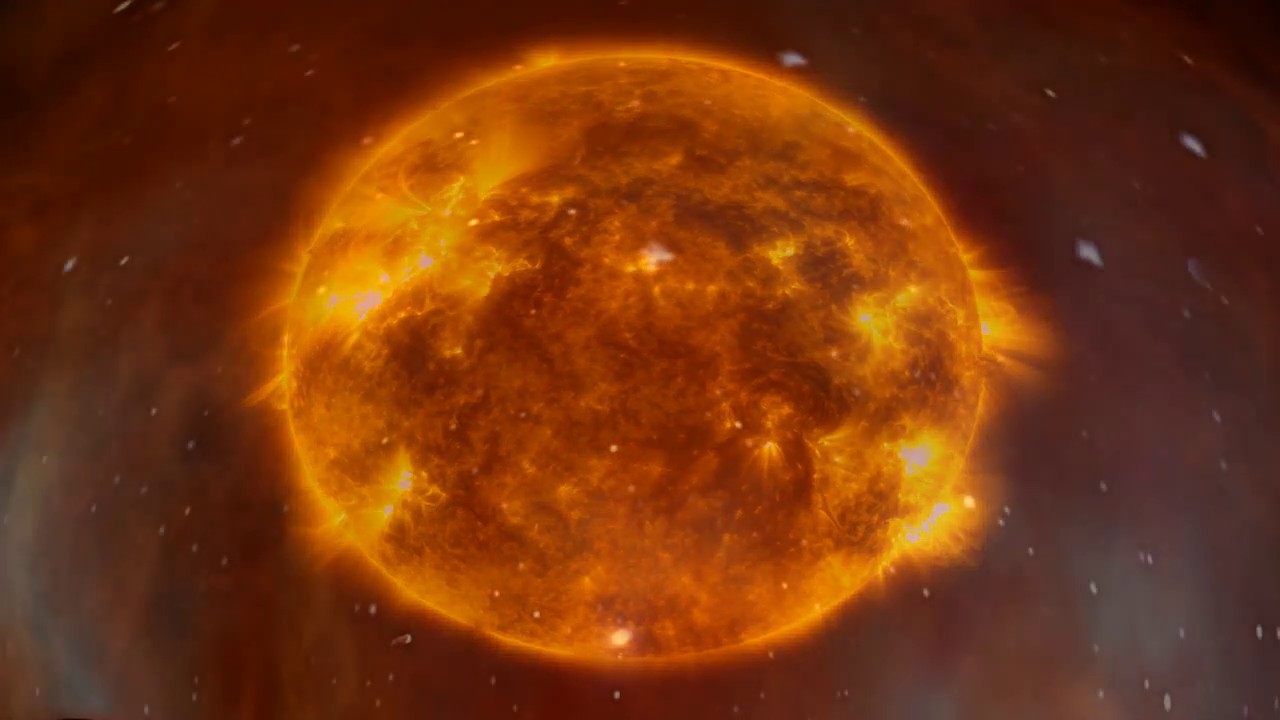
Accreting supermassive black holes, which are among the most luminous and energetic objects in the universe, shine brightly in X-rays due to a mysterious structure called the corona—a hot plasma of energetic particles that surrounds the black hole and boosts visible light from the accretion disk to X-ray wavelengths through Compton scattering; this corona, despite being the powerhouse driving all X-ray emission from these systems, remains poorly understood in terms of its size, shape, location, and origin, making it one of the most enigmatic components of active galactic nuclei.
Accreting Black Holes and the Enigmatic X-ray Corona
Added:Basic understanding of black hole physics, including gravity, the event horizon, and how matter behaves under extreme gravitational forces.
Fundamentals of the electromagnetic spectrum, specifically high-energy radiation like X-rays and how they differ from visible light.
The concept of accretion disks, which explains how gas and dust spiraling into a compact object heat up and emit thermal radiation.
Basic principles of plasma physics and how magnetic fields interact with charged particles in extreme environments.
X-ray reverberation mapping techniques, which are used to measure the precise size, geometry, and location of the corona.
The role of relativistic effects, such as gravitational redshift and light bending, on X-ray emissions close to the event horizon.
How black hole accretion and corona feedback influence active galactic nuclei (AGN) and the evolution of their host galaxies.
A comparative study of current and future X-ray observatories, such as comparing NuSTAR's hard X-ray capabilities with Chandra, XRISM, or Athena.
2.6K views80likes2:01:54Original Release: 2021-11-20
good evening everyone welcome salutations friends thank you for joining us tonight for our caltech astronomy stargazing lecture series we have a really exciting lecture tonight on black holes uh that should pique everyone's interest so thank you for joining us on your friday evening i'm dr cameron hummels i'm a computational astrophysicist here at caltech and i will be the emcee for this evening's event the rough schedule for tonight will be i will shortly introduce our speaker for tonight dr nikita kamraj who will give us a roughly a 30-minute presentation on black holes and and the the elusive uh enigmatic corona that surrounds active galactic nuclei and and active black holes and then right after that we'll jump straight into a q a session but unlike most q a sessions this will be questions and answers for both um the content of the presentation that nikita gives as well as just general questions about astronomy and astrophysics and space science uh we will be joined by two other uh members of the caltech astronomy and planetary sciences department choice visa praguera who is a phd candidate in planetary science as well as catherine plant who is a phd candidate in the astronomy department so all of us have different specializations in the field and we'll try and field the questions that you guys throw at us as best we can so i encourage you guys to start thinking already about what questions you might want to ask and feel free to when you have a question either during the content during the talk or or afterwards during the q a you can write them in the either the youtube channel comments or the facebook comments associated with this because we're streaming on both of those platforms right now um other quick announcements we are going to be hosting our next event there's an astronomy on tap in two and a half weeks that will be all about james webb space telescope so we had an astronomy on tap already a week and a half ago about the james webb space telescope nasa's new flagship space telescope that we'll be launching hopefully in about a month's time from south america and doing some really cool stuff kind of as the successor to the hubble space telescope although hubble's still kicking and still doing okay up there uh and then that that astronomy on tap will deal with we'll have two researchers who work on extra galactic and cosmological so large-scale things in the universe like the first galaxies and that sort of thing and uh in fact one of the the members ism one of the speakers is a member of one of the design teams for one of the instruments near cam that's going up aboard the james webb space telescope so that'll be really cool and then we have another one of these stargazing lectures three weeks from today i think that's december 10th and that will be on fast radio bursts a very exciting kind of uh growing field in astronomy describing how uh these mysterious explosions in in other galaxies we we see them in radio waves for a very short period of time and then we're trying to learn what what the heck is going on as well as what that can tell us about the intervening uh distance and and what's going on in the space in between us and those objects so liam connor a postdoc in the department we'll be talking about that anyway and i'll start putting things together for for the spring uh start like the new year i want to do stuff in person we may have our hands tied a little bit in terms of doing these stargazing lectures back at caltech because of vaccination status and having to check that and wearing a mask indoors and all of these things that caltech has legitimate rules but but it means it's harder to hold an in-person public event but i'll have all the we'll we'll continue in one way or another either online or uh in person or have a a live stream of an in-person event so that those of you who aren't able to attend in person are still kept in the loop but i think that's enough yapping from me um nikita do you wanna do you wanna join me here hi hi nice to see you nice to meet you cool cool background cool background um can you tell me what it is or are you going to talk about that specifically in your in your presentation i'm going to talk about in my presentation okay so if i can go ahead and share my screen yeah go ahead and please do so let me introduce our speaker for tonight dr nikita kamraj recently doctored she just finished her phd just a few months ago successfully defended congratulations nikita um so dr nikita kamaraj is a postdoctoral researcher in observational high energy astrophysics at caltech she recently completed her phd in astrophysics at caltech where her thesis focused on the study of accreting supermassive black holes known as active galactic nuclei she uses spectroscopic data from x-ray telescopes to investigate the nature of the material surrounding and powering these supermassive black holes as a postdoctoral researcher she continues to study active galactic nuclei in x-ray light particularly unusual rare ones that do not follow traditional models and thus they challenge our current understanding of active galactic nuclei physics outside of academic research nikita has a strong interest in japanese culture and loves learning japanese watching anime and cosplaying she also enjoys dancing and meeting new people through all walks of life me too me too um cool okay well i will i will let you take it away thank you for joining us tonight nikita thank you cameron for the introduction and thank you to the viewers for joining me today so hopefully this talk will convey how exciting yet mysterious supermassive black holes are and how we can use x-ray telescopes to crack the enigmatic nature of these black hole systems which are actually one of the most brightest and energetic objects in our universe in particular i'm going to be talking about a structure called the corona which is a really key component of the creating black holes and the study of the corona and supermassive black holes has been the primary research topic of my phd thesis so first before i dive into the presentation i want to give a very quick disclaimer these astrophysical carone bear no relation whatsoever to the novel coronavirus that has been disrupting our lives for the past almost two years the only similarity is that they both can be deadly but in wildly different contexts so while astrophysical corona are much less famous than the viral pandemic of the same name hopefully my talk today will convey just how critical this small structure is in powering the emission from some of the most luminous objects in our universe so with that black holes have always been a really popular focus of attention for astronomers and the public alike and rightly so because they're indeed one of the most mystifying objects in our universe but in this talk what i'm going to try and do is demystify black holes a bit by addressing some common questions such as can we have more than one type of black hole do black holes actually appear black how can we form black holes and what are they made up of how can we see black holes and study them now for some of these questions there isn't one clear answer and there are still many more open questions about the nature and behavior of black holes particularly from a theoretical side this talk is going to give more of an observer's view into black holes rather than focus on the theoretical perspective so with that i'm just going to lay out the roadmap for what this talk is going to cover today i'm first going to introduce the different kinds of black holes that can exist and how they're different from each other i'm then going to focus on the biggest and coolest kind of black hole in my opinion which are super massive black holes crucial to powering these supermassive black holes is the corona which i'm going to spend some time talking about is also in my opinion the coolest and most important part of the supermassive black hole this opinion is not biased in any way by the fact that i did my phd on the subject now one of the main ways we can study supermassive black holes and their coronae is through x-rays and i'm going to talk about how cutting edge x-ray telescopes have transformed our understanding of these objects and then finally looking towards the future i'll highlight how upcoming and proposed x-ray missions are going to open new windows into unraveling the mysteries of supermassive black holes so first how do we define something as a black hole a black hole is basically a region of space-time where the force of gravity is so strong that light cannot even escape its pull so let's step back a little here what do we mean by space-time so the famous scientist albert einstein in the 1900s developed a theory of general relativity in which space and time are combined into this single geometric entity called a space-time which makes up the fabric of the universe so what makes the gravitational field of a black hole so strong well according to general relativity matter causes curvature of the space-time fabric and the greater the mass of something the more the amount of curvature by definition a black hole contains a really large amount of mass in a very small volume and this causes extreme curvature of space-time the center of the black hole is called a singularity and it's where the density and force of gravity become infinite and the laws of physics basically break down at this point around the black hole we can define a boundary called the event horizon and the radius of this circular boundary is given by the short child radius the event horizon is essentially a point of no return so anything that passes beyond the event horizon including light can't escape which means we can't receive information from an object once it passes the event horizon and this is probably the most mysterious aspect of black holes and firmly occupies the land of theory and speculation providing a lot of food for science fiction but this is as far as we're gonna go into delving into the nitty gritty of the theory of black holes for today i'm gonna talk about how we can actually observe and characterize these black holes so how can we make a black hole in the first place well one way a black hole can be formed is at the end stage of the evolution of a massive star so these black holes are called stellar mass black holes because they have masses similar to that of stars like our sun so to give a brief 101 on stellar evolution when stars form you can group them into two different kinds of mass ranges high mass and low mass and depending on how heavy a star is the way it's going to evolve and die will be different a typical star like our own sun would be in the low mass range and the way it evolves when it runs out of fuel to burn is it will expand to become a red giant and eventually shed its outer layers to form a planetary nebula and then whatever remains of the star that's left behind is called a white dwarf but for massive stars when they die they puff up a lot and explode violently as a supernova and then the remnant that is left behind will either collapse under gravity to form a neutron star or a black hole but stellar mass black holes aren't the only kind of black hole that exist in our universe at the center of every galaxy resides a supermassive black hole that can have a mass that's millions to a billion times the mass of our sun this is a huge difference in mass between the stellar mass black holes that are formed from dying stars because even the largest stellar mass black holes only weigh about 100 times that of our sun in between these two mass ranges there may exist intermediate mass black holes but there isn't conclusive evidence yet that these exist because we haven't directly observed them supermassive black holes on the other hand can be observed both directly and indirectly and in fact the discovery of the supermassive black hole at the center of our own galaxy the milky way was awarded the nobel prize in physics in 2020 and another fun fact andrea guess actually completed her phd at caltech so the way uh these two astronomers uh reinhardt gonzale and andrea guez made this discovery was by tracking the orbits of stars in the center of our galaxy really precisely and what they found was that these stars were orbiting around an invisible object that was around 4 million times the mass of our sun in the center of our galaxy which they then inferred must be a supermassive black hole and it was called sagittarius a-star so the fact that supermassive black holes exist at the center of every galaxy in our universe raises a big question of how can you form them in the first place in these black holes they're way too massive to be produced from the death of a single massive star so how can they grow to be millions to even a billion solar masses and the short answer to this is we still don't really know it's basically one of the biggest open questions in astronomy but that being said we do have some theories about the different pathways by which we can grow a black hole to a super massive scale so this diagram shows uh the two different pathways by which we think we can grow black holes to a supermassive size so the first way is through the earliest stars that it actually appeared in our universe which were really massive they're as large as a hundred times the mass of our sun so these are called pop three stars and when they die in a massive supernova explosion they leave behind seed black holes which can then grow by feeding off matter in their surroundings and then merging with other black holes to eventually form supermassive black holes that are millions of solar masses then the other way that seed black seed black holes can be formed is through the direct collapse of a cloud under gravity so these direct collapsed black holes can then grow in a similar manner by accreting material and merging with other galaxies to eventually form supermassive black holes and both of these pathways can also produce leftover intermediate mass black holes but a really big mystery that remains is that we we can see supermassive black holes that have already grown to be millions of times the mass of our sun very early on in the universe and it remains a puzzle how these early black holes grew to such a monstrously big size in such a short time there is one possibility that the halo of dark matter that collapsed to form the seed black hole just had a really high initial mass but still it's a very open question now even though we haven't yet figured out how exactly super massive black holes form we have made great strides in detecting them and one of the biggest scientific achievements in this decade has been our ability to image a black hole for the first time so on the left here is the first image that was produced by the event horizon telescope collaboration of the supermassive black hole at the center of a galaxy called m87 and this image was produced using data that was synchronized from telescopes around the world which basically allows us to achieve a really high angular resolution it's equivalent to being able to read a newspaper in new york when you're sitting in a cafe all the way in paris so what we're seeing is image is the bright ring and dark shadow that's produced by gravity bending the light being emitted by matter falling into the black hole near the event horizon i'm also going to play a simulation and this shows how matter can form an accretion disk and fall into the supermassive black hole causing it to shine brightly so this clearly demonstrates how we can dispel the myth of black holes being completely black and invisible to us because material falling into and being accreted by the black hole actually shines very brightly and sometimes jets can even be launched from the black hole in opposite directions and we can observe these jets with radio telescopes now you may be wondering uh why in this event horizon telescope image of a black hole the light appears brighter on one side than the other and this is due to an effect called doppler boosting so just like when an ambulance or a car with sirens approaches you the sound gets louder light also behaves in a similar manner in that it gets brighter when it's moving towards you because the waves all bunch up and the frequency of light goes up when light moves away from us the waves stretch out and so it appears dimmer now there's a specific name that we call these supermassive black holes that have an accretion disk of material surrounding them uh with which which they feed off of and these are called active galactic nuclei or agn for short about 10 of all galaxies are active galaxies and some galaxies can even go through phases of the supermassive black hole showing agn activity by actively accreting material and then other times where it's quiescent or inactive and in fact our own milky way galaxy in the past used to show aegean activity and had an accretion disk but now it's in a quiet phase where there's no clear accretion disk present around the supermassive black hole so there's various structures that make up an agn in all agn surrounding the black hole and the accretion disk is a donut shaped torus of gas and dust this torus can sometimes block a lot of the light that we can see from the agn and make them dimmer than usual but i told you that material falling into a black hole makes it shine brightly how exactly does that light get produced this is where the corona enters the picture so what exactly is a corona it's essentially a really hot plasma of gas that usually contains energetic particles like protons or electrons and we can find carone throughout the universe our own sun has a corona and we can see this during a total solar eclipse as this diffuse wispy kind of emission around the sun a corona is also a really important component of an accreting black hole whether it's an accreting stellar mass black hole or a supermassive one so why is the corona so important well the corona is essentially what's powering this bright emission that we're seeing from these accreting black holes a creating black holes shine really brightly in x-rays and the corona is what's producing all of that x-ray light so how exactly does this bright x-ray light get produced by the corona well the process is called compton scattering and i'm going to explain step by step what this is so when matter forms an accretion disk around a black hole it heats up due to friction as material pushes against each other it's kind of similar to the heat that your hands produce when you rub them together and what this does is it causes visible light to be emitted from the accretion disc itself as modern as matter falls into the black hole and this is called the thermal disc emission now the light from the accretion disk is optical light it's the kind of light that our eyes can detect but when it scatters off particles in the corona its energy gets boosted up to x-rays and this is what compton scattering is where energetic particles like electrons in the corona scatter off the visible light that's coming from the accretion disk and boosts the energy of the light so that it becomes x-rays and this is what we call the coronal emission so what makes the corona so special that we should just focus on studying it well despite being the powerhouse of accreting black holes driving all of the x-ray emission the nature of the corona is shrouded in a lot of mystery so what things do we actually know about the corona and agn we do have some rough estimates of the size of the corona which indicate it's a physically compact structure and one main technique that is used to measure the size of the corona is called micro lensing so similar to the lens in a pair of glasses or in a telescope matter itself can also act as a lens and bend the light from distant objects in microlensing a star is what acts as the lens and it bends the light from a distant background galaxy sometimes creating multiple magnified images and because the corona inside an active galaxy is so compact it tends to get really strongly lensed if the alignment is just right so through these kinds of techniques we can get an indication of the size of the corona but what about its other properties like its shape location and origin and the short answer to that is it's unknown it's precisely what makes the corona so enigmatic so there's been a lot of work done with theory and simulations trying to investigate possible geometries and locations for the corona like modeling it to be like a point source above the black hole or as a sphere or as a donut but the challenge has been to try to observationally test these out which has been pretty difficult so how exactly can we study the corona to try and unravel some of its mysteries and a well a main way is by basically observing the radiation that the corona emits the x-ray light now x-rays have a lot of energy which means they have short wavelengths and this makes it impossible to build x-ray telescopes on the ground since the earth the earth's atmosphere absorbs most of the high-energy radiation so we have to go to space to put our x-ray telescopes x-rays themselves can be further subdivided into lower energy and higher energy x-rays the lower energy ones are called soft x-rays and the higher energy ones are called hard x-rays and there are different kinds of x-ray telescopes up in space some of which only detect soft x-rays others only detect hard x-rays and some can detect both hard and soft x-rays the universe itself is actually filled with x-ray light as there are lots of different kinds of astrophysical phenomena and objects that can produce x-rays this is an image of how the entire sky looks in x-rays produced just last year with data from the erosita x-ray telescope which was launched in 2019 and this is actually the first all-sky map of the universe produced in x-rays in more than 30 years and it was made with data collected from the erosita telescope over six months this resulting image is actually quite spectacular the x-ray sky looks quite different from how it appears in the visible light that our eyes can see in and this map actually contains more than a million x-ray objects many of which are newly detected agn that are really really far away from us the reddish colors correspond to cooler regions and our lower energy x-rays while the bluer regions are hotter and are produced by higher energy x-rays and since this is an all-sky map of the universe this band across the center is our own milky way galaxy which indeed looks like a band across the sky from the earth and there are lots of accreting stellar mass black holes within our own galaxy several of which are marked in this map like sig x1 and sko x1 now most of the x-ray satellites that we have currently in orbit are soft x-ray telescopes that can only detect lower energy x-rays but there is one x-ray telescope that's revolutionized x-ray astronomy with its launch and that's the new star telescope nustar was launched in 2012 and it's the first x-ray telescope in orbit capable of focusing hard x-rays so that means high-energy x-rays there's no other telescope that can detect hard x-rays with a high level of sensitivity that nustar has since these instruments aren't able to focus high energy x-rays so why is it that these other telescopes aren't able to focus high-energy x-rays and how has nuster managed to do it so the thing about x-rays is that they're really difficult to bend and bring to a focus and this is because they're so energetic that they just pass through most objects including mirrors it's why we use x-rays to image our body since they pass through everything except the bones and the higher the energy of the x-ray the more difficult it becomes to bend it and bring it to a focus the way nustar gets around this problem is by using a special kind of mirror technology where several shells of concentric mirrors are nested within each other and then orientated to be parallel to the incoming x-rays so that they just graze the mirror surface and get reflected and we call this grazing incidence and then the secret recipe to being able to reflect the high energy x-rays is that the mirrors themselves are coated with multi layers of alternating high density and low density materials which makes the mirrors way more reflective than a standard mirror there is a trade-off of making the telescope able to focus high-energy x-rays and that's that the focal length which is just the distance to the focal point where an image is formed is really long the focal length of the new star telescope is 10 meters long so on the ground it's really difficult to build and assemble a 10 meter long telescope to attach to a rocket to shoot up into space especially since nustar is a small explorer mission with a low budget so what instead was done was the entire telescope was folded up inside a lightweight stowed mast when it was launched into space and i'm going to play a simulation now of how this mast was folded out in space once the satellite was in orbit nustar was also the first telescope to have its entire focal length of 10 meters extended out in space with a deployable mast and this entire process of folding it out took about 24 minutes which is actually a really long tense time when you compare it to the few minutes it typically takes for a rover to land on mars for example and the mast itself isn't completely rigid it can move due to space wind or debris or just thermal expansion and that motion can affect the image that's formed at the detectors so to combat this there are lasers that point from the optics to the detectors in order to track the motion of the mast and correct for it so the launch of nustar was very successful and smooth and once it was in orbit nustar really opened a new window into the x-ray universe making a lot of groundbreaking science discoveries so with an unparalleled sensitivity and resolution and high energy x-rays nustar has essentially provided us with the new lens through which we can observe the universe so this image on the left is of an agn and its host galaxy where the different circles show the spatial resolution of some different x-ray telescopes and we can see that nustar is able to resolve the core of the galaxy where the supermassive black hole resides which is really important because it's easy for the light from the galaxy itself to dilute and contaminate the light that's coming from the supermassive black hole now even just to highlight all of the revolutionary science discoveries that nustar has made so far would require a talk of its own so i'm just going to mention briefly one super cool result now black holes have a property that they're actually able to spin and for the first time nustar was able to measure how fast black holes are spinning this is actually a really difficult thing to measure since black holes can spin in the same direction as the rotation of the accretion discs we call this pro-grade rotation or they could spin in the opposite direction which is called retrograde rotation or the black hole may not spin at all and in general the faster a black hole is spinning the closer the accretion disk lies to the black hole by looking at an x-ray spectrum which is basically the amount of light coming from the black hole system at different x-ray energies nustar was able to determine how close the accretion disk lies to the black hole and use that to determine how fast the black hole is spinning so depending on which way and how fast the black hole spins the shape of this spectral profile will be different and that's what tells us the spin rate of the black hole we couldn't get an accurate shape of this spectral profile before new stars since there wasn't any other telescope out there able to focus x-ray light at very high energies so i've been talking about how important the corona is yet we know so little about it and astronomers have been developing theories for how the corona behaves as far back as the 80s but it's only in recent years that we've really been able to observationally study the corona and learn more about its properties and this is all thanks to nustar so one key property of any object is its temperature seems like an easy enough measurement to make but accurately measuring the temperature of the corona was incredibly difficult to do before the launch of nustar and this is because to measure the temperature of the corona we need to know how much energy the particles that make up the corona have and the way you find that out is by seeing where the spectrum of x-ray brightness versus energy begins to taper off so what do i mean by that exactly so this figure on the right is the only scientific plot i'm going to show and it's a spectrum of an agn called arc 5564 showing how bright the agn is at different x-ray energies and the black dots are data points that were taken with the new star telescope so the cooler the corona is the steeper the line that connects these dots is going to be and this is basically how we get an estimate of the temperature of the corona and in fact the temperature measured for this particular corona with nustar was one of the lowest temperatures measured for an agn corona to date part of my research focuses on studying these kinds of carone with really low temperatures and trying to understand how they can be cooling so much now nustar has been fantastic at making pioneering discoveries in many unexplored areas of high-energy astrophysics but what does the future hold beyond nustar there's definitely a lot to look forward to in x-ray astronomy with a lot of new x-ray missions being proposed and launched in the coming years so these missions are hopefully gonna give us completely new insights into understanding how accreting black holes behave and i'm gonna give some specific examples of new x-ray missions being launched one is a japanese space telescope called chrism which stands for the x-ray imaging and spectroscopy mission which is going to be launching pretty soon next year it's an x-ray telescope that operates at lower energies so it's a soft x-ray telescope and it will have state-of-the-art technology for its detectors that allow us to get a really high resolution x-ray spectrum of sources and this was basically going to give us a lot more detail about the different kinds of elements that are near black holes and how the material around black holes can behave another new mission that's going to be launched further in the future is a european x-ray observatory called athena and this is another telescope that detects lower energy x-rays it's going to have the largest x-ray mirror ever built for astronomy and be able to map out the entire x-ray sky at record-breaking speeds and right now is the particularly exciting time as just two weeks ago the biggest and most impactful report for the astronomical community was released which is going to influence the science that will be done by astronomers for the coming decades this report is called the astro 2020 decadal survey and it basically tries to identify what are the key science challenges and important questions to address in astronomy in the next decade it's a report that's released every 10 years and it makes recommendations for ground and space-based missions to invest in the future so the new james webb telescope that's going to be launched soon was actually recommended in the decadal survey from 2000 and then the last survey from 2010 recommended missions like the roman space telescope and the vera rubin observatory in this current report for the 2020s strong recommendations were given for x-ray probes to be developed and launched that could complement the athena mission my research group has been developing the concept for such a next generation x-ray probe and it's called hexp this x-ray telescope would act as a direct successor to nustar and it's currently the only concept mission that would have the ability to focus very high energy x-rays even higher than the energies that nustar can focus at so with an even wider range range of x-ray energies that can be focused and a higher sensitivity xp wouldn't only just be able to detect many more black holes but also study the corona at an even greater depth we wouldn't just be able to get precise measurements of the temperature of the corona but also know what exactly it's made up of so to finish this talk i'll just say that accreting supermassive black holes are one of the most powerful and brightest objects in our universe yet they are also one of the most mysterious objects the corona is what's responsible for powering the bright energetic light that we see from them but their nature is even more enigmatic however with x-ray telescopes like nustar and the launch of future next generation x-ray missions there are definitely a lot of exciting prospects for cracking the mysteries of the creating black holes and the coronate that power them so with that i'll finish my talk and open it up to questions excellent thank you very polished presentation and uh lots of really interesting topics here i i have questions too so uh but we got a lot of questions from the audience um i encourage audience members both on face facebook as well as youtube to continue writing uh in the in the chat uh your questions and we'll try and get to all of them um so at this portion we're opening it up to q a but it's not just q a on the content of this presentation we actually have a full panel of four of us who are going to try and uh attempt to answer all of your questions about both black holes and the the elusive i'm sorry the enigmatic corona that nikita was was describing but also any kinds of questions that you may have on astronomy or space or i guess physics or whatever you have um so our other panelists before we start answering the questions the other panelists um trace and catherine can i have you guys pop back on cool hey guys welcome um so just really quickly i'll have each of you give like a one minute introduction as to who you are and what sort of science you work on just so our audience knows what they're dealing with in terms of questions that we might be able to to preferentially field so um catherine do you want to start out sure hi uh so i'm a graduate student in astronomy at caltech and i'm a radio astronomer i'm interested in using a new telescope that we're or an upgrade to telescope that we're building in the owens valley radio observatory about a couple hundred miles north of caltech i am interested in using that to detect the highest energy charged particles that get accelerated in our universe or in specifically in the galaxy and there's a transition to even higher energy particles that are coming from other parts of the universe outside the galaxy we can detect them with very very brief 10 nanosecond radio signals i so that requires some novel uh computational processing to be able to find them and we're interested in them because we don't know what in the galaxy makes them it could be accretion disks around or and jets around small black holes it could be uh remnants from supernova from stellar explosions and yeah so i'm working on building the instrument right now and then later using it to study these cosmic rays that's pretty interesting okay so it's all but it's basically using radios radio instrumentation to detect cosmic ray signal signals yes we we don't catch the particle directly we use radio waves to detect it i see okay cool interesting i didn't know you were working on that so that's really cool um streas would you like to introduce yourself sure hey everyone i'm treyas i'm a phd student in the planetary science department at caltech so working on some slightly different things um i'm primarily interested in how planets change over time so i study this by looking at planetary atmospheres and how they change over time with the hail 200 inch telescope at palomar observatory which is a couple hundred miles south of caltech i also have some interest in planetary orbital dynamics also uh looking at that with observations and trying to suss out the things that make planetary orbits change from kepler's laws so yeah that's pretty much what i work on wow so is it just additional mass and interior that screws up the orbits and and makes them depart from kepler so for instance like if you have multiple planets uh in the same system they tug on each other so you know they uh they can cause some some wacky effects uh if you were to just model them with kepler's laws uh you might not get the right answer okay also tides yeah nice cool um and yeah i'm cameron i i do computational modeling of how galaxies form and change over really long time scales um in particular i studied what's called the circum galactic medium which is this low density material kind of surrounding it's kind of like a corona kind of like um what nikita was describing in her talk but instead of around a black hole or around a star it's around the galaxy as a whole kind of permeating that that entire medium and like the corona that's being studied by nikita it's very difficult to study it's very low density and it's hard to observe so trying to model that with computers to better understand what the heck is going on and how it leads to fueling of the stars in the galaxy and ultimately drives the evolution of the galaxy itself so that's that's what i do computer simulations of galaxies is basically it um okay so let's get to some questions from all of you guys lots of them coming through here is a good one from armin malik abram how do you calculate the mass of a supermassive black hole um so this one seems like a number of people could probably chime in from here but let's start out with nikita since this is here this is your jam yeah so there are a number of ways that we can try to measure the mass of a supermassive black hole a really common technique that's used is basically taking a spectrum in optical light so accreting supermassive black holes they shine really brightly in x-rays they also dominate the optical light that we see so we don't see much of the galaxy light we see a lot of the light from the agn itself in the optical and what we can do is we can look at the basically the profile of lines in those spectra of certain elements that are being emitted close to the black hole so really common line to use is from hydrogen and by looking how wide that line is we can basically use some basic gravitational physics principles to determine what the mass of the object that's emitting that light is so material orbits around the black hole and so it has some kind of radius and so there's a mass as it's orbiting around it's the mass of the supermassive black hole so like i was mentioning kind of briefly when i was talking about the event horizon telescope image the doppler effect where light approaching us becomes bluer and light moving away from us becomes redder you see that effect when you look at a spectral line because when something is rotating parts of it is moving towards us and parts of it are moving away from us and the faster something's rotating the more broader that line is going to become and the more massive something is the faster it's going to move around that object and so that's a way you can essentially calculate the mass of a black hole using optical light you can do this at other wavelengths too um but optical is a really common form and then there are also these things that we call scaling relations where um there are certain properties of galaxies and black holes that are related to each other and one of these is the amount of we call it as a velocity dispersion but how fast stars in the central regions of a galaxy are moving and you can correlate that with the mass of the supermassive black hole essentially and so the more massive something is of the supermassive black hole um the greater the velocity of those stars and that's a more indirect way of determining the mass of a black hole um but those are some they're those are probably the most common techniques and i'm gonna stop talking now so that i'm not dominating the conversation no that's okay that's okay this is great this is great um should i start catherine do you guys want to chime in at all no seemed like a pretty thorough answer okay okay um yeah feel free to just chime in where where you where you guys feel like you can you can add something additional questions okay kane asks what is the smallest black hole so just so we have an idea of how large black holes are because you were describing nikita in your presentation these super massive black holes in the centers of galaxies that are what were the numbers you gave like a million to a billion times the mass of the sun something like that so really big really big guys um what about the smallest what are the smallest what evidence i mean i'm happy to yap about this too but uh uh yeah i mean observationally uh the lower end of the black hole spectrum are those stellar mass black holes that are top that i've been talking about that are formed from dying stars so when you're talking about stellar mass black holes they they can be as low as one times the mass of our sun approximately but on the theory side there is a lot of debate about can you form mini black holes and also whether primordial black holes exist and these could again theoretically be lowered than one solar mass but i think i don't i don't have a good grasp of the theoretical side of black holes so i can't comment too much about what goes into the theories of mini black holes or primordial black holes so if other people have done more reading into that feel free to elaborate yeah i just know that to my knowledge there aren't a lot of formation mechanisms that we know of that could cause things on that on smaller scales um primordial i mean the name even suggests that these been around for a really long time so we don't have good good uh good models on how to produce those things the other thing that affects things is the smaller you go and the mass of the black hole the more effected you are by hawking radiation which should eventually evaporate um these systems so there were a couple of additional questions in the chat about like what's the end of a black hole like do black holes just stay around and keep keep accreting more and more material or do they eventually like evaporate somehow and the answer is that if left by itself on on its own um a black hole does evaporate very very slow well it can be very very slowly um they evaporate because they emit something called hawking radiation which is was named after stephen hawking who was the first person who proposed this whole idea and essentially the idea is that as nikita was describing you've got your you've got your black hole and you have the event horizon that's surrounding it and that's essentially the the dividing line between uh where its gravitational potential is so strong that its escape velocity is the speed of light so if it's interior to that then you can't get stuff out and if it's exterior to it then you could potentially have something traveling at near the speed of light and escaping from that system that gravitational system and so essentially the idea is that um due to an effect from from our understanding of the quantum nature of the universe is that you have particle anti-particle pairs that are kind of popping in and out of existence everywhere and it conserves momentum and it conserves charge and it conserves all of these things and so they'll pop into existence and then usually just immediately annihilate it's it's like the quantum background and if you have that occur right on the boundary of the event horizon one will plummet in to because it can't escape right because that's the nature of the event horizon it's like a one-way a one-way gate so it plummets in and then the other one escapes and so it just essentially robs the black hole of some amount of energy and some amount of mass that starts percolating out and so you can slowly evaporate these systems but as you can imagine that's tied to the surface area of the black hole and since the surface area of any sphere goes with this the square of the radius it's four pi r squared and the volume of of uh of of a sphere goes with the the cube uh four thirds pi r cubed of that sphere you can see that as something gets bigger and bigger uh the ratio of its um volume to surface area goes up and so it becomes much slower to evaporate those things as you get them more massive but really really small black holes should evaporate very very quickly by this this process sorry that was a really long-winded explanation and i hope it made sense but the the idea is that we don't have evidence just as nikita said we don't have evidence for really small black holes that's not to say that they don't exist but once they become microscopic they would evaporate rather quickly due to this radiation um but really big ones will take way way way way way long to do this because they have so much mass and so much volume effectively in there their event horizons do you guys want to add anything else on that so it's not just me blathering i think you answered that well okay um oh and feel free to ask questions regarding i haven't been checking the chat for moments because i was too busy yapping um feel free to ask questions about uh the topics that are other to panelists i know black holes are pretty hot stuff so you want to ask questions about black holes but feel free to ask questions about exoplanets as well as cosmic rays and radio astronomy because those are both pretty intriguing subject matters as well subject matter as well they're connected too so and they're connected as well there's a lot of synergies between studying black holes and x-rays and radio because like i mentioned black holes can give off jets which we observe in radio light so catherine would be the expert to talk about the radio side yeah so um relative to that what are objects that we know about that are visible in both the radio part of the spectrum as well as the x-ray part of the spectrum do we have are there specific astrophysical objects that might be visible in both and what's the like mechanism by which they emit in radio waves like the lowest energy electromagnetic waves and x-rays or gamma rays like the highest energy yeah uh they're surprisingly connected a lot of a lot of objects that have x-ray emission are also have radio emission and it's not necessarily from the same the same part or the same mechanism but even our sun when it has a solar flare uh that's something that you can observe in just about every wavelength of light but there's actually a correlation between the radio strength of the radio emission and the strength of the x-rays and this has to do with i how the the particles that are involved in the flare get energized and how the sun's corona gets its energy which is not properly understood yet i but so yeah uh the sun is an example some other stars are are also an example and then uh black holes and especially the black holes at the centers of galaxies are observable in in the radio and in in x-rays there are also objects called gamma-ray bursts which are essentially to spell out the word bursts of gamma rays which we don't quite know what's the source um it's a big question of what what powers gamma ray bursts but they don't just emit in the very highest energy end of the spectrum but in gamma rays but also throughout the entire electromagnetic spectrum so we see we see jets which are producing being produced from shocks um and that basically triggers all the way down from x-rays all the way to radio radio light because these jets when they when they slam into material in their surroundings they tend to give off a lot of radio emission and that's why you can see the entire spectrum of a lot of astrophysical phenomena that are jet like or that have strong ejections of material into their surroundings um there was a question that someone had about what astronomical objects apart from black holes are high emitters of x-ray radiation or specifically hard x-ray but but we've talked about black holes um so what are some of these other i think this actually relates to probably the science that everyone on this this does because i think all of these can can influence things um i can think like late type stars can have convective atmospheres that that generate a kind of effectively a corona that has that that's x-ray heavy um yeah i will briefly mention that for the planets that i study that effect is actually really important because x-rays and high-energy radiation in general can um generate a lot of heat in planetary atmospheres by photoionizing uh various elements in the planet's atmosphere so basically it makes it a pretty bad place to live if you're around a star that's putting out a ton of x-rays and extreme ultraviolet radiation so how does the i mean you mentioned nikita you mentioned solar flares um shreyas are these these are more powerful than the solar flares that are that our sun would would give yeah definitely so some of them are so strong that you can actually see them in white light like with solar flares sometimes it's easier to see things in x-ray but actually for a lot of the flares that you look at from for instance m dwarf stars red dwarf stars you can basically see them in the optical with telescopes like kepler or tess or the hubble space telescope and that kind of indicates that they are putting out a lot of energy during these flare events and in some cases they can even like in these super flare events they can even go from being invisible to a telescope to being like very visible and outshining other objects interesting so you've got your red your red dwarf star and there's some convection in the in the interior of the star that breaks out and forms this super flare or whatever and it's both it's both visible in the x-ray because it's pumping a bunch of x-ray but it's also visible in the visible part of the that we could see with our eyes yes yeah yeah i mean i i think it'd be pretty hard to actually see with your eyes but right these are distant objects and such but okay intriguing and those and catherine you were saying that that sort of phenomena would also be potentially visible in the radio part of the spectrum as well yes uh and and that's because the charged particles that are involved uh get accelerated in the magnetic field of the object and these in in particular these low mass stars even though they're they're uh much lower temperature than our sun they have they tend to have much stronger magnetic fields and so the particles can i get wound up a lot in the in the magnetic fields and as that's happening that makes them radiate radiate in the radio i see in synchrotron right yes okay just we don't want to synchronize i and some other things related to it synchrotron implies that the particles are are traveling very close to the speed of light and uh they might in in stellar flares uh and and in stellar emission when it's not a flare there are particles that are traveling somewhat fast but not necessarily the speed of light that seems like geosync gyro secretary yeah okay cool um the jerryrn asks with only one newer hard x-ray telescope active how high is the priority level to launch additional high-energy x-ray telescopes i mean you talked a little bit about this during your presentation nikita in terms of athena launching pretty soon and um unfortunately well perhaps fortunately for the rest of astronomy unfortunately lynx wasn't chosen as part of the decadal which would have been like a super awesome x-ray telescope but but it seems like like x-ray astronomy is doing okay in turn in its prospects for the next 20 or so years right because of these new instruments coming online yeah i think definitely there is um you know there's still scope for improvement in terms of nustar is still the only high-energy x-ray telescope in um in orbit that has you know the greatest high energy x-ray coverage it's not the only one right now so there is a russian satellite um called srg and there is an instrument on that russian satellite called art xc and it is also a focusing x-ray telescope that can focus like higher energy x-rays and than most x-rays that x-ray satellites are in orbit not as high energy as nustar gets to but it is technically a focusing high-energy x-ray telescope the downside is because it's russian it's it's it's a russian telescope um the data isn't really available to the whole world it's pretty much controlled by russia and europe it's a joint collaboration between russia and europe so it's hard to get access to data it's proprietary basically so definitely um it would be great if there were plans for a new hard x-ray telescope to actually be launched and the telescope that i described at the end of my talk xp was kind of a concept mission that would replace nustar essentially and be like new star 2.0 but it's only a concept mission and this is why we do things like the decadal survey we try to really pitch these new telescope ideas and try to emphasize the impor importance of having complementary space missions or ground-based missions for different wavelengths um because these these newer telescopes that are definitely going to be launched like athena and chrism they are lower energy x-ray telescopes and i think although the decadal was being a little vague in what it was recommending it i think it's implicitly trying to push for more x-ray probes that can complement the full band of x-rays that we can observe um to try and push for telescopes like hex v to be developed and launched because you can see different phenomena with hard x-rays versus soft texture exactly you're basically it's it's a new lens you're really detecting like the analogy is like the hotter the hotter light um which gives us a lot more information about objects um like you can't really measure a temperature for the corona without that information for example so um because of that there's definitely a solid science case for launching hard x-ray telescopes and this is why the astronomy community gets together and tries to to put together these kinds of reports to push for agencies like nasa to develop telescopes like that uh forgive me if you already mentioned it but is there a is there a fuel that's being consumed by nustar such that it will only last another year or another five years before it just puts in the same way that you know spitzer space telescope had cryogenic coolant that was present that needed to be present in order for it to operate or james webb has propellant to keep it in orbit around the the second lagrange point and once it runs out of that in 10-ish years it's just gone is there a planned kind of obsolescence date for new nustar so nustar is actually a really efficient telescope because it's like a small explorer mission and this also i think answers a couple of the other questions in the chat about like where where does new star live in space and stuff so nustar occupies a low low earth orbit so it orbits very closely around the earth um so it doesn't really require a fuel source because it's just orbiting around the earth so you don't need to expend energy if it was orbiting in like an l2 lagrange point and so the thing that's going to limit uh the lifetime of nustar isn't really fuel but the lasers so i told you how the focal length of x-ray telescopes and particularly new stars are really long it's 10 meters long in space that whole mass extended out to 10 meters in space and the way that mass motion is controlled is using this laser system so there are lasers pointing from the optics to the detectors that's constantly correcting for the motion of the masks and these lasers the power of those lasers can decay over time and so the laser power right now like the like the lifetime of that is what's really determining the lifetime of nustar it is a slow decay process the new star does have at least another 10 years to go and even if one laser fails it can still technically run on the other laser but really that that's kind of more of the limiting factor in the life cycle of new star i see so the laser itself is powered presumably by solar panels or something like that but you're just saying over time the laser itself just you know when you leave something on for 10 years the efficiency is okay interesting that's cool well at least there's still 10 years on it you know that's that's a good good amount of time but uh okay how about at which wavelength uh kiron meta asks at which wavelength does the solar corona shine the brightest the solar corona showing the brightest ah does anybody happen to know well first of all maybe at which wavelength does the the active galactic nucleus uh corona shine the brightest you said this is generally in the harder part of the x-ray spectrum right yeah i mean the in a general sense in x-rays is where it shines the brightest i think that was the point of my talk but um we call the coronal emission hard x-ray mission um just because it's a bit of a technicality at this point but um it's it's just higher energy x-rays than the highest that you could produce from the accretion disk itself so stellar mass black holes those that have accretion disks around them we call them low mass x-ray binaries they also have a corona and shine really brightly in the x-rays but they can emit x-ray light from the accretion disk itself but that x-ray light is in the softer end of the spectrum whereas the light from the corona itself is higher energy it's hard x-rays so and in an energy sense i i think this is getting too technical for the audience but it's above 10 kv is but it but the corona produces most of the x-rays period uh from a black hole okay thank you uh i like this question from i'm going to probably mess up this vietnamese name uh do galaxies form around supermassive black holes or do supermassive black holes go to the center of galaxies once they already exist like a chicken or the egg kind of question um i can kind of answer this because i do these computer simulations and the answer is we don't entirely know um because as far as far okay so the farther you look uh at more distant objects the earlier in the evolution of the universe you're seeing them so if you look you know across the room it might be present day galaxies but if you look on the other side of town it's like galaxies that existed uh 100 years ago and if you look on the other side of the country it's galaxies that existed um much earlier than that i mean i'm using obviously local coordinates but you get the idea if we look at if we if we point our telescopes at the things on the other side of the universe the time travel uh the the light time travel that it's taken that light to get to us is you know a few billion years and so we're looking at those things in the past now when we do that we already see galaxies that have these supermassive black holes inside of them so it's difficult to speculate on on what happened but we believe that the the supermassive black holes form in situ that they form in the galaxies during the formation of the galaxy um but you're right that the galactic potential the gravitational force drawing things into the center of the galaxy um we do have mechanisms by which a supermassive black hole could get kicked around through a merger with another one and that might send it outside of the galaxy and eventually though galaxies because they have so much mass and thus so much gravitational pull essentially are really nice places for things to kind of fall into them much like you think of uh some of the the images that nikita showed early in her talk you people think of like the shape of space-time as being like this warped um like a warped piece of latex or whatnot and when you place a mass into that it it droops it a little bit and makes a nice little valley and things are more prone to falling into that space-time valley it's that's kind of the analogy that we like to use and so the galaxy a galaxy will provide a nice warp in that space time that draws things into it so at least from the simulations that we see when we run them forward to today galaxies eat their neighboring galaxies and pull them in so if i'm a larger galaxy and i pull in you know this lovely pumpkin shaped galaxy into into me that galaxy also has a supermassive black hole in it just as i do and eventually i can efficiently bring that in and those two supermassive black holes hopefully will will merge and form a larger one that's proportional to the mass of that entire system so we do see evidence for that but that's a very good question because we don't really know we we think we we think that it forms in situ in the early universe but we don't have we don't have good observational evidence for that yet hopefully james webb will help to answer that because it's going to be able to see to earlier kind of epochs in the universe's evolution and we've been able to see before uh let's see some other questions there's so many questions these are really good here's a question from andrew wrightmeyer are there mechanisms in intervening space that can accelerate a high-energy particle after it has been emitted seems appropriate for catherine and cosmic ray description question about cosmic rays and i they're i guess it depends on what you mean by where it's emitted and so if say it's coming from a supernova most of the acceleration won't actually happen in the supernova explosion itself it'll happen when that uh remnant of material emanating out from where the supernova had happened is i running into the interstellar medium and also running into itself and kind of shock waves like i like breaking waves on on the beach where where the uh water reaches a point that there's kind of a sudden discontinuity in the in the speed speed of the water on each side and actually those shocks are where the particles get accelerated and this is be because they i get turned by magnetic fields because they have a charge and so they can't just keep going uh straight through the shock and onward to the other side they end up getting kind of bounced back and forth so that that's where the acceleration happens but then once the particle uh leaves that region where it's accelerated there are uh some things that can happen to it it can run into something and break into smaller particles i which is kind of where if it does happen and it can get accelerated in the sense that it will change direction in magnetic fields but it won't in free empty space it won't uh gain more speed uh and so so in that sense there isn't much to accelerate it after it leaves whatever region has these shock waves that are doing the accelerating thank you catherine asks how much mass will jupiter be able to accrete from the dying red giant sun when the when the we all well maybe we all don't know the sun is not going to live forever and it's going to turn into a red giant and it's going to be bad news for us here in the inner solar system and when it does it's going to puff up and trace correct me if i'm wrong here it's going to basically like puff up to the degree where it's going to encompass the orbits of all the rocky planets right all four of us roughly yeah i think there's some debate on what happens to the orbits like as if it as it pops up but yeah and in general i think that's the idea okay so then the the question that we have here is how much of the sun and the outer layers of the sun will like affect jupiter will they get absorbed by jupiter will jupiter fall in like what's gonna happen yeah so i think it's a really interesting question um maybe we can think about this together but the way that i kind of envisioned the problem is you have jupiter which is basically this little tiny sphere that lives out at five astronomical units and whatever size the red giant sun is at whatever stage it's kind of ejecting mass in all directions you can assume at first approximation so the like the total area that all of that material will encounter jupiter at is is pretty small like the overlap between jupiter's kind of sphere of influence it's hill sphere to be like precise and the entire you know four pi steradians over which this wind is emitted to again be a little overly technical um in all in all directions in all directions right and i think because that area is so so small it should be like it should be approximately the radius of jupiter squared over its orbital distance squared and that number is real small it's like 10 to the minus 10.
um so unless the red giant sun for whatever reason is blasting a ton of material in all directions um which i'm not sure is the case it i i would say it's pretty unlikely but it's a really interesting thing to think about yeah well then i guess would that material be also accompanied by enough radiation that it would like blow off the outer layers of the atmosphere like the ju the the the jupiter atmosphere or or would it be would it be accreted or would it like ablate the whole thing i don't know i was thinking about it in terms of accretion but i guess yeah if it has enough like momentum yeah i suppose it depends on the velocity i don't know enough about late late time late time or late evolution stellar evolution so maybe you guys do okay how about how about this darsha asks was the universe created by the big bang and do we have any strong proof of this i like this because it's like something that we all ask ourselves too um but feel free to chime in i was just gonna say the main thing i wanted to say was i think everyone's intuition at least i can speak from personal sense uh my intuition growing up was just that the universe was infinite in all directions and it had been around for an infinite period of time maybe that was just like my childhood intuition but um but it and that was generally what kind of what the accepted theory was it's called the steady state model of the universe because it it's steady state it's unchanging and it goes on forever but um that was kind of upended by this this this big bang theory um starting really in like the 30s and 40s um but gained more more support uh later in the 50s 60s and 70s and it seems to me we have three pieces of evidence that are really consistent with that um the expansion of the universe that was basically first detected by edwin hubble using the mount wilson telescope that's it's like six miles that way uh just north of pasadena and los angeles so he he discovered that he looked at distant galaxies and saw that they were moving away from us they were all moving well all except for andromeda were moving away from us and the farther they were from us the faster they were moving away from us and you might be like well that's really weird but the explanation makes sense and that is that spa if space itself is expanding then the more space you have in between you and another object the faster that object is going to be going away from you and it's not that we're at the center of the universe any anyone in any location in the universe will see other things traveling away from them because of that expansion and so if something is expanding it it uh you can kind of backtrack on that and say like well a billion years ago if everything's expanding now then everything would have been closer together and if you go like two billion years back then everything would have been even closer together and so you can kind of like backtrack this back enough time and then be like well at 14 billion years ago everything would have been sitting on top of each other and that's the idea of the the big bang basically that there was some initial point initial time and then everything began expanding from that and we can kind of calibrate that from the rate at which other things are traveling away from us and the distance at which they're they are from us but there are two other pieces of evidence i'm trying to remember what they are do you guys remember oh right cmb and trace elements of trace elements of of uh low mass elements brilliant lithium beryllium and boron right i think those are the three pieces of evidence there there are so most of the elements that are on the periodic table are made in stars and there's a few elements that shouldn't be made very much in stars or even should be destroyed in stars and the big bang would have had just the right conditions to make them and if you calculate how much should have been made in the way we think the big bang works it matches uh right about the amount that we see of those elements exactly exactly because in the during the big bang as you can imagine when everything was on top of each other it was really dense and it was really hot and those were the conditions that were a lot like the conditions in the middle of a star or a nuclear reactor it's super hot and it's super dense and so you're fusing stuff and yeah we made a bunch of helium well we we the universe made a bunch of helium at that point but it it requires more energy and more heat to make heavier elements and so the universe was barely able to make was barely able to make some some lithium and beryllium and boron but not really anything more than that and so we see the right amount the right amount according to kind of this big bang model to account for that and then who wants to talk about the cmb i guess i can talk about it um so for for people who aren't familiar with what this stands for it stands for the cosmic microwave background radiation so um in the like late um like around the 1960s or so there were these two astronomers that basically was were detecting um this kind of microwave noise coming from the sky in all directions and you can also see some of this microwave radiation if you have one of those really old-fashioned cathode ray um tvs as a kind of fuzzy static so these microwaves um they're not coming from within our earth but from every direction in the universe and it's pretty uniform and isotropic the microwave radiation that we're seeing and what this microwave radiation is is it's a very strong evidence of the big bang theory because according to the big bang um the early universe which was very hot and energetic and very compact over time expanded but initially most of the particles were not neutral they were single protons or electrons and other energetic particles just floating around in this super plasma but because of the expansion of the universe that causes it the universe itself to cool over time and what this means is that the temperature dropped enough that single protons and electrons could combine and form hydrogen and when that happened light was emitted and um these photons basically traveled the entirety of the space of the universe and we see it now in microwave light um it had a much higher energy when it was emitted but because of this expansion of the universe that cameron was describing that basically stretches out the wavelength of the light we call this um the cosmological redshift everything is moving away from us and so the light is reddened um by all these objects and so that light got basically redshifted to such an extent that now we see it as microwave radiation and so the fact that we so we call that that time when um uh protons and electrons combine to form hydrogen the epoch of recombination and we're seeing what we call the surface of last scattering when that was the last time that like individual particles that weren't combined to form atoms were able to scatter off light and once it became neutral that didn't happen anymore and so those were the last photons from that scattering event that were produced and they traveled through the entirety of the universe and became stretched in the process to become microwaves and we detect that and we have satellites called planck that can to incredible depth map out this cosmic microwave background radiation measure its temperature apply models of big bang models to that data which fit it really really well so that's a really strong indicator of the big bang being the origin of the universe excellent excellent explanation so yeah so there is evidence there are these three key pieces of evidence that suggest that that the big bang theory is is uh is an appropriate kind of paradigm for how our universe came to be and how it's continuing to evolve it's not perfect and we will probably have corrections to that over in in the future time in fact about 20 years ago we had to uh we had to add in the idea of dark energy as something that's accelerating this expansion based on additional observations of distant galaxies that suggest that the universe isn't just like expanding and then it's going to collapse it's actually expanding and it's accelerating in its expansion but we still don't know a lot about uh dark energy so that's that's an area that we need to to uh to continue to study to to better understand it but but big bang at least right now big bang cosmology is kind of the the model that's favored by the evidence that we have i wanted to add just uh one more observational evidence that isn't as detailed as some of the other uh things that we were talking about but uh if you imagine that the universe went on forever with stars and galaxies evenly spread out then uh the sky would not be black at night and that's because if you imagine we see we can see a certain number of stars out to some distance i as you go as you go farther and farther and ask like draw draw a sphere around yourself and say how many stars would be within that sphere and then make make the radius bigger and ask how many stars are within the bigger sphere the number of stars if everything is evenly spread out forever would go as the the square of the radius but the i amount of light that you get from something decreases as the square of the radiuses things get fainter as they're if they're farther away from you and so if everything were if you're in the middle of just a sea of stars endlessly spread out evenly forever then the farther out in volume you're trying to look at the fainter it would be but the more things there would be and so the sky should you shouldn't really see a black night sky because you would even though at some distance you wouldn't see individual stars anymore you would get this even amount of light from the universe and so just the fact that we don't see that means that the we can't be sitting in an endless even sea of stars the universe has to have either a finite spatial extent or a finite age or both or both right and right now it looks like we definitely think it has a finite age which is around 14 billion years and we don't really know if it has a finite extent it could be infinite in extent but we only talk about the observable universe which is the distance as catherine was alluding to kind of this boundary between how far something is away from us um we can only see within our sphere of influence um something where the light travel time is less than the age of the universe and beyond that we have no information it's kind of like our own cosmological event horizon basically we can't see beyond that because we haven't had enough time for the photons to travel from those more distant locations to us in the age of the universe so excellent point thanks for bringing that up oh and and and just for reference just so people know that's typically referred to as ober's para paradox that if you if you live in an infinitely old and infinitely extended uh universe when you look up in the sky it's not dark it's it's it's glowing bright because you're looking at the surface of a star at some distance away right so ober's paradox uh okay i liked this question which i think is directed primarily at nikita and that is from suhail vayage what impact does a title disruption event have on the corona and i guess can you tell us what a title disruption event is yeah so um a tidal disruption event is essentially it's a different kind of phenomenon that happens in black holes that don't really have an accretion disk around them so what is happening in a tidal disruption event is you have a star that's orbiting around a black hole and if it gets too close to the black hole then um there will be tidal forces at play that basically result in matter being stripped off of the star so just like how the tides on the moon um the tides affect because of the moon the tides on earth um they push on and exert a force on the earth a similar thing happens when um you basically have objects like stars passing like this tidal radius around a mass in this case a black hole and it'll basically begin to become distorted and have its matter stripped away and that matter can fall into the black hole and like i told you a lot in this talk when matter falls into a black hole light is emitted from that material and it causes it to basically light up now with tidal disruption events and usually this refers to a star being tidally disrupted by a black hole what we see from those are brief flashes of light it's typically optical like you can see flashes in the x-rays we categorize them differently um x-ray title disruption events because we believe that there are also jets being produced from those events um but these kinds of events don't have accretion disks already around them and usually a cr like a corona forms when there is an accretion disk present and this is actually a pretty exciting area of research where again advances in both optical and x-ray astronomy are are allowing us to at least state more about what exactly is going on during this event and how is radiation being produced but if if there is enough tidal disruption going on then you can actually the material that's being disrupted can form an accretion disk around the black hole and it is possible that after that accretion disk is formed that a corona could be produced but the corona itself is so enigmatic even in sources like supermassive black holes and a creating stellar mass black holes where we know the corona exists we still don't know how it even formed in those kinds of systems let alone how a corona could form from a tidal disruption event that produced an accretion disk so that's really even more up to speculation whether a corona could even form how long it would take to form and whether we would see x-ray light uh because there isn't really that much material there uh to basically produce a corona and and have the x-ray light being emitted you can't really study tidal disruption events in agn because an aegean already has an accretion disk and so if you see a flare in an agn that could just be because suddenly there was a lot more matter that was accreted in the accretion disk and so agn actually if you monitor how bright they are they're bright their brightness can often fluctuate over time we call this variability and that's a pretty common and common phenomenon in agn that's just part of the life cycle of all of this matter in an accretion disk being um fed into the black hole and sometimes more matter can be fed in sometimes a little less and that causes the light that we see from the black holes to fluctuate so if a tidal disruption event did happen in an agn we couldn't really distinguish that from just a normal flaring event one thing that you um discussed in your presentation that was surprising to me so the accretion disk itself that's all this stuff that's rotating around in a nice like saturn's rings around the black hole um and that stuff is you know gas and stars and ripped up planets and everything and it's going to fall into the black hole you said that that primarily emits in the visible part of the spectrum and it only gets compton scattered like up to x-ray x-rays from the from the corona yeah so what's basically happening is i told you that the corona it's it's a really energetic plasma so the particles in that corona have a lot of energy so normally when things scatter off each other when when light scatters off matter for example it it loses energy as it gives off some of its energy to the particle but the reverse is happening in the corona so um when you see so the visible light in the accretion disk it's it's what we call black body radiation um each each basically ring like if you imagine the christian just to be like lots of rings um is at a certain temperature and emits optical light that we can see at that temperature and so if you stack up all of those rings what you get is basically a continuum of visible light from all of those different temperatures um but because the corona is so energetic those particles have so much energy that means that when a visible light photon scatters off an electron say in the corona the electron is what's giving up its energy to the light and so the light is what ends up having more energy not not the particle so that's why again to get technical it's called compton up scattering because the light's energy is being boosted up it's going from visible light to x-ray light compton down scattering is where the light loses energy and so um its wavelength becomes longer so down scattering for example would be if if the x-ray light turned into optical light and it accelerated a particle or something like that okay yeah i just i always thought the accretion disk was itself was emitting x-rays so that was something i learned today something i learned today and i've had a phd for a while so thank you for teaching me that inanimate x-rays um again in like stellar mass black holes i have an accretion disk um the way that black body radiation looks is that very close to the black hole as you get closer to the black hole things become hotter so the the hottest regions that are really close to the black hole can shine in the lower energy x-rays i see okay but to get the super uh the super hard x-rays the super high energy x-rays it takes an agn and it's from this corona okay we have a number of black hole questions perhaps unsurprisingly here is here's a good one from kiran meda if black holes won't let anything inside the event horizon to escape how do they emit hard x-rays that you know nustar is picking up how how how are these black holes actually emitting light if they're if they're black holes and nothing can escape yeah so it's definitely true that when anything passes the event horizon it cannot escape so when i mean a black hole shines brightly what i mean is that the the particles that are falling into the black hole as they are falling in they cause the black hole to shine so technically it's the accretion disk that's shining and then the corona which is somewhere around the black hole we don't know where it could be above the black hole it could be really close to the black hole could be like encompassing it uh that then emits x-rays through this compton scattering process so it's all this stuff that's outside of the event horizon it's the stuff that's falling into the event horizon essentially that's what's that's what's resulting in light being emitted from the black hole system got it um yeah a couple more questions about black holes uh alki kane asks if we have a supermassive black hole in our galaxy named sagittarius a star how does it affect our planet or does it affect it at all is it drawing our planet closer to the center of the galaxy is it destroying planets is it pushing us away what's going on is sagittarius a star really bad for us what do we know about it yeah so the thing about black holes is that even the supermassive ones that are like millions of times the mass of our sun there's still a sphere of influence that they have so they have a very well-defined event horizon which is again it's a pretty small region around the black hole and then even the accretion disk that forms around it sagittarius a star right now doesn't have an accretion disk but when it did have an accretion disk it was still concentrated to the very inner regions at the center of our galaxy and so that they still shine very brightly but there's kind of sphere of influence of gravity isn't sorry no i'm trying to find a video to to show this and i left the sound on i'm sorry um so so the the thing about like objects around black holes is that even if you're close to the black hole you're not you can still get super close and just be orbiting around it it depends on the kind of trajectory that you have around the black hole because if you have a certain velocity in a certain direction then you can just be orbiting around it and and then just slowly fall in as energy is dissipated so it it depends on like the direction that you're moving in if you just are moving in a straight line towards the black holes and you will eventually hit that black hole but um just like with any any object that has mass if you have a certain amount of velocity like tangential to that object then you're going to go around in an orbit around that object absolutely um yeah sorry about making noise while you're during your explanation um i was trying to find that one of the cool movies so sagittarius a star was was all up in the news wasn't it 2020's nobel prize that was awarded to all the sagittarius all the black hole stuff was it 2020 time has passed in a very strange way in the last few years so i don't remember i don't think it was this year though right it wasn't this year 2020 okay so so yeah alluded to andrea guezz uh was awarded it with reinhard genzel because of their work studying this supermassive black hole in the center of our own milky way galaxy that's known as sagittarius a star um and there are nice animations that show how we basically know that it's a black hole because of the orbits of the stars around it so that black hole doesn't necessarily have um it's not accreting a lot of matter so you don't have an active galactic nucleus like the stuff that nikita was showing um throughout her presentation and but you can yeah you can basically figure out the presence of it from the trajectories from the orbits of these stars but i yeah um maybe is it worth showing the movie you think or no i i think part of the question was how does it affect us yes good so i guess maybe the best answer or we're we're orbiting the center of the galaxy but that's not just the mass of the black hole that we're orbiting it's the mass of everything and in the center of the galaxy and so we we do go around it but we're not falling into it we're pretty stably going around it and and we we go around it as we're going around the sun because the sun is also going around it so in that sense it doesn't it doesn't directly affect us that's a very good point because i think people people oftentimes have an intuition based on our solar system you know you've got the earth and you've got all the planets orbiting around the center of our solar system the sun um and so you think well our solar system is going around the center of the milky way so there must be some other massive object in the center of the milky way that's causing this hepalarian orbit but yeah just as you say catherine that is there is a massive object there but it's not nearly the same mass ratio as we have in our solar system in our solar system the sun oh i got to use my pumpkin again the sun is 99.99 of the mass of our solar system so we're just little little like sand grains going around the sun in terms of our mass ratios whereas in the so in the in the galaxy yes you have a a supermassive black hole in the center of the galaxy but the ratio of that mass to the rest of the stuff in the galaxy is like instead of it being 99.99 of the mass like it is with the sun um the mass of that supermassive black hole relative to the mass of the galaxy is like 0.0001 of the mass of the galaxy so yes it's massive and it's much more massive than our sun and other stars but it's it's only like a few million right isn't it like you know like 50 million or 10 million i don't remember off the top of my head it's a few million times the mass of the sun whereas the the galaxy itself is like a trillion times the mass of the sun so it takes yeah it's orbiting around just the center of mass of the galaxy because there's a bunch of stuff as opposed to this object and as katherine says yeah we're not falling in don't worry even if we were to take a long time to get there sell your real estate at least not for that reason maybe maybe the market is good i don't know i don't follow real estate um okay i guess we've kind of talked about this but maybe it's worth doing explicitly purple bam three asks how does a black hole form i guess you talked about different formation what's that i said re-watch my talk yeah yeah i guess just summarizing you've got stars that can collapse late in their evol their evolution and form stellar mass black holes that are on the order of the mass of the sun or other stars and then there are these supermassive ones which we don't fully understand they could be primordial they could be from a direct collapse of one of the early stars they could be uh yeah there's a lot of different mechanisms but they seem to be like two separate categories almost do we have evidence for intermediate black hole mass black holes i thought that the most intermediate mass black hole that we saw was from ligo and it was or no was it from lego and it was like it was like 50 solar masses or something like that but bridging the gap between like one to 50 solar masses and like a million solar masses there's not a huge amount of evidence for for those other intermediate ranges right yeah there's not any direct evidence there's been some tentative like indirect evidence of like objects orbiting around um really really massive invisible objects that may be around 10 000 solar masses um so hercules x1 is an example of that but it's not there isn't any direct observational evidence of intermediate mass black holes existing that you know we're right we can actually see them and observe them so far they're just some there's like a tentative inference that might exist sorry i'm distracted trying to figure out questions from the comments here um we've only got about 15 minutes left so how about here's a here's a question um have there been any interesting exoplanet discoveries from the tess mission kind of switching switching gears here um the test mission being kind of the the the follow-up to the kepler mission right for studying exoplanets is that yeah so uh whereas the kepler mission kind of stared at one defined patch of sky for four years continuously trying to find exoplanets the test mission kind of takes the opposite approach and stares at most of the sky in kind of like 30-day chunks of time looking at each patch that it goes over until it covers the whole thing uh and yeah i think tess is starting to uncover some really interesting cool systems not only cool because you know there's all sorts of wacky things like just the other day uh i think i saw that there was like a super mercury that was discovered so something that's like the size of the earth but is so massive is so heavy that around 70 of its mass has to be a like an iron core in the same way that mercury's mostly dominated by its core um i found that pretty pretty amazing oh wait i didn't know that mercury is mostly dominated by its core it has like a supermassive like a large core relative to its total size yeah yeah definitely i think i i vaguely recall the number also being similar to 70 but in terms of volume that's interesting so presumably just at that close proximity to the sun it the sun ablated and burned off any of the extra layers or something about the formation mechanism led to theater i think it's there's still some considerable debate i i'm not a super expert on mercury but i do i do recall there being some kind of proposal of like a hit-and-run collision while it was forming taking off some of the mass that was on the top um but who's to say that's interesting but it doesn't it doesn't still have an active interior that it doesn't have a magnetic field does it right i don't think it does i mean you think i mean maybe if it had this massive core maybe when it did it was like yeah this big shield block and everything um but i don't think it does anymore does it yeah well i think there's there's a few other things that you have to satisfy i think to get the magnetic field you need like kind of the liquid metal stuff in the core but you also need like the right kind of rotation and all that stuff going on so cool but yeah super super mercury's uh there's been super puffy planets that have been discovered um and all of these i think the big draw of the test mission is that all of these are around really bright stars so that we can go after them and study them with instruments like the james webb space telescope uh which we're all eagerly waiting to launch in yeah yeah it looks like hopefully it'll actually go forward less than a month whoo exciting oh uh speaking of james webb it was interesting to me nikita when you were talking about um nustar that it too had to kind of unfold because you know our rocket rocket chambers are only so large you know they're like a few meters across like 10 feet across and so you have to fit everything into the rocket and then it takes off and then if you have something that's larger than that it needs to unfold so the big thing with james webb is you know it has to unfold its mirror and it has to unfold its its heat shield which is like the size of a of a tennis court uh but nustar also had to do some sort of unfolding because the focal length of the of the mirror was was 10 meters or whatever yeah so that was what i showed in the simulation of the mast basically extending out to the full 10 meters of the focal length of the telescope and there were no hiccups because i don't want there to be hiccups for jw either with this unfortunately fingers crossed that was like the most tense 24 minutes of of a new star's life because it wasn't something that they could really test on the ground that it was gonna be successful they didn't really like test opening up this mast in in zero g they just had to hope that it could be deployed successfully once it was launched yeah finger fingers crossed that we can repeat that that uh next month all right uh a question from rio santo can i ask how to be a physicist even if it's brief just for an inspiration and guide for aspiring high school students who love physics so i guess this is kind of a question for all of us here how to be a physicist what are your guys tips how to be a physicist you can probably just like go around the sure you can go first thank uh well i mean we can all kind of give our personal stories of how we became physicists um having a passion for physics is really important um and kind of knowing that going into college can really help um if you're studying in the us it's not a big deal to not have it totally figured out whether you want to study physics or not you can still start college in a certain major and then and then take some physics classes and find it super interesting a really great way to not only make your application look strong but also just find out whether you like to do physics research because physics research is very different from learning physics and so being able to do some kind of research internship or a summer research internship can be a great way to not only get exposure to the field and really help with just applications whether it's applying to grad grad school or there are some really ambitious high schoolers that manage to do research in high school it's possible but it can just generally be a great way to assess whether you would want to become a physicist as opposed to just learn about physics and you need to be comfortable with math so if you're not then you are probably not going to enjoy it that much because i mean i wouldn't say that i love math but um you do use it to extract the physical the physics that you need from the problem but just being like comfortable with doing math is is something if you don't like math then just it's a red flag um i i think i would add i because when when you're in high school you've had i you have had a lot of say in what math classes you've had your high school offers what it offers i would say if you if your high school offers calculus it's great to try and take that in high school if your high school doesn't offer calculus take what math classes you can and try to take calculus in in college because uh as i agree with nikita that math is very important but i think you don't you don't just have one chance to decide whether you like math or not and sometimes sometimes you have a class that i wasn't at the right pace or was it was hard to get into and so like i would say try to give yourself a couple opportunities to get into math and find find what you like about it i don't i wouldn't say just don't just write it off i because of one uh one class that could be off-putting it makes me sad when people say like i'm not a math person i'm like well it's not just like you are or you aren't uh gifted in math like sure there are people who are intrinsically gifted in math but i think it's like if you focus on it and study it it'll be okay like you can get by and you can get into it and it's like anything it's a practicable skill that more exposure and more practice you will improve um so yeah i encourage people to to keep trying at it yeah kind of along that same vein i definitely definitely agree that math is probably the biggest thing that got me into physics but yeah i think it's it's more of the language that we speak when we do physics but physics is kind of like the conversation right and i think because of that i always found myself enjoying math more when it was accompanied with physics so that's something that can happen too like maybe you don't love your calculus class initially but like you start taking your first mechanics class or something and you realize like oh derivatives actually have this really beautiful physical meeting in real life you can take that back to your math class and suddenly everything i think there's a lot of synergy between the two is what i'm trying to say and um the same goes for other subjects too like chemistry i i think in high school probably i didn't realize how much things like chemistry and computer science had their place in astronomy and astrophysics but now i i use like spectroscopy tools like everyday which is um largely derived from chemistry and you know we work with computers all the time so you know coding and computer science is really important too so just know that whatever kind of subfields of stem you enjoy there's kind of a place for you and english for you um if you explore enough oh i'm sorry go ahead catherine uh i guess i would also say it like be be open-minded to what things you might have to try along the way like maybe uh maybe there's there's some subject that you didn't think it would be related but but physics lead leads you to that and then and then you try to sort of like be be open-minded to learning whatever is going to come along the way and and keep i but like keep sight of what what were the questions that got you really excited in the first place and just like keep asking all the questions that you think of i 100 agree with um trace's assessment that math on itself is interesting to some people and sometimes me but there were definitely like i hated linear algebra when i took it as a course um i thought it was so boring and so abstract and then and then i took quantum mechanics and i was like oh now linear algebra totally makes sense because i'm applying it to a physical system that that has some sort of application that has something that i can think of it in a different you know gain some intuition uh associated with that so so definitely yeah i like you know math is the way of describing physical problems but i really like physics because it applies in so many different applications it it's the it's the underlying thing of chemistry of biology of all these different sciences you can essentially boil it down to physics so it's like this low-level thing that underpins everything else and i guess math is kind of that for physics too so um but but yeah as just a as a as a data point i didn't study physics as an undergraduate i studied computer science um i i did some course work in physics but it wasn't my major i actually studied computer science and then and then transitioned towards doing astrophysics after the fact and now i do computational astrophysics and honestly having a strong coding background is going to be beneficial for pretty much any quantitative science or a lot of almost i mean not every job but lots of jobs will have some application increasingly with with with programming and computer science so i think that my my coding days were not wasted by going into into into the physical sciences afterwards and um so learning to code i think is beneficial as well anything else physics is um kind of opposite to cameron uh like i didn't really have a strong coding background at all in undergrad and to this day i hate coding but the great thing about physics is that you can find your niche um if you really do love math then you know you can really dive into theoretical physics if you are really focused more on the computer side of things and on simulating things then you can have more of that computer focus and you don't have to love any of these things specifically again math is just a language which we use to describe physics and that's kind of what makes it elegant and simple with other sciences you don't have to learn a lot of jargon and memorize a lot of things you just need to know how to use math to solve the problem that's what makes it interesting um as opposed to like just just being comfortable with maths you don't have to love it or have an interest in that of it of itself and the same goes for whether you have a computer science background or or anything like that these are just more like things that are useful in your toolkit to become a rounded physicist indeed anything else you guys want to add related to this good luck yeah it's a fun journey still having fun for the most part um okay well that brings us to nine o'clock uh i want to thank nikita kamraj newly newly minted doctor nikita kamraj for your excellent presentation and responses to all the myriad questions we had asked from from me as well as from from our audience so thank you very much and catherine and shreyas excellent work uh responding to all the questions i as i said i learned stuff from all of you so i i benefited from this as well um hopefully our audience did as well and uh thank you to our audience for sticking around joining us on a friday night for some of you it's probably like early saturday morning i remember seeing there's some people from new zealand here and some people from from all over the place so uh thank you for everyone joining us our next event is an astronomy on tap in two and a half weeks that's all about the james webb space telescope and and uh how it looks at distant galaxies on the other side of the universe and then that following friday december 10th we will have another stargazing lecture just like this that's three weeks from today that's all about fast radio bursts these kind of mysterious explosions on the other side of the universe that we can see as brief brief little blips of radio waves and what what they are and what they aren't i think he's going to talk about aliens and it's probably not aliens um but but definitely uh check it out and we'll we'll i'll put the schedule together for the new year pretty soon so um thanks everybody and have a have a wonderful a wonderful evening
Up Next

56:05
Active Galactic Nuclei and X-ray Astronomy | Lecture Part II
@IUCAALive
770 views•2020-06-03
61:17
First Billion Years of the Universe with the Square Kilometre Array
@iaaudc
121 views•2022-05-26
112:11
Sounds of the Stars: Imaging Star Guts with Cosmic Music
@CaltechAstro
3.8K views•2019-11-03
6:10
Gamma-Ray Bursts: Cosmic Snipers Explained | Astronomy
@kurzgesagt
15M views•2016-07-31
Related Study Plans & Knowledge Roadmaps
Structured learning paths in Astronomy
astronomy
Reionization: Pop III Stars, IGM & 21cm Line
01Foundations of Cosmology & the Early Universe
02Population III Stars & Cosmic Dawn
03Physical Mechanisms of Reionization
+ 2 more learning modules
17h5 modules
Explore Roadmap
astronomy
Planetary Rings: Dynamics, Roche & Resonances
01Foundations of Gravity and Orbital Mechanics
02Tidal Forces and the Roche Limit
03Structure, Composition, and Collisions
+ 2 more learning modules
10h5 modules
Explore Roadmap
astronomy
Asteroseismology: Stellar Waves, Ages & Cores
01Foundations of Stellar Astrophysics & Wave Mechanics
02Stellar Oscillation Modes: P-modes and G-modes
03Mathematical Framework of Asteroseismology
+ 2 more learning modules
35h5 modules
Explore Roadmap
astronomy
Adaptive Optics: Physics, Engineering & Control
01Foundations of Wave Optics and Wavefronts
02Atmospheric Turbulence & Optical Distortion
03Wavefront Sensing Technologies
+ 3 more learning modules
35h6 modules
Explore Roadmap