




















![[수면다큐]《우리 은하와 안드로메다가 충돌한다면 무슨 일이 벌어질까?》잠잘 때 들으면 시간순삭!](https://i.ytimg.com/vi/NegV5cYqs8Y/maxresdefault.jpg)
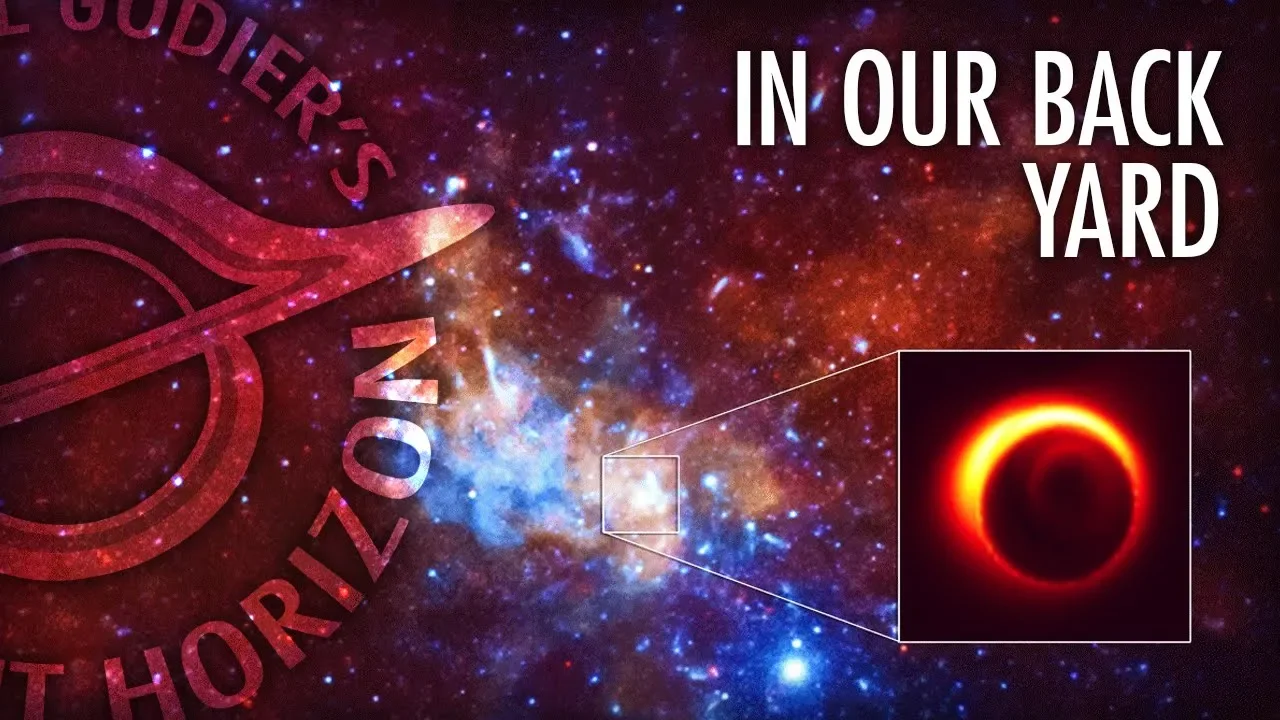


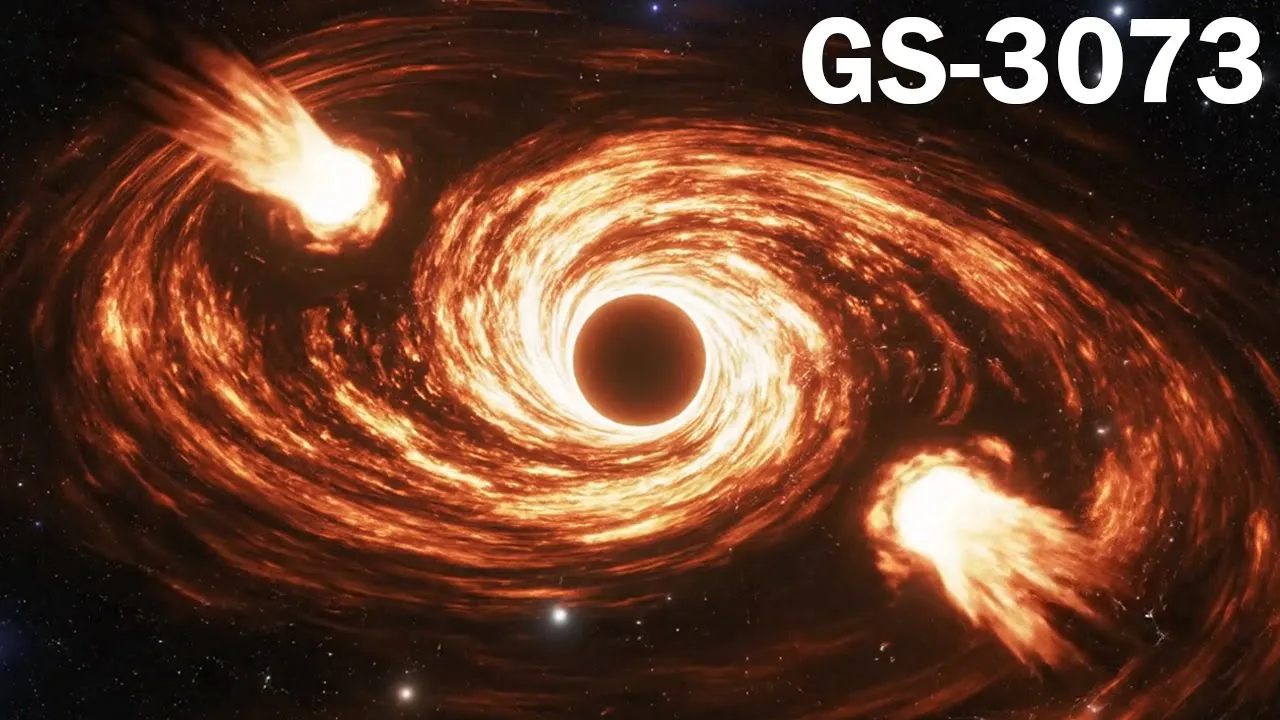
The James Webb Space Telescope has discovered quasars that break the century-old Eddington limit, revealing that early supermassive black holes may have grown through super-Eddington accretion—where thick accretion discs allow matter to fall in faster than previously thought possible—rather than starting as unusually large seeds or growing at sub-Eddington rates.
Breaking the Eddington Limit: Early Universe Black Holes
Added:The concept of the Eddington Limit, which defines the theoretical balance between outward radiation pressure and inward gravitational pull in a star or accretion disk.
The fundamentals of black hole accretion, specifically how matter spiraling into a black hole heats up and emits intense electromagnetic radiation.
The definition and characteristics of quasars as highly energetic active galactic nuclei (AGN) powered by supermassive black holes.
Cosmological redshift and how the expansion of the universe shifts light to infrared wavelengths, requiring instruments like the James Webb Space Telescope to observe the early universe.
Theoretical models of super-Eddington accretion, such as 'slim disks' and photon-trapping, which explain how black holes can bypass standard growth limits.
The 'black hole seed' debate, comparing direct collapse black holes (DCBHs) to stellar-remnant seeds as the origin of early supermassive black holes.
AGN feedback mechanisms and how the intense radiation from early quasars influenced the gas distribution and star formation of their host galaxies.
The potential of future gravitational wave observatories (like LISA) to detect the mergers of these early-universe supermassive black holes.
669.9K views22.6Klikes18:10Original Release: 2024-12-05
thank you to delete me for supporting PBS is there a limit to how much energy you can cram into or pull out of one patch of space well we thought so but the James web Space Telescope has found a quaza that simultaneously breaks a century old theoretical limit and may also explain the conundrum of gigantic black holes in the early [Music] Universe there are black holes at the beginning of time that don't make sense they are just too big black holes grow by consuming matter emerging with other black holes in some cases growing into the super massive black holes in the centers of galaxies intermittently powering enormously bright quazars in the process we see quazars as countless specks of light shining from the disted universe as we've learned to peer deeper and deeper into the cosmic Dawn we expected to see quazars dwindle in power their black hole engines should be smaller the closer we get to the Big Bang but we've now found quite a few quazars from the first billion years that are way too massive to have grown by the mechanisms we think we understand the James web Space Telescope is only finding more and we're forced to rethink our understanding of black hole formation and growth there are two broad ways to grow and oversized black hole in the early Universe either black holes started out uncomfortably large from colossal early stars and then fed almost continuously for a billion years or black holes managed to consume material much much faster than we thought possible although web is finding uncomfortably massive early black holes it's also finding Clues to answering this conundrum take a look at this guy lad 568 an active Galactic nucleus recently observed with the web is not the most massive black hole nor is it the earliest at 1.5 billion years after the big bang we found quazar hosting black holes a thousand times more massive when the universe was half that age but LD 568 is special because it's currently growing 4,000 times faster than the theoretical limit we've seen quazar exceed the theoretical limit before but nothing like this if lad 568 earlier bigger siblings did the same thing that it is then we may be closer to understanding how those early black holes got so chunky so fast but first we need to actually believe that this black hole really is feeding as fast as it seems to be so today I want to talk about the absolute limits of growth and Power in our universe what's the most energy that you can both cram into and get out of a patch of space the physics we're going to explore will describe the most extreme environments around the most best of black holes in the universe but it's also the same physics that first allowed us to understand something even more important every star in the universe we tend to think of black holes as purely sucking they drag stuff in and spit nothing out but actually as evidenced by the quaza black holes or at least the regions around them can be the brightest things in the universe as matter Falls towards black hole it heats up and radiates before dropping past the Event Horizon the surface of no return that radiation can blast back other infalling material shutting off fueling of the black hole the theoretical limit to the rate at which a black hole can feed is called the Edington limit it's enough bound on both the rate of fueling and the power output in radiation also called Luminosity at the Edington limit the pressure from the outgoing radiation exactly balances the strength of gravity it seems like it should be impossible to feed a black hole any faster than the Edington limit or for a quazar to Glow brighter than the Edington Luminosity but L 568 glows 4,000 times brighter than this and likely grows at a similarly super Edington rate the best way to understand how this is possible is to understand the origin of the Edington limit is named after this guy now when a science concept gets named after someone sometimes they deserve the credit sometimes less so but Sir Arthur Stanley Edington and his limit are in the former category this dude was the OG astrophysicist he was supposedly one of the few who understood Einstein's general theory of relativity when it first came out and he led the expedition to measure the bending of light around the Sun in the 1919 Eclipse providing in fact the first verification of gr's predictions Edington correctly guessed that the source of energy in stars is the fusion of hydrogen into helium and that was before we knew that stars are made of hydrogen he pretty much founded the field of Stell physics and this is where his aonomus limit actually comes from that means to understand quazar at their limit we need to understand the limits of stars edington's reasoning we like this stars are massive therefore have very powerful gravitational fields powerful enough to ca any fluid such as a cloud of gas to collapse under its own weight unless that is there's some outward push to resist the collapse stars are not typically collapsing therefore something must support them in edson's time the leading idea for that support was that stars were hot from the energy gained by the gas as it collapsed to form the star for a gas high temperature means high pressure and that pressure resists further collapse of of course Stars radiate their internal energy so this support has to diminish over time you might think that would leech away the star support and so cause it to collapse at least a little bit but remember that collapsing converts gravitational potential energy into heat so as a star radiates energy it should also shrink and generate more heat energy to resist collapse the result would be a very slow shrinking of the star and in fact this balance between gravity and gas pressure is what keeps star supported and stable but Edington realized that such a star couldn't last nearly long enough it would need another source of energy and as I mentioned Edington guessed that it must be Fusion Edington used this balance between gas pressure and gravity to figure out how the brightness of stars must depend on mass as mess increases higher pressures and temperatures are needed to support against the increasing gravity and and higher temperature leads to higher Luminosity hotter things glow brighter a lot brighter Edington calculated that the Luminosity of a star acting as a pure ideal gas should increase with the cube of mass in reality things are a bit more complicated and the dependency can go as high as mass to the power of 4 and A2 okay this is our first effort at figuring out how luminous something can be stars for now but all this stuff will extend to quazars imagine adding m Mass incrementally to the sun it grows rapidly brighter as you do so let's say is Mass to the power of three so double the mass it's 8 times brighter at 10 times its old Mass it's a thousand times brighter but there's a limit at some point around 55 times its current Mass a radical shift happens Edington realized that gas pressure isn't the only thing that can support a star from collapse gas pressure comes from particles bumping into each other typically via electromagnetic interactions try to compress a gas and the bumping increases resisting the compression that direct bumping is mediated by the electromagnetic field we could say via virtual photons but there are also real photons any hot material is suffused with photons whose energy depends on the energy of motion of the particles those photons also bump into charged particles in the gas and so they provide their own pressure and we call this radiation pressure in Stars most of the radiation pressure comes from photons bouncing off electrons an interaction called Thompson scattering for most stars this radiation pressure is Tiny compared to gas pressure throughout the entire Stellar interior but for the highest mass stars that radiation pressure starts to dominate now if we go back to adding Mass to the sun once we get to 55 is solar masses it's radiating at several 100,000 times its current level now it's supported almost entirely by the insane outflow of radiation it's now at the Edington limit adding more mass would make it brighter but not nearly so quickly now brightness increases linearly with mass we're also at the absolute upper limit of mass for stars found at least in the modern universe so Edington figured all of this out for stars but everything I just described also applies to Black halls and quazar now in quaza we have mostly hydrogen gas falling into a deep gravitational well resisted by the energy generated in the center that energy now comes entirely from converting gravitational potential energy into heat with no internal Fusion but the same battle between gravity and pressure applies there's an obvious thing we can do to release all of that radiation so it doesn't resist gravity edington's Assumption of a roughly spherical distribution of matter falling in made sense for stars but not for quazars nor for most collapsing gous systems instead they tend to form diss we've discussed previously why discs are so common from planetary rings to protoplanetary discs to spiral galaxies the main process driving this is conservation of angular momentum any tiny rotation in the pre-collapse cloud will be Amplified as the cloud shrinks that same rotation will stop the material collapsing further along one plane while stuff above and below the plane will continue to collapse now falling into an increasingly massive disc of particles in orbit around the Central Mass in the case of black holes this is an accretion disc the accreted material now orbits the black hole instead of falling straight in all orbits are filled and because adjacent orbits have different orbital speeds they sort of rub against each other this is called viscous Heating and inside the disc it's the process by which gravitational potential energy is converted into thermal energy but now that thermal energy isn't trapped in the material and swallowed by the black hole the surface of the dis is exposed to space and energy radiates from that surface now the first fully self-consistent description of such an accretion disc came in the early' 70s by the astrophysicists Nikolai Shakura and Rashid sunv and this has been the standard model of such discs ever since the model describes a dis that's very thin which means it's easy for radiation to escape and for the disc to become very luminous you might think that this escaping radiation would make it easier for the black hole to feed after all if the radiation escapes that it's not producing radiation pressure to resist gravity but actually these thin discs are among the worst at feeding black holes all orbiting things don't fall into the things they're orbiting is evidenced by the fact that our planet doesn't just drop into the sun right now in order for the black hole to gobble the material of the disc that material needs to lose its angular momentum the friction and turbulence between adjacent orbits in the disc will do that but quite inefficiently the result is that these thin discs are luminous but feed the black hole at way less than the Edington rate the resistance to infall due to angular mum in these thin discs is so strong that to break the limit on feeding our black hole we're better off if our accretion disc looks a little bit more like the stars that we started this episode with imagine we have aazar with a classic thin accretion disc but we start feeding more mass into the disc like we did with the sun more material means more fuel for heating the disc at some point there's so much thermal radiation in the hottest part of the disc near the center that radiation pressure puffs up that inner disc it becomes then harder for that radiation to immediately escape the disc now we have a disc supported by radiation pressure more than angular momentum with gas pressure also playing a role because angular momentum is no longer as important it becomes easier to drain the disc into the black hole but we still have the problem that we started with radiation pressure and our original Edington limit overcoming this limit is now possible because the accretion flow remains at least somewhat disy rather than being an encompassing sphere like in the star radiation bouncing around in the dis is transported inwards with the infalling plasma in a process called advection and eventually it encounters the inner opening of the disc where it's able to escape the disc radiation gets channeled or columnated upwards and downwards in these Central cones that can be enormously bright if you see them from the right direction meanwhile the material of the disc now relieved of some of the radiation pressure is able to complete its infall into the black hole these thick accretion discs come in various types there's the Polish donut where the whole disc is thick almost spherical besides the central funnels or the slim discs in which just the middle hottest part puffs up all of them are capable of super Edington accretion rates and also super Edington luminosities and this has been demonstrated with modern computer simulations the downside is that these thicker accretion discs produce less energy for each chunk of matter swallowed by the black hole but the sheer amount of matter consumed can make up for that so there's a good chance that this is exactly what's happening in the case of L 568 this this isn't the only super Edington active Galactic nucleus we've ever seen but it's one of the most extreme and now that we've seen this sort of super Edington accretion in the old Universe it's evidence that this sort of accretion is crucial for the rapid growth of early black holes I mentioned that the alternative explanation for that rapid growth is that early black holes grew via sub Edington accretion at an almost constant rate after already starting out with a massive seed and this is an idea that strains plausibility but if black holes can go through these extreme growth phases even if only briefly then it becomes a lot easier to build a very massive black hole in the other Universe at least given our current understanding of what that Epoch was like no doubt if extreme accretion is the answer to our conundrum then the James web space Tes will'll find more objects like liid 568 the fast growing black holes that ultimately would power the brightest quazars To Shine from the dawn of SpaceTime thank you to delet me for supporting PBS delet me exists because they are dedicated to providing everyone with the power to control their digital identity data Brokers Harvest and sell private details a quick search of your name city and state might reveal just how much of your private information is out there with delete me you can take control and help keep your personal data private here's how it works delete me scans hundreds of data Brokers for your information compiles a detailed personalized report of the results and works on your behalf to remove your data on average they help customers erase 2389 pieces of exposed data over 2 years if you'd like help keeping your private info private you can get 20% off delete me consumer plans at join delet me.com SpaceTime with promo cob SpaceTime at checkout there is a link in the description hey everyone before I go I just wanted to let you know there will be 15% off the whole merch store for all of December all of this year's merch including limited edition items are back in the store so if there's SpaceTime merch you've thought of picking up for yourself or someone else in your constellation now's a great time just head over to pbsp time.com sshop or click the links in the description [Music]
Up Next

92:35
Astrophysics of Accretion Disks – Charles Gammie Lecture
@videosfromIAS
14.2K views•2016-07-25
61:17
First Billion Years of the Universe with the Square Kilometre Array
@iaaudc
121 views•2022-05-26
13:37
Starstuff: The Cosmic Origins of Elements and Supernova Chemistry
@pbsspacetime
480.3K views•2016-04-06
6:10
Gamma-Ray Bursts: Cosmic Snipers Explained | Astronomy
@kurzgesagt
15M views•2016-07-31
Related Study Plans & Knowledge Roadmaps
Structured learning paths in Astronomy
astronomy
Reionization: Pop III Stars, IGM & 21cm Line
01Foundations of Cosmology & the Early Universe
02Population III Stars & Cosmic Dawn
03Physical Mechanisms of Reionization
+ 2 more learning modules
17h5 modules
Explore Roadmap
astronomy
Planetary Rings: Dynamics, Roche & Resonances
01Foundations of Gravity and Orbital Mechanics
02Tidal Forces and the Roche Limit
03Structure, Composition, and Collisions
+ 2 more learning modules
10h5 modules
Explore Roadmap
astronomy
Asteroseismology: Stellar Waves, Ages & Cores
01Foundations of Stellar Astrophysics & Wave Mechanics
02Stellar Oscillation Modes: P-modes and G-modes
03Mathematical Framework of Asteroseismology
+ 2 more learning modules
35h5 modules
Explore Roadmap
astronomy
Adaptive Optics: Physics, Engineering & Control
01Foundations of Wave Optics and Wavefronts
02Atmospheric Turbulence & Optical Distortion
03Wavefront Sensing Technologies
+ 3 more learning modules
35h6 modules
Explore Roadmap