


















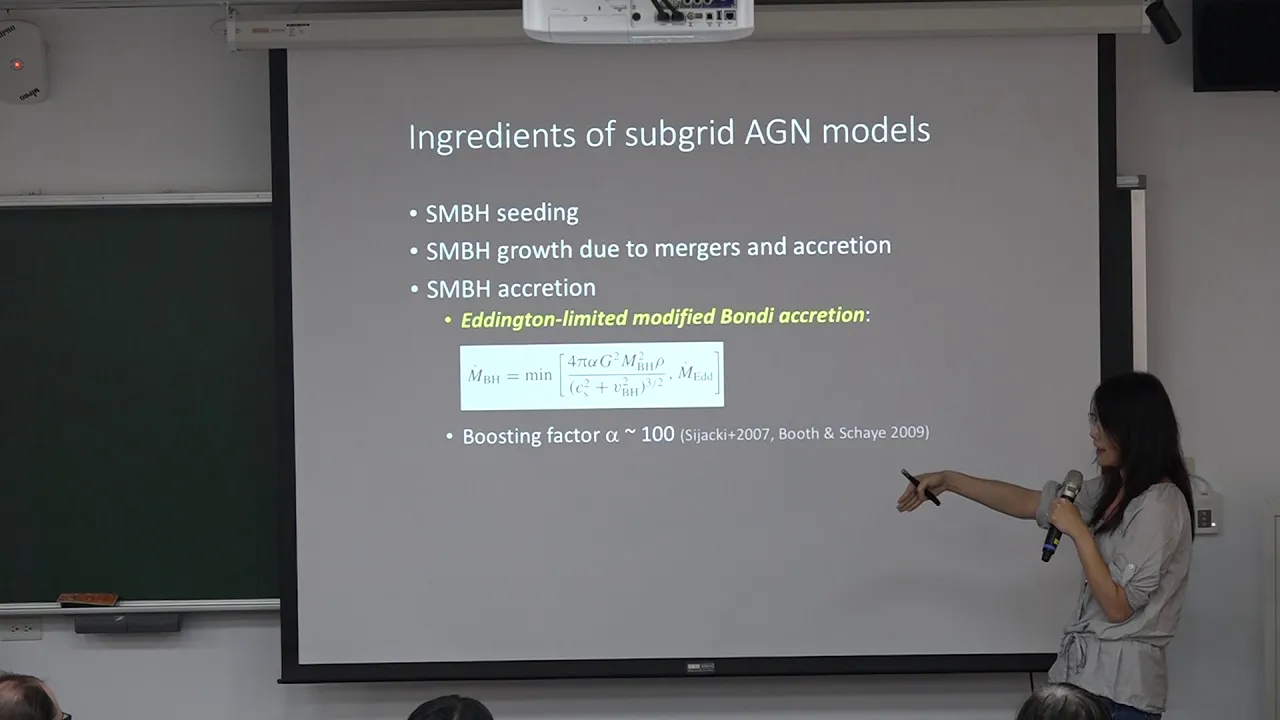




The Magneto-Rotational Instability (MRI) is the primary mechanism driving angular momentum transport in astrophysical accretion disks, enabling material to flow inward toward central objects despite the conservation of angular momentum. MRI occurs in weakly magnetized, differentially rotating disks where the epicyclic frequency decreases outward, causing fluid elements connected by magnetic field lines to exchange angular momentum and generate turbulence. This turbulence sustains the alpha disk model, where the dimensionless parameter α (typically 0.01-0.1) characterizes the intensity of angular momentum transport. MRI operates across diverse disk systems including black hole accretion disks, protostellar disks, and dwarf nova systems, making it fundamental to understanding how disks evolve and accrete matter throughout the universe.
Astrophysics of Accretion Disks – Charles Gammie Lecture
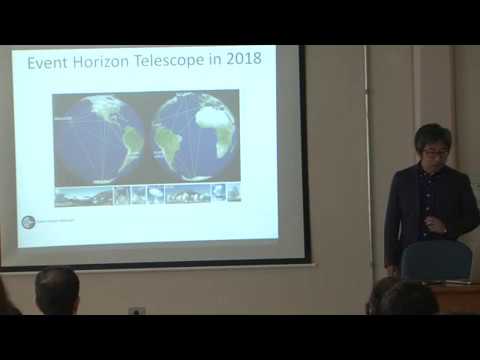
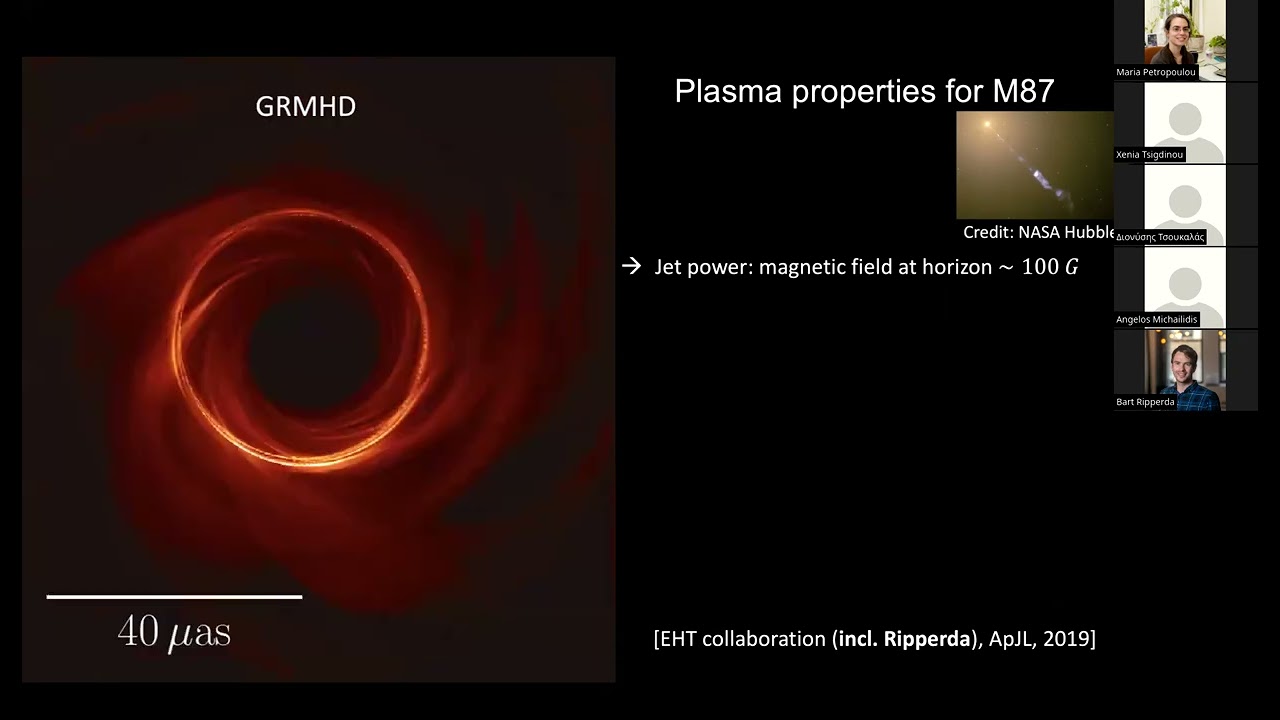
Added:okay good morning um my name is Charles gamy I'm uh from the University of Illinois and uh my assignment is to talk about uh astrophysics of accretion discs and and since many of you are from the coasts or uh perhaps overseas and may not know where Illinois is um I provided a diagram uh so that you can find us uh we're we're right about there we can zoom in a little more using the miracle of Google Maps uh so so we're in the center of the country um we can we can zoom in even further uh here's our beautiful campus in the middle of the summer uh and you should know that uh University of Illinois is the home of uh NCSA which runs exceed which many of you have probably uh used uh and also the home of uh Blue Waters which is one of the largest academic supercomputers in the United States it's also the home of Hal 9000 from 2001 okay which is connected to astronomy and if anyone's interested I can tell you the story at coffee okay so uh so the assignment is disk astrophysics and uh here's the plan uh I'm going to start out with some uh phenomenological motivation uh and uh go through a series of uh a list of interesting uh uh disk systems that motivate uh some of what I'm going to talk about and I think also motivate uh many of the lectures that you've heard over the last week uh then I'll go on and talk about disk Evolution which is all about evolution of angular momentum uh and uh i' I've been told I have to let's see I have a pointer here somewhere um I have to talk about the Magneto rotational instability uh and turbulence in diss uh and then if there's time at the end I'll I'll give a a brief discussion of current problems in a Christian dis Theory okay so uh first up uh a list of astrophysical dis systems and again the motivation here is that that diss the takeaway message is that diss uh are at the heart of many of the most interesting problems in theoretical astrophysics okay so uh let me start with an incomplete list of uh disk systems uh ordered uh according to uh with the exception of this the central object around which the disk uh sits uh and uh you can see that there are you know we're very familiar with uh spiral galaxy discs which uh should not be excluded uh from this list they're they're unique in that they're very well-resolved disk systems uh and we can learn a lot from them uh may be relevant to other disk systems uh so so in particular the the disc of our galaxy uh has a approximately thermal magnetic field embedded in the interstellar medium and has a uh uh Hot Gas layer which extends up kilop parex above the dis and this may be a feature of other disk systems as well um there are also cold and warm discs in elliptical galaxies um as as we now know uh there are black holes in the the center of almost all those galaxies uh which give rise to a variety of phenomena from very luminous objects uh down to uh very low luminous object very low Luminosity objects like uh the galactic center the center of the Milky Way Sagittarius A star um there are also discs in uh ACC creating Stellar Mass black hole systems when there's enough gas provided that we can to the accretion flow around the black hole that we can actually see uh the accreting black hole and again that gives rise to a a variety of phenomena uh neutron stars in binary systems uh also produce uh luminous diss uh one of the best studied disk systems is the the uh dwarf Nova System so interacting binaries uh with a mass losing uh secondary or primary star that produces accretion through a dis onto a white dwarf uh and I'll I'll talk about an example of such a system in a moment uh protostars protoplanetary diss uh like the famous HL tow dis uh uh uh also produce luminous discs although in some cases the diss are observed uh not because they're generating uh energy through dissipation of of internal turbulence but because they are um illuminated from uh by their Central Star uh there are also discs around planets of course and the protol lunar disc is an example the one that formed the moon uh and debris discs uh such as Saturn's rings which are not gaseous uh but which have uh many other features of uh of of uh dis systems including in the case of Saturn's rings density waves which are are found in in several of these uh accretion dis systems okay so so let me talk about some specific examples uh so uh this is uh the Galaxy NGC 4258 uh which is u a fairly nearby uh spiral galaxy um this is a Hubble Heritage in and uh it looks like a a fairly uh regular uh spiral galaxy except there are a couple of features here which are seeing I believe this is an H Alpha uh which were known for many years as anomalous uh spiral arms and it turns out that those are a feature that results uh from emission of a jet from the nucleus of this galaxy okay so if one zooms into the center uh through about 11 orders of magnitude in angular scale uh one can observe using very long Baseline interferometry a set of uh water merer spots on the the sky so this is from a a nature paper from the late 90s and uh the spots uh are here uh on on the uh uh receding side uh there are few spots here in the center and then there are a few spots here on the approaching side and then the color here shows some radio Continuum emission which is also picked up uh in the the course of the vbi observation and and the scale here the physical scale is about 0.1 Parx to about 3 Parx so very very close to the central Black Hole uh which has um a mass of about 4 * 10 7 solar masses measured very precisely uh through these merer spots so so the measurement uh and this is from a a more recent paper by Humphrey at all uh is made uh using the positions of the merer spots on the sky uh it's made using the velocity of the uh masor spots which turn out to fall very precisely on a karian rotation curve so that tells us that this is a a low mass disc around a central object um and then uh and and actually also a thin dis uh and then one can also measure the acceleration of the central merer spots and the combination of the acceleration the velocity and the U and the angular positions on the sky allow one to infer the Central Mass and the distance to this object so um this turns out to play an important role this this system turns out to play an important role in setting the uh the extra Galactic distance scale and measuring the Hubble constant so so this uh uh allows me to introduce a first uh dimensionless parameter for diss which is the ratio of the scale height of the disc the thickness of the disc characteristic thickness h to the local radius and uh in in this system that ratio is of order 10 Theus 3 so the uh uh the ratio is proportional to the The Sound Speed uh in the disc divided by the rotational velocity and we know that the Sound Speed is a of order of a few kilometers per second or a kilometer per second and we can see that the rotational speed is of order a thousand kilometers per second okay so this is a a proof of the existence of thin discs in uh in a resolved system it's also an example of um a system where the dis is not lying in a a plane as one might expect uh in naive disk models but just to go back to this illustration where there's a grid laid on top to guide your eye uh the uh the disc is made up of a series of rings which may be uh tilted and warped uh so the the warp is quite well constrained here so another important feature of disk systems uh warps so thin dis warped dis okay um another interesting feature of uh NGC 4258 dis is that it's uh we're seeing the merer dis far from the central object so this far out the uh accretion energy dissipated per unit area in the disc is very small and most of the heating of this disc comes from illumination from the central accretion flow so uh so that's very important for understanding the uh the thermodynamics of the merer emitting gas okay yeah that's a so so this the story is that um uh you you get mer emission along lines of sight where the velocity uh is coherent along a a significant path on the line of sight and that happens the so-called tangent points so along the the receding and approaching edge of the disk yet there's also merer emission in the center uh and that may be as a result of uh seed photons for or the Mas are produced by the jet that we don't see okay okay next up is the center of the Galaxy this is a beautiful Spitzer Mosaic of the uh inner few hundred parsac of our galaxy um and uh uh if if one Zooms in so I have a a galactic center map here uh which gives the scale of uh things in units of GM over C2 the size of the Black Hole uh and we're outed here at a few 10 the 10 GM over C2 this that image you just saw is it about here uh and then if you zoom in by nine orders of magnitude you get to the uh the black hole and uh we know that there's uh an accretion flow around this Central black hole that produces millimeter wavelength emission uh through synchron process and uh that synchrotron emitting accretion flow is a target system for the event horizon telescope so I I saw Event Horizon telescope mentioned in some of the notes but I don't know if anyone got to talking about it can have have you okay very good so a vent Horizon telescope is a a millimeter vbi experiment um so that will link together millimeter antenna from around the globe the South Pole Alma and Chile uh sites in Hawaii uh and elsewhere and uh it will be able to produce images of the accretion flow in the galactic center uh and in m87 at the Horizon scale so uh many people have been making models of of uh these systems and I'll show you one model model that came out of our group uh some some years ago uh so this uh this is a millimeter wavelength movie of accan onto the central black hole so this is a very interesting disk system uh these resolved images which won't be this nice I I you know if if anybody wants to discuss it at coffee I'm happy to tell you the Saga of a ventor rizon telescope but um there will be information in the EHT images uh about this accretion flow that will allow us to constrain uh possibly the characteristics of the emitting plasma uh so uh where in the accretion flow is most of the emission produced around the jet or in the dis uh what do the fluctuations in the uh accretion flow measured by EHT tell us about turbulence uh in diss okay so so this is uh probably a collisionless plasma uh so a a plasma at temperatures of maybe 10 billion degrees uh at very low densities sort of uh number density of electrons around 10 the 6 and uh under those conditions the mean-free path to Kum scattering is very large and uh this this allows me to introduce another dimensionless number which is the cansen number uh which is the ratio of the mean-free path to the scale of the system and in Sagittarius A star in our best models this ratio is around 10 the 5 so um uh so this is uh an interesting system for applications of uh uh work that Matt CT and others are are doing in in studying uh the evolution of turbulence in collisionless plasmas uh this is also a system where the uh the alane speeds are are relativistic and uh so it's it's also a a venue for applying relativistic mhd uh as you learned about from Lewis laner okay I've I've got two more dis systems to go uh so this is the famous uh HLT disc uh HLT is um uh a nearby protostar it's about 140 parex away uh that has been imaged in millimeter Continuum emission by Alma and what we're looking at here is uh is is thermal uh millimeter emission from dust that's embedded presumably in a gasius disc uh so the Central Star here is uh somewhat less than a solar mass and the dis may be uh perhaps uh a tenth to a few tenths of the mass of the Central Star and and to give you a sense of this scale I I think the first uh big dip in brightness here is at about 50 astronomical units okay so so this is a dis system uh that may be forming uh planets uh and that may be gravitationally unstable uh in addition uh cold discs like this one so that the temperatures in in in these protostellar discs are governed by external illumination so the temperatures are similar to The Run of planetary temperatures in the solar system so at at 50 a the the temperature is somewhat less than 100 Kelvin so these are these are cold discs possibly self-gravitating so let me introduce uh two more uh dimensionless numbers so one is the magnetic Reynolds number which uh allows you to assess the the importance of uh non-ideal uh effects in uh the the plasma around uh a young star or in other systems and this is defined as the ratio of a characteristic diffusion coefficient which is the Sound Speed multipli by the scale height so this is a something with the dimensions of a diffusion coefficient uh divided by the uh resistivity so this is the electrical resistivity of the the plasma and and that's high in these systems because the temperatures are low and the uh the abundance of free electrons of electrons in the gas phase is low okay so it it turns out that in uh the regions of this disk that we can resolve with Alma it's likely that this magnetic Reynolds number is substantially less than one and so um uh so large parts of the dis may be decoupled from the magnetic field okay uh the other important dimensionist number in describing uh systems like uh HLT is the uh t Q parameter which measures the importance of self gravity in the dis uh so this in a karian dis is the Sound Speed multiplied by the orbital rotation frequency um divided by pi * Newton's G times the surface density Sigma of the dis and when this parameter is uh is less than or of order one then self-gravity becomes important in the dis okay the final final dis um so uh I most of you look at this and don't see a an accretion disc but when I look at this uh I do I'm very interested in the the problem of formation of the Moon uh and uh as some of you probably learned in introductory astronomy uh the Moon is thought to have formed from a collision uh between an impactor and the protoe and uh this impactor uh hits hits the Earth and then Lofts uh material into orbit around the young Earth uh that uh uh settles into circular orbits and this is a a SP simulation of one of these collisions from cook and Stewart uh this is a unusual model with equal Mass uh impactors and you can see as time goes on there's something really bad that happens uh after the collision and then things settle down after a few hours and there's a dis of particles that uh are colorcoded here by temperature so in this case the temperature is around 4,000 Kelvin that are orbiting the young Earth and uh this is another interesting disc system where uh the magnetic Reynolds number uh may play an important role so initially the dis may have uh zero coupling to the magnetic field and later in its Evolution it may have uh Stronger coupling to the magnetic field okay sorry I have one more disc system to go uh this is SS signy so this this is a this is an artist conception of uh ssy ssy is a dwarf Nova System uh so there's a a companion star um that is overflowing its Ro lobe and producing an accretion disc around the uh primary white dwarf and we we now know that this uh system produces a radio jet uh but this system has been known for for more than a century to be variable and uh this is uh a like curve from the American Association of variable star observers that goes back to 1900 so you can see uh this system quiescent in the visible uh and then every few weeks it goes into an outburst and then decays and uh this has been going on since uh William McKinley was President of the United States and it will continue going on even if Donald Trump becomes president of the United States so uh so so these outbursts are believed to be due to I I've just uh uh broken the Trump rule it took me about 20 minutes to mention Donald Trump um so um so these outbursts are believed to be due to an instability of the accretion disc so it it wants to accrete at a a rate uh that at which there is no steady disc Sol no stable uh steady disc solution for accretion from the outer edge of the disc into the surface of the white dwarf and uh and as a result it oscillates between an excited state where accretion is very rapid and a quient state where accretion is slow and the these are are model dis systems in in the the sense that they change on time scales uh that we can access easily with with uh observations uh we can learn a great deal about these systems from Eclipse mapping so we can uh we can evaluate the the Run of temperature inside the dis uh uh using uh for some of these systems the passage of the secondary in front of the disk uh so so the time series of uh brightness of the system as the secondary passes in front of the disk allows one to infer uh the Run of surface brightness of radius okay so uh to to connect this to the some of the topics discussed here um in computational plasma physics uh this system may have a low magnetic reenal number when it's in quiessence uh and it uh is probably mhd turbulent when it's in outburst and uh as I'll I'll mention later the convection that occurs o in the course of the Outburst May enhance the strength of the magnetic field uh that we believe is present in the disk and uh lead to enhanced transport of angular momentum okay so um so that's a a very uh brief overview of dis phenomenology and some interesting uh problems in in accretion discs um so the takeaway there is that discs are Central to many interesting problems in astrophysics so so uh now I want to go on to uh talk about dis Evolution and uh uh this is all about angular momentum so discs are common in astrophysics because of a common physical process which is that angular momentum is approximately conserved uh while uh internal energy of the plasma is easily radiated way so the time scales for evolution of angular momentum are long and the time scales in many systems for evolution of the internal energy are short and and I have a a little animation of this here so so let's imagine that we throw some uh plasma into orbit around a central object and it has some angular momentum L and some kinetic energy and it's cold so it has thermal energy which is significantly less than the kinetic energy in in the frame of the central object okay so here's the animation okay did you see that uh so so there there are shocks that are produced as the gas settles in to an orbit around the central object and those shocks uh change kinetic energy to uh thermal energy kinetic energy is dissipated uh then over time the thermal energy is radiated away while the angular momentum is approximately conserved so's my next animation okay and then finally uh the thermal energy becomes quite small compared to the kinetic energy of the dis in in orbit about the central object and we have a a thin disc okay so this happens in in many systems in astrophysics in NGC 4 258 perhaps in uh the protol lunar disc in uh in Saturn's rings uh in uh many many places in astrophysics okay so because of this this dis Evolution understanding dis evolution is all about understanding the evolution of the disk angular momentum okay but before I go on to that let me just uh review uh some time scales for uh dis equilibrium so um in a thin disc uh the uh dynamical equilibrium is reached on a time scale of order the dynamical time and the dynamical time is characterized by the orbital frequency Omega uh of the of the plasma and orbit about the central object and that orbital frequency is approximately the Ian uh orbital frequency for a dis which is not substantially self-gravitating uh plus a correction which is only of order H over R 2 so for a protoplanetary dis for example which has H over R of order 1110th that correction to the orbital frequency is only of order 1% okay uh the dis also settles into hydrostatic equilibrium in the vertical Direction and uh that uh allows us to estimate the uh the scale height H that I introduced over there and uh I I won't derive this but the the um scale height is proportional to the Sound Speed divided by the rotation frequency okay so this in a a gas pressure dominated dis so a dis like a protoplanetary disc where the pressure is dominated by the gas pressure as opposed to a disc close to a black hole it's secreting rapidly where the pressure is dominated by radiation pressure okay then uh in gas pressure dominated diss The Sound Speed is proportional to the square root of the temperature okay all right uh so so the dynamical equilibrium is achieved on of order of the dynamical time um although let me just give a a caveat to that so it's possible uh that there are longlived excitations of the dis uh so it can be eccentric uh so it's it's possible instead of having circular orbits uh around the central uh object to have eccentric orbits um although to to lowest order in the eccentricity that doesn't change things very much uh and then of course as we saw in the NGC 4258 dis it's possible to have uh tilts and uh warps of the dis okay so uh the the next uh piece is thermal equilibrium uh so this is entirely analogous to what you learned in Stellar structure okay so it's the same set of uh of models that apply to or the same set of equations basically that apply to dis equilibrium so thermal equilibrium is achieved when the heating rate is balanced by the radiative cooling rate okay so the the heating uh in uh some disk systems is dominated by disip by internal friction uh related to dissipation of turbulence and uh uh unlike uh stars that is not concentrated at the center of the disk uh that dissipation may occur throughout the vertical extent of the dis and and the best evidence is that it does as I'll show you later um so that is uh an equilibrium is balanced by the radiative cooling and in an optically thick disc that's just given by Sigma T effective to the 4th at the surface of the disc so just like a star okay so that equilibrium is achieved on the thermal time scale and we can characterize that according to the rate at which uh energy is dissipated in the disk and I'm I'm now going to introduce uh this Alpha parameter uh which is uh very important in disk Theory which describes the intensity of turbulence inside the accretion dis so that the heating rate is simply assumed to be proportional to the local dynamical time and uh the constant of proportionality is Alpha and and so this is almost definitional so the the thermal time scale is of order the thermal energy content of the disc which is again this is the surface density of the disc so grams per centimeter squared multiplied by the square of the Sound Speed so the temperature uh and uh this is of order Alpha Omega minus one so Alpha this parameter which describes the intensity of turbulence in the disk uh is believed to be uh somewhere between a tenth and a h 100th uh uh in many systems so this is substantially long if that is the case then this is substantially longer than the time scale on which the system reaches dynamical equilibrium okay um the the final time scale uh is known as the viscous time scale and that's the time scale on which uh inflow equilibrium is reached so you can imagine feeding Mass into a disc at the outer edge and then having it gradually make its way inward toward the central object um at some rate and as time goes on uh it may set up an equilibrium where the inflow rate is constant at every radius and um uh that happens on this uh viscous time scale which turns out to be longer than the thermal time scale by of order r overh s so again to go back to the example of protoplanetary diss uh this might be a factor of 100 longer okay so so that describes uh disk equilibrium so the next step is to go on and ask how diss evolve over time so the analogy here is to Stellar structure and Stellar Evolution so these this is the Stellar structure or dis structure model and then the next step is uh Evolution and uh because this is all about uh angular momentum conservation and angular momentum Evolution uh the governing equation is derived from an equation uh that uh describes the angular momentum flux inside the dis so let me just go through and explain uh what everything is in this equation um so we start with a what's being evolved here so on the left Sigma again is the surface density grams per centimet squared uh in the disc so the the column vertically integrated the dens it vertically integrated through the dis um Omega is the orbital frequency uh and Kappa is the epicyclic frequency and so just to remind you the epicyclic frequency is the natural radial frequency of oscillation uh in uh Central potential uh cylindrically symmetric potential um so in a a karian disc in a disc around where where the potential is dominated by the central object uh Kappa is equal to Omega okay R is the cylindrical radius here um wfi is a sheer stress so this is uh a quantity uh that tells you what the um uh what the radial flux of azimuthal momentum is so this is a component of the stress tensor radial flux of asimut the momentum which obviously is connected to the radial flux of angular momentum through a factor R okay so that appears under a second derivative here so this is this is integrated vertically through the disk so one calculates uh this off diagonal component of the stress tensor inside the disc and then integrates it vertically okay next up is uh this this parameter tow here which is connected to external torqus um so uh external torqu can be uh imposed on the disc it can lose uh angular momentum vertically by direct extraction uh in a magnetized wind uh it can have torque supplied locally by non-axisymmetric gravitational fields so that all can be captured in this external uh torque and then finally uh there is uh uh Mass loss or gain either through loss of mass in a wind from the surface of the disk or gain of mass through infall from out side so infall onto the disk uh might happen in a protoplanetary disk system where there's a Remnant envelope around the uh the young star uh winds are observed in systems like SS signy in uh in spectral lines from the disk okay so so this is the dis uh Evolution equation um the uh the full derivation of this is an ex exercise for the student so if you want to work in dis Theory you should do this calculation and uh it's it's actually not that difficult uh you start with uh the equation of angular momentum conservation um you assume that the dis is orbiting in circular capillarian orbits so the angular momentum per unit mass is fixed and then you uh you use conservation of mass as well uh and then the only hint I would additional hint I would give here is that the this Factor Capa s r over Omega comes from just from the radial derivative of the angular momentum per unit Mass okay so um so the big question the big questions in disk Theory are what give rise to what gives rise to this uh sheer stress and what gives rise to this uh external torque uh now uh this turns out to be possibly a global problem in other words to understand uh let's say magnetic torqus on the disk you have to understand the Global Evolution of uh magnetic fields in and around the disk and that turns out to be a very difficult problem that is just now becoming being accessible with the largest scale simulations um this may be a little bit easier uh in the sense that it may be possible to study the development of turbulence in uh little patches of the disk this may be a local problem and uh and from those uh those local analyses uh one might be able to derive a model that uh allows integration of this piece of the dis Evolution equation okay so the the standard um model for diss uh is the alpha disk model and you you really can't uh understand anything that's happened after Alpha diss were introduced in the 1970s without understanding a little bit about what Alpha diss are so these guys were introduced in uh a paper by Shakur andv in 1973 and in a paper by lynen P Bell and Pringle in 1974 and the idea is to adopt a simple scaling argument for that sheer stress in the disk Evolution equation and uh one way of thinking about this scaling argument is to imagine uh that the turbulence can be modeled as of the effects of turbulence in the disk can be modeled as a viscosity uh but a uh not a microscopic viscosity but uh a viscosity with a very large coefficient related to the Eddy size of the turbulence and the scale of the edes so uh in this model you have a turbulent viscosity new which uh is just this Alpha parameter again which describes the intensity of turbulence multiplied by something uh with the characteristic dimensions of a viscosity so viscosity has dimensions of a diffusion coefficient which is a length times a velocity and uh the natural velocity scale is the sound speed in a thin dis and the natural uh length scale is the scale height so we introduce a turbulent viscosity of order Alpha time CS * H uh and then in the classical Alpha dis models one ignores the effects of external torqus and one ignores infall winds and possible variations in the alpha parameter so uh so it's a simplest possible uh dis Evolution model so we've thrown away most of the terms in that dis Evolution equation and now we just have one left and you can see uh there's a this sheer stress in here which is going to be somehow related to the surface density okay and that appears under two derivatives two radial derivatives uh and then on the left it's related to the time variation of the surface density so this looks like a defusion equation okay so in the alpha disk model one assumes that that system sorry I should have said this one assumes that uh the disc is in a steady state so that the surface density isn't changing and this thing can be set to zero okay so here's a list of what goes into formulating the alpha disk model so first of all one assumes a thin capillarian disc so the parcels of gas are orbiting as rings around the central orbit Central object with uh orbital uh frequencies of order the capillarian orbital frequency uh one also assumes that the dis is in vertical hydrostatic equilibrium and that leads to this relationship between the scale height and the Sound Speed and the orbital frequency so in the frame of the disc if you if you go out into the disc and and ride with the plasmas it orbits around the central object uh you'll see that uh vertically the dis has a a harmonic potential and so that that harmonic potential confines the plasma into the thin uh disc and uh by solving equation of hydrostatic equilibrium uh one finds this relationship okay the next step is to understand the thermal equilibrium of the dis and to do that one has to balance the heating which is related to dissipation of turbulence against the cooling uh which in uh the alpha dis model is related to Vertical diffusion of vertical radiator diffusion of energy okay so in order to do that calculation one needs an opacity and the classic thing is to uh use approximate opacity where the uh the Ros and mean opacity is assumed to scale as some power of the density and some power of the temperature uh then uh we have the the turbulent viscosity which controls the heating rate in the disc uh we have a prescription for vertical integration of the density so the surface density is approximately related to uh the volume density uh multiplied by 2 * the scale height so this is a crude uh integral uh and then an estimate for the optical depth from the surface of the disk to the center of the disk so uh surface density times Kappa the opacity is the optical depth to the center of the disc from a surface okay so uh to finish the rate of equilibrium we need the the surface temperature uh uh so the effective temperature is uh assumed to be equal to the total energy dissipated by turbulence inside the dis and that's related to the viscosity and the sheer rate uh uh so this is one of these omegas gives you the viscous stress here Sigma new omega is the stress multiplied by the rate of strain which is Omega gives you the total rate of diss dissipation per unit area um so uh this gives you an estimate for the surface temp temperature uh and then radiative equilibrium tells you how the uh uh energy diffuses out from close to the midplane of the dis and that relates the effective temperature at the surface of the dis to the uh Central temperature at the midplane of the dis through a factor of the optical depth okay and there's a wrong factor of Sigma in here so this is not dimensionally correct U but you can mentally cross that out so so T effect of the fourth is approximately T Central to 4th divided to so if the optical depth is large the the uh Central temperature of the disc is large compared to the surface temperature okay and finally in a steady state uh one finds that the accretion rate is related to the sheer stress by uh by this equation which arises from the dis Evolution equation so this is a consequence of that okay so that's that's a lot of estimates um the uh I haven't Justified very carefully but let me show you the outcome so as a as an example uh consider a steady state disc around a stellar Mass black hole and uh uh in these Alpha disk models one divides the disk into zones radial zones according to the uh dominant opacity close to the midplane of the disk and uh uh for a a disc which is accreting uh close to the Edington rate onto Stellar Mass black hole that the innermost Zone has radiation pressure much larger than gas pressure and electron scattering dominates the opacity okay so one finds that the temperature uh the central temperature of the disc is is four 40 million uh Kelvin uh and then there's a scaling here uh with Alpha with the mass of the the central object in units of a solar mass and with the radius X cast in units of GM over c^2 okay so um uh so this gives a run of central temperature in the inner region of the dis this gives the Run of surface density in the disc so 0.4 G per CM squ uh with a scaling in terms of Alpha and a scaling in terms of the mass accretion rate in units of the Edington rate okay and and uh uh finally a scaling of H over r with radius okay so what I've done for you in case you didn't follow all the details of what I just said is provide you with a Mathematica script that Peter is going to make available I think on the the the wh's already there uh and you can run this Mathematica script and obtain a general Alpha disk solution uh for for any system with any Mass uh as long as you provide a suitable scaling for the mass of the central object and a suitable scaling for the accretion rate okay uh so so in that you will see explicitly what opacities uh one might use for uh these these dis estimates and you'll see explicitly the uh uh the estimates that I've quickly gone through here um for uh equilibrium of the dis thermal equilibrium and hydrostatic equilibrium okay so um back to the disk Evolution equation um so uh the as I said the the big questions here are what are um the the sheer stress what what provides the sheer stress and dis what provides external torque and what might be the inflow and outflow rates so part of this is answered uh through studies local studies of turbulence in diss so let me go on and uh talk about uh turbulence in accretion discs so again this is important in relation to the classic Alpha models because the alpha dis model posits this the existence of this turbulent diffusion of uh angular momentum and the question is what generates turbulence and uh there are many live possibilities in 2016 so one possibility is uh the Magneto rotational instability which I'm going to discuss in in some Det next uh another possibility is gravitational instability so in uh in uh discs around super massive black holes in Galactic nuclei the uh tumay Q parameter which I wrote down over there drops close to one inevitably as one moves out in the dis for any accretion rate so uh gravitational instability is relevant to the outer parts of uh active Galactic nuclei uh accretion discs it's also relevant to massive uh uh Tori discs or or protoplanetary discs okay uh there are a couple of other possibilities or three other possibilities which are related to fluid dynamical instabilities which are known to exist in uh in accretion discs so uh one is the so-called zombie Vortex instability uh and this is work that's come out of uh Phil Marcus's group uh at Berkeley uh Joe Bronco Phil Marcus uh I think it's it's still a little bit controversial uh and uh there there are recent papers which critique the uh the robustness of the zombie Vortex instability um by Jeff lur and U and others okay so uh this is an instability which generates vortices in unmagnetized discs and then it's possible for those vortices to shed uh spiral uh sound waves that carry angular momentum that exchange angular momentum uh between radially separated parts of the dis uh and uh that might lead to a non-negligible alpha uh the vertical sheer instability here is um connected to uh the the possibility that uh the orbital frequency varies vertically inside the accretion dis and in that situation there's a uh an instability of uh incompressible waves that uh Shear like this with a period comparable to or larger than the orbital frequency and that that grow uh and saturate as uh uh as sound waves which again can transport angular momentum and then the subcritical baroclinic instability uh is an instability that arises out of work by Hubert clar many years ago uh and is uh uh related somewhat Loosely to the Barac Clinic instability that drives weather uh on the surface of the Earth okay so I can't cover all these topics so I'm going to focus on the Magneto rotational instability um and uh the magnet rotational instability uh was discovered in the context of kuet flow magnetized kuet flow in the 1950s by a Russian scientist named velikov uh so kuet flow is uh a laboratory laboratory flow uh between rotating cylinders so there's a fluid uh there's an inner cylinder there's an outer cylinder they rotate at different rate uh and there's a magnetic field embedded in the kuet flow um so uh this was known to well to velikov to Chandra sear in uh so so this instability is described in Chandra Sear's book on Hydromet hydromagnetic and hydrodynamic uh stability H but it was not realized that this inability might occur in accretion discs until the early 1990s when balbus and Holly uh studied this and discovered that there is a local instability of uh accretion disc so local here means that uh the presence of the instability doesn't depend on boundary conditions in the disk uh it occurs on a small scale inside the disk that can be treated and it can be treated in the w KB approximation uh it's an instability of weakly magnetized discs so one doesn't need a strong magnetic field present for the instability to take off and it turns out that the instability is itself is driven by exchange of angular momentum between radially separated fluid elements so it's ideal for driving turbulence in uh discs that can lead to uh angular momentum evolution of the dis okay so uh I'm going to start with uh a simple and actually finish with a simple mechanical analogy for the Magneto rotational instability um which involves two masses on a spring so let me uh can people who are sitting over here see this board yeah okay okay so the the system we imagine is uh two masses um connected by a spring in orbit around a central body and for Simplicity I'll just consider the case where uh the potential is dominating by the central body and so the orbital frequency is given by the Kepler orbital frequency okay so we have two masses and we have a spring that connects them and then there's a characteristic frequency associated with the mass spring system uh which I'll call gamma okay so um uh this simple model which uh was first described in a paper by um balbus and Holly captures essentially all the important features of the this uh Magneto hydrodynamic instability without an extended calculation so the analogy here is that the masses can be thought of as fluid elements orbiting in the disk and the spring can be be thought of as a magnetic field which connects the fluid elements uh and then the bending of the field lines uh produces this restoring Force which is modeled by this uh character characteristic frequency gamma okay so um I have to um start by setting up uh a co-orbiting frame okay so let me draw an even bigger version of this here uh so I'm going to set up cartisian coordinates which are co-orbiting with these two masses in a circular orbit around the central object so the the I'm going to orient the X Direction uh along uh the radius vector and I'm going to going to orient the y axis along the direction of orbital or against the direction of orbital motion okay so I can then write down the equations of motion in this local coordinate frame and these equations of motion are known as the the hill equations or the local model equations okay so let me do that next okay so the separation of one of the masses from the center of this coordinate system is x in radius and X double dot is equal to minus 2 Omega y dot um + 3 Omega 2 xus gamma 2 x okay so the fundamental assumption I've made in writing down this first component of the equations of motion is that the separation of these masses is small compared to the local uh radius and you can see uh that this uh might arise from the Coriolis force in this rotating frame where X is oriented along the radius vector and continues to be oriented along the radius Vector as the pair of masses orbits around the central object so this is coris this is the tital expansion of the effective potential in the rotating frame okay so there's uh 1 half Omega s r 2 describes the centrifugal component of the potential in the rotating frame and then there's uh minus GM over R uh which describes the gravitational potential and combined uh uh and then expand it in a tailor series expansion one finds this term so this tends to produce separation in the radial Direction it corresponds to Tidal stress okay the second component of the equation of motion in the toal direction in the direction of uh motion is the other piece of the Coriolis force and then again the spring term so the spring term wants to restore the masses back to their original position Okay so again coriolis tital expansion and spring which represents the effect of magnetic fields okay so um as as a first uh go at this we can ask what happens if we turn off the spring and say what what are the modes of this mechanical system so we set gamma to zero and then assume that X and Y scale is e to the minus I Omega T this is a linear system so we'll we'll find a relationship between um this frequency and the orbital frequency at the end of the day okay so um this up okay so the this equation becomes minus Omega 2 x = - 2 Omega * - I Omega y + 3 Omega 2 x and the second equation becomes minus Omega 2 y equal 2 Omega * - I Omega X okay so I can solve this equation for x and I can solve uh this equation and then insert that into this equation I obtain a linear equation in x so the X's cancel out and I find a a dispersion relation that relates the frequency to the orbital frequency and that gives you Omega squar uh is the non-trivial mode is Omega squ is equal to the orbital frequency okay so this is a very boring result it tells you that if you perturb the system it oscillates at the natural frequency in the orbital plane okay so the next step is to turn back on the magnetic fields and you can see exactly what is uh going to happen uh mathematically so we'll add on an additional term here uh minus gamma 2 x minus gamma 2 Y and again we can perform the same uh simple algebra and solve for uh the dispersion relation and uh that is a good that's a good exercise for the student the result is the following Omega 4us Omega [Music] 2 okay so um this tells you uh it turns out that there's there's an instability and you can see this by considering the limit that Omega is small so looking at the marginal stability limit and then you can see that there is a marginally stable situation when gamma is is of order Omega okay so this term vanishes when gamma squ is 3 omega s um so that means there's a zero frequency solution at that point and that there's a transition uh from stability to instability okay so uh let me just plot this up so the single par here is the orbital frequency Sor sorry the spring constant squid Omega squ and uh here's one two four can can you see this in the back or am I writing too small I I see some yeses all right um and then on this axis I can write Omega squar over the orbital frequency squared okay and um there there are two sets of modes here uh relating the to produced by the two roots of the quadratic equation in Omega squ and one is the spring motion which is what you would get if you just turned off the orbit so the spring wants to oscillate at the natural frequency gamma and then there's a second set of modes uh which have zero frequency when uh gamma is small and then grow like this and let's see I'm uh need to redraw this okay so Omega squar is is negative in this region when gamma squ over Omega s is less than three as was indicated by my earlier argument uh and if Omega squ is less than zero then we know that there's an instability so there's an exponentially growing mode uh an imaginary uh there's a a growing an a damped pair of modes uh and the uh the fastest growing mode can be had from uh just analyzing the the roots of this equation and one finds that this occurs at Gamma squar over Omega squar is 1516 and at that point the minimum uh in Omega squar which corresponds to the fastest growing mode of the instability is uh 9 916 Omega squ or minus 916 Omega squ okay and then as the uh spring constant grows stronger uh this this mode eventually uh becomes stable and then when the the spring is very very strong it doesn't feel the orbital Dynamics at all it doesn't care about the orbital Dynamics and uh it just oscillates stably okay so so this is uh directly analogous to the mhd problem so let me describe that here so let's zoom in on the dis and consider a small patch of the dis uh in the poloidal plane so the the radial direction is this way vertical direction is this way we're looking at a cut through the accretion disc and we imagine that the accretion disc is penetrated by a we uh magnetic field um this instability corresponds to an oscillation or unstable oscillation that looks like this so there's one parcel of plasma at this height in the dis which is coupled to another parcel of plasma lower down in the dis by this magnetic field and the uh the the field resistance bending and the characteristic frequency of that bending is gamma squar is k.
VA squared most K so K is the the vertical wave vector or it's the the the wave Vector of the perturbation and and VA is the alphane speed so just to remind you VA is B on root4 Pi row okay so so this is the alane frequency and uh the alane frequency squar is what substitutes for this spring frequency when one goes from the mechanical problem to the mhd problem and so everything I've written down over here carries over if one simply substitutes k.v for gamma that gives the dispersion relation for uh a vertically oriented magnetic field weak magnetic field in an accretion dis okay are there any questions on that okay so um let me give a a list of facts about what's known about the linear theory of this Magneto rotational instability because obviously this is not a rigorous Theory and this only considers a special case where one has a a vertical field uh in the dis so um it turns turns out that for a general Central potential uh instability only requires that D Oma d d Omega squ drr is less than zero so there has to be differential rotation and the rotation frequency has to decrease outward um the maximum growth rate in a klarian disc is as you could deduce from this where I said the minimum in the dispersion relation is- 96 Omega s is in a klarian disc 3/4 Omega so the maximum growth rate is always the dynamical uh rate and it's obtained by tuning the wavelength of the unstable mode uh so for so that for a given magnetic field strength uh this k.v is of order Omega so for example if the the field is very very weak then the characteristic wavelength at which one obtains the maximum growth rate becomes smaller and smaller um the fastest growing mode as it says in the next line is when k.v squ is 1516 Omega squar in a klarian dis uh we know that there is a a local instability so local here mathematically means uh an instability that appears in w KB Theory uh where the wavelength is small compared to the dis scale height um and we also know that there is a form of local instability present even for a purely toroidal field so in that case the linear Theory becomes quite a bit more complicated and uh and the instability manifests as a uh a temporary uh growth in the magnitude of the perturbation which eventually stops but by tuning the parameters the wave vectors it's possible to get as large an amplification Factor as one wants uh for any given pidal field okay so linear theory is great but it doesn't tell you what happens when uh the instability goes into the nonlinear regime and saturates so for that uh we need simulations uh so there's there's lots of work been done on the development of mhd turbulence and discs over the last uh 20 years 21 years um so uh the saturation of the MRI has been investigated in local or global settings so a local setting is one that basically uh follows a patch of plasma as it orbits the central object and uses a set of equations uh inspired by the hill equations uh whereas Global models consider the full evolution of the dis from the central object um outward um MRI simulations in literature can be stratified or unstratified so the uh the stratified models simply include the harmonic uh potential around the uh midplane of the disk and so have uh variations in the density uh with height the unstratified models turn that off and provide a simpler cheaper model which may or may not be relevant uh models have been run with explicit dissipation so for example explicit and small viscos osity microscopic viscosity uh and explicit and small omic resistivity um or uh in the majority of models one uses something called Isles so I don't know if anyone's talked about Isles here no okay so uh this amounts to which what's called a direct numerical simulation of turbulence so you simulate the entire uh turbulent Cascade from the largest scale uh where energy is in injected scales comparable to the disc scale height down to the dissipation scale so you follow absolutely everything uh in an Isles model uh which means an implicit large Eddie simulation there's a closure uh which provides dissipation and the closure is provided by your numerical scheme um so most most models uh to date have used Isles and this this may or may not be a problem we know that the convergence properties of Isles and explicit dissipation models are different so I'll I'll say a little bit more about that in a minute um okay and then uh people have looked at isothermal DIS models so isothermal just means that uh one uses this equation of state where Sound Speed squared is a constant this is the pressure this is the density okay so this eliminates the energy equation from consideration and gives one a cheap uh model to integrate uh now people are doing energetically self-consistent models so either models with very little radiation uh that allow heating uh from dissipation of turbulence or uh models which include radiative transport okay so let me show you just a couple of models so the first one is uh a global simulation uh that's stratified it uses aisles so uh people sometimes describe this as dissipation on the bare grid uh and it is energetically self-consistent in the sense that in this model there's uh very little radiation and the entropy of the plasma is allowed to increase so uh this particular model is uh was run by uh my my student hotaka shawa uh who's now at CFA and uh it shows the density evolution in the midplane of a dis around a rotating black hole so you can see that uh there is sustained turbulence in this system that produces variations in the density in the midplane and that these variations in the density take the form of trailing spirals okay um so uh again the color here shows a log of the density and this guy more or less reaches inflow equilibrium in other words it's been run through the viscous time scale out to a radius of about 20 times the Event Horizon radius okay what's the weird what's the weird that's the boundary um so there's an outflow boundary here and uh uh there there's some interaction with the boundary we we know that it doesn't make much difference to the outcome because we tried moving the boundary and we get the same result um okay so um so the next simulation I I'll show you is uh a local model uh so it again it uses equations of motion which include uh a coriolis term and a tital expansion of the effective potential in a co-orbiting frame so we go into the frame of the plasma as it orbits around the central object uh the model that I'll show you is stratified so it includes a vertical gravity again it uses Isles or the bare grid no explicit dissipation and this one is isothermal so so here's a um a nice graphic from jeur uh that explains a little bit about what this local model is so we we pick a box that's co-orbiting uh with the plasma around the central object and then we use a set of boundary conditions called the sharing box boundary conditions which allow ow us to incorporate the differential rotation in the dis so it's really almost periodic boundary conditions but the way in which the radial boundaries are connected is time dependent and shearing okay okay so here's um uh the evolution of the model so on the left uh this shows the density and on the right we see the the y or toal component of the magnetic field and and these are Integrations done by my student Ben Ryan recently this this spring okay so um you can see that uh there's something going on in this disc uh there is a turbulence which couples to compressive modes and produces these density waves Wes that run back and forth inside the dis um Let me show the uh the field uh you can also see that there are small scale structures in the magnetic field and uh uh these lead to an alpha of order of a few times 10 minus 2 when vertically integrated through the dis okay so these are just examples there I I think there are hundreds of papers which have looked at uh these uh similar models in the literature uh and a few things have been learned from these uh not as much as we'd like a few things um so going way back in history the first models that people ran were axisymmetric models and we know that uh even in axis symmetry the MRI leads to a turbulent State and uh and that that turbulent State transports angular momentum outward and that statement that angular momentum goes outward is not a trivial one because there are some forms of turbulence which transport angular momentum inward so so that's interesting uh we know that in 2D the MRI does not converge in other words even if you have infinite numerical resources uh you will not find a conver Ed value of alpha um we know that uh in 3D the MRI leads to turbulence and again outward transport of angular momentum uh and we know that sometimes in 3D the MRI simulations converge so we know they converge when explicit dissipation is used uh we also know they converge when uh in one of these local models one inserts a vertical magnetic field uh Inside the Box um or a permanent pidal field so in either case the simulation uh converges we know they don't converge in the unstratified sharing box models on a be Grid in the Isles uh problem we there something that's discovered by Fang and papalu uh we know uh that there are issues with convergence for Isles models in the unstratified shearing boxes and we also know uh that in the global models that have been run to date the characteristic scales of the turbulence are not very well resolved so one can measure a correlation length for uh density and magnetic field structures and those correlation lengths tend to be uh tend to change as the grid scales change as the resolution changes so uh so the news there is mixed uh We've also learned that the intensity of the turbulence depends on several things uh so in particular we've learned that it depends on height in the disc so let me show you uh the Run of alpha which is the in this case is the ratio of the sheer stress to the local pressure okay so this is a run of sheer stress to local pressure in the one of the local models I just showed you as a function of height through the dis in units of the scale height and you can see that uh at the midplane here Alpha is about 01 and then as one goes up away from the midplane alpha increases and uh a couple scale Heights above the midplane it's a few ten so this this is quite interesting and was not envisioned I think in the original um Alpha models from the 1970s yeah Sim um well so I think those are the same thing here so it's it's CS The Sound Speed divided by Omega and in this simulation uh the equation of state is isothermal so that may be Wier yeah so this is an isothermal model so they're the same sorry what's R so so that H over R does not appear as a parameter in the local model so you've sort of expanded it away uh and uh because you've done that the local model becomes very simple there's no curvature present uh everything is rectilinear a cartisian sharing box okay so we also know that in addition to depending on height in the dis Alpha depends on the magnitude of the vertical magnetic field that threads the dis um so this uh the sense of this dependence is that as one increases the strength of the vertical magnetic field the intensity of the turbulence increases um and this this may be connected to some of the Outburst activity that's seen in uh in possibly in DF Novi uh and and an x-ray transient system so uh transient active discs around Stellar Mass black holes um we know that Alpha depends on the magnetic Reynolds number I'm just about finished here so you can get your coffee in a moment uh we know that it depends on the magnetic reyolds number in the sense that if you turn the resistivity up too high it kills the turbulence so Alpha goes to zero and um and that's relevant to uh protostellar discs which are poorly ionized and have low electrical conductivity um and it may also be relevant to dwarf novie discs and uh x-ray transient discs and quesence uh we also know that Alpha depends on the magnetic pranal number okay so that's um so the pranal number magnetic parental number is the viscosity divided by the reason resistivity and this viscosity is not the turbulent viscosity it's a microscopic viscosity so um uh the the sense of this is that for the modest Reynolds numbers that are accessible in simulations with explicit dissipation the uh Alpha tends to increase as the magnetic parental number increases okay so I think I've run out of time to talk about current problems in disk Theory um so I'll I'll end there thanks
Up Next

Black Holes Explained: Event Horizons, Gravity & Quantum Physics
@TheSleepyScientist
153 views•2026-07-28
First Billion Years of the Universe with the Square Kilometre Array
@iaaudc
121 views•2022-05-26

Decade of Asteroseismology: Probing Stellar Interiors
@videosfromIAS
697 views•2016-08-01

Gamma-Ray Bursts: Cosmic Snipers Explained | Astronomy
@kurzgesagt
15M views•2016-07-31
Related Study Plans & Knowledge Roadmaps
Structured learning paths in Astronomy