















![[CFD | ESP] Introducción a CFD (dinámica de fluidos computacional). Parte II: mi investigación](https://i.ytimg.com/vi/X_z7SwCWgsU/maxresdefault.jpg)











![Rheology - introduction to the course [presented by Dr Bart Hallmark, University of Cambridge]](https://i.ytimg.com/vi/ft8z24SjSdo/hqdefault.jpg)




Viscosity is the resistance of a fluid to flow, characterized by how fluid molecules adhere to surfaces and move in infinitesimal layers with varying velocities; shear stress in fluids equals dynamic viscosity multiplied by the velocity gradient (τ = μ × du/dy), forming the basis of Newton's law of viscosity for Newtonian fluids, while rotational viscometers measure viscosity by applying torque between concentric cylinders.
Understanding Viscosity and Shear Stress in Fluid Mechanics
Added:Fundamental definitions of a fluid and basic fluid properties like density and pressure.
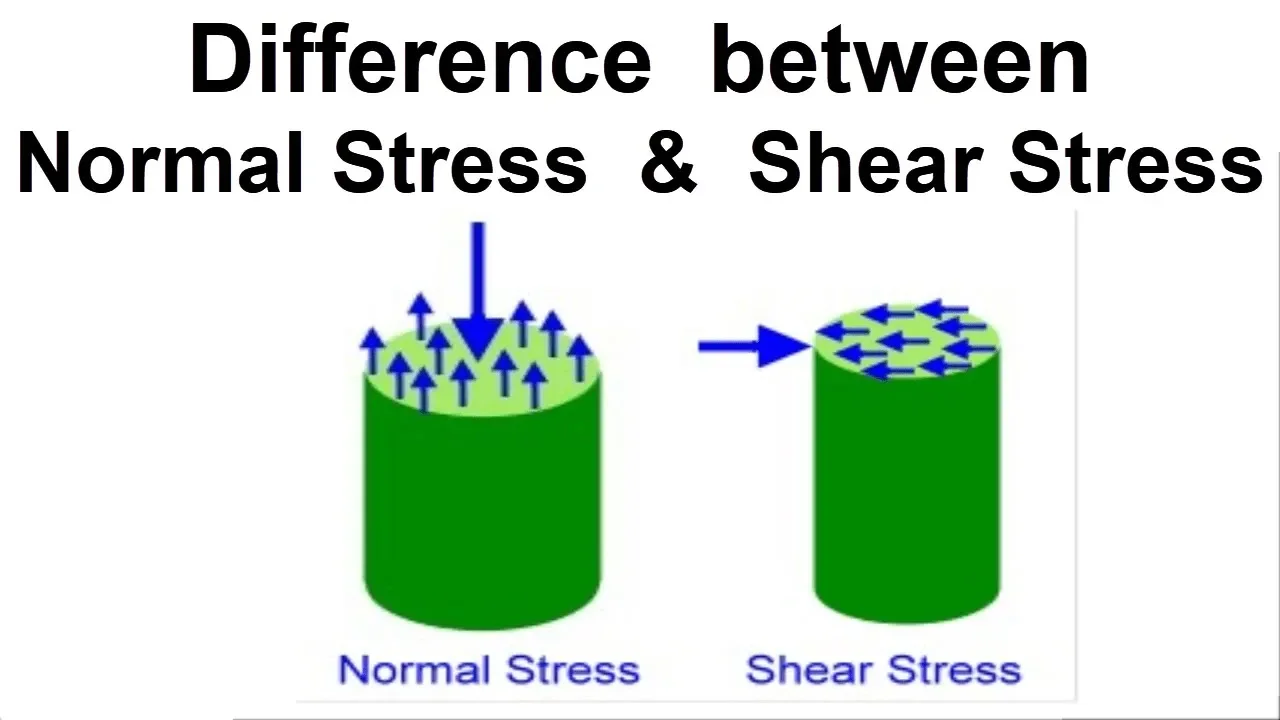
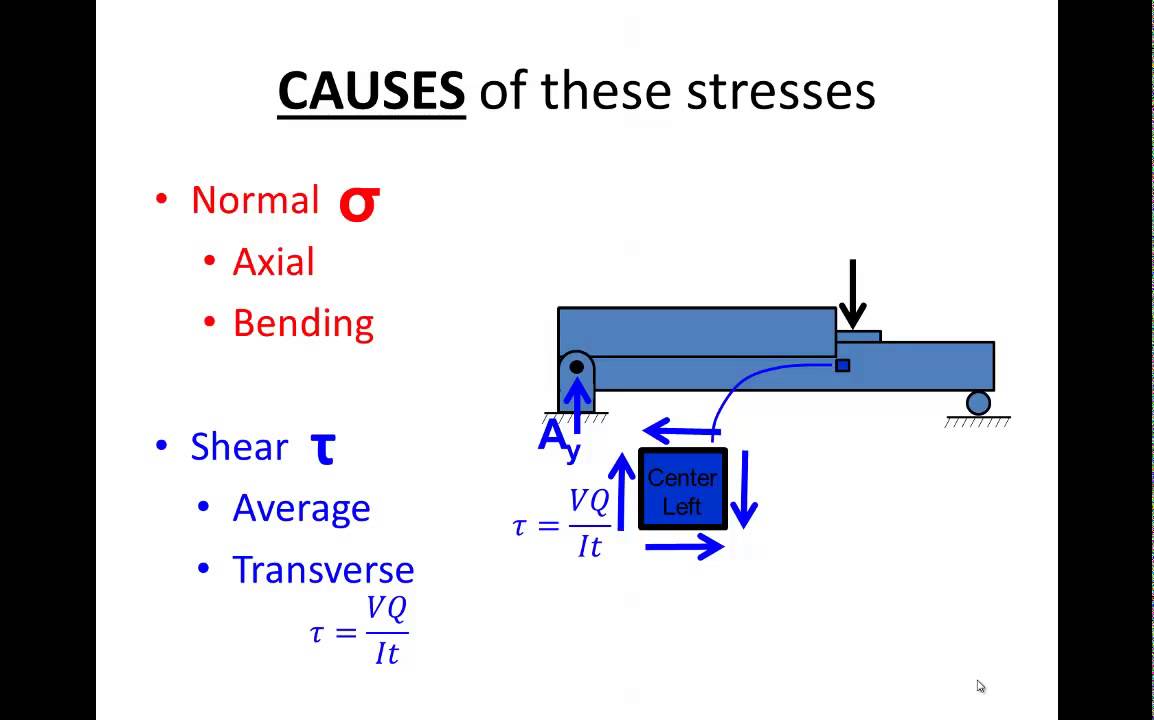
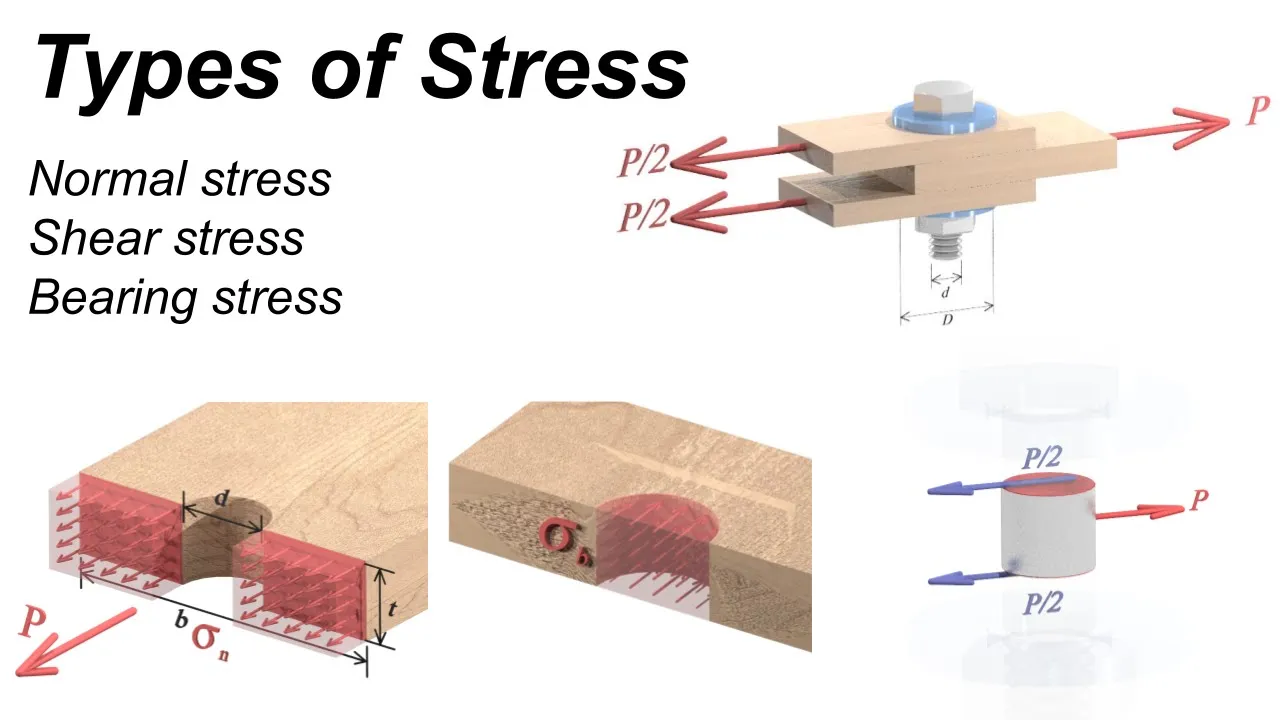
The concept of stress in mechanics, specifically distinguishing between normal stress and shear stress.
Basic calculus concepts, particularly rates of change and velocity gradients.
Newton's laws of motion and the concept of resistance to deformation or flow.
Non-Newtonian fluid behaviors, including shear-thinning, shear-thickening, and viscoelasticity.
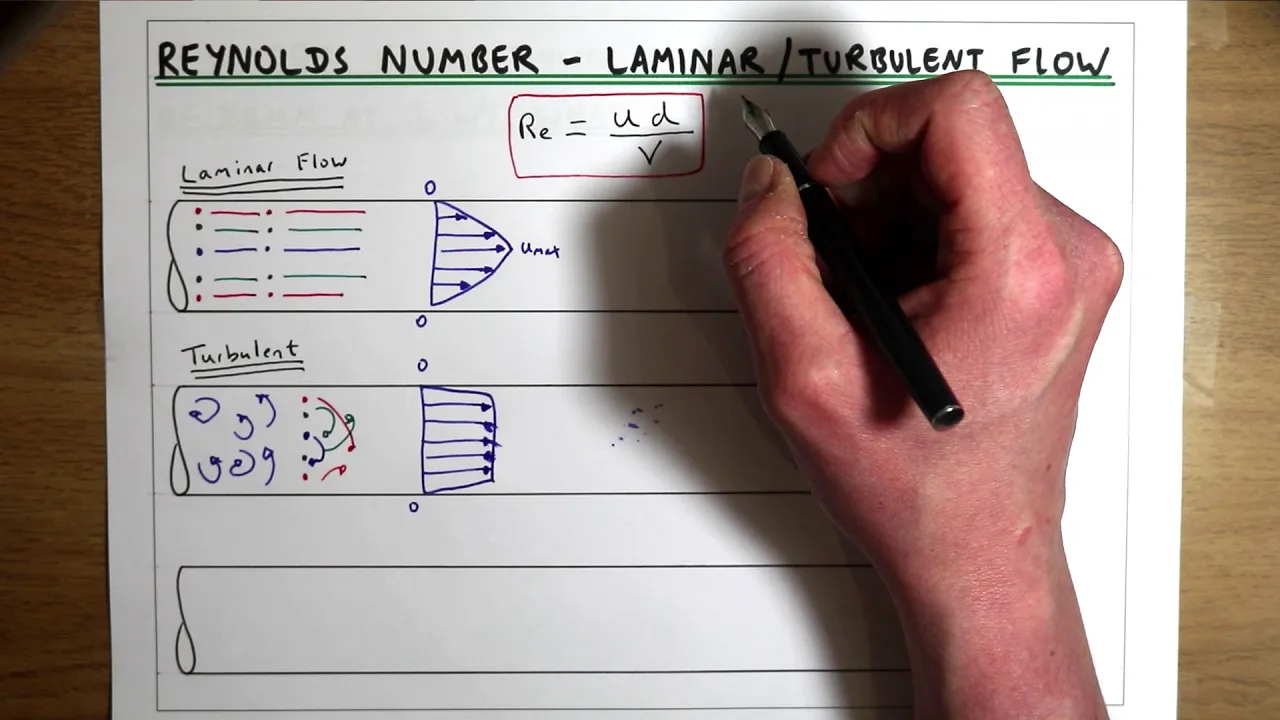
The Reynolds number and its role in distinguishing between laminar and turbulent flow regimes.
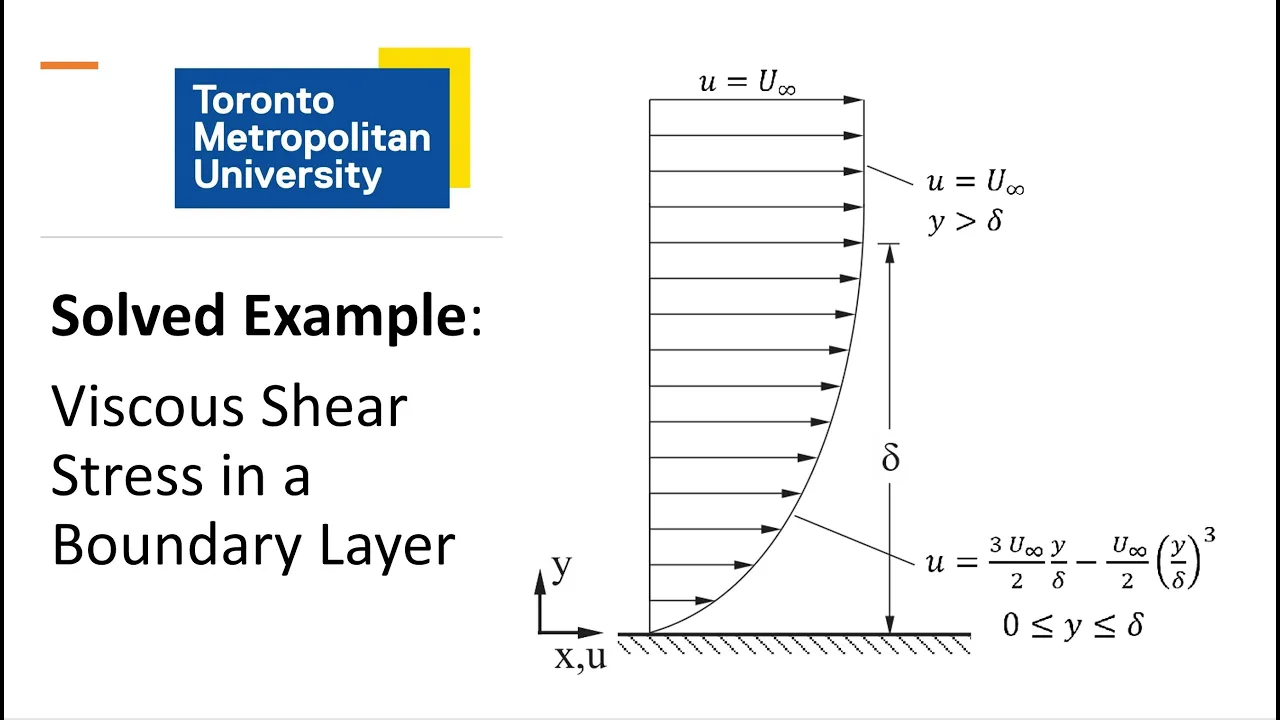
Boundary layer theory and the impact of viscous shear forces on skin friction drag.
The Navier-Stokes equations, which govern viscous fluid flow mathematically.
Industrial applications of rheology, such as lubrication design, polymer processing, and food engineering.
104.4K views1.2Klikes16:39Original Release: 2017-10-08
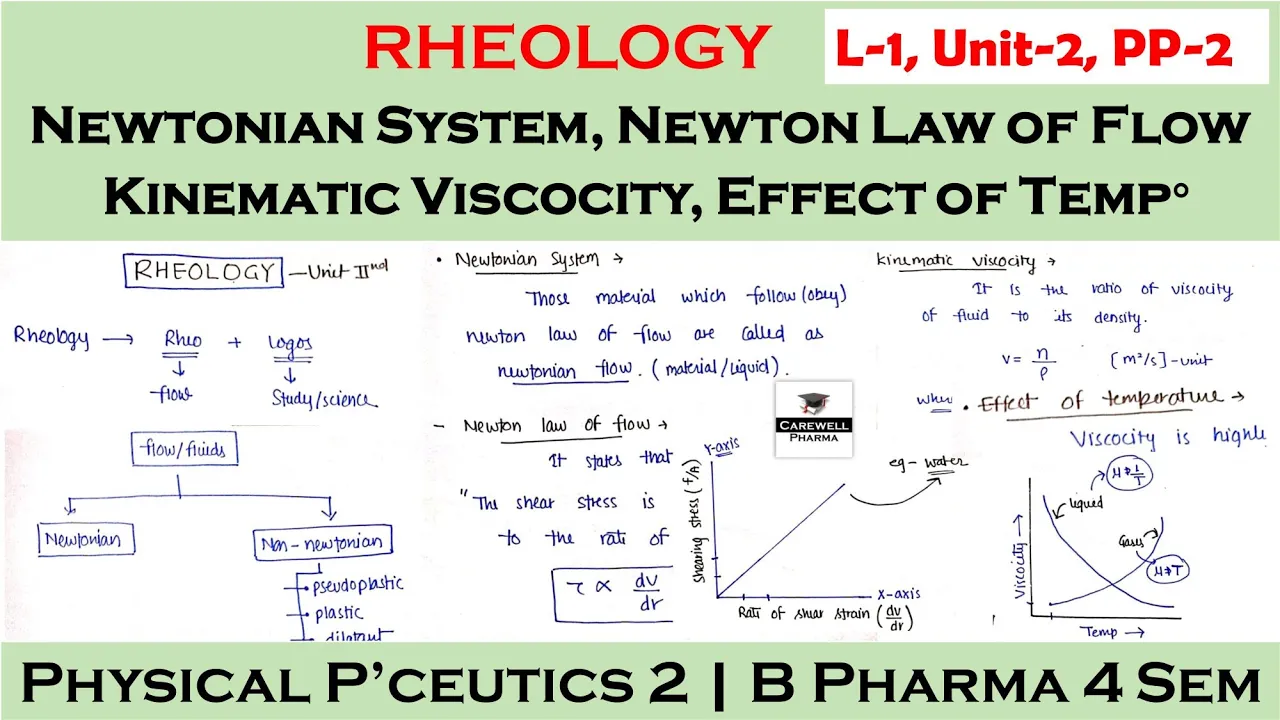
welcome to another video in fluid mechanics in this year we're going to be talking about the property of viscosity so viscosity really really refers to the resistance of the fluid to move so resistance the fluid motion is the best definition that I can come up with all resistance is flow so basically the more viscous a fluid is the more resistance it is going to put against flow and the harder it is for it to actually travel or be transported from one place to another and a very good example of a viscous fluid a very viscous fluid is honey because you know that if you have a jar of honey it's a really bad jar but you can imagine that you have something like you're trying to take it out and then Howdy's just going to try to sleep through it's going to try and fall but you'll notice that it will do so very slowly and that's mainly because the high viscosity it has means that there's a lot of tension in the surface there's a lot of forces acting on it that means that the displacement between the molecules is going to be very slow so that's why honey tends to have such interesting properties so and another example of viscosity which would be low viscosity water because you know that water can fall and flow very easily so that's the basic definition between them and what is discussed where does it come from really because it's a really weird thing well you can imagine that let's say you have two plates let's say you have something like a solid base now let's say that you have some kind of fluid and those are the fluid molecules it could be a liquid or a gas and then you're gonna have another plate on the top and let's say you exert some kind of force you try to remove this plate towards the right how do you think the fluid is gonna move here do you think it's going to move all at the same time well remember that in a fluid like a liquid or a gas the molecules are not strongly bound together as they do in solids so it makes sense that the molecules are going to try to adhere to this surfaces which means that the the molecules that are closer to the surface here at the top which is the one that is moving are going to move first and then they're going to be followed by the molecules that go in the bottom layers so in the end what you're gonna end up looking at it's going to be something like this you're gonna have your plate still moving but your fluid is actually going to be displaced in little layers like this very thin layers almost infinite infinite decimal or basically in the within the same scale as the molecules that compose it so you're gonna have something like this so each of these layers represents a layer fluid and you can imagine that that's something like an infinitesimal width or height so basically what this means is that the fluid at the top closer to the plate that is moving is going to be moving a lot faster than the bottom so the velocity is going to have the profile that looks parabolic you're gonna have something like a parabolic profile so if if this is a y-axis then that means that this is going to be your U axis and our UX is just going to basically be this so the loss of the profile is going to be a lot faster closer to the surface that is moving so this is just how we define this color is just the way in which a fluid would normally move is not really as a hope rather as a series of infinitesimal layers and basically the ones that are closer to the part of the of the system that is moving are going to tend to have a higher velocity the same can be said for something like fluid in a pipe let's say we have a pipe and they're like we have water inside of it well how do you think the water is actually going because obviously the the water closer to the walls is gonna tend to adhere to the wall so obviously in the center we're gonna have the higher velocity so this is also going to look sort of parabolic so basically because this D whatever color the fluid is closer to the wall we're gonna have less motion on those and more motion in towards the center because that's where the least resistance is here we have some sort of friction with the pipe whereas here we have the layer of fluid that only has resistance basically has friction between two other fluid layers so basically this is going to be the profile of a real fluid in a pipe so that's basically the basic definition between behind behind that discovery property now in a more formal way we can essentially describe this custody as being part of something called the shear stress and if you have done any statics or solid mechanics before you know that the shear stress refers to the stress that results from transverse planes basically moving past each other so this is going to be equal to the limit as a small portion of area goes to zero on the following rational relation so we have a change in the force over a change in the area of the fluid so basically this is just going to be a differential the effort over the a that's how we define the infinitesimal change in in the shear stress and basic what this means is that if we have something like this let's say this is an infant decimal area of fluid and then we have some shear stress that results from that then what's going to happen due to these stresses happening at this at the perimeter or at the surface of that little section of volume we're going to end up with a displacement that is going to look something like this so basically our our little column or our little infinitesimal volume is gonna end up looking like this so we're gonna have a little displacement in the X direction which we call Delta X and then this is going to sustain some angle which we're gonna call Delta alpha and basically this is just going to be the shear strain so from the shear stress with the right the relationship for shear strain and because this is happening at a very very small scale we can almost assume that the angle is going to be very small which allows us to use the following approximation tan Delta alpha which is going to be equal to Delta X over Delta Y so that's going to be there and now we can actually develop another relationship from this because we know that well what's going to be this distance depending on we have an infinitesimal velocity happening here so we have let's say we have something like a change in velocity between the between the layers of fluid and then that's going to happen within a specific interval of time and if you look at this expression you know that that's going to be equal to displacement so the displacement here is just going to be equal to these two things so what we can do now is we can write the following relationship we have Delta alpha over delta T equals the Delta Y over Delta Y and all I did here was rearrange this so basically move the delta T to the down denominator of this expression and now if we let Delta t go to zero means that that's going to become an infinitesimal change in time then both expressions are essentially going to become infinitesimal so we can have derivatives DT equals to D u over dy and using this definition we can now define the shear stress in terms of another property which we will call the dynamic viscosity so this is going to lead to the next definition of shear stress which is going to be mu times the velocity gradient which is going to be D over D Y now this might seem a little bit strange but essentially this letter here represents viscosity the full name actually is dynamic viscosity because there's another type of viscosity that we'll look at shortly that is called kinematic viscosity and there isn't really a very large difference between them but this one is the main one that we'll use for analysis so this is viscosity and viscosity usually has units of Newton's per times second per meter squared so those are the units of this Cosley that we're going to be using so what this means is that we're going to have a something that is called a Newtonian fluid so basically if we plot the shear stress against the velocity profile or the velocity gradient we should get a straight line and the gradient of that is going to be the viscosity so this is what we call a Newtonian fluid because it follows this type of assumption here that we just did that the small-angle assumption on the shear strain and this is called Newton's law of fluid forces or fluid motion so or Newton's law viscosity actually this is Newton's law of viscosity that's what it's called so I mean Newtonian fluid we also have fluid or non Newtonian which means that they don't precisely follow this relationship so in those cases we might get curves there are nonlinear something like those two and in that case the viscosity is not going to be represented in terms of this equation it's going to be something a lot more complicated so we can also have non-newtonian fluids so what we're going to be doing now is I'm going to look at some of the properties some of the effects of other properties like temperature or the viscosity so viscosity actually changes with respect to the temperature that the fluid is in and basically according to the type of fluid if we have the liquid it has been found empirically that the viscosity tarnished tends to fall so vehicle and drought this equation and draw this equation and it is basically this so we have mu equals to be e to the C over T and B and C are constants in the case of the gas we're going to have something called the sutherland equation and in that case we're gonna have discuss atif all the forward relationship so these are empirical relationships that have been found through experiment so T to the power 303 over T Posse and once again B and C are just arbitrary constants now the last thing we need to talk about is of course dynamic viscosity which is usually represented by this Greek letter and it is just the ratio of the dynamic viscosity to the density of the fluid which has units of meter square per second now this might seem a little bit strange but in general we use dynamic viscosity this is just a ratio of the viscosity to the density it might be useful in some analysis but this is the real definition of viscosity and the final thing I want to talk about in this video is how do we actually measure the viscosity of a fluid well that's it there's actually a very ingenious way of doing it it's actually quite simple there's something called a rotational viscometer which looks a little bit like this we have a cylindrical drum and then outside of that we're gonna place the fluid so it's gonna become sane like this it's gonna be a very thin layer just to differentiate I'm just gonna shade this area and then that's going to be placed within another hollow cylinder so basically you can imagine that the contact between the surfaces is going to cause some friction between them and then this cylinder at the top is gonna be attached to some piece of string and basically we're going to rotate the outside cylinder at some angular speed Omega and as a result what we're going to have if I draw this more explicitly here if I draw this more explicitly and then we have to fluid between those two surfaces have the fluid here what's going to happen is we're gonna have some shear stresses or originating from that motion so this one outside cells cannot move that omega which means that eventually the cylinder in between those two is going to move at some speed lower than this because remember that if we have some contact like this so if this is the fluid the profile is going to attempt to move a lot faster closer to the outside cylinder that then inside so obviously this cylinder is going to rotate a lot slower than the outside and this string is going to generate some sort of moment reaction or torque reaction m and basically what that's gonna do is we're gonna measure that rotational that torque reaction and we can are gonna calculate the viscosity of that fluid based on the following equation so T here is going to be the thickness of the fluid so the thickness of the fluid layer and this is going to be placed on top of two pi Omega R square of the inner radius so this is going to be the inner radius or the one of the cylinder in between and outer radius is going to be the one that reaches the wall of the outer cylinder so that's going to be R naught and times h which is just a height here so basically this is going to be the formula that allows this allows us to calculate the viscosity of that fluid and this is called a rotational viscometer so this is usually what we use for measuring viscosity and it's a really important thing that we need to do because discus is actually a really important property of fluids and in the next video we're actually gonna go through some examples that show how to use these concepts of shear stress to solve some problems in fluids
Up Next
19:21
BioMEMS Microfluidic Mixers: Laminar Flow Techniques
@MBLabWSU
2.5K views•2015-04-01

30:32
Ultrasonic Transducers: Resonant Frequency Measurement and Horn Design
@imajeenyus42
229.9K views•2017-02-22

54:16
Polymer Environmental Degradation: Mechanisms & Stabilization
@iit
1.8K views•2012-07-10

33:39
How a Student's Question Saved a NYC Skyscraper from Collapse
@veritasium
22.8M views•2025-04-26
Related Study Plans & Knowledge Roadmaps
Structured learning paths in Engineering
engineering
Building Acoustic Levitators: Physics & Arduino
01The Physics of Sound and Standing Waves
02Piezoelectric Transducers and H-Bridge Drivers
03Arduino Programming: Generating 40 kHz Signals
+ 2 more learning modules
14h5 modules
Explore Roadmap
engineering
Building Peltier Cloud Chambers: Particle Tracks
01Cosmic Rays & Cloud Chamber Physics
02Thermoelectric Cooling (TEC) Fundamentals
03Custom Liquid-Cooling Loop Design
+ 2 more learning modules
18h5 modules
Explore Roadmap
engineering
Yagi-Uda Antennas: Modeling, Build & VNA Test
01Introduction to RF and Antenna Fundamentals
02Yagi-Uda Antenna Design Principles
03Antenna Modeling and Simulation in 4NEC2
+ 2 more learning modules
18h5 modules
Explore Roadmap
engineering
ECG Monitor Design: Op-Amps, Filters & Noise
01Electronics & Breadboard Basics
02Op-Amps and Instrumentation Amplifiers
03Bioelectricity and ECG Fundamentals
+ 2 more learning modules
18h5 modules
Explore Roadmap