
![ROBERTA DUARTE [+ SERGIO SACANI] - Flow #144](https://i.ytimg.com/vi/j6ddt36GEXc/maxresdefault.jpg)







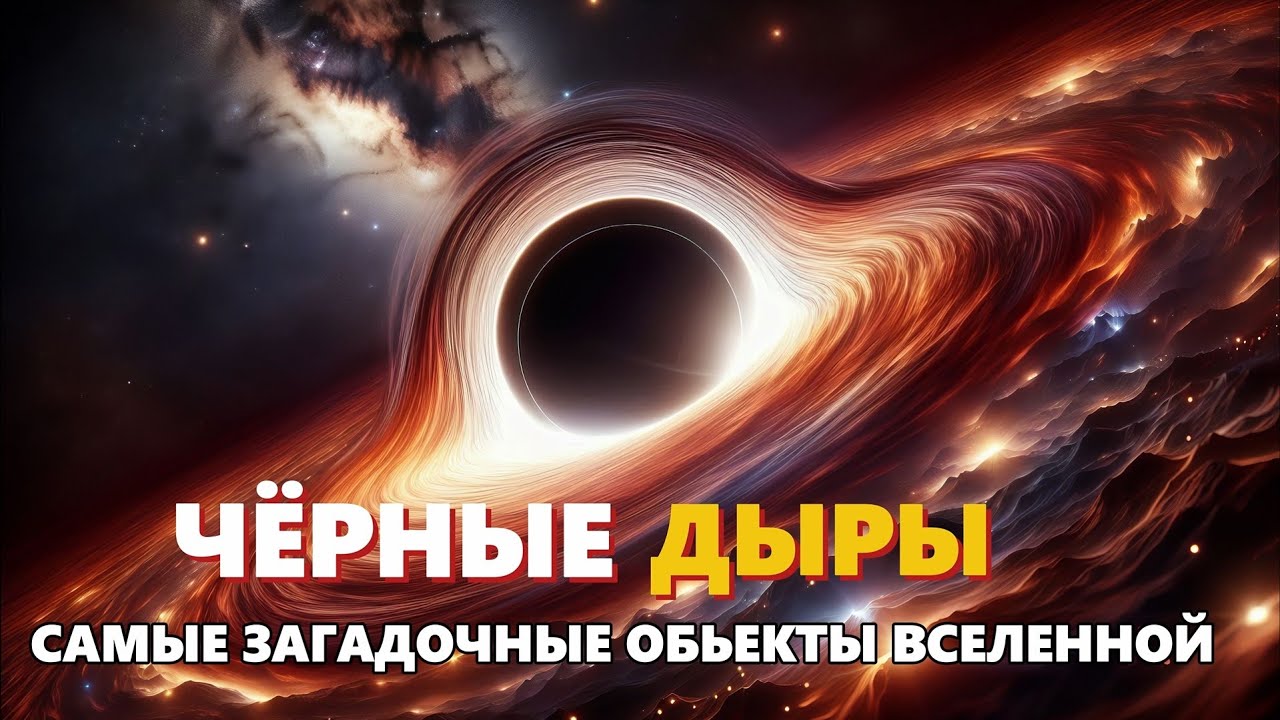
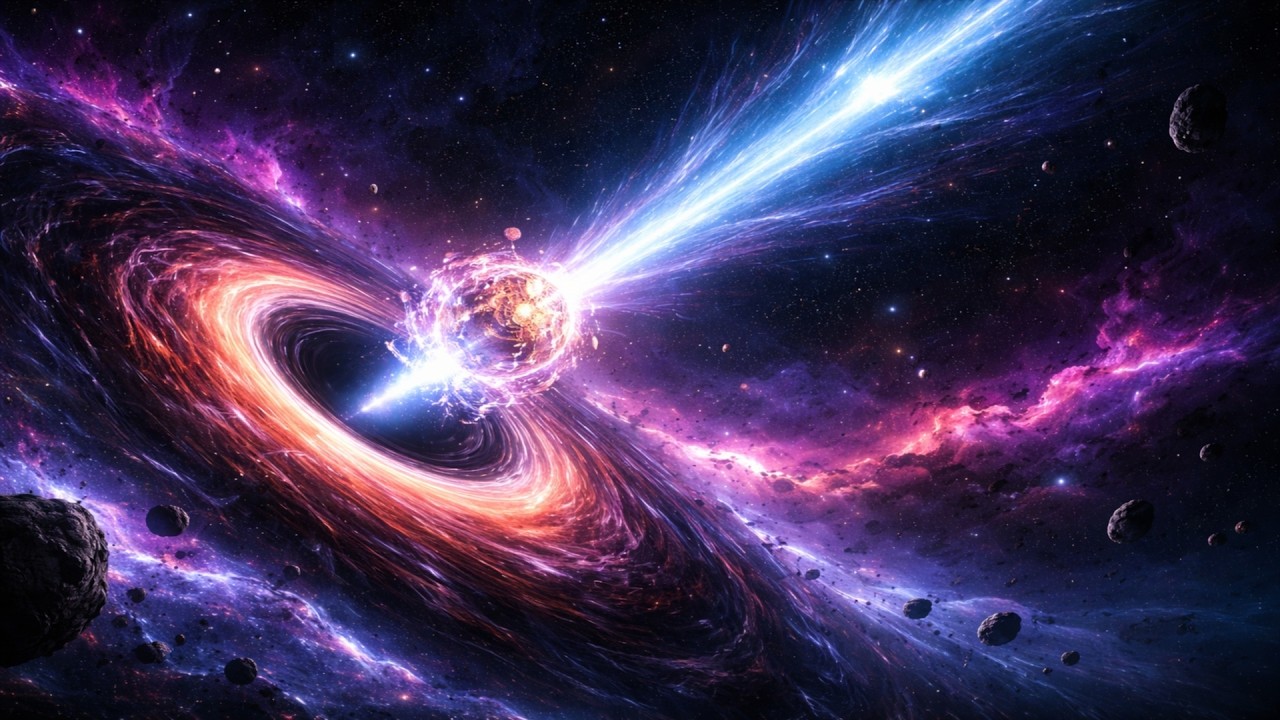






Matter approaching a black hole rarely falls directly towards it in a perfectly straight line. Gas, dust, and stars are already moving through space, carrying angular momentum from their previous orbits. As this material is drawn closer, it begins circling the black hole and spreads into a flattened, rapidly rotating structure called an accretion disc. The same basic principle can be seen in many rotating systems. A cloud collapsing under gravity spins more quickly as it contracts, rather like a skater drawing in their arms. Around a black hole, this motion can become extraordinarily fast. Gas in the innermost regions may travel at a substantial fraction of the speed of light. Angular momentum also prevents the material from simply dropping through the event horizon. To spiral inward, the gas must transfer some of its angular momentum elsewhere. Material losing angular momentum can move closer to the black hole while material gaining it shifts farther outward. This transfer is often described using the familiar language of friction. Although an accretion disc is not rubbing against a solid surface, the gas is ionized into plasma and magnetic fields thread through it. Differences in orbital speed stretch and twist those fields, creating turbulence and stresses that connect neighboring regions of the disc. A process called the magnetorotational instability is thought to play a major role. It allows weak magnetic fields to disturb the rotating plasma, producing magnetohydrodynamic turbulence. This turbulence transports angular momentum outward and permits matter to drift gradually inward.
Black Holes Explained: Event Horizons, Gravity & Quantum Physics
Added:A very warm evening to you wherever in the world you happen to be and welcome to the sleepy scientist. It's lovely to have you here. Tonight we're traveling towards some of the darkest, densest, and most mysterious objects in the universe. Black holes. One quick favor before we begin. If you'd like more of this, our ebook is waiting over on the Sleepy Scientist website. The ideas from these videos given room to breathe on the page, narrated in full with a short quiz at the close of each movement.
There's a QR code on screen for the first 5 minutes and a link in the description to the sleepycientist.com whenever you're ready. Every reader keeps these videos going and I'm grateful to each of you. Before we go further, let me know where in the world you're watching or listening from tonight. I always enjoy seeing just how far these quiet journeys travel. We'll explore how black holes form, why their gravity becomes so extreme, what happens near an event horizon, and how astronomers can study something from which no light can escape. Along the way, we'll look at collapsing stars, curved spaceime, enormous black holes at the centers of galaxies, gravitational waves, hawking radiation, and the unanswered questions that still surround these extraordinary objects. For now, settle in, make yourself comfortable, and let us begin with the simple question at the center of it all. What exactly is a black hole? Black holes are among the most extreme objects in the universe. But the simplest way to understand one is not as a gigantic cosmic vacuum cleaner or even as an object in quite the usual sense. A black hole is a region of spaceime where gravity has become so intense that beyond a particular boundary nothing can return to the outside universe. That boundary is called the event horizon. It is not a solid surface, a shell or a wall floating in space. There is no crust to land on and no edge that could be touched with a hand. Instead, the event horizon is a boundary in the geometry of spaceime itself. Once anything passes through it, every possible path leading into the future remains inside the black hole. Light cannot turn around and escape. Matter cannot reverse course. Even a signal traveling at the fastest speed allowed by nature cannot find a route back out.
This is why the word black is appropriate. It does not mean that the object is composed of a particularly dark substance. It means that light produced inside the event horizon cannot reach a distant observer. Since nothing can carry information outward faster than light, the interior becomes permanently hidden from the surrounding universe. Curiously, black holes are often found within some of the brightest environments in the sky. The black hole itself remains invisible, but matter around it can shine with extraordinary intensity.
Gas drifting towards a black hole usually does not fall directly inward.
It carries motion from its previous orbit and spreads into a rapidly rotating structure called an accretion disc. Within this disc, neighboring streams of gas move at different speeds.
Magnetic fields and turbulence transfer angular momentum through the material, allowing some gas to spiral gradually inward while other material shifts outward. As the gas moves deeper into the black hole's gravitational field, gravitational energy is converted into heat. The inner regions of an accretion disc can become hot enough to release enormous amounts of visible light, ultraviolet radiation, and X-rays. In some black hole systems, narrow jets of energetic particles extend far above and below the accretion disc. These jets do not emerge from inside the event horizon. Instead, they appear to be powered by magnetic fields, rotating gas, and in some cases, the spin of the black hole itself. A black hole therefore manages the slightly impressive trick of being completely dark while helping its surroundings become almost offensively bright.
Astronomers can also detect black holes by watching nearby objects move. A visible star may orbit an unseen companion whose mass is too great to be explained by an ordinary star or a neutron star. Gas can race around an invisible central region at a substantial fraction of the speed of light. Light from a more distant object may be bent and magnified by the black hole's gravity through a phenomenon called gravitational lensing. These effects allow an invisible object to reveal itself indirectly. It is much like noticing wind by watching leaves move except that in this case the leaves may be stars, clouds of superheated gas or entire beams of light traveling across the universe. Despite their reputation, black holes do not automatically swallow everything around them. From a safe distance, their gravity behaves like the gravity of any other object with the same mass.
If the sun could somehow be replaced by a black hole containing exactly one solar mass, the planets would continue following almost the same orbits. Earth would not suddenly plunge inward. The serious inconvenience would be the loss of sunlight, which would rather overshadow the otherwise successful orbital demonstration.
A black hole becomes dangerous only when an object travels close enough for the extreme curvature of spaceime, intense radiation, or powerful tidal forces to matter. Objects can orbit outside the event horizon just as planets orbit stars. Some orbits remain stable, while those too close to the black hole become unstable and eventually carry matter inward. This absence of a solid surface separates black holes from other compact objects. A white dwarf contains matter supported mainly by electron degeneracy pressure. A neutron star contains matter compressed to densities greater than those found in an atomic nucleus and possesses a physical surface. Matter falling onto a neutron star can strike that surface and release energy. A black hole has no known material surface.
Falling matter simply continues through the event horizon. From the outside, the black hole is described by properties such as its mass and rotation. While the detailed structure of whatever has fallen inside becomes inaccessible, black holes also exist across an enormous range of sizes. Stellar mass black holes usually contain several times the mass of the sun and many known examples contain tens of solar masses.
Their event horizons are only tens or hundreds of kilome across. At the centers of galaxies, super massive black holes contain millions or billions of solar masses. Sagittarius A star, the black hole at the center of the Milky Way, contains roughly 4 million solar masses. The black hole at the center of the giant galaxy Messier 87 contains around 6 and 12 billion solar masses.
Strangely, greater mass does not always mean a more violent event horizon. The tidal forces at the horizon of a super massive black hole can be far weaker than those surrounding a much smaller stellar mass black hole. Size matters even among objects famous for ignoring normal expectations. The evidence for black holes is now exceptionally strong.
General relativity predicts them.
Astronomers have measured stars orbiting unseen compact masses. X-ray observatories have studied hot accretion discs. The event horizon telescope has resolved dark shadows surrounded by glowing plasma. Gravitational wave detectors have recorded black holes colliding and merging across the distant universe. Yet the deepest interior remains hidden. General relativity predicts continued collapse towards a singularity where its own equations cease to provide a complete physical description.
Quantum physics must eventually become important, but no experimentally confirmed theory of quantum gravity, yet explains exactly what replaces the classical singularity.
Black holes therefore occupy an unusual position in science. Their existence is no longer seriously in doubt. Yet their innermost nature remains unknown. They are both observed objects and unanswered questions, places where our best understanding of gravity works with extraordinary success before leading us towards the edge of what physics can currently explain. The idea of a black hole did not arrive fully formed in a single moment. It emerged gradually through a long sequence of questions about gravity, light, collapsing stars, and the structure of space and time.
Long before astronomers possessed X-ray telescopes, gravitational wave detectors, or images of glowing matter near an event horizon, a few scientists had already begun wondering whether an object could become so compact that its light would never reach us.
One of the earlier serious proposals came from the English natural philosopher John Michelle in 1783.
Michelle considered the behavior of light using the Newtonian understanding of gravity that dominated science at the time. Isaac Newton had described gravity as an attractive force acting between masses and light was often imagined as a stream of tiny particles. Michelle asked what would happen if a star were both extremely massive and extremely compact.
To explore the question, he used the idea of escape velocity. This is the minimum speed an object needs in order to escape permanently from a gravitational field without receiving any further push. Earth's escape velocity is a little over 11 km/s.
The escape velocity from the surface of the sun is more than 600 km/s.
Michelle realized that if a star was sufficiently dense, its escape velocity might become greater than the speed of light. Under the physical assumptions available to him, light particles launched from such a star would rise, slow, and eventually fall back. The star would therefore be invisible at distance. Michelle called these hypothetical objects dark stars and even suggested that their existence might be inferred by watching visible stars orbit an unseen companion. This was an impressively modern sounding proposal.
Yet Michelle's dark star was not quite a black hole in the present sense. It was still an object with a physical surface described using Newtonian forces in ordinary space and universal time. like was trapped because it lacked enough speed to escape rather than because spacetime itself had developed a one-way boundary. The French mathematician and astronomer Pierre Simon Llass independently considered a similar idea during the 1790s.
Llas described stars whose gravitational attraction would prevent their light from reaching the wider universe. The possibility appeared in early editions of his work on the system of the world, although he later removed it. The removal was understandable. During the early 19th century, the wave theory of light became increasingly successful, and it was unclear how Newtonian gravity should act upon a wave without mass. The dark star idea gradually slipped into the background. It had been an intriguing calculation, but science lacked the deeper theory needed to carry it much further.
That deeper change began with Albert Einstein.
In 1915, Einstein completed the general theory of relativity. Gravity was no longer treated simply as a force pulling objects across a fixed stage of space and time. Instead, matter and energy altered the geometry of spacetime, and objects moved through that curved geometry. This was a profound shift. A planet orbiting a star could now be described as following a natural path through curved spaceime.
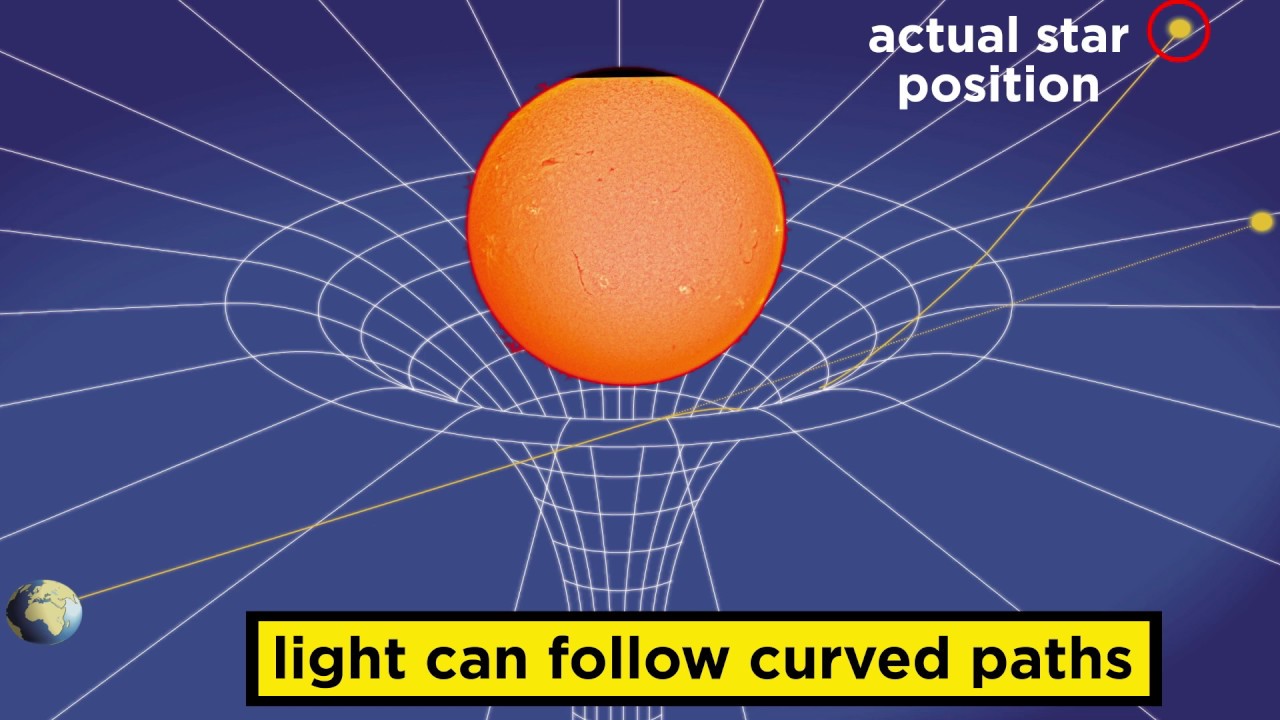
Light could also be bent by gravity, not because photons were ordinary, massive particles, but because light followed the geometry around it. Einstein's theory was mathematically demanding and even Einstein did not immediately understand every kind of object its equations allowed. Only a few months after the final form of the theory appeared, the German physicist Carl Schwarz found the first exact solution to Einstein's field equations. Schwarz was serving in the German army during the first world war when he completed this work. His solution published in 1916 described the spaceime outside an ideal spherical object that possessed no rotation and no electric charge. The Schwarz solution contained a particular distance that later became known as the Schwarz radius. If the mass of an object were compressed within that radius, the geometry seemed to behave strangely.
Some mathematical expressions became infinite or undefined at the boundary.
For many years, this apparent breakdown was treated with suspicion. It was often described as the schwartzild singularity, and some physicists assumed that nature would prevent a real object from ever reaching it. The strange behavior might simply have been a sign that the solution had been pushed beyond its proper range. Part of the confusion came from the coordinates used to describe the spaceime. Coordinates are labels assigned to locations and times and poorly chosen labels can make an ordinary region appear mathematically troublesome. It is rather like using a map of Earth on which every line of longitude meets at the north pole. The map coordinates become awkward there but the planet itself does not tear open.
Later work by physicists including Arthur Edington, George Late, David Finkelstein, Martin Kuskll and George Sus showed that the apparent problem at the Schwarzild radius could be removed by choosing more suitable coordinates.
The boundary was not a physical singularity. It was an event horizon.
The more serious singularity lay deeper inside the mathematical solution where space-time curvature continued to increase and general relativity eventually ceased to provide a complete description.
Even with this improved understanding, another question remained. Could nature actually create such an object?
The answer began to emerge from the study of dying stars. During the 1920s and 1930s, quantum mechanics revealed how certain compact stars could resist gravitational collapse. White dwarves were supported by electron degeneracy pressure, a quantum effect that prevents electrons from being compressed into identical states. The Indian physicist Sramanian Chandra Seeka calculated that this support had a limit. A white dwarf above roughly 1.4 four times the mass of the sun could not remain stable through electron degeneracy pressure alone.
Chandra Sakar's conclusion was initially controversial. Arthur Edington, one of the most respected astronomers of the period, strongly resisted the idea that a star could collapse without finding some new stable state. Yet, the calculation survived. It established a crucial principle. Gravity could overwhelm known forms of pressure when enough mass was compressed into a small region. Neutron stars offered another possible endpoint supported largely by neutron degeneracy pressure and nuclear interactions.
But they too could not support unlimited mass. If a stellar core remained too massive, collapse might continue. In 1939, J. Robert Oppenheimer and Hartland Snder published a model describing the continued collapse of an idealized massive star. Their calculation showed that according to general relativity, the star could contract within its Schwarz radius and form a region from which light could no longer escape. To a distant observer, light from the collapsing surface would become increasingly redshifted and delayed. to matter falling with the star. The crossing of the horizon would occur within a finite amount of time. The object would not halt at the boundary merely because an external observer received its signals more and more slowly. The scientific community did not immediately embrace the result. The model was highly simplified. The second world war soon redirected attention and many physicists regarded complete gravitational collapse as an exotic mathematical possibility.
Interest returned during the 1960s, helped by advances in relativity and the discovery of energetic astronomical sources that demanded new explanations.
Quacers, X-ray sources, and compact stellar remnants made extreme gravity increasingly relevant to observation.
The physicist John Archerold Wheeler became one of the most influential figures in this revival.
During the late 1960s, he popularized the term black hole as a simple and memorable name for a region hidden behind an event horizon.
The phrase had appeared before Wheeler adopted it, but his lectures and writings helped place it firmly within scientific language. By then, the concept had traveled far beyond Michelle's dark star. It was no longer merely an object whose light happened to fall back under Newtonian gravity. It was a region defined by the causal structure of curved spaceime formed through gravitational collapse and bounded by an event horizon. Nearly two centuries of work had transformed a speculative invisible star into one of the clearest and most remarkable predictions of modern physics. Gravity is often described as a force that pulls objects towards one another.
That description works extremely well for everyday situations from falling apples to the motion of planets. But Albert Einstein discovered that it was not the deepest explanation.
In general relativity, gravity is understood as the curvature of spaceime itself.
The path towards this idea began with the equivalence principle. Einstein imagined a person standing inside a sealed room with no windows. If the room were resting on the surface of Earth, the person would feel their feet pressed against the floor by gravity. If the same room were far from every planet and star, but accelerating steadily upwards, the person would feel almost exactly the same pressure beneath their feet. From inside the room, it would be difficult to tell whether the sensation came from gravity or acceleration.
Einstein recognized that this was not merely an interesting coincidence. The local effects of a gravitational field and the local effects of acceleration were deeply connected. A second version of the thought experiment places the room in free fall. If the room and everything inside it fall together, loose objects appear to float. The floor does not need to push them upwards because every part of the room is following the same natural motion through the gravitational field. For a brief period and within a sufficiently small region, gravity seems to disappear.
Astronauts aboard an orbiting spacecraft experience this condition. They are not floating because Earth's gravity has become weak. At the altitude of the International Space Station, gravity remains much of its strength at the surface. The astronauts appear weightless because the spacecraft, the crew, and everything around them are continuously falling together while moving sideways quickly enough to keep missing Earth.
Einstein used these ideas to replace the old picture of gravity as an invisible pulling force. Space and time could no longer be treated as separate fixed backgrounds. Together, they formed spaceime, a four-dimensional geometry whose shape could be altered by mass and energy.
A star changes the geometry around it. A planet moving nearby follows the straightest path available through that curved spaceime. This path is called as geodessic.
On a flat sheet, a straight line is the shortest path between two points. On the curved surface of Earth, the closest equivalent is part of a great circle.
Aircraft traveling over long distances often follow routes that appear curved on a flat map because they are following something closer to the straightest possible path across a sphere. A planet orbiting a star behaves in a related way. It is not being dragged sideways by a mysterious rope. It is moving freely through curved spaceime. The geometry around the star continually changes the direction that counts as straight, producing what appears to us as an orbit. This is an unusual idea because human intuition developed in a world where space-time curvature is normally gentle. We readily notice objects falling, but we do not directly sense the geometry guiding their motion.
General relativity asks us to stop picturing gravity as something added to space and instead see gravity as a feature of space and time. The familiar stretched fabric demonstration can offer a rough introduction. A heavy ball placed on a flexible sheet creates a depression and smaller balls roll along curved paths around it. This suggests how mass can influence motion by changing geometry. However, the analogy has serious limits. The sheet represents only two dimensions of space while real gravity involves three dimensions of space together with time. The smaller balls roll into the depression because Earth's gravity pulls them downwards, meaning that the demonstration quietly uses gravity to explain gravity. It can provide a visual hint, but it should not be mistaken for a literal model of the universe. The curvature of time is just as important as the curvature of space.
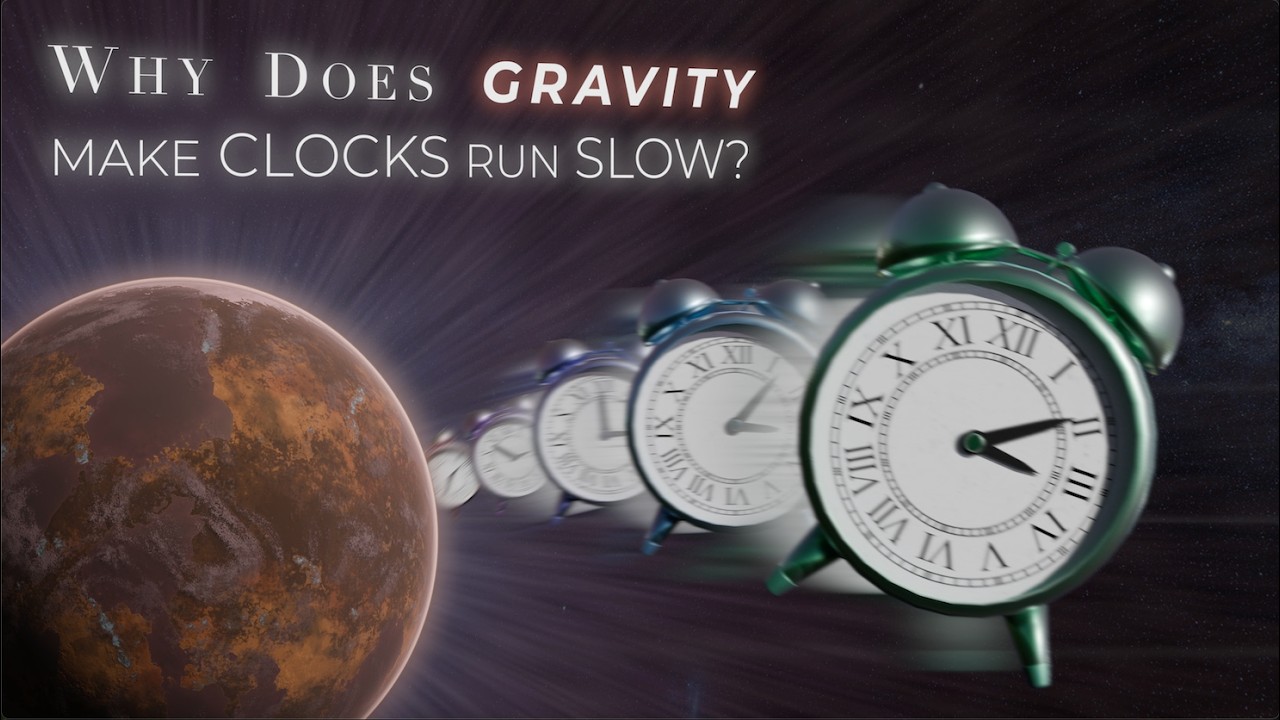
Clocks run at different rates in regions with different gravitational conditions.
A clock closer to a massive object runs more slowly relative to a clock farther away. This gravitational time dilation has been measured with extremely precise clocks and must be included in technologies such as satellite navigation. Near a black hole, the effect becomes enormous. Space and time are curved so strongly that the possible paths followed by matter and light are altered in ways that have no close equivalent in ordinary life. Light follows this geometry even though photons have no rest mass. In Newtonian language, it might seem puzzling that gravity can affect something without mass. General relativity removes the puzzle. Light travels along geodeics through spaceime. And if spaceime is curved, the path of light is curved as well. This produces gravitational lensing. A massive star, galaxy, cluster of galaxies or black hole can bend light traveling from a more distant source.
The result may be a distorted image, several images of the same object, a bright arc, or a nearly complete ring known as an Einstein ring. The bending becomes especially dramatic close to a black hole. Light may curve around the object, orbit temporarily along unstable paths or cross the event horizon, and never reach the outside universe. It is sometimes said that a black hole traps light because its escape velocity exceeds the speed of light. This language can be useful as an approximate bridge from Newtonian gravity, but it does not provide the full relativistic explanation.
The problem is not that light tries to escape and simply moves too slowly.
Light always moves locally at the speed of light. At the event horizon, spaceime is curved so severely that every future directed path points inward or remains on the boundary. There is no outward route available even to light traveling at nature's maximum permitted speed. The size of the event horizon is connected to the black hole's mass through the Schwarz radius. For a non-rotating black hole, the Schwarz radius is approximately 3 km for every solar mass.
A black hole containing 10 times the mass of the sun would therefore have a Schwarz radius of roughly 30 km. its event horizon would be about 60 km from one side to the other. This distinction between radius and diameter is worth keeping clear. 3 km per solar mass refers to the distance from the center to the event horizon, not the full width of the black hole. The same calculation can be applied to familiar objects.
Although neither the sun nor earth is in danger of becoming a black hole under present conditions. To place the sun inside its Schwarz radius, its entire mass would need to be compressed into a sphere roughly 6 km across. Earth would need to be compressed until its full diameter was less than 2 cm. The planet's mass would remain the same, but its matter would be confined to a region smaller than an ordinary marble.
Achieving this would require circumstances far beyond anything available naturally on Earth, which is perhaps reassuring for anyone with plans later in the week. These comparisons show that black hole formation depends not only on mass, but on how tightly that mass is compressed. A diffuse cloud may contain enormous mass without forming a black hole because it extends across a vast region. The same mass forced inside its Schwarz shell radius creates an event horizon. One of the clearest ways to understand this boundary is through light cones. At every event in spaceime, a light cone represents the directions in which light and slower objects can travel into the future or from the past. Far from a black hole, future paths can point in many spatial directions. An object may move towards the black hole, away from it, or sideways around it, provided its motion remains slower than light. As the object approaches the horizon, the light cones tilt inward. Outward travel becomes increasingly difficult, not because of a wind or a physical current, but because the structure of possible future motion is changing. At the event horizon, the outward edge of the future light cone lies along the horizon itself. Inside it, every future directed path points towards the interior.
Turning around would require moving outside the light cone, which would mean traveling faster than light and violating the causal structure of relativity.
The event horizon is therefore not a barrier that pushes objects back or drags them through by contact. It is a boundary beyond which the future has only inward destinations.
This geometric view explains what makes black holes so distinct. They are not merely objects with exceptionally strong versions of ordinary gravity. They are regions where the curvature of spaceime changes the available paths of matter, light, and information.
General relativity turns gravity from a force acting within the universe into part of the architecture of the universe around a black hole. That architecture bends so deeply that one direction becomes inescapable and the ordinary meaning of outward movement finally disappears.
A black hole is often drawn as a dark sphere hanging in space surrounded by a glowing ring of gas. It is a useful image, but it can also blur together several very different features. The black hole itself, the event horizon, the photon sphere, the accretion disc, the shadow, and the singularity are not different names for the same thing. Each describes a separate part of the physics. The most important boundary is the event horizon. This is the point beyond which no information can reach a distant observer. It is not a surface made from matter and it does not resemble the crust of a planet or the outer layers of a star. There is no solid shell waiting to be struck by anything that falls inward. Instead, the event horizon is a boundary within spaceime. Outside it, some future directed paths can still lead away from the black hole. Inside it, every possible route through the future remains within the interior. Light may still travel locally at the speed of light, but the geometry no longer provides an outward path capable of carrying that light back to the wider universe. The simplest mathematical model of a black hole is known as a Schwarz black hole. It is named after Carl Schwarz who found the first exact black hole solution to Albert Einstein's general theory of relativity. This idealized object possesses mass but has no rotation and no electric charge. Real black holes are expected to rotate because the stars and clouds from which they form already contain angular momentum. However, the Schwarz model remains extremely useful because it presents the basic structure without the additional complications produced by spin. It is the black hole equivalent of beginning with a perfectly smooth sphere before considering all the ways nature prefers to make things slightly less cooperative.
For a Schwarz black hole, the event horizon lies at the Schwarz radius. Its size depends directly on the mass of the black hole. Increasing the mass increases the radius, although the horizon itself remains an empty boundary rather than a material layer. Farther outside lies another important region called the photon sphere. Around a non-rotating black hole, the photon sphere is located at 1 and a half times the Schwarz radius.
At this distance, light can move along circular paths around the black hole.
These circular paths are highly unstable. A perfectly placed ray of light could continue orbiting, but the slightest disturbance would change its fate. One small deviation might send it outward towards escape. Another might carry it inward across the event horizon. For this reason, the photon sphere should not be imagined as a permanent ring filled neatly with trapped light.
Photons may circle the black hole several times, but stable long-term orbits are not available there. The region strongly bends light passing nearby and contributes to the complicated appearance of a black hole surrounded by luminous matter.
Matter behaves differently because massive objects cannot follow exactly the same paths as light. Gas, dust, planets, or spacecraft can orbit farther out. But there is an inner limit beyond which circular matter orbits are no longer stable. This boundary is called the innermost stable circular orbit.
For a non-rotating black hole, the innermost stable circular orbit lies at three times the Schwarz radius. Matter outside this distance may remain in a stable circular orbit. Once it travels inside, small disturbances tend to grow and the material begins plunging towards the event horizon. This limit plays an important role in the structure of an accretion disc. Gas spiraling inward releases increasing amounts of energy as it descends into the black hole's gravitational field. Near the innermost stable circular orbit, the gas reaches tremendous speeds and temperatures.
Much of the radiation produced by a feeding black hole comes from these innermost regions of the disc. The exact position of the innermost stable circular orbit changes when a black hole rotates around a rapidly spinning black hole.
Material traveling in the same direction as the rotation can orbit closer to the event horizon. This allows more gravitational energy to be converted into heat and radiation before the matter falls inward. The dark region seen in images of a black hole is usually called the black hole shadow.
This shadow is not a direct picture of the event horizon and it is not an image of the singularity.
It is a larger dark area produced by the capture of light and the severe bending of surrounding light rays. Some photons emitted by hot gas travel towards the observer. Others are bent around the black hole. Some circle it before escaping, while many cross the event horizon and disappear from external view. Together, these paths create a bright ring around a central darkness.
Because gravitational lensing enlarges the apparent dark region, the shadow is wider than the event horizon itself. For a Schwarz black hole, the shadow has a radius of roughly 2 and 1/2 times the Schwarz radius when viewed from a great distance. This distinction matters when examining the images created by the event horizon telescope. The dark center does not mark the exact physical size of the horizon. It is the observational result of light moving through sharply curved spaceime around the black hole.
The event horizon telescopes images of the object at the center of the galaxy, Messia 87, and Sagittarius, a star at the center of the Milky Way, show glowing radio emission surrounding a dark shadow. They reveal matter and magnetic fields close to the horizon, but they do not allow anyone to see through it. The apparent horizon is another related, but distinct idea. An event horizon is defined using the entire future history of spaceime.
To determine with absolute certainty whether an event lies inside an event horizon, it would be necessary to know whether light from that event could ever escape, even in the distant future. An apparent horizon is defined more locally. It marks a surface from which outward directed light is no longer expanding away at that moment. In a perfectly settled and unchanging black hole, the apparent horizon and event horizon may coincide. During a collapse or merger, they can differ. At the center of the classical Schwarz solution lies the singularity.
General relativity predicts that matter falling inward reaches a region where space-time curvature becomes unbounded.
Familiar quantities within the theory cease to remain well behaved, and the equations can no longer provide a complete account of what occurs. The singularity should not be treated as a small ball of infinitely dense matter that has been directly observed. It is better understood as a warning from the mathematics that classical general relativity has reached its limit. A theory of quantum gravity may replace the singularity with a different physical state, but no experimentally confirmed description yet exists. Around all of this may lie an accretion disc, a corona of extremely hot particles, magnetic fields, winds, and powerful jets. None of these structures is part of the black hole itself. They belong to the surrounding environment. The jets do not emerge from inside the event horizon. They are launched from the region outside it where rotating plasma and magnetic fields can redirect energy into narrow beams traveling away from the black hole. In active galaxies, these jets may extend for thousands or even millions of light years. A black hole system can therefore be one of the brightest objects in the observable universe. The horizon emits no ordinary light, yet the matter outside it may glow more intensely than entire galaxies. Understanding the anatomy of a black hole means keeping these features separate. The event horizon is the boundary of no return. The photon sphere contains unstable paths for light. The innermost stable circular orbit limits stable matter orbits. The shadow is the enlarged darkness created by captured and distorted light. The accretion disc is hot matter outside the black hole.
The singularity is where classical theory ceases to give a complete answer.
Together, these regions create the strange appearance associated with black holes, but they do not form a single solid object. A black hole is better understood as a structure within spaceime surrounded by matter whose light allows the hidden geometry to reveal itself. A massive star spends most of its life in a delicate balance between two opposing tendencies.
Gravity pulls every layer inward, trying to compress the star into a smaller and denser object.
At the same time, the tremendous heat generated by nuclear fusion creates outward pressure that resists the collapse. This balance is known as hydrostatic equilibrium. It is not a motionless condition, but a stable compromise maintained across millions of years. Gravity never stops pulling inward, and the core must continually release energy to prevent the star from contracting beneath its own weight.
The process begins mainly with hydrogen nuclei combining to form helium. Fusion converts a small amount of mass into energy. And that energy gradually works its way outward through the star before escaping as light and heat. A very massive star consumes its nuclear fuel much faster than a smaller star. Its stronger gravity compresses the core more intensely, raising the temperature and accelerating the rate of fusion.
Despite possessing far more fuel than the sun, it may survive for only a few million years rather than many billions.
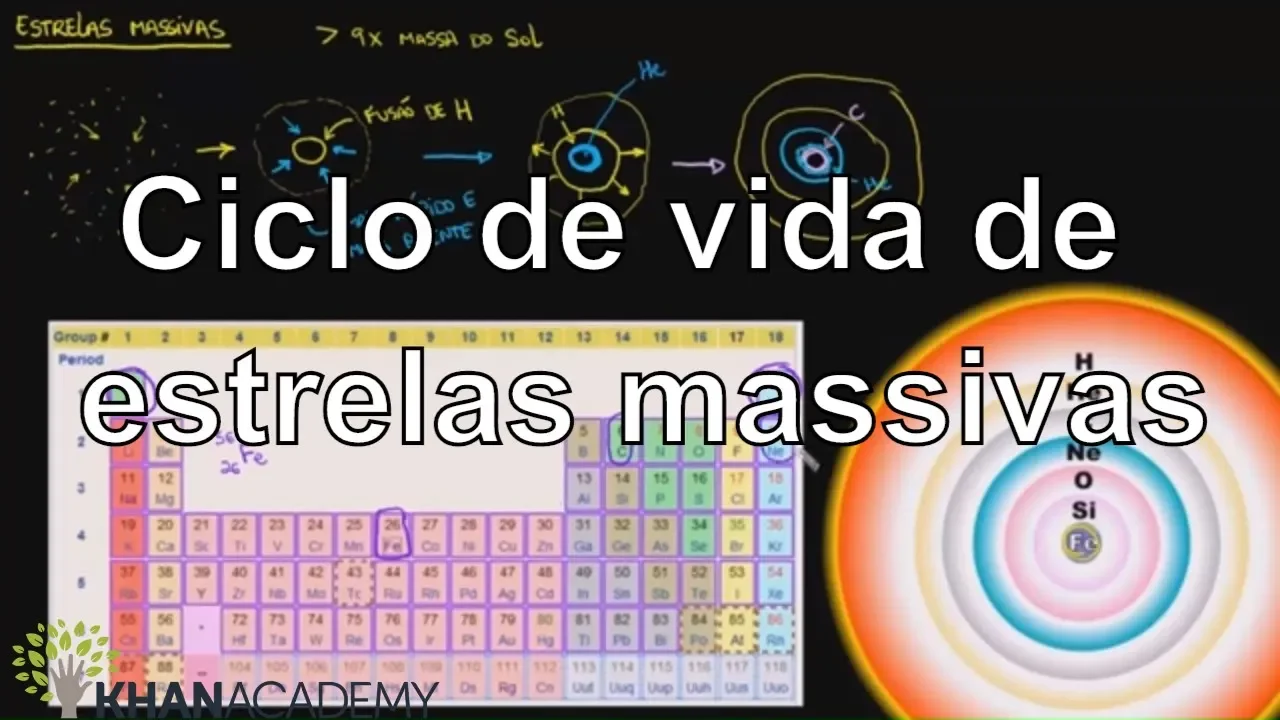
When hydrogen in the core becomes depleted, the balance changes. The core contracts and grows hotter, allowing helium to fuse into heavier elements such as carbon and oxygen. In sufficiently massive stars, this sequence continues through several stages. Carbon, neon, oxygen, and silicon can all become nuclear fuels under the right conditions. Each stage operates at a higher temperature and lasts for a shorter period than the one before it. Hydrogen burning may continue for millions of years, while the final silicon burning stage may last only days. The aging star develops a layered interior, sometimes compared to an onion. Different shells fuse different elements surrounding an increasingly heavy core. At the center, silicon fusion eventually creates elements belonging to the iron group, particularly iron and nickel. This marks a decisive limit. Fusion releases energy when light atomic nuclei combine into more tightly bound nuclei. But iron lies near the peak of nuclear binding energy.
Fusing iron into still heavier elements does not provide the star with a useful new supply of energy. Instead, it requires energy. The core can no longer support itself by beginning another profitable round of ordinary fusion. As iron group material accumulates, gravity gains the advantage. Quantum mechanics provides one final source of resistance.
Electrons are particles known as firmians and the poly exclusion principle prevents identical firmians from occupying precisely the same quantum state. When matter is compressed this restriction creates electron degeneracy pressure. Electron degeneracy pressure supports white dwarves but it cannot resist any amount of gravity.
Subramanion Chandra Seca showed that a white dwarf has an upper stable mass of roughly 1.4 four times the mass of the sun, although the precise value depends on its composition and rotation. A collapsing massive stellar core can pass beyond this limit. Electrons are driven into protons, producing neutrons and neutrinos. The core contracts from something roughly comparable in size to Earth into an object only a few tens of kilometers across. Neutron degeneracy pressure and the short-range behavior of the strong nuclear interaction can halt the collapse temporarily creating a neutron star.
The material inside becomes extraordinarily dense. A small amount of it would possess an almost unreasonable mass by everyday standards. Although fortunately neutron star matter is not available by the teaspoon.
The collapse releases an enormous amount of gravitational energy. much of it carried away by neutrinos. The inner core stiffens and rebounds while shock waves move outward through the surrounding layers.
Nutrinos and turbulent motion can help revive the shock, producing a core collapse supernova. The explosion may eject much of the star into space, creating heavy elements and enriching the surrounding interstellar gas.
What remains depends strongly on the mass of the core and the amount of material successfully expelled. A neutron star also has an upper mass. The corresponding limit is known as the Tolman, Oppenheimer, and Vulov limit named after Richard Tolman, J. Robert Oppenheimer and George Vulov. Unlike the Chandra Seca limit, its exact value remains uncertain because physicists do not yet fully understand how matter behaves at the extreme densities found inside neutron stars. Observations and theoretical models suggest that the maximum stable neutron star mass is probably a little above twice the mass of the sun. Although the precise boundary depends on the equation of state of ultra dense matter. If the surviving core exceeds this limit, no known pressure can maintain a stable neutron star. Collapse continues and an event horizon forms. The result is a stellar mass black hole. This process does not always produce a spectacular visible explosion. In some stars, the outward shock may be too weak to eject the surrounding material. Matter that initially moves outward can fall back onto the compact remnant, increasing its mass. This process is called fallback and may transform a newly formed neutron star into a black hole. Some very massive stars may undergo direct collapse. Their cores form black holes while much of the surrounding star falls inward producing a faint or failed supernova rather than the brilliant explosion usually associated with stellar death. The final outcome cannot be predicted from the stars birth mass alone. Chemical composition affects the strength of stellar winds. Stars containing fewer heavy elements often lose less mass during their lives and may therefore leave heavier remnants.
Rotation can alter internal mixing and the structure of the collapsing core.
Magnetic fields can transfer angular momentum and influence the explosion. A companion star may remove the outer layers, donate new material, or merge with the star entirely. Binary interaction is especially important because many massive stars live in pairs or larger systems. One star may transfer gas to the other, changing both of their masses and evolutionary paths. Two stars may merge before either collapses. A black hole may later gain additional mass from a companion or eventually collide with another black hole. Stellar mass black holes commonly contain several to several tens of times the mass of the sun. Some are known through X-ray binary systems in which gas from a companion star becomes heated as it spirals inward. Others remain dark and isolated revealing themselves only through their gravitational influence.
The laser interpherometer gravitational wave observatory in Virgo have detected merges involving black holes considerably heavier than many examples previously known from X-ray astronomy. These observations have shown that nature creates a broad population of stellar black holes through several different evolutionary routes. Their masses preserve clues about the lives of the stars that formed them. Stella winds, supernova explosions, direct collapse, fall back, binary mass transfer, and mergers all leave signatures in the final population.
A stellar black hole is therefore not produced by a single universal sequence.
It is the outcome of gravity gradually overcoming every available source of support shaped by the stars mass, composition, rotation, companions, and final moments. The star shines because gravity compresses matter until fusion begins.
Much later, when fusion can no longer maintain the balance and quantum pressure reaches its limit, the same gravity may complete the process by closing an event horizon around what remains. Black holes are usually grouped into families according to their mass.
Although the boundaries between those families are not perfectly sharp, the underlying object is the same in every case, a region of spaceime surrounded by an event horizon.
What changes is the amount of mass contained within that horizon, the way the black hole may have formed, and the environment in which it is found. The most familiar group is made up of stellar mass black holes. These objects are generally produced when the core of a massive star collapses after exhausting the fuel needed to support itself. Their masses typically range from several times the mass of the sun to several tens of solar masses, although some examples extend beyond that broad range. Many stellar mass black holes are discovered in binary systems. A visible star may orbit an unseen companion, allowing astronomers to estimate the hidden object's mass from the stars motion. If gas flows from the companion towards the black hole, it may form a hot accretion disc and release strong X-rays. Other stellar mass black holes are detected when two of them merge. The laser interferometer, gravitational wave observatory, Virgo, and the Kameoka gravitational wave detector have recorded the changing ripples in spaceime produced by many such collisions. These observations have revealed black holes that would have remained almost completely invisible through ordinary light. Between stellar mass and super massive black holes lies a much less clearly understood group known as intermediate mass black holes.
These may contain hundreds, thousands, or even hundreds of thousands of times the mass of the sun.
Intermediate mass black holes are scientifically important because they may help connect the deaths of individual stars with the growth of the enormous black holes found in galactic centers. Yet, they have also proved difficult to confirm. Some candidates appear as ultral luminous x-ray sources which shine more brightly than ordinary stellar systems are expected to manage.
Others are inferred from the motion of stars inside dense clusters where an unseen central mass may be influencing nearby orbits. Gravitational wave observations have also revealed mergers that may involve unusually massive stellar black holes or objects entering the intermediate range. The event known as gravitational wave 190521 produced a remnant containing roughly 140 solar masses, making it one of the strongest examples of a black hole entering the intermediate category.
Even so, many individual candidates remain debated. Dense clusters contain large numbers of stars and stellar remnants whose combined gravity can sometimes imitate the effects of a single central black hole.
Astronomers therefore look for several independent lines of evidence before treating a candidate as secure. At the largest end of the scale are super massive black holes. These contain millions or billions of times the mass of the sun and are found at the centers of most large galaxies. Sagittarius a star at the center of the Milky Way contains roughly 4 million solar masses.
The black hole in the galaxy Messia 87 contains around 6 12 billion solar masses. Even larger examples have been inferred in exceptionally massive galaxies and luminous quazars. Super massive black holes are not simply scaled up stellar remnants with a fully understood origin. Some may have grown from smaller seeds through accretion and mergers while others may have begun as the direct collapse of very large gas clouds. Their early formation remains one of the major unanswered questions in astronomy. A black hole's family does not determine whether it is bright or dark. That depends mainly on its surroundings. An actively feeding black hole may be surrounded by glowing gas, intense x-rays, magnetic fields, winds, and relativistic jets. A dormant black hole receives very little material and may produce almost no detectable radiation.
Sagittarius A star is relatively quiet compared with the active black holes powering quazers even though it remains a super massive object. The black hole has not become less massive. It simply has less nearby material falling towards it.
Dormant stellar mass black holes may be especially difficult to find when they have no companion star and no accretion disc. They may drift through the galaxy almost completely unseen, revealing themselves only through gravitational lensing or a chance interaction with surrounding matter.
Not every black hole is expected to remain at the center of a system.
Wandering black holes may move through the outskirts of galaxies or between dense groups of stars. Galaxy mergers can bring two central black holes together. Before they finally merge, gravitational interactions may displace one or both from the new galactic center. The merger itself can emit gravitational waves unevenly, giving the resulting black hole a recoil velocity like a powerful cosmic kick. In extreme cases, this recoil could send a black hole far from the center of its galaxy or even eject it entirely. Smaller black holes may also be scattered through interactions in dense star clusters, producing a hidden population moving between the stars. Another proposed family is far more speculative.
Primordial black holes would not have formed from dying stars at all. They may have arisen during the early universe when unusually dense regions could in theory have collapsed directly under their own gravity.
Steven Hawking and other physicists explored this possibility during the 20th century. Depending on their formation conditions, primordial black holes might have possessed an enormous range of masses from far below that of an asteroid to many times the mass of the sun. They have also been proposed as a possible component of dark matter.
However, observations of gravitational lensing, the cosmic microwave background, stellar systems, and Hawking radiation have restricted many possible mass ranges. No primordial black hole has been confirmed. At an even smaller scale, a hypothetical microscopic black holes. Some speculative theories involving additional dimensions of space have suggested that extremely high energy particle collisions might briefly create tiny horizons.
Particle accelerators such as the Large Hadron Collider have searched for effects associated with these ideas, but no evidence for microscopic black holes has appeared. Under conventional physics, the collision energies available to humanity are nowhere near sufficient to create a lasting dangerous black hole. If microscopic black holes could form under such exotic conditions, Hawking radiation would be expected to make them evaporate extremely quickly.
Nature also produces cosmic ray collisions at energies beyond those achieved in laboratories, and Earth has endured them for billions of years without becoming noticeably more black hole-shaped.
The different families of black holes therefore range from wellestablished stellar and super massive objects to uncertain intermediate populations and highly speculative primordial or microscopic possibilities. Together they show that black holes are not confined to a single size, origin or environment, but may occupy an extraordinary range across the universe. Matter approaching a black hole rarely falls directly towards it in a perfectly straight line.
Gas, dust, and stars are already moving through space, carrying angular momentum from their previous orbits. As this material is drawn closer, it begins circling the black hole and spreads into a flattened, rapidly rotating structure called an accretion disc. The same basic principle can be seen in many rotating systems. A cloud collapsing under gravity spins more quickly as it contracts, rather like a skater drawing in their arms. Around a black hole, this motion can become extraordinarily fast.
Gas in the innermost regions may travel at a substantial fraction of the speed of light. Angular momentum also prevents the material from simply dropping through the event horizon. To spiral inward, the gas must transfer some of its angular momentum elsewhere. Material losing angular momentum can move closer to the black hole while material gaining it shifts farther outward. This transfer is often described using the familiar language of friction. Although an accretion disc is not rubbing against a solid surface, the gas is ionized into plasma and magnetic fields thread through it, differences in orbital speed stretch and twist those fields, creating turbulence and stresses that connect neighboring regions of the disc. A process called the magneto rotational instability is thought to play a major role. It allows weak magnetic fields to disturb the rotating plasma producing magneto hydronamic turbulence.
This turbulence transports angular momentum outward and permits matter to drift gradually inward.
The word magnetohydrodnamic simply combines magnetic fields with the motion of electrically conducting fluids. It sounds rather grand for gas behaving badly around a black hole, but it describes one of the central mechanisms governing accretion.
In 1973, Nikolai Shakura and Rashidv developed one of the most influential models of a thin accretion disc. Their approach represented the complicated internal stresses of the disc through a simplified parameter and connected them to measurable properties such as temperature, brightness, and the distribution of emitted energy. The Shakura and Sununi of model remains an important foundation for understanding many actively feeding black holes. Real discs may become thick, turbulent, warped, magnetically dominated, or otherwise less cooperative than the ideal model. But the basic framework reveals why accretion can be such a powerful source of radiation. As gas moves inward, it falls deeper into the black hole's gravitational field.
Gravitational potential energy is converted into motion, heat, and electromagnetic radiation.
The disc becomes progressively hotter towards its inner edge. Black hole accretion can convert a remarkably large fraction of infalling mass into radiation. Ordinary hydrogen fusion in stars converts less than 1% of the original mass into energy. A thin accretion disc around a non-rotating black hole can radiate roughly 6%. While matter orbiting in the same direction as a rapidly spinning black hole may release several tens of percent under ideal conditions, this does not mean that matter is radiating from inside the event horizon. The energy is released before the gas crosses it while the material is still orbiting through the intensely curved spaceime outside.
Stella mass black holes often become visible in binary systems. A companion star may expand until some of its outer gas is pulled away, or the black hole may capture material from the companion stellar wind. The stolen gas forms an accretion disc and heats dramatically as it travels inward. Because a stellar mass black hole is relatively small, its inner disc can reach temperatures of millions of degrees. Much of the radiation therefore appears as X-rays.
Observatories such as the National Aeronautics and Space Administration's Chandra X-ray Observatory and the European Space Ay's X-ray multi mirror mission. Newton Observatory study these energetic systems. Above the disc may lie a corona containing extremely hot electrons. Lower energy photons from the disc can gain energy through repeated interactions with these electrons producing harder X-ray radiation.
Accreting black holes also move between different observational states. In some states, the thermal glow of the disc dominates. In others, the hot corona produces stronger high energy emission.
Radio jets may strengthen or weaken as the accretion flow changes. These transformations can occur as the amount of available gas rises and falls. A black hole binary may remain faint for years, suddenly brighten during an outburst, and then gradually return to a quieter state as its supply of material decreases. There is also a practical limit how brightly a steadily feeding object can shine. The concept is associated with the British astrophysicist Arthur Edington and is called the Edington luminosity.
As the infalling gas becomes hotter and brighter, radiation pushes outward on electrons within the ionized material.
At the Edington luminosity, this outward radiation pressure begins to compete strongly with the inward gravitational attraction. For an object with the mass of the sun, the Edington luminosity is roughly 30,000 times the luminosity of the sun. More massive black holes have proportionally greater Edington limits.
The Edington luminosity is not an absolute wall. Material can sometimes exceed it, especially when the flow is uneven, geometrically thick, or able to release energy in preferred directions.
Even so, it provides a valuable guide to the rate at which black holes can grow through relatively steady accretion.
Magnetic fields add further complexity.
They can lift material from the disc, produce broad winds, heat the corona, and guide charged particles.
Near a rotating black hole, organized magnetic fields may also help extract rotational energy and direct it into narrow relativistic jets. A more sudden meal occurs when a star wanders too close to a massive black hole. The difference in gravity between the near and far sides of the star can become greater than the stars own self-gravity.
The star is stretched and torn apart in a tidal disruption event. Some of the stellar debris escapes while the remainder follows elongated orbits and gradually forms a temporary accretion flow. As the gas collides, heats and falls inward. It can produce a brilliant flare lasting months or years. These events briefly illuminate black holes that may previously have been dormant.
The darkness itself remains invisible, but the violent rearrangement of matter around it creates one of astronomy's brightest signals.
An accretion disc is therefore not merely decoration surrounding a black hole. It is the working machinery through which angular momentum, gravity, magnetic fields, heat and radiation become connected. The black hole contributes no ordinary light of its own. Yet matter approaching the horizon can transform its descent into an extraordinary display of energy. Real black holes are unlikely to remain perfectly still. The stars, gas clouds, and compact objects from which they form already possess angular momentum. So a newly created black hole should inherit at least some of that rotation. Once spin is included, the surrounding spacetime becomes more complex than the simple picture provided by a non-rotating Schwarz black hole. In 1963, the New Zealand mathematician Roy Kerr found an exact solution to Albert Einstein's field equations, describing the spaceime around a rotating black hole. The curse solution became one of the most important discoveries in general relativity because it provided a model much closer to the black holes expected in nature. A rotating black hole does more than spin within spaceime. It drags the surrounding spaceime around with it. This effect is known as frame dragging. Far from the black hole, frame dragging is weak.
Closer to the event horizon, it becomes powerful enough to influence every nearby path. matter, light, magnetic fields, and even the orientation of orbiting systems are affected by the rotation of the geometry itself. A loose comparison might be made with a spoon turning inside a thick liquid and pulling the nearby liquid around. Yet, spaceime is not a physical fluid, and nothing is rubbing against the black hole surface. The dragging is a property of the rotating geometry predicted by general relativity. Frame dragging also occurs around less extreme rotating objects including Earth. Although the effect is extraordinarily small, the Gravity Probe B satellite and observations of orbiting satellites have measured aspects of this weak frame dragging around our planet. Near a rapidly spinning black hole, the same basic effect becomes impossible to ignore. Outside the event horizon of a Kur black hole lies a region called the ergosphere.
It is widest around the equator and narrows towards the poles, meeting the event horizon at each pole. Within the ergosphere, frame dragging becomes so strong that no object can remain completely stationary relative to the distant universe. A spacecraft could still fire its engines and choose among different possible paths, but it could not simply hover in place without rotating around the black hole. The ergosphere is not inside the event horizon. Escape remains possible from parts of this region and that makes it especially interesting. The rotating black hole stores an enormous amount of rotational energy and the ergosphere provides a theoretical way for some of that energy to be removed. In 1969, the British physicist Roger Penrose described a process through which this could occur. In the Penrose process, an object enters the erosphere and separates into two parts. One part falls into the black hole along a path that effectively reduces the black hole's rotational energy while the other escapes carrying more energy than the original object possessed when it entered. No energy is created from nothing. The additional energy comes from the spin of the black hole which slows by a tiny amount. Under ideal conditions, a substantial fraction of a rotating black hole's total energy is theoretically available for extraction.
The same rotation also changes the locations of important orbits. Around a non-rotating black hole, the innermost stable circular orbit lies at three times the Schwarz shell radius. Around a cur black hole, its location depends on whether matter travels with or against the direction of the spin. Matter orbiting in the same direction as the black holes rotation is described as prograde. Frame dragging allows a prograde orbit to remain stable closer to the event horizon. Matter orbiting in the opposite direction is retrograde and its innermost stable orbit lies farther out. This difference affects the efficiency of an accretion disc. Gas orbiting close to the horizon can release more gravitational energy before falling inward. A rapidly spinning black hole may therefore convert a much greater fraction of infalling mass into radiation than a non-rotating one. Spin also appears to play an important role in the production of relativistic jets.
In 1977, Roger Blandford and Romans Nurek described a mechanism through which organized magnetic fields around a rotating black hole can extract rotational energy. The magnetic fields are carried and twisted by electrically conducting plasma around the black hole.
Frame dragging winds those fields through the rotating spaceime, generating electromagnetic forces that can channel energy outward along the black hole's rotational axis. The resulting jets may launch charged particles at speeds close to the speed of light. In active galaxies, these narrow beams can travel for thousands or even millions of light years. The energy does not emerge from inside the event horizon. It is extracted from rotation through magnetic fields acting in the region outside it. The mathematical interior of a cur black hole is stranger than that of the Schwarz model. The exact solution contains an outer event horizon and a second boundary known as an inner horizon.
At the center, the classical singularity takes the form of a ring rather than a single point.
The idealized mathematics suggests that paths might pass through the ring into other regions of spaceime. However, these possibilities should not be confused with reliable descriptions of real black holes. The inner horizon appears to be unstable. Even tiny amounts of infalling radiation and matter may become enormously amplified through a process known as mass inflation.
Realistic rotating black holes may therefore develop violent internal conditions quite unlike the perfectly smooth cur solution. Quantum gravity is also expected to become important where classical general relativity predicts singular behavior. The ring singularity is a feature of the classical equations, not destination that has been observed or a confirmed doorway into another universe. Despite the complicated surroundings, a settled black hole is remarkably simple when viewed from outside. Work by Verer Israel, Brandon Carter, David Robinson, and other physicists helped establish what became known as the no hair principle. In general relativity, a stable isolated black hole is largely characterized by only three measurable properties. Its mass, its angular momentum, and its electric charge. The expression no hair suggests that the detailed features of the material that formed the black hole do not remain visible as complicated external structures. Astrophysical black holes are expected to carry very little net electric charge because they readily attract particles with the opposite charge and become nearly neutral. Their main observable properties are therefore mass and spin. A black hole may form from a turbulent star, grow by consuming gas, and merge with other black holes.
Yet, after the disturbances settle, the exterior geometry becomes surprisingly orderly. The complicated history is reduced to a small collection of numbers. Rotation nevertheless transforms nearly every important feature near the horizon. It twists spaceime, reshapes stable orbits, creates the ergosphere, stores extractable energy, and helps magnetic fields power some of the largest jets in the universe. A spinning black hole is therefore not merely a stationary black hole turning like an ordinary ball. Its rotation becomes part of the surrounding geometry, carrying spaceime itself into motion. Approaching a black hole produces one of the strangest disagreements in modern physics. A distant observer and a traveler falling towards the event horizon can describe the same journey in very different ways.
Yet neither description is incorrect.
The difference arises because time and light behave differently in strongly curved spaceime. Imagine a spacecraft falling towards a quiet, non-rotating black hole while transmitting a steady signal back to a distant observer. The transmitter might send one pulse every second according to the clock inside the spacecraft.
At first, those pulses would arrive at nearly regular intervals. As the spacecraft moves deeper into the gravitational field, the signals begin arriving more slowly.
The observer sees longer gaps between one pulse and the next. This is gravitational time dilation, the slowing of a clock close to a massive object when its rate is compared with a clock farther away. The spacecraft's clock has not malfunctioned.
To the falling traveler, it continues ticking normally. Their breathing, thoughts, instruments, and heartbeat proceed at ordinary rates. The slowing appears only when clocks following different paths through curved spacetime are compared.
Near the event horizon, the dilly becomes increasingly extreme. In the standard coordinates used by a distant observer, the spacecraft appears to take longer and longer to reach the horizon.
Each new signal arrives after a greater interval than the previous one. This is sometimes described by saying that the traveler appears frozen at the edge of the black hole. That phrase is memorable, but it creates a misleading picture. The observer would not continue seeing a bright, perfectly preserved spacecraft hanging beside the horizon forever. Light climbing away from the black hole loses energy through gravitational red shift. Its wavelength becomes longer, shifting visible light towards red and then beyond the visible spectrum into infrared, microwave, and radio wavelengths.
At the same time, the signals become weaker and more widely separated. The falling traveler therefore fades from view. Any final visible image becomes dimmer, redder, and increasingly difficult to detect. In practice, the object would disappear beneath the sensitivity of any real instrument after a finite period. The distant observer never receives a signal confirming that the traveler has crossed the event horizon. Every signal that reaches the outside was emitted before the crossing.
Once the traveler passes through, no later message can escape. The traveler experiences the situation very differently. Their own wristwatch does not slow if the black hole is sufficiently large and the surrounding environment is quiet. They may cross the event horizon without noticing a sudden local event. There is no solid surface to strike, no flash announcing the crossing, and no line painted across space. An idealized traveler in freef fall would feel locally weightless because both the spacecraft and everything inside it are following geodessics through spaceime.
This does not mean that the event horizon is unreal. It is a genuine causal boundary, but it is not normally detectable through a simple local measurement performed at the moment of crossing. Its significance becomes clear only when considering whether future signals can reach the distant universe.
The apparent disagreement between the two observers comes from their different measurements of space and time. General relativity does not provide one universal clock that everyone must share. Each observer measures proper time along their own path through spaceime. For the distant observer, signals from near the horizon become increasingly delayed and redshifted. For the falling traveler, the horizon is crossed after a finite amount of personal time. These are not competing opinions about the same universal sequence. They are measurements made along different trajectories through curved spaceime. Neither observer sees the traveler move backwards in time, and no local law of physics is broken. The oddness comes from trying to combine two valid perspectives using everyday assumptions about time that no longer apply near a black hole. The journey may nevertheless become physically unpleasant because of tidal forces.
Gravity does not act with exactly the same strength across an extended object.
The side closer to the black hole experiences a stronger gravitational effect than the side farther away. For a person falling feet first, the feet would tend to accelerate inward more strongly than the head. This difference stretches the body along the direction of fall. At the same time, nearby paths converge sideways, producing compression across the body. The combination of lengthwise stretching and sideways squeezing is informally called spaghettification.
The name is slightly cheerful considering the circumstances, but it describes a genuine consequence of space-time curvature. Tidal force depends not merely on the strength of gravity at one point, but on how rapidly that strength changes across a distance.
This distinction explains why the mass of the black hole matters so greatly. A stellar mass black hole has a relatively small event horizon. Near that horizon, the gravitational field changes enormously over a distance comparable to the height of a human body. The resulting tidal forces could tear apart a traveler before or near the crossing.
A super massive black hole has a much larger horizon. Its gravity is powerful, but the change in gravity across a humansized object at the horizon can be comparatively gentle. A traveler might cross the event horizon of a sufficiently massive black hole without immediate spaghettification.
This may seem backwards. A larger black hole sounds as though it should always be more dangerous. Yet its horizon lies much farther from the central region, and the space-time curvature can vary more gradually across small distances there. The danger has not vanished.
After crossing the horizon, the traveler continues inward and tidal forces eventually increase. In the classical description, every future directed path leads towards the singularity where curvature becomes extreme and general relativity reaches the limit of its usefulness. The amount of personal time remaining depends on the mass and rotation of the black hole and on the traveler's path. For a stellar mass black hole, the interval from horizon to the central region may be extremely brief. inside a super massive black hole. It could be considerably longer, though it would still end within a finite amount of proper time. In the classical model, the traveler could continue sending light signals after crossing, but those signals would remain trapped inside. Locally, the light would still move away from the transmitter at the speed of light. Globally, however, even the outward directed beam would follow a future path that remains within the black hole. This is the crucial meaning of the event horizon. It does not extinguish light or prevent light from moving normally in the traveler's immediate surroundings. It changes which destinations lie in the future. Outside the horizon, a light signal may reach a distant star or telescope. Inside it, every possible light signal travels towards regions deeper within the black hole. The route back to the external universe is no longer part of the future geometry.
what the distant observer sees and what the traveler experiences are therefore two parts of the same relativistic description.
One watches the signal slow, redden, and fade. The other crosses an uneventful boundary and continues inward. The event horizon separates them not through an explosion or a physical wall, but through the quieter and more absolute loss of communication.
After the crossing, both observers still exist for a time, but no new information from the traveler can ever return to the world left behind. Crossing an event horizon does not place an object in a separate location hidden behind a physical wall. It changes the relationship between space, time, and every journey the object could still make. Inside a simple black hole, moving inward becomes woven into the future as firmly as tomorrow is woven into the future for someone standing on Earth.
Outside the horizon, an observer has several possible directions of travel. A spacecraft may move closer to the black hole, fire its engines to move farther away, or remain in orbit if it follows a suitable path. The radial direction meaning the direction towards or away from the center behaves much as an ordinary spatial direction should at the event horizon. This freedom changes inside it. Every future directed path followed by matter or light leads towards smaller values of the radial coordinate. The traveler can still choose how to move locally. They may fire engines, rotate the spacecraft, or send light in what appears to be an outward direction.
None of those actions creates a path that returns to the external universe.
This does not happen because a new force suddenly grips the traveler at the horizon. In free fall, there may be no abrupt local sensation at all. Escape is impossible because the geometry no longer contains an outward route into the future. A useful comparison is the passage of time. A person cannot avoid moving from the present into the future by turning around or pointing a vehicle in another direction. They may change where they are tomorrow, but they cannot choose to make tomorrow disappear from their path. Inside a non-rotating black hole, movement towards the center requires a similar inevitability.
The radial coordinate and time do not literally exchange identities in every simple sense, but their mathematical roles change in an important way.
Outside the horizon, remaining at a fixed distance can be possible. Inside it, remaining at a fixed radius would require a path that is no longer physically available to matter or light.
The event horizon therefore marks a causal boundary. Causality concerns which events can influence which other events. Once the horizon has been crossed, an event inside the black hole can affect other events deeper within it, but it cannot influence any event in the distant external universe. An observer inside may still receive light from outside. They might watch radiation and falling matter arriving behind them, at least for a time. Communication becomes one way. information can enter the black hole while no ordinary signal can return.
According to classical general relativity, the inward journey eventually reaches the region described as a singularity.
The word can suggest a small object sitting at the center. But that picture is too simple. In the mathematical description, the singularity marks the failure of space-time paths to continue in the usual way. This idea became much clearer through the work of Roger Penrose. Earlier studies of gravitational collapse often relied on perfectly spherical stars and carefully simplified conditions. It remained possible to wonder whether singularities appeared only because those models were unrealistically neat. Penrose developed a more general approach. His singularity theorem published during the 1960s showed that when sufficient matter collapses and a trapped surface forms under broad classical conditions, spaceime becomes geodisically incomplete.
A trapped surface is a region from which even outward-directed light rays are forced to converge rather than spread away. Once such a surface forms, the geometry indicates that collapse has passed a profound threshold. Geodessic incompleteness means that at least some freely falling paths cannot be extended indefinitely into the future. They end after a finite amount of proper time, even though the traveler following the path has not simply reached the edge of a conventional object. This result was more powerful than a claim that density becomes infinite at a particular point.
It showed that general relativity predicts its own inability to describe every future path under realistic conditions of collapse.
The singularity should therefore be treated cautiously.
Classical equations may describe space-time curvature increasing without limit. But this does not prove that nature contains a literal point of infinite density.
Infinity in a physical theory often signals that the theory is being used beyond the domain in which it can provide a complete answer. No distant astronomer can observe the singularity directly. The event horizon blocks all returning information from the interior.
Telescopes can examine matter just outside the horizon, measure the black hole's mass and spin, and study the gravitational influence it produces, but they cannot receive a message from the deepest region. This creates an unavoidable limit on direct measurement.
The exact geometry, density, and fate of matter after it crosses the event horizon cannot be checked in the same way as the surface of a star or the interior of a planet.
Scientists must combine general relativity, mathematical consistency, indirect observation, and possible future theories of quantum gravity.
The simplest interior belongs to a non-rotating electrically neutral Schwarz black hole. Real black holes are expected to rotate and the mathematical cur solution contains a more elaborate structure. A cur black hole includes an outer event horizon and an inner horizon. The ideal solution also contains a ring-shaped singularity and mathematical paths leading towards unfamiliar regions of spaceime. These features are fascinating, but they're unlikely to remain as calm and orderly as the exact solution suggests. The inner horizon is sometimes called a cootchy horizon. Beyond it, the equations appear to lose their ability to predict a unique future from the earlier state of the system. However, even tiny disturbances may become enormously amplified near this boundary.
Infalling matter and radiation can be accelerated to extreme energies relative to other streams moving through the interior. This effect may drive a process known as mass inflation in which the internal gravitational field grows violently. Work by Eric Pson and Verer Israel helped clarify how this instability could destroy the smooth inner horizon predicted by the idealized rotating solution. A realistic black hole contains radiation particles and disturbances. So its interior may be far less navigable than the untouched mathematics first appears. Electrically charged black hole solutions also contain outer and inner horizons. But large astrophysical black holes are expected to remain nearly electrically neutral. Any substantial charge would attract particles carrying the opposite charge rapidly reducing the imbalance.
Another deep question concerns whether a singularity must always remain hidden.
Roger Penrose proposed the cosmic censorship conjecture which suggests that physically realistic singularities produced by collapse are normally concealed behind event horizons. If this conjecture is correct, observers outside a black hole are protected from direct exposure to regions where classical predictability fails. The breakdown occurs but it remains causally separated from the wider universe. A naked singularity would lack such a surrounding horizon. In principle, its extreme curvature might influence distant observers directly, creating serious difficulties for prediction in general relativity.
No confirmed naked singularity has been observed, but cosmic censorship has not been proved in every physically relevant situation.
Some mathematical models permit apparent violations under carefully chosen conditions.
while other results suggest that realistic disturbances may restore the horizon or prevent the configuration from forming. The deepest uncertainty comes from the meeting of general relativity and quantum physics. General relativity describes gravity and large scale spaceime with extraordinary precision. Quantum theory governs matter and energy at microscopic scales with equally remarkable success. Near the classical singularity, both become essential. Matter is compressed into a region where quantum effects cannot be ignored. While space-time curvature becomes too strong to treat gravity as a gentle background.
A complete theory of quantum gravity may replace the singularity with a finite quantum structure, a transition into another state, or something not yet imagined clearly.
Approaches such as loop quantum gravity and string theory offer possible frameworks, but no proposal has yet received decisive experimental confirmation. Beyond the event horizon, general relativity gives a powerful account of the direction of travel and the loss of communication with the outside. It predicts that the interior cannot remain an ordinary region forever.
Yet the theory also guides the traveler towards a place where its own description comes to an end. The black hole interior is therefore not merely hidden by darkness. It is hidden behind a causal boundary and behind the unfinished boundary of modern physics itself.
At the center of most large galaxies lies an object so massive that millions or even billions of suns could be contained within its gravitational influence.
These are super massive black holes, the largest known members of the black hole family and some of the most important architects of galactic history. Their event horizons can span distances comparable to planetary orbits. Yet, even these enormous objects occupy only a tiny region compared with the galaxies surrounding them. A large galaxy may extend across 100,000 lightyears or more while its central black hole remains confined to a comparatively small volume. The Milky Way contains its own super massive black hole. It is known as Sagittarius, a star, and lies roughly 26,000 lightyear from Earth in the direction of the constellation Sagittarius.
Its mass is about 4 million times that of the sun. Sagittarius, a star, is currently rather quiet. Only a modest amount of gas is falling towards it, so it produces far less radiation than a heavily feeding black hole of similar mass could generate. It is not completely inactive, but by the standards of super massive black holes, it is behaving with admirable restraint.
Astronomers established its presence by studying the motion of stars near the galactic center. Teams led by Reinhardt Gendzel at the Maxplank Institute for Extraterrestrial Physics and Andrea G at the University of California, Los Angeles followed these stars for many years using powerful infrared telescopes.
Infrared observations are especially useful because visible light from the center of the Milky Way is heavily blocked by interstellar dust. Infrared wavelengths pass through much of that material, revealing stars moving around an apparently empty point. One star known as S2 completes an orbit in roughly 16 years. Near its closest approach, it travels at several thousand km/s.
The shape and speed of its orbit show that around 4 million solar masses are concentrated within an extraordinarily small region. No known cluster of ordinary stars, white dwarfs, neutron stars, or smaller black holes could remain stable at that density for very long. The most convincing explanation is a single super massive black hole. In 2020, Reinhard Gendel and Andrea GZ shared part of the Nobel Prize in physics for work establishing this compact object at the center of the Milky Way. Sagittarius.
A star is quiet today, but other galactic centers are far more active.
When large amounts of gas fall towards a super massive black hole, they form a hot accretion flow and release enormous quantities of energy. The bright central region is called an active galactic nucleus. The most luminous examples are known as quazers. A quazer may shine more brightly than the combined stars of its entire host galaxy. Even though most of its radiation comes from a region much smaller than the galaxy itself, the power source is not the black hole emitting light from inside its horizon.
It is matter outside the horizon converting gravitational potential energy into heat and radiation as it spirals inward. Accretion around a super massive black hole can be so efficient that a comparatively modest amount of falling matter creates a beacon visible across billions of light years. Quazers allow astronomers to study black holes in the distant past because their light has traveled through the universe for immense periods of time. Some are seen as they existed when the universe was less than a billion years old, raising difficult questions about how such enormous black holes formed so quickly. Despite their size, super massive black holes do not control every orbit within their galaxies. The black hole dominates motion only within the central region, where its gravity exceeds the combined influence of nearby stars and other matter. Farther out, stars orbit according to the total gravitational field created by the galaxy's stellar population, gas, dust, dark matter, and central black hole. The sun does not orbit the Milky Way primarily because Sagittarius A star is pulling it around. Most of the gravity influencing the sun comes from the mass distributed throughout the galaxy. If Sagittarius A star was somehow removed while the rest of the Milky Way remained unchanged, the sun's orbit would alter only slightly. The central black hole is important, but it is not holding the entire galaxy together like a pin through the middle of a wheel. Actively feeding super massive black holes can also produce relativistic jets. These are narrow flows of plasma traveling at speeds close to the speed of light. They emerge from regions outside the event horizon and are shaped by accretion, intense magnetic fields, and the rotation of the black hole. Some jets extend thousands or even millions of light years beyond their host galaxies.
The giant elliptical galaxy Messia 87 contains a super massive black hole of roughly 6 1/2 billion solar masses and produces a prominent jet visible across several wavelengths. Jets and accretion flows can transfer enormous amounts of energy into surrounding gas. They may heat the gas, drive powerful winds, or push material away from the galactic center.
This interaction between black hole activity and the wider galaxy is known as black hole feedback.
Feedback can reduce star formation by heating or expelling the cold gas needed to create new stars. Under other circumstances, pressure from jets or outflows may compress clouds and encourage star formation in particular regions. The overall effect depends on the galaxy, the available gas, and the duration and strength of the activity.
Super massive black holes and their host galaxies appear to have developed together. Astronomers have found correlations between black hole mass and properties of the galaxy's central bulge, including the speeds at which its stars move. One well-known relationship is the correlation between black hole mass and stellar velocity dispersion.
Galaxies with more massive central bulges and faster moving central stars often contain more massive black holes.
These patterns suggest co-evolution, but they do not mean that the black hole single-handedly created the galaxy or that the galaxy simply determined the black holes final mass.
Both may have grown through shared supplies of gas mergers, star formation, and repeated episodes of accretion and feedback. A galaxy merger can disturb large reservoirs of gas and send some of that material towards the center. It can trigger new star formation while also feeding the central black hole. If both galaxies contain super massive black holes, the two objects may eventually form a binary and later merge. The relationship is therefore a long conversation rather than a simple command. The galaxy feeds the black hole. The black hole returns energy to the galaxy and both continue changing over cosmic time. Super massive black holes may appear almost insignificant beside the vast number of stars in their host galaxies. Yet their influence can travel far beyond their event horizons through accretion, radiation, winds, jets, and mergers. These hidden central objects help shape the environments in which entire generations of stars are born. A black hole cannot be photographed in the same way as a planet, a star, or a cloud of glowing gas. Light does not escape from inside its event horizon. So, the black hole itself remains invisible. Astronomers instead study the effects it produces on nearby matter, light, and spaceime.
One of the clearest methods is to watch objects orbiting an apparently empty region. The speed and shape of an orbit reveal how much mass lies inside it. The faster a star moves around a compact central point, the more mass must be concentrated there.
This method provided some of the strongest evidence for the super massive black hole at the center of the Milky Way. For decades, teams led by Reinhard Gendel and Andrea GZ followed stars moving around the radio source known as Sagittarius A star. One of these stars called S2 completes an orbit in roughly 16 years. Near its closest approach, it travels at several thousand km/s.
Its motion shows that about 4 million times the mass of the sun is confined within an extremely small region. A dense cluster of faint ordinary objects could not remain stable there for long.
The most convincing explanation is a super massive black hole. Matter falling towards a black hole provides another source of evidence. Gas in an accretion disc becomes heated as gravitational potential energy is converted into motion and radiation. Depending on the temperature and structure of the flow, the system may produce radio waves, infrared radiation, visible light, ultraviolet radiation, and X-rays. The hottest inner regions around stellar mass black holes often reach millions of degrees, making X-ray observations especially valuable. These systems may remain faint for long periods before suddenly brightening when fresh gas enters the disc.
The National Aeronautics and Space Administration's Chandra X-ray Observatory examines high energy regions surrounding black holes with extremely fine angular resolution.
The Nuclear Spectroscopic Telescope Array studies particularly energetic X-rays, helping astronomers investigate hot coronas, reflected radiation, and matter moving close to the event horizon.
The European Space Ay's X-ray multi-mirror mission. Newton Observatory also studies accretion discs, energetic gas, and rapid changes in black hole systems. Different observatories examine different portions of the X-ray spectrum, allowing scientists to build a more complete picture than any single instrument could provide. Spectroscopy adds further detail. Gas moving towards an observer shifts its light towards shorter wavelengths, while gas moving away shifts towards longer wavelengths.
The width and shape of spectral lines can therefore reveal how rapidly the material is orbiting. In active galactic nuclei, very broad spectral lines may be produced by gas moving at thousands of kilome/s near a central super massive black hole. By estimating the speed of the gas and its distance from the center, astronomers can calculate the mass of the hidden object. Reverberation mapping helps determine that distance.
Light from the central accretion flow varies in brightness and surrounding gas responds after a measurable delay. The delay reveals the approximate size of the light emmitting region, rather like using an echo to judge the dimensions of a dark room. Some galaxies contain clouds of water molecules that amplify microwave radiation through a process called master emission. When these water masses orbit a galactic center, their velocities can be measured with remarkable precision. The galaxy known as New General Catalog 4258 contains a famous rotating maze disc.
Its orderly motion has allowed astronomers to estimate the mass of the central black hole and map the structure of the disc around it. Gravity itself can also reveal an unseen black hole.
According to general relativity, mass curves spaceime and bends passing light.
A black hole positioned between Earth and a more distant star can therefore act as a gravitational lens. If the alignment is close, the background star may temporarily appear brighter. This effect is called gravitational microlensing. The lens does not need to emit any light of its own, making the method useful for searching for isolated black holes without companion stars or glowing accretion discs. The duration and shape of a microlensing event can provide clues about the lensing objects mass and motion. However, separating a black hole from a faint star or another compact remnant can be difficult. So measurements of the lens's position and the apparent shift of the background star are often needed. The most visually dramatic observations come from the event horizon telescope. This is not a single telescope, but a worldwide network of radio observatories linked through a technique called very long baseline interpherometry.
Each observatory records radio signals together with extremely precise timing information.
Researchers later combined the data so that the network behaves like a virtual telescope with a diameter approximately equal to the size of Earth. This enormous effective size provides the resolution needed to examine structures on the scale of a super massive black hole shadow.
The task is comparable to trying to see an extremely small object from across an entire planet. Although the object in this case is surrounded by violently moving plasma many millions of light years away, astronomy occasionally chooses not to make life easy. In 2019, the Event Horizon Telescope collaboration released the first image of the black hole environment at the center of the giant galaxy Messia 87.
The image showed a bright uneven ring surrounding a dark central region. The object contains roughly 6 billion times the mass of the sun.
The darkness in the image is the black hole shadow enlarged by the bending and capture of light around the event horizon. The glowing ring is radiation from hot plasma moving through strongly curved spaceime. In 2022, the collaboration released an image of Sagittarius A star. Although the Milky Way's central black hole is much closer than Messia 87, it was more difficult to image because it is far smaller and the gas around it changes rapidly during an observation.
Later measurements of polarized radio emission revealed patterns associated with magnetic fields near both black holes. Polarization describes the orientation of electromagnetic waves and can be used to trace the organization of magnetic fields within the emitting plasma. These observations do not show the event horizon as a solid edge. They reveal the light surrounding a region from which many photons are captured, allowing predictions of general relativity to be tested on horizonsiz scales.
Astronomers therefore see black holes by combining many different clues. Stellar orbits reveal hidden mass. Accretion discs produce radiation. Spectral lines measure motion. Reverberation mapping estimates distances. Mazes trace precise rotation. Gravitational lensing exposes dark compact objects and radio interferometry resolves the shadows of super massive black holes. No single observation tells the entire story.
Together these independent methods transform an invisible region of spaceime into one of the most closely investigated objects in modern astronomy.
Black holes are often imagined as solitary objects drifting quietly through the darkness. Yet many black holes live in pairs, orbiting one another for millions or even billions of years before eventually colliding. Their final moments produce some of the most powerful disturbances known in the universe, not as explosions of light, but as ripples traveling through spaceime itself.
A binary black hole system can form in several ways. Two massive stars may be born together, evolve side by side, and each collapse into a black hole. If the system survives the stellar winds, mass transfer, and supernova events involved, the resulting black holes may remain gravitationally bound. Black hole pairs can also assemble inside dense star clusters. Repeated gravitational encounters may push heavier objects towards the center where black holes can capture companions, exchange partners, and occasionally form close binaries.
Galactic merges provide a much larger version of the same process. When two galaxies combine, their central super massive black holes may sink towards the new galactic center and form a pair.
Once two black holes orbit one another, their motion disturbs the geometry of spaceime.
General relativity predicts that accelerating masses emit gravitational waves which carry energy and angular momentum away from the system. The effect is initially very weak. Two widely separated black holes may complete countless orbits while closing the distance only gradually. As their separation decreases, they move faster, emit stronger gravitational waves, and lose orbital energy more rapidly.
This produces the inspiral.
The black holes circle one another at an increasing rate, tracing a tightening spiral until their horizons approach closely enough for the final collision.
A gravitational wave detector does not hear sound traveling through space. It measures an extraordinarily small stretching and squeezing of distance as the wave passes through Earth. However, the signal can be translated into an audible frequency, producing the famous rising chirp associated with a compact object merger. The frequency rises because the black holes orbit faster as they draw closer. The strength of the signal also increases as the changing gravitational field becomes more intense. Together, the frequency, amplitude, and detailed shape of the waveform reveal a surprising amount of information. Scientists can estimate the masses of the black holes, their spins, the orientation of the orbit, and the distance to the system. Spin can alter the timing and shape of the signal, especially when the rotational axis are tilted relative to the orbit. The waveform therefore acts as a record of the systems motion during its final moments. The inspiral ends when the horizons enter a rapidly changing and highly nonlinear stage. The two black holes merge into a single larger horizon. This is not a collision between solid surfaces. It is transformation in the geometry of spaceime as two separate trapped regions become one. The newly formed black hole is initially distorted. It vibrates gravitationally rather like a struck bell. Although the ringing occurs through spaceime rather than through air or metal. This final stage is called the ringdown.
During the ring down, the remnant releases additional gravitational waves and settles towards the stable geometry of a rotating cur black hole. The frequencies and decay rates of this ringing depend mainly on the final black hole's mass and spin. Together, the inspir merger and ring down create the full gravitational wave signal. Each stage tests a different part of general relativity. From the gradual orbital motion to the violently curved space-time of the collision itself. For many years, the final merger was extremely difficult to calculate.
Einstein's equations become intensely nonlinear when two horizons interact and approximate methods no longer remain reliable. Major breakthroughs in numerical relativity arrived during the early 21st century. France Ptorius developed a successful simulation of merging black holes while Manuela Campanelli, Carlos Lustto, John Baker and their collaborators introduced independent methods that allowed the equations to remain stable through the merger. These advances made it possible to create detailed libraries of theoretical waveforms.
Detectors could then compare real signals against the predictions and determine what kinds of systems had produced them. On the 14th of September 2015, the laser interpherometer gravitational wave observatory recorded the signal known as gravitational wave 150914.
Two black holes containing roughly 36 and 29 times the mass of the sun merged more than a billion lighty years away.
The final black hole contained roughly 62 solar masses. About three solar masses were converted into gravitational wave energy during a fraction of a second. For that brief interval, the power carried by the waves exceeded the combined light output of the observable stars. Although it spread outward almost invisibly through spaceime, the signal provided the first direct detection of gravitational waves and the first direct observation of a binary black hole merger. It confirmed a major prediction of general relativity and revealed a population of heavy stellar black holes that had previously been difficult to study. The laser interferometer gravitational wave observatory, Virgo, and the Kamio gravitational wave detector have since observed a growing catalog of compact object mergers. Black hole collisions make up a large portion of these detections with systems displaying a wide variety of masses, spins, and possible formation histories.
Not every merger radiates gravitational waves equally in every direction. If the black holes have unequal masses or complicated spins, more momentum may be carried away on one side than the other.
Conservation of momentum then gives the final black hole a recoil velocity, sometimes called a gravitational wave kick. The remnant may move through its surrounding star cluster or away from the center of its galaxy. Under extreme conditions, theoretical calculations suggest that the kick could reach thousands of kilome/s.
That may be enough to eject a black hole from all but the most massive galaxies.
A black hole merger is therefore not always the quiet joining of two invisible objects. It can reshape the motion of the remnant, disturb the surrounding environment, and send a gravitational message across billions of light years. By the time that message reaches Earth, the black holes themselves have long since become one.
Yet, the changing geometry they created preserves their final dance, allowing instruments on a distant planet to reconstruct a collision that occurred deep in the history of the universe.
Black holes were once thought to be perfect absorbers. Matter could fall into them, light could disappear beyond the event horizon, and nothing would ever return.
Yet during the 20th century, physicists discovered that black holes obey rules that resemble the laws of heat, energy, and entropy.
When quantum physics was added to the picture, the resemblance became literal.
Black holes were no longer completely black. The first clue involved the area of the event horizon. According to classical general relativity, the horizon of a black hole tends not to shrink. When matter falls inward, the black hole gains mass and its horizon expands. When two black holes merge, the area of the final horizon is at least as large as the combined areas of the original horizons. Steven Hawking demonstrated this result during the early 1970s. It became known as the black hole area theorem and appeared strikingly similar to the second law of thermodynamics which states that the total entropy of an isolated system does not decrease.
Entropy is often introduced as a measure of disorder although a more precise description connects it to the number of microscopic arrangements that can produce the same large scale state. A warm object possesses many hidden microscopic details, even when its temperature and shape can be described using only a few broad measurements.
Black holes presented a puzzle because anything falling through the event horizon seemed to lose its visible detail. A black hole formed from stars, gas, books, teacups, or a particularly unfortunate laboratory would eventually settle into a state described mainly by its mass, rotation, and electric charge.
the external universe would no longer have access to the countless microscopic distinctions carried by the original matter. The physicist Jacob Beckinstein proposed that a black hole must therefore possess entropy. More surprisingly, he argued that this entropy should be proportional to the area of the event horizon rather than to the volume hidden inside it. This was an extraordinary suggestion. In ordinary systems, the amount of information that can be stored usually increases with volume. A black hole appeared to place its thermodynamic bookkeeping on a two-dimensional boundary surrounding a three-dimensional region. Beaconstein's idea later became central to the holographic principle, which suggests that the information contained within certain regions of space may be represented by quantities defined on their boundaries. The full implications remain an active area of theoretical research. But the connection began with the curious behavior of black hole horizons. James Bardin, Brandon Carter, and Steven Hawking formalized these ideas through the laws of black hole mechanics. These laws related the mass of a black hole to energy, its surface gravity to temperature, and changes in its horizon area to changes in entropy.
At first, the comparison seemed mathematical rather than physical. A classical black hole did not emit heat, so assigning it a real temperature appeared unnecessary. If its temperature were truly zero, the thermodynamic analogy would remain incomplete. That changed in 1974 when Steven Hawking applied quantum field theory to curved spaceime around an event horizon. His calculations show that a black hole should emit radiation with a thermal spectrum. A black hole therefore possesses a genuine temperature. This phenomenon is called Hawking radiation.
It is often explained through a simple story involving pairs of virtual particles appearing near the horizon.
One particle falls inward while the other escapes, leaving the black hole with slightly less energy. The picture can provide a rough impression of energy leaving the system, but it should not be treated as the literal mechanism.
Virtual particles are mathematical features used in certain quantum calculations, not ordinary particles repeatedly appearing as detectable pairs beside the horizon. The fuller explanation involves quantum fields extending across curved spaceime. In quantum field theory, the concept of a particle depends partly on how an observer divides a field into positive and negative frequency components.
Around a forming black hole, the relationship between field modes in the distant past and the distant future becomes strongly distorted by the horizon and the curvature of spaceime.
An observer far from the black hole finds that the final quantum state contains particles even when the earlier state was defined as empty. The outgoing radiation has an approximately thermal distribution with a temperature determined by the black hole surface gravity. The radiation is produced by the behavior of quantum fields in the entire curved geometry rather than from a narrow layer where miniature objects physically split apart. The event horizon is essential to the calculation, but it does not behave like a factory releasing particles from its surface.
Black hole temperature is inversely related to mass. A smaller black hole is hotter, while a larger one is colder. A black hole with roughly the mass of the sun would have a temperature of only about 60 billionth of a degree above absolute zero.
Stellar mass black holes are therefore far colder than the present cosmic microwave background which has a temperature of roughly 2.7° above absolute zero. Under current cosmic conditions, an ordinary astrophysical black hole absorbs more energy from surrounding radiation than it loses through hawking radiation.
It may absorb photons from the cosmic microwave background, nearby stars, gas, and other sources. Its hawking emission is far too weak to observe directly. As the universe expands and cools over unimaginable periods, the background temperature may eventually fall below the temperature of some black holes. At that point, an isolated black hole would lose more energy than it absorbed because energy and mass are equivalent.
The loss of radiation gradually reduces the black hole's mass. Its horizon shrinks, its temperature rises, and the rate of emission increases. This process is called black hole evaporation. It is astonishingly slow for large black holes. A black hole with a mass similar to the sun would require roughly 10 to the power of 67 years to evaporate.
Enormously longer than the current age of the universe, which is about 14 billion years. A super massive black hole would survive for vastly longer still. Its lifetime could extend beyond 10 to the power of 90 years or more depending on its mass. On human, stellar, and even galactic time scales, such an object is effectively permanent.
As a black hole loses mass, evaporation accelerates. The temperature rises, the emitted particles become more energetic, and the remaining lifetime becomes shorter. a sufficiently small black hole would radiate rapidly. The final stage remains uncertain.
Hawings original calculation treats spacetime classically while allowing quantum fields to exist upon it. That approximation becomes unreliable when the black hole shrinks towards the extremely small scales where quantum gravity should dominate. The black hole may end in a brief burst of energetic radiation, leave behind a tiny remnant, or undergo a process not yet captured by current theories.
No complete and experimentally confirmed theory describes the final moments.
Black hole evaporation must also be considered alongside the generalized second law of thermodynamics.
This law combines the entropy of matter and radiation outside the black hole with the entropy associated with the horizon.
Ordinary entropy outside may decrease when matter falls through the horizon, but the black hole's entropy increases by enough to preserve the total. During evaporation, the horizon area decreases while entropy is carried outward by Hawking radiation.
The total generalized entropy should therefore continue to rise or remain constant. Black holes do not provide a convenient loophole through which the second law can be quietly discarded.
Black hole thermodynamics reveals something profound about gravity. A geometrical boundary possesses entropy.
Curved spaceime creates temperature. A black hole can slowly radiate away its mass, connecting general relativity, quantum field theory, and statistical mechanics within a single object. What first appeared to be the coldest and most absolute form of darkness turns out to contain a faint thermal glow. It is far too weak to see around the black holes of the present universe. Yet its existence transforms them from eternal prisons into physical systems with temperature, entropy, and an extraordinarily distant end. The black hole information paradox begins with a principle that sits near the center of quantum mechanics. In an isolated quantum system, information is not expected to vanish. A complete physical state may change, spread out and become extraordinarily difficult to reconstruct, but its underlying information should remain preserved.
This behavior is known as unitary evolution. It means that a quantum state develops into another quantum state in a way that is reversible in principle.
Reversing the process may be far beyond any realistic technology, but the laws themselves do not simply erase part of the original state. Burning a book offers a useful comparison. The words disappear from ordinary view as the pages become ash, smoke, heat, and light. Recovering the text would be effectively impossible. Yet, quantum mechanics suggests that the information has not been fundamentally destroyed. It has become dispersed through intricate correlations among the resulting particles and radiation. A black hole appears to create a deeper problem.
Matter carrying information can fall through the event horizon. From the outside, the black hole eventually settles into a remarkably simple state described mainly by its mass, rotation, and electric charge. The detailed differences between one collection of infalling matter and another seem to disappear from the observable exterior.
This alone does not necessarily destroy information. It might simply remain hidden inside the event horizon. The serious conflict appears when Hawking radiation and black hole evaporation are added. Steven Hawkings original calculation showed that a black hole emits radiation with an almost perfectly thermal spectrum. Thermal radiation is characterized by broad statistical properties such as temperature rather than by a detailed account of everything that formed or entered the black hole.
The outgoing particles in Hawings calculation do not appear to contain enough subtle correlations to reconstruct the original matter. A black hole could absorb an organized quantum state, radiate featureless heat for an immense period, and eventually disappear. The final result would seem to be thermal radiation containing less information than the state with which the process began. A pure quantum state carrying a complete pattern of quantum relationships would have evolved into a mixed thermal state described only through probabilities.
This would violate unitary evolution.
Quantum mechanics would say that the information must survive while the semiclass description of an evaporating black hole appears to say that it does not. Semi-class gravity combines quantum fields with a classical curve spaceime.
It works well when quantum effects are important, but the geometry itself can still be treated through general relativity. The information paradox suggests that this combination may become incomplete when the entire lifetime of a black hole is considered.
One possibility is that information remains hidden in a tiny remnant after evaporation.
Another is that it escapes through subtle correlations within Hawking radiation.
information might also be transferred into a disconnected region of spaceime, although this would not obviously restore it to observers in the original universe.
The physicist Don Page examined what the radiation should look like if black hole evaporation remains unitary.
His analysis led to a pattern now called the Page curve. Early in the evaporation process, the outgoing radiation becomes increasingly entangled with the black hole that remains. The entropy of the radiation rises because an observer outside has access to only part of the total quantum system. If information is preserved, this rise cannot continue until the black hole disappears. After roughly half of the original black hole entropy has been radiated, the information must begin appearing within correlations among the outgoing particles.
The radiation entropy should then turn downward. By the end of evaporation, the complete radiation state should contain the information that was originally carried by the black hole and everything that entered it. The turning point is called the page time. For an astrophysical black hole, it would occur only after an almost incomprehensibly long period. The page curve does not by itself explain the mechanism of information recovery, but it describes the behavior required by unitary quantum mechanics.
Gerard Huft and Leonard Suskin developed an influential proposal known as black hole complimentarity.
It suggests that information may be described in two apparently different ways without producing an observable contradiction.
To an outside observer, information could be absorbed, processed near the horizon, and eventually returned through Hawking radiation.
To a falling observer, nothing unusual need occur at the horizon, and the information may seem to continue into the interior. This sounds as though the information has been copied, which would conflict with the quantum no cloning principle. Complimentarity argues that no single observer can directly compare both copies. The falling observer cannot return after crossing the event horizon while the distant observer cannot enter inspect the interior and later report the comparison. The descriptions may therefore be complmentary rather than simultaneously measurable. Black hole complmentarity preserves a smooth horizon for the infalling observer while allowing information to remain available to the external universe.
A different source of evidence arrived through one Maldesina's antida and conformal field theory correspondence.
This proposal connects a gravitational theory inside a particular type of spaceime with a quantum field theory defined on its lower dimensional boundary. The boundary quantum theory is unitary. So information is preserved there. If the correspondence is exact, the equivalent gravitational process must also preserve information, including when black holes form and evaporate.
This provides powerful theoretical support for the idea that black holes do not fundamentally erase information.
However, anti-sitter spacetime has different large scale geometry from the expanding universe in which astronomical black holes exist. Applying the correspondence directly to realistic black holes remains difficult.
Another conflict appeared through work by Ahmed Almheri, Donald Mar, Joseph Pulchchinsky, and James Sully.
Their argument became known as the firewall paradox. A late particle of Hawking radiation must be entangled with earlier radiation if the full evaporation process is to remain unitary.
Yet the smooth horizon description also requires that the same particle be strongly entangled with a partner mode behind the event horizon.
Quantum entanglement cannot be shared without limit in this way. This restriction is called the monogamy of entanglement. If the late radiation is entangled with the early radiation, the usual entanglement across the horizon must be broken. Almaryi, Maralf, Pulchchinsky, and Sully argued that this could produce a high energy firewall at or near the horizon, destroying an infalling observer rather than allowing an uneventful crossing.
The firewall proposal preserves information but conflicts with the equivalence principle, which suggests that a sufficiently large and quiet event horizon should not appear locally exceptional to someone falling through it.
More recent developments involve replica wormholes, quantum extremal surfaces, and islands. These calculations examine how gravitational regions contribute to the entropy of Hawking radiation. In simplified models, part of the black hole interior eventually becomes included within the region mathematically associated with the radiation. This region is called an island.
Once the island appears, the calculated radiation entropy follows a page curve rather than rising without limit. These results suggest that information inside the black hole may already be encoded in the radiation in a highly non-local way.
Replica wormholes provide important contributions to the gravitational calculation that were absent from Hawkings original semiclassical treatment. The success of island calculations is a major advance, but it does not provide a universally accepted description of how an observer would extract the information from radiation emitted by a realistic astronomical black hole. Much of the work applies to controlled theoretical models rather than to the full complexity of our universe. Physicists increasingly suspect that black hole evaporation is unitary and that information is preserved. What remains uncertain is how space-time horizons and quantum entanglement cooperate to make this possible. The information paradox is therefore not simply a question about missing records. It asks whether the foundations of quantum mechanics, the smooth geometry of general relativity, and the ordinary meaning of location can all survive together. A black hole may preserve everything that enters it, but in a form so deeply encoded across radiation and spaceime that recovering the original information becomes almost unimaginable. The information may not be lost. Instead, our familiar understanding of where it resides may be the part that must change. Super massive black holes containing millions or billions of times the mass of the sun are impressive at any point in cosmic history.
Finding them in the young universe creates a more difficult question. Some had already reached enormous masses when the universe was only several hundred million years old, leaving remarkably little time for them to form and grow. A black hole cannot begin gaining mass until some initial object known as a seed has formed.
The challenge is therefore divided into two connected mysteries. Physicists must explain how the first seeds appeared and how at least some of them grew with extraordinary speed. One possible route begins with the earliest generations of stars. These formed from gas containing almost nothing heavier than hydrogen and helium because earlier stars had not yet manufactured and dispersed heavier elements.
Without many heavy elements to help their gas clouds cool and fragment, some of the first stars may have grown far more massive than typical stars forming today. When these ancient stars died, their cores could collapse into black holes containing tens or perhaps hundreds of solar masses. These remnants are called light seeds. They begin with masses broadly comparable to unusually heavy stellar black holes, after which they must grow through accretion and mergers. A light seed faces a demanding schedule. Beginning with roughly 100 solar masses, it must increase its mass by millions of times to produce the largest early quazes. This is possible mathematically, but only if the black hole receives a rich and persistent supply of gas while avoiding long periods of inactivity.
A second possibility begins with much heavier seeds. Under unusual conditions, a large cloud of primordial gas might collapse without first fragmenting into many ordinary stars. The central material could form an exceptionally massive star or collapse through a closely related process into a black hole containing thousands or even hundreds of thousands of solar masses.
These direct collapse models offer the young black hole a considerable head start. Instead of beginning as the remnant of one star, the seed begins with the mass of a small stellar system already gathered into a compact object.
Creating such a seed is not easy. The gas must remain warm enough to avoid breaking into smaller stars, yet cool efficiently enough to continue collapsing. Nearby radiation may suppress the formation of molecular hydrogen, while rapid inflow and low concentrations of heavy elements can help maintain the required conditions.
Light seeds may be more common but require faster growth. Heavy seeds require rarer environments but have less distance to travel. Current observations do not yet show that every early super massive black hole followed the same path. Once a seed exists, accretion can increase its mass. Gas falling towards the black hole forms a hot disc and releases radiation. Under steady conditions, the outward pressure of that radiation eventually competes with the inward pull of gravity on surrounding ionized matter. This balance is described through the Edington limit. If a black hole accretes near its Edington rate, its mass can grow exponentially with each period of growth building upon everything accumulated before it. A continuously feeding seed can therefore become enormous far more quickly than a simple linear estimate would suggest.
Continuity is the difficult part.
Radiation from the accretion flow can heat and expel the very gas needed for further growth. Exploding stars can disturb the surrounding environment. The young host galaxy may possess only a limited reservoir and gravitational interactions can move the black hole away from the densest gas. A promising alternative involves periods of super Edington accretion. In a dense flow, gas can sometimes fall inward faster than the simplest steady model permits.
Radiation may become trapped within the material, carried towards the black hole, or released preferentially along directions offering less resistance.
Super Edington feeding does not need to continue forever. Brief episodes repeated across cosmic time may allow a light seed to gain mass rapidly before feedback clears the immediate surroundings. The process can then pause until new gas arrives. Mergers supply another part of the growth. Early galaxies were small, crowded, and frequently interacting. When galaxies combined, their gas could be disturbed and driven towards the center, providing fresh fuel for their black holes. If both galaxies contained central black holes, the two objects might eventually form a binary. Their final merger would create a more massive remnant. Although bringing the pair from galactic distances to a close gravitational wave producing orbit involves several stages of interaction with stars and gas mergers alone are unlikely to explain every giant black hole. Accretion appears necessary for much of the growth. While mergers assemble existing populations, alter spins and connect the histories of black holes with the galaxies around them. The James Webb Space Telescope has made the problem more vivid. Its infrared instruments can examine galaxies whose light began traveling when the universe was only a small fraction of its current age. Web has identified growing black holes in galaxies existing within the first several hundred million years after the big bang. It has also revealed compact objects known as little red dots, many of which appear to contain actively accreting black holes that are unusually massive compared with their host galaxies. Some recent observations appear consistent with black holes receiving a very large initial head start, possibly through direct collapse or another heavy seed route. Others may be explained by smaller seeds experiencing repeated periods of rapid accretion. The evidence is reshaping formation models, but it has not yet selected one universal answer. A more speculative possibility is that some seeds formed even earlier. Primordial black holes could in theory have arisen from unusually dense regions during the early expansion of the universe before the first stars existed.
Such black holes have also been proposed as a possible contributor to dark matter across restricted ranges of mass.
Astronomical searches have ruled out many versions of the idea, and no primordial black hole population has been confirmed. It remains a hypothesis rather than an observed solution to early black hole growth. The first giant black holes may ultimately have required several roots working together. Some seeds may have formed from early stars, others through direct collapse, and a fortunate few may have experienced unusually efficient feeding and repeated mergers. Their existence shows that the young universe was not a quiet place slowly assembling simple objects. Dense gas, rapidly growing galaxies, intense radiation, stellar explosions, and black holes were already influencing one another. Somehow within that crowded beginning, a few small regions of darkness grew quickly enough to become the enormous engines later seen shining as the earliest quazers.
The mathematics of black holes permits possibilities far stranger than the objects astronomers have actually observed. Some appear naturally within exact solutions to Albert Einstein's equations, while others arise from attempts to combine gravity with quantum physics. The important task is to distinguish a mathematical possibility from a structure that nature is known to create.
The Schwartz shuckled solution describes the spaceime outside an ideal non-rotating black hole. When mathematicians extend this solution as far as its coordinates allow, they obtain a larger geometry known as the maximally extended Schwarz spacetime.
This complete mathematical construction contains more than the exterior and interior of a single black hole. It also includes another external region and a white hole region. The result demonstrates that Einstein's equations can permit a surprisingly rich structure. However, a real black hole formed by the collapse of a star does not necessarily produce this entire extended geometry. The collapsing matter changes the spaceime and removes parts of the idealized solution. Mathematics can display every region consistent with a perfectly arranged equation without promising that the universe has a practical method of building them. In 1935, Albert Einstein and Nathan Rosen studied a connection between two regions of spacetime. This structure became known as the Einstein and Rosen Bridge. It is often presented as an early wormhole, but it does not provide an ordinary route through a black hole. The bridge closes too quickly for a traveler or signal to pass from one side to the other. It is non-traversible and arises within a highly idealized geometry rather than from a convenient tunnel waiting inside an astronomical black hole. A traversible wormhole would need to remain open long enough for matter and light to cross it safely.
During the 1980s, Michael Morris and Kip Thorne explored what general relativity would require for such a passage. Their model showed that a traversible wormhole would generally need unusual stress and energy to prevent its throat from collapsing. In classical language, this material would violate familiar energy conditions, meaning that it would possess properties unlike those of ordinary matter.
Quantum theory can produce small negative energy effects under restricted conditions, but there is no evidence that nature can gather and maintain enough of them to support a stable macroscopic wormhole.
Traversible wormholes remain useful theoretical laboratories, particularly for questions about causality, but they have not been observed. White holes provide another reversal of familiar black hole behavior. A black hole allows matter and light to enter but prevents them from escaping after they cross the event horizon.
A white hole is the time reverse solution. Matter and light may emerge from it but nothing from the outside can enter. No confirmed white hole has been detected. It is also unclear how one could form through ordinary gravitational collapse since collapse naturally produces matter moving inward rather than emerging from a past singularity.
The exact equations permit white holes, but realistic formation presents a much greater challenge. Naked singularities would create a different problem.
instead of being hidden behind an event horizon, a region where classical general relativity breaks down would remain exposed to the wider universe.
This possibility conflicts with Roger Penrose's cosmic censorship conjecture, which proposes that singularities produced by realistic collapse are normally concealed behind horizons. The conjecture protects external observers from directly encountering regions where the equations lose their predictive power. Cosmic censorship has not been proved in every relevant situation.
Carefully constructed mathematical models can produce apparent exceptions, but no naked singularity has been observed in nature. Other proposals attempt to replace the classical black hole interior entirely. Boson stars are hypothetical compet objects made from quantum fields composed of bzons. They may imitate some gravitational effects of black holes while lacking an ordinary event horizon.
Graver stars replace the classical interior with an unusual vacuum-like region surrounded by a dense shell.
Fuzzles arise within string theory and propose that the states making up a black hole form a complicated quantum structure extending across a region comparable to the horizon.
Regular black hole models modify the central geometry so that curvature remains finite rather than diverging into a classical singularity.
Each proposal explores a different way in which new physics might resolve the limits of general relativity.
Some approaches to quantum gravity suggest that collapse may end in a bounce rather than an infinite singularity.
Matter might transition into another quantum state, form a longived remnant, or eventually reemerge through a process resembling a white hole. These ideas are theoretically interesting, but none has been confirmed experimentally.
They often depend on physics operating at energies and distances far beyond direct laboratory access. Black hole observations currently provide strong evidence for compact objects surrounded by event horizon scale regions. Stellar orbits, accretion flows, gravitational waves, and horizon scale radio images agree remarkably well with the predictions of general relativity.
They do not yet reveal whether the deepest interior contains a singularity, a quantum structure, a remnant, or something more unfamiliar.
Nor do they establish that wormholes or white holes exist. The safest picture, therefore, contains several layers of certainty. Astronomical black holes are supported by extensive observation.
Event horizons and rotating black hole geometries are reliable predictions of general relativity.
Wormholes, white holes, naked singularities, and black hole mimickers are mathematically or theoretically possible under particular assumptions.
The most imaginative possibilities are valuable because they expose what the equations allow and where existing theories may fail. Their beauty lies in opening questions rather than in quietly promoting themselves to discoveries before the evidence has arrived.
Black holes are among the best tested predictions of general relativity. Yet, they also gather many of the deepest unanswered questions in physics into one place. Astronomers can measure their masses, observe matter orbiting near their horizons, detect their collisions, and image the shadows they cast against glowing plasma. Even so, the most important parts of the story remain incomplete.
The deepest difficulty lies in reconciling general relativity with quantum physics. General relativity treats gravity as the smooth curvature of spaceime and successfully describes stars, galaxies, expanding cosmology and black holes.
Quantum physics describes matter and the other fundamental interactions through probabilities, fields, particles and entanglement.
Both theories work extraordinarily well in their own domains. Near a classical singularity, however, enormous space-time curvature and microscopic quantum effects become inseparable.
Neither theory can safely be ignored.
Yet, scientists do not possess an experimentally confirmed theory of quantum gravity that contains them both.
The final stages of black hole evaporation create a related problem.
Hawking radiation combines quantum fields with curved spaceime. But that approximation is expected to fail when a black hole becomes extremely small and hot. It is not known whether evaporation ends in a burst of radiation, a stable remnant, a quantum transition, or some entirely different process. The black hole information paradox makes this disagreement even sharper. Quantum mechanics suggests that information must be preserved. While Hawings original calculation appears to transform an organized quantum state into nearly featureless thermal radiation proposals involving black hole complimentarity, holography, islands, replica wormholes, firewalls, and quantum extreal surfaces have revealed possible routes through the paradox.
None has yet produced a universally accepted physical description of what happens in a realistic astronomical black hole. There are equally important questions about how black holes formed.
Super massive black holes already existed when the universe was only several hundred million years old. Some may have grown from light seeds left by the first massive stars. Others may have begun as heavy seeds created through the direct collapse of large gas clouds or exceptionally massive stars. Rapid accretion and black hole mergers could then have increased their masses, but the relative importance of these processes remains uncertain.
Observations of increasingly distant galaxies and quazes are gradually revealing how quickly the earliest black holes grew and how strongly they influenced their young host galaxies.
Intermediate mass black holes may provide part of the missing connection.
Objects containing hundreds or thousands of solar masses could represent the remnants of repeated stellar mergers, the products of dense star clusters, or surviving seeds from the early universe.
Several candidates have been identified through X-rays, stellar motion, and gravitational waves, but the population remains poorly understood.
Confirming more intermediate mass black holes would help reveal whether super massive black holes grew gradually from smaller ancestors or began with much larger initial seeds. The immediate surroundings of black holes also remain difficult to explain fully. Accretion discs contain turbulent plasma moving through intense gravity and powerful magnetic fields. These fields may launch relativistic jets extending far beyond their host galaxies. Yet the detailed sequence linking the event horizon, black hole spin, magnetic energy, and jet formation remains under investigation.
The event horizon telescope can examine these regions on scales comparable to the event horizon. More sensitive observations taken across multiple years can reveal changing accretion flows and the evolving structure of magnetic fields. Future improvements may also distinguish finer features within the bright ring, including the photon ring structure created by light traveling around the black hole before escaping.
Precise measurements of these features could test whether the surrounding spaceime matches the KUR geometry predicted for a rotating black hole. Any reliable deviation from the Kurr description would be extraordinary. It might reveal unexpected matter around the black hole, errors in the models of the glowing plasma or physics extending beyond general relativity.
The ordinary explanations would need to be tested carefully before the most dramatic conclusion was invited in fatigue.
Gravitational wave astronomy will provide another route into strong gravity. The European Space Ay's laser interferometer space antenna is designed to detect lower frequency gravitational waves that cannot be measured effectively by detectors on Earth. These signals should include mergers between massive black holes and the slowing spirals of stellar remnants around super massive black holes. By following thousands of close orbits, the observatory could map the geometry near a horizon and test whether the central object behaves like the Kurr black hole predicted by general relativity.
Proposed groundbased observatories, including the Einstein telescope and cosmic explorer, are intended to detect larger populations of stellar black hole mergers across far greater cosmic distances. Their increased sensitivity could reveal how black hole populations changed through the history of the universe and allow unusually precise measurements of merger and ring down signals. Observations across the electromagnetic spectrum will add further information. Radio waves can trace jets and cool plasma. Infrared and visible light can reveal stars and galaxies surrounding black holes. X-rays and gamma rays examine the hottest regions of accretion flows, while neutrinos may identify extreme environments in which energetic particles are accelerated.
Combined with gravitational waves, these signals form multi- messenger astronomy.
Instead of studying a black hole through one narrow window, scientists can compare several independent forms of information produced by the same system.
Black holes are therefore becoming increasingly precise laboratories. They test gravity where spaceime is strongly curved. Plasma physics where gas becomes extremely hot and magnetized. Galaxy evolution where central activity influences star formation. And quantum theory where information, entropy, and horizons meet. The unanswered questions do not weaken the evidence for black holes. They reveal how much these objects still have to teach us. Black holes mark places where established physics achieves some of its greatest successes and at almost the same moment begins to show us where a deeper description of reality is still required. Black holes can be understood slowly, not through one impossible leap, but through a chain of connected ideas.
Stellar evolution explains how gravity can overcome the final sources of pressure inside a dying star.
General relativity explains gravity as the curvature of spaceime. Event horizons define the boundary beyond which outward communication becomes impossible. Accretion, rotation, gravitational waves, thermodynamics, and quantum theory then reveal how black holes behave, grow, collide, radiate, and challenge our understanding of reality.
The idea began long before black holes had their modern name. John Michelle and Pierre Simol Lelas imagine dark stars whose gravity might prevent light from escaping. Albert Einstein replaced the older picture of gravity with general relativity and Carl Schwarz discovered the first exact solution describing the spaceime around a compact spherical mass. Later work on stellar collapse showed how nature might actually create these objects while Roy Kerr revealed how rotation twists the surrounding geometry.
A black hole is not a hole cut into some deeper substance. It is not a cosmic vacuum cleaner that automatically consumes everything nearby. An observation has not established it as a portal to another place. It is a region of spaceime surrounded by an event horizon beyond which matter and light can continue inward but cannot send information back to the external universe. The black hole itself remains dark yet its surroundings can be spectacularly bright. Accretion discs heat as gas spirals inward. Orbiting stars reveal hidden mass. Magnetic fields shape hot plasma and help produce immense relativistic jets. Colliding black holes send gravitational waves across the universe, preserving the rhythm of their final orbits within the changing geometry of spaceime. These are not isolated hints resting upon one uncertain measurement. Stellar orbits around Sagittarius, a star, X-ray binaries, active galactic nuclei, event horizon telescope images, and gravitational wave detections all provide independent and mutually supporting evidence. Together, they reveal a population ranging from stellar mass black holes formed by collapsing stars to super massive black holes containing millions or billions of solar masses and influencing the evolution of entire galaxies. Black holes also expose the limits of current physics. Jacob Beckenstein's black hole entropy and Steven Hawings radiation connect horizons with thermodynamics and quantum fields. The information paradox asks whether quantum information can survive evaporation.
Classical singularities show where general relativity loses its ability to provide a complete description while quantum gravity remains the missing theory needed to explain the deepest interior.
Some conclusions are secure. Black holes exist. Event horizons are strongly supported and general relativity describes their observable behavior with remarkable success.
Other possibilities remain unsettled.
The exact nature of the interior, the final stage of evaporation, primordial black holes, wormholes, white holes, and the ultimate recovery of information all remain open scientific questions.
Black holes are therefore not merely objects of destruction. They are natural laboratories in which space, time, matter, energy, gravity, entropy, and information are brought together under the most extreme conditions known in the universe.
Their darkness does not represent an absence of knowledge, but an invitation to discover how much of reality still lies beyond the reach of our present theories.
Up Next
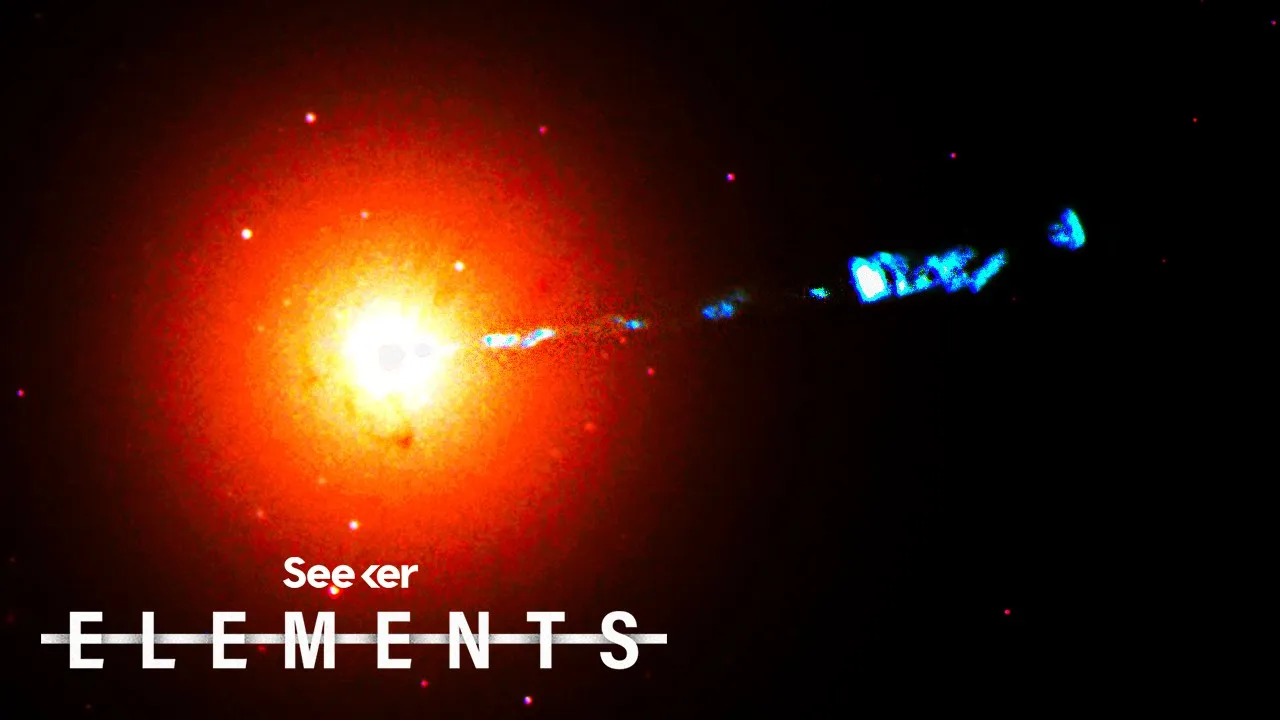
Supermassive Black Hole Jets Approach Light Speed: M87* | Astronomy Physics
@Seeker
198.4K views•2020-02-26
First Billion Years of the Universe with the Square Kilometre Array
@iaaudc
121 views•2022-05-26

Kepler's Laws of Planetary Motion Explained (Educational Astronomy Video)
@Peekaboo_Kidz
404.9K views•2023-02-17
Gamma-Ray Bursts: Cosmic Snipers Explained | Astronomy
@kurzgesagt
15M views•2016-07-31
Related Study Plans & Knowledge Roadmaps
Structured learning paths in Astronomy