




![[TIPS] - 9/03/2022 - Sơ qua về Grad, Div, Rot, toán tử Napbla và trường hấp dẫn](https://i.ytimg.com/vi/c6uBn3GXxKA/hqdefault.jpg?sqp=-oaymwEmCOADEOgC8quKqQMa8AEB-AH-CYACvAWKAgwIABABGH8gSygeMA8=&rs=AOn4CLD6rIXT_YPqrJRFKFzxuz2upoCZdQ)












![Guide to Kerbal Space Program...for Complete Beginners! - Part 8 [Maneuver Planning to Minmus]](https://i.ytimg.com/vi_webp/CnkrUU8zTPw/maxresdefault.webp)
![NASA's Voyager Mission: Remastered [4K]](https://i.ytimg.com/vi_webp/M62kajY-ln0/maxresdefault.webp)




Orbital mechanics is the study of how celestial bodies move under gravitational forces, governed by Kepler's three laws of planetary motion (elliptical orbits, equal area sweep, and period-distance relationship) and Newton's universal gravitation and three laws of motion, which together explain why satellites stay in orbit and how spacecraft can be launched, maneuvered, and controlled in space.
Orbital Mechanics Explained: Newton & Kepler's Laws
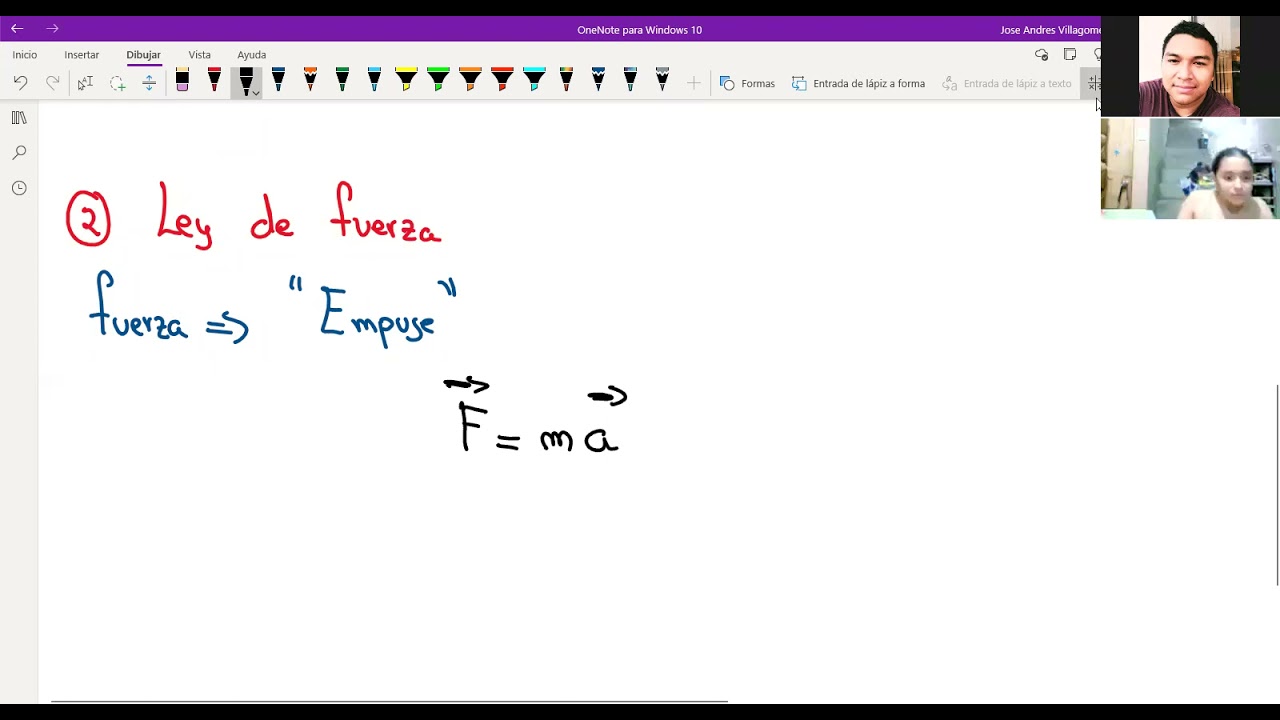
Added:Newton's Laws of Motion, particularly the concepts of inertia, force, acceleration, and action-reaction pairs.
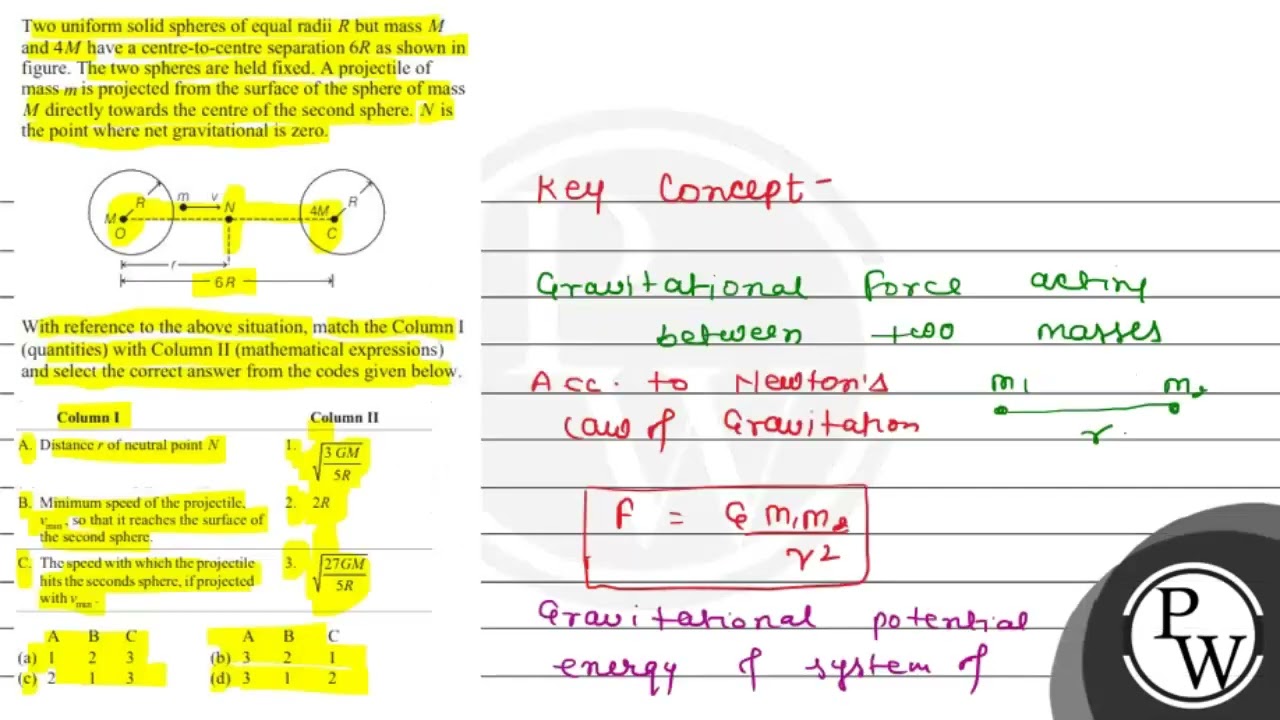
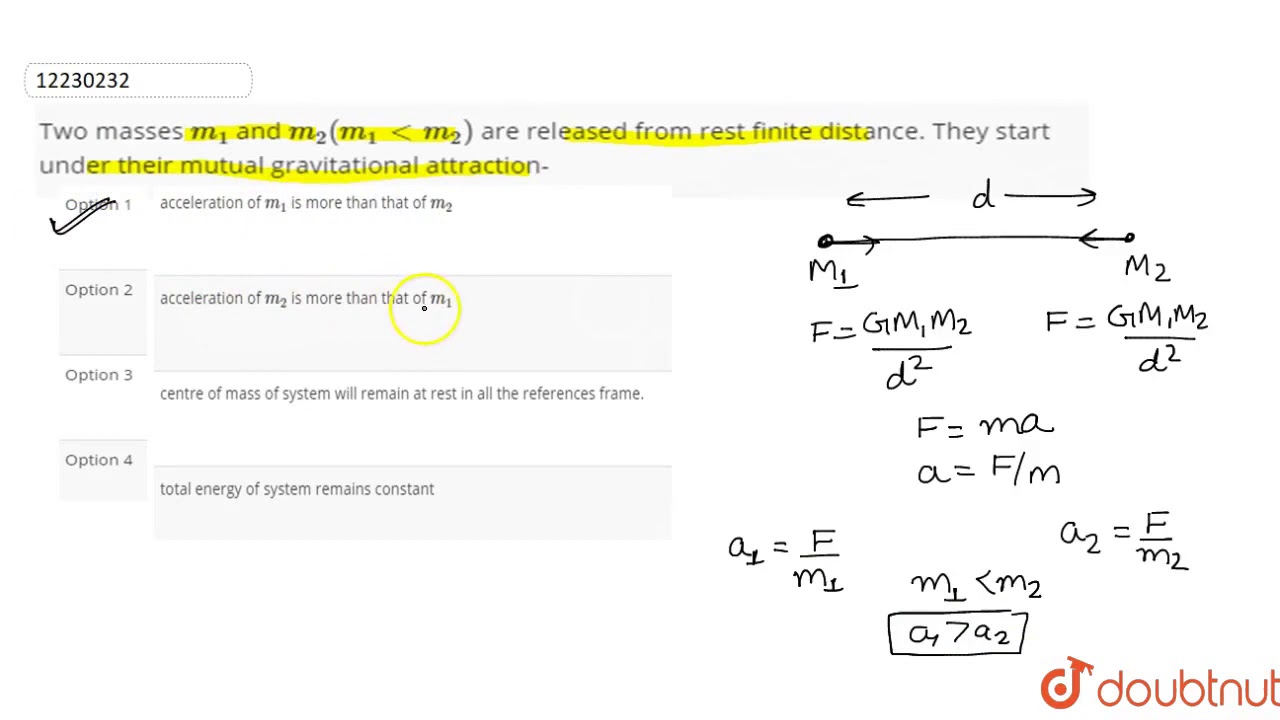
Newton's Law of Universal Gravitation, understanding how gravitational force operates between two masses.
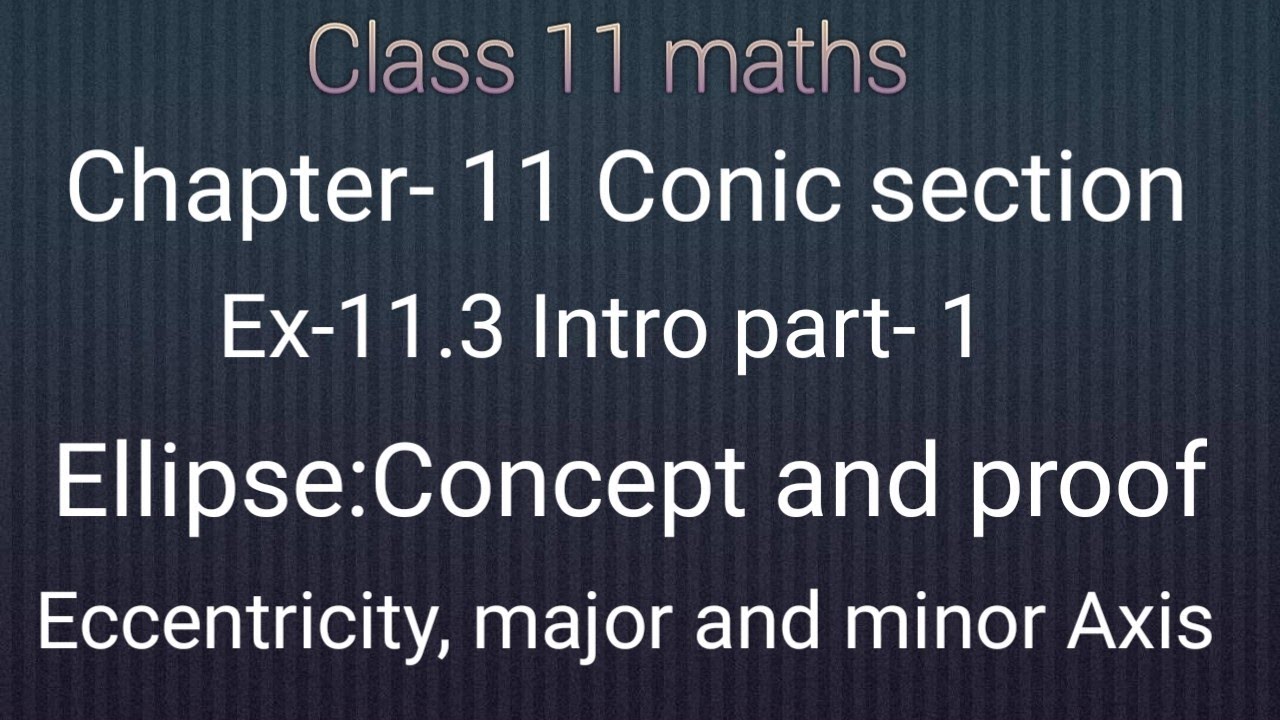
Basic geometry of conic sections, specifically the mathematical properties of ellipses (such as foci, eccentricity, and semi-major axis).
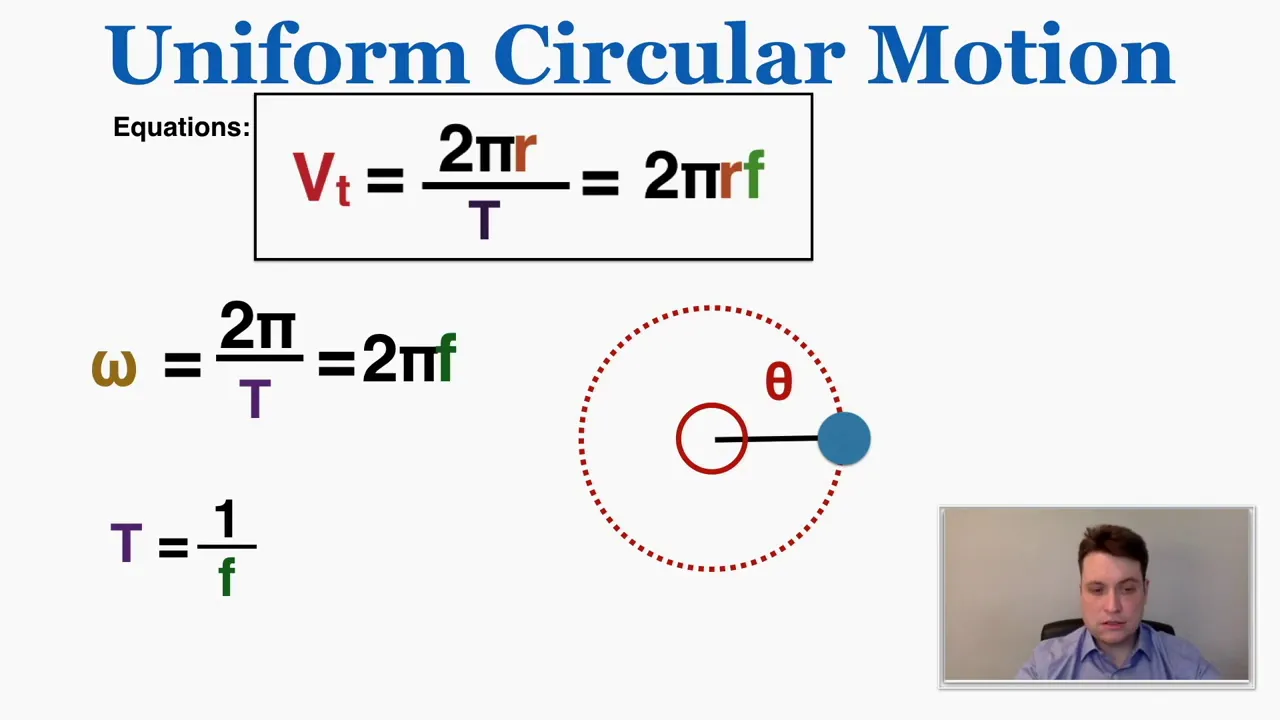
Fundamental dynamics of circular motion, including centripetal force and velocity vectors.
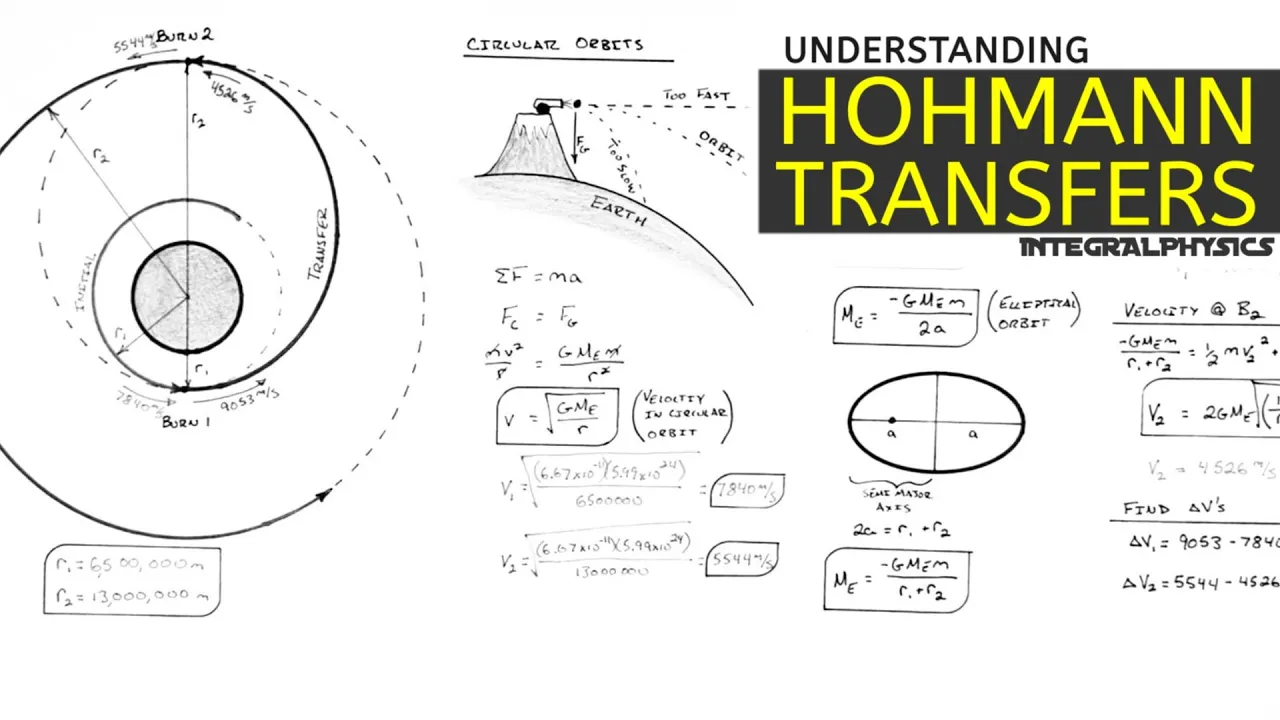
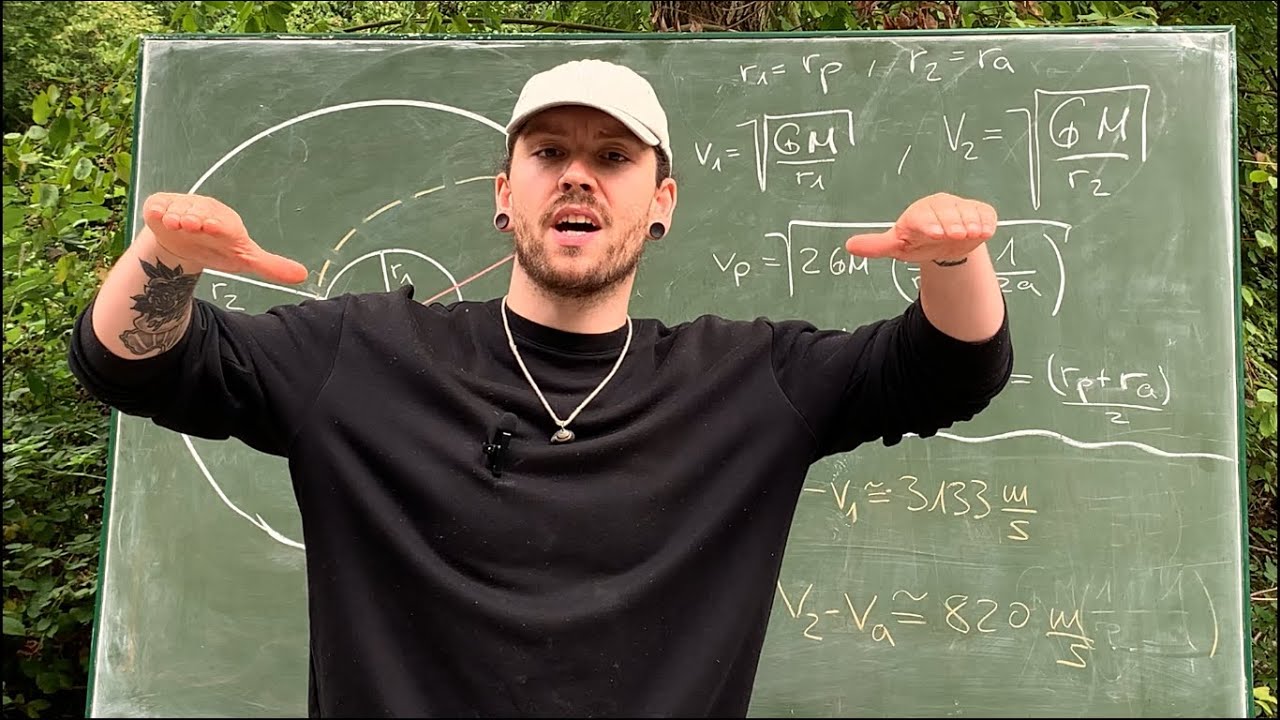
Hohmann transfer orbits and bi-elliptic transfers, focusing on calculating the delta-v (velocity change) required for orbital maneuvers.
The N-body problem, orbital perturbations (such as the J2 effect from Earth's oblateness and atmospheric drag), and the physics of Lagrangian points.
Interplanetary trajectory design, including the patched conics approximation and gravity assist (slingshot) maneuvers.
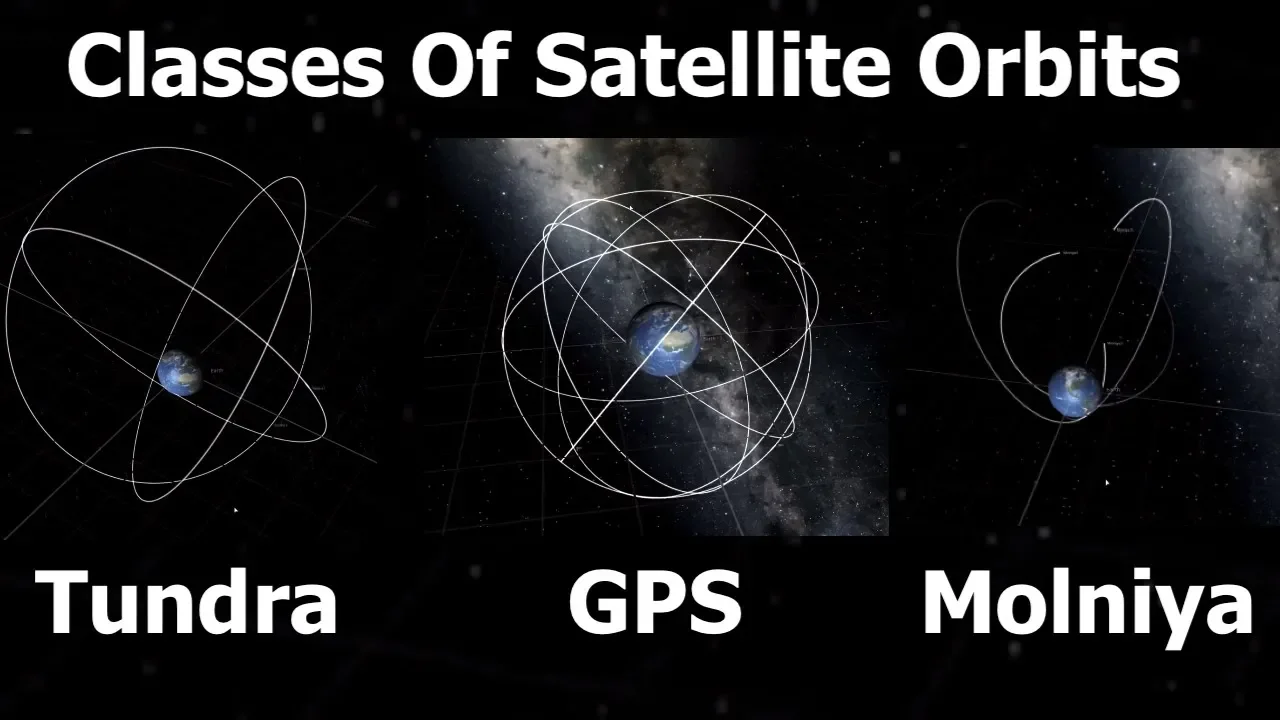
Design and mechanics of specific satellite orbits, such as Geostationary (GEO), Sun-Synchronous (SSO), and Molniya orbits.
515.7K views5.6Klikes34:24Original Release: 2017-12-30
when Ancient Man looked to the heavens for guidance from the gods he noticed star patterns and began to document their movement across the heavens the Ancients believed that the Earth was flat but around 350 BC Aristotle proved that the Earth was [Music] round later about 150 ad toomy presented the entric Theory the belief that the Earth is stationary at the center of the universe with the sun moon stars and planets revolving around it in complex orbits in the 1500s Nicholas cernus of Poland presented the heliocentric theory the belief that the Earth revolves around the Sun as it rotates on its axis this aspect of astronomy evolved into an intricate study of plan planetary motion known as orbital [Music] mechanics today orbital mechanics is applied to space flight and satellites that orbit the Earth or travel beyond our solar [Music] [Music] system in the early 16 00s Johan Kepler a German mathematician using the data on planetary observations collected by the Danish scientist Tao brah developed three laws of planetary motion Kepler's first law states all planets move in elliptical orbits with the Sun at one focus and the other Focus [Music] empty applied to Earth sat ites the center of the earth becomes one focus with the other Focus [Music] empty for circular orbits the two fosi [Music] coincide Kepler's second law the law of areas States the line joining the planet to the Sun sweeps over equal areas in equal time intervals when a satellite orbits the line joining it to the Earth sweeps over equal areas in equal periods of time if areas 1 2 and 3 are equal times 1 2 and 3 are also equal therefore the speed of the satellite changes depending on its distance from the center of the [Music] earth speed is greatest at the point in the orbit closest to the earth called perige and is slowest at the point farthest from the earth called [Music] apog it is important to note that the orbit followed by a satellite is not dependent on its mass a large heavy satellite could be in the same orbit with a small light one each sweeping out equal areas in equal periods of time Kepler's thirdd Law the law of periods relates the time required for a planet to make one complete trip around the Sun to its mean distance from the Sun for any Planet the square of its period of revolution is directly proportional to the cube of its mean distance from the [Music] Sun applied to Earth satellites Kepler's thirdd Law explains that the farther a satellite is from the earth the longer it will take to complete an orbit the greater the distance it will travel to complete an orbit and the slower its average speed will [Music] be Isaac Newton the father of classical mechanics laid the groundwork for orbital mechanics he combined the work of Kepler and and others to formulate the law of universal gravitation and the three Newtonian Laws of Motion while Kepler's laws provided a conceptual model of orbital motion Newton's Laws provided the foundation for the mathematical description of orbits they explain why a satellite stays in orbit Newton's law of universal gravitation any two objects in the universe such as the Earth and the moon attract each other with a force directly proportional to the product of their masses and inversely proportional to the square of the distance between them stated more simply the more massive the objects are or the closer they are the greater the gravitational pull between them Newton's first law of motion a body in motion will keep moving at the same speed and in the same direction unless acted upon by an external force a satellite moves in a curved path around the earth because the Earth's gravitational pull acts as an external force on it Newton's second law of motion if the sum of the forces acting on an object is not zero the object will have an acceleration proportional to the magnitude and in the direction of the net force Newton's second law states that Force equals mass time acceleration it is this mathematical equation and the equation for universal gravitation that forms the basis for calculating orbits Newton's third law of motion explains how a satellite gets into orbit for every action there is an equal and opposite reaction if you blow up a balloon and Let It Go the balloon is pushed forward by the action of the air rushing out of it a Rocket's exhaust gases are like the air rushing out of the balloon the following illustrates how a satellite stays in orbit if a man stands on a mountain and fires a projectile horizontally gravity will cause the path of the projectile to curve downward and it will strike the [Music] Earth however if the man fires the projectile fast enough at a specific speed the curvature of its path due due to gravity will match the curvature of the earth under it the projectile will then fall around the earth becoming an Earth orbiting satellite a projectile fired even faster will have a flight path away from the earth but gravity will act to slow the projectile down change its flight path and pull it back toward Earth if the projectile's velocity increased enough a velocity sufficient to escape the Earth's gravitational pull will be reached this velocity is known as the escape Velocity it is equal to about 7 m/s at the Earth's surface the preceding description did not consider atmospheric drag and the Earth's rotation both of which will affect the trajectory of the projectile it Illustrated the principles governing a satellite's orbit there are six numbers called the orbital Elements which specify the size shape and orientation of an orbit in space as well as the location of the spacecraft in the orbit based on an orbit which is an ellipse the six orbital elements are length of the semi major axis eccentricity inclination right Ascension of the ascending [Music] node argument of Pary time of parag Passage the major axis of an elliptical orbit is the line joining the perige and apigy this line is also referred to as the line of apsides the first orbital element is the semi major axis it is simp simp L 1/2 the major axis circular orbits have no apy or Pare therefore the semi- major axis is simply 1/2 the diameter of the orbit the semi- major axis is used to define the size of the orbit from this the orbital period or time that it takes for the satellite to complete one orbit can be calculated the shape of an orbit is defined by the second orbital element called eccentricity for all ellipses the value of eccentricity lies between 0o and 1 the larger the value the more elliptical the orbit a spacecraft in Earth orbit with an eccentricity equal to or greater than one will escape the Earth's gravitational [Music] field when orienting an orbit in space a three-dimensional coordinate system must be defined the coordinate system commonly used is the geocentric equatorial coordinate system which has its origin at the Earth's center this coordinate system is a nonrotating reference system in which a satellite's orbital plane tends to remain fixed relative to the Stars while the Earth turns beneath it the XY plane is the Earth's equatorial plane the positive xais points to the vernal equinox this is the point where the Sun appears to cross the earth's equator on its way North on the first day of spring each year the Z axis is along the Earth's spin axis toward the North [Music] Pole nodes are points in a satellites orbit which intersect the Earth's equatorial plane the ascending node is the point at which the spacecraft crosses the equator going from south to North the descending node is where the spacecraft crosses the equator going from north to south the line joining the two nodes is called the line of nodes the orientation of an orbit is determined by three orbital element angles the right Ascension of the ascending node is the angle between the xais and the ascending node it is always measured Eastward from the direction away from the vernal equinox in the earth's equatorial plane the argument of Pary is the angle between the ascending node and the point of Pary it is measured in the orbital plane in the direction of spacecraft motion inclination is the angle between the equatorial plane and the orbital plane a satellite which has an Eastward velocity component at the ascending node has an orbital inclination lying between 0 and 90° such an orbit is called a prograde [Music] orbit a satellite which moves due north at the ascending node is in a polar orbit Orit polar orbits have an orbital inclination of exactly 90° a satellite with a Westward velocity component at the ascending node is in a retrograde orbit and has an orbital inclination between 90 and 180° the five orbital elements explained thus far describe the size shape and orientation of the orbit in space the final element is a time value used to look locate the satellite in its orbit a satellite moves in a very predictable manner it stays on schedule thus if the time at which a satellite passes a particular point is known the time when it will pass any other point can be determined the particular Point chosen is perige and the time of perige Passage is the last of the six orbital elements the six orbital elements depict the spacecraft's orbit in non-rotating coordinates to visualize an orbit relative to the rotating Earth a projection traces the spacecraft's position on the Earth's surface the projected path is called the ground track as a satellite orbits the earth the ground track shifts Westward there are two causes for this first the primary contributor is the Earth's rotation toward the East under the orbital plane second because the Earth is not a uniform sphere and bulges at the equator its gravity is greatest at the Equator this causes the orbital plane to rotate slowly around the Earth's polar axis in a motion called precession precession is toward the west for prograde orbits and toward the East for Retrograde [Music] Orbits for low low earth orbits such as those of the Space Shuttle at 150 Mi altitude the westward shift of the ground track due to the Earth's rotation is about 22 1/ 12° while the shift due to precession is only about a half [Music] Dee the inclination of a satellite orbit determines the north and south latitude limits of its ground track the minimum orbital inclination is equal to the latitude of the launch site and is achieved by launching due east for example if a satellite is launched due east out of the Kennedy Space Center which is located at 28 1/ 12° north latitude its orbital inclination will be 28 1/ 12° and the limits of its ground track will vary between 28 1/ 12° north latitude and 28 1/ 12° south latitude if launch Asma or direction of flight at launch measured Eastward from due north is increased from due east the orbital inclination angle increases as well as the maximum latitude of the north south ground track therefore the latitude limits of the ground track equal the new launch inclination similarly if launch azimeth is decreased from due east orbital inclination once again increases as well as the latitude limits of the ground track the maximum practical inclination from a Kennedy Space Center launch is 57° this limit is imposed for safety considerations in order to keep the spacecraft and its booster system from flying over land masses during the ascent phase to obtain an orbit with an inclination greater than 57° the spacecraft is launched from from Vandenberg Air Force Base in California vandenbberg offers the opportunity for southerly launches with orbit inclinations between approximately 70° prograde through 138° retrograde a significant advantage of launching from Vandenburg is the capability to economically achieve polar orbits with ground tracks covering all latitudes from the North Pole to the South Pole the Earth is constantly turning and all points on its surface have an Eastward velocity with the greatest velocity occurring at the Equator the farther the launch site is from the equator or as launch azimeth is increased or decreased from due east less of the Earth's rotational velocity will be imparted to the launch vehicle this requires more fuel to get into orbit or payload weight will have to be decreased launches due east from a position on or near the equator such as the Kuru launch site in French Guyana used by the European Space Agency acquire the advantage of a free velocity gain of about, 1500 ft per second this compares to the approximate 1300 ft perss gain available at the further north latitude of the Kennedy Space Center launching from an equatorial site offers a significant advantage in payload weight capability and minimizes the amount of fuel needed to achieve an equatorial orbit since many satellites operate in Equatorial orbits these are important considerations spacecraft are launched within a specified time interval called the launch window some of the factors affecting the launch window are launch and orbit lighting conditions Sun angles payload orbit requirements rendevu phasing if a rendevu is planned tracking and communication requirements and collision avoidance with other orbiting objects to name a few one of the factors defining the launch window for the space shuttle is launch lighting condition conditions which can be illustrated by plotting time versus day of year on this plot we see daylight and darkness at the launch site the longer daylight hours occur in the middle of the Year summertime if daylight conditions are required for a convenient emergency landing site for the space shuttle the launch window would now look like this during the winter months the available launch window for lighting conditions alone can be as little as 3 hours per day when combined with the many other launch factors the launch window becomes even more constrained the choice of a particular launch vehicle for a mission depends upon the weight and size of the payload and the desired orbit Expendable Rockets used to place spacecraft in orbit usually consist of several stages that may incorporate both solid and liquid propellants for propulsion when the fuel in each stage is depleted the spent stage is jettison staging offers the advantage of discarding weight when it is no longer needed the space shuttle is a two-stage system at liftoff the two solid rocket boosters and three space shuttle main engines are all producing thrust after approximately 2 minutes of flight at an altitude of 25 mil the fuel in the solid rocket boosters is depleted and they are jettison the three main engines fueled by liquid oxygen and liquid hydrogen carried in the external tank continue to burn for several minutes until the shuttle reaches its cutof velocity at this time the main engines are shut down and the external tank is jettison two additional Burns using the Orbiter maneuvering system referred to as ohms are required to place the Orbiter in its final orbit the ohms one burn occurs about 2 minutes after main engine shutdown and establishes the orbital apy point the ohms two burn takes place approximately 30 minutes later and circularizes the orbit once satellites are launched and put into orbit it is often necessary to change the orbit with an on orbit burn the common term used in describing on orbit Burns or engine firings is Delta V Delta V is the incremental change in spacecraft velocity measured in feet per second resulting from the burn the amount of fuel used during a burn depends on the desired Delta V change and the mass of the spacecraft because the amount of fuel carried is limited fuel consumption is one of the primary considerations in spacecraft Mission planning and is critical to orbit Lifetime on orbit a spacecraft can thrust in any direction Burns along the flight path forward and backward are the most common a unique feature of any orbital burn is that if no other Burns occur the spacecraft will later always pass again through the point of burn forward Burns increase the spacecraft's velocity and are known as pag grade burns with pagr burns the flight path of the vehicle will be raised at all points except the burn Point Burns opposite the direction of flight which slow the spacecraft down are called retrograde Burns for Retrograde burns the orbit will be lowered at all points except the burn point the greater the Delta V the greater the difference between the pre-burn and postburn orbits Burns can be combined into maneuver sequences to change orbit size shape or orientation one of the most common maneuver sequences is made up of two Burns and is used to accomplish an orbit transfer between two circular orbits in the same orbital plane the most energy efficient transfer between two orbits of this type is the Homan transfer the Homan transfer is actually 1/2 of an elliptical orbit with its Pare in one of the orbits and its apogee in the other the burns occur at the perige and apigy of the transfer orbit the use of the hom and transfer minimizes the Delta V required thus having the advantage of using minimum fuel the disadvantage of the home and transfer is that it takes longer than most other transfers the type of the transfer sequence depends on the mission and the amount of fuel available for example a space rescue where time is critical might use a fast transfer while a routine satellite deployment where fuel saved for later use is important would most likely use a Homan transfer the burns discussed so far have all been Maneuvers in the original orbital plane and do not affect orbit inclination or node position there are situations which require an orbital plane change such as setting up a rendevu or placing a satellite in an equatorial orbit to change the inclination the thrust Vector must be directed at an angle to the orbital plane a Thrust with a component that is perpendicular to the orbital plane at either the ascending or descending node will rotate the orbital plane about the line of nodes a Northerly outof plane thrust at the ascending node will increase the inclination of a prograde orbit while a southernly Thrust will decrease it outof plain thrusts require considerable amounts of fuel and are performed only when absolutely required the space shuttle for example Apple using all of its onboard propellant is capable of an on orbit plane change of less than 3° satellite orbital planes and altitudes are determined by their design Mission which very often includes a field of view requirement for optical or Communications purposes the field of view of a satellite is defined as the area of the Earth's surface that is in view from the satellite at any given time satellites in high orbits have greater fields of view than those in lower Orbits for example a satellite at an altitude of 800 nautical miles has a circular field of view with a diameter of about 4,100 nautical miles a satellite at 200 nautical miles has a circular field of view with a diameter of about 2,000 nautical miles low orbit satellites are often often used for photography and other types of Earth observation a satellite placed in a lwi inclination circular orbit at an altitude of about 19,300 nautical miles will have an angular velocity exactly equal to that of the Earth's the satellite would seem to remain stationary in longitude as viewed from the ground such orbits are called geosynchronous and are used to provide a continuous Comm Communications capability among any system of ground stations within their field of view the geosynchronous orbit field of view is constant and is limited to a latitude zone of about 70° north and south of the Equator effective satellite Communications from geosynchronous orbit is not possible at either pole however because of their altitude their field of view covers nearly half the globe a special type of geosynchronous orbit with an inclination of 0° is called a geostationary orbit it appears to hover over a fixed point on the Earth's surface at the equator most us communication satellites are in geosynchronous orbits providing near worldwide Communications coverage for Effective Communications at high latitudes the molia orbit is used Mia is the Russian word for lightning and is an orbit used extensively by the Soviet Union for its communication satellites the molia orbit is highly eccentric with an apigy that is near the geosynchronous altitude and an inclination of about 63° the satellite slows down at apigy in the Northern Hemisphere and whips through perige in the southern hemisphere this provides Communications in the northern hemisphere for up to 75% of its orbital period several satellites properly spaced in molia orbits can provide constant Communications at the northern latitudes navigation satellites such as the US Navy's transit system and the joint service navstar GPS global positioning system use lower orbits so that a user can receive signals from more than one satellite at any time another frequently used orbit is known as a sun synchronous orbit these take advantage of the precession of the orbital plane caused by the Earth not being a perfect sphere all Sun synchronous orbits are highly inclined retrograde orbits which precess Eastward around the Earth's polar axis at the rate of one revolution per year since the Earth's sunline also revolves Eastward at the rate of one revolution per year the orbital plane will maintain a constant orientation relative to the Earth's sun line if the satellite's period is then synchronized with the rotation of the earth it will pass over the same point on the Earth's surface at the same local time at a regular interval a sun synchronous satellite ensures that a constant Sun angle and uniform lighting exist for the same field of view from pass to pass satellites such as those in the defense meteorological satellite program and lat are sun synchronous Imaging the entire Earth on a regular schedule the gravitational attraction of the Earth on a spacecraft causes it to move in its orbit around the Earth there are other much smaller forces which will cause a spacecraft to deviate from its desired orbit these forces cause what are known as orbital perturbations orbital precession which is used to obtain Sun synchronous orbits results from the perturbing effects of the Earth's non-spherical shape other perturbing forces are the gravitational pull of the Sun the Moon and planets and solar winds which are charged streams of protons and electrons that heat the Earth's atmosphere and increase atmospheric drag in most cases perturbing forces can be compensated for in the spacecraft and orbit design and present no major problems if the forces disturb the orbit too much thrusters can be fired to reestablish its desired orbital orientation or altitude this is particularly true for spacecraft orbiting at very low altitudes where the effects of atmospheric drag are greater and if not compensated for will eventually cause the spacecraft to deorbit a spacecraft's operational lifetime is frequently limited only by the amount of fuel available to maintain its desired orbit when its useful life is complete a satellite is left in orbit or is deorbited burning up when re-entering the Earth's atmosphere when the space shuttle completes its orbital Mission it executes a precise retrograde burn to initiate its controlled return to Earth this burn occurs nearly halfway around the earth from the landing site the new orbit established by the retrograde burn causes the Orbiter to enter the Earth's atmosphere about 4,000 mi from the land Landing site During the period the Orbiter descends from its orbital altitude to atmospheric re-entry its attitude is maintained by the use of reaction control jets located in the nose and tail of the Orbiter once the Orbiter enters the Earth's atmosphere its wing and tail Arrow surfaces begin to become effective and gradually replace the Jets for attitude control as the Orbiter nears the landing field it Maneuvers to a long straight in Approach at an angle of 17 to 19° nearing the runway it executes a flare maneuver to reduce its sink rate and Glides to a touchdown at approximately 230 mph as the Orbiter rolls to a stop our journey into the world of orbital mechanics comes to an end for now this is only the basics of orbital mechanics and intricate study of planetary and satellite motion the next time you see a launch you will see it from a different somewhat knowledgeable perspective you will understand the fundamentals of space flight [Music]
Up Next

7:12
Why Astronauts in Orbit Appear Weightless: Physics Explained
@khanacademy
286.6K views•2011-06-12

12:53
21cm Hyperfine Transition in Neutral Hydrogen: Radio Astronomy Basics
@AaronRobertParsons
12.4K views•2011-10-13

32:32
NMR Spin Physics I: Zeeman Effect, Resonance Condition & Larmor Frequency
@nptel-indianinstituteofsci8064
2.3K views•2024-01-17

27:14
Entropy and the Second Law of Thermodynamics Explained
@veritasium
27.5M views•2023-07-01
Related Study Plans & Knowledge Roadmaps
Structured learning paths in Physics
physics
Nuclear Physics (Decay, Fission & Reactors)
01Atomic Structure and the Binding Force
02Radioactive Decay and Half-Life
03Nuclear Fission Mechanics and Chain Reactions
+ 2 more learning modules
12h5 modules
Explore Roadmap
physics
Soft Matter (Polymers, Colloids & Rheology)
01Foundations of Soft Matter & Thermal Forces
02Polymer Physics and Macromolecules
03Colloids, Surfactants, and Self-Assembly
+ 2 more learning modules
38h5 modules
Explore Roadmap
physics
Analytical Mechanics: Lagrangian & Hamiltonian
01Mathematical Foundations: Calculus of Variations
02From Newtonian Mechanics to Constraint Dynamics
03The Principle of Least Action & Lagrangian Mechanics
+ 3 more learning modules
28h6 modules
Explore Roadmap
physics
General Relativity (Spacetime & Cosmology)
01Foundations of Relativity: Special Relativity
02The Geometry of Spacetime: Equivalence Principle & Curvature
03Einstein's Field Equations: The Mathematics of Gravity
+ 2 more learning modules
55h5 modules
Explore Roadmap