











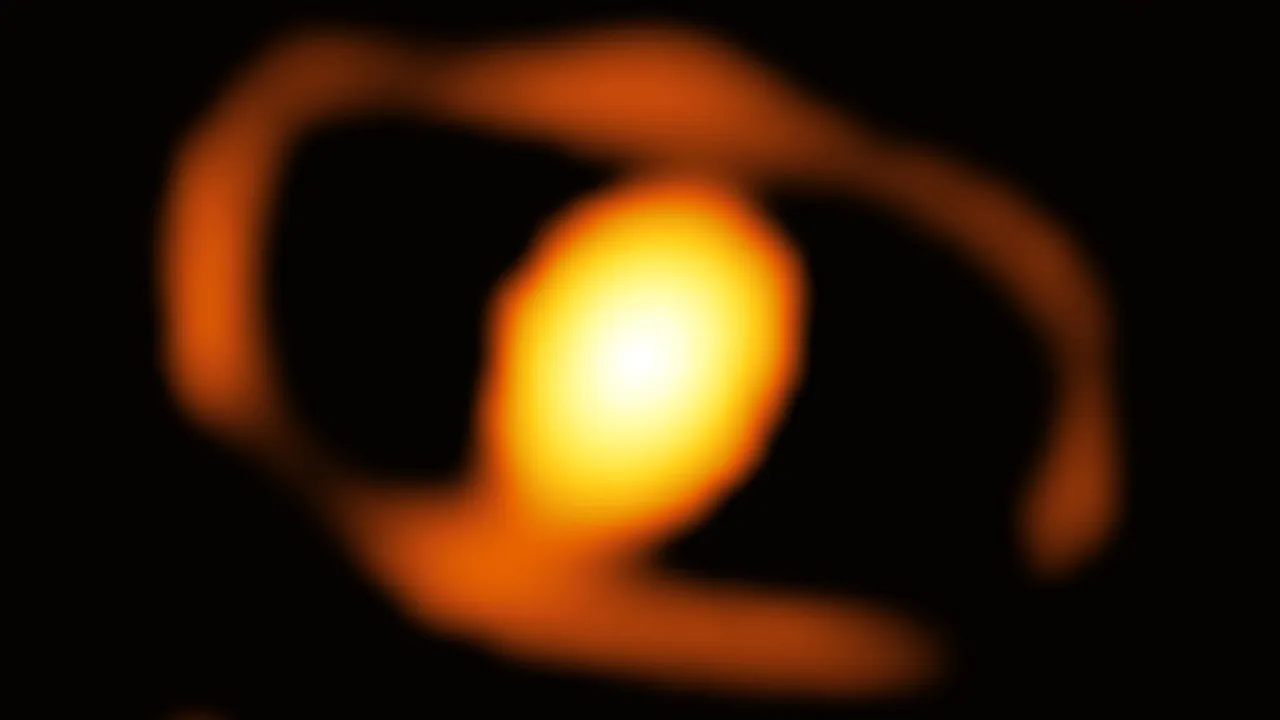




Adaptive optics is a technology that corrects atmospheric distortion in ground-based telescopes by using a wavefront sensor to detect atmospheric turbulence and a deformable mirror to apply equal but opposite corrections at speeds of 1,500-2,000 times per second, enabling ground-based telescopes to achieve resolution comparable to or better than space telescopes; this technology uses either natural guide stars or artificial laser guide stars (which excite sodium atoms in the mesosphere to create reference points) to measure and correct for atmospheric aberrations, allowing astronomers to observe finer details in celestial objects such as planetary rings, stellar disks, and galactic cores.
Adaptive Optics Explained with Lick Observatory Applications & Lasers
Added:Basic optical physics, including the behavior of light wavefronts, reflection, and refraction.
The concept of atmospheric 'seeing' and how temperature and density fluctuations in Earth's atmosphere distort starlight.
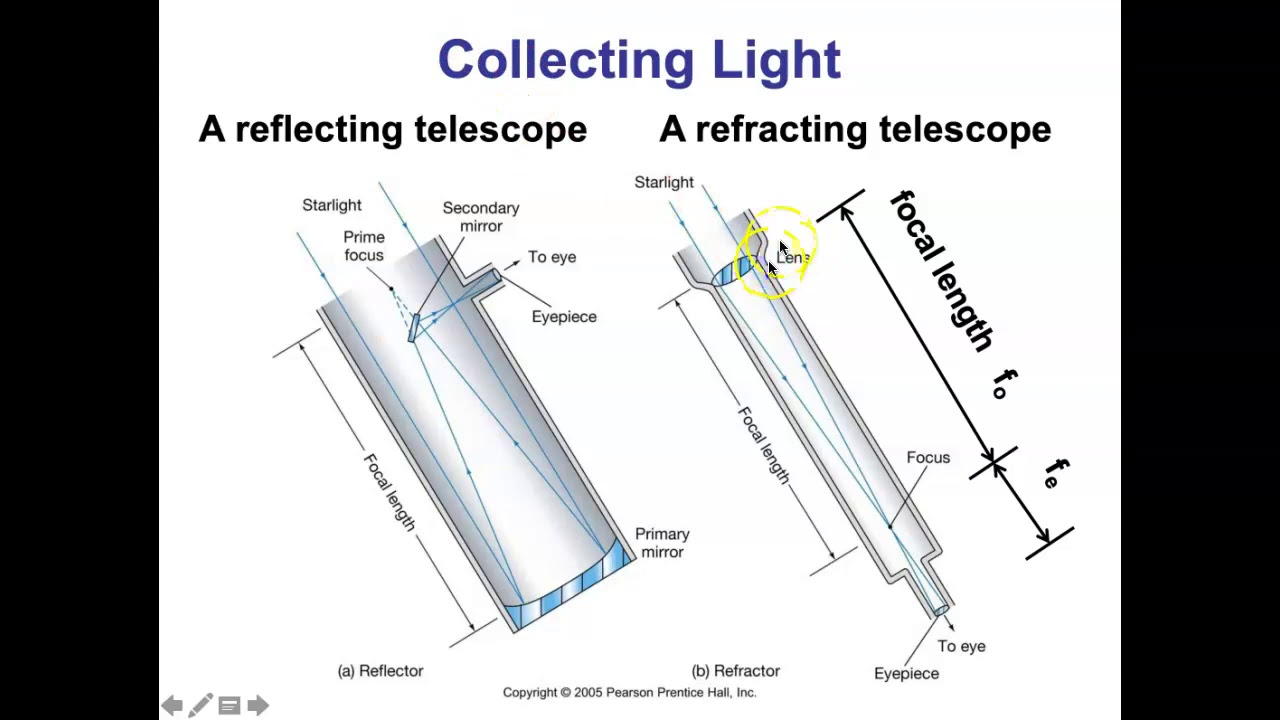
Fundamental telescope design, specifically how reflecting telescopes collect and focus light using primary and secondary mirrors.
The diffraction limit of telescopes, which defines the theoretical maximum resolution achievable by an optical system of a given size.
The engineering and control loop systems of Deformable Mirrors (DMs) and Shack-Hartmann wavefront sensors.
The physics of Laser Guide Stars (LGS), specifically the excitation of the Earth's mesospheric sodium layer to create artificial guide stars.
Astronomical Interferometry and the technology behind the Very Large Telescope Interferometer (VLTI) to combine light from multiple apertures.
Extreme Adaptive Optics (ExAO) and coronagraphy used for the direct imaging of exoplanets and circumstellar disks.
139 views4likes1:18:44Original Release: 2020-07-07
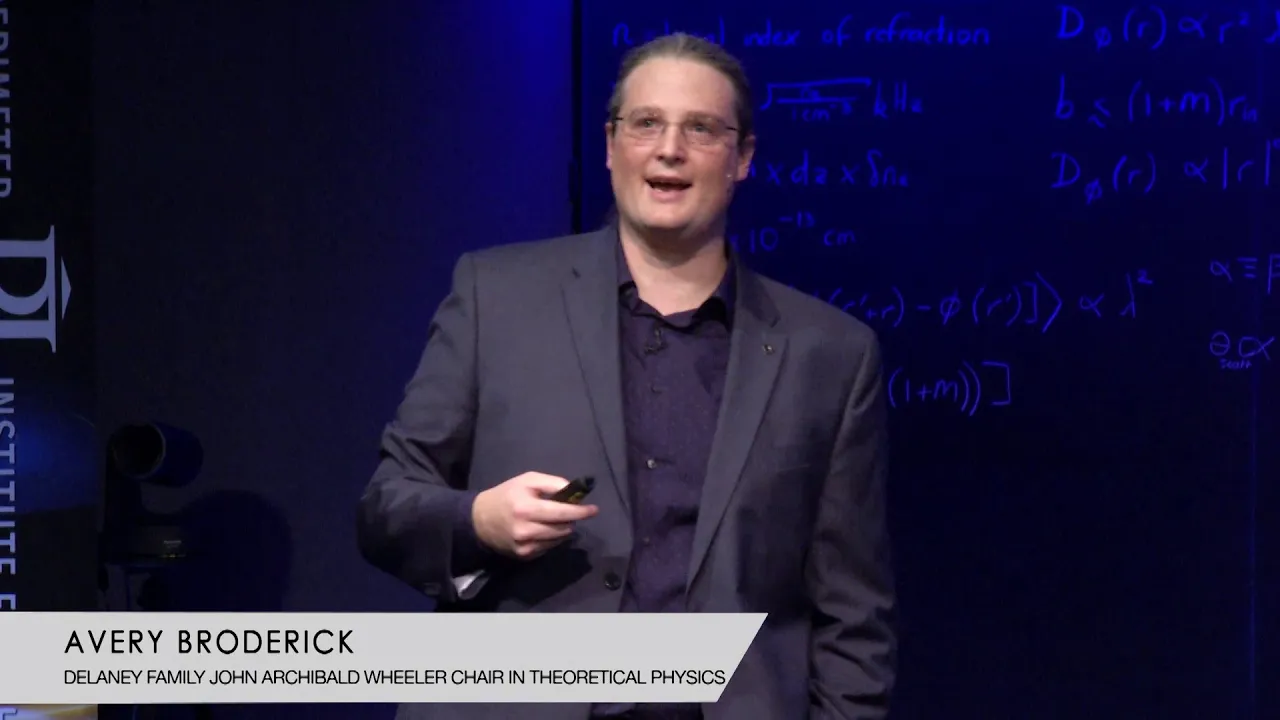
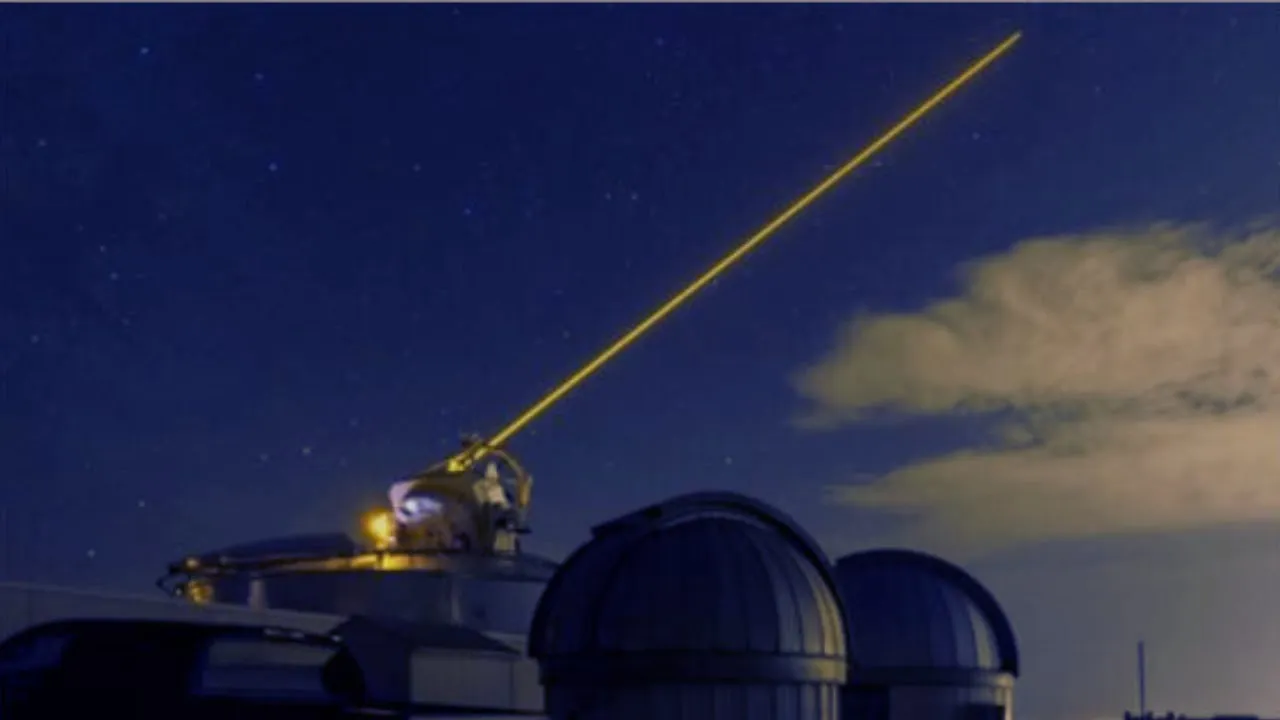
hi everybody welcome to the we have a very thank you for having me I think this is the third time I've actually been here to Hoagy Park to give a talk so many years separated between the two but I'm gonna tell you tonight about adaptive optics a technology that we helped design Lick Observatory and use and is now used at observatories around the world how it works and what we've been doing the the latest from Lick Observatory in this field so Lick Observatory you've probably all seen it you've probably all actually been there east of San Jose on top of Mount Hamilton it is the highest peak in the San Francisco Bay Area which is what makes it just a wonderful place to have telescopes and we have nine telescopes on the site in their own housings domes of which I will just be talking about the one here in the foreground the Shan three metre telescope most of the telescopes are still used for research summer will use for public outreach and some are completely retired but the three meter is our largest telescope and the one which has adaptive optics on it here's a nice close-up image and this has our old adaptive optics system on the bottom it's been replaced by a new system but it used to be this large black thing at the bottom of the telescope I'll show you a moderate picture you see how the new system is somewhat smaller anyway the problem with imaging from a ground-based telescope is that there's turbulence the atmosphere and my friend REM stone who used to be the mountain superintendent said observing stars through the Earth's atmosphere is like bird watching from the bottom of a swimming pool not a very good choice but unfortunately we need air to breathe this is where we are so we have to look through the Earth's atmosphere but it does distort our view of the stars and so well you can see my picture here this bird you can see through this yeah it's a bird but you lose some of the details so many of you might be hard-pressed to figure out what type of bird it is and it's details same happens when we look through the atmosphere Subscribe so why do the stars twinkle Robert Hooke suggested the stars twinkle because there are small moving regions living I was here having different perfecting powers which act like lenses back in the 1600s and he was very very smart man he was right that is how the atmosphere behaves and when light passes through those different lenses it gets bent and distorted Isaac Newton also wrote that the air through which we look is in perpetual try the only remedy is a most serene and quiet air as such as may perhaps be found on tops of the highest mountains above the grosser flat he was also a very smart fella um Lick Observatory was the first year-round accessible mountaintop observatory in the world because astronomers by the late 1800s had learned that yes you're seeing is better when you're looking through less atmosphere and above most of the clouds and today all modern telescopes tend to be sitting on tops of mountains for for the best possible views of the sky now in 1953 an astronomer named Horace Babcock actually said you know we could correct for this using an optical element at a formal Bothell element to essentially put equal but opposite turbulence on the light we see and a wavefront sensor a way of detecting the blurring that the atmosphere is doing so we know what signal to send this optical element now it wasn't until about 20 years ago that the technologies had been developed and the computers developed that naturally made it possible to implement this so he was fortunate he died a few years ago but he was fortunate to see his idea actually applied and used in astronomy so where does the turbulence arise well then he would have a little observatory on top of a mountaintop and one of the sources turbulence heat inside the dome and this is the only one of these sources of turbulence so we can actually control so you know you have big telescopes a big motors to move them you have instruments you have you no moving parts motors to move things around generates heat so most modern telescopes use air-conditioning and things like that so that they can you know control the temperature and have all the materials inside the telescope dome and the telescope itself at the same temperature is the nighttime air so there's no heat waves and no what we call domes seeing that would control unfortunately the other things that cause turbulence we don't have much control over wind flow over the dome most of the best observatories in the world the best sites tend to be on top of very high mountains think of Mauna Kea in Hawaii and the Andes Mountains in Chile but they also tend to be near large bodies of water so that the wind is a nice laminar flow over the water over the top of the mountain so there are a few places where in the world where geography works to our advantage to minimize the wind flow over the dome and that turbulence so proper siting of your telescope is very important Lick Observatory is not bad but we're kind of low altitude it only 4,200 feet elevation and you know but we are still you know the life laminar flow of the over the Pacific over the California mountains which is why you have multiple great observatories in California Lick Observatory Palomar Observatory and Mount Wilson so again geography working in our favor no not as good as say Chile or Hawaii there's unfortunately this boundary layer where the the sort of warm ground and the air interacting with the ground structures you know hits the higher levels of the air moving at different speeds or faster um many of you felt the top of this boundary layer it's about a kilometer up when you're say coming into land at the airport and when you get kind of close to the ground you have some turbulence that's usually the top of the boundary layer you're feeling and then of course there are different layers in our atmosphere where their air is going different directions so for example the tropopause their stratosphere about 10 kilometres up also a great source of turbulence there's also the jet stream and other things we don't have much control over that we just have to correct for it as best we and adaptive optics so how do we get around the problems of the atmosphere well we could put telescopes in space we've all seen the Hubble Space Telescope images they're gorgeous they're not looking through the atmosphere don't have to worry about that blurring they did have to worry about a misconfigured mirror initially and that was rather embarrassing for the engineers who designed the telescope but luckily sandy favorite Lick Observatory and some other prominent astronomers helped to figure out what that aberration was to correct it with some corrective optics later on it gave the Hubble and glasses but you know telescopes in space are great the problem is they tend to be small and very expensive and they're very limited there are lots and lots of astronomers as always there are more astronomers and telescopes so it's very competitive to get time on those space telescopes so it's not the answer there's also a technique called speckle imaging where if you take very short exposures all the different little lens like parts of the atmosphere focus the spot of what you're looking at in different places so if you take very short exposures on the order of a few milliseconds you get these little multiple images that you can sort of use a computer and stack them all on top of each other and get a high-resolution image it only works for really really bright objects because it gotta get enough light in a few milliseconds for this to work but it works very well but computationally intensive and then there's adaptive optics where we correct for the turbulence using hardware we use what's called a wavefront sensor to measure the blurring and then that figures out what the blurring is we put sort of opposite turbulence on the deformable mirror and this myth happens on the order of a thousand times a second the new systems we have built work 1,500 to 2,000 times a second to do corrections so as computers have gotten faster we've been able to do corrections factor the problem is with adaptive optics you need to have a reference star nearby because you need something that's a known point source that's sort of featureless to make the measurements and so that because you know without turbulence exactly what that quartz source looks like with turbulence you see how it blurs it's blurred on the order of a thousand times a second and correct it so very complicated technique so just for comparison space versus ground-based telescopes we have the hubble space telescope it's mirror diameter its fourth is 2.4 meters so our shady telescope is bigger it's got a three meter diameter so for example resolution is 2.2 microns which is a near infrared wavelength um our eyes don't see that light but you could see structures of the hubble space telescope at that wavelength down to 0.23 arc seconds and if you don't have a good intuitive sense of how big an architect's is take a dime pretend I'm holding a dime have your friend walk 2 miles away the width of that dime for about 2 miles away is about one arc second so we could see something that's roughly a quarter of an arc second in size for the Hubble Space Telescope from 2 miles away that's that that's the smallest structure you can see now the shame telescope with a bigger mirror the laws of diffractive optics and I'll show you equation later that you don't have to remember we can actually do better we can see something that's 0.18 arc seconds or you know just about 1/5 of an arc second no idea what that was about detector to go anyway so so you can see that the advantage of using adaptive optics on a telescope is that you could actually theoretically see smaller structures then you could with the hubble space telescope and of course it gets better when you get a bigger telescope say the Keck 10-meter telescope you can see structures that are roughly three times smaller than with the 3 meter telescope so that the scales up you do even better with bigger telescopes using this technology and it just makes all the Space Telescope resolution look not so good so in practice you know this is this is a pretty rare it's our adaptive optics system sits there at the bottom so the light goes and I should be certainly support for this so the light comes down the telescope it's a primary results of the secondary through the hole in the primary to the instrument here at the bottom and this has you know deformable mirrors to change the shape correct the turbulence wavefront sensor that blue thing is our infrared camera so so that's what it actually looks like so I keep using this term wavefront I should probably describe a little better what it is so here you have all the incoming starlight coming in and all the Rays coming from the star the stars is officially far away that all the Rays are essentially parallel so if you look at all the light that came out at the star at the same time all hits the top of our atmosphere at the same time in this plane wave as we call that's this line here and then you have the turbulent atmosphere on all these little pockets of different temperature air you know acting like lenses and distorts it so the radios start going in different directions if we look at where the Rays that the light points are going you end up with this distorted wavefront now if you have a small telescope the overall tilt is sort of the dominant factor compared to what your resolution is so that when you image you can get a large displacement this the star appears to move around a lot so if you have a small telescope you might not need full adaptive optics you might only need just image stabilization a little fast-moving tip tilt mirror to make sure your object stays centered when you get to a bigger telescope the overall tilt caused by distorted wavefront tends to sort of average out over a long large telescope so you get small angular displacement when you image but the blurring tends to be more high order aberrations all these little bumps and Wiggles actually have a predominant X so you need the full adaptive optics to correct all those little bumps and wheels better to get the full resolution out of your telescope I hope I'm making sense I feel like I'm not necessarily explaining this very well anyway but a schematic of how the eye adaptive optics system actually works is you have this distorted wavefront coming in from the telescope and then you have your adaptive mirror here you put sort of equal but opposite or actually half the turbulence because it bounces off I need to follow mirror you make you send the corrected light to your high-resolution camera usually an infrared camera and adaptive op so we're improving the technology so it does work it visible wavelengths and then you have your wavefront sensor which is the gizmo that measures a distorted wavefront and that u s-- goes to a computer calculates what shape the DN used to be and this loop runs on the order of fifteen hundred times a second maybe faster maybe slower depending on the system so here's a little movie hope this runs no no it did not run let's try again there we go so this is a nice animation it's a rather old amening animation made by the Gemini telescope but you can see the light coming and the telescope coming around to the back end they have a nice system where you have multiple instruments on the telescope at a given time so you just pick which one you want to use we're gonna pick the AO system here and get a little cutaway of you my colleagues and I do call this the potato chip movie you will see why in a moment but this will cut away and see it you'll see the light comes in for the telescope will come in hit the deform wing mirror hit beam splitter so that redder light goes to your science camera here and you'll see an image pop up on the screen right here and then the bluer light goes to the wavefront sensor so you can see a nice blurry image coming through bouncing around every few milliseconds this times change so here you're gonna see in a moment the distorted wave fronts or pan tato chips fly through the system the bounce off the mirror now the mirrors are doing anything right here you can see the loop is open but now the wavefront sensor their measure something that's good close the control loop and now they're gonna change the shape in a mirror now this is hugely exaggerated so that you can see what's going on when you look at the deferral mirror when it's moving it looks flat to our eyes but you can see that the potato chips bounce off the full mirror they get flattened out when I store tias now flat tortilla is going to the science camera and you can see that the light once it gets the side camera nice closed loop you have a nice point like image it's like a star should look including a little Airy ring around it so I hope that gives you an intuitive idea of what's going on so this is the original adaptive optics system at Lick observe turi that i was hired back in 1998 to redesign when i first got there it looked very different from this but I worked with their optical engineer Brian Baumann to redesign it to make it into something that one person namely me could align and maintain so this went into sort of regular use in the year 2000 but the light comes down from the telescope bounces off some optics this thing here in the middle is a tip tilt mirrors just flat mirror image stabilization just make sure that the spot stay centered if you buy a device called like the ao7 from santa barbara instrument group it's a tip tilt mirror it just stabilizes the image so that was the first stage then the lights collimated comes here to a deformable mirror so our deform mirror was six inches in diameter had 127 actuators to correct the way front and then the light was refocused infrared light bounced off into our infrared camera over here the optical light bounced off a number of our optics into our wavefront sensor here and I'm not going to scribe how the wavefront sensor works because I don't have time with everything else I want to tell you but if you're interested after the talk I will give you some more details um anyway the standard deformable mirror back in the day and we started doing this was essentially a piece of thin glass there's a bunch of little Pistons behind it you Bo see these were piezo electric crystals glued to the back of a glass thin glass is actually flexible and so are deformable mirror in our original IO system could change shape plus or minus 8 microns so 16 microns total motion which is quite a lot and had a reflective coda aluminum our new system uses a silver coating on one of its deformable mirrors anyway this is pretty standard what was used but with only 127 actuaries we were only actively controlling 60 of them in the center and the ones around the edges in the center was sort of passively controlled to make sure they didn't wander off too far but you know so we weren't actually using every single actuator in the old system anyway but when you have a perfect system you know saying you're in space you know you don't worry about the equation the typical pattern you get if everything's perfect is what's called a diffraction parrot pattern or airy pattern where the center looked as those around it where most of light is and then you end up with little rings and this is sort of like a slice through it around it airy rings every 1.2 to lambda over D lambdas away from you're looking at D is the diameter of your telescope so it's a very simple equation tells you how far out the first area ring is so and that tells you what the resolution of your system is that you could essentially see stuff that's separated by that is two separate objects in that distance but that's perfect now when you use an adaptive optics system you never quite get to perfect unfortunately because you don't have an infinite number of actuators to control your measurements aren't 100% perfect the atmosphere is a permission thing different things are going on at different altitudes so it's really impossible to measure things completely accurately so in practice you end up with this nice diffraction limited core which is great and then this kind of uncorrect and halo that's the same size as you're seeing disc if you were using adaptive optics so that seemed is you can see is way broader than the central core so we have a terminology in adaptive optics called stroud that is the peak that you actually measure versus the peak if everything was perfect like in the previous slide so if you get astral above point one or point two which means you're twenty percent of the way to perfectly correct it you have nice very cores like that that you can make great measurements over which is great and that's relatively easily correct achievable with relatively primitive adaptive optic systems so so this just tells you what if you have more actuators on your DM how much you get so if you have no adaptive optics that's the dotted line so that's an uncorrected seeing disc so that's not very good if you have just a tip tilt me or two degrees of freedom that actually gives you close to an airy core and you know gets rid of some of the halo 12 degrees of freedom anyway you getting up to 218 actuators degrees of freedom you get first area secondary main third area ring for three that's really pretty darn good now our system with the old lick system was here around 50 degrees of freedom which meant we got a real nice first area ring and hints of the next ones but that was an old system that was redesigned in the year 2000 and was used for over a decade we've built a next generation adaptive optics system called che Te'o is opposed to lik al this is about it but one of the big improvements is we actually use two deformable mirrors not just one so but wait there's more so there's a woofer tweeter system much like you have a sound systems the woofer is actually a small before Almir with only 52 actuators the next pictures so here with the nice silver coating so it's comparable to the old deform mirror in the original lacayo system so we can do all of the same Corrections that one did and this one also does tilt correction as well so it's got a lot of motion instead of using piezo electric actuators on its back it uses voice coil technology and this thing is not six inches in diameter it's one inch in diameter so we've reduced the size of the thing things have gotten more compact as technology has advanced and then our tweeter is a 32 by 32 MEMS device with a gold coating so this is a micro electromechanical device that's is with 32 by 32 actuators that's a lot of degrees of freedom that's like a thousand actuator so we can make amazing Corrections with this if we measure the wave front well enough that's the other complication but anyway we usually see the tweeter is really great for the high frequency changes that are subtle but changing frequently and that's most of what we see with the i/o system anyway so our new system somewhat more compact we're using the same housing for infrared camera though we have a new detector in it well that has many more pixels and smaller pixels so we get much higher resolution with the camera but it light comes with telescope bounces around a bunch of optics comes to a woofer up here the woofer DM down here is the tweeter then we also have our wavefront sensor there and our science camera as I said we have a new detector in there anyway much more compact than our original system says this the camera here is the same size the housing is the same size but if you look at the go back a number of slides oops what too far there we go well you can see it's shrunk but size by about half so which is a huge improvement it is downstream it is downstream so it actually when you turn on the deferral mirror it's actually measuring more the errors in the previous correction cycle rather than the whole wave front so we're actually working on some new algorithms in which we do predictive control where if we know the wind speed we assume that the turbulence is a frozen flow over the telescope so if we know the wind speed and direction we could actually calculate we have this turbulence here oh and this many milliseconds will be there and we can actually predict and so that's one of the things we have a graduate student working on right now anyway but though I said we have lots and lots of actuators so RDM with lots of degrees of freedom is capable of correcting turbulence incredibly well but only if we can measure it well so here is a little bit about how our wavefront sensing works we've sort of mapped our primary mirror that's this pink circle here to an array so each one of the little dots blue dots are actuators on the MEMS device and then we have a sixteen by sixteen across grid on which we met with which we measure the wavefront and as I said I'm not going to go into details of how we measure it but our old i/o system only had an 8x8 grid which meant that we only measured in eight different points across the the mirror we're here we met her 16 so we actually have twice the resolution with measuring the wavefront with our new AO system which means that we can actually correct into the optical with this new system the old system was optimized for the near-infrared so you may not realize that the turbines in the Earth's atmosphere affects different colors of light differently when you're really long way of like light like radio waves atmospheric turbulence is nothing just goes right through it doesn't see it so objects like the Very Large Array for doing interferometry don't need adaptive optics so but as wavelength gets shorter they get affected more and more by the Earth's atmosphere so by the infrared it's affected but not as severely as say blue light which really needs very fast correction lots of sampling across the primary mirror to make the measurements to see how the light is being bent at different places across the mirror so one of the advantages of this is it's so sampling more and we actually have plans to until we've actually installed it we haven't tested it yet is to have another set of wavefront sensor that has 30 apertures across so that we're measuring in nearly a thousand places across the deform here across the primary mirror what the turbulence is doing so that we could measure it better we can correct it better we have a deformable mirror that can handle this now computer is still having a little trouble with it and our optimal alignment still needs a little work as I said this is very new stuff but our new detector in our science camera is what's called a Hawaii to our G array they're commonly used now and they're sensitive to light from you know our band red wavelengths down through the near-infrared so from you know around seven thousand angstroms down to two and a half micron with wavelengths so we haven't worked yet in our and eye bands with this camera yet with our new AO system but it's coming so which is pretty exciting so so we're going to do optical Astronomy finally with adaptive optics and hopefully in a routine way so this is our new detector we actually managed to get an engineering and quality array which means a quarter if it doesn't work but we didn't need that bit anyway so yeah the old detector in our infrared camera was a picnic or a 256 by 256 pixels this is a 2 K by 2 2k device of which we're only actually using the 600 pixels that fill the same area as the old array so and we're hoping to install some new Grisons and stuff that can disperse light further and take advantage of the wider detector that works we're just not using it right now but these are smaller pixels we know 600 pixels covering something that used to be only 256 pixels across so there's smaller pixels we get higher resolution perfectly at jabe and our diffraction lift limit is less than 0.1 arcseconds so you know we have 33 milliseconds per pixel I'm actually remastered it it's not 34 milliseconds were better than that's 33 milliseconds so anyway all sorts of new developments so what does this mean in terms of actual data and what images actually look like now that I've gone over the hardware well this is an image from our original adaptive optics system showing two stars one of which is a single star new Ursa Majoris and then a second star Hipparchus 5 9 3 6 6 now with a single exposure with no adaptive optics at all you'd be hard-pressed to say which one was a single star which was a double star you might have a guess but it's hard to tell with just tilt correction you can see that that one's probably a single star and that one's most likely to and then of the full adaptive optics you see oh very clearly single star there's actually a first area rainbow it's not showing up very well on this display and 2 stars and these two actually you could see are moving with respect to each other if you look at them after epoch so you can actually see changes and make real measurements pretty easily anyway when you put the same technology and Lick Observatory once we proved adaptive optics worked for routine science at Lick Observatory we built a system for the Keck telescope in Hawaii and diameter largest optical telescopes in the world right now we're without adaptive optics you had this you know indistinct blob with is still less than an arc second less than half an arc second this was a very good seeing night on Monica Monica is typical seeing is about a half arc second whereas Lick Observatory I took the seeing is about one arcsecond we're a lot lower altitude not too surprising but you turn on adaptive optics and the resolution increases by about a factor of 10 and you have this right spiky thing that's easy to measure most of the light is squeezed into the core where it belongs you can see there very ring anyway so this is great so let's look at some actual real data rather than just single stars like Uranus beautiful object this was observed in 2003 with our original adaptive optics system at liquid you can see here on your this some cloud bands a storm a couple of its moons one of the nice things about Uranus is it has a ring whoops wrong button try that one there we go so if I change the contract you can actually see the ring so now so this is pretty cool you know who knew universe had a ring but with our new adaptive optics system we do so much better here's Uranus again you can now see individual stores and the ring shows up okay it's nice Airy rings and so this was very early data we put the system on the telescope in April of 2014 it wasn't really ready so it took us a couple months to get everything working but this image of Uranus is really nice of course if you go to some place like Keck you do even better so Ken here's the ring we were seeing it live but tech ops but but the Uranus actually has a ring that's further out and cap Observatory can see it it was actually discovered with the Hubble Space Telescope but with Tech's adaptive optics system you can see it so and the technologies that we tested with our new AO system at look Observatory are going to be part of the next generation adaptive optics system that will be built for the Keck telescope at least if all goes as planned but anyway and I just have to show this picture because this beautiful infant dupatta at UC Berkeley uses tech to study solar system objects and this is a beautiful image of Jupiter that was put together with data through their adaptive optics system so this is looking at one point two nine one point five eight and one point six five microns so the goldish color is sort of the tops of clouds and then the blue is haze anyway if you look at longer wavelength I've my krons you can see that the great storm here the Great Red Spot is actually cool enough the cloud tops are cool enough it blocks a 5 micron light anyway so it's lots of science to be seen there so this is the power of adaptive optics you don't need to go to space you don't need to send a space probe right out to Jupiter to get truly amazing images where you can actually monitor how things are changing on the planet's surface over time some other research I've worked on with Lick observatories original adaptive optics system was this with Marshall Perrin and James Graham looking at her big a DBE stars her big a EBV stars are young stellar systems still forming they still have a lot of dust around them often they have protoplanetary discs around them so we were studying these a few of these her big eb starts to see is the dust here associated with both these stars only one of these stars you could do this using polarimetry so our infrared camera is also a polarimeter can look at the polarized light coming from things and with lice bounces off dust it gets polarized sort of the same way when light bounces off asphalt it gets polarized and while you're polarized sunglasses work so well to block the light anyway so here's just what the image looks like you know without it you know a polarization mapping but if we look at the polarization we could see the star here all these little lines are showing the direction of the polarization and if you had a ring that would say okay that's associated that star there that it the that star's light is illuminating the dust and the light is getting reflected towards us same is true up here so you can see sort of circles up here circles up here so yeah the dust does seem to be one system depending on which of us is closer to which star you can see very naturally how it progresses we have a couple more of these again here we can see the dust around the star I actually particularly like this one because we were wondering is this little dust tail associated with this star where it's associated with that little star well you look at the polarization map you can see how clearly this this is all associated that but this one clearly the way the polarization indicates that the light is coming from that star so two separate systems just happen to be coincident and direction in the sky um I don't actually know the distance either the star so I don't know if the distances are fairly the same or not I shouldn't someday figure that out but anyway we can also monitor this because there are a protoplanetary disks and that's blocking the light here so why do you not see any light there there's so much dust the light is blocked completely and we've modelled that to come up with okay the direction of that this is this and relative thickness and such and that was all published in a science magazine article many years ago now so this isn't exactly the freshest data but I've shown you all data so far taking a natural guide star mode meaning that we're looking at a star that's close in direction or in the same direction as we're looking so some of these objects like the Herbig AUB stars are pretty bright they're young stars are bright they're relatively close to us at the galaxies so you can actually look at that fans target and measure the turbulence using your science target directly that's perfect but my research usually involves faint little quasars not enough light coming from that for us to make measurements a thousand times a second so we use a nearby bright star a reference star to actually measure the turbulence but you can see ideally they'd be in the same direction so you measure all the same turbulence but it gets off axis like this you're looking over here the turbulence isn't the same there as it is there so you're measuring the wrong turbulence if it gets too far away it's completely wrong turbulence you might actually make your image worse instead of improving it because you're measuring the wrong stuff and correcting the wrong stuff so this is a problem because for a typical adaptive optics system to work you need a star that's on the order of 12th magnitude now that's about 600 times fainter than your eye can see so you might look over the size oh they're stars everywhere turns out that you really need to star that's within about 30 arc seconds of your target to have this technique work well within about 60 arc seconds or one arc minute of your target is sufficient but it's not great my targets I'm always unfortunate my nearest guide stars like 45 arc seconds away from my science target which is not ideal but it's the best you can do but this is a problem because a lot of my quasars have no star within 60 arc seconds bright enough for this technique to work luckily astronomers are clever we can use a laser to put a reference star exactly where we've put the laser right at the galaxies you're looking at great the laser is yellow because you can see in this picture here but we can plant it wherever you will want it and how does this work well fortunately about 90 kilometers or 60 miles above our heads is a layer in the mesosphere that is where meteors burn up and when the murder is when the atmosphere gets dense enough that really the the you know disintegration of meteors happens in a hurry and that deposits all sorts of metals up there things like potassium and nickel and sodium and sodium is the one we care about you've probably seen around San Jose our sodium streetlamps the yellow ones unfortunately they're replacing them with these LED lamps which are not so good for astronomy but back in the day and the 80s when San Jose started using the low pressure sodium lamp so it wasn't concealed the behest of Lick Observatory to control light pollution and Lick Observatory named an asteroid San Jose after the city for doing such good things for helping keeping Lick Observatory competitive huh ha ha ha doesn't work that way and but anyway so you've all seen that yellow color at those lamps our laser is exactly that color anyway the light goes up excites those sodium atoms they D excite very quickly re-emitting the light creating a star right where we want it which is really pretty cool but there are some complications here's another beautiful picture of our laser coming out our laser his rather powerful um it is like a big light saber coming out of the telescope it's about 12 inches in diameter 25 centimeters across and it's 10 watts of laser power for running a high-power more typically we only run between 3 and 5 watts and that's partly because of the old technology we're trying to keep running until we get our new laser which should happen in the next year another new exciting thing in adaptive optics for look Observatory but it is a powerful laser it is not a safe you know I'm sure we have blinded all sorts of insects over the years because they aren't smart enough to avoid the beam owls bats probably look at that and go I don't know what it is stay away from it so I know we probably aren't blinding wildlife other than insects but we could potentially blind pilots or something so I have to work with the FAA to get permission to use our laser and in fact I've been filling out paperwork like mad to renew our permission for the couple years to use our laser anyway but the FAA requires safety measures to make sure we do not blind any pilots or air crews or do anything bad because the last thing you want just coming in to land a set and Jose Airport and then suddenly have your pilot be blind very bad don't want that to happen so we have plant spotters so you might see this person here one of our plane spotters we have another one on the other side of the dome we have two they have headsets and radios so they can talk to our laser operator inside the dome let them know if an airplane is coming if an airplane is coming too quickly that you know trying to communicate is too difficult won't be fast enough they have a big red pill button with glowing red light they can just push the button shuts off the laser so everything's safe we also have a backup system mounted right next to the laser is a radar system and the radar system will also detect any airplanes and within 100 milliseconds shutter the laser and make sure that the airplane is safe so it's pretty good for pretty much any airplane we're likely to see above Mount Hamilton unless it's a fighter jet going faster than Mach 9 which is unlike anything huh no we only use the laser on the order of three to ten nights a month not all instruments not all science requires the high resolution of adaptive optics and it's expensive both in terms of people and actual dollars of equipment to to run it so we try and use it when needed of course but unfortunately most of the light from the laser actually goes right through the Earth's atmosphere into space and it is sufficiently powerful laser and well collimated that it poses a hazard to astronauts and any downward looking satellite cameras so I have to work with space battle manager and yes that really is this job title at Air Force Space Command to tell them what we want to look at in advance I submit a form and they send us back information if when we need to shut down our laser if we're looking in that direction to make sure we don't eliminate anything we shouldn't in space so it's a lot of paperwork going back and forth that I have to manage but it's worth it because we have this cool laser here's the Rayleigh scattering so that Rayleigh that laser beam you see is actually not what we're interested in and that goes up to about 35 kilometers altitude and then the atmosphere gets pretty sparse so we don't see a lot of reflected light coming back scab it back towards us and then at 90 kilometers we have our nice laser spot right where we need it and here's a little short history of laser guides smart adaptive optics back in the 1980s is when adaptive optics was first being implemented and designed as part of the military Star Wars Defense Initiative or SDI as far as I know adaptive optics may be the only really useful thing that ever came out of that large military program there may be other things but I'm not familiar with them anyway in the year 1991 right as I was starting graduate school they Declassified a great deal of information because essentially the Astronomy community was starting to catch up and that's when the military and the Astronomy community really started collaborating and sharing technologies and information and then in 92 to 94 sodium laser guide star experiment started at Lawrence Livermore labs and then in 1994 was the first time they installed it Lick in 1994 was also the year I started working for the Air Force on some adaptive optics technologies not particularly on laser technologies but related projects and then it took a couple years to get our first image you know with the adaptive optics system actually working with the laser and then in 2002 after I helped redesign the adaptive optics system we start having routine science done with the laser guide star at Lick Observatory so it's now been you know nearly 15 years that we've been doing routine laser guide star science at Lick Observatory and we were the first Observatory to do this in a routine way we were not the first Observatory to do laser guide star work but we were the first ones to make it routine and robust and really start spreading the technology to other observatories such as Tech which started doing regular routine science there it is in 2005 and then into the same year Gemini North in Hawaii also got theirs running 2007 Subaru telescope and why did it 2008 we had later to the second Keck telescope and technic generation AO is in the works and of course all the 30-meter and giant telescopes plan to have adaptive optics with lasers as well so hugely useful technology that really was was pushed through and made to work by Lick Observatory so how well does the laser work with our new system well here's a cute little planetary nebula called IC 2003 in the constellation Perseus without adaptive optics big fat blob some other background scars there with adaptive optics you know see the planetary oh no it's sorry - planetary nebula the white dwarf at the center and this is only 10 minutes exposure in each color so it's very short exposure time so that's why it looks kind of noisy but lovely image shows the power of this when you use the laser guide star with a bigger telescope such as Keck you get great results unfortunately I don't know the angular scale here but these images are correct it to be you know 0.04 arcseconds or something like that across so with natural guide sorry out the natural guide stars often some corner got forgotten exactly where the the natural guide sorry it's just us off access the correction is not so great with the laser because you quit the laser right at the center the field all of a sudden you see a lot more detail in the stars now our galaxy like all large galaxies that we believe have supermassive black holes at their cores and with this you know the stars in the center of our galaxy should be orbiting around that black hole pretty quickly over a number of years so and Ray I guess has been using the Keck telescopes this is hard research to do from Lick Observatory because the galactic center is really very close to the horizon here but a cat gets much higher up in the sky so they use cat plus it's a bigger telescope anyway then actually measured between 1995 and 2014 the motions of many stars in the core of our galaxy and they've actually successfully plotted these orbits measured them measured the mass of the central black hole in our galaxy which is about 4 million times the mass of our Sun so in terms of supermassive black holes it's actually kind of a smallish one at least compared to the ones I usually measure and let's see if I can get this movie going this is just an animation that I think is absolutely beautiful of the data that Andrea Ghez has and her colleagues have come up with from cats that just show sort of a 3d model of all these stars they actually measured now one second equals about two years in this animation and they've propagated backwards in time to go back to about 1893 so that you can actually see some orbits of some of these further out stars but it's pretty amazing that we've been able to measure the motions of so many stars in the center of a galaxy which just wouldn't be possible without adaptive optics to make these measurements this frequently for this long pretty pretty cool anyway so I'm gonna talk now about some of my own research and I study quasars and their host galaxies and I use our adaptive optics system to image them to try and find out more about the host galaxies and the masses of the black holes at their centers so a quasar the term originates from back when they were first discovered when it stands for quasi stellar object so quasars when they're first discovered looked like stars but they didn't have the same colors as normal stars they tended to be bluer and so they called them quasi stellar object so they didn't really know what they were now we've discovered that they're galaxies and at the center of the galaxy is a supermassive black hole with an accretion disk around it and as things go into the chrétien disk is a spiral in towards the black hole gets very hot emits a lot of radiation some of the stuff gets close to the black hole sweeps loosely shots excuse me out into these Jets anyway they're very dynamic very massive but this area from the accretion disk of these Jets can be brighter than the whole rest of the galaxy combined and since they tend to be far away you know six seven billion light-years away you're not seeing the faint galaxies you're seeing just this central region so what I've done with our adaptive optics system is I've imaged and it's usually a couple hours of time on each galaxy and they're faked you know I mean these are not they don't look like bright stars so so some of these are NGS data some of them are with the laser I don't necessarily discriminate between the two in most cases anyway but this one is a redshift of 0.76 which puts it about on the order I don't know six and a half to seven billion light-years away and but this is this is the host galaxy you can see around there so with adaptive optics it's very faint and I've smoothed this image to make it a little easier to see I've subtracted out most of the point light core from the quiz art set so that we can see the rest of the galaxy and it's it's central bulge we've discovered a lot of these are inch acting or nearby companion galaxies so so we've discovered a number of new galaxies in terms of this research but there's a correlation between the size of the host galaxy and the central black hole mass that's been discovered and so now that we can we can we've detected the host galaxy which is a feat in and of itself we've gotten enough light from it that we can actually model it is it in elliptical galaxies or is it a spiral galaxy no most of the ones we've discovered are elliptical galaxies not so surprising and then we can make an estimate of black hole mass so this one we sort of have an upper limit of a black hole mass of 290 million times the mass of the Sun now compared to our Milky Way galaxy that has a supermassive black hole that's only four million times the mass our Sun so we're talking much more massive black holes in these distant quasars they're more active they're younger galaxies and we're trying to understand the evolution of this and I'll get more into that in a bit anyway here's another one again I subtracted out the quasar core so you can see that the main galaxy it also has a couple companions over here comes a little further away again it also has an upper limit on the mass of the black hole of 1.3 billion times the mass or Sun that's a pretty big black hole it's one of the biggest ones we've we've discovered thus far at least that we've measured then here's another sample this one's a much less exciting galaxy but this one is one of the few that actually turns out to have a spiral galaxy profile rather than elliptical galaxies foreground star there for comparison of what a star looks like versus the galaxy what's that anyway we have a large sample of these I'm not going to borrow ball excuse me bore you with all that but you pay way a Chinese student was working with my collaborator mark lacy had a whole lot more of these he analyzed and you know we've got pages of charts like this but you're showing the original data we subtract the PSF that central black hole region that looks like a point source to see the rest of the galaxy model the galaxy we're not but three of these galaxies have companions or interactions this one this one and this one and it also seems like those at least two of them if we do model fits to see is it a elliptical galaxy or a spiral galaxy two of the ones with interactions appear to be spiral galaxies the third looks like it's probably elliptical with all the rest seem to be ellipticals so these active galaxies quasars do tend to be predominantly in spiral galaxies often they're in interacting systems but not always so we're looking for you get enough of these measured so that we can start looking at statistics now we haven't actually finished that you can just finish this work in 2014 so this is all in progress so none of its been published yet that we're working on it anyway to help figure out the evolution of how these quasars evolve and active galaxies we're also expanding our sample not looking at just more distant quasars but some active galaxies and active galaxies are a lot of different kinds they all have the same core things going on however they all have the black hole the accretion disk around it broad line region is stuff here around the black hole very close in that is you know light from the accretion disk excites the gas and it's a broad line because it's moving pretty fast around the center there are thinner clouds gas clouds that have narrow lines as we call them very very narrow emission lines from oxygen and hydrogen and and then but sometimes there's this big dense torus of gas so that if you're going to say a type 2 C fruit galaxy you can see narrow lines but you see no broad lines that's because it's dense torsa dust is blocking your view and the light just doesn't get there now c41 galaxies you see both broad lines and narrow lines in the spectrum and so we think it's all mostly viewing that angle that determines whether something is a C for 1 or C for two galaxies though we have seen curious things where some secret galaxies that become c4 twos and vice-versa if you look at them over time so not quite sure what's going on there with the dense regions of dust that may be blocking things but when you have you know lots of very dusty galaxies you know you can also have what's called obscured quasar where the quasar is not the typical bluish color but more red because there's lots of dust absorbing light so there is it can get very complicated but one of the things as theorists say that well these supermassive black holes formed in the center of galaxies through mergers of galaxies well that's great except when we look with Hubble Space Telescope you see that actually if you have a sample of galaxies like a GN host galaxies are here and ain't active galaxies over here that you really don't see any difference in the statistics of which ones have active cores versus inactive galaxies where you don't see any of these spectral lines and interactions because the black hole isn't actively sucking anything in at the moment at the center of the black hole for these inactive galaxies so what is going on well some people are trying to merge these these facts that we've measured you know with the theorists say versus what our observations are say well maybe it's only the most massive black holes that have formed through these big mergers of galaxies and maybe the less active less luminous AGN you know they're they're maybe just sucking in the occasional dwarf galaxies or something it's much more minor interactions I don't know it's a lot of these things that we just don't know what quite what the answer is but my colleague Varda better--it also in the UC system yeah has observed with very deep exposures with the Hubble Space Telescope elliptical galaxies and it turns out that in these elliptical galaxies if you look long enough and these are you know like 11,000 second long exposures of these elliptical galaxies to the Hubble and they modeled the galaxies and subtracted that off so you can all see there's interaction you know you know you could see of tidal tails and stuff in all these images so if you look hard and long enough you can actually see evidence of old mergers in these old elliptical galaxies so that might explain some of the supermassive black holes that we see often in elliptical galaxies but there's a problem if you look if there was starting off two galaxies merged there should be star formation but you look at the youngest stars in the galaxy and they tend to be on the order of 500 to 500 to a thousand million years old whereas the activity of a adn we think it's on the order of 50 to 100 million years so there's this time difference that doesn't match so how do we resolve this problem there's lots of contrary information what's going on well we think part of it is just that woops is a selection effect that we need to study the whole quasar population we think we're missing some and so there are gaps in our knowledge that don't you know so we don't know everything so it turns out that the mid-infrared luminosity is a very good process proxy for the total or Bolla metric magnitude or luminosity of an object and the wise telescope and here's a nice artist rendition of it in the background image looks at the mid-infrared wavelengths so we've actually used the wise data correlating it with the Sloan Digital Sky Survey to hopefully get some spectra to go with some of these quasars anyway but losing that to find really bright quasars that might be obscured by dust but dust is pretty transparent in the mid infrared so that we can see that the quasar brightness even if the rest of the galaxy gets in the way and obscures it with the dust so this is how we came up with the project name that the Y selected low redshift obscurity and kind of a long title but very descriptive what we're doing anyway we found a bunch in our near in the relatively near universe with red shifts between point two and point five so so there's a lot of a lot to deal with in fact we came up with 69 objects that fit our criteria likely obscured a GN that we're all so bright enough to be considered quasars and not some of the lower-energy a GN like c4 galaxies and then we discovered an eighth of them only eight had suitable guide stars near the natural guide stars that we could use for tip tilt corrections because one of the problems with laser guide star that I glossed over didn't mention all is that even though we put the laser anywhere we want the tip Phillip the Grouse motion of the light getting bent through the atmosphere has to be measured with the natural start now that natural star could be pretty faint down to 18th magnitude with our current system and pretty much most objects in the sky have something that's 18th magnitude or brightener within an arc minute but all only 80 of them were in this redshift ray with guide stars that were good enough for the AO system with our old AO system when we picked up the sample our new AO system we probably have more so we need to go look at our sample but so far we've only observed four so these are the four so and there are distances between about 3.7 to 4.6 billion light years away so in terms of what I usually look like they're pretty at they're pretty close in terms of the rest of universes are they're not really that close but three of them show faint hints of interaction you can see that there's maybe a companion galaxy and tidal tail here this one has another object of maybe a little tile tail there this one has a big honking title tail that but we don't see evidence of any other galaxies so we want to reabsorb ease this one looks very plain doesn't look like it has any other interactions going on at all so either we need to observe longer but anyway but but this is what's going on so we're gonna analyze these we haven't yet made any estimates of the mass of the central black holes on these yet right now we're still trying to get basic data and are they interacting or not and try and figure out how do these supermassive black holes form and is it really all mergers of galaxies or are there more processes going on that we have to fit into the models with the theorists anyway due to the time I think I'll stop here and just give you a taste of adaptive optics is really doing some great science it's being used at telescopes all the world and with dances and technology we are really making advances in how well the systems work and how useful they are thank you yeah it's it's it's a good question it depends partly on what wavelength you want to detect light at certainly we always want to go faster there are days personally when the Jets team is going really fast over us our system can't keep up and so the individual conditions of any nights determine you know that but yeah currently we would like to go faster usually the speed of your system is determined by how bright your guide star is because you need to measure get a certain amount of light from your guide star integrate for a certain time so you can make a reliable measurement and so some guide stars if you're using a 13th magnitude guide star you're playing the only running the system maybe at 100 Hertz or 50 Hertz which is quite slow when you have a 0th magnitude guide star you're looking at Vega it can be done yeah you can run at 1500 Hertz 2,000 Hertz maybe even you know probably even faster so there are inherent limits like that so adaptive optics is great technology if we can get detectors that have no noise that would be a huge improvement for adaptive optics as well as many other programs those detectors don't exist but they're getting lower noise all the time so yeah it's it's mostly adaptive optics these days it's not limited by computing power but by the brightness of the source you're measuring and the noise of the camera so that your measurements of what the blurring is is the major limitation these days well if the if the beam splitter was perfect which they never are but if they were perfect a hundred percent of the m4 allowed light would go to the science camera and a hundred percent of the optical light that we're using to measure the wave fronts would go to the wavefront sensor not quite perfect usually you know we lose a few percent at each optical interface but it's it's pretty close it's it's it's it's very good yes we changed the beam splitter as we change light so right now we have a beam splitter that splits at about 900 nanometers 9,000 angstrom so it's infrared so we're using light shorter than that to measure that if we want to do work in the eye band and down at you know nine thousand angstrom or 8000 angstrom wave like we would have to put in a different beam splitter and that's in our plans we actually have a beam splitter slide that has poles ready for the new you know beam splitter so we can do optical work we just haven't installed it yet but I don't think I'm not sure we've even ordered the new beam splitter yet but it is coming I wish it were that easy mmm-hmm well what we what we see from the ground that causes this problem is the light scattered back towards us as it goes up because unfortunately the Rayleigh scattering is caused by molecules and dusts and stuff in the atmosphere it's very directional if it goes up does it reflect right back towards you so luckily because our laser is mounted on the side of our telescope rather than in the center it goes up there's a little bit of parallax so the top of the Rayleigh scattering off axis from where our star actually is and that actually helps us Keck telescope is the same way some other telescopes have it mounted in the center of obscure Asian so they hoped that the secondary mirror itself will block that Rayleigh scattered light so I'm sorry yes and that's been done the air for certainly does that they have a separate beam director telescope mounted separately yes yeah if you want to correct a larger field of view there are there are techniques to do this is called multi conjugate adaptive optics and also a constellation of laser guide stars so there's what called cone and ISO planets ISM you put your laser there and because the light is a diverging beam you only measure the turbulence you know from ninety kilometers up in it and it sort of cone which means that there's turbulence up there that the Starlight is going through that you're not measuring with the laser you can fix this by having more lasers and have a little constellation up there and have a you know combine all that information and do tomography as it's called to figure out you know what the turbulence is at each laser at each layer the atmosphere have a different deformable mirror corresponding to each layer of the atmosphere now they're doing this on some telescopes that is not an experiment that we are doing here at look Observatory right that is one of the advantages at the Hubble Space Telescope is wide field it's still expensive I mean you know either way you do it ground-based astronomy is still cheaper than space telescopes and you can have more of them but it's still complicated expensive technology and very computationally heavy that's this really took tilt will do most of the correction I mean you know if you had a more sophisticated system you might eat a little bit more out of it but small telescopes have a pretty broad area disk their resolution inherent you know resolution based on just the optics themselves is is not so great so a lot of that operation ends up inside that area disk and you don't really notice it so much yeah could small telescopes certainly on a bad seeing night could benefit from more sophisticated active optics but the cost-benefit ratio is pretty small you know tip tilt system is actually relatively easy to build but it depends I mean the the commercial ones out there run on the order of 40 or 50 Hertz more what I call the active optic train mode is opting off active optics as sort of things running slower than about a hundred Hertz and fast 100 versus adaptive optics it's sort of an arbitrary cutoff but sort of reasonable that tends to be the problem yeah that's the promise is speed and the sensitivity of the detector and do you have a bright enough star nearby or object bright enough it's the same problems we have with us the bigger systems and it's as we have exactly this let me tell you it's so frustrating when you have this dive this I've this sample I've all these places I want to observe and they don't have any guide stars bright enough as I said our new system is more sensitive it's got newer detectors less noise it's much more sophisticated so I could probably expand my sample from what it was originally but it still won't ever get every object in the sky the way for an angle and you would sample a fairly high frequency install the memory buffer and then computation look at what was happening over time and figure out what the distortions were the wavefront was and incorrect for computation coming out people have discussed it I won't say I'm very knowledgeable on it you know part of me you know it can be done but is it any more effective than what we're doing in first place because the problem is is that still since you're doing the corrections later you spread the light out over a lot and there's all the noise of each pixel whereas we're taking care of things so we get the high signal-to-noise where we need it and then the rest it's like no there's no light out there anywhere so we don't care about the noise so so that to me seems the main argument currently for doing this in real time correction with hardware rather than doing a computationally so not to say that can't be done but as my bias is obvious yeah this is sort of this yeah yeah so essentially it's analogous to what we use a sound with speakers that the woofers are sort of the the base notes that the slower frequency sound waves compared to you know and we correct the slowly changing aberrations with our woofer DM things that are more dominated by say flexure of the telescope itself as the telescope moves that that changes slowly as the woofer and they also tend to be bigger aberration so that the the woofer DM has bigger stroke that each actuator can move further to correct things whereas the tweeter each actuator can only move a tiny little bit but there are many more of them and they can move much faster because they're smaller and the control loop this is you know it's just designed that way so that that actually does you know does all the high frequency Corrections and really it gives you the high fidelity high contrast images high resolution images that you want so so our DM working our sorry our woofer DM working all by itself is very comparable to the original adaptive optics system at Lick Observatory but it's that MEMS device that yo it's just you know it's about an inch square it's small silicon chip device with a thousand actuators really really can clean up your image and make it look beautiful so that'sthat's the tweeter aspect the higher frequency Corrections yes yeah no no no no no no no it's just this it's just it's just the woofer the woofer tweeter it is this it's it's just moving bite it's it's just it's talking about the frequency of how frequently the corrections are you know that they change shape so the woofer changes shape if our woofer only goes at 200 Hertz it always goes at 200 speed it's the tweeter that can go up to 1,500 Hertz so it's a high frequency and speakers woofers do the low frequency sound versus tweeters do the high frequency sound so there's no sound involved with these deformable mirrors it's purely thought the frequency with which they're changing shape that's analogous to the woofer tweeter speakers to actually show movement it goes States next step it stays - yeah pretty much they yeah our wavefront sensor our wavefront sensor is what's called a shark Hatun hack-a-shaq hartman wavefront sensor which is a camera it is a high speed low noise camera that can read out up to 2,000 times a second we only run it at one point five kilohertz because our computer can't quite keep up if we run it faster so yep we've got a lot of hardware it's like oh we're pushing our if our computers as hard as it can go to get that yeah yeah so we've got some somewhere here see what I did have time to present was another cool instrument that uses a deformable mirror like let's see if I can find a shack Hartman where to go too many slides so essentially the Shack Hartmann whoops display it so you can see it there we go so so this is like so here we have our camera and then we have a little set of lens lights in front of the camera so we take the light from the telescope incoming light if it's a plane way with this essentially acts like many little telescopes arrayed along around the on the primary mirror and we look at each little section each little tiny telescope and see where the spot land is on the camera on our wavefront sensor so if there's no aberrations the spots are absolutely evenly spaced it's all perfect there's no Corrections needed unfortunately your aberrated wavelength you know hits this little lens the spots offset here it's offset differently you can actually work backwards and measure how each little spot is offset and computationally figure out what that wavefront shape was to put the spots where we measured them so and then you put that shape well half that shape opposite on your double mirror to correct the turbulence so it's so the quick explanation of how the wavefront sensor works so there are many different types of wavefront sensors we happen to use shaq Hartmann on there phase diversity and curvature sensors and all sorts of other complicated cons but this one's conceptually probably the easiest one to understand that is correct so as I said we're pushing our computational power to do these make these measurements and change the shape of the diem 1,500 times a second I'm not sure you know so it's it's very fast you know we're trying to do things on microsecond scales rather than millisecond scales so yeah and that's it's challenging I mean cable length starts being a problem because it takes a certain time for the signal to go down the cable so that having a more compact system actually helps us because that shorter cable length and you know every Melissa every microsecond we can eke out of the system help um the advantages of adaptive secondary mirrors is great because adaptive optics adds a lot of optics into the system and every time light hits an optical interface you lose some light so having an adaptive secondary is great because you you you're not having a bunch of other optics in the light path however they're big and they're expensive and the bigger things are the harder they are to move quickly so that the adaptive secondaries tend to use voice coil technologies then that moves pretty quickly but it's still it's a lot of mass so they don't tend to move quite as quickly but you gain an overall light through the system you don't lose as much light so there are trade-offs both systems work well you know it's just choosing what you do I mean we're not gonna have we're not going to put an adaptive a secondary on the shame telescope and look observatory it's just not in the plans yes this is an active control system at Keck Observatory to align each of its hexagonal sub mirrors and they've got these fancy edge sensors and everything to to make sure it stays aligned and in the right shape no matter where they point telescope and that's always going that snot fast enough now that that runs I'm not sure how fast it runs it so it's an active system so it's 100 Hertz that is correct right they use a local system for the edge sensing actuation that has nothing to do with what's going coming through the telescope it's completely separate soft system at Keck I am unfortunately not familiar with that device so I don't know oh I think they used it to track an individual light pulse or something I remember seeing that yeah that camera I have no idea what its properties are certainly very fast cameras that are very sensitive could definitely be useful first right pretended for a wavefront sensing I'm not sure how sensitive that camera is wise noise properties or anything else are so I can't at this time judge I'll have to look that all up if it's even available online thank you [Applause] [Music] the Shan telescope we do offer tours for a fee to to private groups that can go behind the scenes at the Shan telescope um I believe SJ did one of those last year and they're thinking about maybe doing one again this year so yeah yeah they're not necessarily cheap tours but thank you for having me I hope I didn't confuse too many people it's a complicated talk good I've tried to squeeze a lot in there
Up Next
145:19
Inside Stellar Photometry: How Star Magnitudes Are Computed
@AAVSOHQ
7.2K views•2022-03-12
61:17
First Billion Years of the Universe with the Square Kilometre Array
@iaaudc
121 views•2022-05-26

6:25
Kepler's Laws of Planetary Motion Explained (Educational Astronomy Video)
@Peekaboo_Kidz
404.9K views•2023-02-17
6:10
Gamma-Ray Bursts: Cosmic Snipers Explained | Astronomy
@kurzgesagt
15M views•2016-07-31
Related Study Plans & Knowledge Roadmaps
Structured learning paths in Astronomy
astronomy
Reionization: Pop III Stars, IGM & 21cm Line
01Foundations of Cosmology & the Early Universe
02Population III Stars & Cosmic Dawn
03Physical Mechanisms of Reionization
+ 2 more learning modules
17h5 modules
Explore Roadmap
astronomy
Planetary Rings: Dynamics, Roche & Resonances
01Foundations of Gravity and Orbital Mechanics
02Tidal Forces and the Roche Limit
03Structure, Composition, and Collisions
+ 2 more learning modules
10h5 modules
Explore Roadmap
astronomy
Asteroseismology: Stellar Waves, Ages & Cores
01Foundations of Stellar Astrophysics & Wave Mechanics
02Stellar Oscillation Modes: P-modes and G-modes
03Mathematical Framework of Asteroseismology
+ 2 more learning modules
35h5 modules
Explore Roadmap
astronomy
Adaptive Optics: Physics, Engineering & Control
01Foundations of Wave Optics and Wavefronts
02Atmospheric Turbulence & Optical Distortion
03Wavefront Sensing Technologies
+ 3 more learning modules
35h6 modules
Explore Roadmap