


























The Event Horizon Telescope (EHT) uses very long baseline interferometry at millimeter wavelengths to directly image black hole event horizons, which appear as dark shadows surrounded by bright crescent-shaped emission due to relativistic effects and photon orbits. This technique leverages the wave nature of light, combining signals from multiple radio telescopes worldwide to achieve angular resolutions sufficient to resolve the characteristic shadow of supermassive black holes like Sagittarius A* and M87, enabling unprecedented tests of general relativity in strong gravitational fields.
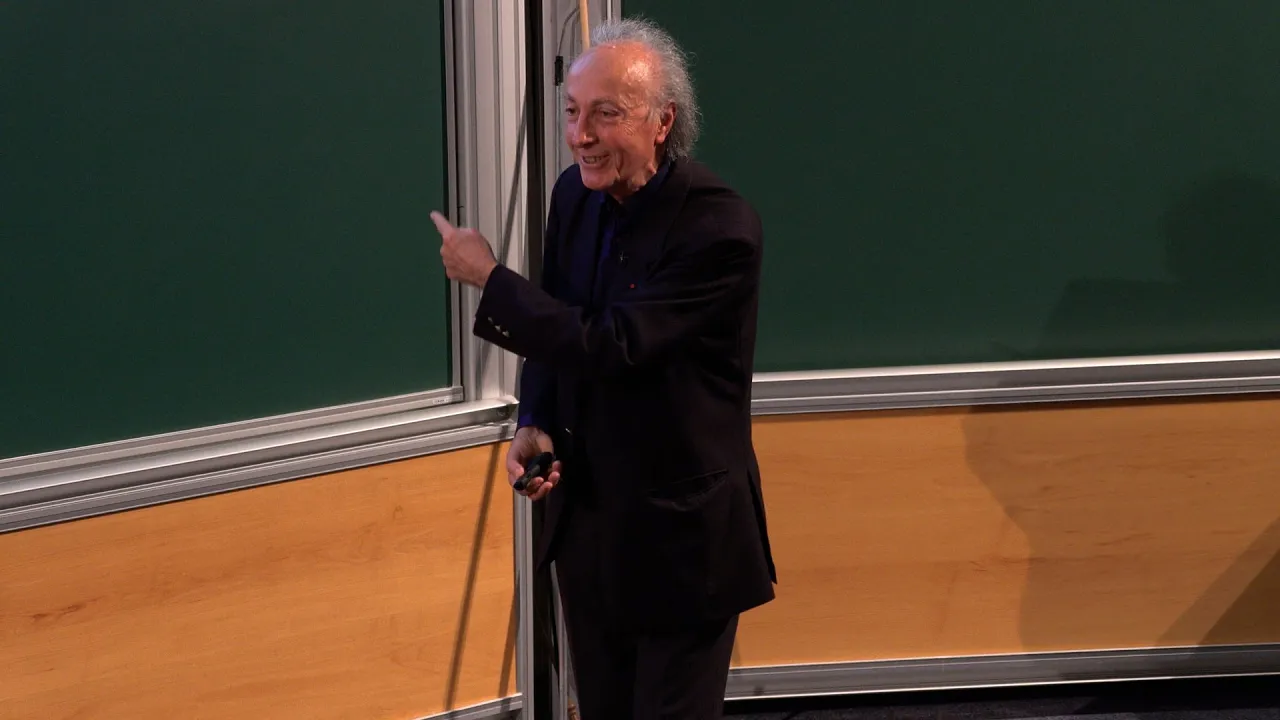
Images from the Edge of Spacetime: Avery Broderick at Perimeter
Added:Einstein's Theory of General Relativity: Understanding how mass and energy curve spacetime, which governs the behavior of gravity and light.
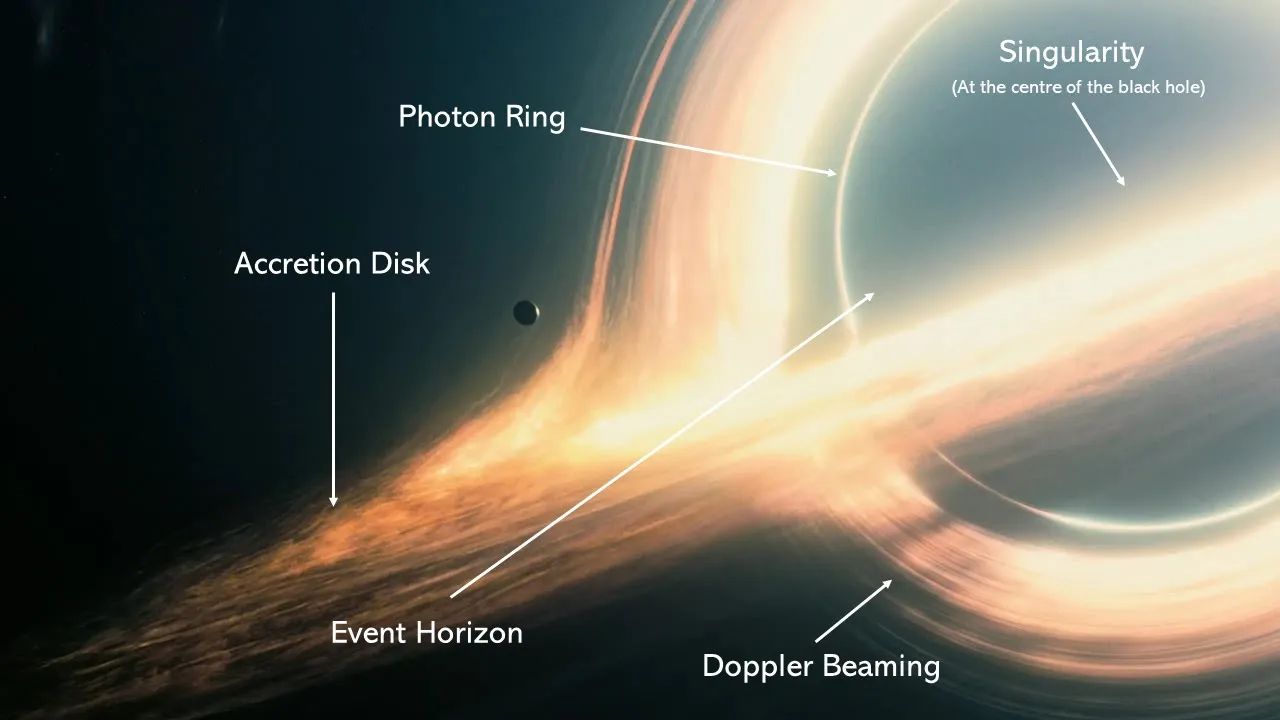
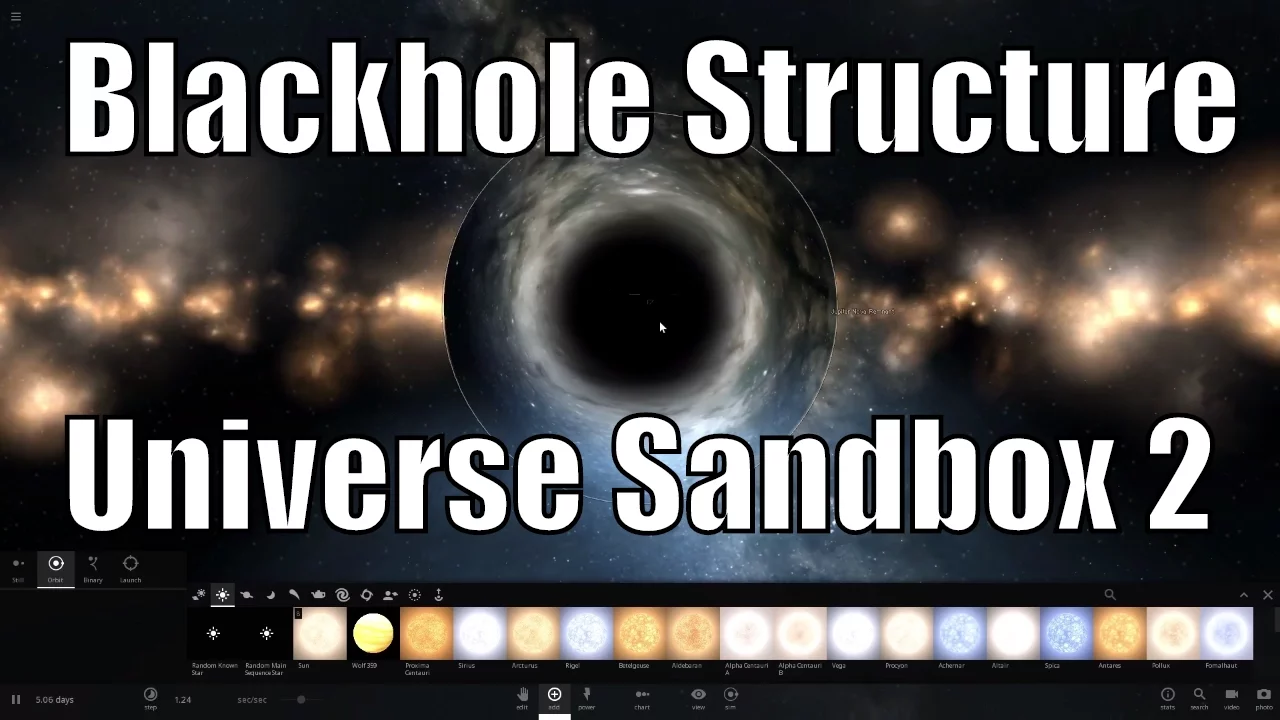
Basic Black Hole Anatomy: Familiarity with fundamental concepts such as the event horizon, the singularity, and the accretion disk.
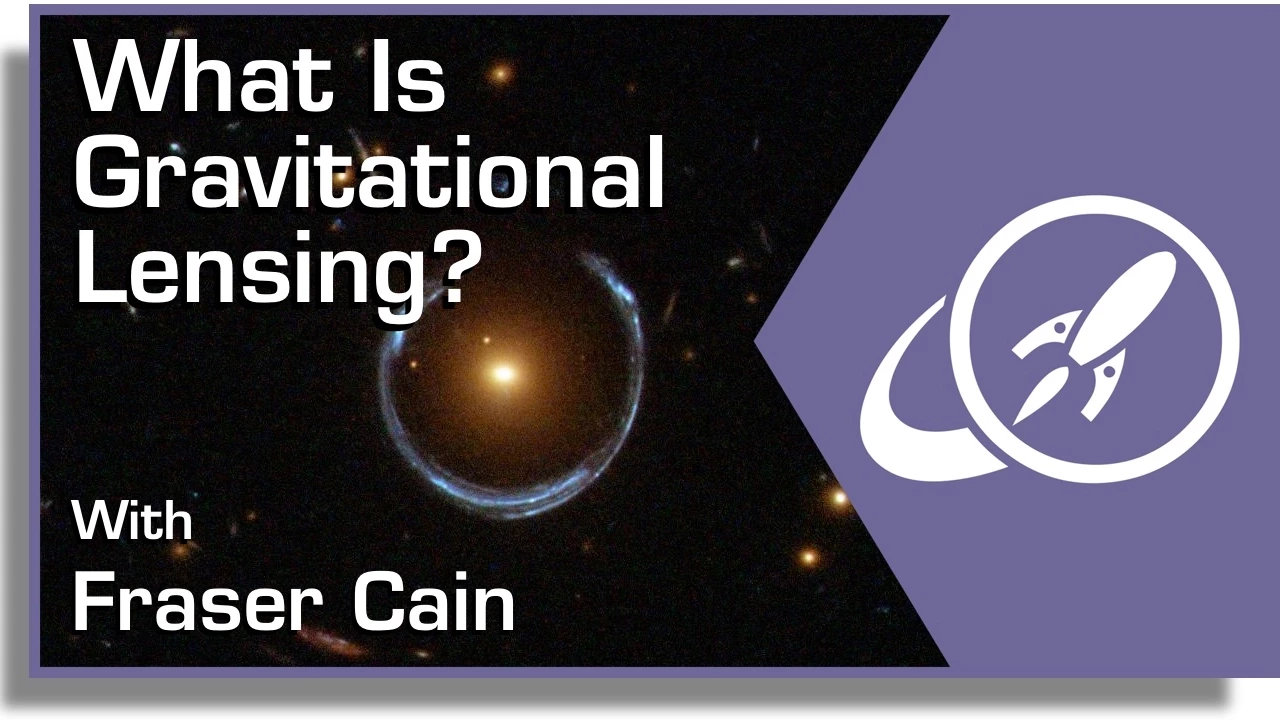
The Concept of Gravitational Lensing: How massive objects bend the path of light passing near them, which is crucial to understanding the 'shadow' of a black hole.
Principles of Interferometry: A basic understanding of how multiple radio telescopes can be linked together (Very Long Baseline Interferometry) to function as a single, Earth-sized telescope.
Testing Gravity in the Strong-Field Regime: Exploring how observational data from the Event Horizon Telescope is used to constrain alternative theories of gravity.
The Physics of Relativistic Jets: Investigating how supermassive black holes launch powerful, high-speed streams of matter into intergalactic space.
Black Hole Thermodynamics and Information Paradox: Delving into advanced theoretical physics, including Hawking radiation and what happens to information that falls into a black hole.
Future Space-Based Interferometry: Researching the next-generation Event Horizon Telescope (ngEHT) and proposals for putting radio telescopes into orbit to capture even sharper images.
693.6K views4.4Klikes1:25:34Original Release: 2018-10-04
[Music] [Applause] thank you welcome to Perimeter Institute welcome to Perimeter Institute and welcome to our public lecture series my name is Greg dick I'm the director of educational outreach outreach here at perimeter and it is a pleasure to welcome everyone everyone those of you here in the theater and those of you watching online today the lacs will last approximately one hour and will be followed by some questions and answers however if you're watching online and you use hashtag P I live you can join in conversation with dr. Damien Pope and a team of P I research errs and they'll be willing to to engage in conversation throughout the lecture and then also at the end if you have questions for a guest speaker use a hashtag P I live in the Twitter feed as well to send in sending those questions and I'll try to get them get to them as I can and now it is my pleasure to introduce tonight's very special guest speaker dr. Avery Broderick dr. Broderick is the Delaney family John Archibald wheeler chair in theoretical physics at Perimeter Institute and he is Kraus appointed at the University of Waterloo he completed his PhD at Cal Tech in 2004 and was a postdoctoral fellow at the Institute for theory and computation at the harvard-smithsonian Center for Astrophysics until 2007 and then a senior research associate at the canadian institute for theoretical astrophysics until 2011 dr. Broderick has broad interests in astrophysics from how stars form to the extreme physics in the vicinity of white dwarfs neutron stars and black holes and he has been deeply involved in the event horizon telescope project an incredible international effort to interpret highs horizon resolving images of supermassive black holes including the black hole at the center of our Milky Way galaxy tonight dr. Broderick will share with you that international collaboration and what might be on the horizon ladies and gentlemen dr. Avery Broderick good evening so before I get into what black holes are and what they look like I always like to take a dive into black holes in our culture I peruse Amazon and see what what comes up when you search for black holes and you throw away everything that tells you what black holes are and of course you get the movies some of them are beloved maybe that's why I work on black holes some are a recent phenomenon and some aren't so good you get inspiration for music and maybe undated myself now I couldn't help but notice one of the things that came up with Soundgarden's black hole son was a quote by Neil deGrasse Tyson saying literally nothing in this song is correct which is true you get a lot of books so here's one I didn't realize black holes had a place in theology but I certainly feel this way sometimes after lectures I'll let you decide if that's also theology ouch wits is a pretty pretty apt usage of the name although maybe not my black holes but then we get into things that make no sense okay things like out of a black hole black hole focus but occasionally you get something that's absolutely spot-on like the black hole litter Mack I don't like cats my wife is terribly allergic to him but I almost want to get this or the black hole drum quieting sheet thing to keep your neighbors from filing noise complaints against you again essentially right ok so I think the point that I always come to after perusing the internet for where black holes are in our culture is that essentially people get it right black holes are things into which stuff goes and then it doesn't come back out but it turns out that it's not a parent terribly new idea the first time somebody talked about objects in which light couldn't escape there's actually in the 18th century it was John Mitchell who noted that if you took Newton's theory of gravity seriously that at some point things would have to be dark and the illustration of this is imagine throwing a baseball up we all know what goes up must come down you throw it up a little bit harder it goes a little higher a little bit faster it goes even higher after that how far out it goes is a function of how hard you throw it there is a magic velocity though when you throw it faster than this it escapes to infinity for something like the earth that's 11 kilometers per second so that's how fast you have to be launching rockets if you're going to leave the surface of Jupiter it's of order 60 kilometers per second for the Sun 600 and what John Michell said was what if you made that the speed of light which at the time was known to be finite then you'd have an object from which even light couldn't escape and he had this prescient quote that essentially says there would be these things that you wouldn't be able to see directly but you'd only ever see through their influence on neighboring bodies and interestingly this is one of the main tools we use in astronomy to find all kinds of dark things not just black holes from planets to neutron stars and white dwarfs but also black holes so John Mitchell got a key element of astronomy right there of course that's not our modern understanding of black holes or about an understanding black holes comes from these two gentlemen we have Einstein writing out equations from general relativity on the board clearly this is this is staged he looks slightly scared we have calls for shield who gave us a swore shield solution the first non non-perturbative solution to general relativity and was the first black hole solution and in it we have a similar idea that there is this dark object but there are some important differences we can imagine having a light bulb shining at some distance from the black hole horizon and light will be bent around by gravity some light will escape others will be trapped and as we move this light bulb down towards the black hole more light becomes bent towards the the horizon itself and is lost and as we cross the horizon everything is bent and this differs from John Michels idea in the sense that the light doesn't move one step outward before it goes down the throat of the black hole once you're inside the Swart shelter eyes and once you're inside the event horizon so how do you make a black hole though it turns out it's really just a matter of size it's a matter of making things compact enough if you look at something like the Sun this is roughly a logarithmic scale in radius 700,000 kilometers and I were to squeeze that down to 30,000 kilometers or 3,000 kilometers I would get a white dwarf it's just the next stable state of matter and at some point if I would squeeze that white dwarf down to 10 kilometers something the size of the Waterloo Region it would form a neutron star something supported by neutron degeneracy pressure essentially a large nucleus floating through space but if I were to crush it down to three kilometers the size of the city of Waterloo then I would have a black hole and that's all I need to do crush the Sun to three kilometers it's a matter of size so for the Sun at three kilometers I could do the same thing to the earth that's one centimeter you could do the same thing to me that would be 10 to the minus 15 proton widths okay you could do it to the universe but I'll come back to that and yes anything can make a black hole the black hole doesn't care what it's made out of you could do it with the Sun you could do it with a large star the earth and me and this was proven by first that these things must actually exist in practice by this gentleman Oppenheimer before he was making bombs he was asking what's the final fate of stars and showed that ultimately stars like the Sun or much more massive than the Sun 30 solar 30 times the mass of the Sun would no longer be able to support themselves they would begin to collapse and at some point form a horizon then transitioned into a black hole that this black hole solution that Schwarz yield had found wasn't some mathematical curiosity but was in fact a realizable thing in the universe this gentleman here John Archibald wheeler for whom the chair and very honored to have is named he spent a good part of his career proving that in fact there was no other stops after neutron stars on the way to black holes that there was nothing else that would stop you once once you had a massive enough object collapsing no longer supported by nuclear fusion it will end up as a black hole now from an astronomical perspective black holes are engines of the universe engines of electromagnetic industry and one form we see them practically is x-ray binaries this is a black hole that is orbiting a neighboring star and cannibalizing it and there are a number of examples of these characterized by how far away from their their partner they are and how large the disk of material falling from the partner towards the black hole is and you can find them in the x-rays in fact universe looks different in every wave band here's a picture of Andromeda and it shows a number of x-ray point sources most of those are x-ray binaries there's also another class of black holes supermassive black holes things that are not NASA's similar to stars or tens or hundreds of times stars but something masses of millions billions maybe ten billions and an example a prototypical example is 3c273 is a quasar what you're looking at is not a galaxy you're looking at a single black hole it produces a luminosity of 10 to the 47 herbs per second it could be as high as 10 to the 48 herbs per second there are objects that are that bright that's 10 trillion solar luminosities that's one supernova every 15 minutes compare that to one supernova every century in the Milky Way so these things are enormous ly luminous in fact it's so luminous it outshines its host galaxy by a factor of 100 there's also this funny little feature you see extended in the bottom of the image that's not an artifact that's really there that's a jet it's a relativistic outflow of material that originates down near the black hole itself here's an image of a similar feature in Cygnus a another supermassive black hole somewhere else in the universe launching jets out large distances before they terminate in these radio lobes and in fact these things can get enormous the largest radio jet currently on record has a distance or separation between these radio lobes these spots at either end where this relativistic stream of particles slams into the intergalactic medium and stops of four-and-a-half mega parsecs the typical distance between galaxies like the Milky Way is one mega parsec so this is intergalactic and these Jets are not without consequence here's a composite image that shows radio emission optical emission and x-ray emission from the galaxy cluster in it the galaxies are white so everywhere you see a little white spot that's a galaxy in the cluster the red shows radio the radio are the relics from these Jets that we saw in the previous slide this is what's left over from those Jets streaming out and if you look closely and maybe you have to squint a little you can see in the blue which is showing the hot x-ray emitting gas cavities associated with where the radio jets were produced in other words the black hole at the center of this galaxy cluster isn't just announcing its presence by launching relativistic Jets it's carving hole holes in the gas in the cluster about all the galaxies that surround it it's modifying its environment its ruling the fate of those galaxies so what about for physics it turns out that black holes are especially timely now they slip at the Nexus of a wide variety of physics questions and one of the key reasons is black holes are simple they're characterized by a three parameters if you give me three parameters I know everything I need to know about the black hole you give me its mass its angular momentum and it's electric charge then I can characterize how gravity around it behaves and I don't need to know anything else and in practice I don't need to know that electric charge just the mass and the angular momentum will do at least for astronomical black holes because the charges will short themselves out on short timescales and that's actually quite a contrast with our daily experience because most things we know are not so simple for example the rhinoceros in the SUV are similar mass but they're rather different the same thing is true out in in the in the universe about us where we have molecular complexes stars etc a wide variety of things in other words universe is complicated but black holes are simple now there are a number of ways if you're interested in gravity of trying to probe exactly what whether or not general relativity or this Einstein's theory of gravity that leads to black holes is sensible an enormous amount of progress has been made using terrestrial and solar system experience experiments I would call these high-precision week gravity measurements some people might take umbrage to that characterization they are extraordinarily high precision but fundamentally they are experiments where gravity is making a one in a hundred million correction their general tivity makes a one in a hundred million correction to Newtonian gravity or one in a million in the case of relativistic binary experiments host tailor binary pulsar where they watch two stars orbit in fall fall in towards each other a little bit each each orbit as a result of emitting gravitational waves but it's still one in a million correction to Newtonian gravity but black holes are fundamentally different because they are a place where you have a hundred percent modifications of D Tony and gravity where the gravitational potential and dimensionless units is of order one and it turns out that there's one other place in the universe where that's true that's the universe as a whole if I plug in the mass of the universe in terms of its density you can get that this thing is also one this dimensionless gravitational potential is also one when you have one hydrogen atom per cubic meter and a size of 10 Giga parsecs that's the cosmos I said we return to that the Swart shield horizon of the universe is about the size of the universe okay that doesn't really mean the universe is a black hole but it does mean is that if you want to do cosmology you should study your general relativity but general tivity is a fundamental part of cosmology the relativity is the reason why we talk about 95% of the universe being something other than you and me and everything we see something dark like dark matter or dark energy that's making the universe safe for general relativity everything else in the universe lives between the universe as a whole whether the gravitational potentials of order unity and black holes in the middle of gravitational potential in this dimensionless form as well considerably less than one this is where we would be doing weak gravity tests okay so this is the only other place in the universe where general relativity is making a hundred percent correction to what you would have expected from Newtonian gravity and there you dragons we don't actually know exactly what should happen so the black hole is more than a horizon I'm gonna share with you a little bit about what black holes do to orbiting bodies and key key features within their space-time it's a standard undergraduate exercise what happens if we take the Sun and replace it with a black hole and the answer is of course absolutely nothing the earth will continue to orbit it will get a little cold but if we were to launch a a satellite or maybe we already had a satellite and that's why it has solar panels and send it down to study our replacement Sun our new black hole as it approached the black hole you would you would come in closer and closer on orbits that look like Newtonian orbits out to about nine kilometers and when it crossed this magic point of nine kilometers it would fall in suddenly its innermost stable circular orbit that's because orbits around black holes are different than orbits around larger bodies at some point there isn't a stable orbital velocity that will provide the centripetal acceleration necessary to bend you around and there's a fundamental reason for that that's built into general relativity it's that kinetic energy also gravitates so as this satellite tries to go faster and faster so that it's centripetal acceleration will match the gravitational pull its gravitational pull goes up and it falls in so there's this empty hole around black holes characterized by this inner most stable circular orbit now it doesn't mean that you can't imagine having circular orbits that doesn't mean you can't imagine putting your satellite on an orbit only that it wouldn't be stable and in a single orbital timescale would plunge in towards the black hole another important location is the photon orbit when this circular orbital velocity would be the speed of light and it's generally unstable we're going to see the impact of that in images for the event horizon telescope black holes also don't just pull particles around they pull space-time around so you can think of things moving in a flow that flow is the actual space-time and at some point the space-time is being pulled around so fast that the particles themselves can't ever be stationary relative to people far away or observers far away that is to say they may think they're stationary or they may even put themselves on an orbit get out their rocket engine and start going around in the opposite direction but they would have to go faster than the speed of light for them to look stationary compared to the Stars far away and that's this frame dragging this dragging of space-time and that's characterized by this region called the ergo sphere again something that ends up being important in the astronomical manifestations of black holes in some sense the ergosphere it sounds kind of a not like an odd idea because we don't normally deal with or we don't normally deal with the the mass current elements of gravity gravity for us is something very much like electrostatics very much like static electricity and we think we've all played with balloons and if you have kids you rub it on their heads that's but many of us have also built electromagnets and this frame dragging is just the gravitational analogue of magnetic fields being driven by currents okay so we have this picture of black holes physically a number of interesting locations in their space times we know they appear throughout the universe in men as manifestations in x-ray binaries manifested x-ray binaries and manifested as active galactic nuclei but mysteries abound so the first is we have millions of these mini monsters floating around x-ray binaries themselves are exceedingly special objects because the black hole has to be nearby a partner close enough to tear material off the surface but there could be up to a hundred million dark black holes floating around the Milky Way and interestingly there could still be up to ten percent of the dark matter produced by black holes and not black holes like like the Sun perhaps things that are smashed a millionth or less of the mass of the Sun these would probably be primordial black holes something formed in the early universe but there's a straight question mark and people are trying avidly to close off this region but up to ten percent of the mass in this dark matter could be these black holes and then we have the monsters at the Centers of galaxies said millions to ten billion suns if we look out in the night sky you can see Andromeda m31 eye has a black hole at the center of the of its core about a hundred million solar masses there's also m32 and drama to smaller friend and it has a mass of about three million solar masses they're both the same distance away and 31 and m32 are in the same system I'm thirty twos of Dorf galaxy that orbits Andromeda okay so this isn't just a projection effect this guy's much smaller than that and has much smaller black hole here's m87 an object that will feature in our story a little bit later and it's the brightest and most massive component of the Virgo cluster lives at the center it's a giant elliptical galaxy and I've shown these two pictures to scale Andromeda is much smaller than m87 and m87 harbours a seven billion solar mass behemoth so bigger black holes live at the centres of bigger galaxies and they do this despite the fact that they are a tiny fraction of the mass okay you might think well bigger things live in bigger things that makes sense but there's such a tiny fraction of the mass how do they know how large the galaxy is I mean do you know how large the galaxy is right how would you feel it okay this is frequently presented and something called the M Sigma relation or black hole mass bulge mass relation that relates the mass of the region around the center of the galaxy in the black hole that inhabits it here's the black hole mass here's the Bulge mass this is an equal line the black holes are three orders of magnitude less than that and yet strongly correlated so they know so that immediately raises the question is how do they how do they grow in such a fashion that they know about their host galaxy how do they launch the Jets that effect the growth of their little host galaxies and even I've told you that these are industrious I've told you that they're very bright but are they black holes and there's the fact that we have these two classes up to a hundred solar masses and down to a million solar masses raises a third question that I'm not going to answer at all today and that is where is everything in between do these become those or they fundamentally different beasts but we will get two answers maybe not today we will get two answers we stand at the precipice of a Golden Age of black hole astronomy we have a large number of different observing techniques that are all converging on studying black holes in ways that have never been possible before the most obvious of which is the opening of the gravitational wave the universe the detection of the subtle ripples in space-time caused when two black holes run into each other there are now many events that have been published and LIGO is a prolific black hole finder if not incredibly inefficient because every time it finds two it quickly becomes one there's also the era of multi messenger astronomy just just this past year we heard about the IceCube neutrino detector detecting peda electron volt neutrinos so how much is a beta electron volt it's 10 to the 15 electron volts that's a thousand trillion times as energetic as the light you see and sameer trillion times as energetic as the x-rays you get at the dentist's office it's just an exercise in superlatives and they originate in again these active galactic nuclei these supermassive black holes for the first time they were able to identify the origin of one of these beta electron-volt neutrinos but neutrino astronomy is not the only multi messenger astronomy there's also a number of different instruments both ground-based and space-based probing the universe in gamma rays x-rays optical near-infrared and we'll talk about the radio in a moment okay and all of these are unlocking black holes and new and and new in new ways that have never been never been accessible before and the third is what we're going to talk about today directly resolving event horizons now I know this looks messy enough to maybe be a real image it's not will come to that okay but this is this is the the point today the idea that now we aren't going to get these unresolved pictures or spectra spectral information about black holes unresolved point sources but we are going to for the first time be able to identify where around the horizon did the emission come from but why is this a challenge so the characteristic scale of this image from this side to that side is the characteristic scale cast by the shadow of a black hole so here's a here's a diagram that shows what happens if I were to take a black hole and put it in a uniformly bright universe every photon or every ray trajectory that I could trace back in time so that it hits the bright universe is bright but every trade trajectory I traced back that lands on the horizon is dark and there's a characteristic size of about five Schwartz shield radii and angular units so it depends on how massive the black hole is and it depends on how far away it is and that number is insensitive to most of the things that the parameters of the black hole insensitive to the mass of the black hole its angular momentum and like we said the charges engine point hey I said before that this unstable photon orbit was going to show up again the shape of this circle is determined entirely by that unstable photon orbit and so it is a generic feature of things with horizons so where does the word do the black holes in the universe stack up in this in this angular size well we have the stellar-mass black holes that are very close to us these are the x-ray binaries I said there were of order a hundred million of these floating around but we know of of order twenty that remember those are the ones that are eating their their partners star the size of their shadow cast on the sky is somewhere around one trillionth of a degree that's a little small the black hole at the center of the Milky Way he's about as far away as the stellar-mass black holes right you know we see twenty stellar-mass black holes in in the galaxies they're going to be spread roughly evenly through the galaxies okay so it makes sense that the galactic center is about as far away but it's also a four million solar mass black hole so it has an angular size of a whopping 100 millionth of a degree next on the list is n 87 we already saw an 87 that's in the Virgo cluster that's 17 mega parsecs away from us which for a black hole of 7 billion solar masses is practically next door it's like living down the block from Bill Gates that's also a hundred millionth of a degree M 31 is a little bit smaller factor three or so there's a whole slew of supermassive black holes AGN that live between a hundred billions of a degree in 100 million something that I found pretty exciting was a couple years ago there was this new ultra massive class of black holes I was discovered black hole there's 20 billion solar masses nobody quite knows how you make a twenty billion solar mass black hole or even if that's the limit but this thing NGC 1277 appears to be such a thing and it's 77 megaparsecs away which gives it a singular size third on our list so the number third target wasn't even known until a couple of years ago but I don't think it's radio bright so we're out of luck the galactic center or Sagittarius a star as we call it and m87 are the two top contenders on this list and in units that are easier to say there's 55 micro arc seconds or 40 micro arc seconds okay so an arc second is one 3600 of a degree and a micro arc second is a millionth of one of those so it's a hundred millionth of a degree how small is that in practical terms if we if we look from Waterloo on the other side of the earth and try to read the small writing on the dime not see the dime anyone can see the dime we want to actually read the dot look at the small writing on the dime that's what we're talking about or as we enter this new space age it's like watching the puck in the hockey game on the moon I don't know about you but I can't see the puck in the hockey games on earth but that's what we're talking about that's a hundred millionth of a degree and there are fundamental limits that make it difficult to do this okay the the chief one is diffraction the diffraction limit is caused by the wave nature of light and you don't need light necessarily to see it here are water waves and you can see as the water waves approach and impinge upon these two islands they generate these hemispherical waves propagating outward your ability to know what direction the water waves coming in came from is determined by how far apart these are how large is the flat piece in the middle right if you're sitting here you might have thought the light key or the the waves came from that direction over here from that direction on your way home tonight you can verify that this is a real thing just look at the streetlights in in this picture the streetlights have this hexagonal pattern those are the diffraction spikes caused by the aperture of the camera if you look at the streetlights you're actually measuring the shape of your pupil which is kind of fun that's how I determined I needed glasses so that's what happens when you're a physicist you you ask your wife does that look does that look double to you and why are you staring at the streetlights okay so if I look at if I look at things with my telescope I'm a proud owner of a 8 metre reflector I take my kids out every time that it's clear at Waterloo which is unfortunately rare and and look at the sky oh but if I take my my instrument out my diffraction limit comes down to the wavelength I observe that divided by the diameter of my telescope is 600,000 micro arc seconds so I thought that was pretty awesome but it's also underwhelming for the prospect of measuring black hole horizons so I'm not doing this in my backyard we can move up here's the sloan digital survey special shops with survey SDSS they have a two and a half meter telescope at apache point that they use to do their great work there's also the Hubble telescope if you wanted something more exotic it's also about two and a half meter diameter dish their diffraction limit observing in the optical is about 2,000 times what we need to see at some point the James Webb Space Telescope will go from looking like this to looking like that that is in space and as wonderful as that is it's still 600 times too low resolution modern modern cutting-edge ground-based telescopes 10 meter class telescopes are in fact diffraction limited thanks to adaptive optics which is an amazing technology where they're able to for the twinkling of the stars correct for the aberration in the atmosphere and you can tell that their adaptive optics that their their diffraction limited because you can see the little diffraction patterns the little circles Airy patterns around the stars until they clean them up remove them and pretend they didn't exist these things are 500 times to low resolution even the thirty meter telescope is 100 times to low resolution we need the five kilometer telescope which maybe is in the next funding package but there's another way we're going to use another wave property of light and do it interfere in interference experiment and so I'm going to remind you how the double slit experiment works and I'm going to show you how we could turn that into a telescope so imagine we have our light bulb shining on two slits we know that that's going to produce an interference pattern and why does it produce an interference pattern because the light follows the two trajectories to the two slits okay and where the path is the same length from the light bulb I'm going to get constructive interference but where one path is half a wavelength longer than the other I'm going to get destructive interference okay and then if I move over a little bit further it'll be constructive again and then destructive and so I get a fringe pattern okay if I move the light bulb the fringe pattern moves and it moves by an amount that's determined by how much the distance from my light bulb to my two slits is different from one slit to the next as I move in more the fringe pattern moves up okay so you might imagine making a telescope where you measure the fringe pattern and you infer the source position there is a complication because if I move the toe the the light bulb far enough and it turns out far enough is our diffraction limit again lambda over a distance then my fringe pattern matches up with where it was before shifted over but I can't I can't tell that okay but the interesting thing about this angular scale is that it isn't lambda over the size of the slit its lambda over the distance between them so it's a different distance now the fact that I have this degeneracy means that I can't really tell the difference between this light bulb and this collection of light bulbs so the price I'm going to pay for trying to do this experiment where I measure the fringe pattern and infer something about the structure of the source is that I get something about the structure on scales of lambda over U wavelength divided by the distance between my slits not the size of my slits so I get some information about that formally what am I getting I'm getting information with the 4a mode before a wave mode of my light bulbs okay and as I go back the fringe pattern moves again this is exactly what radio astronomers figured out half a century ago and when you see things like The Very Large Array it's going to Mexico this is what they're doing okay the distance between slits is the distance between telescopes each telescope is itself a slit and it's measuring the wave at that position the wave radio wave incident from astronomical source at that position and you need a lot of telescopes to do this because you need to fill in the structure on all the different scales of the image it's not enough just to have one pair then you can't tell the difference between a comb of light bulbs and a single light bulb but if you have a large variety of different pairs each pair can give you one of these interference experiments and you can fill in all the information in the structure in all scales of the source that is to say the combination of all these telescopes is like filling in a mirror that's the size of the separation between the telescopes and the way you do this experiment is you measure the electric field of the incident radio wave at each telescope you then go to a big computer and you combine them and run the second half of the interference experiment where they propagate from the two slits to the screen look at the fringe pattern okay measure the brightness of the fringe pattern and then you repeat this process for every pair so how big can that distance yet okay things like the VLA gets to a few kilometers maybe maybe 60 kilometers but you don't have to stop there you could imagine building something the size of the earth because now we don't have to build a single dish we don't have to build a 5 kilometer telescope okay we just have to put two telescopes five kilometers away from each other and you can put them 10,000 kilometers away from each other and this is the very long baseline array so this is a dedicated instrument - exactly this endeavor the angular scale said it can access again is lambda divided by the size of the longest baselines in this case that's one centimeter divided by 10,000 kilometers the diameter the earth that's about 200 microseconds so now we're within spitting distance how do we improve this well we have two choices we can make it bigger making the earth bigger is very expensive people do it it's called putting satellites out there but they're expensive we can move towards shorter wavelengths if we move to a shorter wavelengths we decrease the top number you go down by an order of magnitude where a misses and that's what the event horizon telescope is it's a version of the very long baseline array that operates at millimeter wavelengths instead of centimeter wavelengths so why are we doing this now instead of 50 years ago and the answer is the costs of sensitivity okay been horizon telescope targets size a star the galactic center and m87 are quite bright in astronomical terms they're one Jansky sources there's a lot of micro Jansky sources in the universe so and people see them so one Jansky sources are pretty right but how bright is that in in in practical terms a microwave that's going to boil your water and an acceptable amount of time has to be about a thousand watts okay you are producing eight wotz I might be producing a little bit more than 80 watts right now the black hole at the center of our galaxy emitting in radio it actually peaks at a millimeter so this is its peak for peak luminosity as it hits the earth in a dish that's 10 meters about 10 meters in diameter 100 meters squared dish ok produces 10 to the minus 15 watts that's pretty small so there are some lessons the first is shut off the microwaves we joke we joke but actually that mattered you might have heard of fast radio bursts there are people that perimeter who work on this it's exciting exciting field there was a subclass of radio transients called perry tongs and they noted that these perry tones showed up suspiciously during lunch their microwaves okay and the second thing is sensitivity and sensitivity is you know it's complicated by the fact that if you're going to make a detection here you have to make it in the time scale over which the atmosphere is stationary is not changing all right stars twinkle because the atmosphere is constantly changing under the star and so you're watching it dance across the sky if you were to take an instantaneous picture of the star you'll see a splat because it's being refracted through the turbulent atmosphere yeah the time scale of which the atmosphere changes appreciably at a millimeter is 10 seconds at centimeters is much longer so we really have to make a detection in 10 seconds and we have to detect this thing that's really quite dim 10 to the minus 15 watts okay so how do we improve sensitivity you make bigger dishes once again that's hard to do all of the telescopes in the venn horizon telescope were built for other purposes we don't have control over that and the second thing is to make bandwidth larger what's the bandwidth it's the region in frequency that you add up the light so we don't add up the radio waves across the entire electromagnetic spectrum that's not just radio waves but near our people you can see we add up all the light within a range and we can make that range bigger and we make that wait range bigger we have more light higher sensitivity and we've pushed everything to four gigahertz okay why does that make it difficult to do to build the vendor eyes a telescope well we're not just recording the power this isn't like a camera we don't just develop the film who we expose the film and develop it okay we actually have to measure the electric field at this at the station throughout the observation so think of producing an audio track instead of a single brightness measurement and we have to do this 230 billion times a second if we're going to measure measure millimeter wavelength waves okay it turns out it's not quite that bad we really only have to sample sufficiently to uniquely determine within the bandwidth what the wave looks like and that's about 8 gigabytes per second but it's still 8 gigabytes per second at each station is about 64 gigabytes per second for the entire array and for comparison all of the experiments at CERN record about 25 gigabytes per second so this is already CERN scale problem 225 terabytes per hour for one week observing that's 27 beta bytes okay that's big data science and it's expensive to get 27 peda bytes of hard drives and it turns out that this is one of the Moore's laws and Moore's laws was about transistors on a chip but there's all these now exponential things and one of them is the cost per gigabyte has been dropping exponentially and so now because of this it is possible to build a facility or build a instrument that can record with enough sensitivity to detect our sources at existing telescopes I here's the pictures of disk packs lovingly produced by people in the collaboration so here's a picture of the event horizon telescope it is a global array this is what it looked like in 2017 we had eight stations two stations that were part of the array had unfortunately been decommissioned by 2017 but two new stations are coming online in 2019 so we're very excited about that one way I like to characterize the event horizon telescope is it's not big science it's smart science now that feels less and less true every day we have a large collaboration now but it's smart science in the sense that we are leveraging billions of dollars of investment over decades in millimeter astronomy across the globe with a comparatively much smaller sum by synthesizing them all into a single array that can do this thing that none of the individual telescopes can do okay so leveraging already available facilities the event horizon telescope operates at 230 gigahertz it could operate at 0.8 345 gigahertz or 0.87 millimeters we are working on on the first demonstrations of that capability and we do full polarization detections and we can get robust detections to EHT targets and second okay so it does everything we need it to do I want to emphasize that this version of the EHT while magnificent is not the first time we've done this sort of experiment a product a proto version prototype version of the event horizon telescope has existed since 2007 consisted of just three stations okay so we're not getting enough information about any objects on the sky to produce pictures directly okay but we are getting horizon scaled information about objects on the sky and with that for more than a decade we've been studying horizon scale stuff around the black hole at the center of the galaxy and for almost a decade in m87 so here's the collaboration as of 2016 it's grown by leaps and bounds today it's a word or two hundred people there I am on the edge so I need a diet of what are 200 people we we have feet on five continents we have the hard one we have Antarctica 13 partner institutions of which perimeter is one and 36 a fill institutions of which the University of Waterloo was one the big change in 2017 wasn't the jump from just three stations to a it was the important contribution or inclusion of Alma so Alma is this enormous exquisitely sensitive instruments in in Chile it is by far the most sensitive millimeter telescope on its own in the world today and it serves as an anchor for the array because our ability to run this interference experiment depends upon the signal-to-noise ratios or the sensitivities of stations at either end of each baseline we can get whopping detection x' from any station to oma and we can use the information obtained from that to get detections from each station to each other so without Alma the fringe patterns we can produce between different stations marginal and with Alma we get whopping blooming detections from from the the satellite stations these other stations so that's been that's been the major improvement in 2017 is really the inclusion of this massive anchor in April 2017 this full version of the event horizon telescope observe for the first time and we observed concurrently with a wide variety of additional telescopes ranging from the gamma rays to longer wavelength radio observations we observe both sides a star and m87 we have excellent detections and you can see the importance of Alma here this is how well did we detect or the the number of detections is a function how well we detect it the fringe pattern remember that interference fringe the baselines that don't have Alma's Peaks somewhere around signal-to-noise ratio of 20 that's a 20 sigma detection that's pretty good the Alma dissections are up around a hundred ok so almost exquisitely important there the analysis unfortunately takes time the way you get 27 petabytes in one location is you you mail it there's no internet that will do it so you have to physically collect them and bring them to correlation facilities we have a correlation facility in MIT haystack and one in Bonn so these are large computers that are finishing this this process of doing the interference experiment okay you need a large computer to do this because you have to search through all the possible different positions of each station and the different atmospheric phase delays which can be quite large at each site so it is a long and ownerís process that takes months so we have to get them that takes months we have to run the correlation that takes months we have to calibrate it that takes months then we realize we messed it all up and have to do it again and that takes it but success so here's actual data that I'm allowed to show it's not on Sanjay Starr m87 this is something called a closure phase which is a measure version of the of the shift in that fringe pattern or information about the shift in that fringe pattern carefully chosen as a function of time and the important thing is these points all have some value that's very clearly not zero by a large margin the error bars and each one of these points is absolutely tiny in comparison to zero the distance from zero now same things true for another source incidentally that was 3c273 so what does a black hole look like well I'm sorry he's coming in early 2019 maybe so uh stay tuned what does it look like in theory well obviously it's a black hole but if we put stuff around it and appreciate flow around it it looks something like this here's a beautiful simulation by otaku chicawa that shows material orbiting and falling in towards a black hole at the center here's a slew of other calculations of the images next to it and they all show a characteristic structure it has this crescent-shaped picture that's limb brightened around the circle okay the first feature which is I think striking is the hold in the emission in the center the the shadow and that shadow is exactly that shadow that we saw before now I'm just showing it in terms of the photons that are hitting the horizon here the photons have some different brightness because now they're integrating through luminous material and for that reason this shadow is not completely dark there's a mission in front because part of the surrounding plasma was in front of the black hole the second thing that is obvious as this is the crescent shape one sides bright one sides dim and that's because of the relativistic motions induced by the black hole remember John Mitchell said we would find the black hole by its impact on or its influence on luminous matter and that's exactly what's happening here the black hole is causing stuff to move around at near the speed of light and we see one side Doppler beamed and boosted makes it more opaque and much brighter on our one side and the other side is receding more transparent much dimmer and that's a characteristic feature of all these images so what can you do with that so in the remaining time I'm gonna breeze through a number of kinds of science or scientific analyses we're going to be doing or looking at in the next year with actual data give you an idea of the kinds of things you can expect this year and in the next decade so what's in a size so if this looks suspiciously like the previous slide that's because it is but you see I'm a theorist so my ruler measures things in gravitational radii and GM over C squared z-- I'm also a theorist which is why I use a ruler on mice we do better than that but that's pretty good what can you do with the size well the first thing you can do is you can make a strong argument for the existence of event horizons a strong argument that those supermassive things that produce all that luminosity at the Centers of galaxies are in fact black holes they have to be black holes they have to be a thing into which stuff falls and doesn't return and the argument is essentially the difference between a meteor and a meteorite okay if I have stuff that's falling onto a central accretor it's an it's rubbing up against other stuff in this headlong charge towards the central object whatever that is and it heats and it shines just like the meteor shines okay if the meteor still exists by the time it lands in the ground though it makes a large divot it's the impact luminosity that's the excess kinetic luminosity it had that it didn't impart to light it didn't lose to light by shining on the way down and if I had a chrétien onto some object that wasn't a black hole something where I could see its event horizon sorry I'm sorry see it's photosphere something like a star you would see this impact luminosity you'd see this heating of the surface of the star caused by the constant rain of infalling material upon it okay so the difference between something with an event horizon and something that doesn't have an event horizon is whether or not you see this impact emission so in the galactic center you can look for that and it turns out that naively and I'll justify this in a minute you would expect this emission to come out in the infrared and if I were to make a picture of the black hole at the center of our galaxy in the infrared to point two microns and add a luminous surface associated with this impact luminosity at some point it pushes far above all the observed infrared limits in other words it's too bright I said I had to come back to why did I think it was in the infrared I could get all this impact luminosity out by making the surface large making this object large I mean how do we know that the black hole at the centre of the Milky Way is the saint's or the object at the center of the Milky Way is actually the size of a black hole why how do we know that's not a thousand times as big as a black hole and therefore this luminosity spread out over a much larger surface and can be much cooler it could be hidden in spots in the spectrum where we don't have good limits big and cold well the answer is the EHT already tells me that's not true right the proto EHD made these horizons scale measurements of the structure and the black hole to the center of our galaxy and is certainly not a thousand swore shield radii across so big and cold is ruled out small and hot is how it would have to be and if we had a surface if we had a photosphere if we had a place where we could see where the stuff went we would see a bright infrared source which we don't see so in some sense this is of an argument along the lines of the dog that didn't bark okay we see a signal where we don't see a signal that we should see if it weren't a horizon and you can wiggle yourself out of this if you really really try but usually it involves tooth fairies my favorite was I used to I used to joke about about how you could get around this by positing that the black hole was a wormhole that anteed into intergalactic space but of course if you start making that argument then I think you've conceded the point the black hole is by far the least the least crazy of the two options but then T pop the more row to pay for saying that so if it's funny enough to make a joke I guess you should write a paper I had pointed out that this was before gravitational waves we made this argument 2009 six years before gravitational waves so before gravitational waves verified that there were black holes that were running into each other we already knew that there were things that were black hole sized that had something that looked like horizon you can measure the size explicitly you can do a better job than what I did before and when you do that you get a measure of this mass divided by distance this angular size of the shadow okay and you can use that to improve estimates of the mass in the distance to the center of the galaxy for Sagittarius a star for the double-acting center that's a marginal increase there are excellent ways to measure the mass in the distance to the mass of the black hole in center of our galaxy and its distance but for m87 it can be revolutionary and that's because there are two ways that people measure the mass of m87 s black hole they both involve observing things that are orbiting around and assuming that they're observed they're orbiting on Keplerian orbits but in one case people observe stars and if you observe the stars you think it's seven billion other people observe gas and if you think it's gas the gas is absorbing around on this coupler in orbits then you get three and a half billion now I'm partial to seven billion because that makes m87 bigger but how do you tell and I should point out that the air uncertainties m87 acessories are pretty good it's a plus or minus 10% ish so it's seven or three and a half plus or minus 10% and well they disagree the HD can settle that okay and that's going to have an important consequence for how material gets from the parsecs scales where you measure the gas down to the black hole where the HT measures its mass I can also interpret this myth's measurement in a slightly different way the event horizon telescope mass measurement is really a measurement of what gravity does on scales comparable to the horizon this other guy this gold gold bar comes from measuring stars in the galactic center so does the cyan blob okay this is gravity out at thousands the source shield radii tens of thousands hundreds of thousands for shield radii and so this is measuring the mass of the black hole or equivalently measuring its gravity at different locations and general relativity is the theory that tells me how these should relate and so even an approximate measurement of the mass of the black hole at the center of the galaxy is a direct test general ativy comparing what does gravity do on scales on the horizon what it does on parsec scales now in what follows I'm going to talk a little bit about Sanjay starting m87 in more detail just some quick facts about them we said Sanjay star was at the center of the Milky Way I said it was four-and-a-half million solar masses m87 center of m87 much further away much larger they're both very under luminous but one thing that I think is important to the HD story is that Sanjay star and m87 are essentially the the two sources you wish you had if you had only two sources there is difference as they can possibly be in almost every other sense this is size a star is the kind of mass of a typical black hole at the center of a typical galaxy m87 is an enormous behemoth at the center of a very very large galaxy sanjay star is a point source in the radio it doesn't show any evidence for any extended features or outflows m87 has a powerful jet and both of them are in a regime where we think we can estimate what the structure of the plasma around them looks like and so that comes in mad insane varieties mad Kame Kame well same came first but it wasn't named that the difference between mad and saying these are these are both accretion flows that are very low density okay the gas right around the black hole at the center of the Milky Way is still better than the best vacuums on earth by a large margin and as a result it can't effectively cool all the gravitational binding energy that's being liberated by the protons doesn't get turned into luminosity and so it stays hot and thick in a big puffy disk okay knobs we can turn or the mass accretion rate we can push more mass in towards the black hole we can change the annual mentum of the black hole and we can change how much flux magnetic flux get secreted so if I just had a hydrodynamic flow or if I had a flow that had very tangled magnetic fields so sometimes I were to create a field that was going up and sometimes I decreed a magnetic field that was pointed I wouldn't accumulate any net magnetic field um then we get this same picture this big puffy picture but if I constantly feed it the same magnetic field in this case down okay I give it the same thing over and over again then you generate a large amount of magnetic flux which crushes the accretion flow right around the equatorial plane and that's a magnetically arrested disc saying the standard and normal evolution I guess somebody has to define normal okay these are the pictures that that we have for m87 and Sagittarius a star and and they really depends upon just these three parameters of which mass is just this overall governor so really black will hang your momentum the magnetic flux these are the two things we might imagine or changing the story for m87 which has that powerful jet okay is why are they different presumably the knobs so does this picture of work here here's a picture from an analysis of taking those sorts of models and comparing them to the proto EHT data over seven the first seven years so not up to 2017 up to 2013 there are different pictures in each case it's hard for me to tell then I'm right next to them that's the picture I like to show because it's our best fit picture it turns out that it gives a pretty decent story for the galactic center the angular momentum implied or the direction and your momentum implied for the black hole at the center of the galaxy seems to align with the origin of the gas the angular momentum of the disk of stars that / that blows material down toward such a star that dominantly feeds its accretion flow so that seems to make sense it's a line with other features in the galactic center which it ought to be aligned with and not aligned with others that it oughtn't be so at least it hangs together so this is consistent also it hits the Goldilocks zone in polarization I said the HD can measure a full gamut of polarization and if we look on very large scales the galactic center has very little polarization but on small scales it has a large amount of Polar's the way in which you make that happen is by having an ordered magnetic field but not to ordered okay so it's ordered on your small scales but it's not ordered on your large scales and again that's a natural output of this sort of a model for how black holes feed okay so if you believe that you might then say can we can we change something besides one of those knobs can we change something about the stage on which the drama unfolds and the answer is yes we can we can violate this statement that the black holes only care about three numbers we can add a number by hand manually it's not a solution to Einstein's theory but it gives us a way to ask how different is the black hole that we have the galactic center from from my black hole was predicted by general relativity and we characterized that by some parameter which 0 when generality is correct and by making this non zero the image is distorted in different ways this is what happens if you make your black hole more prolate or peanut M&M a more AA blade or regular M&M of course you could do crazy things like add additional stuff around the black hole light scalars in the universe you can even get a Naboo a new blue Starfighter I wonder how long they spent trying to find them a while back we we asked well what kind of constraints could you place on this and we made this plot and it's it's kind of dismal this is the one Sigma limit that's the two Sigma limit at 2 Sigma every possible parameter every possible value of how broken gr was was allowed so it was a proof of principle a student of mine a number of years later produced this plot he didn't know why I was so happy but it was because all of a sudden we had some to Sigma things that yeah to some of things that weren't allowed but this is what the 2017 EHT observations and an ideal world will be able to do sub percent sub percent constraints on just how Angi are like the black hole to set of the galaxy is now in practice it might be worse than that this assumes that this model I described is the right picture but if that's not true then this changes so the rest of the stories I'm going to tell you are about variability that first picture is going to be fantastic we can't we can't wait to to to produce it analyze it and distribute it but I think a lot of the science that we're going to get out of the event horizon telescope is going to happen not when we make one picture but when we start making movies when we go from images to cinema and that's because each of the EHD targets in 87 is a J star exhibit structural variability over a large variety of timescales and each one of those kinds of variability tell a different story about its environment okay so what I'm gonna tell you next it's about movies so the first is jitter this happens on timescales of decades it's probing the structure around the black hole on tens of thousands to millions of sort shield radii and it's Brownian motion here's a picture of pollen grain suspended in fluid and they all bounced around and why do they bounce around because atoms and molecules are bouncing off the pollen grains and sometimes you get more more atoms from the or molecules from the left and that pushes the pollen grain left and sometimes you get a few more from the right and that pushes it a little bit right and this jitter is the thermal motion over the pollen grains constantly being bombarded the sides of the motion depends upon the mass of the molecules in your in your fluid and and and the density and so no number density so it tells you something about what your fluid is made out of if you knew the properties of your pollen grains the same thing is true let's start it again of black holes at the Centers of galaxies say J star is just the right mass so that the stars in its vicinity know they're underneath I apologize the stars at its vicinity will cause it to jitter around on scales comparable to its on scales comparable to its horizon scale of order a micro arc second or a few microseconds over years so we can watch sad J star wander now the thing that makes this difficult with anything but the event horizon telescope is that if I saw the bright spot of sad J star move around a little bit how do I know that's not just the fluff the accretion flow the shiny bit which is much lower mass than the black hole with the event rising telescope we can see where's the shadow we can watch the mass and so you can use that to constrain how much and how massive the stuff is around the black hole just like the pollen grains tell you about the fluid say something about the history and evolution of the nuclear star cluster there's also another another interesting mystery I mentioned I wasn't gonna say anything about intermediate-mass black holes but but I can't resist there are these population of stars down at the center of our galaxy Andre gas coined the name the paradox of youth they're all too young to be there and they're all too big to have formed there so where do they come from and one possible answer is that they were bused in that you made a globular cluster out there it fell in and then deposited them in their current positions but if you try that the globular cluster falls apart at much larger distances than where we see these stars you can fix that by adding the intermediate mass black hole which holds the cluster together and carries it all the way in but that means that there should be an intermediate mass black hole floating around with a period of order 10 years near sachae star and that would cause as you start to move around on the sorts of timescales we're talking about as well a second example as I said before that the angular momentum of Saturday star looks like it's aligned with the source of its accretion flow but it's not obvious that that should have been true okay the stars that generate the gas that falls onto says a star have not dumped a large amount of gas on Saturday star over its lifetime and so if it had an anger momentum that's point in some other direction it could happily have been still in that direction and if that were true then this frame dragon we talked about early on would play an important role there's something called the Bardeen Pettersen effect which causes disks to align with their black hole the disc is coming in tilted at some other angle but as it gets close to the black hole the frame dragging causes it to line up so that the disc angular momentum is aligned with the black hole in your momentum but for the kinds of big fat fluffy discs that we're talking about for say J star for the black center the story's a little different the disc should in unison precess around and if it precesses around in unison we should see a secular variation in the reconstructed directions of the black hole spin in the time scale for that's of order a year we have some constraints on that but one of the key things about those constraints is they're all these features which are associated with the fact that the EHT observes every April and so everything that has a period of one year if there was a procession that had a period of one year we would have a hard time seeing it and sensitivity so that will improve dramatically in the near future as well and tell us something about the relationship between the source of the gas and the accretion flow and maybe seven is also variable it's variable on timescales of days to weeks here's a radio image at seven millimeters at a centimeter about a centimeter that shows features moving out in the jet if you try to track those features back to this little box that I drew here this is this is the region being shown in the EHD image on the on the on the right if we trace those back we get very different very different evolutions very different features depending upon whether or not the stuff that we're seen in m87 s jet is being launched by the black hole itself or a consequence of an accretion flow around the whether or not the black hole is is playing the dominant role in launching the these outflows that play this important have this important impact at large scales or whether or not it's an accretion phenomenon okay so we can in principle observe one of these blobs moving out which seem to be happening nearly all the time and say conclusively where m87 jet originates from and the last thing I want to tell you about is flares in Luton and in CJ star in the galactic center this happens in timescales of minutes okay so here's an infrared movie you see CJ star suddenly gets to be bright and then becomes dim that happens once a day sometimes there are oscillations some people will swear they see them others will argue with them but it certainly does flare once a day the origin of that flicker for those flares are not fully understood but there is a natural explanation from something like the simulation from ishikawa here we see a large amount of turbulence in the accretion flow and we we have a turbulent magnetized medium one of the things that happens is that you drive magnetic reconnection events you drive solar flares so you can imagine this sort of turbulent behavior will produce solar flares but not on the surface of a star in the middle of the accretion flow and that's a good model if it's not the model for flares it's certain the model for a good number of them about 15 years ago we first talked about trying to model these flares as hot blobs in the accretion flow and the key element of modeling them as hot blobs in the accretion flow is that they're constantly being gravitationally lensed as they go around the black hole and you can see the primary image and you can see a secondary image associated with photons that go around the black hole and come to us and the relationship between these two images tells us something about the structure of the space-time since that time this sort of model has been dramatically improved and now we don't have a blob that stays coherent but a blob that's being sheared out but it's the same story we see features in the image associated with those different structures in the space-time and the key thing that these sorts of transient features do is they separate out where the emission happens and when it happened and so you can begin to talk about Toma graphically mapping out the space-time from each flare the idea is something like this where what it is on the this is annual moment of the black hole as a function of flare launch radius okay but what you should really read this as is space-time structure something about the structure of the space-time as a function of radius in the spacetime poses cat scanning space times and so with a handful of flares we won't just know whether or not general relativity is consistent in the galactic center but we will be able to say that in fact the structure of the spacetime is exactly what what cross work shield says it was or Roy Kerr says it was or it's not all right so I've gone a bit over so let me just finish by saying I think it's fair to say that the error of strong gravity has begun and I think about this image a little bit like the pale blue dot right so the pale blue dot when Voyager looked back at earth and sees it as a single pixel reminds us we're all on this on this lifeboat together and everyone you've loved everyone you hated was all on that one pixel well one family this picture I think is similarly resonant what it tells us that there really are these monsters in the night into which things go and they don't come out thank you [Applause] thank you we do have time for a couple questions so if you do have a question in the theater here the microphone is right there and I'll quickly jump right to an online question to get started and this question is do super heavy black holes move with the universe's expansion do they move with the universe's expansion they move with their galaxies they they are they are stuck to the centers of their galactic potentials so in fact one of the ways you might verify that a supermassive black hole is indeed a supermassive black hole is by ensuring that it's sitting down at the bottom of its gravitational potential very rapidly lose its energy by sloshing the Stars around and sit down at the bottom of the center now galaxies in large part galaxy clusters are certainly tracers the cosmological flow so then that sense they follow the flow yeah but any one galaxy can be separated from the flow right the earth and Andromeda are moving towards each other we're not in the Hubble flow in the theater are there a great presentation oh thank you my question is you keep talking about the stuff that gets ejected from a black hole what is that stuff and also does it somehow propel the black hole through space or like what effect does it have on the black hole if anything right so I did not say what the Jets are made out of because we we don't really know and it actually has quite a quite a substantial impact on how you interpret them they could be filled with with protons so ionic yes right protons and electrons that would make them very heavy they could alternative will be be almost electromagnetically pure they're just they're just giant electromagnetic waves flowing out that sometimes gets converted into a little bit of energy in electrons but knowing exactly what is the constitute what constitutes those Jets is one of the key questions facing facing astrophysics at the moment and and that that effects then how much power you need at the bottom what kind of processes you need down at the bottom to launch the Jets so you get the sorts of radio lobes to proceed downstream now your second question well what what is the impact of the Jets on the black holes in every instance that I am aware of Jets are symmetric they don't look symmetric okay because they they will be one one whose relative physically moving towards you and looks bright just like that looks bright when it comes towards you and the other one will be moving away from you and looks dim but if you see blobs move out if one blob goes out front one side and a blob counter blob goes out the other side so I don't normally think about how pushes the black hole around but that's an interesting questions what kind of thank you thanks let's go in the theater our wormholes and black holes similar or different well they're similar in the sense that both represents extreme curve extremely curved spacetimes right and both can be constructed with an appropriate matter contents and general activity but I think they're fundamentally different in that black holes are an inevitable consequence of gravitational collapse they have to happen which is a stunning statement right because the gravity matter collapses forms a black hole there's nowhere for it to stop that goes straight on to a singularity so black holes are you know it's an admission that physics produces the thing physics doesn't understand it yet Rance why we have so many people who think about quantum gravity quite rightly so but but yeah so we know that will happen but I there is there is no natural process that I'm aware of that will produce a wormhole and I think you need exotic material to actually hold a wormhole open which we don't know what would be so in that sense they're different thank you and let's finish with one last online question we all look up in the night sky and feel curious but Wendy Wendy you first realized he wanted to study black holes and other mysteries of the universe oh well when I was young I would visit my father and we would watch Star Trek [Applause] and so I would say that bowing these magnificent adventures and I thought that was great I want to do that and Starfleet doesn't exist so I do it this way yeah terrific ladies and gentlemen dr. Avery Broderick [Applause] [Applause] [Music] [Music] [Music]
Up Next
11:28
Black Hole Jet Flips 90 Degrees: A Galactic Mystery
@whatdamath
344.4K views•2023-04-02
61:17
First Billion Years of the Universe with the Square Kilometre Array
@iaaudc
121 views•2022-05-26

6:25
Kepler's Laws of Planetary Motion Explained (Educational Astronomy Video)
@Peekaboo_Kidz
404.9K views•2023-02-17
6:10
Gamma-Ray Bursts: Cosmic Snipers Explained | Astronomy
@kurzgesagt
15M views•2016-07-31
Related Study Plans & Knowledge Roadmaps
Structured learning paths in Astronomy
astronomy
Reionization: Pop III Stars, IGM & 21cm Line
01Foundations of Cosmology & the Early Universe
02Population III Stars & Cosmic Dawn
03Physical Mechanisms of Reionization
+ 2 more learning modules
17h5 modules
Explore Roadmap
astronomy
Planetary Rings: Dynamics, Roche & Resonances
01Foundations of Gravity and Orbital Mechanics
02Tidal Forces and the Roche Limit
03Structure, Composition, and Collisions
+ 2 more learning modules
10h5 modules
Explore Roadmap
astronomy
Asteroseismology: Stellar Waves, Ages & Cores
01Foundations of Stellar Astrophysics & Wave Mechanics
02Stellar Oscillation Modes: P-modes and G-modes
03Mathematical Framework of Asteroseismology
+ 2 more learning modules
35h5 modules
Explore Roadmap
astronomy
Adaptive Optics: Physics, Engineering & Control
01Foundations of Wave Optics and Wavefronts
02Atmospheric Turbulence & Optical Distortion
03Wavefront Sensing Technologies
+ 3 more learning modules
35h6 modules
Explore Roadmap