


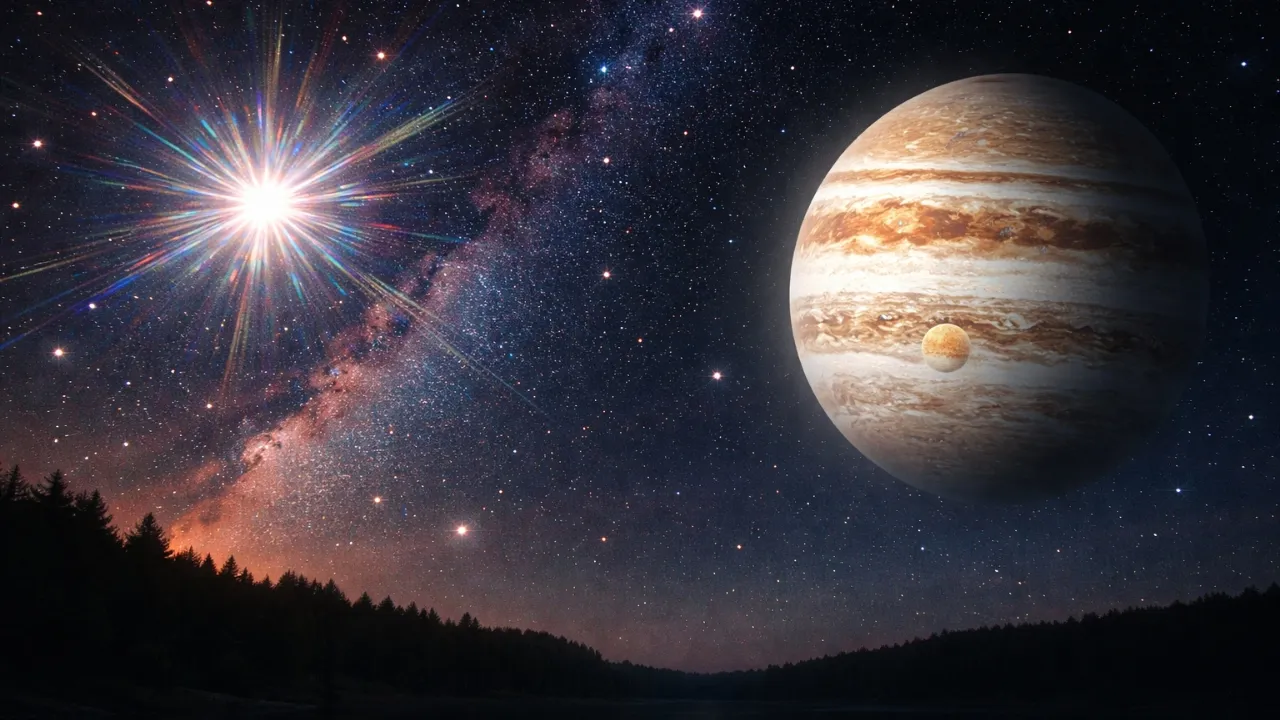



















Adaptive optics is a technology that uses deformable mirrors with numerous actuators (such as piezoelectric or electrostatic ones) to rapidly change shape and compensate for atmospheric distortions that cause starlight to twinkle, with wavefront sensors measuring the distortion and computers calculating the necessary mirror adjustments in real-time at rates of approximately 1,000 times per second.
Adaptive Optics Explained: How to Remove Atmospheric Distortion
Added:Basic wave optics, including the concepts of light wavefronts, phase, and optical path differences.
The physics of atmospheric turbulence, specifically how temperature and density variations cause refractive index fluctuations (scintillation).
Fundamental astronomical telescope design, including how primary and secondary mirrors focus light to form images.
The concept of angular resolution and the diffraction limit of optical systems.
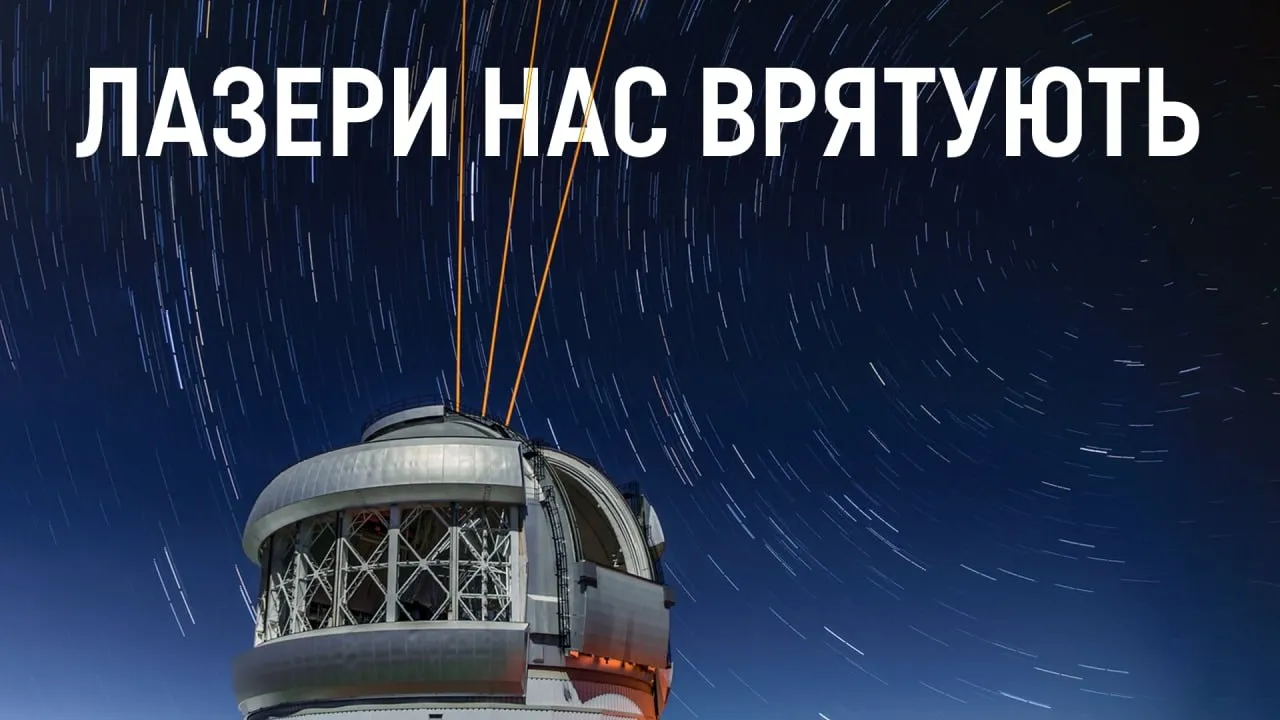
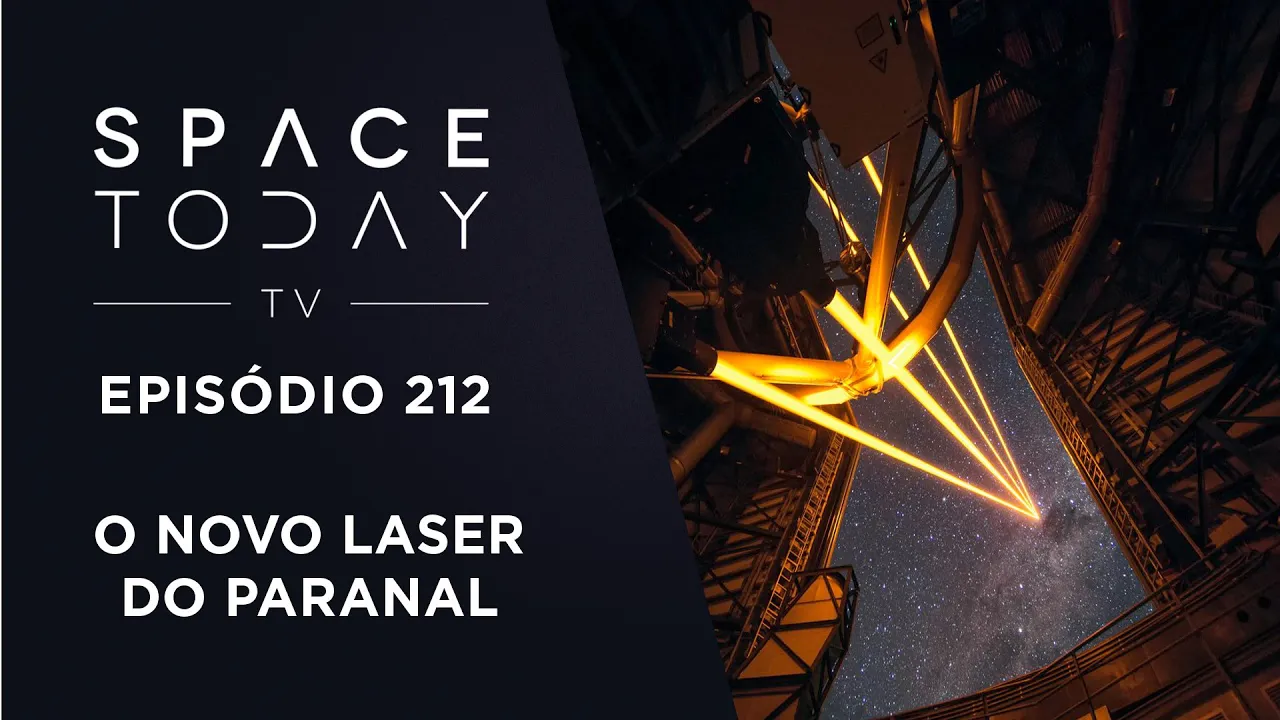
Laser Guide Star (LGS) systems, which use lasers to create artificial reference stars when natural guide stars are unavailable.
Advanced adaptive optics variations, such as Multi-Conjugate Adaptive Optics (MCAO) and Extreme Adaptive Optics (ExAO) for direct imaging of exoplanets.
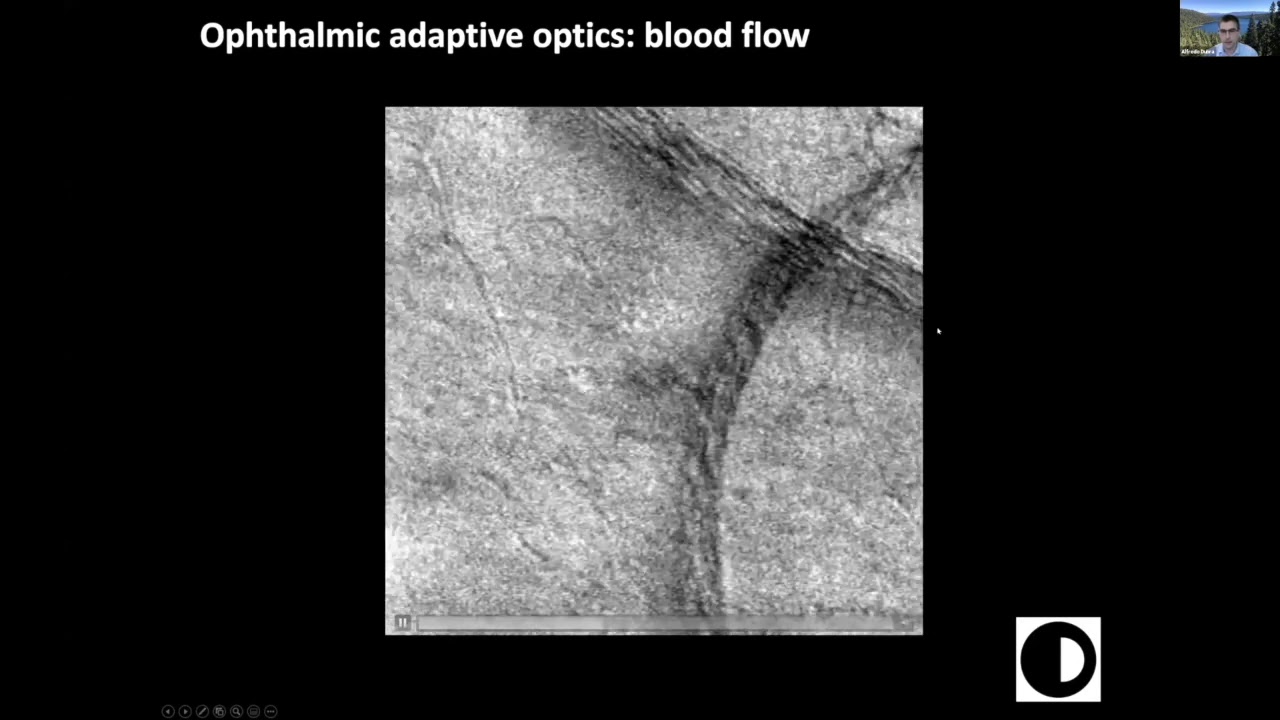
Applications of adaptive optics in biomedical engineering, particularly for high-resolution retinal imaging in ophthalmology.
The integration of adaptive optics in satellite-to-ground laser communications to mitigate atmospheric interference.
19.6K views608likes9:35Original Release: 2014-07-30
have you ever looked up at the night sky and watched the stars twinkle well if this sight has filled you with a deep boiling sense of Rage then you may be an astronomer the atmospheric distortions that caused these stars to twinkle also plays havoc with the images taken by telescopes turning a nice sharp image of Jupiter into a blurry mess astronomers would like nothing more than to remove the atmosphere obscuring their precious stars but but seeing as that would wipe out most of the life on Earth they have to work around it one way of doing that is to put a telescope like Hubble beyond the atmosphere up in space unfortunately that turns out to be very very very expensive a cheaper way around this is to use a technology called Adaptive Optics to fix the distortions created by the cursed lifegiving atmosphere today I'm talking with Mason lamb at the NRC Herzberg Institute of astrophysics who's going to show us how Adaptive Optics Works before we get started on the Adaptive Optics why do you build it on a small table like this ah so we like to build things on small tables first because uh the problem with with building a a really large scale instrument like say for the 30 m telescope or any telescope for that matter um you can't just go out and build it on the telescope you have to build it first um at location such as this one here at the Herzberg Institute of astrophysics um and so currently we're going to be building uh one of those instruments but you have to kind of uh build it in a sandbox first on a much smaller scale to show everyone that all your processes your your theories your ideas your algorithms uh are going to work and once you've shown to them and shown to everyone that what you want to do works on a smaller scale then you take the next step up and work on a bigger scale and then you can apply that methodology and those tactics and and build it on a bigger scale so that you you really know what to Handle by the time you go to build it on a telescope in simple terms what are Adaptive Optics Adaptive Optics are the use of mirrors that can change shape to compensate for the Distortion in the atmosphere now when you go and look outside at night at stars you see them twinkling and the twinkling is caused by the the hot and cold pockets of air high up in the atmosphere uh moving around each other and when Starlight passes between us and the atmosphere we see the stars twinkle now as astronomers if we take long exposures of a really faint object because we like looking at things really far away and faint um you you basically expose uh this star and it moves around as the star twinkles and you get a much bigger blurrier ball and you don't get this fine structure of the star that you want to see so what Adaptive Optics does is it uses mirrors that can change shape to compensate for the imprint that the atmosphere is making on the light and it does this at the rate at which the atmosphere is changing which is on the order of maybe a thousand times per second so you have to have computers that work really really hard and fast how does the telescope know what shape the mirror needs to be in to fix the image uh so we have these things called wavefront sensors and wavefront sensors essentially um tell us how distorted the light is or how much that atmosphere is is inducing aberration on the star and then we can use a computer to read that information and then tell the de formal mirror what shape to change to uh there's a variety of different wavefront sensors um but the simplest one is made up of a a grid of lenses uh and you you basically send the light through these lenses and if it's a perfectly uh non-rated system you'll get a an evenly spaced grid of light caused by the focusing of of each of these lenses and if there is any aberration in the system it's going to cause these spots to move and deviate from being on a perfect grid and that's how you can tell how distorted the light is and how does the mirror change shape are there tiny little Motors inside or Gremlins or what yes that's a very good question so there's a bunch of different types of mirrors um in this lab alone we have three different types of mirrors um one of the mirrors that we use is this one here and they're called deformable mirrors remember and so so this deformable mirror here uh it actually uses um Peto electric uh actuators which is Peto electric material so when you apply a a voltage to this material it either expands or contracts so it moves in or out like a piston and you have a bunch of these Pistons glued to the face of the mirror so how many are there in that mirror on this mirror here there's uh there's 52 of these Pistons glued to the face of this mirror on something the size of a dime it's it's about the size of a dime yeah cool and uh and then that can range in in size and shape um all the way to the point where you get to this mirror here which is just slightly bigger than this mirror and it has a thousand actuators so is that about the size of a nickel or a quarter yeah it's about the size of a quarter and you have a thousand actuators packed into the size of a quarter and these actuators um they act differently than the actuators here in the sense that they're essentially an array of little tiny drum heads like little drums and and so if you've played the drums before the membrane of the drum can move up or down and how this one works is you apply an electrostatic force underneath the drum head and it will either pull it down or push it out and that is then glued to the membrane of the mirror and that's how the mirror changes its shape to whatever you want it to change to so it's almost like a speaker it's it's almost exactly like a speaker and in fact usually when we work in Adaptive Optics we use two mirrors we use one that has less actuators and that's called the woofer and we use one with much much more actuators and that's called the Tweeter and they work together in tandem exactly how your your car stereo speaker woofer Tweeter combination work that is really cool just for a ballpark figure how much would that mirror with a thousand actuators cost so this one here cost us more money than than necessary as they come down in price over the years but ballpark kind of figure you're looking at a couple hundred, for for one of these uh deformable mirrors I can see why you made them on a small scale first yes uh before you want to build a really big one because all big uh deformable mirrors cost upwards of millions of dollars you want to make sure you can do it on a small scale first so how does a typical adaptive optic system work in detail now now that I've described these parts well essentially you start off with a light source here and that light source will then pass through the atmosphere so the light source is like a star in space and the atmosph atmosphere here is represented by what's called a phas screen where essentially we've just etched the uh surface of the atmosphere more or less into this glass screen and we can rotate this screen and it will simulate the atmosphere moving because the atmosphere moves of course um and of course it it moves on on the scales of uh thousand times per second or so so then the light continues on and goes off of this lens here and so the light's kind of a point source here and then now it's kind of a columnated beam and the light then goes through to a deformable mirror here and this is the mirror I described earlier that has a thousand actuators packed into a small square and it can change shape and this shape will change to compensate for the uh aberration induced by The Face Screen the light will then move along to another lens here and then it hits this mirror and goes through this lens here and then the beam is split in two parts by this beam Cube here one arm of the beam goes to the wavefront sensor which is here and the other arm of the beam goes to to the science camera here where we can see how good of a correction we make of our science Target there is a little uh lens grid here and a camera and the information from that camera gets sent to a computer and the computer then tells the deformable mirror what shape to change to and then as a metric to see how well you did you can look at your science camera and your star should look less blurry than it did before there should be less twinkling of your star at each point of the correction and it does this in a Clos Loop form So eventually what you have is a star that doesn't twinkle at all thanks for watching and a special thanks to Mason for taking the time to explain some of his research you can learn more about the research done at the Herzberg Institute of astrophysics on their website be sure to subscribe to the channel for more physics e awesomeness if you haven't already and check us out on Facebook
Up Next
53:20
Deep Sky CMOS Astrophotography: Science & Techniques
@AstroFarsography
170.4K views•2019-03-12

12:53
21cm Hyperfine Transition in Neutral Hydrogen: Radio Astronomy Basics
@AaronRobertParsons
12.4K views•2011-10-13

32:32
NMR Spin Physics I: Zeeman Effect, Resonance Condition & Larmor Frequency
@nptel-indianinstituteofsci8064
2.3K views•2024-01-17

27:14
Entropy and the Second Law of Thermodynamics Explained
@veritasium
27.5M views•2023-07-01
Related Study Plans & Knowledge Roadmaps
Structured learning paths in Physics
physics
Nuclear Physics (Decay, Fission & Reactors)
01Atomic Structure and the Binding Force
02Radioactive Decay and Half-Life
03Nuclear Fission Mechanics and Chain Reactions
+ 2 more learning modules
12h5 modules
Explore Roadmap
physics
Soft Matter (Polymers, Colloids & Rheology)
01Foundations of Soft Matter & Thermal Forces
02Polymer Physics and Macromolecules
03Colloids, Surfactants, and Self-Assembly
+ 2 more learning modules
38h5 modules
Explore Roadmap
physics
Analytical Mechanics: Lagrangian & Hamiltonian
01Mathematical Foundations: Calculus of Variations
02From Newtonian Mechanics to Constraint Dynamics
03The Principle of Least Action & Lagrangian Mechanics
+ 3 more learning modules
28h6 modules
Explore Roadmap
physics
General Relativity (Spacetime & Cosmology)
01Foundations of Relativity: Special Relativity
02The Geometry of Spacetime: Equivalence Principle & Curvature
03Einstein's Field Equations: The Mathematics of Gravity
+ 2 more learning modules
55h5 modules
Explore Roadmap